Author Archive
 Author:
  May 23rd, 2019
The Vinyl Frontier – The Story of the Voyager Golden Record by Jonathan Scott; Bloomsbury Publishing, Inc., New York, May 2019; hardcover: 288 pages, $28.00
As I write this, those long-gone NASA spacecraft, Voyager 1 and Voyager 2 are respectively 13,475,095,569 miles and 11,175,244,034 miles from Earth.
Voyager 2 launched in August 1977, and Voyager 1 soon followed, launching in September 1977. Each spacecraft carries a copy of a “Golden Record” with a protective cover adorned with instructions for playing its contents. For all their supposed intellect, one gathers that aliens recovering the records need a helping hand.
The final playlist contains music written and performed by Bach, Beethoven, Glenn Gould, as well as Chuck Berry and Blind Willie Johnson. There’s music from China, India and more remote cultures. It also contained a message of peace from U.S. President Jimmy Carter. Each song, sound and picture that made the final cut onto the record has a story to tell.
And that story has been captured in a distinctive and fascinating book, written by Jonathan Scott, a music writer and self-confessed astronomy geek. Furthermore, if he’d been in charge of the Voyager Golden Record, he suggests that aliens would deduce that Earthkind was limited to three music chords.
This book tells the story of a team led by astronomers Carl Sagan to put together a record that would travel to the stars on the back of NASA’s Voyager probe. The Vinyl Frontier tells the whole story of how the record was created, nicely presented in a dozen chapters.
Team members for the effort included astronomer Frank Drake, father of the scientific Search for Extraterrestrial Intelligence (SETI), serving as technical director, writer and novelist Ann Druyan was the creative director, science journalist and author Timothy Ferris produced the record, and space artist Jon Lomberg was the designer, with artist Linda Salzman Sagan organizing the greetings.
“This is a story of the summer of 1977 – when science rubbed up against art to create a monument that will, in all probability, outlive us all,” the author explains in the book’s prologue.
The research done in writing this book is exceptional. For instance, how and why the Beatles missed the boat being on the record. “No Dylan. Elvis was discussed but discounted…even Jefferson Starship, who had offered their music for free, weren’t in the running,” Scott writes.
Thanks to the author, scads of little known nearly forgotten, behind-the-record stories are told in a splendid writing style. So many nuggets of information!
BTW: The book points to a YouTube video you’ll find worth a view at: https://www.youtube.com/watch?v=ibByF9XPAPg as well as an associated video at: https://boingboing.net/2017/09/05/how-to-decode-the-images-on-th.html
Also, in celebration of Voyager’s 40th anniversary, The Voyager Interstellar Record was made available on vinyl and can be purchased here:
https://ozmarecords.com/pages/voyager
For more information about The Vinyl Frontier: The Story of the Voyager Golden Record, go to:
https://www.bloomsbury.com/us/the-vinyl-frontier-9781472956132/
 Posted in
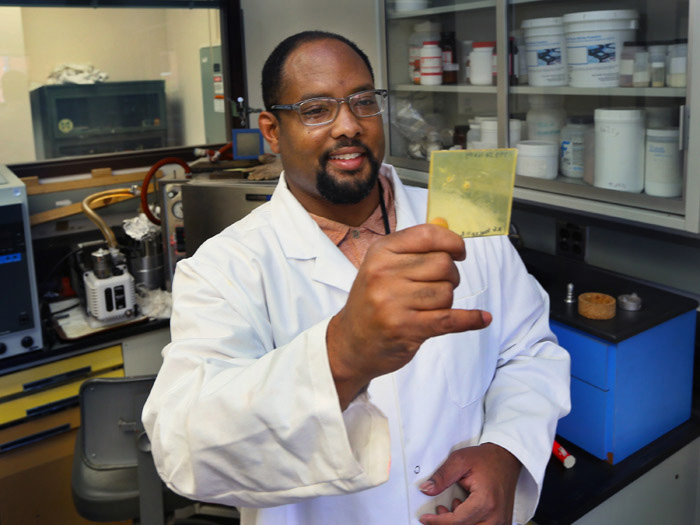
NASA inventor Keith Gordon holding up an early stage sample of self-healing technology.
Credit: NASA
If anything that has come forward in the 21st century it’s the art of self-healing.
Not to be outdone by “I’m okay, you’re okay” philosophy, NASA has developed a new polymer material that can self-heal in micro-seconds after bullet strikes, other high-velocity punctures, and even non-high-speed projectiles in certain environments.
This expertise — originally developed to protect space vehicles from micrometeoroids — has many other down-to-Earth applications that entrepreneurs, startups, and companies can utilize for their business needs.
In space, this inventive idea is a plus. How about an off-Earth inflatable habitat that can apply this technology?
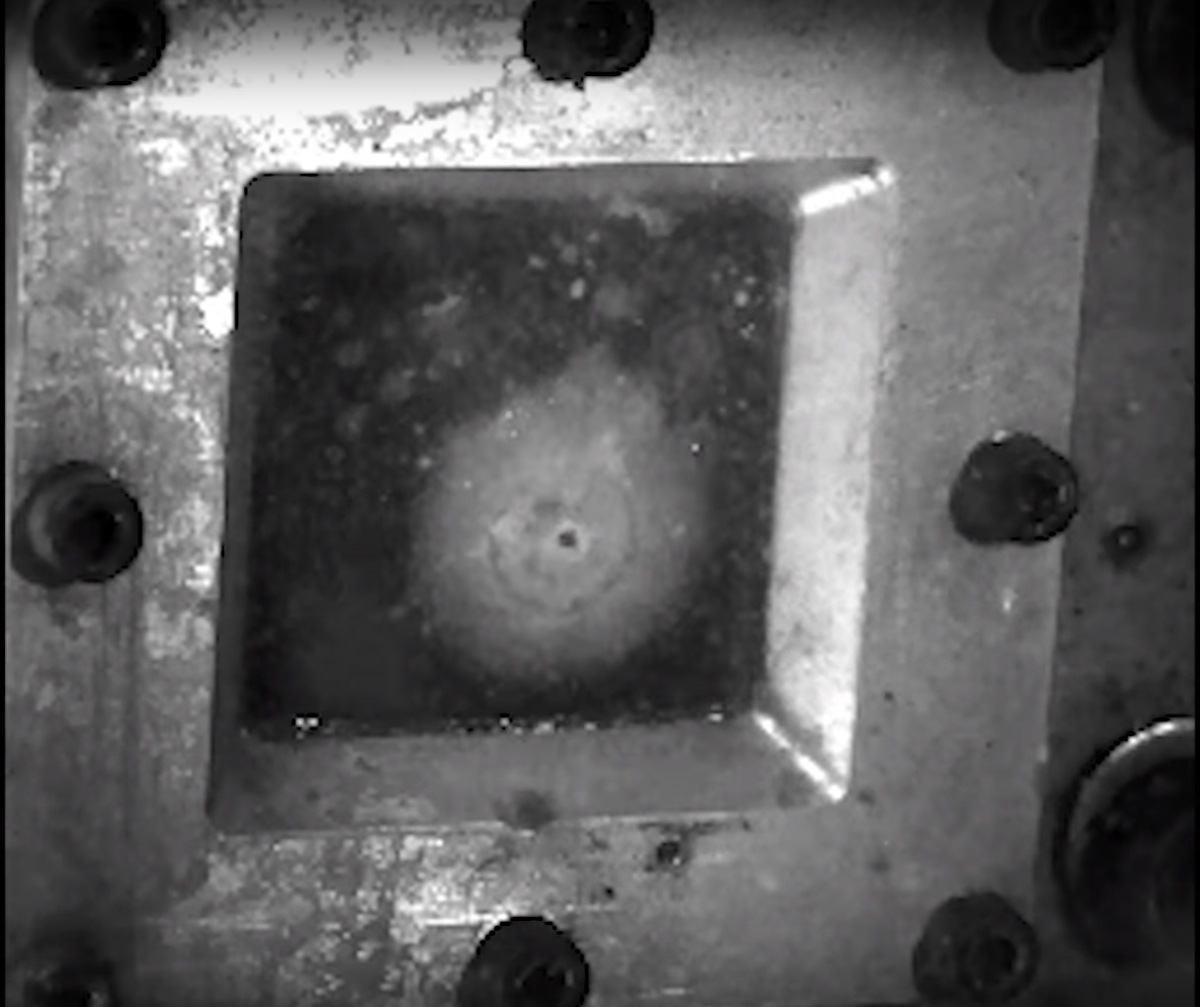
Bullet testing of self-healing material. Credit: NASA
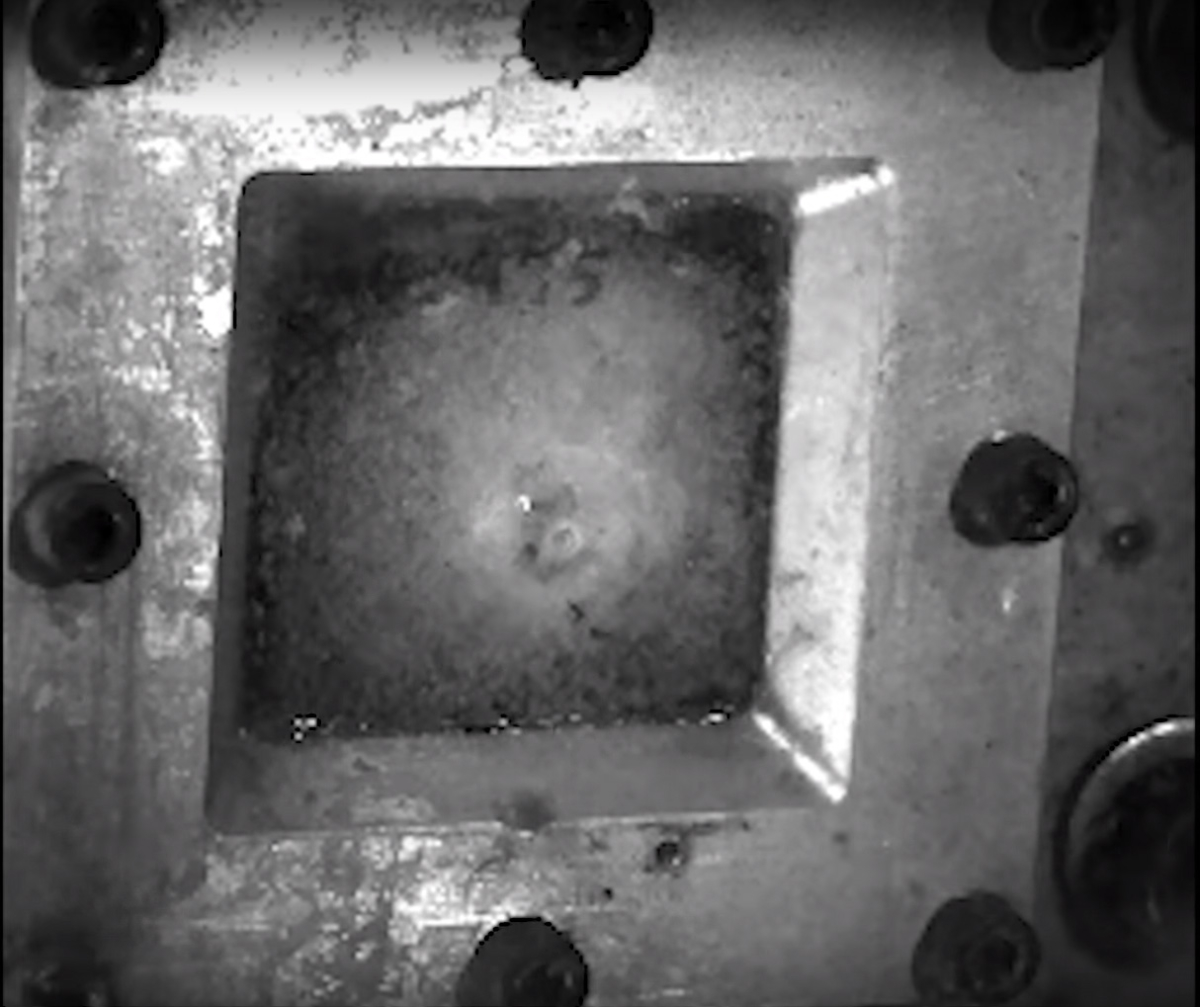
Credit: NASA
Micro-second self-healing
It’s called Multi-layered Self-healing Material System for Impact Mitigation.
This material is capable of micro-second self-healing from high-velocity punctures across a wide range of temperatures.
NASA Langley researchers in Virginia have developed this material system for impact mitigation from ballistic or hypervelocity events (e.g., micrometeoroids or orbital debris).
Reactive liquid middle
Here are the details: The system is constructed by sandwiching a reactive liquid monomer formulation between two solid polymer panels. While developed with space exploration in mind, the innovation has many other applications, such as fuel tanks and hydraulic insulation.
This tri-layered structure is comprised of solid plastic front and back layers sandwiching a viscous, reactive liquid middle layer.
Combined, this system provides rapid self-healing following high velocity ballistic penetrations. Self-healing in the front and back layers occurs when the puncture event creates a melt state in the polymer materials and the materials melt elasticity snaps back and closes the hole.

NASA Inflatable structure.
Credit: NASA
Ballistic puncture
The viscous middle layer augments the self-healing properties of the other layers by flowing into the gap created by a ballistic puncture and concurrently solidifying due to the presence of oxygen.
All that said, this creative technique has two tiers of self-healing: a puncture-healing mechanism triggered by the projectile and a second mechanism triggered by the presence of oxygen.
Look for more information about this technology via this informative video at:
https://www.youtube.com/watch?v=XnJbH9re2rI
Also, go to this fact sheet:
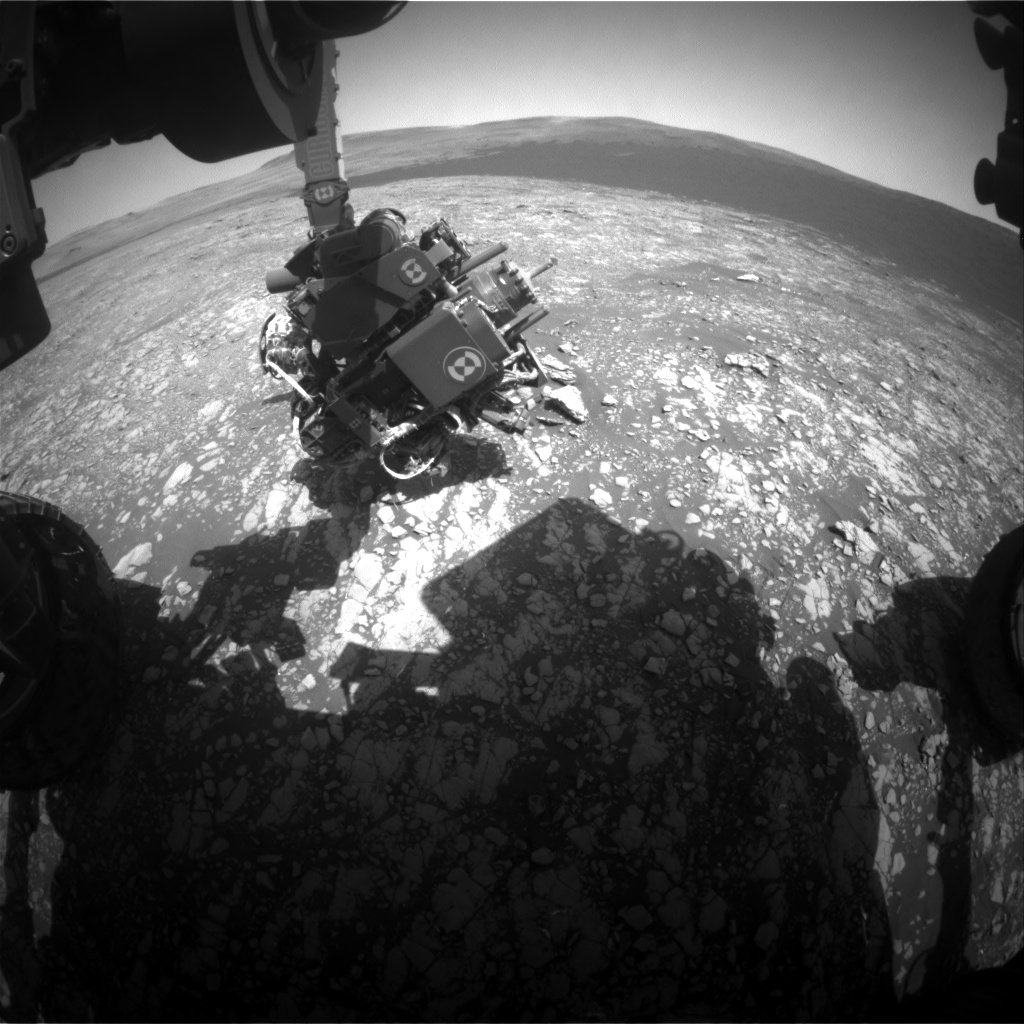
Curiosity Front Hazcam Left B image acquired on Sol 2414, May 22, 2019.
Credit: NASA/JPL-Caltech
NASA’s Curiosity Mars rover is now performing Sol 2414 science duties.
“Curiosity is investigating an area that is very high in potassium, and we’re trying to characterize the distribution and the source of that potassium,” reports Ashley Stroupe, a mission operations engineer at NASA/JPL in Pasadena, California.
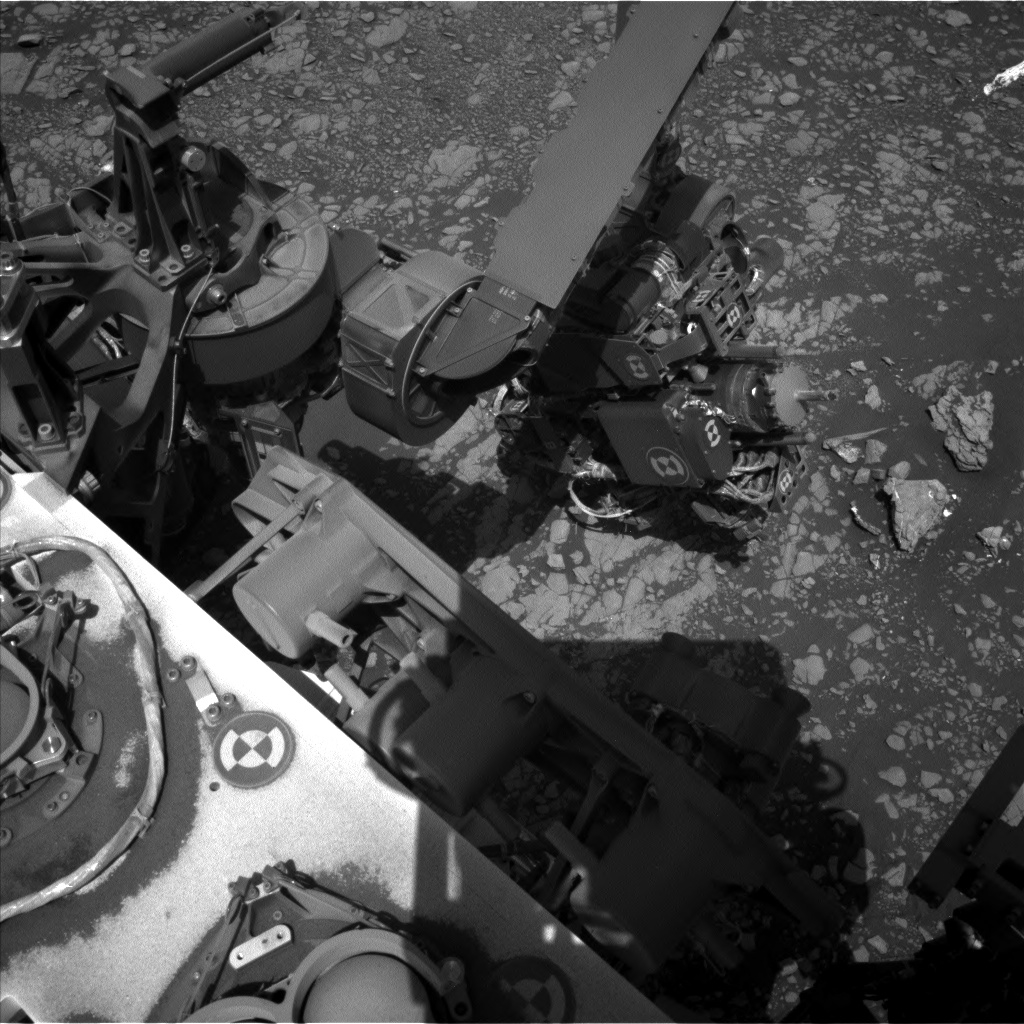
Curiosity Navcam Left B image taken on Sol 2414, May 22, 2019.
Credit: NASA/JPL-Caltech
The robot recently completed a short drive to get one of these potassium-rich rocks into its view – “Grampian Mountains.”
“While this target isn’t viable for drilling, it is a good example of this potassium-rich area, which is now in our workspace,” Stroupe adds.
Science block
Curiosity science planners are starting out with some contact science via the Alpha Particle X-Ray Spectrometer (APXS) and Mars Hand Lens Imager (MAHLI) on the target.
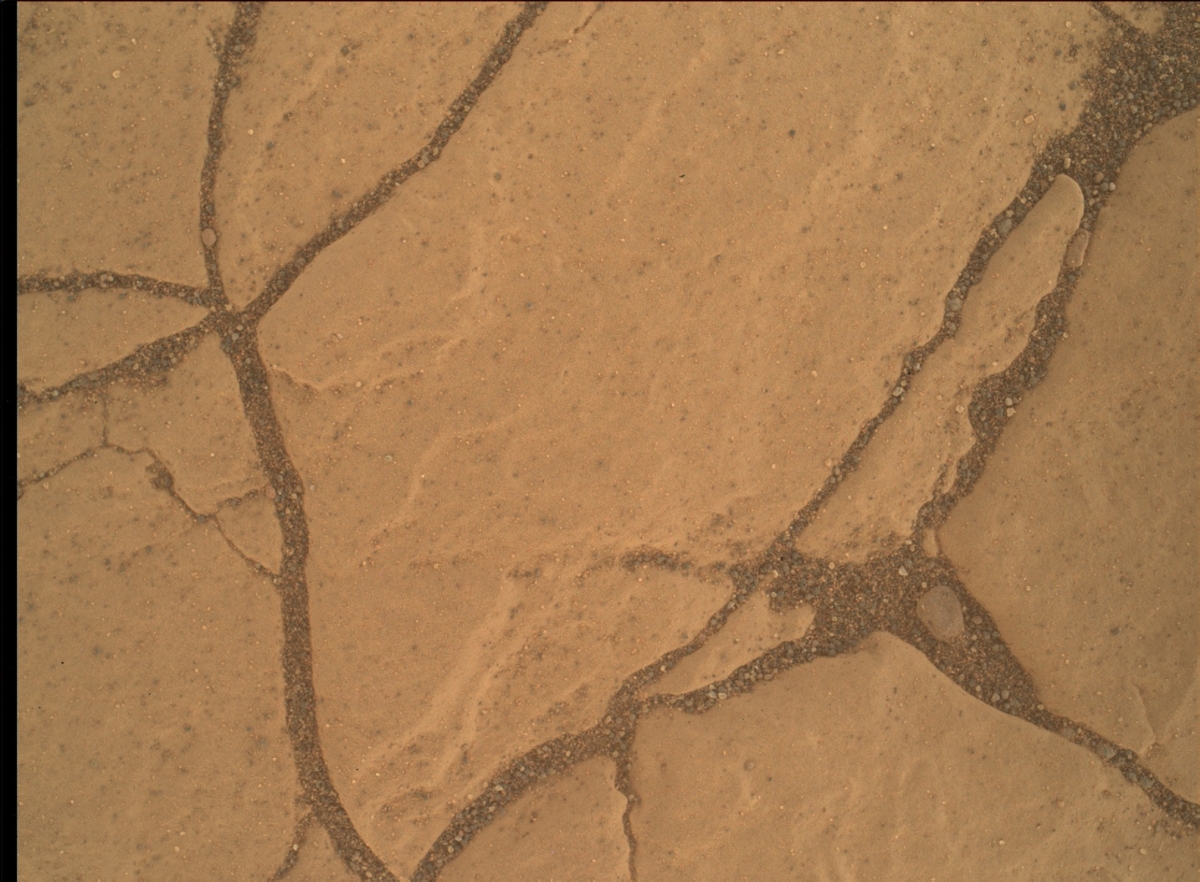
Curiosity Mars Hand Lens Imager (MAHLI) photo produced on Sol 2413, May 21, 2019. MAHLI is located on the turret at the end of the rover’s robotic arm.
Credit: NASA/JPL-Caltech/MSSS
After the arm activities, there is a long targeted science block with Chemistry and Camera (ChemCam) and Mastcam of several targets, including Grampian Mountains, “Annbank” and (to a lesser extent) “Brimmond.”
They have similarities to the Woodland Bay block that was examined on sol 2359 (and which might be another possible drill target), “so we’re examining them to make a comparison,” Stroupe points out. “Our fourth target is “Balintore,” which is part of our systematic bedrock survey; we’re looking for more potassium-rich bedrock.”
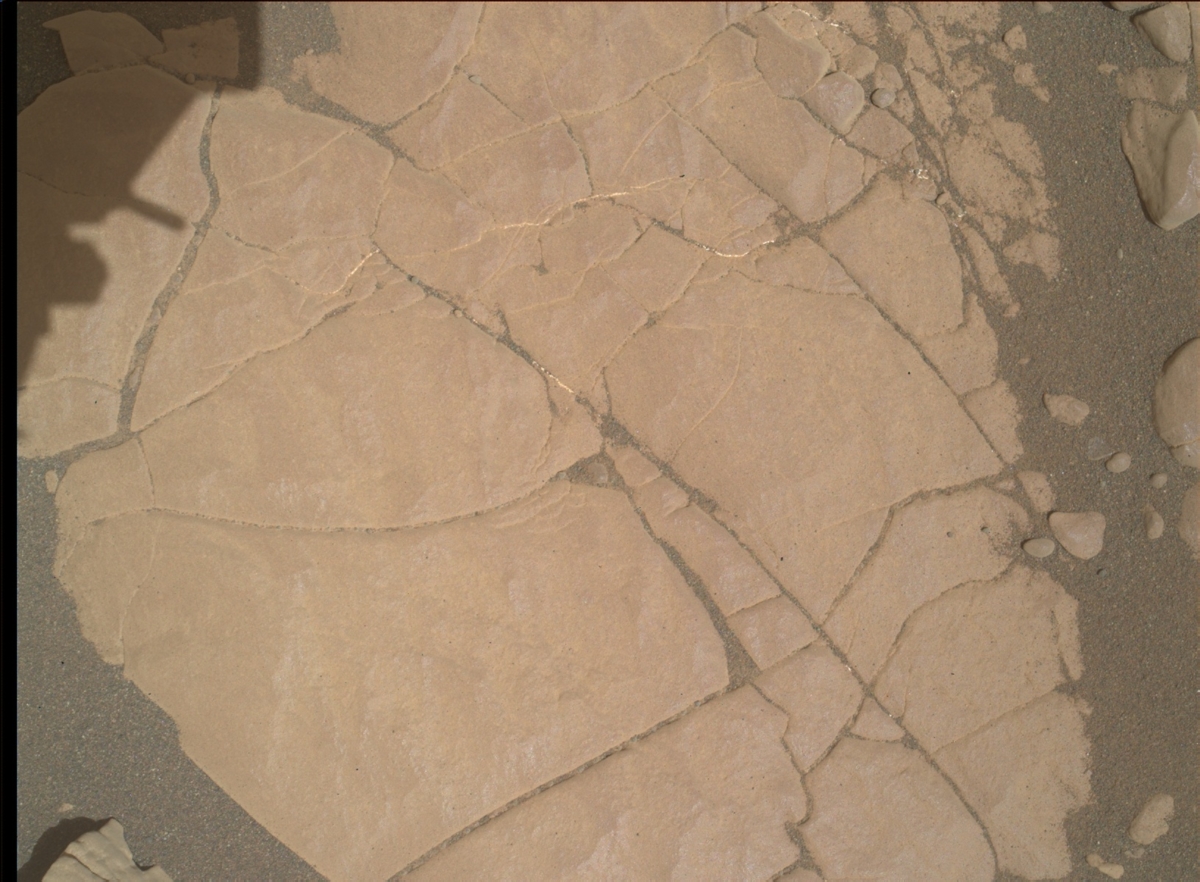
Curiosity Mars Hand Lens Imager (MAHLI) photo produced on Sol 2414, May 22, 2019. MAHLI is located on the turret at the end of the rover’s robotic arm.
Credit: NASA/JPL-Caltech/MSSS
Next drill decision
After Curiosity completes science observations at this location, the robot will be heading toward what researchers hope is the next drill location, target “Hallaig.”
“Hallaig rock was already identified by ChemCam as being potassium-rich. The rover planner evaluation looks promising for drilling, though it is still unclear from remote sensing how representative Hallaig is of this general area,” Stroupe explains.
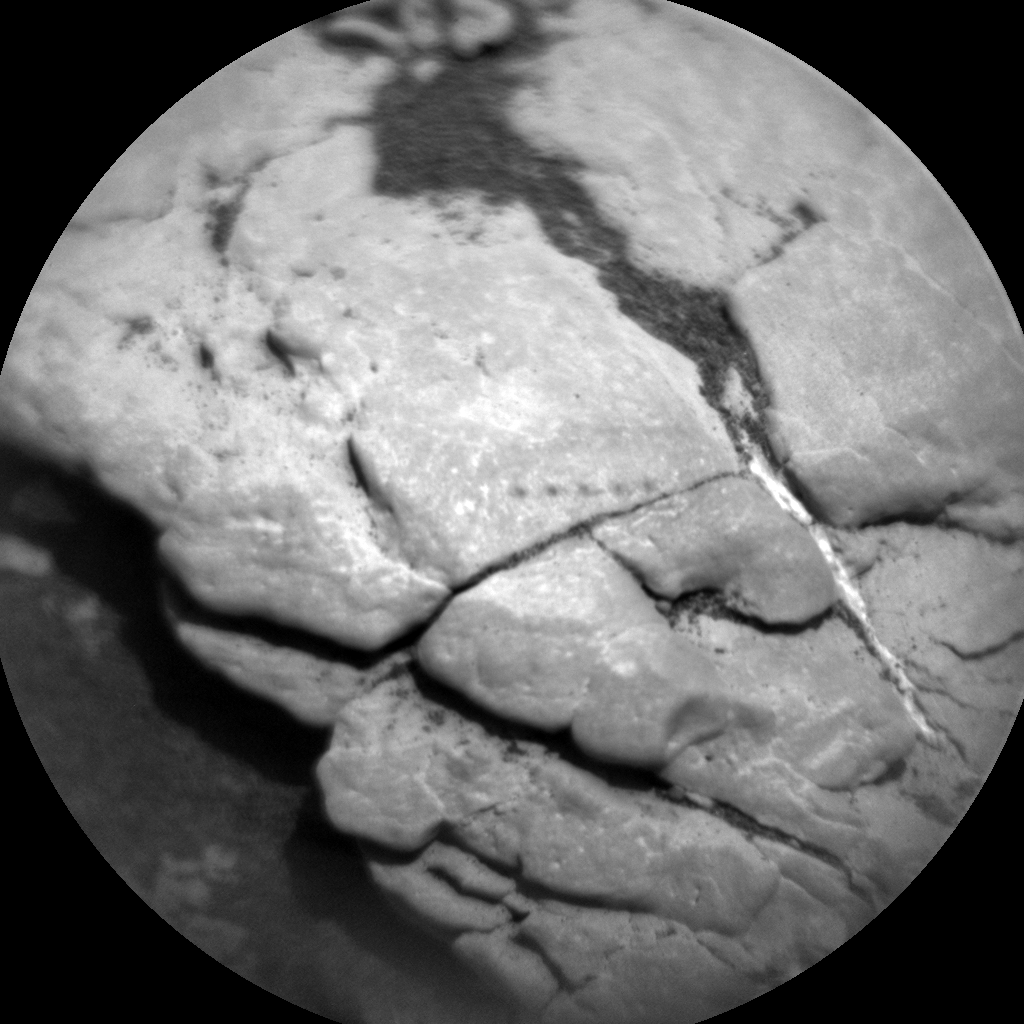
Laser strikes observed by Curiosity ChemCam Remote Micro-Imager photo taken on Sol 2414, May 22, 2019.
Credit: NASA/JPL-Caltech/LANL
“The rover planners are able to turn and drive straight to this target; the terrain is benign enough that the parking requirements for drilling are not highly constraining. Our post-drive imaging will include high-quality color imaging of two spots on the rock to help us evaluate them for possible drilling,” Stroupe concludes. “If things look good, we may be drilling as early as the weekend!”
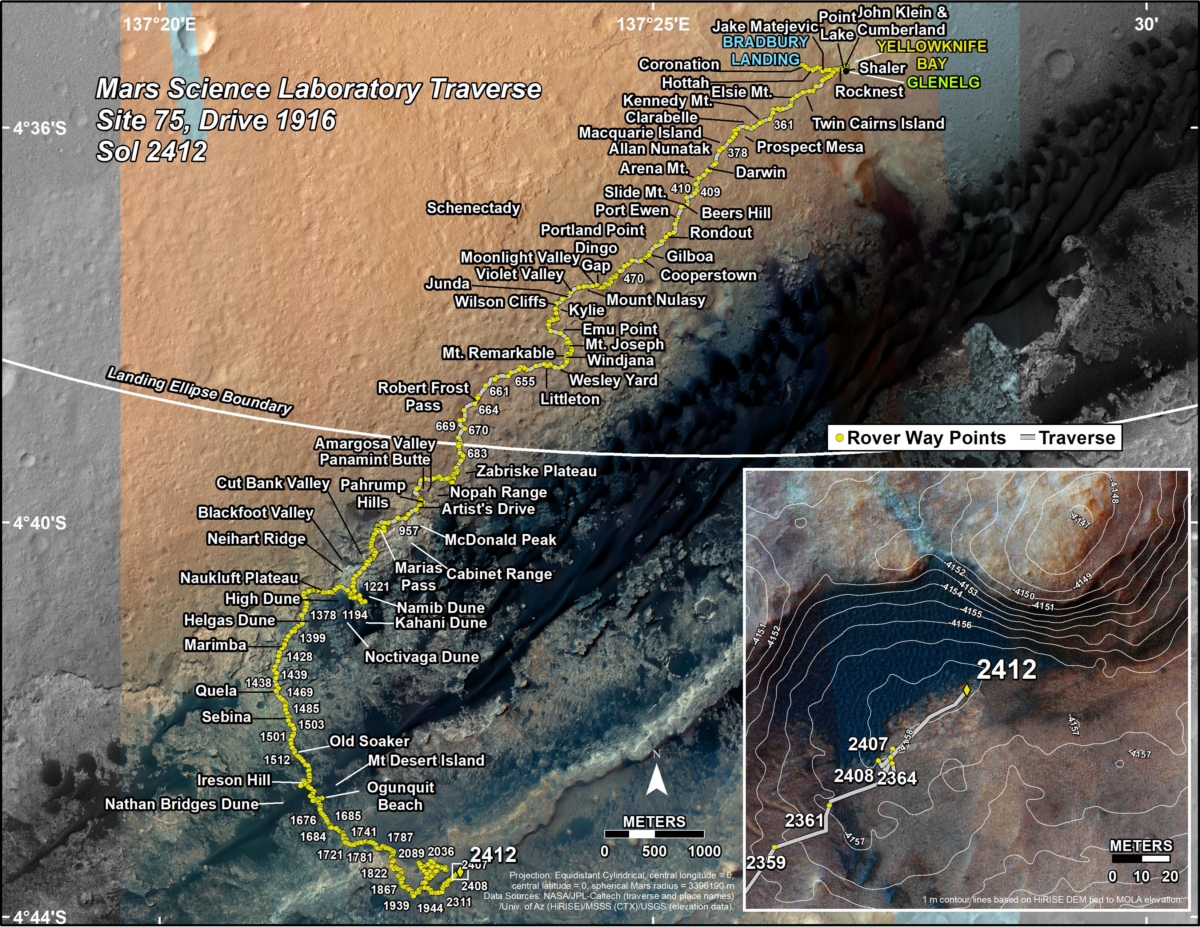
Credit: NASA/JPL-Caltech/Univ. of Arizona
New traverse map
Meanwhile, a new Curiosity traverse map through Sol 2412 has been produced.
The map shows the route driven by Curiosity through the 2412 Martian day, or sol, of the rover’s mission on Mars (May 20, 2019).
Numbering of the dots along the line indicate the sol number of each drive. North is up. The scale bar is 1 kilometer (~0.62 mile).
From Sol 2408 to Sol 2412, Curiosity had driven a straight line distance of about 129.71 feet (39.54 meters), bringing the rover’s total odometry for the mission to 12.74 miles (20.50 kilometers).
The base image from the map is from the High Resolution Imaging Science Experiment Camera (HiRISE) in NASA’s Mars Reconnaissance Orbiter.
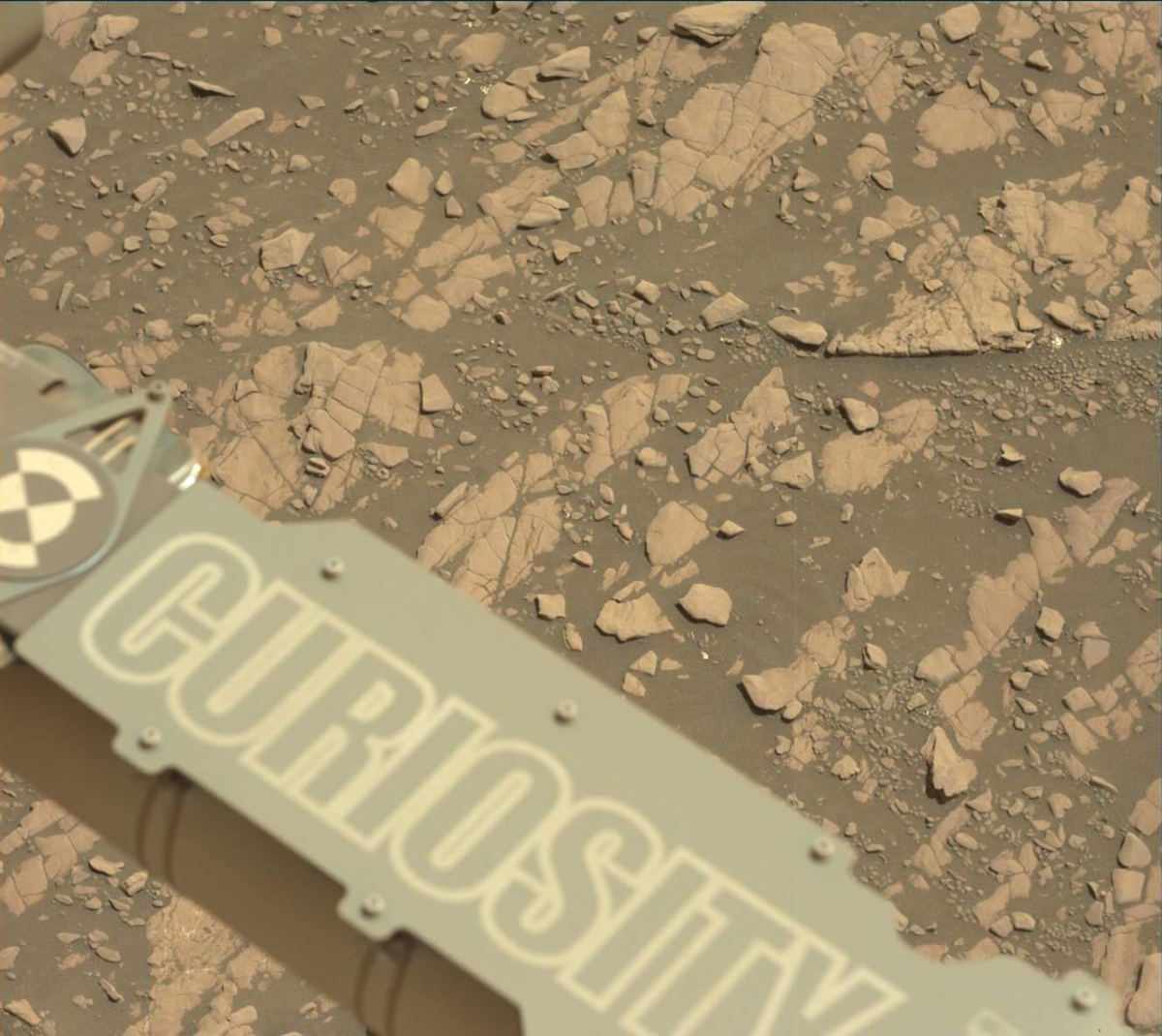
Curiosity Mastcam Left photo acquired on Sol 2413, May 21, 2019.
Credit: NASA/JPL-Caltech/MSSS

Credit: ISRO/Screengrab Inside Outer Space
India is now gearing up for the July launch of Chandrayaan-2, a robotic lunar orbiter/lander/rover combo that is slated to touch down at a predetermined site close to lunar south pole.
According to a statement from the Department of Space of the Indian Space Research Organization (ISRO) the country’s moonshot will fly atop a Geosynchronous Satellite Launch Vehicle (GSLV) MkIII booster during the window of July 9-16 with an expected Moon landing on September 06, 2019.

Credit: ISRO/Screengrab Inside Outer Space
Chandrayaan-2 will be an advanced version of the previous Chandrayaan-1 mission to Moon that flew successfully on October 22, 2008 from SDSC SHAR, Sriharikota launch site.
Three modules
As India’s second lunar mission, Chandrayaan-2 is comprised of three modules, an orbiter, the Vikram lander (named after a former ISRO chairman, Vikram Sarabhai) and the Pragyan rover.
The orbiter and lander modules will be interfaced mechanically and stacked together as an integrated module and accommodated inside the GSLV MK-III launch vehicle. The Pragyan rover is housed inside the lander.
After launch into Earth bound orbit by the GSLV MK-III, the integrated module will reach Moon orbit using an orbiter propulsion module. Subsequently, the lander will separate from the orbiter and soft land at the predetermined site close to lunar south pole.

Credit: ISRO/Screengrab Inside Outer Space
Payloads
Once deployed, the Pragyan rover will carry out scientific experiments on the lunar surface. Instruments are also mounted on the lander and orbiter for performing science tasks.

India’s Pragyan Moon rover.
Credit: ISRO
There are 13 Indian payloads (8 on the orbiter, three on the lander and two on the rover, along with one passive experiment from NASA – a Laser Retro-reflector Array (LRA) for Lunar Landers.
This LRA is the same design as the one carried onboard Israel’s Beresheet lander that crashed on the Moon last month.
NASA’s retro-reflector is a mirrored device that reflects laser light signals to help pinpoint precisely where a lander is as well as accurately calculate the Moon’s distance from Earth.

Apollo’s Legacy: Perspectives on the Moon Landings by Roger Launius; Smithsonian Books, Washington, D.C., 2019; hardcover: 264 pages, $27.95
Space historian Roger D. Launius has authored this unique and notable book, one that recollects the triumph that was Apollo…but also Apollo’s less positive aspects.
“Each chapter of the book focuses on a major them in our memories of Apollo,” the author explains, “revealing the ways in which it has been seen as a positive endeavor, as well as the ways in which it remains rooted in a time and a place far removed from both our present concerns and our future priorities.”
That piece of prologue sets the reader up for an expertly written retro look at the “feel-good” triumph for America of astronauts on the Moon and high salutes to the U.S. flag.
But Launius then offers provoking chapters, such as: “Applying Knowledge from Apollo to This-World Problems,” “Apollo and the Religion of Spaceflight,” as well as delving into the surrealistic community of those calling Apollo fake news – individuals that deny the Apollo Moon landings.
The chapter on Apollo hoax accusations is chalk-full of insight. Launius reminds the reader: “More than half the world’s population was born after the last of the Moon landings took place in December 1972. Consequently, they had not lived through the excitement of the experience.”
The contents of this book are divided into 10 chapters, with a “Remembering Apollo” conclusion. The author suggests that Apollo increasingly seems to be viewed as a once-upon-a-time situation “for reasons that have receded far into the background.”
Launius goes on to say that in 100 years, “Apollo may be remembered as a singular event, glorious and revered but viewed increasingly as an undertaking without lasting significance.”
There will be those that will argue with that sentiment. Regardless, this volume is a beneficial and essential look at the Apollo space program, one that challenges the status quo of blindly embracing the space past while disregarding the framework of today’s human space exploration planning.
For more information on this book, go to:
https://www.si.edu/newsdesk/releases/smithsonian-books-releases-apollos-legacy

Early praise for Moon Rush – The New Space, published by National Geographic:
“We are in the middle of the ‘New Space’ era, and Moon Rush is the roadmap that shows us how we got here, where we are going, and why. Leonard David’s keen insight into space exploration puts the Moon into its proper context – as the next destination for humans as we take our first steps into the solar system.” — Colonel Terry Virts (ret.), NASA veteran of two spaceflights – a two-week mission onboard the Space Shuttle Endeavour in 2010 and a 200-day flight to the Space Station in 2014-2015

Geologist Harrison Schmitt performs Moon tasks during Apollo 17 mission in December 1972.
Credit: NASA
“Written with Leonard David’s trademark wry humor and the product of thorough research, Moon Rush is a comprehensive, accessible and entertaining book addressing the value of a return to the Moon. Deftly tying together the rich past of U.S. and Russian lunar expeditions (robotic and human) with present developments and an optimistic view of the future, Mr. David lays out the geopolitical case for a return to the Moon for the United States, our international allies, and our competitors, with attention to human space exploration, planetary science, the discovery of lunar resources and the eventual development of a lunar economy.” — Dr. Mary Lynne Dittmar, President & CEO, Coalition for Deep Space Exploration; Member U.S. National Space Council Users’ Advisory Group

Credit: NASA
“Leonard David has now managed to make sense of the new rush to the Moon where scientists, engineers, entrepreneurs, and artists are looking to uncover its hidden secrets, utilize its precious resources, and continue finding inspiration from its otherworldly beauty. And he has done it by skillfully describing how these seemingly contrasting goals fit in humanity’s ‘unquenchable thirst to press onward and outward.’” — Dr. Angel Abbud-Madrid, Director, Center for Space Resources, Colorado School of Mines

A source of water on the Moon could help make future crewed missions more sustainable and affordable.
Credit: RegoLight, visualization: Liquifer Systems Group, 2018
“In Moon Rush, Leonard David has provided a comprehensive, clearly written, and convincing account of why the returning to the Moon, ‘this time to stay,’ will be the central feature of the world’s space activities of the next few decades. He suggests that ‘the United States is hungry to take to lead’ in that return. I hope that he is right about that, and that the country that sent 12 men to the Moon a half-century ago will once again be in the vanguard of a sustained global public-private effort to make the Earth’s off-shore island an essential element of this planet’s future.” — Dr. John Logsdon, Professor emeritus and founder, Space Policy Institute, George Washington University

Credit: NASA
“Leonard David explores multiple dimensions of our Moon: mythology, history, robotic and human exploration, science, technology, utilization, inspiration, education, strategy, national and international programs, governments, and new private space actors. It will enrich everybody’s own personal and collective lunar experience! This book is an amazing resource for learning, reflecting, and engaging towards our next steps to build a ‘MoonVillage’ sustainable community and settlement on our 8th continent, the Moon.” — Professor Bernard H. Foing, Executive Director, The International Lunar Exploration Working Group (ILEWG), European Space Agency Lead scientist for SMART-1 Mission, and EuroMoonMars program
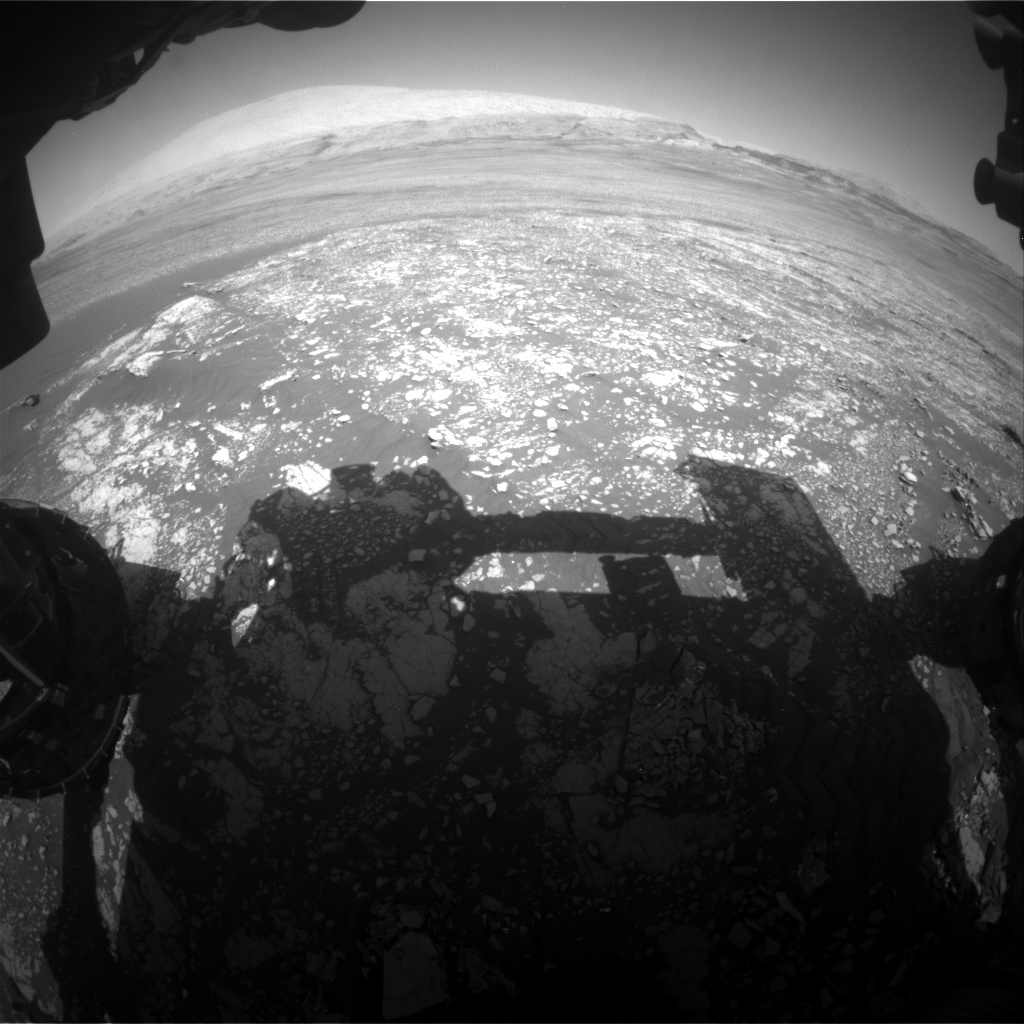
Curiosity Front Hazcam Left B image taken on Sol 2412, May 20, 2019.
Credit: NASA/JPL-Caltech
NASA’s Curiosity Mars rover is now performing Sol 2412 duties.
Curiosity is continuing the investigations at “Rigg,” reports Susanne Schwenzer, a planetary geologist at The Open University; Milton Keynes, U.K.
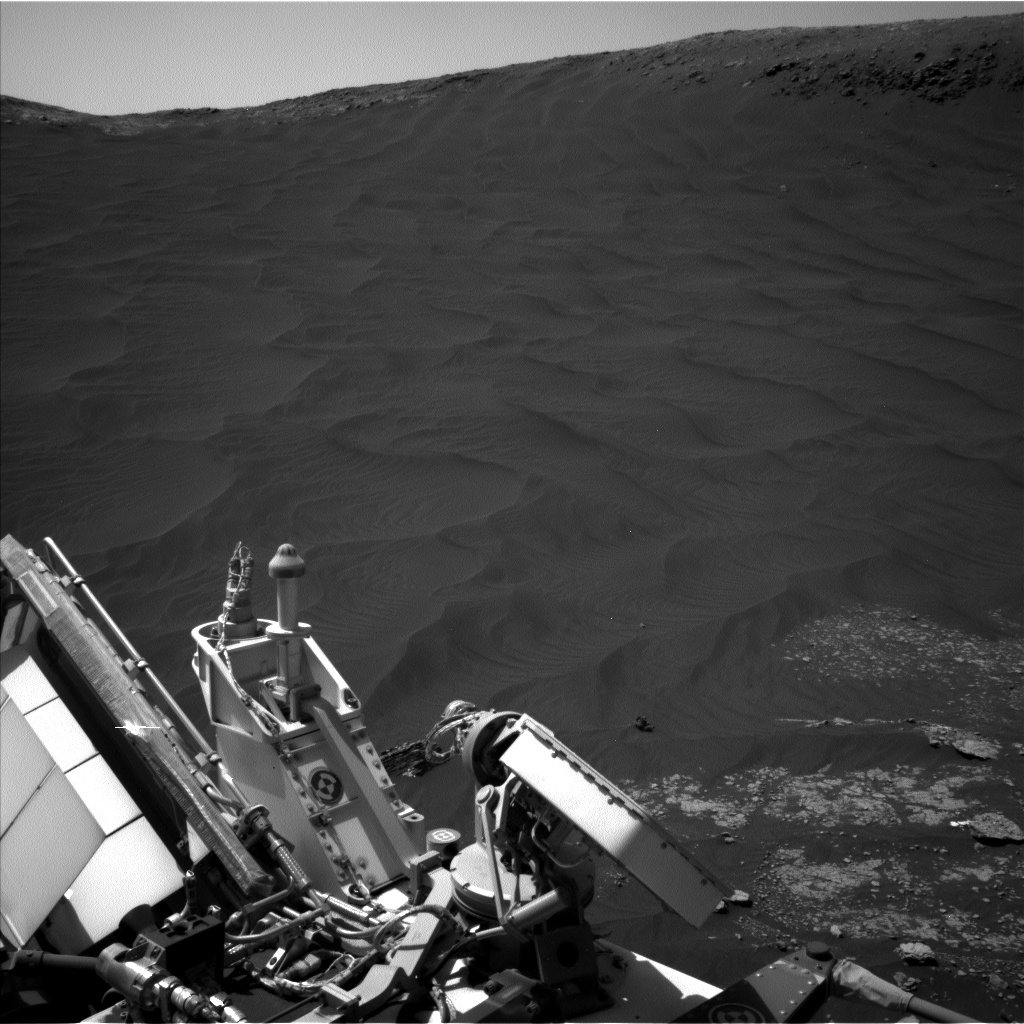
Curiosity Navcam Left B image acquired on Sol 2412, May 20, 2019.
Credit: NASA/JPL-Caltech
The robot’s Mars Hand Lens Imager (MAHLI) is allowing detailed investigation of the materials that make up the field of sand ripples.
Color and luster
“Things the team is looking for are grain size and grain size distribution, and the shape of the grains,” Schwenzer adds. “In addition to that, the color and luster of the different grain varieties are of interest to allow us to analyze the variation of phases in the sand. One feature to note, for example, are the pinkish grains on the surface, which appear to be larger than all others.”
Curiosity science planners have prepared a three-sol plan with many activities imaging the sand ripples and investigating their chemistry.

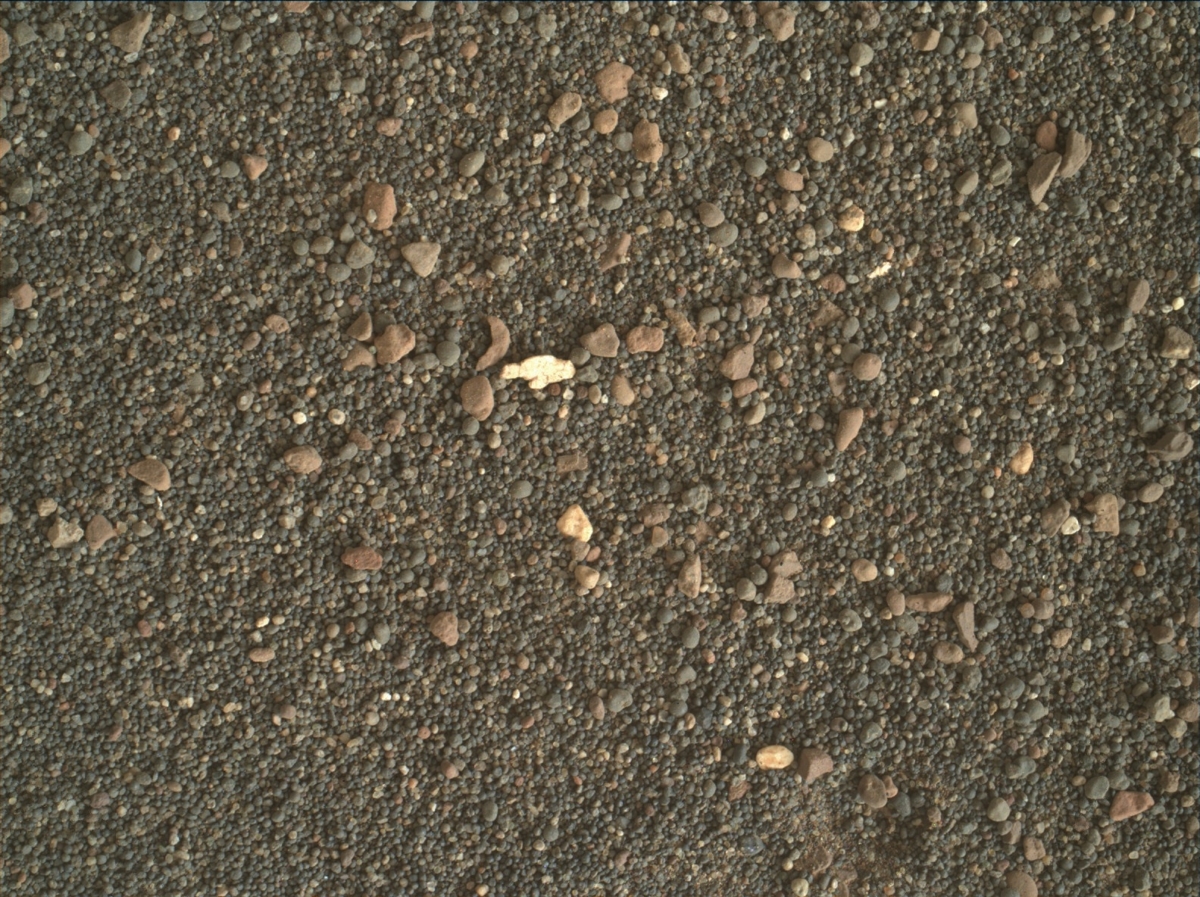
Curiosity Mars Hand Lens Imager (MAHLI) photo produced on Sol 2412, May 20, 2019.
Credit: NASA/JPL-Caltech/MSSS
Grain sizes
The rover’s Alpha Particle X-Ray Spectrometer (APXS) will measure the targets “Nairn” and “Ellon,” to investigate the differences of the different soil colors and grain sizes.
Chemistry & Camera (ChemCam) plans include the soil targets “Seafield Tower,” “Saltire” and “Selkirk,” whereby Seafield Tower and Saltire are on ripple crests and Selkirk is on a ripple flank. There also is one rock target to investigate a rock color variation at the target: “Camustianavaig.”

Image taken by the Mars Hand Lens Imager (MAHLI), on Sol 2409. It shows the target Dunoon. This image is about 45 mm by 34 mm.
Credit: NASA/JPL-Caltech/MSSS
Workspace imagery
Schwenzer explains that Mastcam will document all ChemCam targets, but also take two mosaic images, one of the workspace and one looking back at the “Aberlady” and “Kilmarie” drill target area.
MAHLI will take a look at the APXS targets from the past and this plan, which are “Donoon,” “Gairsay,” “Ellon” and “Nairn.” Also in the plan are environmental activities and Dynamic Albedo of Neutrons (DAN) active and passive measurements.
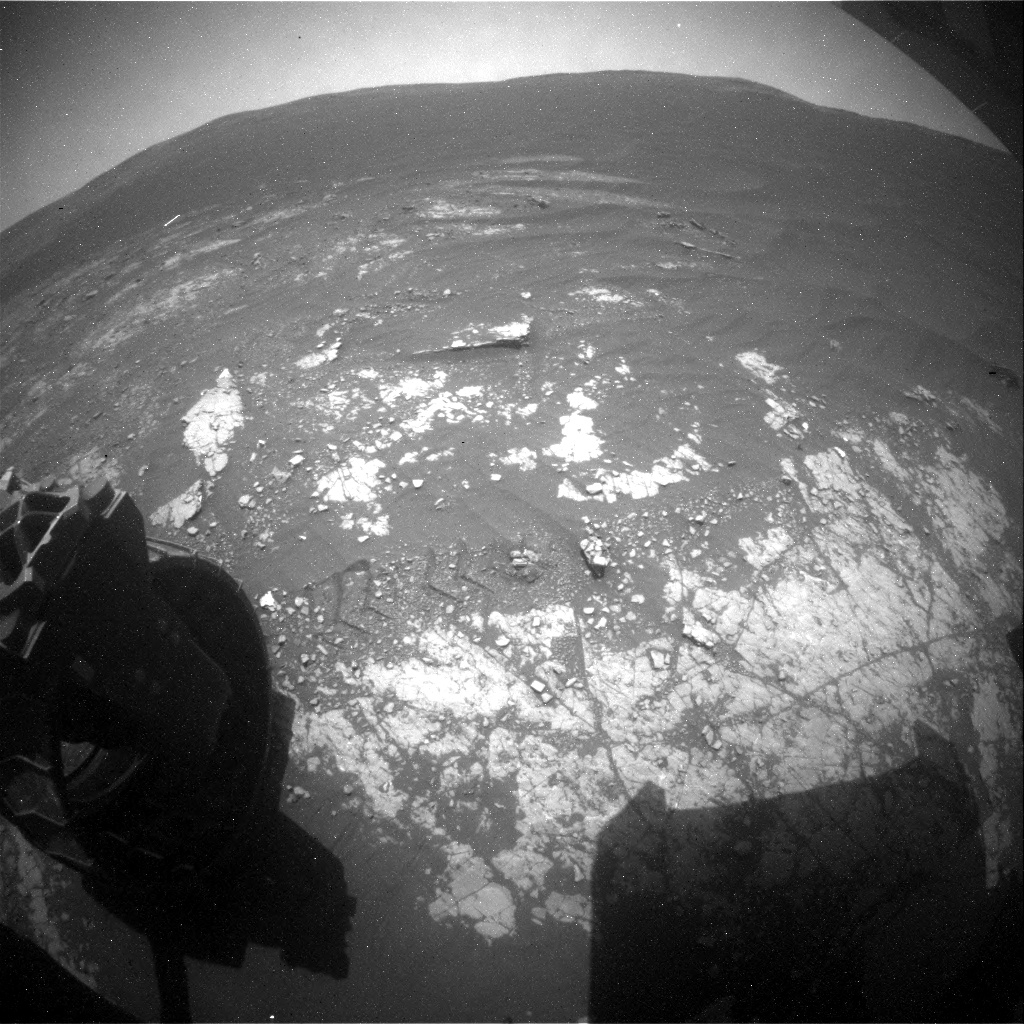
Rear Hazcam Right B image taken on Sol 2412, May 20, 20019.
Credit: NASA/JPL-Caltech
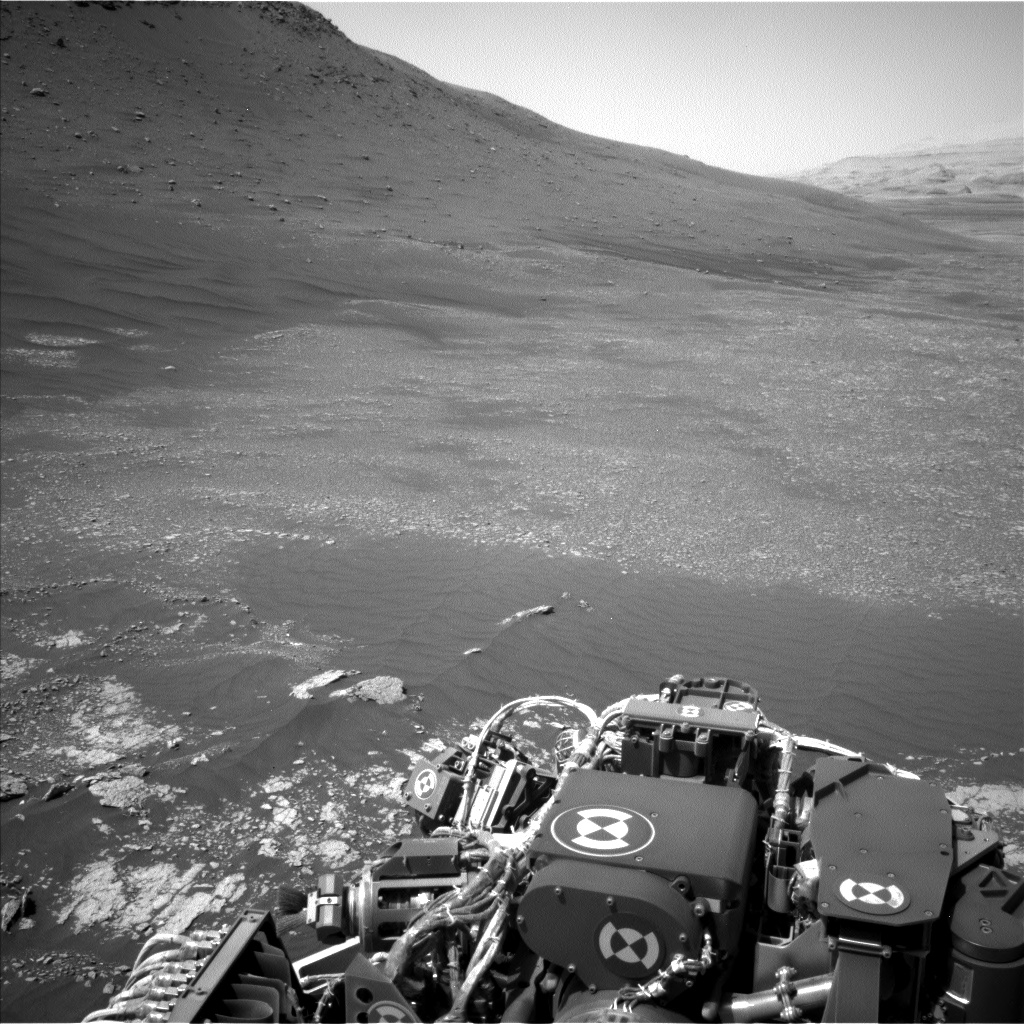
Curiosity Navcam Right B photo taken on Sol 2412, May 20, 2019.
Credit: NASA/JPL-Caltech
“Besides all the science, housekeeping activities are prominent in the plan, too,” Schwenzer concludes. “Curiosity will take images of the drill bit, and do a ChemCam calibration activity.”

The Case for Space: How the Revolution in Spaceflight Opens Up a Future of Limitless Possibility by Robert Zubrin; Prometheus Books, New York, 2019; hardcover: 395+ pages, $25.00
There is an on-going revolution in spaceflight. But where will this uprising in technological prowess take us?
Robert Zubrin has written a compelling account of the trajectory ahead for humanity. In 14 chapters (divided into a part 1: “How we can” and part 2: “Why we must”), the author puts forward a visionary account of how best to break the bonds of Earth and head for the stars.
“Great things are happening,” Zubrin says in an introduction that kicks off the book. “It’s a grand time to be alive. We are living at the beginning of history. We are present at the creation.”
There’s a new space race afoot; it’s not a replay of rival superpowers that ushered in the Cold War space race. Rather, competing entrepreneurs are the key to transforming our future in space. The author underscores why the spaceflight revolution is a must: for the knowledge, for the challenge, for our survival, for our freedom, and for the future. In the book’s concluding chapter, Zubrin flags what now needs to be done, giving the charge to the reader to become a space activist.
The book is loaded with technical detail on pushing forward to the stars, as well as sweeping and captivating looks at terraforming, mining the asteroids for fun and profit, how to build a Moon base, and colonizing Mars. Zubrin does not skimp on provocative ideas and pulls no punches when critical of ideas promoted by NASA and others.
“Making history is not a spectator sport,” Zubrin concludes. “It’s your turn at the plate.”
The reader will find this mind-stretching volume an absorbing look at the future of space exploration. A great glossary of terms and chapter by chapter notes for delving deeper into topics rounds out this impressive book.
For more information, go to:

Curiosity Front Hazcam Left B image taken on Sol 2410, May 18, 2019.
Credit: NASA/JPL-Caltech
NASA’s Curiosity Mars rover is now performing Sol 2410 duties.
The robot has used its front wheel to dig a small trench in a ripple at the ripple field named “Rigg,” reports Ryan Anderson, a planetary geologist at the U.S. Geological Survey in Flagstaff, Arizona.
The plan then called for focus on what that scuff uncovered.
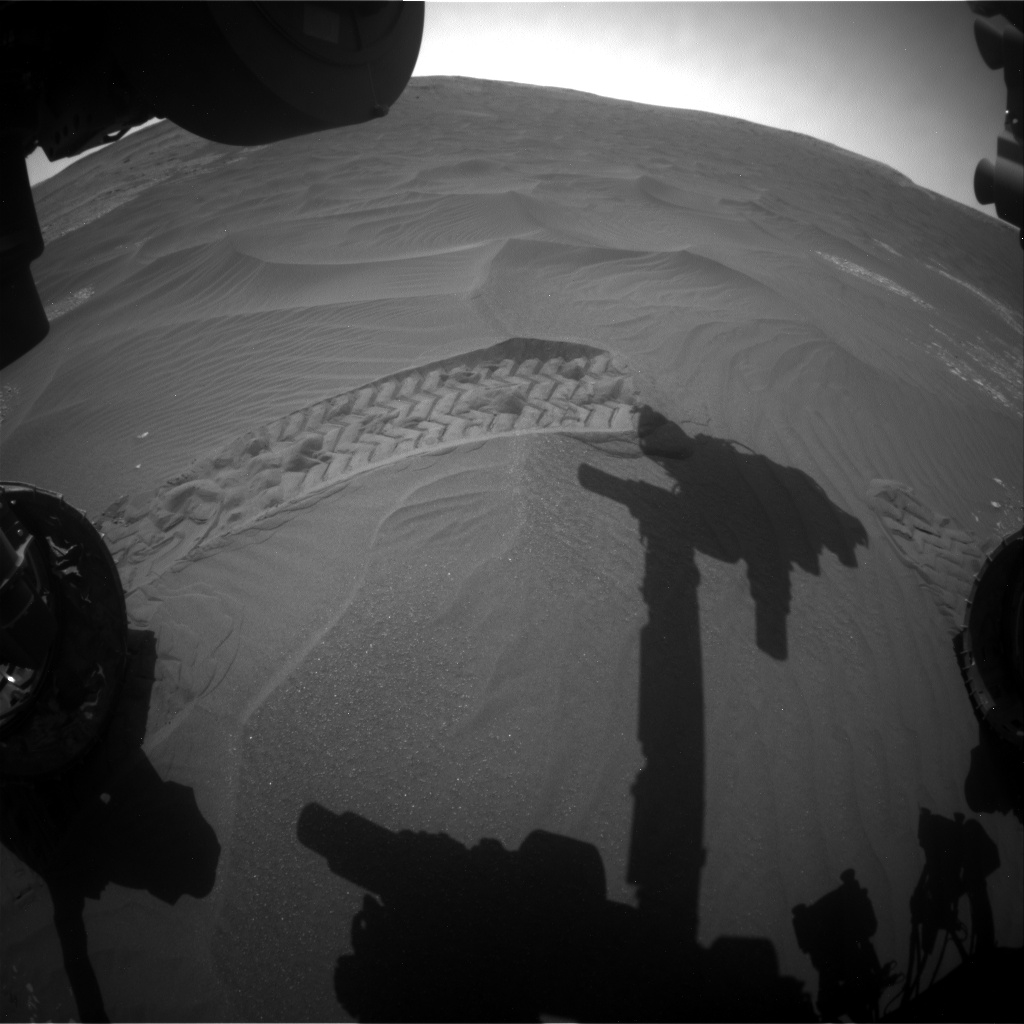
Curiosity Front Hazcam Left B photo taken on Sol 2409, May 17, 2019.
Credit: NASA/JPL-Caltech
Active sand
“There is a lot that we can learn,” Anderson adds, “from these patches of active sand that we occasionally encounter as we explore Gale crater!”
“One of the big questions is where the sand comes from: by measuring the chemical composition of the sand at Rigg we can compare with sand we have seen earlier in the mission to see if the chemistry is different enough that there must be different sources. We also can compare the grain sizes in different parts of the ripple to get a better understanding of how the wind sorts sand grains under martian gravity and atmospheric pressure,” Anderson explains.
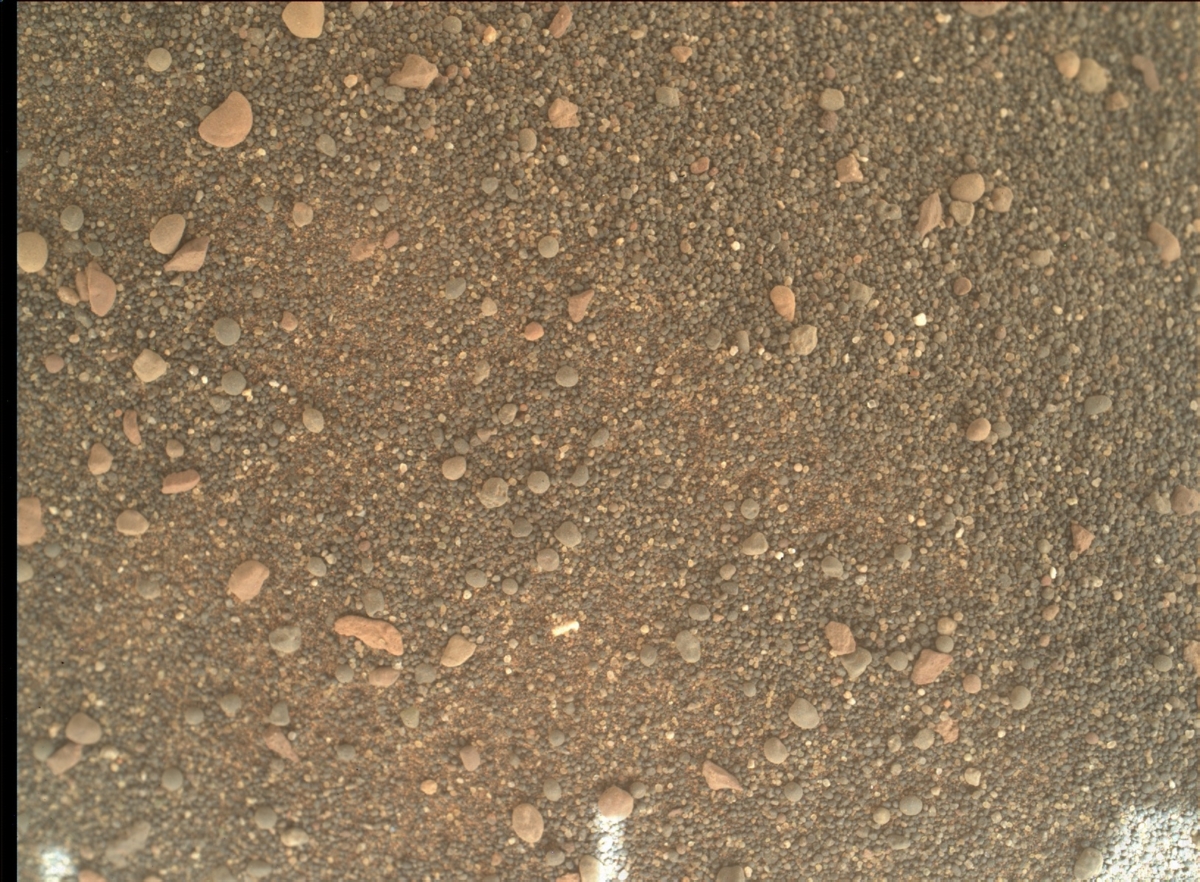
Curiosity Mars Hand Lens Imager (MAHLI) photo produced on Sol 2409, May 17, 2019. MAHLI is located on the turret at the end of the rover’s robotic arm.
Credit: NASA/JPL-Caltech/MSSS
Similarities or differences?
Studying the shape of the ripples in detail also helps scientists compare modern bedforms (the generic term for dune-like features of all sizes) to the ancient ones seen preserved in the rocks, which lets researchers infer similarities or differences in the environment.
“And of course, looking closely at these wind-blown sand features lets us get a better handle on what the winds are like in Gale crater right now,” Anderson reports.
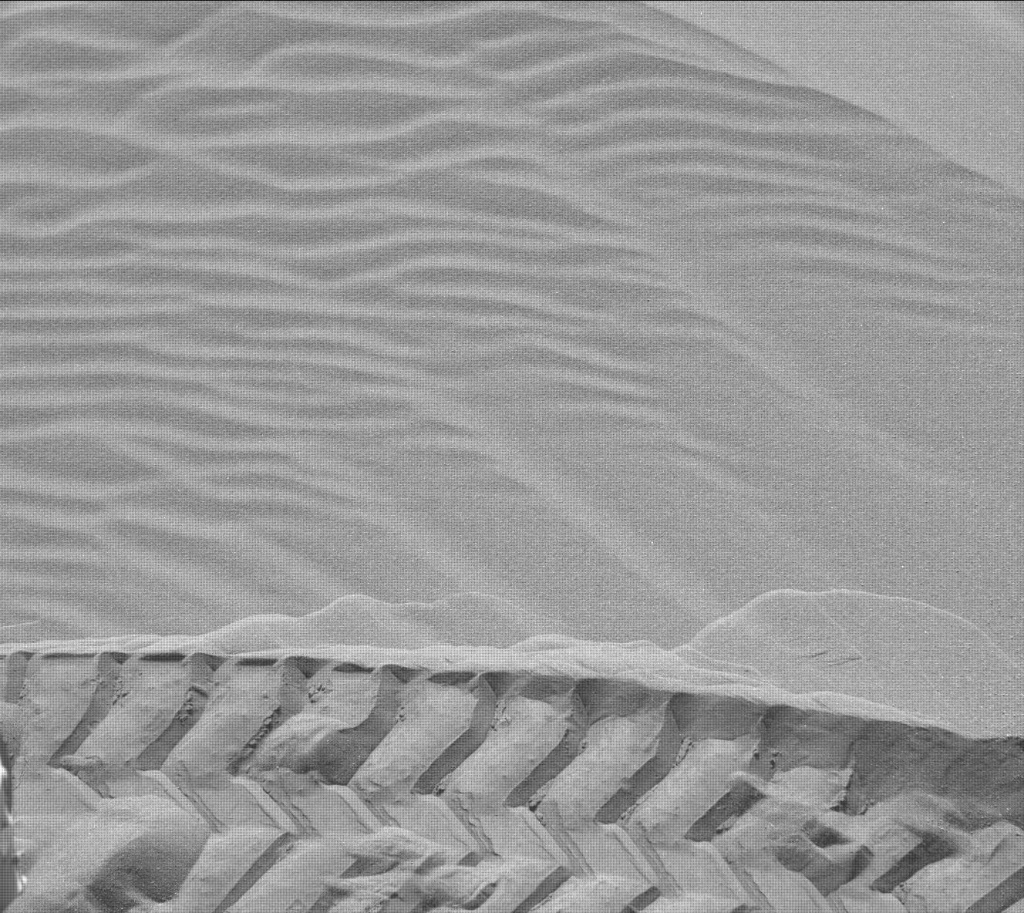
Curiosity Mastcam Left image acquired on Sol 2408, May 16, 2019.
Credit: NASA/JPL-Caltech/MSSS
Blocky outcrop
The sol 2409 plan called for the robot to make a Mastcam multispectral observation of the scuff, followed by Chemistry and Camera (ChemCam) of the floor (“Ben Cruachan”) and wall (“Ben Lomond”) of the scuff, as well as the undisturbed crest of the ripple (“Ben Suardal”).
That plan also calls for use of Navcam to look for dust devils before starting contact science.
Contact science observations start with Mars Hand Lens Imager (MAHLI) images of targets on the ripple crest (“Dunoon”), trough (“Gairsay”), and a secondary ripple (“Nairn”).

Curiosity Mastcam Left image acquired on Sol 2408, May 16, 2019.
Credit: NASA/JPL-Caltech/MSSS
Curiosity’s Alpha Particle X-Ray Spectrometer (APXS) will then quickly measure the chemistry of Dunoon before settling in for an overnight measurement of Gairsay.
“We plan to keep playing in the sand at Rigg for another couple of sols before moving on toward a blocky outcrop to the northeast,” Anderson concludes.

The Lunar Planetary Institute’s (LPI) has released the Lunar South Pole Atlas – a new online reference for mission planners.
NASA has been directed to land astronauts at the lunar south pole by 2024, an objective with a five-year timeline.
Speed, safety, and efficiency are key priorities driving this implementation of Space Policy Directive-1, which is to have humans on the Moon for “long-term exploration and utilization.”
New data products
To assist NASA and the lunar community, LPI, under the Universities Space Research Association (USRA), has compiled an online atlas that consists of a series of maps, images, and illustrations of the south polar region.
The atlas includes new data products developed with the south pole directive in mind; other content is drawn from LPI’s existing collection of Lunar Images and Maps and its Library of Classroom Illustrations.

Links to additional data products derived from recent and ongoing planetary missions are also included.
This atlas is curated to provide context and to be a reference for those interested in the exploration of the Moon’s south pole.
To review the newly released atlas, go to:

