Author Archive
 Author:
  June 8th, 2019
Credit: CMSA
China is set to announce selected experiments to be flown on the country’s space station.
In May 2018, the United Nations Office for Outer Space Affairs (UNOOSA) published an “Announcement of Opportunity” inviting Member States to submit applications to conduct scientific experiments onboard China’s space outpost.

Prototype of the Tianhe core module. China’s space station is expected to be operational around 2022.
Credit: CCTV/Screengrab/Inside Outer Space
By October, 42 applications from 27 countries had been submitted, with proposals extending across nine areas, including space medicine, space life science, and fundamental physics.
A preliminary selection of experiments was carried out, yielding a shortlist of 18 ideas.
Forward-looking initiative
Next week, on June 12, there will be a United Nations/China Joint Announcement Event on selected experiments, held at the Vienna International Center.
According to the UNOOSA, the forward-looking initiative is to open China’s space station “to all countries and create a new paradigm in building capabilities in space science and technology, in particular for developing countries.”
According to government plans, China will start piecing together the country’s multi-module space station around 2020. Named Tiangong, or Heavenly Palace, the complex will comprise three main parts: a core module attached to two space labs, combining for a weight of 66 metric tons.

Credit: CMSA
Station assembly
China’s space station build-up will first see use of a Long March 5B heavy-lift rocket to orbit the outpost’s core module. About four crewed spaceflights will then be made sending astronauts to assemble the station.
According to Chinese news reports, the space station is expected to be fully operational around 2022 and is to operate for at least 10 years.
Along with the station, a main section of an Optical Module System would be launched into orbit separately and flies along the same orbit as China’s space station. This system can support multi-color photometry, seamless spectrum survey and Earth observation with multi-function optical capabilities. If necessary, it can dock with the station for refueling, equipment maintenance, payload equipment upgrade and other maintenance activities.
NOTE: The original United Nations/China Cooperation on Utilization of the China Space Station Application Form is available at:
http://www.unoosa.org/documents/doc/psa/hsti/CSS_1stAO/CSS_1stAO_ApplicationForm_2018.doc
To read the handbook — China Space Station and its Resources for International Cooperation – go to:
http://www.unoosa.org/documents/doc/psa/hsti/CSS_1stAO/CSS_1stAO_Handbook_2018.pdf
More information about the United Nations/China Cooperation on the Utilization of the Chinese space station can be found here:
http://www.unoosa.org/oosa/en/ourwork/psa/hsti/chinaspacestation/ao_main.html
 Posted in
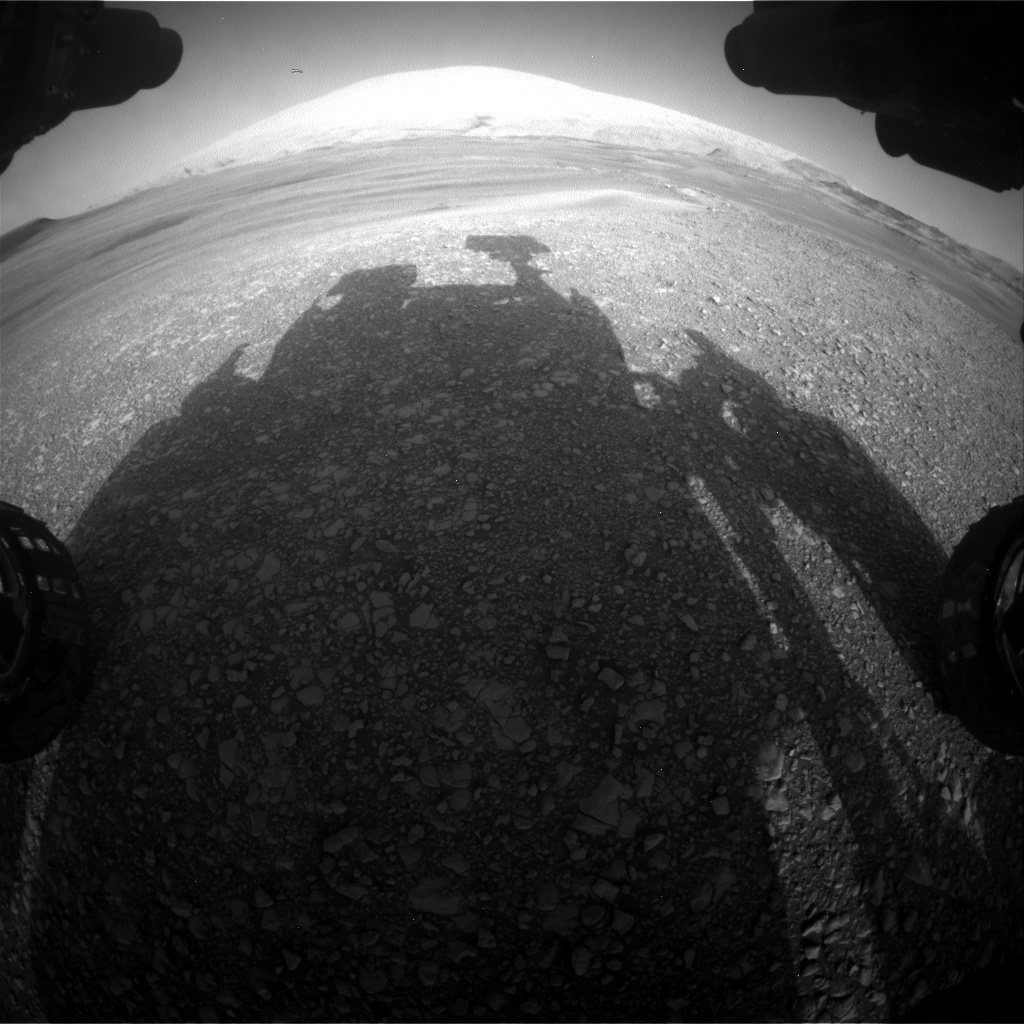
Curiosity Front Hazcam Right B image taken on Sol 2429, June 7, 2019.
Credit: NASA/JPL-Caltech
NASA’s Curiosity Mars rover is now performing Sol 2430 duties.
Brittney Cooper, an atmospheric scientist at York University, Toronto, Ontario, Canada reports that the original plan for Sol 2429 involved a “touch-and-go” where the rover would have engaged in contact science (that’s the “touch” portion) followed by a drive (the “go” portion).

Curiosity Front Hazcam Left B photo acquired on Sol 2429, June 6, 2019.
Credit: NASA/JPL-Caltech
However, the instrument leads for the rover determined tactically that they were satisfied with the contact science already acquired at this location.
“Thus, we planned a ‘no-touch-and-go,’ and were able to take the time planned for contact science and use it to extend the length of a remote sensing science block before the drive,” Cooper explains.
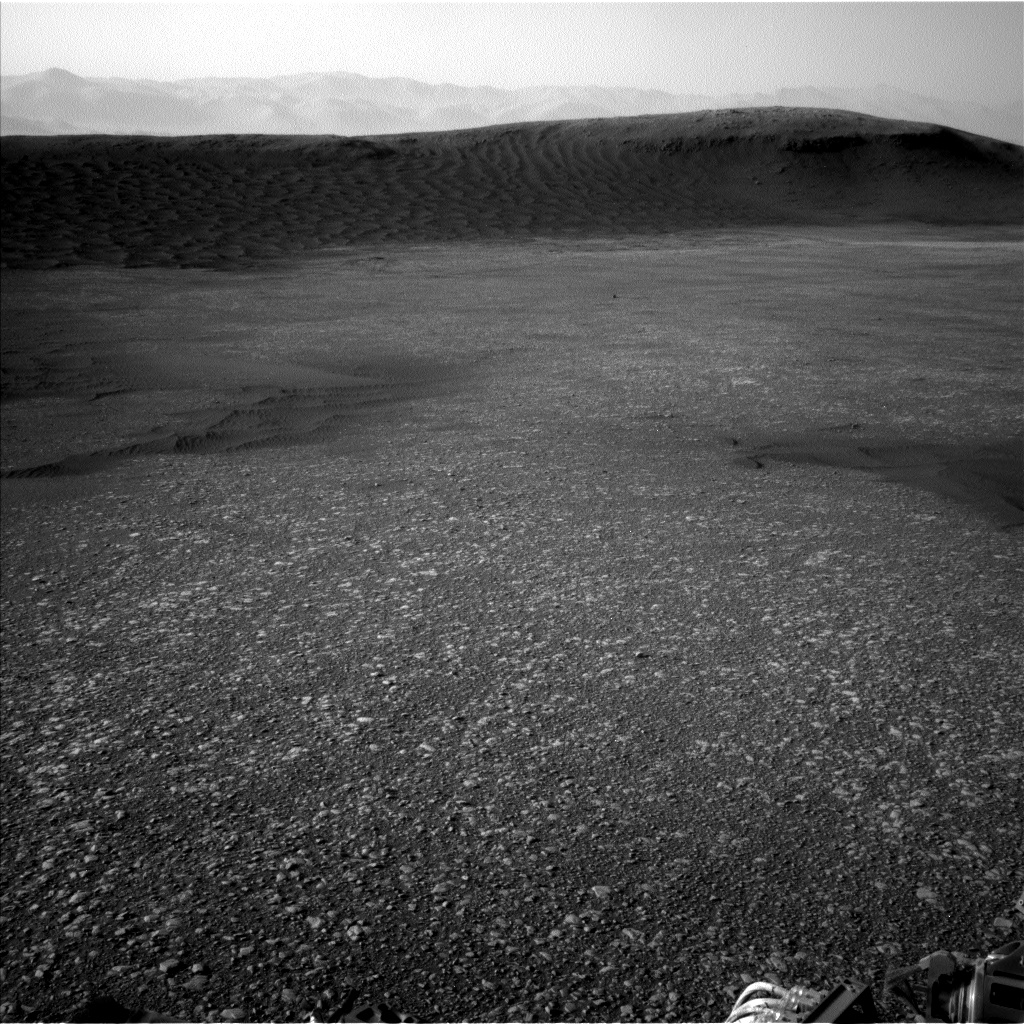
Curiosity Navcam Left B image taken on Sol 2429, June 7, 2019.
Credit: NASA/JPL-Caltech
Nearby gravel
This science block contains two Mastcam multi-filter observations, a 10×1 Chemistry and Camera (ChemCam) raster on target “Awe,” a 5×1 raster on target “Castle Rock,” and a Mastcam stereo mosaic to capture nearby gravel.
Curiosity will then drive an hour and twenty minutes, Cooper adds, and wrap up the sol with some post-drive imaging of the new workspace, a Mastcam tau to measure atmospheric opacity, and a post-drive Dynamic Albedo of Neutrons (DAN) active measurement.
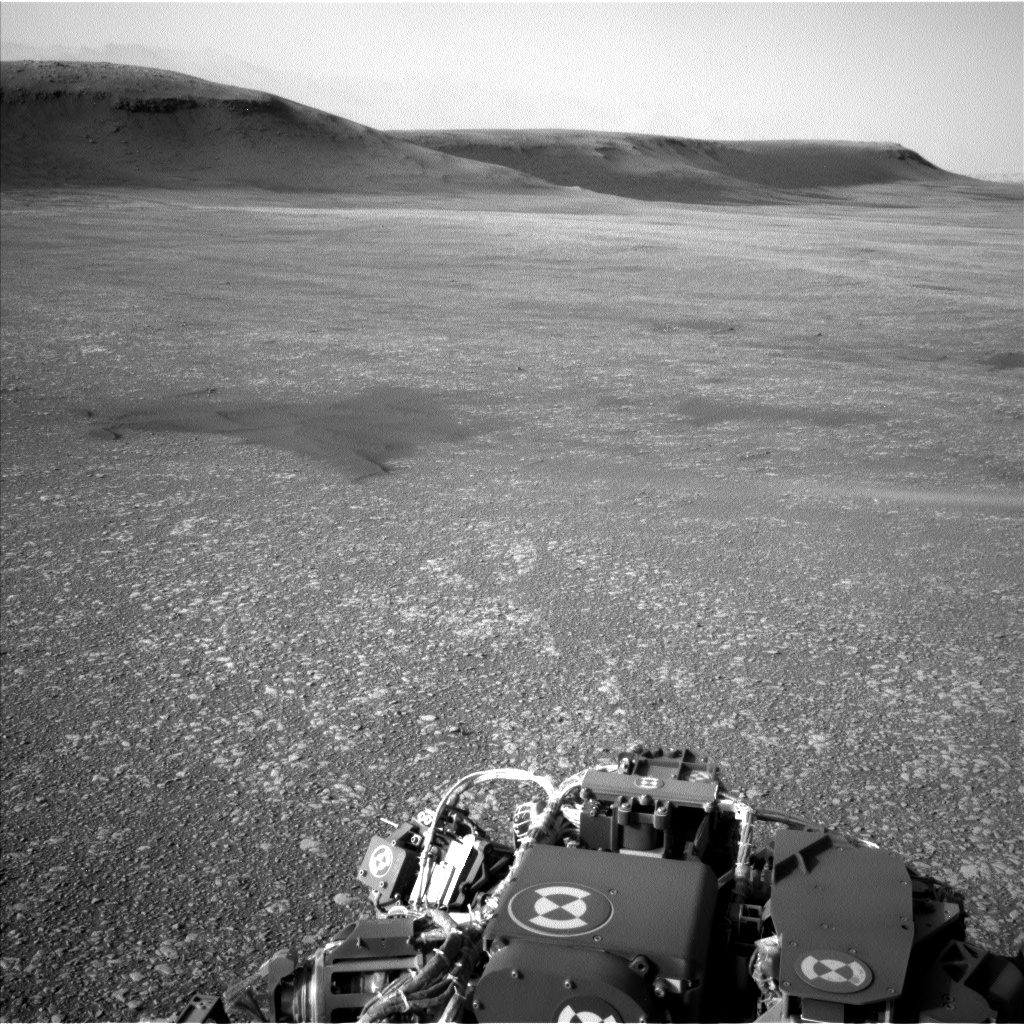
Curiosity Navcam Left B image taken on Sol 2429, June 7, 2019.
Credit: NASA/JPL-Caltech
Cosmic rays
“For those not familiar, a post-drive DAN active consists of the DAN instrument shooting neutrons into the ground and measuring the energy of the reflected neutrons to detect hydrogen just below the surface,” Cooper points out. “A DAN active occurs after every drive so that the DAN team can acquire these measurements at every location that Curiosity stops and does science.”
DAN actives run in conjunction with DAN passives, Cooper adds, “and while you may not hear about them often, the passive measurements run pretty much anytime Curiosity is awake for more than an hour. In passive mode, DAN relies on cosmic rays to provide a source of neutrons for its measurements.”
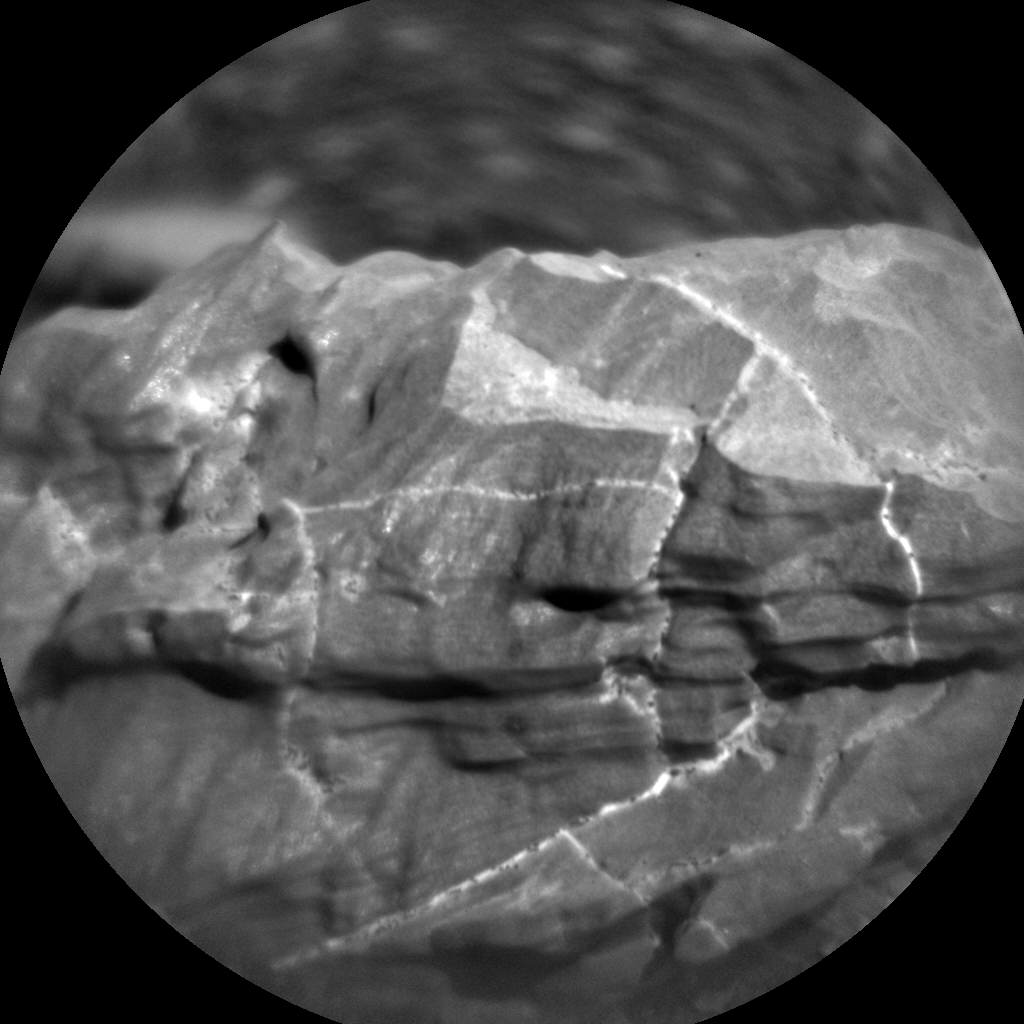
Curiosity ChemCam Remote Micro-Imager photo taken on Sol 2429, June 6, 2019.
Credit: NASA/JPL-Caltech/LANL
Pre-determined pointings
The second sol plan consists of a science block that will occur following the sol 2429 drive, thus researchers don’t know what the robot’s workspace will look like.
In this block a planned Autonomous Exploration for Gathering Increased Science (AEGIS) activity to find a target of interest is on tap, then run a 3×3 ChemCam raster on it, along with two types of Navcam movies with pre-determined pointings to hunt for dust devils.
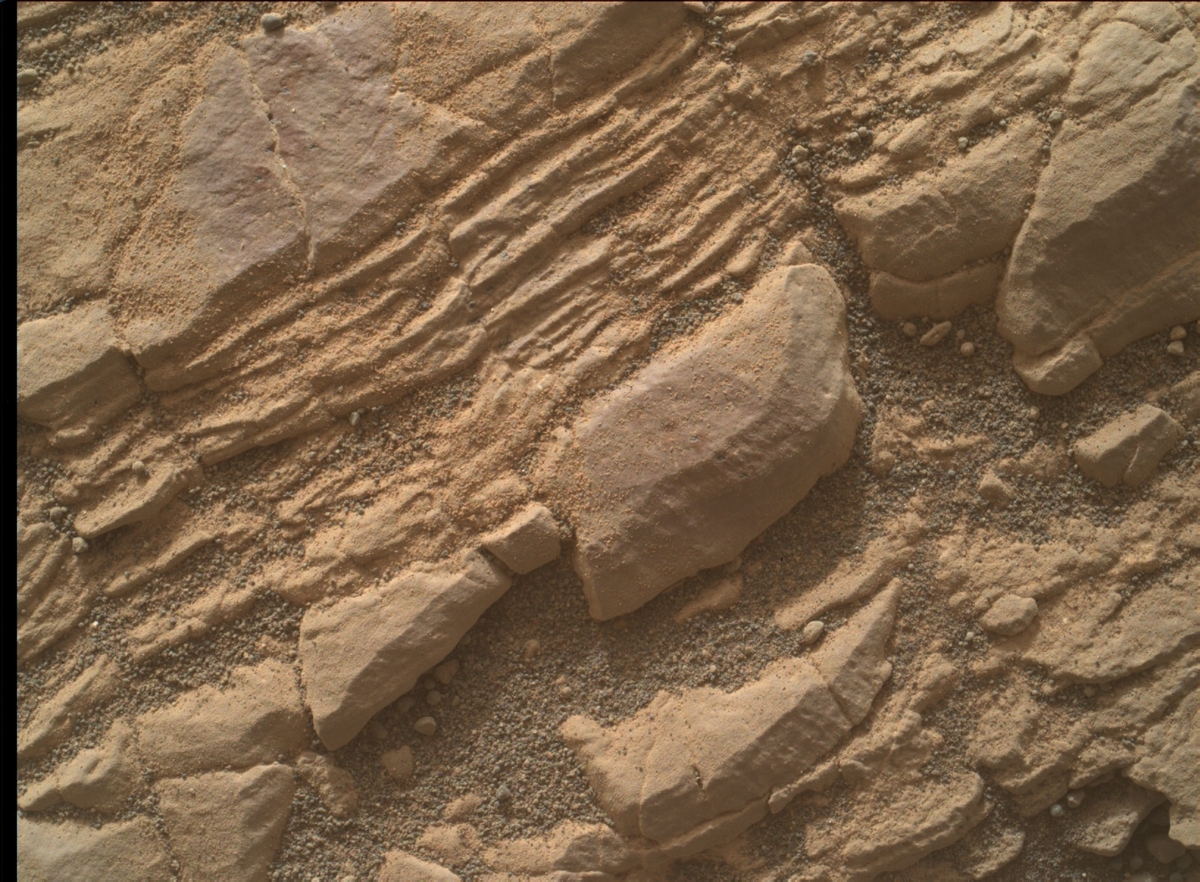
Curiosity Mars Hand Lens Imager (MAHLI) photo produced on Sol 2427, June 5, 2019. MAHLI is located on the turret at the end of the rover’s robotic arm
Credit: NASA/JPL-Caltech/MSSS
UV radiation
Lastly, standard Rover Environmental Monitoring Station (REMS) extended block and nominal hourly measurements of temperature, pressure, humidity and UV radiation were also included in this plan, Cooper notes.
“We made sure to include an extra REMS extended block over the dust devil surveys,” Cooper concludes, “because the pressure monitoring can be used in combination with the visual imagery to measure and detect these low-pressure vortices.”

Credit: SpaceX/Starlink
I wanna see it painted, painted black
Black as night, black as coal
I wanna see the sun blotted out from the sky
I wanna see it painted, painted, painted, painted black
— “Paint It Black” by the Rolling Stones
Last month, the SpaceX launch of the first group of sixty Starlink satellites signaled the intent of connecting the entire Earth via a cocoon of internet service. Clearly that’s a laudable goal, one that will rely on lots more follow-on spacecraft circuiting our planet.
Prior to going operational, Starlink has already produced a global shout-out – in interconnecting the ire of the astronomical community.

An image of the NGC 5353/4 galaxy group made with a telescope at Lowell Observatory in Arizona, USA on the night of Saturday 25 May 2019. The diagonal lines running across the image are trails of reflected light left by more than 25 of the 60 recently launched Starlink satellites as they passed through the telescope’s field of view. Although this image serves as an illustration of the impact of reflections from satellite constellations, please note that the density of these satellites is significantly higher in the days after launch (as seen here) and also that the satellites will diminish in brightness as they reach their final orbital altitude.
Credit: Victoria Girgis/Lowell Observatory
Due to the reflective solar panels and other metal surfaces on Starlink satellites they have been observable to the naked eye at night. The visibility of the satellites, combined with a rapid increase in the number of satellites in low Earth orbit has caused anxiety in astronomical and stargazing circles.
On the receiving end of their anger, SpaceX lead rocketeer and space entrepreneur, Elon Musk responded by tweet: “There are already 4900 satellites in orbit, which people notice ~0% of the time. Starlink won’t be seen by anyone unless looking very carefully & will have ~0% impact on advancements in astronomy. We need to move telescopes to orbit anyway. Atmospheric attenuation is terrible.”
“We care a great deal about science,” Musk also tweeted, saying he has sent a note to the Starlink team to decrease spacecraft albedo – the amount of light the satellites reflect.
Eye contact
“While I am concerned about the potential implications for these large constellations on ground-based astronomy, I’m trying to get some analysis put together to better assess the impact,” explains T.S. Kelso, operator of CelesTrak that keeps a disciplined eye on satellites and orbital debris.
Kelso said he’s had eye contact with the Starlink train of satellites, “even though the sky still wasn’t fully dark and I was looking through thin clouds,” he told Inside Outer Space.

Falcon 9 booster topped with sixty Starlink satellites.
Credit: SpaceX
“But I’ve gone out twice since looking under clear skies and not been able to see anything. I’m sure the visibility is directly related to the Sun-satellite-observer angle where the panels are tracking the Sun and the sunlight is reflecting toward the observer – much like the Iridium flares. So, it may only affect a small part of the sky,” Kelso adds.
“I suspect the result was unexpected for SpaceX, given that they had to consider a lot of other things in the design and never considered the implications,” Kelso says. “They would have had to ask some astronomers for feedback to understand. At least Musk seems to be considering what can be done now to minimize the impact.”
Trade-offs
“The Starlink debate has certainly caught my interest,” says orbital debris expert, Hugh Lewis, a Professor of Astronautics and Head of the Astronautics Research Group at the U.K’s University of Southampton.
For Lewis the debate about astronomy versus space-enabled connectivity is representative of a broader debate about trade-off: To do a lot of good — connecting the world — we might have to do a little harm – increase debris concerns, affect astronomy, others.
“At the moment, our technology is not good enough to avoid all harm, so we have to figure out how much harm we are willing to accept; clearly, different people and different communities have different thresholds. I’m encouraged by the signals coming from SpaceX and Musk about ambitions to address the albedo issue,” Lewis said.
“But it’s frustrating because this issue wasn’t already on their agenda, and they hadn’t already engaged with the astronomy community. Had these conversations happened at an early enough stage, then the satellite design might have been changed – although given the publicity Starlink has received since launch, the slight cynic in me also suspects that nothing would have changed.”
Acceptable risk/harm
Lewis told Inside Outer Space: “For me, it’s definitely not about putting up roadblocks to progress. I’m a big fan of connecting the world! It should be about enabling companies like SpaceX to meet their ambitions whilst also respecting the thresholds related to acceptable risk/harm.
There is a huge collective of support, knowledge and wisdom that could get behind these ambitions, but this collective is seemingly being ignored, or only thought about after the fact, for reasons that I understand, if not fully support. The silver lining is that SpaceX/Musk seems willing to listen now, at least, on Twitter! Perhaps there is still an opportunity to enable,” Lewis concludes.
Credit: AURA
Nuisance or real problem?
Meanwhile, the Association of Universities for Research in Astronomy (AURA) has issued a statement on the Starlink constellation of satellites. AURA is the managing organization for many ground-based telescopes for the National Science Foundation (NSF). They note that the launch of the Starlink system may have impacts on the observational capabilities of these facilities.
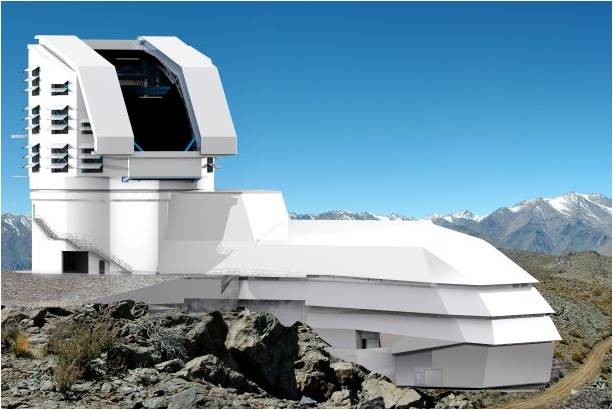
For example, one facility is the Large Synoptic Survey Telescope (LSST), under construction by NSF in Chile and slated to begin wide-field imaging of the sky in 2021.
“LSST will create an astronomical survey that depends on dark skies for its core science,” AURA says. “LSST’s frequent imaging of the same region of sky will be a mitigating factor for Starlink interference, providing enough uncontaminated images to reject the images that contain satellite trails or other anomalies.
Credit: LSST Project/NSF/AURA
In the case of the full constellation of Starlink satellites, initial calculations show that LSST images would, on average, contain about one satellite trail per visit for an hour or two after sunset and before sunrise. A very conservative upper limit on the number of LSST pixels affected by Starlink satellites is about 0.01%, and quite likely smaller. Therefore, for LSST, even a constellation of about 10,000 Starlink satellites would be a nuisance rather than a real problem.
That said, AURA emphasizes, however, that the impact of satellite constellations on other AURA telescopes that have wider fields, longer exposures, and/or less sophisticated data processing pipelines may be much more significant.
“Furthermore, Starlink may be only the first in a series of new technologies that could impact LSST and other ground-based astronomy facilities,” AURA says. “We believe that the design and implementation of these constellations should be undertaken in consultation with the astronomical community to minimize their impact.”
Understanding the impact
Another organization, the International Astronomical Union (IAU), is also concerned about these satellite constellations.
“Until this year, the number of such satellites was below 200, but that number is now increasing rapidly, with plans to deploy potentially tens of thousands of them. In that event, satellite constellations will soon outnumber all previously launched satellites,” an IAU statement points out.
“We do not yet understand the impact of thousands of these visible satellites scattered across the night sky,” adds the IAU. Despite their good intentions, these satellite constellations may threaten both the principle of a dark and radio-quiet sky but also as a resource for all humanity and for the protection of nocturnal wildlife.
“Satellite constellations can pose a significant or debilitating threat to important existing and future astronomical infrastructures,” the IAU observes, “and we urge their designers and deployers as well as policy-makers to work with the astronomical community in a concerted effort to analyze and understand the impact of satellite constellations. We also urge appropriate agencies to devise a regulatory framework to mitigate or eliminate the detrimental impacts on scientific exploration as soon as practical.”
For more information on Starlink, go to:
Credit: Bigelow Aerospace
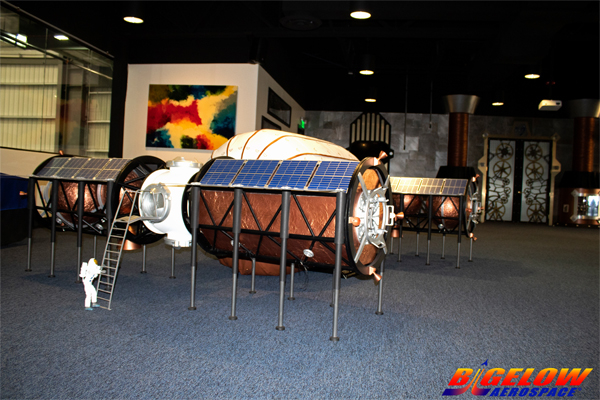
Bigelow Aerospace of North Las Vegas has unveiled new plans to create a Moon base.
This base can accommodate four people for a long duration or six people for 120 days on the surface of the Moon. Habitat interior volume is 330m³, not including two airlocks.
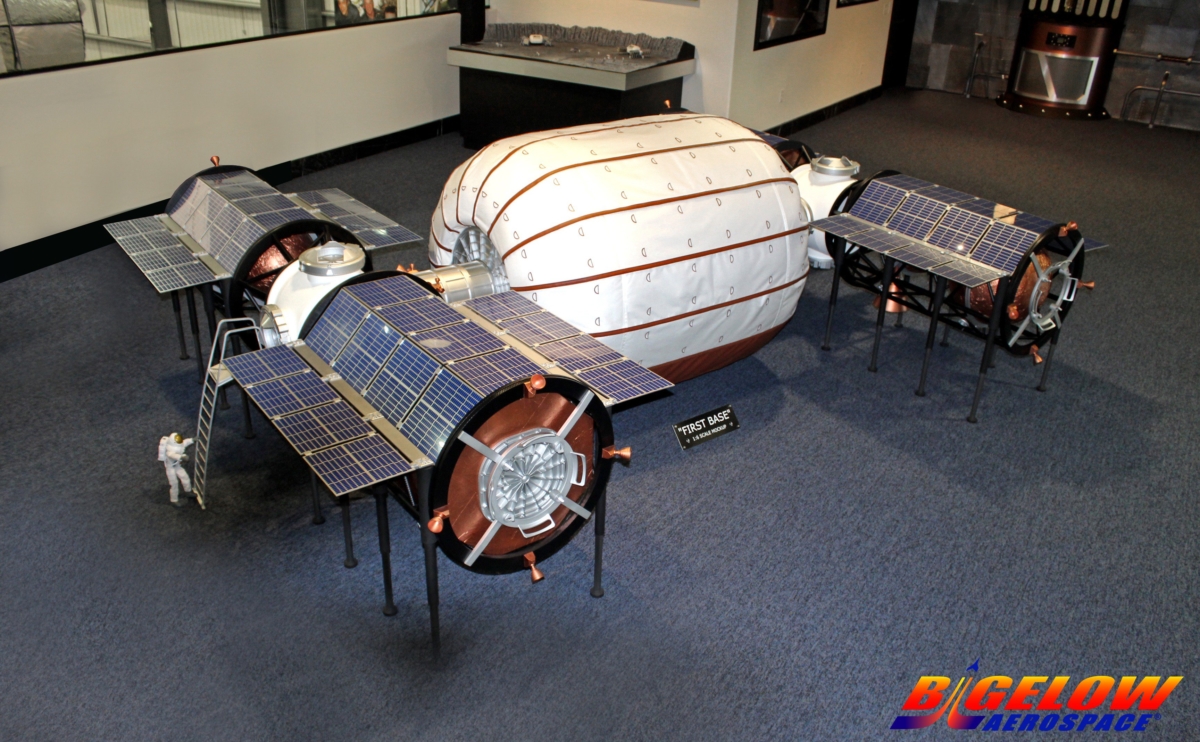
Credit: Bigelow Aerospace
Crew quarters
Interior accommodations include six large crew quarters, a large amount of storage capacity, two toilets and two galleys. On either side of the habitat are two airlocks- each with double compartments.
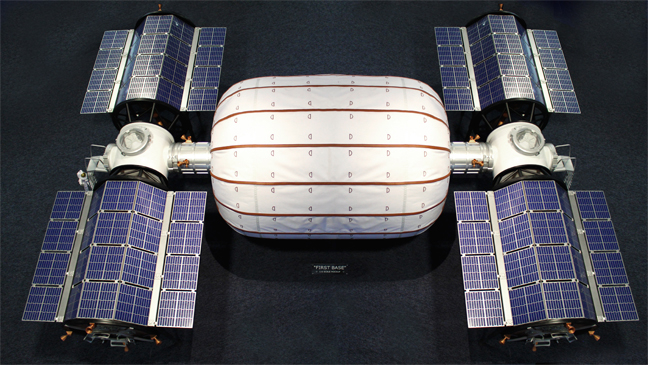
Credit: Bigelow Aerospace
Attached to the airlocks are opposing propulsion and warehouse structures: One warehouse is large enough for a solar array field to handle all of the power needs. The second warehouse is large enough to store two full-scale, two person cabin enclosed lunar rovers.
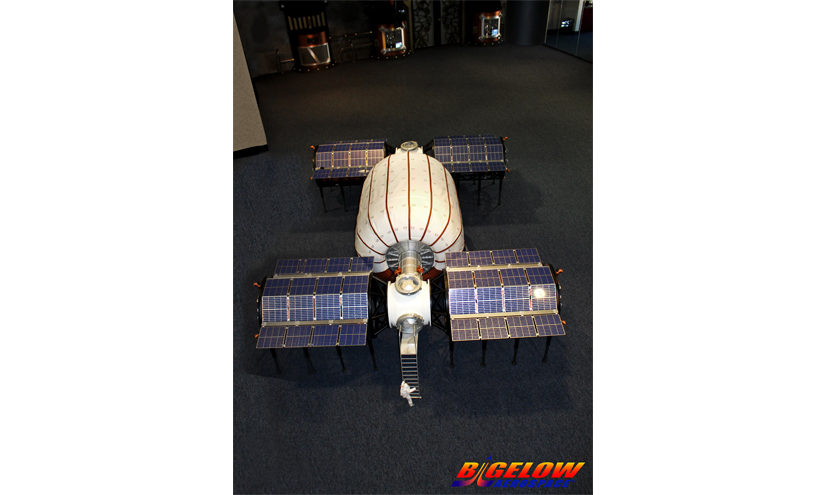
Credit: Bigelow Aerospace

Curiosity Mastcam Left Sol 2425, June 3, 2019.
Credit: NASA/JPL-Caltech/MSSS
NASA’s Curiosity Mars rover is now performing Sol 2427 duties.
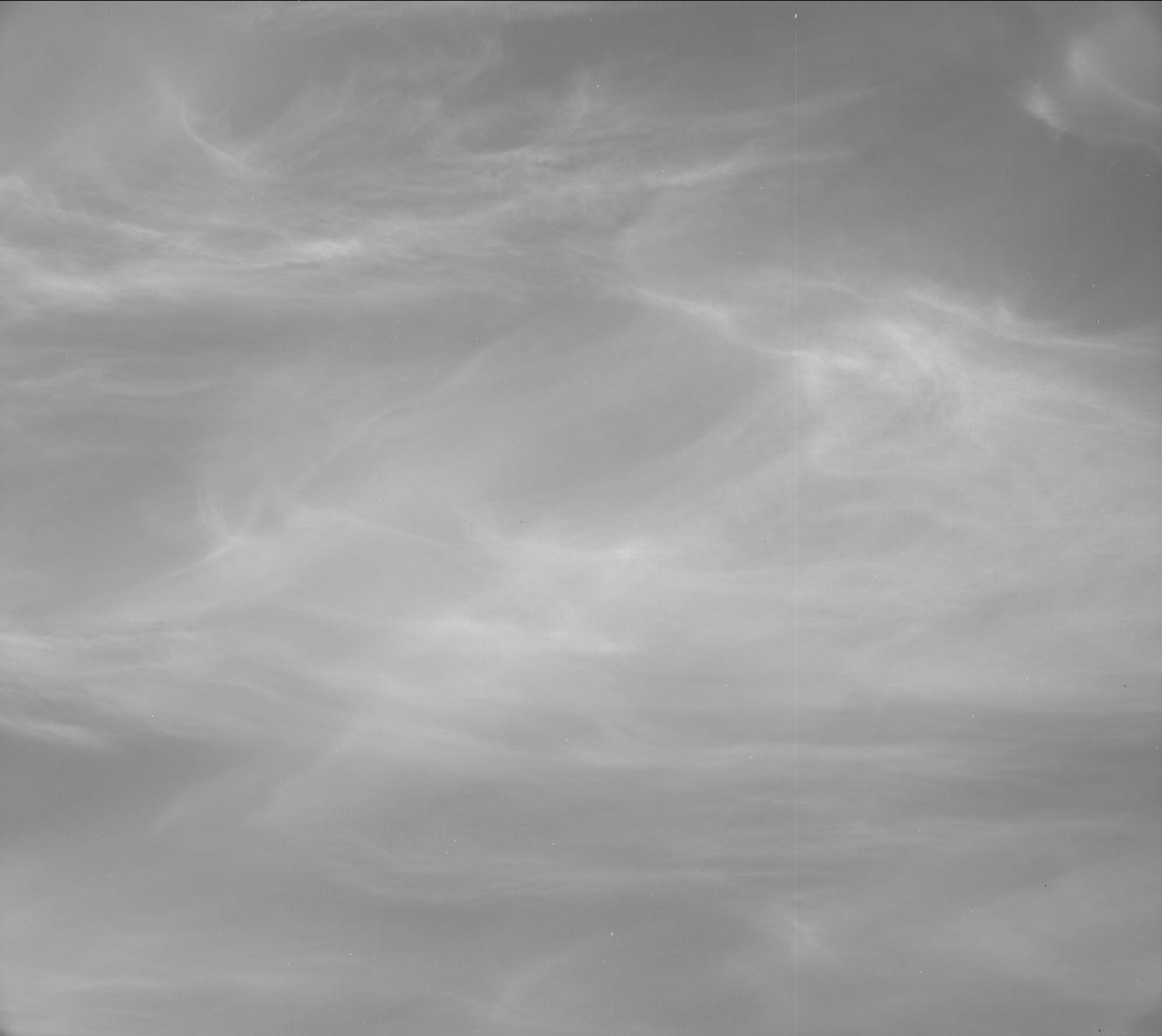
Curiosity Mastcam Left Sol 2425, June 3, 2019.
Credit: NASA/JPL-Caltech/MSSS
Reports Sarah Lamm, a planetary geologist at the Los Alamos National Laboratory in Los Alamos, New Mexico, plans for Curiosity have been scripted for weekend activities at Woodland Bay.
Woodland Bay is a location in Glen Torridon, in the clay bearing unit.
The plan scripted three sols of work in the area using the robot’s Alpha Particle X-Ray Spectrometer (APXS), the Mars Hand Lens Imager (MAHLI), Chemistry and Camera (ChemCam), as well as Mastcam, and Navcam.
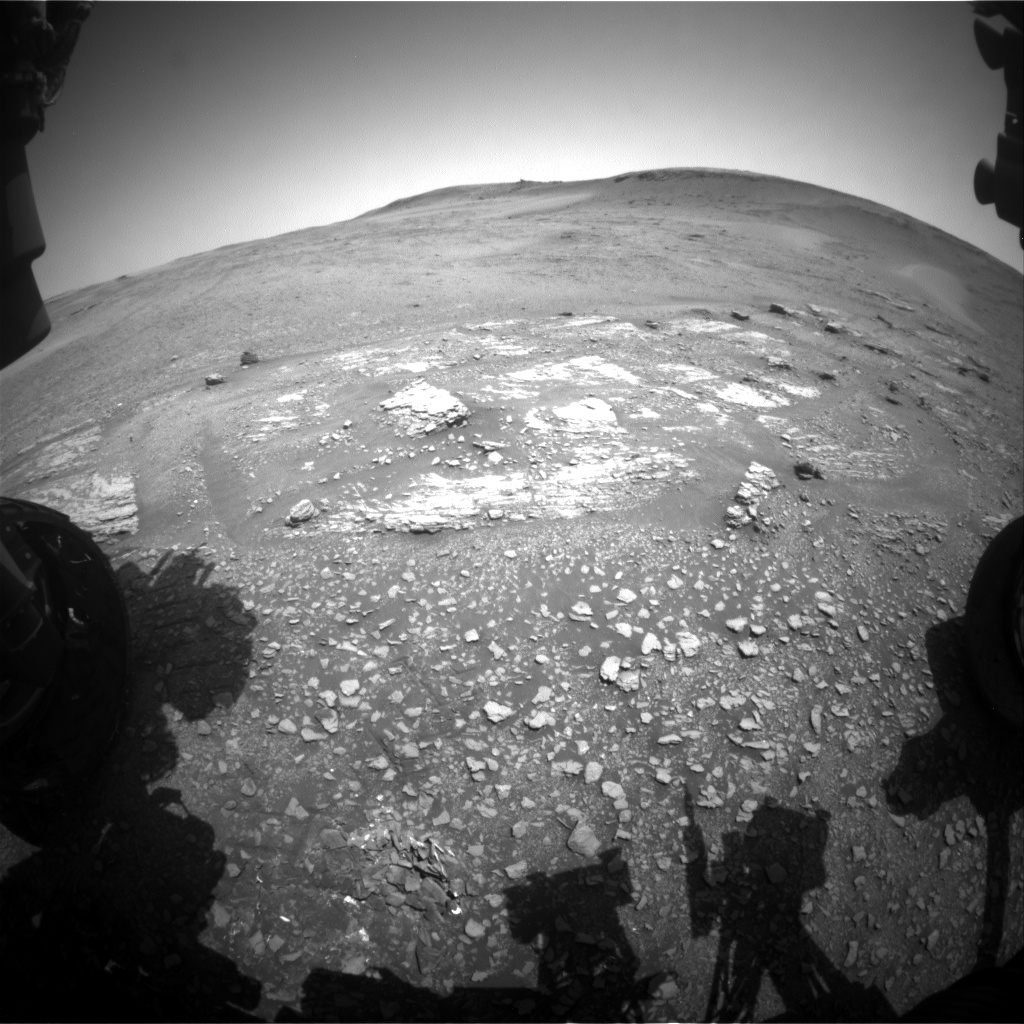
Curiosity Front Hazcam Left B image taken on Sol 2426, June 3, 2019.
Credit: NASA/JPL-Caltech
Geological context
On Sol 2424, the target “Morningside” was slated to be analyzed by APXS.
Then MAHLI was set to image the subtle morphological textures of “Morningside.” ChemCam was also to be used on targets: “Whiteadder,” “Wester Ross,” “West Wemyss,” and “Water Haven.” Mastcam images were to be taken of all targets for geological context.
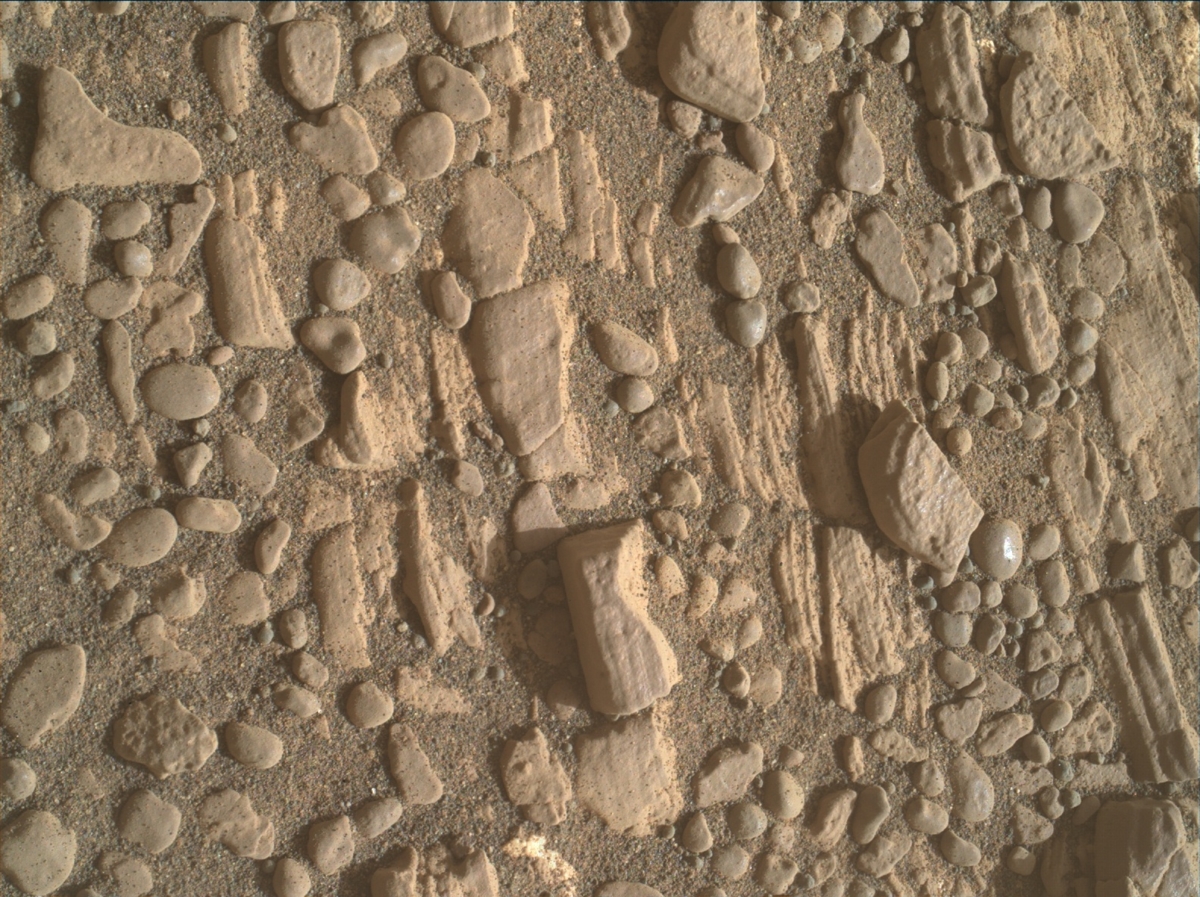
Curiosity Mars Hand Lens Imager (MAHLI) photo produced on Sol 2426, June 3, 2019. MAHLI is located on the turret at the end of the rover’s robotic arm.
Credit: NASA/JPL-Caltech/MSSS
Catching a dust devil
On Sol 2425, the plan called for the rover’s NavCam to take a short movie of the area in hopes of catching a dust devil.
“Dust devils have been spotted on Mars’ surface, but we could always use more movies and pictures of them,” Lamm points out.
“West Side” and “Morningside” were on tap for multispectral images to be taken by Mastcam.
Mastcam will also be used to document clouds in Mars’ night sky.
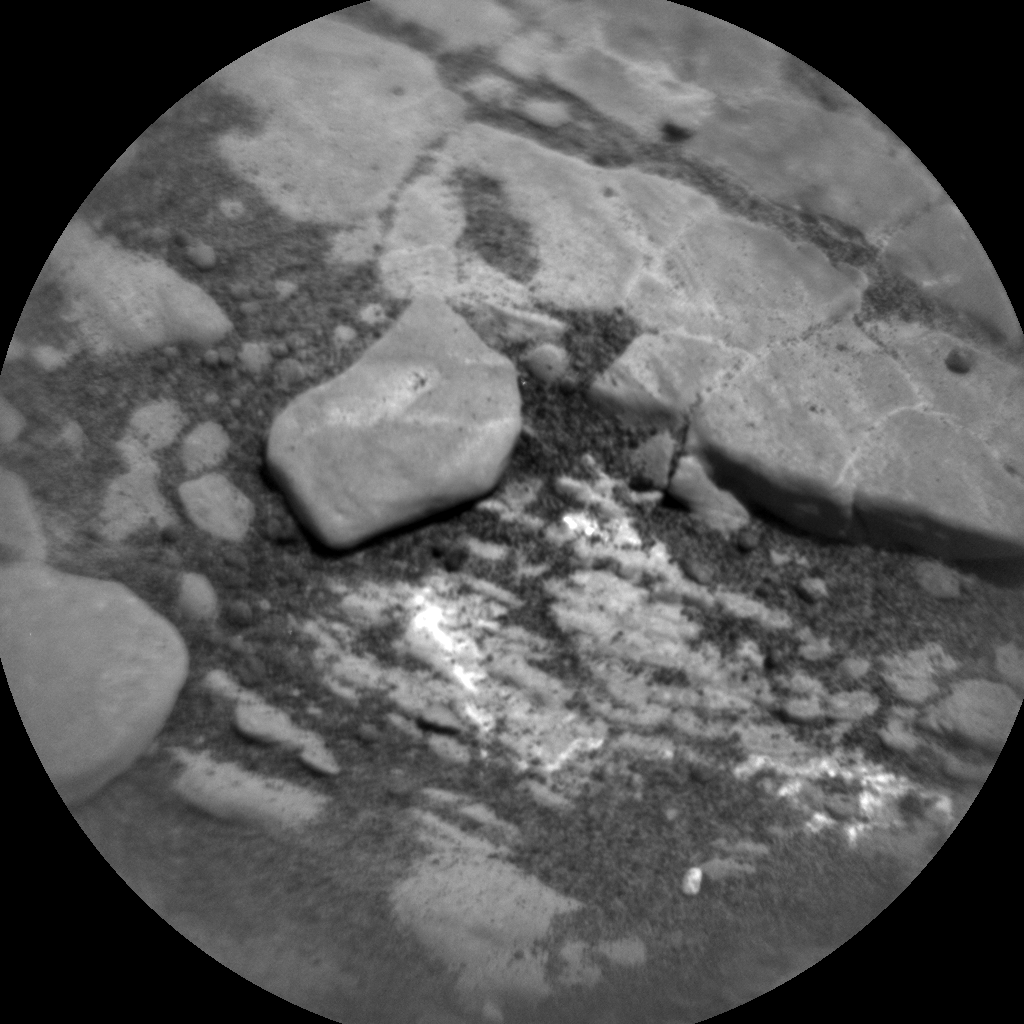
Curiosity ChemCam Remote Micro-Imager photo taken on Sol 2426, June 3, 2019.
Credit: NASA/JPL-Caltech/LANL
Cloud movie
On the Sol 2426 to do list, ChemCam was to have one target called “Watten.”
Navcam was also scheduled to take four short 8 frame movie of clouds. These movies will be taken at different times of day and at different locations in the sky.
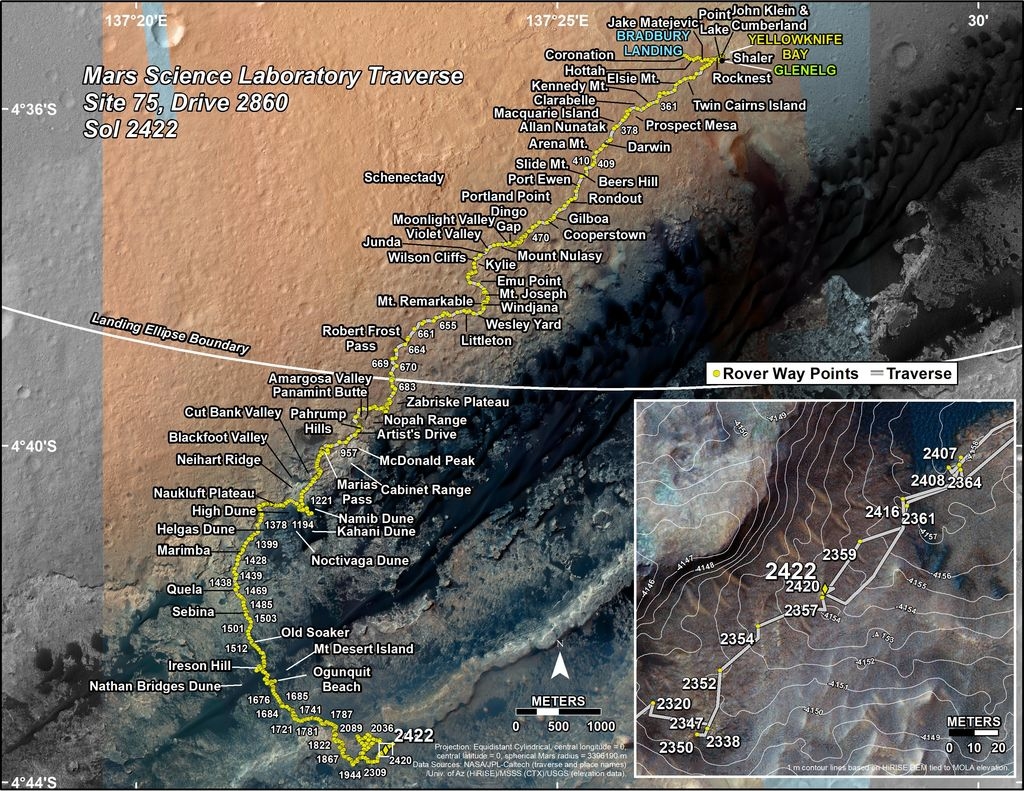
Credit: NASA/JPL-Caltech/Univ. of Arizona
Traverse map
Meanwhile, a new Curiosity’s traverse map through Sol 2422 has been posted.
The map shows the route driven by NASA’s Mars rover Curiosity through the 2422 Martian day, or sol, of the rover’s mission on Mars (June 01, 2019).
Numbering of the dots along the line indicate the sol number of each drive. North is up. The scale bar is 1 kilometer (~0.62 mile).
From Sol 2420 to Sol 2422, Curiosity had driven a straight line distance of about 6.28 feet (1.91 meters), bringing the rover’s total odometry for the mission to 12.83 miles (20.65 kilometers).
The base image from the map is from the High Resolution Imaging Science Experiment Camera (HiRISE) in NASA’s Mars Reconnaissance Orbiter.
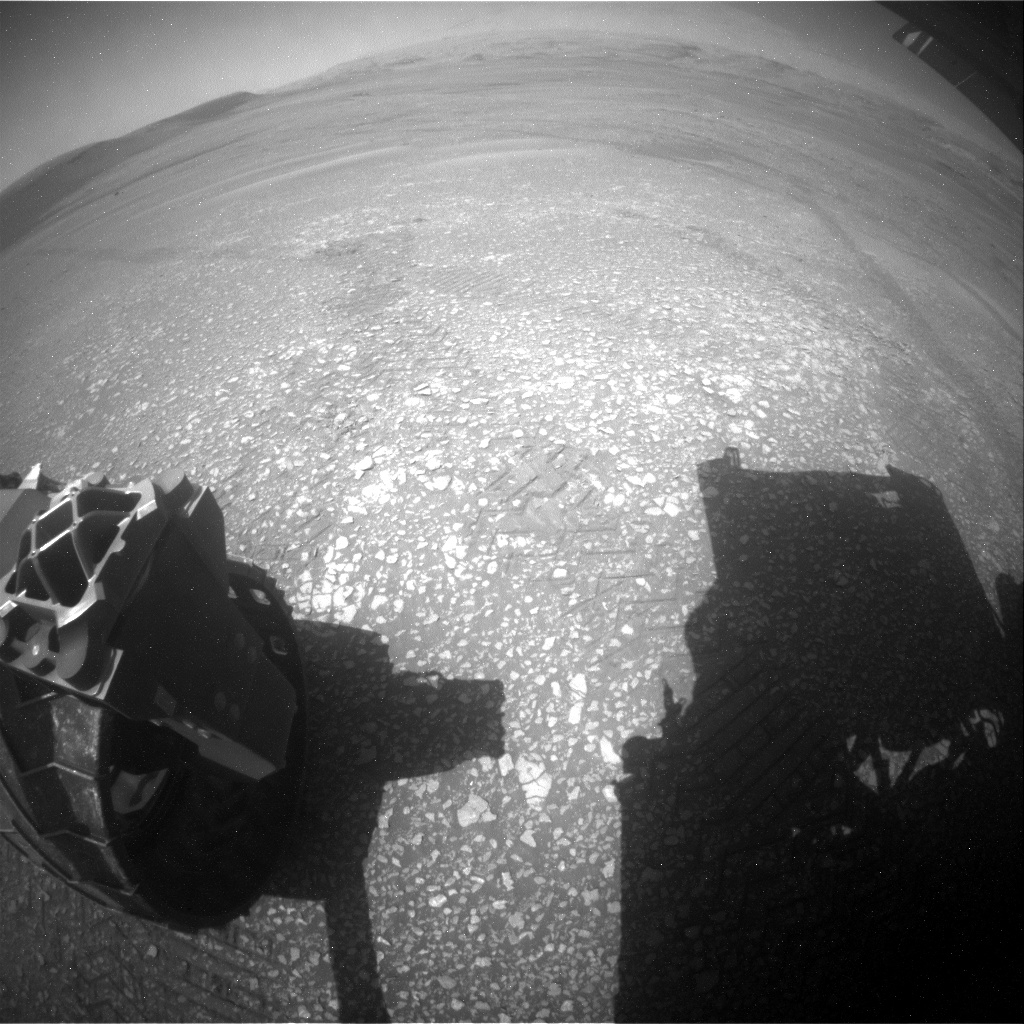
Curiosity Rear Hazcam Left B image acquired on Sol 2426, June 3, 2019.
Credit: NASA/JPL-Caltech
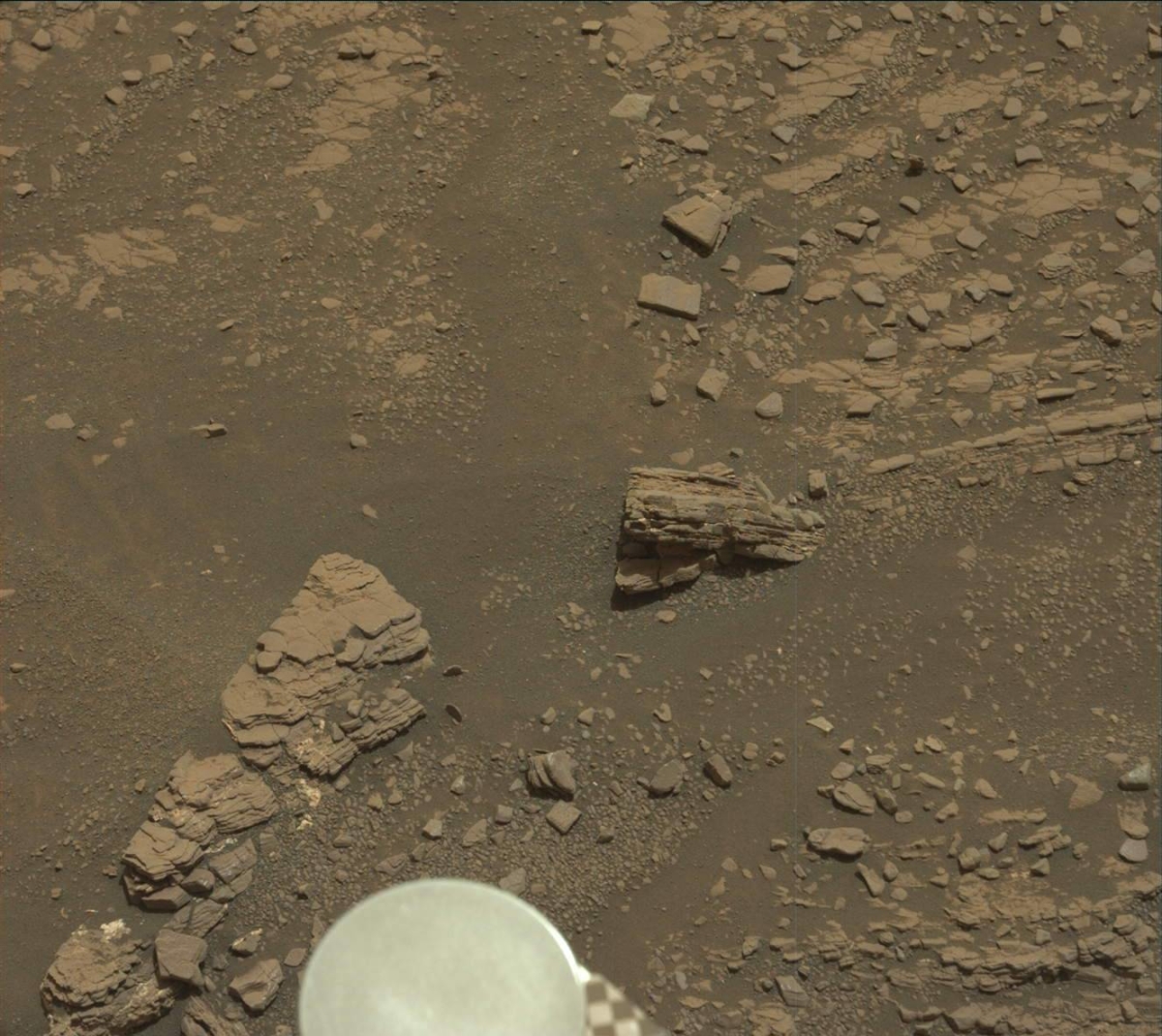
Curiosity Mastcam Left photo taken on Sol 2425, June 2, 2019.
Credit: NASA/JPL-Caltech/MSSS
Curiosity Navcam Right B image taken on Sol 2426, June 3, 2019.
Credit: NASA/JPL-Caltech
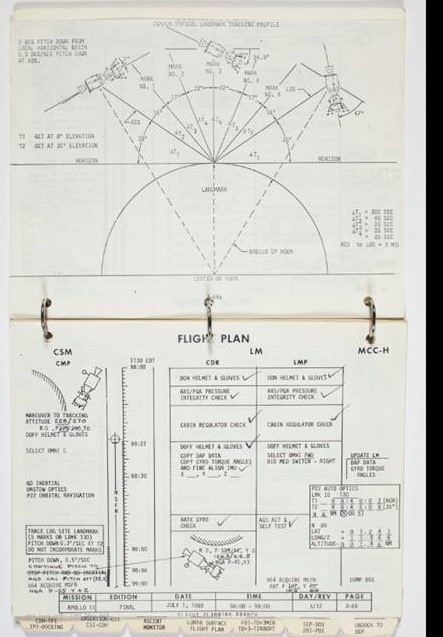
Apollo 11 Lunar Module Timeline Book Credit: Christie’s
For those flush with cash, an Apollo 11 Lunar Module Timeline Book is part of One Giant Leap: Celebrating Space Exploration 50 Years after Apollo 11 – to be held July 18 at Christie’s in New York.
The Timeline Book sat precisely between Commander Neil Armstrong and Lunar Module Pilot ‘Buzz’ Aldrin as they made the historic landing on the Moon on July 20, 1969.
Almost 50 years later to the day, it will be offered at auction at Christie’s.
Book value
The Apollo 11 Lunar Module Timeline Book was flown aboard the Lunar Module Eagle and annotated by Neil Armstrong and Buzz Aldrin as they landed on the Moon.
According to a Christie’s estimate the book’s value: $7,000,000-9,000,000.
Within moments after Eagle’s touchdown, Buzz Aldrin had written Eagle’s coordinates in the Sea of Tranquility on page 10 of the book — the first writing by a human being on a celestial body, other than Earth.

Buzz Aldrin had written Eagle’s coordinates in the Sea of Tranquility on page 10 of the book — the first writing by a human being on a celestial body, other than Earth.
Credit: Christie’s
Dusty memento
“The Timeline Book narrates the entire Eagle voyage from inspection, undocking, lunar surface descent and ascent, to the rendezvous with Michael Collins aboard the Command Module in lunar orbit. The book contains nearly 150 annotations and completion checkmarks made in real-time by Aldrin and Armstrong,” explains a Christie’s statement. “Traces of what appears to be lunar dust are on the transfer list pages that detail the movement of lunar rock samples and equipment from Eagle to Columbia.”
The Apollo 11 Lunar Module Timeline Book will be on view at Christie’s in Beijing (June 13-16), with later dates in San Francisco and Seattle to be announced.
For more information on this auction, along with video, go to:

The ExoMars 2020 Rover Operations Control Center (ROCC).
Credit: Thales Alenia Space
The European Space Agency (ESA) has inaugurated the ExoMars 2020 Rover
Operations Control Center that will begin operating in July 2020 when the Mars mission lifts off for the interplanetary trip.
The Turin, Italy-based Rover Operations Control Center (ROCC) comprises several different systems and facilities:
- Operations room, where all Rover operations are planned, managed and executed in conjunction with the program scientific team.
- Mars Terrain Simulator which simulates the Martian terrain (in terms of both shape and composition) to support daily ground operations, perform functional testing of the ExoMars Rover Ground Terrain Model and reproduce the Rover’s surface mission to account for any contingencies.
- Tilting platform: a structure measuring 8 x 8 meters that is used as a simulated surface to test mission scenarios using the Rover Ground Test Model.
- Drilling and illumination system, which reproduces the soil drilling operations on Mars and simulates fluctuations in lighting conditions on Mars.

Artist’s impression of the ExoMars 2020 rover and Russia’s stationary surface platform in background.
Credit:
ESA/ATG medialab
Russian booster sendoff
A Proton rocket will launch the spacecraft from the Baikonur Cosmodrome in Kazakhstan between July 26 and August 11, 2020. Arrival at Mars is on March 19, 2021.
The ExoMars mission will take a direct ballistic trajectory to Mars, followed by the Descent Module separating from the Carrier Module, entry into the Martian atmosphere and the landing of the Descent Module with the “Rosalind Franklin” Rover, weighing roughly two metric tons, on March 19, 2021.
The Russian-supplied Landing Platform is named “Kazachok.”

Europe’s ExoMars 2020 rover.
Credit: ESA
Search for life
Rosalind Franklin will then leave the landing platform and explore the planet, taking and analyzing soil samples to a depth of nearly 7 feet (2 meters), including a search for present or past life in these samples by its own lab.
ROCC was inaugurated May 30 by Thales Alenia Space, ALTEC (Aerospace Logistics Technology Engineering Company), the Italian space agency and the European Space Agency.

Credit: Laser Zentrum Hannover e.V (LZH)
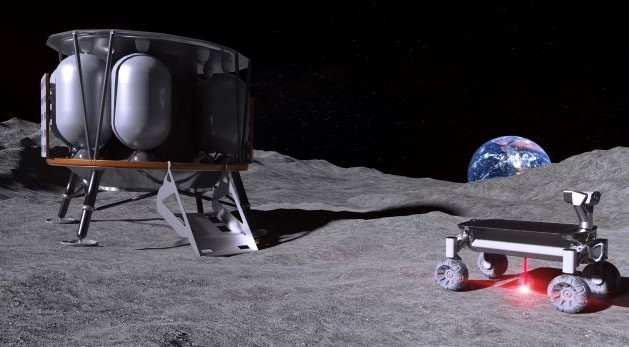
A “Moonrise” laser system is being designed to bring 3D-printing to the lunar surface by melting Moon dust.
This additive manufacturing on the Moon makes use of a laser system that weighs no more than 7 pounds (three kilograms) and has the volume of a large juice package. The system is being designed to melt down local raw materials on the Moon and convert them into versatile structures later.
Credit: Laser Zentrum Hannover e.V (LZH)
New space
Germany’s Laser Zentrum Hannover e.V (LZH) and the Institute of Space Systems (IRAS) of the Technical University of Braunschweig are aiming at melting lunar dust with a laser in order to make it usable as building material.
The opportunity to fly their Moonrise technology to the Moon in 2021 is aligned with the first lunar mission of PTScientists.
PTScientists is a Berlin-based “new space” company. The lunar module ALINA and the two lunar rovers, developed by PTScientists, are set to launch to the Moon for the first time in 2021, according to the group.
Moon village
Scientists from Braunschweig and Hanover want to melt regolith on the lunar surface in a controlled manner using their laser system. After cooling, it is a solid body that would be suitable, for example, as a building material for the proposed European Space Agency’s “Moon Village”, the vision of a global village on the Moon as an outpost in space.

Courtesy of NASA/JPL/USGS
The targeted melting by the Moonrise laser into predefined structures is monitored and recorded with high-resolution cameras. If the experiment succeeds on the Moon, the Moonrise process can be scaled up to produce larger structures. Thus, in the long term, whole infrastructures such as foundations, paths, and landing surfaces could be built using the Moonrise manufacturing technology, according to a LZH press statement.
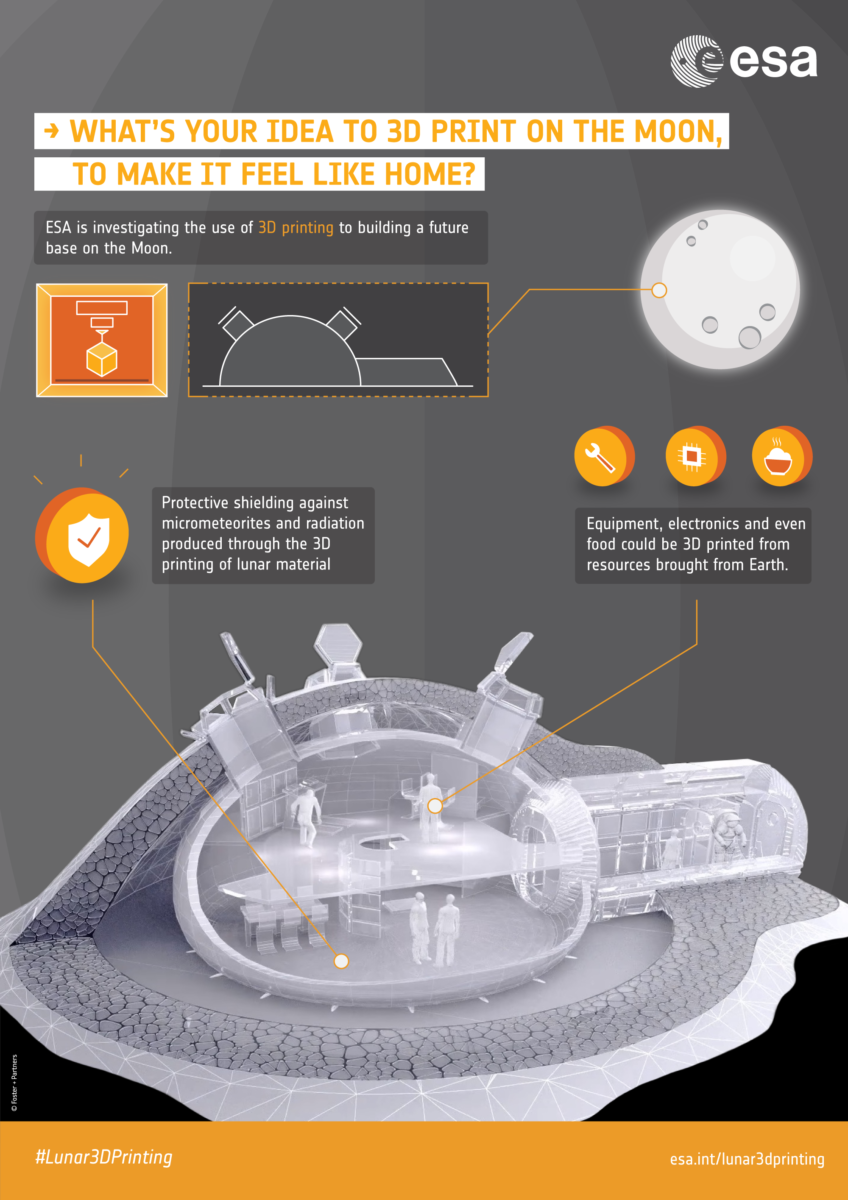
A new ESA-led project is investigating the ways that 3D printing could be used to create and run a habitat on the Moon. Everything from building materials to solar panels, equipment and tools to clothes, even nutrients and food ingredients can potentially be 3D printed.
Credit: ESA
Future-oriented research
Moonrise is considered an ambitious and future-oriented research project, funded by the Volkswagen Foundation within the scope of “Open – for the Unusual.” The foundation supports extraordinary and daring projects for which no other donor can be found.
Project Moonrise has been running for almost nine months.
Direct proof
Currently, researchers are working on adapting the laser to the load compartment of the lunar vehicle, the rover. The laser is integrated into a tunnel at the bottom of the wheeled machinery.
Stefan Linke from IRAS explains in the press statement: “The planned direct proof — that we are able to process lunar regolith with already available hardware components — is crucial for the planning of future missions. Thus, larger and more sustainable projects on the surface of our cosmic neighbor are becoming possible.”
For more information, go to LZH at:
The Institute of Space Systems (IRAS) at:
and PTScientists at:
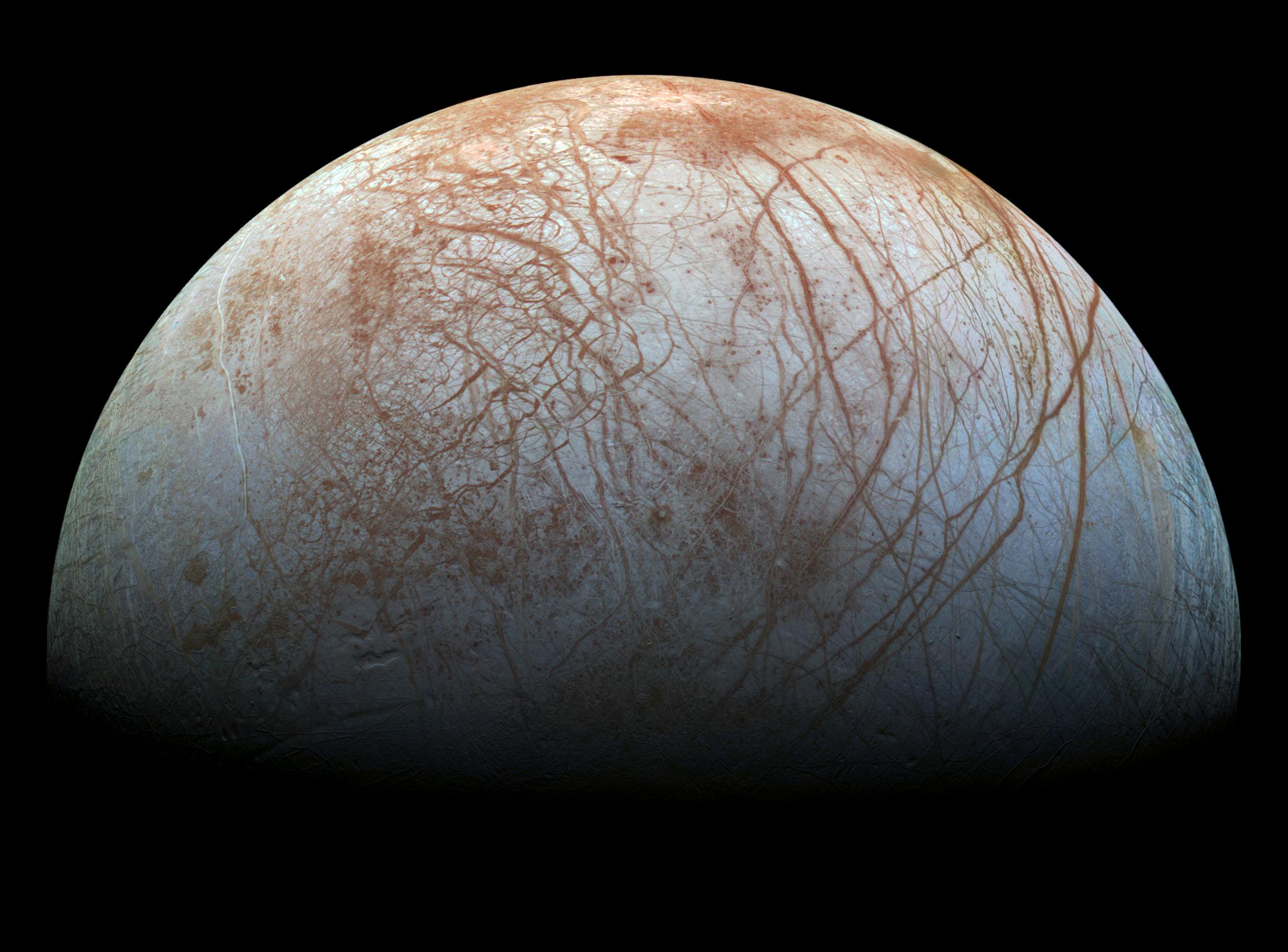
Jupiter’s icy moon Europa displays many signs of activity, including its fractured crust and a dearth of impact craters. Scientists continue to hunt for confirmation of plume activity.
Image Credit: NASA/JPL-Caltech/SETI Institute
NASA’s Office of Inspector General (OIG) reports today about the space agency’s intent to study a Jupiter moon – Europa – and issues regarding the management of that mission.
A flyby orbiter known as Europa Clipper, “despite robust early-stage funding, a series of significant developmental and personnel resource challenges place the Clipper’s current mission cost estimates and planned 2023 target launch at risk,” explains the OIG report.
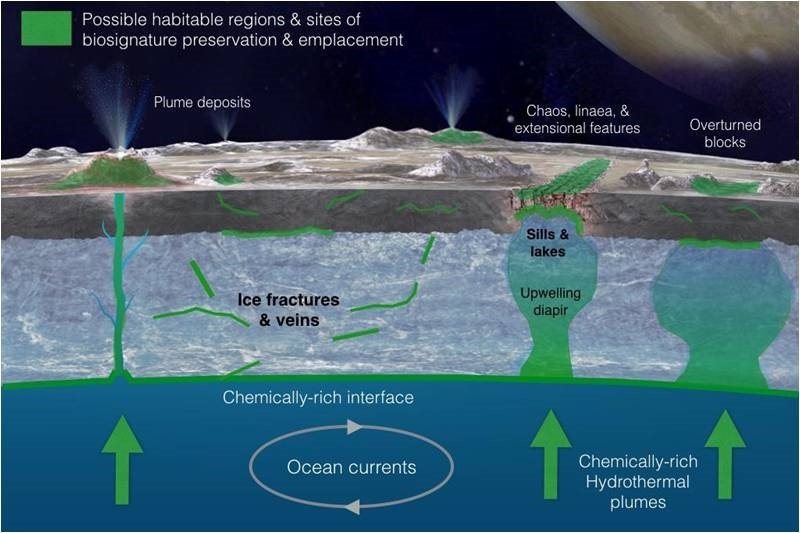
Europan environments that may harbor life or preserve biosignature. A variety of geologic
and geophysical processes, including ocean currents governed by tides, rotation, and heat exchange, are
required to drive water from the subsurface to the surface and govern how any exchange operates.
SOURCE: Kevin Hand, Jet Propulsion Laboratory, “On the Habitability of Ocean Worlds,” presentation
to the Workshop on Searching for Life across Space and Time, December 5, 2016.
Suitable to sustain life
Scientists believe that Europa, one of Jupiter’s 79 known moons, may have a large liquid ocean below its icy surface suitable to sustain life. The National Research Council (NRC)—which publishes a decadal survey of recommended priorities that NASA uses to help plan its science exploration missions—determined in 2011 that an orbiter mission to Europa should be NASA’s second highest priority large-scale planetary science mission after the Mars 2020 rover mission.
Congress has taken a strong interest in the project and since fiscal year (FY) 2013 has appropriated about $2.04 billion to NASA for a Europa mission—$1.26 billion more than the Agency requested.
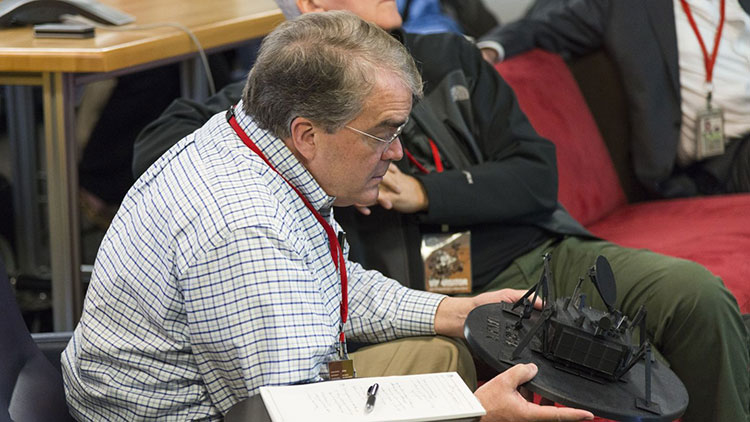
Now former Rep. John Culberson (R-TX) examining a Europa lander model during a visit to NASA’s Jet Propulsion Laboratory.
Credit – NASA/JPL-Caltech via AIP
Long-time advocate
The former Chairman of the House subcommittee that funds NASA is now gone — Rep. John Culberson (R-TX) — a long-time advocate for NASA and the Europa mission in particular, was largely responsible for these substantial appropriations.
Congress also directed NASA to plan two separate missions: a flyby orbiter known as Europa Clipper and a Lander mission to place scientific instruments on the moon’s surface.
In FYs 2017 and 2018, Congress directed NASA to use the Space Launch System (SLS), the Agency’s heavy-lift rocket currently under development, as the launch vehicle for both missions and specified launch dates of no later than 2022 for the orbiter and 2024 for the Lander.
In February 2019, Congress delayed those launch dates by a year to 2023 and 2025, respectively.

Europa lander
Credit: NASA/JPL
Achieving technical objectives
NASA’s Jet Propulsion Laboratory (JPL) has overall project management responsibilities for both missions.
In the newly released OIG audit, NASA’s management of the Europa mission relative to achieving technical objectives, meeting milestones, controlling costs, and addressing congressional requirements was reviewed.
Go to the report — Management of NASA’s Europa Mission – at:

Ronald Reagan and the Space Frontier by John M. Logsdon; Palgrave Macmillan, 2019; hardcover: 419 pages, $35.00
Another thumbs up book from John Logsdon, internationally recognized as a consummate historian and analyst of space issues. This volume is another classic regarding presidential space policy.
During Ronald Reagan’s eight years as U.S. president (1981-1989), his administration saw the NASA’s space shuttle program’s first flight, the calamitous loss of Challenger and its 7-person crew, as well as approving space station “Freedom” as the “next logical step” in space development.
The book is divided into 24 expertly written chapters, impeccably researched with notes assigned to each chapter.
Logsdon makes use of a trove of declassified primary source materials and oral history interviews to spotlight Reagan’s civilian and commercial space policies – decision-making that possibly made the man the most pro-space president in American history.
As a side note, this reviewer was resident in Washington, D.C. during the Reagan space years, part of some three decades of covering NASA, Capitol Hill, and presidential space activities. But Logsdon offers a wealth of insider and behind-the-scenes discussions few of us were privy to; the book’s pages offer tell-tale observations that showcase the complexity and personalities involved with establishing space policy.
Logsdon does note up front that Reagan’s Strategic Defense Initiative – often labeled the “Star Wars” plan – is not detailed, nor are other national security space issues. Rather, the book’s focus is on civilian and commercial space policy during the Reagan administration.
This volume is a tutorial on the leadership and legacy of Reagan’s space interests, details that should be instructive to all those in the space community eager to fathom today’s presidential pronouncements about America’s space agenda.
Once again, this new book from Logsdon adds to the author’s legacy of space policy observations. He is the author of John F. Kennedy and the Race to the Moon (Palgrave, 2010) and After Apollo? Richard Nixon and the American Space Program (Palgrave, 2015), both of which are award-winning, definitive accounts of presidential space policy. He is Professor Emeritus at The George Washington University’s Elliott School of International Affairs and founder of its Space Policy Institute.
For more information on Ronald Reagan and the Space Frontier go to:

