Author Archive
 Author:
  June 27th, 2019
Space Dogs: The Story of the Celebrated Canine Cosmonauts by Martin Parr/Text by Richard Hollingham; Laurence King Publishing, New York, 2019; softcover: 128 pages, $16.99
This enchanting book details the Soviet Union’s space dogs, those uncanny canine explorers that blazed the trail for human space travelers. Laika, Belka, Strelka, and other dogs became superstars!
Space Dogs features the collectibles of Martin Parr. Over the past twenty years, Parr has been adding to his assortment of USSR space dog memorabilia, produced during the space race in the 1950s between the USSR and the USA. Mostly perusing the Internet, he has unearthed a variety of exceptional items for his collected works.
“I hope that some of the magic of the space dogs phenomenon will rub off on the reader,” Parr explains in the book’s foreword. From my read…mission success!

Credit: Martin Parr Collection
The “pupniks” were hugely celebrated. With a combination of national pride and propaganda, they began appearing on stamps, postcards, letter holders, wrist watches, porcelain figurines, cigarette cases, clocks and other memorabilia.
Produced to coincide with the 50th anniversary of man landing on the Moon, this book details the story of the space dogs, illustrated with Parr’s collection of vintage space-dog ephemera.

Credit: Martin Parr Collection
The nicely written text is provided by Richard Hollingham, a space journalist and correspondent for BBC future and presenter of the Space Boffins Podcast.
While all the photos are captivating, the reader will gain special insight into the Soviet Union’s pioneering spaceflight exploits, including the true fate of Laika onboard the country’s second orbiting satellite. You’ll find numerous other factoids in this well-illustrated and readable volume.
For more information on this book, go to:
https://www.laurenceking.com/product/space-dogs/
 Posted in

Chang’e-4 farside mission – lander and Yutu-2 rover
Credit: CNSA/CLEP
China’s Chang’e-4 lander and the Yutu-2 have resumed work for the seventh lunar day on the farside of the Moon after “sleeping” during the extreme cold night.
Both are in normal working condition, according to the Lunar Exploration and Space Program Center of the China National Space Administration (CNSA).
China’s Xinhua news agency reports that the lander woke up at 9:45 a.m. Thursday, and the rover, Yutu-2 (Jade Rabbit-2), awoke at 1:26 p.m. Wednesday.
Scientific studies
The Yutu-2 rover has traveled more than 696 feet (212 meters) across the lunar landscape to conduct scientific studies.

Making tracks. China’s Yutu-2 robot.
Credit: CNSA/CLEP
The scientific tasks of the Chang’e-4 mission include low-frequency radio astronomical observation, surveying the terrain and landforms, detecting the mineral composition and shallow lunar surface structure and measuring neutron radiation and neutral atoms.

Von Kármán crater as viewed by the NASA Lunar Reconnaissance Orbiter Camera(LROC).
Credit: NASA/GSFC/Arizona State University
China’s Chang’e-4 farside lander/rover was launched on Dec. 8, 2018, making the first-ever soft landing within Von Kármán crater.

Curiosity Front Hazcam Left B image acquired on Sol 2448, June 26, 2019.
Credit: NASA/JPL-Caltech
NASA’s Curiosity Mars rover is now performing Sol 2449 science duties.
Reports Scott Guzewich, an atmospheric scientist at NASA/GSFC in Greenbelt, Maryland: A recent plan wrapped up time for the rover to study the Teal Ridge outcrop, then the robot is to drive toward the next waypoint in the clay-bearing unit of Gale Crater.
Lien list
There were several science tasks on our lien list to complete first, including Chemistry and Camera (ChemCam) laser-induced breakdown spectroscopy (LIBS) targets on the “rubbly” material in front of the outcrop.
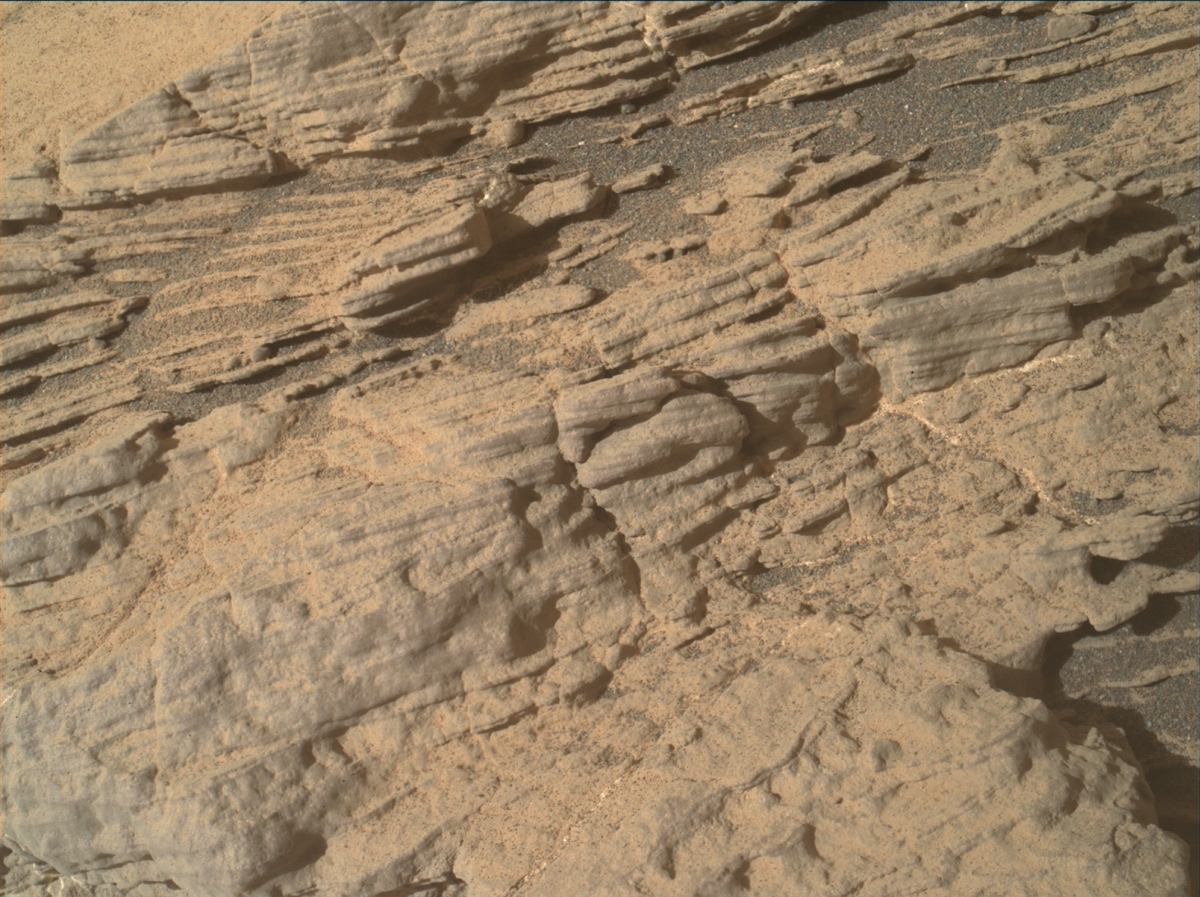
Curiosity Mars Hand Lens Imager (MAHLI) photo produced on Sol 2448, June 26, 2019.
Credit: NASA/JPL-Caltech/MSSS
Mars researchers identified a target named “Glencoe”), one on a dark vein structure within the outcrop (termed “Glenbuchat,” – incredible layered structure in Teal Ridge)
Also produced was a Mastcam multispectral image (where Mastcam uses its different filters to get a better understanding of a rock’s chemistry) of the “Beauly” target that received a thorough cleaning with the dust removal tool last week, Guzewich points out.
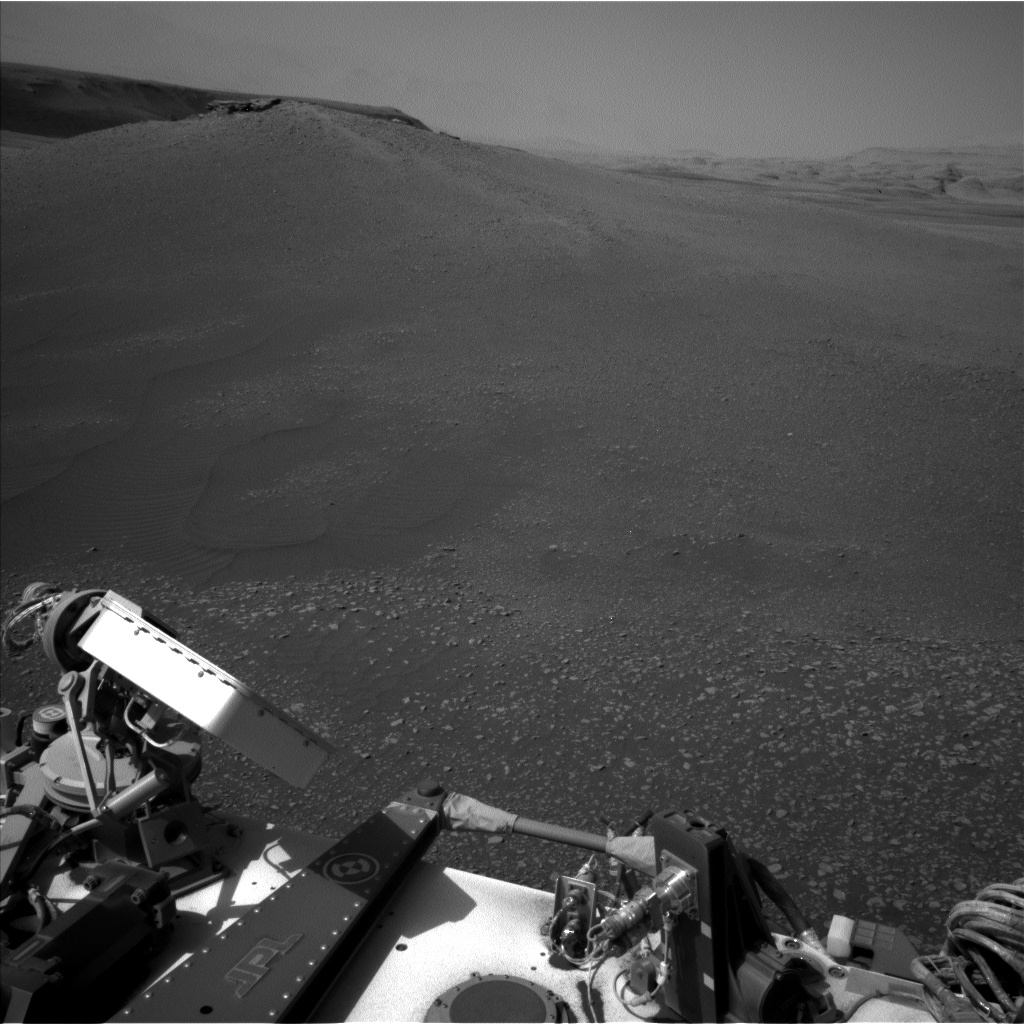
Curiosity Navcam Left B photo taken on Sol 2448, June 26, 2019.
Credit: NASA/JPL-Caltech
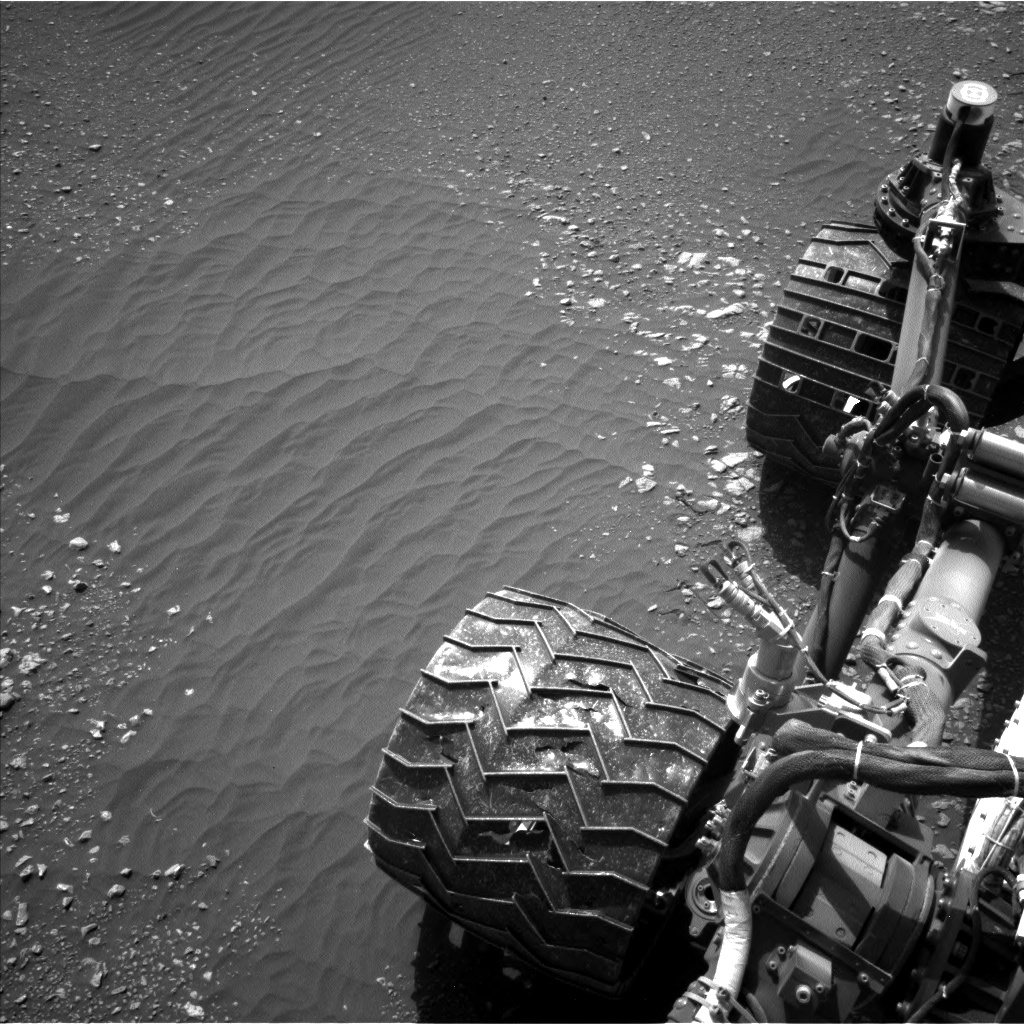
Curiosity Navcam Left B photo taken on Sol 2448, June 26, 2019.
Credit: NASA/JPL-Caltech
Next waypoint
“After the drive, we’ll be about halfway to our next waypoint and we’ll stop to conduct some post-drive science including imaging of the surrounding area and some late afternoon [environmental] ENV activities including a Mastcam sky survey (to help understand the properties of the airborne dust) and a Navcam zenith movie to search for clouds,” Guzewich adds.
“The ‘Aphelion Cloud Belt’ season is nearly upon us,” Guzewich concludes, “and we expect the skies to be getting much cloudier in the sols and weeks ahead.”

Curiosity Mastcam Left photo taken on Sol 2447, June 25, 2019.
Credit: NASA/JPL-Caltech/MSSS
New road map
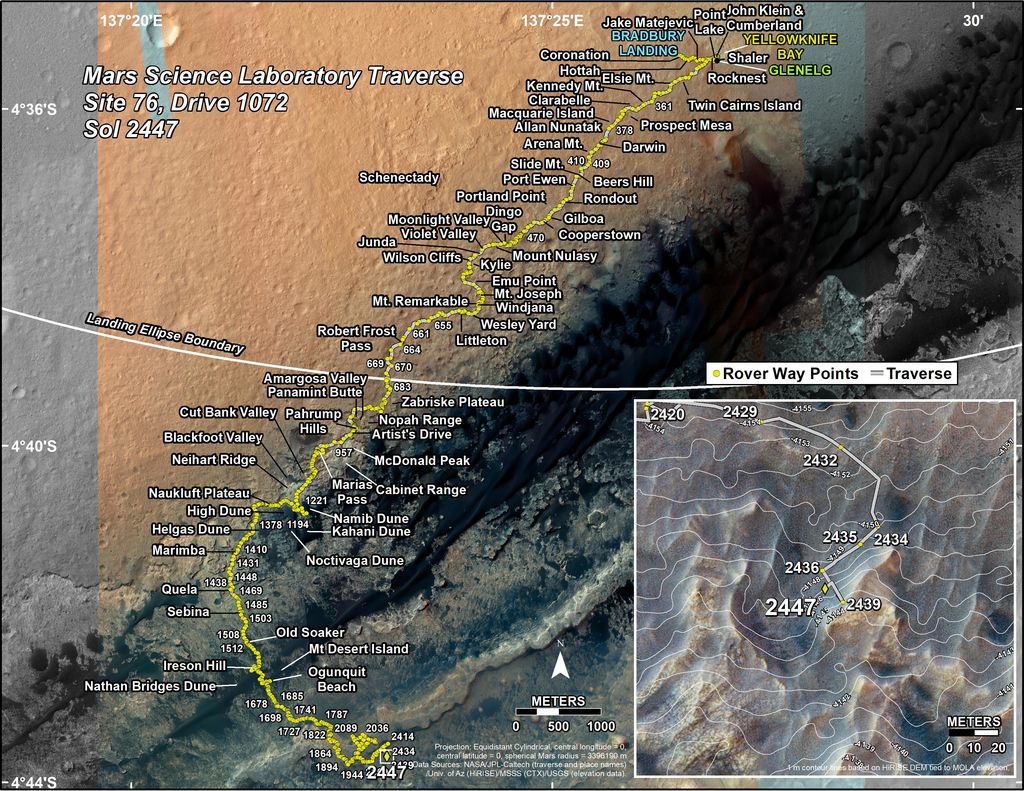
Meanwhile a new Curiosity Traverse Map Through Sol 2447 has been issued.
The map shows the route driven by NASA’s Mars rover Curiosity through the 2447 Martian day, or sol, of the rover’s mission on Mars (June 25, 2019).
Credit: NASA/JPL-Caltech/Univ. of Arizona
Numbering of the dots along the line indicate the sol number of each drive. North is up. The scale bar is 1 kilometer (~0.62 mile).
From Sol 2439 to Sol 2447, Curiosity had driven a straight line distance of about 30.55 feet (9.31 meters), bringing the rover’s total odometry for the mission to 12.94 miles (20.83 kilometers).
The base image from the map is from the High Resolution Imaging Science Experiment Camera (HiRISE) in NASA’s Mars Reconnaissance Orbiter.

Credit: MUFON
In July the Mutual UFO Network (MUFON) celebrates 50 years of investigating and promoting research on the unidentified flying object phenomenon.
The all-volunteer, non-profit, scientific-based organization has endeavored since 1969 to hunt down answers about baffling vehicles of unknown origin.

The Pentagon’s Advanced Aerospace Threat Identification Program (AATIP) was created to research and investigate Unidentified Aerial Phenomena (UAP) including numerous videos of reported encounters, three of which were released to the public in 2017.
Credit: U.S. Department of Defense/To The Stars Academy of Arts & Science
After five decades, has there been any scientific pay dirt in studying UFOs? Are we inching closer to the truth that is perhaps out there?
Weirdness in the sky, then jumping to alien visitation from afar is a big leap. So too are interdimensional beings, wormhole hooligans, or time travelers. But who knows?
Go to my new Space.com story at:
UFOs Remain Elusive Despite Decades of Study
https://www.space.com/ufo-investigations-mufon-50-years.html

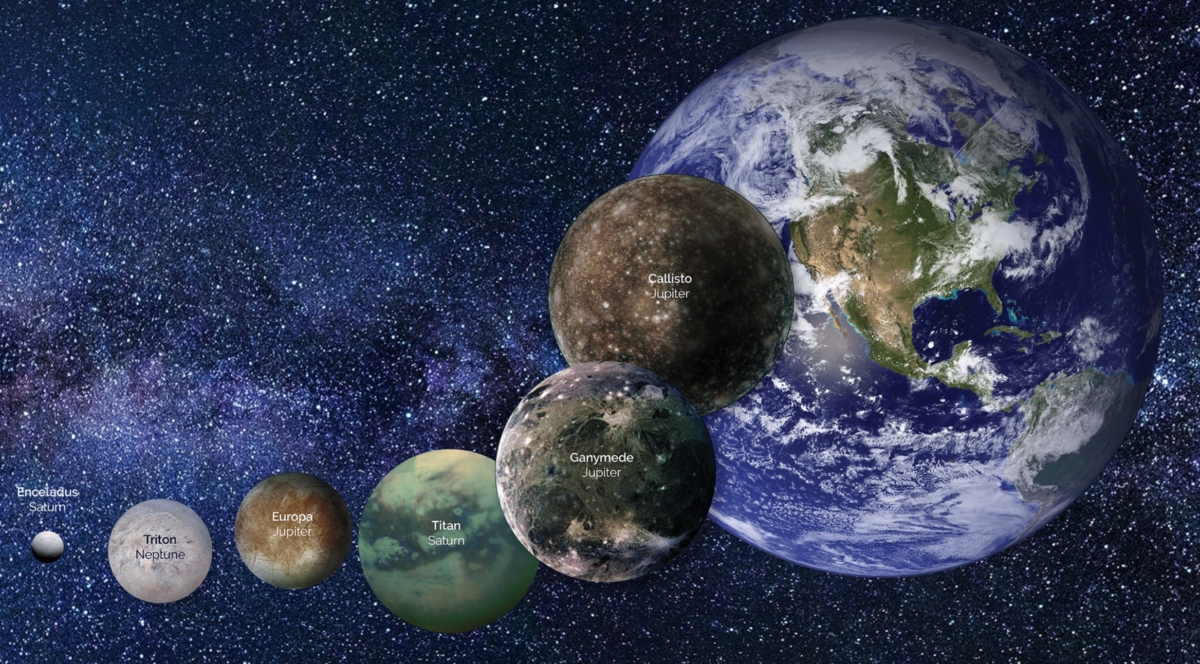
NASA is investing in a new research program – the Exploring Ocean Worlds (ExOW) project. The five-year effort is geared to understand the potential for life in the outer solar system and establishes a new Network for Ocean Worlds.
Credit: NASA
The focus of the effort would address a central question in astrobiology research today: On which ocean worlds, and using which measurements, do we have the highest probability of finding life beyond Earth within the next human generation?
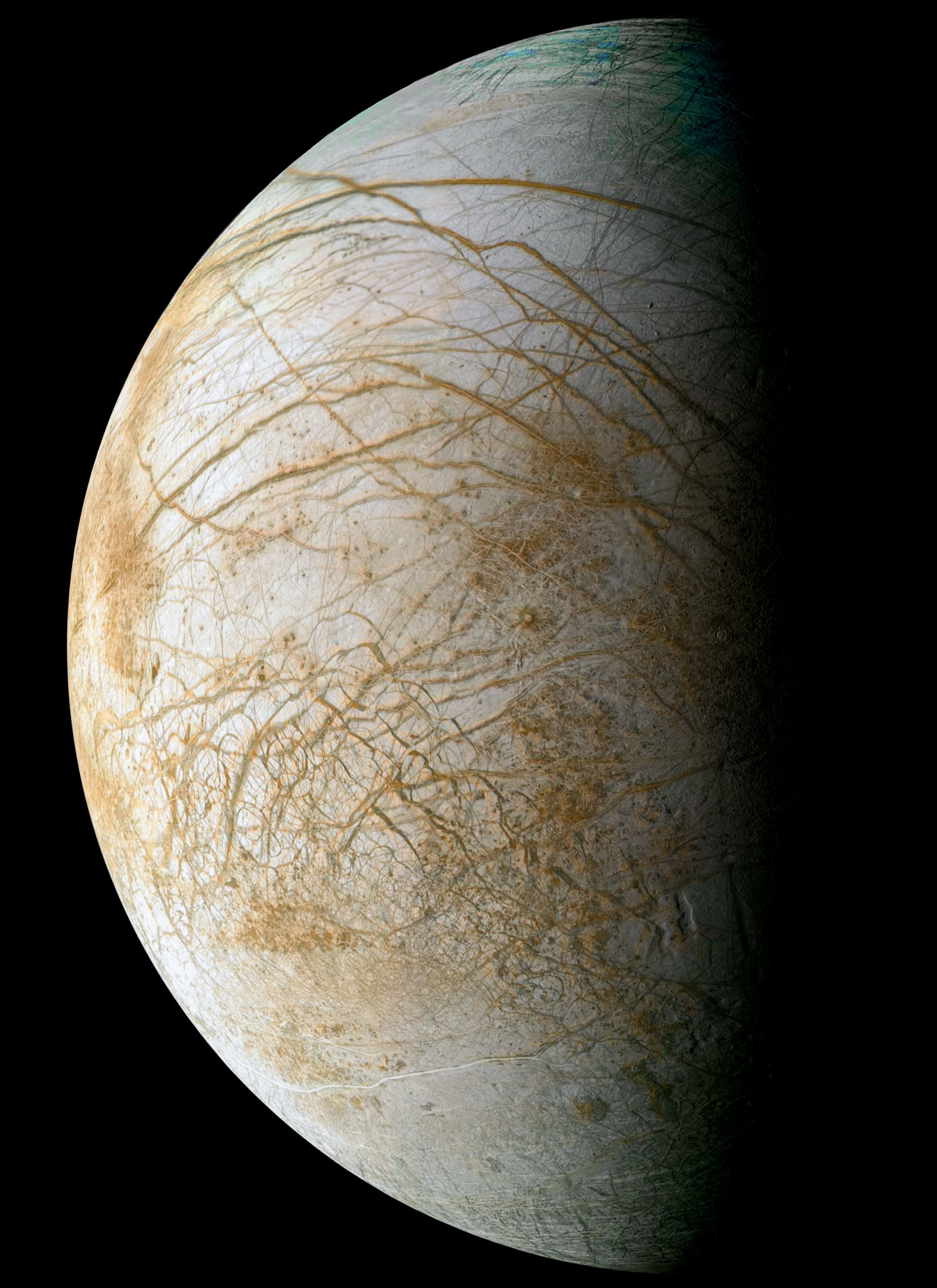
Jupiter’s Europa could be site for water…and life?
Credit: NASA/JPL/Ted Stryk
Accelerating research
The project will form a cornerstone for NASA’s new Network for Ocean Worlds (NOW). NOW is an initiative aimed at accelerating research on planetary bodies with liquid water oceans that may harbor life or conditions that could support it by coordinating scientific studies nationwide that help advance understanding of ocean worlds.
The network will be co-led by Christopher German, a senior scientist at Woods Hole Oceanographic Institution, together with Alison Murray at the Desert Research Institute and Alyssa Rhoden at the Southwest Research Institute.
NOW is the latest of four research coordination networks to be established by NASA that will enable research covering different aspects of the search for life beyond Earth.
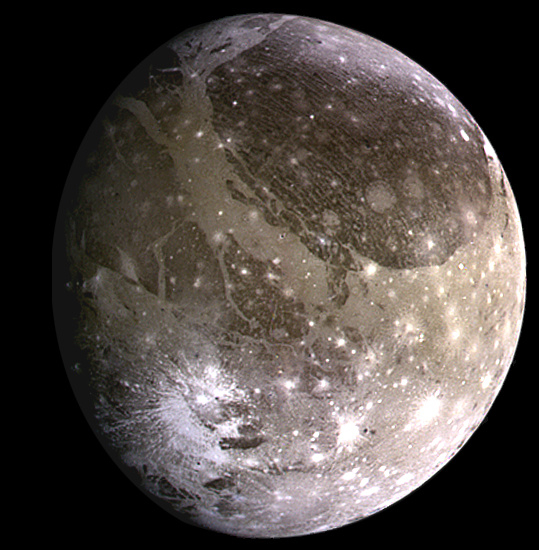
Ganymede, a moon of Jupiter.
Credit: NASA
Best bet
“If we hope to find evidence of life beyond Earth, within the next human generation, then our best bet is to look toward the growing list of ice-covered ocean worlds right here in our own solar system,” said German in a press statement.
“And looking further ahead,” German added, “if we want to understand the range of possible conditions that could support life anywhere beyond Earth, then we will simultaneously need to both continue exploring our own ocean for examples of extremes under which life can exist and continue developing exploration technologies that will be useful on any ocean world, including Earth.”
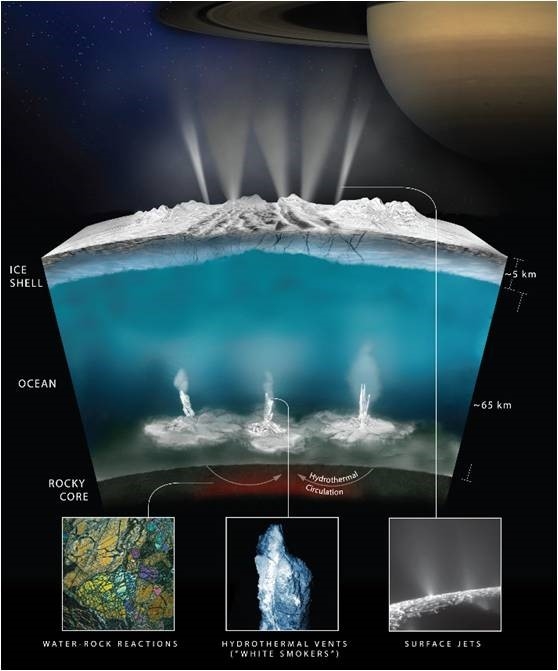
Chemical evidence consistent with serpentinization and water-rock interactions on
Enceladus and known hydrothermal activity make Enceladus a key target for astrobiology exploration.
Sampling the moon’s plumes would help to establish if life exists there now.
Credit: NASA/JPLCaltech/
Southwest Research Institute
Liquid water oceans
Ocean worlds beyond Earth have been a key research focus for NASA’s Planetary Science Division ever since the confirmation of ice-covered liquid water oceans on Jupiter’s moons Europa and Ganymede and, subsequently, Saturn’s moons Enceladus and Titan.
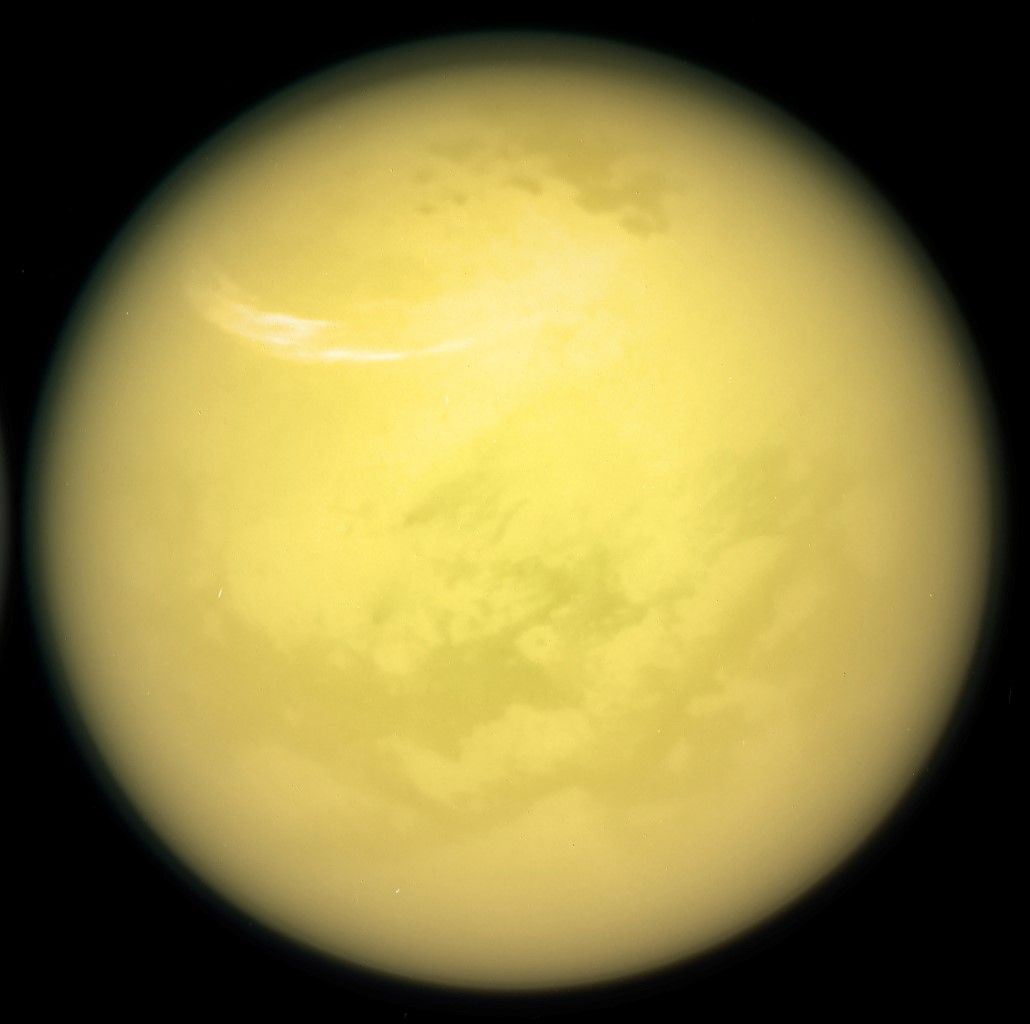
Titan as imaged by Cassini spacecraft.
Credit: NASA/JPL-Caltech/Space Science Institute
Ultimately, the ExOW team intends to construct a comprehensive theoretical model, informed and tested by experimental efforts, that connects a broad range of physical and chemical processes within an ocean system. The model will help determine the potential of that system to harbor life and to reveal evidence of that life to future NASA missions.

This artist’s rendering shows NASA’s Europa mission spacecraft, which is being developed for a launch sometime in the 2020s.
Credit: NASA/JPL-Caltech/M. Carroll
“Our approach is designed to provide a predictive framework applicable to all ocean worlds of this type, but will have clear, immediate and direct relevance to two high priority astrobiology targets: Europa and Enceladus,” said German. The project is designed to be completed just in time for the launch of Europa Clipper, NASA’s next major mission to an ocean world, which is currently scheduled for launch in the early 2020s.
For more information, go to:

Curiosity Front Hazcam Right B photo taken on Sol 2446, June 24, 2019.
Credit: NASA/JPL-Caltech
NASA’s Curiosity Mars rover is busily performing Sol 2447 science tasks.
“Curiosity is still perched on top of Teal Ridge to investigate a fascinating outcrop that caps the ridge,” reports Kristen Bennett, a planetary geologist at the USGS in Flagstaff, Arizona.
Scientists have been characterizing the ridge-capping material, but also devoting time to use the Sample Analysis at Mars (SAM) Instrument Suite to look for methane.

Ridge-capping material is visible in the foreground, and the background shows where Curiosity is going to drive to next. Image taken by Curiosity’s Navcam Left B camera on Sol 2439, June 17, 2019.
Credit: NASA/JPL-Caltech
Dog’s eye mosaic
A recently scripted three-sol plan includes a Mars Hand Lens Imager (MAHLI) dog’s eye mosaic of the target “Stack of Glencoul.”

CuriosityChemCam Remote Micro-Imager photo acquired on Sol 2446, June 24, 2019.
Credit: NASA/JPL-Caltech/LANL
“Typically the arm is positioned such that the MAHLI instrument is looking down on a target. In a dog’s eye observation, the rover arm is positioned so that it looks at the target from the side. The team decided we should do a dog’s eye mosaic at this location so we can look directly at the laminations within these rocks,” Bennett explains.
Laminations
The robot’s Alpha Particle X-Ray Spectrometer (APXS) will also target Stack of Glencoul in the weekend plan so Mars researchers will be able to pair compositional information with these images. MAHLI will also take images of the “Yesnaby Stacks” target to document a different part of the outcrop that exhibits laminations.
Also included in the plan are a Navcam dust devil movie, Mastcam images of the “Sandyhills” target to monitor changes due to wind, a Chemistry and Camera (ChemCam) observation of Yesnaby Stacks, and an addition to the “Beauly” Mastcam mosaic to complete our Mastcam coverage of this outcrop, Bennett adds.

Curiosity Mars Hand Lens Imager (MAHLI) image produced on Sol 2444, June 22, 2019.
Credit: NASA/JPL-Caltech/MSSS
Play it again SAM
“The SAM instrument is also featured prominently in this weekend’s plan. The team is using SAM to periodically search for methane in the atmosphere,” Bennett concludes, “so SAM will ‘sniff’ the air during the night on the second sol and then spend part of the weekend analyzing this sample of the martian atmosphere.”

Curiosity Rear Hazcam Right B image acquired on Sol 2446, June 24, 2019.
Credit: NASA/JPL-Caltech
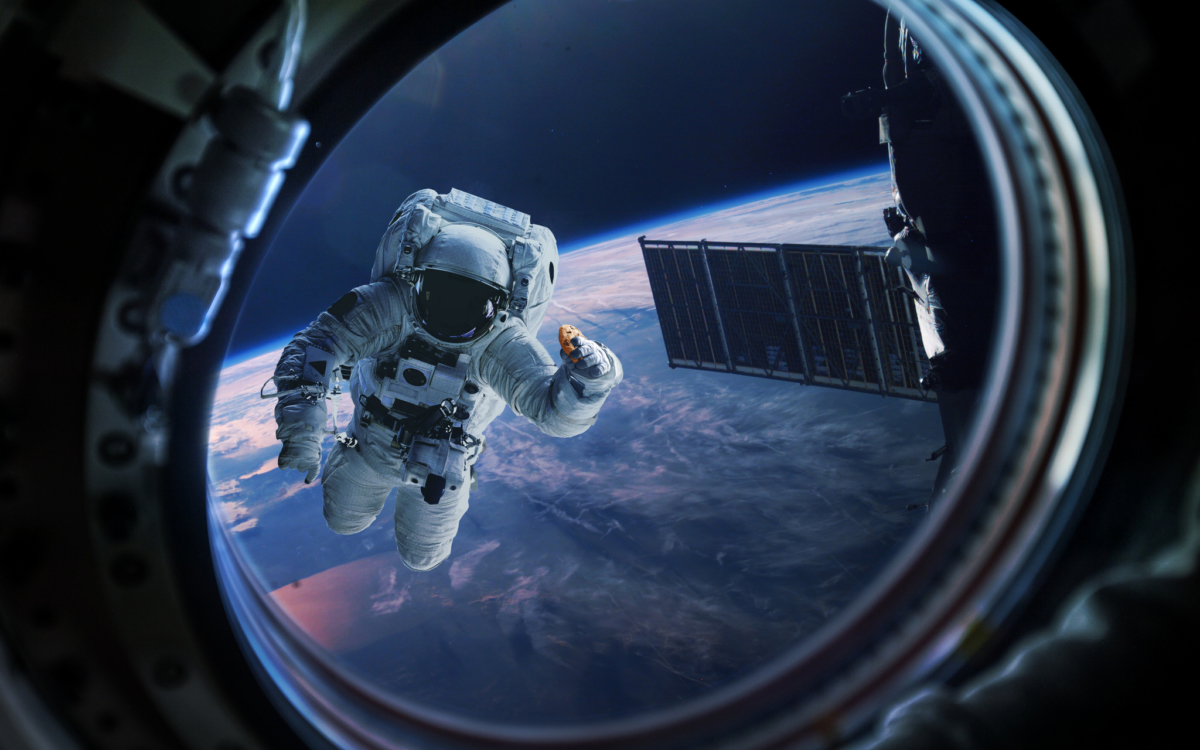
The DoubleTree by Hilton chocolate chip Cookie will become the first-ever food baked in orbit.
Credit: DoubleTree by Hilton
A chocolate chip cookie is slated to become the first food baked in space inside a prototype oven designed to make long-duration space travel more hospitable.
DoubleTree by Hilton is partnering with Zero G Kitchen and NanoRacks to bring its signature warm welcome to the International Space Station (ISS) as a scientific experiment.
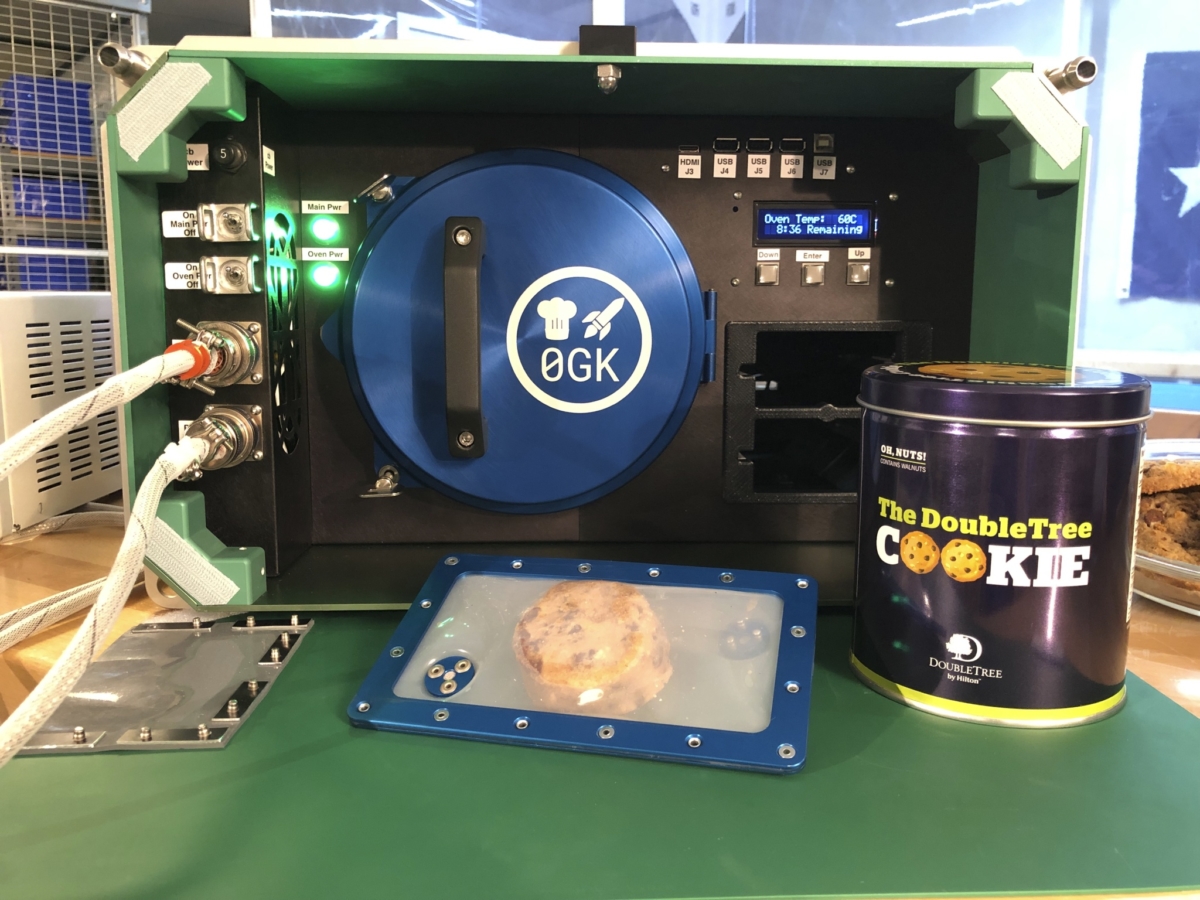
Credit: Zero G Kitchen/DoubleTree by Hilton
Oven fresh
Zero G Kitchen creates appliances for microgravity use in long-duration space flights. NanoRacks is a provider of commercial access to space. Hilton will be the first hospitality company to participate in research aboard the ISS.
Ian and Jordana Fichtenbaum, the husband and wife team at Zero G Kitchen responsible for the space oven concept, said the DoubleTree Cookie was their first thought when they began imagining the creation of an oven to make space travel more comfortable.
Chocolate chip cookie day
To celebrate the launch of the first food item to be baked fresh in space, hotel guests and cookie lovers alike can stop by any DoubleTree by Hilton in the world on August 4 for National Chocolate Chip Cookie Day to enjoy a complimentary DoubleTree Cookie.

To accompany these efforts, DoubleTree by Hilton and Scholastic will launch a student contest this fall asking U.S. middle school students to submit their own innovative proposal for making life in space more hospitable. Prizes will include a cash award, iPad and, for teachers, a complimentary stay at any DoubleTree by Hilton location.
Full contest details and submission guidelines are available at:
www.scholastic.com/openingdoorsinspace
Also, go to this delectable video at:
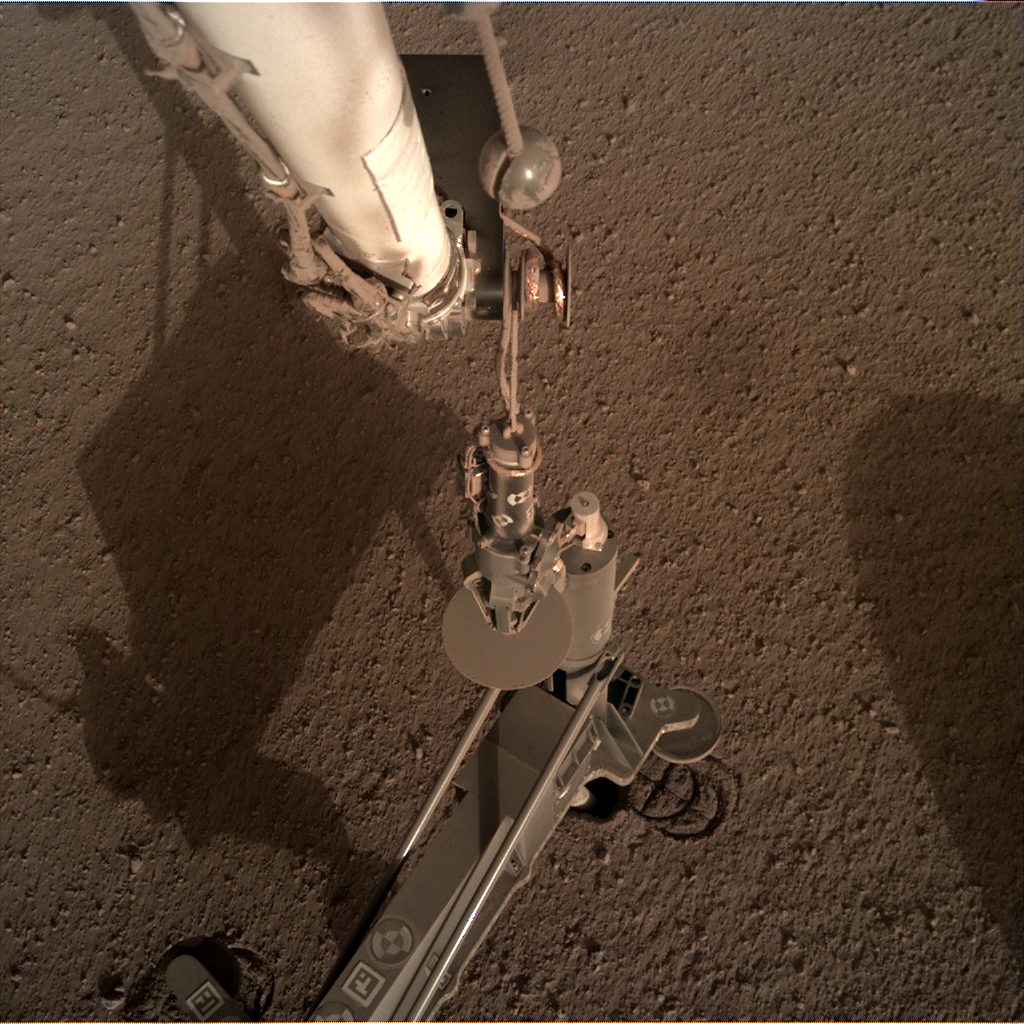
NASA’s InSight Mars lander acquired this Sol 203, June 23 image using its robotic arm-mounted, Instrument Deployment Camera (IDC).
Credit: NASA/JPL-Caltech
Scientists and engineers are moving forward with a new plan for getting NASA InSight’s heat probe, also known as the “mole,” digging again on Mars.

NASA’s InSight Mars lander acquired this image of the area in front of the lander using its lander-mounted, Instrument Context Camera (ICC). Image acquired on June 23, 2019, Sol 203.
Credit: NASA/JPL-Caltech
Part of an instrument called the Heat Flow and Physical Properties Package (HP3), the mole is a self-hammering spike designed to dig as much as 16 feet (5 meters) below the surface and record temperature.
But the Germany-provided mole hasn’t been able to dig deeper than about 12 inches (30 centimeters) below the Martian surface since Feb. 28, 2019.

The self-hammering mole, part of the Heat Flow and Physical Properties Package (HP3) on NASA’s InSight lander, was only partially buried in the soil of Mars as of early June 2019, as shown in this illustration.
Credit: NASA/JPL-Caltech/DLR

Engineers in a Mars-like test area at NASA’s Jet Propulsion Laboratory try possible strategies to aid the Heat Flow and Physical Properties Package (HP3) on NASA’s InSight lander, using engineering models of the lander, robotic arm and instrument.
Credit: NASA/JPL-Caltech.
The device’s support structure blocks the lander’s cameras from viewing the mole, so the team is using InSight’s robotic arm to lift the structure out of the way. Depending on what they see, the team might use InSight’s robotic arm to help the mole further later this summer.
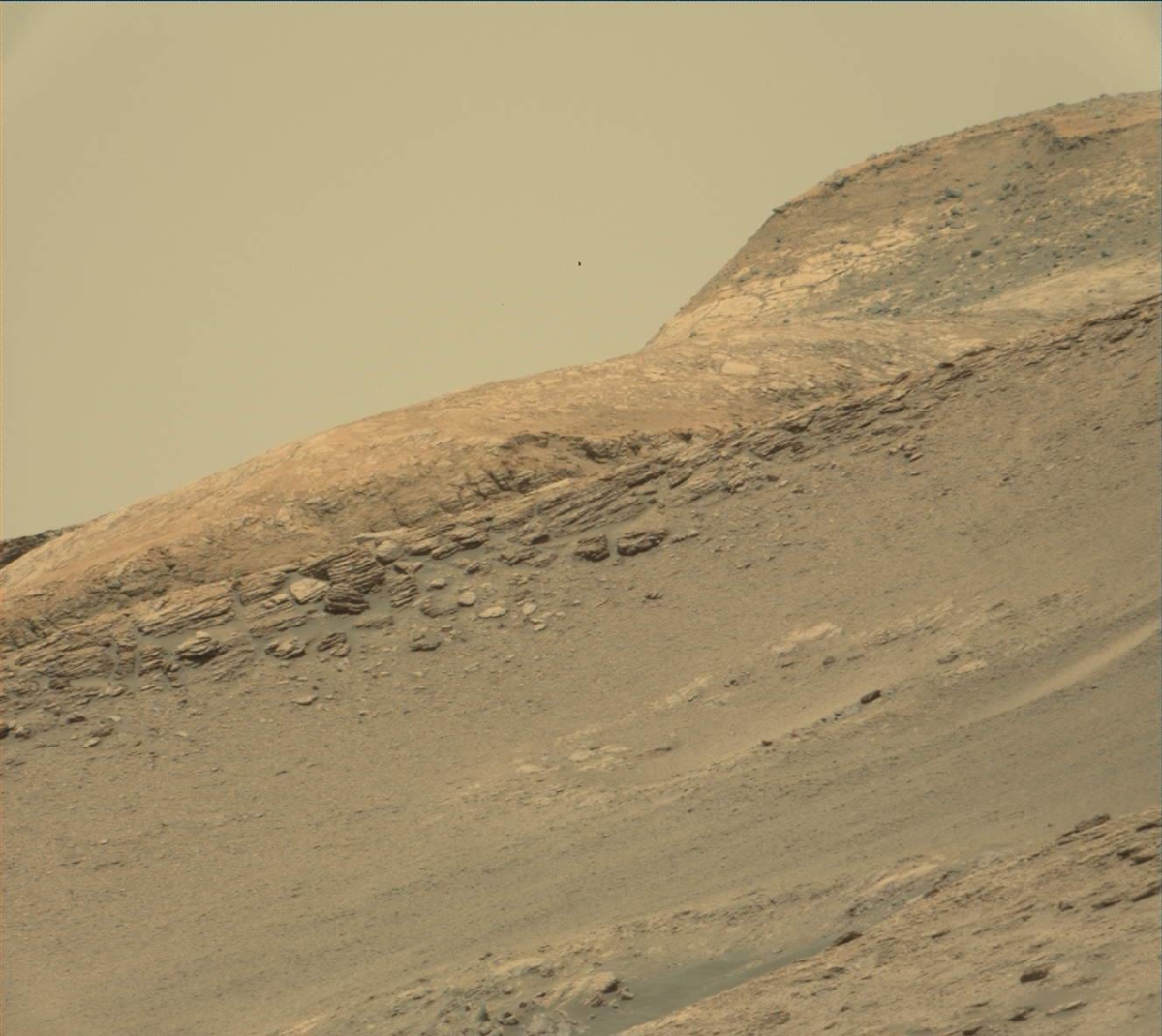
Curiosity Mastcam Right photo acquired on Sol 2443, June 21, 2019.
Credit: NASA/JPL-Caltech/MSSS
NASA’s Curiosity Mars rover is now performing Sol 2445 duties.
An evolving story is that the Mars machinery has once again detected whiffs of methane – perhaps tied to microbes presently resident on the Red Planet.
“Mars, it appears, is belching a large amount of a gas that could be a sign of microbes living on the planet today,” reported the New York Times on Saturday, June 22.
Responds Thomas Zurbuchen, NASA Associate Administrator of the Science Mission Directorate: “While increased methane levels measured by Curiosity are exciting, as possible indicators for life, it’s important to remember this is an early science result. To maintain scientific integrity, the science team will continue to analyze the data before confirming results.”
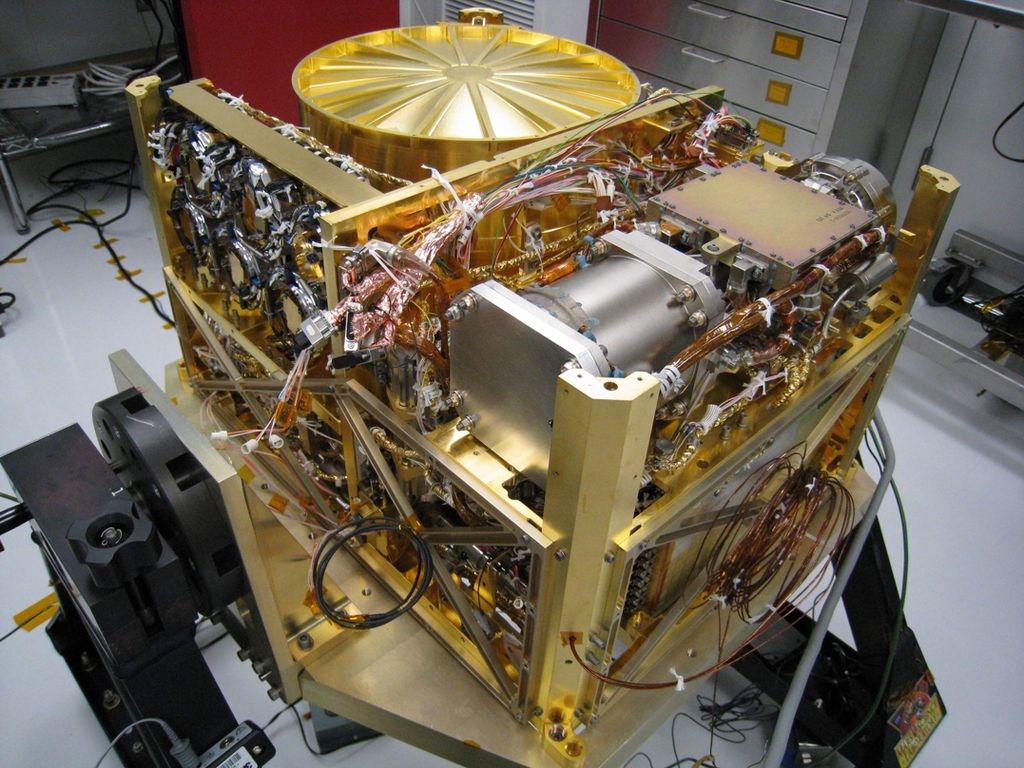
Sample Analysis at Mars (SAM) instrument.
Credit: NASA/GSFC
Follow-up studies
The robot detected the atmospheric methane using its Sample Analysis at Mars (SAM) instrument. This detection reportedly has called for follow-up studies with results of new observations expected on Monday.
The SAM instrument suite takes up more than half the science payload on board the rover. Provided by NASA’s Goddard Space Flight Center, SAM features chemical equipment found in many scientific laboratories on Earth and searches for compounds of the element carbon — including methane — that are associated with life and explores ways in which they are generated and destroyed in the Martian ecosphere.

June 2018 graphic relates that SAM detected seasonal changes in atmospheric methane in Gale Crater.
Credit: NASA/JPL
Seasonal changes
Back in June 2018, NASA announced that SAM detected seasonal changes in atmospheric methane in Gale Crater. The methane signal has been observed for nearly three Martian years (nearly six Earth years), peaking each summer.
In a press statement from the Jet Propulsion Laboratory, the fact that Curiosity detected last week unusually high methane levels, the finding is characterized as a surprising result: “The largest amount of methane ever measured during the mission — about 21 parts per billion units by volume (ppbv). One ppbv means that if you take a volume of air on Mars, one billionth of the volume of air is methane.”

Sample inlet (one open) of the rover’s Sample Analysis at Mars (SAM) instrument suite.
Credit: NASA/JPL-Caltech/MSSS
“Curiosity doesn’t have instruments that can definitively say what the source of the methane is, or even if it’s coming from a local source within Gale Crater or elsewhere on the planet.”
Explains SAM Principal Investigator Paul Mahaffy of NASA’s Goddard Spaceflight Center in Greenbelt, Maryland: “With our current measurements, we have no way of telling if the methane source is biology or geology, or even ancient or modern.”

Picture perfect: A selfie taken by NASA’s Curiosity Mars rover on Sol 2291 (January 15) at the “Rock Hall” drill site, located on Vera Rubin Ridge.
This was Curiosity’s 19th drill site. The drill hole is visible to the rover’s lower-left.
Credit: NASA/JPL-Caltech/MSSS
According to the JPL press statement: “The Curiosity team has detected methane many times over the course of the mission. Previous papers have documented how background levels of the gas seem to rise and fall seasonally. They’ve also noted sudden spikes of methane, but the science team knows very little about how long these transient plumes last or why they’re different from the seasonal patterns.”
The SAM team organized a different experiment for this past weekend to gather more information on what might be a transient plume. “Whatever they find — even if it’s an absence of methane — will add context to the recent measurement.”

Artist’s impression of the European Space Agency’s ExoMars 2016 Trace Gas Orbiter at the Red Planet..
Credit:ESA/ATG medialab
ESA collaboration
Lastly, the JPL statement explains that Curiosity’s scientists need time to analyze these clues and conduct many more methane observations.
“They also need time to collaborate with other science teams, including those with the European Space Agency’s Trace Gas Orbiter, which has been in its science orbit for a little over a year without detecting any methane. Combining observations from the surface and from orbit could help scientists locate sources of the gas on the planet and understand how long it lasts in the Martian atmosphere. That might explain why the Trace Gas Orbiter’s and Curiosity’s methane observations have been so different.”
Meanwhile, the rover Curiosity is examining the outcrop on top of “Teal Ridge,” described as a “spectacular sedimentary outcrop,” by Abigail Fraeman, a planetary geologist at NASA/JPL in Pasadena, California.
Go to the New York Times story here:
https://www.nytimes.com/2019/06/22/science/nasa-mars-rover-life.html

Curiosity Front Hazcam Left B photo taken on Sol 2444, June 22, 2019.
Credit: NASA/JPL-Caltech
NASA’s Curiosity Mars rover is now performing Sol 2444 science duties.
Abigail Fraeman, a planetary geologist at NASA/JPL in Pasadena, California reports: “Curiosity is still parked at a tilt of a little over 23˚ to examine the outcrop on top of ‘Teal Ridge.’”

Curiosity Mars Hand Lens Imager (MAHLI) observation of Beauly. Photo produced on June 19 2019, Sol 2441.
Credit: NASA/JPL-Caltech/MSSS
The rover’s science team has begun to pore over all the data received on Earth, and also simultaneously developed a busy plan to continue investigation of this spectacular sedimentary outcrop.

Curiosity Navcam Left B photo acquired on Sol 2444, June 22, 2019.
Credit: NASA/JPL-Caltech
Finely layered target
The main activities in the sol 2443 plan was to use the robot’s Dust Removal Tool (DRT), the Mars Hand Lens Imager (MAHLI), and its Alpha Particle X-Ray Spectrometer (APXS) to observe a finely layered target named “Beauly,” which was imaged with MAHLI on sol 2441.

Curiosity ChemCam Remote Micro-Imager photo taken on Sol 2443, June 21, 2019.
Credit: NASA/JPL-Caltech/LANL
“We will also take a MAHLI and APXS observation of a second target named ‘Balnakettle.’ Outside of the contact science observations, Curiosity will take two change detection images of a target called ‘Sandyhills,’ and a 10×2 stereo Mastcam mosaic towards an area Curiosity will be driving through soon that the team has informally dubbed the ‘Visionarium’ in anticipation of the bedrock exposures that will be visible,” Fraeman adds.

Curiosity MAHLI image produced on Sol 2444, June 22, 2019.
Credit: NASA/JPL-Caltech/MSSS
Document the area
Also planned is use of Curiosity’s Mastcam to produce an 11×6 stereo mosaic to completely document the area around Beauly, Fraeman reports. Scientists have also planned to collect a 1×10 Chemistry and Camera (ChemCam) laser-induced breakdown spectroscopy (LIBS) observation of a target named “Bower.”

Curiosity MAHLI image produced on Sol 2444, June 22, 2019.
Credit: NASA/JPL-Caltech/MSSS
“Curiosity will even squeeze in some environmental science observations with Navcam suprahorizon and zenith movies,” Fraeman concludes.

Curiosity Mastcam Right image taken on Sol 2443, June 21, 2019.
Credit: NASA/JPL-Caltech/MSSS

Curiosity Rear Hazcam Left B photo acquired on Sol 2444, June 22, 2019.
Credit: NASA/JPL-Caltech

