Author Archive
 Author:
  July 11th, 2019

Credit: For All Moonkind
After months of work with the office of U.S. Senator Gary Peters (D. Mich.), the One Small Step to Protect Human Heritage in Space Act has cleared the U.S. Senate Commerce Committee.

Co-Founder Michelle Hanlon was honored to work with Senator Gary Peters (D. Mich.) to prepare S.1694,
the One Small Step to Protect Human Heritage in Space Act.
Credit: For All Moonkind
As Senator Peters said: “This bipartisan legislation will help preserve our human heritage in space for generations to come.”
Cosponsor Senator Ted Cruz (R. Tex.) agreed, and urged the Senate “to take up and pass this commonsense bill without delay to ensure that, as we ramp up our efforts to return to the Moon, these important parts of history are safeguarded.”
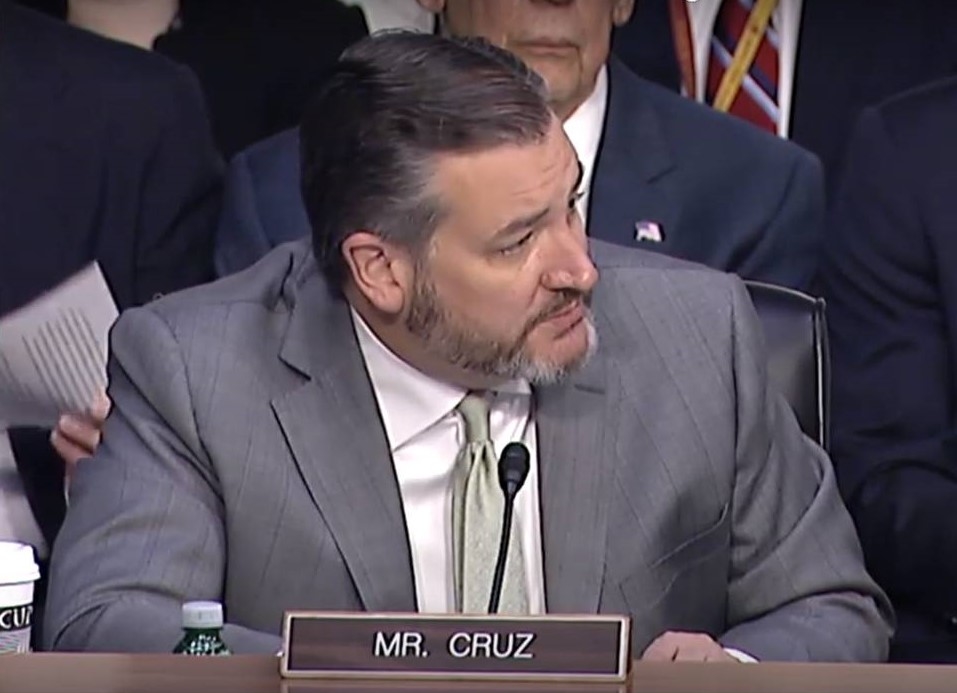
Credit: U.S. Senate/Screengrab Inside Outer Space
International concern
This is the first bill introduced in the U.S. that treats the preservation of lunar landing sites rightly as an international concern.
“We are going to push hard for this bill to be signed in time for the 50th anniversary of Apollo 11 on July 20th,” says Michelle Hanlon, a law professor and space law expert at the University of Mississippi who co-founded For All Moonkind, a nonprofit group devoted to protecting historic sites in space.
For a video of Senator Cruz detailing the One Small Step Act here, go to:
 Posted in
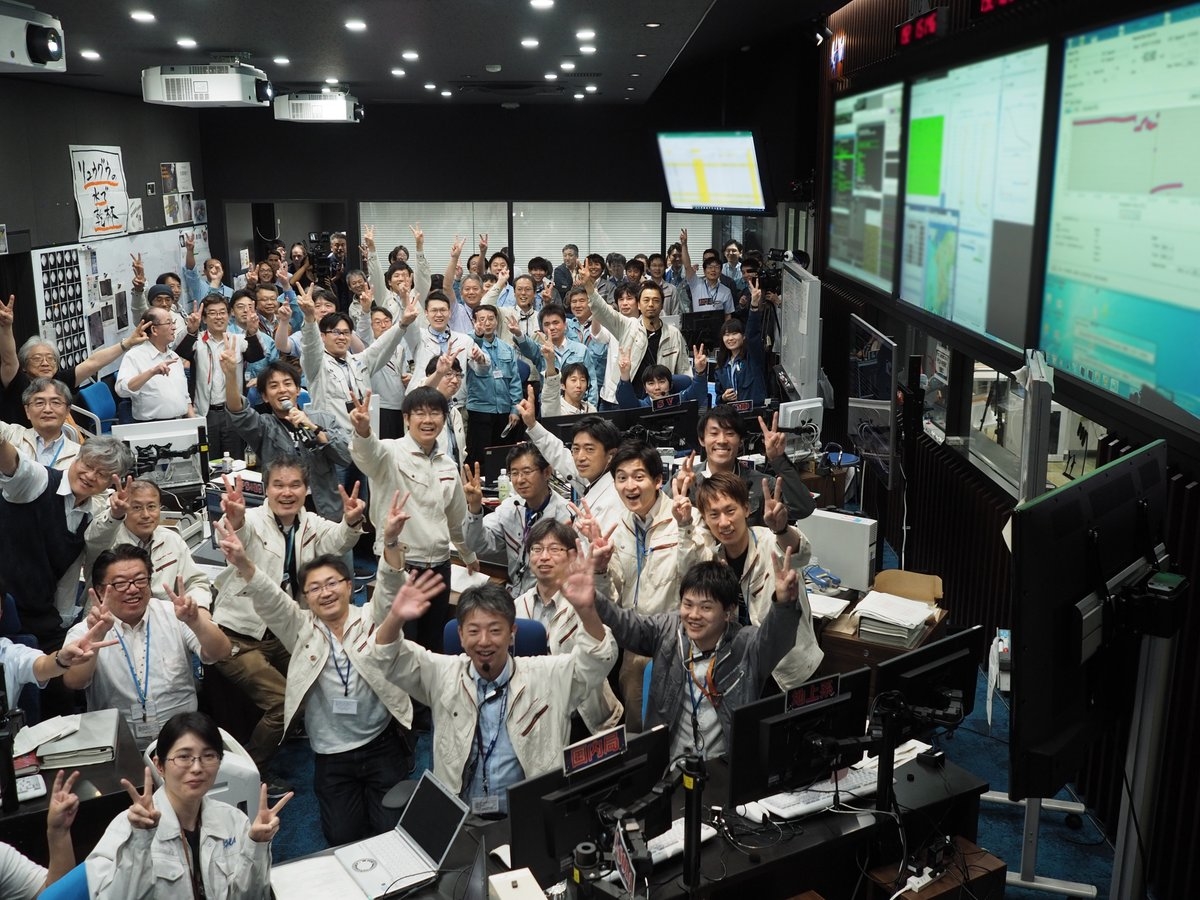
Japan’s Hayabusa2 team members celebrate spacecraft’s 2nd touchdown on asteroid Ryugu.
Credit: JAXA
Japan’s Hayabusa2 spacecraft successfully performed a 2nd touchdown on the surface of asteroid Ryugu.
The touchdown occurred at 10:06 JST on July 11. Images were taken by the spacecraft’s CAM-H – a small monitor camera — before and after the touchdown.
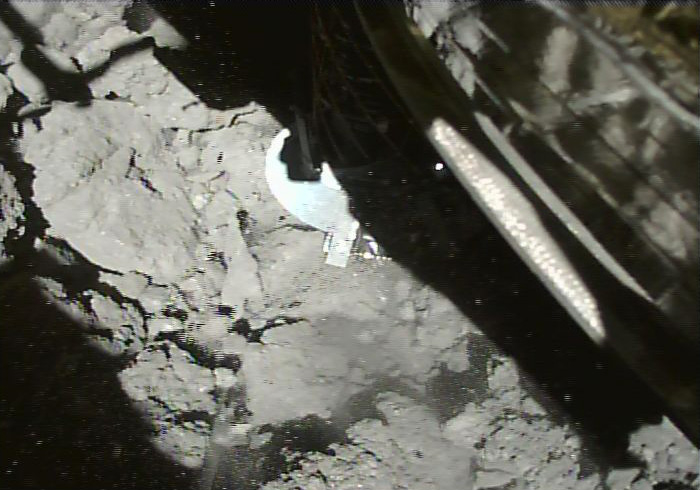
Images were taken before and after touchdown by the small monitor camera (CAM-H). You can see the amount of rocks that rise.
Credit: JAXA, University of Tokyo, Kochi University, Rikkyo University, Nagoya University, Chiba Institute of Technology, Meiji University, University of Aizu and AIST.
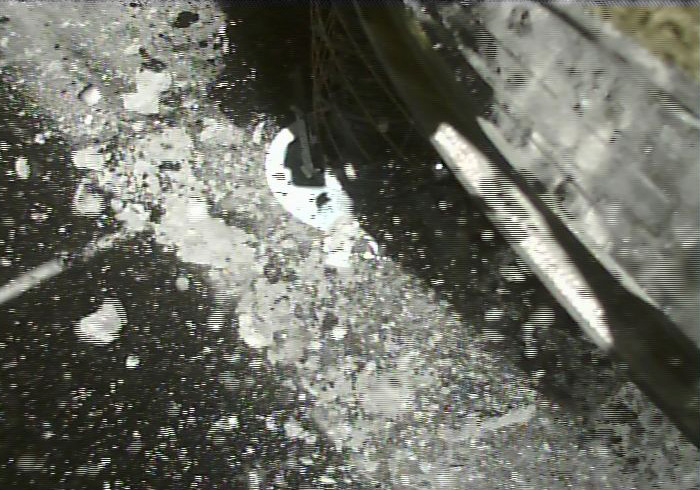
Images were taken before and after touchdown by the small monitor camera (CAM-H). You can see the amount of rocks that rise.
Credit: JAXA, University of Tokyo, Kochi University, Rikkyo University, Nagoya University, Chiba Institute of Technology, Meiji University, University of Aizu and AIST.
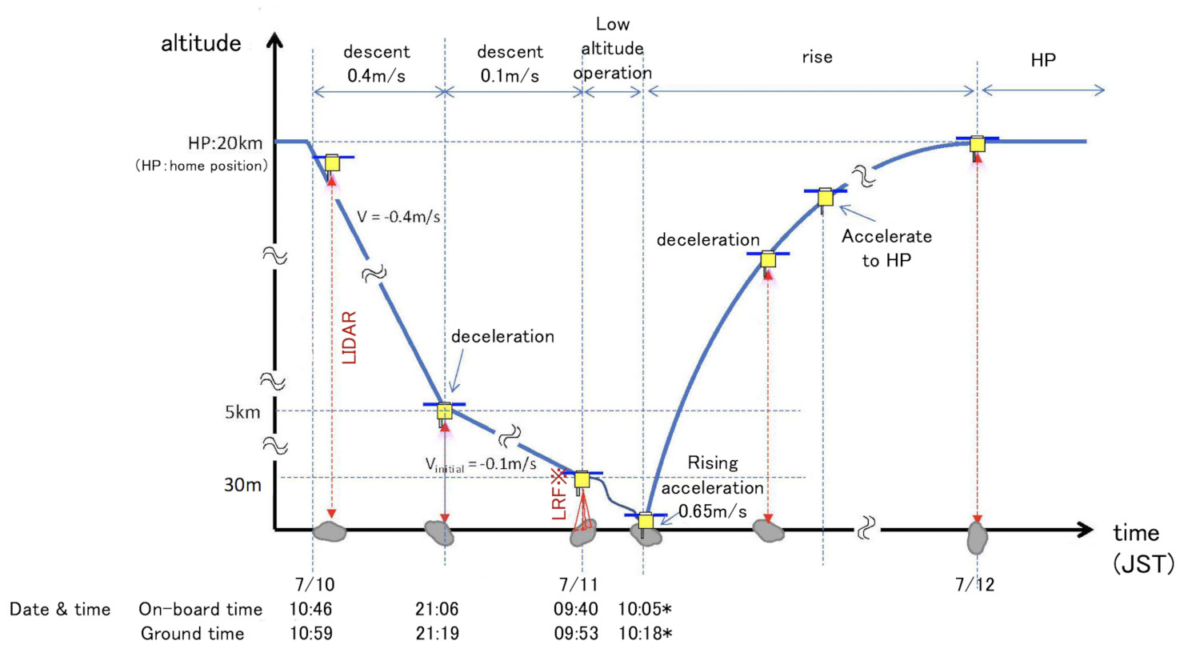
Credit: JAXA

“Horning in” on an asteroid. Sampler horn used to gather up space rock material.
Credit: JAXA/Screengrab/Inside Outer Space

International Space Station
Credit: Roscosmos
In testimony before the House of Representatives Subcommittee on Space and Aeronautics, Committee on Science, Space, and Technology, NASA’s Office of Inspector General (IG) has issued the report: Examining NASA’s Plans for the International Space Station and Future Activities in Low Earth Orbit.
Cascading effect
“As NASA turns its attention to returning humans to the Moon by 2024, concrete plans for the future of the ISS need to be resolved,” the IG report observes. “Whether it be extension, increased commercialization, or retirement, the timing of each of these decisions has a cascading effect on the funding NASA will be able to dedicate for space flight operations in low Earth orbit, its ambitions for establishing a permanent presence on the Moon, and ultimately sending humans to Mars.”

Credit: NASA/ESA
In conclusion, the IG report adds: “The sooner NASA, the Administration, and Congress agree on a definitive path forward for the future of the ISS, the better NASA will be able to plan the future of on-board research and commercialization in low Earth orbit.”
To view the full report, go to:

Courtesy of NASA/JPL/USGS
Earth’s Moon looms. Multiple nations as well as for-profit private concerns have our celestial partner in their cross-hairs.
The drum beat of back to the Moon with humans “this time to stay,” is fueled by harvesting available lunar resources. At the top of that need-to-have resource roster is diving into the floors of permanently shadowed polar craters. Water ice found resident in these everlastingly shaded “cold traps” is thought to be stable and exploitable.
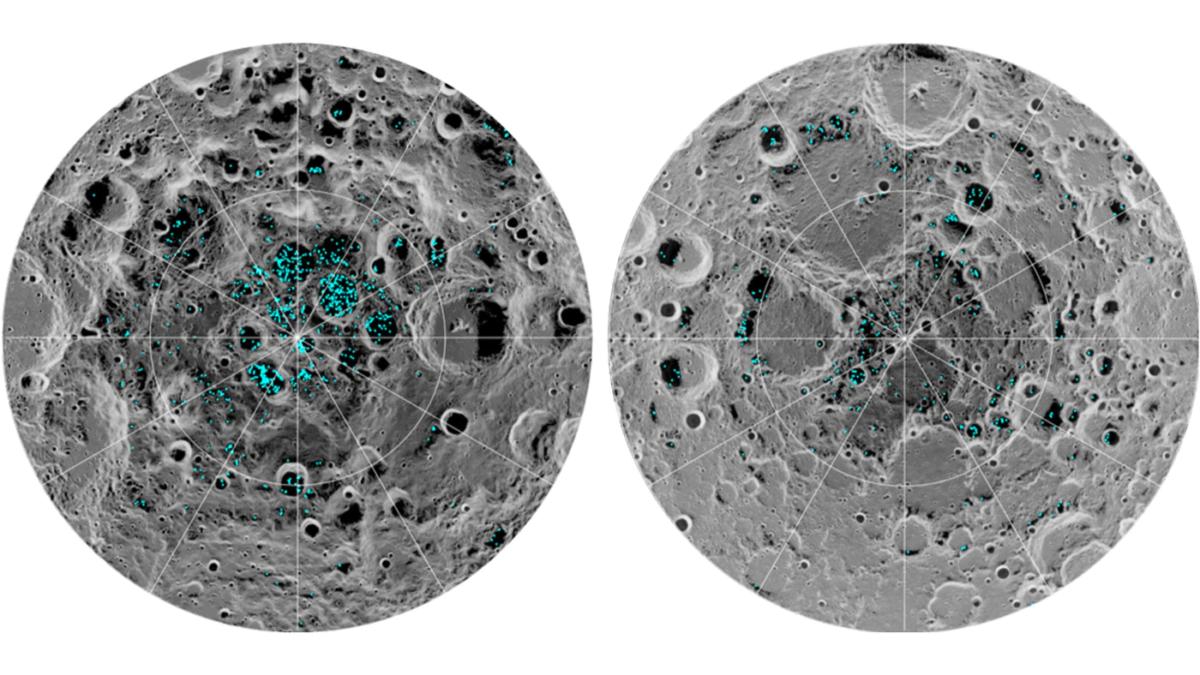
Left image is from the Galileo mission (Earth flyby 1, Dec 8 1990), and the second image of exposed water ice by Li, S., Lucey, P.G., Milliken, R.E., Hayne, P.O., Fisher, E., Williams, J.-P., Hurley, D.M., Elphic, R.C., 2018. Blue represents the ice locations, plotted over an image of the lunar surface, where the gray scale corresponds to surface temperature (darker representing colder areas and lighter shades indicating warmer zones). The ice is concentrated at the darkest and coldest locations, in the shadows of craters.
Because of the very small tilt of the Moon’s rotation axis, sunlight never reaches these regions.
Tale to tell
Return to the Moon advocates foresee enormous reserves of water ice, billions of years in the making, as the basic ingredient for survive and thrive, sustained occupation of the Moon, a resource ripe for water extraction, churning out hydrogen/oxygen propellant, making use of water (ice or liquid) for radiation shielding, terrific for plant growth and as a fuel cell consumable.
But also to be judged is the issue of how scientifically valuable water ice may be, perhaps a reserve that has an astrobiological story to tell. Should we give the scheme of extricating water ice the cold shoulder, until we better comprehend the tale this resource may surrender?
Go to my new Scientific American story:
Science and Sustainability May Clash on the Moon
https://www.scientificamerican.com/article/science-and-sustainability-may-clash-on-the-moon/

Skywatcher and satellite tracker, Ralf Vandebergh of the Netherlands, has released a new image of an over flight of the U.S. Air Force secretive X-37B space plane, also known as Orbital Test Vehicle – 5.
Credit: Ralf Vandebergh
The secretive mission of the U.S. Air Force X-37B mini-space plane has winged past 670 days of flight – just 48 days shy from setting a long duration record for the program.
This Orbital Test Vehicle (OTV-5) was rocketed into Earth orbit on September 7, 2017 atop a SpaceX Falcon 9 booster from Launch Complex 39A at NASA’s Kennedy Space Center in Florida.
Exactly when the OTV-5 space plane will land is unknown.

Credit: Boeing
Long duration record?
The last Air Force’s X-37B mission, OTV-4 — after 718 days of flight — touched down at NASA’s Kennedy Space Center Shuttle Landing Facility May 7, 2017 – a first for the program. All prior missions had ended with a tarmac touchdown at Vandenberg Air Force Base in California.

The U.S. Air Force’s X-37B Orbital Test Vehicle 4 is seen after landing at NASA ‘s Kennedy Space Center Shuttle Landing Facility in Florida on May 7, 2017.
Credit: U.S. Air Force courtesy photo
Prior to launch of OTV-5, Randy Walden, the director of the Air Force Rapid Capabilities Office said there were many firsts on this mission, making it a milestone for the program. “It is our goal to continue advancing the X-37B OTV so it can more fully support the growing space community.”
The Air Force also noted that the fifth OTV mission was launched into, and will be landed from, a higher inclination orbit than prior missions to further expand the X-37B’s orbital envelope.
Meanwhile, Canadian skywatcher Kevin Fetter of Brockville, Ontario, caught the space plane in this video clip:

Hayabusa2 sampler arm operations.
Credit: JAXA/Screengrab Inside Outer Space
“To go, or not to go, that is the question,” explain Japan’s Hayabusa2 officials.
The spacecraft is ready to attempt a second touchdown on asteroid Ryugu.
“Although the first touchdown was successful, going for a second touchdown is ‘the question’ because touchdown is a high-risk operation. This is especially true in the case of Ryugu, which has no large, flat areas. The spacecraft therefore needs precise control to avoid a collision in rocky locations. In short, just because we have succeeded in the past does not mean we can easily do so again.”
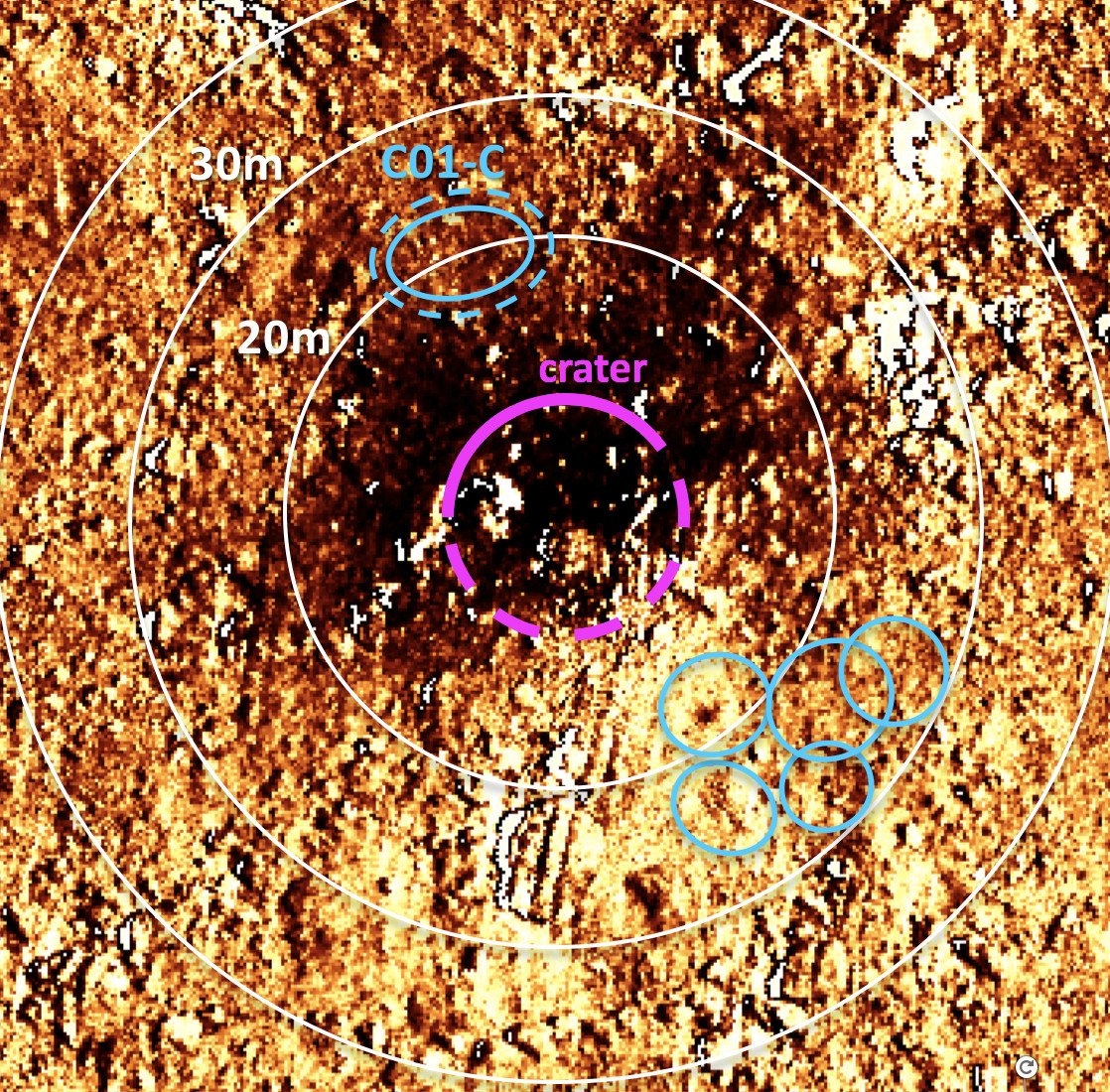
Change in the surface reflectivity due to the artificial crater formed with the Small Carry-on Impactor (SCI). The black regions indicate areas that have darkened after the collision. The planned touchdown point is in the vicinity of C01-C in the figure; a region that has darkened after the generation of the artificial crater. It is thought that subsurface material from the artificial crater has been deposited in this region.
Credit: JAXA, University of Tokyo, Kochi University, Rikkyo University, Nagoya University, Chiba Institute of Technology, Meiji University, University of Aizu, AIST and Kobe University
Major issues
According to Hayabusa2 controllers there are two major issues under consideration.
“The first is whether the second touchdown has significant scientific and engineering merit. If there is little extra to be gained, and as the first touchdown was already successful, there is no point in performing this twice. A second issue is the risk of the touchdown operations. If the risk is high, then the descent would be reckless.”
The second touchdown is now scheduled for July 11.
Boldly go
“We will proceed with our mission with care, but boldly go,” Hayabusa2 control adds.
It was confirmed that the risk during the second touchdown is equal or less than the risk of the first touchdown. “Since the second touchdown is of high scientific and engineering value, we decided the project should perform a second touchdown to collect a sample from asteroid Ryugu.”

Credit: ISRO
The Indian Space Research Organization (ISRO) is readying the launch of its Chandrayaan-2 Moon orbiter, lander and rover, scheduled to be launched between July 9 and 16 from the Satish Dhawan Space Centre in Sriharikota. Note: Liftoff is now scheduled for July 14, 2019 at 21:21 UTC – July 15, 2019 at 02:51 IST local time.

Vikram lunar lander
Credit: ISRO
Chandrayaan-2 is comprised of an orbiter, a lander called Vikram, and a rover tagged as Pragyan. A touchdown is slated on September 6 in a high plain between two craters, Manzinus C and Simpelius N.
The Moon’s south pole region is particularly interesting due to the lunar surface area that remains in shadow and the presence of water in permanently shadowed areas in that locale. Lunar cold traps contain a fossil record of the early Solar System.
India’s booster, the GSLV Mk-III, will carry Chandrayaan-2 to its designated orbit.

Geosynchronous Satellite Launch Vehicle Mark III (GSLV Mk III).
Credit: ISRO
This three-stage launcher is India’s most powerful launcher to date, and is capable of lofting 4-ton class of satellites to Geosynchronous Transfer Orbit (GTO).
Integrated module
Chandrayaan-2 will be an advanced version of the previous Chandrayaan-1 mission to Moon that flew successfully on October 22, 2008 from SDSC SHAR, Sriharikota launch site.
As India’s second lunar mission, Chandrayaan-2 is comprised of three modules, an orbiter, the Vikram lander and the Pragyan rover.

India’s Chandrayaan-2 mission is comprised of an orbiter, a lander called Vikram, and a rover tagged as Pragyan.
The orbiter and lander modules will be interfaced mechanically and stacked together as an integrated module and accommodated inside the GSLV MK-III launch vehicle. The Pragyan rover is housed inside the lander.
After launch into Earth bound orbit by the GSLV MK-III, the integrated module will reach Moon orbit using an orbiter propulsion module. Subsequently, the lander will separate from the orbiter and soft land at the predetermined site close to the lunar south pole.
Mission life
The Chandrayaan 2 orbiter will be capable of communicating with Indian Deep Space Network (IDSN) at Byalalu as well as the Vikram Lander. The mission life of the orbiter is one year and it will be placed in a 62 mile by 62 mile (100 x 100 kilometer) lunar polar orbit.

Credit: ISRO
The lander is named Vikram after Vikram A. Sarabhai, the father of the Indian space program. It is designed to function for one lunar day, which is equivalent to about 14 Earth days.
Chandrayaan 2’s rover is a 6-wheeled robotic vehicle named Pragyan, which translates to “wisdom” in Sanskrit. It can travel up to 1,640 feet (500 meters or one-half kilometer), leverages solar energy for its functioning and can only communicate with the lander.

Credit: ISRO
Experiments
Once deployed, the Pragyan rover will carry out scientific experiments on the lunar surface. Instruments are also mounted on the lander and orbiter for performing science tasks.
There are 13 Indian payloads (8 on the orbiter, three on the lander and two on the rover, along with one passive experiment from NASA – a Laser Retro-reflector Array (LRA) for Lunar Landers.
This LRA is the same design as the one carried onboard Israel’s Beresheet lander that crashed on the Moon last month.
NASA’s retro-reflector is a mirrored device that reflects laser light signals to help pinpoint precisely where a lander is as well as accurately calculate the Moon’s distance from Earth.
A complete list of all payloads on the Chandrayaan 2 mission is available here:
https://www.isro.gov.in/chandrayaan2-payloads

Credit: Jatan Mehta/Moon Monday
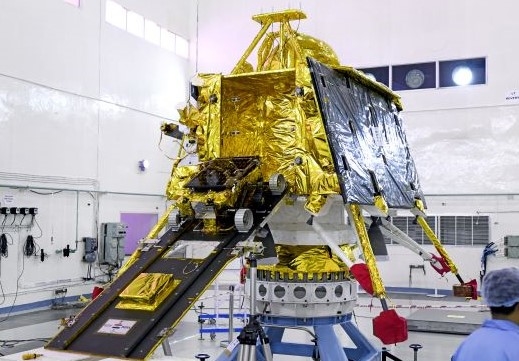
India’s Pragyan rover mounted on the ramp projecting from out of the sides of Vikram lunar lander.
Credit: ISRO
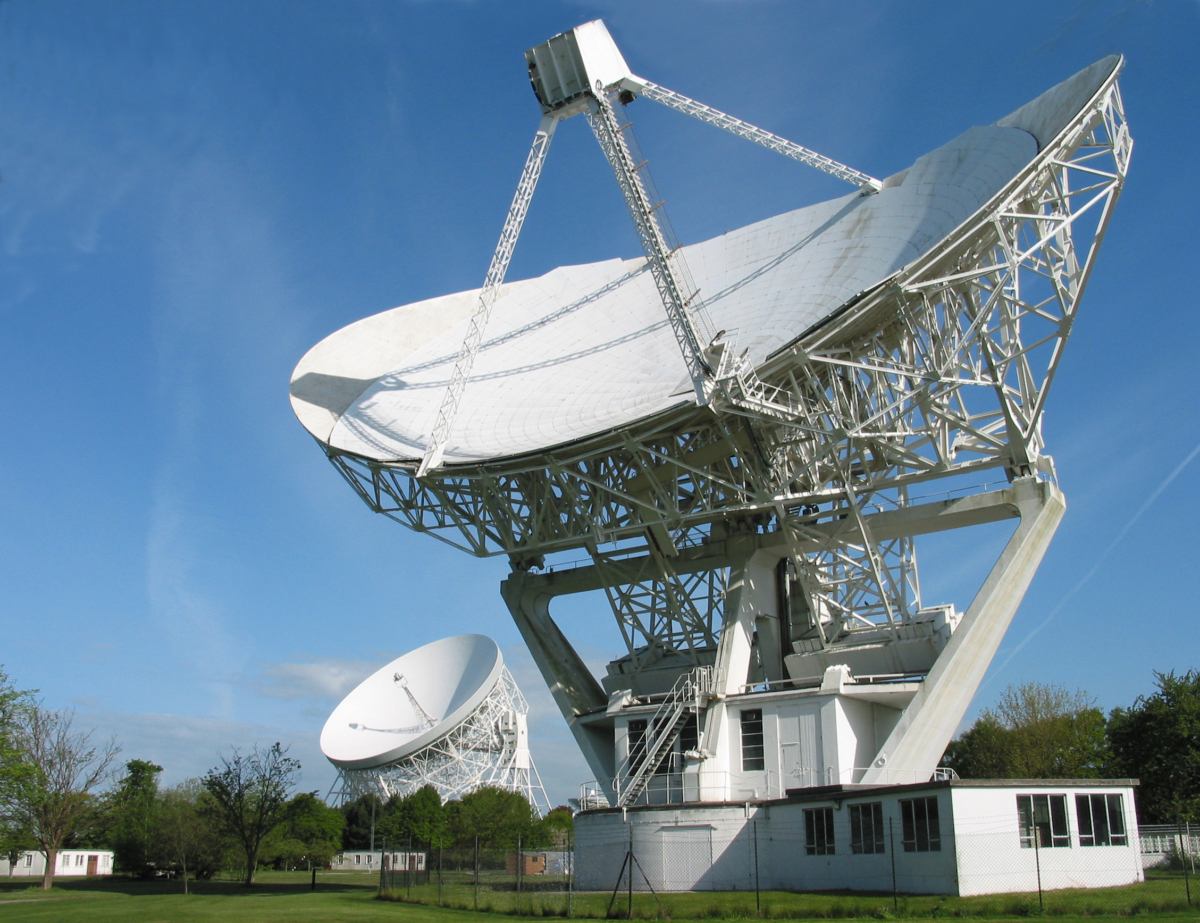
The Mark II and Lovell Telescopes at Jodrell Bank.
Credit: The University of Manchester
Jodrell Bank Observatory has been added to the United Nations Educational, Scientific and Cultural Organization’s (UNESCO) World Heritage List. The observatory becomes the 32nd UNESCO World Heritage Site in the UK to receive this award and joins just over 1,100 sites internationally.
Being held in Baku, Azerbaijan, the World Heritage Convention is an international treaty created in 1972 to promote the conservation and preservation of important natural and cultural sites.
Six cultural sites were added to UNESCO’s World Heritage List. The newly inscribed sites are located in Azerbaijan, Portugal, the Russian Federation, Spain, and the UK.

Mark II Telescope
Credit: Anthony Holloway from Amy Bishop (The University of Manchester)
Substantial scientific impact
As noted in a UNESCO statement:
“Located in a rural area of northwest England, free from radio interference, Jodrell Bank is one of the world’s leading radio astronomy observatories.
At the beginning of its use, in 1945, the site housed research on cosmic rays detected by radar echoes. This observatory, which is still in operation, includes several radio telescopes and working buildings, including engineering sheds and the Control Building.
Jodrell Bank has had substantial scientific impact in fields such as the study of meteors and the moon, the discovery of quasars, quantum optics, and the tracking of spacecraft.
This exceptional technological ensemble illustrates the transition from traditional optical astronomy to radio astronomy (1940s to 1960s), which led to radical changes in the understanding of the universe.”
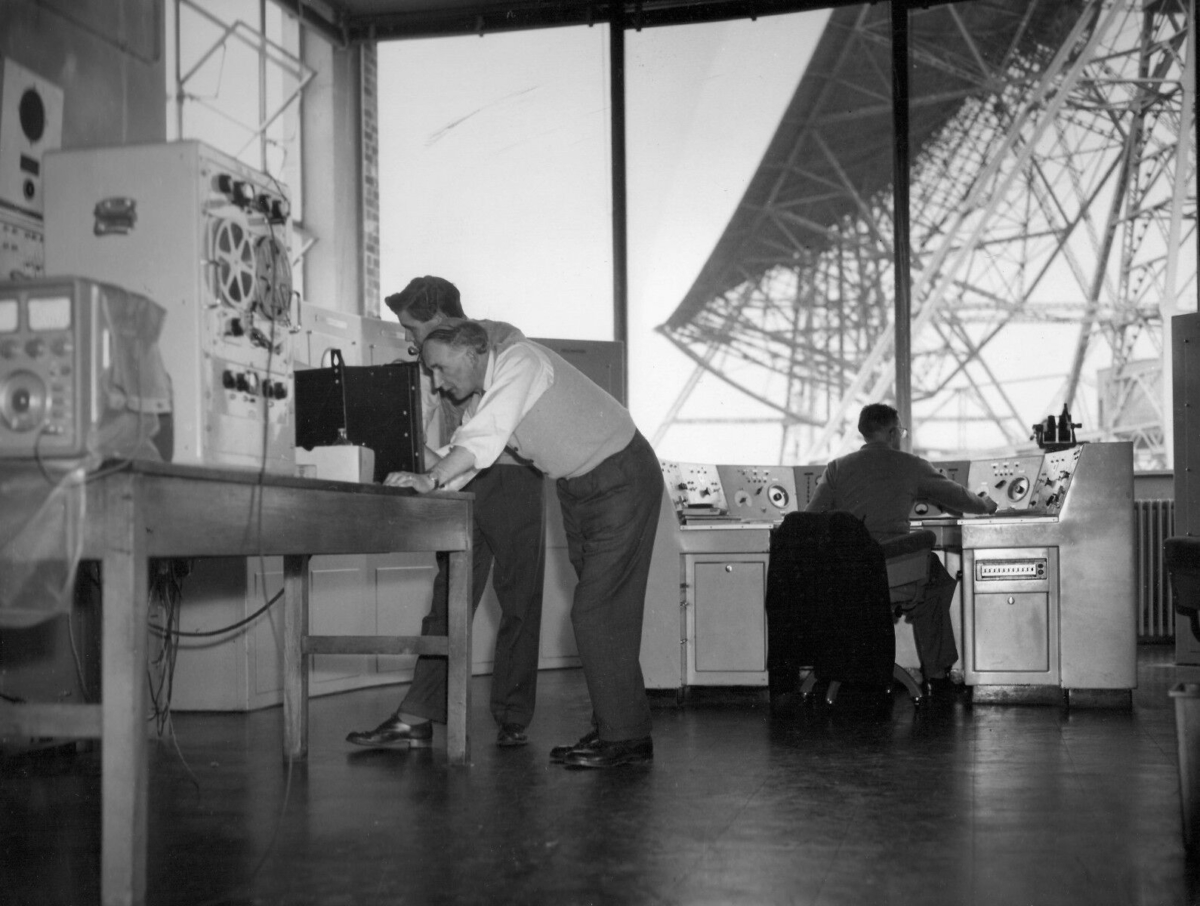
Radio astronomer Bernard Lovell in the Control Room at Jodrell Bank.
Credit: Amy Bishop (The University of Manchester)
Space race history
Jodrell Bank, owned by the University of Manchester, is famous as the home of the Lovell Telescope, the world’s third largest steerable radio telescope. Completed in 1957, the dish was the largest of its kind anywhere in the world until 1973 and was the catalyst for the construction of many other large scale satellite dishes.
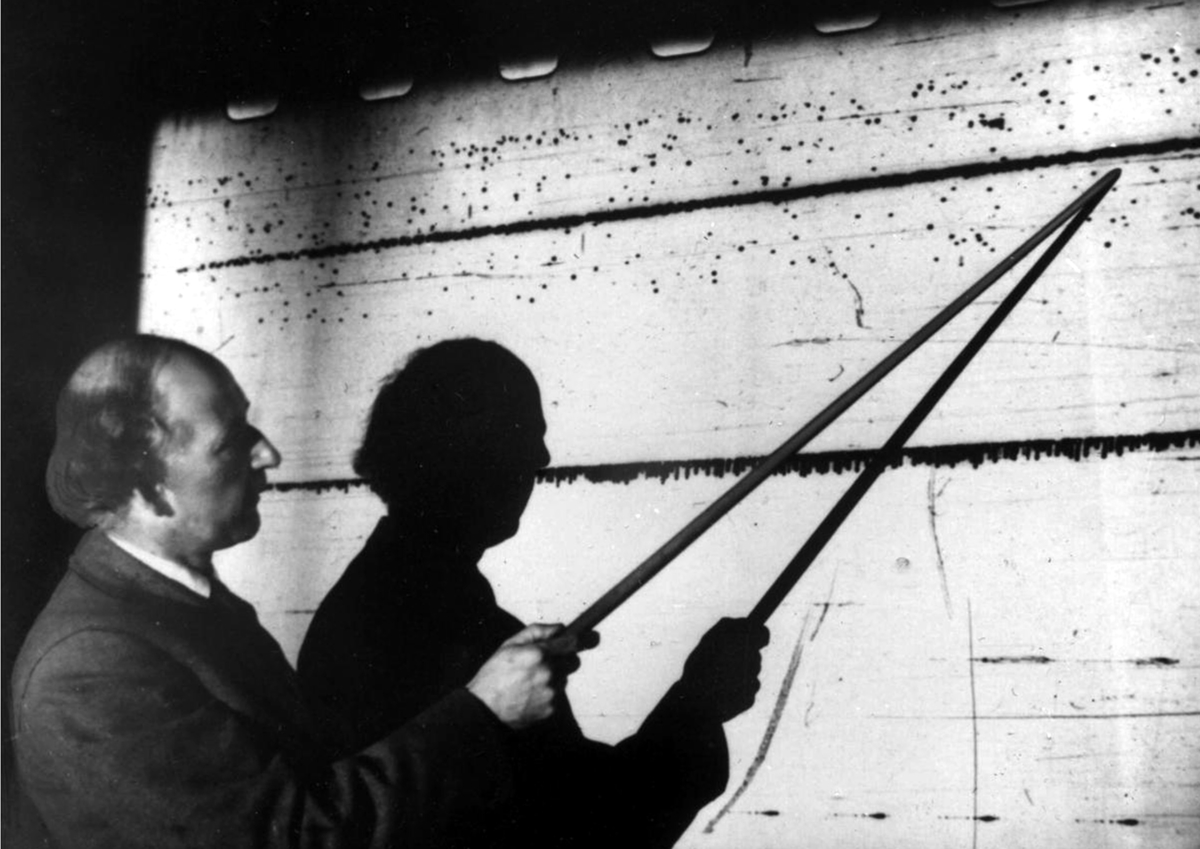
Sir Bernard Lovell shows the Sputnik Echo to the press.
Credit: Amy Bishop (The University of Manchester)
The Lovell Telescope’s first act was to track the Soviet Union’s Sputnik, the world’s first artificial satellite.
Jodrell Bank now joins a prestigious group of sites across the globe recognized by UNESCO’s international community as sites of Outstanding Universal Value.
In a Jodrell Bank statement regarding the recognition: “It places the site on an equal footing with the likes of Stonehenge and the Taj Mahal and represents an enormous accolade not only for Jodrell Bank and The University of Manchester, but also for the region, and the UK as a whole.”
For more information on this historic and on-going research, go to:
Also, go to this informative video at:

Image taken by Hayabusa2 during the low altitude descent observation operation conducted from June 11 – 13. Asteroid Ryugu is covered with boulders. In attempting a second touchdown, mission controllers need to aim for a point close to a target marker which has no obstacles. The project is currently examining this area in detail.
Credit: JAXA, Chiba Institute of Technology, University of Tokyo, Kochi University, Rikkyo University, Nagoya University, Meiji University, University of Aizu, AIST.
In a recent communiqué, project officials from Japan’s Hayabusa2 asteroid explorer are eyeing a second touchdown of the craft on July 11.

Following the small carry-on impactor (SCI) explosion, Hayabusa2 is on tap to sample the crater.
Credit: JAXA/Screengrab/Inside Outer Space
The touchdown spot is about 65 feet (20 meters) north of the artificial crater formed by the mission’s Small Carry-on Impactor (SCI). Currently, the team is carefully examining and checking touchdown operation plans to enable collection of the uplifted subsurface material from Ryugu as a result of the SCI explosion.
Step by step
The Japan Aerospace Exploration Agency (JAXA) Hayabusa2’s first touchdown took place this year on February 22.
Mission controllers succeeded in creating an artificial crater using the Small Carry-on Impactor (SCI) on April 5.
After the operation to form the artificial crater, the spacecraft descended a total of four times above or near the crater site. These descent operations allowed controllers to obtain detailed data of the region near the artificial crater.

Credit: JAXA
In addition, Hayabusa2 team members succeeded in dropping a target marker in the area close to the artificial crater on May 30. Combined, these operations mean that the situation around the artificial crater is now well understood, according to Hayabusa2 officials.
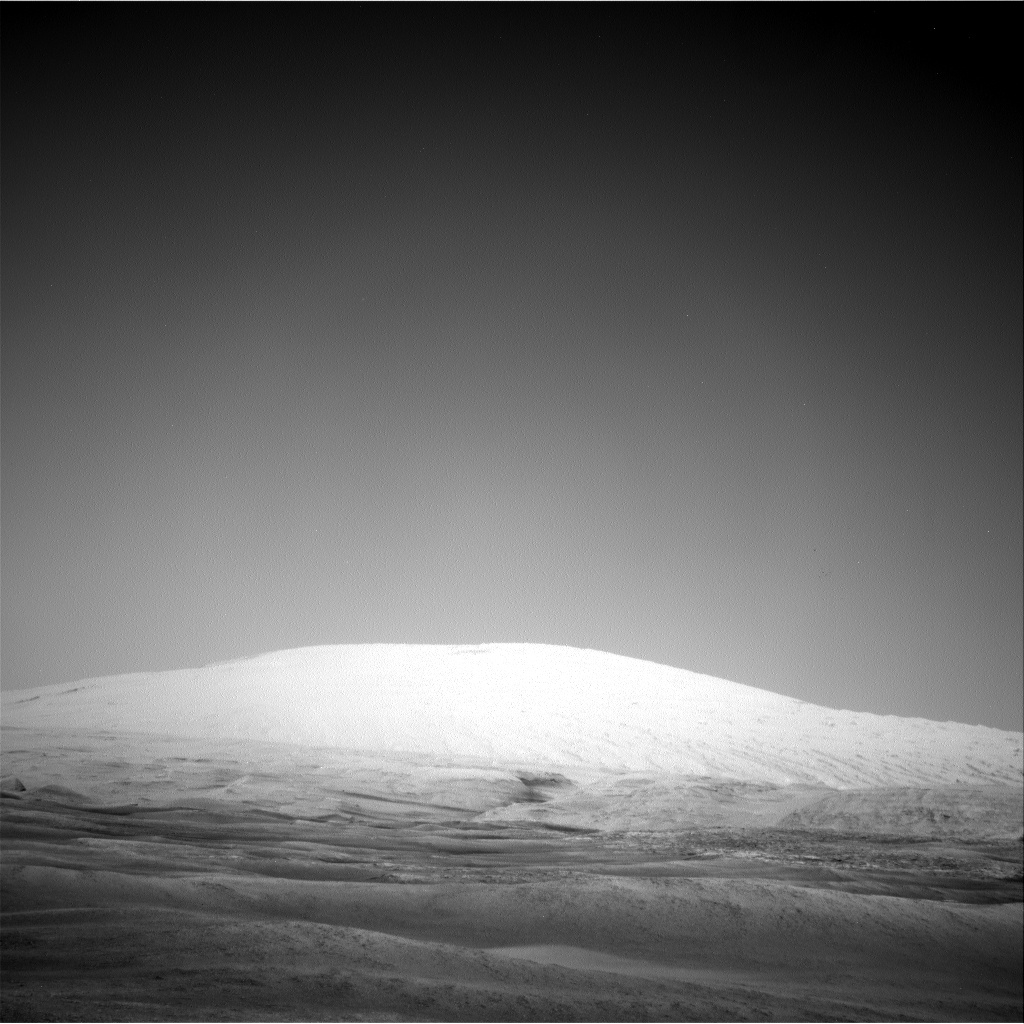
Curiosity Navcam Right B image taken on Sol 2458, July 6, 2019.
Credit: NASA/JPL-Caltech
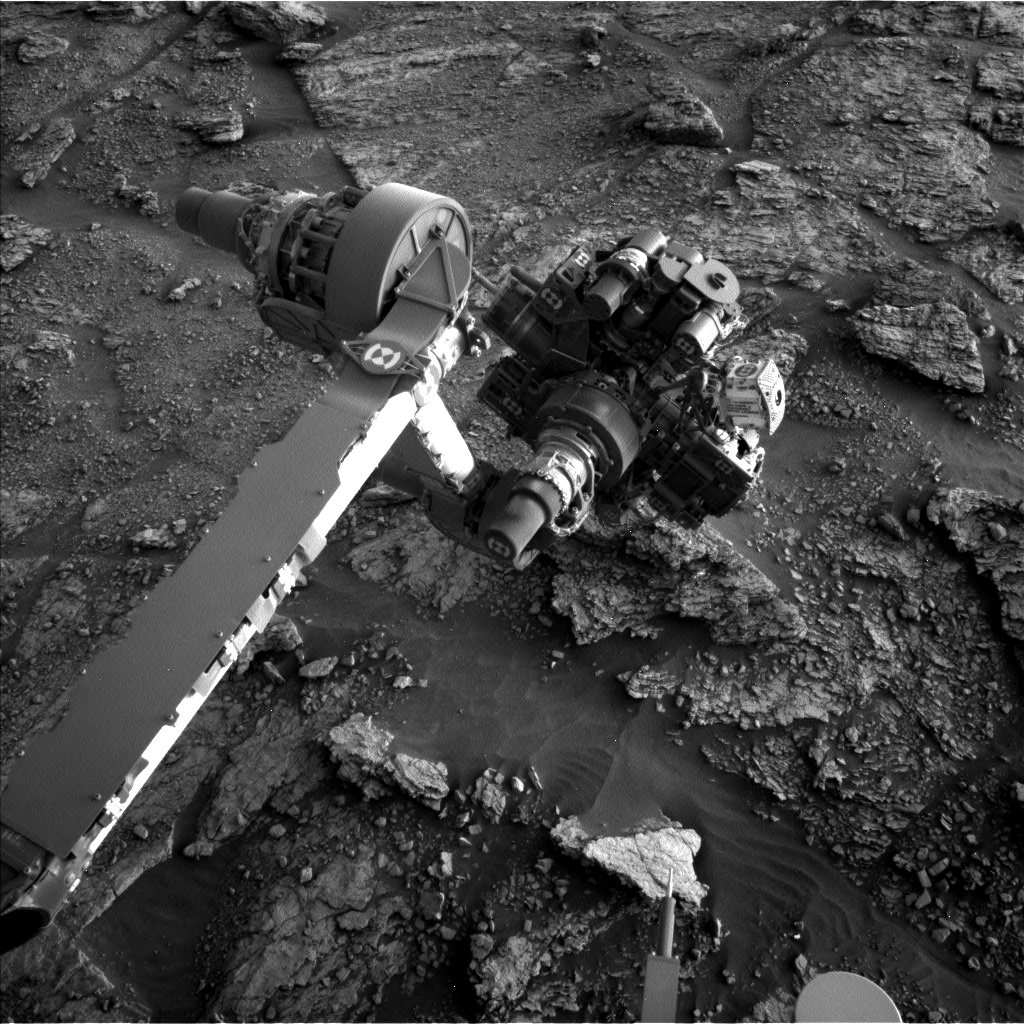
Curiosity Navcam Left B image taken on Sol 2458, July 6, 2019.
Credit: NASA/JPL-Caltech
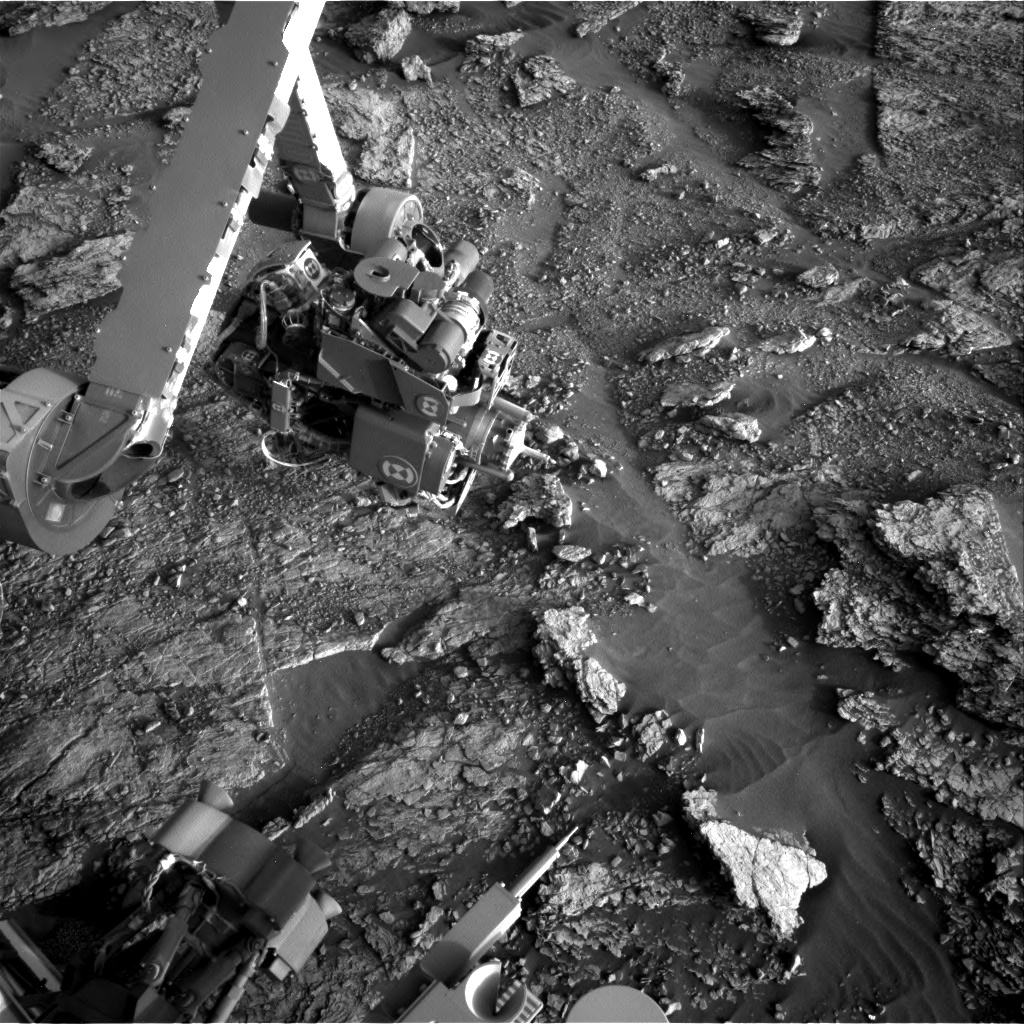
Curiosity Navcam Right B image acquired on Sol 2458, July 6, 2019.
Credit: NASA/JPL-Caltech
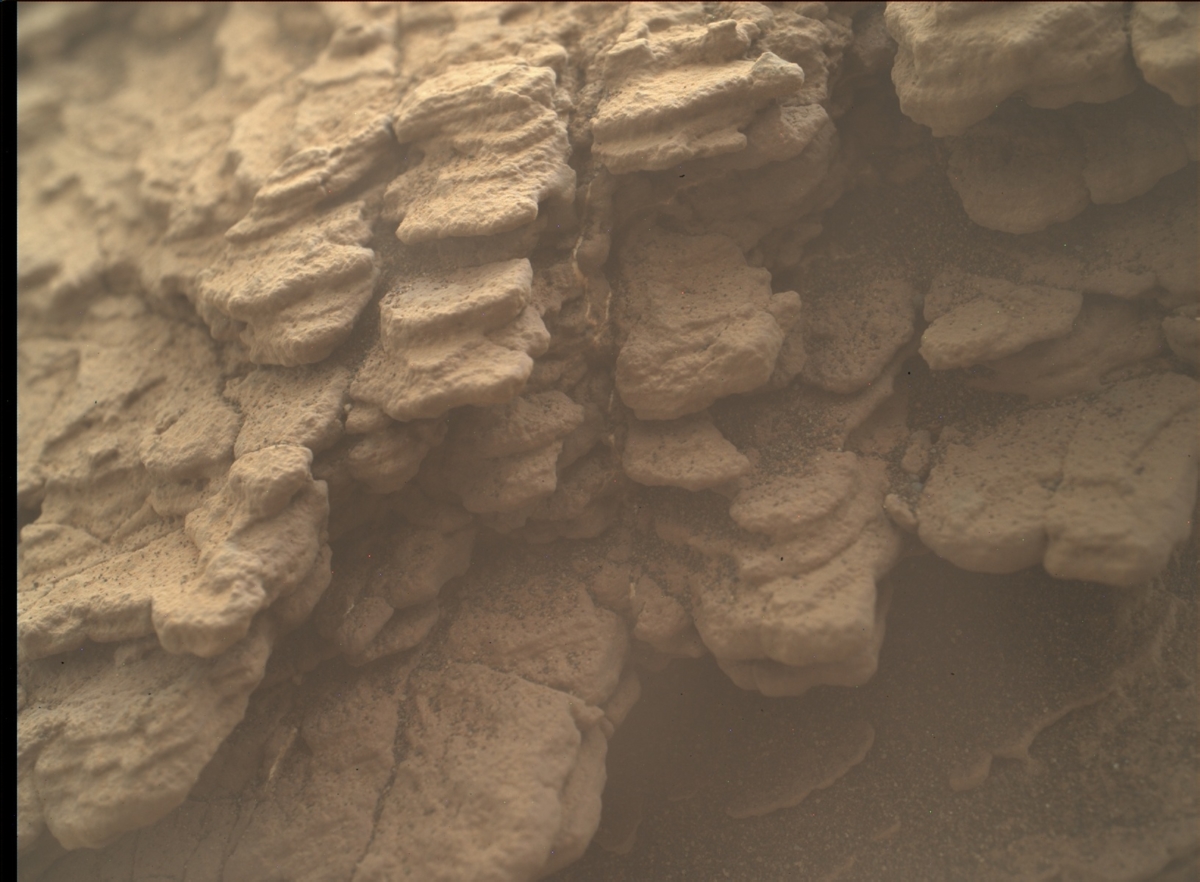
Curiosity Mars Hand Lens Imager (MAHLI) photo produced on Sol 2458, July 6, 2019. MAHLI is located on the turret at the end of the rover’s robotic arm.
Credit: NASA/JPL-Caltech/MSSS
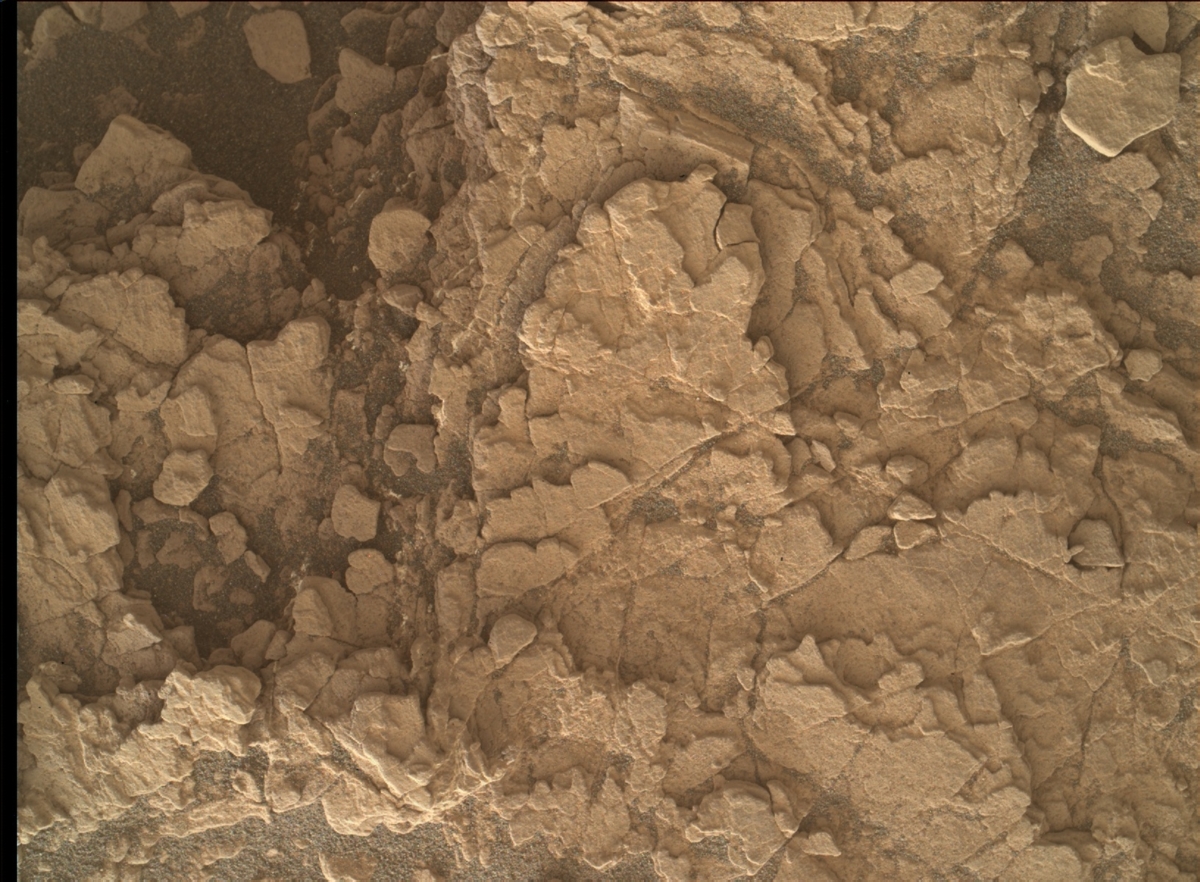
Curiosity Mars Hand Lens Imager (MAHLI) photo produced on Sol 2458, July 6, 2019.
Credit: NASA/JPL-Caltech/MSSS
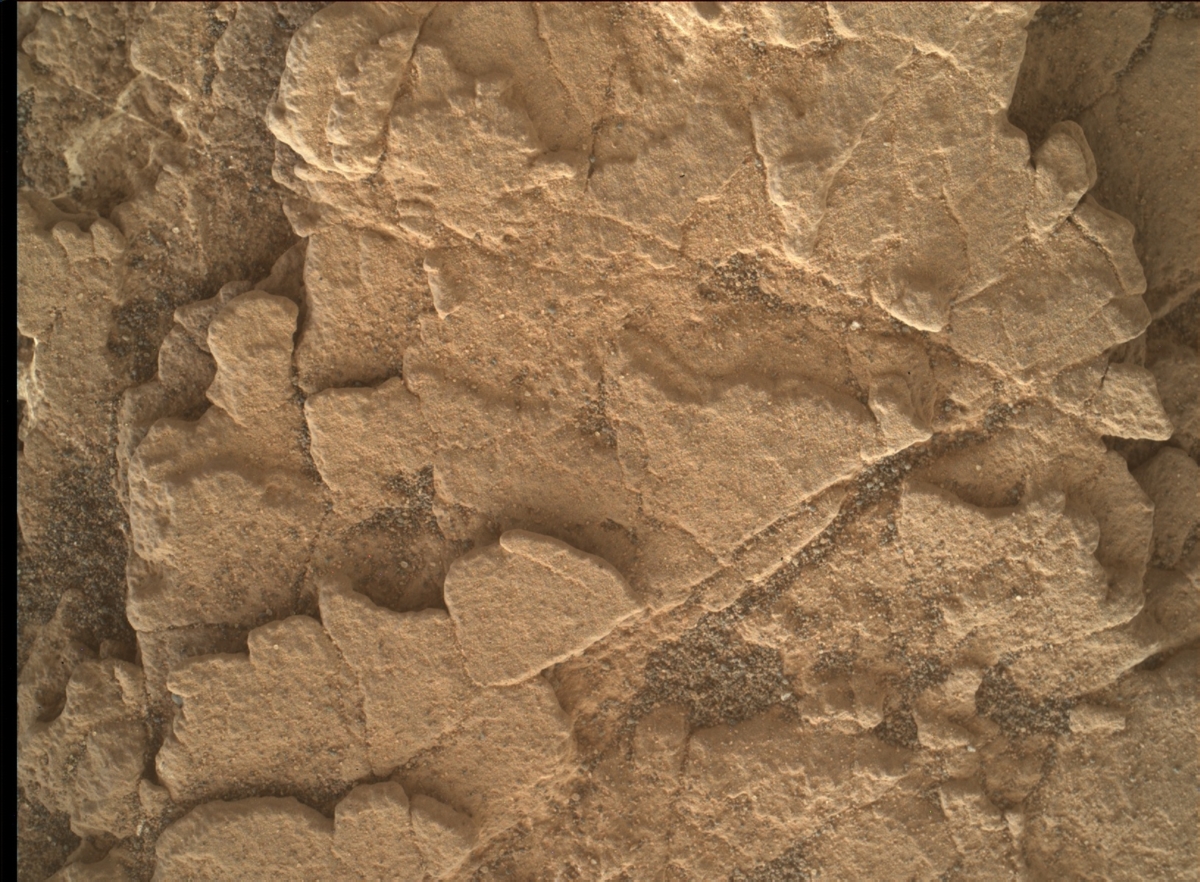
Curiosity Mars Hand Lens Imager (MAHLI) photo produced on Sol 2458, July 6, 2019.
Credit: NASA/JPL-Caltech/MSSS
NASA’s Curiosity Mars rover is now performing Sol 2459 duties.
The robot is currently near the top of Harlaw Rise, having made a slight diversion from the southward drive through the clay-bearing unit to explore the exposures of rocks on this hill.
Here’s a sampling of new imagery relayed from Curiosity:

