Author Archive
 Author:
  September 6th, 2019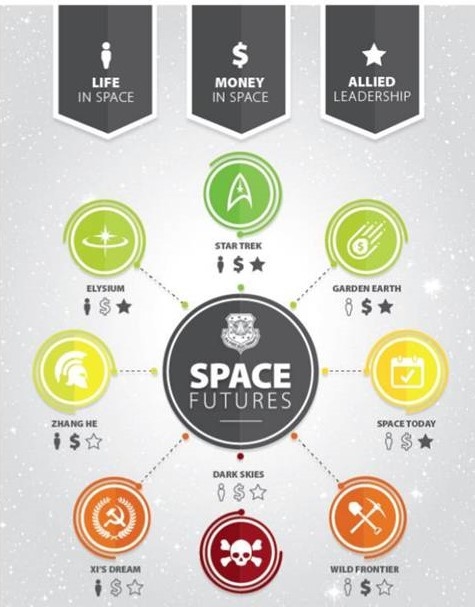
Credit: Air Force Space Command
The Air Force Space Command hosted a Space Futures Workshop (SFW) to explore the role of space to the year 2060.
Key workshop conclusions reached were:
- The U.S. must recognize that in 2060, space will be a major engine of national political, economic, and military power for whichever nations best organize and operate to exploit that potential.
- The U.S. faces growing competition from allies, rivals, and adversaries for leadership in the exploration and exploitation of space.
- China is executing a long-term civil, commercial, and military strategy to explore and economically develop the cislunar domain with the explicit aim of displacing the U.S. as the leading space power. Other nations are developing similar national strategies.
- A failure to remain a leading space power will place U.S. national power at risk. To avert this, the U.S. coalition must promote and optimize the combined civil, military, and commercial exploitation of space to best serves the nation’s interests.
- The U.S. military must define and execute its role in promoting, exploiting, and defending the expanded military, civil, and commercial U.S. activities and human presence in space.
Credit: U.S. Air Force/Tech. Sgt. David Salanitri
Thought leaders
The SFW was conducted at the U.S. Air Force Academy over three days, with 52 senior scientists, decision makers, leaders, and professors participating.
Participants were from the Air Force Air University, the Air Force Space Command, the Air Force Research Laboratory, the Defense Innovation Unit, the National Aeronautics and Space Administration, industry, federally funded research and development corporations, and academia.
The Air Force Space Command issued on September 5th a report — The Future of Space 2060 and Implications for U.S. Strategy: Report on the Space Futures Workshop – and can be viewed by going to this Politico.com site:
https://www.politico.com/f/?id=0000016d-0513-d6ab-a97f-4f93520b0001
 Posted in
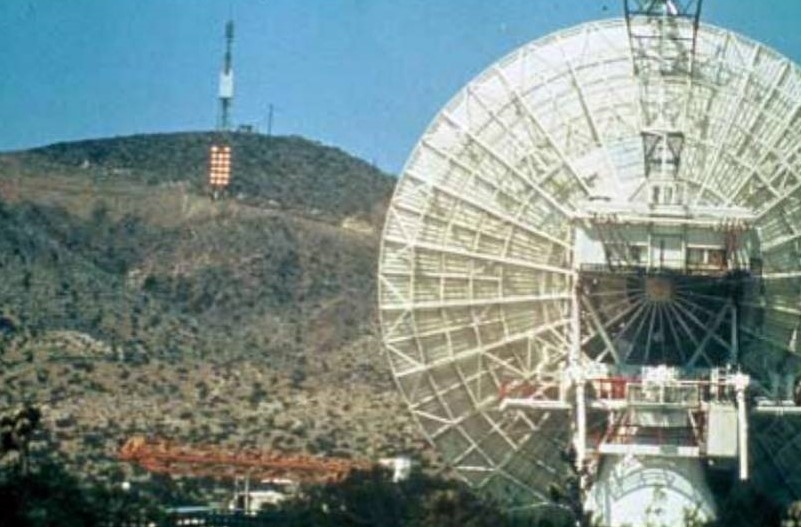
Credit: JPL
The ability to transmit energy over long distances without wires — known as “power beaming” — has been getting second looks + both in the U.S. and abroad.
To this point, the US Naval Research Laboratory (NRL) has issued a Request For Information (RFI) seeking inputs for how best “to implement a demonstration of a power beaming capability that is safe for users and bystanders,” and that delivers on an ongoing basis at least one kilowatt (kW) at a distance of at least one kilometer.
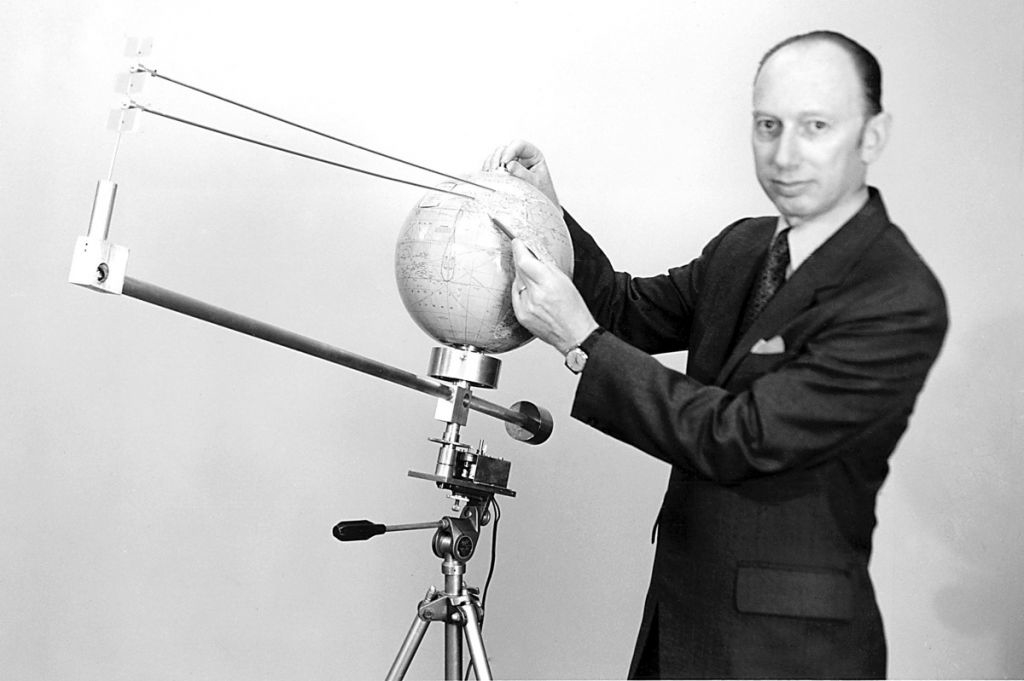
Peter Glaser, the father of the solar power satellite concept.
Credit: Arthur D. Little Inc.
History machine
Turning on the history machine, the idea of wireless power transmission began with Nikola Tesla near the end of the nineteenth century.
Then in 1968, the concept of a solar power satellite was detailed by U.S. space pioneer, Peter Glaser. It would harvest energy from sunlight using solar cells and beam it down to Earth as microwaves to receiving antennas (rectennas), which would convert those microwaves to electrical energy on the electric power grid.
Jump to the mid-1970s microwave power transmission experiments in the tens of kilowatts were conducted at the JPL Goldstone Deep Space Communications Complex in California.

Power beaming from space to Earth is attracting technologists.
Credit: John Mankins
Moon powersat
In more recent times, Mitsubishi Heavy Industries, Ltd. (MHI) announced in 2015 it had conducted ground demonstration testing of wireless power transmission to serve as the core technology of space solar power systems “that are expected to be the power generation systems of the future.”
Over the years, power beaming from the Moon to the Earth has been advocated.
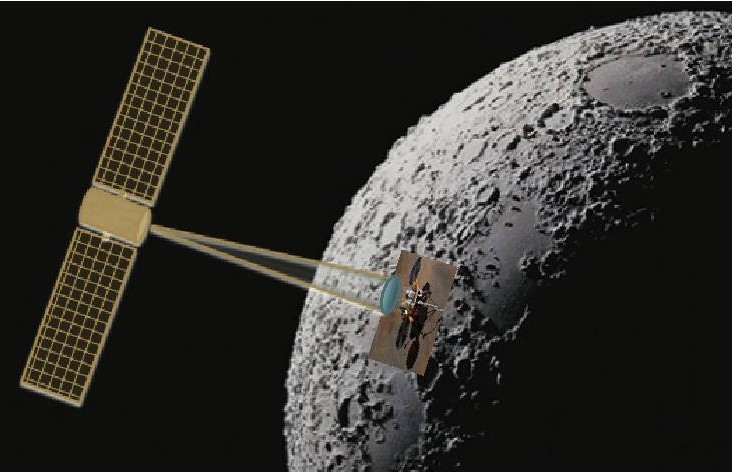
Earlier this year, at a Colorado School of Mines Space Resources meeting, using a space solar power satellite as an alternative power strategy for supporting lunar operations, was advocated by Michael Hecht of the MIT Haystack Observatory and Phil Lubin of the University of California, Santa Barbara.
Defense purposes
In the NRL RFI solicitation of August 30, it’s noted that power beaming interest by the Defense Advanced Research Projects Agency (DARPA), the Office of the Deputy Assistant Secretary of Defense for Operational Energy, the Institute of Electrical and Electronics Engineers and others, have gained “momentum, currency, and recognition.”
For defense purposes, the RFI states that a number of application areas are of immediate interest: swarming, teamed, and individual autonomous air, ground, and sea vehicles, off board countermeasures, unattended ground and sea sensors, explosive ordnance disposal, and camp/convoy/port/fleet security.
“These cover a range of mission areas, including providing communications, intelligence, surveillance, target acquisition, and reconnaissance. They are applicable in numerous military contexts, such as forward operating bases, combat outposts, landing parties, fleet operations, and distributed sensor networks. Power beaming can also be used to enhance energy harvesting or traditional solar energy collection,” the RFI explains.
Perhaps this new look at power beaming will breathe new life into both Earth and space settings?
To view the Power Beaming – Request for Information Solicitation, go to:
https://www.fbo.gov/spg/DON/ONR/N00173/N00173-19-RFI-AL06/listing.html
Credit: ISRO
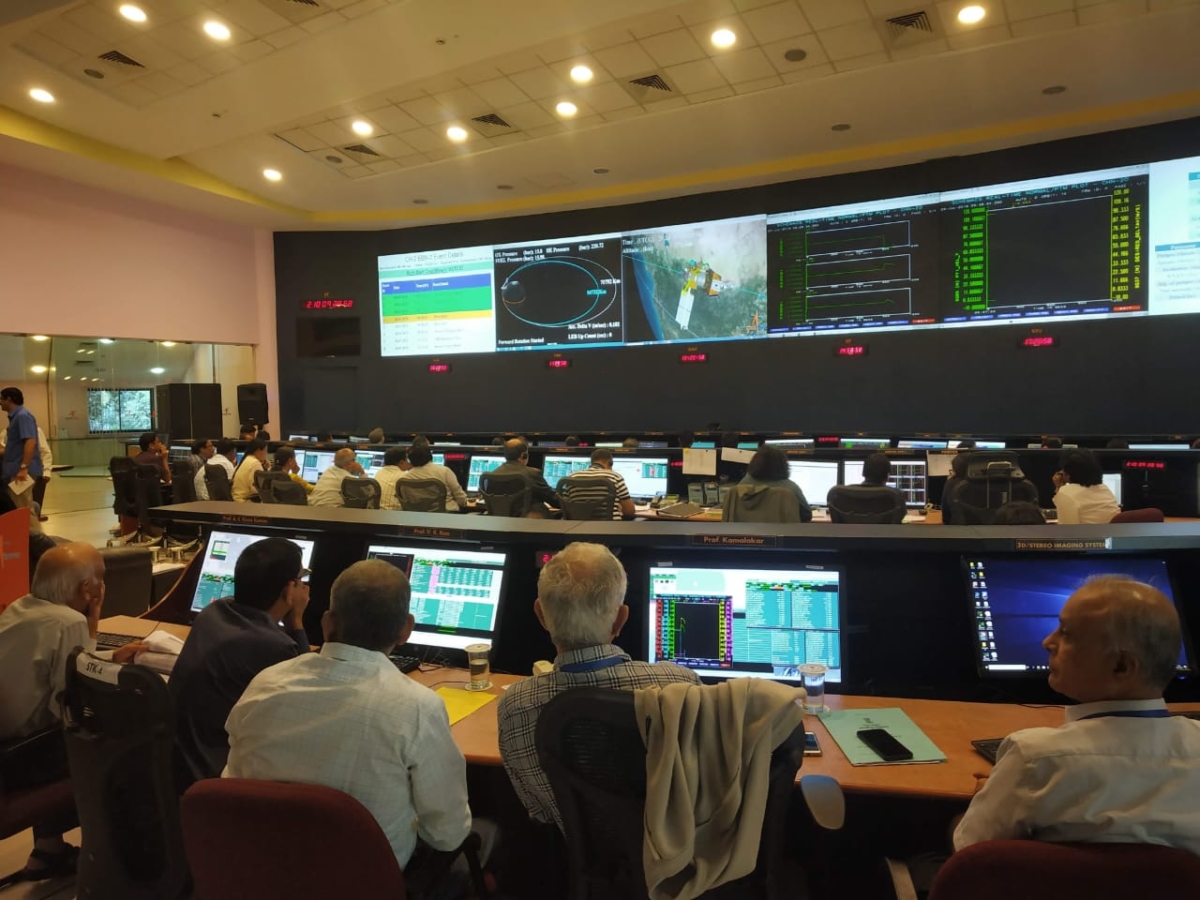
A nine-second de-orbiting maneuver for Chandrayaan-2 spacecraft was performed successfully today (September 04, 2019) beginning at 0342 hrs India Standard Time (IST) as planned, using the onboard propulsion system.
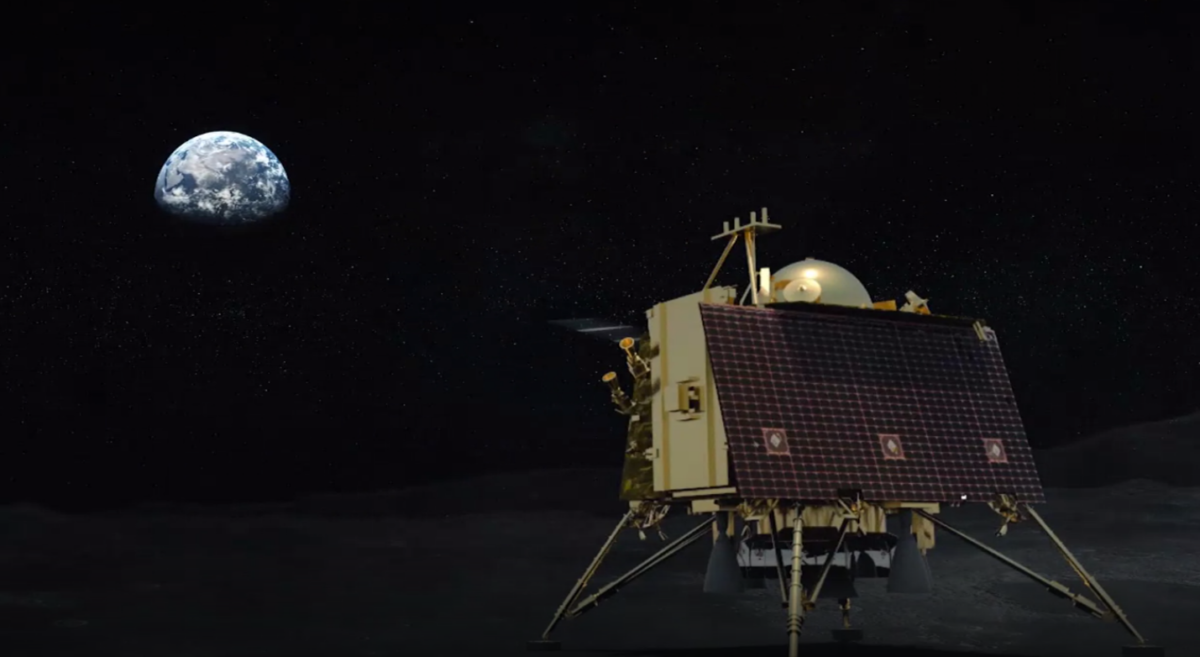
The completion of this maneuver has placed the Vikram lander into the required orbit for it to commence its descent toward the surface of the Moon.

Credit: ISRO/Inside Outer Space Screengrab
The orbit of the lunar lander is now 22 x 63 miles (35 x 101 kilometers).
Meanwhile, the Chandrayaan-2 orbiter continues to circle the Moon in an orbit of 60 x 78 miles (96 x 125 kilometers).
Both the orbiter and lander are healthy, reports the Indian Space Research Organization (ISRO).
Powered descent
The lander is scheduled to begin its powered descent between 0100 – 0200 hrs IST on September 07, 2019, which is then followed by touchdown of the Vikram lander between 0130 – 0230 hrs IST (between 4 and 5 p.m. U.S. Eastern, Sept. 6).

Chandrayaan-2 landing site in the highland plain between the craters Manzinus C and Simpelius N. Simpelius N crater is about 6 miles (9 kilometers) across.
Source: LROC Quickmap
Credit: Jatan Mehta/Moon Monday
The lander is targeted to plop down near the Moon’s south pole.
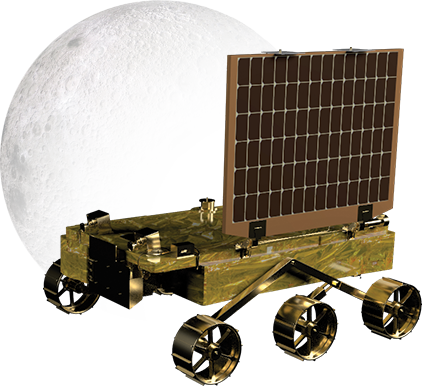
Given a successful touchdown by the lander, weighing 3,243 pounds (1,471 kilograms), its onboard Pragyan rover, weighing 60 pounds (27 kilograms), is to roll out onto the lunar surface between 5:30 am to 6:30 am.
The 6-wheeled rover can travel up to 1,640 feet (500 meters) from the landing spot on the Moon.
Credit: ISRO
Experiments
Onboard the Vikram lander is a Radio Anatomy of Moon Bound Hypersensitive ionosphere and Atmosphere (RAMBHA). This experiment is to measure factors such as ambient electron density/temperature near the lunar surface. Also, this experiment can provide a temporal evolution of lunar plasma density for the first time near the surface under varying solar conditions.
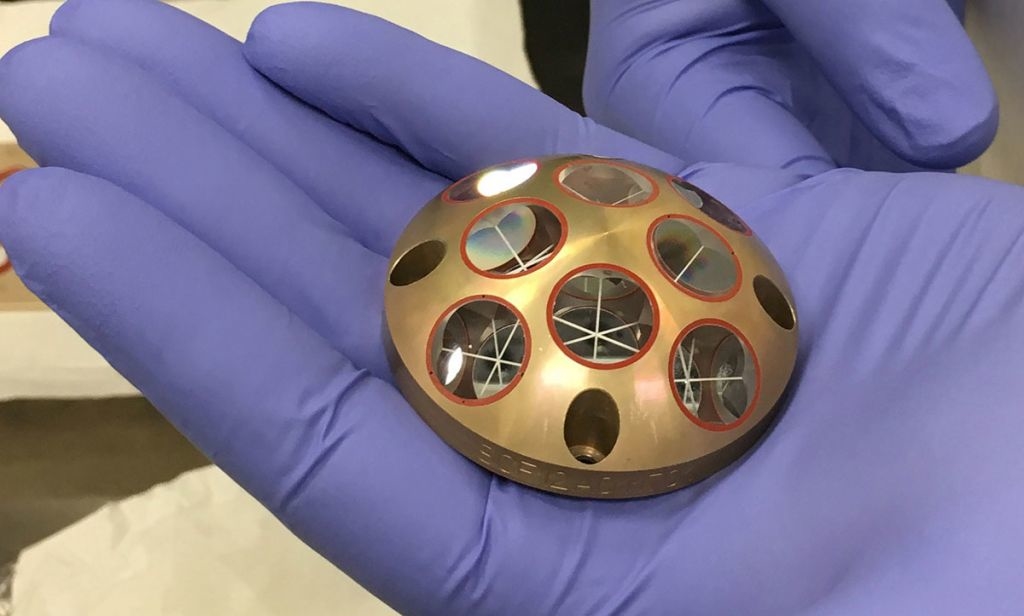
NASA-supplied Laser Retroreflector Array.
Credit: NASA/Goddard Space Flight Center
Chandra’s Surface Thermo-physical Experiment (ChaSTE) is to measure the vertical temperature gradient and thermal conductivity of the lunar surface.
Instrument for Lunar Seismic Activity (ILSA) is a Microelectromechanical systems (MEMS)-based seismometer that can detect minute ground displacement, velocity, or acceleration caused by lunar quakes.
Also onboard the lander is a NASA-supplied Laser Retroreflector Array to understand the dynamics of Earth’s Moon system and also derive clues on the lunar interior.
Credit: ISRO
The rover carries an Alpha Particle X-ray Spectrometer (APXS) to determine the elemental composition of the Moon’s surface near the landing site.
A Laser Induced Breakdown Spectrometer (LIBS) is to identify and determine the abundance of elements near the landing site.
Credit: U.S. Air Force/Tech. Sgt. David Salanitri
The Air Force Space Command is set to conduct the 13th Schriever Wargame at Maxwell Air Force Base, Alabama.
The Wargame scenario is set in the year 2029 and will explore critical space issues and examine the integration activities of multiple agencies associated with space systems and services.
Starting on September 4th, roughly 350 military and civilian experts from more than 27 commands and agencies around the country, as well as four international partners — Australia, Canada, New Zealand, the United Kingdom, as well as the United States.
Credit: U.S. Space Command
Wargame objectives
According to the Air Force Space Command, this iteration of the wargame is centered on the following objectives:
- Inform people, processes, and technologies to advance the United States Space Command’s (USSPACECOM) joint/combined operational missions.
- Explore opportunities and challenges of national, commercial, and coalition architectures to synchronize effects that protect and defend the space enterprise.
- Examine unity of command/effort to seamlessly integrate space operations and authorities across multiple classification and organizational levels.
- Advance shared understanding of responsible behaviors in the space domain and impacts on national and coalition decision-making, and
- Investigate whole-of-government(s) and coalition options to control escalation across all domains.
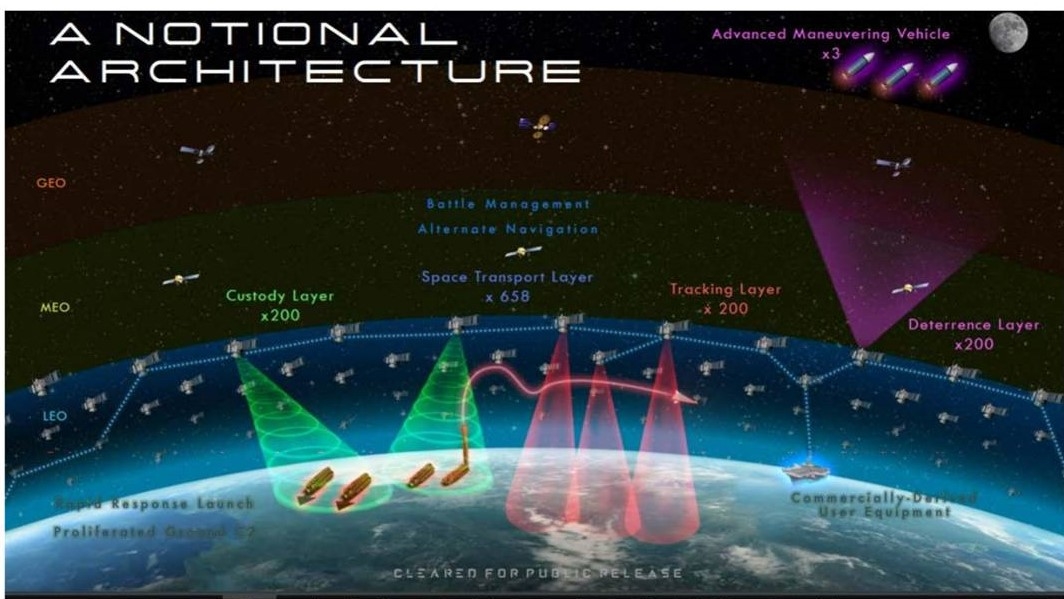
Notional space architecture.
Credit: Space Development Agency
Notional peer competitor
The scenario depicts a notional peer competitor seeking to achieve strategic goals by exploiting multi-domain operations.
Additionally, the scenario will also include a full spectrum of threats across diverse, multi-domain operating environments to challenge civilian and military leaders, planners and space system operators, as well as the capabilities they employ.
The Schriever Wargame 19 team will conduct this wargame on behalf of Air Force Space Command, headquartered in Colorado Springs, Colorado.
Credit: ISRO
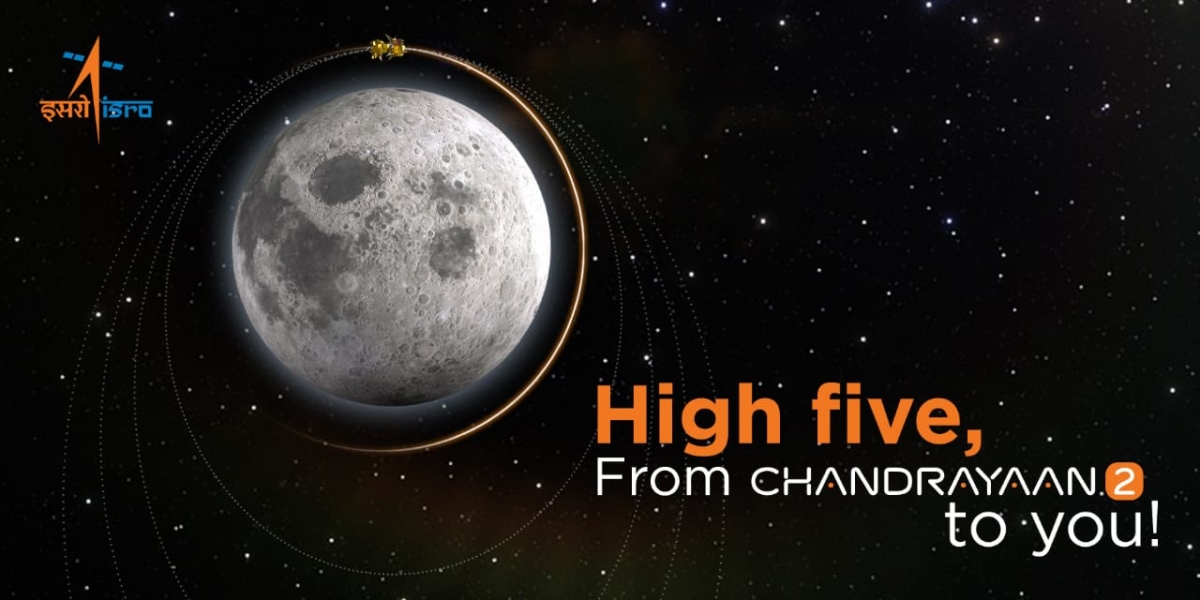
The fifth and final lunar bound orbit maneuver for Chandrayaan-2 spacecraft was performed successfully today (September 01, 2019) beginning at 1821 hrs India Standard Time (IST) as planned, using the onboard propulsion system.

Credit: ISRO
The duration of the maneuver was 52 seconds. The orbit achieved is 74 x 79 miles (119 x 127 kilometers). All spacecraft parameters are normal, reports the Indian Space Research Organization (ISRO).

Credit: ISRO/Inside Outer Space Screengrab
Lander separation
The next operation is the separation of the Vikram Lander from the Chandrayaan-2 Orbiter, which is scheduled on September 02, 2019, between 1245 – 1345 hrs (IST).
Following this, there will be two deorbit maneuvers of Vikram to prepare for its landing in the south polar region of the Moon.
Credit: ISRO/Inside Outer Space Screengrab
Touchdown time line
Tentative plan for future operations after today’s maneuver are as follows, according to the ISRO:
- Vikram Separation September 2, 2019; 12:45 – 13:45 IST
- Deorbit 1: September 3, 2019; 09:00 – 10:00; 109 x 120 kilometers
- Deorbit 2: September 4, 2019; 03:00 – 04:00; 36 x 110 kilometers
- Powered Descent: September 07, 2019; Vikram Touchdown; September 07, 2019; 01:30 – 02:30 IST
The Vikram Lander of Chandrayaan 2 is named after Dr Vikram A. Sarabhai, the Father of the Indian Space Program. It is designed to function for one lunar day, which is equivalent to about 14 Earth days.

U.S. President Trump tweets imagery of recent Iranian Safir launch failure.
Amateur satellite watchers are having a field day analyzing a tweet from U.S. President Donald Trump.
That tweet included an image of recent Iranian Safir launch failure – apparently taken by a secret U.S. spy satellite – although there are suggestions the photo might be taken by a drone.
Very interesting image
“It’s not often that I retweet the US president, but he tweeted this image of the Iranian Safir launch failure. The image is very interesting as evidence suggests that it was taken by a US spy satellite on August 29th, 2019,” reports Cees Bassa, an astronomer/satellite watcher working at ASTRON, the Netherlands Institute for Radio Astronomy.
The Trump tweet explained:
“The United States of America was not involved in the catastrophic accident during final launch preparations for the Safir SLV Launch at Semnan Launch Site One in Iran. I wish Iran best wishes and good luck in determining what happened at Site.”

Credit: Cees Bassa
El Khomeini Spaceport
In a deep dive of the Trump tweeted photo, Bassa’s analysis includes some interesting revelations:
“The image shows the aftermath of an accident with an Iranian Safir rocket at the El Khomeini Spaceport. From the features of the launch pad, I find that the viewing directions of the camera match that of USA 224, a classified spy satellite,” Bassa explains.
“There are 4 towers around the launch pad. Google Earth shows that the North and South towers are aligned along 192 deg azimuth. The camera azimuth is a further ~4 degrees West. From the elliptical shape of the circular launch pad, the elevation of the camera is around 46 degrees,” Bassa adds. “This is the path USA 224 followed across the sky from El Khomeini Spaceport on August 29, 2019. At 09:44:20, it passed very close to azimuth 196 deg and elevation 46 deg, matching the camera position. At that time, it was at a distance of 382 kilometers [237 miles].”

Google Earth shows that the launch pad is about 60 meters in diameter, while the launch pad is about 600 pixels wide in the picture. That suggests a resolution of at least 10 centimeters per pixel, as the original image could have had a higher resolution.
Credit: Cees Bassa
Sharp shooting
“Since USA 224 is a classified satellite, orbital elements are not published by (CSpOC) [the Combined Space Operations Center CSpOC]. Fortunately, amateur satellite observers regularly track it across the sky, allowing its orbit to be determined. At the time of the image, the USA 224 orbit was last determined 2.4 days before,” Bassa notes.
“It is not often that images from US Keyhole spy satellites are published. These satellites have 2.4m mirrors (as large as that of the Hubble telescope),” Bassa explains, “and are believed to produce the sharpest images of the Earth’s surface. The actual resolution of the images is kept secret.”
Adds satellite skywatcher, Marco Langbroek, also of the Netherlands:
“Shadow analysis by Christiaan Treibert suggests 9:00-10:00 UT (29 Aug). As first suggested by Michael Thompson, USA 224, a KH-11 Advanced CRYSTAL, made a pass over the launch site at that time (9:44 UT). The view angle fits post-culmination positions for this sat,” he tweets.

Framework for In-situ Resource Utilization (ISRU) of lunar water and asteroids.
Credit: Aiden O’Leary/Jason Aspiotis/Booz Allen Hamilton
This week the new United States Space Command officially made its debut, emphasizing that space is a vital military domain – one that’s critical to America’s security and economic wellbeing.

Earth’s Moon and cislunar space looms large in our future. Of what military and intelligence-gathering utility will they serve?
Standing up the command coincides with on-going White House support to establish a Space Force as a separate military branch.
To this end, there is increasing military interest in cislunar space. That’s the region extending beyond Earth to the Moon. Indeed, the protection of trade routes and lines of communication are traditional military responsibilities, and this will continue to be true as cislunar space becomes “high ground” – a position of advantage or superiority.
For more information, read my new Space.com story:
US Military Eyes Strategic Value of Earth-Moon Space
https://www.space.com/us-military-strategic-value-earth-moon-space.html
NASA’s Office of Inspector General (OIG) issued on August 27, 2019 a “Follow-up to May 2019 Audit of Europa Mission: Congressional Launch Vehicle Mandate.”

planet earth in close-up with crescent moon, square frame
It notes, among other items, that NASA’s renewed focus on returning humans to the Moon on an accelerated timetable means that a Space Launch System (SLS) will not be available to launch the Europa Clipper mission to Europa before 2025 at the earliest.

Credit: NASA/JPL
“Given all of the foregoing factors, we urge Congress to consider removing the requirement that NASA launch the Europa Clipper on an SLS and allow the Agency to decide whether to use an SLS or commercial vehicle based on cost, schedule, vehicle availability, and impact on science requirements,” the OIG reports.
For full report, go to:

Yutu-2 farside rover – back on farside duty.
Credit: CNSA/CLEP
China’s Chang’e-4 farside lander and rover have resumed work for the ninth lunar day.
According to China’s Xinhua news agency, the lander woke up at 8:10 a.m. Sunday, and the rover, Yutu-2 (Jade Rabbit-2), awoke at 8:42 a.m. Saturday, sourcing the Lunar Exploration and Space Program Center of the China National Space Administration.
Dormant mode

Updated Yutu-2 map.
Credit: Phil Stooke/Department of Geography at the University of Western Ontario
Sent moonward on December 8, 2018, the Chang’e-4 mission made the first-ever soft landing at Von Kármán crater in the South Pole-Aitken Basin on the farside of the Moon on January 3, 2019.
A lunar day equals 14 days on Earth, and a lunar night is the same length. The Chang’e-4 lander and rover switch to dormant mode during the chilly lunar night due to the deficient of solar power.

Credit: CNSA/CLEP
Scientific tasks
Xinhua adds that, for the ninth lunar day, the lander’s neutron radiation detector and low-frequency radio detector, as well as the rover’s infrared imaging spectrometer and other instruments will be restarted to conduct scientific tasks including lunar surface observation and composition analysis.
The Chang’e-4 mission includes low-frequency radio astronomical observation, surveying the terrain and landforms, detecting the mineral composition and shallow lunar surface structure and measuring neutron radiation and neutral atoms, the Xinhua story explains.
China’s farside mission includes four payloads developed by the Netherlands, Germany, Sweden and Saudi Arabia.

Credit: JAXA/NHK
A “Community Letter” regarding NASA’s Lunar Discovery and Exploration Program has been sent on August 9 to key leaders on Senate committees.
The letter has been signed by 76 lunar and planetary scientists, engineers, and entrepreneurs from 22 states.
The communiqué notes in part:
“As we celebrated the 50th Anniversary of the Apollo 11 human lunar landing this summer, it was painfully apparent to many Americans that the United States has not built upon the historical successes of the 1960s and early 1970s. Subsequently we have learned much in low-Earth orbit over the past two and a half decades with a continuously tended space station; however, exploration of the Moon continued only with orbital robotic missions until China landed a robotic rover on the Moon’s nearside in 2013.”

On a roll. China’s Yutu-2 rover on the Moon’s farside.
Credit: CNSA/CLEP
“Earlier this year, China became the first nation to successfully land a rove[r] on the Moon’s farside. It is now evident that other nations consider the Moon as an important destination not only for robotic exploration, but also for human explorers. As scientists and exploration experts in the broad and growing lunar and planetary science community, we write today to voice our strong support for the FY2020 Budget Request for NASA’s Lunar Discovery and Exploration Program and moving humans forward to the Moon sustainably, this time with long-term objectives for developing a sustained human presence.”

The NASA Artemis program will send the first woman and the next man to the Moon by 2024 and develop a sustainable human presence on the Moon by 2028. The program takes its name from the twin sister of Apollo and goddess of the Moon in Greek mythology.
Credit: NASA
“A sustained American human presence on the Moon is vital to our continued leadership in space and our prestige with our international partners. A new sustained human presence will expand on the legacy of Apollo’s history- changing first forays 50 years ago to explore another world, by continuing our quest for knowledge and its promise to benefit all humanity back on Earth.”
To read the full letter, go to:

