Author Archive
 Author:
  January 2nd, 2020
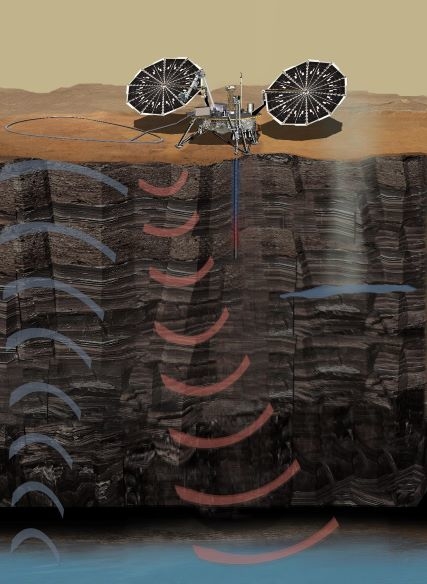
Conceptual artwork of VALKYRIE (Volatiles And Life: Key Reconnaissance & In-situ Exploration) Mars lander.
Credit: JPL/Corby Waste
Enigmatic Mars has been taunting researchers for decades as to whether or not the Red Planet has been – or is today — an abode for life.
Multiple nations are readying spacecraft for launching to Mars in 2020 (China, Europe, United States, the UAE) drawn once again to help unravel the complexities of that world and tease out clues as to whether or not it could be an extraterrestrial habitat for life.
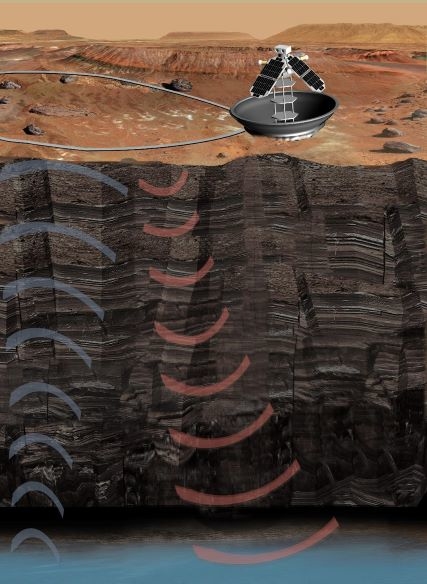
“Small High Impact Energy Landing Device” (SHIELD), a new way to inexpensively bring small payloads to the Martian surface.
Credit: JPL/Corby Waste
NASA has called for a set of Mars exploration concepts in addition to, or after, robotically returning Martian specimens to Earth. A Mars Architecture Strategy Working Group is charting a wide range of new missions, covering a decade and a half in terms of time period.
There is active interest in continuing the search for “extant” — currently existing — life on Mars. But that pursuit demands new scientific concepts and understandings keyed to where to explore and what to measure.

For more information, please read my new SpaceNews story: “A New Look for Life on Mars” in the December 23, 2019 issue, pp 22-24.
 Posted in
NASA’s Curiosity Mars rover is now carrying out Sol 2633 tasks.
Here’s a selection of New Year 2020 images from the robot that showcase its surroundings:

Curiosity Right B Navigation Camera photo taken on Sol 2632, January 1, 2020.
Credit: NASA/JPL-Caltech

Curiosity Right B Navigation Camera photo taken on Sol 2632, January 1, 2020.
Credit: NASA/JPL-Caltech

Curiosity Right B Navigation Camera photo taken on Sol 2632, January 1, 2020.
Credit: NASA/JPL-Caltech

Curiosity Right B Navigation Camera photo taken on Sol 2632, January 1, 2020.
Credit: NASA/JPL-Caltech

Curiosity Right B Navigation Camera photo taken on Sol 2632, January 1, 2020.
Credit: NASA/JPL-Caltech

Curiosity Right B Navigation Camera photo taken on Sol 2632, January 1, 2020.
Credit: NASA/JPL-Caltech

Curiosity Left B Navigation Camera image acquired on Sol 2632, January 1, 2020.
Credit: NASA/JPL-Caltech

Curiosity Front Hazard Avoidance Camera Right B image taken on Sol 2632, January 1, 2020.
Credit: NASA/JPL-Caltech

Curiosity Chemistry & Camera (ChemCam) remote micro-imager (RMI) photo taken on Sol 2632, January 1, 2020.
Credit: NASA/JPL-Caltech/LANL

India space program officials are all thumbs up. Behind them, full scale model of the Gaganyaan crew module.
Credit: ISRO
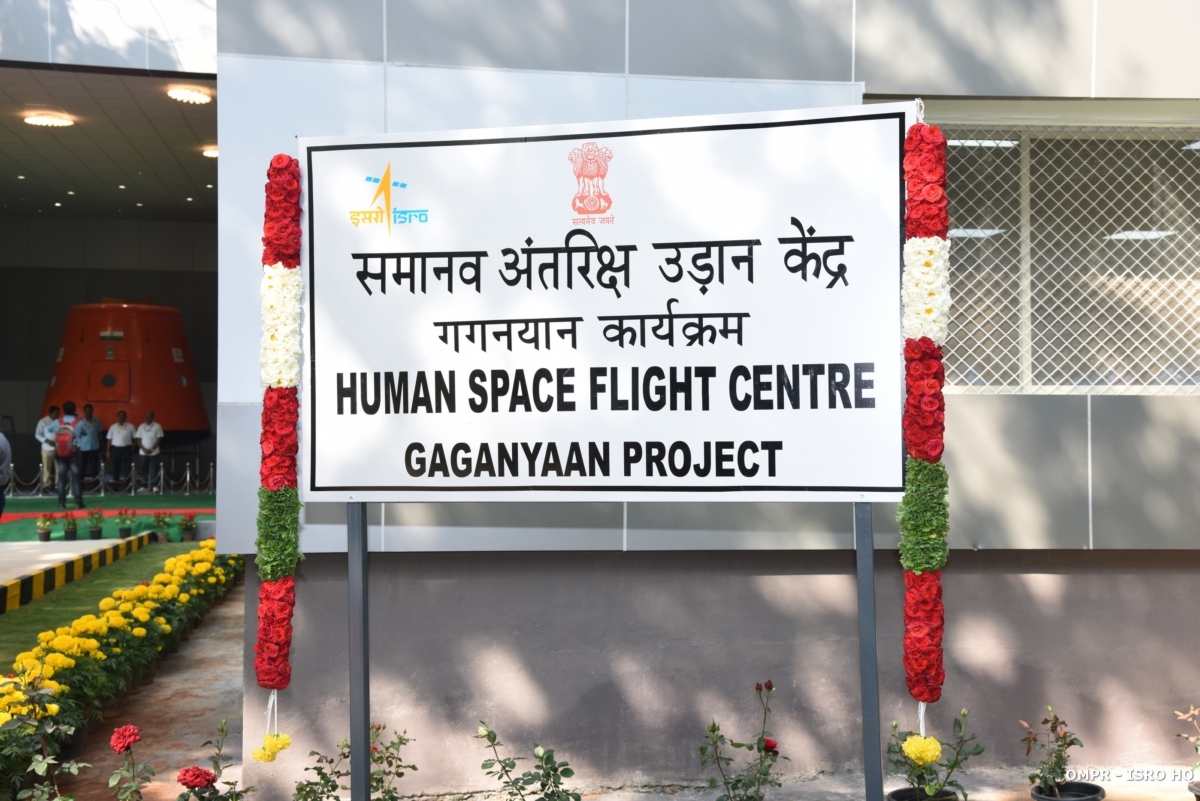
India is pressing forward with its human spaceflight program. Four Gaganyaan mission astronauts have been picked to begin training in Russia later this month.
Credit: ISRO
In a January 1 press briefing, K Sivan, Chairman of the Indian Space Research Organization (ISRO) said: “We’ve made good progress in the mission. The process of astronaut selection for the mission is completed.”
The selected astronauts are from the Indian Air Force. Up to three astronauts are expected to take part in the 7-day mission, scheduled to occur by 2022.
Sivan added that several tests will be conducted during the year, including Gaganyaan’s first uncrewed flight.
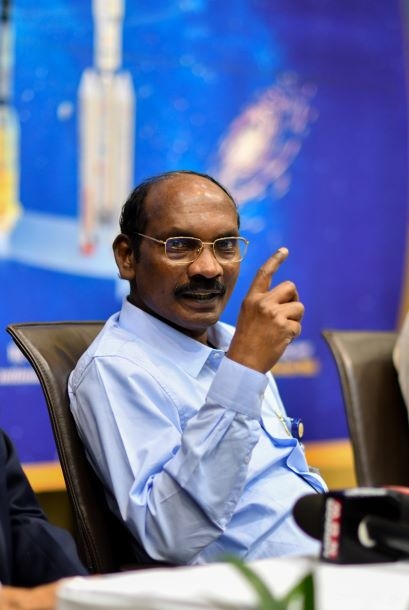
K Sivan, Chairman, India Space Research Organization (ISRO)
Credit: ISRO
Lunar plans
As for India’s lunar exploration plans, Sivan said that the Chandrayaan-3 mission — comprising a lander and a rover — is approved by the Government and activities for its realization are in progress. He added that the target time for the mission is in 2020, but its lunar landing “may spill over” to 2021.
Sivan explained to reporters that Chandrayaan-3’s lander/rover would have a “similar configuration” to the previous mission that ended up crashing on the Moon earlier this year.
Second launch port
Sivan said India planned to launch at least 25 space missions in 2020.
On the capacity building front, explains an ISRO statement, a second launch port, exclusively for the Small Satellite Launch Vehicle (SSLV), is planned to be established in Thoothukudi district, Tamil Nadu. “Land acquisition activities are presently in progress,” Sivan said.
NASA’s Curiosity Mars rover is now performing Sol 2631 duties.
New imagery from the robot includes the following photos. Blackwaterfoot is under intense scrutiny by Curiosity.
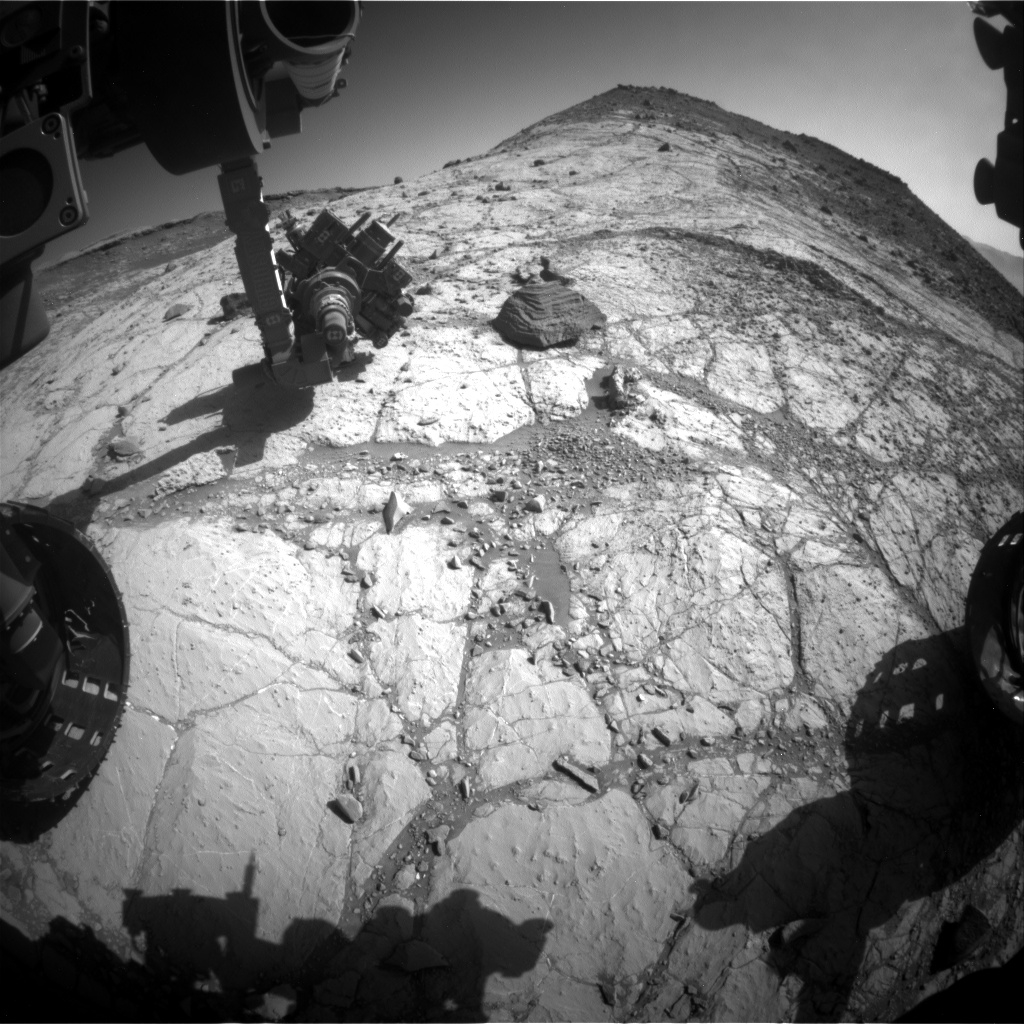
Curiosity Front Hazard Avoidance Camera Left B image of Blackwaterfoot taken on Sol 2631, December 31, 2019.
Credit: NASA/JPL-Caltech
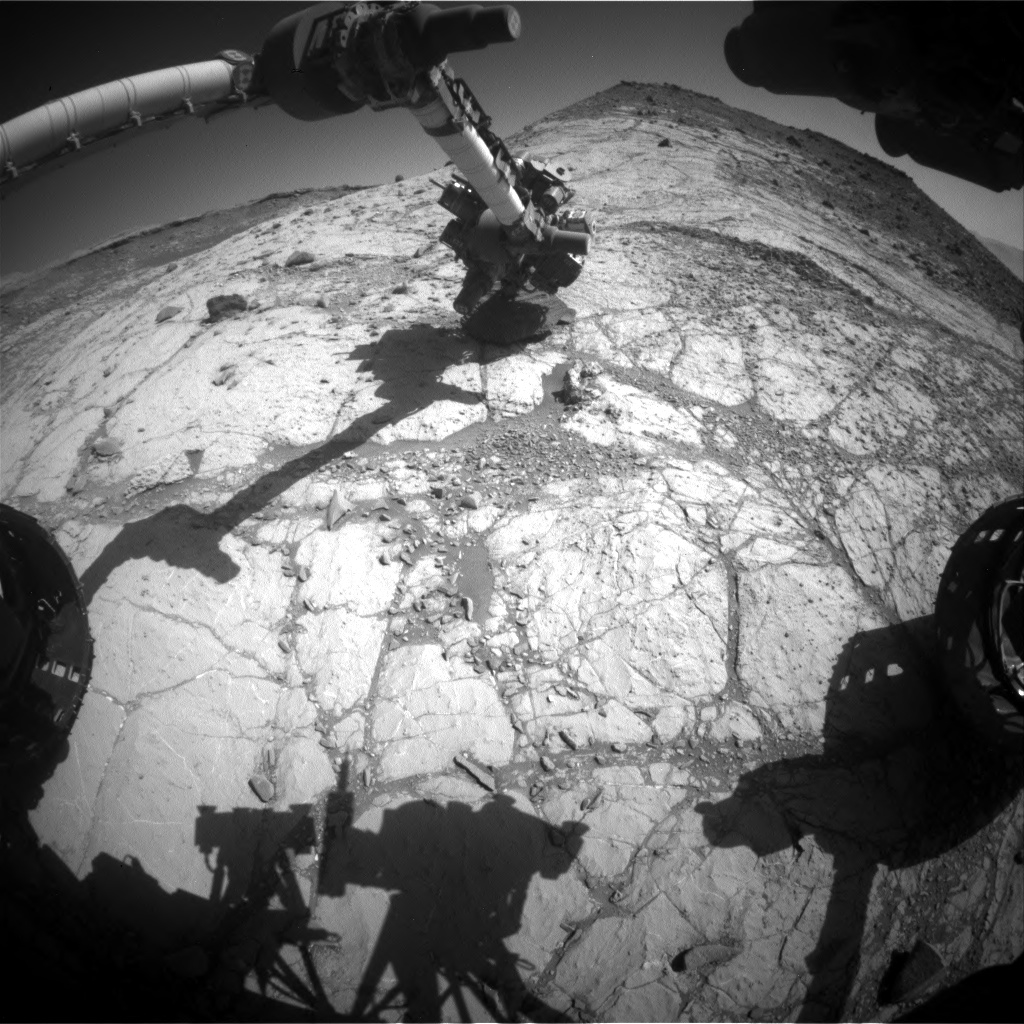
Curiosity Front Hazard Avoidance Camera Right B image taken on Sol 2631, December 31, 2019.
Credit: NASA/JPL-Caltech
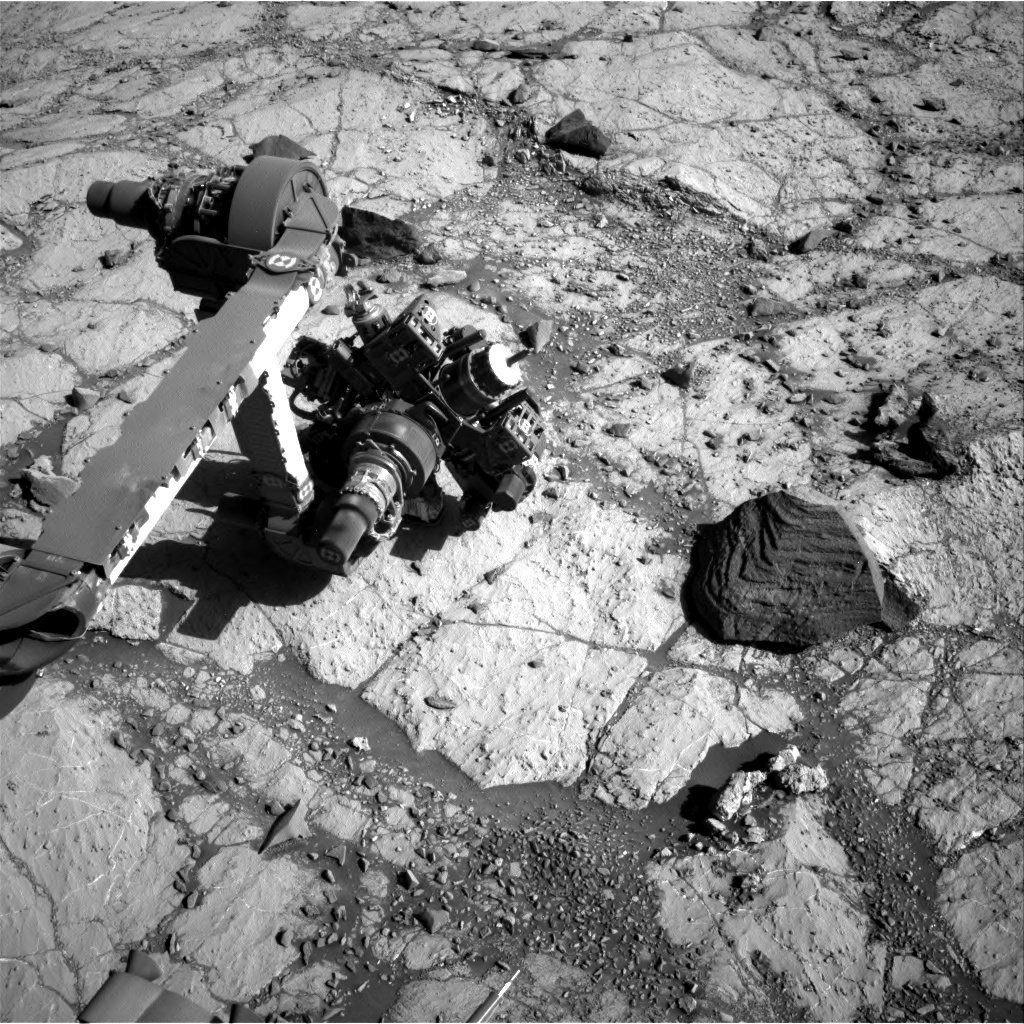
Curiosity Right B Navigation Camera image of Blackwaterfoot taken on Sol 2631, December 31, 2019.
Credit: NASA/JPL-Caltech
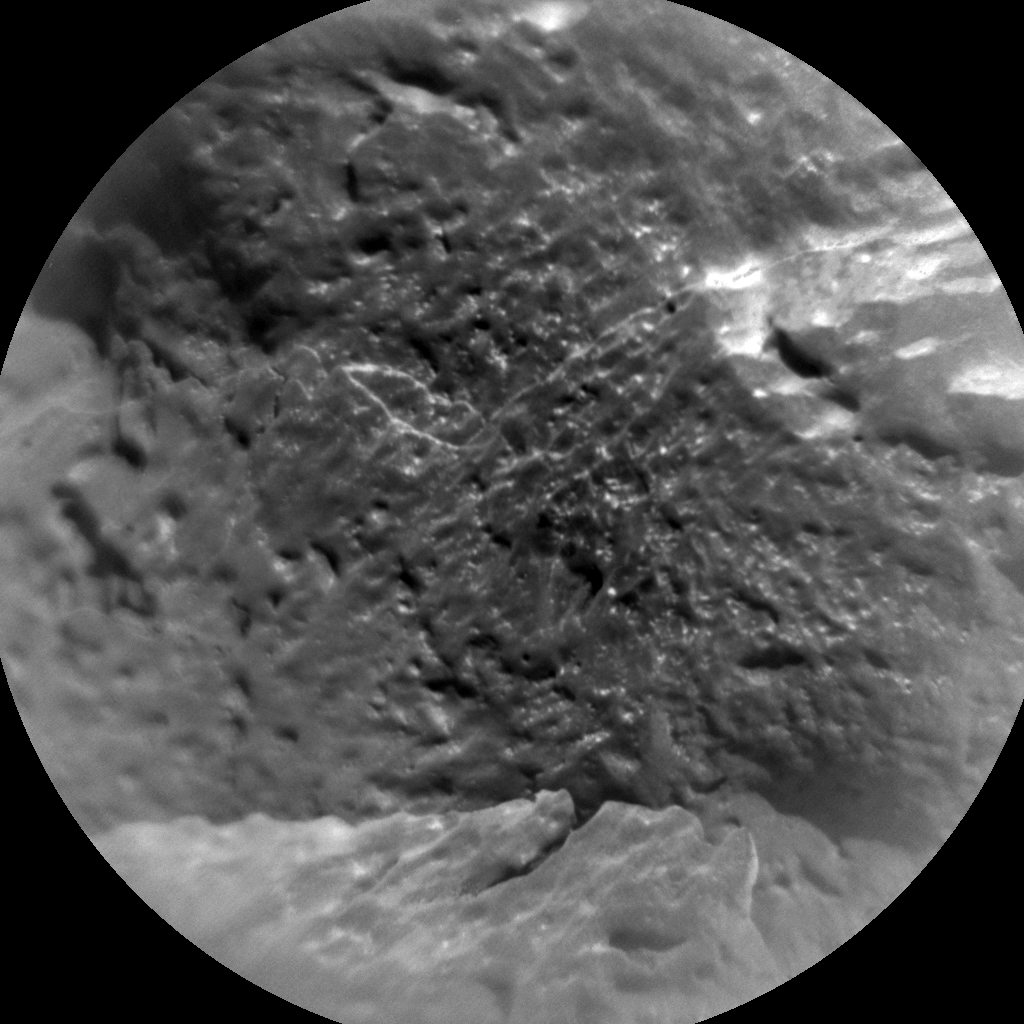
Curiosity Chemistry & Camera (ChemCam) Remote Micro-Imaging (RMI) camera photo acquired on Sol 2631, December 31, 2019.
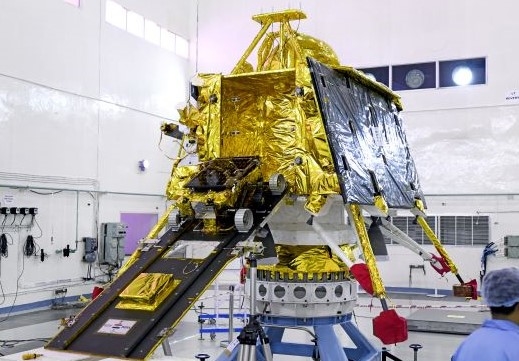
Pre-launch photo shows India’s Pragyan rover mounted on the ramp projecting from out of the sides of Vikram lunar lander.
These Chandrayaan-2 vehicles crashed near the Moon’s south polar region.
Credit: ISRO
India is reportedly moving ahead with its Chandrayaan-3 Moon mission, a 2020 flight of a lander and rover – apparently minus an orbiter.
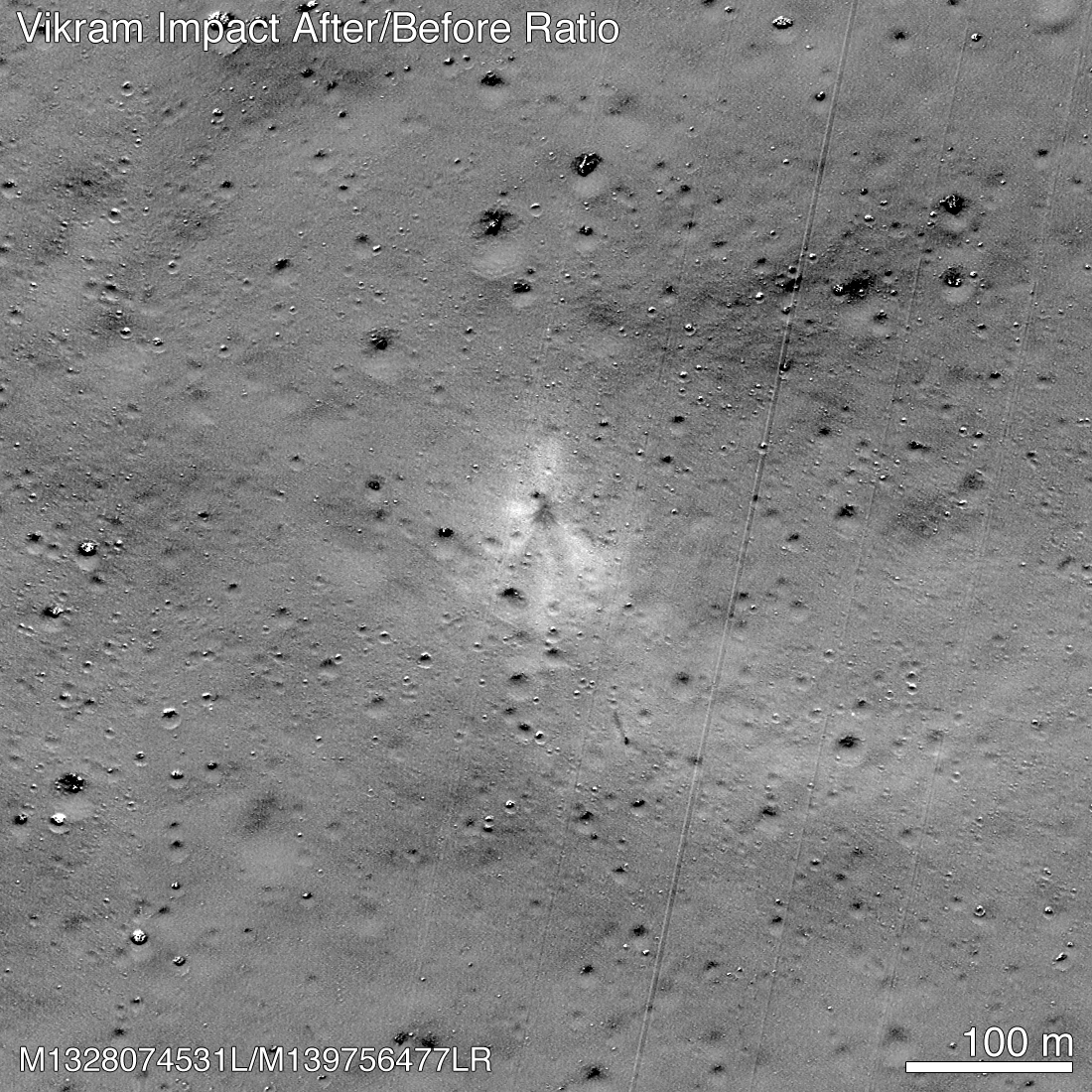
India’s lunar lander impact point is near center of image and stands out due to the dark rays and bright outer halo. Note the dark streak and debris about 100 meters to the south, south east of the impact point. Diagonal straight lines are uncorrected background artifacts.
Credit: NASA/GSFC/Arizona State University
The Hindustan Times reports that minister of state for department of space, Jitendra Singh, confirmed the Chandrayaan-3 lunar exploration trek on Tuesday.
Chandrayaan-2’s Vikram lander suffered a propulsion problem en route to its landing zone on September 7th. NASA’s Lunar Reconnaissance Orbiter later spotted the wreckage of the Vikram that also carried a rover named Pragyan.

India’s Chandrayaan-2 orbiter – up and operating.
Credit: ISRO
“The velocity was reduced from 1683 m/s to 146 m/s. During the second phase of the descent, the reduction in velocity was more than the designed value. Due to this deviation, the initial conditions at the start of the fine braking phase were beyond the designed parameters. As a result, Vikram hard landed within [1,640 feet] 500 meters of the designated landing site,” the Hindustan Times report notes, citing a reply from India’s parliament.
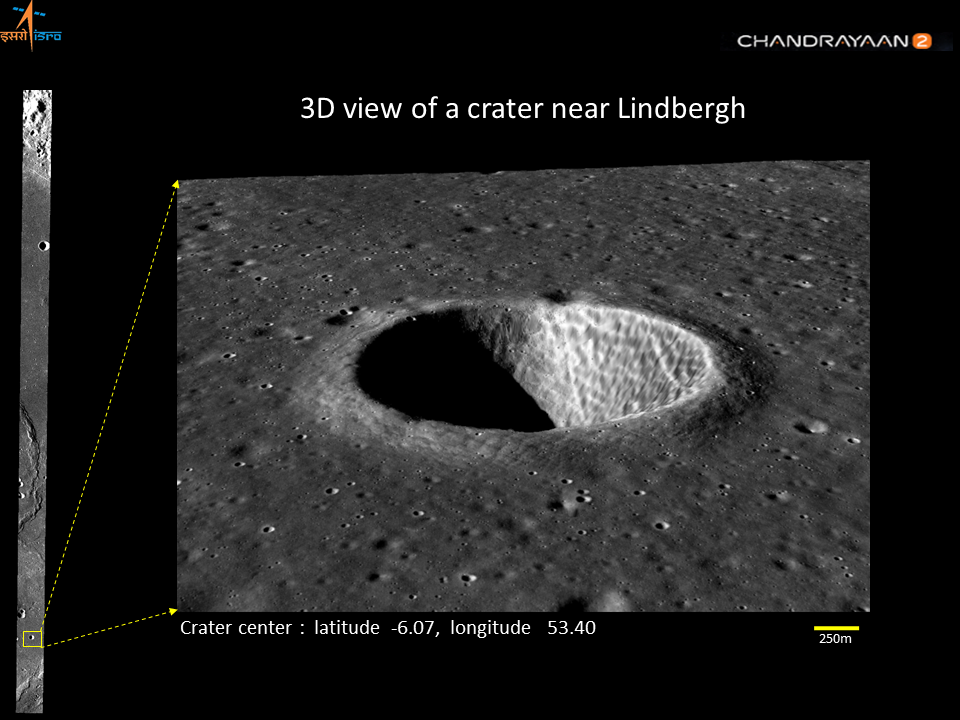
Meanwhile, the orbiter of the Chandrayaan-2 mission continues its research, circling the Moon with a powerful set of instruments.

Credit: ISRO
Credit: ISRO

Credit: New China TV/Inside Outer Space screengrab
China’s Long March-5 Y3 rocket that successfully flew December 27th was largely improved in many technical aspects compared with two previous flights.
Wu Yanhua, deputy director of the China National Space Administration (CNSA), declared the launch a success. The rocket’s flight lays the foundation for a series of future space projects for the country including exploring Mars, returning moon samples and constructing its own space station, Wu said.

Credit: CCTV/Inside Outer Space screengrab
The Long March-5 is a large, two-stage rocket, capable of carrying a payload of 25 tons to low Earth orbit, 14 tons to geostationary transfer orbit, eight tons to Earth-Moon transfer orbit, or five tons to Earth-Mars transfer orbit.
Combined with an upper stage, the rocket is capable of sending probes to explore Jupiter and other planets in the solar system, according to the China Aerospace Science and Technology Corporation (CASC).

Credit: CCTV/Inside Outer Space screengrab
Flight record
China built the Wenchang Space Launch Center in south China’s Hainan Province — the country’s fourth space launch center for the Long March-5 and other new-generation carrier rockets. The center is located on the coast of the tropical island province of Hainan, which avoids possible ground damage caused by the falling rocket remnants.
The Long March-5 made its maiden flight on November 3, 2016 from Wenchang. However, the second large rocket, Long March-5 Y2, suffered a failure minutes after liftoff on July 2, 2017.
Engineers traced the failure to a problem in the engine of the first core stage of the rocket. “We have made improvements to the design, materials and technologies of the engine,” said Li Dong, chief designer of the Long March-5 rocket from the China Academy of Launch Vehicle Technology (CALT) under the CASC.

Credit: CCTV/Inside Outer Space screengrab
Modified engine
According to a Xinhua news story, compared with the Long March-5 Y2, the new rocket has more than 200 technological improvements, said Yang Hujun, deputy chief designer of the rocket. The modified engine has undergone more than 10 ground tests lasting over 3,000 seconds in total.

Courtesy LaunchStuff/Inside Outer Space screengrab
“Over the past two years, the research team has solved the problem of the engine and improved the reliability of the rocket,” said Wang Jue, chief commander of the research team.
Major missions

Prototype of the Tianhe core module. China’s space station is expected to be operational around 2022.
Credit: CCTV/Screengrab/Inside Outer Space
In a China Global Television Network (CGTN) report, Wu Yanhua also said that after the successful launch of this mission, there will be other major missions including China’s first Mars mission, the launch of the Chang’e-5 lunar mission, as well as launch the core segment of China’s space station at the end of next year or the beginning of 2021.

China’s next Moon exploration phase: Sample return from the Moon.
Credit: CCTV/Screengrab/Inside Outer Space
Chang’e-5 is a sample return mission and is expected to bring lunar specimens back to Earth in 2020.
China’s first Mars mission is also a lander/rover mission. If all goes well, China plans to send its first Mars Lander and rover on a Long March-5 in 2020.

Long Lehao, chief designer, Long March carrier rocket series, China Academy of Launch Vehicle Technology; academician, Chinese Academy of Engineering
Credit: CCTV/Inside Outer Space screengrab

China’s Mars mission elements.
Credit: CCTV/Screengrab Inside Outer Space
30-year development
“As far as I know, the Long March-5 carrier rocket is the only large rocket in the world that can enter into a high orbit with just two stages and a half,” said Long Lehao, chief designer of the Long March carrier rocket series from the China Academy of Launch Vehicle Technology and also an academician of the Chinese Academy of Engineering.

Credit: China Daily
Long said in a China Central Television (CCTV) interview that the research on the Long March-5 carrier rocket started 30 years ago. But its maiden flight came later than other new-generation rockets including the Long March-6 and Long March-7 rockets because more new technologies had been put into it and the difficulty in developing it increased.
New-generation rockets
“The Long March-5 carrier rocket drives the development of a series of new-generation eco-friendly carrier rockets, including the Long March-6, the Long March-7, the Long March-8, and the coming Long March-9, all belonging to this family. With the improvement of the rocket, it drives the development of related industries and also promotes the technology to a new height,” Long told CCTV.
“We have a complete series of new-generation carrier rockets. There will be more than 10 kinds of major carrier rockets in the future. We have a wide range of spacecraft. And our country is fully prepared in this aspect. All in all, if the current momentum continues, China’s goal to be a space power will be fulfilled as scheduled,” Long said.
Go to this CCTV video of the launch:
https://youtu.be/M_Vu60EavR8?list=PLpGTA7wMEDFjz0Zx93ifOsi92FwylSAS3
Credit: XinhuaVideo/New China TV/Inside Outer Space screengrab
China has successfully launched the third Long March-5 rocket, a class of booster tasked for the Chang’e-5 Moon mission in 2020 to bring lunar samples back to Earth. The rocket is scheduled to loft China’s first Mars probe, also in 2020.
This third flight of the booster blasted off from the coastal launch center at 8:45 p.m. (Beijing time), carrying the Shijian-20 technological experiment satellite weighing over eight tons.
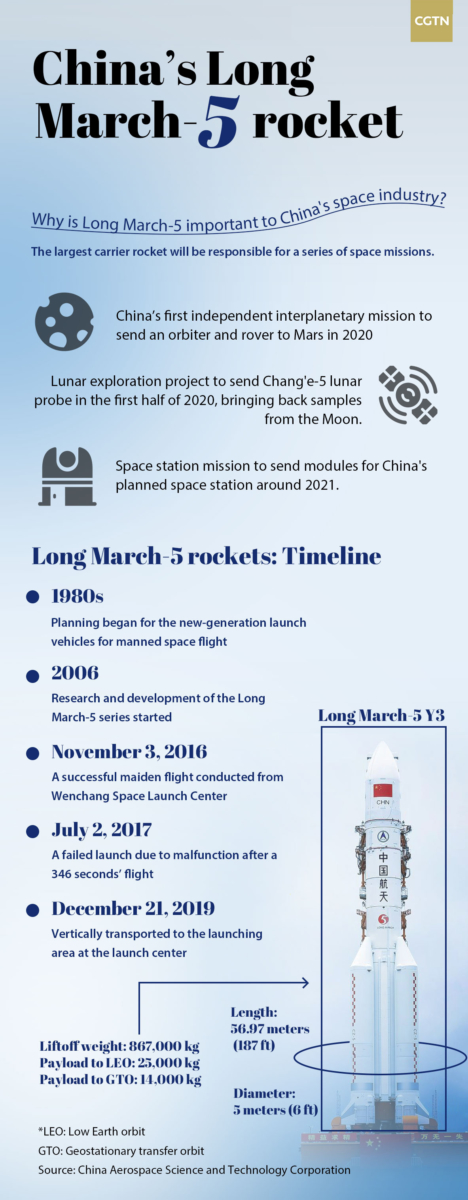
The Long March-5 is the largest launch vehicle in China’s space fleet, carrying 25 tons of payload into low-Earth orbit and is able to hold 14 tons for geostationary transfer orbit.
Mixed track record
The booster has had mixed success in previous launches.
Its first launch in 2016 was successful, but a second flight in 2017 failed to perform as anticipated. Cause of the failure was later tagged to a malfunctioning engine turbo pump.
According to a report by Xinhua, a successful launch means that the rocket will be tasked with lofting Moon and Mars missions next year. Further modifications to the rocket will be used to construct China’s space station.
Go to these launch videos at:

Curiosity Right B Navigation Camera image taken on Sol 2626, December 26, 2019.
Credit: NASA/JPL-Caltech
NASA’s Curiosity Mars rover is now wrapping up Sol 2626 tasks.
Curiosity science team members have put together a last plan of the decade for the robot, reports Dawn Sumner, a planetary geologist at the University of California, Davis.
Sols 2631-2633 have been scripted, “which will be the last 3 martian days before we come back to planning bright and early on January 2, 2020,” Sumner explains.
“We came into planning well prepared to ask for lots of good science,” Sumner adds.

Blackwaterfoot is under scrutiny seen here in Curiosity Front Hazard Avoidance Camera Right B image acquired on Sol 2626, December 26, 2019.
Credit: NASA/JPL-Caltech
Blackwaterfoot investigations
The team wanted a number of activities that had to be postponed due to the late arrival of the necessary downlink data. Those activities have been picked up, including some Mars Hand Lens Imager (MAHLI) images of the block “Blackwaterfoot.”
Rover planners put together both a close-up of Blackwaterfoot to evaluate the grain size of the rock and a large MAHLI mosaic to look at the geometry of the layers.

Curiosity Mast Camera Left image acquired on Sol 2620, December 20, 2019.
Credit: NASA/JPL-Caltech/MSSS
The textures in Blackwaterfoot are interesting, Sumner points out, and so is the chemistry. Alpha Particle X-Ray Spectrometer (APXS) and Chemistry and Camera (ChemCam) will analyze the elemental composition of Blackwaterfoot, and ChemCam will target a similar block, “Clashnessie” to see how much variation there is among the blocks.
There’s also interest in the composition of the bedrock, and researchers planned a Dust Removal Tool (DRT) and APXS analysis of the target “Ben Arnaboll.”

Curiosity Right B Navigation Camera image taken on Sol 2620, December 20, 2019.The slope steepens upward toward the top of Western Butte. Rover planners will drive Curiosity, ending up near the top of the light-colored bedrock outcrop.
Credit: NASA/JPL-Caltech
Butte stereo image
The robot’s Mastcam will image these targets, take a stereo image of the butte the rover is on, image the distant scenery to the north, and take another image of “Aryshire” to look for changes over the long holiday break.
“In addition, we’ll do a drive up the slope and take a large mosaic of the landscape to the south,” Sumner reports. “This one will complement a similar mosaic we took earlier to give us good stereo information on the rough topography we’ll be investigating in the new decade.”

Curiosity Right B Navigation Camera image taken on Sol 2626, December 26, 2019.
Credit: NASA/JPL-Caltech
In terms of monitoring the rover’s environment, scientists are looking for dust devils and characterizing the dust and scattering in the atmosphere with images of the crater rim, several image suites of the sky, and Mastcam images of the sun.
Sun scan
“To take a picture of the sun, we use filter 7,” Sumner explains, “which blocks enough of the sunlight that the camera sensor isn’t damaged. Filter 7 is Mastcam with sunglasses!”
Mars researchers are also on the lookout for clouds, measuring the weather conditions with Rover Environmental Monitoring Station (REMS) and characterize the subsurface with Dynamic Albedo of Neutrons (DAN).

Curiosity Right B Navigation Camera image taken on Sol 2626, December 26, 2019.
Credit: NASA/JPL-Caltech
Lastly, Curiosity’s APXS will measure the amount of argon in the atmosphere. It can make this measurement without moving the arm since APXS points directly forward with the arm stowed.
“None of the activities in the plan will be executed until December 31st, so they will be Curiosity’s New Year’s Eve celebration,” Sumner concludes. “Luckily, Curiosity’s celebration won’t keep it from working hard on January 1 and 2 since we have dozens of good observations planned for those days, too. We’ll have lots of interesting data to start the new decade!”
Credit: CCTV/Inside Outer Space screengrab
China’s Long March-5 booster is being readied for its third flight at the Wenchang Space Launch Center in south China’s Hainan Province.
Credit: CCTV/Inside Outer Space screengrab
Launch date of the carrier rocket, coded as Long March-5 Y3, appears to be December 27th.
The Long March-5 booster is essential for China’s future space station, Moon and Mars exploration plans.
Credit: CCTV/Inside Outer Space screengrab
In a posted China Central Television (CCTV) video, Wu Yanhua, deputy head of CNSA reports that engineers and scientists are convinced that all of the work — whether in terms of technology or quality assurance — have been completed
The upcoming third Long March-5 takeoff follows a mishap of this booster-class on July 2, 2017. An intensive investigation was carried out to identify why the rocket failed less than six minutes after liftoff.
Launch site video
Located in south China’s Hainan Province, Wenchang Space Launch Center is the fourth launch site in China, being specially selected for its low latitude.
A China Global Television Network (CGTN) video takes you on a tour of Wenchang. The space center will witness the launch of China’s Long March-5 carrier rocket. In the next few days, the final checks and preparations for the launch will be carried out by the engineers.
Go to:

Clara Sousa-Silva looks for biosignatures that researchers might search for in the atmospheres of exoplanets, as beacons of extraterrestrial life.
One upshot of the research is stay upwind during any ET encounter – aliens are very likely to smell like farts.
Photo credit: Melanie Gonick
Researchers have found that phosphine is produced by another, less abundant life form: anaerobic organisms, such as bacteria and microbes, that don’t require oxygen to thrive.
Therefore, if phosphine is detected from a rocky planet, it would be an unmistakable sign of extraterrestrial life, they report in a paper recently published in the journal Astrobiology. This gas would generate a signature pattern of light in a planet’s atmosphere. This pattern would be clear enough to detect from as far as 16 light years away by a telescope such as the soon-to-launch James Webb Space Telescope.

Artist’s view of the James Webb Space Telescope (JWST) in space, up and operating tackling a full agenda of space science conquests.
Credit: Northrop Grumman
However, smell test alert: Phosphine is among the most odiferous and toxic gases on Earth, found in some of the foulest of places, such as penguin dung heaps, the depths of swamps and bogs, and even in the bowels of some badgers and fish. This putrid “swamp gas” is also highly flammable and reactive with particles in our atmosphere.
Fingerprints for molecules
“Here on Earth, oxygen is a really impressive sign of life,” says lead author of the new research, Clara Sousa-Silva, a research scientist in MIT’s Department of Earth, Atmospheric and Planetary Sciences. “But other things besides life make oxygen too. It’s important to consider stranger molecules that might not be made as often, but if you do find them on another planet, there’s only one explanation.”
According to an MIT press statement, Sousa-Silva and her colleagues are assembling a database of fingerprints for molecules that could be potential biosignatures.
“I wanted to like all molecules equally but I do have a favorite: phosphine,” Sousa-Silva explains on her website.

Image courtesy of NASA, edited by MIT News
Confident in the interpretation
The team has amassed more than 16,000 candidates, including phosphine.
The vast majority of these molecules have yet to be fully characterized, and if scientists were to spot any of them in an exoplanet’s atmosphere, they still wouldn’t know whether the molecules were a sign of life or something else.
But with Sousa-Silva’s new paper, scientists can be confident in the interpretation of at least one molecule: phosphine. The paper’s main conclusion is that, if phosphine is detected in a nearby, rocky planet, that planet must be harboring life of some kind, according to the MIT statement.
Process pipeline
Sousa-Silva notes that, aside from establishing phosphine as a viable biosignature in the search for extraterrestrial life, the group’s results provide a pipeline, or process for researchers to follow in characterizing any other of the other 16,000 biosignature candidates.
“I think the community needs to invest in filtering these candidates down into some kind of priority,” Sousa-Silva adds. “Even if some of these molecules are really dim beacons, if we can determine that only life can send out that signal, then I feel like that is a goldmine.”
For the Astrobiology paper – “Phosphine as a Biosignature Gas in Exoplanet Atmospheres” – go to:
https://www.liebertpub.com/doi/full/10.1089/ast.2018.1954
Note: Special thanks to Jennifer Chu of the MIT News Office

