Author Archive
 Author:
  May 13th, 2020
Curiosity Chemistry & Camera Remote Micro Imager (RMI) photo taken on Sol 2761, May 13, 2020.
Credit: NASA/JPL-Caltech/LANL
NASA’s Curiosity Mars rover has started Sol 2762 operations.
Michelle Minitti, a planetary geologist at Framework in Silver Spring, Maryland reports that last weekend activities at the “Glasgow” drill site proceeded smoothly, particularly delivery of Glasgow drill sample to the robot’s Chemistry & Mineralogy X-Ray Diffraction/X-Ray Fluorescence Instrument (CheMin) and CheMin’s first analysis of the sample.

Curiosity Front Hazard Avoidance Camera Left B image acquired on Sol 2761, May 13, 2020.
Credit: NASA/JPL-Caltech
“That meant we were clear to move forward with the next step of drill sample analysis – preparing [the Sample Analysis at Mars Instrument Suite] SAM to analyze the gases that bake off of the Glasgow sample,” Minitti explains. “Even with the SAM preparatory activities, we had enough power and time in the plan to continue a wide imaging and chemistry survey of our surroundings.”

Curiosity Rear Hazard Avoidance Left B Camera image taken on Sol 2761, May 13, 2020.
Credit: NASA/JPL-Caltech
Drill hole interior
Curiosity’s Chemistry and Camera (ChemCam) will once again target the interior of the Glasgow drill hole, Minitti adds, this time using a slightly different raster shape than the weekend analysis in order to hit different parts of the drill hole wall.
Much of the bedrock around us is dotted with the gray, resistant bumps seen in a ChemCam Remote Micro Imager (RMI) photo of the target “Loch Olabhat,” which was analyzed over the weekend.

Curiosity Chemistry & Camera Remote Micro Imager (RMI) photo taken on Sol 2761, May 13, 2020.
Credit: NASA/JPL-Caltech/LANL
“ChemCam appeared to detect differences in chemistry between the gray bumps in this target and their host bedrock. Thus, ChemCam will again target Loch Olabhat to investigate these apparent differences further,” Minitti notes.
Another nearby target, “Bishops Loch,” which also has a mix of the layered bedrock and gray bumps seen in Loch Olabhat, will also serve as a ChemCam target in order to increase scientific understanding of chemistry differences throughout the bedrock.

Curiosity Chemistry & Camera Remote Micro Imager (RMI) photo taken on Sol 2761, May 13, 2020.
Credit: NASA/JPL-Caltech/LANL
Zone of terrain
“Mastcam planned two large mosaics off the starboard side of the rover that cover the mid-ground between us, the base of ‘Tower Butte,’ and the base of the slope up to the ‘Greenheugh’ pediment,” Minitti points out.
“This zone of terrain,” Minitti adds, “gives us a more detailed view of the transition from the bedrock we are drilling now and the pediment cap rock we recently drilled at “Edinburgh.” A particular section of the slope up to the Greenheugh pediment exposes bedrock that could be related to yet another one of our recent drill holes, “Hutton” (wow, we have been busy!). To get a closer look, ChemCam planned a 10 frame RMI mosaic across this outcrop, named “Grimbister.””

Curiosity Right B Navigation Camera photo acquired on Sol 2760, May 11, 2020.
Credit: NASA/JPL-Caltech
Rover deck imaging
Minitti says that environmental monitoring continues as per usual, with Mastcam and Navcam imaging the sky and the rover deck for changes brought about by the changing seasons.

Curiosity Right B Navigation Camera photo acquired on Sol 2760, May 11, 2020.
Credit: NASA/JPL-Caltech
Navcam will also acquire a movie looking for dust devils.
Curiosity’s Rover Environmental Monitoring Station (REMS), the Radiation Assessment Detector (RAD), and the Dynamic Albedo of Neutrons (DAN) will keep their regular watch over weather conditions, radiation environment, and the ground under the rover, respectively, throughout the plan, Minitti concludes.
 Posted in
Credit: United Launch Alliance (ULA)
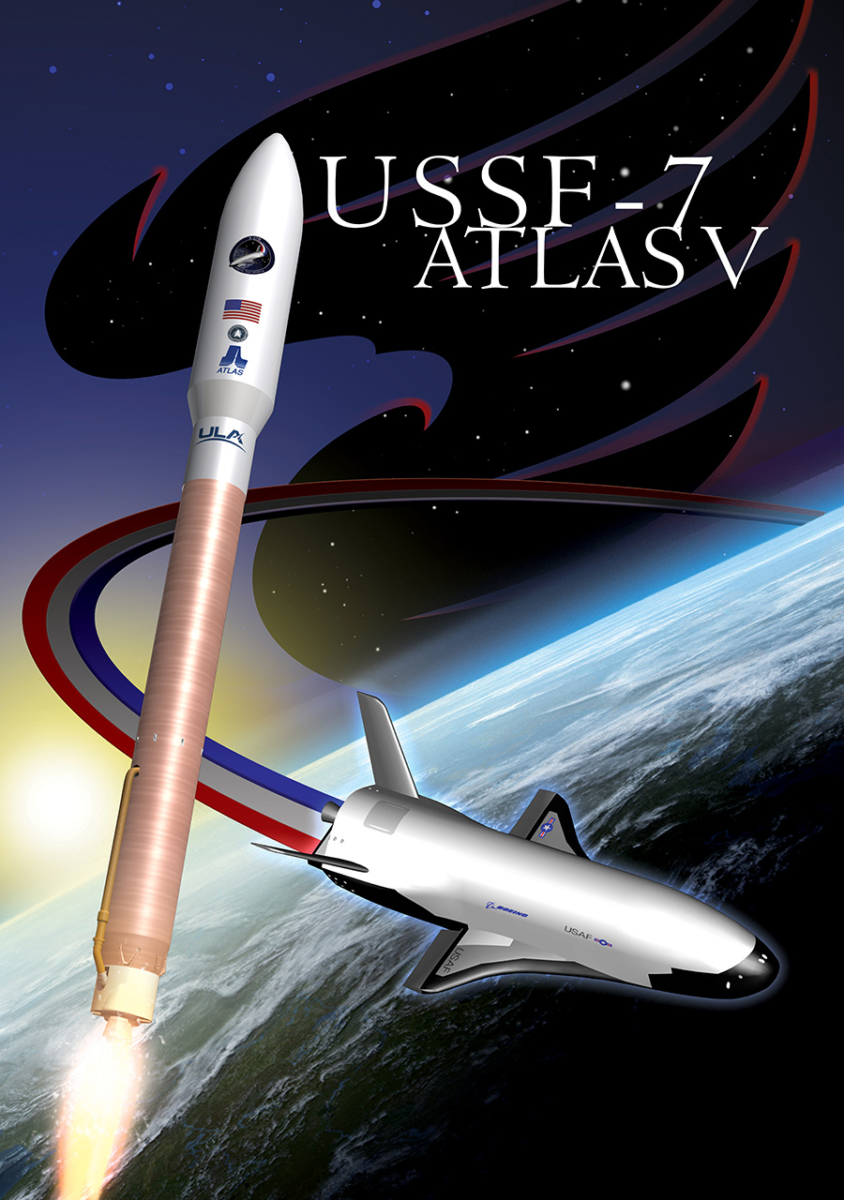
The Department of the Air Force Rapid Capabilities Office, in partnership with the U.S. Space Force, is scheduled to launch the sixth mission of the X-37B Orbital Test Vehicle (OTV-6) on May 16 from Cape Canaveral Air Force Station, Florida.

Encapsulated X-37B Orbital Test Vehicle for U.S. Space Force-7 mission.
Credit: Boeing
“This sixth mission is a big step for the X-37B program,” said Randy Walden, Director and Program Executive Officer for the Department of the Air Force Rapid Capabilities Office. “This will be the first X-37B mission to use a service module to host experiments. The incorporation of a service module on this mission enables us to continue to expand the capabilities of the spacecraft and host more experiments than any of the previous missions.”

Naval Research Laboratory (NRL) has pioneered “sandwich” modules that are far more efficient for space solar power.
Credit: NRL/Jamie Hartman
On the beam
One experiment that was announced by the Air Force is from the U.S. Naval Research Laboratory (NRL), an investigation into transforming solar power into radio frequency microwave energy “which could then be transmitted to the ground,” explains the release from the Secretary of Air Force Public Affairs.
In a subsequent statement from the Air Force, Air Force Secretary Barbara Barrett was attributed to have said — but not a direct quote — that the NRL experiment “will attempt to transform solar power into radio frequency microwave energy and then transmit the energy to Earth.”
NRL’s Paul Jaffe, the Innovation Power Beaming and Space Solar Portfolio Lead, explains: “The experiment is not beaming microwave energy anywhere,” he told Inside Outer Space in an exclusive interview.
“The focus of the experiment on X-37B is not establishing an actual power-beaming link. It is more on the performance of the sunlight to microwave conversion.”
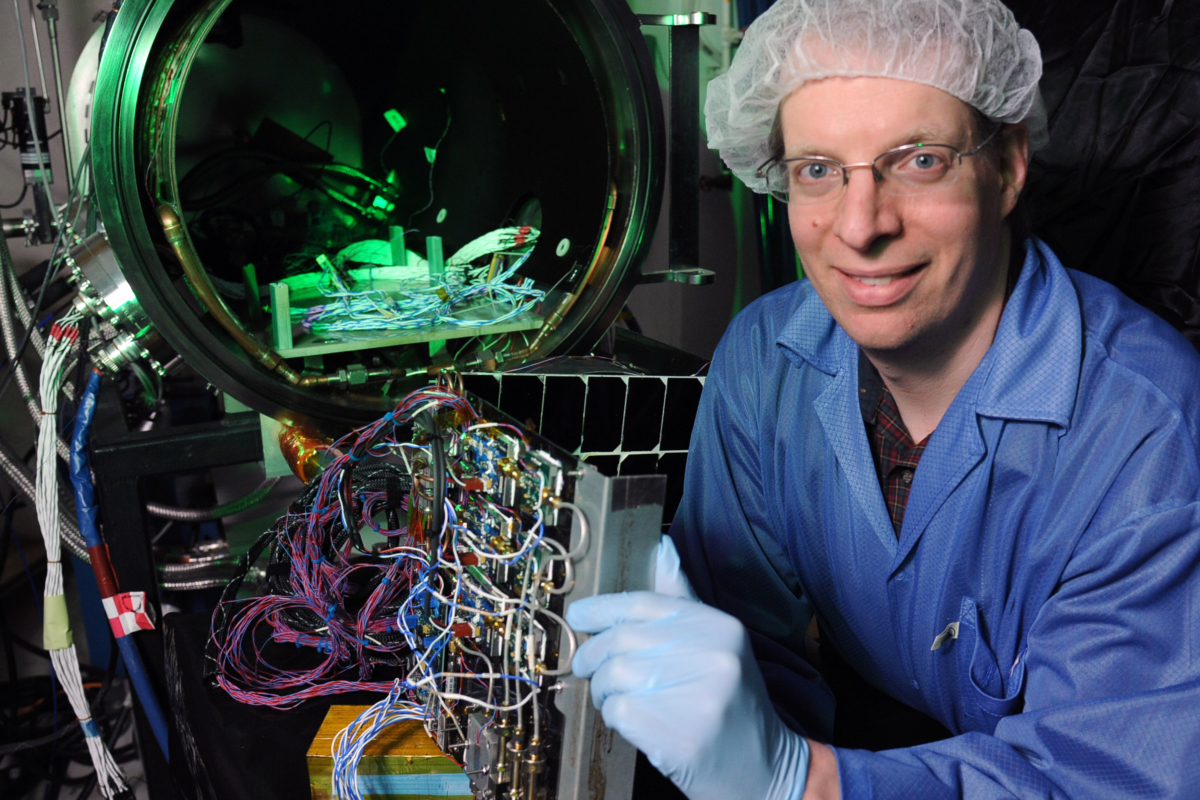
NRL’s Paul Jaffe holds a module designed for space solar power in front of a customized vacuum chamber used to test the device.
Credit: NRL/Jamie Hartman
PRAM
The experiment itself is called the Photovoltaic Radio-frequency Antenna Module, PRAM for short.
PRAM is a component of what would be a modular space solar satellite, Jaffe adds. PRAM is an outgrowth of a decade of work at NRL that includes developing “sandwich” modules where one side receives solar energy with a photovoltaic panel, electronics in the middle convert that direct current to a radiofrequency (RF), and the other side has an antenna to beam power away.
However, the PRAM, while it does generate RF energy, that energy does not go to an antenna due to a potential for interference with other X-37B-carried payloads. To be measured is how the PRAM is performing from an efficiency standpoint and also a thermal performance standpoint, Jaffe said.
More experiments
Secretary of the Air Force Barrett explains in the press statement: “Demonstrating the department’s innovation, this X-37B mission will host more experiments than any prior missions. This launch also demonstrates the department’s collaboration that pushes the boundaries for reusable space systems.”
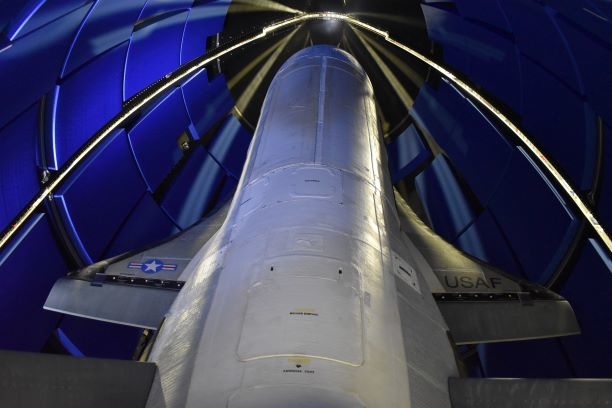
X-37B readied for 6th mission of the space plane program.
Credit: Boeing
This will be the first X-37B mission to use a service module to host experiments. The service module is an attachment to the aft of the vehicle that allows additional experimental payload capability to be carried to orbit.
Along with toting NRL’s PRAM into Earth orbit, this flight of the X-37B will deploy the FalconSat-8, a small satellite developed by the U.S. Air Force Academy and sponsored by the Air Force Research Laboratory to conduct several experiments on orbit.
The FalconSat-8 is an educational platform that will carry five experimental payloads for the United States Air Force Academy (USAFA) to operate.
In addition, two NASA experiments will be included to study the results of radiation and other space effects on a materials sample plate and seeds used to grow food.
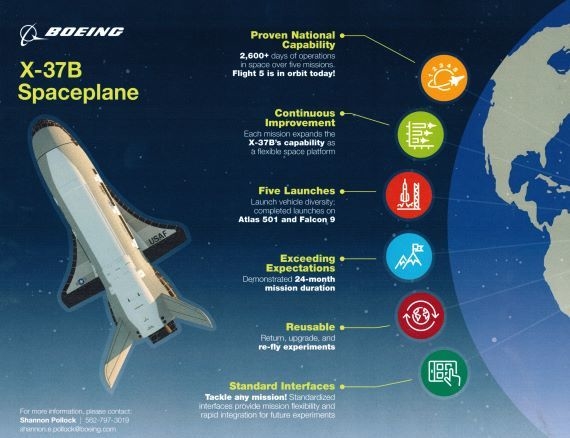
X-37B handout.
Credit: Boeing
Milestone-setting space plane
Here’s a roster of the milestone-setting X-37B missions as told to Inside Outer Space by Major Will Russell, U.S. Space Force spokesperson at the Pentagon.
OTV-1 launched on April 22, 2010 and landed on December 3, 2010, spending over 224 days on orbit.
OTV-2 launched on March 5, 2011 and landed on June 16, 2012, spending over 468 days on orbit.
OTV-3 launched on December 11, 2012 and landed on October 17, 2014, spending over 674 days on-orbit.
OTV-4 launched on May 20, 2015 and landed on May 7, 2015, spending nearly 718 days on-orbit.
OTV-5 launched on September 7, 2017 and landed on October 27, 2019, spending nearly 780 days on-orbit.
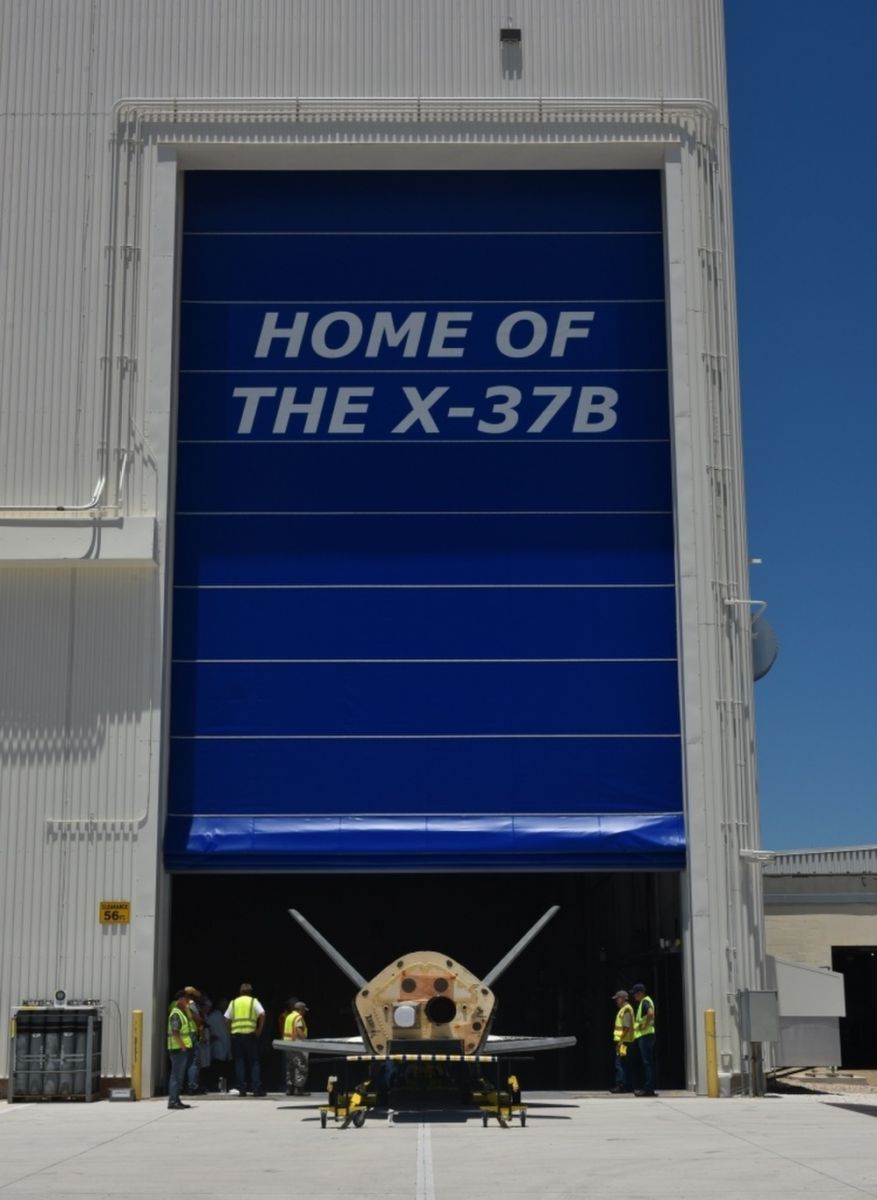
X-37B hangar at Kennedy Space Center.
Credit: Michael Martin/SAF
The first four missions launched from Cape Canaveral Air Force Station, Florida thanks to an Atlas V booster.
The fifth mission launched from Kennedy Space Center on a SpaceX Falcon 9 launcher.
OTV-6, also called USSF-7 for the U.S. Space Force, will be launched atop an Atlas-V 501 booster.
OTV-1, OTV-2, and OTV-3 missions landed at Vandenberg Air Force Base, California, while the OTV-4 and OTV-5 missions landed at Kennedy Space Center, Florida.
Total time on orbit for all five previous missions is 2,865 days – or 7 years and 10 months, Russell adds.
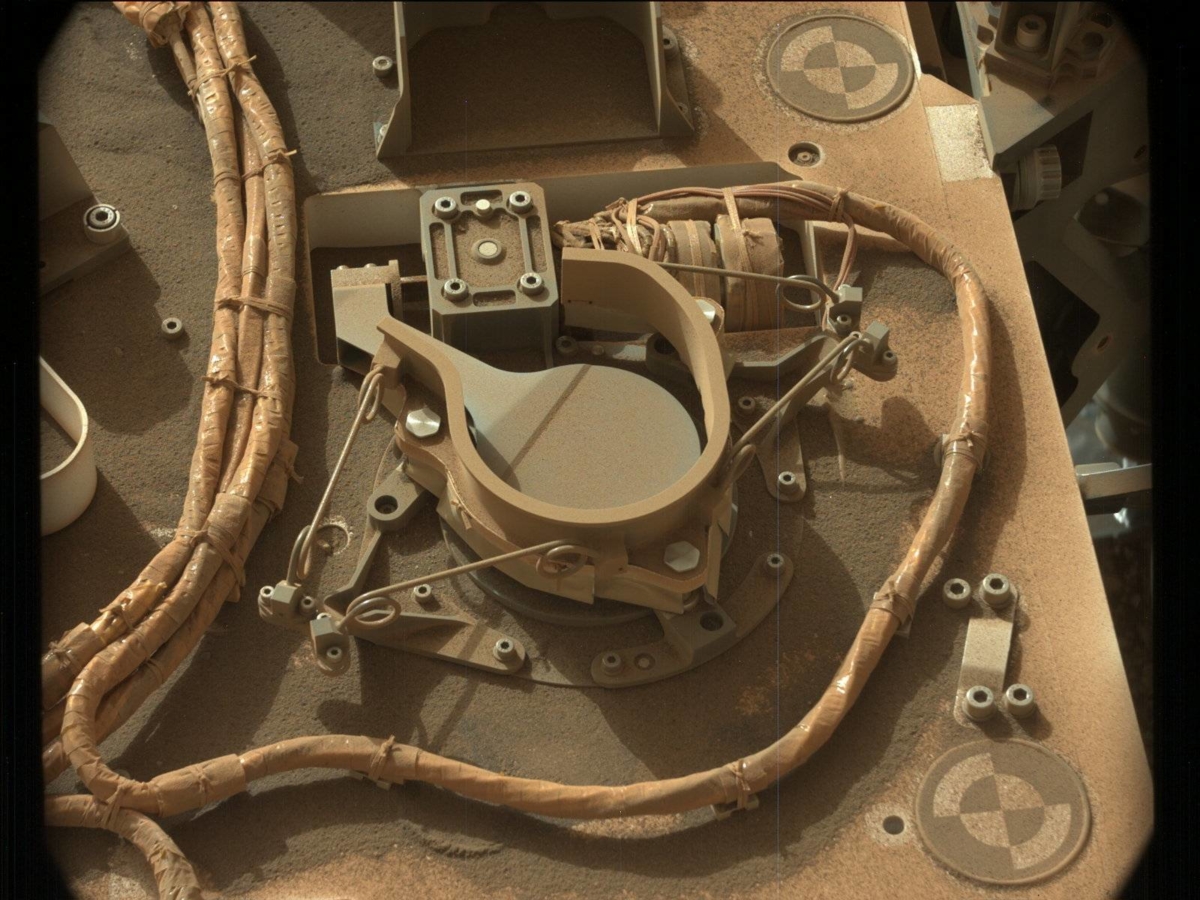
Curiosity Mast Camera Left image taken on Sol 2758, May 10, 2020.
Credit: NASA/JPL-Caltech/MSSS
NASA’s Curiosity Mars rover is now carrying out Sol 2760 tasks.
New imagery from the robot shows the fine material called “drill tailings” that surrounds the new “Glasgow” drill hole, reports Melissa Rice, Planetary Geologist at Western Washington University in Bellingham, Washington.
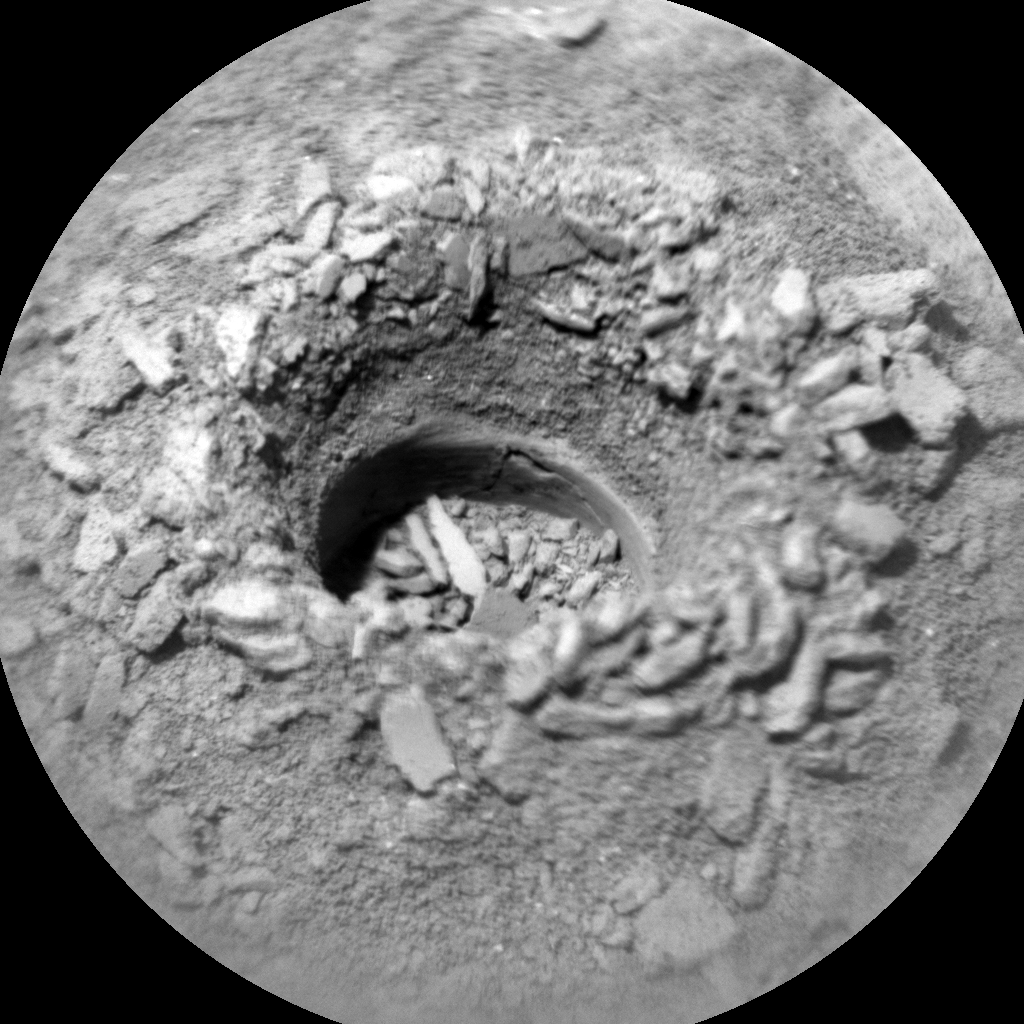
Some of the rock taken from inside the drill hole will be fed to the rover’s Chemistry & Mineralogy X-Ray Diffraction/X-Ray Fluorescence Instrument (CheMin) on sol 2758.
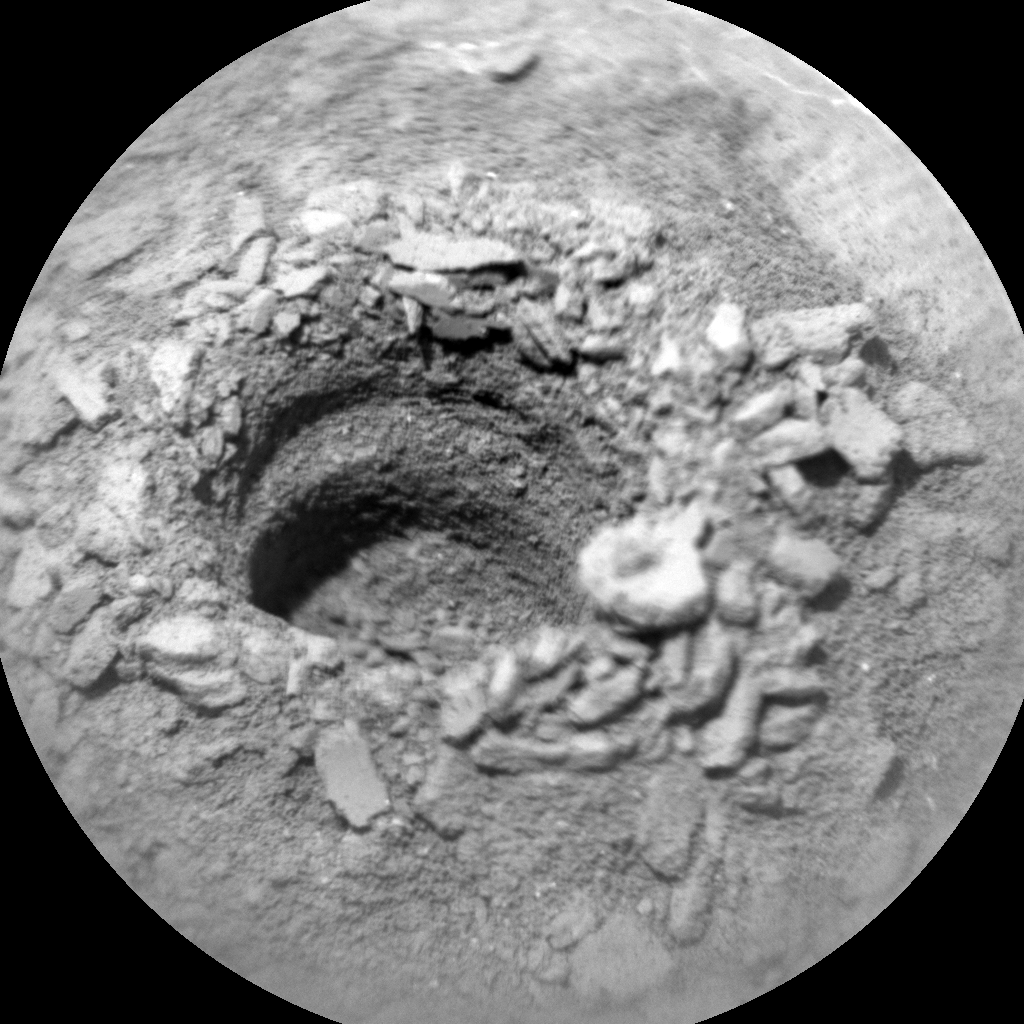
Curiosity Chemistry & Camera RMI Sol 2758 photo taken on May 9, 2020.
Credit: NASA/JPL-Caltech/LANL
Untangle the history
“The X-ray diffraction patterns that CheMin acquires will tell us what minerals are present in the rock,” Rice notes. “That important data, in combination with Curiosity’s other instrument investigations, will help us untangle the complex history of how this outcrop formed, what the environment at Gale crater was like when it did, and how it has interacted with water between then and now.”
In addition to CheMin’s taste of Glasgow, the plan calls for the rover’s Chemistry and Camera (ChemCam) instrument to also give the drill target a sniff by shooting its Laser Induced Breakdown Spectroscopy (LIBS) laser inside the hole.
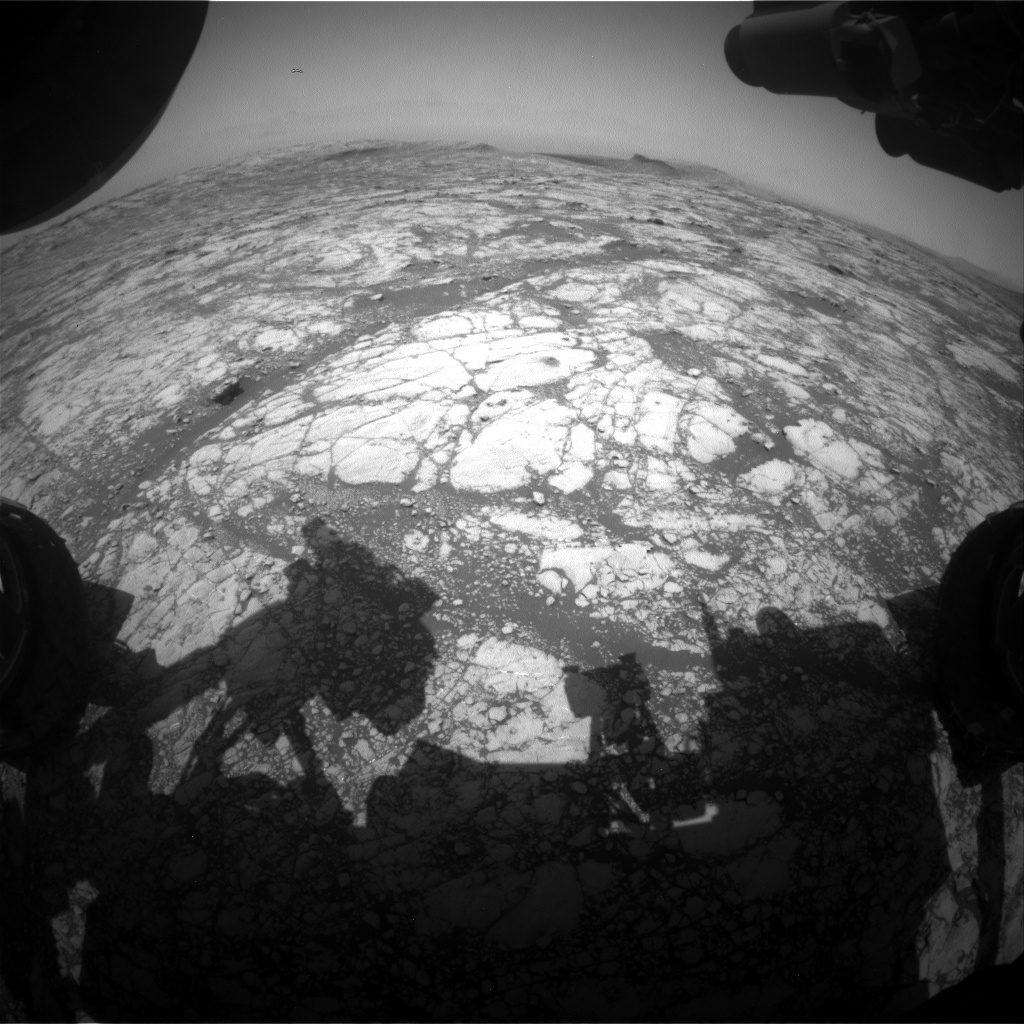
Curiosity Front Hazard Avoidance Camera Right B image acquired on Sol 2759, May 10, 2020.
Credit: NASA/JPL-Caltech
Wind-moved sand
“ChemCam will also target other spots on the nearby bedrock at “Loch_na_Keal,” “Loch_Olabhat,” and “Loch_Trool.” With Mastcam, Curiosity will photograph the area with wide stereo mosaics, and will look at spots called “Ishriff_1” and “Ishriff_2” to see if the wind has moved any of the sand since Mastcam imaged these same locations 10 days ago,” Rice adds.
In addition, the ChemCam Remote Micro Imager (RMI) is to peer at the trough called “Calmac” on the Western Butte, and Curiosity will also perform several environmental monitoring activities this weekend.

Curiosity Rear Hazard Avoidance Camera Right B image taken on Sol 2759, May 10, 2020.
Credit: NASA/JPL-Caltech
Chewing on the sample
In looking ahead, Rice as a long-term planner, points out that the next few days and into the coming weeks: “We will be chewing on the Glasgow sample for a while before we’re ready to spit it out and drive away.”
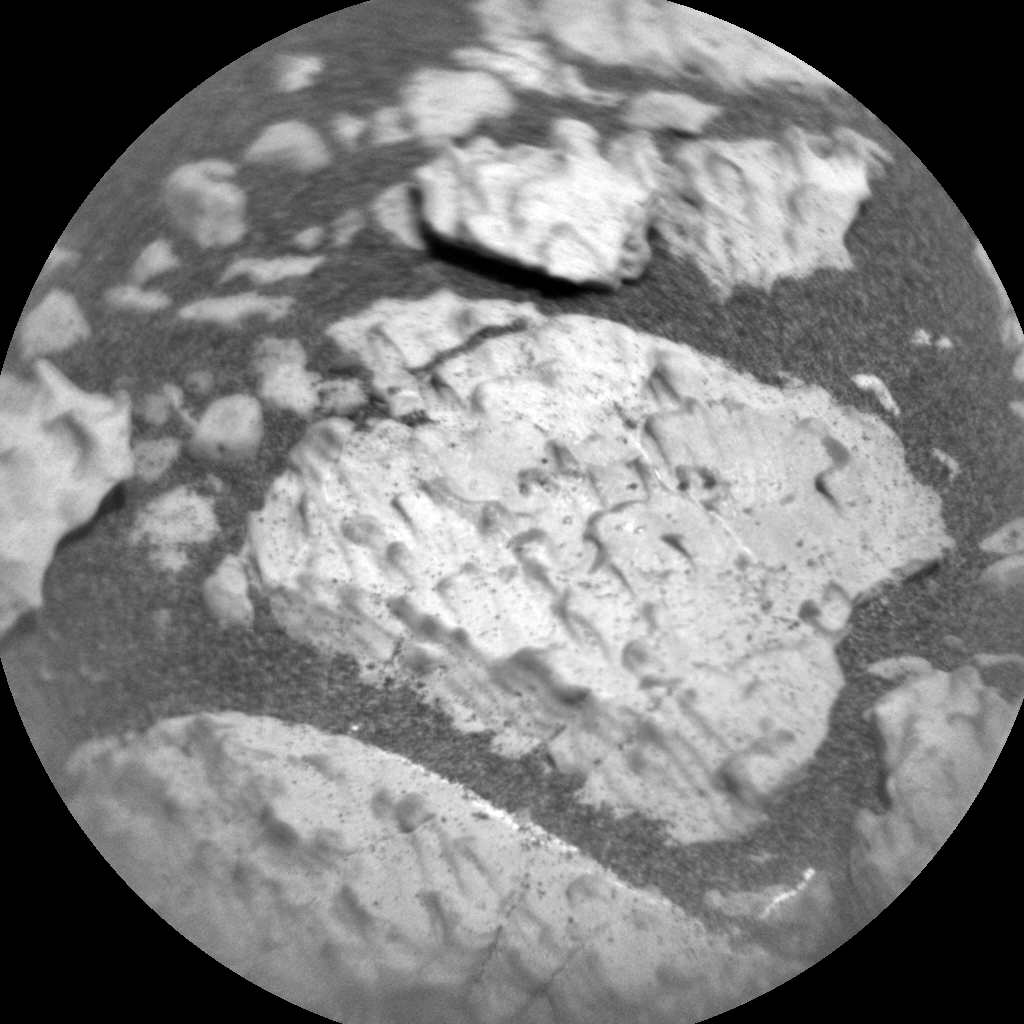
Curosity Chemistry & Camera RMI photo taken on Sol 2758, photo taken on May 9, 2020.
Credit: NASA/JPL-Caltech/LANL
Curiosity’s Sample Analysis at Mars (SAM) Instrument Suite will analyze the sample later this week, Rice concludes, and CheMin will acquire more data as well – so the plan now being implemented “really is just a first taste!”
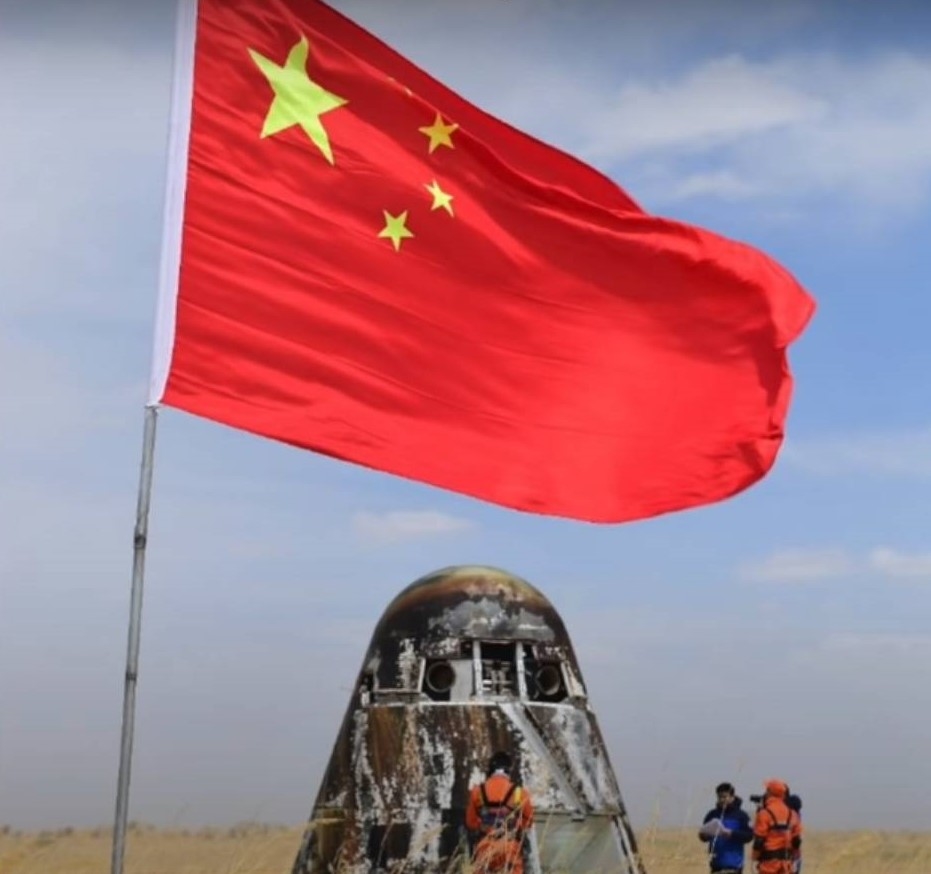
Credit:China Central Television (CCTV)/China National Space Administration (CNSA)/Inside Outer Space screengrab
A new report — China’s Space and Counterspace Capabilities and Activities – offers examines China’s military and civil space programs, including the role of military-civil fusion and international cooperation in the development of its space program.
The just-issued 115-page report was prepared for the U.S.-China Economic and Security Review Commission by the Project 2049 Institute and Pointe Bello.
“Buoyed by recent successes and impressive advancements in space technology, China has emerged as a leading player in space. The implications for United States policy are numerous, and the capabilities China either currently possesses or is in the process of developing certainly pose a strategic risk to the United States’ ability to operate in the Indo-Pacific region,” stresses the report.
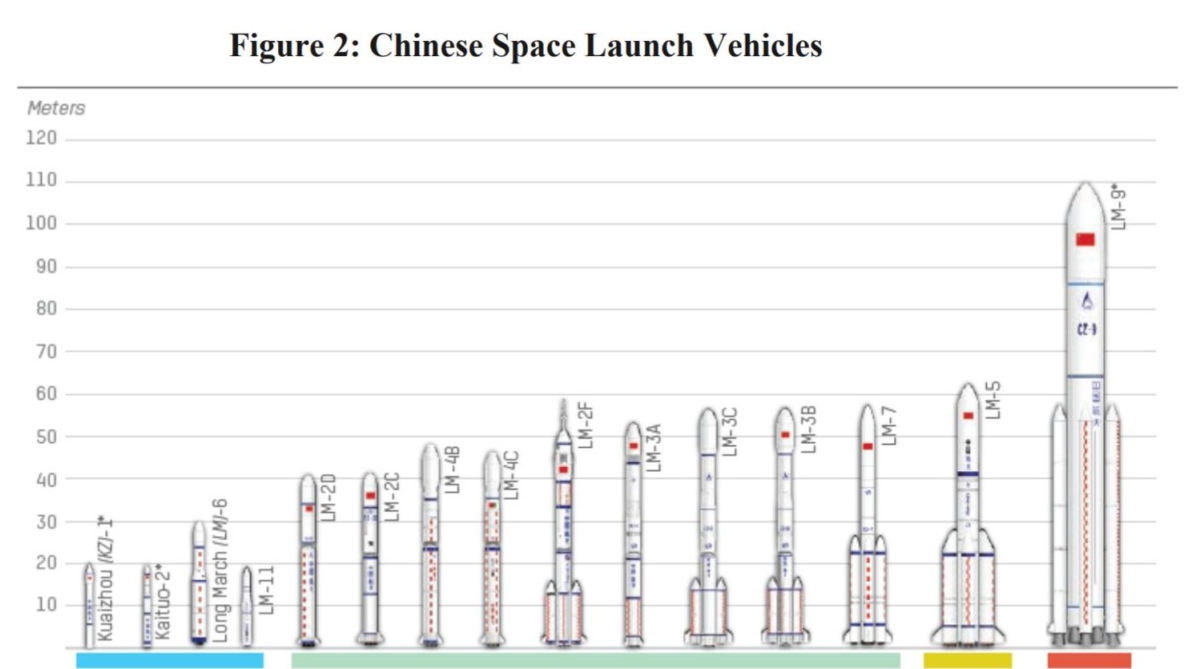
Source: Defense Intelligence Agency, Challenges to Security in Space.
Messages to U.S. Congress
Among the report’s recommendations:
— Congress should enact new or enhance existing laws to prohibit U.S. government departments and agencies, national labs, universities, companies, fund managers, and individual investors from supporting China’s space program and activities that are inherently military in nature.
— Congress should consider mandating and funding the production of a routinely updated, publicly available list of entities supporting China’s space programs and activities.
— Congress should consider mandating and funding public education to enhance general knowledge of China’s space programs and activities, including more targeted congressional hearings and the allocation of grants for think tank and university research programs, public conferences, public-private consultative talks, and media outreach.
— Congress should consider reviewing the budgets of NASA and the United States’ leading aerospace university programs to ensure they have the education funding necessary to support young and emerging scientists and technology innovators.
— Congress should consider how funding the establishment of a potential new U.S. Space Force may better enable the military to organize, train, and equip future leaders needed to keep the United States competitive with China’s growing military space enterprise.
— Congress should pass legislation that incentivizes science, technology, engineering, and mathematics-focused high-skilled labor immigration from China (as well as other countries), including special visas earmarked for these students and a public-private effort to find them work.
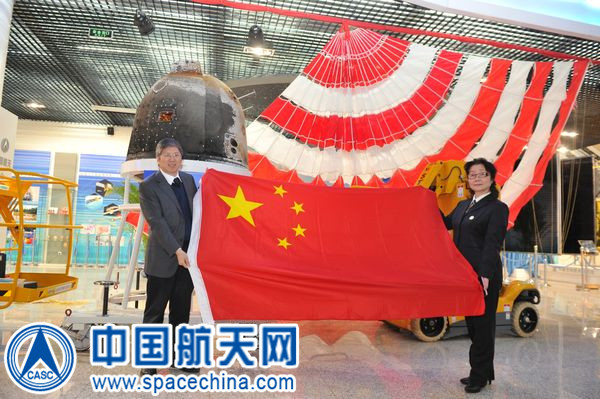
Chinese flag was carried by test capsule that made a circumlunar voyage.
Credit: CASC
Long-term strategy
“The Chinese Communist Party (CCP) is executing a long-term strategy to exploit U.S. technology, talent, and capital to build up its military space and counterspace programs and advance its strategic interests at the expense of the United States,” the report explains. “China’s zero-sum pursuit of space superiority harms U.S. economic competitiveness, weakens U.S. military advantages, and undermines strategic stability. In short, it represents a threat to U.S. national security.”
Barring significant action to counter China’s space-related programs and activities of concern, the report concludes, “it is likely that this strategic competitor’s efforts will continue to adversely affect U.S. interests.”

Credit: CNSA
Lunar exploration
The report notes that in 2013, China became the first space power to land on the Moon since the Soviet Union’s mission in 1976. “China’s various motivations include mining of helium-3 as a replacement for fossil fuels and solarpower.”
However, the direct benefits to the People’s Liberation Army (PLA) of the lunar exploration program, including activities on the farside
of the Moon, are unclear, the report adds. “As part of its lunar exploration program, China has demonstrated critical military capabilities in space, such as proximity operations and loitering.”
Ongoing assessment
Note: This report was prepared at the request of the U.S.-China Economic and Security Review Commission to support its deliberations. Posting of the report to the Commission’s website is intended to promote greater public understanding of the issues addressed by the Commission in its ongoing assessment of U.S.-China economic relations and their implications for U.S. security, as mandated by Public Law 110-161 and Public Law 113-291. However, it does not necessarily imply an endorsement by the Commission or any individual Commissioner of the views of conclusions expressed in this commissioned research report.
To read the full report — China’s Space and Counterspace Capabilities and Activities – go to:
https://www.uscc.gov/sites/default/files/2020-05/China_Space_and_Counterspace_Activities.pdf
Credit:China Central Television (CCTV)/China National Space Administration (CNSA)/Inside Outer Space screengrab
China’s new-generation crewed spacecraft successfully landed at the Dongfeng landing site, Inner Mongolia Autonomous Region, China, on May 8, 2020, at 05:49 UTC (13:49 local time).
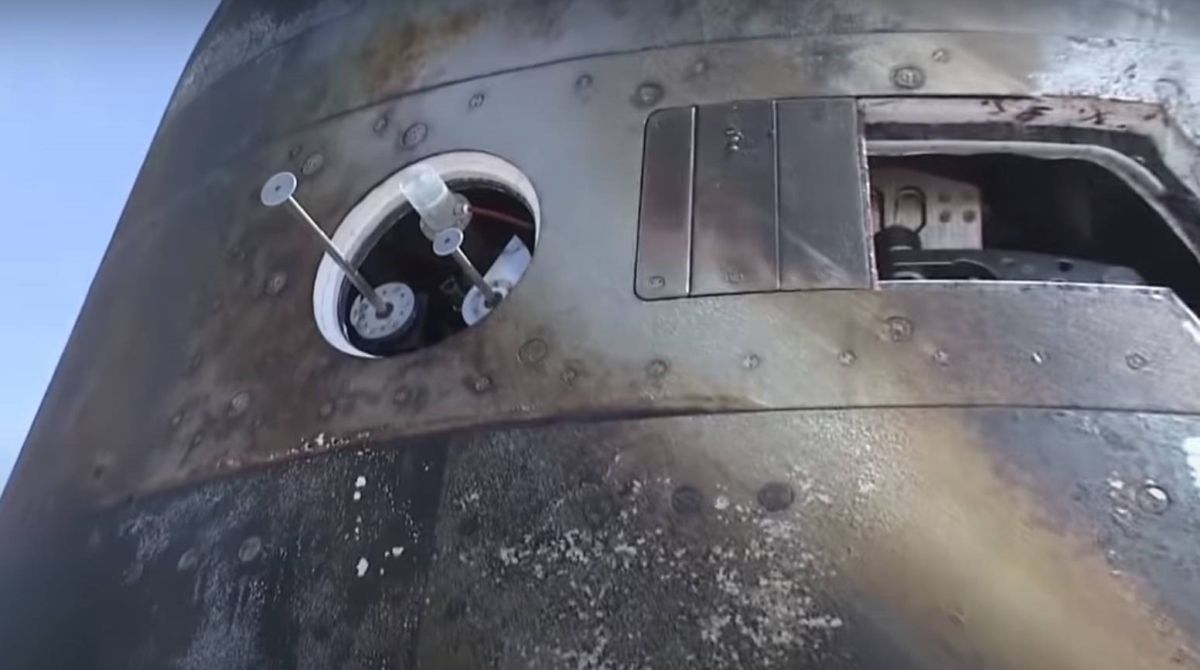
Closeup of strobe/recovery devices.
Credit: China Central Television (CCTV)/China National Space Administration (CNSA)/Inside Outer Space screengrab
Credit:China Central Television (CCTV)/China National Space Administration (CNSA)/Inside Outer Space screengrab
During the two days and 19 hours in orbit, the uncrewed spacecraft carried out a series of space science and technology experiments. The spacecraft was transported to the Jiuquan Satellite Launch Center for inspection and verification work.
Spacecraft Return Capsule Designer

Credit: CCTV+/Inside Outer Space screengrab
The structure of the return capsule of the trial version of China’s new-generation manned spaceship was intact as designed after it landed on the Earth on Friday, Wang Ping, a designer of the spaceship said on Saturday.
Go to:
Credit: CCTV+
Also, go to:
Credit: China Central Television (CCTV)/China National Space Administration (CNSA)

Mars settlement.
Credit: SpaceX
The goal of planetary protection is to control, to the degree possible, the biological cross-contamination of planetary bodies.
A recently released National Academies of Science (NAS) report — Assessment of the Report of NASA’s Planetary Protection Independent Review Board (2020) – took a hard look at the observations of a NASA-charted Planetary Protection Independent Review Board (PPIRB).
The new Academies report flagged several areas of concern, such as commercial and private groups exploring and utilizing Mars. There is need, the report notes, “to clarify the legal and regulatory framework applicable to private-sector space activities that implicate planetary protection.”

Credit: NASA
Wanted: standard template
One of the report’s recommendations is that NASA should undertake the following actions:
- Develop a broad-based, representative advisory process to inform the development of planetary protection policy for small, low-cost spacecraft;
- Identify, fund, and complete research and development priorities related to small, low-cost spacecraft (e.g., on analyzing base costs for planetary protection compliance and on crafting a standard planetary protection template);
- Clarify the legal and regulatory environment for small, low-cost spacecraft used in missions that are not subject to agreements or contracts with NASA; and
- Record, analyze, and communicate the lessons learned from specific small, low-cost spacecraft missions in order to inform the development and implementation of the new approach to planetary protection policy.
-

Credit: Elon Musk/SpaceX
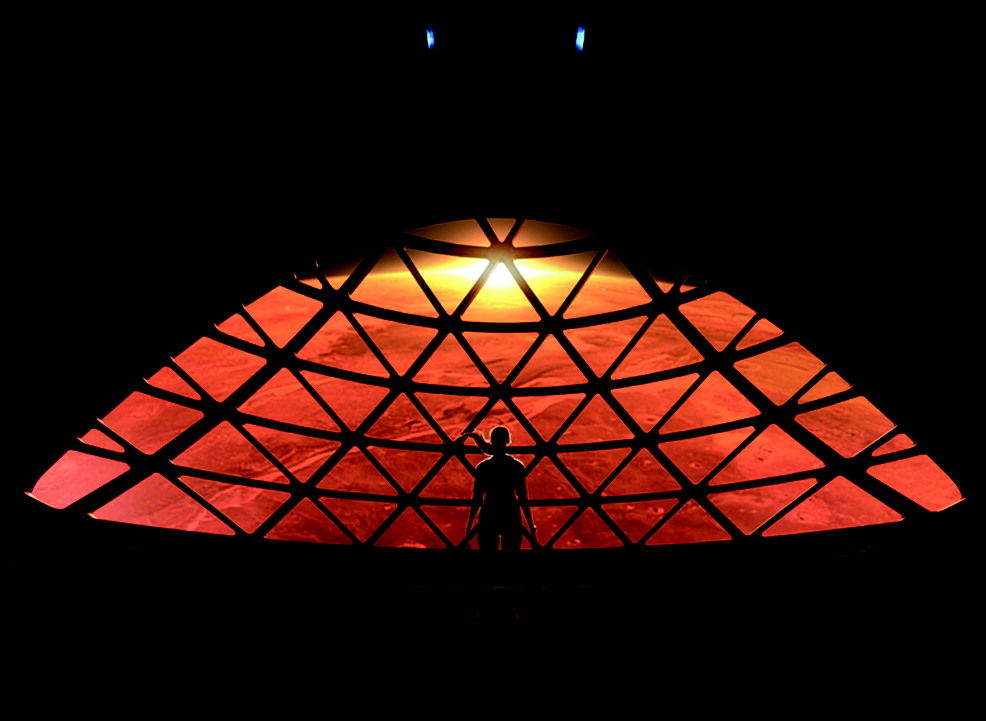
Legal and regulatory guide
NASA should work with other agencies of the U.S. government, especially the Federal Aviation Administration, the new reports explains, to produce a legal and regulatory guide for private-sector actors planning space activities that implicate planetary protection but that do not involve NASA participation.
The guide should clearly identify where legal authority for making decisions about planetary protection issues resides, how the United States translates its obligations under the United Nations Outer Space Treaty into planetary protection requirements for non-governmental missions, what legal rules apply to private-sector actors planning missions with planetary protection issues, and what authoritative sources of information are available to private-sector actors that want more guidance on legal and regulatory questions.

Israel’s Beresheet lunar lander imagery taken before crash landing on April 11, 2019.
Credit: SpaceIL and Israel Aerospace Industries (IAI)
Bad-boy Beresheet
Spotlighted both in the new Academies report and by the (PPIRB) is Israel’s Beresheet lunar mission.
Built by SpaceIL, an Israeli nonprofit organization, and launched by SpaceX, this commercial lunar lander that subsequently crashed on the Moon, carried a variety of payloads, including a laser retroreflector experiment supplied by NASA via an agreement with the Israeli Space Agency.
However, unbeknownst to SpaceIL, SpaceX, or NASA (which also provided tracking and communications support), another payload aboard Beresheet contained undisclosed organisms and, possibly, other biological materials.

A scanning electron micrograph of an adult tardigrade (Hypsibius dujardini). Credit: Willow Gabriel, Goldstein lab, University of North Carolina at Chapel Hill
As such, this was a clear case of a payload owner not providing the launch operator or NASA with full information about the payload’s biological content. The Academies report addresses the implications of the SpaceIL incident “because the incident connects to persistent questions about the legal authority and rules applicable to private sector space activities conducted with or without NASA participation that implicate planetary protection.”
Problems persist
A finding of the new report: “Problems persist with whether and how U.S. federal law regulates private-sector space activities for planetary protection purposes concerning launch, on-orbit, and re-entry activities.”
These problems create challenges for U.S. compliance with the United Nations Outer Space Treaty’s obligations concerning the authorization and continual supervision of activities of non-governmental entities “and also undermine the private sector’s need for a transparent and efficient legal and regulatory framework to support expanding of private sector exploration and uses of space,” the report adds.

Humans on Mars – the reach for the Red Planet.
Credit: Boeing
Humans to Mars
Regarding the human exploration of Mars, the report explains that, although NASA recognizes that existing planetary protection policy is inappropriate for human missions to Mars, “it has not developed a strategy for producing practical planetary protection measures for such human missions. The lack of a strategy stems, in large measure, from the fact that NASA has not conducted the research and development needed to build the scientific and technological foundation for planetary protection measures designed specifically for human missions to Mars.”
The new report recommends that NASA should make the development and execution of a strategy to guide the adoption of planetary protection policy for human missions to Mars a priority.
Independent advisory body
Furthermore, the report recommends that NASA should establish a new, permanent, and independent advisory body formally authorized to provide NASA with information and formulate advice from representatives of the full range of stakeholders relevant to, or affected by, planetary protection policy.
To read the full report — Assessment of the Report of NASA’s Planetary Protection Independent Review Board — go to:

Credit: CCTV
China’s new-generation manned spaceship (unscrewed) successfully returned to the Dongfeng landing site in north China’s Inner Mongolia Autonomous Region, May 8, 2020.
The return capsule successfully returned to the Dongfeng landing site at 1:49 p.m. (Beijing Time) Friday, according to the China Manned Space Agency (CMSA).

Credit: CCTV 13
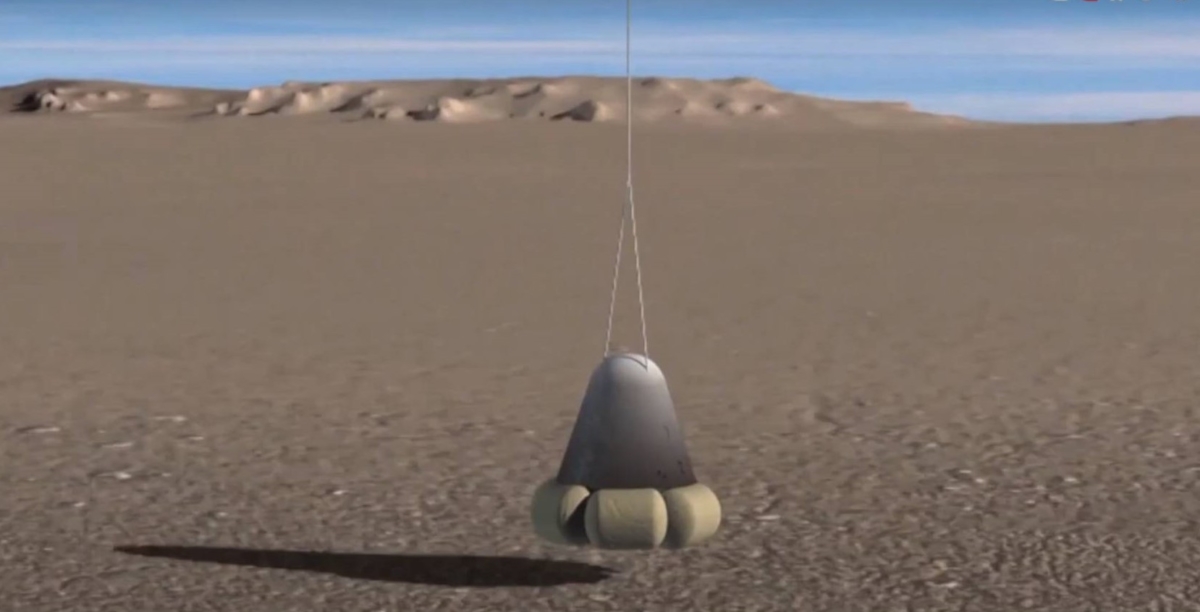
After reentry in the Earth’s atmosphere and reached the designated altitude, two deceleration parachutes were deployed followed by three main parachutes from the return capsule. Before touching down, the vehicle deployed six airbags to cushion the capsule’s landing.

Credit: CCTV 13
Credit: CCTV 13
For videos, go to:
Credit: XinhuaVideo
Credit: CCTV Video News Agency
Also, go to this CCTV 13 video at:

Credit: CCTV
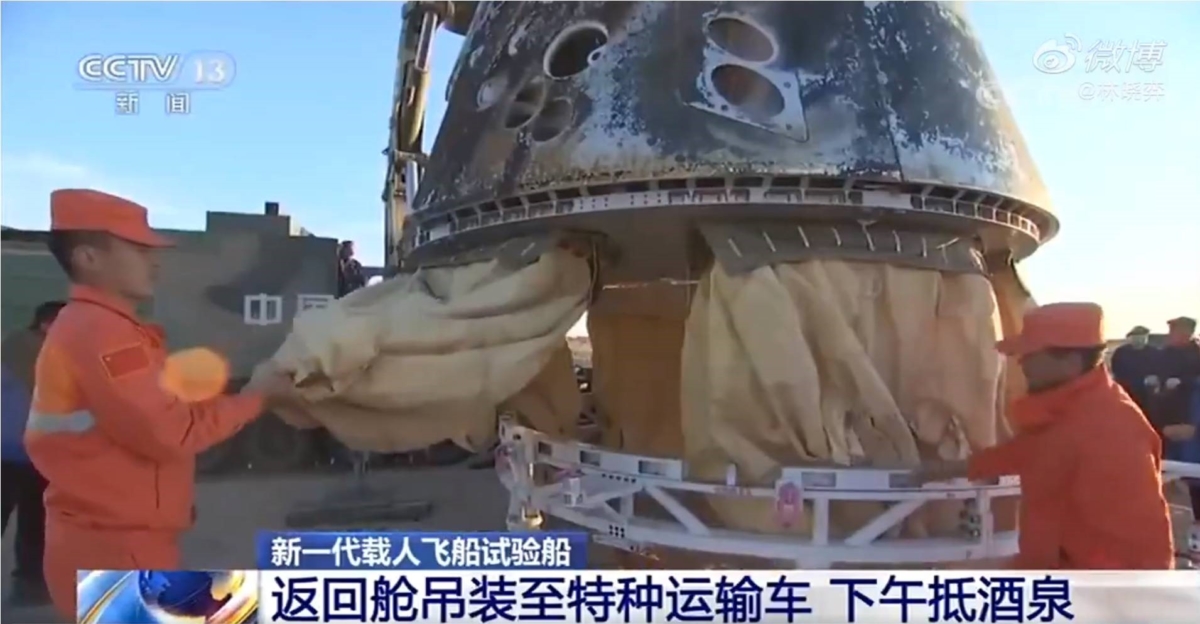
The return capsule of China’s experimental manned spacecraft with no crew safely landed at the Dongfeng landing site in the desert of north China’s Inner Mongolia Autonomous Region at 13:49 Beijing Time (05:49 GMT), according to the China Manned Space Engineering Office (CMSEO).
Credit: CCTV/China National Space Administration (CNSA)
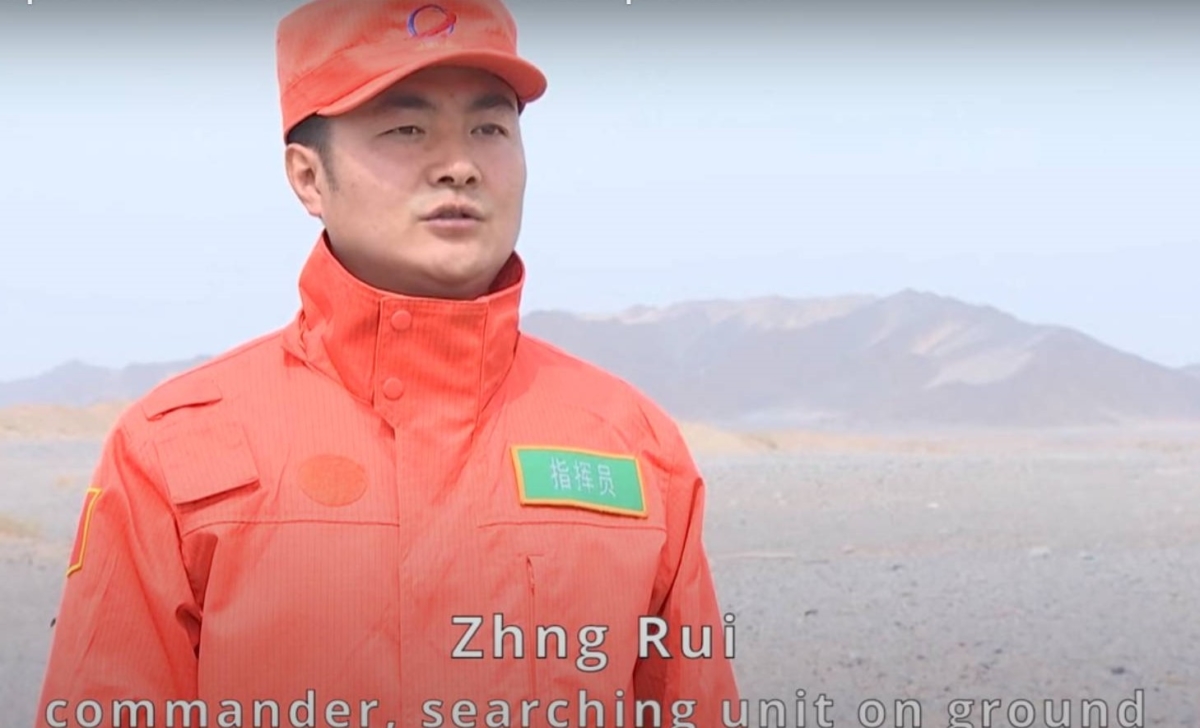
China Central Television (CCTV) reported that the search team quickly found the reusable capsule and confirmed that its structure was intact.
Credit: CCTV/China National Space Administration (CNSA)
The new manned spaceship can be used in the operation of China’s space station and future human exploration of the Moon, Chinese space officials said.
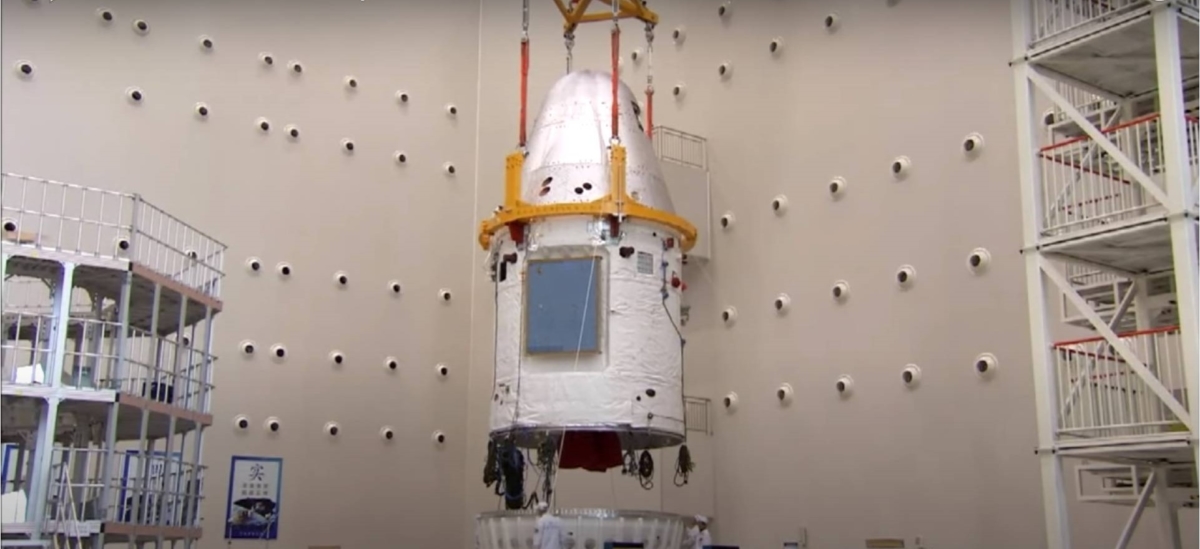
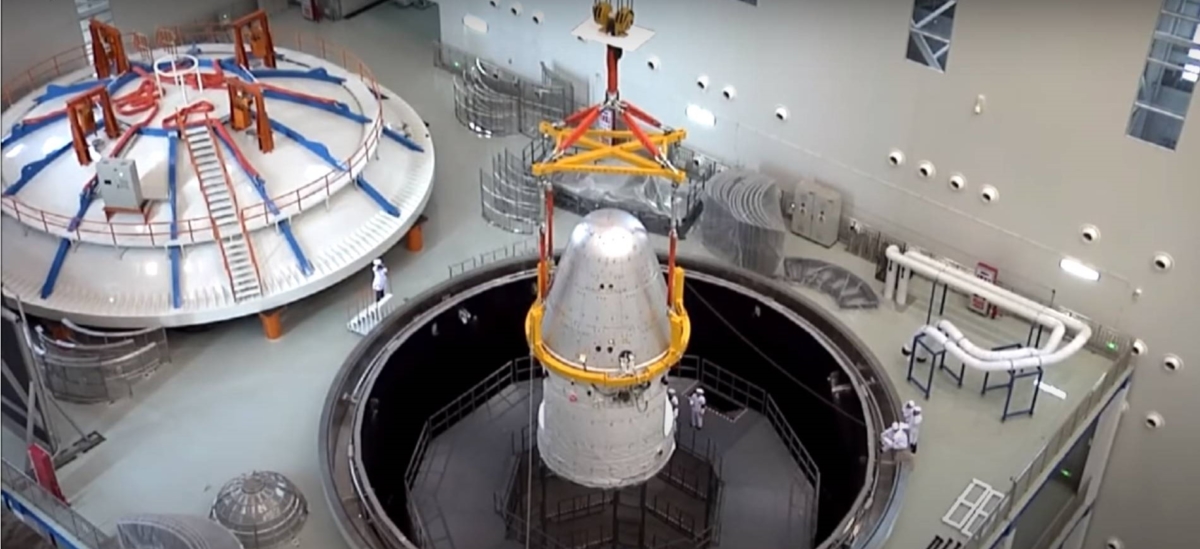
The new spaceship is 30 feet (nine meters) high, with a maximum diameter of 15 feet (4.5 meters). It can hold six to seven astronauts.
New-generation craft
Credit: Weibo
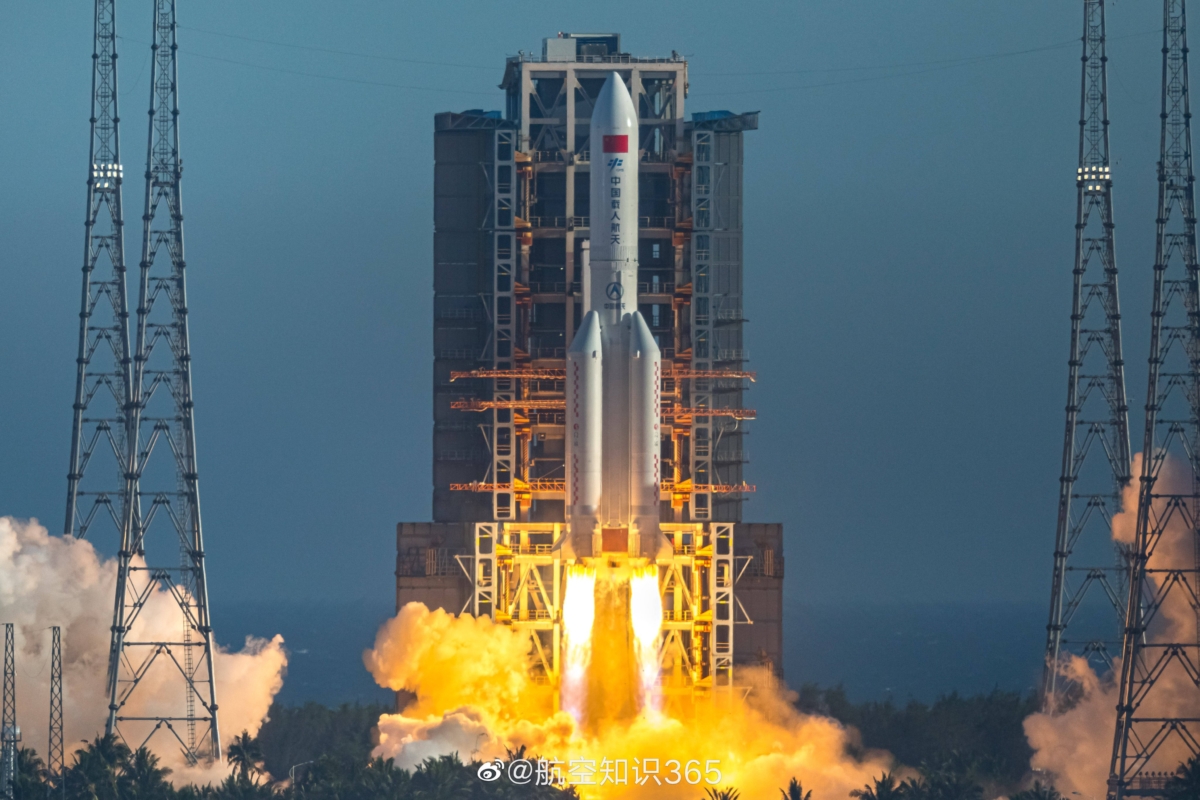
The re-entry capsule, together with a service module that forms the new-generation spacecraft, weighing more than 20 tons, were sent into space by China’s new large carrier rocket Long March-5B, which blasted off from the Wenchang Space Launch Center on the coast of southern China’s island province of Hainan at 18:00 Beijing Time on Tuesday.
Following the instructions from the Beijing Aerospace Control Center, the experimental spaceship applied the brake and entered the return orbit at 12:21, and its return capsule separated with its service capsule at 13:33.
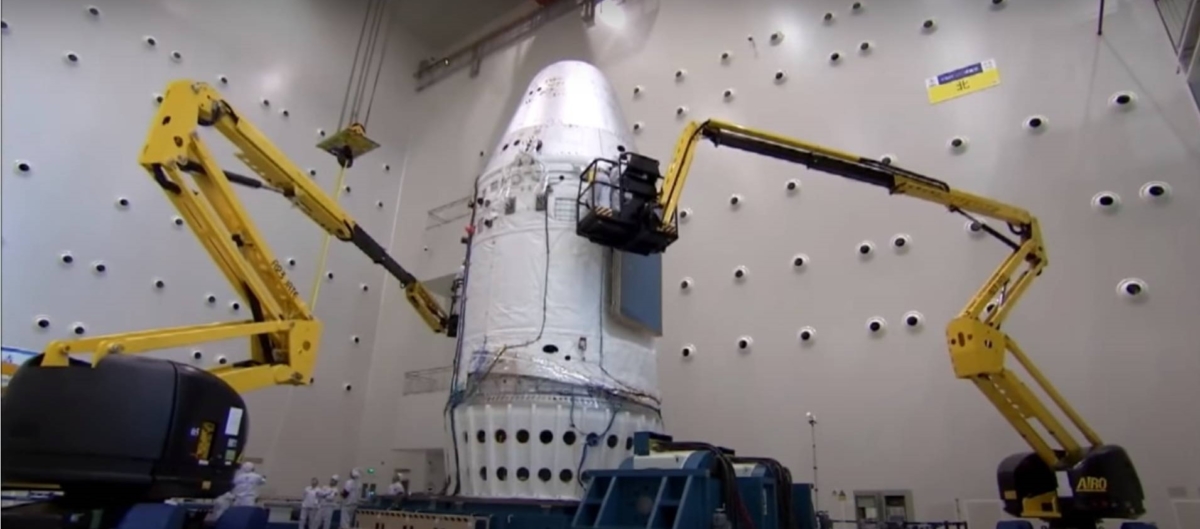
Credit: CCTV/China National Space Administration
The experimental spaceship flew in orbit for two days and 19 hours, during which it carried out a series of space science and technology experiments, said the China Manned Space Agency (CMSA).
Human lunar exploration
“The success of the test indicates that China has made a major progress in manned space transportation technology,” said Wang Zhonggui, deputy chief designer of China’s manned space program in a CCTV interview.
The return capsule uses 12 monopropellant-powered engines which are applied for the first time in China to make the capsule safer and reusable.
“The test has made technological preparations for the following manned lunar exploration and other space missions and has opened a new chapter in the annals of China’s space program,” Wang added.
According to the China Global Television Network (CGTV), the new spaceship is reusable. “It only needs changes to its thermal-protective coating and its protective cap of docking devices before re-launching again. A modular design can ensure the re-entry capsule is compatible with bigger service modules for a mission even to the Moon.”
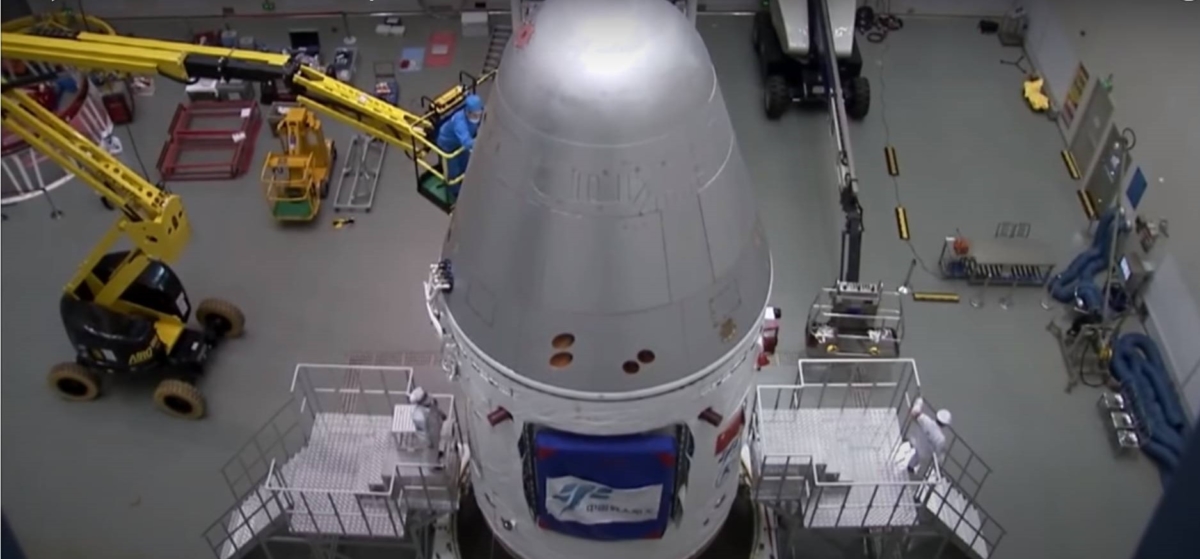
Credit: CCTV/China National Space Administration
Key technologies
The mission tested the key technologies of the new spaceship such as the control of its re-entry into the atmosphere, heat shielding and recovery technology.
“The ground control center calculated accurately the orbit of the spaceship and the control parameters of its re-entry into the atmosphere. The reentry control precision is very high, well within the anticipated range,” said Sun Jun, head of the survey and control team of the Long March-5B maiden flight mission.
Star sensors, computers and other high-value equipment were moved from the service capsule to the return capsule so that they can be recycled after returning to Earth.
CCTV landing video at:
https://youtu.be/zpm05o0g288?list=PLpGTA7wMEDFjz0Zx93ifOsi92FwylSAS3
Also go to this CCTV/China National Space Administration (CNSA) video at:
https://youtu.be/psEWjY2GnlI?list=PLpGTA7wMEDFjz0Zx93ifOsi92FwylSAS3

Curiosity Mast Camera Right photo taken on Sol 2754, May 5, 2020.
Credit: NASA/JPL-Caltech/MSSS
NASA’s Curiosity Mars rover is now performing Sol 2757 duties.
A second try at drilling the “Glasgow” target proved successful creating the 26th drill hole on Mars!
“It’s hard to believe that it’s only been a little over a month since we drilled our last sample ‘Edinburgh.’ Curiosity is certainly making quick progress in the ‘Glen Torridon’ region,” reports Vivian Sun, Planetary Geologist at NASA’s Jet Propulsion Laboratory.

Curiosity Left B Navigation Camera image acquired on Sol 2756, May 8, 2020.
Credit: NASA/JPL-Caltech
Drill campaign sequence
The focus of a newly scripted two-sol plan (Sols 2756-2757) is portion characterization, which is the next step in the rover’s drill campaign sequence.
This portion characterization step consists of Curiosity’s arm dropping a few portions of drill powder onto a surface, Sun adds, with the robot’s Mastcam imaging before and after to check the drilled sample before delivering it to Chemistry & Mineralogy X-Ray Diffraction/X-Ray Fluorescence Instrument (CheMin) and the Sample Analysis at Mars (SAM) Instrument Suite.
“Aside from this important and exciting activity, the team also planned a variety of remote sensing activities to study the rocks and environment around Glasgow,” Sun says.

Curiosity Chemistry & Camera (ChemCam) remote micro-imager (RMI) photo taken on Sol 2755, May 6, 2020.
Credit: NASA/JPL-Caltech/LANL
Nodular bedrock
Curiosity’s Chemistry and Camera (ChemCam) will be observing two targets on nodular bedrock, “Polwarth” and “Rob Roy Way,” which may give researchers insight into how these rocks interacted with water.
Another two targets, “Valsgarth” and “Lunnain,” are located on less nodular portions of bedrock, and will help scientists characterize the typical composition of the rocks at the drill site.
ChemCam’s final observation in this plan is a long-distance image of “Puffin,” which is a nodular crossbedded portion of the pediment cap.

Curiosity Front Hazard Avoidance Camera Right B image taken on Sol 2756, May 8, 2020.
Credit: NASA/JPL-Caltech
Environmental observations
“A number of Mastcam images and mosaics are planned, including a large mosaic of a trough feature that continues the coverage from a mosaic in the previous plan,” Sun explains. “Part of this Mastcam mosaic will also expand high-resolution imaging of our workspace, which will help us target higher-resolution features in future plans.”
A Mars Descent Imager (MARDI) image is also to be acquired, and will serve as the baseline image for future change-detection observations while the rover is parked at the Glasgow drill site.
“Rounding out our plan is a suite of environmental observations aimed at characterizing local atmospheric conditions,” Sun concludes, “especially now that we’re entering the season where dust activity may be picking up.”
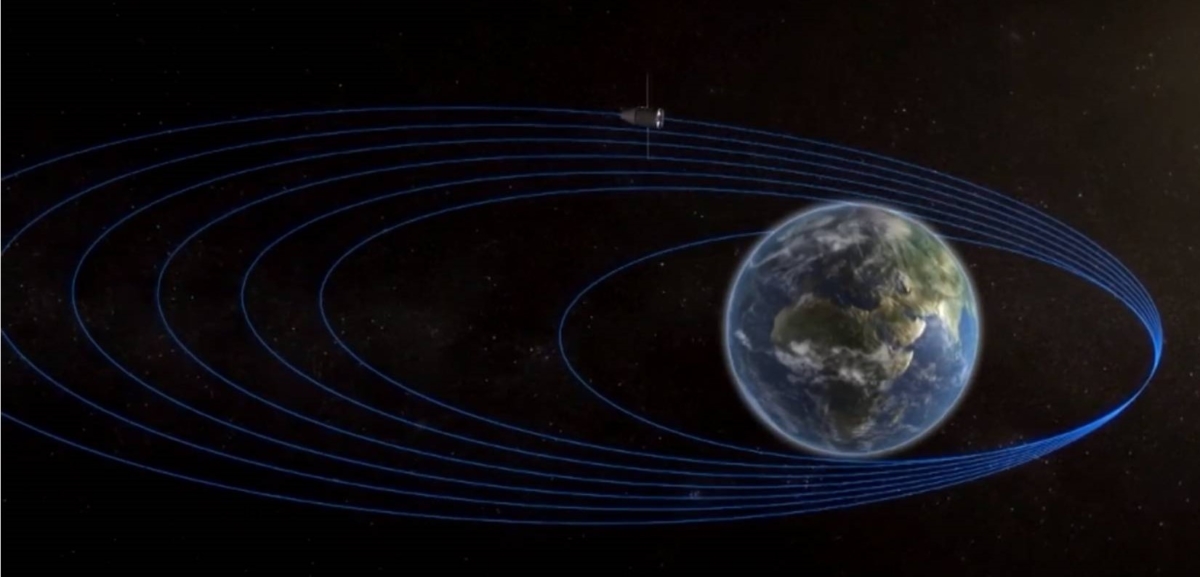
Credit: CCTV/Inside Outer Space screengrab
China’s experimental new-generation piloted spaceship is working normally in orbit according to the China Aerospace Science and Technology Corporation (CASC).
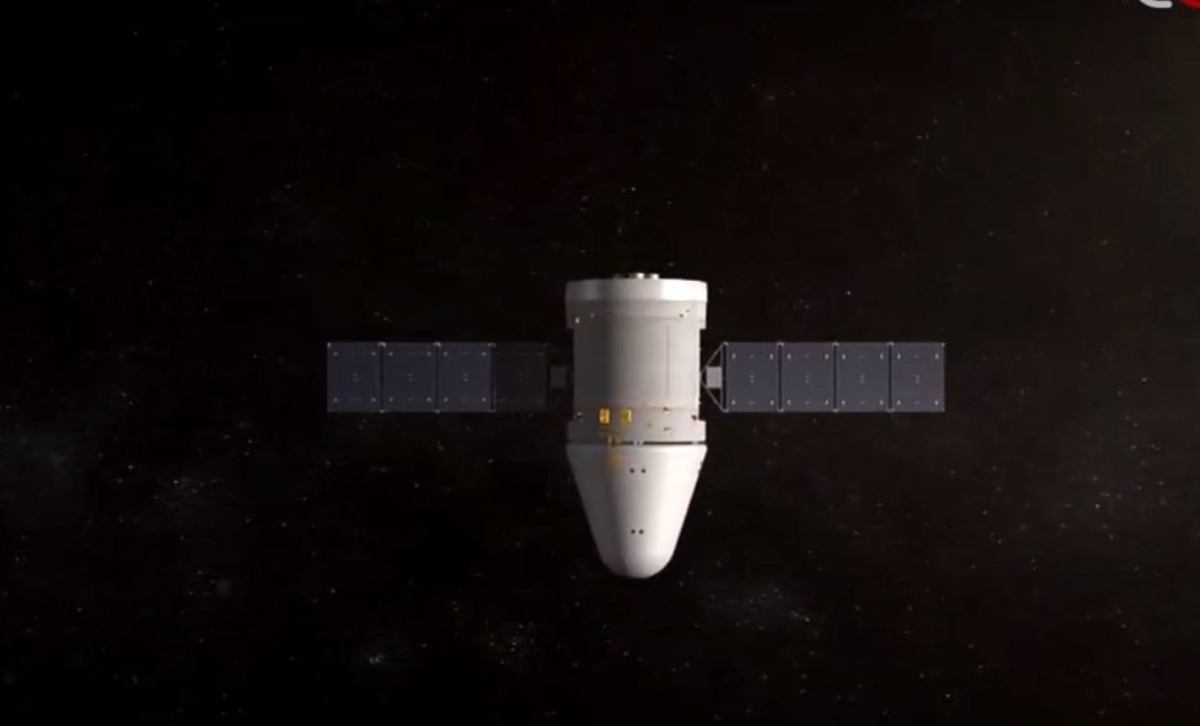
Credit: CCTV/Inside Outer Space screengrab
The experimental spaceship was launched Tuesday evening without crew by China’s new large carrier rocket Long March-5B from the Wenchang Space Launch Center on the coast of south China’s island province of Hainan.
Credit: CCTV/Inside Outer Space screengrab
The craft has adjusted its orbit six times autonomously as of 9:00 Thursday.
Landing site
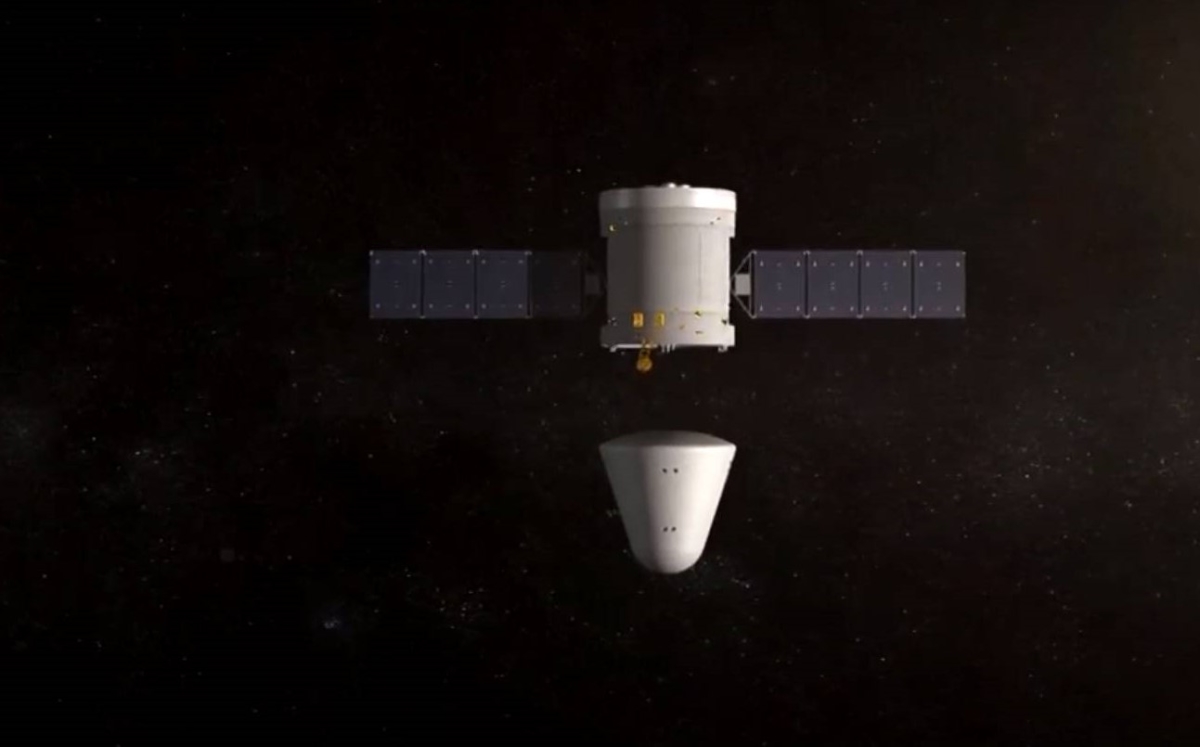
The new manned spacecraft is designed to adapt to multiple tasks including low-Earth orbit missions and deep-space exploration. The spacecraft comprises a service capsule and a return capsule.

Credit: CCTV/Inside Outer Space screengrab
The mission will test the key technologies of the new spaceship such as the control of its re-entry into the atmosphere, heat shielding and recovery technology, according to the China Academy of Space Technology under the CASC.
It is scheduled to touch down at the Dongfeng landing site in north China’s Inner Mongolia Autonomous Region on Friday, according to Ji Qiming, an assistant to the director of the China Manned Space Agency.
Credit: CCTV/Inside Outer Space screengrab
Data transmission
During the flight of the spacecraft, a “time-triggered Ethernet system” completed the verification of clock synchronization, multi-source data sampling, and high-definition image transmission, thus realizing the high-speed transmission of inter-system data. This is the first time for China to carry out a space test of this technology.
“The results have met the mission’s expectations. First, we have reached the gigabit level in terms of speed. Second, compared to the previous task, the bandwidth used this time is one megabyte, which means that we have improved the performance of the traditional data bus by 1000 times,” said Lin Yue, chief designer of the information network carrier system of the 502 Institute under the Fifth Academy of the CASC.
Local area network
The time-triggered Ethernet system will be mainly used in large and complex spacecraft in the future, equivalent to the establishment of a high-speed local area network.
In the future, if the high-speed local area network is used in China’s space station, all the household appliances can be controlled with only one controller, thus forming an intelligent spacecraft information system similar to the smart home.
“The astronauts, for example, can control all the facilities on the spacecraft with a PAD (tablet personal computer), which greatly reduces the pressure on the crew and system design,” said Lin.

Credit: CCTV/Inside Outer Space screengrab
3D printing system
Also onboard the new-generation vehicle is a 3D printing system making use of composite materials inside the reentry capsule of the experimental spacecraft.
Independently developed by China, CCTV reports, the 3D printer automatically completed the task of printing two samples during space flight, confirming the scientific research purpose of 3D printing composite materials in microgravity environment.

Credit: CCTV/Inside Outer Space screengrab
As noted by the China Academy of Space Technology Corporation (CAST), continuous fiber-reinforced composite material is the main material for spacecraft structure in the world. 3D printing technologies will pave the way for further construction of China’s space station and offer prospective research and technical test data.
“The first goal is to support the in-orbit long-term manned operation and maintenance of the space station. The second goal is to support the in-orbit expansion of our space station,” said CAST’s Qi Junfeng, person in charge of the space 3D printing system.
Malfunctioning reentry vehicle
Meanwhile, an experimental spacecraft — the Flexible Inflatable Cargo Reentry Vehicle – that was launched on the maiden flight of the Long March 5B carrier rocket malfunctioned as it returned to the Earth on Wednesday afternoon, according to the China Manned Space Agency (CMSA).
The reentry vehicle was scheduled to touch down by parachute at the Dongfeng Landing Site in the Inner Mongolia autonomous region at the end of its 19-hour space trip.
China Daily reports that there were malfunctions during the re-entry process and experts are analyzing available data, the CMSA said in a brief statement, without giving details. The space vehicle, developed by the China Aerospace Science and Industry Corporation, was to perform a re-entry test to examine a new concept in bringing in-space cargo back to Earth.
Go to this informative video about this new stepping stone for China’s space program at:

