Author Archive
 Author:
  October 2nd, 2025
On patrol – NASA’s Mars Reconnaissance Orbiter (MRO).
Image credit: NASA/JPL
Close-in observations by Mars orbiters are on tap as that interstellar comet –3I/ATLAS — zips by the Red Planet on October 3rd.
One of those spacecraft to view the object is NASA/s Mars Reconnaissance Orbiter and its powerful camera system, the High Resolution Imaging Experiment (HiRISE).
“MRO/HiRISE will attempt a couple of images,” reports Alfred McEwen, PI emeritus of HiRISE at the University of Arizona in Tucson.
Details

3I/ATLAS as captured August 27 by the Gemini Multi-Object Spectrograph (GMOS) on Gemini South at Cerro Pachón in Chile.
Image credit: International Gemini Observatory/NOIRLab/NSF/AURA/Shadow the Scientist. Image Processing: J. Miller & M. Rodriguez (International Gemini Observatory/NSF NOIRLab), T.A. Rector (University of Alaska Anchorage/NSF NOIRLab), M. Zamani (NSF NOIRLab)
“Note that we cannot achieve a high signal/noise ratio needed to detect faint stuff like the distal coma and tail, and we will not resolve the nucleus,” McEwen told Inside Outer Space.
That said, what 31/ATLAS truly is will surely benefit by the collective observations of Mars-orbiting spacecraft…or add to the mystery of its composition.
 Posted in
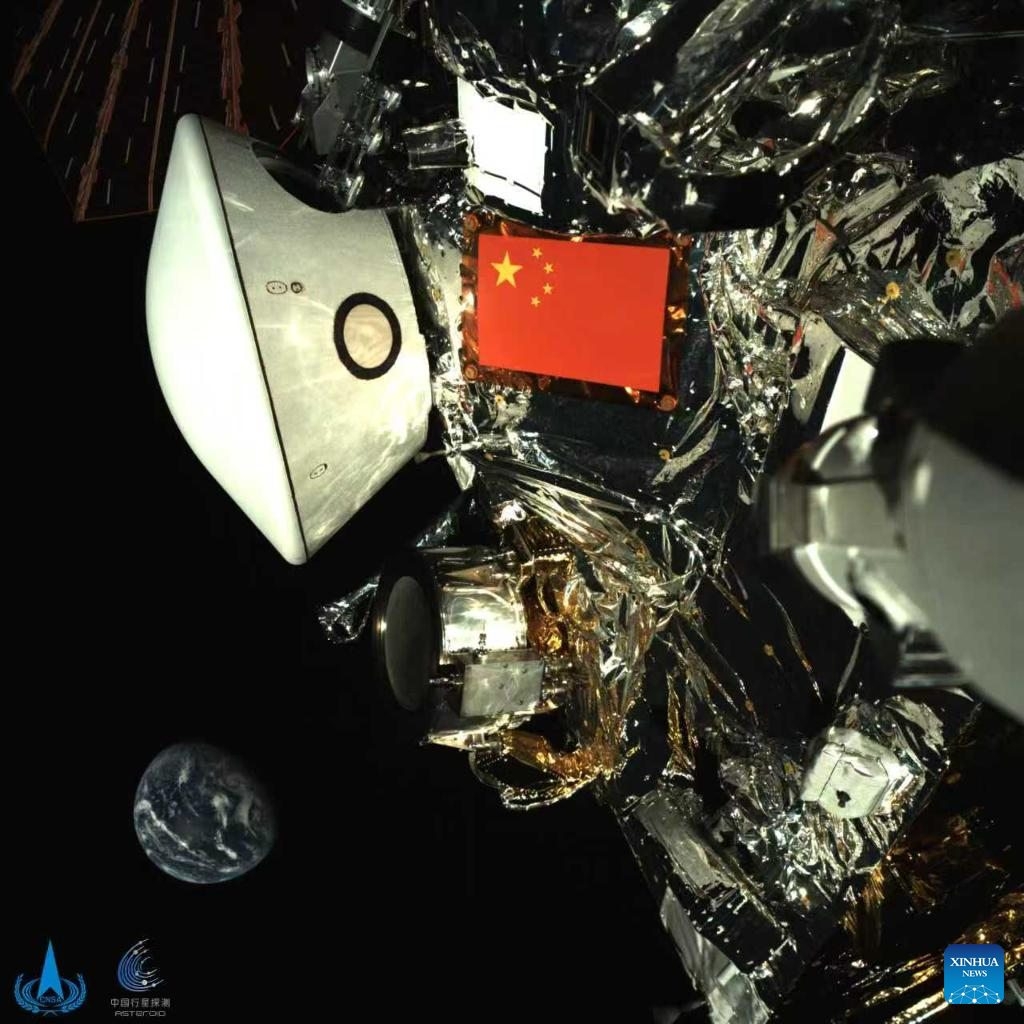
Image credit: CNSA via Xinhua
China’ first asteroid sample-return mission, Tianwen-2, was sent into space on May 29.
The China National Space Administration (CNSA) has released an in-flight image, taken by a camera affixed to the probe’s robotic arm. Also captured in the image is the craft’s white sample return capsule.
This en-route mission is headed for an over decade-long expedition: collecting samples from near-Earth asteroid 2016HO3 and exploring the main-belt comet 311P.
CNSA reports that the Tianwen-2 probe is roughly 43 million kilometers from Earth and 45 million kilometers from the asteroid 2016HO3.
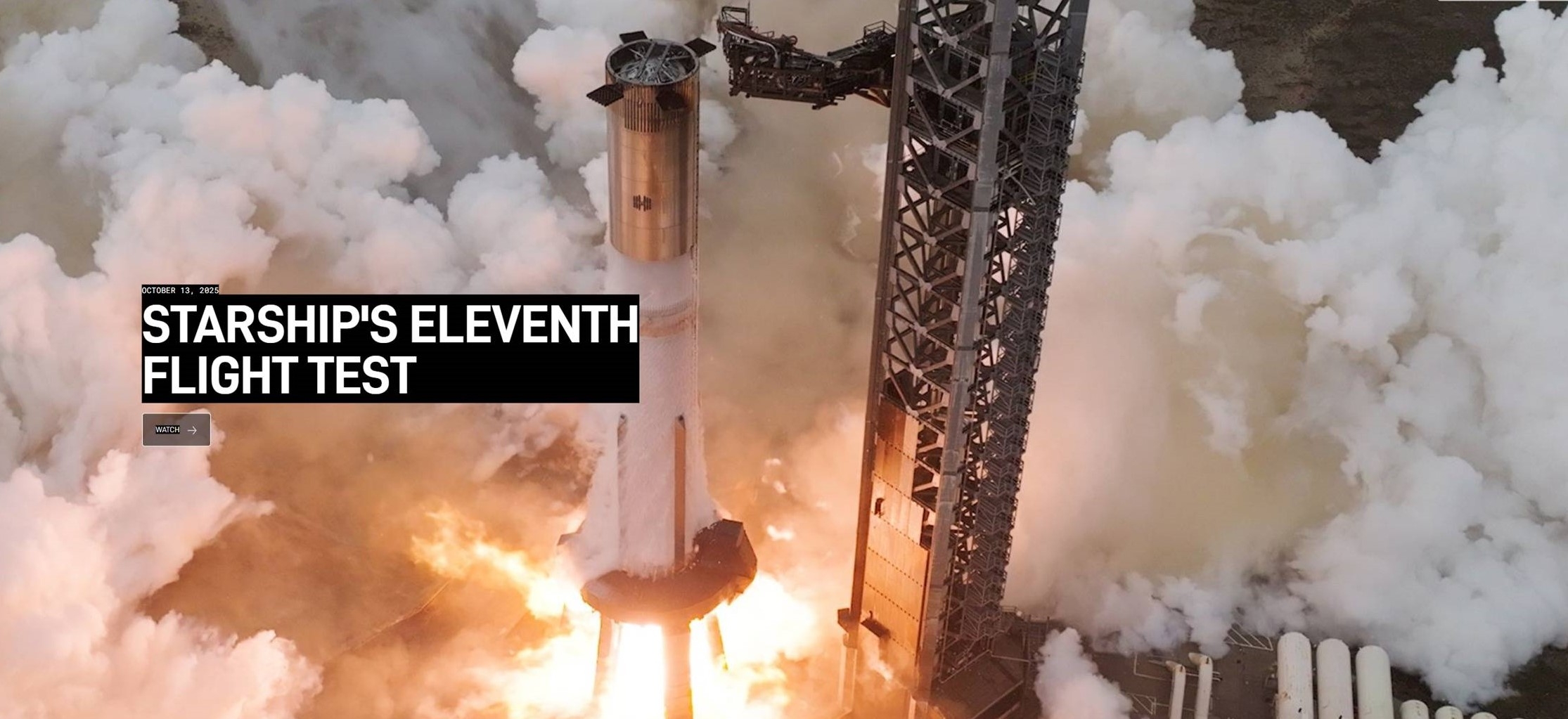
Image credit: SpaceX
The SpaceX Starship’s eleventh flight test is to launch as soon as Monday, October 13. The launch window will open at 6:15 p.m. Central “Texas” Time.
A SpaceX posting provides detail regarding what’s up with this flight test:
- The flight will build on the successful demonstrations from Starship’s tenth flight test with flight experiments gathering data for the next generation Super Heavy booster.
- Stress-testing Starship’s heatshield, and demonstrating maneuvers that will mimic the upper stage’s final approach for a future return to launch site.
“The booster on this flight test previously flew on Flight 8 and will launch with 24 flight-proven Raptor engines,” explains SpaceX.
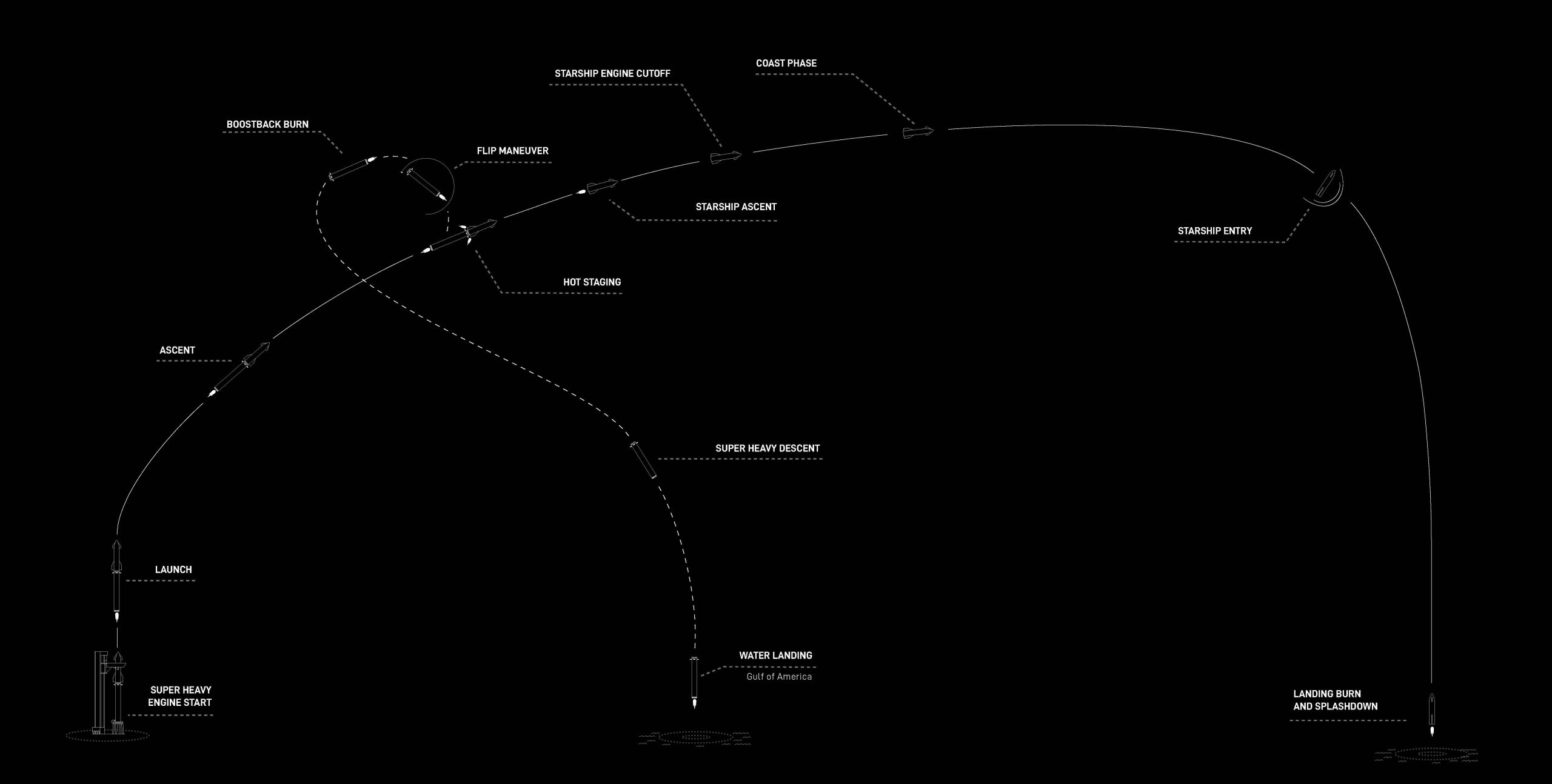
Image credit: SpaceX
A primary test objective will be demonstrating a unique landing burn engine configuration planned to be used on the next generation Super Heavy.
This objective will be attempted while on a trajectory to an offshore landing point in the Gulf of America and will not return to the launch site for a launch pad catch.
Landing burn
Super Heavy will ignite 13 engines at the start of the landing burn and then transition to a new configuration, using five up and running engines for the divert phase. Doing so will fine-tune the booster’s path, adding additional redundancy for spontaneous engine shutdowns.
Image credit: SpaceX/Inside Outer Space screengrab
The booster then transitions to its three center engines for the end of the landing burn, entering a full hover while still above the ocean surface, followed by shutdown and dropping into the Gulf of America.
In-space objectives
The Starship upper stage is to deploy eight Starlink simulators, similar in size to next-generation Starlink satellites. These items will be on the same suborbital trajectory as Starship and are expected to demise upon entry.
A relight of a single Raptor engine while in space is also planned.
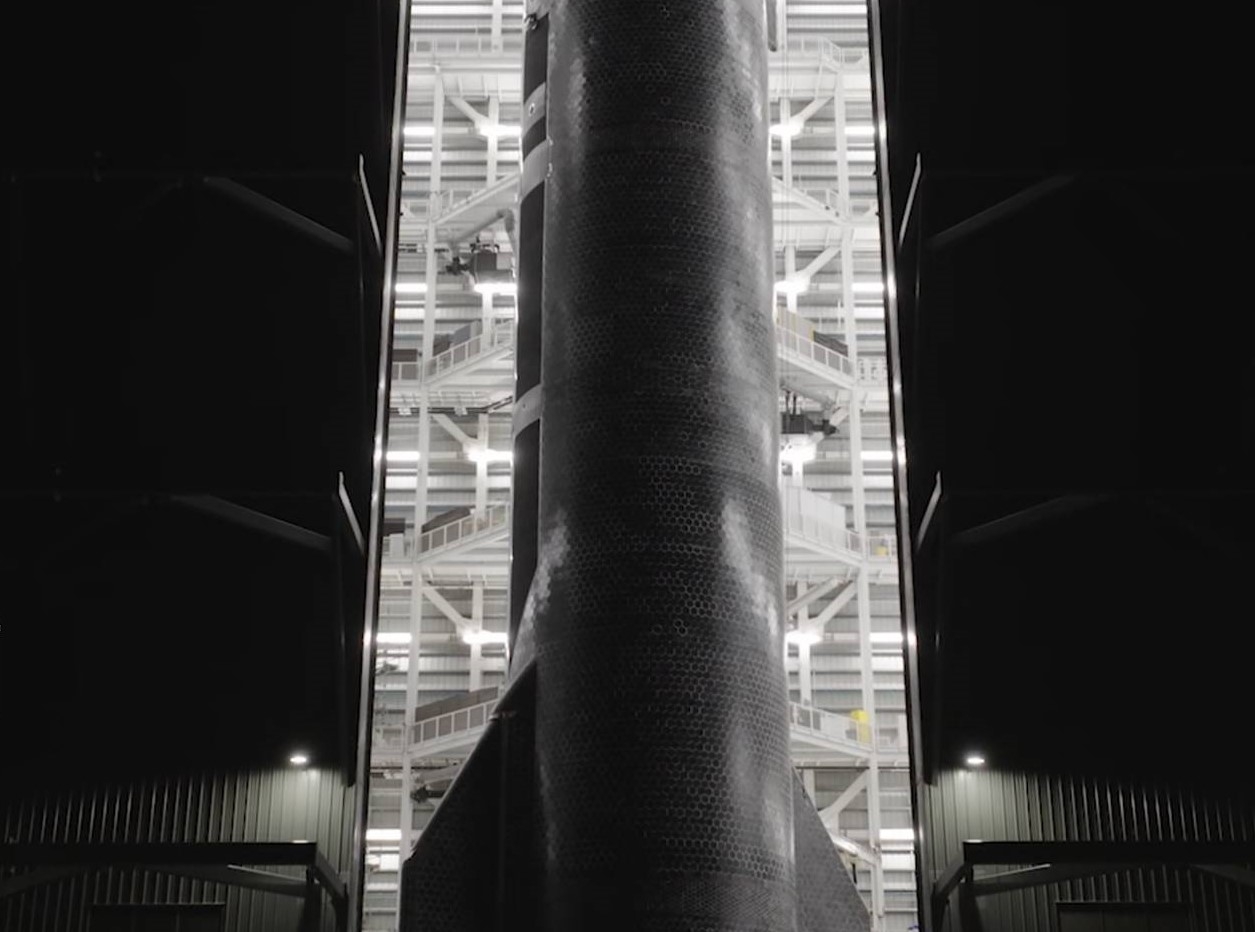
Image credit: Spacex/Inside Outer Space screengrab
“The flight test includes several experiments and operational changes focused on enabling Starship’s upper stage to return to the launch site on future flights,” explains SpaceX.
For reentry, tiles have been removed from Starship “to intentionally stress-test vulnerable areas across the vehicle.”
Several of the missing tiles are in areas where tiles are bonded to the vehicle and do not have a backup ablative layer.
Banking maneuver
To mimic the path a Starship will take on future flights returning to Starbase, the final phase of Starship’s trajectory on Flight 11 includes a dynamic banking maneuver.
Also on the test to-do list is trial-running subsonic guidance algorithms prior to the Starship’s landing burn and its splashdown in the Indian Ocean.
Live webcast
A live webcast of the flight test will begin about 30 minutes before liftoff, which can be viewed at:
https://www.spacex.com/launches/starship-flight-11
The webcast can also be seen on X @SpaceX, and watched on the X TV app.
“As is the case with all developmental testing,” concludes SpaceX, “the schedule is dynamic and likely to change, so be sure to check in here and stay tuned to our X account for updates.”

Image credit: SpaceX

“…we’re going to see an astronaut death within a few years,” reports a NASA whistleblower.
Safety is a critical part of NASA’s culture, especially following the reforms put in place after the Challenger and Columbia space shuttle disasters.
U.S. Sen. Maria Cantwell, D-Wash. released a report “The Destruction of NASA’s Mission,” prepared by Democratic staff members for the Senate Committee on Commerce, Science and Transportation.
The report is based on President Trump’s Fiscal Year 2026 Budget Request (PBR).
For full report, go to:
https://www.commerce.senate.gov/services/files/B1CC17F2-50CE-4C0B-89C9-B713FE76E146
Also, go to this Cantwell statement:
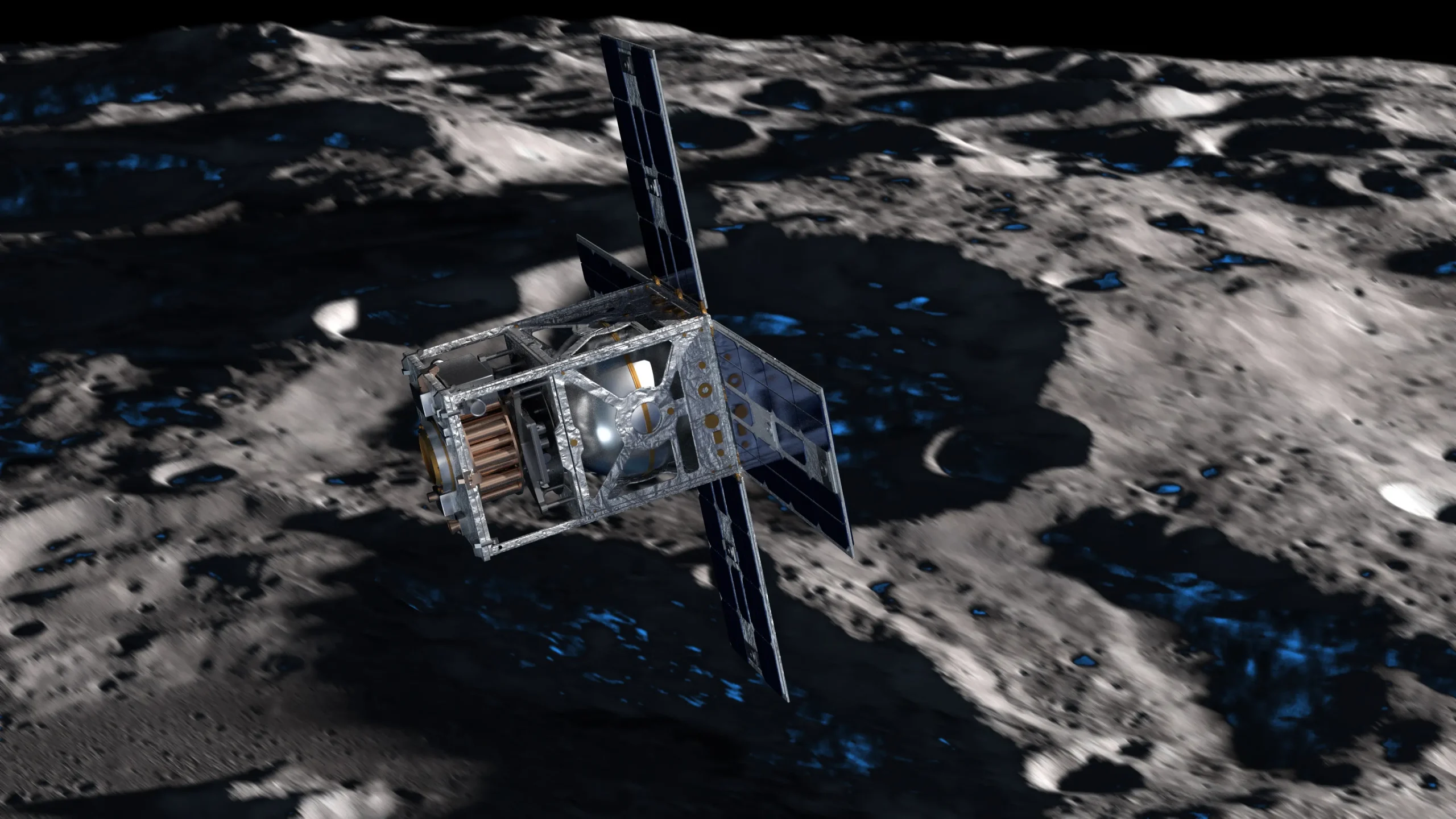
Resource scouting by the Oasis-1 spacecraft in lunar orbit.
Image credit: Blue Origin
Earth’s resource-rich Moon is overdue for detailed high-resolution maps to chart the whereabouts and concentrations of lunar water ice, Helium-3, radionuclides, rare earth elements, precious metals, and other materials.
And that’s what a new undertaking may provide.
Project Oasis is being developed jointly by Blue Origin’s Space Resources Center of Excellence and the company’s international office in Luxembourg.
GOMSpace and the European Space Resources Innovation Center (ESRIC) in Luxembourg are also supporting the project.
Founded in 2007, GomSpace is a global provider of small satellite solutions with customers in more than 60 countries.

Artwork depicts moon mining operations for Helium-3 involving harvesters, solar power plant, rover, and return launchers.
Image credit: Interlune
Multi-phase initiative
Project Oasis is a multi-phase initiative to identify key lunar resources from orbit, assess them on the ground, and harness them on-the-spot.
“Once we know what’s really there and how to access it, everything changes,” said Pat Remias, vice president of Blue Origin’s Advanced Concepts and Enterprise Engineering.
“Project Oasis creates the foundation for a thriving space economy,” Remias added, in a company statement.
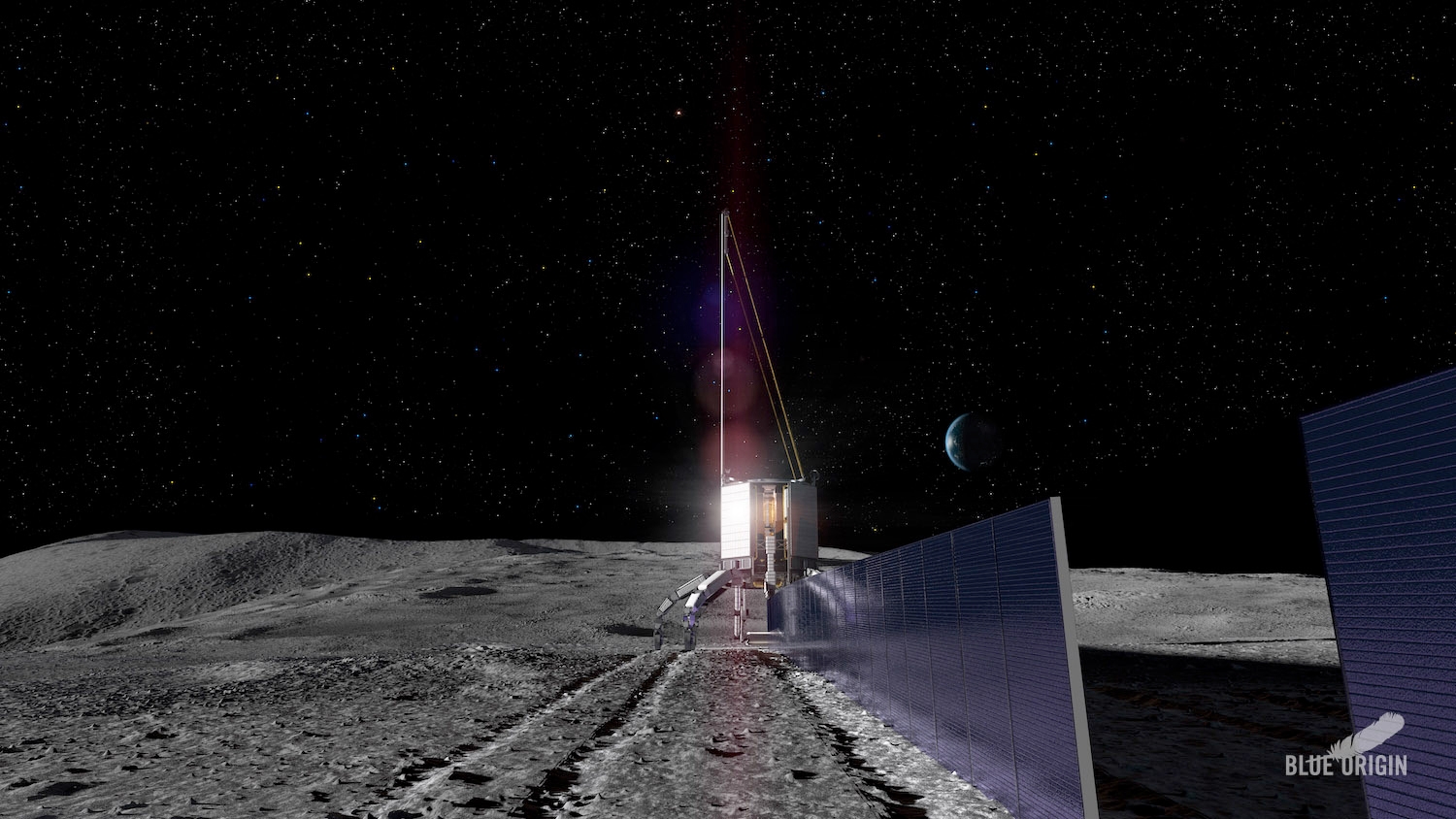
Once demonstrated and implemented on the Moon, Blue Alchemist will put unlimited solar power wherever needed.
Image credit: Blue Origin
Here’s the plan
Oasis-1would be the first mission in the Oasis “campaign.”
Oasis-1 would carry out resource prospecting of the Moon, teamed up with Blue Origin’s Blue Alchemist, an effort to process regolith into useful products like oxygen, solar cells, and power cables.
Project Oasis would employ neutron spectroscopy to quantify subsurface water ice concentrations to one-meter depths.
The ultra-low orbital altitude by an Oasis orbiter would make use of additional instruments include magnetometers for metal detection and multispectral imaging for Helium-3 and geological mapping.
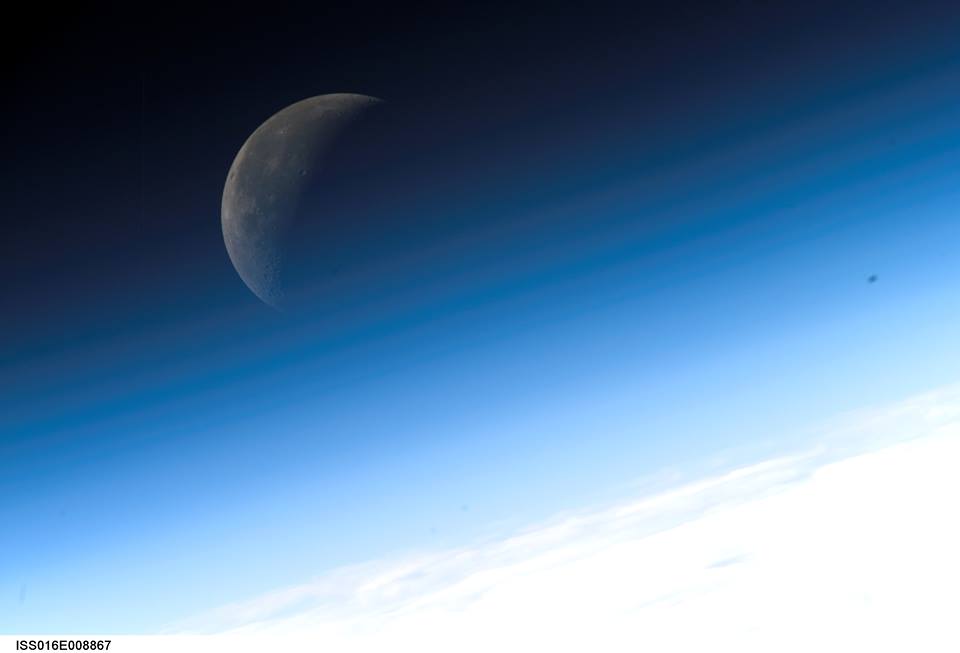
Earth’s Moon seen from the International Space Station – ready for mining or not?
Image credit: NASA
Here’s the goal
The goal as stated by Blue Origin is to crank out propellant and construction materials from lunar resources, aiming to (1) reduce deep-space mission costs by up to 90% through in-space refueling, (2) enable permanent lunar settlements with locally sourced building materials, (3) establish strategic resource security for national space capabilities, and (4) provide a platform for international collaboration to unlock the vast potential of space resources.
These efforts “seek to transform the Moon into a resource and power hub, lowering costs and complexity for missions to Mars and beyond, making asteroid harnessing viable in the future, and enabling greater sustainability on Earth,” explains a Blue Origin statement.
Missing from the September 30th statement from Blue Origin are implementation dates and costs associated with the venture.
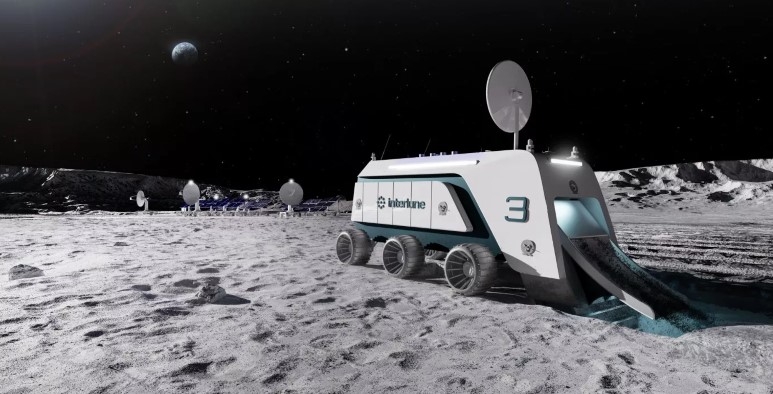
Image credit: Interlune
Mining the moon for Helium-3, how real the prospecting and can you make a business case for such an undertaking?
There are several firms resolute that mining for Helium-3 (He-3) on the moon is a true money-maker of a possibility. But is there an economic return on investment in scouring Earth’s moon for that natural resource? Do we need Helium-3, and if so, for what?
For details, go to my new Space.com story – “Mining the moon: Can you make money harvesting helium-3?” – at:
https://www.space.com/astronomy/moon/mining-the-moon-can-you-make-money-harvesting-helium-3

Image credit: HarmonEyes
H-SMART is short speak for the HarmonEyes Human State Monitoring and Readiness Tool.
This eye-tracking solution system is designed to gauge and forecast cognitive load and tiredness before it becomes a behavioral safety risk in spaceflight.
Antarctic testing
HarmonEyes of Bethesda, Maryland has been tapped by the NASA-funded Translational Research Institute for Space Health (TRISH) to trial-run H-SMART later this year in the harsh Antarctica environment and sub-Antarctic stations run by the Australian Antarctic Program.
The research is being conducted at Australia’s three Antarctic research stations and at Macquarie Island.

Image credit: HarmonEyes
“By validating this technology in Antarctica, we can better understand how it will help astronauts stay focused and mission-ready during the most demanding expeditions,” said Rihana Bokhari, Scientific Research Director for TRISH.
TRISH is a U.S.-based institute led by Baylor College of Medicine’s Center for Space Medicine.
Cognitive load and fatigue
By measuring subtle changes in eye movements, H-SMART delivers passive, highly accurate, real-time monitoring of cognitive load and fatigue. The high-tech system is viewed as adaptable to long-haul missions where maintaining peak performance over months or years is mission-critical.
The HarmonEyes H-SMART applies advanced AI and machine learning for predictive modeling, a system that can be adapted to the stresses and strains of extended space missions.
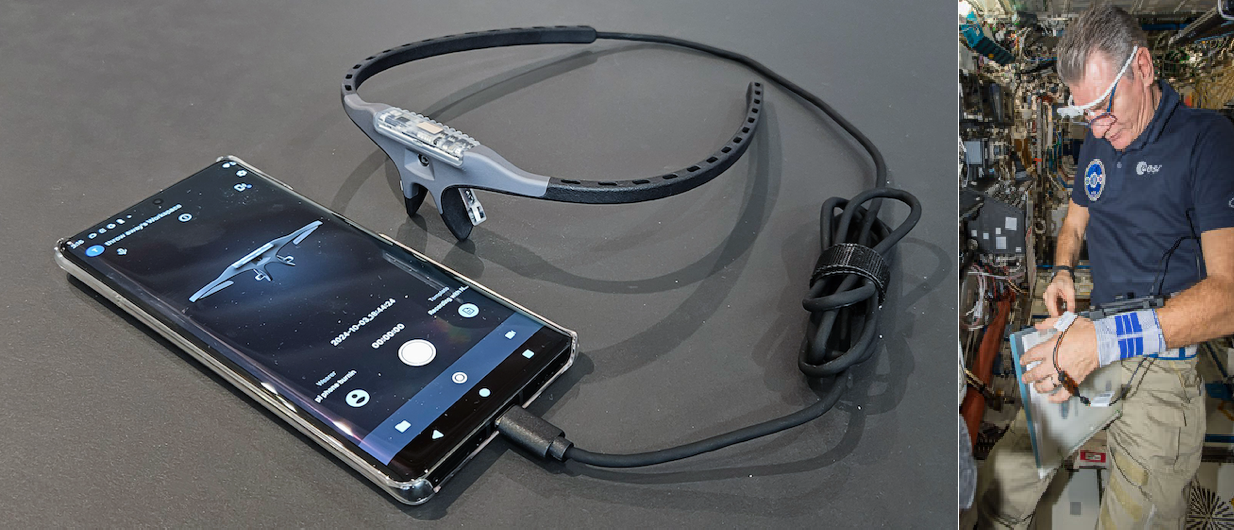
Image credit: HarmonEyes
Mission critical situations
“The eyes tell us a lot about our mental condition and with HarmonEyes, we’re able to monitor them to gauge cognitive load and fatigue in real time, ensuring peak cognitive performance during mission-critical situations like space exploration,” said Adam Gross, CEO and Co-Founder of HarmonEyes in a company statement.
“In the Antarctic we will demonstrate that H-SMART can offer superior prediction of astronaut’s cognitive and fatigue states solely based on eye metrics,” Gross explains.
HarmonEyes is billed as the world’s only open, AI-powered eye-tracking platform that identifies and predicts a person’s cognitive, emotional, and physical state based on eye movements alone.
For more information about HarmonEyes or H-SMART, go to:
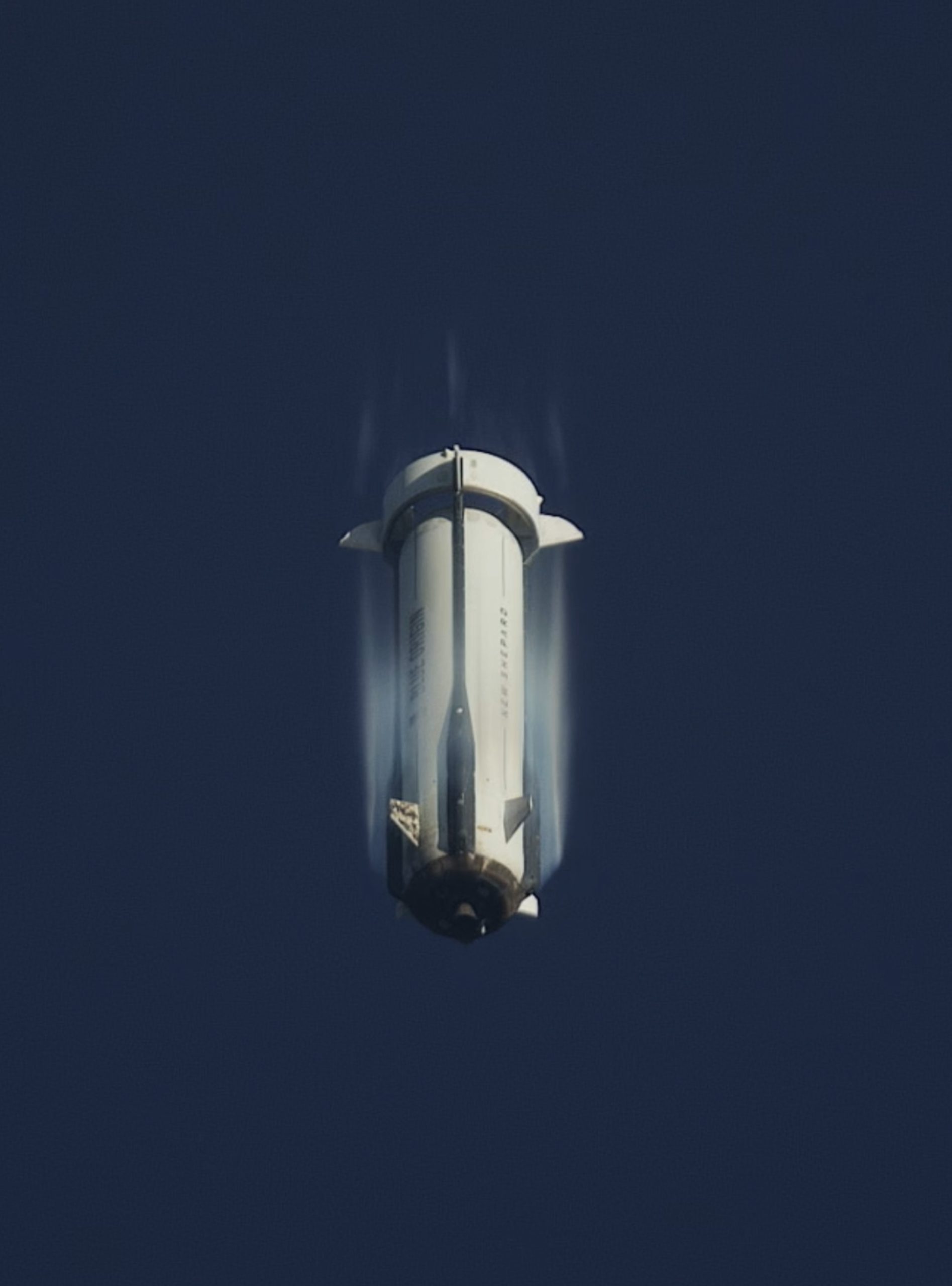
Image credit Blue Origin
Blue Origin’s fleet of two New Shepard suborbital launch systems will be phased out by the close of 2027, with the firm moving forward on phasing in a trio of new vehicles. Those vehicles will offer rapid turn-around technologies, with the goal of achieving a weekly launch rate.
In addition, Blue Origin is interested in possibly offering the suborbital flight service from another location beyond the current West, Texas spaceport, including outside of the United States.
Image credit: Global Spaceport Alliance
These plans were unveiled by Phil Joyce, the firm’s senior vice president, during the September 28th Global Spaceport Alliance forum held in Sydney, Australia.
Meanwhile, Blue Origin is set to fly soon its 15th crewed flight of a New Shepard suborbital vehicle.
For more information, go to this Irene Klotz story:
https://aviationweek.com/space/launch-vehicles-propulsion/blue-origin-expand-new-shepard-fleet

Image credit: Global Spaceport Alliance

Image credit: Keldysh Center
Russia is showcasing high-power plasma engines designed for deep space missions. They can be used for interorbital cargo transportation as well as support expeditions to the Moon and Mars and distant objects in the Solar System.
The engines, developed by the Keldysh Center (part of the Roscosmos State Corporation), are on display for the first time at the International Atomic Week now being held in Moscow from September 25 to 28.
The KM-50M and ID-750 high-power plasma thrusters have been developed jointly with the Russian Federation’s TRINITI (part of the Rosatom State Corporation).
KM-50M thruster details
According to the Keldysh Center, the first prototype, the KM-50M Hall effect thruster, was developed using state-of-the-art magnetic shielding technology, ensuring an operational life of over 20,000 hours.
KM-50M has a power output of 50 kW and produces a thrust of 1.5 N and a specific impulse of 3800 s with xenon, and a thrust of 1.6 Newtons and a specific impulse of 4200 seconds with krypton.

The Keldysh Center’s high-power plasma engines are on display for the first time at the International Atomic Week.
Image credit: Keldysh Center
In 2024, the KM-50M engine successfully completed firing tests in the Keldysh Center’s vacuum chamber, including thruster configuration of a four-engine module, confirming its readiness for cluster deployment.
ID-750 ion engine details
The second prototype, the ID-750 ion engine, demonstrates offers a power output of 80 kilowatts. The plasma exhaust velocity — depending on the propellant — ranges from 80 to 100 kilometers per second.
Use of carbon-carbon composites as the material for the ion acceleration system ensures an engine service life of over 50,000 hours.
The Keldysh Center reports that tests of a module of three such engines have demonstrated their stable and reliable operation in conditions as close to those found in space as possible.

Artwork depics an interplanetary tug for deep space missions.
Image credit: Keldysh Center
Electric rocket technology
Both engines operate on xenon and krypton, inert gases ideal for long-term storage and operation in space.
The Keldysh Center’s general director, Vladimir Koshlakov, states that these systems could form the basis for interorbital transport systems of the future.
“We see them as a key solution for delivering cargo and expeditions to lunar orbit, Mars, and even the outer planets of the Solar System,” Koshlakov explains. “Russia has traditionally remained a leader in electric rocket technology, and these new models confirm this status.”

The Keldysh Research Center has developed and produced a series of electric propulsion thrusters of different typical size, a wide range of power and higher specific impulse used in the assembly of space vehicles designed for different purposes.
Image credit: Keldysh Center

This image of interstellar comet 3I/ATLAS was captured by the Hubble Space Telescope’s Wide Field Camera on 21 July 2025.
Image credit: NASA, ESA, D. Jewitt (UCLA); Image Processing: J. DePasquale (STScI)
By all accounts, that interstellar interloper — object 3I/ATLAS – is a big story. And it’s gotten bigger.
It turns out that this celestial wanderer is massive and large.
New research using data on the motion of 3I/ATLAS — as compiled by the Minor Planet Center at the Smithsonian Astrophysical Observatory – implies that 3I/ATLAS is more massive than 33 billion tons and its diameter is larger than 3 miles (5 kilometers).
3I/ATLAS will be near Mars on October 3, 2025. That would allow the super-powerful High Resolution Imaging Science Experiment (HiRISE) camera to snag imagery of the object.
On patrol – NASA’s Mars Reconnaissance Orbiter (MRO).
Image credit: NASA/JPL
All in all, exciting detective work is ahead on watching this weirdo of a world.
Major anomaly
The object’s lack of non-gravitational acceleration implies an anomalously massive object reports Richard Cloete of the Institute for Theory & Computation at Harvard University, along with Harvard’s Avi Loeb, as well as the Minor Planet Center’s Peter Vere.
Their collective work – “Non-Gravitational Acceleration and Lower Limits on the Nucleus Mass and Diameter of 3I/ATLAS” – is a September 24th draft version and is available here at: https://lweb.cfa.harvard.edu/~loeb/CLV.pdf

Avi Loeb
(Image Credit: Chris Michel, National Academy of Sciences, 2023)
Alternative technological origin
Avi Loeb is the head of the Galileo Project at Harvard, and never short on stirring up cosmic ponderings about the significance of 31/ATLAS.
The newly published research suggests that 3I/ATLAS is more massive than the other two interstellar objects, 1I/`Oumuamua and 2I/Borisov by 3–5 orders of magnitude, “constituting a major anomaly,” Loeb points out.
“A future detection of a major maneuver of 3I/ATLAS would suggest propulsion by a technologically manufactured engine,” suggests Loeb in a recent essay, available at:
Loeb points out that, if the nucleus diameter of 3I/ATLAS is found to be larger than 5 kilometers in the HiRISE image, “then an origin associated with the interstellar mass reservoir of rocky material will be untenable,” boosting the view by the scientist of an alternative technological origin.
3I/ATLAS as captured August 27 by the Gemini Multi-Object Spectrograph (GMOS) on Gemini South at Cerro Pachón in Chile.
Image credit: International Gemini Observatory/NOIRLab/NSF/AURA/Shadow the Scientist. Image Processing: J. Miller & M. Rodriguez (International Gemini Observatory/NSF NOIRLab), T.A. Rector (University of Alaska Anchorage/NSF NOIRLab), M. Zamani (NSF NOIRLab)
Stay curious
Is 3I/ATLAS an unusually massive comet with an unusual chemical composition on an unusually rare trajectory, Loeb says, or alien technology?
“In both cases, the object could shed CO2 and H2O ices from material that collected on its frozen surface as it plowed through interplanetary and interstellar space. We should not decide about the nature of 3I/ATLAS based on the chemical composition of its skin, for the same reason that we should not judge a book by its cover,” Loeb advises.
“Hopefully, we will know more in the coming weeks. Stay curious,” Loeb concludes. “As Galileo Galilei instructed us, scientific truth is revealed by data, not by authority.”

