Author Archive
 Author:
  December 15th, 2020
Chang’e-5’s orbiter/returner.
Credit: CNSA
China’s ground teams are preparing for the landing of Chang’e-5 probe’s returner at the Siziwang Banner in north China’s Inner Mongolia Autonomous Region.
The return capsule is filled with roughly 4.4 pounds (2 kilograms) of lunar samples gathered from Mons Rümker, an isolated volcanic formation that is located in the northwest part of the Moon’s near side.

Credit: CCTV/Inside Outer Space screengrab
Recovery teams face heavy snow and bitter cold in the region.
“All the preparatory work at the designated landing area for Chang’e-5 probe’s returner is ready, and we are both confident and capable to complete the searching and retrieving mission of the returner successfully,” said Bian Hancheng, a director at the designated landing area for the Chang’e-5 mission in a China Central Television (CCTV) interview.

Ready to head home – Chang’e-5 orbiter/returner.
Credit: CNSA/CLEP
The return capsule will carry out maneuvers within the Earth’s atmosphere to slow down, a final part of the mission that mimics a tossed stone skipping across water.

Credit: CCTV/CNSA/Inside Outer Space screengrab
Search and retrieval
The Global Times — an English-language Chinese newspaper under the People’s Daily — reports that processed radar data will be transmitted to the helicopters and vehicles designated to carry out the search operation and guide them to return capsule. They are also equipped with high-power searchlights to facilitate the search process.

Following a circumlunar voyage in 2014, a return capsule parachuted to Earth. This test was a prelude to China’s Chang’e-5 lunar mission.
Courtesy: China Space
Prior to the capsule’s touchdown, the search and retrieval team have conducted some 30 terrain surveys in frosty night time conditions at the landing region, the Global Times story explains, pinpointing 100 communication towers and more than 2,800 herders’ points, providing valuable information for commanders to make decisions.
Complicated and challenging
The China National Space Administration (CNSA) has stated that all systems on the orbiter/returner combination that carries lunar specimens are currently in good condition. They will separate from each other at a point around 3,106 miles (5,000 kilometers) from Earth.
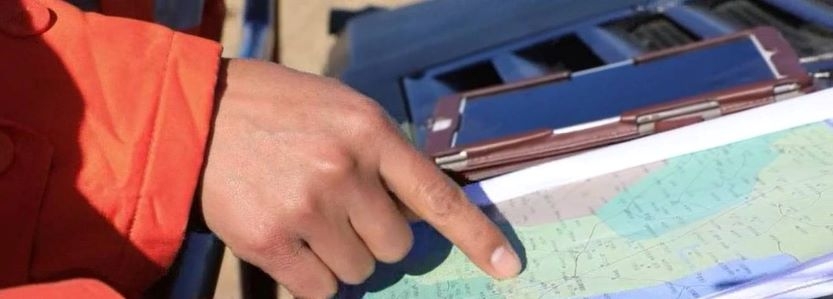
Credit: CCTV/Inside Outer Space screengrab

Map notes projected Chang’e-5 reentry capsule trajectory, produced by satellite tracker, Scott Tilley.
Credit: Scott Tilley
The Chang’e-5 mission involved four components, an orbiter, a lander, an ascender and a returner, and was launched on November 24. The lander-ascender combination touched down on the Moon on December 1.
Chang’e-5 is one of the most complicated and challenging missions undertaken in China’s growing space agenda. Given successful return of its stash of lunar collectibles, it will be the first robotic lunar sample return mission since 1976 – the former Soviet Union’s Luna-24. It collected 170 grams of dust and rock and returned them to Earth.
Go to this newly issued video showcasing the recovery operation at:
 Posted in

NASA’s Curiosity Mars rover is now performing Soll 2971 duties.
Here are some recent images from the Red Planet rover:
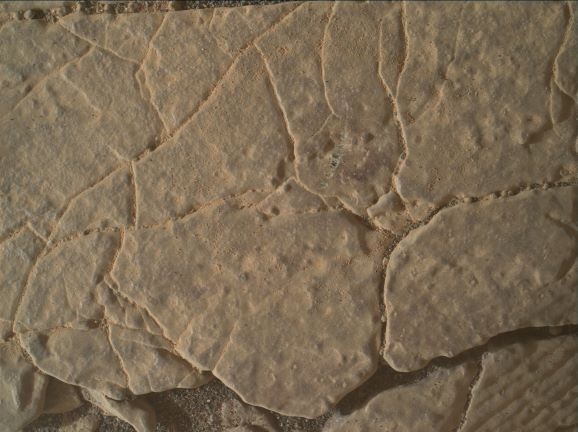
Curiosity Mars Hand Lens Imager photo produced on Sol 2970, December 14, 2020.
Credit: NASA/JPL-Caltech/MSSS
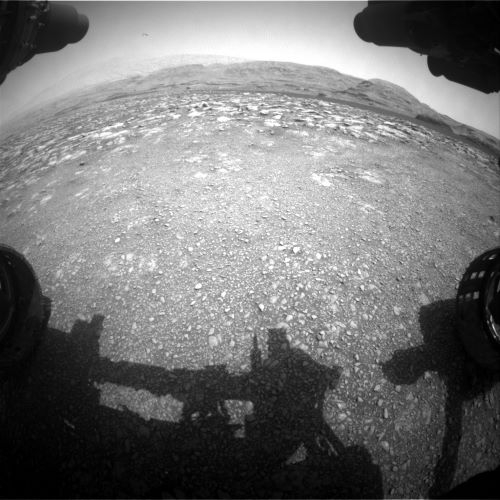
Curiosity Front Hazard Avoidance Camera Right B image taken on Sol 2970, December 13, 2020.
Credit: NASA/JPL-Caltech
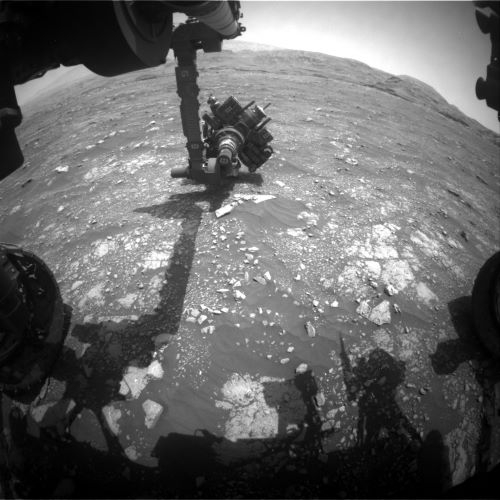
Curiosity Front Hazard Avoidance Camera Left B photo acquired on Sol 2970, December 13, 2020.
Credit: NASA/JPL-Caltech
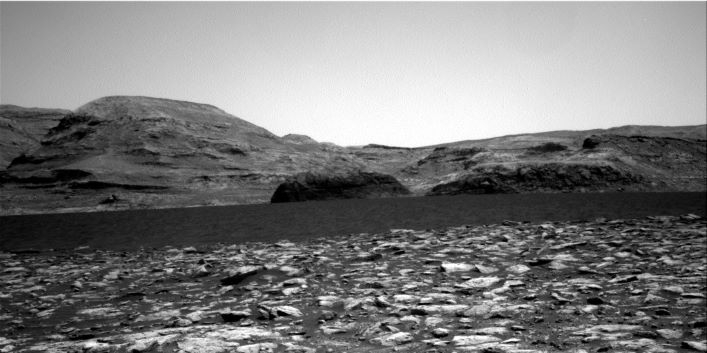
Sand dune ahead. Curiosity Right B Navigation Camera image taken on Sol 2970, December 13, 2020.
Credit: NASA/JPL-Caltech
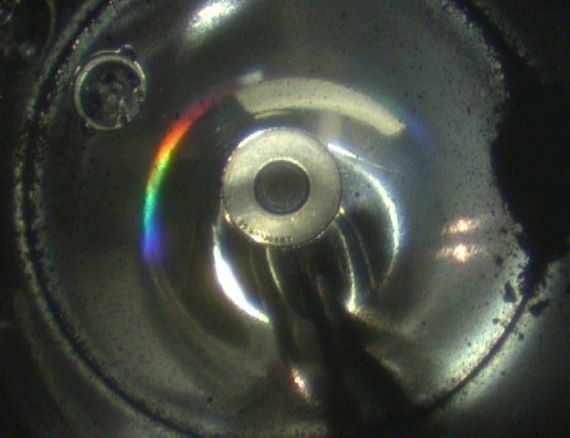
Credit: JAXA
The Japan Aerospace Exploration Agency (JAXA) has confirmed finding samples from asteroid Ryugu inside the re-entry capsule of the Hayabusa2 asteroid explorer.
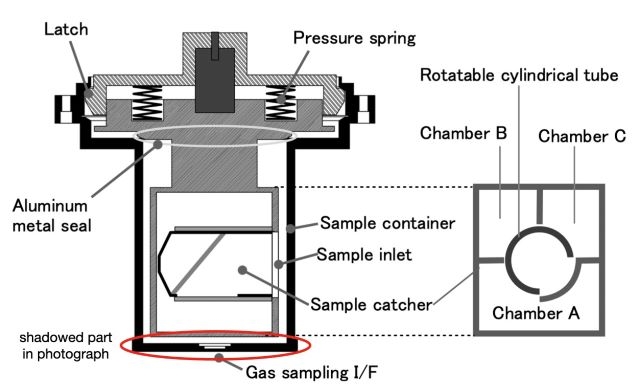
Credit: JAXA
The sample container was opened on December 14, with researchers finding black grains thought to be from Ryugu. This is outside the main chambers, and likely particles attached to the sample catcher entrance.
Hayabusa2’s re-entry capsule was collected in Woomera, Australia on December 6, then delivered to the JAXA Sagamihara Campus on December 8.

Re-entry capsule containing asteroid samples at Woomera, Australia landing site.
“We will continue to open the sample catcher in the sample container, and the curation and initial analysis team will take out the sample and analyze it,” a JAXA statement explains.
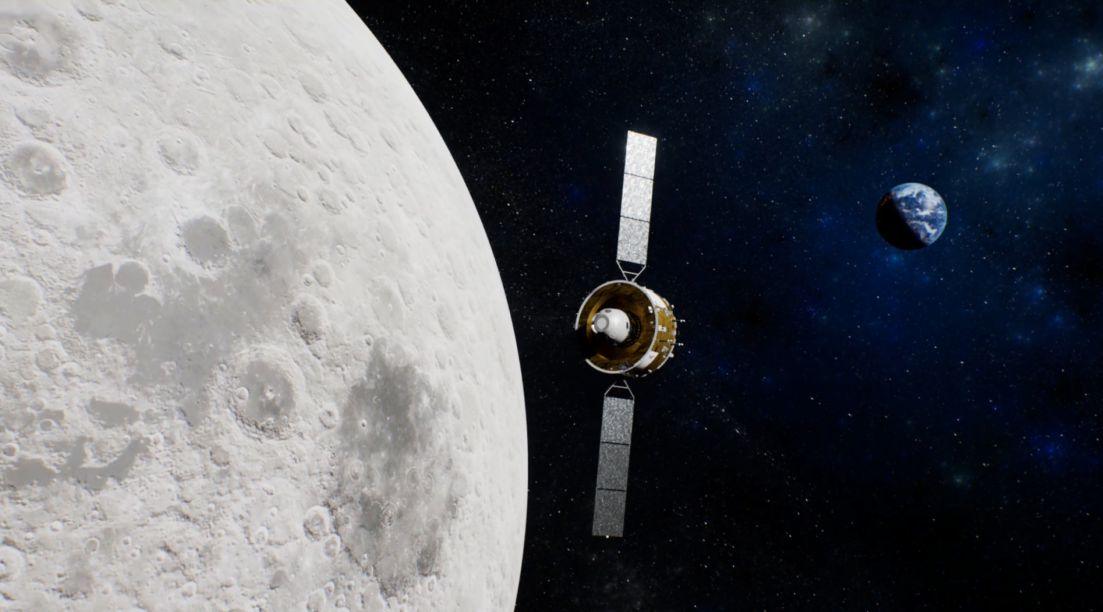
Hauling back the lunar goods, China’s orbiter/returner.
Credit: CNSA/CLEP
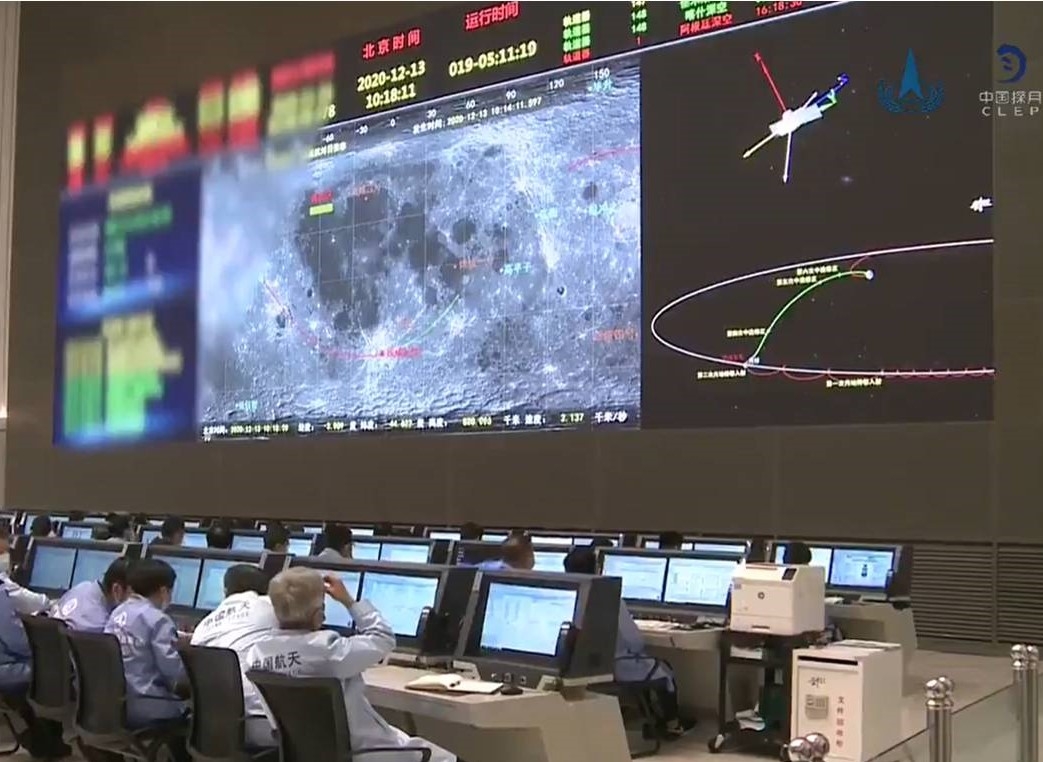
The orbiter/returner of China’s Chang’e-5 mission has attained a Moon-Earth transfer orbit, expected to land on Earth in Inner Mongolia on December 17th.
Credit: CNSA/CLEP
Loaded with lunar samples, the spacecraft conducted its second orbital maneuver at 09:51 on Sunday and entered the Moon/Earth transfer orbit, according to sources with the China National Space Administration (CNSA).
Four 150 newton-thrust engines on the orbiter/returner combination ignited when they were 143 miles (230 kilometers) away from the lunar surface and shut down after 22 minutes, CNSA said in a statement.

Re-entry capsule will perform slow-down maneuvers within Earth’s atmosphere.
Credit: CCTV/Inside Outer Space screengrab
According to real-time monitoring data, the orbiter/returner combination entered the targeted orbit successfully.
Later, the spacecraft combination will make three additional orbit corrections before landing on Earth. When the time is right, the orbiter and returner will separate from one another.
The reentry capsule will perform a series of slow-down maneuvers to return to a preset landing site within the Siziwang Banner in north China’s Inner Mongolia Autonomous Region. If the landing is successful, the lunar samples will be the first batch to be robotically brought to the Earth since 1976 by the former Soviet Union’s Luna-24.
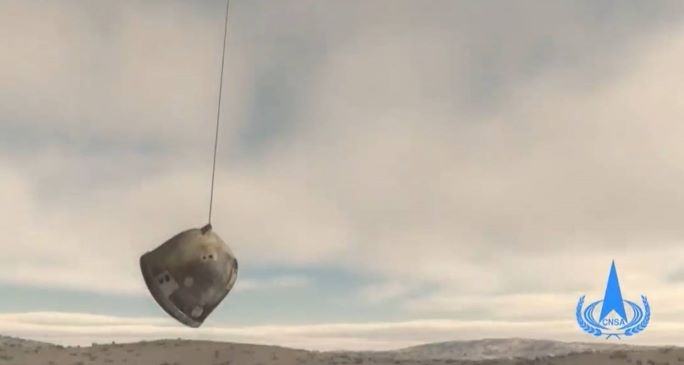
Return capsule expected to touch down within Siziwang Banner in north China’s Inner Mongolia Autonomous Region.
Credit: CCTV/CNSA/Inside Outer Space screengrab
Series of steps
Chang’e 5 has four main components: an orbiter, lander, ascender and reentry capsule.
The spacecraft was launched by a Long March 5 heavy-lift carrier rocket on November 24 at the Wenchang Space Launch Center in Hainan province.
Once in lunar orbit, the probe separated into two parts – the orbiter/reentry capsule combination and the lander/ascender combination on November 30.

Photo taking during surface sampling.
Credit: CCTV/Inside Outer Space screengrab
On December 1, the lander/ascender combination touched down on the Moon, with the duo scooping up and drilling to obtain underground samples from roughly 7 feet (2 meters) beneath the surface, an operation that ended on December 2. All collection and packing processes finished on the night of that day, much sooner than expected. Samples were packed into a vacuum container inside the ascender.

Ascender (left) departs orbiter/returner.
Credit: CCTV/Inside Outer Space screengrab
The ascender activated an engine on December 3 to lift itself into an elliptical lunar orbit to prepare for docking with the orbiter/returner vehicles. It rendezvoused and docked with the orbiter/returner on December 6 and then transferred lunar samples into the returner capsule.
The ascender then separated from the combination and was commanded to impact the Moon on December 8.
Go to these newly issued videos regarding the Chang’e-5 mission:
Heading home – Chang’e-5 orbiter/returner
Credit: CCTV/CNSA/Inside Outer Space screengrab
The China National Space Administration (CNSA) reports that the Chang’e-5 orbiter/returner spacecraft has carried out an orbital maneuver around the Moon, preparing to leave lunar orbit for a trajectory that returns it to Earth.
Following roughly six days in lunar orbit, the orbiter/returner combination completed the movement on Saturday, the first trans-Earth injection maneuver, at 09:54 (Beijing Time), changing from a nearly circular orbit to an elliptical orbit with a perilune (low point) altitude of 124 miles (200 kilometers).
Escape trajectory
Next up for the orbiter/returner combination is another orbital maneuver to escape lunar gravity and enter the Moon-Earth transfer orbit to return to Earth.

China’s Chang’e-5 lunar mission will attempt to haul back to Earth samples of the Moon.
Credit: CNSA/CLEP
The Chang’e-5 mission consists of an orbiter, a lander, an ascender and a returner. It was launched on November 24. Its lander/ascender combination touched down north of Mons Rümker in Oceanus Procellarum, also known as the Ocean of Storms, on the near side of the Moon on December 1st.
Return capsule expected to touch down within Siziwang Banner in north China’s Inner Mongolia Autonomous Region in mid-December.
Credit: CCTV/CNSA/Inside Outer Space screengrab
Stashed within a return capsule – roughly 4.4 pounds (2 kilograms) of precious lunar samples. The capsule is expected to land at the Siziwang Banner in north China’s Inner Mongolia Autonomous Region in mid-December.

Curiosity Left B Navigation Camera image taken on Sol 2967, December 10, 2020.
Credit: NASA/JPL-Caltech
NASA’s Curiosity Mars rover is now performing Sol 2968 tasks.
“Curiosity is making her way to ‘Sands of Forvie,’ the large sand field we’ve been seeing in the orbital images,” reports Ashley Stroupe, a mission operations engineer at NASA’s Jet Propulsion Laboratory.
Rover planners are trying to drive as far as possible and expect to reach the “rubbly unit” that is on the way to Sands of Forvie.
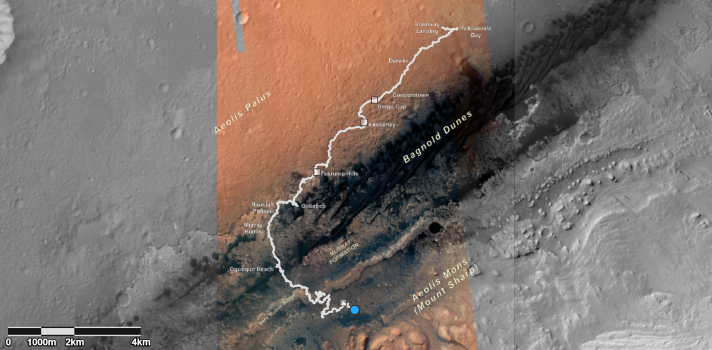
Curiosity’s location on Sol 2965. Distance driven 14.73 miles (23.70 kilometers). Credit: NASA/JPL-Caltech/Univ. of Arizona
“The drive is extending beyond where we can see by making use of guarded driving, allowing the rover to look for hazards and stop if conditions are unsafe.,” Stroupe adds.
The total distance is about 213 feet (65 meters).
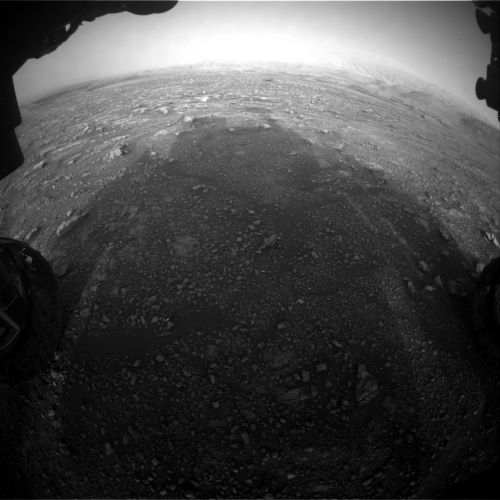
Image taken by Front Hazard Avoidance Camera on December 8, 2020 on Sol 2965. Prior to hitting the road, Curiosity will collect data on a large clast – a fragment of rock, “Dun Eideann,” that is in an otherwise rubbly workspace.
Credit: NASA/JPL-Caltech
Potential meteorites
Prior to hitting the road, Curiosity will collect Mars Hand Lens Imager (MAHLI) and Alpha Particle X-Ray Spectrometer (APXS) data on a large clast – a fragment of rock, “Dun Eideann,” that is in an otherwise rubbly workspace.
“This is part of our regular tracking of compositional changes and will help us characterize the clasts in this area,” Stroupe explains. Also on tap is taking Mastcam multispectral images of “Island Davaar,” and collecting both Mastcam multispectral and Chemistry and Camera (ChemCam) passive spectral data of targets “Obar Dheathaian,” and “Eilean.”

Curiosity Chemistry & Camera Remote Micro-Imager (RMI) photo acquired on Sol 2967, December 10, 2020.
Credit: NASA/JPL-Caltech/LANL
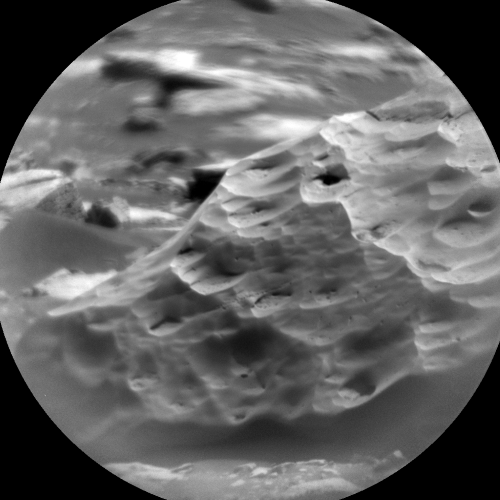
Curiosity Chemistry & Camera Remote Micro-Imager (RMI) photo acquired on Sol 2967, December 10, 2020.
Credit: NASA/JPL-Caltech/LANL
“All three targets are some nearby interesting-looking rocks that potentially could be meteorites,” Stroupe adds.
Distant rocks
On the schedule is taking observations of Shillhope Law with Mastcam and ChemCam Laser Induced Breakdown Spectroscopy (LIBS).
Also Mastcam is slated to take stereo images of the pediment, to get a better sense of its morphology, and distant rocks in areas named “Nairnsire” and “Peerie Minn.”
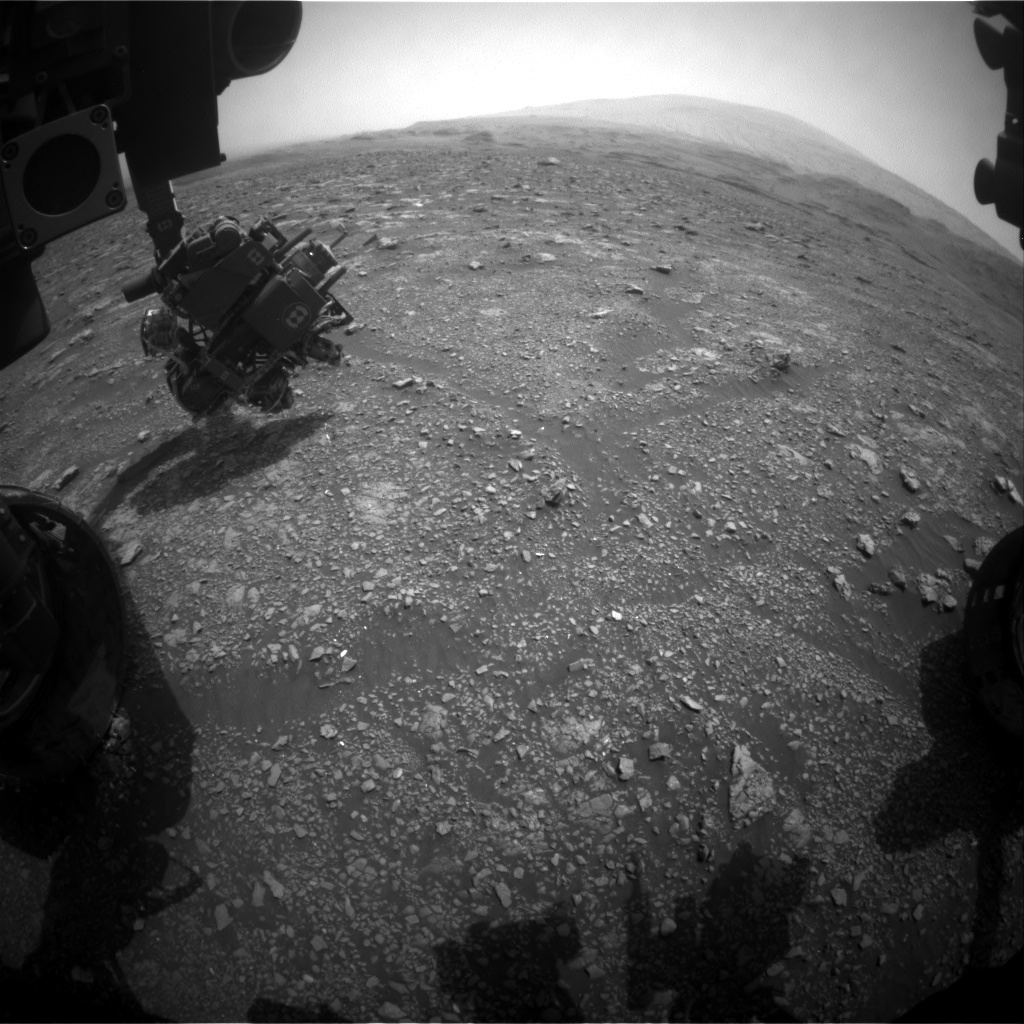
Curiosity Front Hazard Avoidance Camera Left B image taken on Sol 2967, December 10, 2020.
Credit: NASA/JPL-Caltech
“After the drive, on the second sol of the plan, [Sols 2967-2968] we’re doing a lot of untargeted science. We have a lot of environmental observations, predominantly looking for dust devils, and an atmospheric argon measurement by APXS. In addition, we’re letting Curiosity choose her own targets using AEGIS [Autonomous Exploration for Gathering Increased Science]– it is always interesting to see what she finds!”
As always, dates of planned rover activities described in these reports are subject to change due to a variety of factors related to the Martian environment, communication relays and rover status.
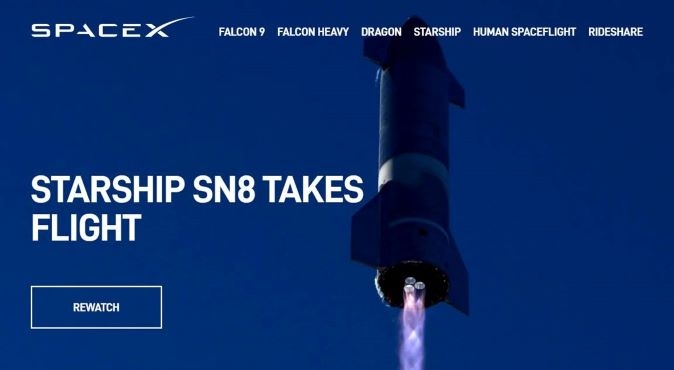
Credit: SpaceX
“Mars, here we come!!”
That’s from SpaceX chief rocketeer, Elon Musk, given the December 9 flight of Starship serial number 8 (SN8) that lifted off from the company’s Cameron County launch pad in South Texas.
SN8 successfully ascended, transitioned propellant, and performed its landing flip maneuver with precise flap control to reach its landing point – but also experienced what’s called a “rapid unscheduled disassembly,” RUD for short.
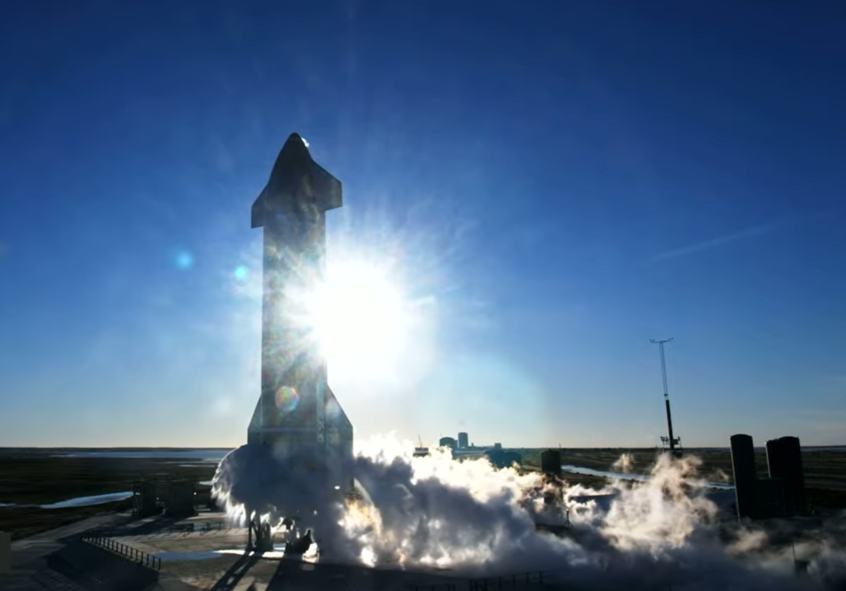
Credit: SpaceX/Inside Outer Space screengrab
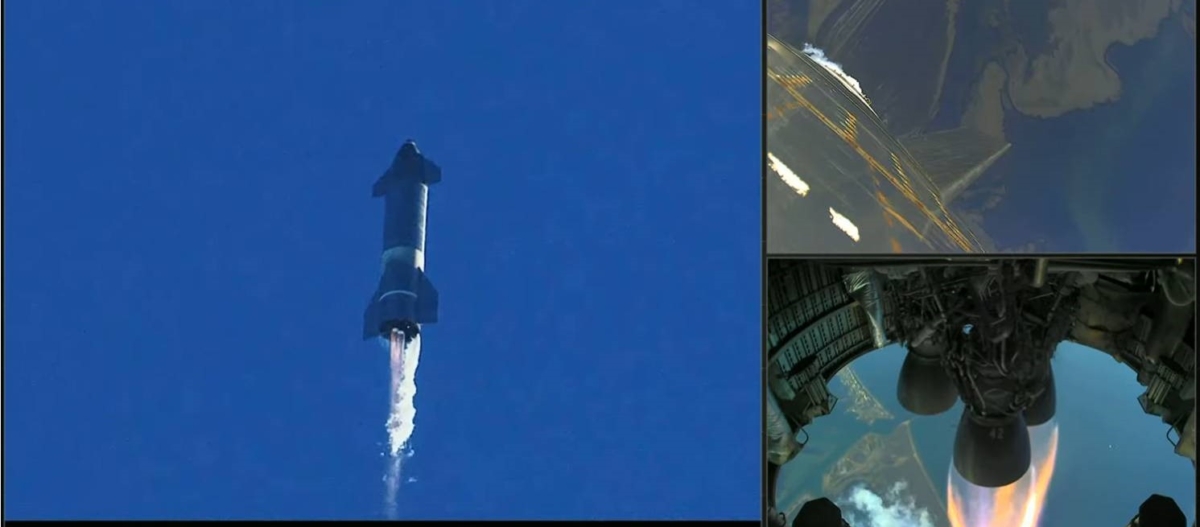
Credit: SpaceX/Inside Outer Space screengrab
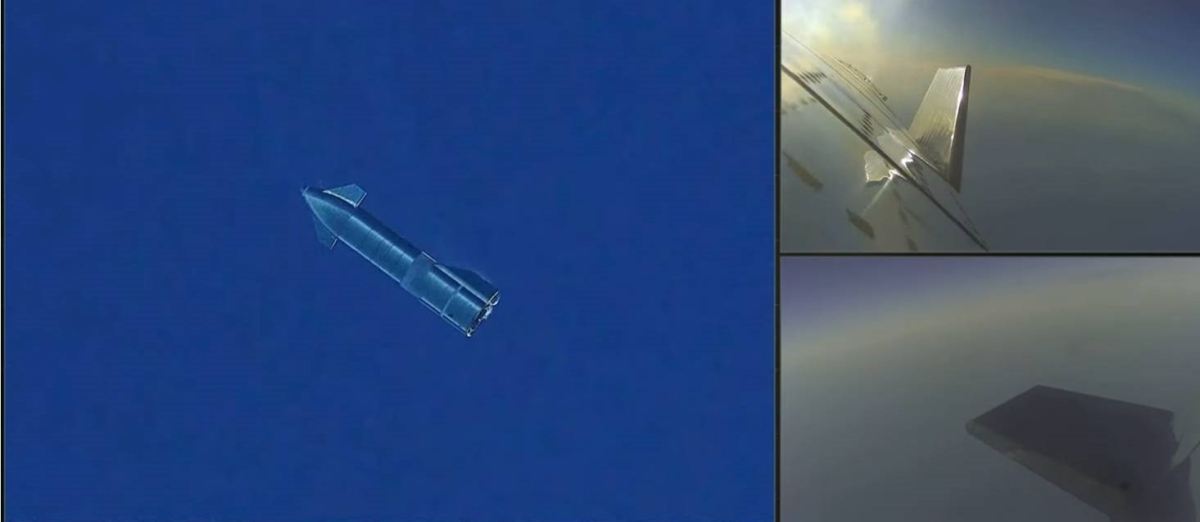
Credit: SpaceX/Inside Outer Space screengrab
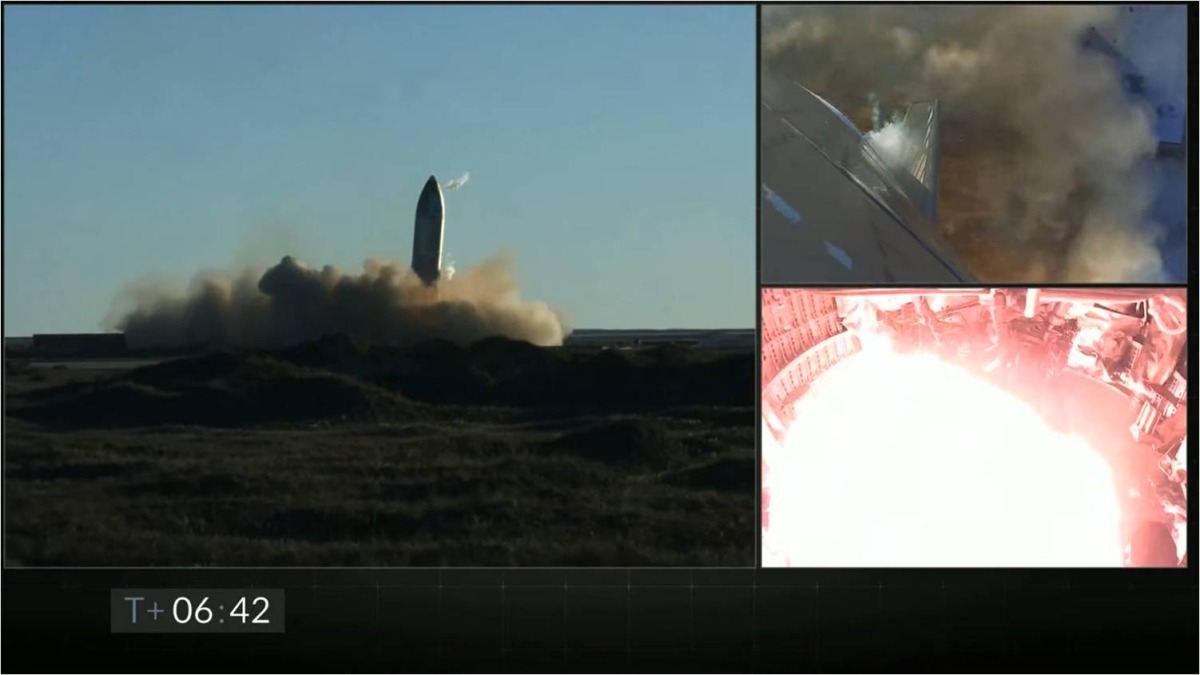
Credit: SpaceX/Inside Outer Space screengrab
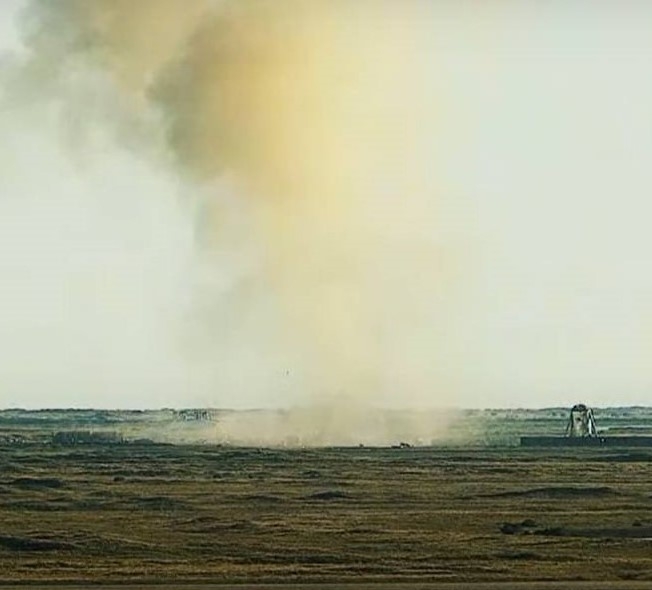
Credit: SpaceX/Inside Outer Space screengrab
Low pressure in the fuel header tank during the landing burn led to high touchdown velocity resulting in a hard, destructive landing.
Serial number 9 (SN9) is up next, a SpaceX posting explains.
Crater in the right spot
Back a few days ago, pre-launch, a Musk twitter said that “probably 1/3 chance of completing all mission objectives.”
In post-flight tweets, Musk said that the engines and the SN8 high altitude flight test did great. “Even reaching apogee would’ve been great, so controlling all way to putting the crater in the right spot was epic!!”
Musk also later tweeted: “Fuel header tank pressure was low during landing burn, causing touchdown velocity to be high & RUD, but we got all the data we needed! Congrats SpaceX team hell yeah!!”
Re-watch yesterday’s test flight here at: https://www.spacex.com/

Credit: ESA
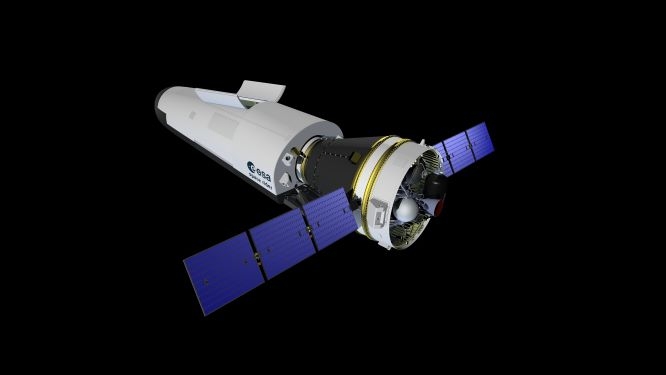
Space Rider is Europe’s next-generation reusable transportation system for low Earth orbit.
The European Space Agency (ESA) has signed a contract with Thales Alenia Space and co-contractor AVIO for the development of the automated reusable Space Rider transportation system, designed for deployment by the new Vega C light launcher into low Earth orbit.
A second contract covers the delivery of the ground segment by Italian co-prime contractors: Telespazio and Altec.
Space Rider would offer routine access to and return from space for a wide range of European space and non-space applications, including in-orbit research and technology demonstrations.
Credit: ESA
First flight of Space Rider is eyed for the third quarter of 2023 from Europe’s Spaceport in French Guiana.
Applications
Space Rider is about the size of two minivans.
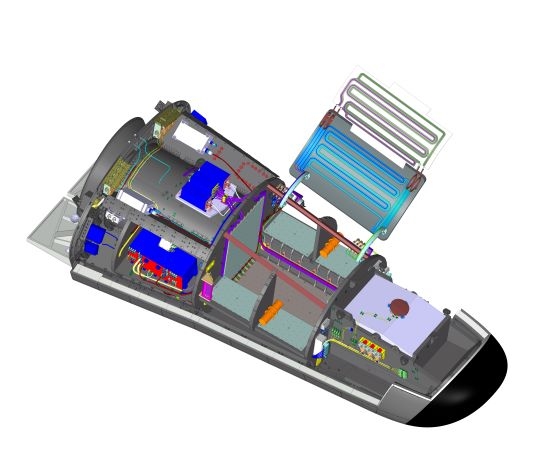
The reentry module hosts the cargo bay, a roomy spot for nearly 1,765 pounds (800 kilograms) of customer payloads and attendant power supply, thermal control, and data handling gear.
The reentry module is powered in orbit by Vega-C’s upper stage AVUM+ enhanced with a life extension kit serving as a service module during missions of at least two months.
Credit: ESA-Jacky Huart
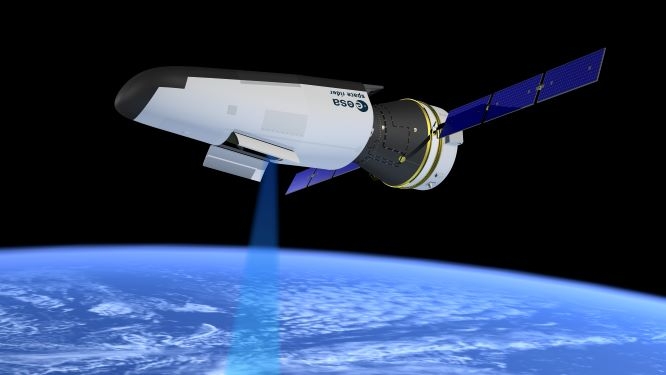
Space Rider can carry out complex maneuvering for experiments in space. An open cargo bay door gives a field of view to Earth or deep space, and fine pointing capability. Scientific experimentation in microgravity for pharmaceutics and biology are key examples of a Space Rider service.
Further applications include in-orbit demonstration and trial-runs of technologies, such as robotics for exploration, instrumentation for Earth observation, surveillance for Earth disaster monitoring, and satellites inspection.
Landing sites
At the end of a Space Rider mission, a final burn of the orbital module will send the reentry module with its user payloads towards the reentry trajectory for a smooth ride back to Earth with a soft precision landing on the ground. After payload recovery and minimal refurbishment, the Space Rider reentry module will be ready to take its next set of payloads on its follow-on mission.
Credit: ESA
Two Space Rider landing sites are viable: Kourou in French Guiana and Santa Maria in the Azores archipelago (Portugal). Kourou is considered as the primary landing site. Santa Maria is considered as the secondary landing site, suitable for high altitude inclination orbits.
Space Rider can be recovered along with its payload, refurbished, and reused for up to six missions, according to Thales Alenia Space.
Company duties
Thales Alenia Space is responsible for the development of the reentry module derived from the IXV, an experimental space shuttle made in Italy that was tested in 2015, with the strong support from the Italian space agency ASI.
AVIO, based in Colleferro, near Rome, Italy, is in charge of the propulsions system and the expendable service module.
Massimo Claudio, Comparini Senior Executive Vice President Observation, Exploration and Navigation at Thales Alenia Space said Space Rider would master technologies needed to further explore the Moon, Mars, and beyond and that the company is now ready to extend its expertise to future applications for point-to-point flights, spaceplanes, and even space tourism.

Surface Sampling and Packing System work was led by Professor Yung Kai-leung.
Credit: PolyU
China’s Chang’e-5 lunar sample return capsule is expected to touch down in China’s Inner Mongolia region next week.
If successful, Chang’e-5 would be the first robotic lunar-sample return mission since 1976 – Luna-24 carried out by the former Soviet Union.

Group photo of Professor Yung Kai-leung (middle) and his research team from PolyU’s Industrial Center.
Credit: PolyU
For Chang’e-5 the goal is to bring back up to 4.4 pounds (two kilograms) of Moon samples via robotic means.
The Moon sampling mission adopted two methods of lunar surface sampling: one using a robotic arm for multiple-point surface sample collections, and the other to drill underground.
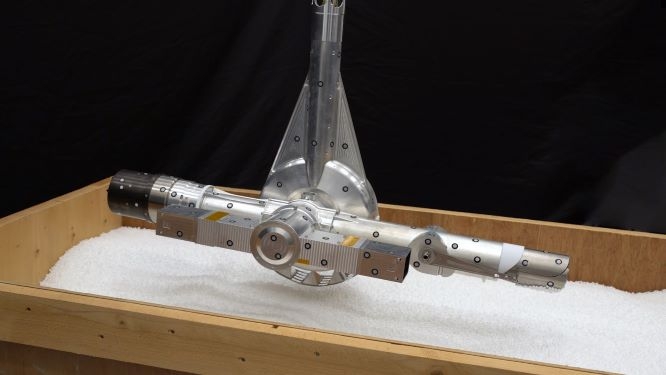
The PolyU-developed system successfully completed the automatic sample collection and packaging on the lunar surface.
Credit: PolyU
Loose and sticky regolith
A research team at The Hong Kong Polytechnic University (PolyU) developed and manufactured the mission’s “Surface Sampling and Packing System,” in collaboration with the China Academy of Space Technology.
Tasked in 2011 to develop and fabricate the system, a team was led by Professor Yung Kai-leung, with a group of experts working on the effort from PolyU’s Industrial Center.

Sample cannister lowered into top of Chang’e-5’s ascender.
Credit: Xinhua/Inside Outer Space screengrab
Consisting of two samplers for collecting loose and sticky forms of lunar regolith, two near-field cameras, as well as a packaging and sealing system, the system has more than 400 components constructed in different materials including titanium alloy, aluminum alloy and stainless steel. That makes the instruments light in weight but at the same time durable and strong enough to withstand the harsh space environment, according to a PolyU statement.
The two samplers are more than a tool to acquire lunar regolith. They were also used to pick up and move the sample container from the lander and deposit Moon collectibles into the Chang’e-5 ascender vehicle – the module that lofted the samples into lunar orbit for transfer into the orbiter/returner vehicle.
China’s Chang’e-5 lunar mission will attempt to haul back to Earth samples of the Moon.
Credit: CNSA/CLEP
— Sampler A – Around 35 centimeters in length, Sampler A, in the shape of a shovel, is specifically engineered to gather loose regolith. The vibration and impact during the closing of the sampler is designed to dislodge excessive debris, chisel away large pieces of regolith, tightly enclose the samples and precisely deposit the selected samples into the container without contaminating the surrounding.

Ascender is discarded after transfer of lunar collectibles in this artist’s depiction.
Credit: CNSA/CLEP
— Sampler B – Around 30 centimeters in length, Sampler B is used for collecting sticky samples by coring into the ground with teeth-like metal flaps when opened. It captured the targeted samples through the closing of these metal flaps. The piston inside the sampler pushes the sticky samples into the container during depositing of the sample when the flaps gradually open.
Photo taking during surface sampling.
Credit: CCTV/Inside Outer Space screengrab
— Near-field Cameras – Heat resistant up to 130 degree Celsius, a near-field camera is attached to each sampler. These cameras yield a monitoring and vision guidance function to help select scientifically valuable lunar samples. The vision guidance function also enabled the sampler o deposit the samples into the container, grip the container and precisely transfer it into the ascender.
— Sealing and Packaging System – Weighing 1.5 kilograms, of which the sample container weighs only 360 grams and was used to seal and store the lunar samples for retuning to Earth. This system includes deployment of a funnel to protect the sample container from contamination when the lunar regolith was deposited and a sweeping action to brush away excessive sample to ensure the container lid could be closed properly.

Following fiery reentry, sample capsule is to land in Mongolia.
Credit: CCTV/Inside Outer Space screengrab
Complex chain of tasks
PolyU’s Yung underscores the pride he and his team felt to be part of the ground-breaking lunar sample accomplishment.
“Collecting a large amount of lunar samples via robotic means was unprecedented. From research, through design to manufacturing, the development of this system has required a very high level of innovation, precision and reliability,” Yung said in a statement. “A small glitch anywhere in the complex chain of necessary tasks could have instantly negated all the costly efforts made by those involved in the mission.”
The Surface Sampling and Packing System will be used for the Chang’e-6 lunar mission as well.
Go to this newly released video showing the sampling technology at:
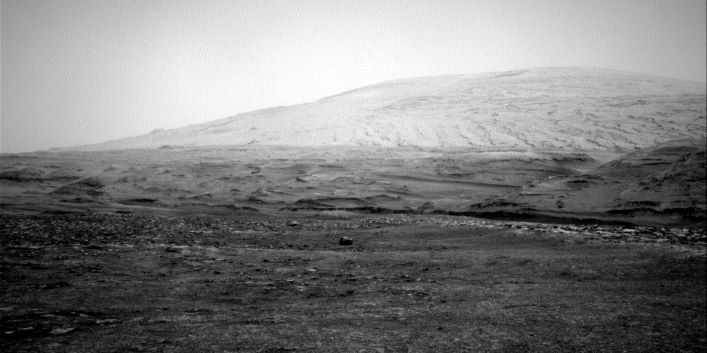
A large, dark, shiny boulder called “Island Davaar” is visible in the distance – in the center of this image. It does not look like any other rocks in the surrounding landscape. This image was taken by Right Navigation Camera on Sol 2963, December 6, 2020.
Credit: NASA/JPL-Caltech
NASA’s Curiosity Mars rover is now performing Sol 2966 duties.
The rover has hit the road again, heading towards the contact with a rubbly-looking geologic unit on the way up Mount Sharp, reports Melissa Rice, a planetary geologist at Western Washington University in Bellingham, Washington.
The robot was scheduled to make a pit stop to look at a large, dark, shiny boulder called “Island Davaar” with its Mastcam filter set.
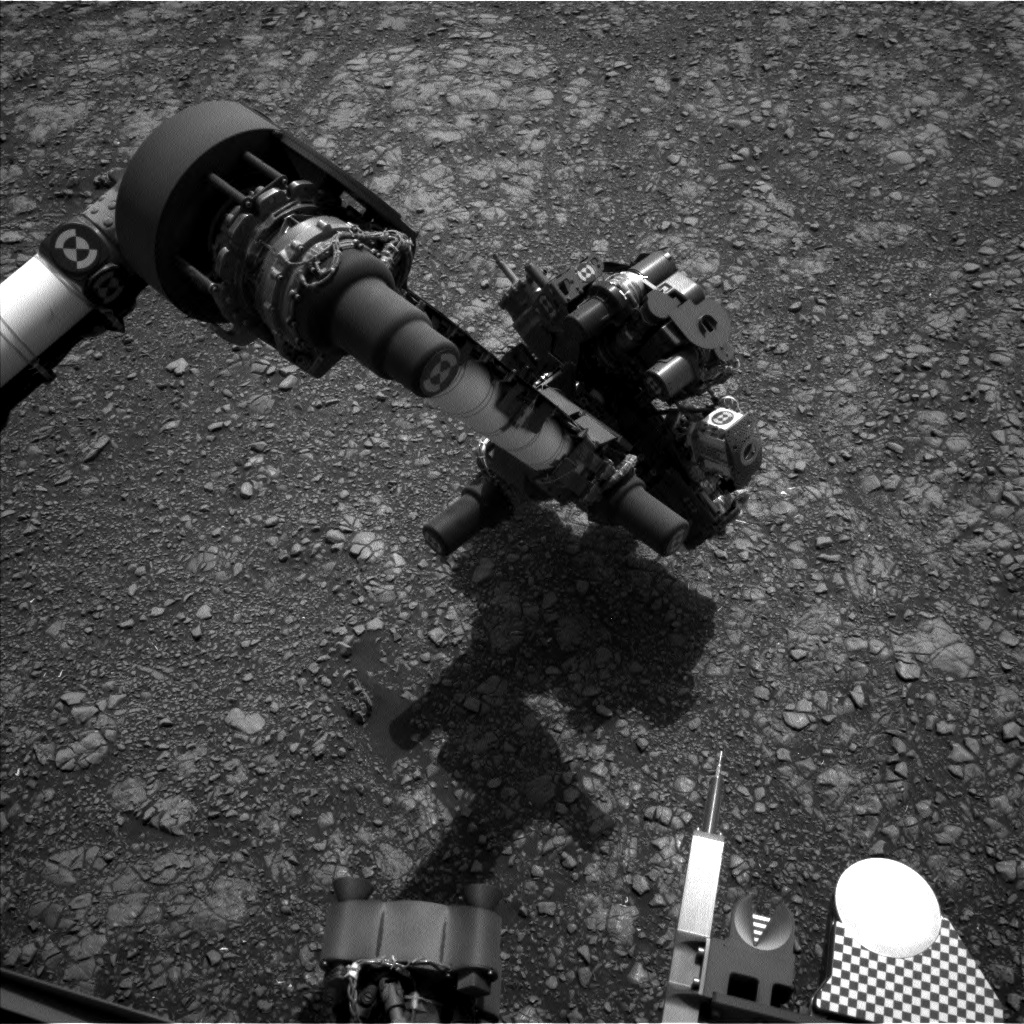
Curiosity Left B Navigation Camera image taken on Sol 2965, December 8, 2020.
Credit: NASA/JPL-Caltech
Rock from space?
“The boulder, which is visible in the distance from our current position,” Rice adds, “does not look like any other rocks in the surrounding landscape. Previously along Curiosity’s traverse, rocks that are distinctly dark and shiny have turned out to be iron meteorites.”
A recent mid-drive imaging by Curiosity will help scientists determine whether “Island Davaar” comes from a different geologic unit in Mount Sharp, or whether it is indeed a rock from space.

Curiosity Front Hazard Avoidance Camera Right B photo acquired on Sol 2965, December 8, 2020.
Credit: NASA/JPL-Caltech
“The boulder’s spectrum in visible and near-infrared light, as seen from Mastcam’s fourteen different filters, will have a distinct shape if it is an iron meteorite,” Rice explains.
Curiosity was to wrap up science observations from its current location, Rice concludes, including Alpha Particle X-Ray Spectrometer (APXS) and Mars Hand Lens Imager (MAHLI) observations of the bedrock target “Achnasheen,” Chemistry and Camera (ChemCam) laser-induced breakdown spectroscopy (LIBS) observations on two other rock targets (“Rattray” and “White Coomb”), and Mastcam imaging of regions in front of the rover and out towards the horizon.

