Author Archive
 Author:
  September 16th, 2021
Rollout of supply ship. Credit: CCTV/Inside Outer Space screengrab
China’s next milestone in constructing the country’s space station has rolled out to the launch pad at the Wenchang Spacecraft Launch Site in south China’s Hainan Province.
A Long March-7 booster was vertically transported to its liftoff location on Thursday. The launcher is topped by the uncrewed Tianzhou-3 cargo ship. The hardware will undergo final tests before the planned launch to China’s space station in the coming days.
Return to Earth
Meanwhile, the now in Earth orbit Shenzhou-12 crew is returning to Earth, tomorrow, on September 17. Earlier in the day, the China Manned Space Engineering Office announced the spacecraft had successfully separated from China’s space station.

Credit: CCTV/Inside Outer Space screengrab
After departure from the Tianhe core station module, the Shenzhou-12 spacecraft crew is performing orbiting and radial rendezvous tests with the space station. Doing so, they will verify radial rendezvous technology, a technique for subsequent piloted missions.

Credit: CCTV/Inside Outer Space screengrab
The Shenzhou-12 trio of taikonauts will parachute into the Dongfeng landing site in north China’s Inner Mongolia Autonomous Region. A search and rescue team from China’s Jiuquan Satellite Launch Center in the Gobi Desert recently conducted drills at the landing site.
New record…for China
The Shenzhou-12 crew has worked and lived in the space station for 90 days, setting a new record for Chinese astronauts’ in-orbit stay for a single mission.

Credit: CCTV/Inside Outer Space screengrab
Launched on June 17, the Shenzhou-12 trio entered the space station’s core module on the same day.
The China space station, orbiting the Earth at a height of about 250 miles (400 kilometers), is still under construction. Eight more missions, including three piloted flights, are still being arranged to complete the space station by late next year.
Radial rendezvous
China’s Shenzhou-12 spaceship crew is conducting radial rendezvous with the Tianhe core module combination in orbit for the first time on Thursday.

Credit: CCTV/Inside Outer Space screengrab
Different from the forward and rearwards rendezvous China had done in the past on its spacecraft, the radial rendezvous is a much more difficult task to achieve in terms of the technical level, said Xie Yongchun, director of the Technology Committee in China Academy of Space Technology (CAST)’s 502 Research Institute.
“The forward and rearward rendezvous are conducted on a 200-meter contact point. It is a stable point, which means it can be kept unmoved if the engines on the spacecraft are off. But the radial rendezvous is something different,” Xie told China Central Television (CCTV). “Due to the kinetic characteristics of the orbit, the spacecraft will not be able to stay there stably in space. Therefore, we will keep conducting orbit control of the spacecraft.”
Attitude maneuver
During the radial rendezvous process, Shenzhou-12 has to adjust its attitude constantly. How to keep the attitude of the spacecraft stable and how to keep its interface with the core module accurate are difficult problems faced by aerospace scientists.
“We must ensure that the sensor information will not be lost in the process of attitude maneuver, in a dynamic process. This is more difficult to achieve than when the sensor is in a stable status. We have to solve this problem by improving the measurement accuracy and stability of the sensor in dynamic conditions,” Xie said.
The radial rendezvous test on Shenzhou-12 this time will be conducted without the docking process, in efforts to prove whether or not the sensor on the spacecraft, which can be viewed as the spacecraft’s “eyes”, can play its role effectively.

Shenzhou-12 crew members prepare to depart core module.
Credit: CCTV/Inside Outer Space screengrab
“It will have a great impact on our measurement accuracy if we can’t see the mark point clearly. Another thing is, the lighting conditions might be different during the process of the radial rendezvous, very different from the forward and rearward rendezvous. Since the space station is in orbit, the lighting conditions may change anytime during the rendezvous process. This will affect the reflection characteristics of the mark. So we have to conduct trial operations beforehand,” Xie said.

China’s space station is projected to be completed in late 2022.
Credit: CAST
Launch schedule
The soon to launch Shenzhou-13 piloted spaceship will dock with the Tianhe core module, starting a three-person, six-month stay in orbit, according to the China Manned Space Agency (CMSA).
After the five launch missions this year, China plans to have six more missions in 2022, including the launch of the Wentian and Mengtian lab modules, two cargo spacecraft and two crewed spaceships to complete the construction of the space station.
New videos
Go to these newly released videos for a view of the rollout of the Tianzhou-3 supply ship, radial rendezvous, the Shenzhou-12 crew departing the core module, and preparations underway for recovery of the returning trio of Taikonauts.
Long March-7 Y4 ready to launch Tianzhou-3 at:
Shenzhou-12 radial rendezvous test explained at:
China’s Shenzhou-12 Manned Spaceship Undocks from Space Station Core Module for Return Trip at:
Ground Search Team Ready for Return of Shenzhou-12 Crew to Dongfeng Landing Site at:
 Posted in

With an increasing cadence, humans from multiple nations are rocketing into Earth orbit, and soon outward to the moon. Given added commercial as well as government flights, chances are also soaring of a stranded crew desperately requiring an in-space rescue.
A new report flags the fact that the United States government and commercial spaceflight providers have no plans in place to conduct a timely rescue of a crew from a distressed spacecraft in low Earth orbit, or anywhere else in space. Without orchestrated rescue planning, today’s space travelers will journey at their own risk.
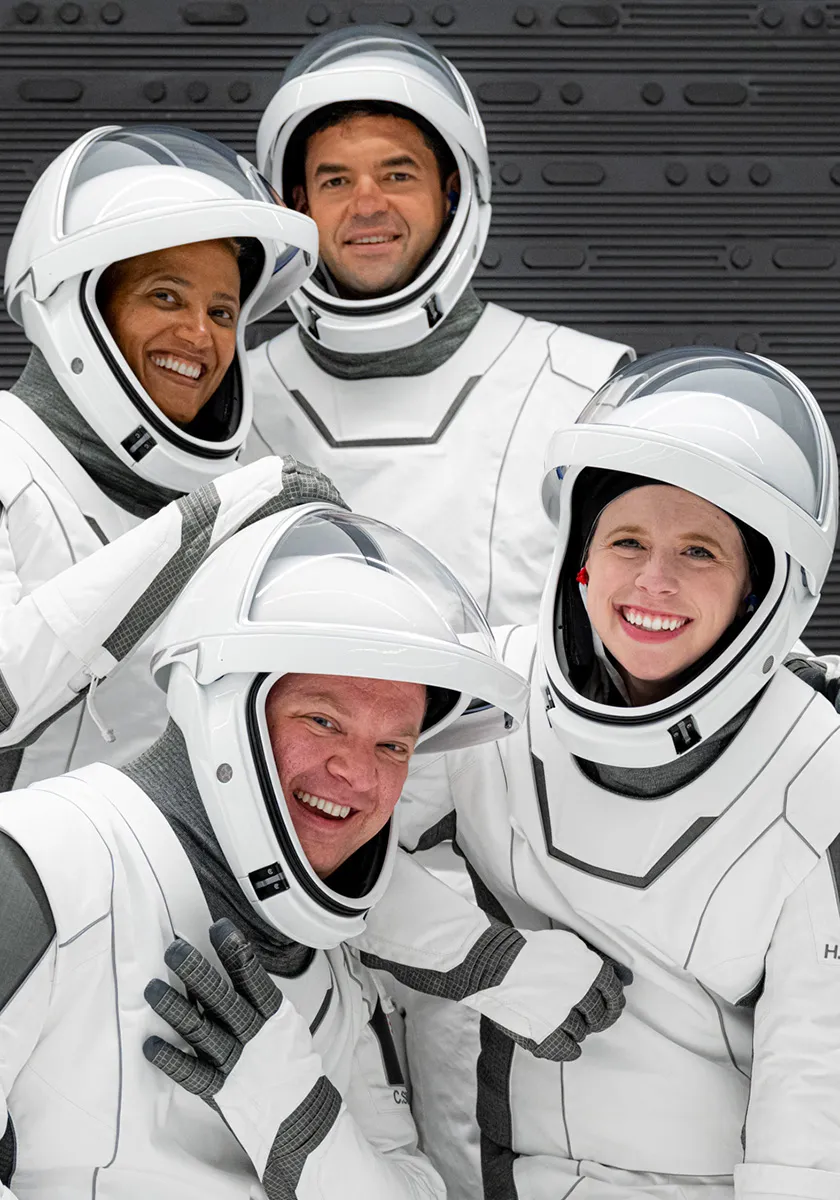
Inspiration4 space travelers.
Credit: SpaceX
Space tourism
For example, this week’s Inspiration4 is the world’s first all-civilian trek into orbit. The mission has four private citizens who will reside onboard a SpaceX Crew Dragon spacecraft for a three-day, Earth-circling jaunt.
Then there’s the dearMoon project – a lunar tourism mission and art project conceived and financed by Japanese billionaire Yusaku Maezawa. It will make use of a SpaceX Starship on a private spaceflight flying a single circumlunar trajectory around the Moon. This week-long journey of Maezawa and crewmates is expected to occur no earlier than 2023.
To read my new SPACE.com story “Humanity needs a space-rescue capability, report stresses” go to:

China’s Shenzhou-12 crew appears headed for return to Earth this Friday, September 17, departing the Tianhe space station core module.
A navigation warning issued indicates that the Taikonaut trio will land around 5:30 UTC, according to the Zarya website, maintained by Robert Christy.
The crew — Nie Haisheng, Liu Boming and Tang Hongbo – are targeted for landing at the Dongfeng landing site in the desert of North China’s Inner Mongolia Autonomous Region.
Utilized for the first time for returning space adventurers, that landing zone received the unpiloted return capsule of China’s trial version of a new-generation crewed spacecraft back in May 2020, following a flight of two days and 19 hours.

Credit: CCTV/Inside Outer Space screengrab
Prior to the Shenzhou-12 spaceship return, it was earlier reported that it will also conduct circumnavigation and radial rendezvous tests with the core module, all preparatory work for the Shenzhou-13 mission.

Robotic arm helps on space station construction.
Credit: CCTV/CNSA/Inside Outer Space screengrab
Next liftoffs
To continue the build-up of China’s Tiangong (Heavenly Palace) space station, an uncrewed Tianzhou-3 resupply spaceship is now being primed for liftoff, perhaps departing next Monday from the southern island of Hainan.
A piloted Shenzhou-13 spaceship is reportedly ready for a takeoff in September-October from the Jiuquan Satellite Launch Center in northwest China.
This new fresh trio — likely including a woman – will stay in orbit for six months.
Given the launch today of the SpaceX Falcon booster, placing the four-person Inspiration4 into Earth orbit, there will be 14 humans circling the planet: The Shenzhou-12 threesome; Seven people on the International Space Station, and the Inspiration4 space travelers.
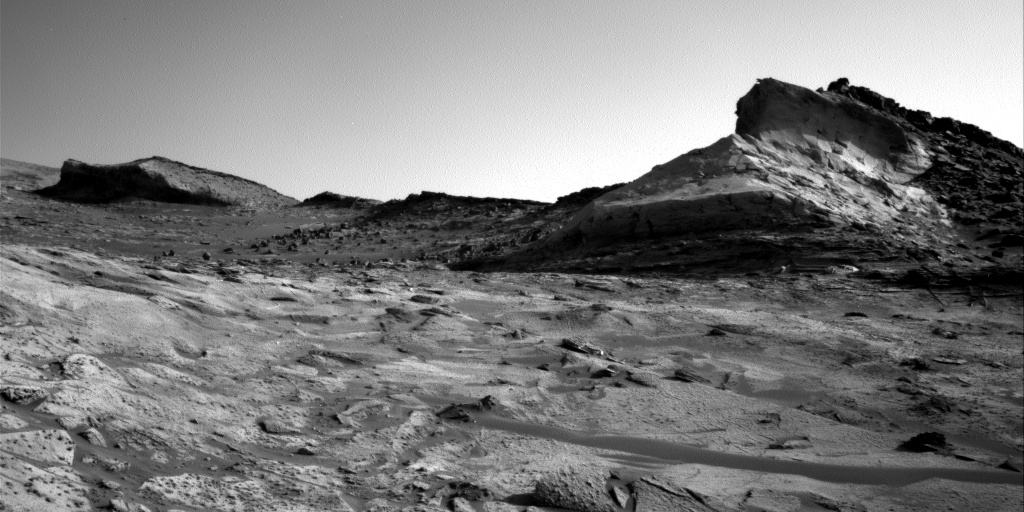
This image was taken by Curiosity’s Right Navigation Camera onboard NASA’s Mars rover Curiosity on Sol 3225.
Credit: NASA/JPL-Caltech
NASA’s Curiosity Mars rover at Gale Crater has just begun performing Sol 3238 duties.
“Curiosity is working her way through a busy drill campaign at the Maria Gordon location and keeping her eyes on the beautiful cliffs nearby,” reports Lauren Edgar, a planetary geologist at USGS Astrogeology Science Center in Flagstaff, Arizona.
“Unfortunately the weekend plan didn’t uplink to the rover due to a DSN [Deep Space Network] issue,” Edgar adds, so that means that a recent two-sol plan (3238-3239) was devoted to recovering those activities.
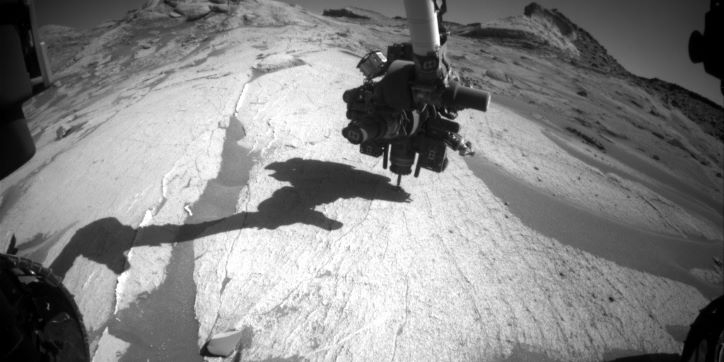
Curiosity Front Hazard Avoidance Camera Left B image acquired on Sol 3229, September 5, 2021.
Credit: NASA/JPL-Caltech
Drill sample analysis
The robot’s Chemistry & Mineralogy X-Ray Diffraction/X-Ray Fluorescence Instrument (CheMin) got to analyze the drill sample last week, so now it’s the Sample Analysis at Mars (SAM) Instrument Suite turn.
The plan calls for the drop-off to SAM and Evolved Gas Analysis.
CheMin will also dump the sample to clear out the cell for future use.
Delicious target
“The science team planned a lot of targeted remote sensing observations, including a ChemCam observation down the drill hole, multiple Mastcam mosaics to investigate nearby stratigraphy and nodule-rich areas, another ChemCam observation of a delicious target named “Chocolate Bloc” and a lot of environmental monitoring activities to monitor dust and clouds and search for dust devils,” Edgar concludes. “Can’t wait to find out what SAM thinks of the Maria Gordon sample!”
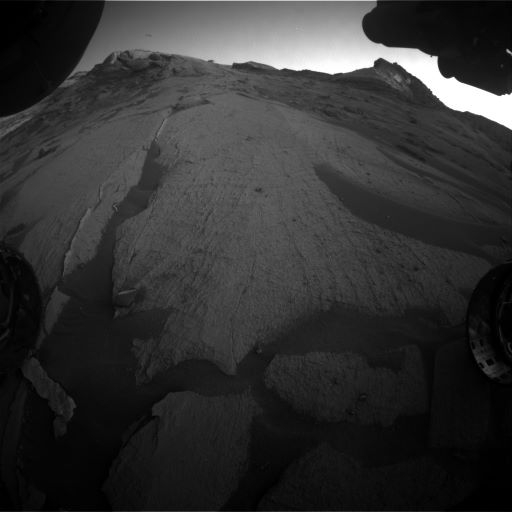
Curiosity Front Hazard Avoidance Camera Right B image taken during Sol 3234, September 11, 2021.
Credit: NASA/JPL-Caltech
The Curiosity Mars rover is now performing Sol 3236 tasks.
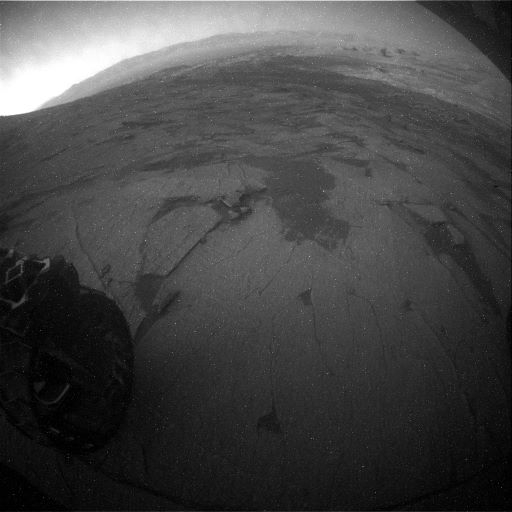
Curiosity Rear Hazard Avoidance Camera Right B image acquired on Sol 3234, September 11, 2021.
Credit: NASA/JPL-Caltech
Scott Guzewich, an atmospheric scientist at NASA’s Goddard Space Flight Center in Greenbelt, Maryland reports that the robot’s primary goal this weekend is for the Sample Analysis at Mars (SAM) Instrument Suite to study the material from the newly created Maria Gordon drill hole – #33 that the rover has done.
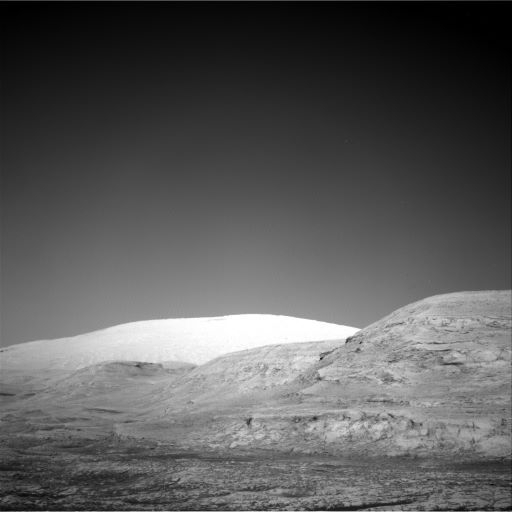
Curiosity Right B Navigation Camera photo taken on Sol 3234, September 11, 2021.
Credit: NASA/JPL-Caltech
“SAM will heat the material to very high temperatures to determine what it’s made of and how water may have interacted with the rock in the distant past,” Guzewich adds.
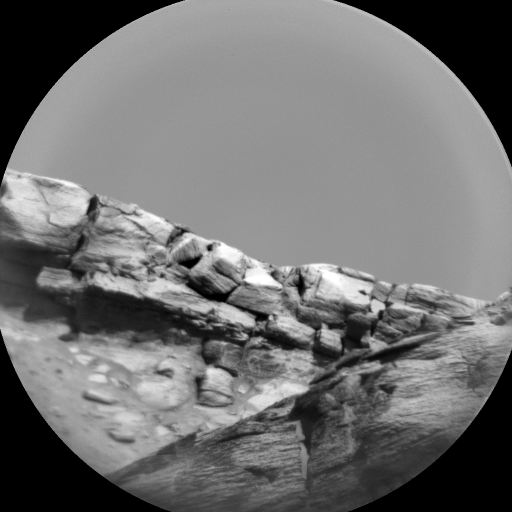
Curiosity Chemistry & Camera (ChemCam) Remote Micro-Imager (RMI) photo taken on Sol 3233, September 9, 2021.
Credit: NASA/JPL-Caltech/LANL
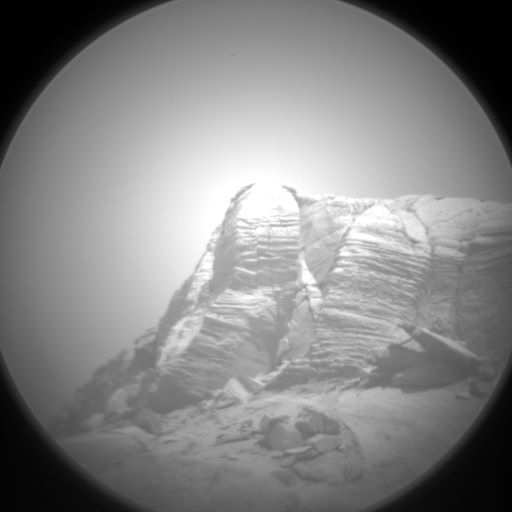
Curiosity Chemistry & Camera (ChemCam) Remote Micro-Imager (RMI) photo taken on Sol 3233, September 9, 2021.
Credit: NASA/JPL-Caltech/LANL
Also on tap is for Curiosity to perform a variety of imaging with Mastcam and take a Chemistry and Camera (ChemCam) long-distance image of Rafael Navarro mountain.
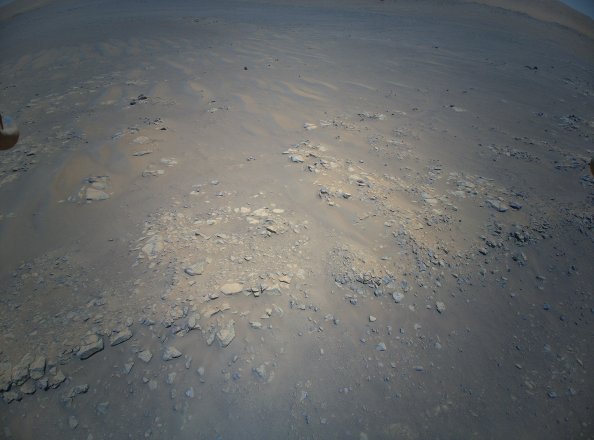
Newly released images from flight 13 of the Ingenuity Mars Helicopter. The aerial device acquired these images using its high-resolution color camera. This camera is mounted in the helicopter’s fuselage and pointed approximately 22 degree below the horizon. These photos were acquired on September 5, 2021, Sol 193 of the Perseverance rover mission.
For flight 13, the rotorcraft flew at an altitude of 26 feet (8 meters). Ingenuity traveled at 7.3 mph (3.3 m/s) taking images pointing southwest of the South Seítah region. This aerial scouting continues to aid in planning future moves of NASA’s Perseverance rover.
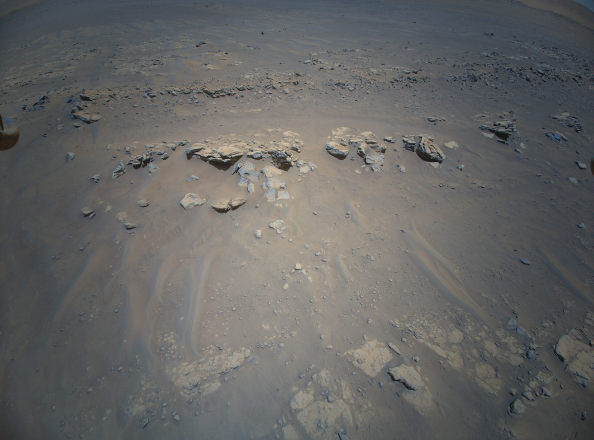
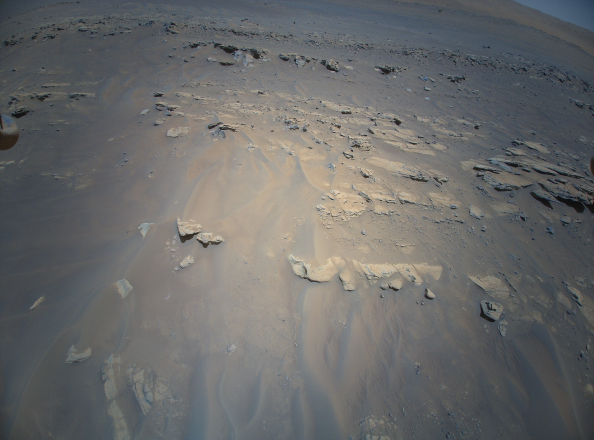
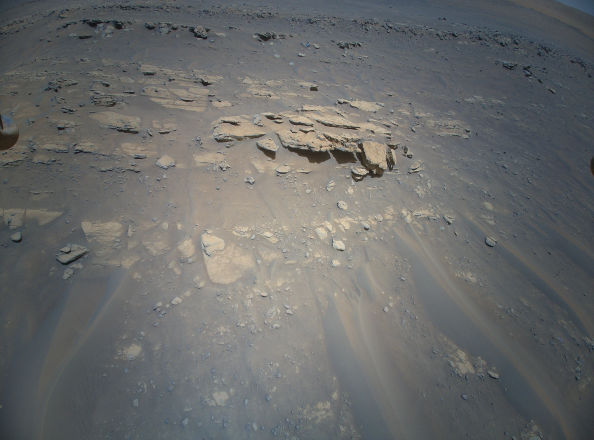
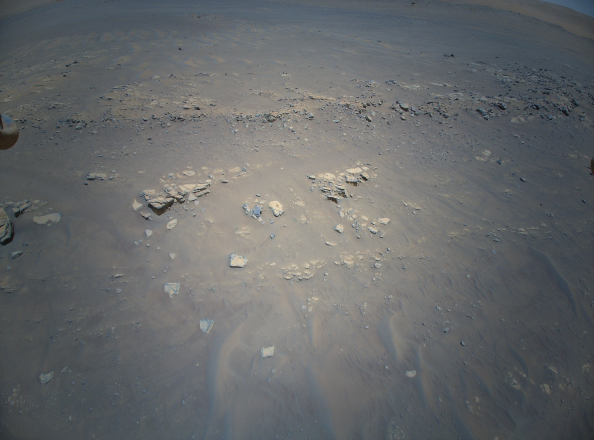
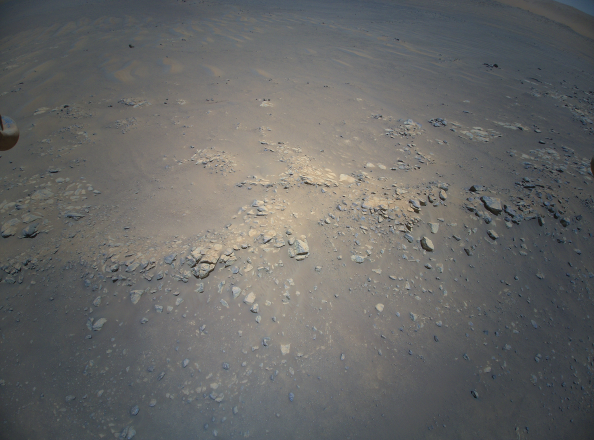
Image Credits: NASA/JPL-Caltech
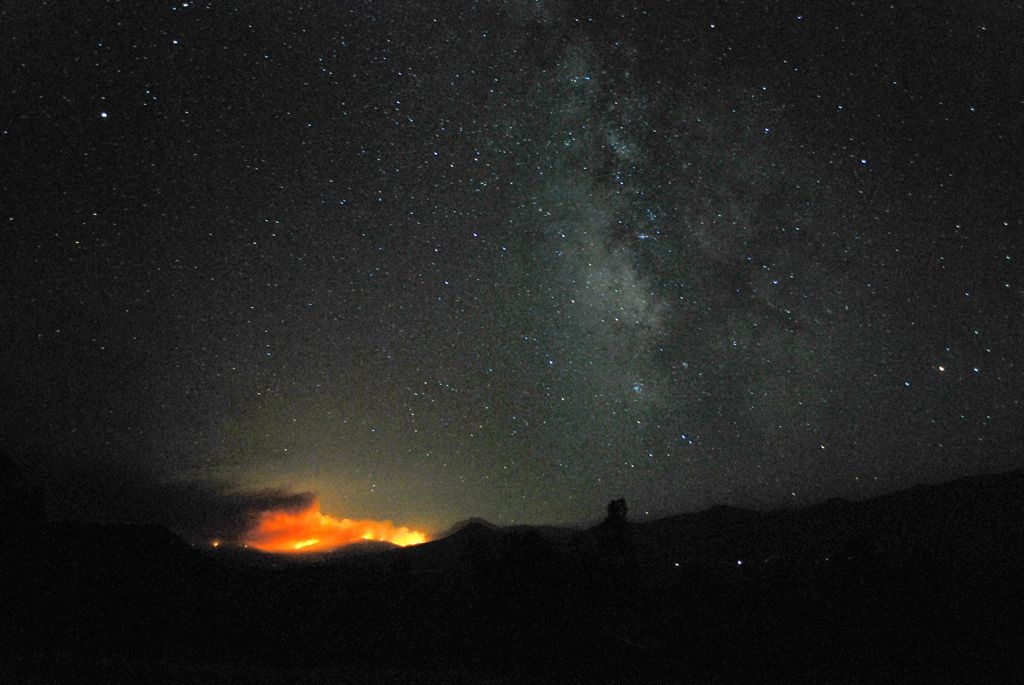
View of the Dixie Fire from the Allen Telescope Array in Hat Creek, California. Image Credit: Alex Pollak.
The Allen Telescope Array, an ensemble of 42 antennas used in the search for extraterrestrial intelligence (SETI), is threatened by the Dixie Fire, which is now roughly 12 miles south of the Array.
In a statement from the SETI Institute, Alex Pollak, the Array’s Science and Engineering Operations Manager, said the fire’s slow northward march has provoked the need for evacuation.
Anticipating the possibility that it might reach the antennas, the observatory staff contacted the U.S. Forest Service’s Fire Department to prepare the site against eventual damage. Two teams from the Forest Service, about a dozen people in total, removed brush from near the antennas. Trees in the area were pruned of any branches lower than ten feet above the ground.
This is not the first time the Array has been threatened. In the summer of 2014, the so-called Eiler fire reached State Highway 89, approximately two miles from the antennas.
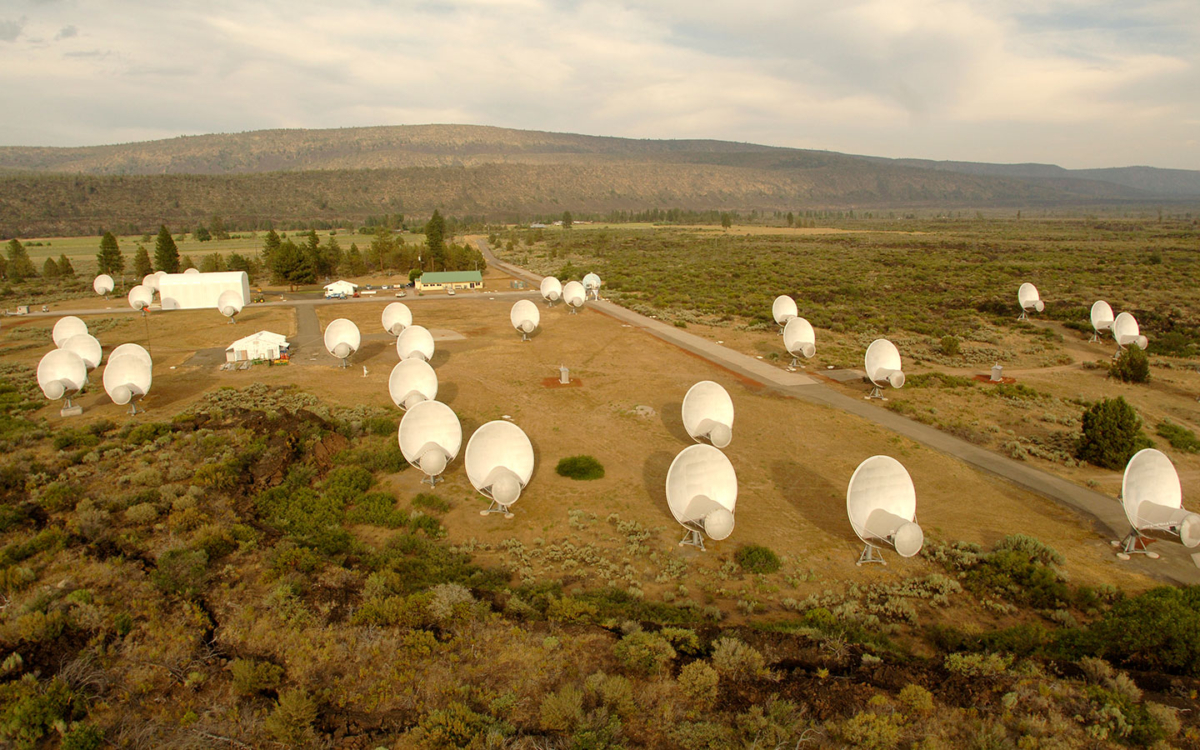
Credit: Seth Shostak/SETI Institute
Unique facility
The Allen Telescope Array is a unique facility. It is the only radio telescope constructed with SETI as a principal activity. Its 42 telescopes are currently being refurbished with more sensitive receivers and follow-on electronics that will greatly speed the search for signals that would prove the presence of technological societies in other star systems. This upgrade is funded by Franklin Antonio, a co-founder of the California semiconductor company, Qualcomm.
As of this writing, there are more than 4,000 firefighters battling the Dixie Fire, and the hope is that it will not reach the Observatory.
The SETI Institute quest is to understand the origins and prevalence of life and intelligence in the universe and share that knowledge with the world. Research at the SETI Institute encompasses the physical and biological sciences and leverages expertise in data analytics, machine learning and advanced signal detection technologies.
The SETI Institute is a distinguished research partner for industry, academia and government agencies, including NASA and NSF.
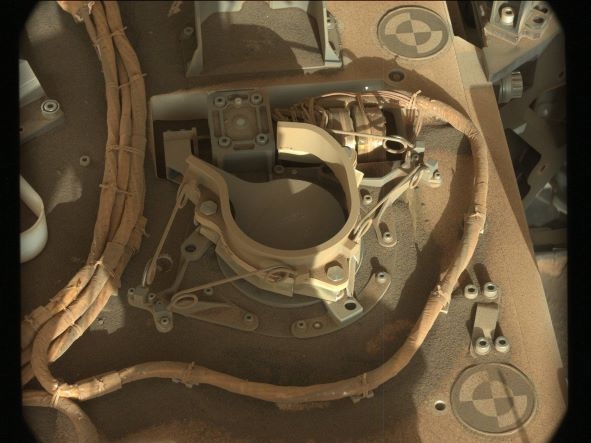
Curiosity Mast Camera Left Sol 3232 September 9, 2021
Credit: NASA/JPL-Caltech/MSSS
NASA’s Curiosity Mars rover at Gale Crater is now conducting Sol 3234 duties.
Curiosity has collected its 33rd drilled sample from the “Maria Gordon” drill location.

Credit: NASA/JPL-Caltech
Delivery and analysis of drilled material from Maria Gordon is headed for the Chemistry and Mineralogy instrument – or CheMin for short. That device performs chemical analysis of powdered rock samples to identify the types and amounts of different minerals that are present.
The robot recently sent back these images of its surrounding landscape:
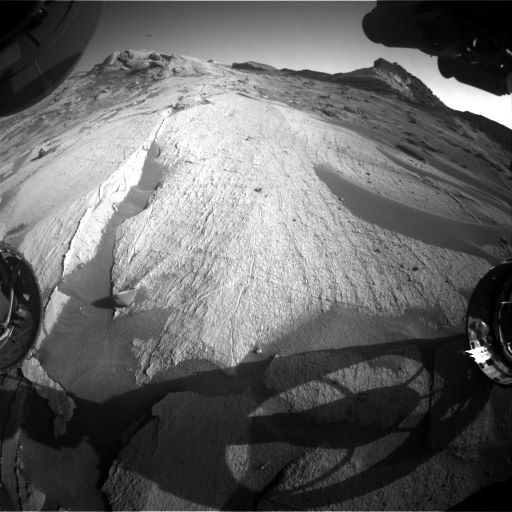
Curiosity Front Hazard Avoidance Camera Right B image taken on Sol 3232, September 9, 2021.
Credit: NASA/JPL-Caltech
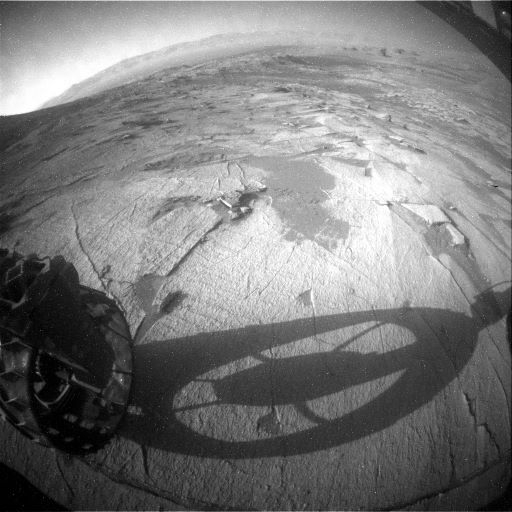
Curiosity Rear Hazard Avoidance Camera Right B photo taken on Sol 3232, September 9, 2021.
Credit: NASA/JPL-Caltech

Curiosity Mast Camera Right image acquired on Sol 3231, September 7, 2021.
Credit: NASA/JPL-Caltech/MSSS

Curiosity Mast Camera Right image acquired on Sol 3231, September 7, 2021.
Credit: NASA/JPL-Caltech/MSSS
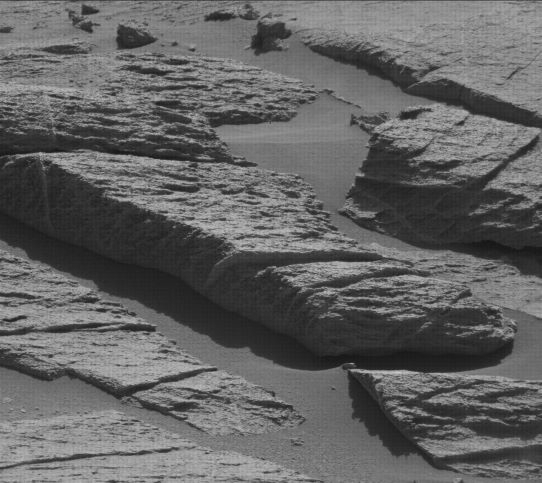
Curiosity Mast Camera Right image acquired on Sol 3232, September 8, 2021.
Credit: NASA/JPL-Caltech/MSSS
To view an informative video regarding Curiosity’s exploration of a mountain on Mars, hosted by Curiosity’s Deputy Project Scientist, Abigail Fraeman of NASA’s Jet Propulsion Laboratory, go to:
https://mars.nasa.gov/system/video_items/6041_JPL-20210816-MSLf-0001-360cc.m4v

Blood Falls seeps from the end of the Taylor Glacier into Lake Bonney. The tent at left provides a sense of scale for just how big the phenomenon is. Scientists believe a buried saltwater reservoir is partly responsible for the discoloration, which is a form of reduced iron.
Photograph by Peter Rejcek/United States Antarctic Program
Taylor Glacier in Antarctica’s McMurdo Dry Valleys features Blood Falls.
Researchers first thought the red color came from algae. Later work unveiled that the glacier is a natural time capsule, containing an ancient community of microbes.
The existence of the Blood Falls ecosystem shows that life can exist in the highly extreme conditions here on Earth – but perhaps elsewhere in the form of extraterrestrial life.
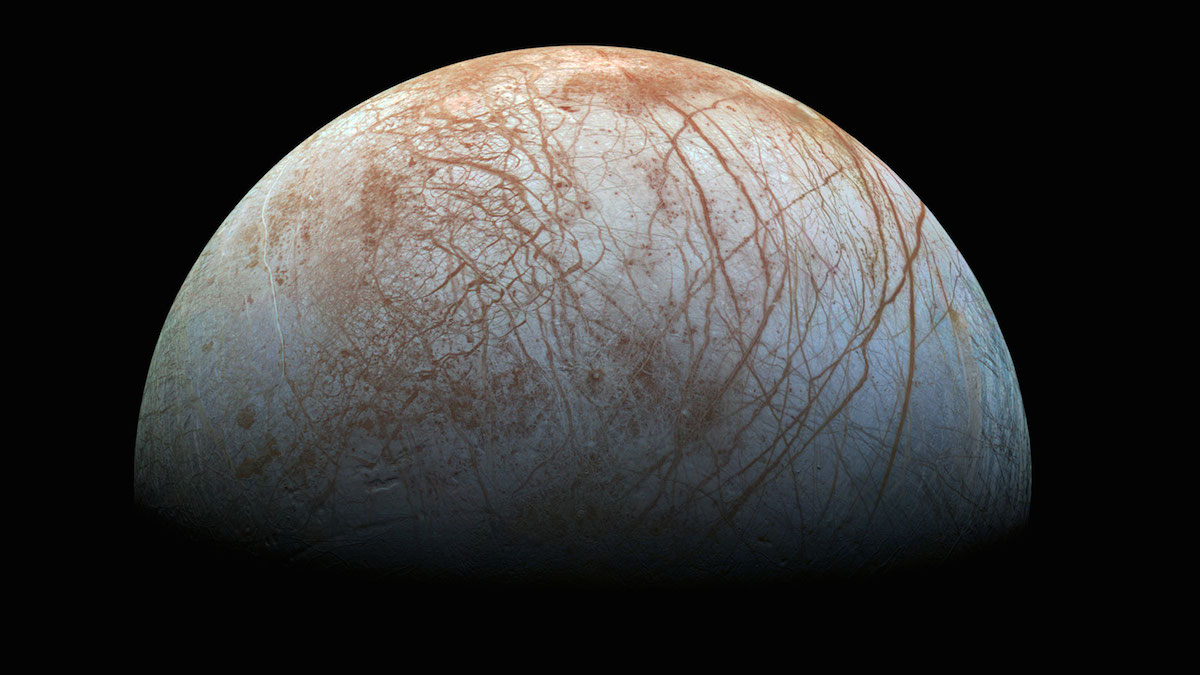
Moon of Jupiter, Europa, is about 90 percent the size of Earth’s Moon. Perhaps Europa is a promising place in our solar system to find present-day environments suitable for some form of life beyond Earth.
Go to this intriguing story in Atlas Obscrua: “Blood Falls Antarctica -Natural time capsule containing an alien ecosystem” at:
https://www.atlasobscura.com/places/blood-falls
Also, go to this paper “MICROBIAL LIFE IN BLOOD FALLS: AN ANCIENT ANTARCTIC ECOSYSTEM” at:
https://www.lpi.usra.edu/meetings/earlymars2004/pdf/8023.pdf
As well as this Arizona State University press release “Unlikely life thriving at Antarctica’s Blood Falls” at:
https://news.asu.edu/content/unlikely-life-thriving-antarctica%E2%80%99s-blood-falls

Credit: ISS/NASA
A lunar resources ecosystem having a $32 billion economic impact after 20 years is plausible – but there are critical uncertainties and several variables.
New research delves into a rosy “Moonopolis” scenario and a low-resources, “Apollo 2.0” future.
Appearing in the journal, Acta Astronautica, the research paper is titled: “The cis-lunar ecosystem – A systems model and scenarios of the resource industry and its impact,” authored by Marc-Andre Chavy-Macdonald, Kazuya Oizumi, Jean-Paul Kneib, and Kazuhiro Aoyama.

Credit: Marc-Andre Chavy-Macdonald, et al.
Complex trade-off
“Lunar resources is one of the many new putative business models that may transform space logistics. Yet it competes with Earth-based resources, in a complex trade-off involving both tech development & socioeconomic dynamics,” the paper states.
The study models the size versus time of a future resource ecosystem focused on water for exploration and satellite refueling – in cis-lunar space.
Top critical uncertainties include the accessibility of resource finds on the Moon, and government investment in lunar resources. Three variables are crucial, the research team notes: government support to production development, production firms’ re-investment, and growth of the Geosynchronous Earth Orbiting (GEO) telecom satellite industry.

Credit: Marc-Andre Chavy-Macdonald, et al.
Well-placed near Earth
The Moon and cis-lunar space, the paper explains, is a far more accessible target than Mars colonization, and has drawn the attention of diverse public and private players in a nearer time horizon: space agencies, large firms, start-ups etc.
“Indeed the Moon is well-placed near Earth, and its much shorter transit time is crucial for human operations. It has a relatively favorable geography for resources: a large, diverse geological body at an energetically advantageous location for space transport.”
In summary, the research has combined societal and technical variables and captured knowledge from dozens of experts to create a holistic model of a future, complex ecosystem around lunar resources.
This work was supported by the Ministry of Education, Culture, Sports, Science and Technology (MEXT) of Japan (GSDM program), and by the Swiss Space Office (Research Initiative on Sustainable Space Logistics).
To access “The cis-lunar ecosystem – A systems model and scenarios of the resource industry and its impact” go to:
https://www.sciencedirect.com/science/article/pii/S0094576521003143?via%3Dihub

