Author Archive
 Author:
  December 17th, 2021
Curiosity Left B Navigation Camera image taken on Sol 3329, December 17, 2021.
Credit: NASA/JPL-Caltech
NASA’s Curiosity Mars rover at Gale Crater is now performing Sol 3329 duties.
“Our Sol 3326 drive was successful, completing our shot through the Maria Gordon notch, with its spectacular structures and deep shadows, and continuing our climb up Mount Sharp,” reports Michelle Minitti, a planetary geologist at Framework in Silver Spring, Maryland.
To keep the rover’s Mars Hand Lens Imager (MAHLI) safe over the upcoming holiday break, a recent plan was the last chance to take images with MAHLI’s cover open until researchers plan the sols post-holiday, so the team was on the hunt for a good target.

Curiosity Front Hazard Avoidance Camera Left B image acquired on Sol 3329, December 17, 2021.
Credit: NASA/JPL-Caltech
Thin, gray vein
For MAHLI and the Alpha Particle X-Ray Spectrometer (APXS), scientists started trying to target one of the thin, gray vein features cutting across the bedrock directly in front of the rover.
“However, their small size and the topography on and around them prevented the arm from gaining easy access to them. So we pivoted to some of the flatter bedrock off the right front wheel of the rover and landed on “Korskellie” for MAHLI and APXS analysis,” Minitti adds. The robot’s Chemistry and Camera (ChemCam) was, and will be, busy off the rover’s starboard side, as well.

Curiosity Chemistry & Camera (ChemCam) Remote Micro-Imager (RMI) photo taken on Sol 3329, December 17, 2021.
Credit: NASA/JPL-Caltech/LANL
New drive
After a new drive brought Curiosity to a new location, ChemCam used its autonomous targeting capabilities to shoot a target on the right of the rover.
“As we were planning, we did not know exactly where that raster hit, but given the expanse of bedrock available, we assumed we already had one bedrock analysis in the bag,” Minitti explains. “That allowed us to add a little variety to the nature of the targets for today. We selected ‘Achentoul,’ another bedrock target but one that appeared to cross a color change in the bedrock. We also selected ‘Carragheen,’ a round, roughly ping pong ball-sized resistant feature standing proud above the bedrock.”

Curiosity Chemistry & Camera (ChemCam) Remote Micro-Imager (RMI) photo taken on Sol 3329, December 17, 2021.
Credit: NASA/JPL-Caltech/LANL
Cliffs and buttes
The rover’s terrain has been increasingly scattered with gray rounded features presumably shed from the local bedrock, so Carragheen will give scientists a chance to investigate one of these features on-the-spot.
“We were still close enough to the cliffs and buttes that form Maria Gordon notch that they got lots of imaging attention,” Minitti reports. “Mastcam will acquire large mosaics of the floor of the notch that we just drove over to capture bedrock textures and structures, and the butte to the rear left of the rover to gain yet another perspective on its internal structure and evaluate its relationship to the rock above it.”

Curiosity Left B Navigation Camera image taken on Sol 3329, December 17, 2021.
Credit: NASA/JPL-Caltech
Imaging act
Early in the morning of Sol 3329, when the sun was still shining on the cliff to the robot’s west, Mastcam was set to image the structures at the cliff base and acquire a multispectral analysis higher up the cliff where previous mosaics have indicated color variations. Lastly, Navcam will image the cliff in a small stereo mosaic at an early morning time to improve researcher’s three-dimensional picture of the structures in the cliff face.

Curiosity Left B Navigation Camera image taken on Sol 3329, December 17, 2021.
Credit: NASA/JPL-Caltech
ChemCam Remote Micro-Imager (RMI) was also slated to get in on the imaging act, but looking farther uphill at buttes that will be increasingly hard to see along the particular path we plan to take up Mount Sharp, Minitti says. “Both buttes are features we have imaged previously, but from farther away and from different angles. Today we will get a new perspective on them.”

Curiosity Left B Navigation Camera image taken on Sol 3329, December 17, 2021.
Credit: NASA/JPL-Caltech
Dust load
Also on tap, Curiosity is to acquire atmospheric-focused measurements throughout the plan, with imaging to measure the dust load in the atmosphere at different times of sol, a Navcam cloud movie and dust devil survey, and measurement of argon in the atmosphere with APXS.

Curiosity Right B Navigation Camera image shot on Sol 3328, December 16, 2021.
Credit: NASA/JPL-Caltech
The Radiation Assessment Detector (RAD and Rover Environmental Monitoring Station (REMS) are to run systematically over both sols. The Dynamic Albedo of Neutrons (DAN) instrument was to acquire nearly seven hours of passive data from the subsurface in addition to one 20 minute active observation right after the rover completes its drive of roughly 98-feet (30 meters) drive uphill.
 Posted in

The Red Planet: A Natural History of Mars by Simon Morden; Published by Elliott & Thompson/London (2021) and Pegasus Books/U.S. (2022); 256 pages; Hard Cover: £14.99.
This delightful volume is a must-have for those perplexed by the wonderment of the Red Planet, what research has already revealed and those mysteries still to be exposed.
Morden is trained as a planetary geologist and geophysicist, as well as celebrated science fiction author. He showcases his excellent ability to make clear just how intriguing Mars has been for centuries. The author takes the reader from the planet’s formation 4.5 billion years ago, through its geological history, and serves up a unique perspective on the planet’s present-day state of affairs.
The book is divided into seven parts, clearly detailing the Noachian, Hesperian, and Amazonian periods ending up asking the question, what should we make of Mars…and calling out that we are the Martians! Morden adds that there’s a whole raft of difficult ethical questions to wrestle with in how best to treat Mars.

“We cannot stand aside from the conversation to come — and it will come soon – as to what we do with Mars,” the author writes. His perspective of the future of Mars spreads out over the next 100-200 years.
Given the attention to Mars by multiple nations over the decades, this book provides a “get to know the planet” feel, page by page. Morden supplies a vibrant view of that enigmatic world.
As for the life on Mars question, the author suggests digging down deep. “If we ever do find Martians, that’s most likely where they will be.”
I particularly liked the nicely detailed descriptions of Mars’ ice caps, the planet’s equatorial ice zones, and the Martian weather system – specifically, the planet’s dusty veneer and swirling dust devils.
Taken as a whole, The Red Planet: A Natural History of Mars is a primer for those hungry to travel to, explore, and perhaps colonize that distant destination.
For more information on this book, go to:
The Elliott & Thompson website at: https://eandtbooks.com/books/the-red-planet/
The Pegasus Books website at:
http://www.pegasusbooks.com/books/the-red-planet-9781639361755-hardcover

Artist’s impression of the ExoMars 2016 Trace Gas Orbiter at Mars.
Credit: ESA/ATG medialab
New research points to a water-rich region of Valles Marineris, making it a promising target for future human explorers.
As the largest canyon in the Solar System, Valles Marineris is arguably Mars’ most dramatic landscape, and a feature that is often compared to Earth’s Grand Canyon – despite being some ten times longer and five times deeper.
The water-rich area is about the size of the Netherlands and overlaps with the deep valleys of Candor Chaos, part of the canyon system considered promising in the hunt for water on Mars.

Valles Marineris, seen at an angle of 45 degrees to the surface in near-true colour and with four times vertical exaggeration.The largest portion of the canyon, which spans right across the image, is known as Melas Chasma. Candor Chasma is the connecting trough immediately to the north, with the small trough Ophir Chasma beyond. Hebes Chasma can be seen in the far top left of the image.
ESA/DLR/FU Berlin (G. Neukum), CC BY-SA 3.0 IGO
The finding stems from the European Space Agency’s (ESA) ExoMars Trace Gas Orbiter (TGO).
TGO launched in 2016 as the first of two launches under the ExoMars program. The orbiter will be joined in 2022 by a European rover, Rosalind Franklin, and a Russian surface platform, Kazachok, and all will work together to understand whether life has ever existed on Mars.

ESA’s Mars Express has taken snapshots of Candor Chasma, a valley in the northern part of Valles Marineris.
Credit: ESA/DLR/FU Berlin (G. Neukum), CC BY-SA 3.0 IGO
Below Mars’ surface
“With TGO we can look down to one meter below this dusty layer and see what’s really going on below Mars’ surface – and, crucially, locate water-rich ‘oases’ that couldn’t be detected with previous instruments,” reports Igor Mitrofanov of the Space Research Institute of the Russian Academy of Sciences in Moscow, Russia; lead author of the new study; and principal investigator of the FREND (Fine Resolution Epithermal Neutron Detector) neutron telescope onboard TGO.
Mitrofanov’s revealing research is carried in the journal Icarus.
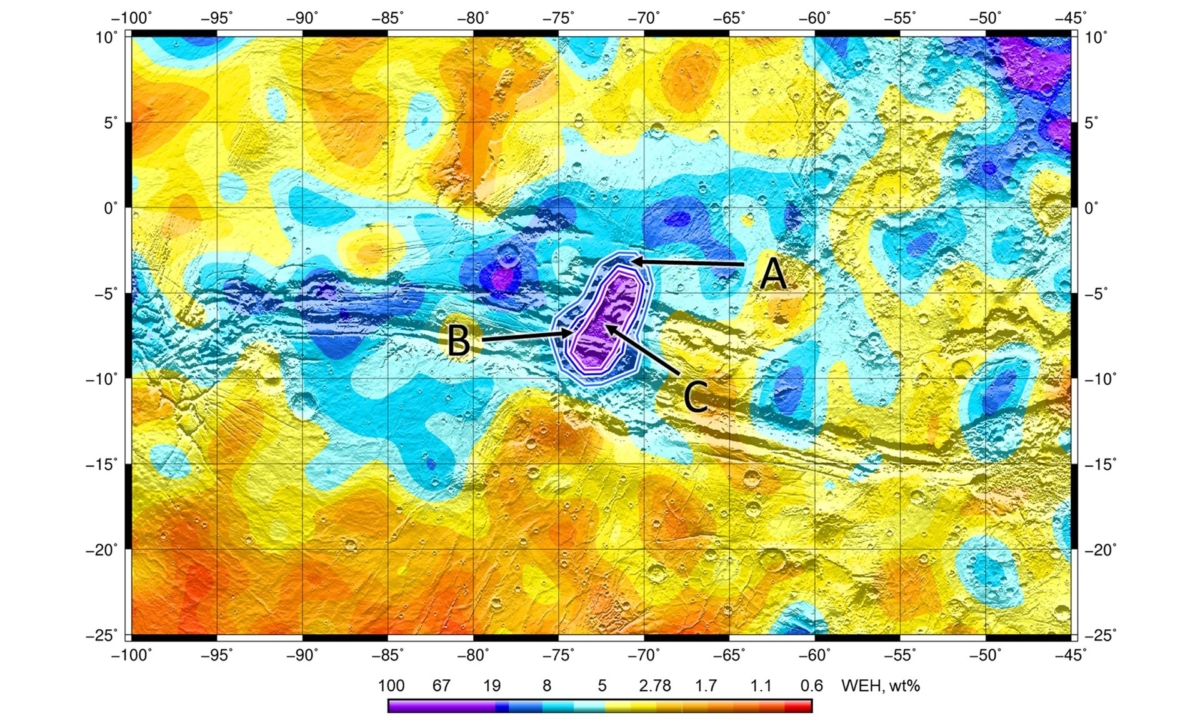
ExoMars Trace Gas Orbiter maps water-rich region of Valles Marineris.
The coloured scale at the bottom of the frame shows the amount of ‘water-equivalent hydrogen’ (WEH) by weight (wt%). As reflected on these scales, the purple contours in the centre of this figure show the most water-rich region. In the area marked with a ‘C’, up to 40% of the near-surface material appears to be composed of water (by weight). The area marked ‘C’ is about the size of the Netherlands and overlaps with the deep valleys of Candor Chaos, part of the canyon system considered promising in our hunt for water on Mars.
Credit: From I. Mitrofanov, et al. (2021)
Unclear mix of conditions
FREND revealed an area with an unusually large amount of hydrogen in the colossal Valles Marineris canyon system, Mitrofanov adds in an ESA statement.
The finding assumes the hydrogen detected is bound into water molecules. If so, as much as 40% of the near-surface material in this region appears to be water.
What special, as-yet-unclear mix of conditions must be present in Valles Marineris to preserve the water – or that it is somehow being replenished — that’s up for more research.
“This finding is an amazing first step, but we need more observations to know for sure what form of water we’re dealing with,” adds study co-author Håkan Svedhem of ESA’s ESTEC in the Netherlands, and former ESA project scientist for the ExoMars Trace Gas Orbiter.
The ExoMars project is a joint project of Russia’s Roscosmos and the European Space Agency.
To view the research paper – “The evidence for unusually high hydrogen abundances in the central part of Valles Marineris on Mars” – go to:
https://www.sciencedirect.com/science/article/pii/S0019103521004528?via%3Dihub

Now in Earth orbit, Japanese spaceflight participants Yozo Hirano (left) and Yusaku Maezawa (right) with Roscosmos cosmonaut Alexander Misurkin (center).
Credit: Roscosmos
Roscosmos Director General Dmitry Rogozin has instructed Rocket and Space Corporation Energia (part of Roscosmos) to develop and present a plan to increase the Soyuz MS series crewed spacecraft production in order to ensure space tourism development.
“After American crewed spacecraft started flying, Russia was relieved of its obligation to deliver foreign astronauts to the ISS,” Rogozin noted in a Roscosmos posting. “We got the opportunity to send crews of three Russian cosmonauts to the station. The first such crew of professional cosmonauts will fly to the ISS in the spring. Recently, we resumed sending tourists into space. Currently, two Japanese citizens are staying in orbit. This service brings us hard cash to finance rocket and space industry modernization.”
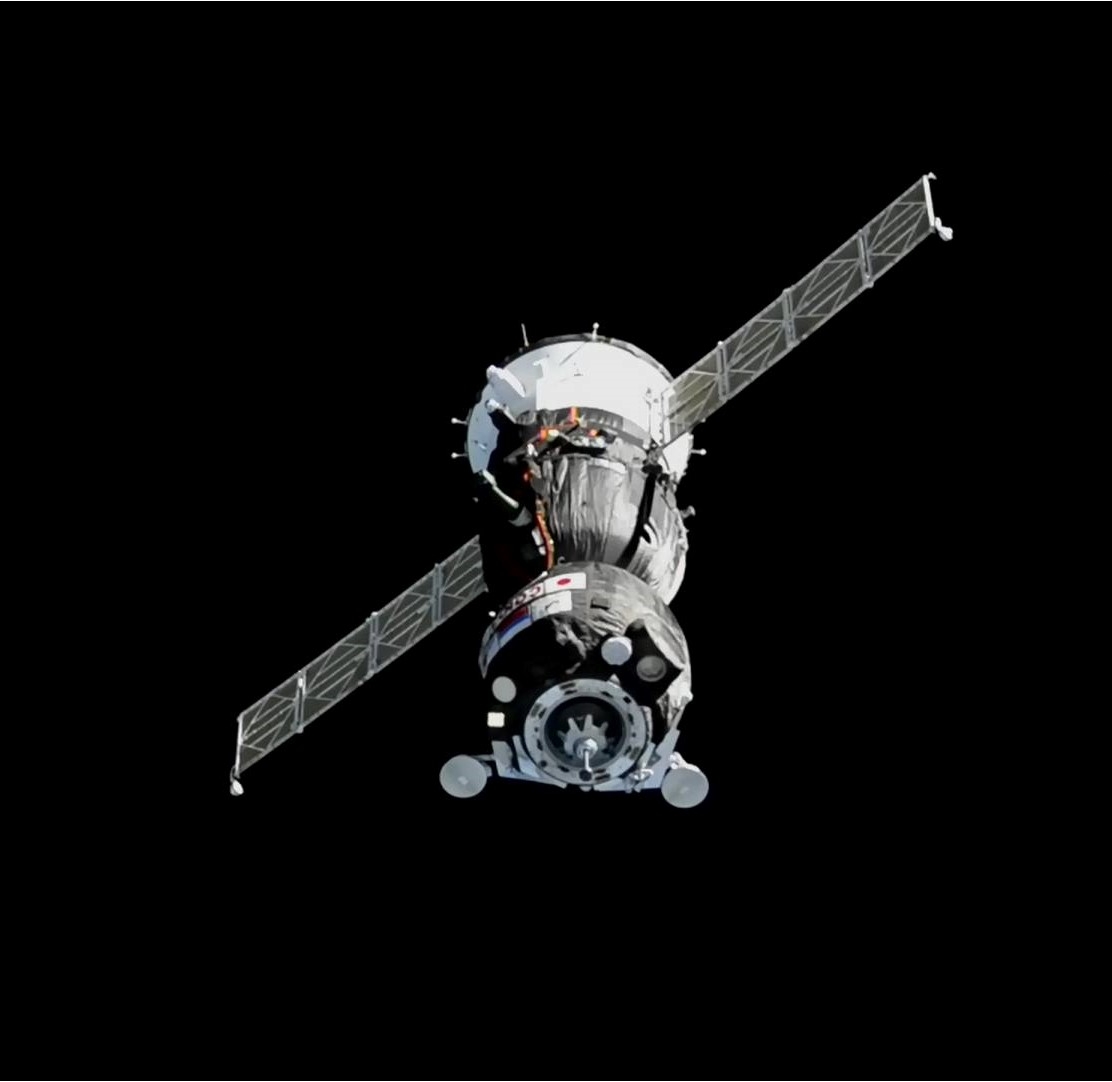
Soyuz spacecraft for lofting space tourists.
Credit: NASA TV/Inside Outer Space screengrab
Concrete action plan
Rogozin said RSC Energia is to submit a concrete action plan to Roscosmos a concrete action plan to increase production capacity in order to build up to four crewed spacecraft per year, he said at a meeting of the industry’s operational briefing on Thursday.
Over the past few years, RSC Energia has built four Soyuz MS spacecraft per year: two under the Federal Space Program and two under international contracts to deliver foreign astronauts to the ISS.

Actress Yulia Peresild, Roscosmos commander Anton Shkaplerov, and movie director Klim Shipenko prior to film-making mission onboard the International Space Station.
Credit: Roscosmos/Inside Outer Space screengrab
Space tourism pioneer
The Roscosmos posting noted that “Russia is a space tourism pioneer,” and that between 2001 and 2021, nine commercial spaceflight participants went into orbit on Soyuz spacecraft, one of them twice.
Launched December 8 to the ISS, the Soyuz MS-20 crew consists of Roscosmos cosmonaut Alexander Misurkin, as well as spaceflight participants Yusaku Maezawa and Yozo Hirano. The flight is performed under contract with the U.S. firm, Space Adventures.
The crew are expected to spend 12 days on the ISS and will return to Earth on December 20.
Last October, Russia flew actress Yulia Peresild, and movie director Klim Shipenko, along with Roscosmos commander Anton Shkaplerov to the orbital outpost.

Credit: ESA
A pair of high-altitude drop tests took place in Oregon on November 21 and December 3 as part of the ongoing parachute testing to ensure the safe delivery of Europe’s ExoMars Rosalind Franklin rover via the Russian Kazachok lander to the surface of Mars in 2023.
This milestone meant that the largest parachute set to fly on Mars has completed its first successful high-altitude drop test. Both the first and second stage parachutes have now successfully flown this year.
The 115-feet wide (35-meters) subsonic parachute – the largest ever to deploy over Mars – was the focus of the latest campaign. One parachute was manufactured by a European company, Arescosmo, with the back-up provided by U.S.-based Airborne Systems.
Moment of separation
Onboard video footage from the drop tests caught the moment of separation from the stratospheric balloon, the release of the pilot chute, and the extraction of the main parachute.
The footage is shown at various speeds, capturing in slow motion the inflation of the subsonic parachute.
ExoMars 2022 is set for departure on September 20, 2022 (12 day launch window) and landing on the planet on June 10, 2023.
Go to video at: https://youtu.be/6IlPBx_LqUE

A volunteer spent three nights in a high-tech sleeping bag that unloads pressure in the brain by suctioning fluids into the lower body. NASA hopes the sack can be used by astronauts in space to alleviate the vision problems they commonly endure during longer missions.
Credit: UT Southwestern
A specially designed sleeping bag may prevent vision problems astronauts endure in space, where fluids float into the head and continually push and reshape the back of the eyeball.
The phenomenon has plagued scientists for more than a decade. It remains one of the biggest health dilemmas of human space exploration.
But new research by the University of Texas Southwestern Medical Center – which NASA enlisted to seek answers to astronauts’ vision problems – suggest the high-tech sacks may provide a solution. The sleeping bag prototype is the culmination of several phases of research carried out at UT Southwestern to help NASA better understand the disorder.
NASA hopes the sleeping bag can address a disorder called spaceflight-associated neuro-ocular syndrome, or SANS.

Body fluids in zero gravity apply constant pressure behind the eyes, causing progressive flattening of the eyeball, swelling of the optic nerve, and vision impairment.
Credit: UT Southwestern
Vision problems
SANS is not a problem on Earth, where gravity pulls fluids down into the body each time a person gets out of bed. However, in space, the lack of gravity prevents this daily unloading process, allowing more than half a gallon of body fluids to gather in the head and apply pressure to the eyeball.
NASA has documented vision problems in more than half of the astronauts who served for at least six months on the International Space Station. Some became farsighted, had difficulty reading, and sometimes needed crewmates to assist in experiments.
Severe impairments
“We don’t know how bad the effects might be on a longer flight, like a two-year Mars operation,” said Benjamin Levine, M.D., a UT Southwestern cardiologist who is helping NASA address the health risks of brain pressure and abnormal blood flow in space. “It would be a disaster if astronauts had such severe impairments that they couldn’t see what they’re doing and it compromised the mission.”
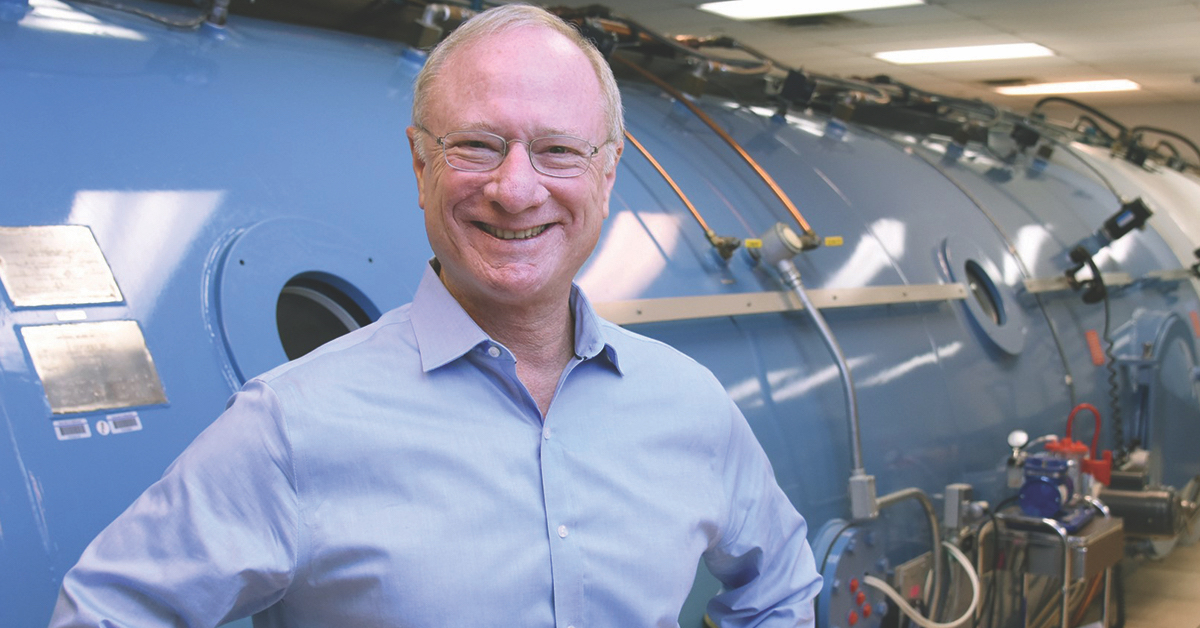
Dr. Benjamin Levine of UT Southwestern has researched the effects of space travel since the early 1990s, when he implanted the first catheter to monitor the heart pressure of an astronaut in space.
Credit: UT Southwestern
Levine said his latest findings indicate SANS, hopefully, won’t be a health risk by the time the space agency is ready to launch humans to the Red Planet.
Levine’s team started working with the outdoors equipment retailer REI to develop a high-tech sleeping bag that could be used by astronauts each night to unload pressure in the brain. The bag has a solid frame – aptly shaped like a space capsule – and is designed to fit over a person from the waist down.
About a dozen people volunteered to test the technology.
For more information on the research, go to “Effect of Nightly Lower Body Negative Pressure on Choroid Engorgement in a Model of Spaceflight-Associated Neuro-ocular Syndrome A Randomized Crossover Trial” at:
https://jamanetwork.com/journals/jamaophthalmology/article-abstract/2787146
Also, go to this informative UT Southwestern research posting at:
https://utsouthwestern.edu/newsroom/articles/year-2021/high-tech-sleeping-bag.html
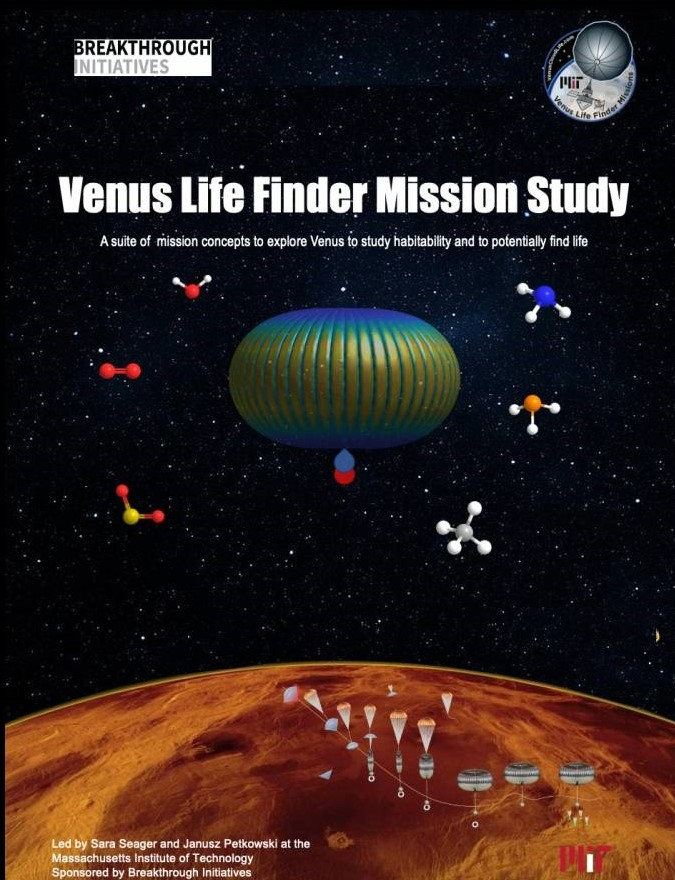
“Newer, nimbler, faster.” That’s the call stemming from a newly issued report led by MIT scientists that details a suite of privately-funded missions to hunt for life on Venus.
The Venus Life Finder (VLF) Missions are a series of three direct Venus atmosphere probes designed to assess the habitability of the Venusian clouds and to search for signs of life and life itself.
According to the report, the VLF missions would be a focused, optimal set of missions that can be launched quickly and with relatively low cost. The mission concepts come out of an 18-month study by an MIT-led worldwide consortium.
The study was partially funded by the Breakthrough Initiatives.

A composite image of the planet Venus as seen by the Japanese probe Akatsuki. The clouds of Venus could have environmental conditions conducive to microbial life.
Credit: JAXA
Sample return
Ultimately, the study concludes, a Venus atmosphere sample return is needed to robustly answer the compelling question, “Is there life on Venus?”
Envisioned is bringing back about one liter of Venus atmosphere and up to tens of grams of Venus cloud particles for detailed studies here on Earth – of the kind that cannot be done remotely.
“We hope this is the start of a new paradigm where you go cheaply, more often, and in a more focused way,” says Sara Seager in MIT’s Department of Earth, Atmospheric and Planetary Sciences (EAPS) and principal investigator for the planned Venus Life Finder Missions.
Lingering mysteries
“There are these lingering mysteries on Venus that we can’t really solve unless we go back there directly,” Seager adds in a MIT statement, saying that lingering chemical anomalies that leave room for the chance of life on that cloud-veiled world.
Seager was part of a team that reported last year a detection of phosphine gas in Venus’ atmosphere. On Earth, that gas is produced only by biological and industrial processes.
Since that claim, the phosphine finding has been challenged. Still, Seager says the controversial finding has sparked positive momentum to the Venus missions. “The whole phosphine controversy made people more interested in Venus. It allowed people to take Venus more seriously,” she says.

Venus in ultraviolet taken by NASA’s Pioneer-Venus Orbiter in 1979 indicating that an unknown absorber is operating in the planet’s top cloud layer.
Credit: NASA
Scientific payload
Based on their research, the Venus Life Finder team focused in on a scientific payload for the mission, which was restricted to just 1 kilogram.
MIT’s Seager says they settled on an instrument called an autofluorescing nephelometer because it could get the job done and was small, cheap, and could be built quickly enough for the compressed mission timeline.
The instrument is currently being built by a New Mexico-based company called Cloud Measurement Solutions, and a Colorado-based company called Droplet Measurement Technologies. The instrument is partially funded by MIT alumni.
Mission suite
Once the probe is in Venus’ atmosphere, the instrument will shine a laser out of a window onto cloud particles, causing any complex molecules within them to light up, or fluoresce. Many organic molecules, such as the amino acid tryptophan, have fluorescent properties.
“If we see fluorescence, we know something interesting is in the cloud particles,” Seager points out. “We can’t guarantee what organic molecule it is, or even be certain it’s an organic molecule. But it’s going to tell you there’s something incredibly interesting going on.”
Whatever the 2023 mission finds, the next mission in the suite is already being planned for 2026.
That probe would involve a larger payload, with a balloon that could spend more time in Venus’ clouds and conduct more extensive experiments. Results from that mission might then set the stage for the culmination of the Venus Life Finder Missions concept: return a sample of Venus’ atmosphere to Earth.

Credit: Rocket Lab
Rocket Lab partnership
A partnership has been put in place with the private entrepreneurial group, Rocket Lab, to provide the science payload and science team to go with their 2023 Venus Mission’s rocket, cruise spacecraft, and direct probe entry vehicle. The Venus direct entry vehicle aboard Rocket Lab’s Photon spacecraft has room for up to one kilogram of science instrumentation for the short-duration (three minute) descent through the cloud layers, the report explains.
As for the overall Venus Life Finder Missions, “we think it’s disruptive,” says Seager. “And that’s the MIT style. We operate right on that line between mainstream and crazy.”
For a detailed look at the report — Venus Life Finder Mission Study – go to:
https://venuscloudlife.com/wp-content/uploads/2021/12/VLFReport_12092021.pdf
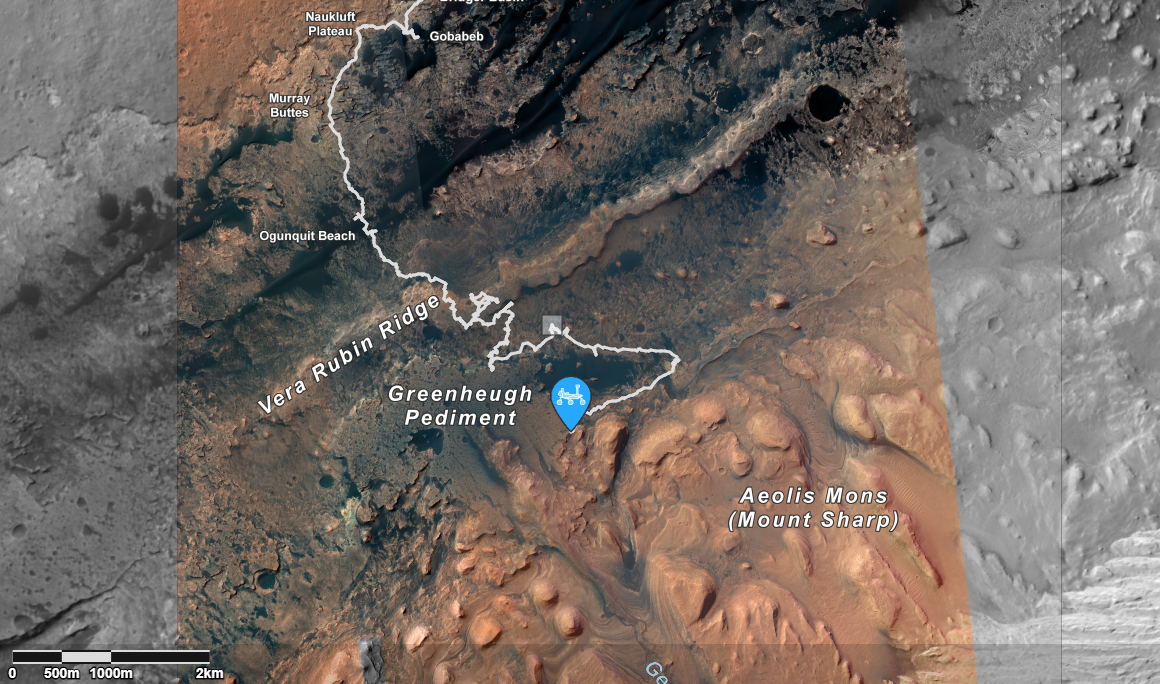
Curiosity’s location as of Sol 3324. Distance driven is now 16.60 mile/26.72 kilometers since landing in August 2012.
Credit: NASA/JPL-Caltech/Univ. of Arizona
NASA’s Curiosity Mars rover at Gale Crater is now performing Sol 3326 duties.
“As we continue exploring Maria Gordon notch, we are planning a touch and go with lots of remote sensing activities between the ‘touch’ and the ‘go,’” reports Kenneth Herkenhoff, a planetary geologist at the USGS Astrogeology Science Center in Flagstaff, Arizona.
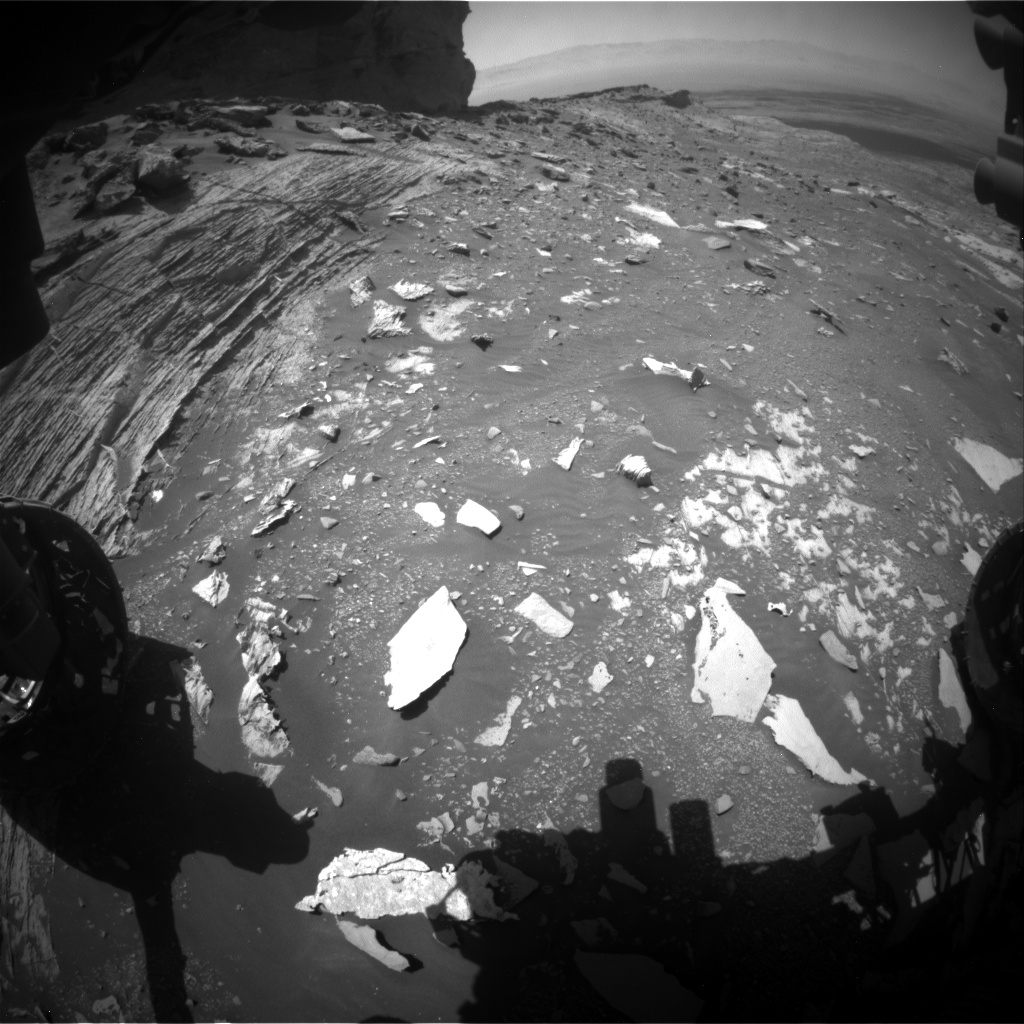
Curiosity Front Hazard Avoidance Camera Left B photo taken on Sol 3325, December 13, 2021.
Credit: NASA/JPL-Caltech
Bedrock targets
The robot is parked near the base of the cliff to the west, and the science team is interested in investigating the bedrock in this area.
Unfortunately, none of the bedrock targets are suitable for close Alpha Particle X-Ray Spectrometer (APXS) placement, Herkenhoff adds, so researchers will not be able to measure the bedrock chemistry here using APXS.
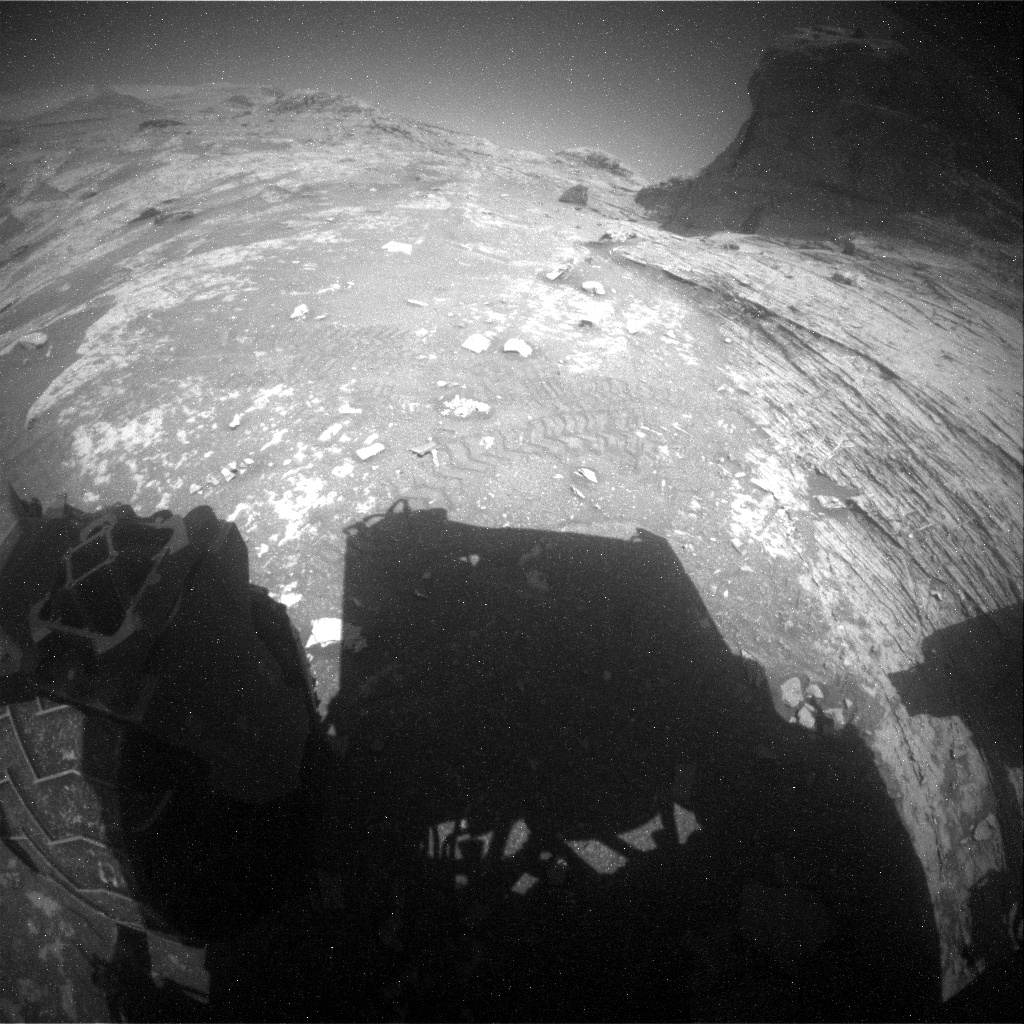
Curiosity Rear Hazard Avoidance Camera Left B photo acquired on Sol 3325, December 13, 2021.
Credit: NASA/JPL-Caltech
Rather, the rover’s Mars Hand Lens Imager (MAHLI) will take images of a bedrock target
named “Portgower” and the Chemistry and Camera (ChemCam) will sample the chemistry of another bedrock target “Thornhill” higher up the cliff face.
“Mastcam and Navcam will be used to monitor the dust content of the atmosphere and search for dust devils, then Mastcam will acquire 3 stereo mosaics of the cliffs and boulders near the rover,” Herkenhoff adds.
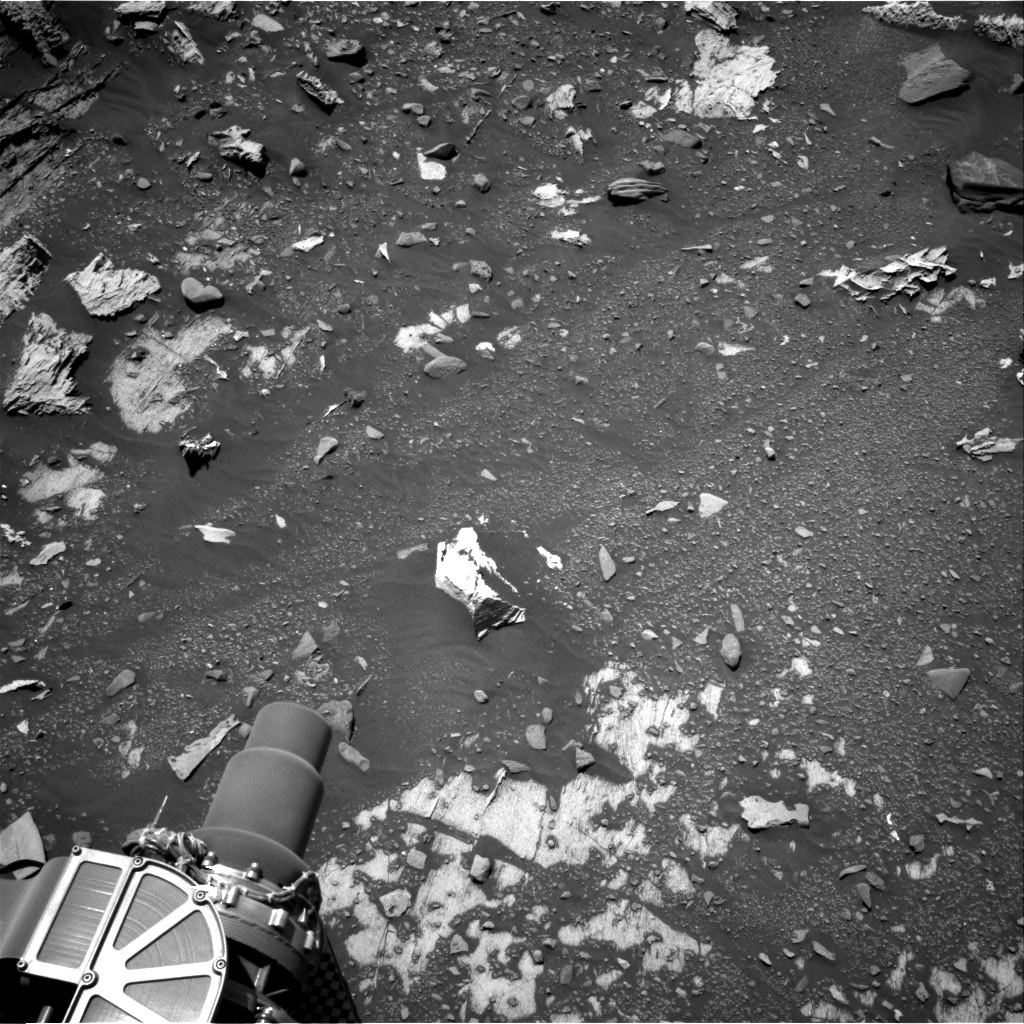
Curiosity Right B Navigation Camera image taken on Sol 3325, December 13, 2021.
Credit: NASA/JPL-Caltech
More power to you
After the drive of roughly 66 feet (20-meters and post-drive imaging, another Mars Descent Imager (MARDI) twilight image is planned.
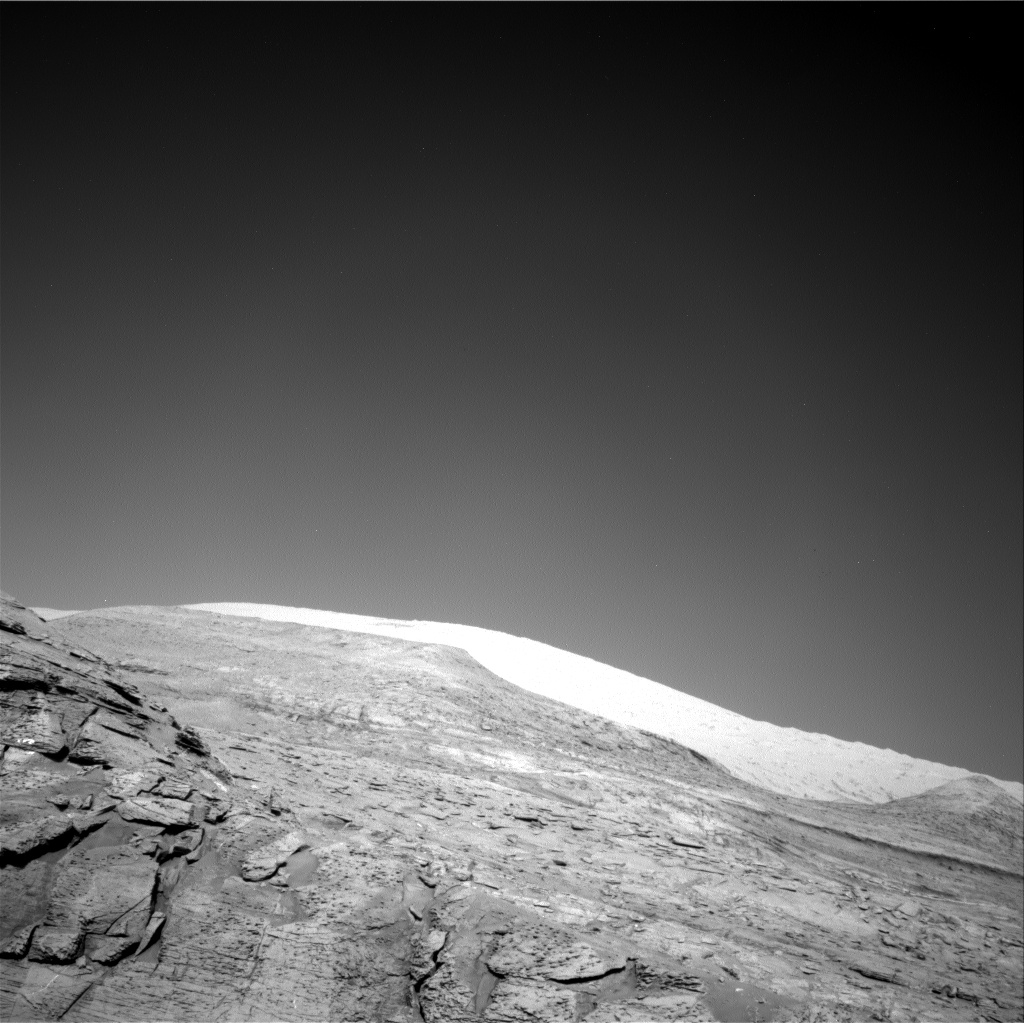
Curiosity Right B Navigation Camera image taken on Sol 3325, December 13, 2021.
Credit: NASA/JPL-Caltech
Because more power is available than initially expected, scientists were able to add an overnight Chemistry & Mineralogy X-Ray Diffraction/X-Ray Fluorescence Instrument (CheMin) wheel move and empty cell analysis to the plan.
“The second sol is much simpler,” Herkenhoff concludes, “with a ChemCam observation of an autonomously-selected bedrock target and more Navcam and Mastcam observations of the atmospheric dust.”
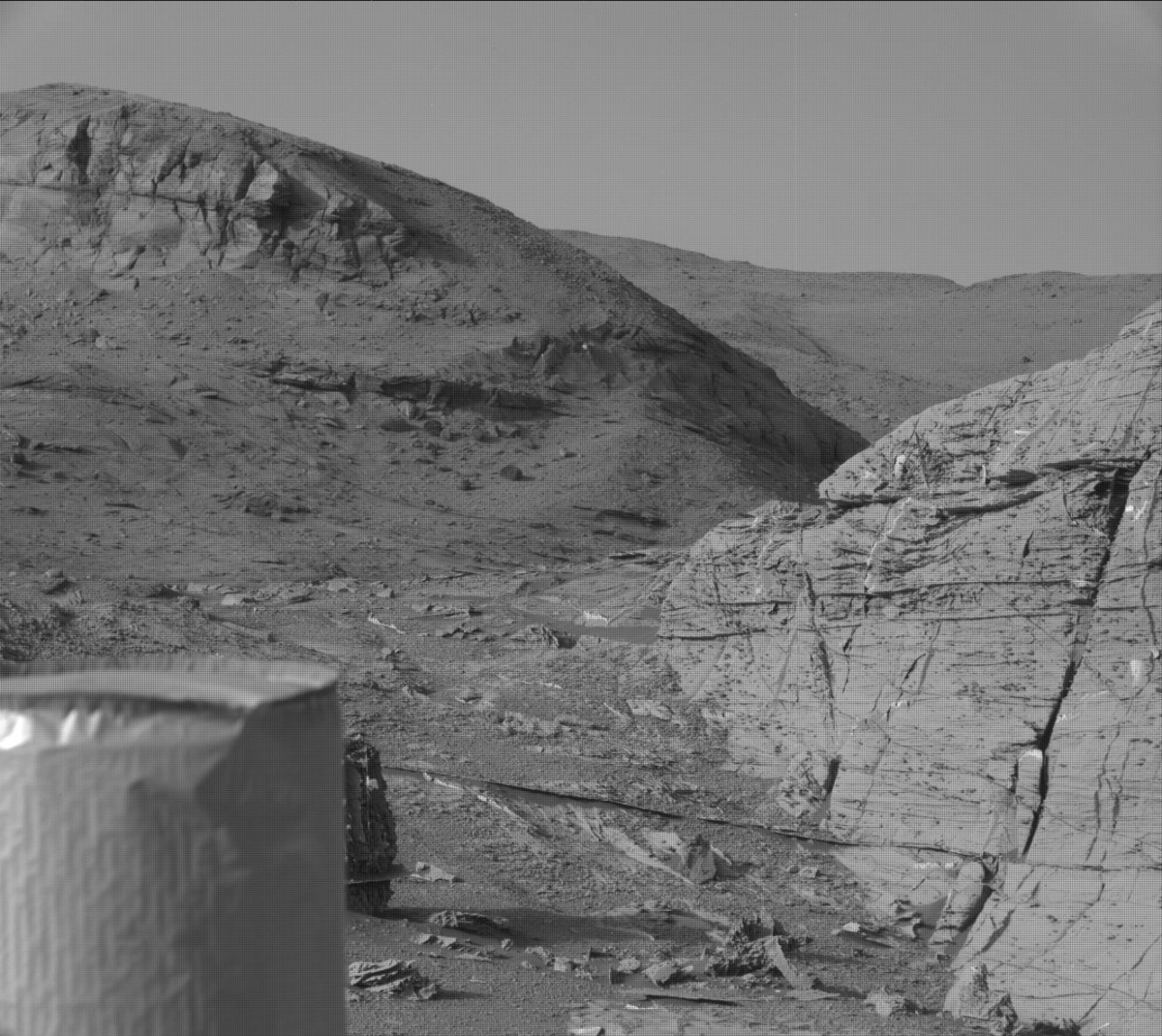
Curiosity Mast Camera Left image taken on Sol 3324, December 12, 2021.
Credit: NASA/JPL-Caltech/MSSS
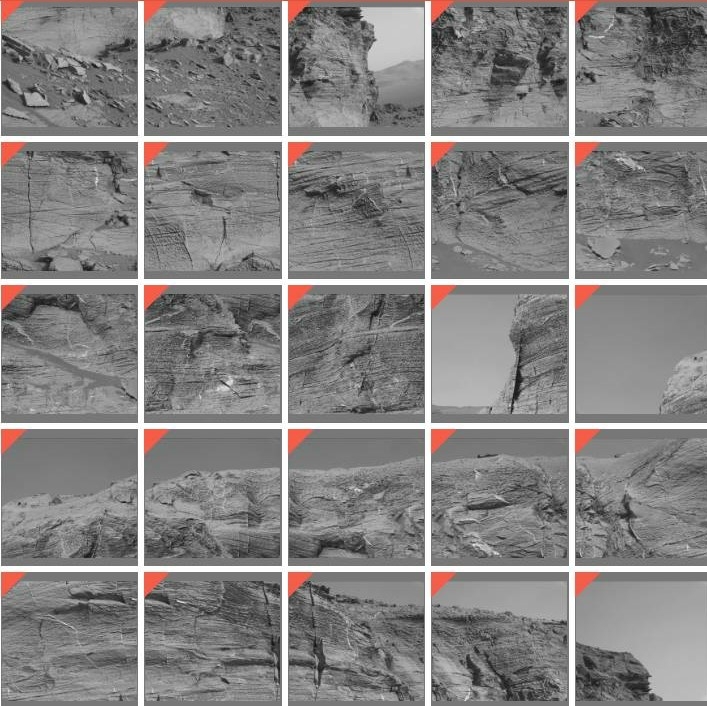
Curiosity Mast Camera Left imagery taken on Sol 3324, December 12, 2021.
Credit: NASA/JPL-Caltech/MSSS
Credit: ESA/Inside Outer Space screengrab
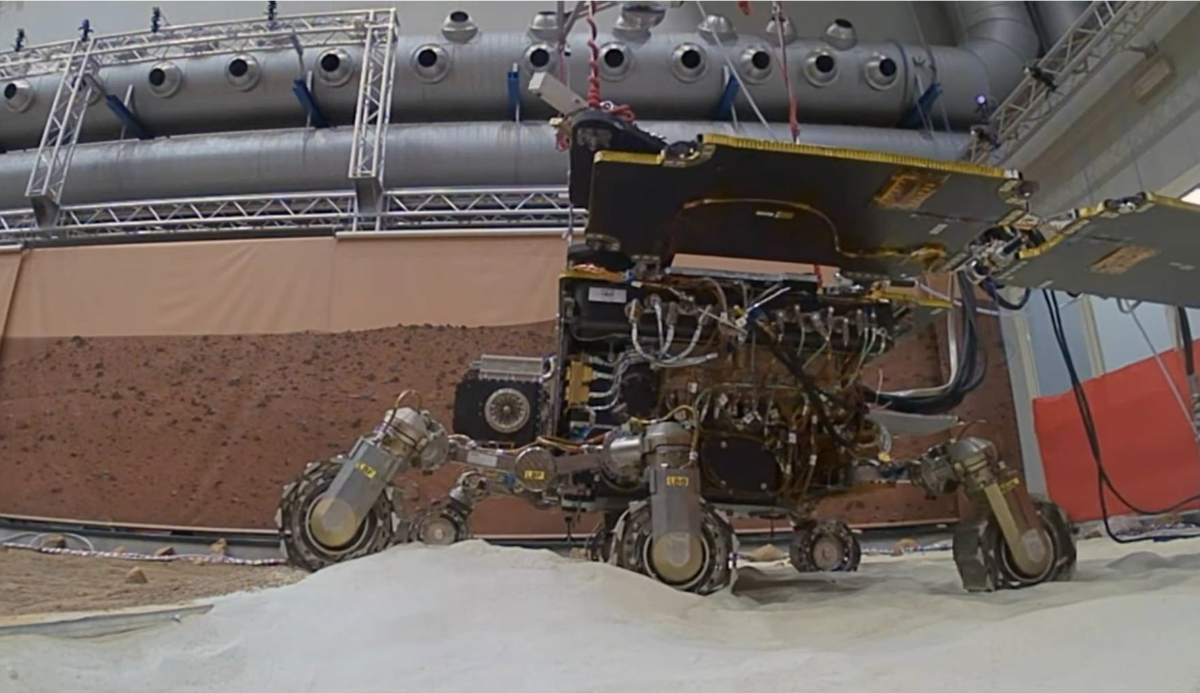
Once Europe’s ExoMars rover, Rosalind Franklin, lands on Mars in June 2023 the machine will utilize a unique wheel walking locomotion mode.
Similar to leg movements, the robot’s wheel-walking combines motions of the deployment actuators (the legs) with the rotation of the wheels to progress without slippage.
This motion is designed to provide the rover good traction in soft soils and high slopes, such as dunes.

ExoMars Credit: ESA/ATG medialab
Functionality
Last month, in the Mars Terrain Simulator at the Rover Operations Control Center at Thales Alenia Space facilities in Turin, Italy, Rosalind Franklin showed off its skills. The facility is being used for training rover operators and simulating science operations that will be expected in the main mission.
Rovers on Mars have previously been caught in sand, and turning the wheels dug them in deeper, just like a car stuck in mud or snow.
“We hope to never need to use wheel walking on Mars to escape dangerous sand traps, but we are glad to have such functionality to potentially safeguard the mission,” said Luc Joudrier, ESA ExoMars Rover Operations Manager. “From a rover operational point of view, this is really our insurance against difficult terrains.”
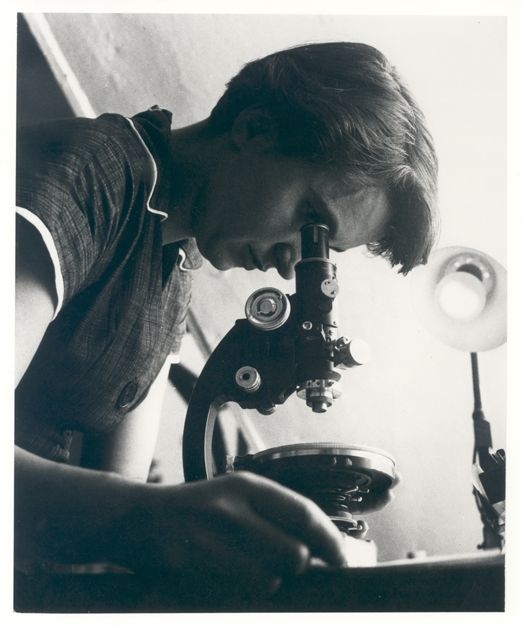
Rosalind Elsie Franklin was a British chemist and X-ray crystallographer who contributed to unravelling the double helix structure of our DNA. She also made enduring contributions to the study of coal, carbon and graphite.
Credit: ESA/MRC Laboratory of Molecular Biology
Loose soils
In a test run, the back wheels drag once the front four wheels have gained good traction on firmer terrain. The sequence was optimized for climbing steep slopes with loose soils; a short rotation of the wheel follows each movement of the legs. This is to anchor the wheels, digging them a little bit into the soil, before moving the rest – like when you climb a slope with snow and firm up each step before making a new one.

Russian lander cocoons Rosalind Franklin rover.
Credit: Roscosmos
ExoMars 2022 is targeted for liftoff from Baikonur, Kazakhstan on September 20, 2022 (12 day launch window); landing on June 10, 2023.
ExoMars is led collaboratively by the European Space Agency and the Roscosmos State Corporation, designed to understand if life ever existed on Mars. Rosalind Franklin will be delivered to Mars via a Russian lander, “Kazachok,” which will also serve as a surface platform for conducting science experiments.
Take a look at this video that showcases the ExoMars rover’s ability at:
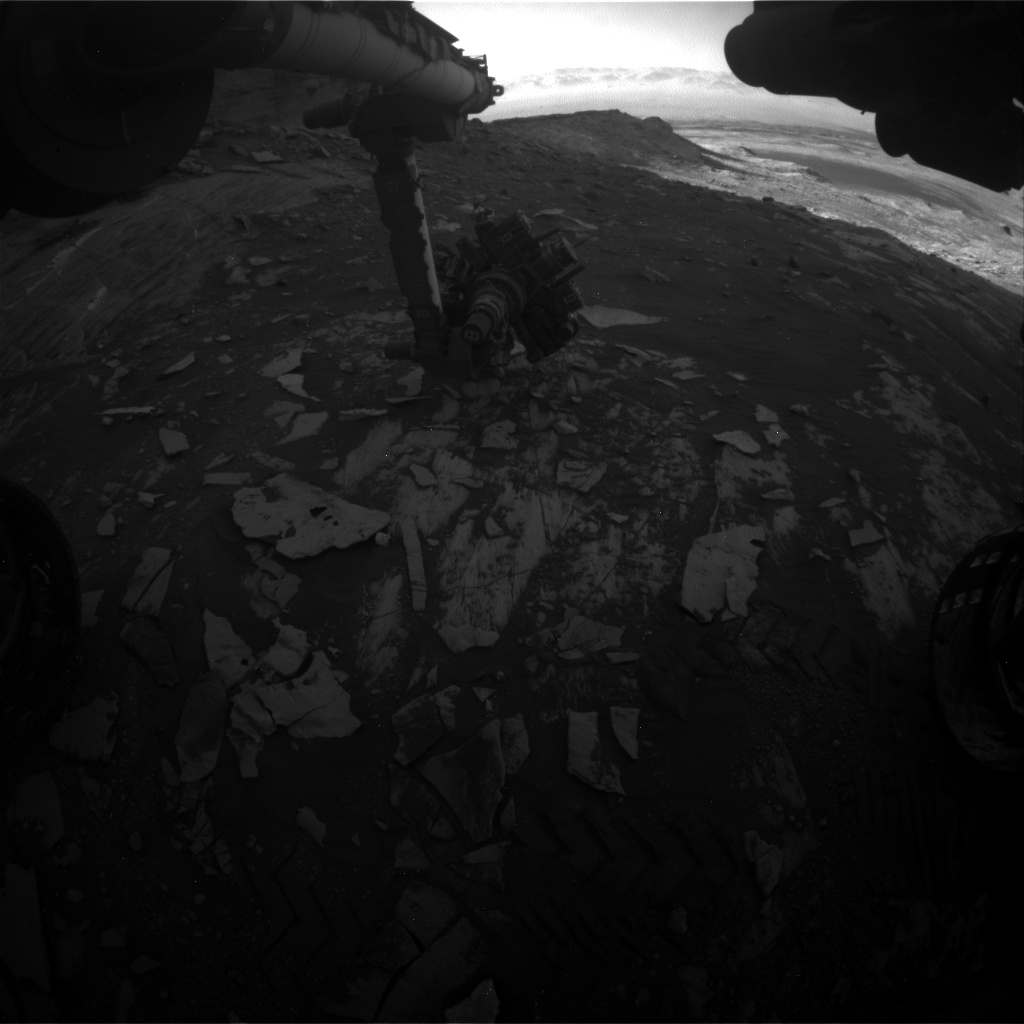
Curiosity Front Hazard Avoidance Camera Right B image taken on Sol 3323, December 11, 2021.
Credit: NASA/JPL-Caltech
NASA’s Curiosity Mars rover at Gale Crater is now performing Sol 3324 duties.
Abigail Fraeman, a planetary geologist at NASA’s Jet Propulsion Laboratory reports that the robot recently parked just a few meters away from the towering western wall of Maria Gordon notch.
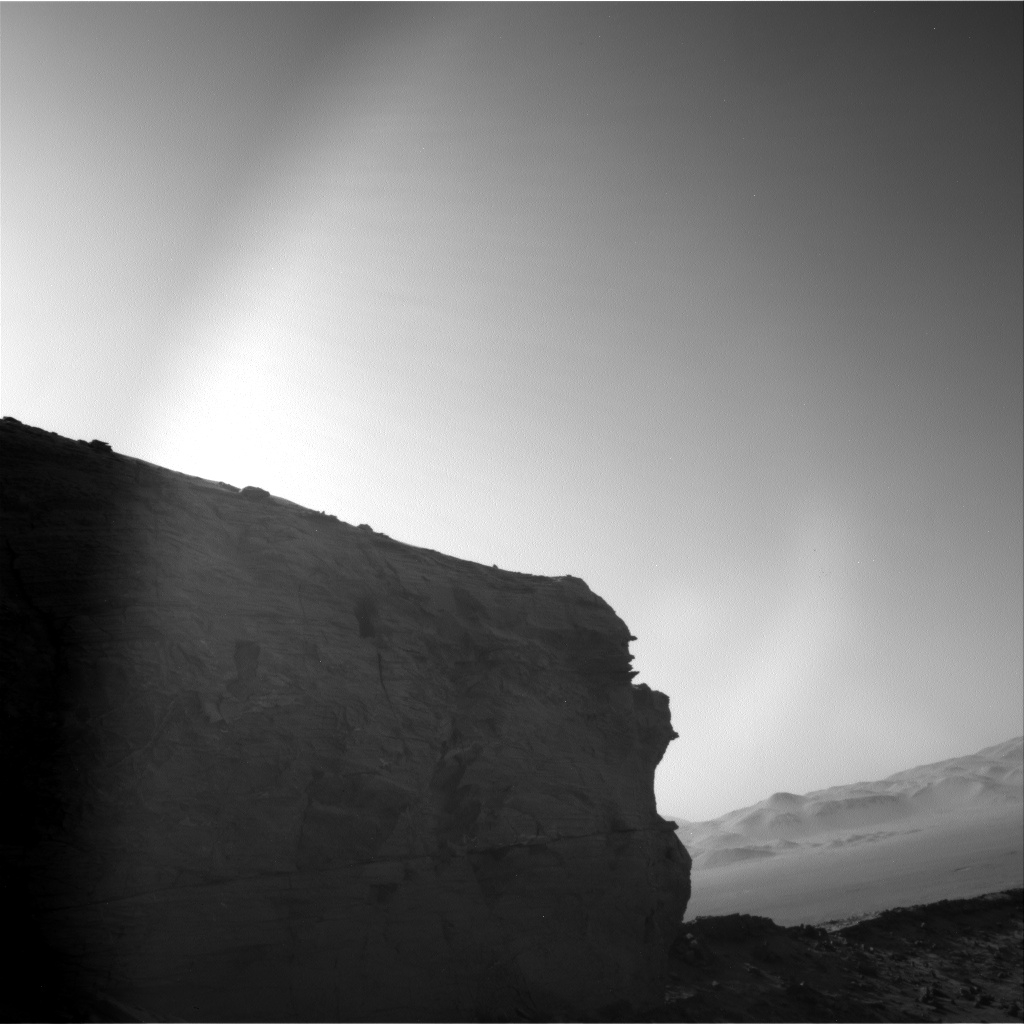
In the shadow of Maria Gordon Notch. Image taken by Curiosity’s Right Navigation Camera on Sol 3322 December 10, 2021
Credit: NASA/JPL-Caltech
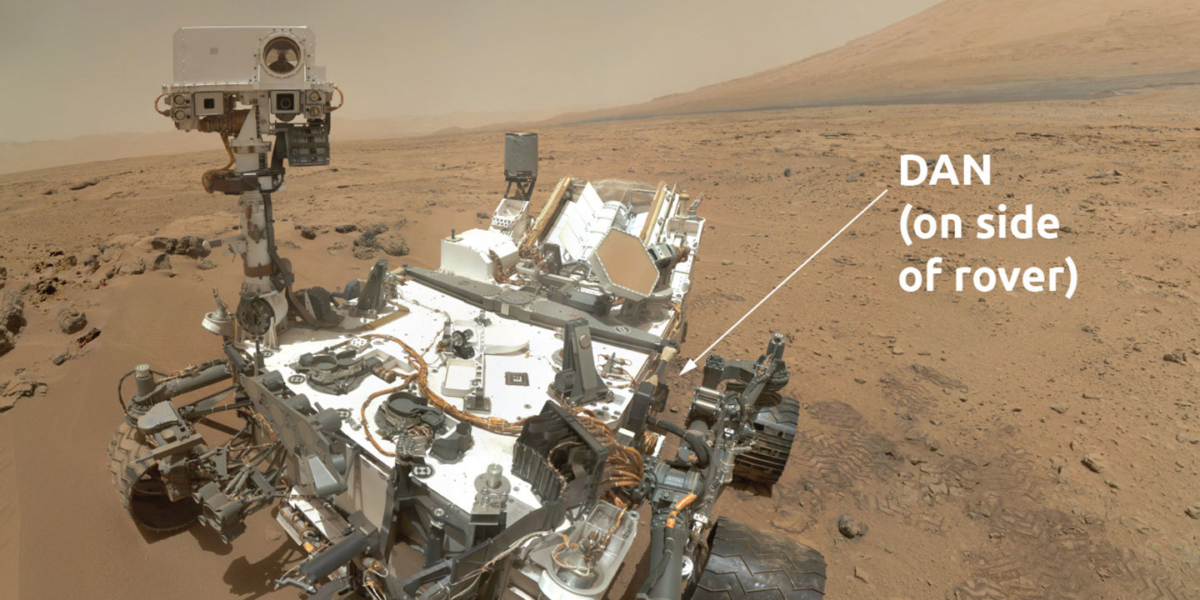
“While this location gives us spectacular views of the layering, veins, and nodules exposed on the side of the outcrop, it was actually chosen to support an experiment with Curiosity’s neutron spectrometer, DAN (Dynamic Albedo of Neutrons),” Fraeman adds.
Credit: NASA/JPL-Caltech
DAN has the ability to measure the amount of hydrogen, Fraeman points out, a proxy for water, around the rover.
“The instrument is sensitive to surroundings all around Curiosity, although usually the only interesting signature comes from the ground beneath the rover where the instrument can detect water bound within hydrated minerals,” Fraeman explains.

The Dynamic Albedo of Neutrons tool, called DAN for short, looks for telltale changes in the energies of neutrons released from Martian subsurface that indicate how much water is chemically bound in the soil or rocks.
Credit: NASA/JPL-Caltech/Russian Federal Space Agency
Three-point turn
By parking close to the side of Maria Gordon notch, Mars researchers have an opportunity to see information with DAN from both the ground and the wall next to the rover, which will help refine understanding of DAN data throughout the mission.
DAN measurements will be done in three different positions: a current parking position and two more planned during a planned drive.
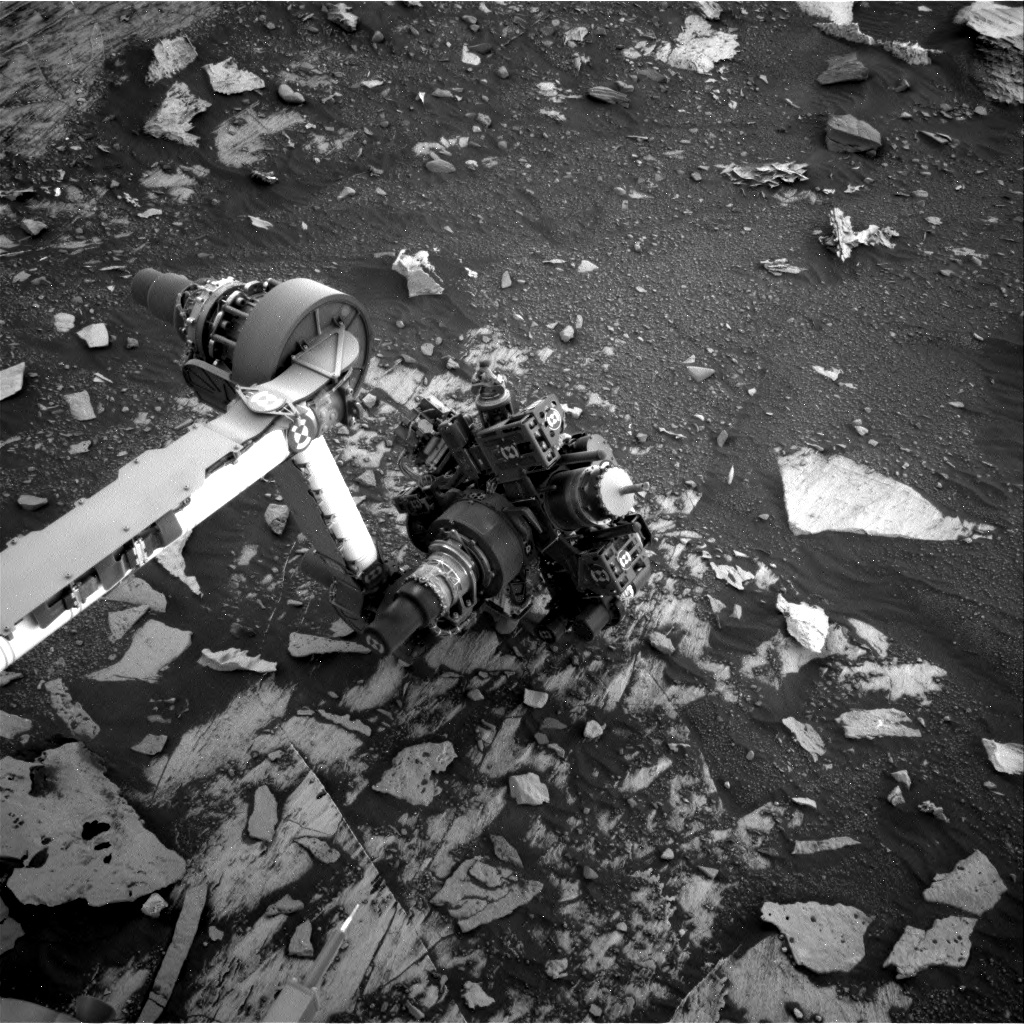
Curiosity Right B Navigation Camera image taken on Sol 3323, December 11, 2021.
Credit: NASA/JPL-Caltech
“The drive will place Curiosity perpendicular to the cliff and then parallel again, but a little bit closer than we are now,” says Fraeman. “It’s a little like a rover version of an almost three-point turn!”
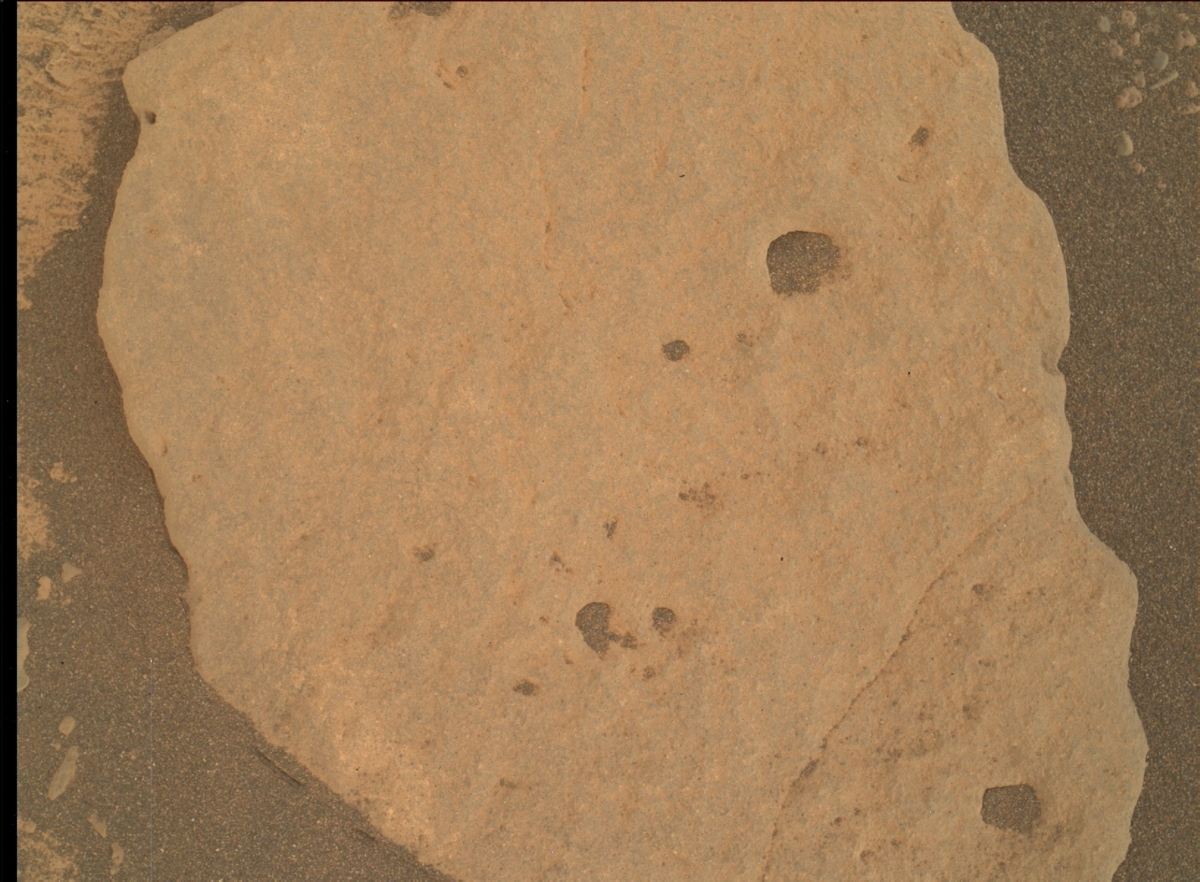
Curiosity Mars Hand Lens Imager (MAHLI) photo produced on Sol 3323, December 11, 2021.
Credit: NASA/JPL-Caltech/MSSS
Scenic location
In addition to the DAN experiments, also on tap is collecting Alpha Particle X-Ray Spectrometer (APXS) and Mars Hand Lens Imager (MAHLI) observations on two pebbles in front of Curiosity, one with pits (“Helens Bay”) and one without pits (“Lakeheads”), as well as Chemistry and Camera (ChemCam) observations of “Orlock Ridge” and “Hailes Quarry.”
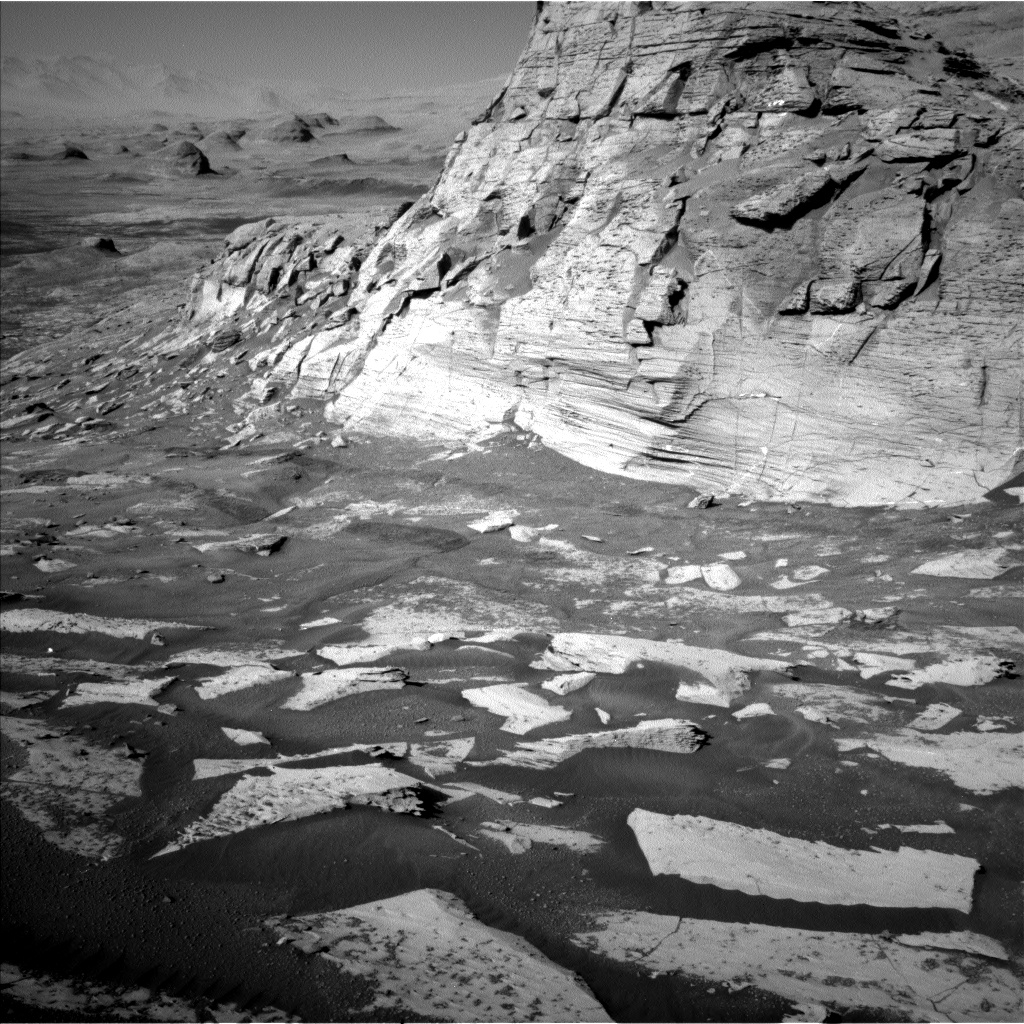
Curiosity Left B Navigation Camera image acquired on Sol 3322, December 10, 2021.
Credit: NASA/JPL-Caltech
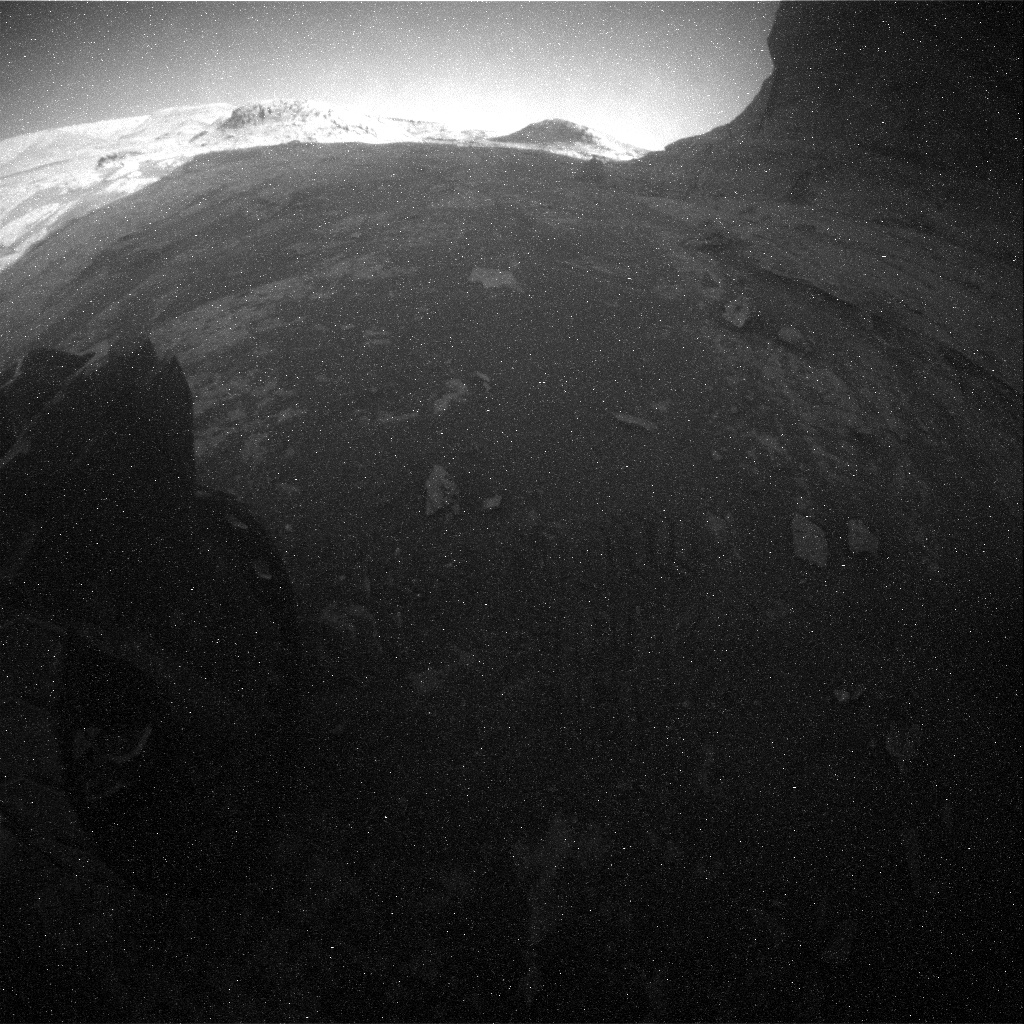
Curiosity Rear Hazard Avoidance Camera Left B image taken on Sol 3323, December 11, 2021.
Credit: NASA/JPL-Caltech
“And of course since we’re at such an amazingly scenic location, we’ll make sure to take lots and lots of Mastcam mosaics throughout the day,” Fraeman concludes.

