Author Archive
 Author:
  December 25th, 2021
Liftoff!
Credit: NASA/Chris Gunn
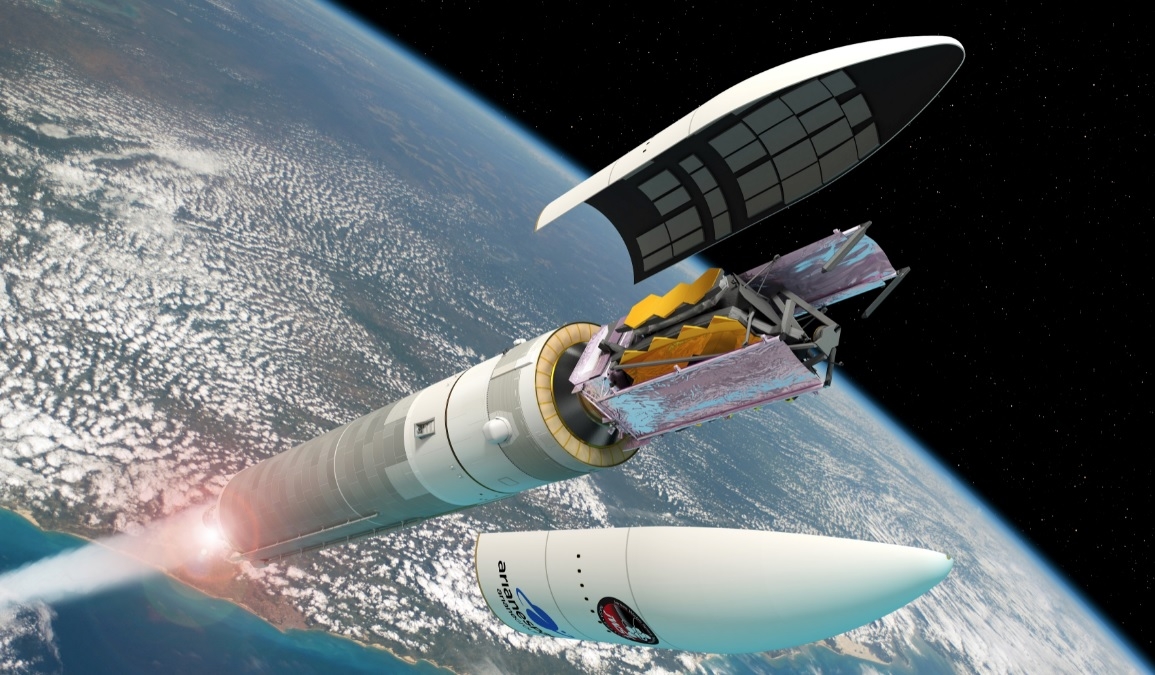
Arianespace’s Ariane 5 rocket with NASA’s James Webb Space Telescope departed its launch pad at Europe’s Spaceport, the Guiana Space Center in Kourou, French Guiana on Saturday, December 25, 2021.
The James Webb Space Telescope (JWST) is a large infrared telescope with a 21.3 foot (6.5 meter) primary mirror. The observatory will study every phase of cosmic history—from within our solar system to the most distant observable galaxies in the early universe.
Approximately 30 minutes after launch, Webb unfolded its solar array, and mission managers confirmed that the solar array was providing power to the observatory.

Deployment!
Credit: NASA/ESA
Engineers and ground controllers will conduct the first of three mid-course correction burns about 12 hours and 30 minutes after launch, firing Webb’s thrusters to maneuver the spacecraft on an optimal trajectory toward its destination in orbit about 1 million miles from Earth.
What’s next?
What’s ahead is a critical 29 days with JWST unfurls in space, undergoing the most difficult and complex deployment sequence ever attempted in space.
— On the third day, the heat shield will begin to deploy. On the eleventh day, the secondary mirror will begin positioning.
— Between the 13th and 14th day, the primary mirror, comprising 18 hexagonal segments and measuring 6.5 meters in diameter, will be assembled.
— The telescope is slated to arrive at its final destination, 1.5 million kilometers from Earth, approximately 29 days after launch.
To keep an eye on the commissioning of the telescope, go to these resources:
29 Days on the Edge at:
https://www.youtube.com/watch?v=uUAvXYW5bmI
These animations show the James Webb Space Telescope deployment sequence, as well as breakout animations of each major deployment on the telescope.
https://svs.gsfc.nasa.gov/20339
Make use of this excellent JWST media kit at:
https://www.webb.nasa.gov/content/webbLaunch/assets/documents/WebbMediaKit.pdf

Commissioning!
Credit: Northrop Grumman

On location!
Credit: NASA GSFC/CIL/Adriana Manrique Gutierrez
 Posted in

Credit: NASA/Bill Ingalls
Arianespace’s Ariane 5 rocket with NASA’s James Webb Space Telescope onboard is at the launch pad at Europe’s Spaceport, the Guiana Space Center in Kourou, French Guiana.
The $10 billion James Webb Space Telescope (JWST) is a large infrared telescope with a 21.3 foot (6.5 meter) primary mirror. The observatory will study every phase of cosmic history—from within our solar system to the most distant observable galaxies in the early universe.
The European Space Agency (ESA) will provide coverage of the launch activities for the JWST, the world’s largest and most powerful space science telescope.
Webb is targeted to be launched at 12:20 GMT/13.20 CET on Saturday, December 25, 2021 on an ESA-provided Ariane 5 rocket. The Webb mission is a partnership of ESA, NASA and the Canadian Space Agency (CSA).

Live launch coverage
Live launch coverage in English will begin at 12.00 CET on ESA WebTV and on ESA’s Youtube channel.
Go to: https://www.esa.int/ESA_Multimedia/ESA_Web_TV
ESA Web TV channel 2 will carry the launch coverage in French, which is a simultaneous translation of the English broadcast from 32 minutes before launch until end of the broadcast.
As soon as possible after the TV transmission, launch highlights will be posted on ESA TV ftp server: tvdownload.esa.int/
Login: esa
Password: ftp4esa
Credit: ESA
On launch day, a “clean feed” of the launch without commentary will be available by satellite via Eurovision Services. The uplink will begin at 12.50 CET and continues for 40 minutes after launch. Four audio channels will be available: English commentary, Spanish commentary, French translation and operational audio only.
More information can be found on:
https://www.esa.int/ESA_Multimedia/Transmissions/2021/12/James_Webb_Space_Telescope_live_launch
Post-launch media briefing
ESA, NASA, CSA and Arianespace will hold a post-launch news conference approximately 30 minutes after the live launch broadcast ends on December 25.
The briefing will stream on ESA WebTV: https://www.esa.int/ESA_Multimedia/ESA_Web_TV

Credit: Mars Guy
Mars is getting in the way of the Ingenuity helicopter mission.
When NASA’s Perseverance Mars rover drove down from its commanding perch over Ingenuity, there were consequences. Now Ingenuity is on its own like never before.

Credit: Mars Guy
“Mars Guy” details the issues in Episode 37.
Mars Guy is Arizona State University associate research professor Steve Ruff. He’s a Mars geologist with decades of experience exploring the Red Planet.
Go to video at:

Curiosity’s location as of Sol 3333. Since landing in August 2012, the rover has driven 16.69 miles/26.86 kilometers.
Credit: NASA/JPL-Caltech/Univ. of Arizona
NASA’s Curiosity Mars rover at Gale Crater is now performing Sol 3335 tasks.
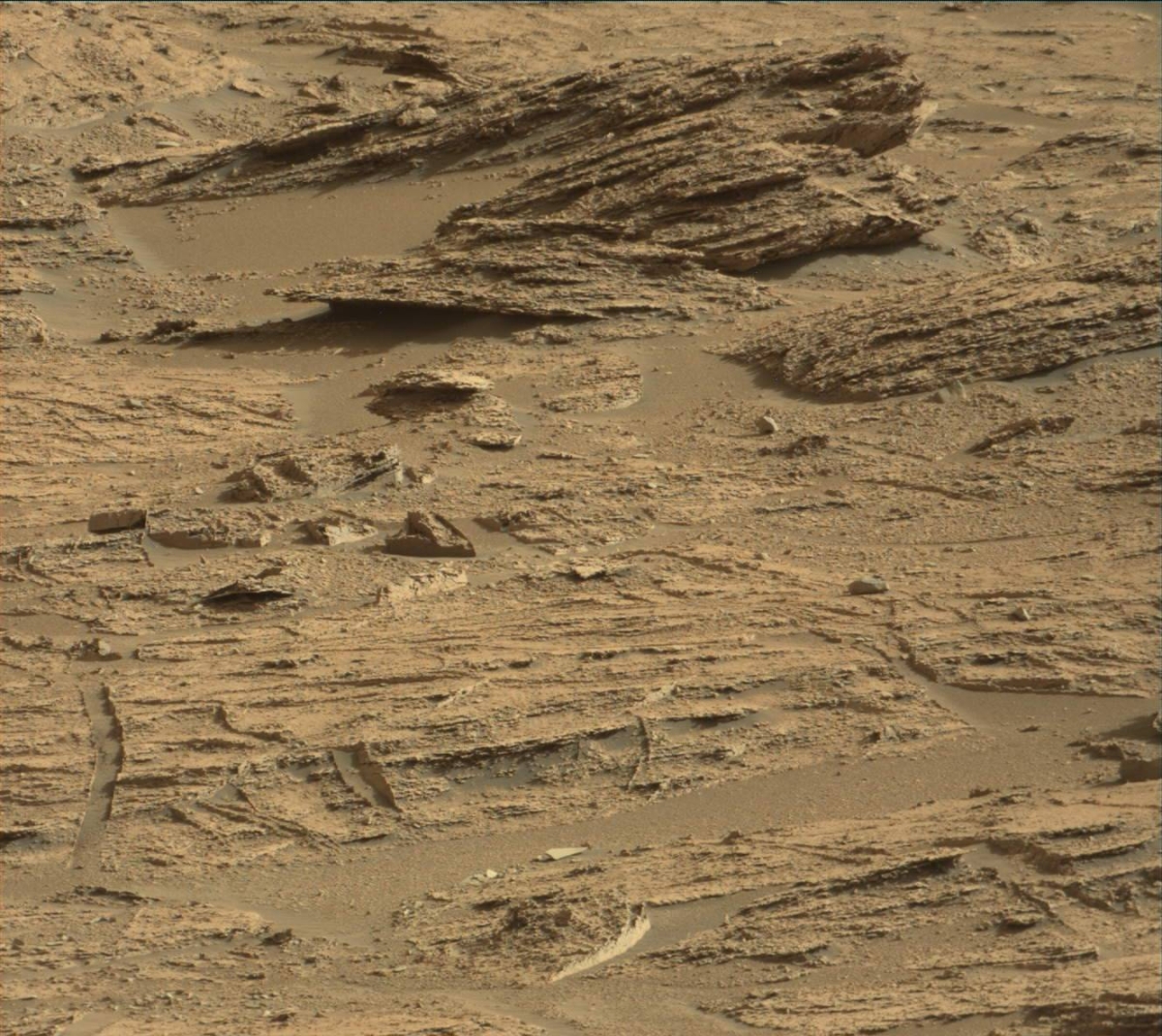
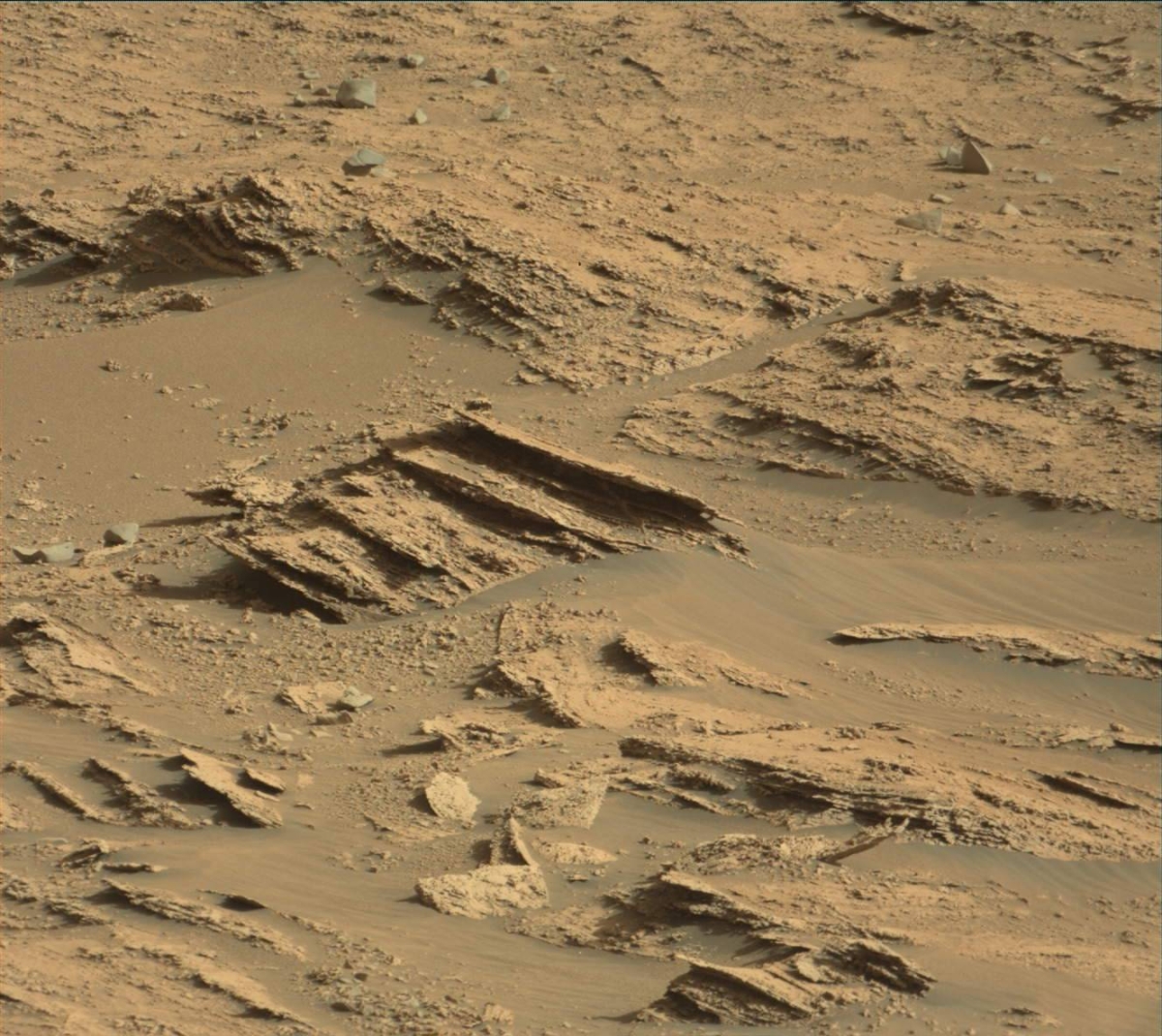
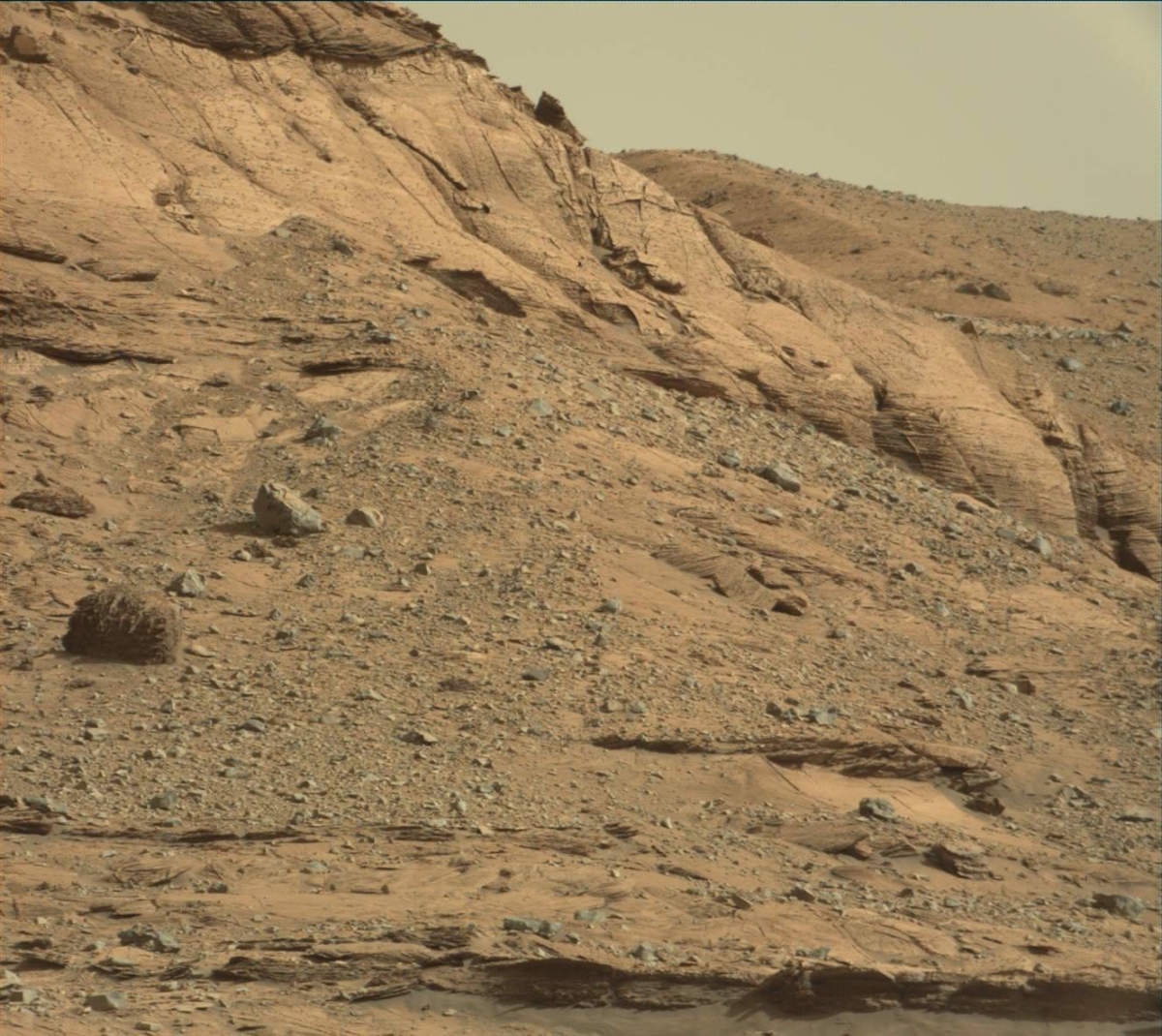
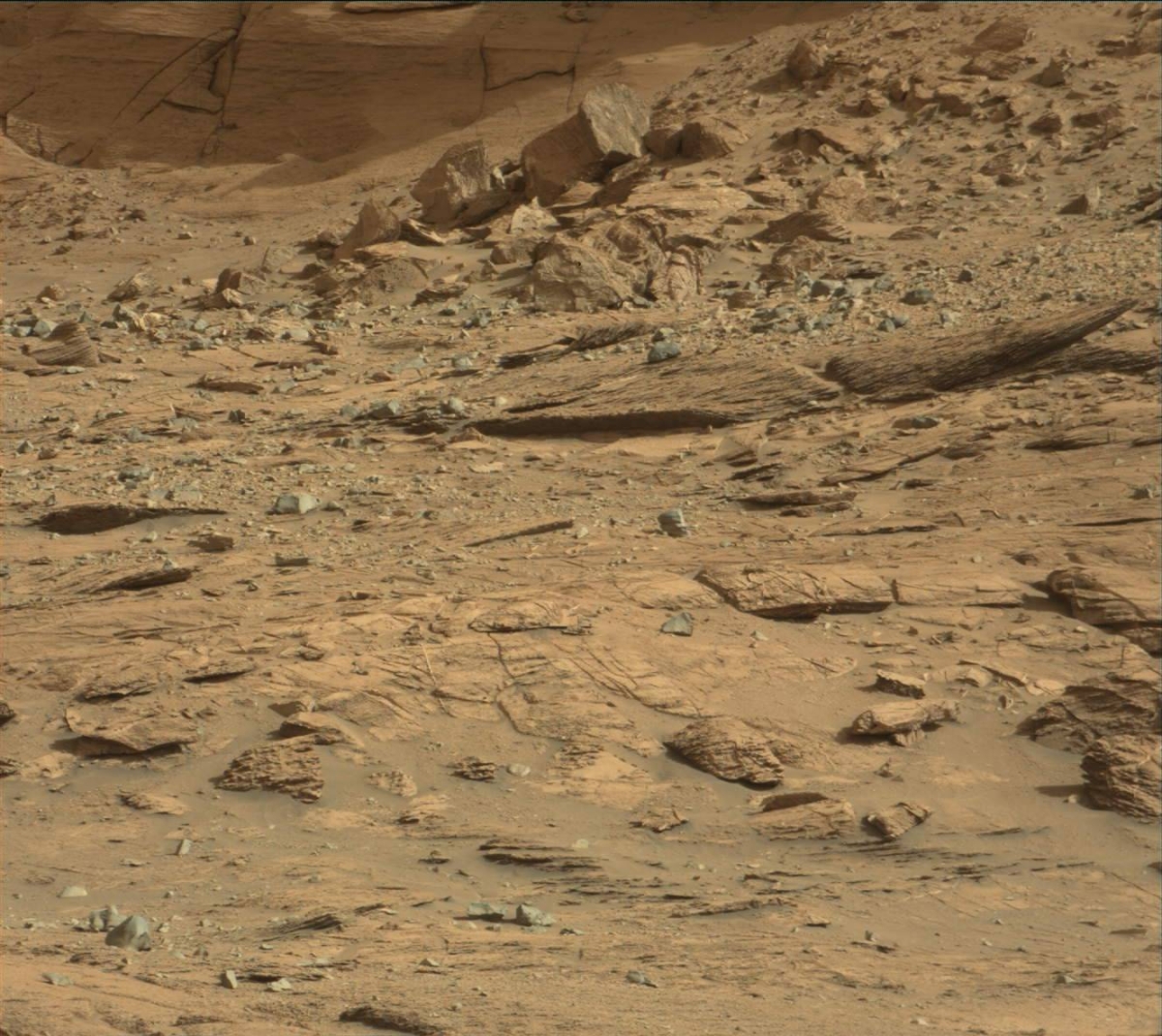
New imagery taken on Sol 3333, December 21, 2021, shows that the robot has been busily taking numerous Mast Camera Right and Left photos of its surroundings.
Here’s a sampling:
Credit: NASA/JPL-Caltech/MSSS
Credit: NASA/JPL-Caltech/MSSS

Credit: NASA/JPL-Caltech/MSSS

Credit: NASA/JPL-Caltech/MSSS

Credit: NASA/JPL-Caltech/MSSS

Credit: NASA/JPL-Caltech/MSSS
Credit: NASA/JPL-Caltech/MSSS
Credit: NASA/JPL-Caltech/MSSS

Credit: Sea of Stars campaign
Justin Sun, Founder of TRON, a blockchain platform, today revealed that he placed the winning $28 million bid for the first seat on Blue Origin’s Inaugural New Shepard rocket.
Justin Sun placed that winning bid for the first seat on New Shepard on June 13 and wants to turn this “flying” opportunity into 6 slots to inspire more people to participate in space exploration.
Sun and five crewmates will fly on a New Shepard flight in fourth quarter 2022.

Credit: Sea of Stars campaign
As part of his planned voyage, Sun has launched the “Sea of Stars” campaign. Over the coming months, Sun will nominate five men and women to travel with him on his voyage.
Nominees may include a member of the TRON decentralized autonomous organizations (DAOs) community, comprising long-term holders of TRX, BTT, JST, SUN, NFT, and WIN, and other leaders drawn from the worlds of fashion, art, technology, space exploration, and entrepreneurship.
Details on the nomination process and criteria will be announced in the coming months.
For more information, go to: https://seaofstars.tron.network/
Video at: https://seaofstars.tron.network/static/media/v.f5517f86.mp4

Credit: GLOBALink/Inside Outer Space screengrab
Dubbed the “China Sky Eye,” the Five-hundred-meter Aperture Spherical Radio Telescope (FAST) situated in southwest China’s Guizhou Province, has identified 509 new pulsars – four times the total amount of pulsars identified by other telescopes around the world, according to the Xinhua news agency.
Pulsars, or fast-spinning neutron stars, originate from the imploded cores of massive dying stars through supernova explosions.
FAST started formal operation in January 2020. It is believed to be the world’s most sensitive radio telescope. Among its tasks is the search for extraterrestrial intelligence.

Credit: GLOBALink/Inside Outer Space screengrab
Chinese researchers found the first evidence of three-dimensional spin-velocity alignment in a pulsar in May of this year.
Since the radio telescope officially opened, FAST has been available for scientists worldwide and received approximately 200 observation applications from 16 countries to utilize the facility.
FAST has also discovered weak fast radio bursts (FRBs) that are hard to locate using other telescopes, and collected the largest-ever samples of FRBs in the world.
Go to this GLOBALink video focused on FAST at: https://youtu.be/rYGpjyir6qw

Project Managers James Winter (Air Force Research Laboratory) and Tara Theret (Northrop Grumman) hold models of the photovoltaic and the radio frequency sides of the sandwich tile, while at the Linthicum, Maryland facility, to witness the conversion and beaming experiment. Courtesy photo/Northrop Grumman)
A fundamental programmatic step required to pave the way for a large-scale solar power collection system in space has been announced.
The Air Force Research Laboratory’s (AFRL) Space Solar Power Incremental Demonstrations and Research (SSPIDR) Project is a team effort with Northrop Grumman.
That AFRL/Grumman team has successfully conducted the first end-to-end demonstration of key hardware for the Arachne flight experiment.
Sandwich tile
Specifically, a ground demonstration of novel components for the “sandwich tile” were used to successfully convert solar energy to radio frequency (RF) – key work toward a large-scale solar power collection system in space.
“The successful conversion of sunlight into RF energy in a lightweight and scalable architecture is a significant step forward in delivering the technology building blocks to achieve the Arachne mission,” said Jay Patel, vice president, remote sensing programs business unit, Northrop Grumman.

Credit: Northrop Grumman/Inside Outer Space screengrab
Building block payload
In 2018, AFRL awarded Northrop Grumman a contract worth over $100 million for the development of a payload to demonstrate the key components of a prototype space solar power system.
According to AFRL, successful testing of the individual tile for the Arachne payload provides a building block for a square meter panel of tiles – a threshold that has not yet been met by any other solar-to-RF experiments.

Image depicts Space Solar Power Incremental and Demonstrations Research (SSPIDR) project to beam solar power from space to Earth. SSPIDR consists of several small-scale flight experiments that will mature technology needed to build a prototype solar power distribution system.
Credit: Air Force Research Laboratory (AFRL)
Arachne is anticipated to launch in 2025. The sandwich tile is currently under development as an essential payload component for Arachne, and as a building block for a large-scale operational system.
Pivotal step
The sandwich tile consists of two layers. The first layer is a panel of highly efficient photovoltaic (PV) cells which collect solar energy and provide power to the second layer. The second layer is populated with components that enable solar to RF conversion and beamforming.
“Converting solar energy into RF energy at the component-level is a pivotal step to realizing space-based solar power beaming on a larger scale,” said Melody Martinez, SSPIDR deputy project manager in an AFRL statement.
Go to this Northrop Grumman video — From Science Fiction to Reality with Space Solar Power Beaming — at:

Curiosity’s location as of Sol 3331. Distance driven 16.65 miles/26.80 kilometers since landing in August 2012.
Credit: NASA/JPL-Caltech/Univ. of Arizona
NASA’s Curiosity Mars rover at Gale Crater is now performing Sol 3333 duties.
“On Mars, like Earth, we are prepping for the holidays,” reports Catherine O’Connell-Cooper, a planetary geologist at the University of New Brunswick; Fredericton, New Brunswick, Canada.
A newly scripted eleven sol plan will take Mars researchers to the end of December.

Curiosity Left B Navigation Camera image taken on Sol 3332, December 20, 2021.
Credit: NASA/JPL-Caltech
Complex plan
For this plan, the environmental instruments take the main stage, with lots of Rover Environmental Monitoring Station (REMS) activities and a rare, day-long Dynamic Albedo of Neutrons (DAN) passive experiment.
“With such a long complex plan, contact science had to be short and sweet today,” O’Connell-Cooper adds.

Curiosity Front Hazard Avoidance Camera Left B image acquired on Sol 3332, December 20, 2021.
Credit: NASA/JPL-Caltech
Large nodular features
The robot’s current location is dotted with large nodular features, also identified in other recent workspaces, and scientists would have liked to analyze them with both the Alpha Particle X-Ray Spectrometer (APXS) and Mars Hand Lens Imager (MAHLI), but it was not to be.
A new plan featured Touch and Go contact science, where APXS and MAHLI analyze a target early in the morning and then the Mars machinery drives to a new location.

Curiosity Right B Navigation Camera photo taken on Sol 3332, December 20, 2021.
Credit: NASA/JPL-Caltech
“These plans need complexity to be kept low, so the challenging topography of the nodules meant they were a little too much for today,” O’Connell-Cooper notes. “We will keep our eyes peeled for these in the coming workspaces, in the New Year!”

Curiosity Right B Navigation Camera photo taken on Sol 3332, December 20, 2021.
Credit: NASA/JPL-Caltech
Flatlying bedrock
Instead Curiosity’s APXS was slated to analyze some flatlying bedrock “Shinnel” and the Chemistry and Camera (ChemCam) will investigate “Castle Sween” which appears to be a small vertical vein face in the workspace.

Curiosity Right B Navigation Camera photo taken on Sol 3332, December 20, 2021.
Credit: NASA/JPL-Caltech
“Mastcam will document both targets,” O’Connell-Cooper reports before the robot wheels itself nearly 200-feet (60 meters) to a holiday workspace, which will hopefully be chock full of gifts for all the hardworking Curiosity scientists and rover planners, “in the form of fantastic science targets to analyze and vistas to image!”

Curiosity Right B Navigation Camera photo taken on Sol 3332, December 20, 2021.
Credit: NASA/JPL-Caltech

Curiosity Mast Camera Right image acquired on Sol 3331, December 19, 2021.
Credit: NASA/JPL-Caltech/MSSS

Curiosity Mast Camera Right image acquired on Sol 3331, December 19, 2021.
Credit: NASA/JPL-Caltech/MSSS

Credit: Roscosmos/Inside Outer Space screengrab
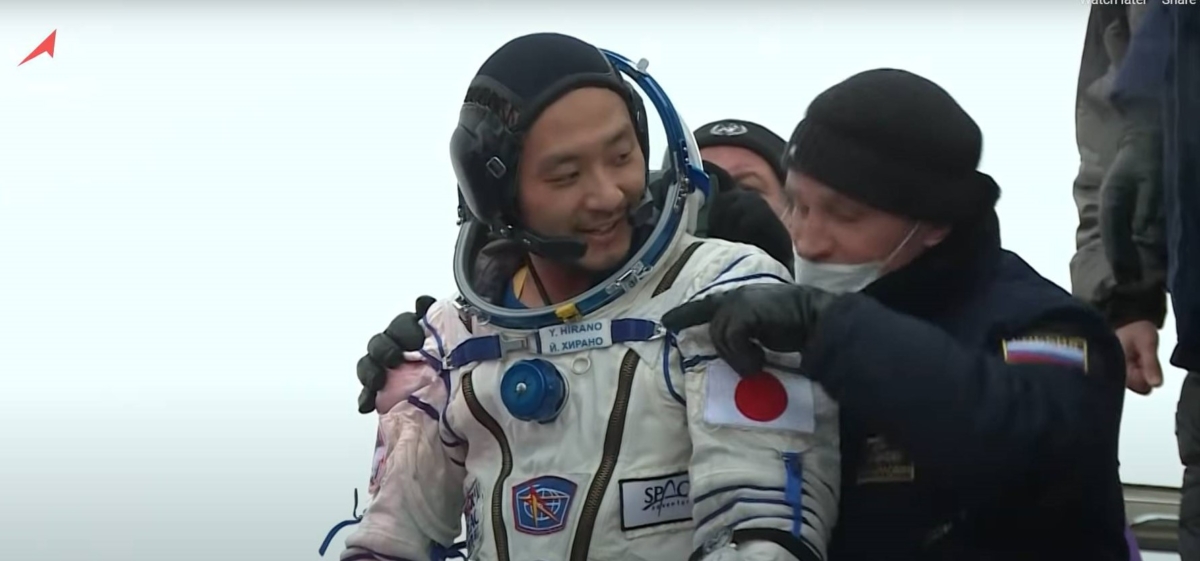
The Soyuz MS-20 crewed spacecraft descent vehicle landed December 20 at the designated point in Kazakhstan. The “tourist’ crew” of Roscosmos cosmonaut Alexander Misurkin and Japanese spaceflight participants Yusaku Maezawa and Yozo Hirano are back on terra firma – all in good health.
The space travelers stayed 11 days onboard the International Space Station.
Roscosmos sent the two space tourists — Japanese billionaire Yusaku Maezawa and his assistant Yozo Hirano — from launchpad Vostok of Site 31 of the Baikonur Cosmodrome on December 8.

Credit: Roscosmos/Inside Outer Space screengrab
Post-flight rehabilitation
In a statement from Roscosmos, the just-returned space crew will enter a program of post-flight scientific experiments and rehabilitation. Misurkin, Maezawa, and Hirano traveled to the Prelaunch Training and Post-Flight Rehabilitation Complex for Cosmonauts of Star City (Moscow Region).
“The crew’s rehabilitation will last from 14 to 21 days, depending on how the crew feel. During this time, the cosmonauts regain normal physical form, under the supervision of doctors, they go swimming, hiking and gradually increase the load on the muscles,” a Roscosmos statement explains.
Deep space medical experiment
On December 21 veteran cosmonaut Misurkin will continue his participation in the Lazma medical experiment, which began in the Gagarin Cosmonaut Training Center before the flight, and then continued during the orbital mission. The Sozvezdiye-LM experiment also remains traditional with the main purpose to study the human capability to fly into deep space and work on the surfaces of the Moon and Mars. Misurkin has logged 346 days and 7 hours on three space missions.
Credit: Roscosmos/Inside Outer Space screengrab
The duo’s space tourist journey lasted a total of 12 days under the command of cosmonaut Misurkin. Space Adventures has been cooperating with Roscosmos since the world’s first space tourist flight in 2001. The successful completion of the flight by their clients, Maezawa and Hirano, makes them the eighth and ninth private astronauts to have visited the space station with Space Adventures and the private first spaceflight participants from Japan.
Maezawa is one of the richest people in Japan as founder of the online clothing store Zozotown. In addition, he is an art collector and founder of the Contemporary Art Foundation.
Hirano joined Zozo after graduating as a casting director for a photography group. He currently works as a producer for SPACETODAY. On the ISS, Hirano was responsible for covering the flight of Maezawa.

Pre-flight photo of Japanese spaceflight participants Yozo Hirano (left) and Yusaku Maezawa (right) with Alexander Misurkin (center).
Credit: Roscosmos
Preventive measures
The space tourists took part in the station’s scientific program: in particular, in the Lazma medical experiment, aimed at studying blood microcirculation in microgravity conditions.

Space tourist crew onboard the ISS.
Credit: Roscosmos via Space Adventures
“The results obtained during the study will further help in the development of preventive measures. The improvement of existing preventive measures is especially important for prospective deep-space flights,” stated Roscosmos. “The elimination of unpleasant symptoms associated with circulatory disorders will help cosmonauts avoid getting sick and maintain high performance on the station. Thanks to the Japanese tourists, this is the first time this project has been carried out aboard the ISS.”
A just-issued video shows the Soyuz MS-20 crew being extracted from their landed space capsule.
Go to: https://youtu.be/0Yq5rWZS02E

Long March-5 at the launch pad. Chinese Lunar Exploration Program (CLEP) insignia: a lunar crescent with two footprints at its center. The symbol resembles the Chinese character for “Moon.”
Credit: CCTV/Inside Outer Space screengrab
A senior official at the China Manned Space Agency reports that the country is making preparations for a human Moon landing.
According to China Daily, Dong Nengli, head of the agency’s technology bureau, made the claim at a news conference at the Publicity Department of the CPC Central Committee in Beijing last Friday.
Dong said that space program planners and engineers are researching the road map and technologies for a crewed Moon landing.
“The results of their work will be seen in due course. Our astronauts will definitely touch down on the Moon,” Dong told reporters.

Credit: CCTV-Plus
Long-term plan
The China Daily report also adds that China’s space authorities have a long-term plan to land astronauts on the Moon and set up at least one scientific station on the lunar surface. By using crewed lunar missions, the intent is to carry out scientific surveys and technological research, explore ways to develop lunar resources and strengthen the nation’s space capabilities.
In September 2020, Zhou Yanfei, a deputy chief designer of China’s manned space program, said that the country has the capacity to independently land astronauts on the Moon because of its technologies, well-trained, innovative professionals and efficient research and management systems.

Video conference to sign agreement on China/Russia cooperation on constructing an international scientific and research station on the Moon.
Credit: Roscosmos
Wanted: new booster
Toward that goal, Wang Yanan, editor-in-chief of Aerospace Knowledge magazine, has stated that Chinese engineers, to achieve a humans-to-the-Moon program, there’s need to build new, stronger carrier rockets and spacecraft.
“The nation’s current rockets and manned spaceships can’t send astronauts to the Moon because they are not designed for such a mission. We need to design a new rocket, a new spacecraft, a lunar landing capsule and a new spacesuit fit for a moon walk. We also need to upgrade our ground support system that was designed for operations in low-Earth orbit rather than on the lunar surface,” Wang explained.

China’s Long March-5 booster – but planting taikonauts boots on the Moon requires a bigger, more powerful booster.
Credit: CASC
Earth-Moon trajectory
Meanwhile, according to China Daily, designers at the China Academy of Launch Vehicle Technology are blueprinting a super-heavy rocket that will be several times bigger and more powerful than the Long March-5.
That booster would have a length of nearly 295-feet (90 meters) and have a liftoff weight of about 2,000 metric tons. The launcher would be capable of placing a 25-ton spacecraft into an Earth-Moon trajectory, designers stated, adding that this new rocket will provide the capability to boost China’s piloted Moon project into reality.
In an earlier interview with China Central Television, Chinese Academy of Sciences member Ye Peijian said: “As long as the technological research for manned moon landing continues, and as long as the country is determined, it is entirely possible for China to land people on the Moon before 2030.”

