Author Archive
 Author:
  March 4th, 2022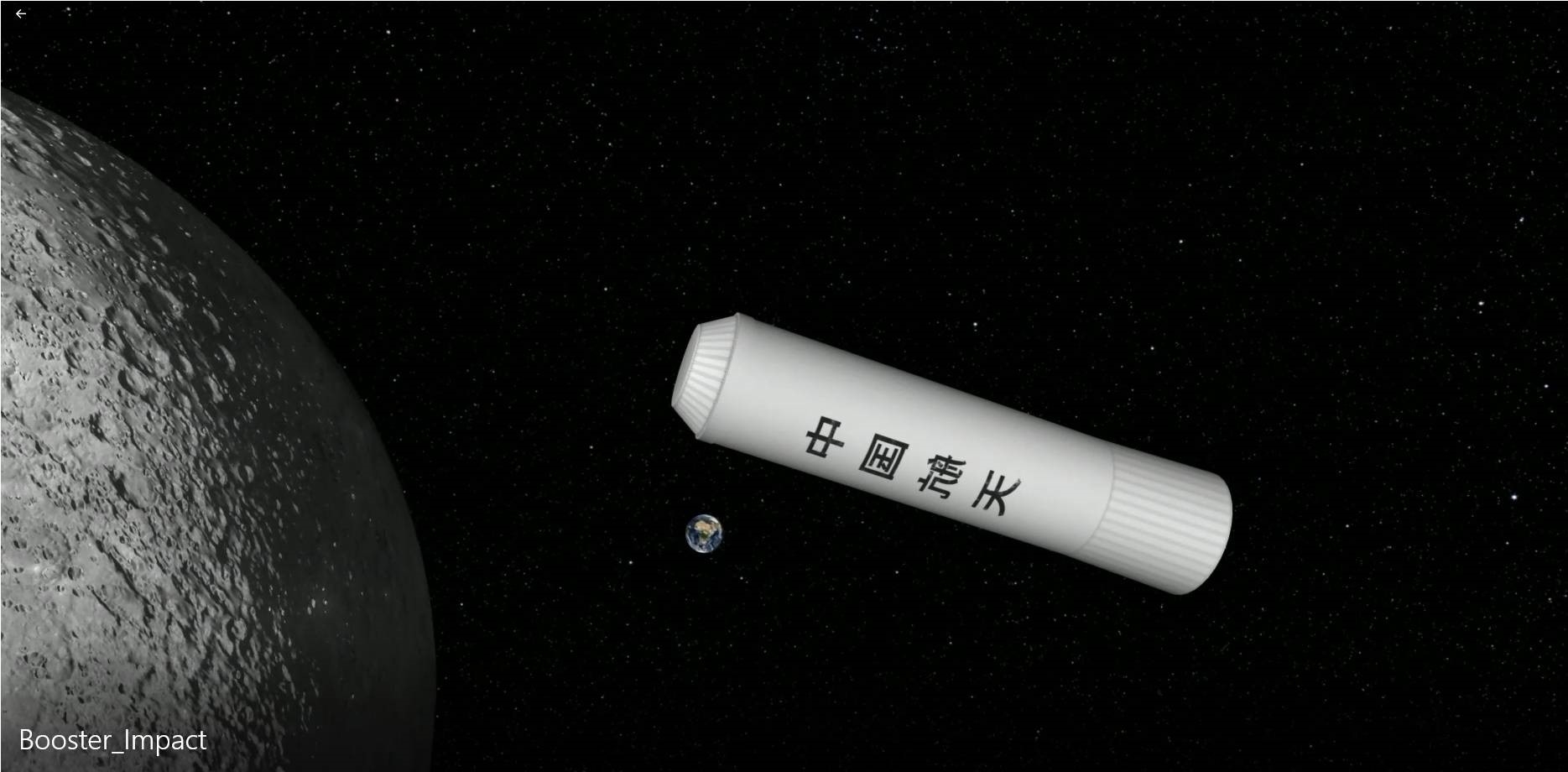
AGI, an Ansys company, reconstructed the stage impact circumstances using specialized software.
Credit: AGI
That out-of-control rocket stage has smacked into the Moon’s far side, given early predictions of its scheduled demise. The discarded hardware has been identified as a wayward Chinese Long March 3C rocket stage from the Chang’e 5-T1 mission in 2014.
Tagging the out-of-control stage to China comes from Bill Gray, manager of Project Pluto that supplies astronomical software, both commercial and freeware, to amateur and professional astronomers.
“I am quite confident that it impacted,” Gray told Inside Outer Space. “We had lots and lots of tracking data for the object, and there is nothing acting on it except the forces of gravity and sunlight. The effects of gravity are almost perfectly accounted for.”
The sunlight effects might be off by a few kilometers, Gray said, but nowhere near enough to turn the impact into a miss.
“Unless the object was removed by an occult hand, it hit the Moon a few hours back,” Gray said.
Nominal trajectory
Just to be sure the stage did auger in, there will be a search for the object along its nominal trajectory with optical telescopes next week to make sure nothing is there, said Vishnu Reddy at the University of Arizona in Tucson.

Vishnu Reddy and his student researchers at the University of Arizona.
Credit: Mikayla Mace Kelley, University Communications/University of Arizona
Reddy and his student researchers have made early observations of the errant upper stage using the Rapid Astronomical Pointing Telescopes for Optical Reflectance Spectroscopy (RAPTORS) system, a telescope atop the Kuiper Space Sciences building on campus.
“Then we wait for the crater images from LRO,” Reddy told Inside Outer Space. NASA’s Lunar Reconnaissance Orbiter’s powerful camera system will scan the anticipated impact zone — in the vicinity of the large Hertzsprung Crater — to look for the crash site.

NASA’s Lunar Reconnaissance Orbiter (LRO).
Credit: NASA’s Goddard Space Flight Center Conceptual Image Lab
Upshot
Additionally, onboard LRO instruments are on tap to scan for any upshot from the rocket stage impact.
“LRO won’t be close enough to the crash to observe it as it’s happening,” said David Paige, a planetary scientist at the University of California, Los Angeles. LRO’s Lyman Alpha Mapping Project (LAMP) sensor will attempt to point at the limb to observe the impact plume, he said.
“Eventually, we will hopefully find the crash site. However, the targeting of this is highly uncertain, so it might be like trying to find a needle in a haystack,” Paige said.
If found, then LRO’s Diviner Lunar Radiometer Experiment can observe it and hopefully detect evidence of the crash from orbit, Paige said, perhaps in a few months from now. Paige is the principal investigator for Diviner.
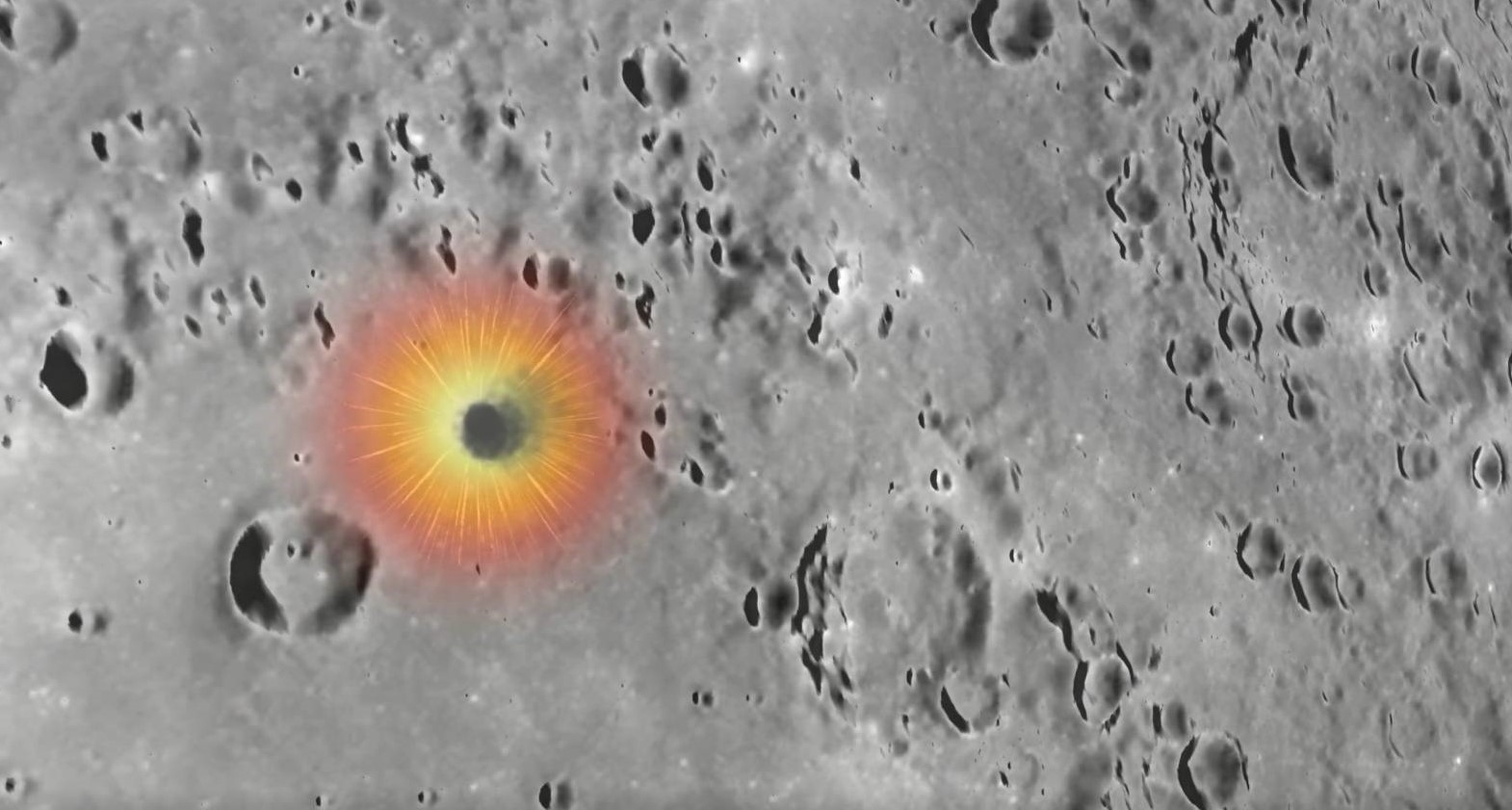
AGI, an Ansys company, reconstructed the stage impact circumstances using specialized software.
Credit: AGI
Approach and impact simulation
Meanwhile, a physics-based animation simulating the rocket’s approach and impact has been issued by Analytical Graphics, Inc. (AGI), headquartered in Exton, Pennsylvania.
A Systems Tool Kit (STK) and other fancy computer software was put to the task said Alex Lam of AGI. “Nearly seven years after launch and several harmless flybys of the Moon, the orbit became altered. A series of three flybys set up the booster for its eventual demise,” Lam said. These flybys occurred on September 18, 2021, January 5, 2022, and February 5, 2022.
The tumbling of the China’s booster resulted in a time-varying force caused by solar radiation pressure impinging on the spent hardware’s sunlit side and introduced new complexities for an accurate model of the forces on its body, Lam added.
Using STK’s Electro-Optical Infrared (EOIR) capability, AGI modeled the LRO’s wide angle camera with publicly available technical specifications and created a rendering of what it might see on its pass at the end of March.
Credit: AGI
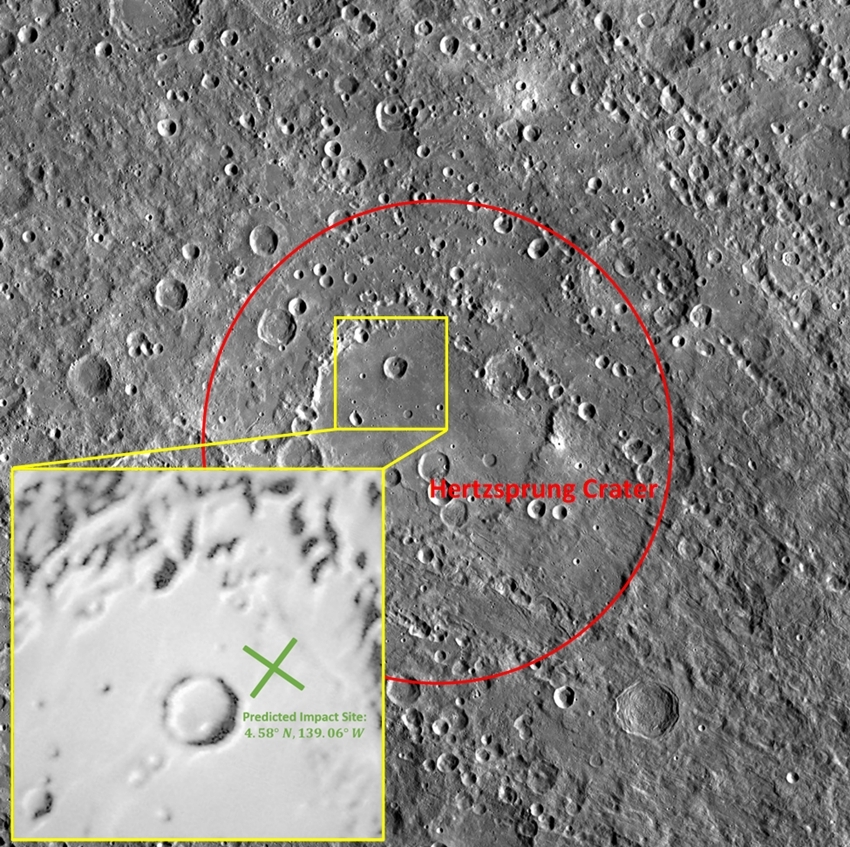
“With this newly processed data, we found that the booster will impact the Moon at 4.58° N, 129.06° W on March 4, 2022, 12:26:58 UTC. This changes our impact time by about one minute and moves the impact site prediction by just over [155 miles] 250 kilometers, closer to the center of the Hertzsprung Crater,” Lam said.
With a little bit of luck
While the impact won’t be viewed in real time, satellites orbiting the Moon may see the aftermath.
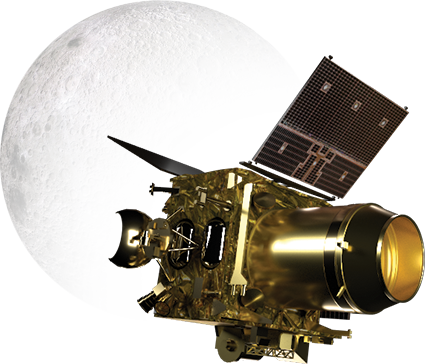
India’s Chandrayaan-2’s Moon orbiter.
Credit: ISRO
In particular, NASA’s LRO and the Indian Space Research Organization’s Chandrayaan-2 may be able to pick out the new crater created by the booster’s impact, Lam added. “Both satellites have onboard cameras capable of imaging the predicted crash site, and if we’re lucky we might find it!”
“With these orbits, we expect that the LRO’s first post-impact pass over the sunlit Hertzsprung Crater will occur on March 28, 2022, and Chandrayaan-2’s first pass will come shortly after on April 4, 2022,” Lam said. “Pending instrument availability and a little bit of luck, we might be able to catch a glimpse of the booster’s remnants! Additionally, the impact crater is likely to expose some fresh lunar crust for imaging by these satellites, and the resulting data may have scientific value for geologists researching the Moon.”
To view the informative AGI video – “Alternate View of Chang’e 5-T1 Booster Impact” – go to:
 Posted in

Impact zone of the Chang’e 5-TI booster, expected to slam into the northern end of Hertzsprung crater, a large impact crater on the far side of the Moon.
Credit: NASA/LROC/ASU/Scott Sutherland
The time grows closer for that wayward rocket stage to bombard the Moon and the March 4 impact on the Moon’s far side has earned scientific attention.
The Goldstone Solar System Radar near Barstow, California was set to observe the object a few days before impact.
But the radar track had to be cancelled on March 1, one day before the planned track yesterday, due to an equipment problem affecting a powerful transmitter at the site, said Jon Giorgini, an engineer at NASA’s Jet Propulsion Laboratory.
“It is still being worked and I’m told there is no chance rescheduling a track prior to the March 4 impact,” Giorgini said.
Meanwhile, NASA’s Lunar Reconnaissance Orbiter (LRO) will be used to look for burps in the Moon’s exosphere — a very thin layer of gases — due to the crash and then later scan the lunar surface for the impact crater itself.
“LRO is ready for the impact, the tracking from last week gave us slight updates to timing and a range of predicted impact points,” observes Noah Petro, Project Scientist for the LRO at NASA Goddard Space Flight Center. “We’re ready! It may be some time for the data to be analyzed to see what we detect, if anything,” he points out.
Then LRO will set about to spot the crater, starting about a month from now when the spacecraft passes over the site in daylight, Petro adds.

At the ready! NASA’s Lunar Reconnaissance Orbiter (LRO).
Credit: NASA/GSFC
The discarded rocket booster is on track to slam into Hertzsprung Crater on the far side of the Moon, the first known piece of litter to inadvertently smack into the lunar surface.
Booster identified
Originally, the booster was thought to be part of a SpaceX Falcon 9 rocket that launched the National Oceanic and Atmospheric Administration’s Deep Space Climate Observatory in 2015.
However, the object is now tied to a Chinese Long March 3C rocket that blasted off in 2014.
Tagging the out-of-control stage to China comes from Bill Gray, manager of Project Pluto that supplies astronomical software, both commercial and freeware, to amateur and professional astronomers.

Following a circumlunar voyage in 2014, a return capsule parachuted to Earth. This test was a prelude to China’s Chang’e-5 lunar mission.
Courtesy: China Space
“There really is no good reason at this point to think the object is anything other than the Chang’e 5-T1 booster,” Gray told Inside Outer Space earlier. “Anybody claiming otherwise has a pretty large hill of evidence to overcome.”
That Chinese booster tossed an experimental spacecraft tagged as Chang’e-5-T1 that looped behind the Moon and returned to Earth to test atmospheric re-entry capabilities for 2020’s Chang’e-5 lunar sample return mission.
Chang’e-5-T1 also carried a secondary payload of scientific instruments in the upper stage of the Long March rocket on behalf of the Luxembourg-based company LuxSpace.

The LuxSpace 4M mission was dedicated to the late Manfred Fuchs. 4M stands for the Manfred Memorial Moon Mission.
Credit: OHB/LuxSpace
Cratering process
This event will be similar to the Apollo Saturn SIVB impacts in the past, in that the projectile is more or less a tin can, explains Jeffrey Plescia, a planetary scientist at the Johns Hopkins University’s Applied Physics Laboratory. “The result is that a lot of the energy goes into crushing the projectile rather than excavating the crater,” he tells Inside Outer Space.
The SIVB stages, as well as U.S. Ranger Moon probe craters are shallower than a normal crater and typically have an asymmetric shape, related for the most part to the low impact angle, Plescia adds. “Always good to know the parameters of the projectile for better understanding the cratering process.”

The crater in the center of this image was formed by Apollo 14’s Saturn IVB booster, intentionally impacted into the lunar surface on Feb. 4, 1971. The impact caused a minor “moonquake” that scientists used to learn about the Moon’s interior structure. Seismometers placed earlier on the surface by Apollo astronauts returned data on the tremor.
Credits: NASA/Goddard Space Flight Center/Arizona State University
Plescia notes that the impact event can be more reliably measured – such as depth of the resulting crater — as pre-impact images have been taken by LRO’s powerful camera system of the crash site.
“The only uncertainty at the moment is the orientation of the booster with respect to the trajectory. It is spinning but whether it is just turning in rotisserie mode or tumbling is not clear,” Plescia says. “I would hope the Chinese actually know this and would be forthcoming.”
Paint of a different stripe
Enter Vishnu Reddy and his student researchers at the University of Arizona in Tucson that have made observations of the errant upper stage.
Reddy and his team observed the Moon impactor on February 7, obtaining a spectrum of the object. They utilized the Rapid Astronomical Pointing Telescopes for Optical Reflectance Spectroscopy (RAPTORS) system, a telescope atop the Kuiper Space Sciences building on campus.

Credit: University of Arizona
“Then we compared its spectrum to those of a Falcon 9 2nd stage booster of similar provenance as the DSCOVR mission and a Chinese booster of similar provenance as the Chang’e 5 T-1 mission,” Reddy explains. The differences in spectrum were chiefly due to the type of paint used by the Chinese contrasted to SpaceX.
Vishnu Reddy (second from left) and his student researchers at the University of Arizona with RAPTORS system.
Credit: Mikayla Mace Kelley, University Communications/University of Arizona
“Both these boosters were in Earth orbit and were launched around the same year as the Chang’e 5 T-1. The spectrum of the Moon impactor matches the Chinese booster better than the SpaceX booster. Given the dynamical evidence cited by Bill Gray, we feel that our spectral observations are consistent with a Chinese origin.”
“Radar will help pinpoint the impact location better as the booster is getting tossed around by solar radiation pressure,” Reddy told Inside Outer Space. “It will still hit the far side of the Moon around the Hertzsprung crater area, but the impact point might shift a kilometer or so either way.”
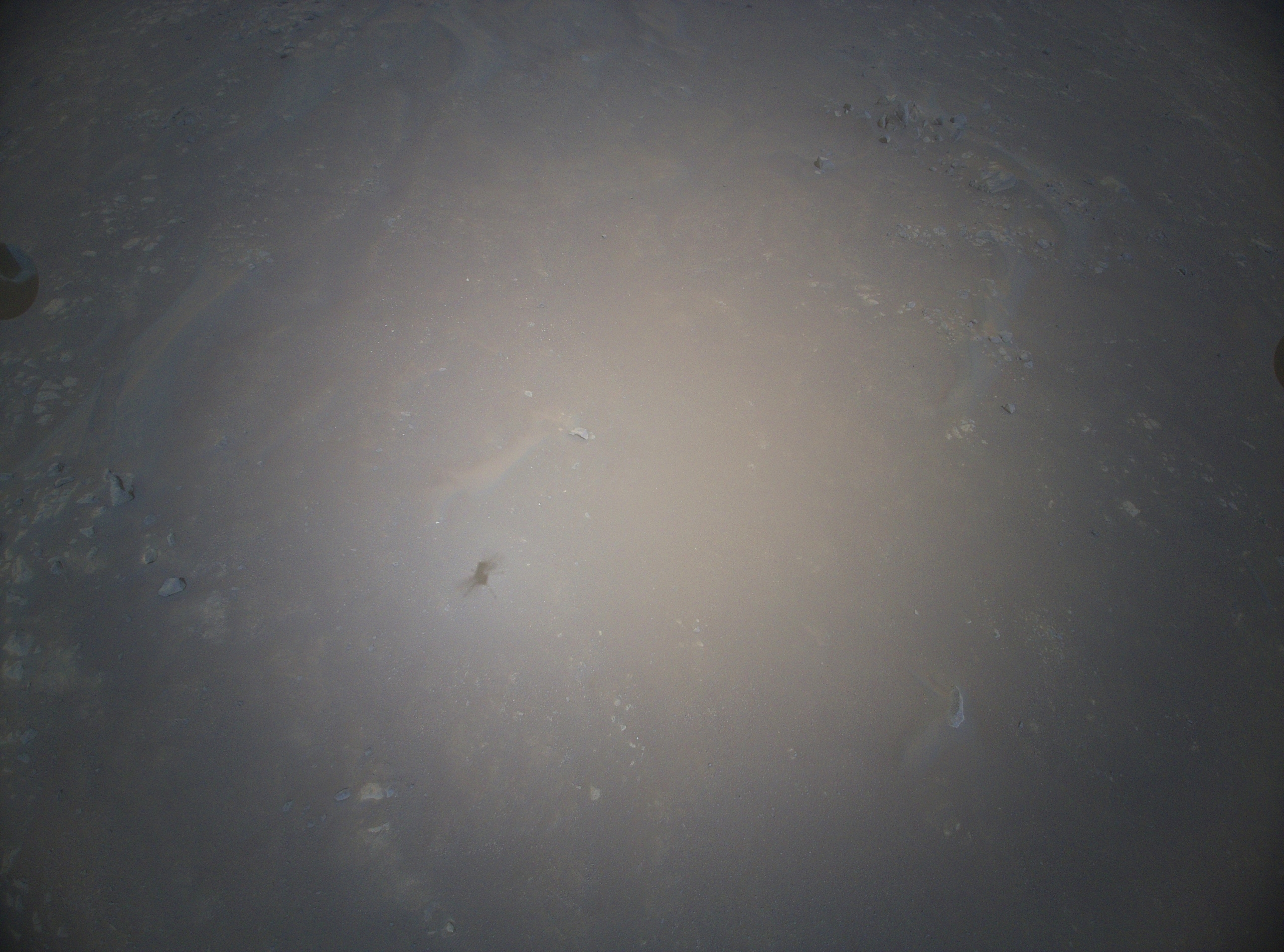
Credit: NASA/JPL-Caltech
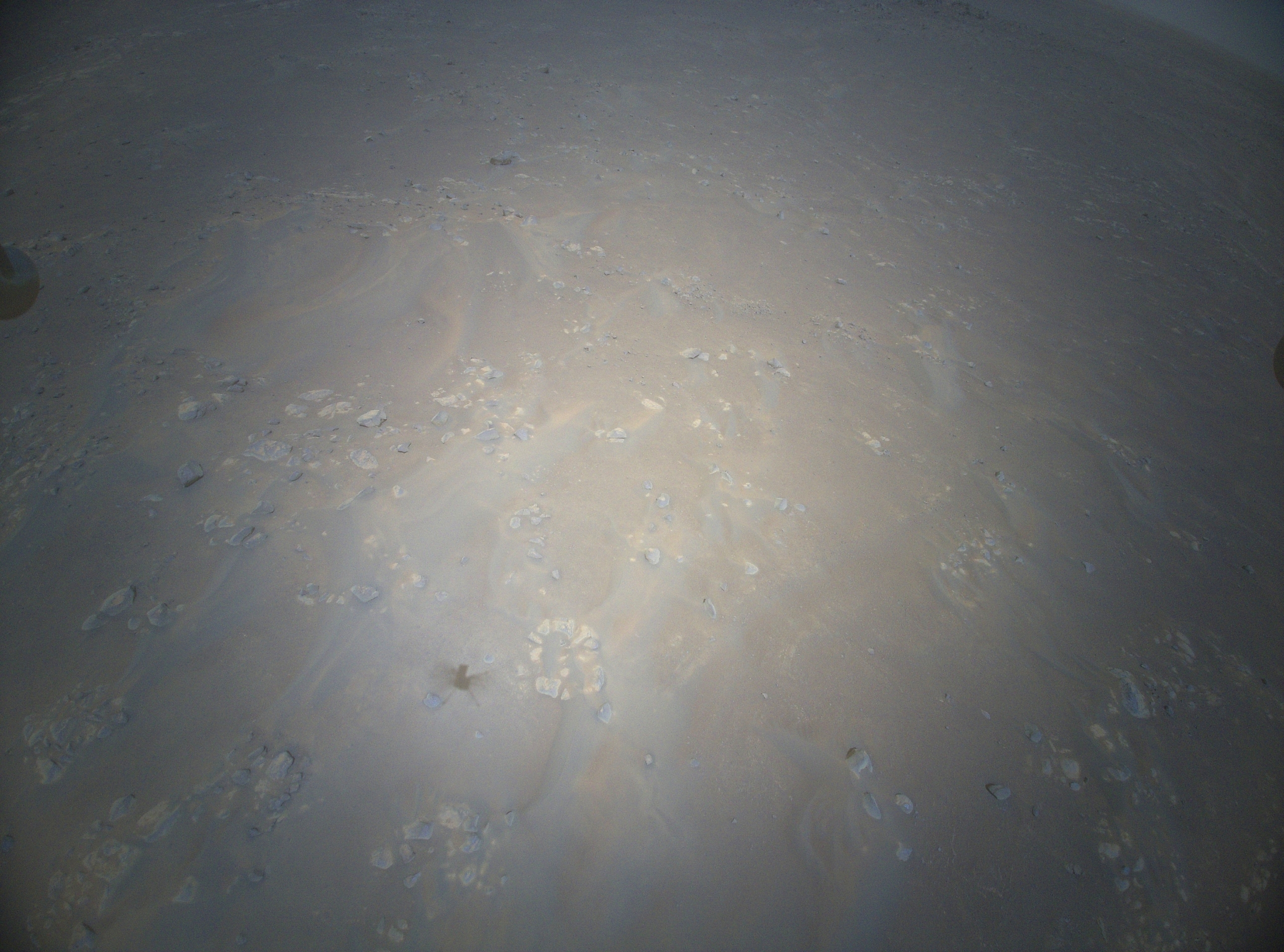
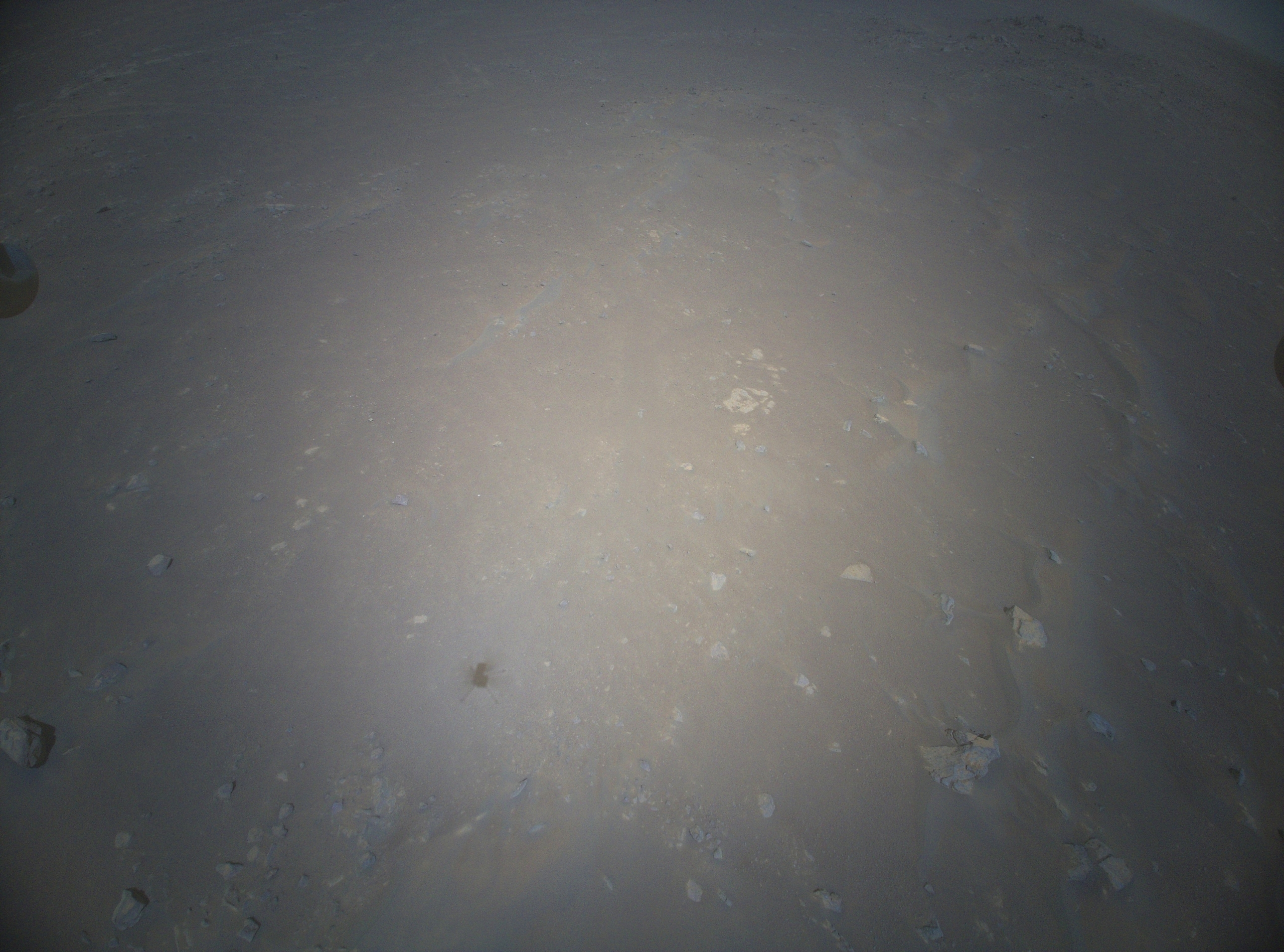
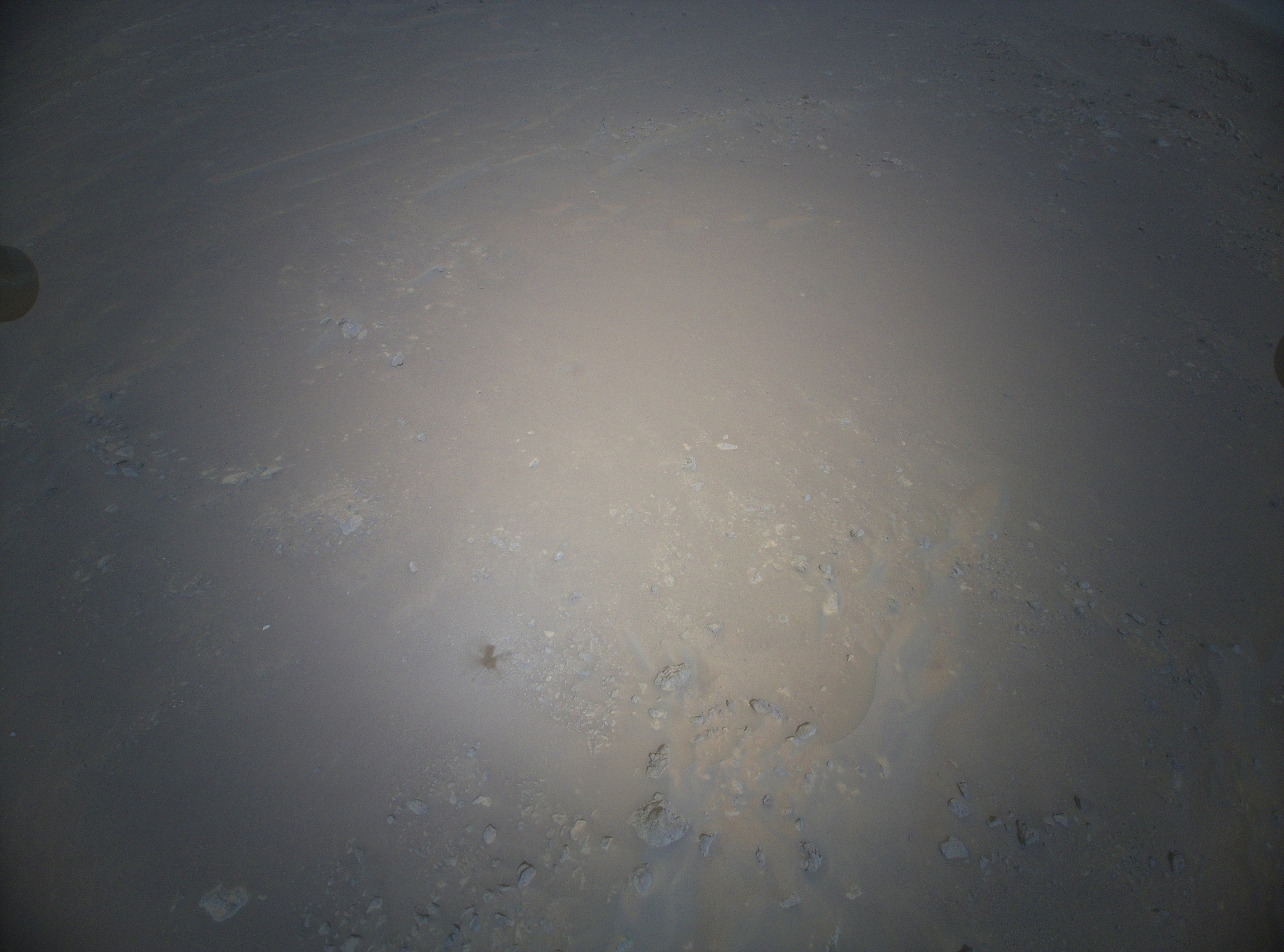
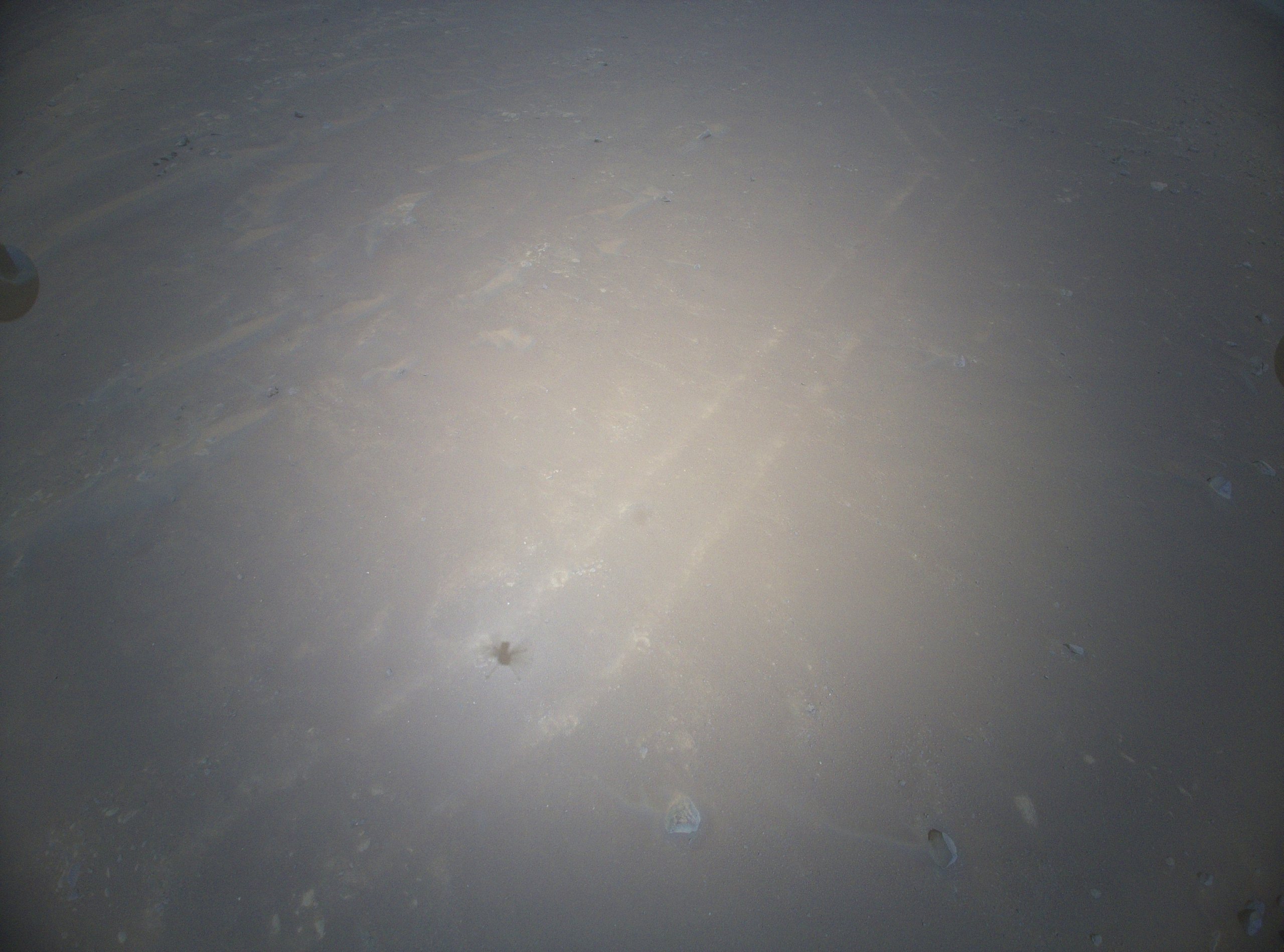
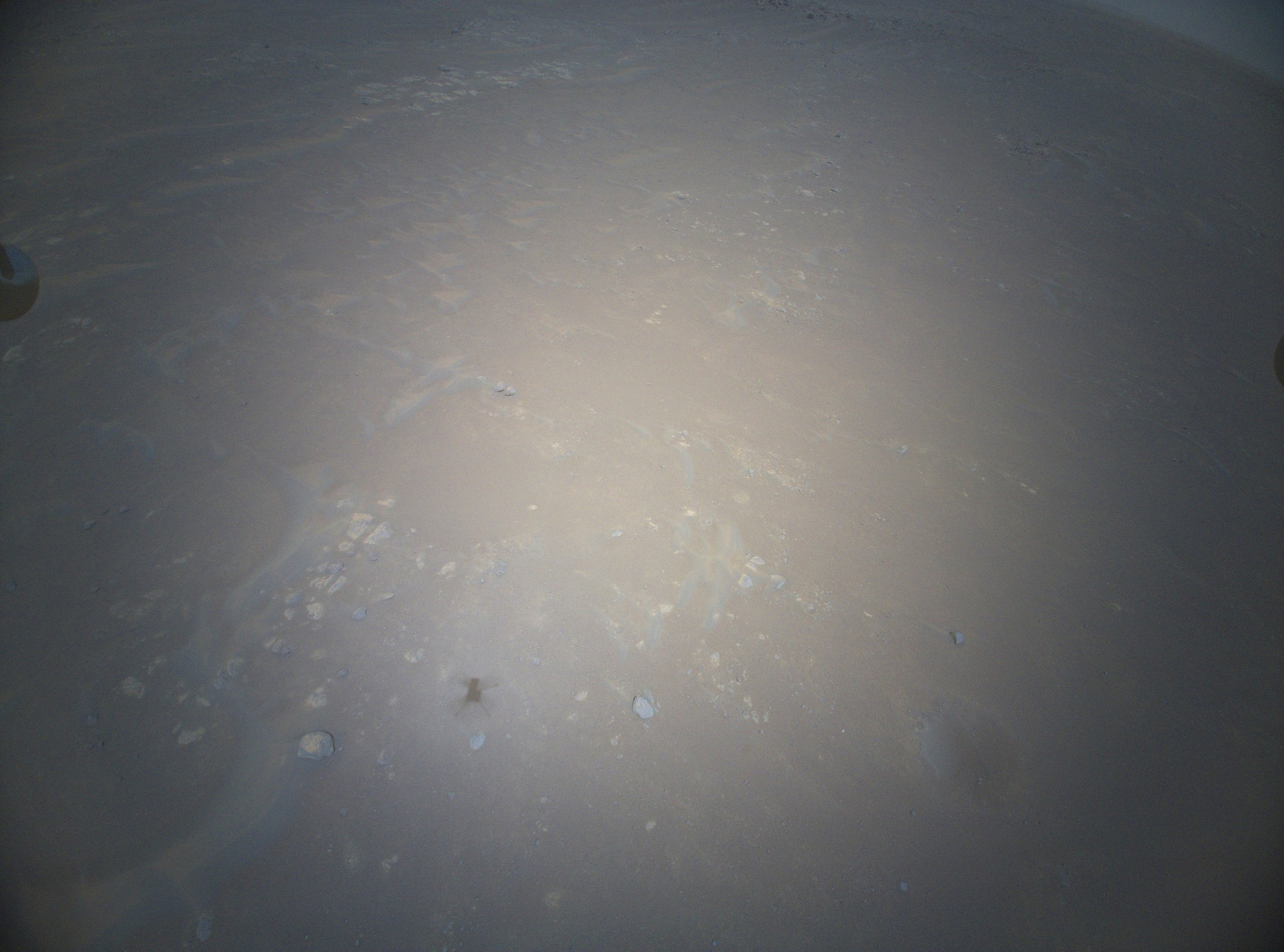
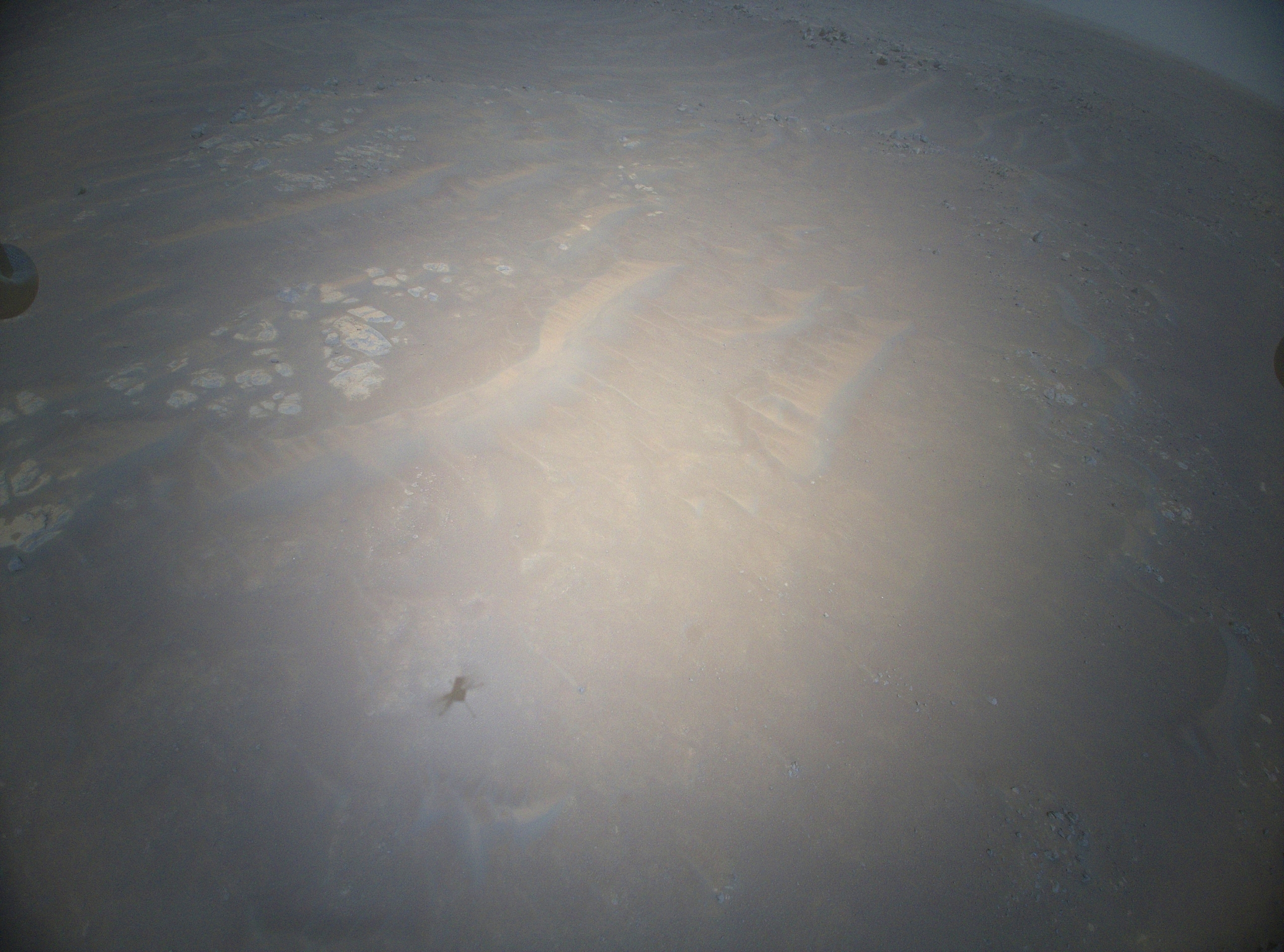
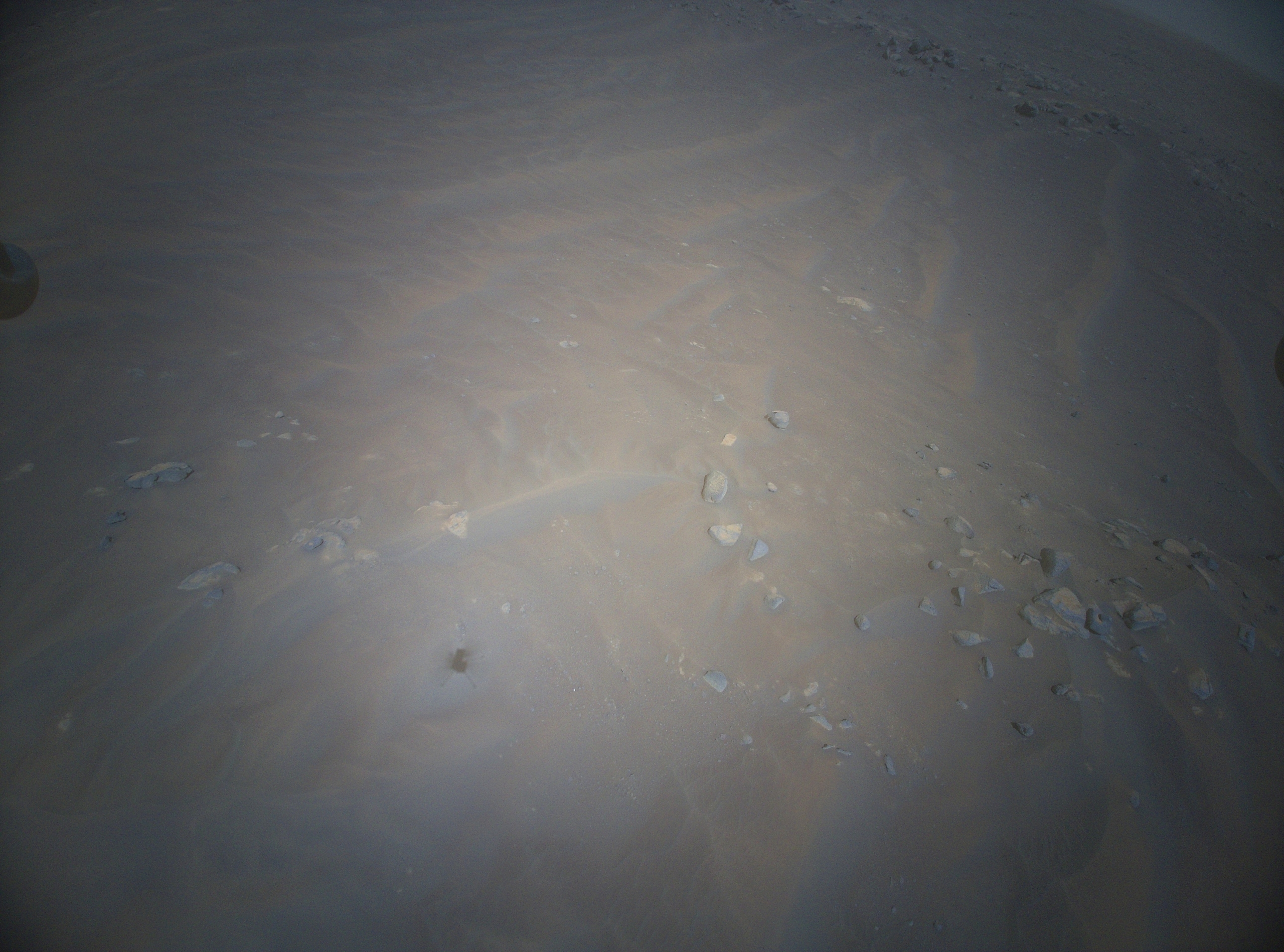
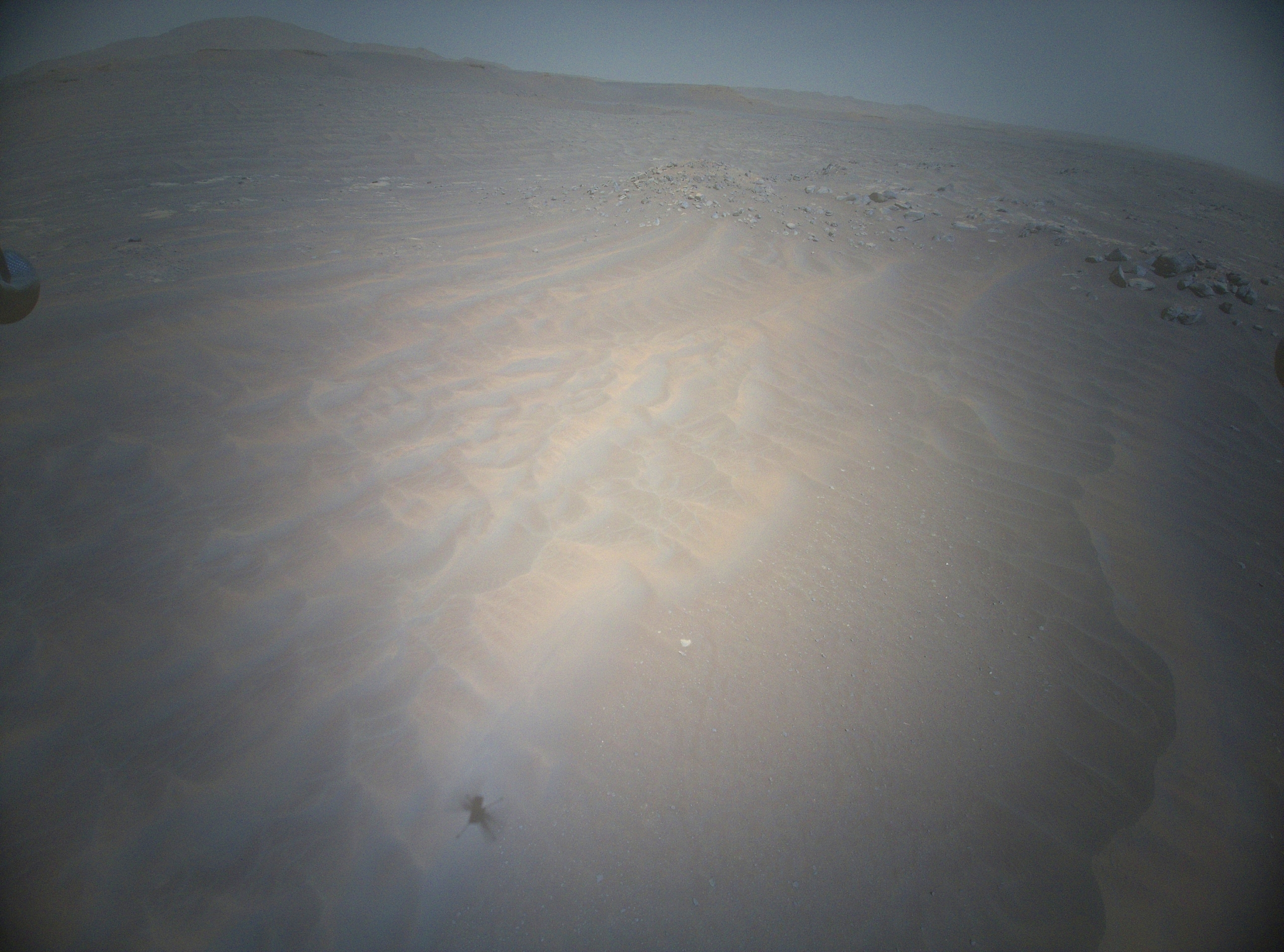
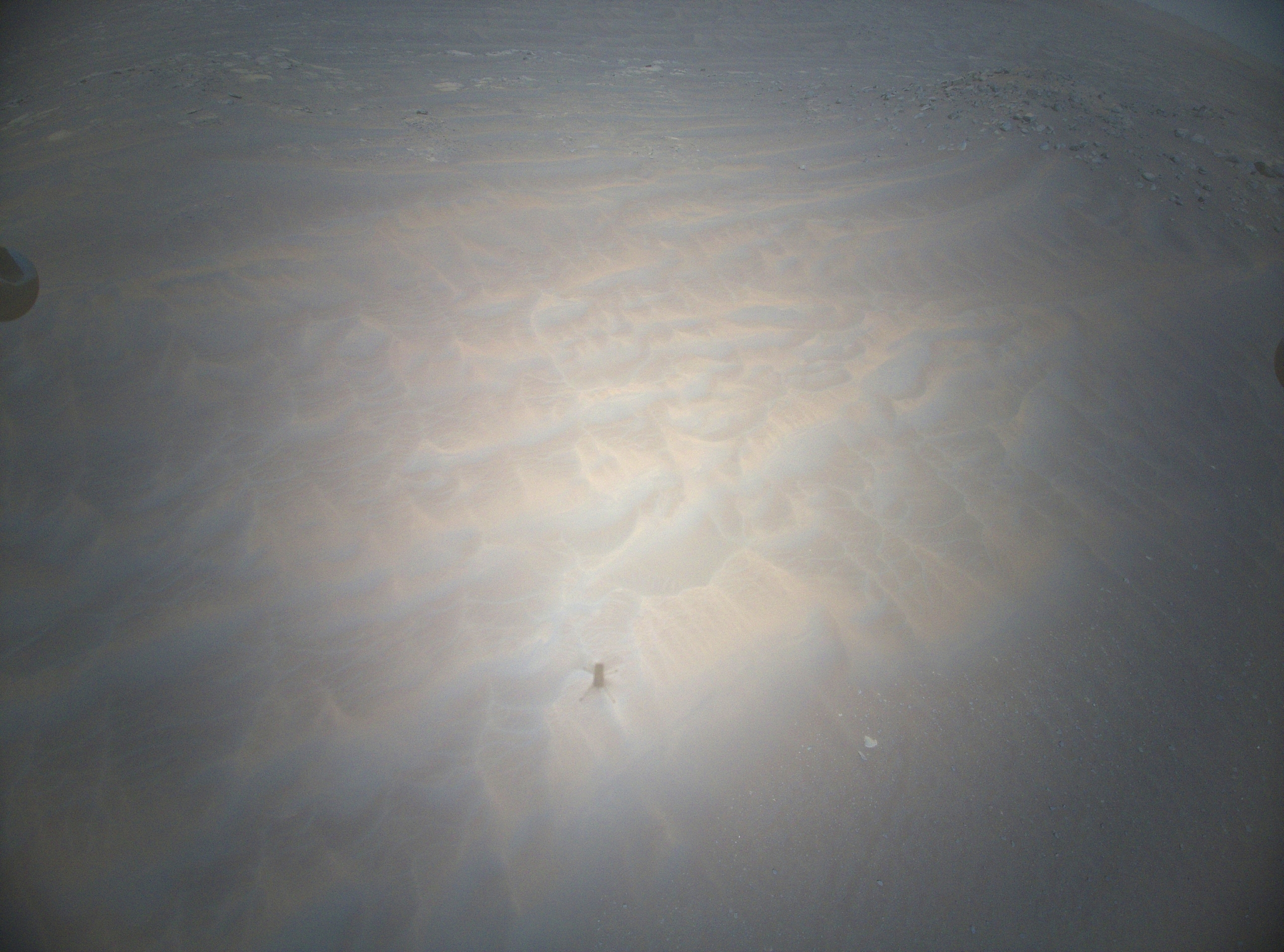
New color imagery taken by NASA’s Ingenuity helicopter on Mars has been posted.
These images were acquired by the aerial device using its high-resolution color camera, mounted in the helicopter’s fuselage and pointed approximately 22 degrees below the horizon.
Photos were acquired on Feb. 25, 2022 (Sol 362 of the Perseverance rover mission). This was the date of Ingenuity’s 20th flight.
The craft flew roughly 1,283 feet, reaching roughly 33 feet in altitude and attained a speed of approximately 10 miles per hour.
Credit: NASA/JPL-Caltech
Credit: NASA/JPL-Caltech
Credit: NASA/JPL-Caltech
Credit: NASA/JPL-Caltech
Credit: NASA/JPL-Caltech
Credit: NASA/JPL-Caltech
Credit: NASA/JPL-Caltech
Credit: NASA/JPL-Caltech
Credit: NASA/JPL-Caltech

Credit: NASA/JPL-Caltech

Artist’s impression of the ExoMars 2020 rover and Russia’s stationary surface platform in background.
Credit:
ESA/ATG medialab
Note: The ExoMars 2022 mission has been slated for September 20 (the opening of a 12-day launch window); lifting off from Baikonur, Kazakhstan atop a Proton booster.
European Space Agency (ESA) statement regarding cooperation with Russia following a meeting with Member States on February 28, 2022:
“We deplore the human casualties and tragic consequences of the war in Ukraine. We are giving absolute priority to taking proper decisions, not only for the sake of our workforce involved in the programmes, but in full respect of our European values, which have always fundamentally shaped our approach to international cooperation.

ESA is an intergovernmental organisation governed by its 22 Member States and we have built up a strong network of international cooperation over the past decades, which serves the European and global space community through its very successful programmes.
We are fully implementing sanctions imposed on Russia by our Member States. We are assessing the consequences on each of our ongoing programmes conducted in cooperation with the Russian state space agency Roscosmos and align our decisions to the decisions of our Member States in close coordination with industrial and international partners (in particular with NASA on the International Space Station).
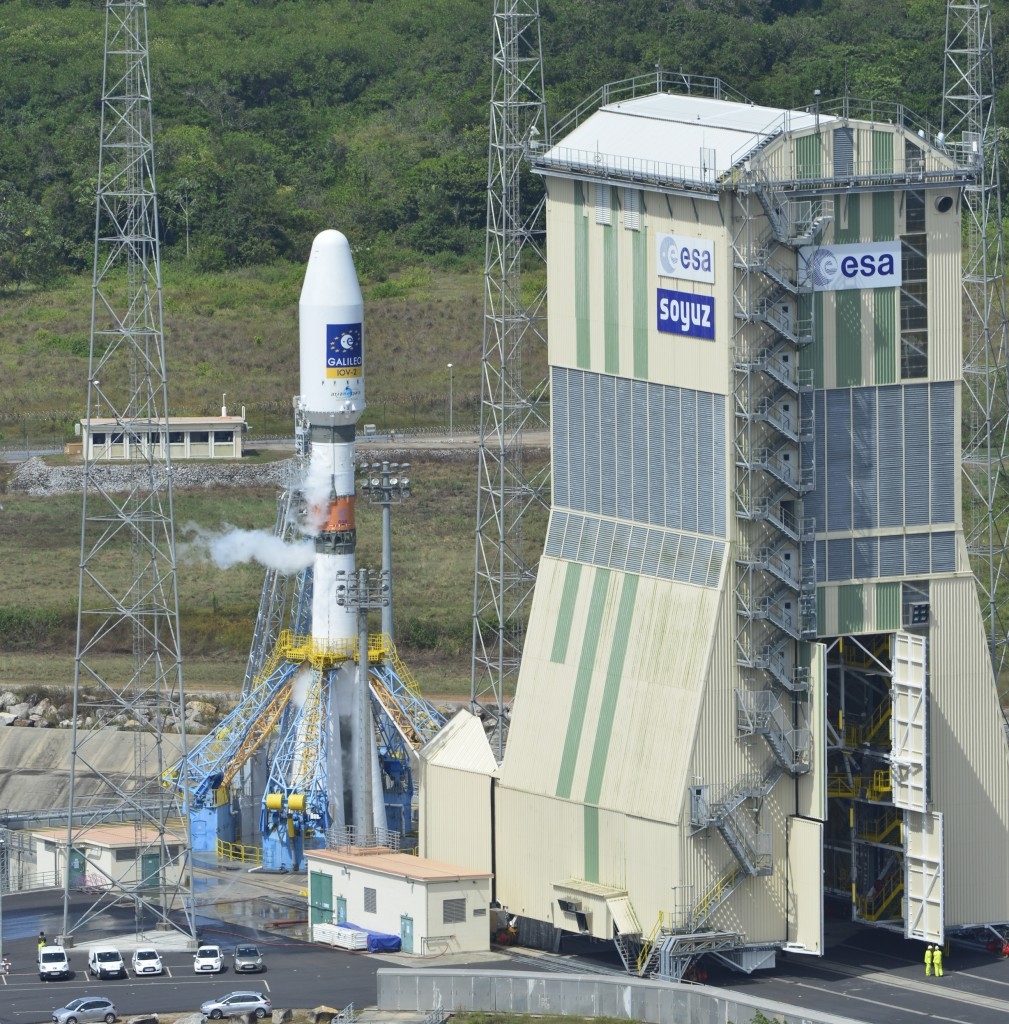
Regarding the Soyuz launch campaign from Europe’s Spaceport in Kourou, we take note of the Roscosmos decision to withdraw its workforce from Kourou. We will consequently assess for each European institutional payload under our responsibility the appropriate launch service based notably on launch systems currently in operation and the upcoming Vega C and Ariane 6 launchers.
Credit: ESA
Regarding the ExoMars programme continuation, the sanctions and the wider context make a launch in 2022 very unlikely. ESA’s Director General will analyse all the options and prepare a formal decision on the way forward by ESA Member States.
ESA continues to monitor the situation in close contact with its Members States.”

(Click on image) The Hunga Tonga-Hunga Ha’apai volcano eruption is seen from space in this NASA animation. (Image credit: NASA/NOAA/NESDIS)
On January 15, 2022, the Hunga Tonga-Hunga Ha’apai volcano erupted off the coast of Tonga in the South Pacific Ocean, generating a tsunami and triggering resulting wave action alerts around the world.
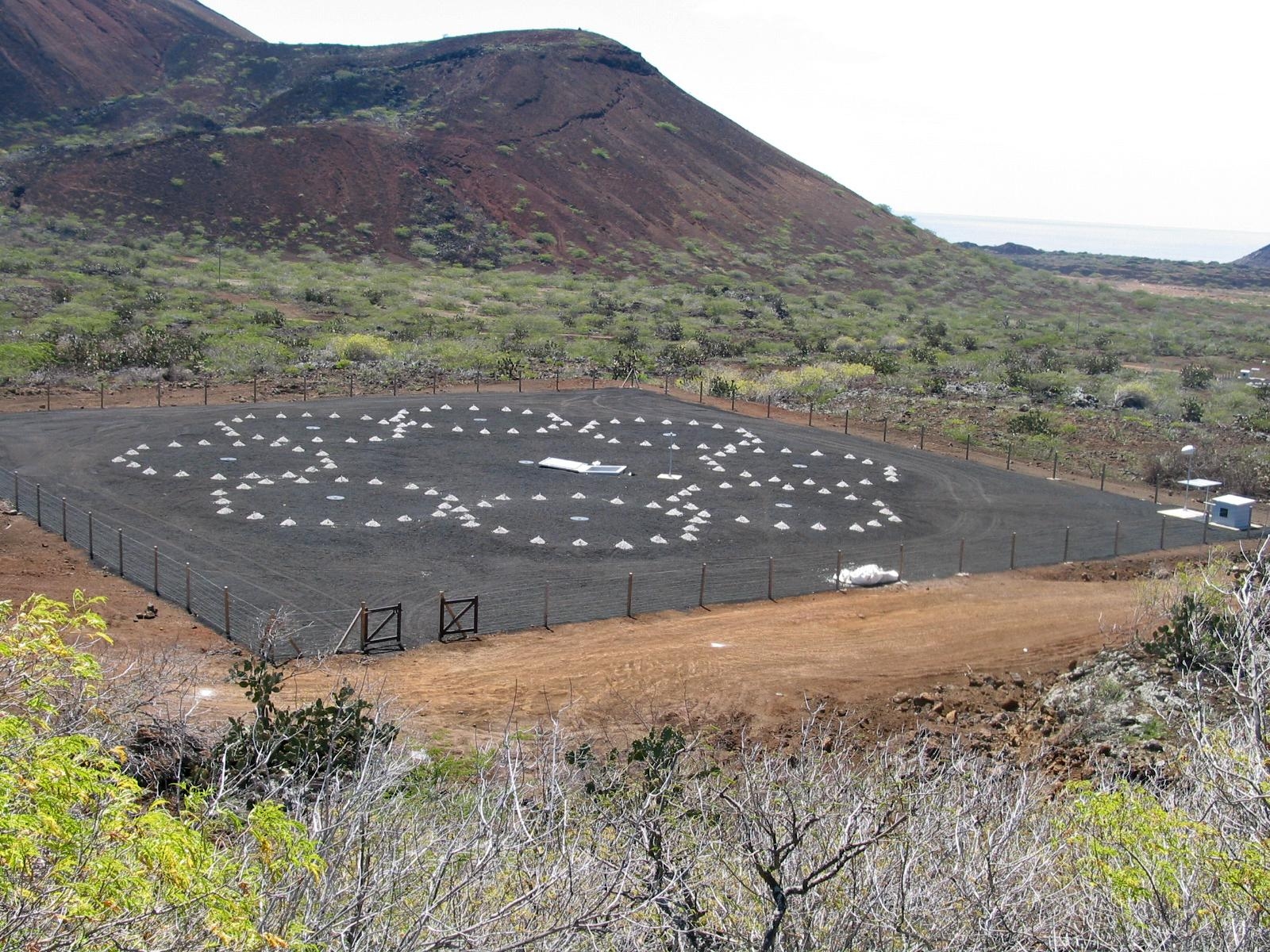
An infrasound station operated by the Comprehensive Nuclear-Test-Ban Treaty Organization (CTBTO). All 53 infrasound stations recorded the main eruption, at global ranges.
Credit: CTBTO
We now know quite a bit about the undersea upsurge. And there appears to be take-away messages for those concerned about an impacting space rock and creation of similar effects.
I reached out to noted experts in the asteroid impact field to gauge similarities between an undersea belch and Earth taking an asteroid punch in the oceans.

Comparative infrasound measurements between Chelyabinsk meteor airburst and Tonga eruption.
Credit: CTBTO
Indeed, data amassed from the Tonga occasion is keeping the scientific community busy.
To read my new Space.com story – “Tonga volcano eruption yields insights into asteroid impacts on Earth” – go to:
https://www.space.com/tonga-volcano-eruption-yields-asteroid-impact-insights

Starship and Super Heavy Stack.
Credit: SpaceX
A petition from the American Bird Conservancy is telling SpaceX and the Federal Aviation Administration (FAA) to prioritize birds and wildlife habitat at SpaceX’s Boca Chica operations facility.
That sprawling facility is home base for development of the SpaceX Starship.
“SpaceX is putting vulnerable birds and other wildlife at risk in the coastal region of Boca Chica, Texas. In its rush to launch the massive Starship rocket, the aerospace manufacturer has ignored its destructive impacts on sensitive surrounding habitat,” explains Michael J. Parr, President of the American Bird Conservancy in The Plains, Virginia.

Banner photos: SpaceX Debris by Kendal Keyes; Piping Plover by Ray Hennessy/Shutterstock via American Bird Conservancy
Parr adds that the area is inhabited by several imperiled species and used by hundreds of thousands of birds throughout the year, including the federally Threatened Piping Plover and Red Knot.
Ongoing construction, along with fires, and rocket debris falling from the sky have already impacted important habitats, Parr says, putting at-risk bird species in peril.
Little oversight
“Despite the area’s ecological importance,” Parr continues, “SpaceX has expanded operations with little oversight from the FAA.”
Rather than circumventing the appropriate environmental review process, Parr says that SpaceX should work with the FAA to conduct a full-scale environmental impact statement, as required by the National Environmental Policy Act.

Starship test flight.
Credit: SpaceX/Inside Outer Space screengrab
“The FAA is currently reviewing an environmental assessment of SpaceX’s Boca Chica operations facility. The draft assessment failed to provide a full picture of the facility’s environmental impacts, and it’s critical that we push for a comprehensive study,” Parr suggests. “Demand a full-scale, in-depth analysis of SpaceX’s environmental impacts before the FAA concludes its environmental assessment review.”
The project review has already been delayed by a deluge of comments from the public over 19,000 responses submitted, Parr points out, “showing the power of raising our voices.”

Habitat of the threatened Piping Plover in Boca Chica, littered with debris from SpaceX operations.
Photo credit: Coastal Bend Bays & Estuaries Program
Action alert
In Parr’s “action alert,” he writes that SpaceX continues pushing boundaries to meet an ambitious development plan that requires birds and the environment to pay too high a price. “The company has increased its scope well beyond what the FAA authorized in 2014, including testing a new 400-foot ship, much larger than originally specified, as well as the development of a natural gas facility to extract and deliver fuel to the site.”

Credit: SpaceX
While the American Bird Conservancy supports space exploration, Parr adds that it should not come at a high cost to the environment and wildlife here on Earth. “Too much sensitive public land has already been impacted by the SpaceX facility — and much more is at risk if we don’t raise our voices now.”
It is not too late to hold SpaceX accountable, Parr concludes.
The petition can be found here at:
https://act.abcbirds.org/a/take-action-petition-spacex?source=22_MoJo_SpaceX&ms=cpm
For more information on the American Bird Conservancy, go to:

Credit: China Media Group(CMG)/China Central Television (CCTV)/China Aerospace Science and Technology Corporation (CASC)
China launched a Long March-8 rocket on Sunday from the Wenchang Spacecraft Launch Site in the southern Hainan Province.
Tagged as a new generation carrier rocket, the Long March-8 Y2 placed 22 satellites into Earth orbit, setting a domestic record for the most spacecraft launched by a single booster.
A two-stage medium-lift carrier rocket, the Long March-8 is 165 feet (50.3 meters) long, with a takeoff weight of 356 tons. It uses liquid propellants with a 5-ton capacity for sun-synchronous orbit at an altitude of 435 miles (700 kilometers).

Credit: CCTV/Inside Outer Space screengrab
Designed for both land and sea takeoff, the rocket made its maiden flight on Dec. 22, 2020 from the Wenchang coastal launch site.
Long March-8 Y2 is the second Long March-8 launch vehicle and the first to be launched without boosters.

Credit: Twitter image via Seger Yu
According to sources, the 22 satellites “will be mainly used for commercial remote sensing services, marine environment monitoring, forest fire prevention and disaster mitigation.”
For video of the launch, go to:

A sweeping look at futuristic space technology concepts has been advanced by the NASA Innovative Advanced Concepts (NIAC) program.
Whether a Venus atmosphere and cloud particle sample return to Earth, a “digital thread” idea to make a custom-fitted Mars suit, or quick-action kinetic penetrators that pulverize and disassemble an Earth-threatening asteroid or small comet – these are a few of the novel ideas supported by a new round of grants awarded by NIAC.
These studies will assess technologies that could support future aeronautics and space missions. The new slate of awards will provide a total of $5.1 million to 17 researchers from nine states.

Credit: Bonnie Dunbar
Spacesuits for Mars
Among the awardees is former shuttle astronaut, Bonnie Dunbar, now at Texas A&M. Her proposal investigates the feasibility of manufacturing “custom” cost-effective high performance exploration spacesuits for Mars and beyond utilizing the Digital Thread (DT), which integrates digital analytic components for manufacturing in development of the final spacesuit.
“A return to custom EVA suits seems warranted,” Dunbar’s proposal explains. “But how to do this in a rapid cost effective manner? Is it possible to utilize current scanning technologies, human factor studies, physiological data, additive manufacturing, robotics, and modern digital design and analysis tools?”

Credit: John Mather
Powerful planet finder
John Mather of NASA’s Goddard Space Flight Center envisions the first hybrid observatory using a 100-meter starshade that works in tandem with a telescope on the Earth. The result: the most powerful planet finder capability yet designed.
“No other proposed equipment can match the angular resolution (image sharpness), sensitivity (ability to see faint objects in a given time), or contrast (ability to see faint planets near bright stars),” suggests Mather.

Credit: Sara Seager
Search for Venus life
Sara Seager of MIT has proposed a Venus sample return mission focused on that planet’s atmosphere, snagging both the gas component and cloud particles.
“The mission goal is to bring back the sample for Earth-laboratory-based study to assess the habitability of the cloud-region of the atmosphere and search for signs of life or even life itself in a much more robust way than possible in situ,” Seager’s proposal points out.

Credit: Elena D’Onghia
Protective space habitat
Another creative proposal is the CREW HaT, a new concept for a Halbach Torus (HaT) by Elena D’Onghia of the University of Wisconsin, Madison.
The idea is protect humans from the damaging effects of cosmic rays and energetic solar radiation. “This configuration produces an enhanced external magnetic field that diverts cosmic radiation particles, complemented by a suppressed magnetic field in the astronaut’s habitat.”
To access the 2022 Phase I and Phase II NIAC selections, go to:
https://www.nasa.gov/press-release/nasa-selects-futuristic-space-technology-concepts-for-early-study
For a list of the 2022 awardees, go to:
https://www.nasa.gov/directorates/spacetech/niac/2022/
Also, go to this informative video detailing BREEZE, the Bio-inspired Ray for Extreme Environments and Zonal Exploration.
Go to:

Curiosity Right B Navigation Camera photo acquired on Sol 3396, February 24, 2022.
Credit: NASA/JPL-Caltech
NASA’s Curiosity Mars rover at Gale Crater is now performing Sol 3397 duties.
Reports Mariah Baker, a planetary geologist in the Center for Earth & Planetary Studies at the Smithsonian National Air & Space Museum:
“If all goes according to plan, the rover’s drive on sol 3397 will position us at the edge of the rocks that cap Greenheugh Pediment. This drive was pushed back from sol 3395 in order to collect even more data on the sedimentary rocks in our current workspace before we leave this rock formation and enter into a new one.”
Three full hours of contact and remote science activities were planned prior to the drive.

Curiosity Mast Camera Right image taken on Sol 3395, February 23, 2022.
Credit: NASA/JPL-Caltech/MSSS
Bedrock target “Scousburgh” will be analyzed with Alpha Particle X-Ray Spectrometer (APXS), the Mars Hand Lens Imager (MAHLI), Chemistry and Camera (ChemCam) Laser Induced Breakdown Spectroscopy (LIBS), and Mastcam multispectral after being brushed with the Dust Removal Tool (DRT).
APXS, MAHLI, and ChemCam LIBS data will also be acquired on a concretion feature called “Blackthorn Salt.”

Curiosity Mars Hand Lens Imager photo produced on Sol 3396, February 24, 2022.
Credit: NASA/JPL-Caltech/MSSS
Float rock
ChemCam passive observations will be collected on a float rock called “Carn Chuinneag,” as well as on the bedrock target “Galdenoch” that was DRT’ed on sol 3395. “The latter target will also be imaged with a Mastcam multispectral to collect additional data on this patch of cleaned bedrock,” Baker adds.
Four image mosaics will provide a closer look at far-field rock targets: A Mastcam mosaic will be acquired covering rock outcrop “Auchinleck Tip,” and another will extend coverage over the Stimson formation contact.
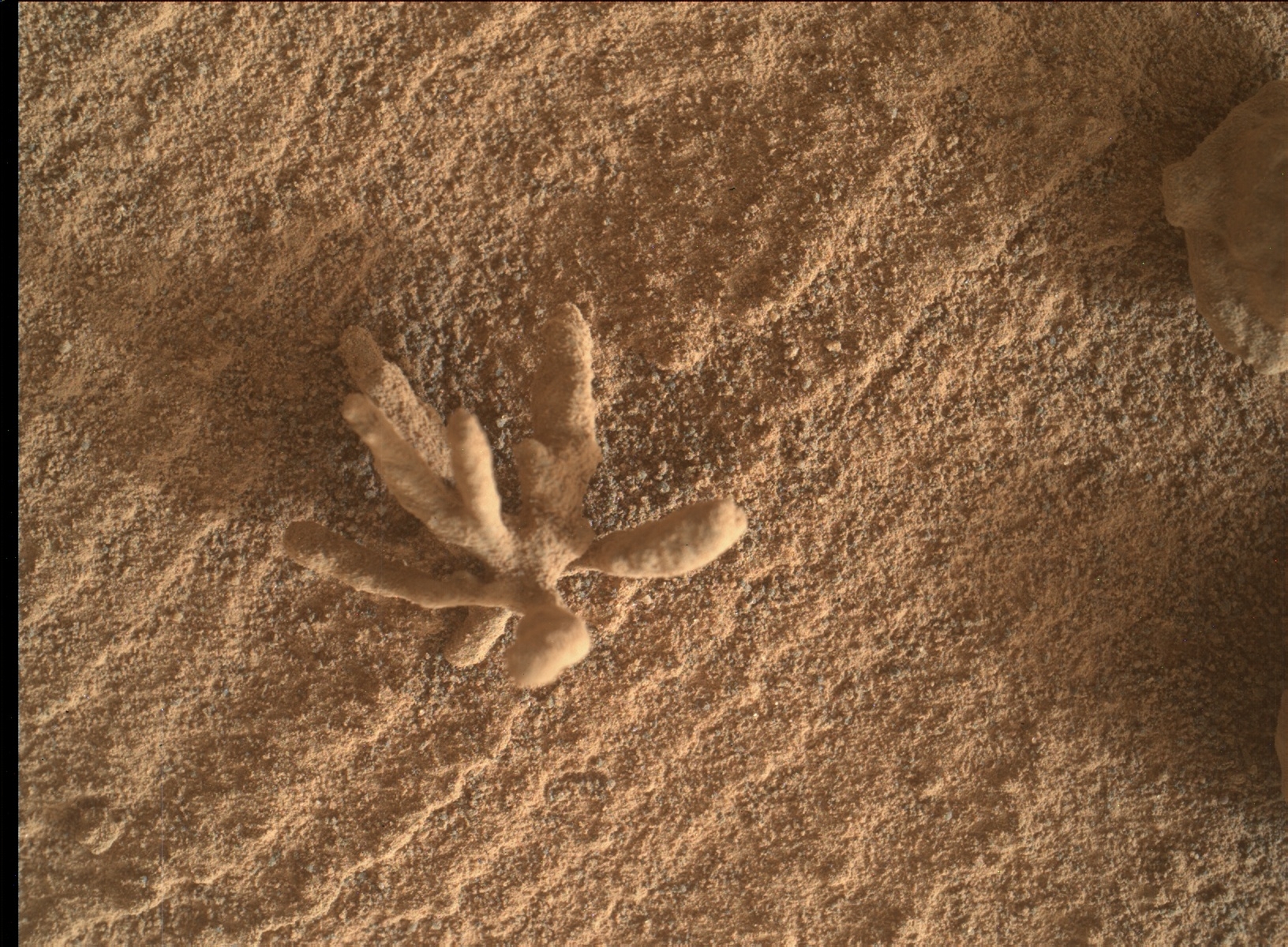
What’s this? Curiosity Mars Hand Lens Imager photo produced on Sol 3396, February 24, 2022.
Credit: NASA/JPL-Caltech/MSSS
An interesting observation by Curiosity at Gale Crater is demanding some attention, as seen in new imagery:

Mars Hand Lens Imager (MAHLI) photo produced on Sol 3397, February 25, 2022.
Credit: NASA/JPL-Caltech/MSSS
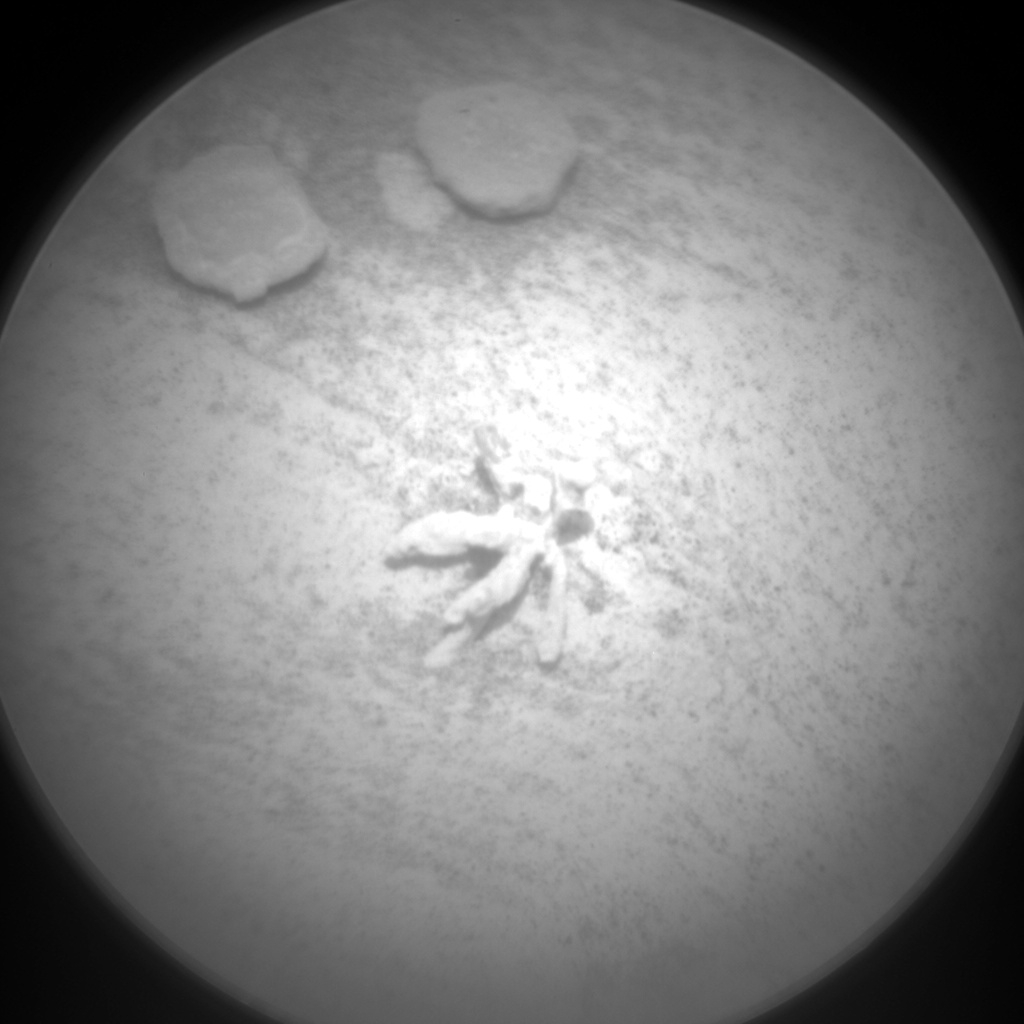
Curiosity Chemistry & Camera Remote Micro-Imager (RMI) photo taken on Sol 3397, February 25, 2022.
Credit: NASA/JPL-Caltech/LANL
The distant Gediz-Vallis Ridge will also be imaged with Mastcam and ChemCam Remote Micro-Imager (RMI). Two additional Mastcam images of a sand deposit in front of the rover called “The Souter” will be used to search for wind-driven sand motion during Curiosity’s stop at this location, Baker explains.
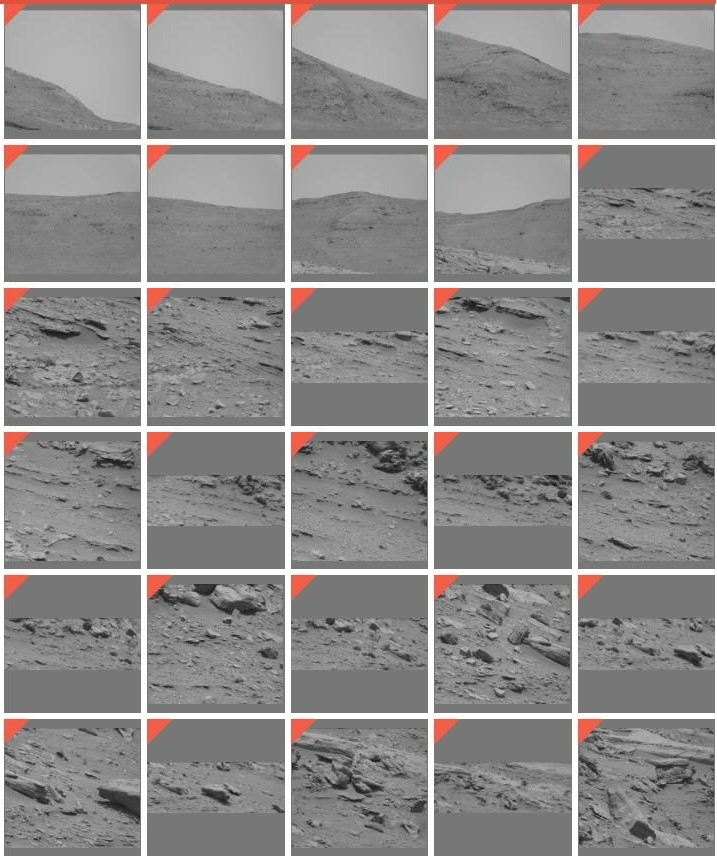
Curiosity Mast Camera Right and Left imagery taken on Sol 3395 February 23, 2022
Credit: NASA/JPL-Caltech/MSSS
Rim shots
Lastly, a set of environmental monitoring observations were scheduled before the rover’s drive, including a Navcam line of site image, Navcam dust devil movie, Navcam suprahorizon movie, and Mastcam crater rim observation.
“A Mastcam image to assess dust in the atmosphere will also be acquired on sol 3397 after the rover’s drive towards the pediment,” Baker concludes. “This plan will likely be our last opportunity to study the sedimentary rocks that built Mt. Sharp before we transition into a new geologic formation that caps the pediment, so the team made the most out of it!”

Curiosity Right B Navigation Camera image acquired on Sol 3397, February 25, 2022.
Credit: NASA/JPL-Caltech

Curiosity Right B Navigation Camera image acquired on Sol 3397, February 25, 2022.
Credit: NASA/JPL-Caltech

Credit: ISRO
The upcoming Moon rush by government and private groups offers the prospect of “lunar traffic jams.”
However, at this moment in time, nobody is keeping a tracking eye on how many artificial objects are already up there, or where they are at any given moment. Without a way to keep track of traffic, the orbital space surrounding the Moon may grow crowded.
That’s the assessment of University of Arizona researchers. They have been awarded $7.5 million in funding from the Air Force Research Laboratory’s Space Vehicles Directorate to get a handle on the issue.

Roberto Furfaro (left) of the Department of Systems and Industrial Engineering and Vishnu Reddy of the Department of Planetary Sciences at the Biosphere 2 Space Domain Awareness Observatory.
Benjamin Seibert, Space Control Mission Area lead for the Air Force Research Laboratory, or AFRL, explains that capabilities to detect, track and catalog objects from the Earth to the Moon and beyond enable “freedom of navigation” critical to civil and commercial use of space.
Detect, characterize and track
Principal investigators Roberto Furfaro, professor of systems and industrial engineering, and Vishnu Reddy, an associate professor in the College of Science’s Lunar and Planetary Laboratory, are developing ways to detect, characterize and track objects in cislunar space, or the space between Earth and the Moon.
Furfaro and Reddy estimate there are dozens of payloads orbiting the Moon at present. But given a salvo of lunar probes in the offing, congestion is an increasing concern.

“Re-booting” the Moon involves multiple nations. Credit: CNSA
According to a university statement, the UArizona team will create cyber-infrastructure to characterize and identify the objects, paving the way for a well-organized path to the Moon. While they are not trying to increase the efficiency of “roads,” they are studying the early sources of traffic to better inform decision making before the roads even exist.
Suite of equipment
The Lunar and Planetary Laboratory use dedicated sensors at the University of Arizona Biosphere 2 research facility in Oracle, Arizona to characterize objects in space. Their suite of equipment includes several telescopes dedicated to space domain awareness.

University of Arizona Biosphere 2 research facility in Oracle, Arizona.
Credit: University of Arizona
Tracking human-made objects in cislunar space, rather than natural objects such as asteroids, comes with its own challenges. Objects in cislunar space are harder to see, not only because they’re farther away than objects orbiting Earth, but because they can be lost in the Moon’s glare, according to the UArizona statement.
As the work moves into high-gear, Reddy is concentrating on detection and tracking. Furfaro will create methods to analyze and catalog the data.
The team will also partner with future missions sending objects into cislunar orbit, so new objects can be tracked and cataloged from the start of their journeys.

