Author Archive
 Author:
  March 11th, 2022
Artist’s impression of the ExoMars 2020 rover and Russia’s stationary surface platform in background.
Credit:
ESA/ATG medialab
The unprovoked Russian military aggression against Ukraine has lit a fuse that has impacted worldwide space cooperation not only here on Earth but set collaborative projects on an unsteady interplanetary trajectory.
Like Russian nesting dolls of diminishing sizes, just how major or minor Russia’s actions will impact the space community of nations in years to come is difficult to foretell. To be sure, it is celestial chess playing. Whether or not Russia rules as a Grandmaster or a secluded space power on the world stage remains to be seen.

Russia’s Luna-25 Moon lander.
Credit: RSC Energia/Roscosmos
Go to my new Scientific American story — “Russia’s War in Ukraine Threatens Joint Missions to Mars, Venus and the Moon – Interplanetary voyages are among several space science collaborations delayed or doomed by the ongoing conflict” – at:
 Posted in
Courtesy of ESA
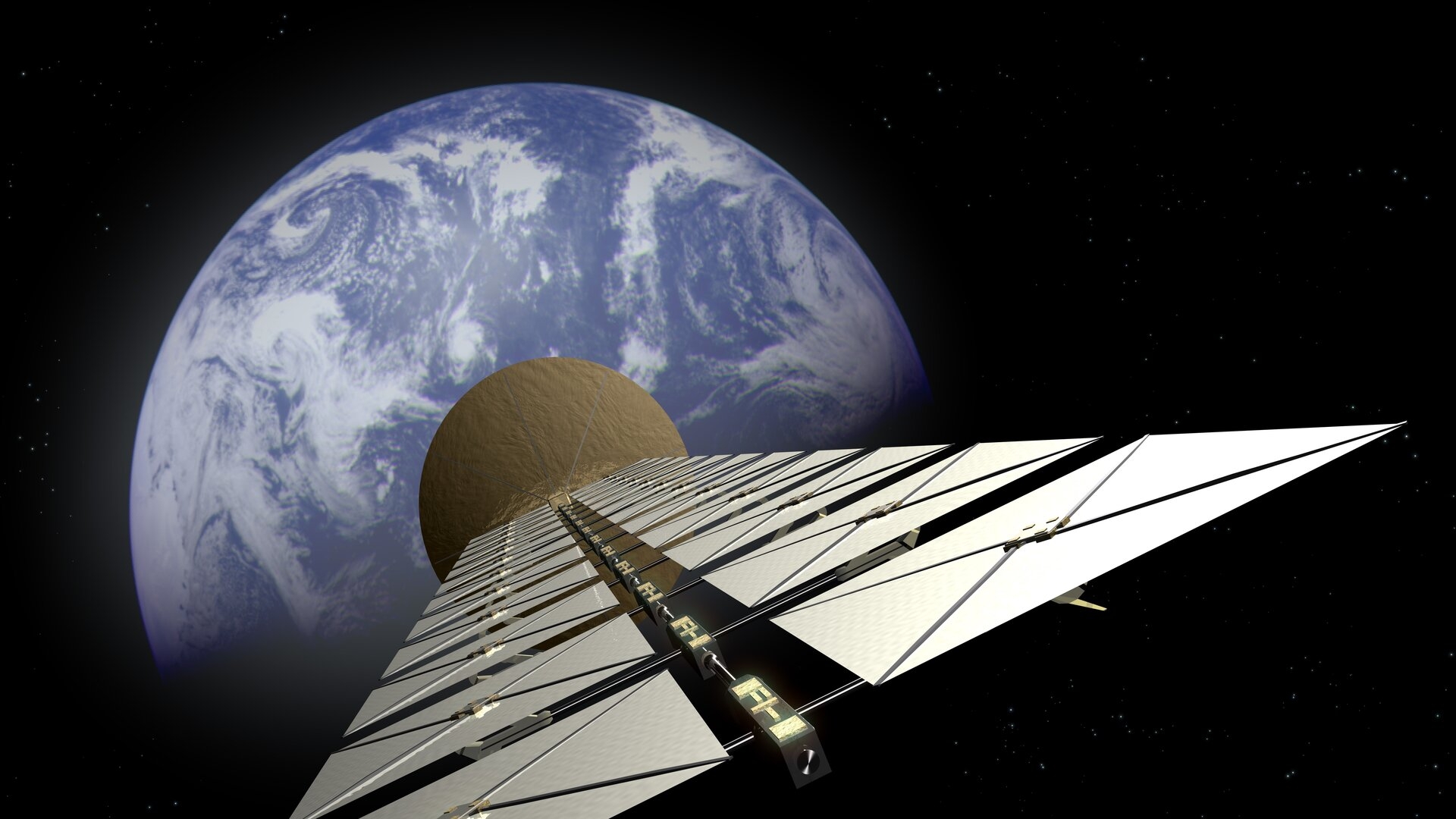
At the beginning of 2022, the European Space Agency (ESA) awarded two parallel cost-benefit analysis studies, based on two different technical solutions, to Frazer-Nash Consultancy and Roland Berger respectively.

Credit: ESA
These studies, funded through the Preparation element of ESA’s Basic Activities, will evaluate the “business case” for space-based solar power in Europe, using orbiting solar power stations to complement terrestrial renewable power plants.
The outcome of the studies will be ready at the end of summer 2022 and are intended to help inform decision makers in the public and private sector.

Concept for an in-orbit demonstrator of a Space-Based Solar Power beaming satellite.
Credit: ESA
For more information, go to:
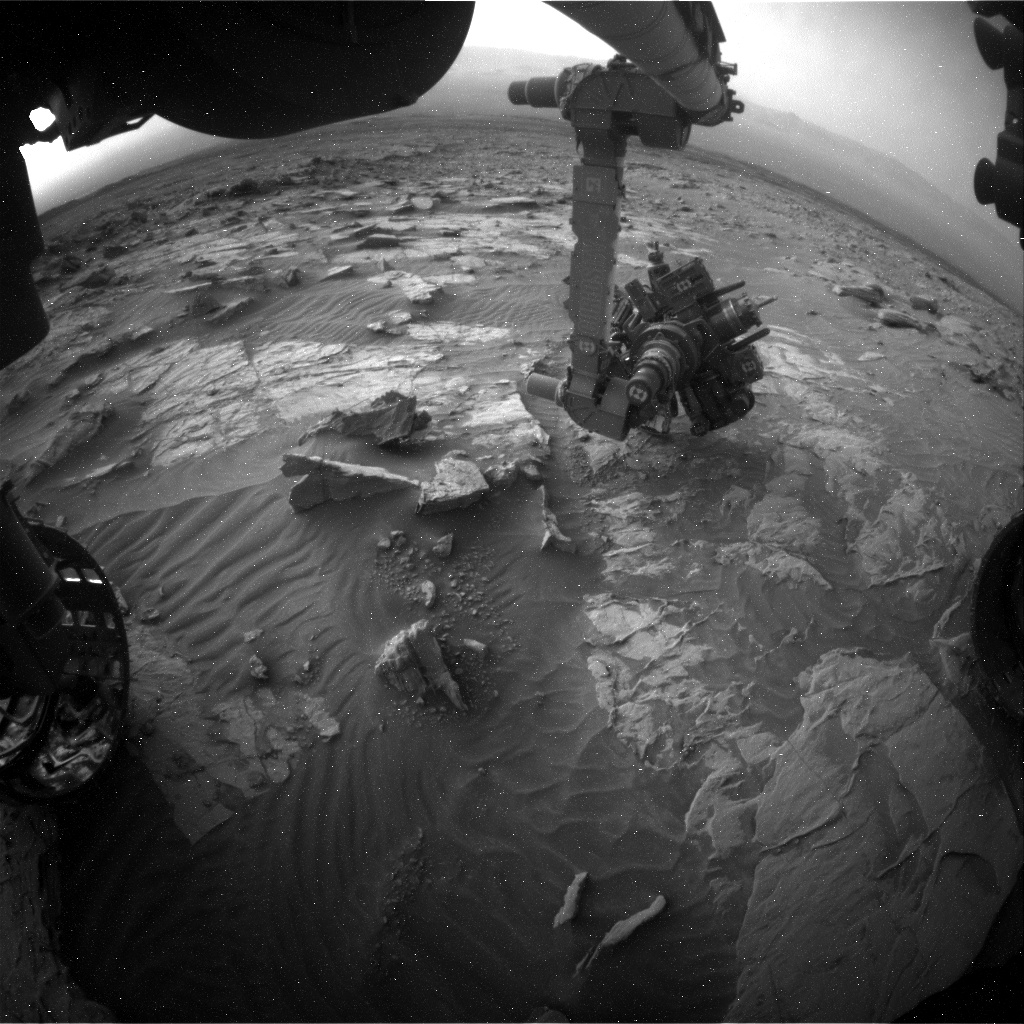
Curiosity Front Hazard Avoidance Camera Left B image acquired on Sol 3409, March 10, 2022.
Credit: NASA/JPL-Caltech
NASA’s Curiosity Mars rover at Gale Crater is now performing Sol 3410 duties.
The rover continues to face difficult terrain.
Scott Guzewich, an atmospheric scientist at NASA’s Goddard Space Flight Center reports that recent Chemistry and Camera (ChemCam) AEGIS work has automatically identified an interesting rock near the rover by itself.
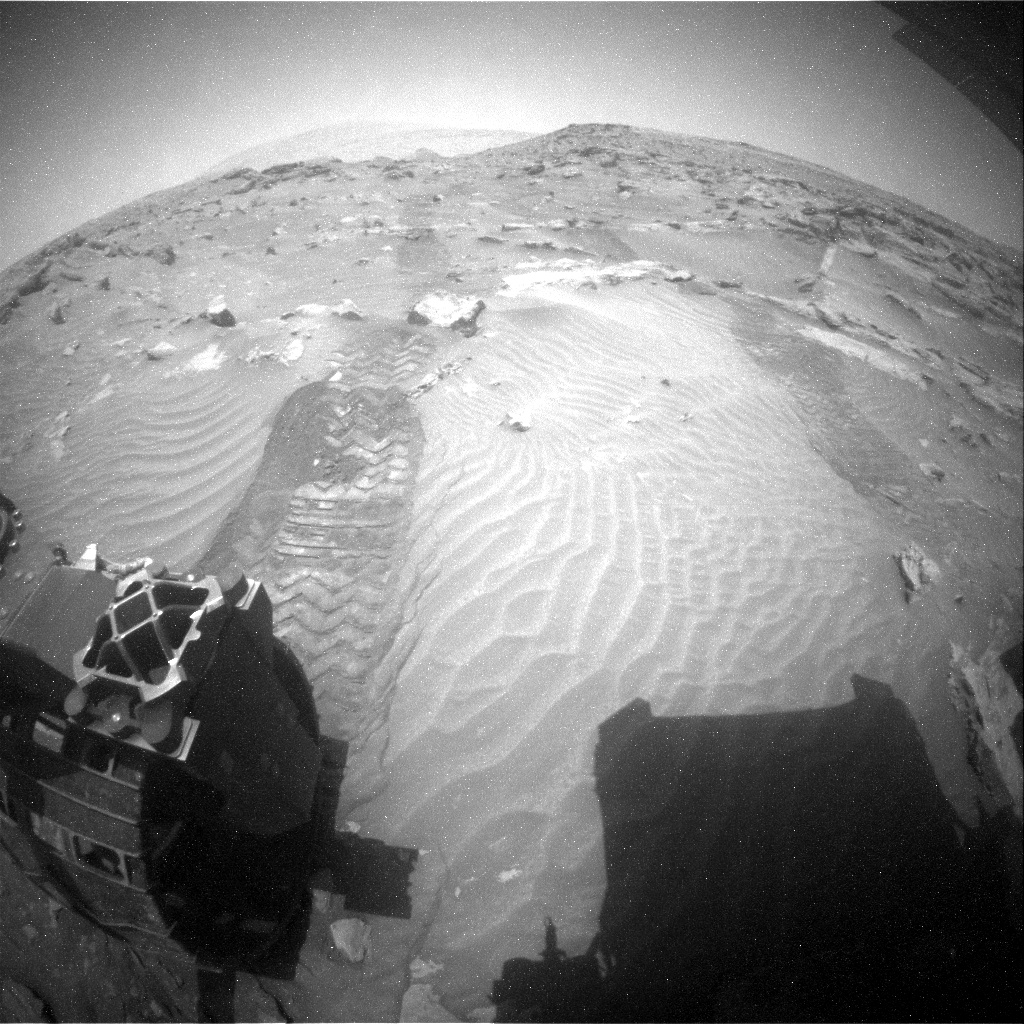
Curiosity Rear Hazard Avoidance Camera Left B photo taken on Sol 3406 March 6, 2022.
Credit: NASA/JPL-Caltech
AEGIS stands for Autonomous Exploration for Gathering Increased Science) – a software suite that permits the rover to autonomously detect and prioritize targets.
Furthermore, there’s been a bonanza of atmospheric monitoring activities, as the rover had power to spare.
“This included 7 dust devil movies with 4 different cameras: Mastcam, Navcam, and the front and rear Hazcams,” Guzewich adds.
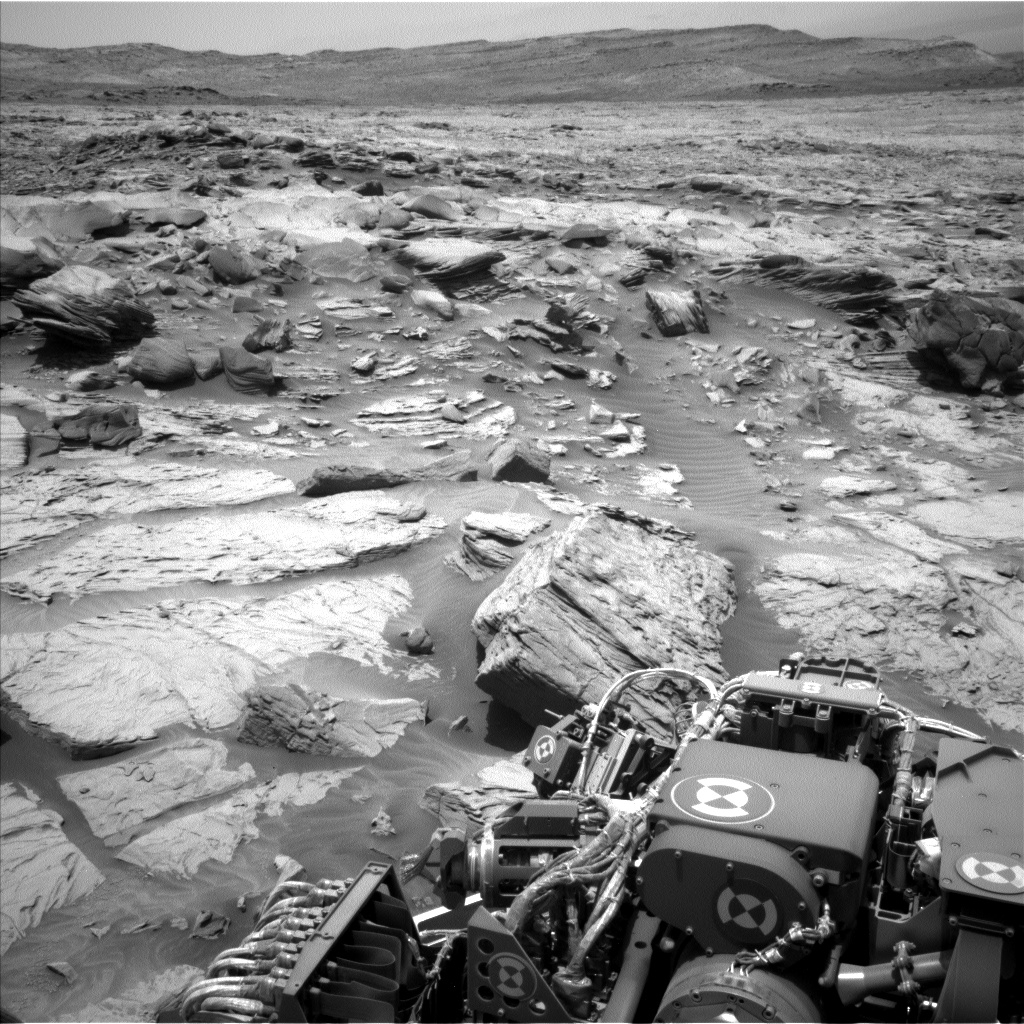
Curiosity Left B Navigation Camera image taken on Sol 3406, March 6, 2022.
Credit: NASA/JPL-Caltech
The robot has viewshed views as it wheels to the north from its current location on the Greenheugh Pediment, which provides good opportunities for dust devil searches.
Slow-going
In an earlier report, Ashley Stroupe, a mission operations engineer at NASA’s Jet Propulsion Laboratory, reports that the rover is continuing to slowly move through very challenging terrain.
Over the last weekend, Curiosity made it about 13 feet (4 meters) before the drive stopped when the rover sensed more difficulty.
A recent challenge the robot and controllers faced was dealing with the drive stopping early, in a place that scientists didn’t expect.
“Given the difficulties of driving in this area, this was not a huge surprise,” Stroupe says. With the rover not being in the expected orientation, Curiosity would not have been able to see Earth to receive a recently uploaded plan (the line of site was again occluded by the terrain).
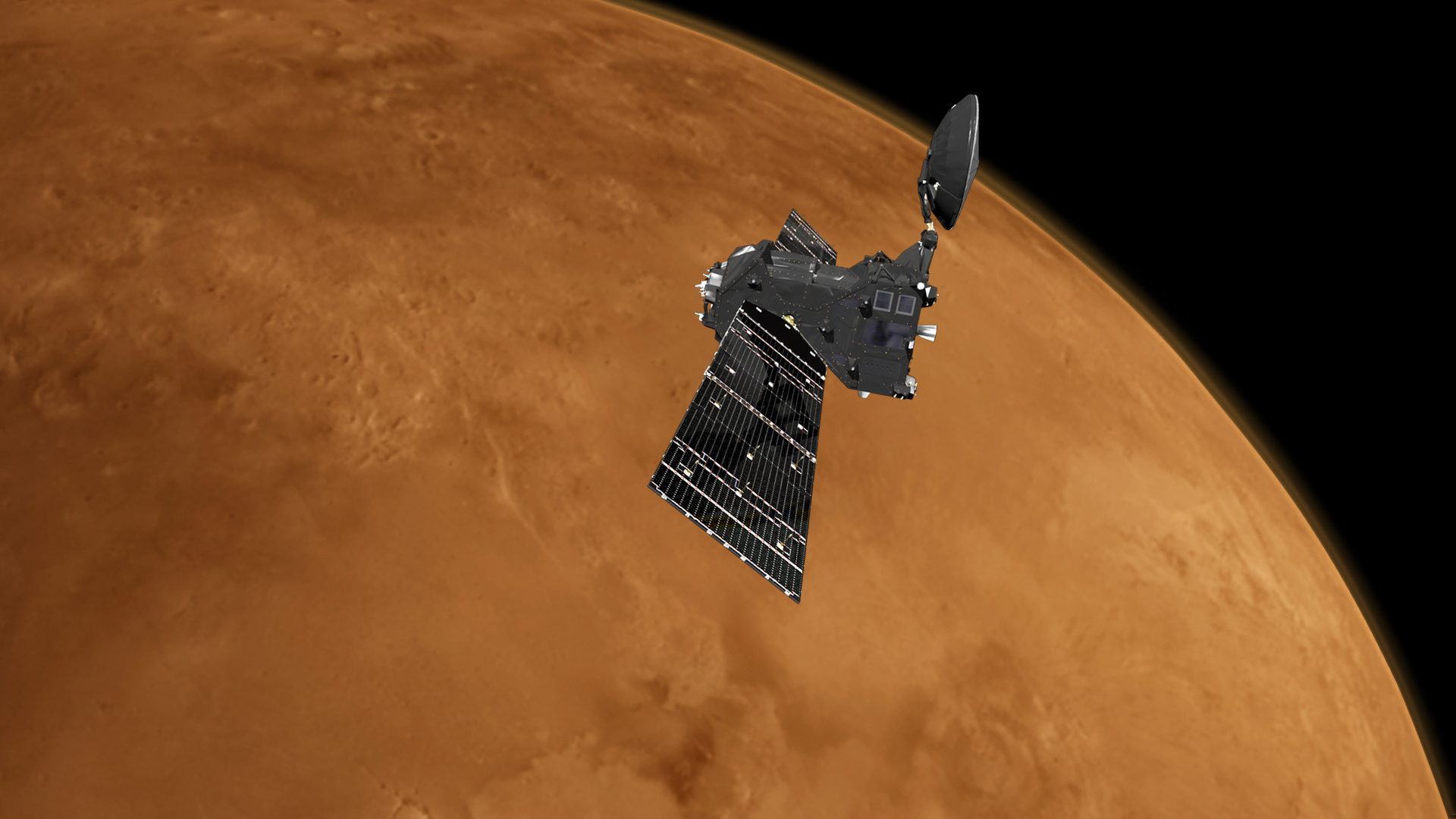
European Space Agency’s Trace Gas Orbiter.
Credit: ESA/ATG medialab
Relaying of plans
Instead, researchers ended up relaying the plan via Europe’s ExoMars Trace Gas Orbiter (TGO) orbiter.
“Due the timing of the relay, we shifted our plan to cover sols 3409-3410 instead of 3408-3409. Once we knew we could get the plan to the rover, we were able to move forward with the day. We won’t see the results of this plan until Friday morning, but that gives us more time in our plan for targeted observations on the first sol and allows us to drive on the second sol,” Stroupe adds,
ChemCam has done a Laser Induced Breakdown Spectroscopy (LIBS) observation of “Achvarasdal,” a dark toned target in the rover’s workspace, and a 10-frame long-distance Remote Micro-Imager (RMI) mosaic of the Gediz Vallis Ridge.
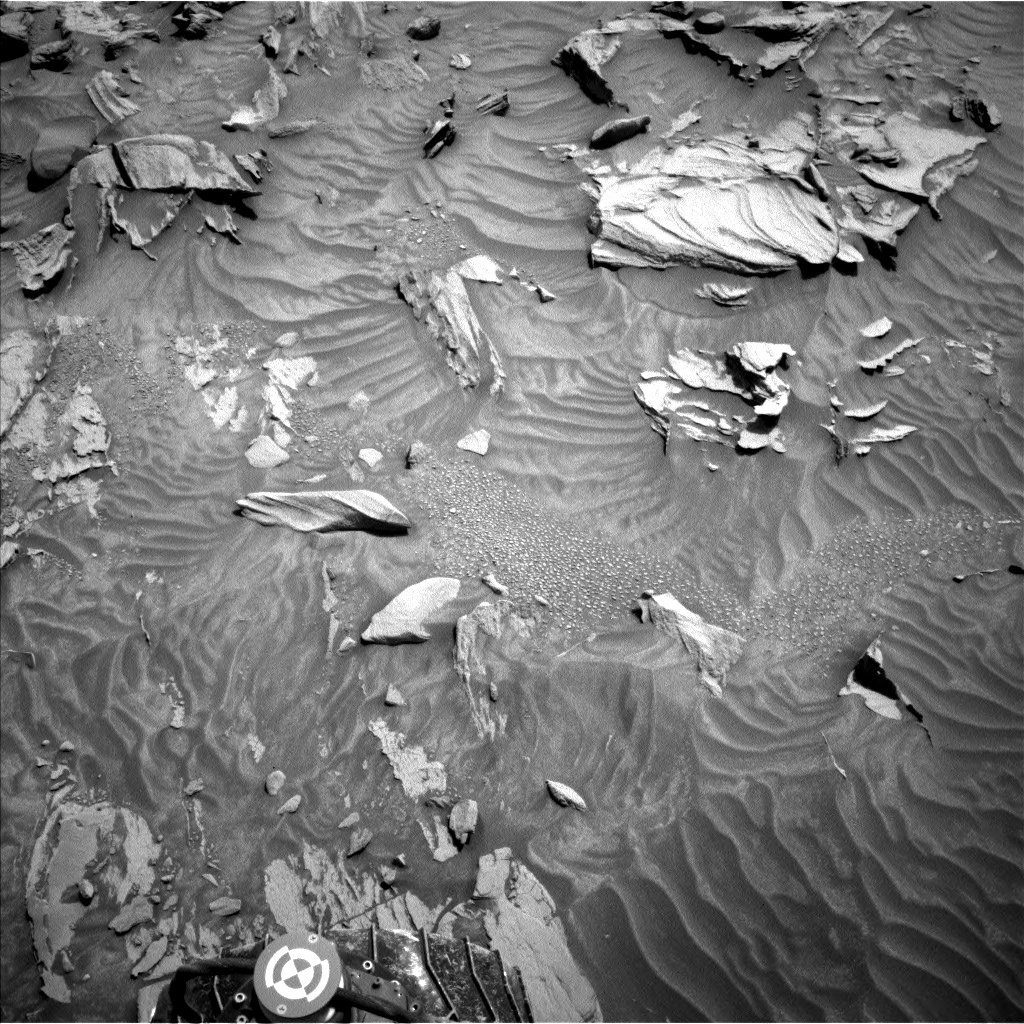
Curiosity Left B Navigation Camera Sol 3407 photo acquired on March 7, 2022.
Credit: NASA/JPL-Caltech
“We also took several Mastcam mosaics, including the ChemCam targets as well as a large 16-frame mosaic to look at pebble sorting and an extension of our prior drive direction imaging,” Stroupe notes. “All of these Mastcam images will hopefully provide a 3-D reconstruction of the formations in this area, which can tell us something about how the materials were deposited.”
Safety checks
Unlike previous drive faults by Curiosity, “we ended in a place that we could safely unstow the arm for contact science. The target named “Skaw Granite” is one of the larger pieces of bedrock within reach,” Stroupe says.
With the extra time, the arm rover planners were able to incorporate a brush of the contact science target (for which they did not have time in the original plan).
The mobility rover planners had a big task, Stroupe explains, “to figure out how to continue to make progress in this very challenging spot. They ended up putting in a lot of extra safety checks and some conditional sequencing in order to try to account for many different possibilities.”
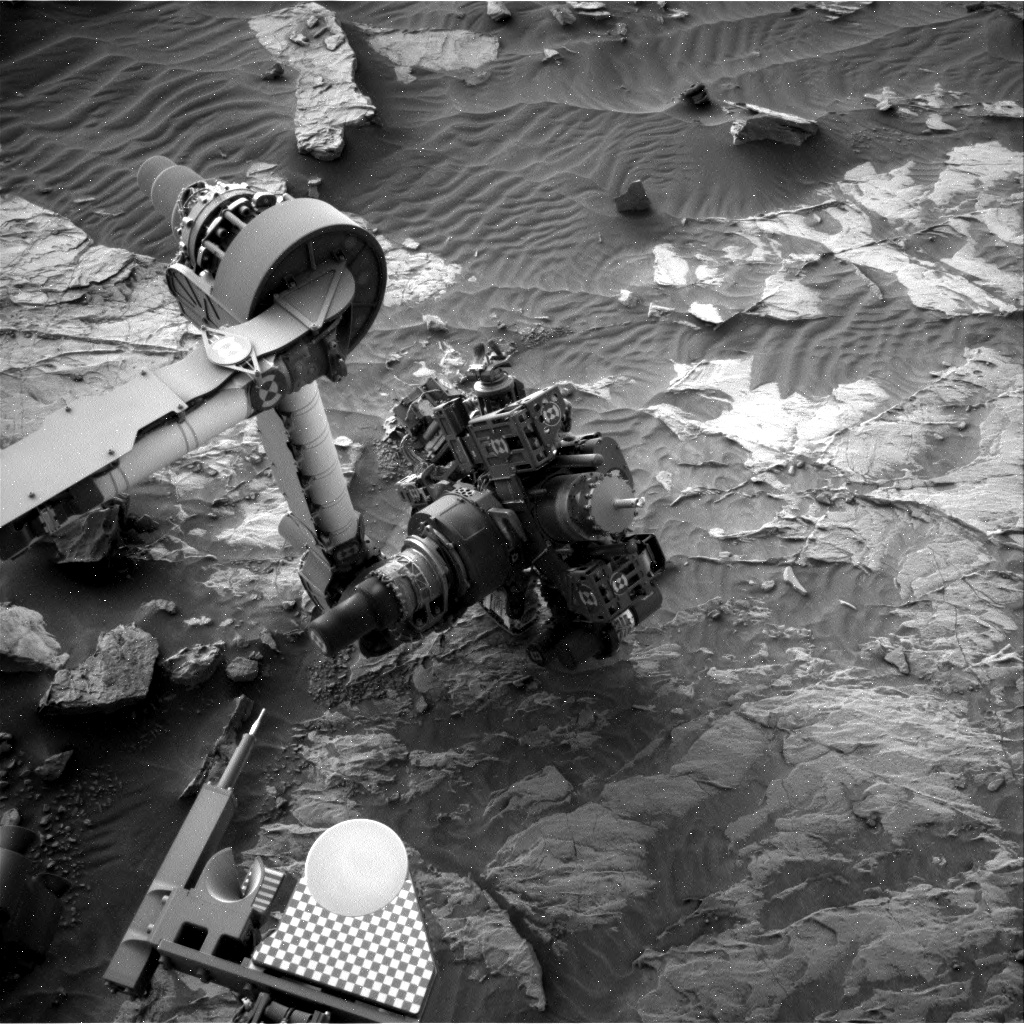
Tricky area
“We’re trying to follow the same route we have planned before, which should take us along this valley to where we might be able to view the pediment and better assess the safety of driving there, as well as to find a good place to climb up,” Stroupe continues. “Hopefully, when we get the results of the drive, this tricky area will be in our rear view mirror. After the drive, we also did a lot of environmental observations with Navcam, including a lot of movies/surveys for dust devils.”

Curiosity Mast Camera Left image taken on Sol 3406, March 6, 2022.
Credit: NASA/JPL-Caltech/MSS
Stroupe concludes that the Curiosity team took their time to sort things out and get things right, “which did make for a slow start to the planning day, but we got everything in the plan and did complete our process without going too late.”

Credit: XinhuaVideo/Inside Outer Space screengrab
China has approved the fourth phase of its lunar exploration program, a phase that includes building an International Lunar Research Station (ILRS) at the south pole of the Moon.
“The fourth phase of the project is mainly to make several landings at the south pole of the Moon. After landing, a model lunar scientific research station will be built at the south pole of the Moon. It will be implemented in three missions, for instance Chang’e-6, Chang’e-7 and Chang’e-8. The timeline is set before 2030. At present, the research work is progressing smoothly,” said Wu Weiren, chief designer of China’s lunar exploration program.
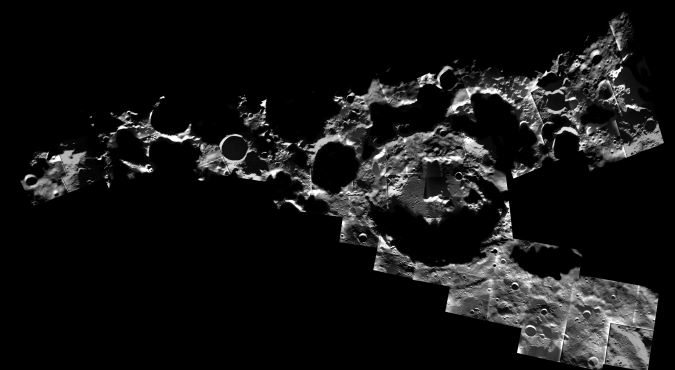
Mosaic of the lunar south pole from images acquired by ESA’s Small Missions for Advanced Research in Technology (SMART-1) that flew 2003-2006.
Credit: ESA
Lunar series
According to China Central Television (CCTV), Chang’e-7 is targeted for the south pole of the Moon first.
Since Chang’e-6 is a backup of Chang’e-5 sample-return mission, it will be launched after Chang’e-7 to rocket back one to two kilograms of samples from the lunar south pole.
Chang’e-6 mission will be followed by Chang’e-8, a step toward building a basic lunar scientific research station.
The Chang’e-8 mission will test numerous technologies to make use of lunar resources, from producing oxygen to fabricating structures using 3D printing technology.
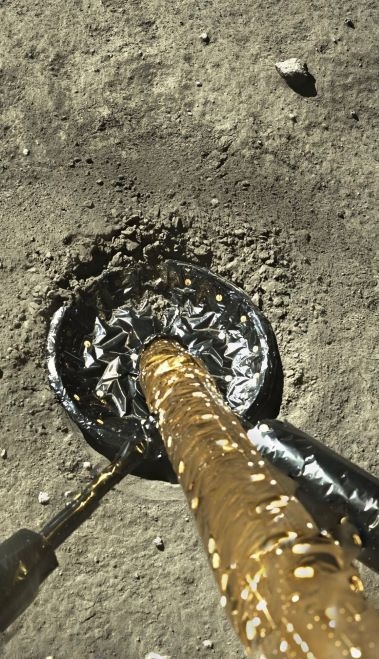
Landing leg of Chang’e-5 lander.
Credit: CNSA/CLEP
“Chang’e-7 is mainly for the survey of lunar resources, such as water, the environment and climate, topography and landform of the lunar south pole,” Wu added. “For Chang’e-8, we hope to analyze and study the existence of resources on the spot, which will lay the foundation for long-term work on the Moon in the future. So the utilization of resources is particularly important.”
Transfer outpost
Wu said that the construction of the ILRS before 2035 will lay a solid foundation to better explore the lunar environment and resources.
Wu said the ILRS will be outfitted with rovers, landers and hoppers, adding that the station would also serve as a transfer outpost for missions into deep space, utilizing Moon-produced rocket fuel.

Artist’s view of China/Russia International Lunar Research Station to be completed by 2035. Credit: CNSA/Roscosmos
“Governments of China and Russia are working closely on the ILRS agreements and have basically reached a consensus, and the agreement will hopefully be signed later this year,” said Wu Yanhua, China National Space Administration deputy head. “After that, a joint declaration on the project will be announced to the world by the national space agencies of the two countries,” Wu told the Global Times at a press conference for the issue of the fifth edition of China Space white paper in January.
Video available at: https://youtu.be/ITA2gZfnSWM

Credit: NASA
How best to keep NASA’s sight on Mars? A status update and review of NASA’s Artemis program was held on March 1 by the U.S. House Science, Space, and Technology Committee.
It reviewed NASA’s plans and progress on Artemis—the heavy-lift Space Launch System, the Orion crew vehicle, the ground systems, the space suits, the human landing system, the cislunar orbiting Gateway station, and the many other systems, payloads, and operations that will support planned missions to the Moon in preparation for the next giant leap–being the first nation to land humans on the surface of Mars.

NASA’s Artemis program.
Credit: NASA
Missing in action
Chairwoman Eddie Bernice Johnson’s (D-TX) opening remarks are telling, noting that:
“More than four years after Artemis was started, NASA still has not established an overall architecture for the initiative, and NASA is now saying it hopes to have one by the end of the year.”
“More than four years after Artemis was started, NASA still has not developed the specific objectives that it is to pursue, or how they will fit together to support the goal of humans to Mars. NASA says it hopes to have them in the coming months.”

Credit: NASA
“More than four years after Artemis was started, no one appears to be in charge of the entire Artemis initiative. It is still largely a collection of individual projects rather than an integrated program managed by an empowered program manager, something that has been raised as a serious concern in the witness testimony for today’s hearing.”
Key witnesses
This March 1 hearing involved key witnesses:
– Mr. James Free, Associate Administrator, Exploration Systems Development Mission Directorate, National Aeronautics and Space Administration
– Mr. William Russell, Director, Contracting and National Security Acquisitions, U.S. Government Accountability Office
– Dr. Patricia Sanders, Chair, Aerospace Safety Advisory Panel
– The Honorable Paul K. Martin, Inspector General, National Aeronautics and Space Administration
– Mr. Daniel Dumbacher, Executive Director, American Institute of Aeronautics and Astronautics
To view the hearing, go to this video at:
Also, take a read of this informative charter for the hearing at:
https://science.house.gov/imo/media/doc/keeping_our_sights_on_mars_pt_3_charter.pdf
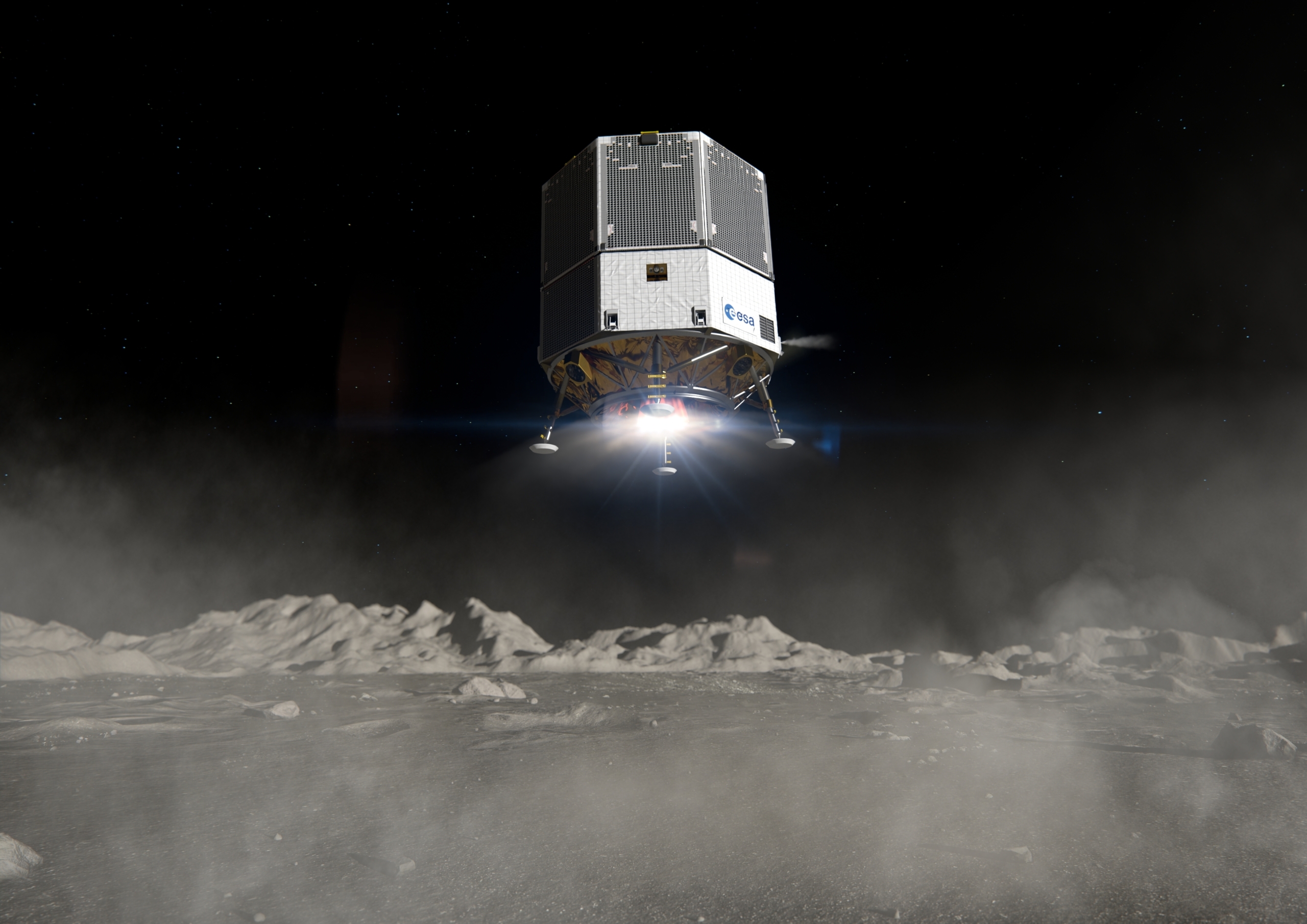
European Large Logistics Lander, EL3.
Credit: ESA/ATG-Medialab
The European Space Agency (ESA) has chosen a consortium, led by Thales Alenia Space in the UK, to design and fabricate an experimental payload to extract oxygen from the surface of the Moon.
Following a competition, the winning consortium has been tasked with producing equipment that will evaluate the prospect of building larger lunar plants to extract propellant for spacecraft and breathable air for astronauts – as well as metallic raw materials.
Extracting oxygen
This ultra-compact, low power unit will need to extract 50-100 grams of oxygen from lunar regolith – targeting 70% extraction of all available oxygen within the sample – while delivering precision measurements of performance and gas concentrations.
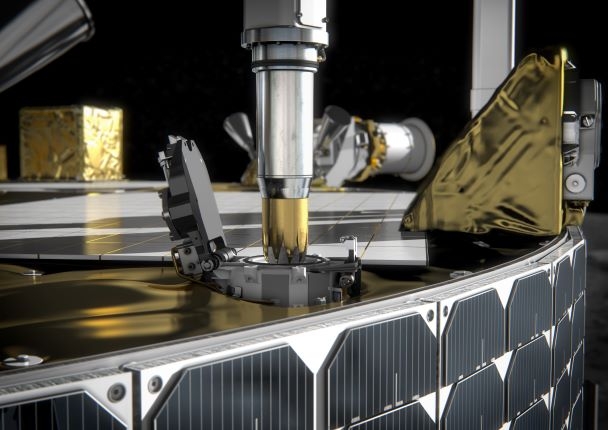
An artist impression of Lunar Lander collecting a sample on the Moon.
Credit: ESA
Additionally, the hardware must be able to fly on a range of potential lunar landers – including ESA’s own European Large Logistics Lander, EL3.
Once on the Moon, the miniature processing plant would work for a 10-day period before the pitch-dark, freezing lunar night sets in.
The EL3 enables a series of proposed ESA missions to the Moon that could be configured for different operations such as cargo delivery, returning samples from the Moon or prospecting resources found on the lunar surface.
Credit: XinhuaVideo/Inside Outer Space screengrab
China’s Mars sample return project will mirror to a large degree the technological prowess the country exhibited in their Chang’e-5 lunar sample return mission.
Chang’e-5 landed on the Moon in December 2020 and rocketed back to Earth 1,731 grams of lunar rocks and soil.
Wu Weiren, chief designer of China’s lunar exploration program and an academician of the Chinese Academy of Engineering, identified the challenges ahead.
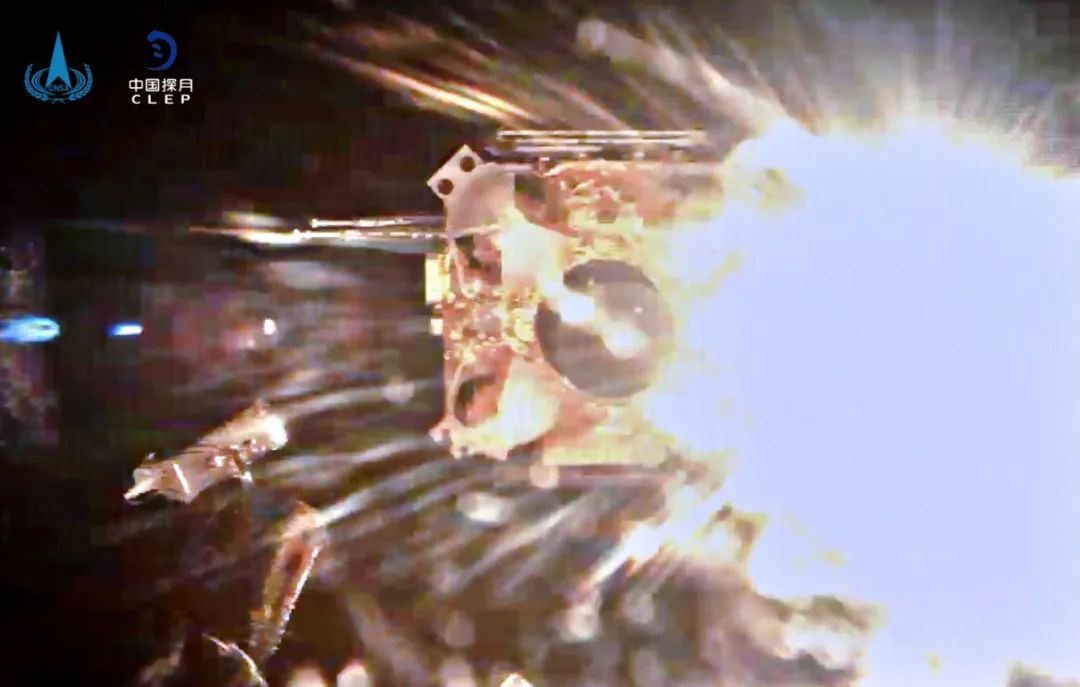
Departing ascender imaged by the Chang’e-5 lander.
Credit: CCTV/CNSA/CLEP
Much heavier than lunar probes
According to a China Daily report, first, a landing capsule will touch down on the Martian surface and collect and seal samples. Next, it will lift an ascender to transfer the samples to a spacecraft orbiting Mars, and then the orbiter will release a reentry craft to carry the samples back to Earth.
“The spacecraft for a sample-return mission to the Red Planet will be much heavier than lunar probes as it will carry a greater amount of fuel to fly a very long distance,” Wu said on the sidelines of the fifth session of the 13th National Committee of the Chinese People’s Political Consultative Conference.
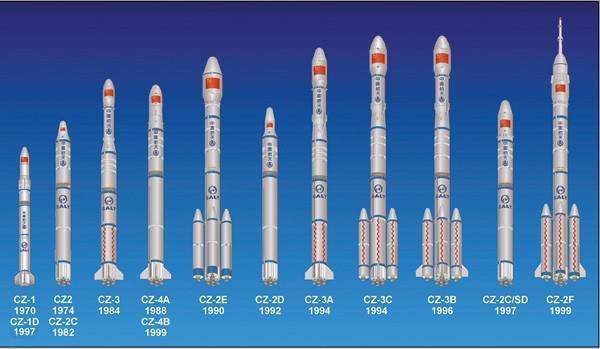
China is building upon a heritage of Long March boosters.
Credit: CALT
To carry out a Mars return sample initiative, there’s need for the super-heavy rocket, the Long March-9, for the nation’s prospective crewed lunar programs and other deep-space expeditions.
Lunar exploration
In a related China Daily article, Wu also outlined the next Moon exploration steps: The Chang’e-7 and Chang’e-6 robotic probes.
China plans to send its Chang’e-7 robotic probe to search for water and other resources at the Moon’s south pole.
“The Chang’e-7 mission is set to find traces of ice at the south pole, investigate the environment and weather there, and survey its landforms,” said Wu. “It will also be tasked with detecting the natural resources beneath the south pole’s surface. Moreover, mission planners are considering if we can use the probe to dig into the surface to check the underground structures and compositions.”

In this multi-temporal illumination map of the lunar south pole, Shackleton crater (19 km diameter) is in the center, the south pole is located approximately at 9 o’clock on its rim. The map was created from images from the camera aboard the NASA Lunar Reconnaissance Orbiter.
Credits: NASA/GSFC/Arizona State University
Major considerations
Wu said the selection of the south pole as Chang’e -7’s destination was based on two major considerations.
“The Moon’s south pole is likely to have a favorable solar illumination condition that means sustained power supply and stable temperatures, and those will allow for long-term robotic exploration and manned activities,” Wu said. “By comparison, on other places on the Moon, solar illumination is much shorter, and temperature changes between lunar day and lunar night usually stand at about 300 C.”
A second reason lies in water, Wu said. “The permanently shadowed craters on the south pole may harbor reservoirs of ice and other volatile compounds, and they will be valuable resources for manned explorations.”
Wu said Chinese engineers are developing a special craft able to fly from the landing site to a nearby crater to explore for traces of water.

The lunar far side as imaged by NASA’s Lunar Reconnaissance Orbiter using its LROC Wide Angle Camera.
Credit: NASA/Goddard/Arizona State University
Landing site decision
China’s Chang’e-6 mission, Wu said could land somewhere on the far side of the Moon or a place at the south pole.
The Chang’e-6 probe is a backup to its predecessor, Chang’e 5, so it is capable of collecting and bringing samples back to Earth, reports China Daily.
“If the probe is to conduct sampling tasks on the far side, then we will need to deploy one or two relay satellites in a lunar orbit to transmit signals between Chang’e-6 and ground control,” Wu said. “Similarly, landing it on the south pole and retrieving samples from there will also be challenging. So scientists need time to decide which plan will be adopted.”
Credit: NASA
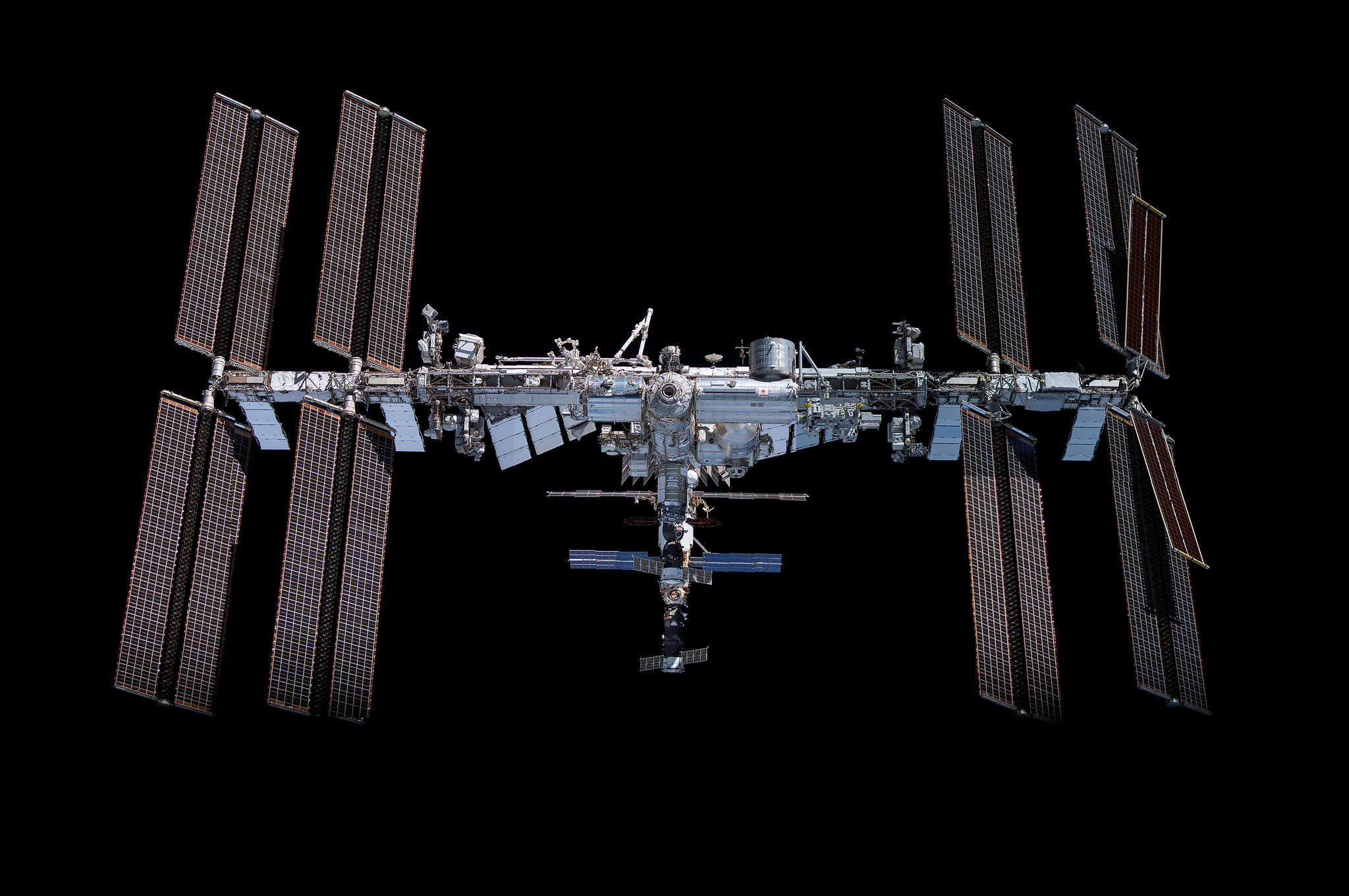
With increasingly regularity, Earth’s ocean waters are the drop zones for incoming leftovers from space. For decades, Russian Progress spaceships loaded with tons of waste from the International Space Station are purposely augured into what’s labeled as the Pacific Ocean’s “spacecraft cemetery.” Similarly, there’s the Cygnus cargo supply vehicles, filled with rubbish from the space station crew that’s ditched over the South Pacific Ocean
In the past, other discarded orbiting facilities – such as Russia’s Mir space station and China’s Tiangong-1 prototype outpost came to full-stop in ocean waters. Then there’s the saga of America’s Skylab experimental station that fell to Earth in 1979, with odds and ends scattering across the southern Australian coast.
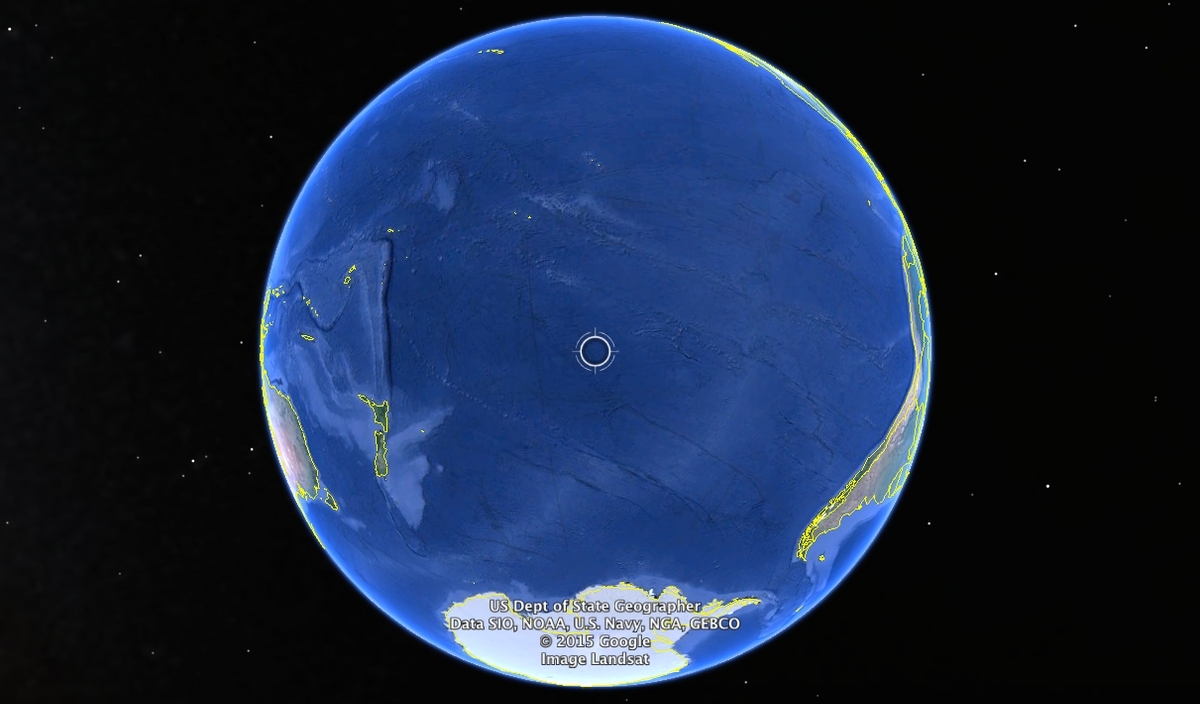
Splash down zone for the International Space Station, an area around Point Nemo, formally dubbed “the oceanic pole of inaccessibility.”
Credit: Google/Public Domain
Mega-hunk of junk
But more to the point, in future years, get ready for a mega-hunk of falling space junk. It will be the nearly 500-ton, abandoned-in-place, International Space Station (ISS). The plan is control the ISS to a splash down within the South Pacific Oceanic Uninhabited Area. That’s an area around Point Nemo, formally dubbed “the oceanic pole of inaccessibility.”
Is this a good idea or merely another human dumping ground available? Simply put, an “out of sight, out of mind” disposal spot for surplus space clutter?
Go to my new Space.com story – “Watery graves: Should we be ditching big spacecraft over Earth’s oceans? It’s a form of pollution, after all” – at:
https://www.space.com/spacecraft-deorbiting-over-earth-oceans-ethical-concerns

Curiosity’s Location as of Sol 3403. Distance driven to this Sol is 16.98 miles (27.33 kilometers).
Credit: NASA/JPL-Caltech/Univ. of Arizona
NASA’s Curiosity Mars rover at Gale Crater is now performing Sol 3406 tasks.
“The terrain continues to challenge us as we make our way up onto the Greenheugh pediment,” reports Fred Calef, Planetary Geologist at NASA’s Jet Propulsion Laboratory.
A recent drive by the robot ended sooner than expected when it sensed the road was rockier than anticipated, so it paused to wait for further instructions from Earth.

Curiosity Left B Navigation Camera image taken on Sol 3404, March 4, 2022.
Credit: NASA/JPL-Caltech
Sedimentary structures
Scientists took advantage of this brief pause to “sniff” the rock field all around Curiosity. The chemistry and Camera (ChemCam) and Mastcam were used to survey “Tobar Mhoire” and “Ardalanish,” both points on a gray-toned rock with laminations, Calef adds.
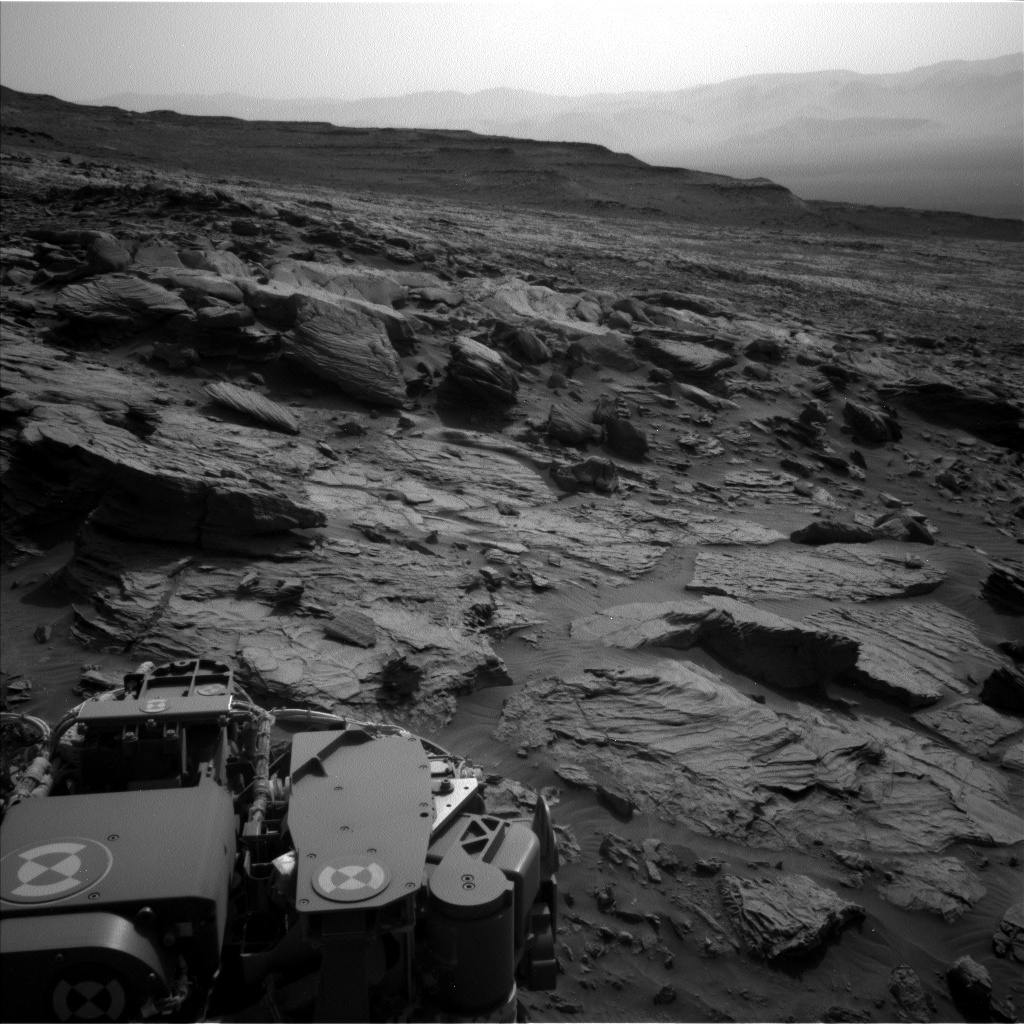
Curiosity Navigation Camera image acquired on Sol 3403, March 3, 2022.
Credit: NASA/JPL-Caltech
Farther afield, the rover was slated to capture large ChemCam Remote Micro-Imager (RMI) photos and Mastcam mosaics of “Helmsdale Fault” capturing the pediment edge.
In addition, on tap was a massive (58 images) Mastcam mosaic centered about “Feorachas,” a remnant monolith in a field of various sedimentary structures, Calef notes.
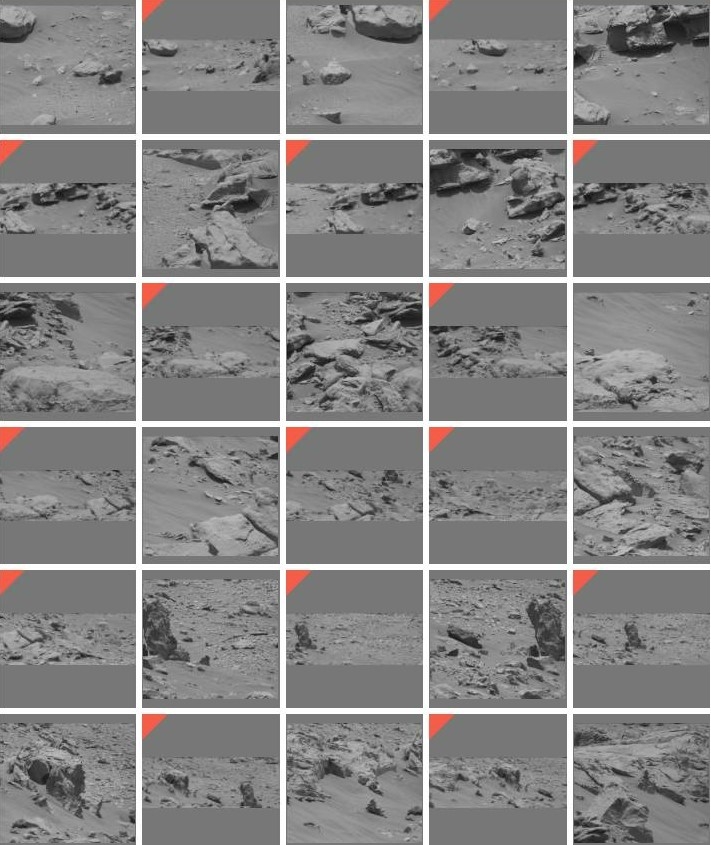
Curiosity Mast Camera imagery taken on Sol 3403, March 3, 2022.
Credit: NASA/JPL-Caltech/MSSS
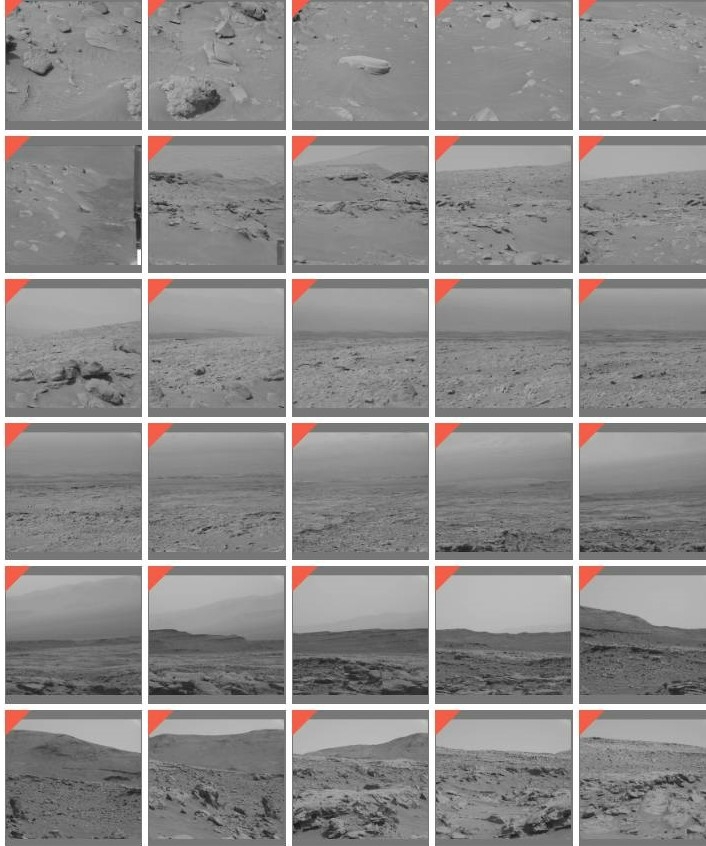
Curiosity Mast Camera imagery taken on Sol 3403, March 3, 2022.
Credit: NASA/JPL-Caltech/MSSS
“Finally, the rover will look to the north and capture ‘Torflundie Mire,’ one of several scoured areas across the pediment, in a 11 image Mastcam stereo mosaic. Other standard imaging includes a Mastcam 360 for documenting the surrounding area, clast survey, and solar tau to measure the amount of dust in the atmosphere, as well as Navcam sky flats, line-of-sight to again look at the atmosphere in a different way, and a dust devil movie,” Calef reports.
Sand, sharp boulders
In an earlier report, Lucy Thompson, a planetary geologist at University of New Brunswick; Fredericton, New Brunswick, Canada, explains that Curiosity has been picking her way through sand, sharp boulders and ridges to find a way up onto the Greenheugh pediment.
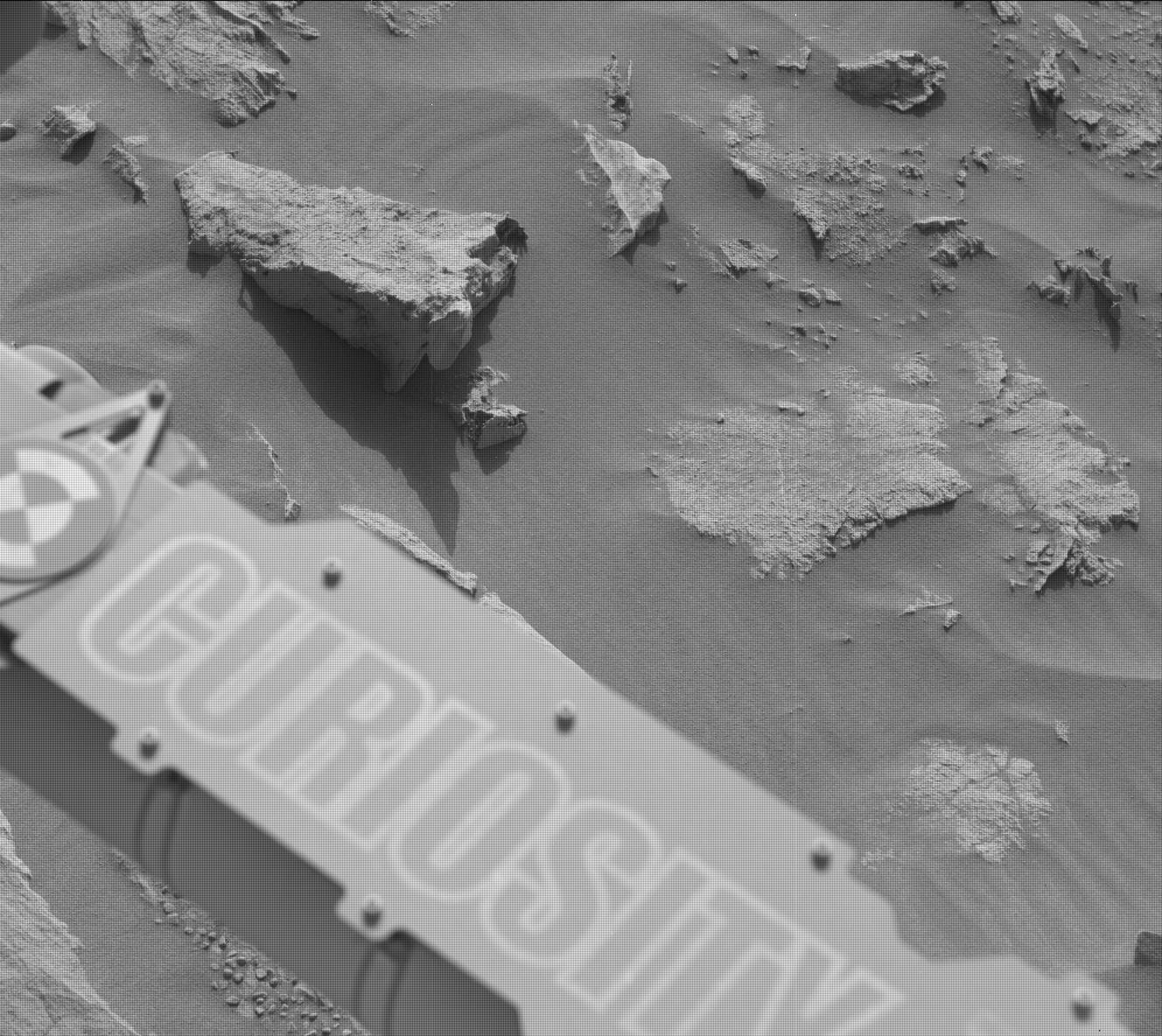
Curiosity Mast Camera Left photo taken on Sol 3403, March 3, 2022.
Credit: NASA/JPL-Caltech/MSSS
“We briefly explored the pediment more than 600 sols ago, before resuming our traverse over the Mount Sharp group sedimentary rocks that we have been driving over since roughly sol 750,” Thompson adds. “The science team is excited to drive up onto and investigate the very different looking rock that comprises the more resistant pediment again. As we have been driving along the side of the pediment cliffs, interesting textures have been observed, which we are hoping to examine in situ.”
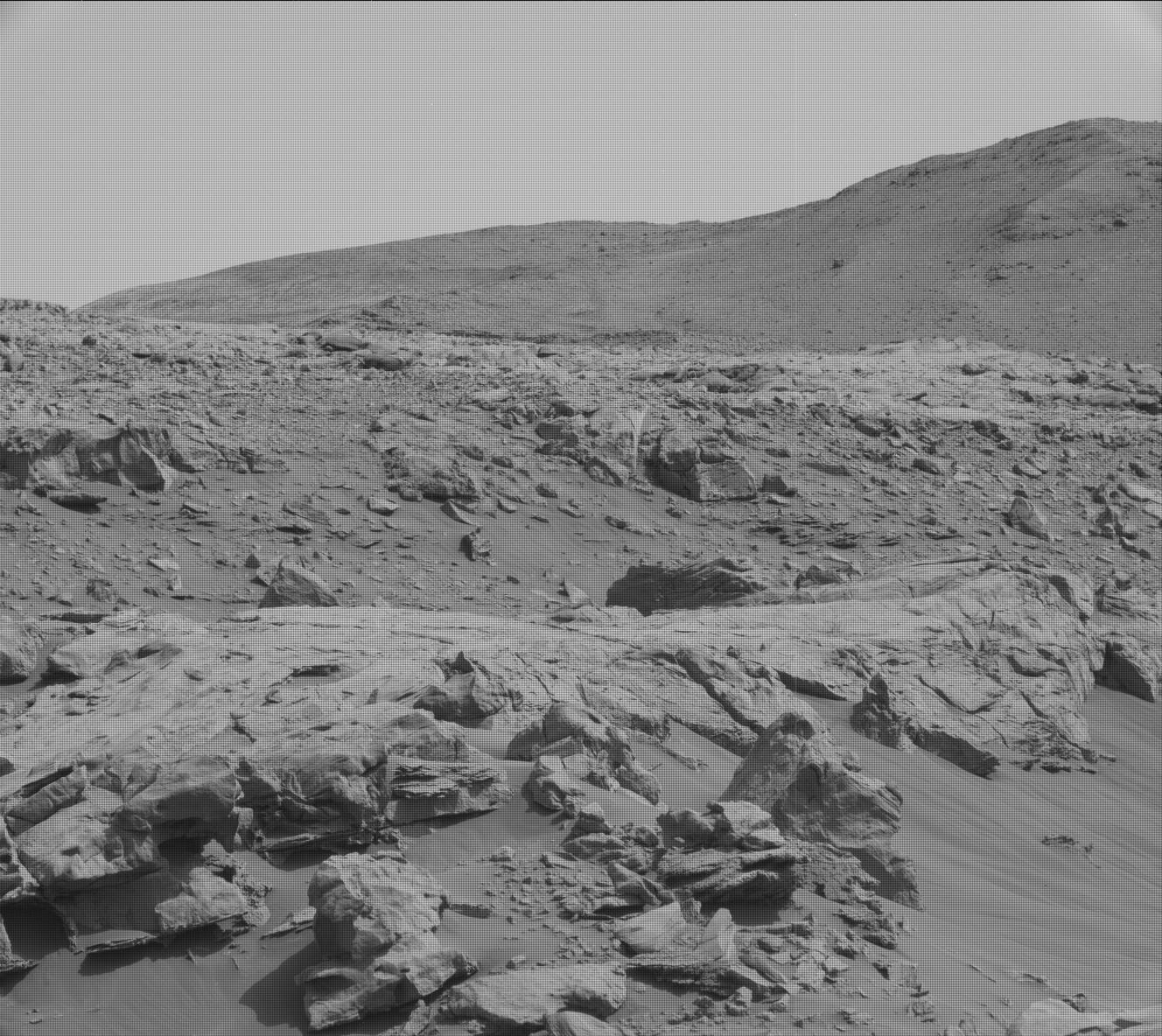
Curiosity Mast Camera Left photo taken on Sol 3403, March 3, 2022.
Credit: NASA/JPL-Caltech/MSSS
Thompson says, because of the tricky terrain, Curiosity’s recent drive stopped a little short of its intended location and the Mars machinery ended up perched on a rock, such that controllers were not able to safely deploy the arm and use either the Mars Hand Lens Imager (MAHLI) or the Alpha Particle X-Ray Spectrometer (APXS).
“However, the rover engineers are confident that we can continue our drive in this plan to get us ever closer to the pediment surface,” Thompson explains.
Credit: CCTV/Inside Outer Space screengrab
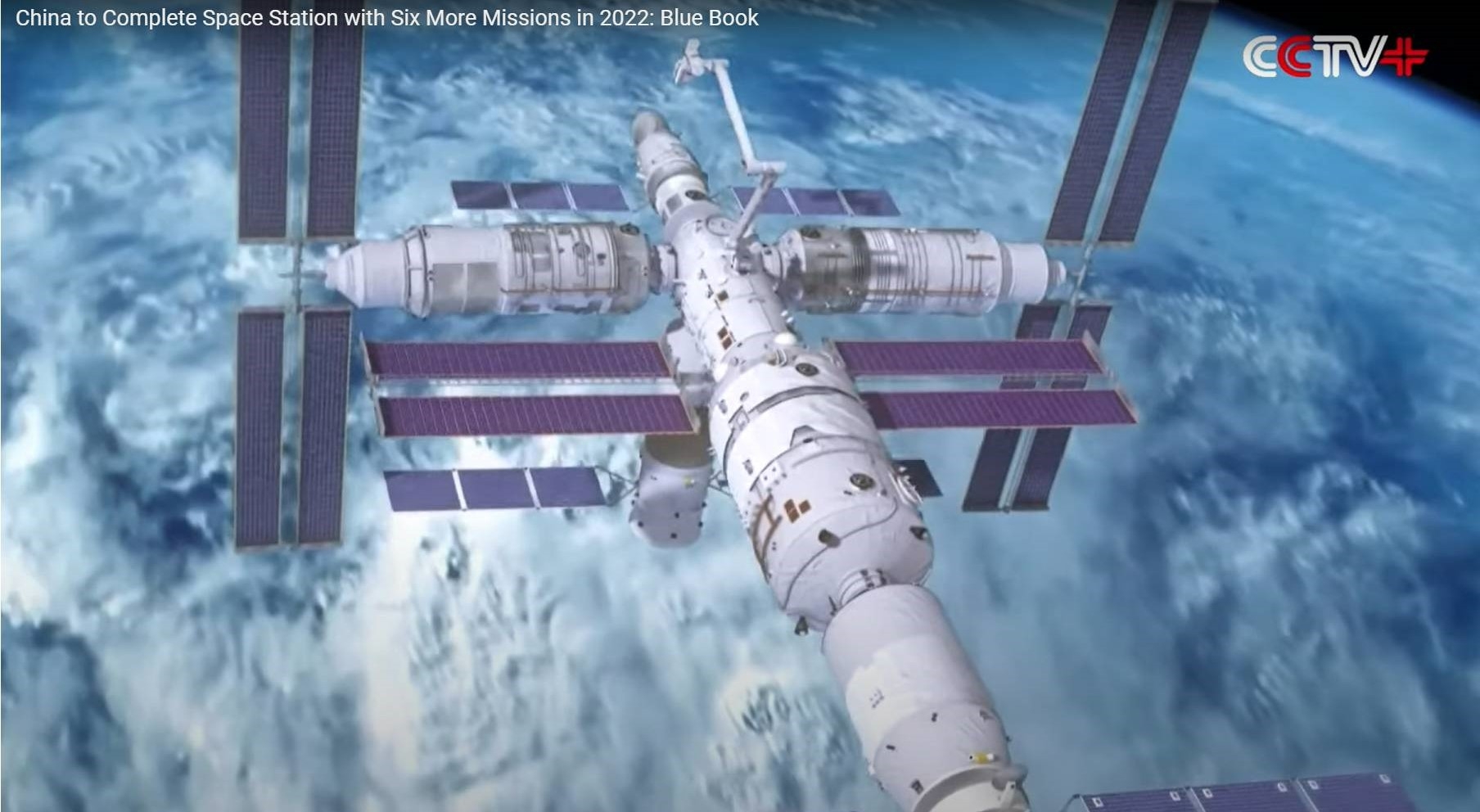
China continues to press forward on construction of its Tiangong space station, scheduled to be completed before year’s end.
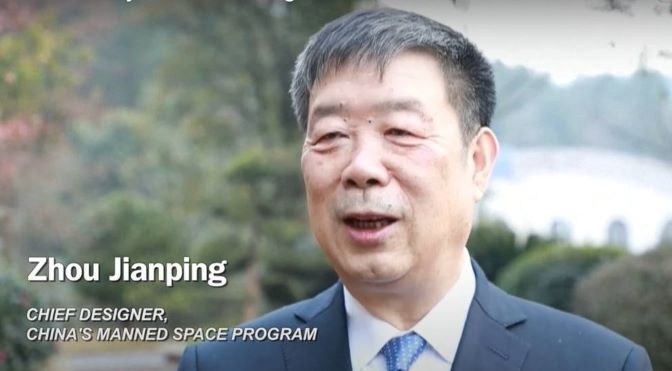
Zhou Jianping, chief designer of the nation’s manned space program, said the assembly phase of the Tiangong program will begin in May and will involve the launch of two astronaut crews, two space labs and two cargo ships.
“The era of space station is still at the beginning. We are verifying key technology. Obviously, there will be a lot of work to do,” Zhou told China Central Television (CCTV).
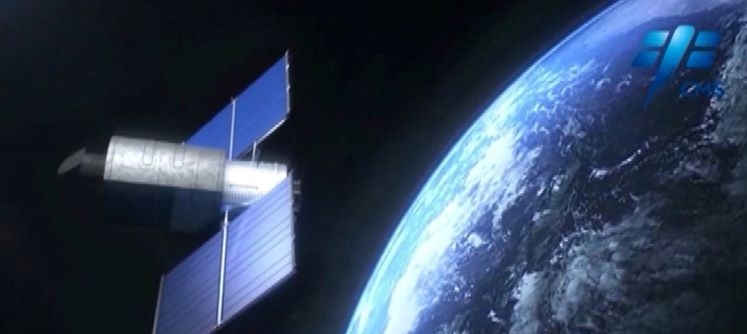
China’s space station agenda also includes lofting an optical module that carries a space telescope, touted as having a better field angle than the NASA Hubble space telescope.
Credit: CCTV/Inside Outer Space screengrab
Steps ahead
“We will build our space station in 2022, which involves the launch, the in-orbit rendezvous as well as the transpositions at their berthing port of the two space stations’ experimental cabins,” Zhou added. “After the construction of the space station is complete, we also plan to launch the China Space Station Telescope into orbit in 2023 or 2024, providing us with a very powerful observation method in understanding the universe,” he said.
Credit: CCTV/Inside Outer Space screengrab
Three astronauts in the Shenzhou-14 and another trio in Shenzhou-15 are on tap this year. Zhou said that the Shenzhou-14 crew will be responsible for monitoring the docking between the Tianhe core module and the two space labs and then configuring the two labs.
The Shenzhou-15 crew will fly to the space station before the end of this year and join the Shenzhou-14 crew in space. At that time, the space station will consist of three modules, two manned spacecraft and one cargo spacecraft, with a total mass of nearly 100 tons, Zhou told the Xinhua news agency.
China launched the Shenzhou-13 on October 16, 2021, sending three astronauts, Zhai Zhigang, Ye Guangfu and Wang Yaping, on a six-month mission to take part in the construction of the country’s space station. They are residing in the 22.5-ton, three-section Tianhe core module.

Shenzhou-13 crew members.
Credit: CNS/Inside Outer Space screengrab
Grand blueprint
In other China space exploration news, Zhang Rongqiao, chief designer of the country’s first Mars exploration mission, said a “grand blueprint” for planetary exploration has been formulated.
“The next step is to collect and bring back samples from asteroids. We called it the asteroid exploration mission and it has entered the sample research and manufacture stage,” Zhang told CCTV.

Credit: CGTN/Inside Outer Space screengrab
“We will also carry out early researching and manufacturing of collecting and bringing back samples from Mars. The task is very difficult. So far, no country has returned from Mars after sampling, but we have confidence to implement this task well,” Zhang said.
Moon landing phase
In addition to this Mars mission, the chief designer of the third phase of the China Lunar Exploration Project, Hu Hao, has made meticulous preparations and laid solid foundations to carry out a lunar landing with his team, after the third phase mission of the Chang’e 5 probe successfully brought back samples from the moon in late 2020, reports CCTV.
Many designs in the project were aimed at paving ways for the crewed lunar landing in the future, for instance, the rendezvous and docking in lunar orbit, according to Hu.
Artist’s view of China/Russia International Lunar Research Station to be completed by 2035. Credit: CNSA/Roscosmos
China will be able to conduct a manned lunar landing by 2030 after 13 significant technology breakthroughs in rocket development are achieved, said Jiang Jie, member of Chinese People’s Political Consultative Conference (CPPCC) in an interview with China News Service. The development of China’s new-generation rocket able to launch humans is in a key technology tackling stage, said Jiang.
Zhou Jianping also voiced his confidence in China’s human spaceflight program, saying China will send its astronauts to Mars one day.
“When you see the Moon, you will be sure to dream about the Chinese myth, the goddess Chang’e Flying to the Moon. When you see the Red Planet Mars, you will also dream about how to send astronauts to Mars, which will be a great feat. I’m sure that Chinese astronauts will land on Mars,” Zhou said.

