Author Archive
 Author:
  June 17th, 2022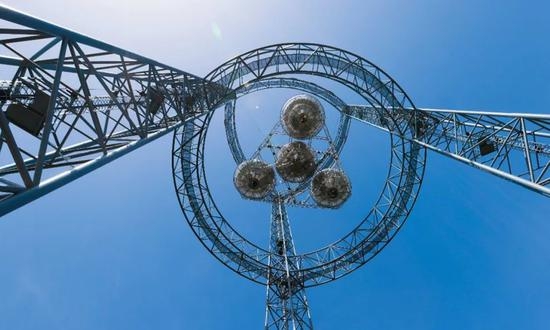
Credit: Xidian University
Codenamed Zhuri — or “chasing the Sun” – a research team with Xidian University is working on components of a space-based solar power station (SSPS).
A “ground recipient verification system” has been constructed to enable next-generation microwave power wireless transmission technology and space-based solar power plant technology.
The ground verification system is located in the southern campus of Xidian University. The supportive tower of the system is an over 245-feet (75 meters) high steel structure, and has five subsystems: Omega concentration and light-electricity conversion, power transmission and management, and a receiving antenna, reports China’s Ecns.cn, the official English-language website of China News Service (CNS).
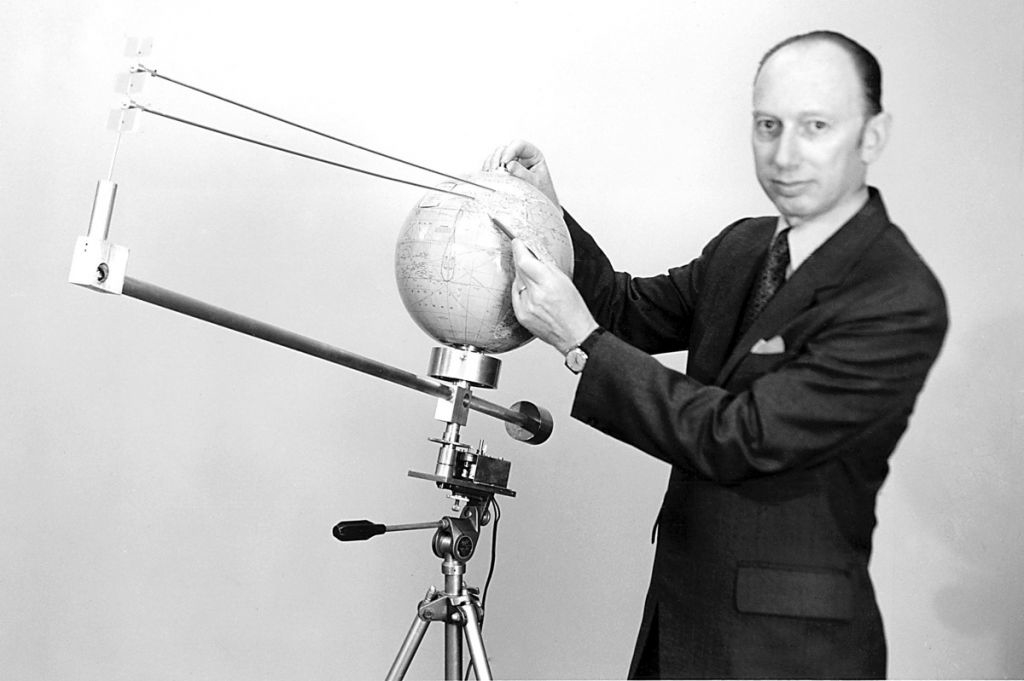
Peter Glaser, the father of the solar power satellite concept.
Credit: Arthur D. Little Inc.
Space testing
The China Academy of Space Technology (CAST) plans to conduct a “Space high voltage transfer and wireless power transmission experiment” in low Earth orbit in 2028.
The OMEGA space-based solar power station reportedly will be capable of generating 10 kilowatts and carry a solar cell array, microwave transmitting antenna, a low power laser transmission payload, and a transmitting array to evaluate power transmission across distances of 400 kilometers from orbit, adds the Ecns.cn story.
To read the full story – “China prepares ground recipient system for space-based solar power station” – go to:
http://www.ecns.cn/news/sci-tech/2022-06-17/detail-ihaziuqy8693823.shtml
 Posted in

Curiosity Left B Navigation Camera image taken on Sol 3504, June 15, 2022.
Credit: NASA/JPL-Caltech
NASA’s Curiosity Mars rover at Gale Crater is now performing Sol 3504 duties.
Back on Sol 3496 the rover plan did not execute due to an issue onboard the rover that took a few days to investigate, reports Michelle Minitti, a planetary geologist at Framework in Silver Spring, Maryland.
Curiosity returned to normal operations, and researchers were able to accomplish everything that was in the Sol 3496 plan…and more.

Curiosity Chemistry & Camera (ChemCam) Remote Micro-Imager (RMI) photo acquired on Sol 3504, June 15, 2022.
Credit: NASA/JPL-Caltech/LANL
“More was possible because we had slightly different communication windows between Curiosity and Earth in this plan than in the Sol 3496 plan. This meant we could wait to drive to our next location on the second sol of this two sol plan giving us more time in this workspace,” Minitti adds.

Dust Removal Tool action as seen by Curiosity Mars Hand Lens Imager (MAHLI). Photo produced on Sol 3503, June 14, 2022.
Credit: NASA/JPL-Caltech/MSSS
Cool evening temperatures
First and foremost, added was use of the Alpha Particle X-Ray Spectrometer (APXS) because it could run in the cool evening temperatures of Sol 3503.
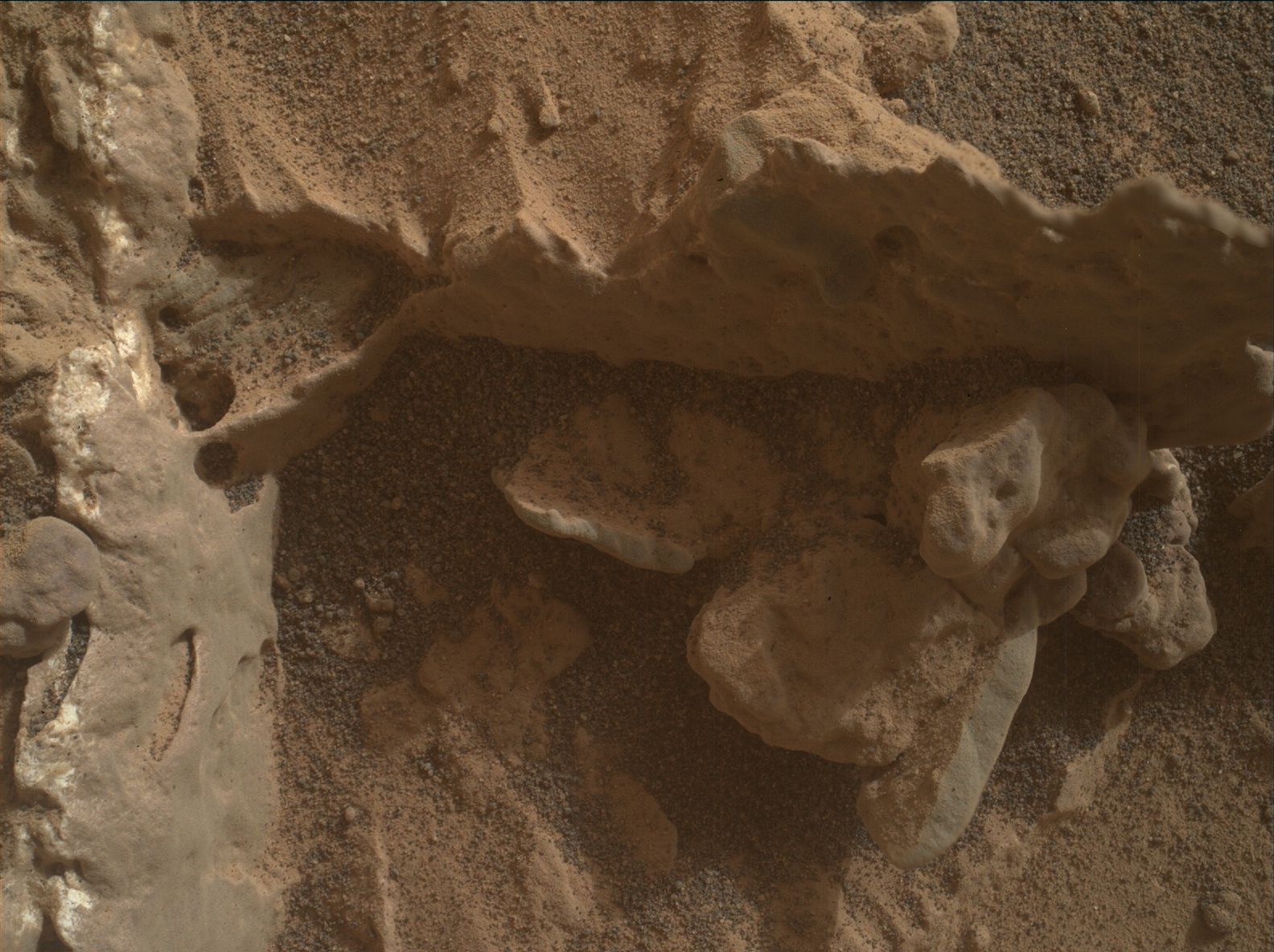
“We selected a nice smooth patch of bedrock,” Minitti notes, the target “Omai,” then brushed it with the Dust Removal Tool before imaging it with the Mars Hand Lens Imager (MAHLI) and analyzing it with APXS.
MAHLI will reattempt a small mosaic across the prominent resistant veins in this area at the target “Wandapa,” and will image the Chemistry and Camera (ChemCam’s) “eye” to monitor the state of that part of the instrument.

Curiosity Front Hazard Avoidance Camera Right B image taken on Sol 3503, June 14, 2022.
Credit: NASA/JPL-Caltech
Relationship to bedrock
“Another sol to plan meant we could add another ChemCam raster, as well. In addition to ‘Mahdia,’ the previously-selected bedrock target, we added ‘Murupu,’ a smoother material visible on the upper surface of the rock. This smoother material might be one of the veins that cut through the rocks here, so getting chemistry on it would be helpful to understand its relationship to the bedrock,” Minitti explains.
ChemCam replanned their long distance Remote Micro-Imager (RMI) mosaic of one of the features along the upper portion of “Gediz Vallis Ridge.”

Curiosity Left B Navigation Camera image taken on Sol 3504, June 15, 2022.
Credit: NASA/JPL-Caltech
“Mastcam had a mix of previously-planned and new observations,” Minitti points out. “The former included three stereo mosaics, two of which covered the dramatic stratigraphy and layering in this area at targets ‘Serra Mara’ and ‘Eboropu.’ The third covered a smaller, but still interesting, area of sand motion near the rover at target ‘Karto.’”

Curiosity Left B Navigation Camera image taken on Sol 3504, June 15, 2022.
Credit: NASA/JPL-Caltech
Clear sailing?
“New observations included two stereo mosaics that stretched from our workspace to our drive target to help scout the path ahead and provide context for where we are headed,” Minitti reports. “Mastcam will also observe the brushed surface at Omai with its multispectral capabilities.”

Curiosity Mars Hand Lens Imager (MAHLI) photo produced on Sol 3503, June 14, 2022.
Credit: NASA/JPL-Caltech/MSSS
Rover Environmental Monitoring Station (REMS), Radiation Assessment Detector (RAD), and Dynamic Albedo of Neutrons (DAN) are to be back at it at their usual cadence.
Navcam is slated to acquire a dust devil movie, cloud movie, and an image to monitor the amount of dust in the atmosphere.
Curiosity Mars Hand Lens Imager (MAHLI) photo produced on Sol 3503, June 14, 2022.
Credit: NASA/JPL-Caltech/MSSS
“Hopefully Navcam sees clear sailing up ahead for Curiosity,” Minitti concludes, “after our break in the action!”
Credit: New China TV/XinhuaVideo/Inside Outer Space screengrab
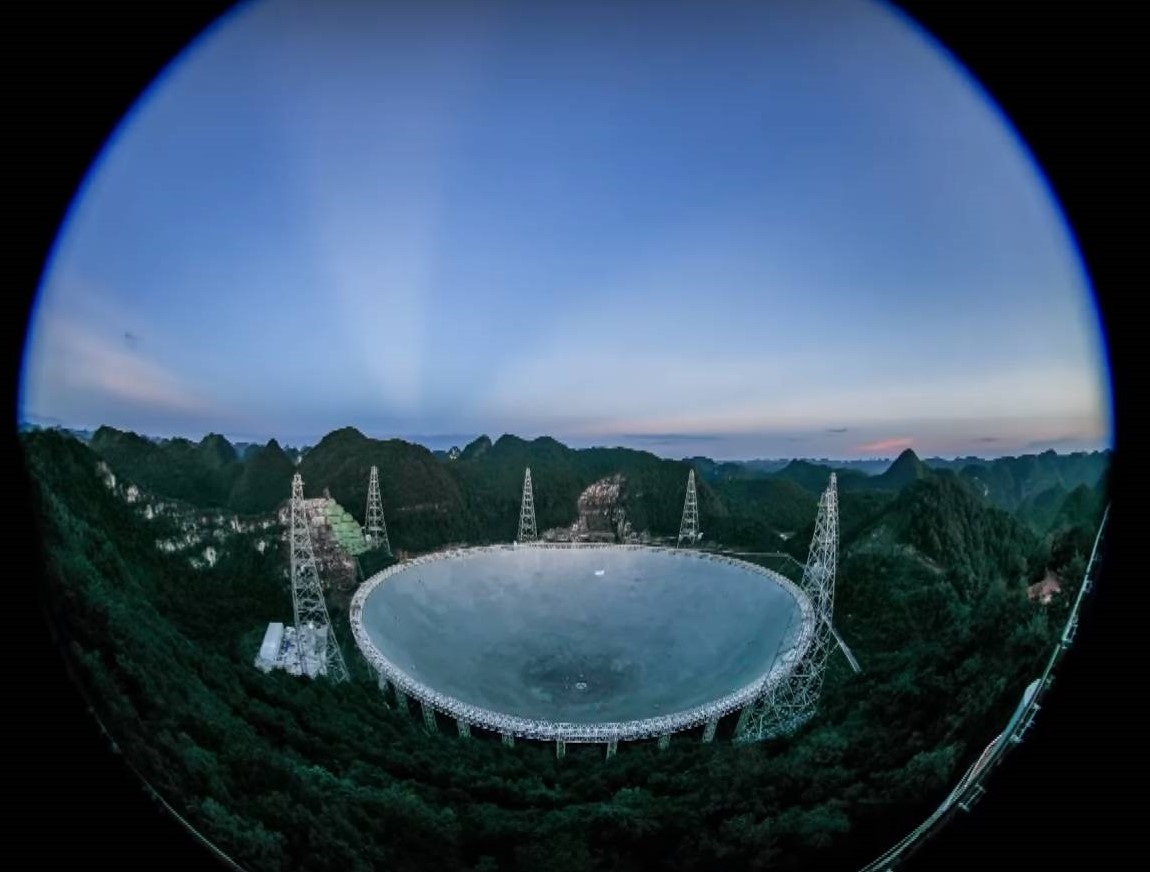
Making the rounds on Twitter and various news feeds is that China may have picked up signals from alien civilizations.
China’s “Sky Eye” — better known as the Five-hundred-meter Aperture Spherical radio Telescope (FAST) radio telescope — is located in southwestern Guizhou province.
In one report, posted by the state-backed Science and Technology Daily (story now removed from the site) cites Zhang Tonjie, chief scientist of an extraterrestrial civilization search team co-founded by Beijing Normal University, the National Astronomical Observatory of the Chinese Academy of Sciences and the University of California, Berkeley.

Credit: GLOBALink/Inside Outer Space screengrab
Zhang is reported to have said that the team detected two sets of signals in 2020 while sifting through data gathered in 2019. Another signal was picked up this year amidst observation data of exoplanet targets.
However, Zhang reportedly also underscored the prospect that the signals are products of radio interference. As follow-up, repeat observations are reportedly on tap.
Radio pollution
Meanwhile, Inside Outer Space reached out to Dan Werthimer, the Marilyn and Watson Alberts SETI Chair in the Astronomy Department and Space Sciences Lab at the University of California, Berkeley. He works with the Beijing Normal University SETI researchers.
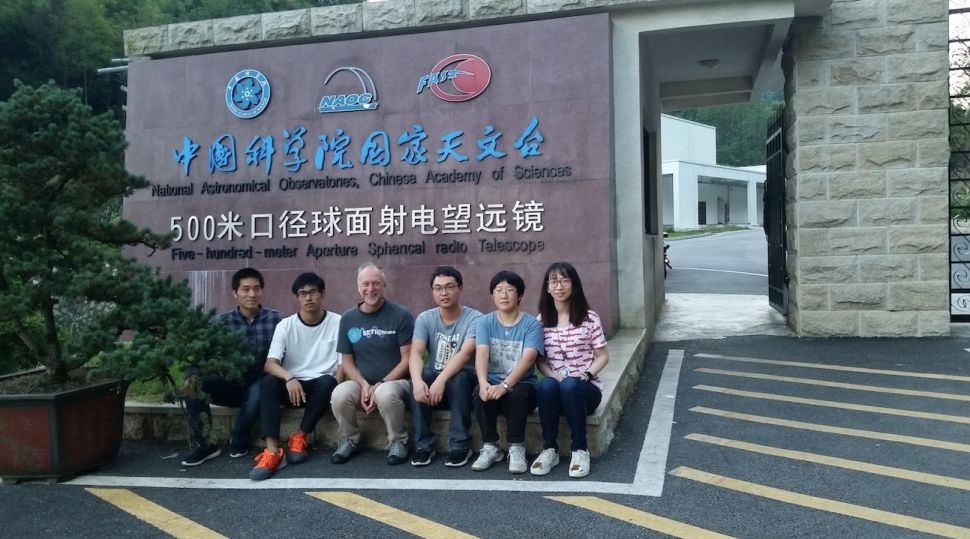
The search for extraterrestrial intelligence (SETI) is an international, collaborative affair. SETI scientist Dan Werthimer of the University of California, Berkeley, co-authored a recent paper on China’s SETI program with the Five-hundred-meter Aperture Spherical Radio Telescope (FAST). He is shown here with other FAST SETI collaborators. Credit: Dan Werthimer
These signals are from radio interference; they are due to radio pollution from earthlings, not from ET. The technical term we use is “RFI” – radio frequency interference. RFI can come from cell phones, TV transmitters, radar, satellites, as well as electronics and computers near the observatory that produce weak radio transmissions,” Werthimer said.
“All of the signals detected by SETI researchers so far are made by our own civilization, not another civilization,” Werthimer added. “It’s getting hard to do SETI observations from the surface of our planet. Radio pollution is getting worse, as more and more transmitters and satellites are built. Some radio bands have become impossible to use for SETI.”

Credit: Breakthrough Listen/Danielle Futselaar
Werthimer said that earthlings might eventually have to go to the backside of the Moon to do SETI. “A radio telescope on the backside of the Moon would be shielded from all of our planet’s radio pollution.”
For more information on China’s SETI plans, go to:
China Radio Telescope Embarks on ET Search
https://www.leonarddavid.com/china-radio-telescope-embarks-on-et-search/
Also, go to:
Ready, SETI, go: Is there a race to contact E.T.?
https://www.space.com/seti-race-alien-life-search-china.html

Credit: NPO Lavochkin
There is progress to report on Russia’s reactivation of Moon exploration.
NPO Lavochkin continues the work on the country’s Luna-25 lunar lander.
On the night of June 13-14, the flight product of the Luna-25 spacecraft was transported from the territory of the enterprise to the branch testing center of the State Corporation (Peresvet, Moscow Region) for conducting complex electrical tests in a vacuum chamber.
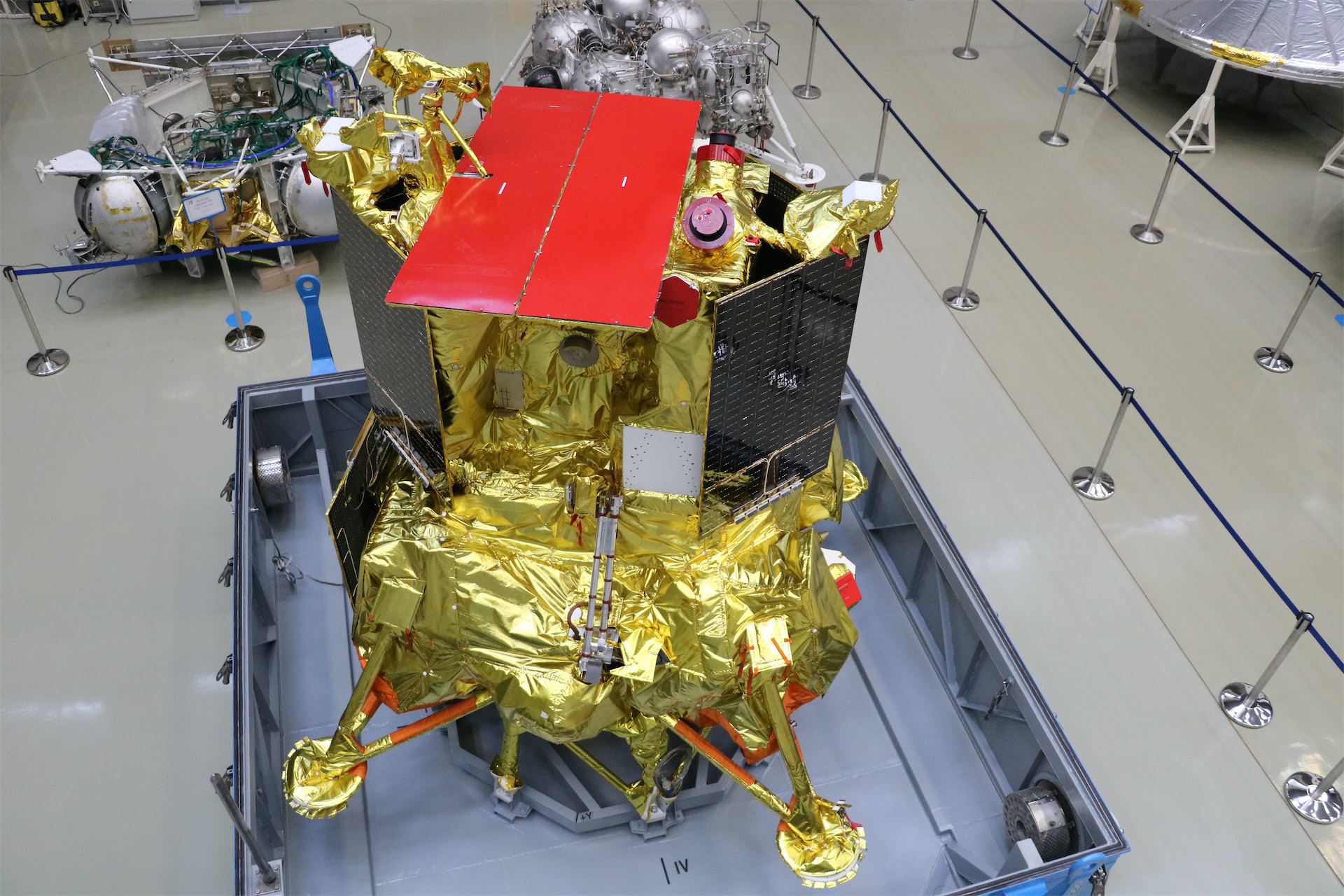
Credit: NPO Lavochkin
“These tests are carried out in order to check the functioning of the flight model of the spacecraft in conditions as close as possible to the real conditions of its operation (space vacuum, low and high temperature loads),” NPO Lavochkin reports.
After completion of testing, the spacecraft will be returned to NPO Lavochkin for further work.

Topographic map of the southern sub-polar region of the Moon showing the location of Boguslawsky crater.
Credit: Ivanov et al., 2015 via Arizona State University/LROC
Circumpolar region
“The Luna-25 spacecraft is being created using the latest achievements in the field of space instrumentation. The main task of the mission is to develop basic soft landing technologies, as well as to conduct research in the little-studied circumpolar region of the Moon,” NPO Lavochkin adds.
“The return to the Moon is due to the discovery of ice deposits at the poles, which opens up new opportunities for supporting lunar missions,” the spacecraft production group notes.

Credit: NPO Lavochkin
Launch slips
The Russian robotic Moon lander has repeatedly slipped from last year to May, then August, and may be ready for launch this September.
In addition, Luna-25 became another space causality of the ongoing Russian aggression against Ukraine. The European Space Agency pulled the plug on working with Russia on this mission, and also other Luna-series projects.

Russia’s Luna-25 will test lunar sampling skills.
Credit: NPO Lavochkin/IKI/Roscosmos
Once off the ground and Moon-bound, Luna-25 is slated to touch down north of the Boguslavsky crater. A “reserve area” for the landing craft is southwest of the Manzini crater.
This Russian Moon mission continues the series of the former Soviet Union’s lunar exploration activities that ended back in 1976. Luna-24 successfully delivered about 170 grams of lunar soil to Earth.
The Luna-25 mission will be followed by the Luna-26 orbiter and the Luna-27 landing vehicle, after which it is planned to start deploying a full-fledged scientific station on the Moon in collaboration with China.
The U.S. Department of Transportation’s Federal Aviation Administration (FAA) will require SpaceX to take more than 75 actions to mitigate environmental impacts from its proposed plan to launch the Starship/Super Heavy vehicle from Boca Chica, Texas.

SpaceX Boca Chica Launch Site in Cameron County, Texas.
Credit: Elon Musk/SpaceX
The actions are part of the agency’s environmental review. The environmental review must be completed along with public safety, national security, and other analyses before a decision on whether to grant a launch license can be made.
The license application is still pending.
The environmental review is one part of the FAA Launch Operator License application process.

Credit: Elon Musk/SpaceX
Impacts to fish, wildlife and plants
SpaceX also must meet FAA safety, risk, and financial responsibility requirements before a license is issued for any launch activities. The review was completed in accordance with the National Environmental Policy Act and all applicable laws, regulations, and agency guidance.
As noted today by the FAA, additional measures to address impacts to fish, wildlife and plants, and resources protected by the National Historic Preservation Act will be required.
Some examples of these measures include:
- Ongoing monitoring of vegetation and wildlife by a qualified biologist;
- Ensuring notification of surrounding communities in advance about potential engine noise and sonic booms from launches;
- Coordinating with state or federal agencies to remove launch debris from sensitive habitats;
- Adjusting lighting at the launch complex to minimize impact on wildlife and the nearby beach.
The required actions are part of the FAA’s Programmatic Environmental Assessment, Finding of No Significant Impact (FONSI), and Record of Decision (ROD). The documents are available at:
https://www.faa.gov/space/stakeholder_engagement/spacex_starship

Credit: CORDS/The Aerospace Corporation
What is the overall impact of the tons of human-made orbital debris, solid and liquid propellant discharges, and other space age substances that reenter the Earth’s atmosphere?
There’s a toss away line in use over the years – indeed, today — that spacecraft refuse “burns up” – but that is far from accurate. The chemistry from high heating of spacecraft materials – including beryllium, aluminum, etc. – is worthy of investigation, specifically the impact of these materials on the atmosphere – top to bottom.
What are the consequences from human-made materials reentering Earth’s fragile atmospheric cocoon?
New research
New research into this area has been done by Laura Ratliff of The Space Policy Institute at the George Washington University Elliott School of International Affairs.
Last month, her paper — “Space Debris Reentry: Inadvertent Geoengineering?” – won the Thacher Prize for Outstanding Publication in Space Policy.

Density of Human-made Objects by Altitude. From Pardini and Anselmo (2021) used in Laura Ratliff paper
“The potential atmospheric effects of satellite hardware reentering from low Earth orbit (LEO) megaconstellations have been largely unstudied to date,” the paper explains. “While researchers have raised concerns about the potential for megaconstellations to pollute LEO, they have largely accepted deorbiting of dead satellites without considering the potential atmospheric pollution from routine burning of various carbon compounds and aerosolization of metal components.”
Host of different materials
As Ratliff points out spacecraft contain a host of different materials that could have varied effects on the atmosphere:
- Aluminum: Commonly used for structural elements and radiation/impact shielding. It accounts for a large percent of the total mass for structures in which it is used.
- Carbon Composites: Either carbon fibers or woven fabric are combined with an epoxy to generate a rigid material which can be used for structural elements in combination with, or replacing, aluminum. Carbon fibers are also used in the construction of propellant tanks.
- Titanium: Useful for propellant tanks and engine components due to its high strength-to-weight ratio. Its thermal resistance and stability also make it useful for optical instruments, where it can thermally isolate cold detectors, and for casings and other supporting structures.
- Steel: A combination of iron and carbon, it is the most common material for fasteners (screws) and reaction wheels.
- Ceramics: Used in solar cells and thermal protection, can be a combination of silicon and other materials.
- Copper: Most commonly used in wiring.
Paucity of data
“The paucity of data available to quantify the effects of debris reentry make it challenging to establish whether there is any current or future danger of significant atmospheric damage,” Ratliff notes in the paper. “Yet, the technical basis upon which estimates of harm rest does suggest there may be cause for concern as reentry rates increase.”

Credit: The Aerospace Corporation/CORDS
Ratliff tells Inside Outer Space: “Starting to characterize the unknowns in the climate system and commercial satellite industry was a daunting task because the gaps in our knowledge are so great and many of the missing pieces interrelate in complex ways.”
With so many unknowns, Ratliff adds, “building an accurate model to predict future climate effects would be quite an undertaking, but doing so might be important to prevent us from committing to satellite disposal practices which we’ll later regret.”
This topic seems ripe for further study by an interdisciplinary group including atmospheric scientists, materials scientists, thermodynamicists, and engineers, Ratliff suggests to Inside Outer Space.
Logical first step
“Cries of “More Research!” can often be heard when policymakers don’t want to act on an issue, but this classic non-solution is actually fairly useful for the issue at hand,” Ratliff says in the paper. “With many fundamental pieces of knowledge unknown and yet knowable, building up a better understanding of the potential inputs into the atmosphere and their interaction within current global climate models would provide a much more solid foundation upon which future policy could be built.”

Credit: NASA
Given the current levels of uncertainty across the board, Ratliff concludes, investing in focused research on the interaction of spacecraft-based aerosols with the atmosphere is the most logical first step.
“This can inform next steps, such as reducing the mass entering the atmosphere, changing the materials used, or mitigating post-aerosolization. While we do not know whether these actions will become necessary in the next decade, next century, or ever, taking steps now to assess the situation in more detail and develop a proactive plan will likely benefit policymakers, citizens, and the environment,” Ratliff suggests in the paper.
To read the winning research paper — “Space Debris Reentry: Inadvertent Geoengineering?” – go to:
https://spi.elliott.gwu.edu/files/2019/08/Ratliff-Debris-Reentry-Final-reformat.pdf

A concept image illustrating various types of technosignatures, including atmospheric, optical, and radio technosignatures.
Credit: Jacob Haqq-Misra, et al.
On the lookout for evidence of extraterrestrial technology? For one, keep an eye out for city lights as a “technosignature.”
Technosignatures refer to observational manifestations of technology that could be detected through astronomical means. Various types of technosignatures include atmospheric, optical, and radio technosignatures.
A new research paper – “Searching for technosignatures in exoplanetary systems with current and future missions” presents a number of conclusions of a TechnoClimes 2020 workshop sponsored by NASA and Blue Marble Space Institute of Science.

Credit: ESA/Hubble & NASA
Takeaway messages in the paper include the fact that current and future astronomical facilities can place constraints on the prevalence of technosignatures. Also, technosignature searches can be included in mission science justification without added cost.
That said, there’s need to engage the broader astronomical community in thinking seriously about the possibility of detecting technosignatures. Furthermore, the tools to find technosignatures may already be available, “but it will require a community-wide effort to start looking,” the paper explains.
Renewed interest
“A logical extension to the search for extraterrestrial life through biosignatures is the search for evidence of extraterrestrial technology,” the paper explains.

Capabilities for detecting technosignatures with recent, ongoing, and future missions and facilities.
Credit: Jacob Haqq-Misra, et al.
“The idea of searching for ‘technosignatures’ has been considered by astronomers for more than half a century, with initial efforts focused on the possibility of detecting extraterrestrial radio transmissions.”
On one hand, funding remains a limiting factor in advancing technosignature science. But recent years have shown a renewed interest in technosignatures by public and private funding agencies.
Atmospherics
According to the paper, atmospheric technosignatures are gases that are produced by artificial means either as an incidental byproduct of industrial civilization or for a specific purpose, perhaps to manage planetary climate.
An example of an atmospheric technosignature is nitrogen dioxide (NO). “The production of NO on Earth today includes biogenic and anthropogenic sources, in addition to lightning. However, human generated NO2 dominates by three times the amount from non-human sources. “Detecting high levels of NO at levels above that of non-technological emissions found on Earth could be a sign that the planet may host active industrial processes,” the paper notes.

Cross-sections for a subset of potential atmospheric technosignature molecules including Ammonia (NF3), Carbon Tetrafluoride (CF4), and Sulfur hexafluoride (SF6).
Credit: Jacob Haqq-Misra, et al.
Nightside city lights
One of the strongest spectroscopic technosignatures present on Earth’s nightside is the emission from nightside city lights, but on Earth this emission is relatively concentrated.
It may be that advanced civilizations on exoplanets have built cities over significantly more of their planets’ surface, the research paper suggests. “These more urbanized planets would have a higher nightside brightness from city lights, and be correspondingly easier to detect.”
To gain free access to the research paper – “Searching for technosignatures in exoplanetary systems with current and future missions” by lead author Jacob Haqq-Misra of Blue Marble Space Institute of Science in Seattle, Washington, go to:
The launch of NASA’s Cislunar Autonomous Positioning System Technology Operations and Navigation Experiment, or CAPSTONE, is no longer targeting a June 13 takeoff, but perhaps by month’s end.
Since arriving at its New Zealand departure point, CAPSTONE has been successfully fueled and integrated with the Lunar Photon upper stage by teams from Rocket Lab, Terran Orbital, and Stellar Exploration. CAPSTONE and Photon have been encapsulated in the payload fairing.
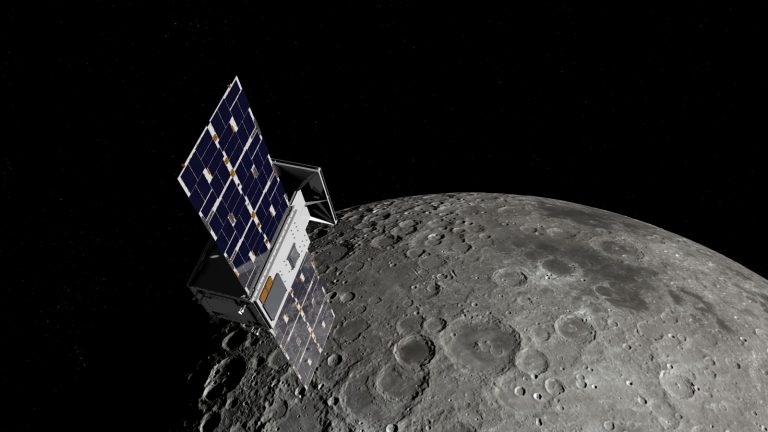
CAPSTONE
Credit: NASA
CAPSTONE is supporting NASA’s Artemis program as a pathfinder for NASA’s Gateway station, a Moon-orbiting outpost.
The mission is to help reduce the risk for future spacecraft by validating innovative navigation technologies and verifying the dynamics of the Near Rectilinear Halo Orbit (NRHO).

Credit: Rocket Lab via Twitter
Staging area
As a 12U CubeSat, CAPSTONE’s orbit also establishes a location that is an ideal staging area for missions to the Moon and beyond. Its location at a precise balance point in the gravities of the Earth and the Moon offers stability for long-term missions like Gateway and requires minimal energy to maintain.
Designed and built by Terran Orbital, the CAPSTONE payload and its software are owned and operated by Advanced Space for NASA.

Credit: Rocket Lab via Twitter
The smallsat is soon to be launched, perhaps by month’s end, atop a Rocket Lab Electron rocket from Rocket Lab Launch Complex 1 (LC-1) on the Mahia Peninsula of New Zealand. That company’s Lunar Photon satellite upper stage will send the spacecraft on its planned lunar transfer trajectory.
CAPSTONE will not go directly to the Moon. Instead, it will follow a “ballistic lunar transfer” that takes the craft out as far as 1.5 million kilometers before returning into lunar orbit. That transfer, which will take about four months to complete, is designed to save propellant, making the mission feasible for such a small spacecraft.
For more information on CAPSTONE, go to:

Credit: NASA/JPL
NASA is evaluating a first human stay on the surface of Mars lasting some 30-days.
Scientists and engineers are debating how to best use that month on Mars – plant a flag, just stay alive, conduct valuable science, or scurry around and set up equipment for the next human Mars landing team?

Credit: NASA
Turns out, site selection will be critical, and hauling select gear on that maiden outing will likely set the framework for future human exploration of the Red Planet.
Go to my new Space.com story “Mars Base 101: How astronauts could make the most of a 30-day Red Planet stay – Mars explorers could get a lot done in a month, experts say,” at: https://www.space.com/nasa-astronauts-30-day-mars-mission-science
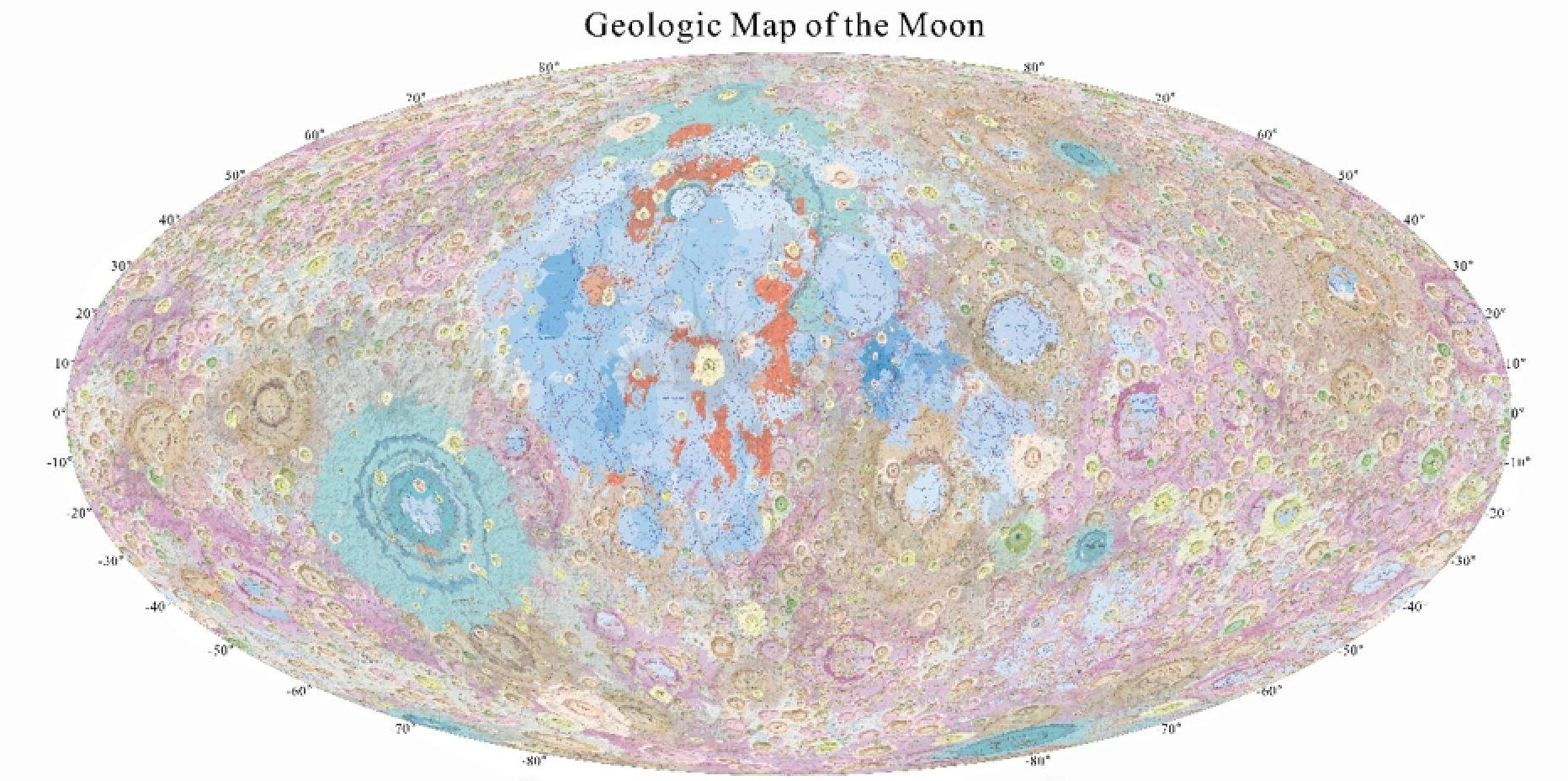
Credit: Jinzhu Ji et al.
Chinese scientists have completed the world’s first 1:2.5 million scale lunar geological map.
The map provides significant basic data for lunar scientific research and an important new reference for the development of other celestial geological maps, according to China Central Television (CCTV).
The new map details information on the Moon’s surface strata, structure, lithology and chronology and charts the evolutionary processes of lunar volcanoes and asteroid impacts. That data will be crucial for future on-site research including exploration planning and landing site selection, CCTV adds.
The creation of the map was led by academician Ouyang Ziyuan and researcher Li Jianzhong, both prominent researchers of China’s lunar exploration program, as well as by the Institute of Geochemistry of the Chinese Academy of Sciences, along with support from five universities and institutes within the field.
Lead author of the paper — “The 1:2,500,000-scale geologic map of the global Moon” — published in the Science Bulletin is Jinzhu Ji, a lecturer at School of Mining, Inner Mongolia University of Technology and visiting scholar at Center for Lunar and Planetary Science, Institute of Geochemistry, Chinese Academy of Sciences.

Credit: Jinzhu Ji et al.
Lunar geological chronology
“Based on the data of China’s Chang’e lunar project and other international lunar exploration research, as well as through the study of strata, morphology, composition, structure and geological age of the Moon’s surface, the team has proposed and established a new lunar geological chronology,” CCTV explains.
The map work has codified the classification of impact crater materials, impact basin construction, rock types and tectonic types and will set standards and procedures for future geological mapping.
“The newly compiled map” CCTV notes, “updates the Moon’s geological chronology based on a better understanding of the history of the lunar surface which has been categorized into three epochs and six periods.”

Credit: ISS/NASA
That trio of epochs have been classified as the early stage, dominated by internal geological activities, the middle stage which features both internal and external geological forces, and the latter stage which has mainly external forces such as asteroid strikes shaping the Moon’s surface.
For more information, go to “The 1:2,500,000-scale geologic map of the global Moon” in the Science Bulletin at:
https://www.sciencedirect.com/science/article/abs/pii/S2095927322002316

