Author Archive
 Author:
  July 7th, 2022
X-37B now on the 6th mission of the space plane program.
Credit: Boeing
The Earth-circling U.S. military X-37B robotic space drone has broken a record, setting a new long-duration trek in space for the program.
The Orbital Test Vehicle (OTV-6), also called USSF-7 for the U.S. Space Force, was launched on May 17, 2020 atop an Atlas-V 501 booster and has now sailed past 780 days of time on orbit.
Flight of the previous record-holder was OTV-5 that spent nearly 780 days on-orbit.

The X-37B Orbital Test Vehicle mission 4 (OTV-4), the Air Force’s unmanned, reusable space plane, landed at NASA’s Kennedy Space Center Shuttle Landing Facility May 7, 2017.
Credit: USAF
Classified status
While the Boeing-built robotic space plane’s on-orbit primary agenda is on hush-hush, classified status, some onboard experiments were discussed pre-launch.

Air Force X-37B space plane.
Credit: Boeing
One experiment onboard the space plane is from the U.S. Naval Research Laboratory (NRL), an investigation into transforming solar power into radio frequency microwave energy. The experiment itself is called the Photovoltaic Radio-frequency Antenna Module, PRAM for short.
Along with toting NRL’s PRAM into Earth orbit, the X-37B also deployed the FalconSat-8, a small satellite developed by the U.S. Air Force Academy and sponsored by the Air Force Research Laboratory to conduct several experiments on orbit.

Recovery crew members process the X-37B Orbital Test Vehicle at Vandenberg Air Force Base after the program’s third mission complete.
Credit: Boeing
In addition, two NASA experiments are tucked onboard the space plane to study the effects of the space environment on a materials sample plate and seeds used to grow food.
Flight roster
Here’s a roster of X-37B missions showing the increasing duration of flight time.
OTV-1: launched on April 22, 2010 and landed on December 3, 2010, spending over 224 days on orbit.
OTV-2: launched on March 5, 2011 and landed on June 16, 2012, spending over 468 days on orbit.
OTV-3: launched on December 11, 2012 and landed on October 17, 2014, spending over 674 days on-orbit.
OTV-4: launched on May 20, 2015 and landed on May 7, 2015, spending nearly 718 days on-orbit.
OTV-5: launched on September 7, 2017 and landed on October 27, 2019, spending nearly 780 days on-orbit.
As to when and where OTV-6 will fly to a wheels-stopped landing, and where, is a guess, but likely Kennedy Space Center.
OTV-1, OTV-2, and OTV-3 missions landed at Vandenberg Air Force Base, California, while the OTV-4 and OTV-5 missions landed at Kennedy Space Center, Florida.
Vehicle features
Boeing, as the space plane maker, notes that the vehicle features many elements that mark a first use in space, including:
- Avionics designed to automate all de-orbit and landing functions.
- Flight controls and brakes using all electro-mechanical actuation; no hydraulics on board.
- Built using a lighter composite structure, rather than traditional aluminum.
- New generation of high-temperature wing leading-edge tiles and toughened uni-piece fibrous refractory oxidation-resistant ceramic (TUFROC) tiles.
- Advanced conformal reusable insulation (CRI) blankets.
- Toughened uni-piece fibrous insulation (TUFI) impregnated silica tiles.
Reusable vehicle

Credit: U.S. Air Force/Boeing
Presently, as far as known, there are just two X-37B vehicles in the program.
A Boeing fact sheet notes that “the X-37B is one of the world’s newest and most advanced re-entry spacecraft, designed to operate in low-Earth orbit, 150 to 500 miles above the Earth. The vehicle is the first since the Space Shuttle with the ability to return experiments to Earth for further inspection and analysis. This United States Air Force unmanned space vehicle explores reusable vehicle technologies that support long-term space objectives.”
At first designed to fly 270 days per mission, Boeing adds that “the X-37B has set progressive records for time on orbit during each of its five previous missions.”
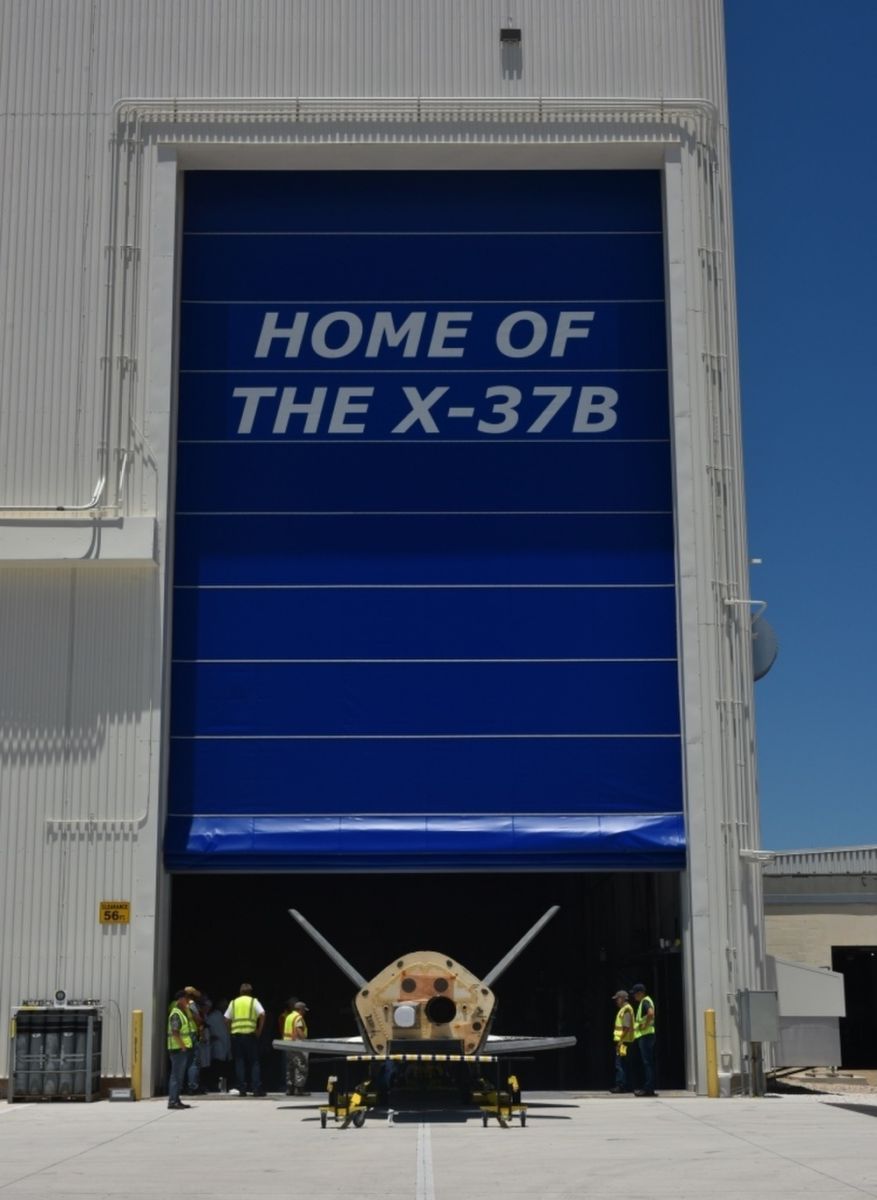
X-37B hangar at Kennedy Space Center.
Credit: Michael Martin/SAF
 Posted in
Credit: Advanced Space
Update: All went well on the TCM-1, reports Advanced Space.
That once troubled CubeSat headed for the Moon – CAPSTONE – is now scheduled for a trajectory correction maneuver-1 (TCM-1) at11:30 a.m. Eastern Time.
NASA’s Cislunar Autonomous Positioning System Technology Operations and Navigation Experiment (CAPSTONE) suffered an anomaly during commissioning activities. The operations team began actively working the issue with the NASA Deep Space Network and identified a path forward.

Rebecca Rogers, systems engineer, left, takes dimension measurements of the CAPSTONE spacecraft at Tyvak Nano-Satellite Systems, Inc., in Irvine, California.
Happy and healthy
The mission operations team is now confident based on telemetry that the spacecraft is healthy and functioning as expected, explains Advanced Space, owner and operator of the micro-explorer.
Initial data from the spacecraft suggests that it is “happy and healthy” and performed autonomously during the time it did not have communications from the ground including remaining properly pointed, maintaining battery charge, and conducting a momentum desaturation maneuver.
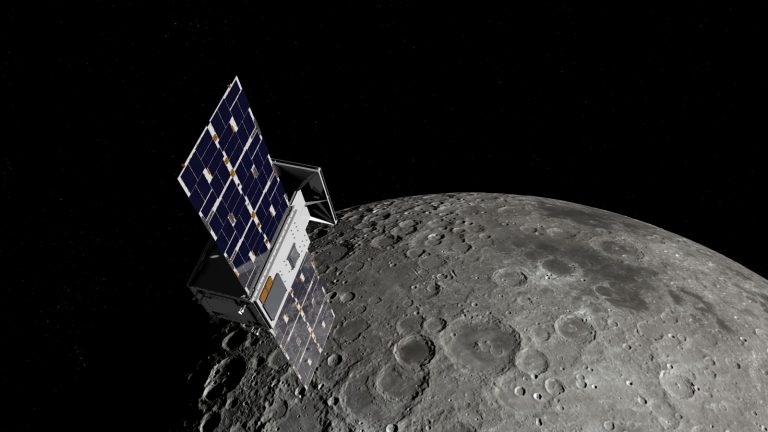
CAPSTONE
Credit: NASA
Anomaly cause
As for the cause of the anomaly, Advanced Space responded to an Inside Outer Space inquiry: “We are still actively working resolution of the issue however data and ground based testing suggest the anomaly was triggered during commissioning activities of the communications system. The issue is believed to be well understood and preventable moving forward.”

Orion spacecraft pulls up to Gateway.
Credit: NASA
CAPSTONE will take four months to reach the planned Near Rectilinear Halo Orbit around the Moon.
The microwave oven-sized mini-probe is supporting NASA’s Artemis program as a pathfinder for NASA’s Gateway station, a Moon-orbiting outpost.
The mission is to help reduce the risk for future spacecraft by validating innovative navigation technologies and verifying the dynamics of the Near Rectilinear Halo Orbit (NRHO).

Credit: Rocket Lab via Twitter
What happened today?
In a statement from Advanced Space, here’s what took place today and its significance:
At approximately 11:30 Eastern Time, the CAPSTONE spacecraft successfully executed its first trajectory correction maneuver on its way to the Moon and the spacecraft is in a healthy state.
“This maneuver is the first statistical maneuver of the mission meaning it is designed to clean up errors from the launch vehicle injection and does not change the baseline transfer approach or timing of arrival at the Moon on November 13th. Operations on the Ballistic Lunar Transfer and in Earth-Moon three-body orbits (such as Near Rectilinear Halo Orbits or NRHOs) require precise maneuvers and knowledge of the spacecraft state (position and velocity). The CAPSTONE propulsion system was specifically designed and optimized for these precise maneuvers and the navigation system was built from the ground up to be efficient and scalable. All of this is supported by a uniquely qualified team of flight dynamics experts at Advanced Space with specialized focus on operations in cislunar space and multi-body orbital operations.”

Jeffrey Parker, chief technology officer of Advanced Space (left) explains the CAPSTONE mission to U.S. Senator John Hickenlooper over a full-size model of the spacecraft.
Credit: Advanced Space/Jason Johnson
Post-burn stats
“This is the first maneuver executed by the CAPSTONE spacecraft using its on-board propulsion system. Prior to this maneuver the propulsion system was commissioned and demonstrated during initial de-tumble after spacecraft deployment on July 4th and during prior momentum desaturation maneuvers on July 6th and earlier today on July 7th.”
“The maneuver was designed by the Advanced Space flight dynamics team based on navigation information collected by the Deep Space Network and processed by the Advanced Space flight dynamics team.
The burn was commanded, and post-burn telemetry processed by operators at the Terran Orbital Mission Operations Center. The maneuver itself was designed to be approximately 20 m/s and initial radiometric-based reconstruction suggests it achieved approximately 19.85 m/s which represents an error of approximately 0.75 % which is well within expectations and predictions. These details will be further refined as more data is collected.”

Credit: Rocket Lab via Twitter
Closing in on the Moon
At the time of the TCM-1 burn execution, CAPSTONE was approximately 465,000 km from the Earth (~13 times further than the GEO belt and ~81,000 km further than the Moon).
“Prior to this maneuver the spacecraft was on a trajectory that would take it approximately 1.2 million km from Earth, after this maneuver the spacecraft is now targeting a trajectory that will take it approximately 1.4 million km from Earth (~39 times GEO, or 3.6 times the distance of the Moon).”
“As the team has continued to review data on the communications anomaly, the team remained confident with this conclusion prior to commanding the maneuver. Anomalies such as this are rarely a result of a single issue but instead are the result of a series of issues that converge in an unexpected way. For CAPSTONE, this series of events began during commissioning with an improperly formatted command that triggered a radio vulnerability and was compounded by a spacecraft flight software contingency response fault. The system was ultimately recovered by the team as a result of autonomous flight software system operations that cleared the fault and brought the system back into communication with the ground. During the communications outage the spacecraft autonomously operated, maintained pointing, battery charge, and performed a momentum desaturation maneuver.”

Credit: Terran Orbital Corporation
What next?
Up next for the CAPSTONE spacecraft is a second trajectory correction maneuver planned for Saturday July 9th at approximately 11:30 Eastern Time.
“This second maneuver will be much smaller than the first and will demonstrate the ability of the CAPSTONE spacecraft to perform very small and precise maneuvers, a capability that is critical to operations in the NRHO where it will arrive in November. This maneuver is designed to further clean up launch injection errors, and any execution errors that occurred in the execution of today’s maneuver. Over the next two days, the operations team will continue evaluating spacecraft status and continue commissioning the spacecraft,” notes the Advanced Space statement.
CAPSTONE is on track to reach its Near Rectilinear Halo Orbit (NRHO) around the Moon on November 13.

CAPSTONE team members install solar panels onto the Cislunar Autonomous Positioning System Technology Operations and Navigation Experiment – at Tyvak Nano-Satellite Systems Inc. in Irvine, California.
Credits: NASA/Dominic Hart
Looks like good news for that newly launched NASA Cislunar Autonomous Positioning System Technology Operations and Navigation Experiment (CAPSTONE) CubeSat.
During commissioning activities an anomaly was experienced related to the communication subsystem; the operations team began actively working the issue with the NASA Deep Space Network and identified a path forward.

Artwork depicts CAPSTONE spacecraft in a near rectilinear halo orbit (NRHO) around the moon.
Credit: NASA/Advanced Space
Recovery procedures
From Advanced Space, owner and operator of the micro-explorer:
In the last 24 hours the CAPSTONE team has identified the “likely cause” of the communications anomaly and has been working to recover from the issue. This work has included rapid engineering support and resources from many different mission partners. We are extremely grateful for this team effort and want to express our appreciation to all of those involved.
Jeffrey Parker, chief technology officer of Advanced Space (left) explains the CAPSTONE mission to U.S. Senator John Hickenlooper over a full-size model of the spacecraft.
Credit: Advanced Space/Jason Johnson
As of approximately 7:26 AM MT this morning, the operations team began receiving signal from the spacecraft. The signal confirmed the location of the spacecraft was consistent with the predictions generated from the initial acquisition activities. The team worked subsequent recovery procedures to obtain telemetry from the spacecraft at approximately 8:18 AM MT and initial indications suggest the spacecraft systems are functioning properly.
Happy and healthy
The team will continue with this work and once the communications system is fully recovered the team will review spacecraft status and telemetry to monitor for any addition issues since the communications outage began. Initial data from the spacecraft suggests that it is happy and healthy.
Rebecca Rogers, systems engineer, left, takes pre-launch dimension measurements of the CAPSTONE spacecraft at Tyvak Nano-Satellite Systems, Inc., in Irvine, California.
Once the system is determined to be back to operational capacity and a new state estimate has been obtained an updated trajectory correction maneuver will be designed and uploaded to the spacecraft for execution.
This is still a very dynamic situation, added Advanced Space, and as things progress further updates and corrections will be shared as appropriate.

Credit: CNAS/CCTV Video News Agency/Inside Outer Space screengrab
China’s three-member Shenzhou-14 crew are preparing for a busy month in space.
The country’s in-construction space station team is preparing for arrival of the Wentian lab module that is scheduled to be launched this month.
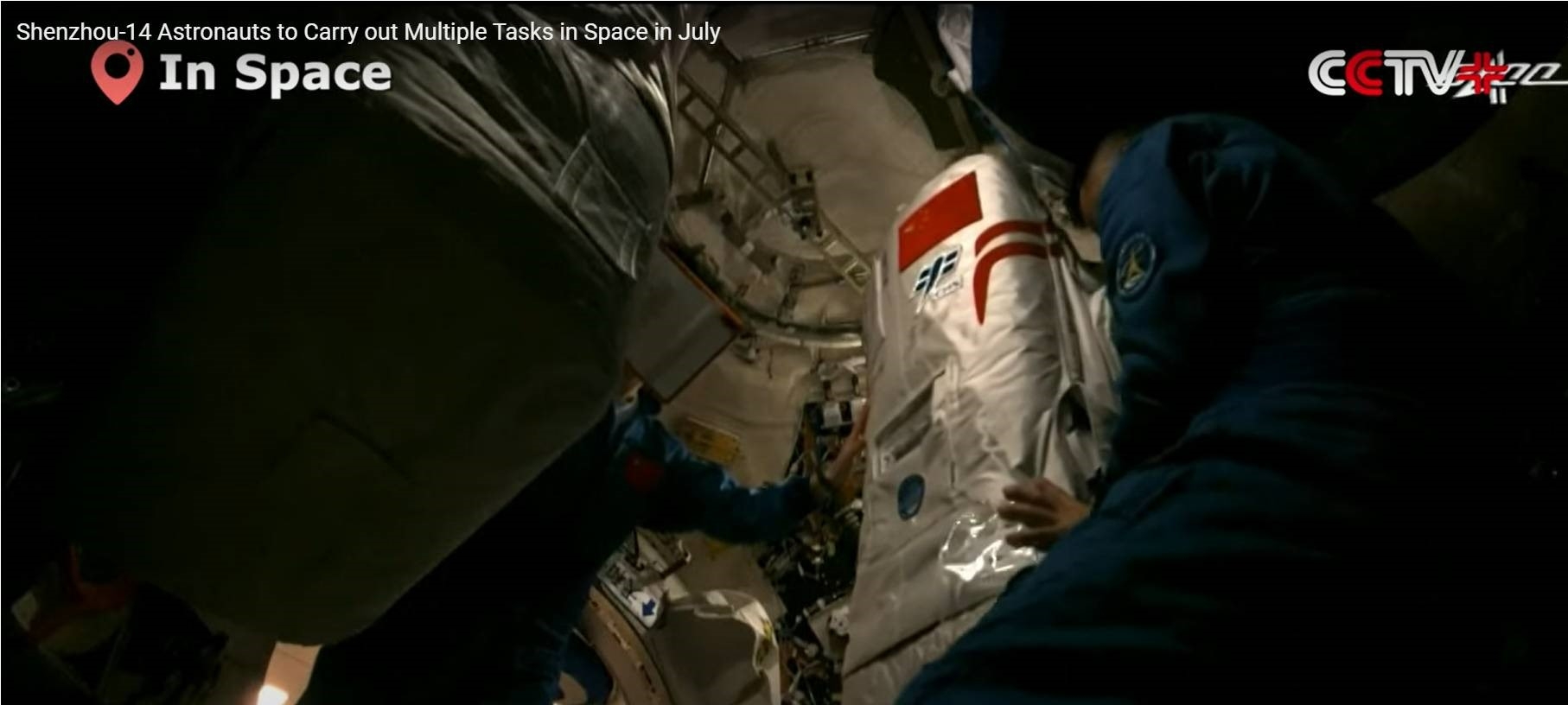
Spacewalk suit check. Credit: CNSA/CCTV/Inside Outer Space screengrab
Station commander Chen Dong recently tested a spacesuit, preparing for upcoming spacewalks that will depart from the Wentian module. Once attached, the astronauts will choose an appropriate time to get out of the spacecraft complex from the airlock part at the rear end of Wentian for spacewalk chores.

Credit: CNSA/CCTV/Inside Outer Space
The now-orbiting trio of taikonauts — Chen Dong, Liu Yang and Cai Xuzhe — are on a sixth month mission. During their stay in orbit, the crew will witness the outfitting of two lab modules to the Tianhe core module. Also on tap is to greet the Tianzhou-5 cargo craft and the Shenzhou-15 crewed spaceship.
China’s Tiangong space station is to be fully installed in Earth orbit by the end of 2022.
Large workload
As of Tuesday, the current crew have spent a full month working and living in the space station. According to China Central Television (CCTV), the Shenzhou-14 crew has successively completed various tasks, including material arrangement and movement of key items into the Tianhe module.

Credit: CNSA/CCTV/Inside Outer Space
“With the material management system, the astronauts have classified and sorted out the materials in the space station, which is quite a large workload,” said Wu Dawei, deputy chief designer, astronaut system, of the China Astronaut Research and Training Center.
“We have upgraded and improved the system for this mission, [making it easier for] the astronauts to take some photos and videos, sort out and record the information of materials in the space station, which has further facilitated the communication between the Earth and the space station,” Wu told CCTV.

Credit: CCTV/Inside Outer Space screengrab
Launch schedule
China is set to launch the Wentian laboratory module to dock with the current complex of China’s space station in late July and then loft the Mengtian laboratory module at the end of this year. Most of laboratory cabinets prepared for carrying out space station experiments will be confined within the Wentian and Mengtian modules.
Following this phase, the Tianzhou-5 cargo craft and the Shenzhou-15 piloted spacecraft will arrive at the complex later this year.
The crew members of the Shenzhou-15 will join the Shenzhou-14 taikonauts aboard the Tiangong for the station’s first-ever crew handover.
For video updates on activities on the station core module by the Shenzhou-14 crew, go to:
Credit: NASA
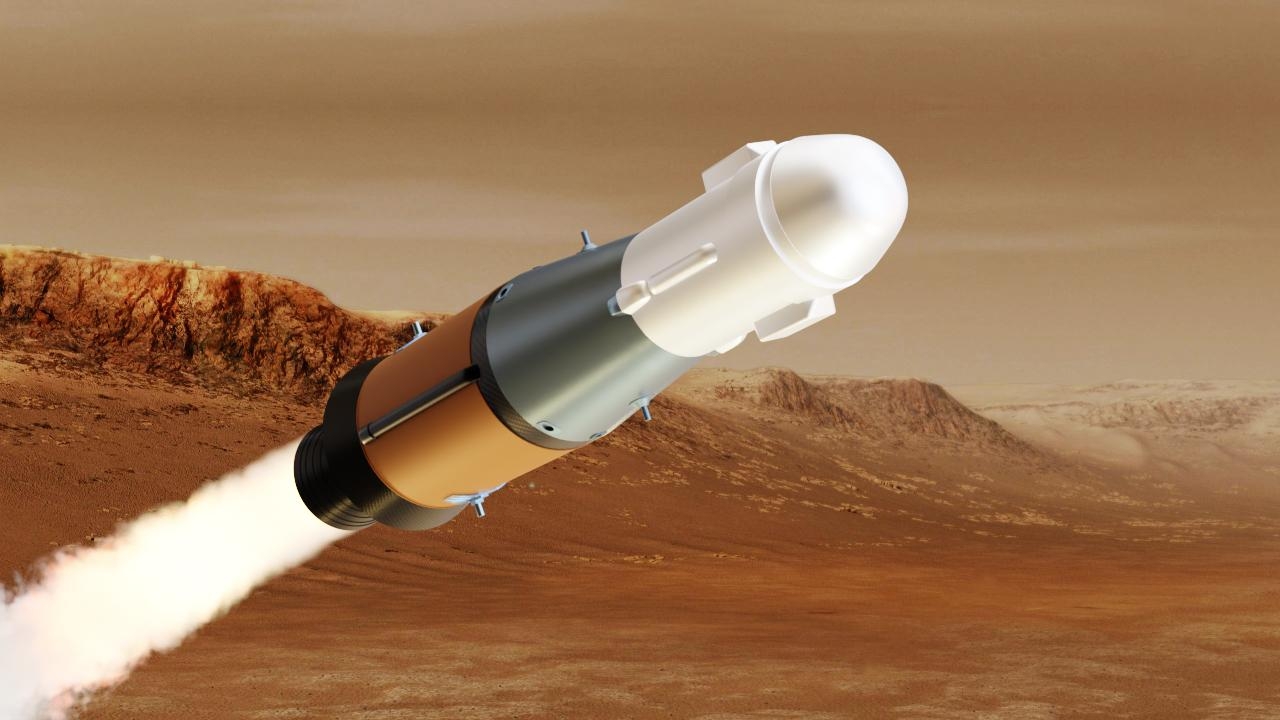
Work is progressing on a vital part of NASA’s Mars Return Sample plans.
The Mars Ascent Vehicle (MAV) is a small, lightweight, two-stage solid propellant rocket with a big assignment: hurl rock, sediment, and atmospheric samples from the surface of the Red Planet.
Developer of the MAV is Lockheed Martin Space of Littleton, Colorado, with this “cache and carry” transport device crucial to enable the first rocket launch from another planet.
The MAV would be packaged within NASA’s Sample Retrieval Lander, another central part of the campaign, with the all-in-one spacecraft (lander and MAV) touching down near or in Jezero Crater. That’s the spot where the Perseverance rover is already busily gathering Mars specimens, some of which are destined to be shot back to Earth in the early 2030’s.

Credit: NASA/JPL-Caltech
For more details, take a look at my new Space.com story – “How NASA will launch Mars samples off the Red Planet – Meet the 10-foot-tall (3 meters) Mars Ascent Vehicle” at:
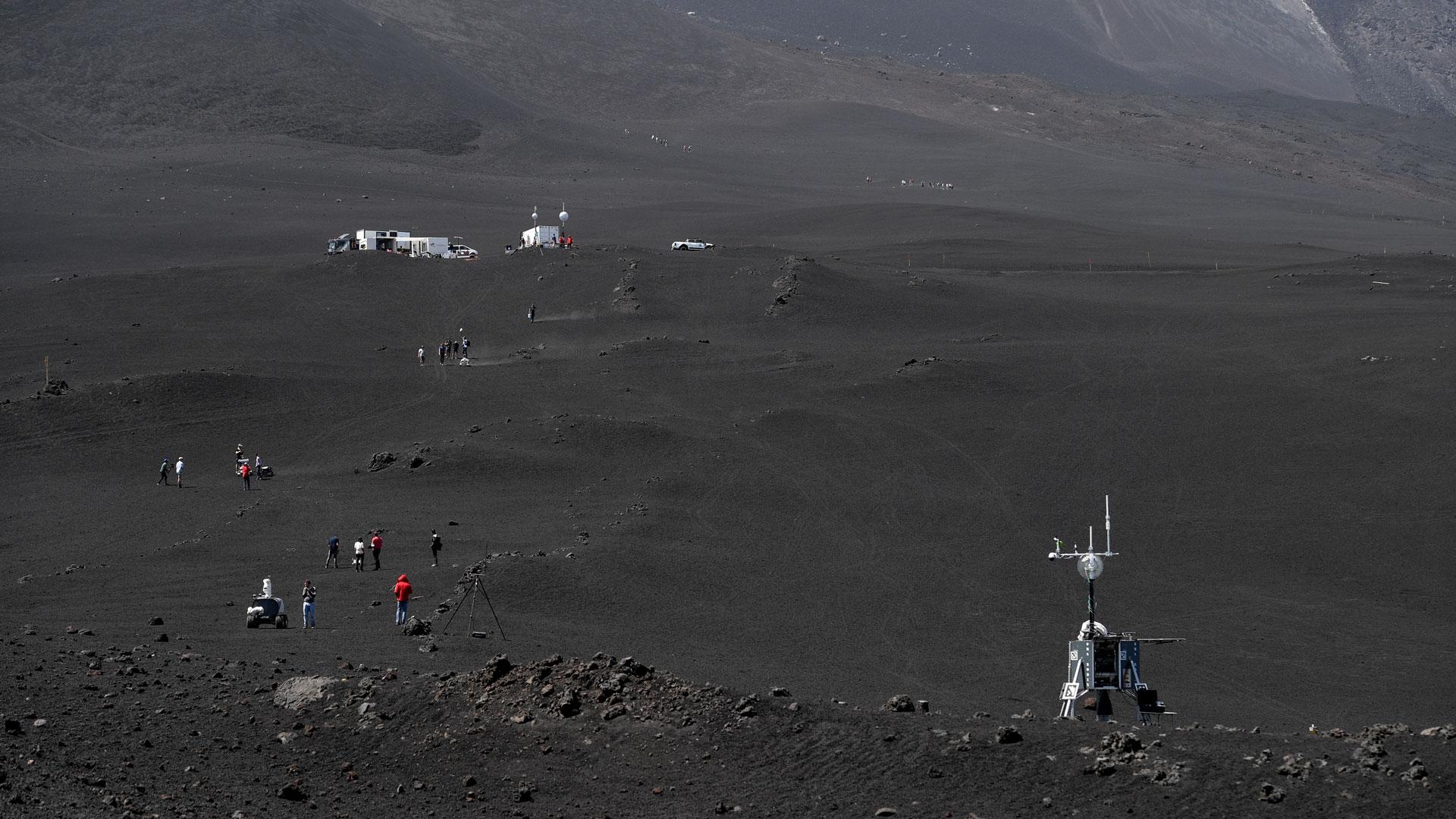
Simulated lunar exploration on Mount Etna, a volcano in Italy.
Credit: DLR (CC BY-NC-ND 3.0)
The Helmholtz Future Project Autonomous Robotic Networks to Help Modern Societies (ARCHES) has wrapped up simulated lunar exploration on Mount Etna, a volcano in Italy.
The German Aerospace Center (Deutsches Zentrum fuer Luft- und Raumfahrt; DLR) organized the venture that also involved the European Space Agency’s “Analog-1” project.
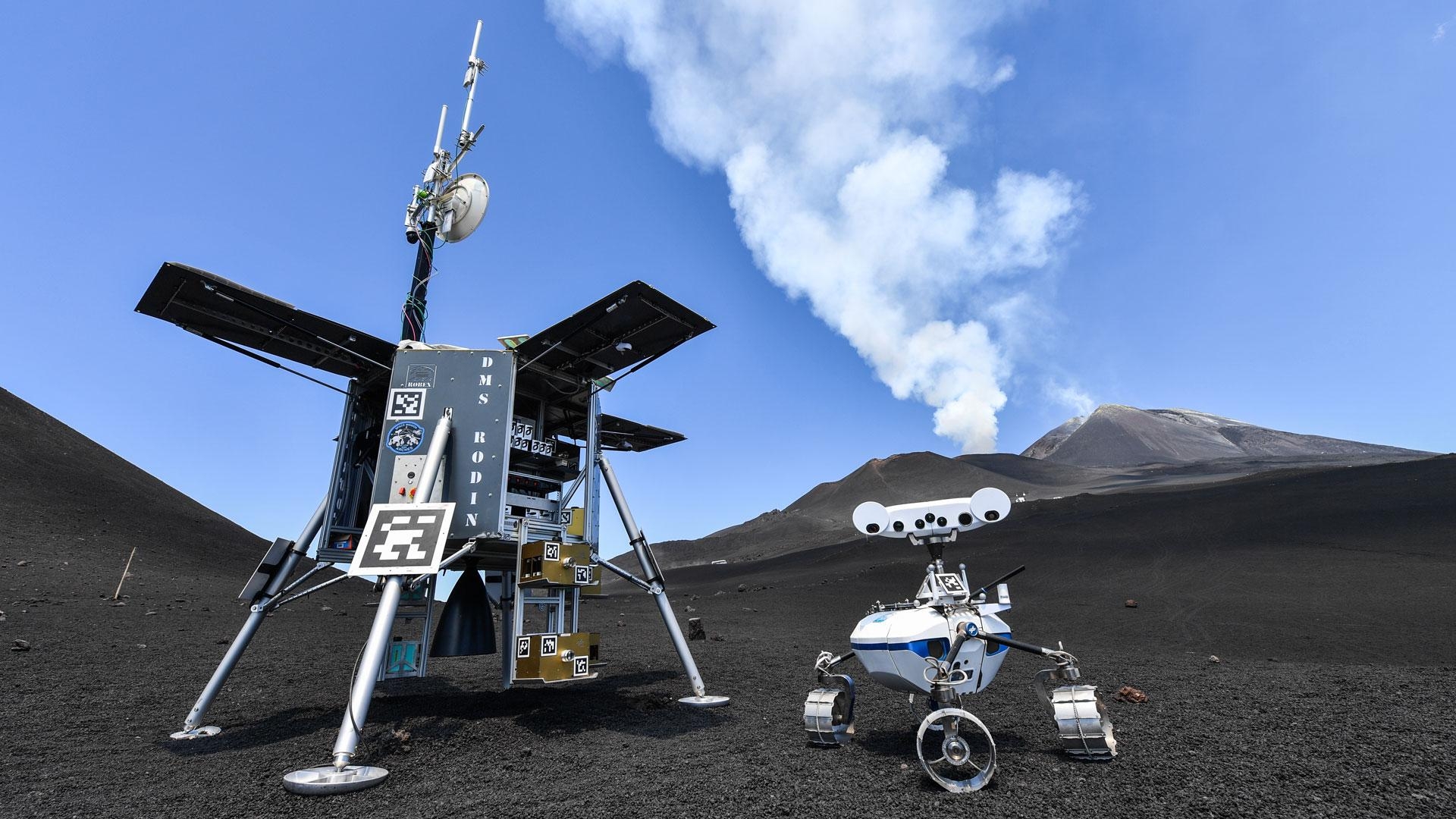
DLR lander and rover working together.
Credit: DLR (CC BY-NC-ND 3.0)
The Mount Etna site resembles the lava landscape on the Moon. In addition to the loose, coarse-grained surface composition, the solidified lava layers also present realistic challenges for exploration missions.
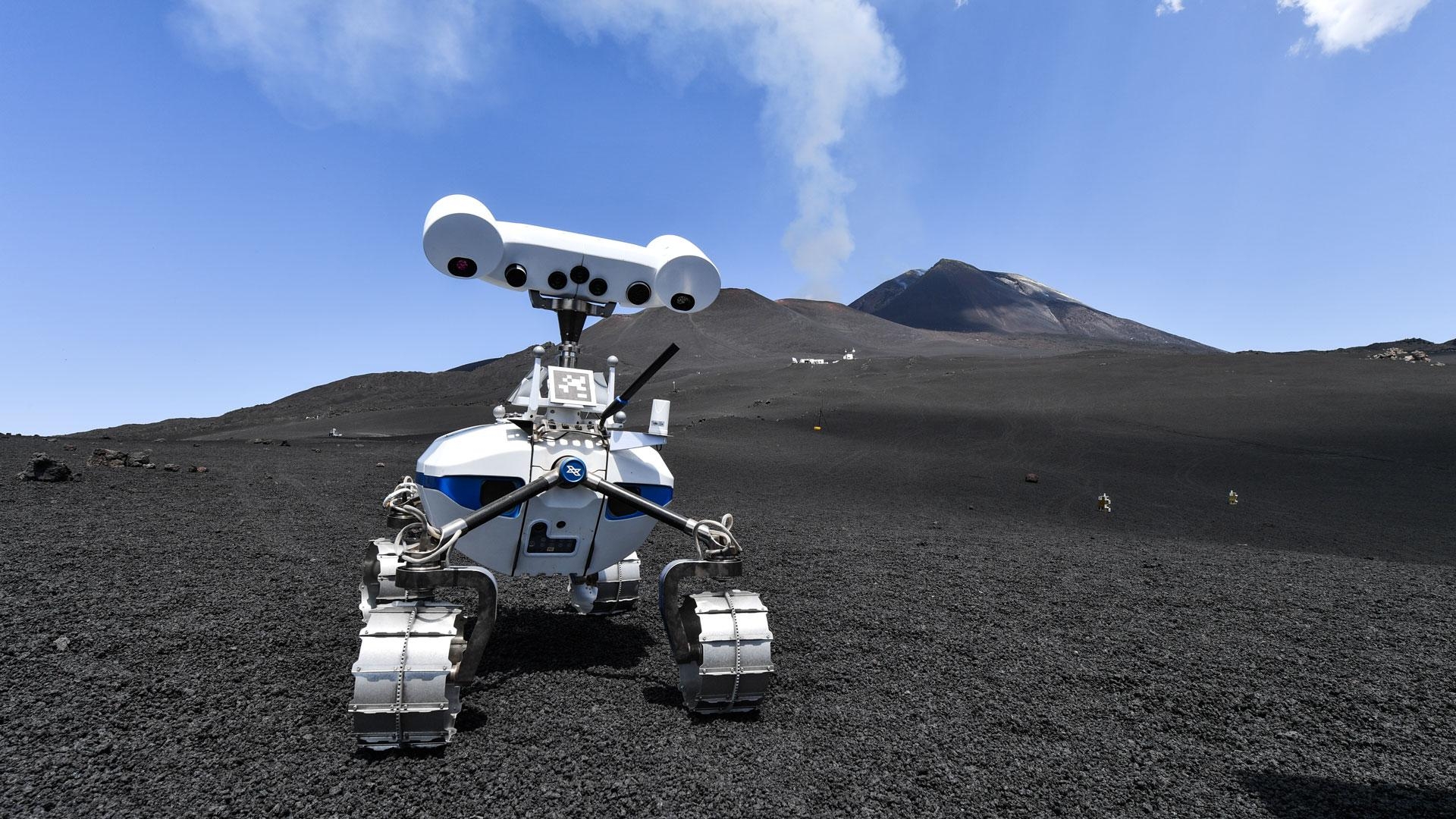
DLR Lightweight Rover Unit 1 (LRU1).
Credit: DLR (CC BY-NC-ND 3.0)
Robot menagerie
According to the DLR, two robots moved around together autonomously. They were joined by a drone. Also practiced was control of the robots from a simulated station in orbit. For maximum realism a second of signal delay was added to the rover control system, equivalent to the time it would take commands to travel between the Gateway station and the lunar surface. The force feedback control method has been designed to operate with such delays.
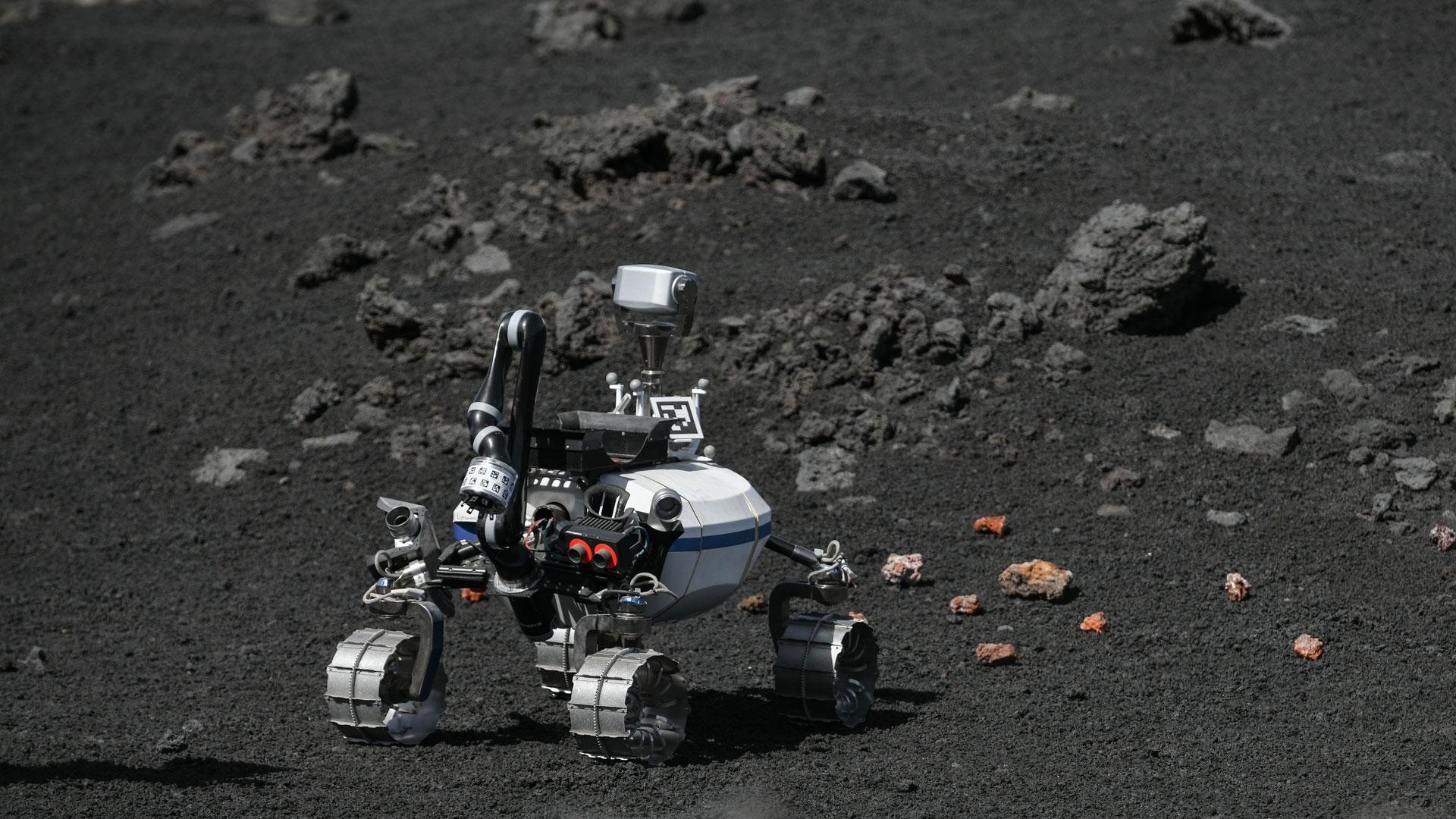
LRU2 robot took on the role of “assistant.”
Credit: DLR (CC BY-NC-ND 3.0)
During this demonstration activity, German astronaut Thomas Reiter carried out this task from a special control room, in fact a hotel room, in Catania, Sicily about 14 miles (23 kilometers) away.
- The Lightweight Rover Unit 1 (LRU1) robot evaluated soil samples using its cameras and is considered the “scientist” of the team.
- LRU2 took on the role of “assistant,” collecting surface samples, then analyzed them using Laser-Induced Breakdown Spectroscopy (LIBS).
- ESA’s four-wheeled Interact rover collected rock samples and brought them to a lander. The Interact Rover has a camera arm and a gripper arm that also provide haptic feedback. This means that the remote scientists can obtain a tactile “feel” for the rock samples. ESA’s Interact rover was built by the Agency’s Human Robot Interaction Lab and modified for the rugged slopes of the volcano. Interact Rover operations were coordinated from the European Space Operations Centre (ESOC) in Germany.
- The ARDEA drone is considered the “scout” for the team and mapped the area.

Scout rover in the lava landscape.
Credit: DLR (CC BY-NC-ND 3.0)
Far side simulation
Various scenarios were played out, including the “LOFAR Experiment.” It involved simulating the installation and maintenance of a low-frequency radio antenna array. The LRU rover and the ARDEA drone demonstrated the installation of an antenna system on the far side of the Moon. A similar antenna could be directed from the lunar surface into deep space.
Heterogeneous, autonomous, networked robotic systems have been in development since 2018 as part of the ARCHES initiative. This involves a number of different robots and fields of application.

ESA’s Interact Rover chose rock samples and brought them to DLR’s RODIN lunar lander.
Credit: ESA
Extension of human arms and eyes
Thomas Reiter commented: “We’ve learned a lot about collaboration between ground control on Earth and the crew aboard a space station orbiting the Moon, both operating a rover on the surface – this ‘shared’ operation can be extremely efficient –much more efficient than if either side does it alone.”
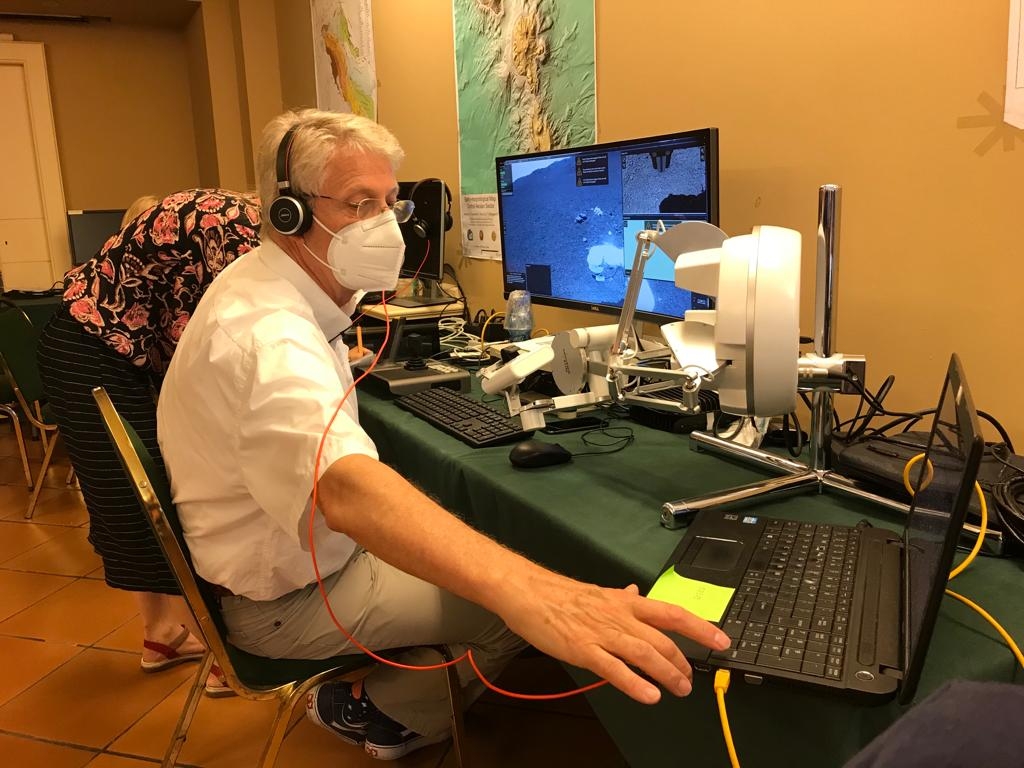
ESA astronaut Thomas Reiter at the controls.
Credit: ESA
“Teams of mobile robots have an important role to play in future space missions. Operating in heterogeneous teams, the robots complement and support each other with their different capabilities. They serve as an extension of human arms and eyes,” explains Armin Wedler, Project Manager at the DLR Institute of Robotics and Mechatronics in a DLR statement.
In addition to opening up the exploration of the Solar System, ARCHES also opens the way for environmental monitoring of the oceans and can provide assistance during crises on Earth.

CAPSTONE over the Moon’s North Pole. After arrival at its cis-lunar destination, CAPSTONE will begin its 6-month-long primary mission. The mission will validate a near rectilinear halo orbit’s characteristics by demonstrating how to enter into and operate in the orbit.
Illustration credit: NASA/Daniel Rutter
Just in from Advanced Space – the owner and operator of this mission headed for its target – the Near Rectilinear Halo Orbit (NRHO) around the Moon.
During commissioning activities an anomaly was experienced related to the communication subsystem; the operations team is actively working this issue with the Deep Space Network and has identified a path forward.
- As a result of this anomaly the first trajectory correction maneuver (originally scheduled for the morning of July 5) has been rescheduled. This maneuver is designed to more accurately target the transfer orbit to the Moon – the spacecraft remains on its intended ballistic lunar transfer (BLT) while this targeting maneuver is delayed.
- One of the benefits of the BLT, the designed trajectory, is its robustness to delays such as this.
- The mission transfer approach and system margins provide time to resolve and understand this anomaly before proceeding with the first trajectory correction maneuver
- At the time of publication, the CAPSTONE spacecraft is currently approximately 285,000 km from Earth (~8 times GEO) on its planned ballistic transfer orbit to the Moon
Status check
Spacecraft was commissioning nominally for the first 11 hours.
- Spacecraft was deployed successfully from the launch vehicle
- Spacecraft successfully deployed solar arrays, achieved three-axis stabilization, and entered a battery charging mode
- Spacecraft successfully executed Earth-pointing mode, communicated with DSN stations in Madrid Spain and the operations team began check-out and commissioning of the spacecraft
- The operations team was able to determine spacecraft state (position and velocity) and design initial trajectory correction maneuver.
- Propulsion system was commissioned and prepared for the first trajectory correction maneuver
Jeffrey Parker, chief technology officer of Advanced Space (left) explains the CAPSTONE mission to U.S. Senator John Hickenlooper over a full-size model of the spacecraft.
Credit: Advanced Space/Jason Johnson
What now?
The CAPSTONE mission team has been working around the clock and through the holiday weekend to support this important mission. With CAPSTONE utilizing the BLT, it will take four months to reach the planned Near Rectilinear Halo Orbit (NRHO) around the Moon. As further details emerge, Advanced Space and NASA will make them available.
More details about the CAPSTONE mission can be found at:
Keep updated on CAPSTONE at: https://advancedspace.com/
NASA’s Curiosity Mars rover at Gale Crater is now performing Sol 3524 duties.
Here are some new images of the robot’s surroundings:
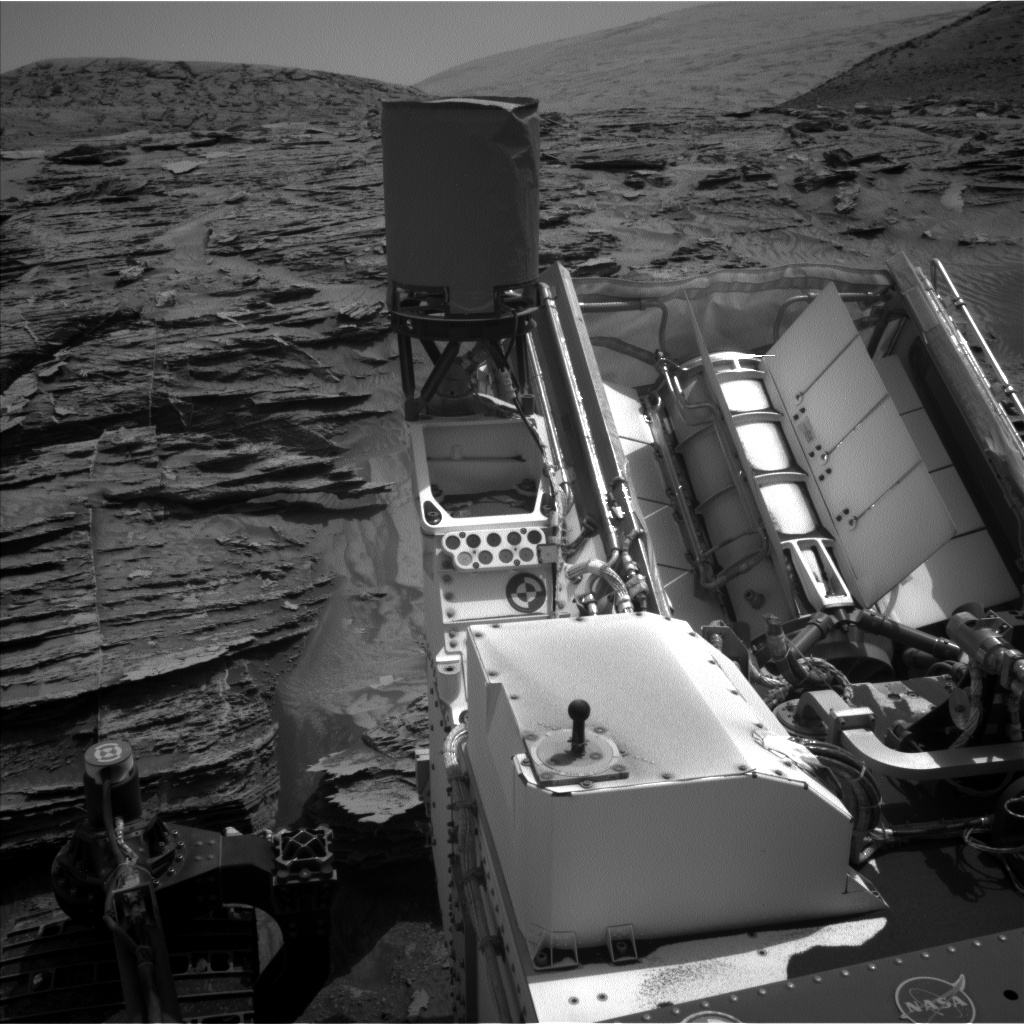
Curiosity Left B Navigation Camera image taken on Sol 3522, July 3, 2022.
Credit: NASA/JPL-Caltech
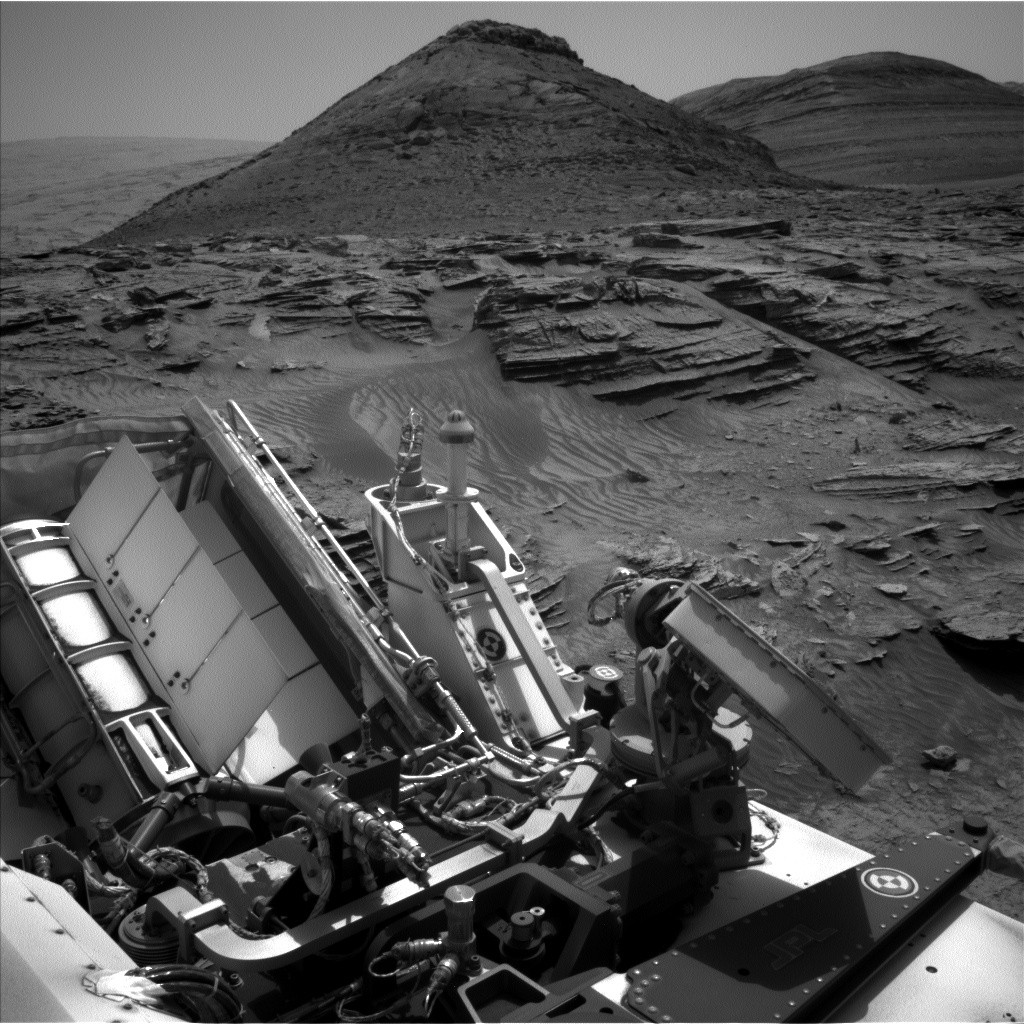
Curiosity Left B Navigation Camera image taken on Sol 3522, July 3, 2022.
Credit: NASA/JPL-Caltech
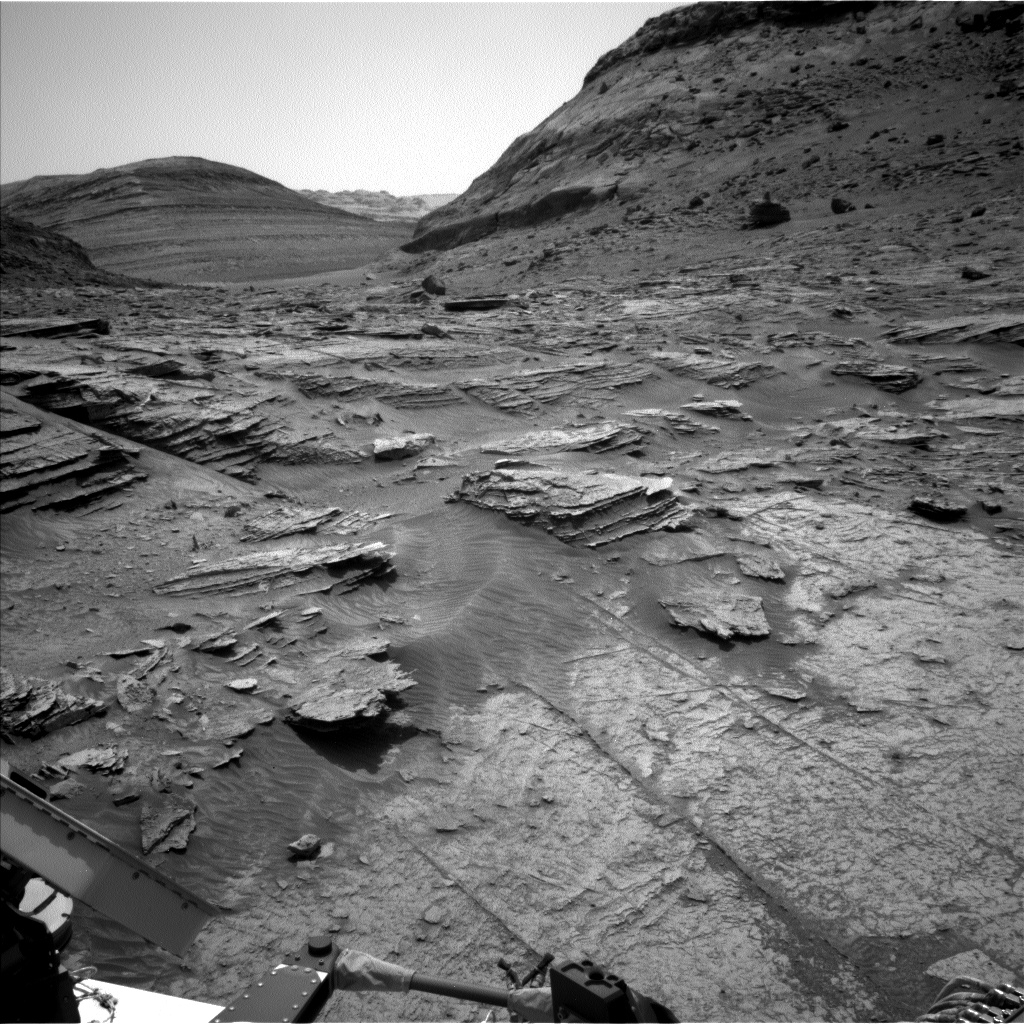
Curiosity Left B Navigation Camera image taken on Sol 3522, July 3, 2022.
Credit: NASA/JPL-Caltech
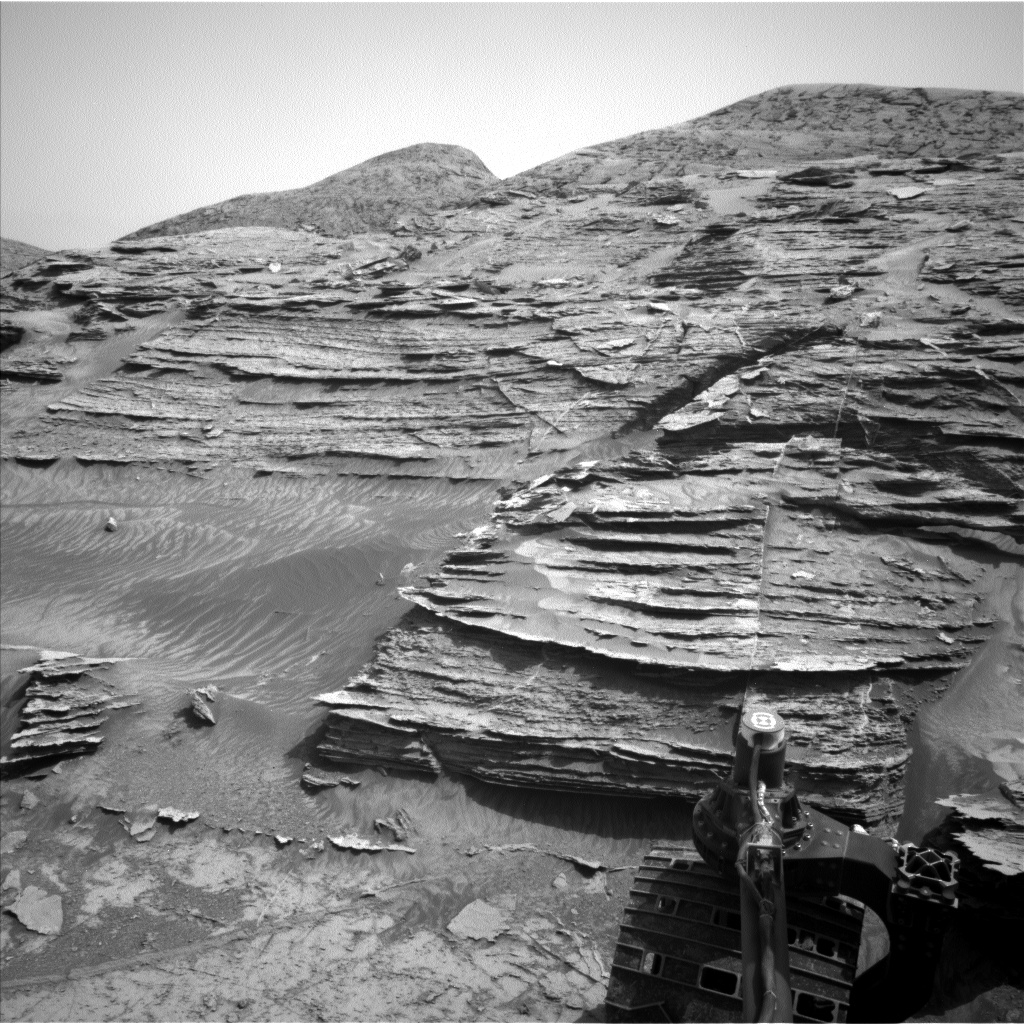
Curiosity Left B Navigation Camera image taken on Sol 3522, July 3, 2022.
Credit: NASA/JPL-Caltech
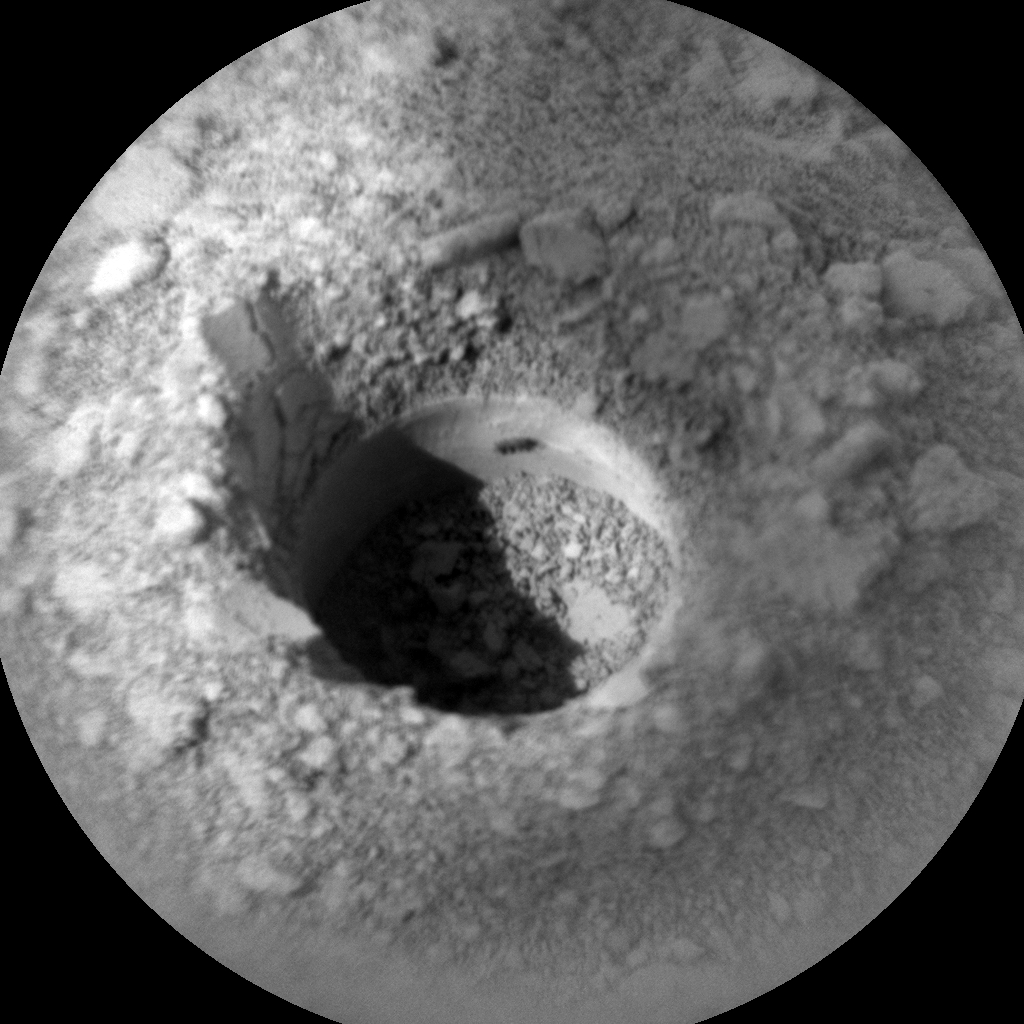
Curiosity Chemistry & Camera (ChemCam) Remote Micro-Imager (RMI) photo acquired on Sol 3523, July 4, 2022.
Credit: NASA/JPL-Caltech/LANL

Credit: Roscosmos/Keldysh Research Center
Russia’s go-it-alone space station plans include cosmonauts visiting a nuclear tug to turn on the system.
As reported by TASS, Dmitry Rogozin, Director General of Roscosmos, has stated that crews of the Russian Orbital Service Station (ROSS) would trek to the nuclear tug “Zeus” before turning on its reactor in order to control the deployment of systems.
“The new station will operate in an orbit from which the crew with their manned spacecraft will be able to visit our nuclear space tug Zeus to control the deployment of all its key elements and structures,” Rogozin wrote in his Telegram channel.
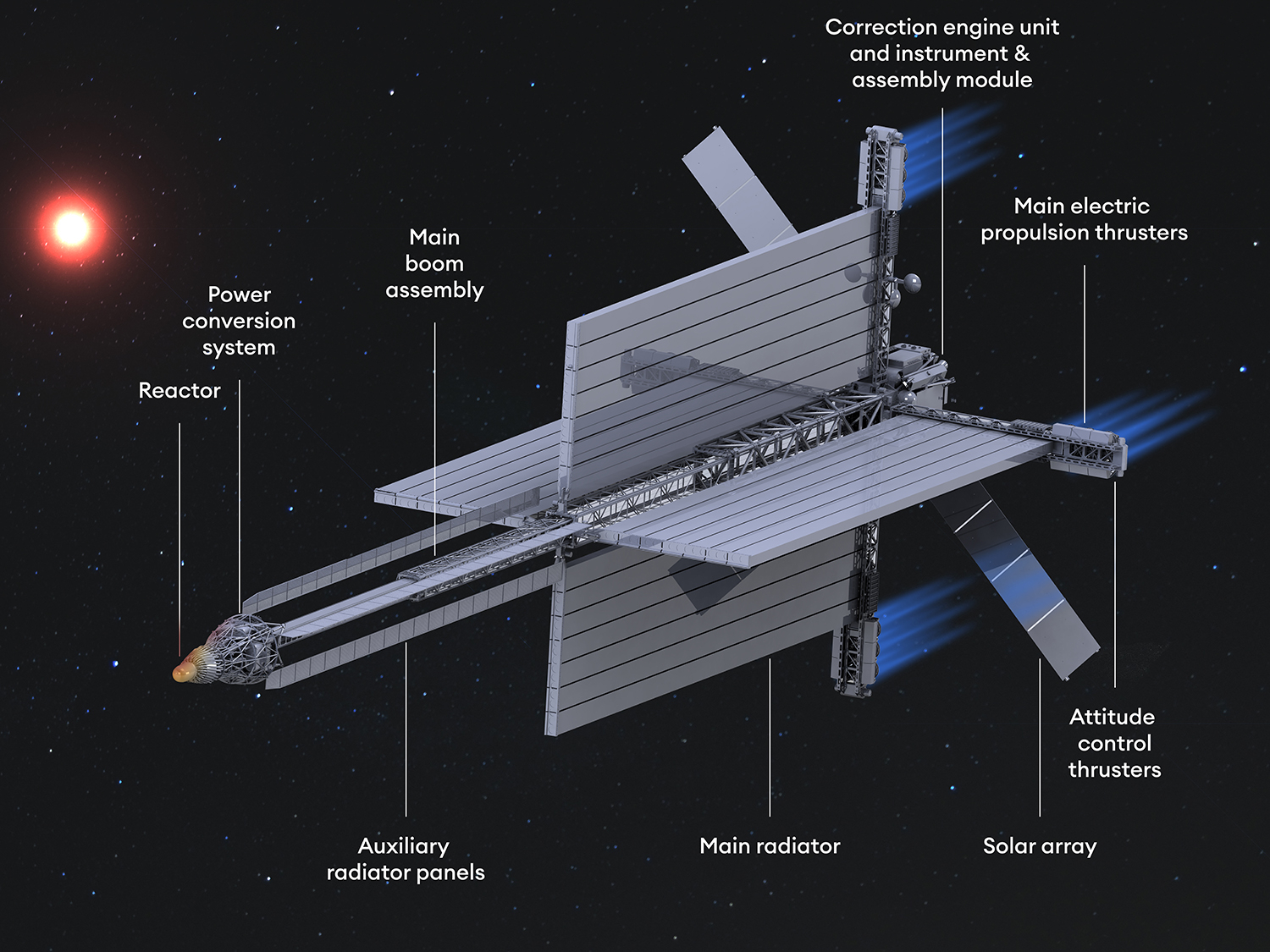
Credit: Roscosmos/Keldysh Research Center
Rogozin said a visit to the nuclear tug will be possible in a safe orbit of roughly 500 miles (800 kilometers) above the Earth prior to the reactor being turned on. Astronauts will primarily control the deployment of radiators to dump excess heat.
Transport and energy module
Zeus details are being fleshed out at the Keldysh Research Center. Work is ongoing at the center that carries out experimental, calculation and theoretical studies on improvement of power supply characteristics in rocket and space technologies.

Credit: Roscosmos/Keldysh Research Center
For example, a Transport and Energy Module (TEM) concept is based on a megawatt-class nuclear power propulsion system.
TEM is envisioned as hardware to implement expeditions into deep space; increase the efficiency of transport operations in space by 20 times; augment more than 10 times the use of electric power in space, according to the Keldysh Research Center website.

Credit: NASA/Institute of Biomedical Problems
The SIRIUS-21 space isolation experiment has been completed. Five members of the international crew (three men and two women) spent 240 days in conditions that simulate the work of a real space expedition on a lunar orbital station and the surface of the Moon.
The crew included Russian, American and Arab participants.
SIRIUS-21 has been underway at the Moscow-based Institute of Biomedical Problems (IBMP) of the Russian Academy of Sciences. SIRIUS is supported by the NASA Human Research Program.
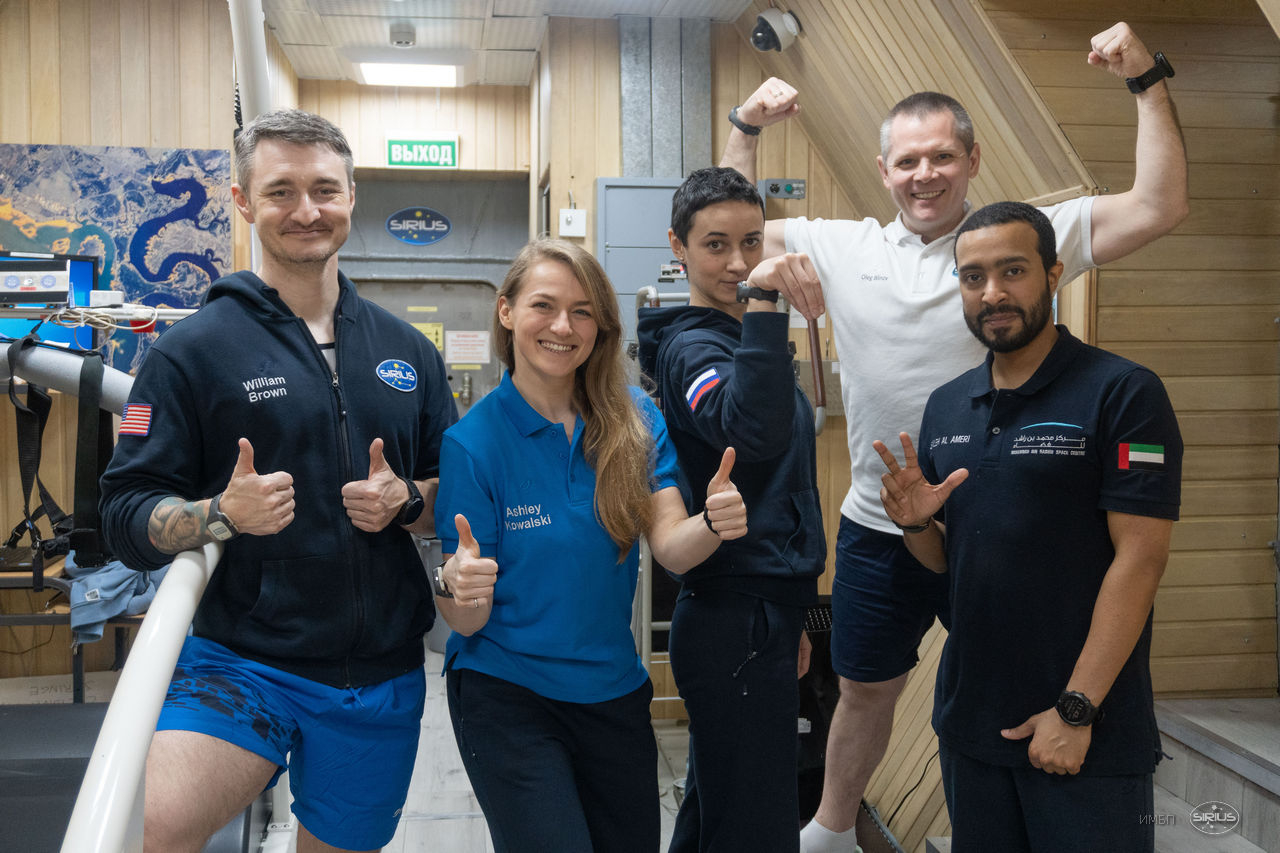
SIRIUS-21 crew members.
Credit: Institute of Biomedical Problems
The SIRIUS-21 lunar flight began on November 4, 2021. For eight months, the participants “entered near-Earth orbit” on the simulated interplanetary complex “flew to the orbit of the Moon” and several times “landed” on the Earth’s natural satellite and carried out moonwalks on the “lunar surface.” Various experiments were also carried out.
Crew members
Oleg BLINOV (Russia)
Ashley KOWALSKI (USA)
Victoria KIRICHENKO (Russia)
William BROWN (USA)
Saleh Omar AL AMERI (United Arab Emirates)
Problems faced
During the just completed experiment that mimicked a flight to the Moon, there were a number of problems expeditionary space crews faced, such as:
- sensory deprivation, monotony, limited social contacts, limited living space
- factors of autonomous interplanetary flight, including limiting the resources of the expedition and extravehicular activities on the planet’s surface
- professional activities of the crew (docking of transport ships, landing of the lunar module, control of robotic equipment)
- communication delay up to 5 minutes one way
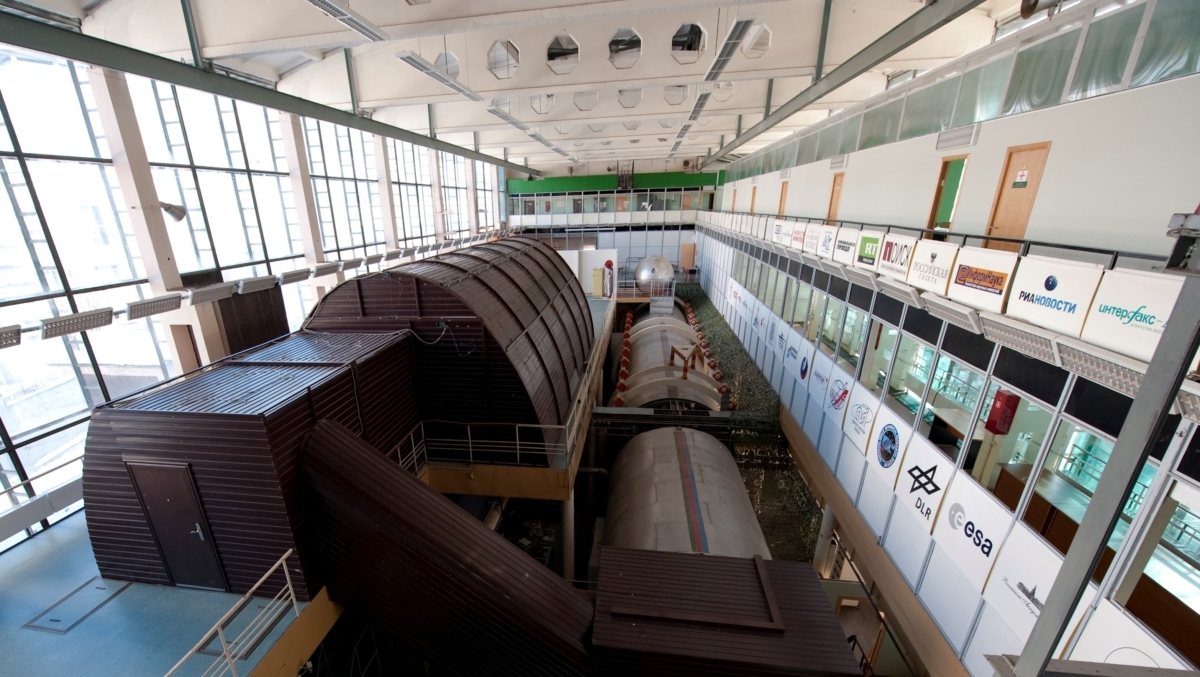
MARS 500 Session training in the IMBP module.
SIRIUS-2023
The international project SIRIUS (Scientific International Research In Unique Terrestrial Station) includes a series of isolation experiments. Experiments have already been carried out for 17 days in November 2017 and four months in 2018-2019. It is also planned to hold three annual programs, the first of which should start in the second half of 2023.
The selection of the crew for the annual isolation experiment SIRIUS-2023 will begin this fall, according to Oleg Orlov, Director of the Institute of Biomedical Problems.
“We will announce the recruitment of a new crew, I think, already in the fall. And, in fact, the selection of the crew did not stop. We have candidates who have confirmed their desire to participate in the annual experiment,” Orlov said.
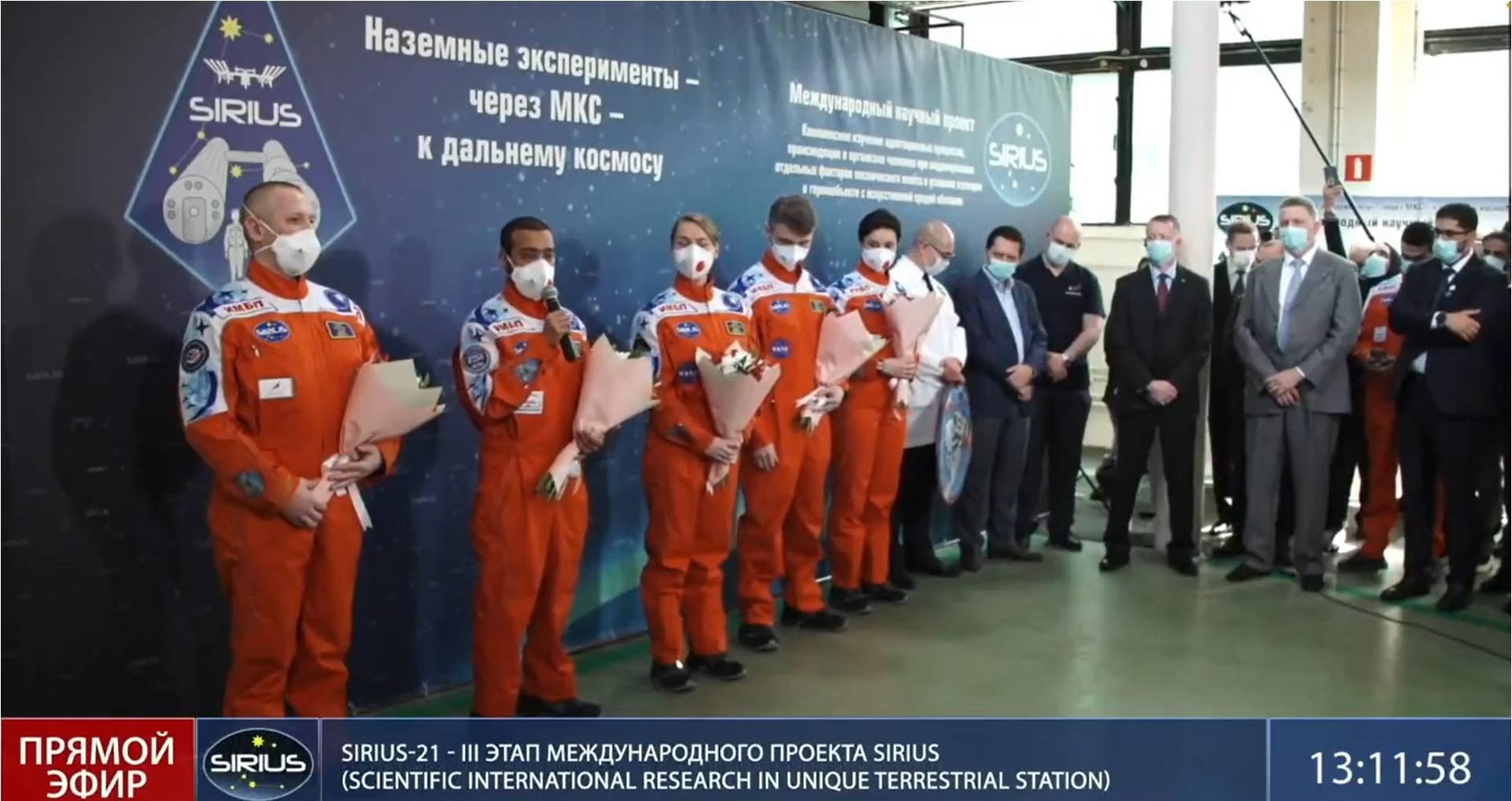
Credit: MBR Space Centre/Inside Outer Space screengrab

