Author Archive
 Author:
  December 9th, 2025
The release of the U.S.-China Commission’s 2025 Annual Report to Congress covers a swath of topics, including China’s aggressive space agenda.
“China has achieved major civil space milestones,” the report points out, such as the Chang’e-6 mission returning the first samples from the Moon’s far side.
“These ‘global firsts’ are much more than just about science; Beijing uses them to assert technological leadership to reshape global perceptions of power,” the report explains.
Beyond symbolic milestones
As for the U.S.-China “space race,” that competition “now extends beyond symbolic milestones to a contest over who will define the rules, infrastructure, and norms governing space.”
Moreover, if the United States cedes leadership, “China is poised to advance a state-driven, opaque governance model that could embed long-term global reliance on its systems and standards,” the report suggests.

China’s Chang’e-6 lander/ascender in farside sampling scenery.
Image credit: CNSA/CLEP
Commission recommendations
Notable in the document is Chapter 7: “The Final Frontier: China’s Ambitions to Dominate Space, as well as a set of Commission recommendations.
To preserve and strengthen U.S. primacy in the critical space domain as China pursues sweeping advancements across military, commercial, and civil space sectors, Congress should:
Increase or reallocate appropriations for the U.S. Space Force to levels necessary to achieve space control and establish space superiority against China’s rapidly expanding space and counterspace capabilities.

Credit: U.S. Space Force
Direct the U.S. Department of Defense to enhance the U.S. Space Force’s capacity to conduct space wargaming and develop realistic modeling and simulation of potential threats from China, including training programs for space operators on warfighting tactics, techniques, and procedures necessary for space control.
Conduct oversight hearings and other activities to ensure the United States maintains primacy in the space domain by identifying investments in cutting-edge space technologies and assessing China’s space capabilities and threats to U.S. space industrial base capacity.

The Zhuque-3 by LandSpace.
Image credit: LandSpace
Direct the U.S. Department of Commerce, in coordination with the U.S. Departments of Defense, State, and the Treasury, to produce an unclassified report to Congress within 180 days identifying China’s commercial space capabilities, the dual-use nature of Chinese space technologies, and China’s commercial space industry’s support to the People’s Liberation Army.
Direct the U.S. National Space Council to increase international outreach on space launch services and ensure the United States remains the partner of choice for both government and commercial space launch.

NASA’s Artemis Program, enabling Moon to Mars human exploration.
Image credit: NASA

Image credit: U.S.-China Commission
Express support for the strategic importance of U.S. leadership in civil space exploration and direct relevant agencies to assess the progress of the Artemis Accords, evaluate risks China poses to U.S. civil space priorities, including NASA programs, and ensure program delays do not undermine U.S. credibility in establishing global norms for lunar and Martian exploration.
To access the full report, go to:
https://www.uscc.gov/sites/default/files/2025-11/2025_Annual_Report_to_Congress.pdf
 Posted in
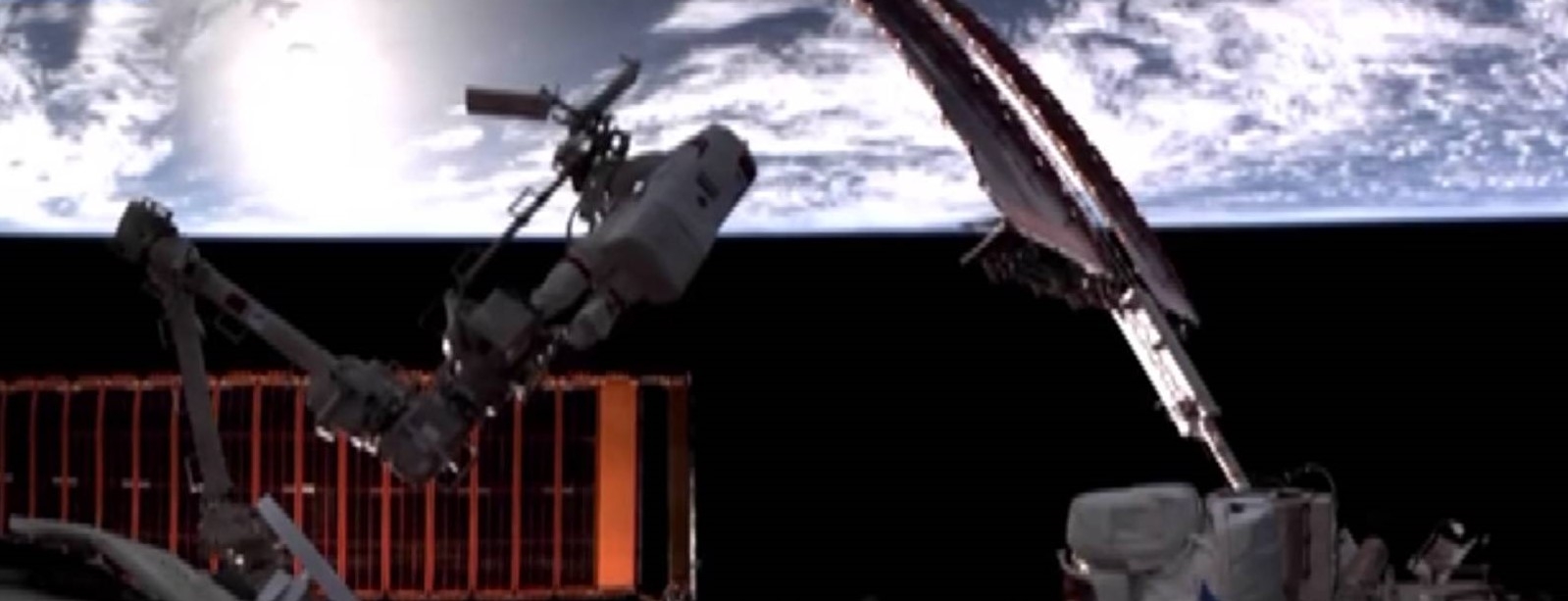
Station crew member carries out spacewalk.
Image credit: CNSA/CCTV/Inside Outer Space screengrab
China’s Shenzhou-21 crew carried out their first spacewalk of the taikonauts projected six-month mission.
The December 9th extravehicular activity (EVA) lasted roughly 8 hours, with astronauts Zhang Lu (commander) and Wu Fei making the space walk. Colleague Zhang Hongzhang assisted them from inside the Tianhe Core Module.
Inspection of viewport window
According to the China National Space Administration (CNSA), the two spacewalkers installed various devices and inspected external equipment, including the viewport window of the Shenzhou-20 spacecraft.
That spacecraft suffered an apparent space debris hit, preventing it from being used for safe return of the Shenzhou-20 crew.

Image credit: CCTV/Inside Outer Space screengrab
Emergency launch
Following that suspected debris strike on Shenzhou-20’s viewport, a trio of astronauts originally scheduled to return to Earth aboard the spacecraft were redirected to Shenzhou-21, which brought them home safely on November 14.
Billed as the first emergency launch in the history of its human spaceflight program, China launched the uncrewed Shenzhou-22 on November 25 to provide a new return vehicle for the now orbiting crew.
The damaged Shenzhou-20 vessel will be later de-docked from the orbiting outpost for an uncrewed re-entry.

Work progressing on China’s Qingzhou Cargo Spacecraft.
Image credit: CCTV/Inside Outer Space screengrab
New cargo spacecraft
Meanwhile, China Central Television (CCTV) has issued a video spotlighting development of China’s Qingzhou cargo-carrying spacecraft for the country’s future space station operations.
China is to start prototype development of the new cargo spacecraft in 2026.
Earlier this year, China Daily reported that the next-generation cargo spacecraft is designed for future in-orbit supply deliveries, including missions to China’s Tiangong space station.
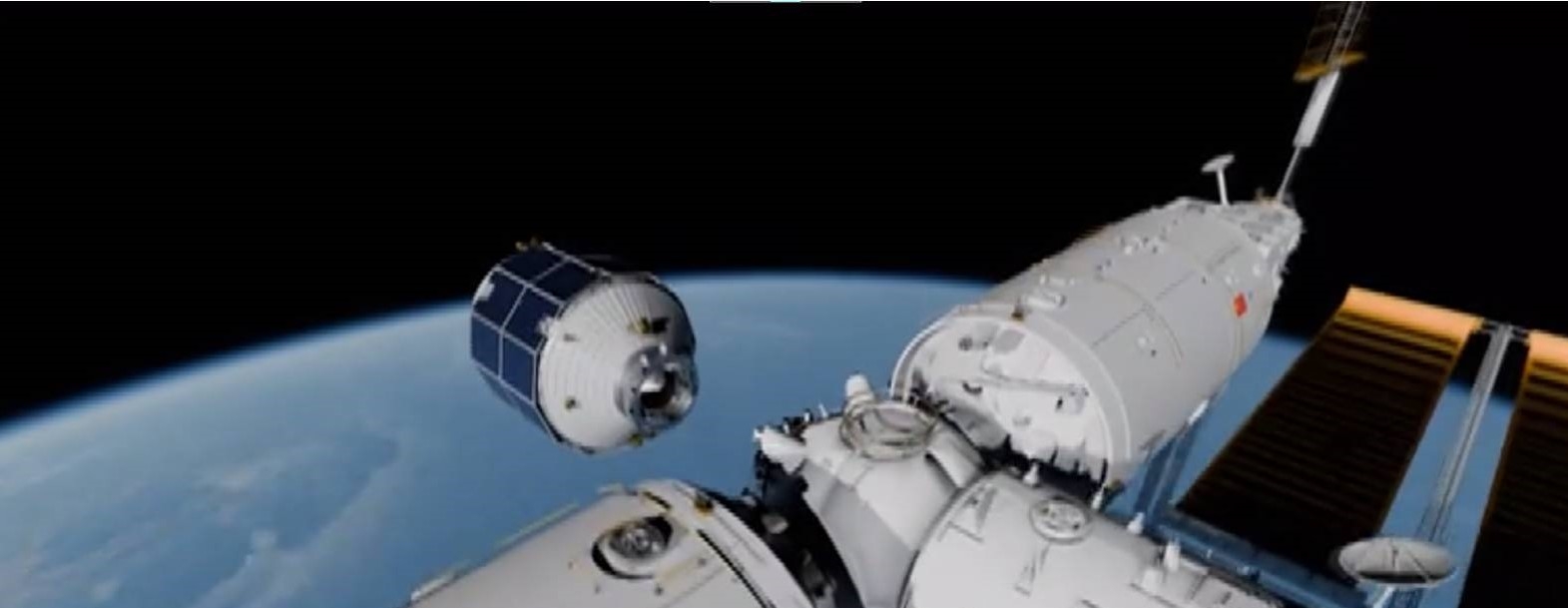
Artwork depicts Qingzhou Cargo Spacecraft docking to China’s space station.
Image credit: CCTV/Inside Outer Space screengrab
Qingzhou is developed by the Innovation Academy for Microsatellites of the Chinese Academy of Sciences.
Meaning “Light Ship” in Chinese, Qingzhou sports a cargo volume of 27 cubic meters and a capacity up to 2 metric tons. It features a four-tier shelving system with 40 compartments and interfaces for special cargo needs, China Daily reported.

The Harvard Kennedy School’s Belfer Center for Science and International Affairs has issued a new paper focused on improving space governance and accelerating the growth of the space economy.
Research Fellow Ely Sandler notes that, with human activity in outer space proliferating, existing international space law is ill-equipped to address emerging challenges such as militarization, space debris, satellite collision risks, and conflicts over resources.
Rules of the road
Sandler calls for establishing a Conference of the Parties (COP) for the Outer Space Treaty that might forge a new pathway to deal with a preponderance of thorny space-related issues.

Dean Rusk (2nd from right), Secretary of State of the United States, signed the Outer Space Treaty at a White House ceremony on January 27, 1967. At the table, right to left: President Lyndon B. Johnson of the United States; Ambassador Arthur J. Goldberg, Permanent Representative of the United States to the UN; Sir Patrick Dean, Minister of State for Foreign Affairs and Permanent Representative of the United Kingdom to the UN; and USSR Ambassador to the United States Anatoly F. Dobrynin.
Image credit: United Nations
Despite widespread agreement that shared “rules of the road” are needed, Sandler adds, current geopolitical competition makes negotiating new treaties or amending existing ones all but impossible.
Wanted: a space COP
Sandler argues that a space COP would provide a mechanism for incremental progress on space governance, converting areas of existing agreement into binding international law without requiring “all-or-nothing” treaty amendment or passage.
The paper also sets out model language for incorporating a COP into the Outer Space Treaty and outlines an initial agenda of issues.
For access to the paper, go to:
https://www.belfercenter.org/research-analysis/space-cop-governance
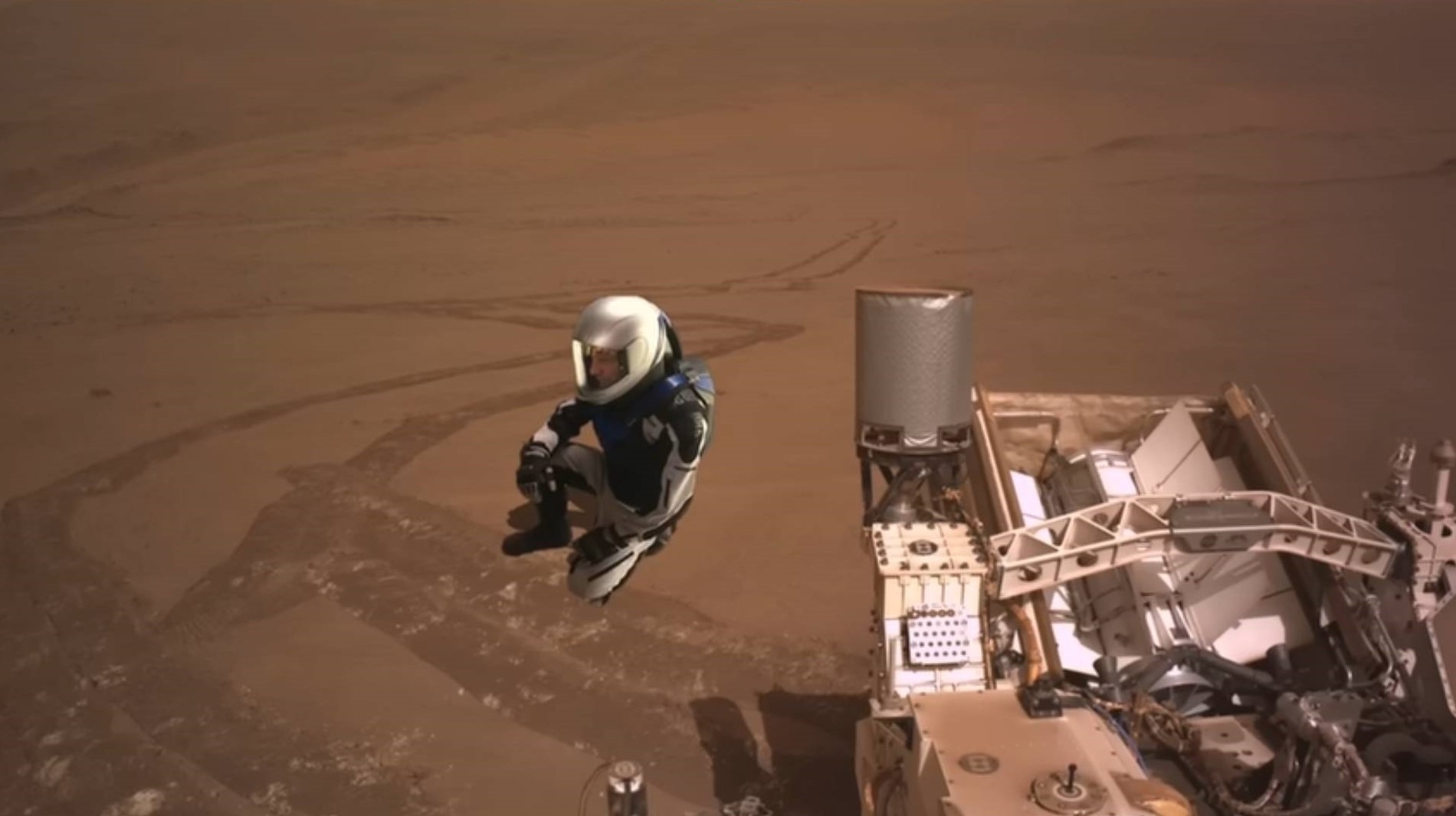
Image credit Mars Guy/NASA/JPL-Caltech
Mars Guy spotlights NASA’s Perseverance rover at Jezero Crater that carries the first successfully operating microphone on Mars.
The robot has been building up a record of the Martian soundscape – as well as sound from the rover itself. “Now it has answered a longstanding question about Mars thanks to some shocking sounds,” explains Mars Guy. Go to this new video episode at:
https://www.youtube.com/watch?v=OIGm7Icle3A

Image credit: Mars Guy/Nature

Image credit: NAS
What is a science strategy for the human exploration of Mars?
A special webinar is being held on December 9, tied to release of a National Academy of Sciences report.
This new National Academies report — A Science Strategy for the Human Exploration of Mars — outlines how future missions can advance the highest-priority scientific goals for understanding the Red Planet.
Also, how best to prepare for sustained human exploration of that world.
New era of discovery
The report identifies opportunities to search for signs of life beyond Earth, reveal how planets evolve, and test systems and resources that can support humans far from home.
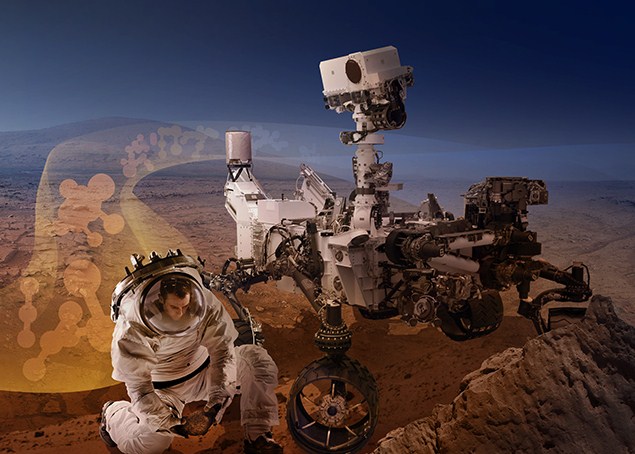
Humans and robots on Mars are likely to team up to augment the types of exploration avenues that can be done on the Red Planet.
Credit: NASA/Ames Research Center
“When astronauts set foot on Mars, it will be one of humanity’s greatest milestones,” explains the National Academies. “These first steps will be the result of decades of research, engineering, and imagination coming together, marking the beginning of a new era of discovery on another planet.”
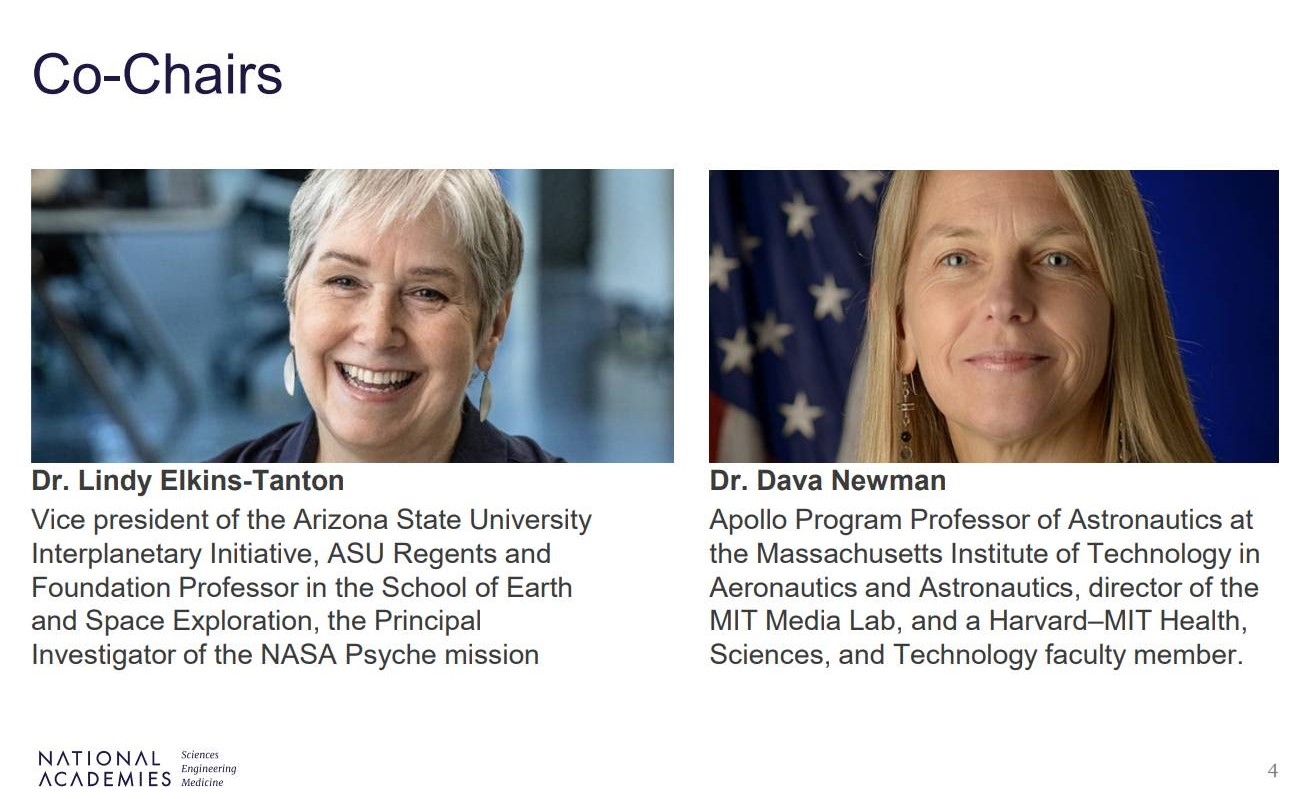
Image credit: NAS
Blue-ribbon study group
Steering Committee Members for the report are:
DOMINIC (TONY) ANTONELLI, Antonelli Consulting Company, LLC
PENELOPE J. BOSTON, NASA Ames Research Center
CHRISTOPHER E. CARR, Georgia Institute of Technology
BARBARA A. COHEN, NASA Goddard Space Flight Center
JONATHAN H. JIANG, Jet Propulsion Laboratory, California Institute of Technology
JAMES F. KASTING (NAS), Pennsylvania State University
PASCAL LEE, SETI Institute, Mars Institute, Kepler Space University, NASA Ames Research Center, Ceres Robotics
JAMES A. PAWELCZYK, Pennsylvania State University
NILTON O. RENNO, University of Michigan
MICHAEL G. RYSCHKEWITSCH, Johns Hopkins Applied Physics Laboratory
JULIANNA M. SCHEIMAN, Space Exploration Technologies
WANDA A. SIGUR (NAE), Lambent Engineering
ERIKA B. WAGNER, Blue Origin
Live streamed
The event will be held at the National Academies Keck Center in Washington D.C. and live streamed online on December 9 from 12:00 PM to 1:30 PM (ET).
To tap into the event, go to:
https://events.nationalacademies.org/46072/begin?i=PppaBO1MIWxCjoWZntZw9lMS6Uv0nSeN

The Red Planet as seen by Europe’s Mars Express.
Image credit: ESA/D. O’Donnell – CC BY-SA IGO
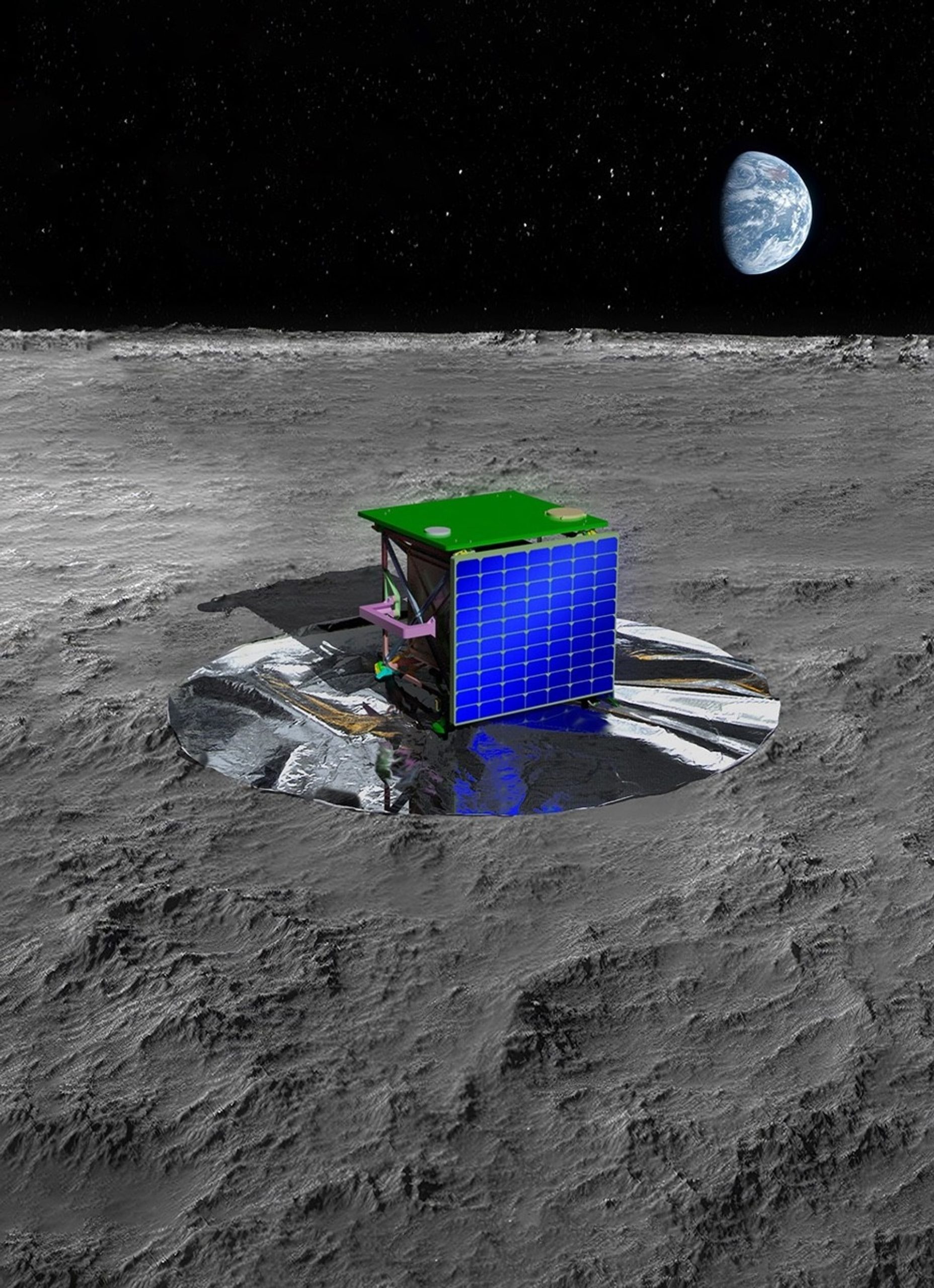
South Pole Seismic Station. Image credit: NASA
While NASA is undergoing an upheaval trying to sort out how best to return humans to the Moon via its Artemis program, the space agency has picked two Artemis-4 science instruments designed for astronauts to deploy on the surface of the Moon.
The two payloads were selected for further development to fly on the future Artemis-4 mission. However, final manifesting decisions about the mission will be determined at a later date.
To be emplaced by an Artemis-4 crew at the lunar south polar region at a projected 2028 time frame, the instruments just picked by NASA are:

Image credit: NASA
- DUSTER (DUst and plaSma environmenT survEyoR) will measure the charge, velocity, size, and flux of dust particles lofted from the lunar surface, as well as characterize the average electron density above the lunar surface using plasma sounding.
Based in Golden, Colorado, Lunar Outpost’s MAPP (Mobile Autonomous Prospecting Platform) rover will support NASA’s DUSTER investigation, in partnership with the Laboratory for Atmospheric and Space Physics (LASP) at the University of Colorado Boulder, the University of Central Florida, and the University of California Berkeley.
- South Pole Seismic Station (SPSS) is designed to characterize the lunar interior structure to better understand the geologic processes that affect planetary bodies, by meteorite impacts for example. SPSS will also monitor the real-time seismic environment and how it can affect operations for astronauts, and determine properties of the Moon’s deep interior. The SPSS instrument is led by Mark Panning of NASA’s Jet Propulsion Laboratory (JPL).
For more information, go to:

Michaela “Michi” Benthaus is on a trajectory to become the first wheelchair user in space.
(Image credit: AstroAccess)
Blue Origin is readying its New Shepard-37 suborbital flight that will rocket six passengers to the edge of space.
One traveler onboard that mission is Michaela “Michi” Benthaus, and her voyage carries special significance. She is on a trajectory to become the first wheelchair user in space.
In 2018, Benthaus became wheelchair-bound after a mountain biking accident resulted in a spinal cord injury.
Passionate about space travel, Benthaus was selected to fly in 2022 with AstroAccess on a parabolic flight, becoming one of the first wheelchair users to test accessibility experiments in weightlessness.
For more details, go to my new Space.com story – “Blue Origin’s next space tourism flight will break new ground for people with disabilities – at:

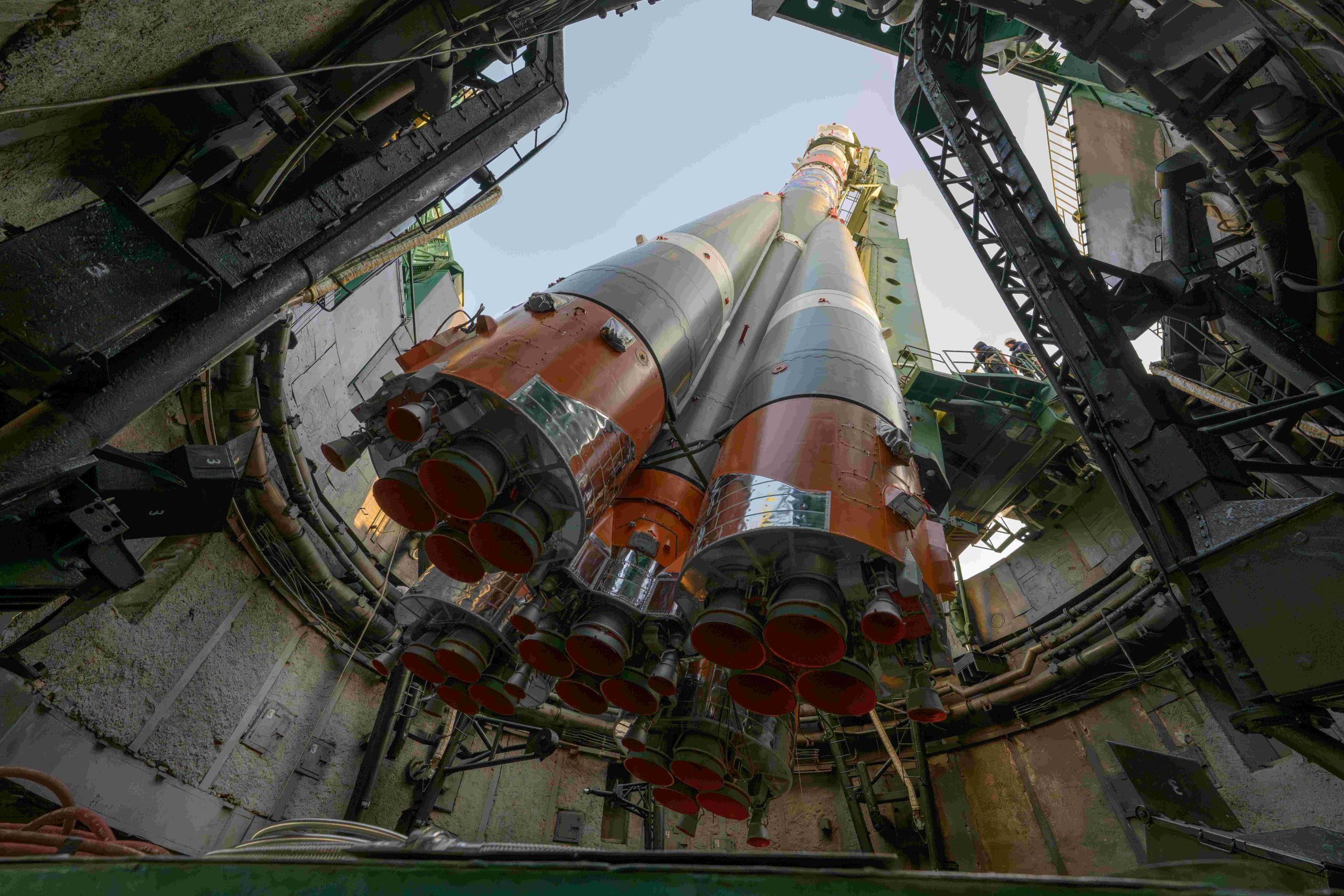
Blazing a trail…of debris. Soyuz MS-28 spacecraft departs Russia’s Baikonur cosmodrome, leaving in its wake launch pad damage.
(Image credit: Ivan Timoshenko/Roscosmos)
Following their launch on November 27 onboard Russia’s Soyuz MS-28 spacecraft, cosmonauts Sergey Kud-Sverchkov and Sergei Mikaev, along with NASA astronaut Chris Williams, safely docked to the International Space Station.
But it turns out that there was more “blast” to their blastoff considering the impact on their departure point at Russia’s Baikonur cosmodrome.
For more details, go to my new Space.com story – “Damaged launch pad: How long before Russia can send astronauts to the ISS again?” – at:

The Shenzhou-22 spacecraft, without a crew, autonomously docked to the forward port of the Tianhe Core Module on November 25. 2025. The Shenzhou-22 spacecraft will transport back to Earth the Shenzhou-21 crew: Zhang Lu, commander), Wu Fei, and Zhang Hong Zhang, at the end of their mission on the China Space Station.
Image credit: China National Space Administration (CNSA)/China Central Television (CCTV)/Inside Outer Space screengrab
China’s Shenzhou-21 crew is scheduled to carry out their first extravehicular activity in the coming days the China Manned Space Agency (CMSA) said on Thursday.
Since entering the China Space Station complex on November 1 (Beijing time), the Shenzhou-21 crew has carried out station maintenance, emergency supply inspections and organization, and finished daily life and health support tasks.
Compromised spacecraft inspection?
The trio of taikonauts also performed a full-system emergency pressure drill and on-orbit robotic arm training. The crew welcomed the arrival of the Shenzhou-22 spacecraft, a replacement for the still docked and compromised Shenzhou-20 vessel due to an apparent space debris strike.
It is likely that during the upcoming extravehicular activity (EVA), the Shenzhou-20 will be inspected by the spacewalkers.
To view a video on the upcoming spacewalk, go to:
https://www.facebook.com/reel/874812278270046

Image credit: CMSA/CCTV/Inside Outer Space screengrab

Image credit: CMSA/CCTV/Inside Outer Space screengrab

Image credit: CMSA/CCTV/Inside Outer Space screengrab
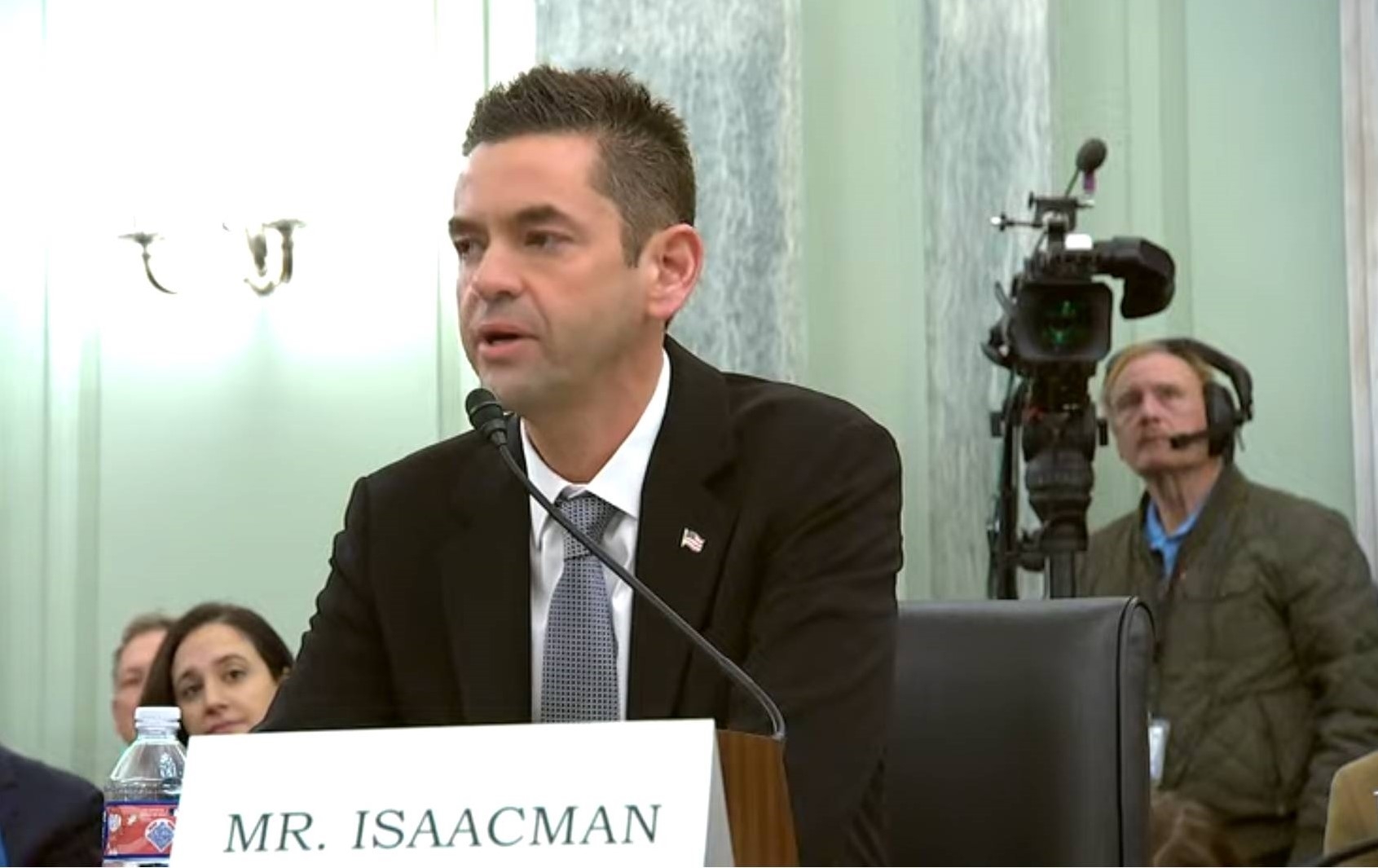
Image credit: U.S. Senate/Inside Outer Space screengrab
U.S. Senator Ted Cruz (R-Texas), Chairman of the Senate Committee on Commerce, Science and Transportation, led a hearing on December 3 regarding the nomination of Jared Isaacman to be NASA Administrator.
“NASA is at the forefront of American leadership in science and technology. It is critical to our national security amid what I have called the second ‘space race.’ But the agency finds itself at an inflection point,” Cruz said in his opening remarks.
“Its next leader must be both disciplined and purposeful,” Cruz continued, “candidly assessing what is working and what is not, while recognizing that each policy decision has tradeoffs. NASA can’t do everything it wants to; the agency must prioritize if we are to beat China back to the Moon.”

Image credit: CCTV/Inside Outer Space screengrab
Competitive race
In written testimony, Isaacman underscored the competitive race to return to the Moon between China and the United States.
“And I know it is not lost on anyone in this room that we are in a great competition with a rival that has the will and means to challenge American exceptionalism across multiple domains, including in the high ground of space. This is not the time for delay, but for action, because if we fall behind–if we make a mistake–we may never catch up, and the consequences could shift the balance of power here on Earth,” Isaacman stated.
NASA’s Artemis Program, enabling Moon to Mars human exploration.
Image credit: NASA
Key theme
Providing an overview of the hearing is veteran space policy expert, Marcia Smith, who reports:
“Ensuring the United States stays ahead of China in space remained a key theme today as it was at Isaacman’s first nomination hearing in April and a September hearing specifically on what Cruz calls the “second space race.” Getting Americans back on the Moon through the Artemis program before China puts taikonauts there is one of the few issues that unifies both parties.”
For Smith’s assessment of the hearing, go to — “Isaacman’s Second Hearing Mostly Friendly, Nomination Could Clear Senate Soon” – at:

