Author Archive
 Author:
  October 19th, 2022
Photo illustration by Thomas Gaulkin for the Bulletin of the Atomic Scientists’ January 2022 issue (used with permission)
Active spacecraft face greater chances of collision with space debris as a result of reduced density in the upper atmosphere.
A new study released by the British Antarctic Survey, published in the journal Geophysical Research Letters, presents a projection of climate change in the upper atmosphere for the next 50 years.
Increasing levels of carbon dioxide in the Earth’s atmosphere will result in a long-term decline in air density at high altitudes. Such decreased density will reduce drag on objects orbiting in the upper atmosphere, between 90 and 500 km altitude, therefore, extending the lifetime of space debris and elevating the risk of collisions between debris and satellites.

Credit: NASA/Goddard
Space pollution problem
Ingrid Cnossen, a NERC independent research fellow at the British Antarctic Survey, used a global model of the whole atmosphere up to 500 km altitude to simulate changes in the upper atmosphere up to 2070. She compared her projections to the last 50 years of data and found that even under a moderate future emissions scenario the predicted average cooling and decline in upper atmosphere density is about twice as strong as has been seen in the past.
“Space debris is becoming a rapidly growing problem for satellite operators due to the risk of collisions, which the long-term decline in upper atmosphere density is making even worse,” Cnossen stated in a British Antarctic Survey statement. “I hope this work will help to guide appropriate action to control the space pollution problem and ensure that the upper atmosphere remains a usable resource into the future.”

Space debris impact on functioning satellite.
Credit: The Aerospace Corporation
Mean decline
As noted in the paper, “the global mean decline in thermosphere density is a concern for the future exploitation of the LEO environment due to its impact on atmospheric drag and the lifetime of space debris.”
Cnossen’s research points out that climatic changes in the upper atmosphere will have important consequences for the build-up of space debris in the low Earth orbit (LEO) environment and may also impact on the long-term stability of satellite-based measurements.
“The projection presented here offers the first realistic insight in the quantitative long-term changes to expect in the upper atmosphere during the next roughly 50 years in order to prepare for these effects,” Cnossen explains in the paper.
To access the full research paper – “A Realistic Projection of Climate Change in the Upper Atmosphere Into the 21st Century” – go to Volume 49, Issue 19, October 16, 2022 of Geophysical Research Letters at:
https://agupubs.onlinelibrary.wiley.com/doi/10.1029/2022GL100693
 Posted in

Courtesy: Dongfang Hour
Moon exploration script – what is China planning next?
A Dongfang Hour episode recaps everything that’s known to date on China’s future lunar exploration plans: Chang’e 6, 7 and 8 missions, the International Lunar Research Station (ILRS), and sending a Chinese astronaut to the lunar surface.
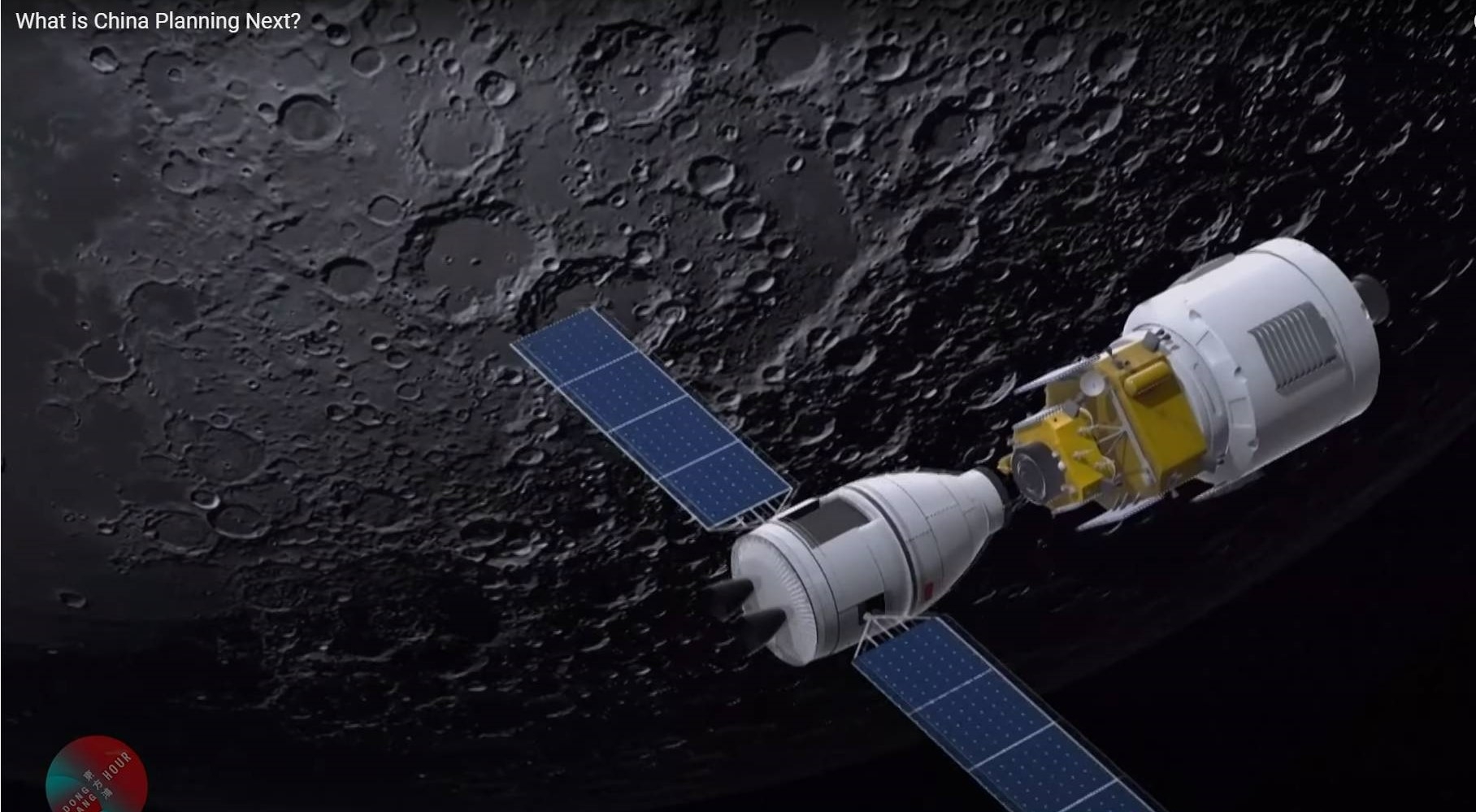
Courtesy: Dongfang Hour
Everything here is based on facts and found on the internet (openly available Chinese sources).
Jean Deville. co-founder, “resident rocket scientist & sinophile,” provides an excellent overview of China’s Moon exploration blueprint at:

Courtesy: Dongfang Hour

Credit: The Aerospace Corporation’s Space Safety Institute
The expansive and explosive development of the space economy — and the value that space provides to society — depends on safe and sustainable operations in space.
Based on this “new age of commercial space activities,” The Aerospace Corporation’s Space Safety Institute has published the first-ever edition of a Space Safety Compendium.
The just-released compendium notes that the space community is at an “inflection point” regarding space safety. This is being driven by unprecedented growth and transformation, shifting models of government-commercial collaboration, an evolution in the types of activities conducted by new space actors, and the advent of space tourism.

Credit: The Aerospace Corporation’s Space Safety Institute
Priority areas
The document identifies five mission areas that each must work together in order to build a holistic space safety approach. Key high priority areas that should be addressed over the next few years are identified.
Specific recommendations are flagged for space operators, regulators, and other decision makers to address some of the key space safety challenges in space: situational awareness, space operations assurance, launch and reentry safety, cybersecurity and spectrum, and human spaceflight safety.
Unprecedented growth
“The space sector is undergoing an unprecedented period of growth that expands the scope of what is possible in space and who is involved,” the compendium points out. “We have shifted away from the 1960s and 70s model of centralized, government-led space activities to a new model that increasingly leverages the dominating commercial space market.”
In addition, new actors in space signal a wide array of international actors, partnership and business models, and commercial entrants. “They have expanded the scope of missions and capabilities in space that include everything from commercial human spaceflight to growing industrial activity such as mining and pharmaceutical development,” observes the compendium.

Credit: The Aerospace Corporation’s Space Safety Institute/CORDS
As a result, new activities “have called into question current regulatory frameworks and policy standards for managing space that were largely developed for an outdated model,” the compendium adds.
Not a clear picture
The Space Safety Institute document underscores increasing uncertainty in regulation and, in some cases, not even a clear picture of which U.S. government agencies bear the responsibility of handling which issues.
“There is also friction between regulators and new actors as an increasingly congested space makes regulations more burdensome for new entrants and gives the competitive advantage to those who have long been in space. At the same time recent events have called into question current safety measures and norms in space,” states the compendium.

Credit: The Aerospace Corporation’s Space Safety Institute
The Aerospace Corporation established a Space Safety Institute to support government, industry, and international customers on all aspects of space safety, including launch, operations, reentry, and cyber.
To view the document — 2022 Space Safety Compendium – Guiding the Future of Spaceflight — go to:

Back to the Moon: The Next Giant Leap for Humankind by Joseph Silk; Princeton University Press (Nov. 2022); 304 pages; Hardcover: $29.95.
As somebody that has survived his own close encounter with writing a Moon book, I salute Joseph Silks account of laying out a lunar vision for the next five decades.
“Lunar exploration will be humanity’s first serious step into space, and establishing habitable faciliti8es on our nearest neighbor in space will be the gateway to a new age of exploration,” the author notes in the book’s preface.
This book features a solid 10 chapters covering the new space race to the Moon, along with such topics as robots and humans, survival, internationalization and what’s ahead next century.
Silk is Bloomberg Research Professor at Johns Hopkins University and a researcher at the Institute of Astrophysics in Paris and the Beecroft Institute for Particle Astrophysics and Cosmology at the University of Oxford. His many books include The Big Bang, The Infinite Cosmos: Questions from the Frontiers of Cosmology, and On the Shores of the Unknown: A Short History of the Universe.
In his sweeping and informative prose, Silk takes on the use of lunar telescopes of unparalleled size on the far side of the Moon. Those “lunar hyperscopes” can seek out profound answers as to are we are alone in the Universe and what our cosmic origins are. The Moon is unique in providing humanity with a huge “spacelike platform” to deep dive into such matters.
The chapter on “Survival” is quite foreboding. Think asteroid impact, global warming, thermonuclear holocaust, even genetic engineering and nanotechnology run amok. “When we consider the prospects for humanity over the much longer term, we should question the notion of permanent setbacks to intelligent life,” Silk explains.
“Collaboration or conflict on the Moon is treated by the author, flagging issues that could trigger “Lunar War 1,” he says. “We want to avoid a replay of territorial disputes as well as anything like the terrestrial piracy wars. Historically, the breakdown of law and order has created immense problems for terrestrial society. Let’s avoid this on the Moon.”
The reader will enjoy this forward thinking book and what lies ahead for lunar development.
Back to the Moon: The Next Giant Leap for Humankind contains helpful notes on each chapter as well as an informative bibliography.
For more information on this book, go to:
https://press.princeton.edu/books/hardcover/9780691215235/back-to-the-moon

Artwork credit: MUFON
A new study has analyzed the number of reported Unidentified Flying Object (UFO) sightings from the National UFO Reporting Center Database, evaluating each state’s overall number of reports and the reports from the last 5 years.
The study, published by MyVision.org, stacks up some interesting observations, comparing number of UFO reports over 5 years to each state’s population, per 100,000 residents.
In September of this year, 1,013 Americans were surveyed to get their feedback on UFOs and aliens. Respondents were 48% female, 49% male and 3% non-binary, with an age range of 18 to 80 and an average age of 39 years old.
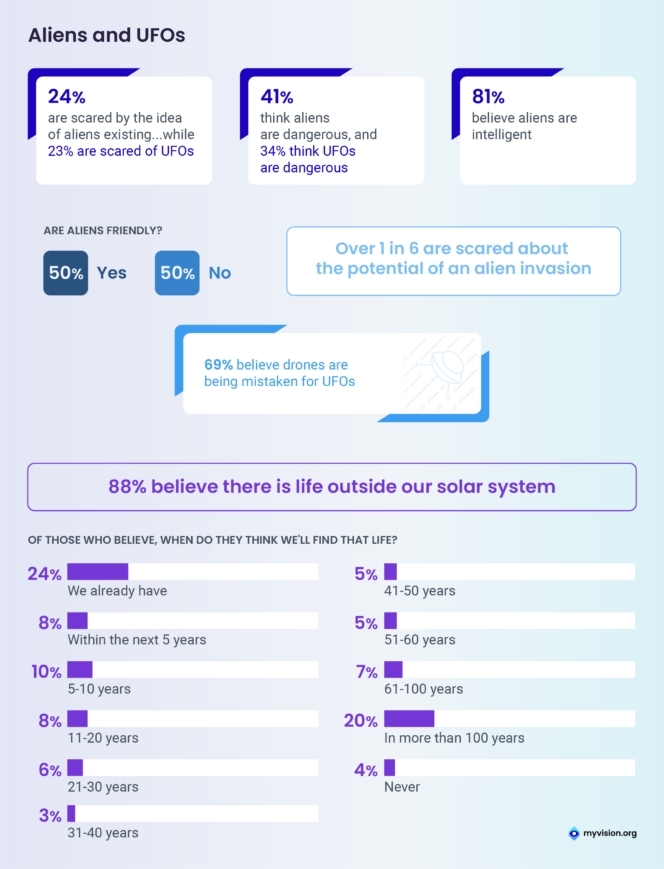
Credit: MyVision.org
Takeaways
Some key takeaways are:
- California takes the cake with nearly twice the amount of sightings of any other state at 15,401. According to the National UFO Reporting Center (NUFORC), which has been reporting UFO sightings since 1974, other top states include Florida, Washington, Texas, New York, and Pennsylvania. New Mexico, home to the Roswell UFO crash case, comes in 28th, while Nevada takes 27th.
- Those who wish to avoid UFOs altogether should move to the Dakotas- they have the least amount of UFO sightings in the nation!
- 1 in 10 say they have seen a UFO or something they believed to be extraterrestrial.
- 78% of Americans believe aliens exist and 56% believe aliens have been to Earth.
- 43% believe we’re on the brink of communicating with extraterrestrials.
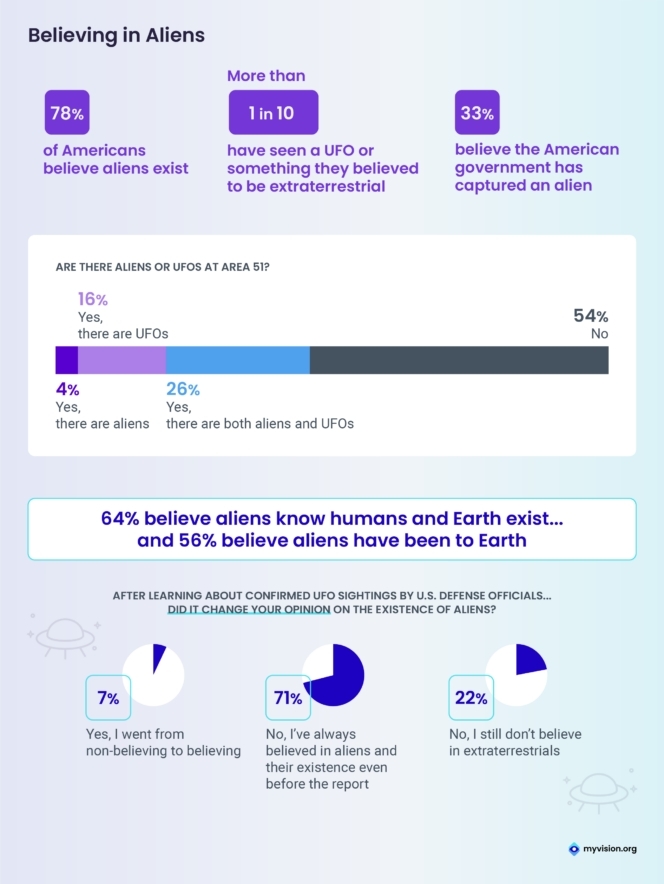
Credit: MyVision.org
Invasion?
In other findings, 1 in 3 believes a human has been kidnapped by an alien and 37% of Americans believe U.S. scientists or officials have made contact with aliens.
And if UFOs and alien talk make you a little nervous, you’re not alone!
About 1 in 4 individuals are scared by the idea of alien existence, the study suggests, and more than 1 in 6 are frightened of an invasion!
For more information on the MyVision.org (an eye care specialist organization), go to the full UFO situational study – “The United States of UFOs: What’s that in the Sky?” — at:
https://myvision.org/guides/united-states-of-ufos-and-aliens/

Curiosity Mars Hand Lens Imager (MAHLI) photo produced on Sol 3624, October 16, 2022.
Credit: NASA/JPL-Caltech/MSSS
NASA’s Curiosity Mars rover at Gale Crater is now performing Sol 3625 duties.
“We are nearing the end of our drill campaign activities at Canaima,” reports Abigail Fraeman, a planetary geologist at NASA’s Jet Propulsion Laboratory
Over last weekend, the plan was to analyze the drilled sample with the Sample Analysis at Mars (SAM) Instrument’s gas chromatograph and mass spectrometer (GC-MS).
Like the Chemistry & Mineralogy X-Ray Diffraction/X-Ray Fluorescence Instrument (CheMin) and SAM Evolved Gas Analysis experiments, the SAM GC-MS analysis will provide additional data about the rock’s composition, Fraeman noted.

Curiosity Mast Camera (Mastcam) Left image taken on Sol 3622, October 14, 2022.
Credit: NASA/JPL-Caltech/MSSS
“GC-MS in particular is great at showing the types of organic molecules that might be present. Since this is the last time we need to deliver drilled sample to our onboard ‘chemistry lab instruments,’ we’ll also attempt to dump sample material that remains in the drill bit assembly onto the ground,” Fraeman added.

Curiosity Right B Navigation Camera image taken on Sol 3624, October 16, 2022.
Credit: NASA/JPL-Caltech
RAGEing on Mars
In order to preserve the life of the braking mechanisms on Curiosity’s arm, Fraeman said that the engineering team at JPL developed a new technique for “dumping samples that is gentler on the arm (no percussion) with the charming acronym of RAGE, or “Rotate to Agitate Granules for Expulsion.” So we’ll be RAGEing on Mars this weekend in between all of the science.”
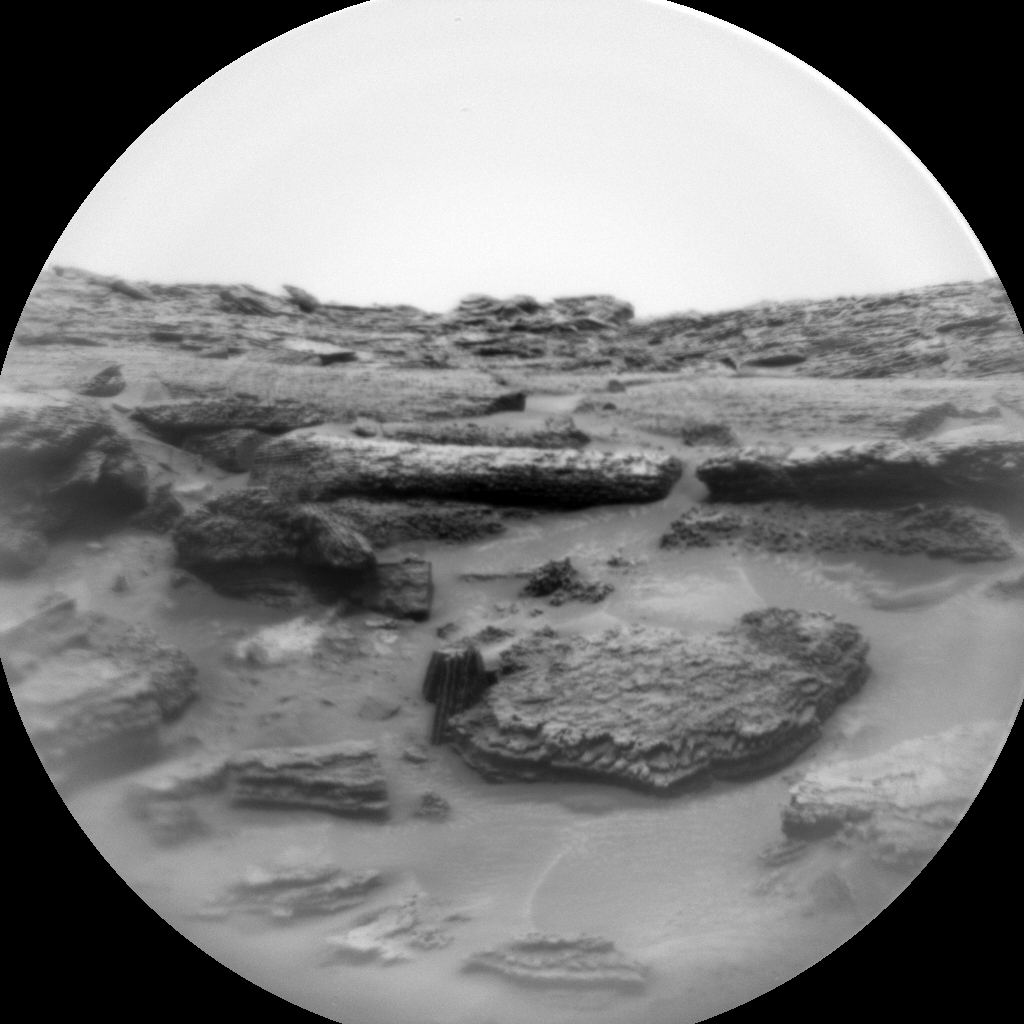
Curiosity Chemistry & Camera (ChemCam) Remote Micro-Imager (RMI) Sol 3622 October 14, 2022.
Credit: NASA/JPL-Caltech/LANL
Fraeman concluded that, with the power-hungry SAM activities, Mars researchers are only planning a short amount of time for additional science.
To be collected are Chemistry and Camera (ChemCam) observations on two nearby rocks named “Manaus” and “Garimpo Cascavel,” as well as a Mastcam multispectral observation of “Dress Island” and stereo mosaic of a nearby rock named “Peluca.”

Curiosity Chemistry & Camera (ChemCam) RMI photo acquired on Sol 3623, October 15, 2022.
Credit: NASA/JPL-Caltech/LANL
ChemCam long distance Remote Micro-Imager (RMI) mosaics of Orinoco and several environmental science monitoring observations will round out the plan.
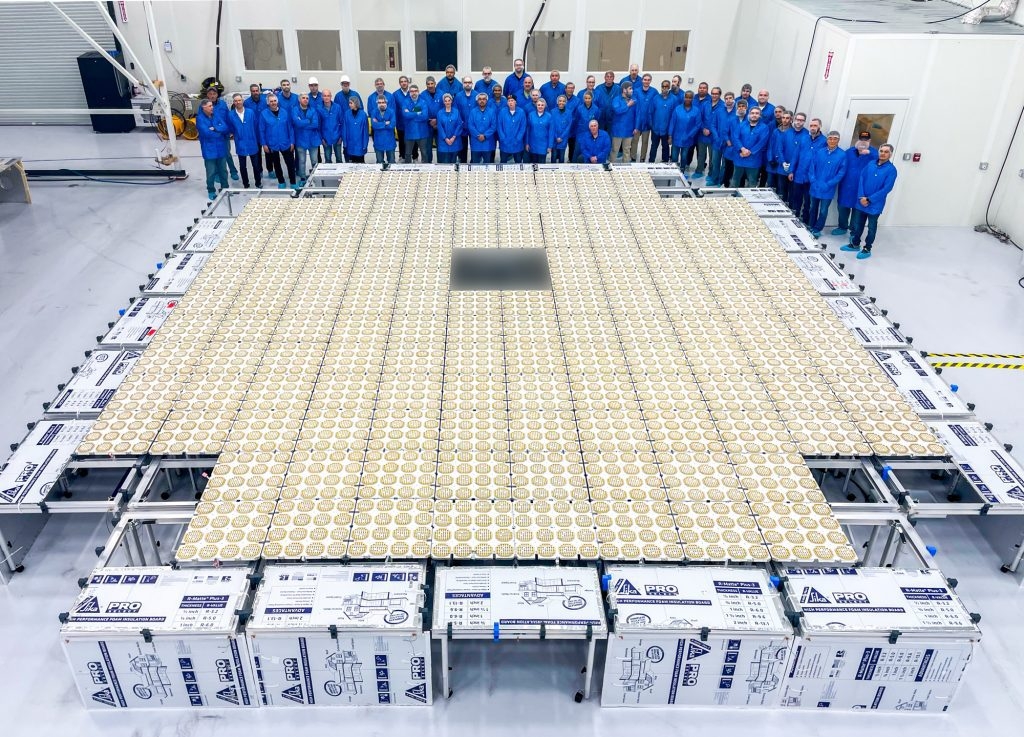
Photo credit: AST Space Mobile
According to satellite watchers, the BlueWalker 3 is expected to unfold its giant antenna panel during this second half of this month – which began today. In doing so, that panel will become much brighter – a deployment that is stirring up ground-based astronomers.
There is a light curve of the magnitudes recorded so far of BlueWalker 3.
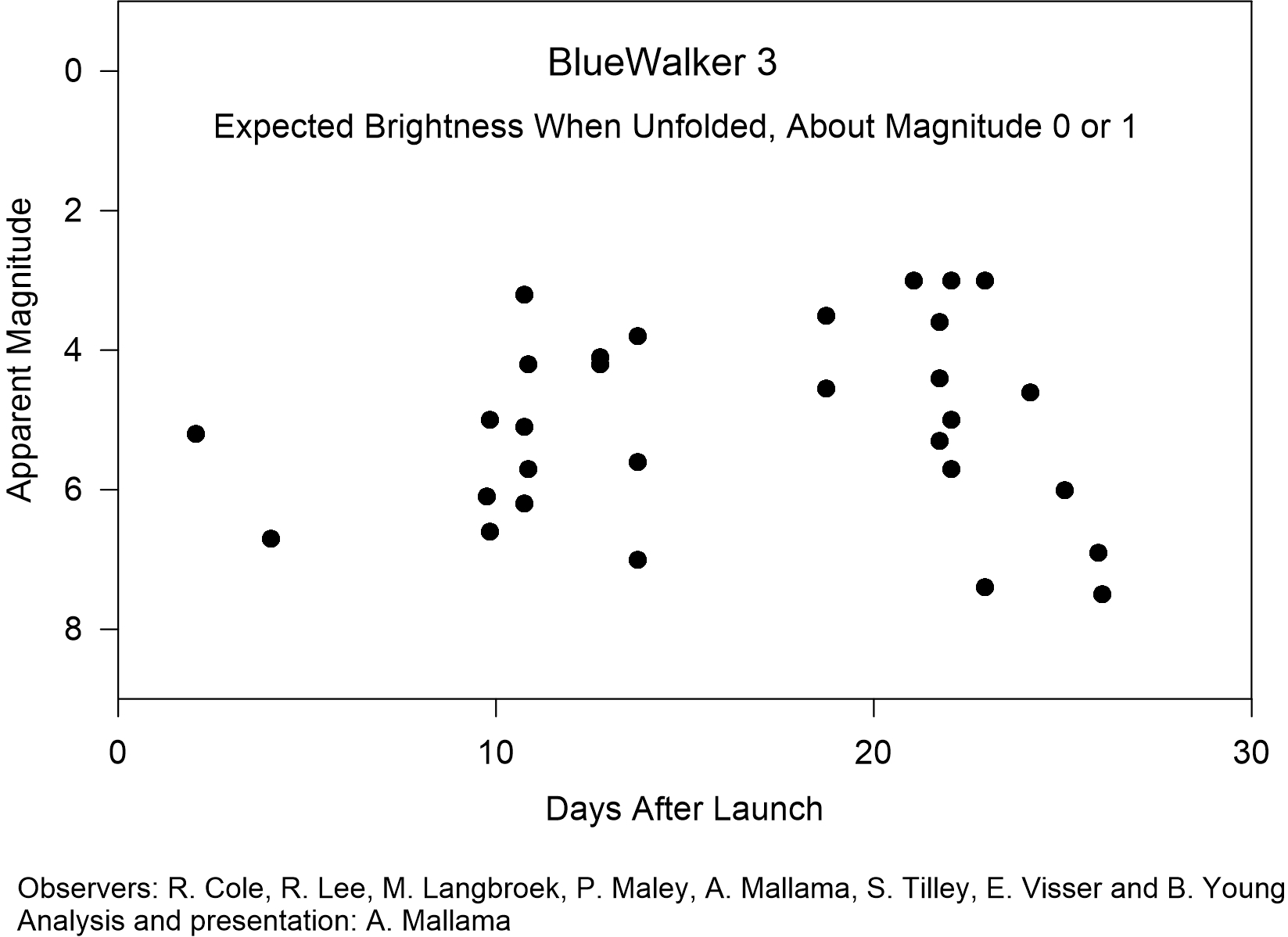
Chart courtesy: Anthony Mallama via Seesat-lThat spacecraft was lofted on September 10th and, according to AST Space Mobile, is a predecessor to planned commercial satellites called BlueBirds.
BlueWalker 3 is AST SpaceMobile’s prototype satellite and is designed to operate directly with standard, unmodified mobile devices. The spacecraft has a 64-square meter phased array antenna designed for direct-to-cell connectivity.

Credit: Nokia Communications
Credit: RAND
RAND researchers have issued a new report: “Chinese and Russian Perceptions of and Responses to U.S. Military Activities in the Space Domain.”
Their findings are based on a systematic review of a variety of Chinese and Russian primary sources to gain insights into internal Chinese and Russian perceptions of developments in U.S. military activities related to space and counterspace doctrine, exercises, and organization.
Washington, Beijing, and Moscow appear to be caught in an action-reaction cycle that perpetuates justifications for continued military actions in space based on previous adversary activities, is an output from the report.
One report observation: “As China and Russia increase cooperation in space, such as remote sensing, satellites, a potential joint lunar base, and even missile early warning, will this drive a further convergence of a common perspective of U.S. space activities and greater coordination on the international stage?
To access the full report – “Chinese and Russian Perceptions of and Responses to U.S. Military Activities in the Space Domain” — Go to:

An artist’s view of a Hypersonic Inflatable Aerodynamic Decelerator (HIAD) as it cuts through the atmosphere of Mars.
Credit: NASA
Touching safely down on Mars is a true, nail biting event. Those terror gripping, heart-stopping moments of entry, descent, and landing (EDL) after months of cruising to the Red Planet are indeed frightening affairs.
The EDL community is busy at work on fresh ideas on how to breach Mars’ atmosphere, put on the speed brakes, and plop down payloads. One big and new assignment is NASA’s Mars Sample Return project and the challenges that initiative faces.

SpaceX Starship enters Mars’ atmosphere and decelerates aerodynamically.
Credit: SpaceX
Getting down, dirty and securely on Mars remains a delicate balance of technical skill, mixed in with hard-earned luck.
Go to my new Space.com story – “Landing on Mars: Keep straight and fly right for Martian touchdown success” – at:
https://www.space.com/landing-on-mars-challenges-entry-descent
Credit: NewSpace Global (NSG)/Multiverse Media Group
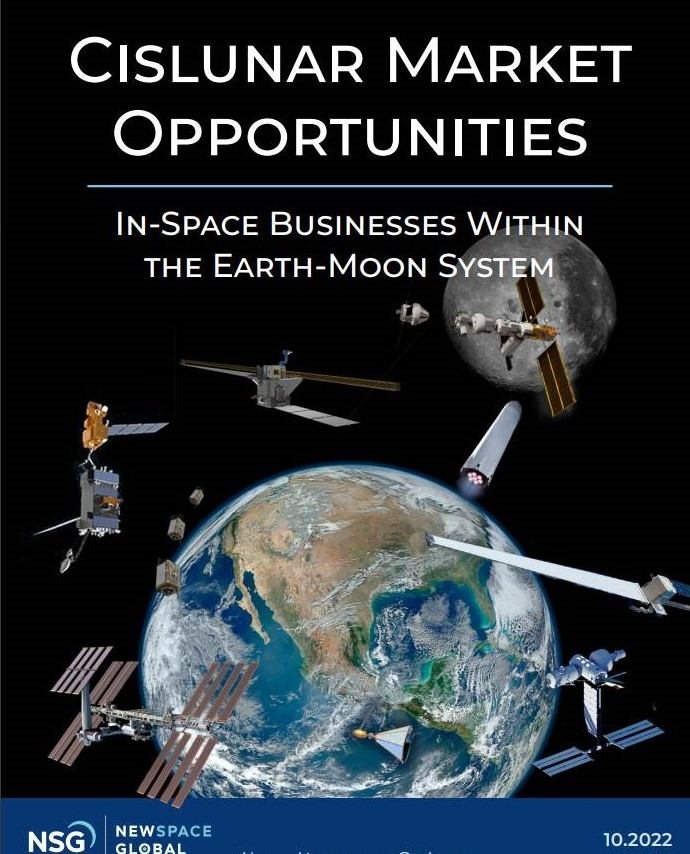
A new report, “Cislunar Market Opportunities – In-Space Business within the Earth-Moon System,” provides a well-researched, in-depth analysis of this emerging economy.
As explained in the report, a cislunar economy will involve a much more expansive, interconnected, and sustainable paradigm for space development.
“Instead of disposable satellites operating independently of other spacecraft, there are interactions among spacecraft that can remain active indefinitely,” notes the report. “Instead of satellite businesses that serve only users on Earth, there are spacecraft businesses that provide services that enable other spacecraft to fulfill their purpose.”
One key message of the report is that in most every sector of in-space development, there are companies with significant funding and capabilities.
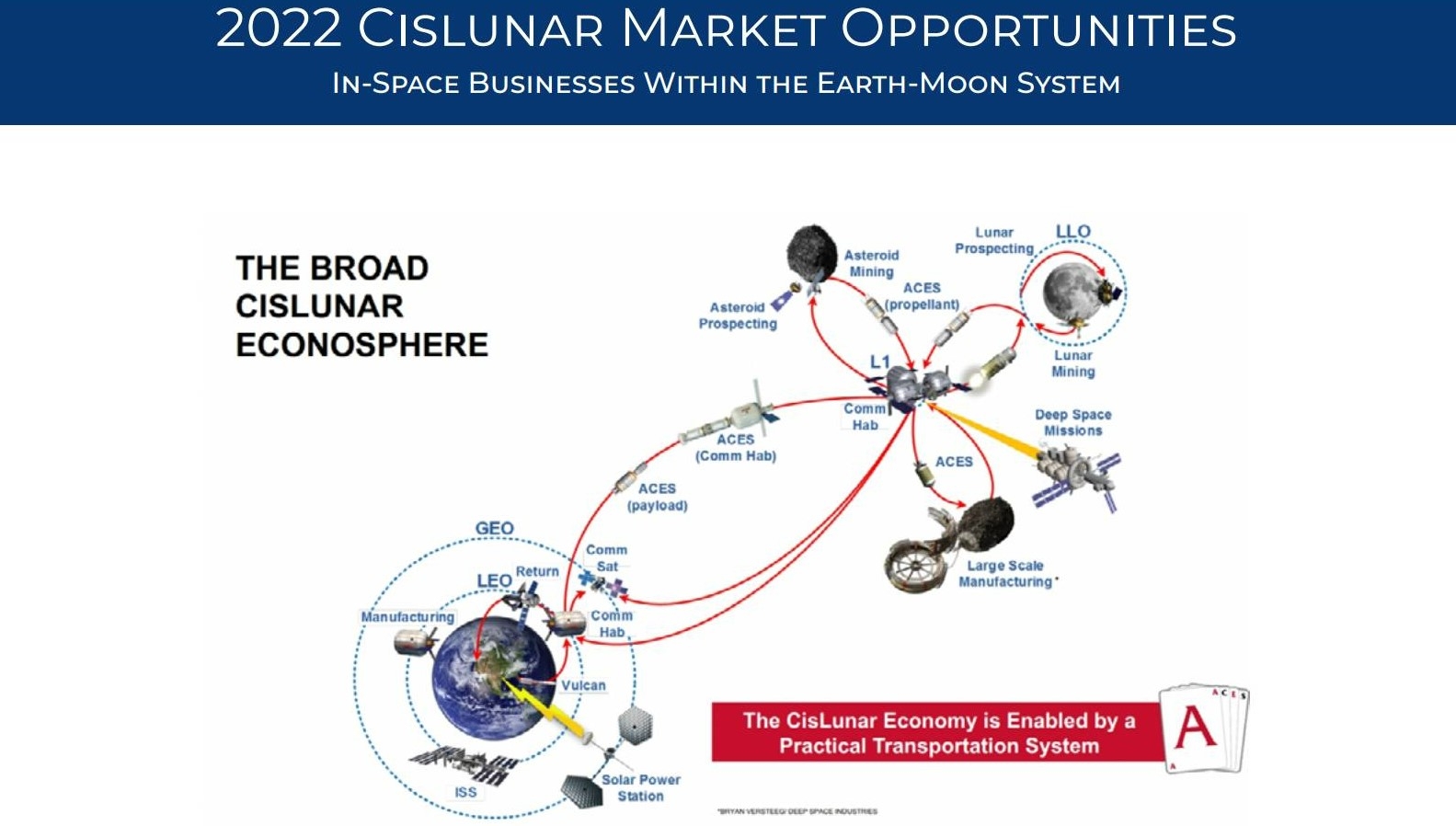
CisLunar econosphere graphic presented by Tory Bruno, CEO of United Launch Alliance, depicts the various space vehicles, habitats, and other elements involved in creating
a cislunar economy
Credit: NewSpace Global (NSG)/Multiverse Media Group
“Furthermore, most of the companies either have systems in space or have launch dates for their first missions,” the report points out.
Five focus areas
The 161-page report is divided into five sections:
— Chapter 1. An overview of the sector.
— Chapter 2. In-Space Infrastructure in Earth Orbit – satellite servicing and life extension, in-space assembly and manufacturing, propellant depots, orbital platforms, space tugs, transfer vehicles, space debris removal and more.
— Chapter 3. Lunar Markets – commercial robotic missions, resource extraction and utilization, communications and navigation satellites, power systems, science and technology R&D, sponsorships and promotions and data storage.
— Chapter 4. Human Cislunar Activity – Commercial space stations, NASA’s Artemis program and other commercial opportunities.
— Chapter 5. The Decade Ahead – A look at how the cislunar economy will develop in the 2020’s.
Published by NewSpace Global (NSG), a wholly owned subsidiary of the Multiverse Media Group, NSG is a leading market analysis firm specializing in emerging commercial space opportunities since 2011.
For more information about “Cislunar Market Opportunities – In-Space Business within the Earth-Moon System” and acquiring the full study, go to:

