Author Archive
 Author:
  November 22nd, 2022
Credit: CCTV/Inside Outer Space screengrab
China is augmenting its astronaut corps to support at least two crews of three individuals each to fly space missions in 2023.
Yang Liwei, deputy chief designer of China’s manned space program, told China Central Television (CCTV) that the country has begun the selection of the fourth group of space travelers which will have 12 to 14 new astronauts. Yang is the first person sent into space by the Chinese space program in October 2003.
The third generation of Chinese astronauts consists of 18 astronauts in total – 17 male and one female. Among them, seven will be working as spacecraft pilots, seven as spaceflight engineers and four as payload specialists.

Chinese space travelers in training.
Credit: CMSE
Intensive training
“The training program for the astronauts is quite intensive. We strive to ensure that they can fully meet the training goals in the more than two years, so as to make sure all the new astronauts are capable of conducting future space explorations,” said Yang.
According to Yang, China’s space program plan calls for at least two three-astronaut crews carrying out Chinese space missions each year.
The recruitment of the fourth-generation new astronauts is expected to be completed in 18 months, according to CCTV.
 Posted in

Image credit: NASA Langley/Advanced Concepts Laboratory
A crewed mission to Venus while en route to the Red Planet can enable valuable tele-operated science due to human nearness to that cloud-veiled world.
That’s the output from a study report — Meeting with the Goddess: Notes from the First Symposium on Venus Science Enabled by Human Proximity — prepared for the W. M. Keck Institute for Space Studies.
Last July, the Institute hosted a symposium entitled “Science Enabled by Human Proximity to Venus.” It was convened to explore the potential science that could be harvested by human mission fly-bys of Venus while en route to Mars and rationales for a dedicated human mission to Venus.

Image credit: Gordon Squires, Caltech/IPAC
Apollo 8-style
“The compelling narrative of exploration combines planetary science at Venus, the search for life in its clouds, and an encounter with our sister planet that may shed light on our future climate,” says the report.
Crewed expeditions to Venus are a “modern analog to Apollo 8, but on the scale of the inner solar system,” adds the report. In 1968, Apollo 8 was the first crewed spacecraft to successfully orbit the Moon and return to Earth.
Venus “back-flip”
The study participants revealed an “appealing new mission option” that combines the simplicity of a fly-by mission with a longer dwell time in the vicinity of Venus to enable tele-operated Venus science. That trajectory is dubbed the Venus “back-flip,” one that provides two fly-bys of Venus.

Venus back-flip double fly-by trajectory from the perspective of Venus (long duration over Southern hemisphere).
Credit: W. M. Keck Institute for Space Studies
A human Venus mission can last roughly half as long as a human Mars mission, while still subjecting the crew to similar environments, the report states.
“Thus, such a human Venus mission affords the ability to close knowledge gaps and buttress confidence in technology, concept of operations, and human adaptability before setting out on a Mars expedition. Symposium participants argued that it would be from confidence gained in a crewed Venus fly-by mission that we would have the confidence to send humans to Mars.”
Unexplored world
Venus is “Venera Incognito,” the study observes, “a vast, almost completely unexplored world of great variety, mystery, and beauty, with an area of unknown lands several times the land area of Earth.”
Tele-operated assets, atmospheric skimmers, landed probes, cloud flying craft and rovers could scrutinize Venus, top to bottom.

Image Credit: Johns
Hopkins APL/Caleb Heidel
For instance, as the coolest and lowest-pressure region on the surface of Venus, Maxwell Montes is an ideal location for a long-lived rover to explore for roughly a week.
Similarly, a Venus airplane could fly into the planet’s night side, both within and below the planet’s cloud deck.
Endless wonderland
The report concludes that there is every reason to believe that “Venus will be an endless wonderland of beguiling and mysterious vistas and formations.”
Given tele-operated exploration, “the public – perhaps following along at home with their own VR enabled headsets — can come along for the ride and join in the discovery and the fascination.”
To read the full report — Meeting with the Goddess: Notes from the First Symposium on Venus Science Enabled by Human Proximity – go to:
https://www.kiss.caltech.edu/symposia/2022_venus_science/index.html

Long Lehao, chief designer of China’s Long March rockets.
Credit: CCTV/Inside Outer Space screengrab
China could land a trio of taikonauts on the Moon before 2030.
That’s the story from China Central Television (CCTV), talking with a chief designer of China’s Long March rockets.
Speaking during this year’s China Space Conference in Haikou City of south China’s Hainan Province, Long Lehao, also an academician of the Chinese Academy of Engineering, said that China has an ambitious new rocket for human missions as its space program reaches new heights.
The new manned rocket is expected to have a similar diameter in its body compared with the Long March-5, the country’s largest carrier rocket which Long helped design. Advanced technologies have also been applied in the construction of the new rocket in order to complete the manned moon landing mission, added Long in the CCTV interview.

Credit: CNSA
“The launch vehicle has a near-Earth orbit capacity of about 70 tons and an Earth-moon-transfer orbit capacity of about 27 tons. We may launch this rocket in two missions and could land three Chinese astronauts on the Moon before 2030,” he said.
Multiple missions
Long added that a new heavy-lift rocket with greater carrying capacities is also under development.
With a 10-meter diameter and a height of more than 110 meters, Long said it is capable of sending a payload of 150 tons into low orbit, and is built to carry up to 50 tons to an Earth-moon transfer orbit.
“In the future, we can complete multiple remote missions, such as exploring Mars with manned rockets, establishing lunar base, and applying into civil use,” Long told CCTV. “We can use the rocket to build a space solar power station. Everything is going smoothly now. The first, second and third stages of engines have undergone corresponding short-range thermal tests. Specific plans have been rolled out. It is entirely possible for China to carry out first test flight in about eight to 10 years,” he said.

Credit: Scientific Coalition for UAP Studies (SCU)
The U.S. Congressional Budget Office (CBO) has issued a cost estimate focused on S. 4503, the Intelligence Authorization Act for Fiscal Year 2023.
Dated November 22, 2022, the CBO document notes establishing a secure system to collect information on Unidentified Aerial Phenomenon (UAP).
As a bill, S. 4503 would authorize appropriations for fiscal year 2023 for intelligence activities of the U.S. government, including the establishment of a program to analyze the United States’ leadership in the technology sector, and establish a system to collect information on unidentified aerospace-undersea phenomena (UAP).

GOFAST
Credit: DOD/U.S. Navy/Inside Outer Space screengrab
Historical information
Section 704 of the bill would require the Department of Defense (DoD) to “establish a secure system to gather and share information related to unidentified aerospace undersea phenomena (UAP). That system would be used to receive reports and to collect historical information on UAP. The system also would need to be capable of exchanging information with other secure information systems of the federal government,” the CBO document adds.
As noted in CBO documentation, the bill would enhance whistleblower protections; allow people to sue the United States government for compensatory and punitive damages; and “void some provisions of nondisclosure agreements that would prevent reports from being filed with the Unidentified Aerospace-Undersea Phenomena Joint Program Office and prohibit private-sector entities from seeking damages in federal court from individuals who file reports.”
Authorization and outlays
According to a table in the CBO document, a “Secure Reporting System” has an “Estimated Authorization” pegged at $30 million. The “Estimated Outlays” in fiscal year, millions of dollars, are listed as $14 million in 2023; $12 million in 2024; $3 million in 2025 with zero dollars in fiscal year 2027 – all equaling the $30 million estimated authorization.
The CBO document is available at:

Curiosity Right B Navigation Camera image acquired on Sol 3658, November 20, 2022.
Image credit: NASA/JPL-Caltech
NASA’s Curiosity Mars rover at Gale Crater is now performing Sol 3659 duties.
Reports Keri Bean, rover planner deputy team lead at NASA’s Jet Propulsion Laboratory, the robot had a busy weekend.
On sol 3657, the plan called for a very long block of remote sensing, including a Navcam dust devil survey. Also, a Chemistry and Camera (ChemCam) laser observation was on the schedule of “Cigana,” some long distance ChemCam imaging, a Dynamic Albedo of Neutrons (DAN) observation, as were several Mastcam observations of Cigana, Rafael Navarro, Gediz Vallis Ridge, and some imaging of the rover deck.
“The rover will take a nice nap until later in the afternoon where the rover will wake up and perform some arm activities,” Bean added. “We’re really having fun challenging our arm rover planner,” such as two uses of Curiosity’s Dust Removal Tool.
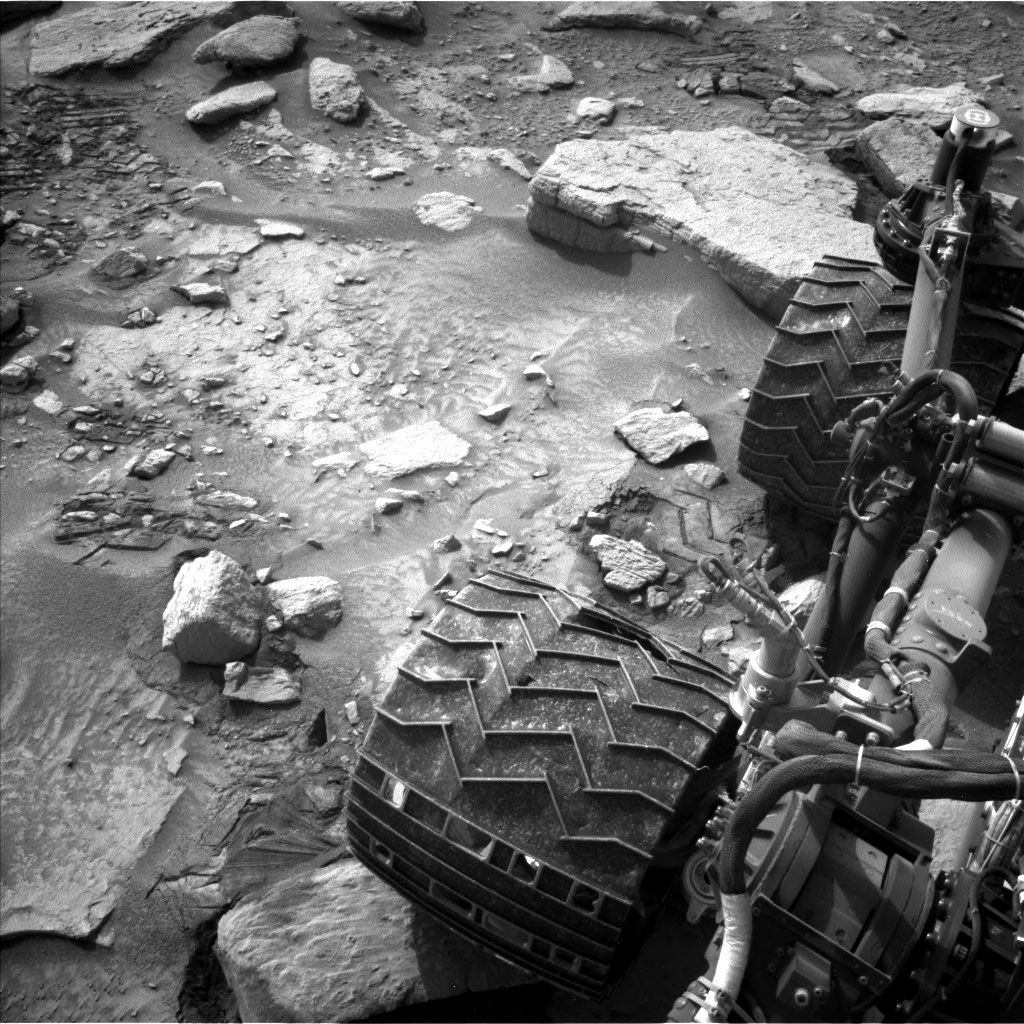
Curiosity Left B Navigation Camera image taken on Sol 3658, November 20, 2022.
Image credit: NASA/JPL-Caltech
Stow the arm
The brushing and Mars Hand Lens Imager (MAHLI) imaging of both the “Lua” and “Rio Jufari” targets were planned, as was starting the evening with the Alpha Particle X-Ray Spectrometer (APXS) instrument observing the Lua target.
“Mid-evening we will replace the APXS on the Rio Jufari target to get an observation of that target. Later that night we will stow the arm to prepare for the next sol’s drive,” Bean notes.
“Starting out nice and early in the rover’s morning on sol 3658, we take a full 360 panorama around us in the morning light, followed by some imaging of Gediz Vallis Ridge,” Bean reports. “A bit later in the morning we do some atmospheric monitoring imaging with Mastcam and Navcam, a ChemCam laser observation of the previous sol’s arm target Rio Jufari, some distance imaging with ChemCam, and a slew of Mastcam observations of Saddle Mountain, “Xua,” Lua, and Rio Jufari.”
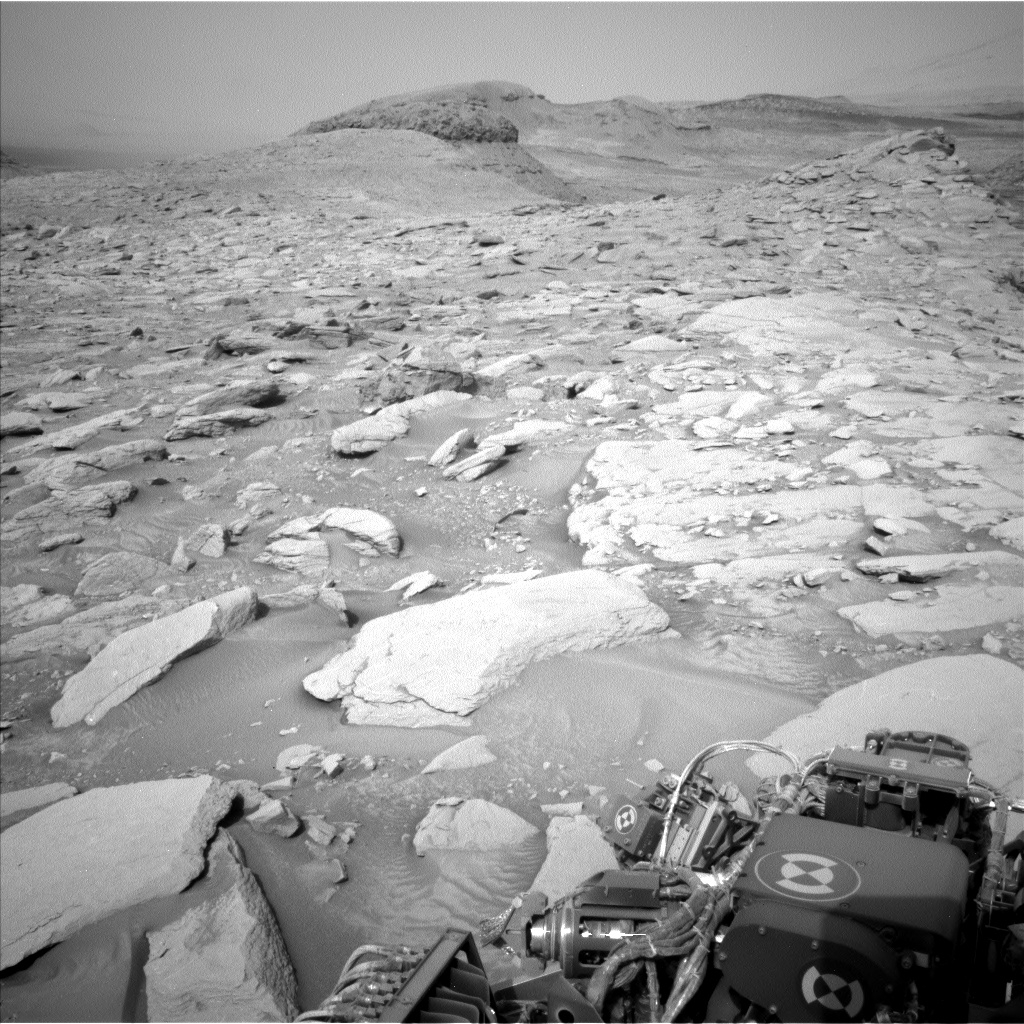
Curiosity Left B Navigation Camera image taken on Sol 3658, November 20, 2022.
Image credit: NASA/JPL-Caltech
Safe spot
After all the projected imaging, the rover is to drive for 4 hours.
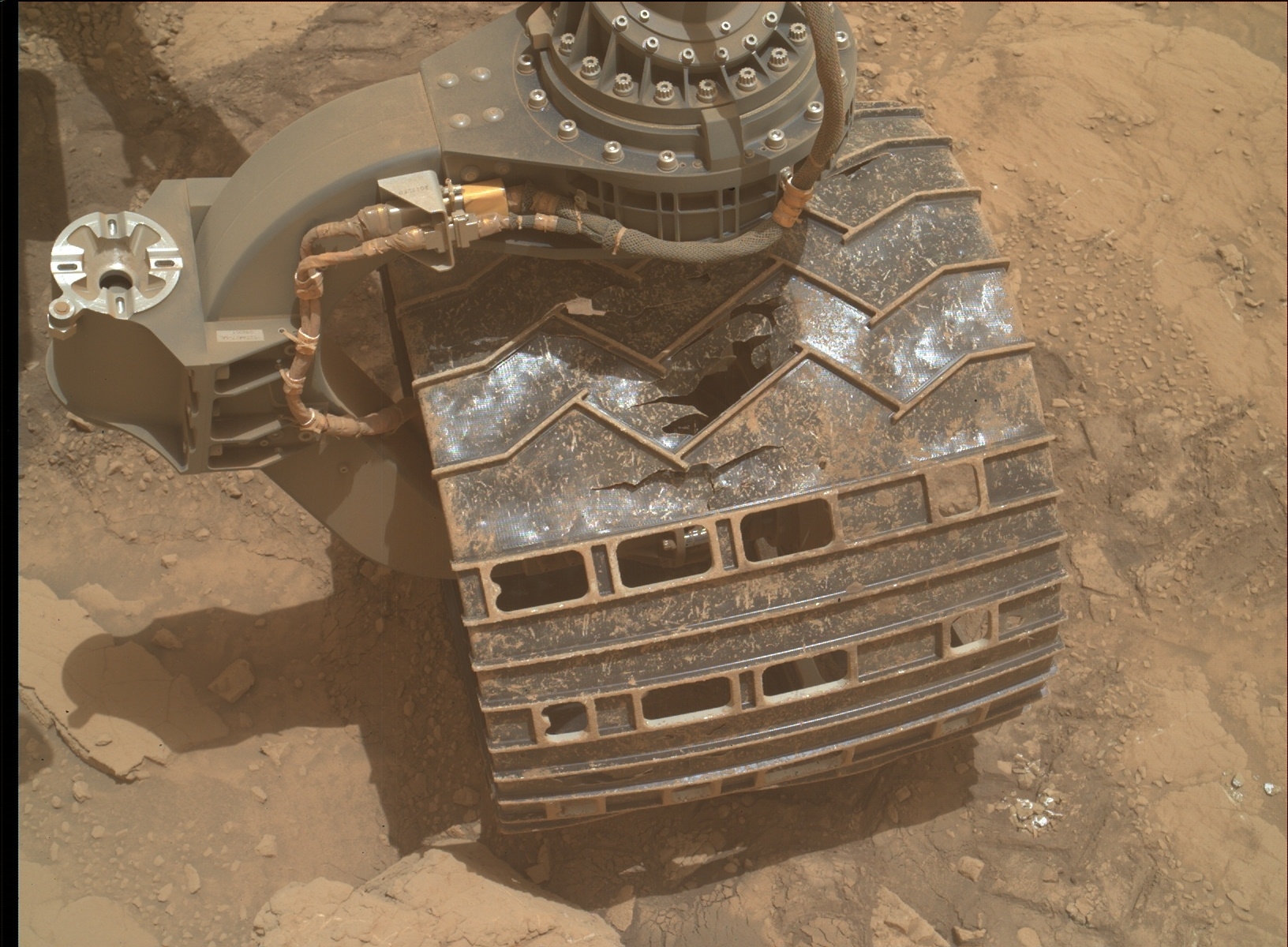
Curiosity Mars Hand Lens Imager photo produced on Sol 3658, November 20, 2022.
Image credit: NASA/JPL-Caltech/MSSS
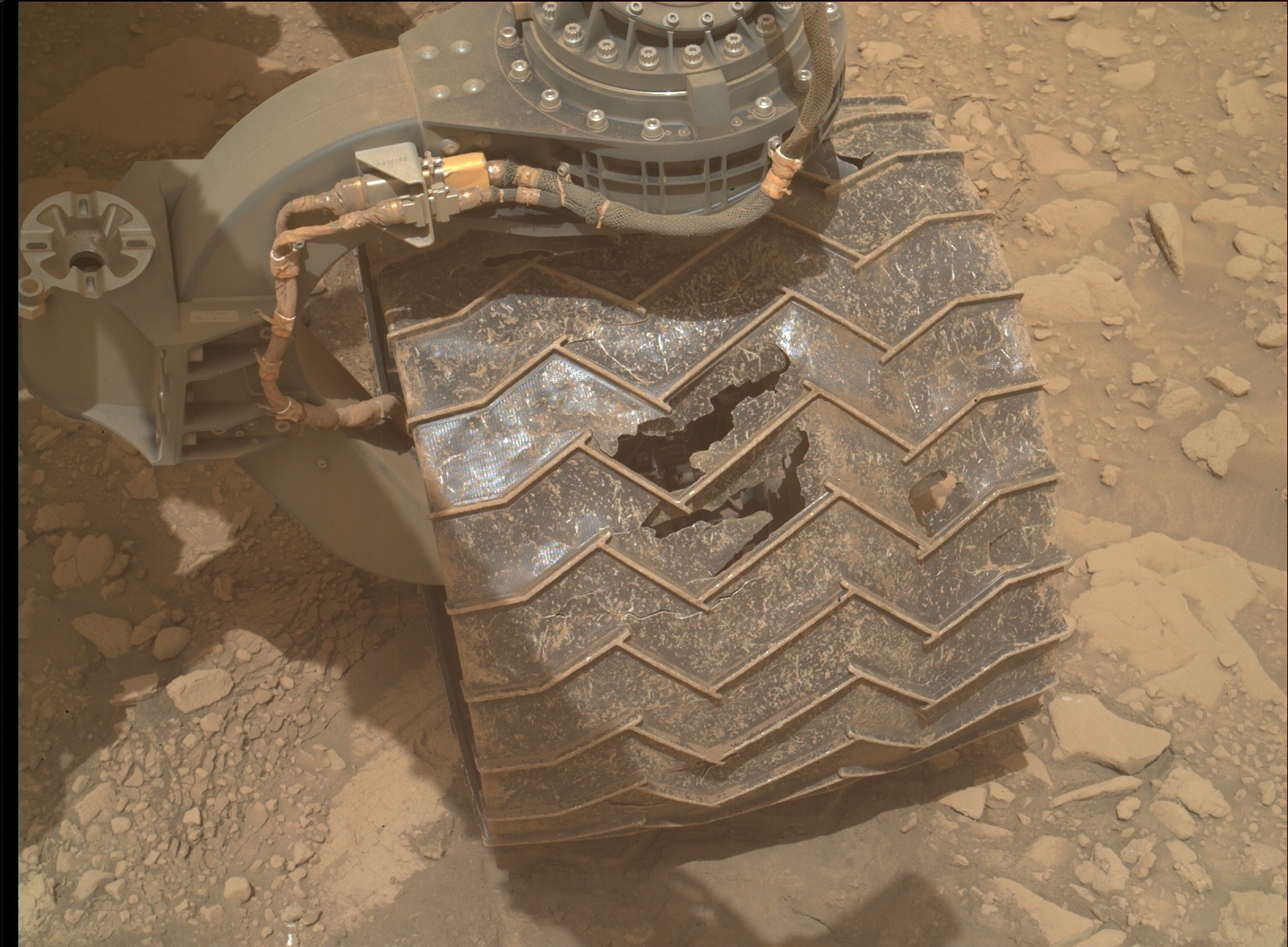
Curiosity Mars Hand Lens Imager photo produced on Sol 3658, November 20, 2022.
Image credit: NASA/JPL-Caltech/MSSS
In the plan, rover operators included what’s called the Full MAHLI Wheel Imaging activity, where there’s use of a combination of Mastcam and MAHLI to image the rover wheels and monitor those wheels for any new damage.
“We have some requirements to find a spot safe to do this imaging, so a lot of my morning on shift was verifying a good safe spot to perform this activity in,” Bean observed. “Luckily there was a good spot about 5 meters behind where the rover is, so we back up, run this activity, then start heading back the way we came.”

Curiosity Left B Navigation Camera image taken on Sol 3658, November 20, 2022.
Image credit: NASA/JPL-Caltech
Wheel markings
Bean said the plan calls for Curiosity to drive about 148 feet (45 meters), retracing its wheel markings, and end near the sand ripple from a few sols ago “with hopefully some bedrock in the workspace for the next Rover Planners to play with,” Bean reports.
The third and final sol of this plan, sols 3657-3659, has an autonomously selected a ChemCam target in the morning before sleeping until very early on sol 3660 “where we’ll take a slew of atmospheric monitoring images with Navcam and Mastcam,” Bean added.
Throughout the plan, the robot is carrying out standard environmental monitoring with DAN, the Radiation Assessment Detector (RAD) and the Rover Environmental Monitoring Station (REMS).

Mars Hand Lens Imager (MAHLI) wheel check, Sol 3658, November 20, 2022
Image credit: NASA/JPL-Caltech/MSSS
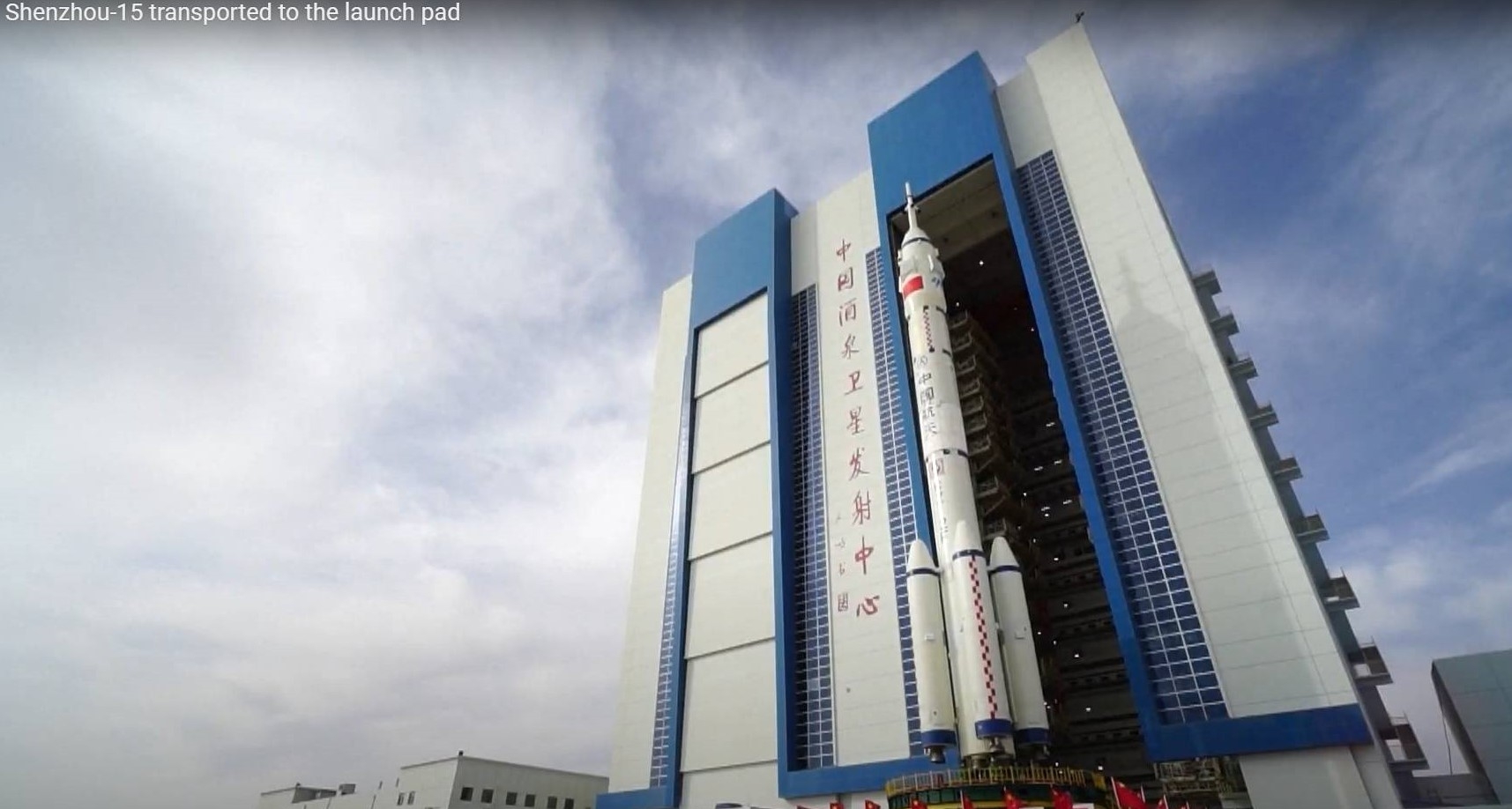
Credit: CCTV/Inside Outer Space screengrab
China is readying its next step in fully-commissioning the country’s space station.
A Long March 2F (CZ-2F) Y15 booster topped by the Shenzhou-15 piloted spacecraft was vertically transferred to the launching area on Monday. The launch is reportedly headed for a November 29 departure from the Jiuquan Satellite Launch Center.
Various pre-launch function and joint tests will be carried out prior to takeoff.
Traveling less than a mile (1.5 kilometers) on the seamless rail especially built to prevent vibrations, the move of the rocket/spacecraft from the assembly test building took roughly one and a half hours.

Credit: CCTV/Inside Outer Space screengrab
Launch drill
“Before the transfer, we have successfully completed the function checks of the rocket, the general checks and test of matching, the comprehensive electrical test of the spaceship, fueling and installing payload fairing to the rocket in the technical area,” said Shen Tingzheng, an expert in test and launch technologies at the Jiuquan Satellite Launch Center.
At present, the rocket and the spaceship are in good condition and ready for the launch stage, Shen told China Central Television (CCTV). “After the rocket-spaceship combo is transferred to the launching area, we will continue to carry out function checks, air tightness tests, the launch drill of the whole system and the on-site confirmation of astronauts and fill the rocket with propellant,” Shen said.

Artistic view of current T-shape configuration of China space station.
Credit: CNSA/CCTV/Inside Outer Space screengrab
What’s ahead?
The construction of China’s space station has entered the final stage, with two tightly scheduled missions by the end of this year to complete the space station, reports CCTV. They are the launch of the Shenzhou-15 piloted mission and the return of the Shenzhou-14 crew from the space station.
The three Shenzhou-14 crew members, who were sent to the space station on June 5 of this year for a six-month mission, are expected to come back to Earth in early December.
That Shenzhou-14 crew will welcome the arrival of the Shenzhou-15 crewed spacecraft at the space station later this month. The combination of crews totaling six taikonauts are slated to push forward the final phase of station construction by the end of the year.
At this stage, China will perform its first-ever crew rotation as the now-orbiting Shenzhou-14 team departs for Earth.
Credit: CCTV/Inside Outer Space screengrab
Smart rockets
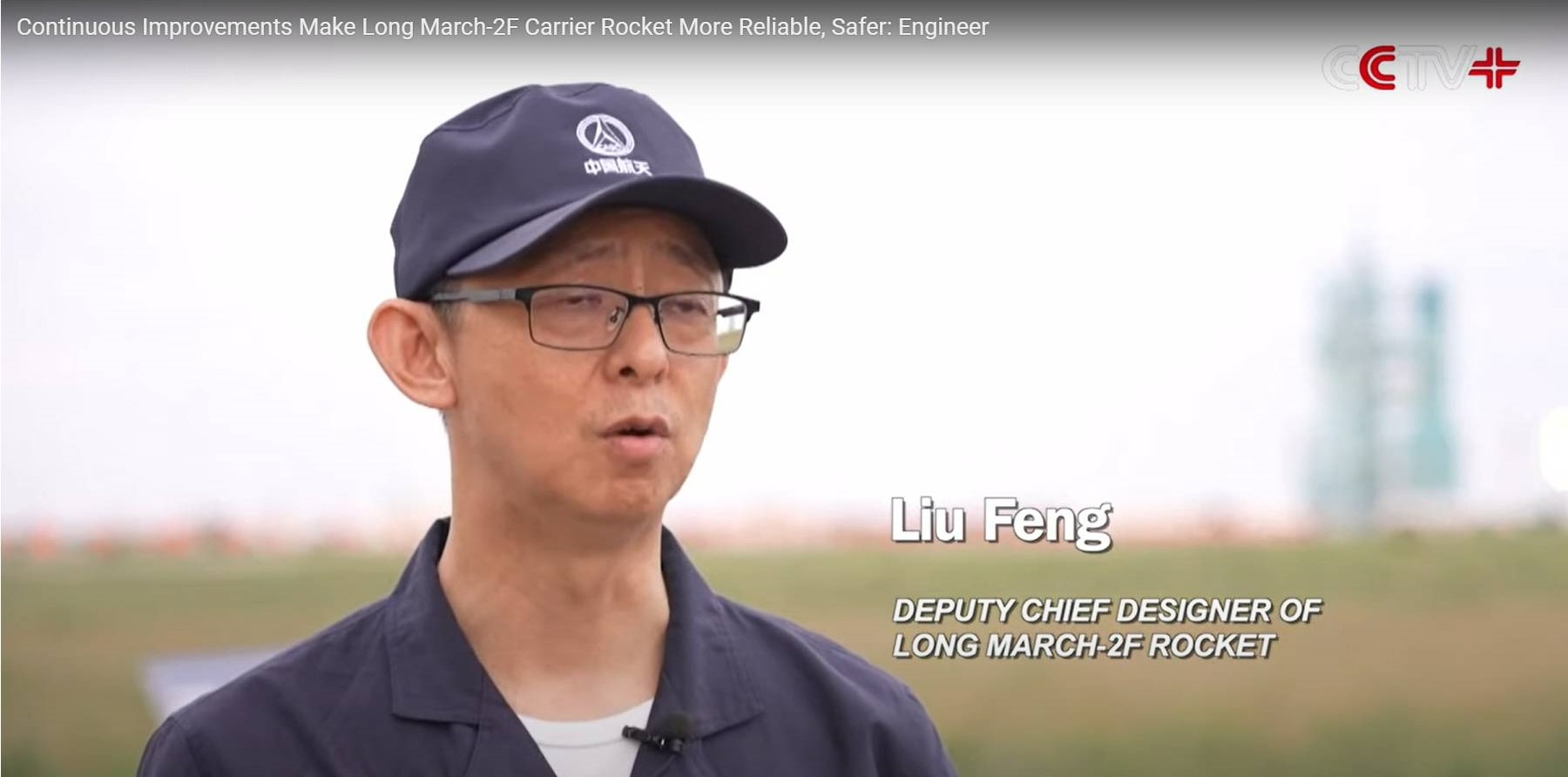
“Going forward, we will surely see heavier manned spacecrafts, which requires us to further increase manned carrier rockets’ carrying capacity,” said Liu Feng, deputy chief designer of Long March-2F rocket.
Liu told CCTV that secondly, “we should further elevate the fault tolerance capacity for the whole process in the air. We are building smart rockets.”
The third step is reuse. “For manned carrier rockets, we still need greater technological innovation and progress on how to reuse them,” Liu said.

China enters final stage of constructing the country’s space station.
Credit: CMS/CCTV/Inside Outer Space screengrab
Safety of crew
Liu added that Chinese engineers have not only added redundancy for the components of the Long March-2F rocket, but made two such rockets for every launch mission in order to ensure the safety and rescue of astronauts in the event of a mission emergency.
Liu noted that they will closely monitor the rocket’s condition to ensure the success of the upcoming Shenzhou-15 launch mission.
“After the rocket is transferred to the launch area, we will conduct thorough checks about the functioning of its various systems. After that, we will conduct interface matching between the rocket and the spacecraft, and carry out launch drills. At present, the rocket is in a very good shape,” said Liu.
For just-issued videos showing the Long March 2F (CZ-2F) Y15/Shenzhou-15 combination arriving at the launching area, go to:

While NASA deservedly notes that the Space Launch System-boosted Orion spacecraft’s Artemis 1 mission is “exceeding performance expectation,” there is also an irksome development.
Deployed from the Space Launch System’s (SLS) adapter after its November 16 launch, a barrage of CubeSats – 10 of them – were released to space. These small, creative packages of technology, a mixture of U.S. and international spacecraft, were sent outward from a ring attached to the SLS upper stage.

NASA’s Space Launch System rocket carrying the Orion spacecraft launches on the Artemis I flight test. Image credit: (NASA/Bill Ingalls)
Varied set of duties
The CubeSats are built to carry out a varied set of duties. For example, solar sailing to an asteroid, thruster testing, reconnoitering the Moon for ice, to even plopping down on the lunar landscape.
Not only are these innovative CubeSats constructed for achieving great things, each demanded loads of team time and resources. Meanwhile, they collectively represent a pushing of the boundaries to showcase what CubeSats can pull off.

The CubeSat family ready for launch inside adapter.
Image credit: NASA/Cory Huston
Telemetry terror
All that said it’s disappointing to hear that a number of the CubeSats have run into trouble, perhaps 50 percent of them.
Mike Sarafin, Artemis I mission manager, said in a recent briefing that ArgoMoon, BioSentinel, Equuleus, LunaH-Map and OMOTENASHI “are on a path to success.”
Meanwhile, the other five — LunIR, Lunar IceCube, NEA Scout, CuSP and Team Miles — “either have encountered technical issues post-deploy or have had intermittent communications or, in one case, did not acquire a signal with the communication asset that they had planned,” Sarafin added.

NASA’s NEA Scout’s large deployable solar sail.
Credit: NASA
For sure, telemetry terror has reared its ugly head.
Timed release
In a NASA blog, the space agency explained that all 10 CubeSats were successfully deployed via timer from the SLS adapter.

Japan’s OMOTENASHI lunar lander.
Credit: JAXA/NASA
“The CubeSats’ individual missions are separate from Artemis I,” the blog states. “The small satellites, each about the size of a shoebox, are inherently high-risk, high-reward and the teams are in various stages of mission operations or troubleshooting in some cases.”

LunIR
Image credit: Lockheed Martin
Viewing the CubeSats as “inherently high-risk” caught my eye. Why so? There are plenty of CubeSats successfully circling the Earth; companies have been formed based on constellations of shoebox-sized CubeSats.
Then there are CubeSats like NASA’s CAPSTONE, while troubled en route, it has now successfully settled into near-rectilinear halo orbit (NRHO) operations around the Moon. And you can’t forget the twin Mars Cube One (MarCO) spacecraft zooming by the Red Planet in November 2018.
Linkage, root cause?
One wonders if there’s need for a “mishap board” to investigate if there’s any linkage or root cause between the problems encountered by the SLS-dispatched CubeSats?

Image credit: NASA/Morehead State University
Could the gaggle of hiccups and gotchas be sparked by hurricane and technical delays in getting SLS off-the-ground, or how long the CubeSats were attached inside the SLS adapter, or battery charging issues. There could be an “or…agami” of nested troubles.
Seemingly, some sort of post-mortem might be in order here – ostensibly of value to not only NASA but the pioneering CubeSat community too. That group of people put a lot of blood, sweat, tears, time, dedication and dollars into forging a bold avenue for deep space exploration.
Let’s try and shelve “inherently high risk” (sounds like “sure to fail”) and substitute a more pro-phrase term that evokes at least a hint of possible cutting-edge triumph.
Is this a teachable moment for all involved?
This is an opinion piece by Leonard David. Responses welcomed.

Credit: NASA

Curiosity’s location as of Sol 3655. Distance driven 18.04 miles/29.04 kilometers.
Credit: NASA/JPL-Caltech/Univ. of Arizona
NASA’s Curiosity Mars rover at Gale Crater is now performing Sol 3657 duties. Here are some new images that show the robot’s scenic and geologically eye-catching surroundings:
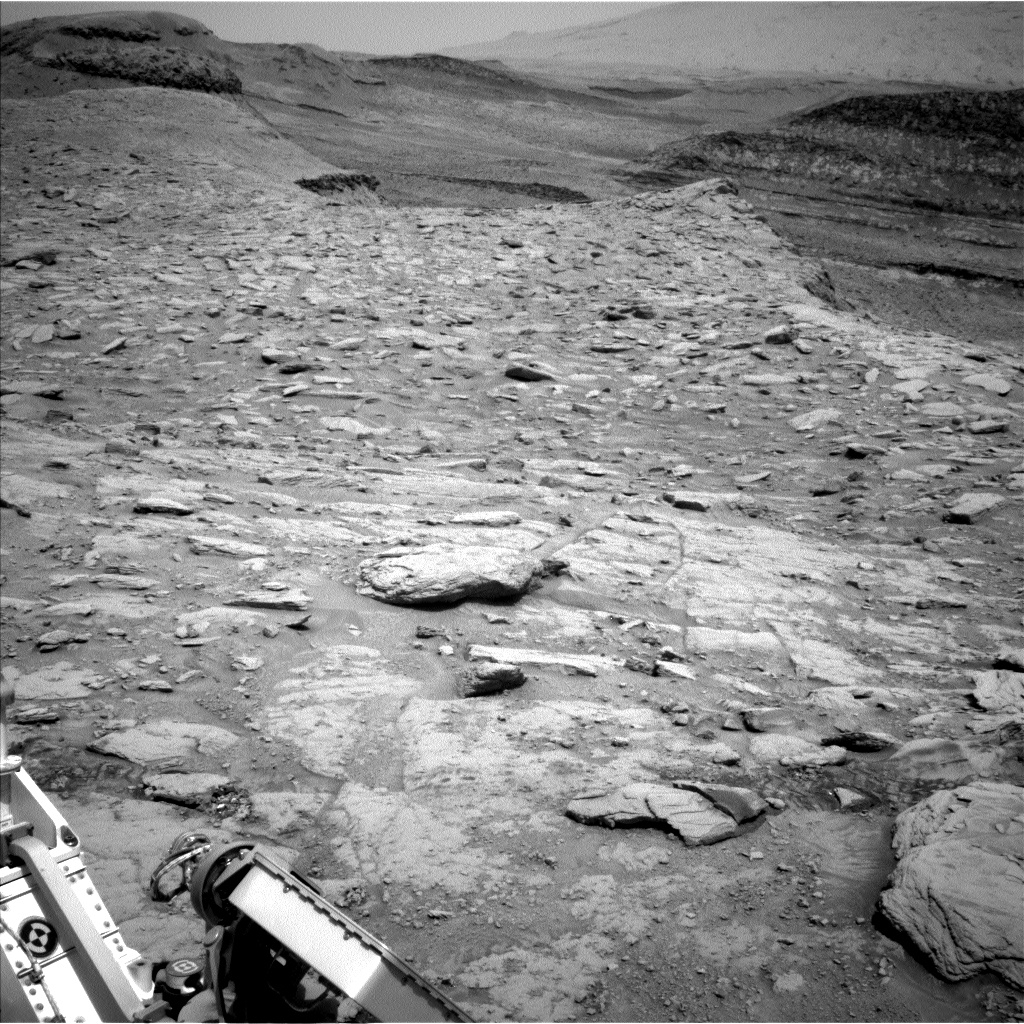
Curiosity Left B Navigation Camera image taken on Sol 3655, November 17, 2022.
Credit: NASA/JPL-Caltech
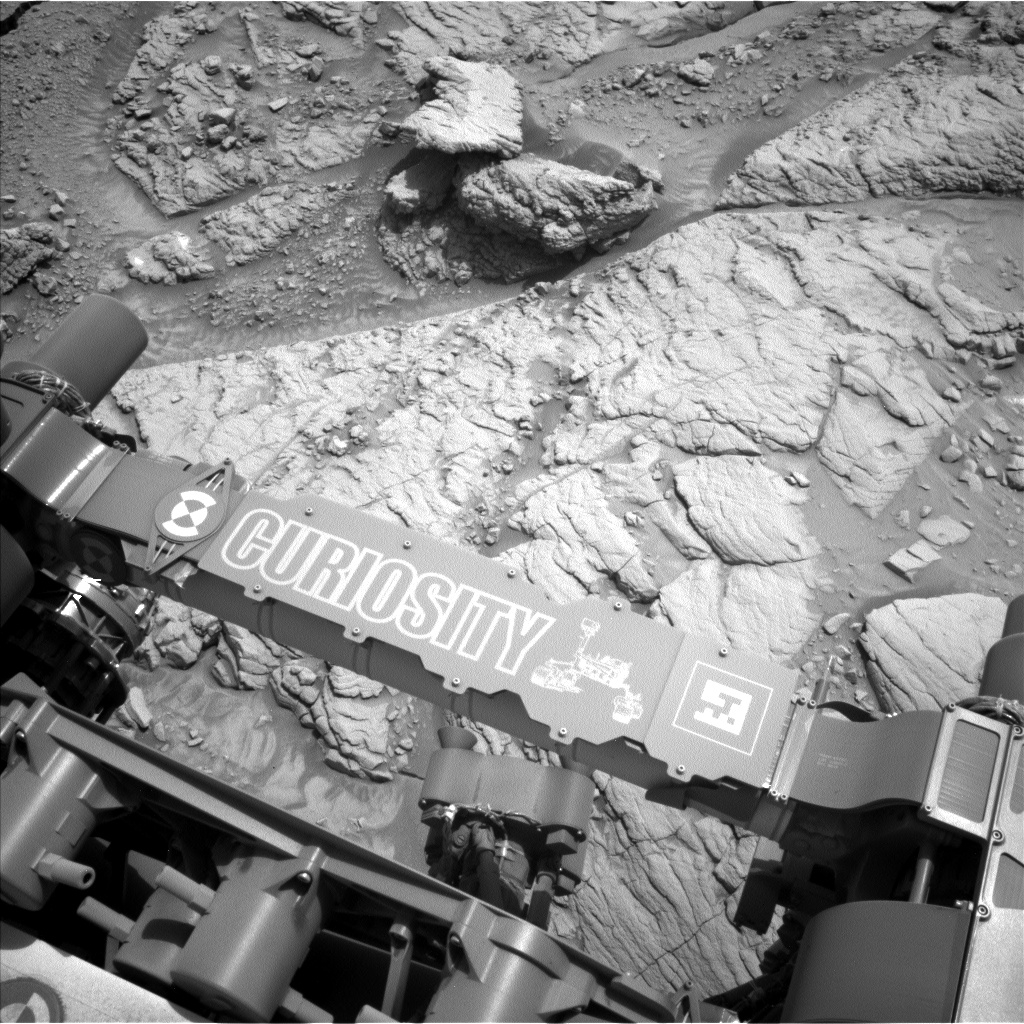
Curiosity Left B Navigation Camera image taken on Sol 3655, November 17, 2022.
Credit: NASA/JPL-Caltech
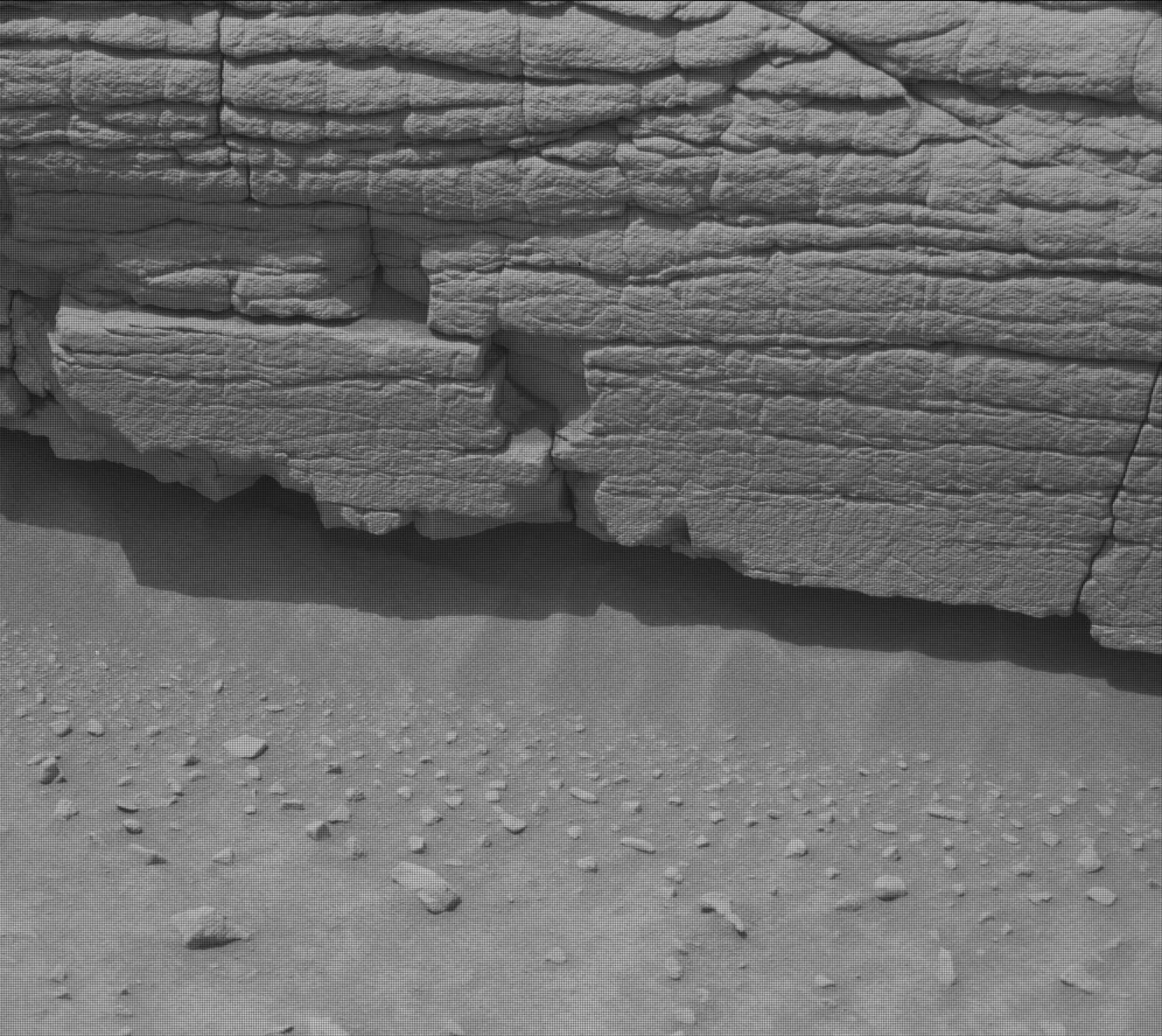
Curiosity Mast Camera Right photo taken on Sol 3655, November 17, 2022.
Credit: NASA/JPL-Caltech/MSSS
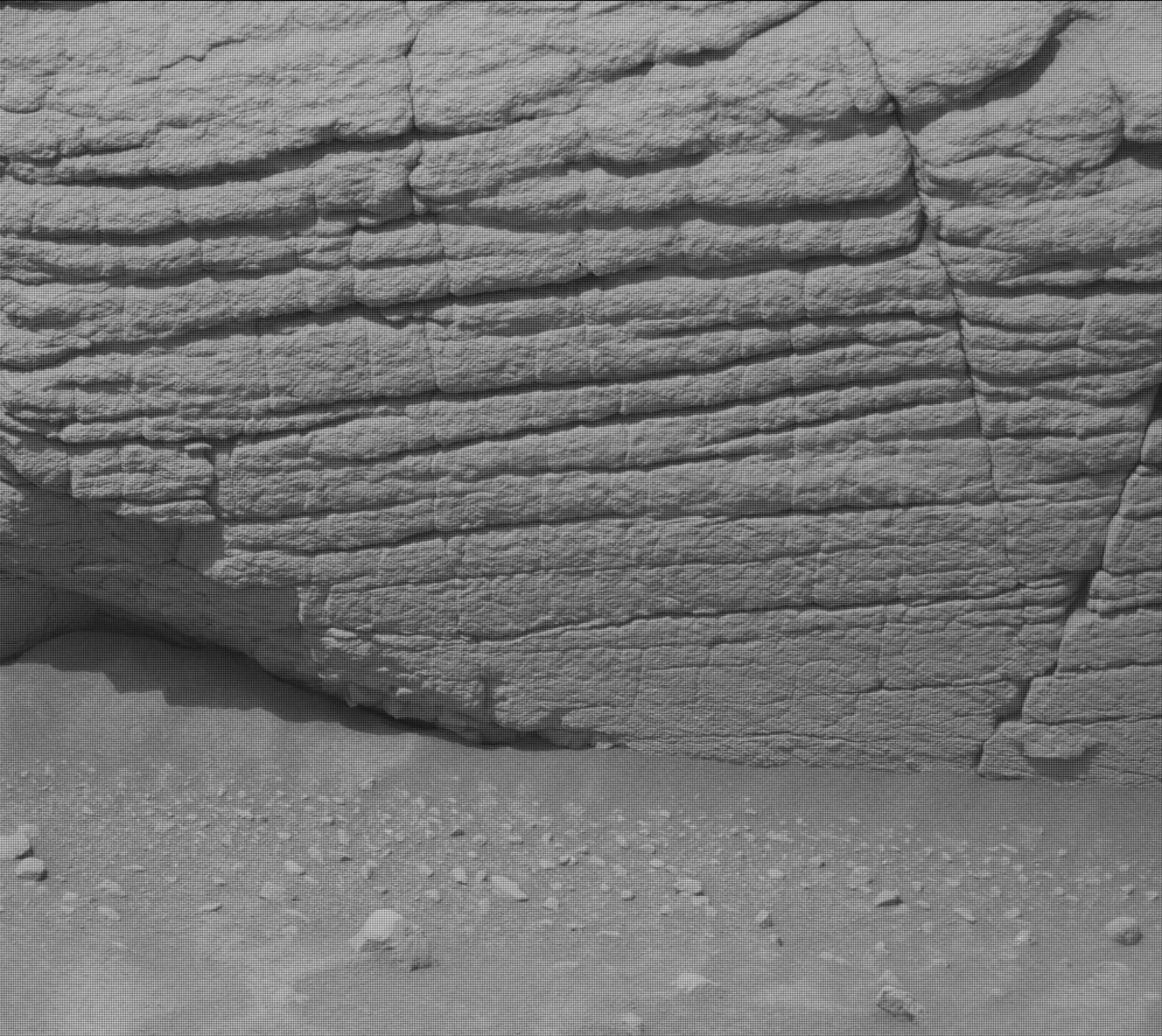
Curiosity Mast Camera Right photo taken on Sol 3655, November 17, 2022.
Credit: NASA/JPL-Caltech/MSSS
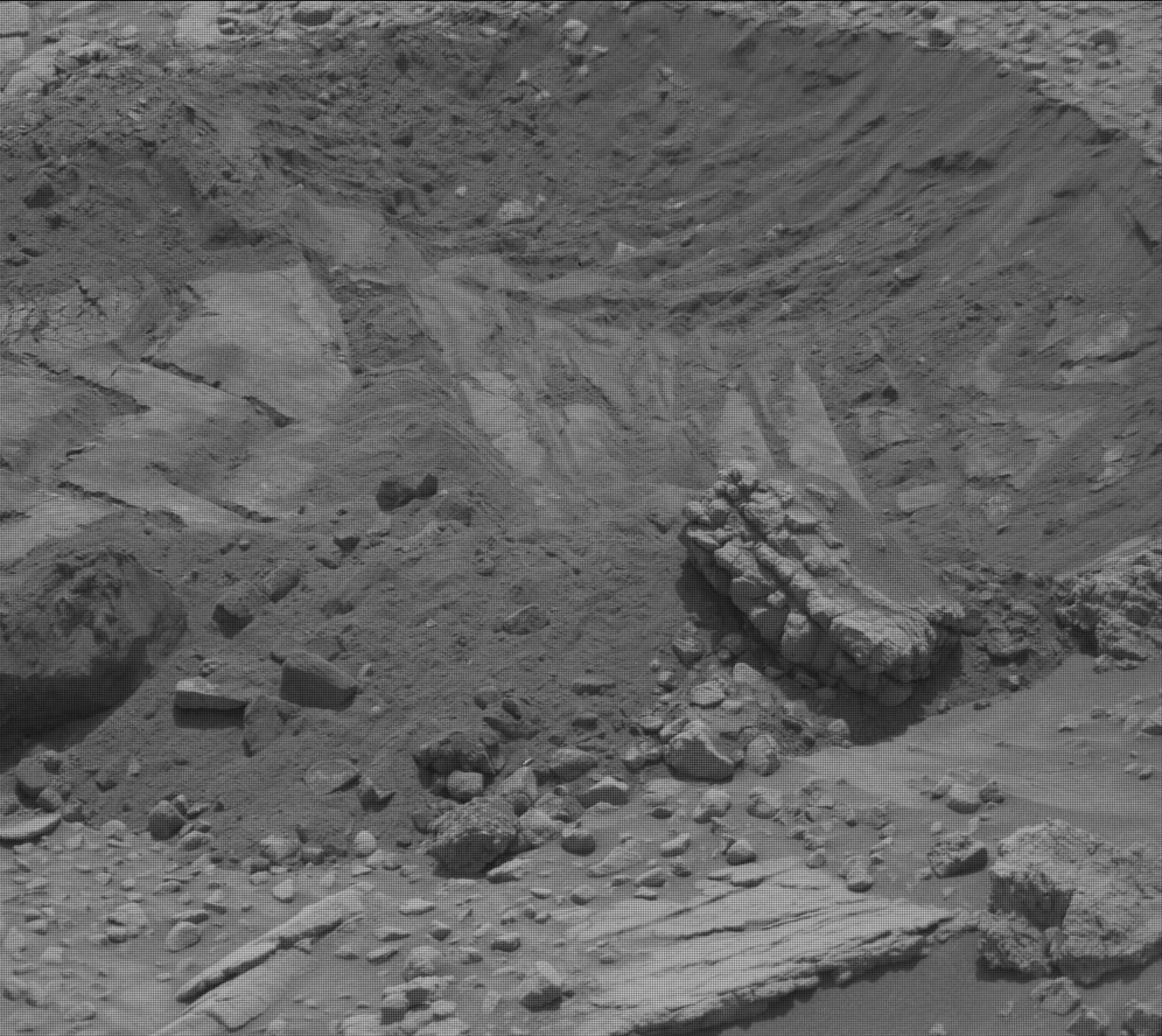
Curiosity Mast Camera Right photo taken on Sol 3655, November 17, 2022.
Credit: NASA/JPL-Caltech/MSSS
Credit: CMS/CCTV/Inside Outer Space screengrab
Fresh from this week’s third round of spacewalks, China is ready to stage major extravehicular activity (EVA) events in the near-future.
The next planned spacewalking task is transferring the space station’s large solar wings, now attached to the Tianhe core module, and fixing them to the recently-aligned Wentian and Mengtian lab modules, which now form the station’s T-shape configuration.

Credit: CMS/CCTV/Inside Outer Space screengrab
Wing work
“For the follow-up work, astronauts will perform more extravehicular activities, and each crew need to carry out these spacewalks,” said Wang Xin, a deputy commander responsible for the space station system under the China Academy of Space Technology.

Credit: CCTV/Inside Outer Space screengrab
“We will next mainly complete the installation and maintenance of the outboard load. At the same time, an astronaut has to exit the module to transfer the solar wings on the core module to the end of the Wentian and Mengtian lab modules,” Wang told China Central Television (CCTV).
The flexible solar panels on both the Wentian and Mengtian lab modules each have a total length of around 180 feet (55 meters) and a combined area of nearly 280 square meters. These four large solar wings will generate nearly 1,000 kWh of electricity for the China Space Station per day, notes CCTV, which is equivalent to the average electricity consumption of an ordinary family for nearly half a year.
Artwork depicts current T-shape configuration of China space station.
Credit: CNSA/CCTV/Inside Outer Space screengrab
Crew handover
On Thursday, China’s Shenzhou-14 astronauts — Chen Dong and Cai Xuzhe – installed an out-of-cabin bridge, the unlocking of a panoramic camera, and the installation of mounted assistance handles for a small mechanical arm. Taikonaut colleague Liu Yang stayed onboard to support the spacewalkers from inside the orbiting complex.
The three Shenzhou-14 crew members were sent to orbit in June to begin a six-month stint in space. They will see the arrival of the Shenzhou-15 crewed spacecraft at the space station later this month and carry out the space station’s first-ever crew handover, another key step to complete the final phase of the construction by the end of the year.
For videos detailing China’s spacewalking work, go to:

Credit: White House
The White House Office of Science and Technology Policy has released the first National Cislunar Science and Technology (S&T) Strategy.
A November 17 White House fact sheet on the strategy notes that in the decade ahead, NASA estimates that human activity in cislunar space will be “equal to or exceed all that has occurred in this region since the Space Age began in 1957. Many more countries and other actors are planning to travel to this new sphere of human activity.”
Key objectives
The National Cislunar S&T Strategy addresses future opportunities and lays out four key S&T objectives:

Credit: NASA
— Support research and development to enable future growth in Cislunar space. American technological endeavors begin with a positive, expansive vision of the future, led by a diverse science and engineering workforce.
— Expand international S&T cooperation in Cislunar space. International S&T cooperation can foster peace, develop responsible practices, and create the foundations for new institutions to enable enduring human and robotic presence in Cislunar space.
— Extend U.S. space situational awareness capabilities into Cislunar space. Space situational awareness enables transparency and safe operations for all entities operating in Cislunar space. This objective also contributes to early warning for potentially hazardous asteroids.

Credit: NASA
— Implement Cislunar communications and positioning, navigation, and timing capabilities with scalable and interoperable approaches. Communications and positioning, navigation, and timing (PNT) are the common information capabilities needed for all activities in Cislunar space, including in Lunar orbit and on the Lunar surface.
To access the fact sheet, go to:
To access the full White House report, go to:
https://www.whitehouse.gov/wp-content/uploads/2022/11/11-2022-NSTC-National-Cislunar-ST-Strategy.pdf

