Author Archive
 Author:
  December 17th, 2022
Credit: Scientific Coalition for UAP Studies
A Department of Defense media roundtable at the Pentagon on the All-domain Anomaly Resolution Office (AARO) was held December 16th.

GOFAST
Credit: DOD/U.S. Navy/Inside Outer Space screengrab
“Unidentified objects in the skies, sea and space pose potential threats to safety and security, particularly for operational personnel. AARO is leading a focused effort to better characterize, understand and attribute these objects and is employing the highest scientific and analytic standards.” — Sean Kirkpatrick, director of the All-domain Anomaly Resolution Office.
Go to transcript at:
 Posted in

Image credit: Orbital Assembly
Variable gravity in space has long been discussed; an idea harvested as far back as 1883 by the visionary Russian rocket scientist, Konstantin Tsiolkovsky.
Future space habitats may offer hybrid, variable gravity environments to accommodate both human and commercial needs, according to researchers piecing together a unique and exhaustive literature review of artificial gravity opportunities, challenges, and potential impact on humans in space.
Sponsored by Orbital Assembly, the new work – “Challenges and Benefits to Human Operations in Variable & Partial Gravity Earth Orbiting Habitats” — was conducted by the 100 Year Starship initiative, founded and led by former astronaut Mae Jemison. Joining Jemison in the research was University of California, Irvine professor, Ronke Olabisi.

Mae Jemison and Ronke Olabisi.
Image credit: Orbital Assembly
The researchers call for more studies on artificial gravity in a space environment since virtually all the human research on artificial gravity has been conducted on Earth to date.
Hybrid gravity
“This review provides further justification of the need for hybrid gravity space station design that will offer variable levels of gravity in the very near future,” said Rhonda Stevenson, Chief Executive Officer of Orbital Assembly.
The researchers do report that, although artificial gravity would likely prove to be an effective multisystem preventative against the deleterious impact of microgravity, countermeasures such as exercise, pharmaceuticals, and nutrition have been perceived to be much more cost effective and easier to implement.
Gaps in knowledge
“Rotational artificial gravity structures are being proposed as single countermeasure solutions to long duration and interplanetary space travel. Such capabilities may facilitate better accommodations for everyone—from professional crew to researchers to tourists—to protect health, facilitate operations, and optimize time on orbit,” explains an Orbital Assembly statement.
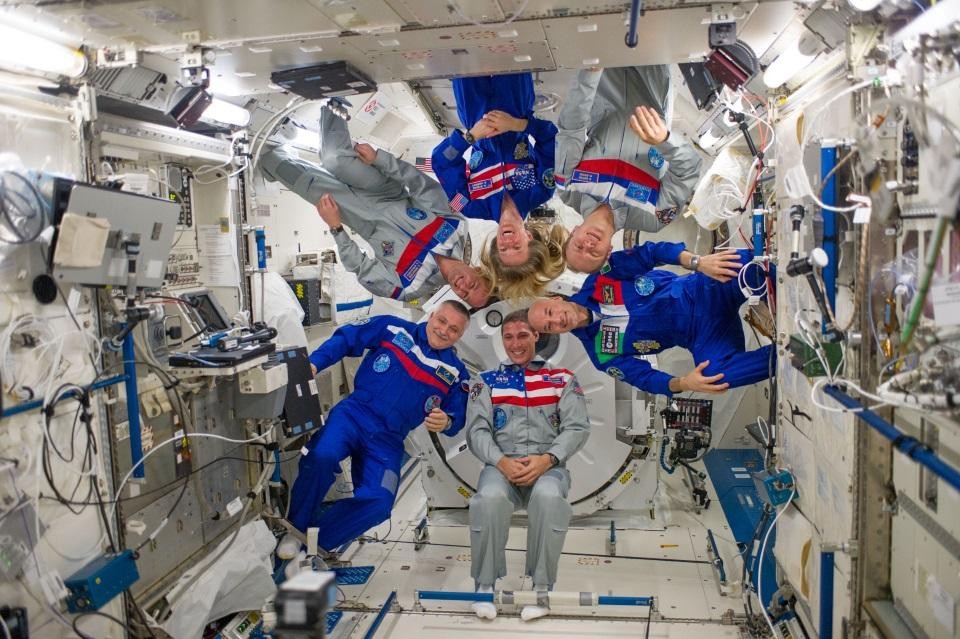
Time to turn in freefall for variable gravity?
Image credit: NASA
The researchers also note that the reality is that there is little direct human evidence that artificial gravity will protect human health, but animal studies combined with ground-based studies provide important clues.
“Regardless of the gaps in knowledge concerning the benefit of artificial gravity as a countermeasure, there are intuitively obvious benefits to artificial gravity, including establishing a well-defined vertical and horizontal reference frame,” the report explains.
“If artificial gravity does prove to be an effective countermeasure, crew compliance with lengthy and tedious 0-G exercise protocols would become unnecessary,” the report points out.
Go to this informative video, “Space Medicine and Artificial Gravity” – featuring Ronke Olabisi at:
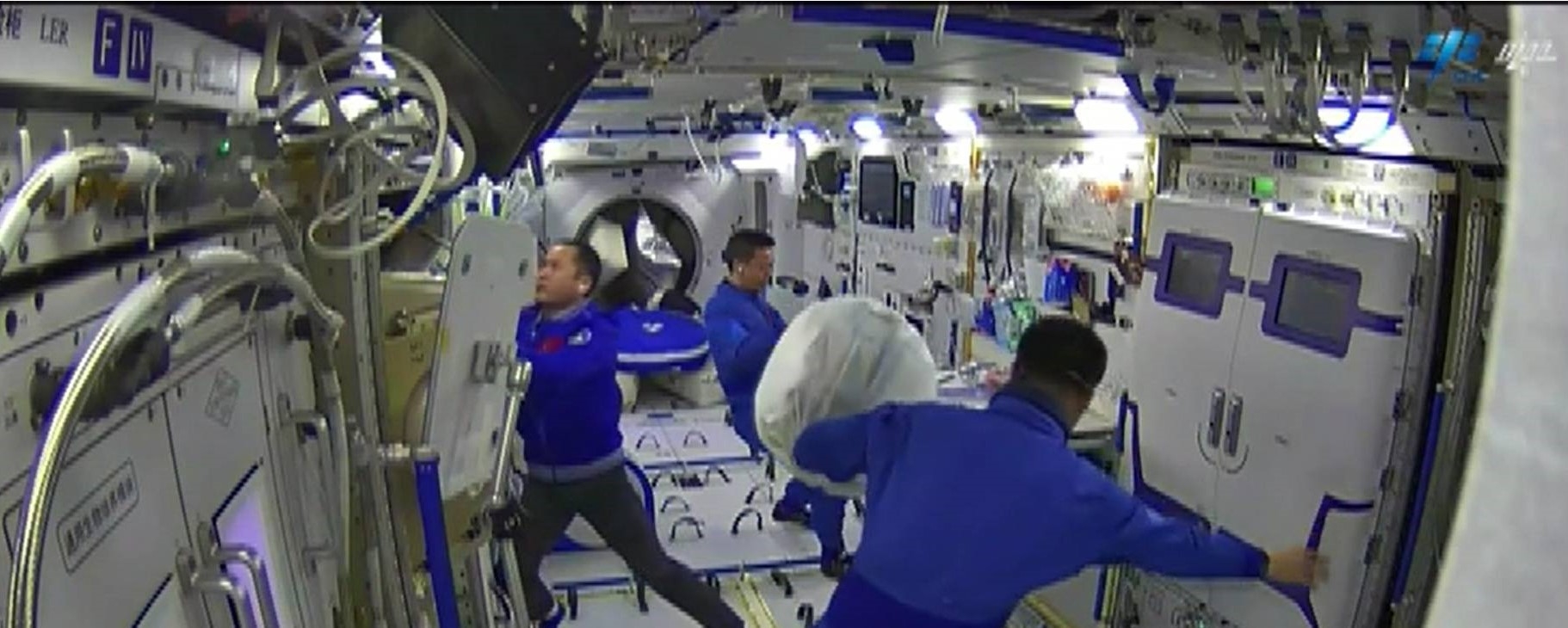
Image credit: CMSA/CCTV/Inside Outer Space screengrab
The Shenzhou-15 trio of taikonauts are settling in aboard China’s Tiangong space station.
Fei Junlong, Deng Qingming and Zhang Lu were sent into space in late November and are busily at work on the nearly completed three-module orbital outpost.
During their projected six-month mission, the trio will carry out tests related to long-term residence in China’s space station.
Experiment cabinets
As reported by China Central Television (CCTV), they will also unlock, install and test 15 scientific experiment cabinets, and carry out more than 40 experiments and tests in the fields of space science research and application, space medicine and space technology.

Image credit: Shujianyang Wikimedia Commons, CC BY-SA
Additionally, three to four rounds of extravehicular activities (EVAs) are planned during their stay. On tap is installation of the Mengtian lab module extended pump sets and the exposure payload platform.
Cargo exit tasks
The crew is set to verify the exit mode of the cargo airlock cabin of the Mengtian module, and cooperate with the ground to complete six cargo exit tasks, CCTV reports.
Also on the work list, the Shenzhou-15 crew will perform regular platform testing, maintenance, and space station affairs management. In addition, the crew will carry out in-orbit health protection exercises, training and drills.
Onboard for a projected 6 month period, the astronauts are to kick off the first stage of space station application and development.

The target chamber of Lawrence Livermore National Laboratory’s National Ignition Facility.
Image credit: Lawrence Livermore National Laboratory
The announcement this week of fusion ignition is a major scientific advance, one that is decades in the making. More energy was produced than the laser energy used to spark the first controlled fusion triumph.
The result: replicating the fusion that powers the sun.
Broad implications
The nuclear fusion feat has broad implications, fueling hopes of clean, limitless energy. As for space exploration, one upshot from the landmark research is attaining the long-held dream of future rockets that are driven by fusion propulsion.
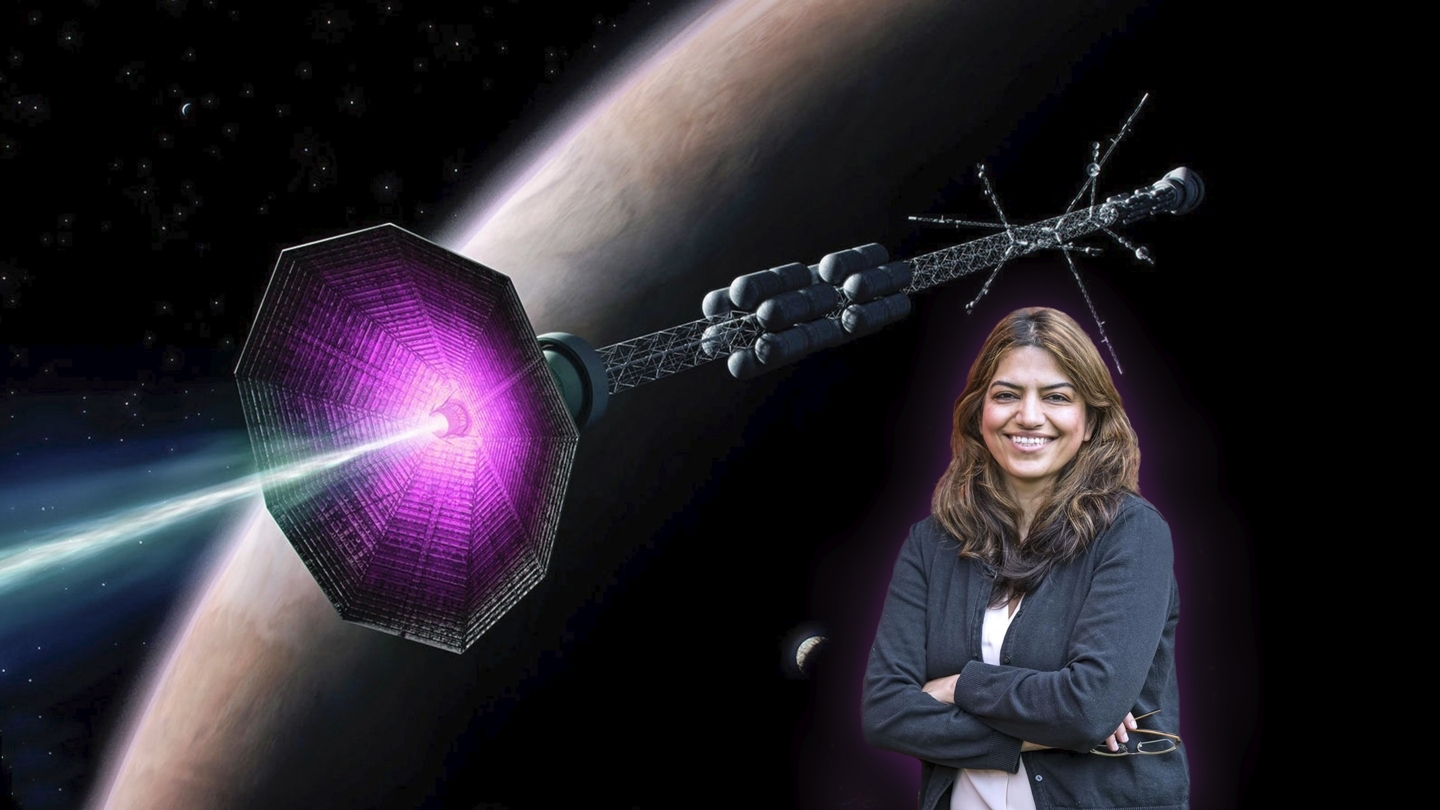
Physicist Fatima Ebrahimi in front of an artistic rendering of a fusion rocket.
Image credit: Elle Starkman, Princeton Plasma Physics Laboratory Office of Communications
But is that prospect still a pipe dream or is it now deemed reachable? If so, how much of a future are we looking at?
For a look at possible answers, go to my new Space.com story — “Nuclear fusion breakthrough: What does it mean for space exploration? – Some scientists say nuclear fusion propulsion is inevitable. But how far away is it, given recent breakthroughs?” – at:
https://www.space.com/nuclear-fusion-breakthrough-spacetravel
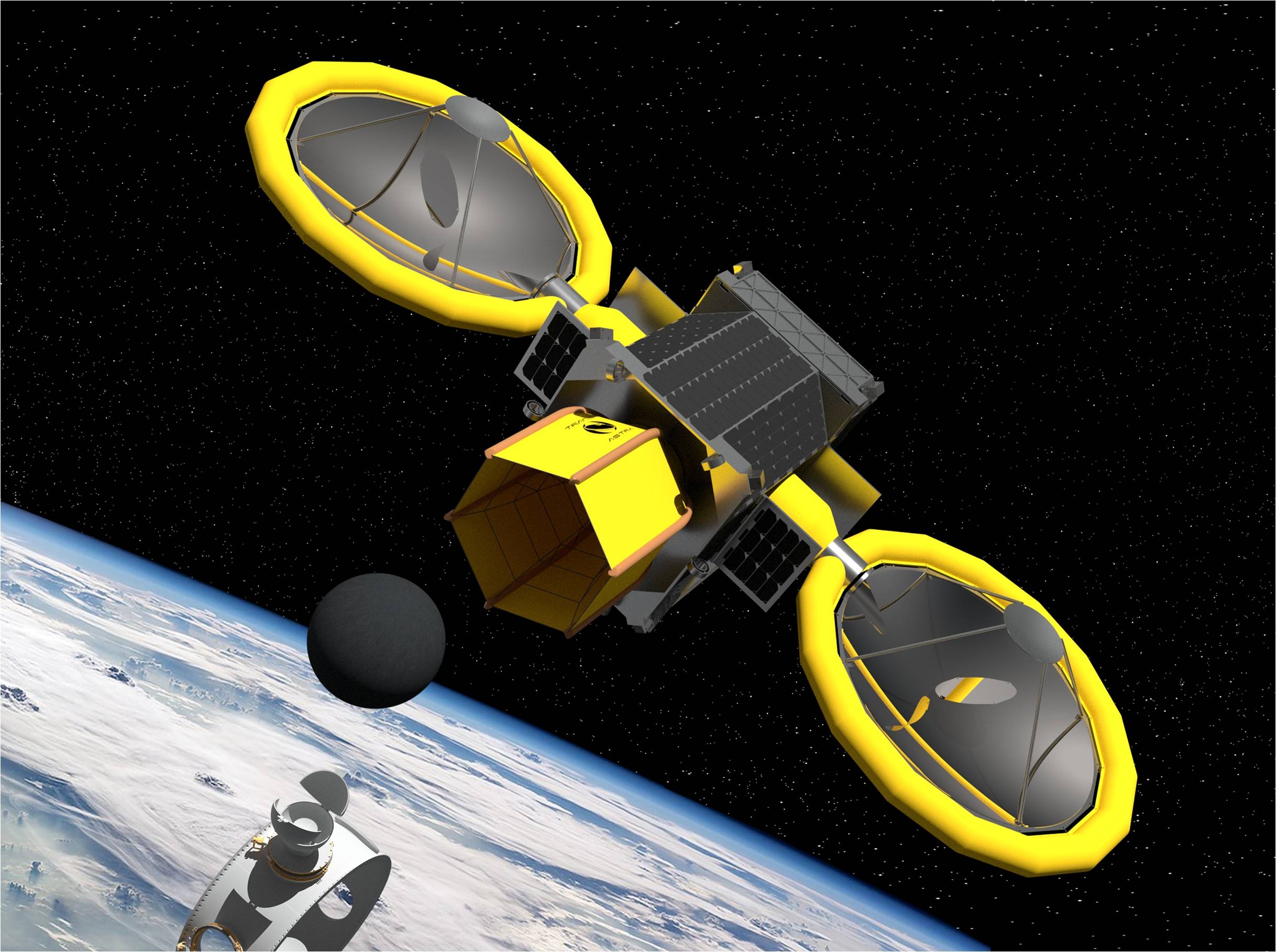
TransAstra’s Mini Bee is an in-space capture spacecraft.
Image credit: TransAstra
Innovative technologies for space debris removal and upgrading the ability to detect and track previously unfound moving spacecraft and other objects have been funded.
California-based TransAstra has been awarded contracts to develop critical emerging technologies in removing space junk and in space domain awareness beyond low Earth orbit for planetary defense and space surveillance purposes.
Capture bag
In a Phase 1 award from NASA’s Ignite program, the Small Business Innovation Research funding to TransAstra calls for design development of a deployable, inflatable capture bag which is capable of fully enclosing small spacecraft and debris for repositioning and de-orbiting.
TransAstra’s Mini Bee Capture Bag is initially designed to do away with debris of 10 centimeters diameter or greater. The bag can readily scale to 10 meters diameter or more.
The technology includes a robotic zipper that yields a nearly hermetic seal and prevents micro debris or liquid from leaking into space.
The capture bag also has the potential to arrest spacecraft that are in an uncontrolled orbit — whether due to fuel depletion or other cause — and safely remove the object.

TransAstra’s Sutter telescope system uses specialized Optimized Matched Filter Tracking (OMFT) software.
Image credit: TransAstra
Space surveillance
Under the second award from the Department of Defense, TransAstra will modify its Sutter technology to enable imaging of very small, faint, fast-moving objects in cislunar and deep space with 100 times greater strength and accuracy than standard imaging techniques, at a fraction of the cost.
Sutter technology makes use of TransAstra’s proprietary Optimized Matched Filter Tracking (OMFT) software. While TransAstra is currently operating its Sutter technology in ground-based systems, the Defense Department award will help fund development of an in-space solution.
“This space domain awareness advancement is necessary to report where objects are in space, understand why they are there, and match mounting threats from near-peer adversaries like China and Russia,” said Joel Sercel, CEO of TransAstra.
“Our technology allows the Space Force to find, fix, and track spacecraft and space debris to mitigate any potential threat throughout cislunar space,” Sercel said in a TransAstra statement.
For more information on TransAstra, go to:

Will humankind feel motivated to seed lifeless planets with tough terrestrial organisms or synthetic forms crafted to live long and prosper on a targeted planet?
That question is explored in a new research paper that looks to comets as possible “biological delivery vehicles.”
This intriguing paper – “Directed Panspermia Using Interstellar Comets” – appears in a special issue of the Astrobiology journal dedicated to Interstellar Objects in Our Solar System.
Biochemical signatures
“It may be that habitable planets are common but life is rare. If future advances in telescopes increasingly suggest this is so, humankind might feel motivated to seed lifeless planets with resilient terrestrial organisms or synthetic forms designed to thrive on the target planet,” the paper suggests.
Authored by space specialists, Christopher McKay, Paul Davies and Simon Worden, they note it is conceivable that terrestrial life was deliberately seeded in this matter. That hypothesis could be tested if we found evidence for life on other solar system bodies that displayed common basic biochemical signatures.

Credit: ESA/Hubble & NASA
Scenario assessment
In their scenario assessment, the paper adds, “raises a number of ethical and technological challenges that need to be addressed.” Chief among them is whether humans have the right to modify the environments of other astronomical bodies.
If they do, how much control would humankind have over the far downstream impact? “Safeguards that fall under the general category of ‘planetary protection’ need to be carefully assessed and protocols established for any future projects of this sort,” the researchers explain.
“Until recently, the idea that humans could literally sow the seeds of a cosmic transformation having multi-million-year downstream consequences would have been regarded as absurd,” the paper states. “But the discovery of interstellar comets has changed all that.”

Credit: Johns Hopkins/APL
Life suitably constructed
Harnessing comets as biological delivery vehicles is a capability not technically achievable today, but the paper adds that “there is no difficulty in understanding what is needed to do so and in refining the strategy to achieve the goal of seeding the galaxy with life suitably constructed to thrive in a variety of exoplanetary environments.”
The paper concludes: “Whether it is desirable to do so must rest with future generations.”
To access the research paper – “Directed Panspermia Using Interstellar Comets” – go to:

Wait a minute!
NASA is trying to get its lunar act together, mustering up what’s needed early for human exploration of the Moon via the ongoing and evolving Artemis program.
But later comes the hard part: to harness the skills for a sustained and “live off the land” approach for a lunar base encampment.

Image credit: NASA
Working definition
But the term “sustainable” seems to be up for grabs.
For instance, the April release of the National Academies Planetary Science and Astrobiology Decadal Survey 2023-2032 noted that NASA has used the word to describe one goal for human lunar exploration under the auspices of Artemis.
But sustainable has not yet been defined in this context, the Academies survey states. For that report, a working definition was crafted “that there are widely accepted reasons to continue human lunar exploration that justify the continued investment, commitment, and risk beyond a few missions.”

Artist’s view of two Artemis astronauts at work on the lunar surface.
Image credit: NASA
No mincing words
Meanwhile, the Lunar Exploration Analysis Group (LEAG) just published their findings from the group’s 2022 meeting. LEAG was established in 2004 to support NASA in providing analysis of scientific, technical, commercial, and operational issues in support of lunar exploration.
LEAG doesn’t mince words, but does so in a polite way.
“LEAG encourages NASA to clearly convey its plan for sustainable post-Artemis III exploration to the community forthwith and include specifically how it will result in an increase in the flight rate and extended human surface durations (i.e., Artemis Base Camp).”

Artistic depiction of NASA astronauts at the lunar south pole carrying out early work to establish an Artemis Base Camp.
Image credit: NASA
Single location
The LEAG report cautions that Artemis will not be truly sustainable “unless it includes a robust surface infrastructure and development strategy at a single location on the Moon to catalyze and enable commercial and exploration activities.”
Furthermore, while progress to date on the Artemis III mission is encouraging, adds the LEAG report, details of the “sustained” phase of the Artemis campaign “are nebulous to the broader community.”

Credit: NASA
Annual cadence
NASA’s current lunar outlook suggests a roughly annual cadence of missions of short (less than 30 days) duration on the surface of the Moon with an emphasis on future mobility (i.e., not for Artemis III), but this does not adequately address the goals set forth in the Lunar Exploration Roadmap, the LEAG findings note.
“Accordingly, LEAG urges NASA to articulate plans to enable the construction of the Artemis Base Camp and establishment of large-scale resource production by 2030, thereby supporting a permanent human presence on the lunar surface and growth of a vigorous cislunar economy.”
Read the LEAG report here: https://www.lpi.usra.edu/leag/reports/LEAG2022AnnualMeetingFindings_FINAL.pdf

A leading forecasting group anticipates than more 2,500 satellites will be launched by average every year over 2022-2031. That represents by average every day about 7 satellites or 3 tons lofted into orbit over this period.
Euroconsult collects, updates and assesses on a yearly basis detailed market, industry, policy, program and financial information in the international space sector.
According to the group, a handful of Non-Geo-Stationary Orbit (NGSO) broadband constellations concentrate the demand in satellite but not in manufacturing and launch revenues – that is still led by legacy customers, both governments and commercial operators.

Credit: SpaceX/StarLink
Largest market driver
In number of satellites, NGSO constellations are the largest market driver as 83% of all satellites to be launched over 2022-2031, are expected to be part of constellations whilst only accounting for 30% of the manufacturing and launch value.
On the commercial demand, for the first time, the emerging NGSO constellation broadband operators will account for half of the commercial demand in manufacturing and launch value: i.e $5.3 billion on a yearly average whilst GEO comsat will average $3.2 billion.
For more details on the Euroconsult assessment, go to:
https://digital-platform.euroconsult-ec.com/product/satellites-to-be-built-launched-new/
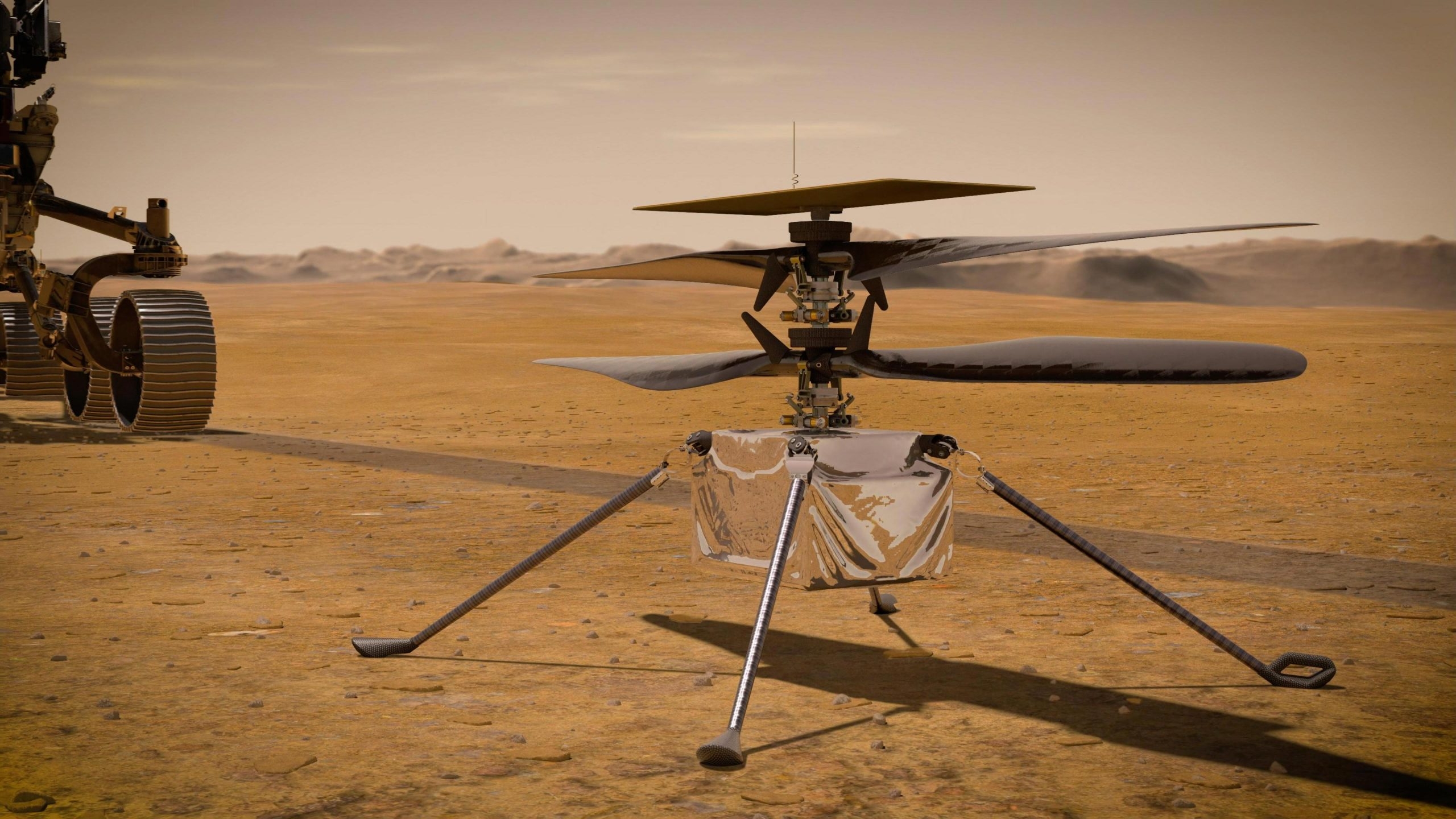
Illustration of Artwork of Ingenuity helicopter.
Credit: NASA/JPL-Caltech
NASA’s Ingenuity helicopter on Mars looks to have made flight 36 on December 10th.
A pre-flight projection of the airborne vehicle’s flight this time, as noted by the Jet Propulsion Laboratory:
Flight number: 36
— Date of flight: No Earlier Than Dec. 10
— Flight duration: 60.82 seconds
— Horizontal flight distance: 361 feet (110 meters)
— Flight speed (horizontal): 12.3 mph (5.5 mps)
— Max flight altitude: 33 feet (10 meters)
— Flight goal: Reposition helicopter
New imagery
A new set of images from the flight have been posted, taken by the helicopter’s Navigation Camera mounted in the mini-craft’s fuselage and pointed directly downward to track the ground during flight. Images were acquired on Dec. 10, 2022 (Sol 642 of the Perseverance rover mission).

Image credit: NASA/JPL-Caltech

Credit: GLOBALink/Inside Outer Space screengrab
What’s up with China’s multi-faceted space agenda?
I was pleased to discuss this issue with fellow space journalists Rod Pyle and Space.com’s Tariq Malik for an informative This Week In Space podcast. We discuss new developments in the Chinese space program, its trajectory moving ahead, and what that might mean for a rejuvenated human spaceflight program in the United States. Are we in a new space race?

Image credit: CCTV/Inside Outer Space screengrab
Go to this podcast at:

