Author Archive
 Author:
  May 8th, 2023
New Horizons was built by the Johns Hopkins Applied Physics Laboratotry.
Credit: NASA/Johns Hopkins University Applied Physics Laboratory/Southwest Research Institute/Steve Gribben/Alex Parker
OPEN LETTER ON HELIOPHYSICS INVESTIGATIONS FROM NEW HORIZONS
We are heliophysicists on or benefiting from data from the NASA New Horizons mission.
New Horizons has enabled uninterrupted heliophysics measurements throughout the heliosphere for over a decade, alongside its groundbreaking Kuiper Belt and other planetary observations. Three of its instruments have provided unique, essentially continuous, in-situ measurements of solar wind and interstellar pick-up ions, energetic particles, Galactic Cosmic Rays and dust. Additionally, New Horizons’ UV spectrograph is obtaining regular, unparalleled remote measurements of interplanetary hydrogen and all-sky mapping of the heliospheric boundary and nearby interstellar clouds.
The conduct of the mission’s heliophysics observations is both synoptic and in no way in competition with its planetary science observations of the Kuiper Belt and Kuiper Belt Objects.

Kuiper Belt Object (KBO) Arrokoth as viewed by New Horizons.
Image credit: NASA/Johns Hopkins APL/SwRI
In the coming years New Horizons can perform unparalleled planetary science and important astrophysical observations from its unique, distant position in the Kuiper Belt. And, over the next two decades of its expected operational lifetime, it can also carry out unprecedented, nearly-continuous heliophysics measurements during the traversal of the outer heliosphere out into the Very Local Interstellar Medium that Voyager could not make, offering insight into how the entire heliosphere is upheld.

The Interstellar Probe, a mission to provide a unified view of our heliosphere, out into nearby interstellar space.
Credit: Johns Hopkins/APL
Therefore, New Horizons continues to be a powerful cross-divisional tool that should continue to explore the heliosphere alongside its important studies of the Kuiper Belt, and to be a pathfinder scientifically, technically and even programmatically for future candidate missions such as an Interstellar Probe.
[Signed]
Pontus C. Brandt (JHU APL, Deputy Project Scientist)
Fran Bagenal (U Col, Heliophysics Science Theme Team Lead)
Andrew Poppe (UC Berkeley, Deputy Heliophysics Science Theme Team Lead)
Ralph McNutt (JHU APL, PEPSSI Instrument Lead)
Matthew E. Hill (JHU APL, NH Co-I and PEPSSI Instrument Scientist)
Heather Elliott (SWRI, SWAP Deputy Instrument Lead)
Mihaly Horanyi (U Col, Student Dust Counter, Instrument Lead)
Zoltan Sternosky (U Col, Student Dust Counter, Instrument Lead)
Randy Gladstone (SWRI, Alice Team Member)
Tracy Becker (SWRI, Deputy Alice Instrument Lead)
Merav Opher (Boston U., Co-I and SHIELD Director)
John Richardson (MIT, SHIELD Co-I)
Resources
For more information on the future of New Horizons, go to:
“Dream Machine: New Horizons, New Opportunities – Bad Politics?”
https://www.leonarddavid.com/dream-machine-new-horizons-new-opportunities/
Also, go to:
“Hard feelings over mission change for NASA’s Pluto spacecraft – US space agency plans to shift the New Horizons planetary probe to studying heliophysics, and some scientists don’t agree,” by Alexandra Witze/Nature
Go to: https://www.nature.com/articles/d41586-023-01530-y
Also, read these signature stories:
https://www.universetoday.com/160935/nasa-plans-threaten-new-horizons/
 Posted in

Possible design of China’s space plane.
Source: Homem do Espaco/Twitter
China’s small re-usable space plane returned to Earth Monday, touching down after 276 days of in-orbit operation.
China state media noted that “a reusable experimental spacecraft on Monday successfully returned to its scheduled landing site at the Jiuquan Satellite Launch Center in northwest China.”
“The success of the experiment marks an important breakthrough in China’s research on reusable spacecraft technologies, which will provide more convenient and affordable round-trip methods for the peaceful use of space in the future.”
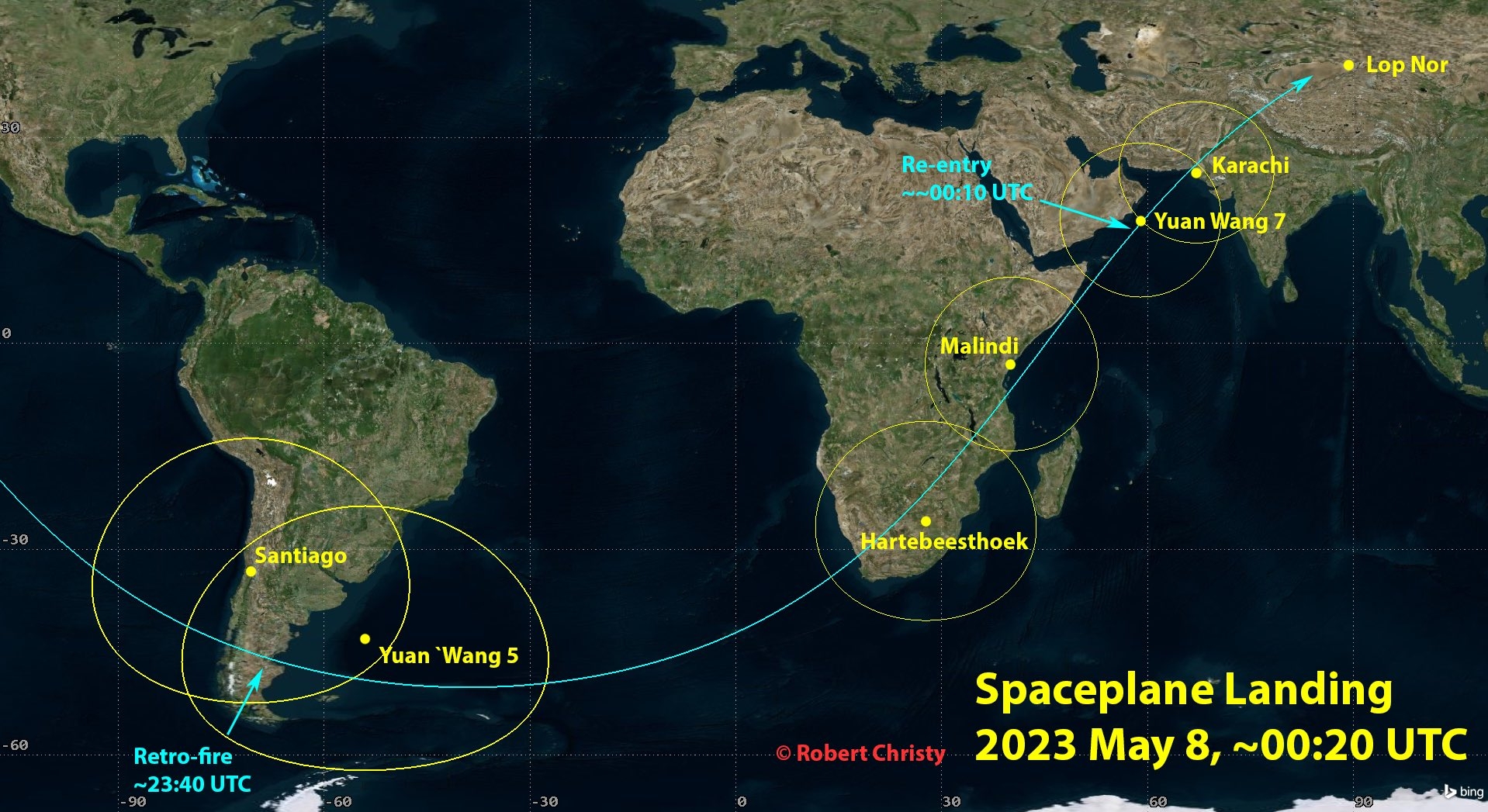
Image credit: Robert Christy/Orbital Focus
Launch, landing technology
Reports space tracker Robert Christy of Orbital Focus, the vehicle is possibly associated with China’s space station program and might be intended for long duration missions.
“Vehicle used to test launch and landing technology and spacecraft materials. May be the same craft that flew an earlier mission in 2020. Released a companion satellite to conduct rendezvous and capture experiments during 2022 and 2023. Re-entered 2023 May 8 for landing on the runway at Lop Nor at about 00:20 UTC,” Christy tweets.

U.S. Space Force X-37B vehicle prior to flight, the program’s sixth long-duration mission.
Copycat craft?
Some experts liken the Chinese space plane to the Boeing-built, U.S. Space Force X-37B Orbital Test Vehicle.
On that program’s sixth mission, the unpiloted X-37B craft flew for a milestone making 908 days, landing November 12, 2022 at the NASA Kennedy Space Center Shuttle Landing Facility.
But what’s behind China’s space plane testing…and what next?
Captured companion
“I think they’ve simply advanced a further step towards whatever is their goal for that vehicle. And they’ve done it in the way China always does it – incrementally. First the test flight then this more-complex nine month flight,” Christy told Inside Outer Space. “I don’t know whether we’ve seen the same vehicle fly twice or two different vehicles, but my money would be on it being a re-flight.”
Christy adds that both missions of this type of Chinese craft have involved releasing satellites and rendezvousing with a second object.

Artwork depicts X-37B in Earth orbit.
Credit: Boeing
“On the second mission, both the space plane and the companion satellite made significant orbital maneuvers and the companion was captured at least two times before being taken onboard and brought back to Earth,” Christy adds.
Space plane roles
Trying to second guess a third mission would be foolhardy, Christy says, “but when it happens it will be an obvious evolution of this one.”
In contrasting China’s space plane with the U.S. X-37B endeavor, Christy says the Chinese vehicle is comparable with the U.S. X-37B Orbital Test Vehicle (OTV) but the aims of the two programs are not necessarily identical, he senses.
“OTV’s role is to provide a platform to carry out long duration missions followed by return to Earth. China’s vehicle has already demonstrated a capability of launching and retrieving satellites,” Christy concludes.

Image credit: CCTV/Inside Outer Space screengrab
China’s next milestone in outfitting the country’s space station is the upcoming launch of the Tianzhou-6 cargo spacecraft atop a Long March-7 Y7 booster.
Lifftoff is to occur next week from the Wenchang Spacecraft Launch Site in China’s southern island province of Hainan. Departure is reportedly on May 10.
The rocket topped by the uncrewed supply ship has been transferred to the launching area. Final tests are underway before carrying out the first spaceflight after China’s orbiting facility entered the stage of application and development.
The China Manned Space Agency (CMSA) said Sunday that the Tianzhou-6 cargo spacecraft will be launched in the near future at an appropriate time.

Image credit: CCTV/Inside Outer Space screengrab
Launch conditions
“The Tianzhou-6 cargo spacecraft will receive checks and re-examinations on its power supply, the function and performance of its equipment, as well as the coordination among the equipment,” said Ren Liang, chief designer on overall responsibilities of cargo spacecraft with the China Academy of Space Technology (CAST).
“After that, we will implement a comprehensive assessment of the cargo spacecraft’s health condition, so as to ensure all the launch conditions are met,” Ren told China Central Television (CCTV).

Image credit: CCTV/Inside Outer Space screengrab
Cargo capacity
This cargo spacecraft has an increased cargo capacity contrasted to earlier missions – increased from 6.9 tons to 7.4 tons. The vehicle’s loading volume was raised from 18.1 cubic meters to 22.5 cubic meters, up about 20 percent.
Lofting daily supplies for the now orbiting Shenzhou-15 crew onboard the station, as well as the future Shenzhou-16 crew, Tianzhou-6 will carry 1.75 tons of propellant, over 1,540 pounds (700 kilograms) of which are meant for refueling the space station.

Imace credit: CCTV/Inside Outer Space screengrab
Go to this video of the rocket rollout at:
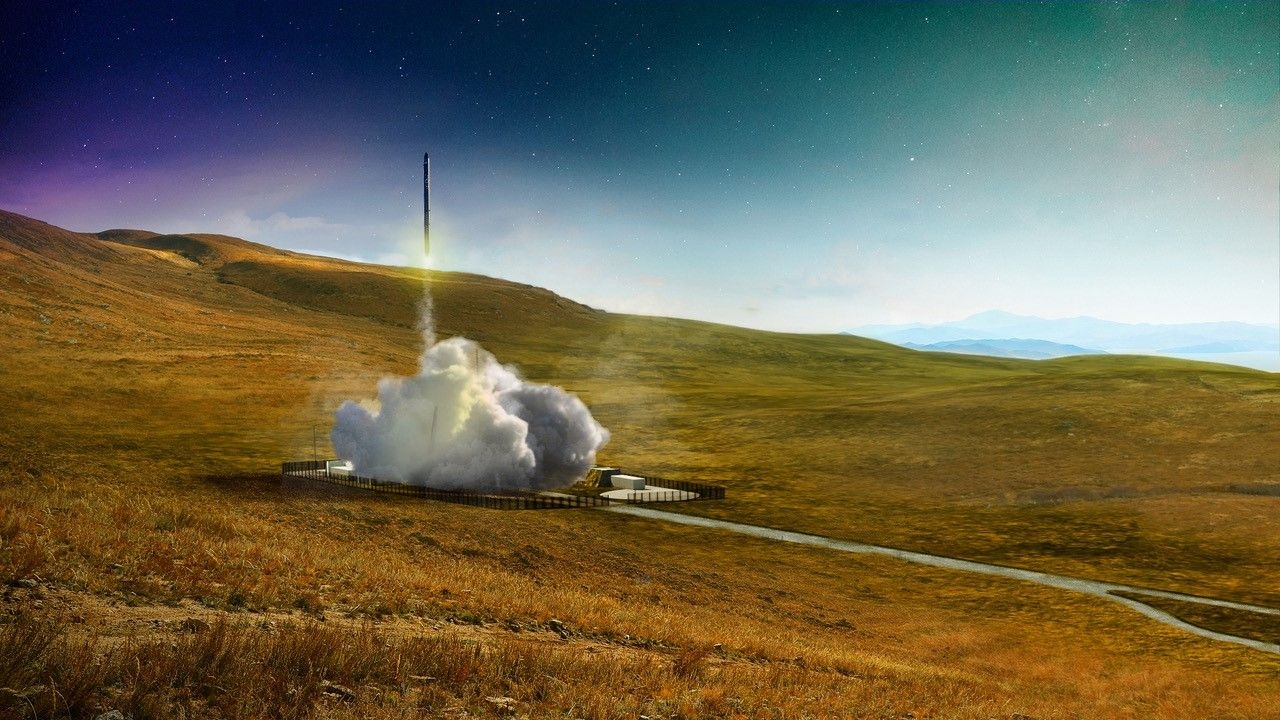
Artistic view of launch from Scotland spaceport.
Image courtesy: Orbex
Construction has begun at Sutherland in Scotland, the UK mainland’s first vertical launch spaceport.
Located on the North coast of Scotland, the spaceport will be the “home” spaceport of Forres-based rocket and launch services company, Orbex, a UK-based spaceflight company with headquarters, production and testing facilities in Scotland, and design and testing facilities in Denmark.
In May 2022, Orbex unveiled its Prime rocket, a two-stage orbital micro-launcher that would toss small commercial satellites into Earth orbit.
In an Orbex statement, the company explains it will use the Sutherland Spaceport to launch up to 12 orbital rockets per year.

Groundbreaking ceremonies included Dorothy Pritchar, Chair, Melness Crofters’ Estate. Image courtesy: Orbex
“We’re starting to see the physical representation of a dream that began several years ago. This is our way of regenerating this community and reversing population decline, by giving families a reason to stay or come back to this area, said Dorothy Pritchar, Chair, Melness Crofters’ Estate.
“The fact that we’re doing this while safeguarding the environment is something we’re all very proud of. I want to thank everyone who has contributed to this project, and I can’t wait to see the first launch,” Pritchar said in the Orbex press statement.
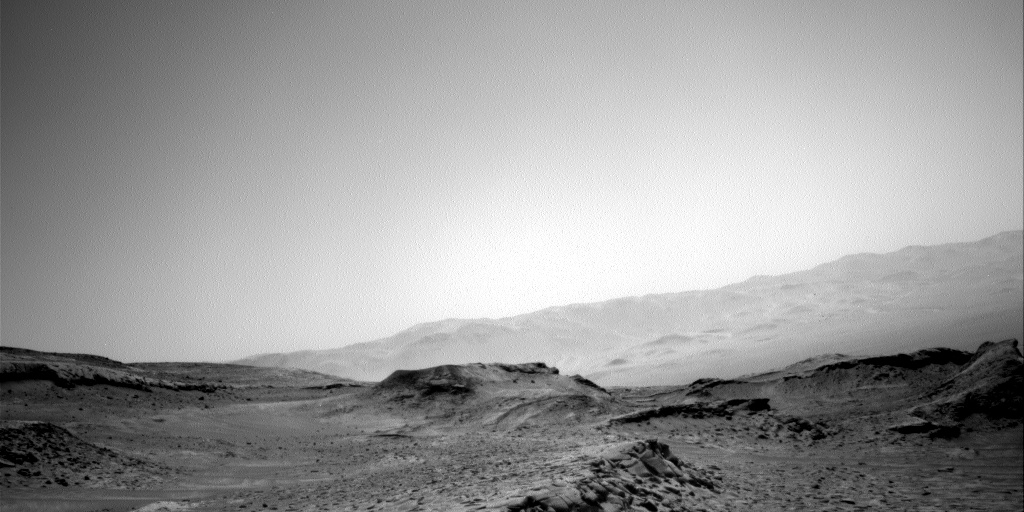
Curiosity Right B Navigation Camera photo taken on Sol 3820, May 6, 2023.
Image credit: NASA/JPL-Caltech
NASA’s Curiosity Mars rover at Gale Crater is now wrapping up Sol 3820 duties.
Catherine O’Connell-Cooper, a planetary geologist at University of New Brunswick; Fredericton, New Brunswick, Canada reports that inspection of “Ubajara” as a potential drill site is underway.

Curiosity Mars Hand Lens Imager (MAHLI) photo produced on Sol 3819, May 5, 2023.
Image credit: NASA/JPL-Caltech/MSSS
“In the last plan, we brushed the surface and did some further investigation of Ubajara’s chemistry and structure,” O’Connell-Cooper adds, and that information gathered by the rover indicated that the target “appears to be representative of what we have been seeing recently, as we climbed up the Canyon from the Marker Band.”
Preload test
As recently scripted, the plan calls for rover planners scoping out a “preload” test, to get an idea of how the rock will behave when drilled. “This involves putting the target under some pressure to make sure the rock is stable and safe to drill,” O’Connell-Cooper notes.
The Mars Hand Lens Imager (MAHLI) on the robot was scheduled to take two documentation images to document any changes.
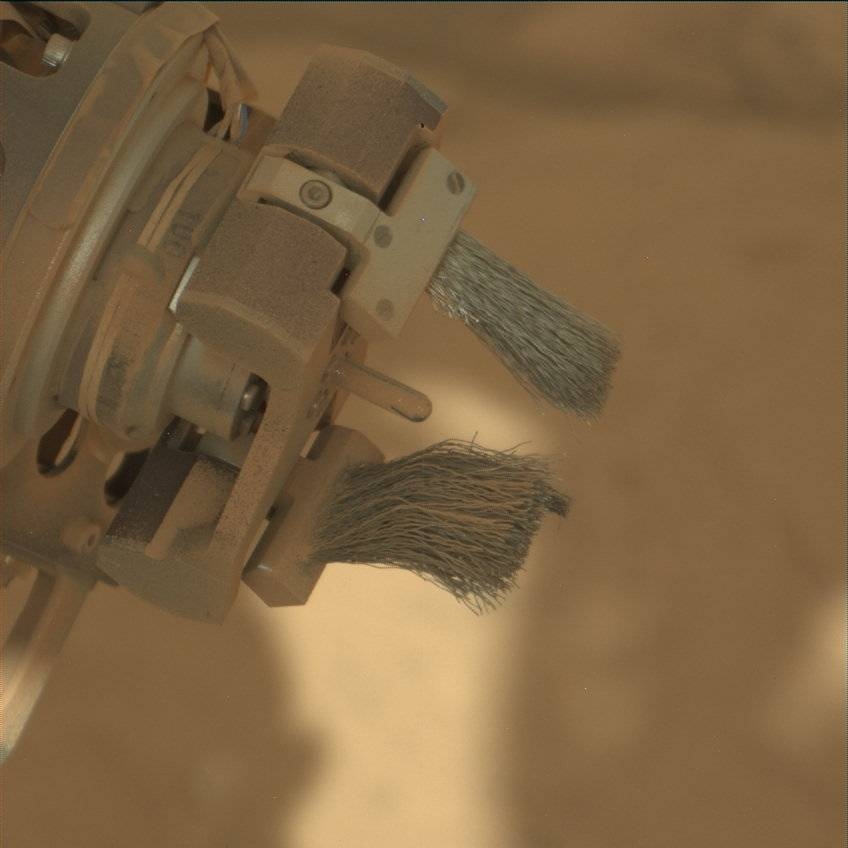
Dust busting dust removal tool! Curiosity Mast Camera Right image taken on Sol 3819, May 5, 2023.
Image credit: NASA/JPL-Caltech/MSSS
“Curiosity won’t be sitting idly for the rest of the weekend,” O’Connell-Cooper says. The rover’s Alpha Particle X-Ray Spectrometer (APXS) and Mars Hand Lens Imager (MAHLI) are investigating a patch of darker material at “Ilha Grande” and some adjacent bedrock at “Ilha Grande offset” for comparison.
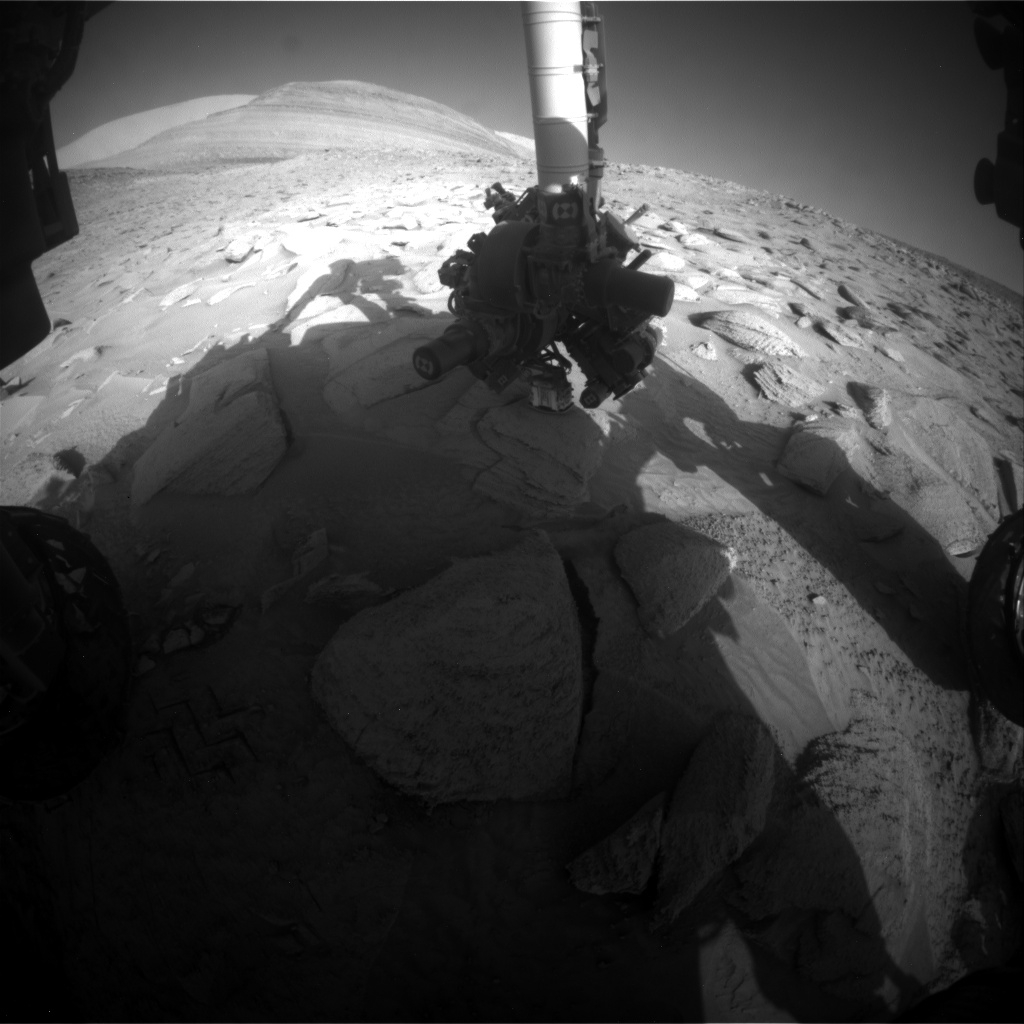
Curiosity Front Hazard Avoidance Camera Left B image acquired on Sol 3819, May 5, 2023.
Image credit: NASA/JPL-Caltech
Dream list
MAHLI is also imaging the target “Bwesse Kiiki” which was analyzed by Curiosity’s Chemistry and Camera’s Laser Induced Breakdown Spectroscopy (LIBS) instrument on sol 3818 (Tuesday of this past week).

Curiosity Chemistry & Camera (ChemCam) Remote Micro-Imager (RMI) photo taken on Sol 3820, May 6, 2023.
Image credit: NASA/JPL-Caltech/LANL
Meanwhile ChemCam will analyze some nodular bedrock just beyond the Ubajara bedrock block at ‘Carajas’ and will take a long distance image (‘LD RMI’), looking ahead to Gediz Vallis, a large ridge feature which has been high on our ‘dream list’ of places to go in Gale since before landing,” O’Connell-Cooper reports.
This ChemCam Remote Micro-Imager (RMI) will focus on an area of large stones and boulders which were identified in previous images.

Curiosity Right B Navigation Camera photo taken on Sol 3820, May 6, 2023.
Image credit: NASA/JPL-Caltech
Future drive direction
“We have been talking about the science we would do here for so many years, it’s hard to believe we are close enough to identify individual stones and boulders! Mastcam is acquiring a “9×3 mosaic” (3 rows of 9 images) of fractured light toned rocks ahead of us in our future drive direction,” O’Connell-Cooper adds. “These are close to some small impact craters, so we are interested to look at the fractures and see if they are related in any way to the craters.”
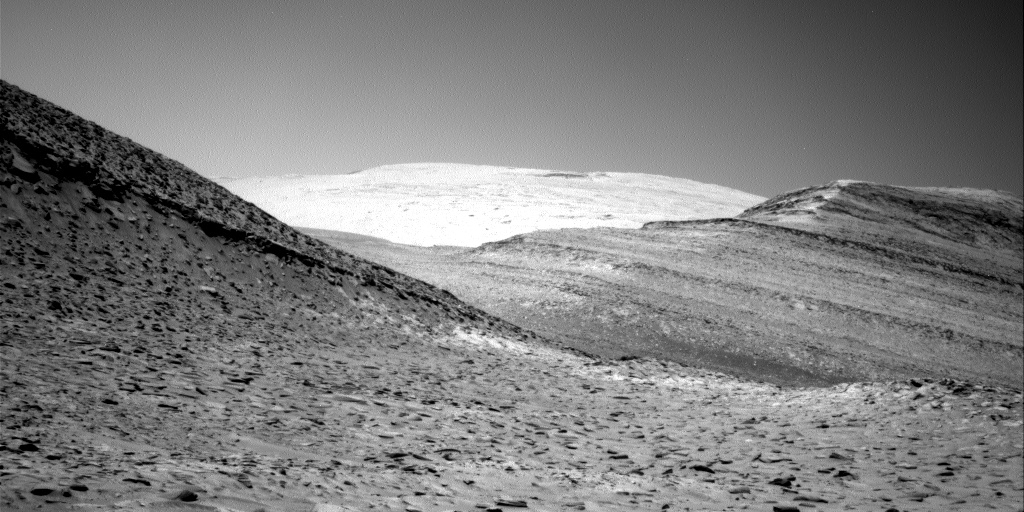
Curiosity Right B Navigation Camera photo taken on Sol 3820, May 6, 2023.
Image credit: NASA/JPL-Caltech
Also on tap is use of Mastcam to monitor dust with a “crater rim image” and two tau measurements. These help to quantify the abundance of dust in the atmosphere.
Several images are slated to be taken to characterize active environmental conditions in Gale, looking at clouds and searching for dust devils.
The Dynamic Albedo of Neutrons (DAN) investigation and the Rover Environmental Monitoring Station (REMS) round out the environmental monitoring, O’Connell-Cooper concludes, measuring hydrogen concentrations (DAN) and temperatures (REMS).
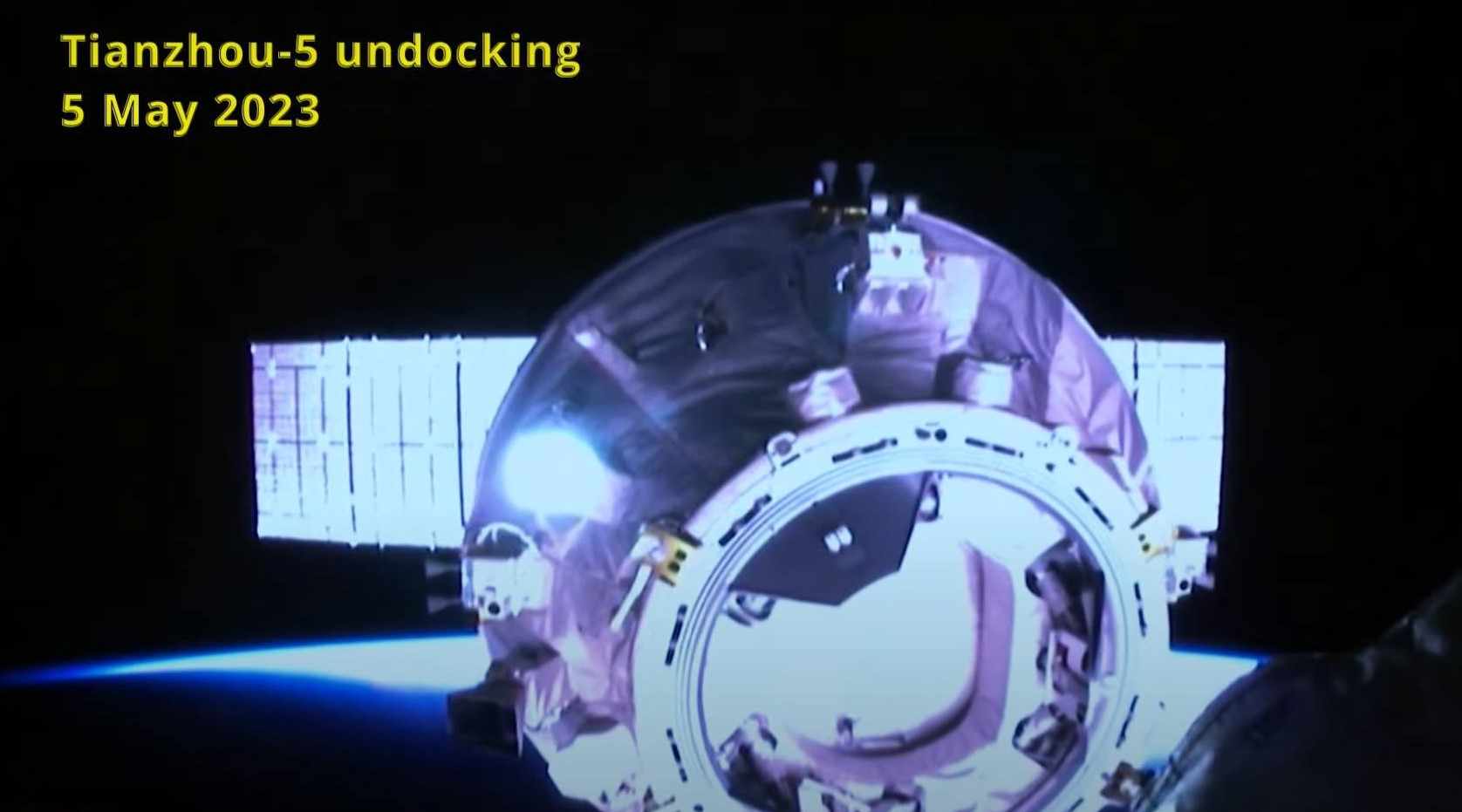
Image credit: CCTV/Inside Outer Space screengrab
China’s Tianzhou-5 uncrewed cargo spacecraft has decoupled from the country’s space station, successfully separating from the orbital complex on Friday.
According to the China Manned Space Agency (CMSA), the vessel switched to independent flight mode flying towards the Earth for eventual reentry into the atmosphere.
The Tianzhou-5’s departure now leaves open the docking hatch for the upcoming Tianzhou-6 fully-stocked cargo vessel that is scheduled to dock with the space station in early or mid-May.

Image credit: CGTN/Inside Outer Space screengrab
More equipment, materials
Back in November 2022, the now undocked cargo craft was lofted by a Long March-7 launcher, hauling roughly 5 tons of goods and materials, along with 1.4 tons of propellant to sustain crews onboard the Tiangong space station.
After the Shenzhou-15 piloted spaceship departs the station combination later this month, the Tianzhou-5 will orbit and dock at the forward port of the station’s node cabin, the CMSA said in a statement.
Compared with its predecessors, the Tianzhou-6 supply ship will tote more equipment and materials for scientific experiments and technological demonstrations at the station, according to China Central Television (CCTV).
To view a new video on the Tianzhou-5’s departure from China’s space station, go to:
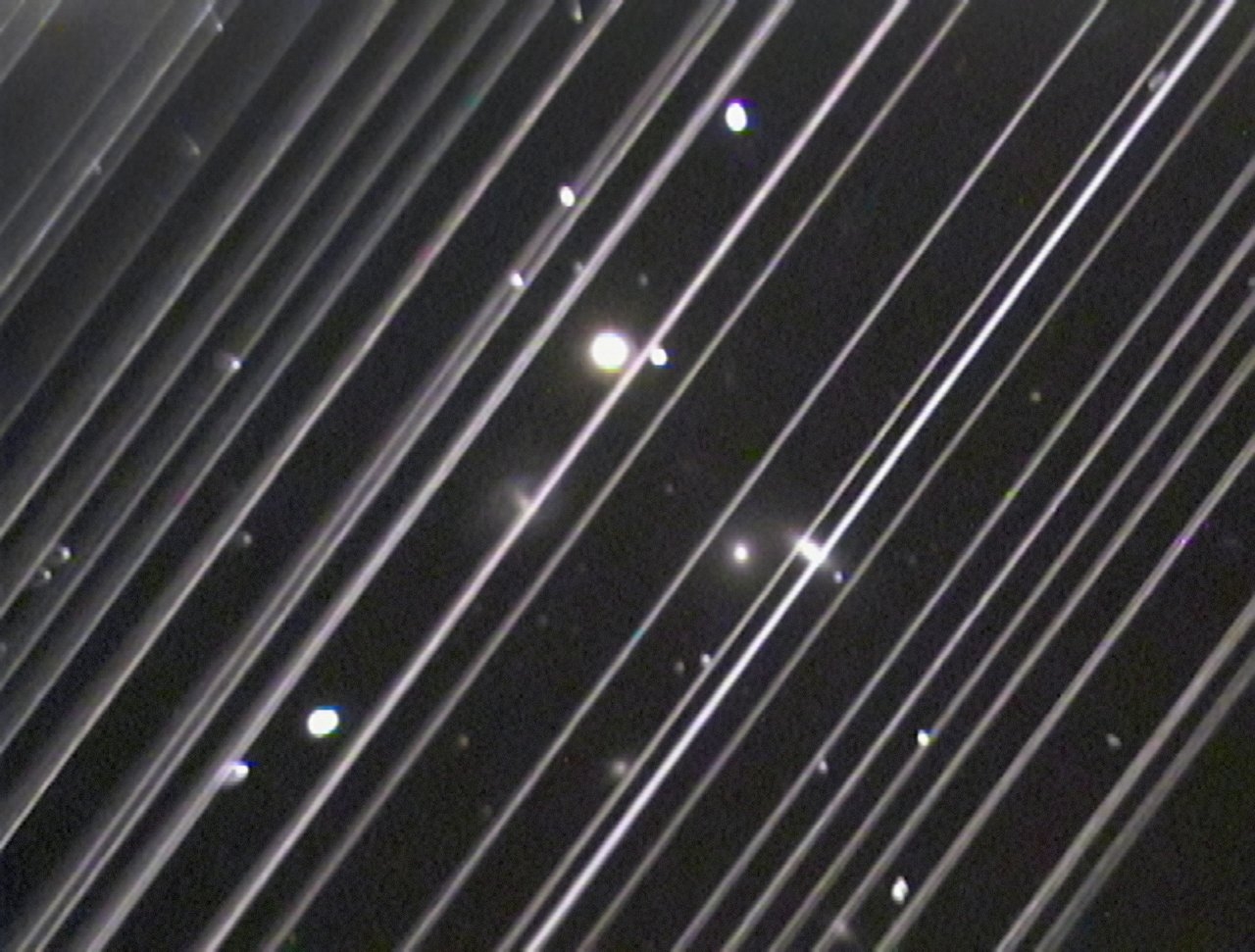
An image of the NGC 5353/4 galaxy group made with a telescope at Lowell Observatory in Arizona, USA on the night of Saturday 25 May 2019. The diagonal lines running across the image are trails of reflected light left by more than 25 of the 60 recently launched Starlink satellites as they passed through the telescope’s field of view. Although this image serves as an illustration of the impact of reflections from satellite constellations, please note that the density of these satellites is significantly higher in the days after launch (as seen here) and also that the satellites will diminish in brightness as they reach their final orbital altitude.
Star light, star bright,
First star I see tonight;
I wish I may, I wish I might
Have the wish I wish tonight.
That lyric has a number of astronomers wishing away the dawn of all those Earth-orbiting megaconstellations that are dotting the sky today and into the future.
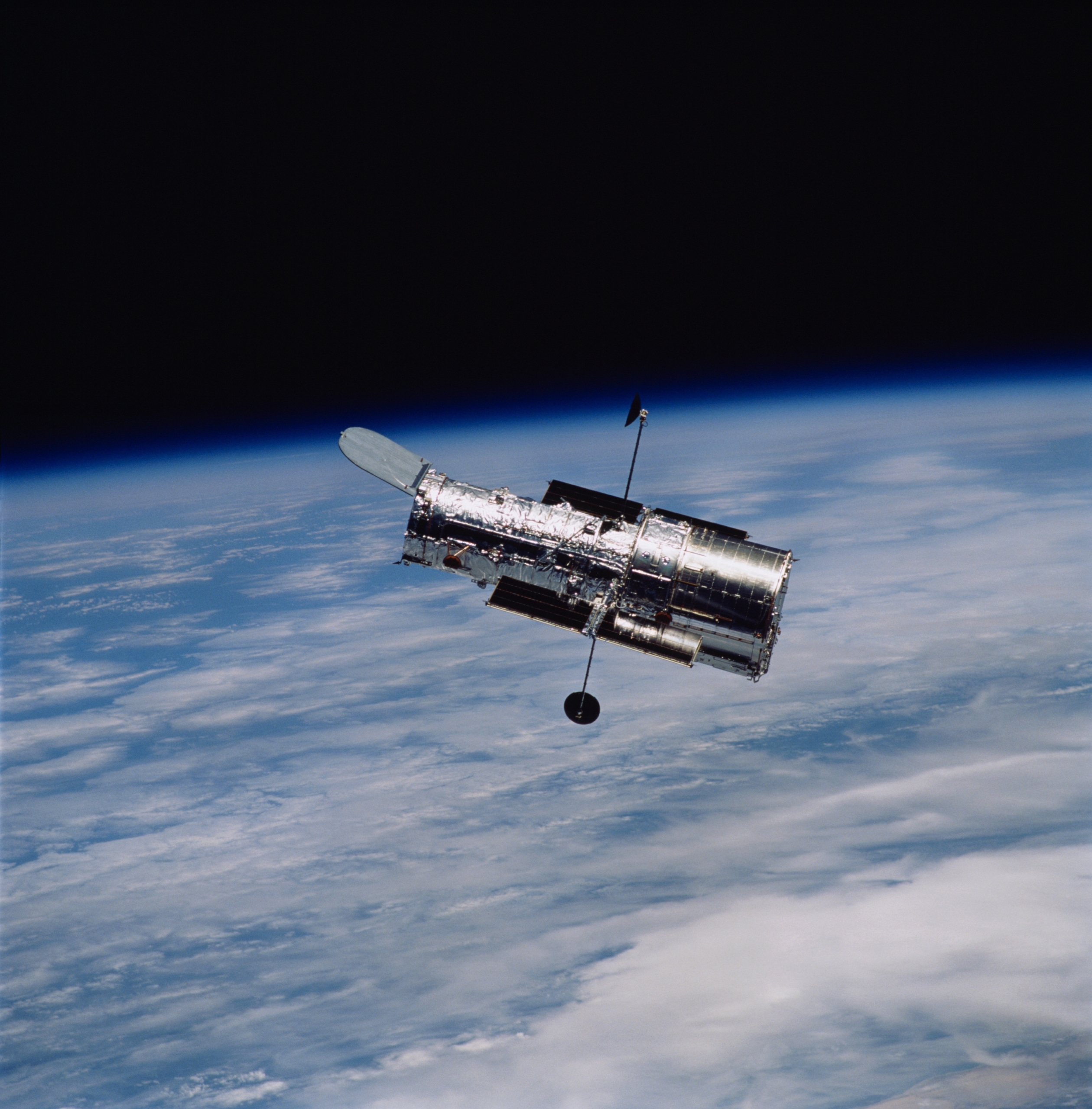
The revered Hubble Space Telescope has been impacted by satellite trails in its images.
Image credit: NASA
With the advancing StarLink and OneWeb systems, as well as Amazon’s projected Project Kuiper internet network — and other initiatives — there is mounting concern by astronomers of being blinded by the light from an estimated 400,000 recent and planned low Earth orbit satellites.
Go to my new Space.com story – “Satellite megaconstellations are threatening astronomy. What can be done? – “The point is that we can’t come anywhere near duplicating major ground-based capabilities in space” – at:
https://www.space.com/satellite-megaconstellations-astronomy-dark-skies

Curiosity Mast Camera Left image taken on Sol 3815, May 1, 2023.
Image credit: NASA/JPL-Caltech/MSSS
NASA’s Curiosity Mars rover at Gale Crater is now performing Sol 3818 duties.
Alex Innanen, Atmospheric Scientist at York University, Toronto, Ontario, Canada.
The last weekend drive moved the robot into a good position to attempt to examine a block it may attempt to drill, reports Alex Innanen, an atmospheric scientist at York University, Toronto, Ontario, Canada.
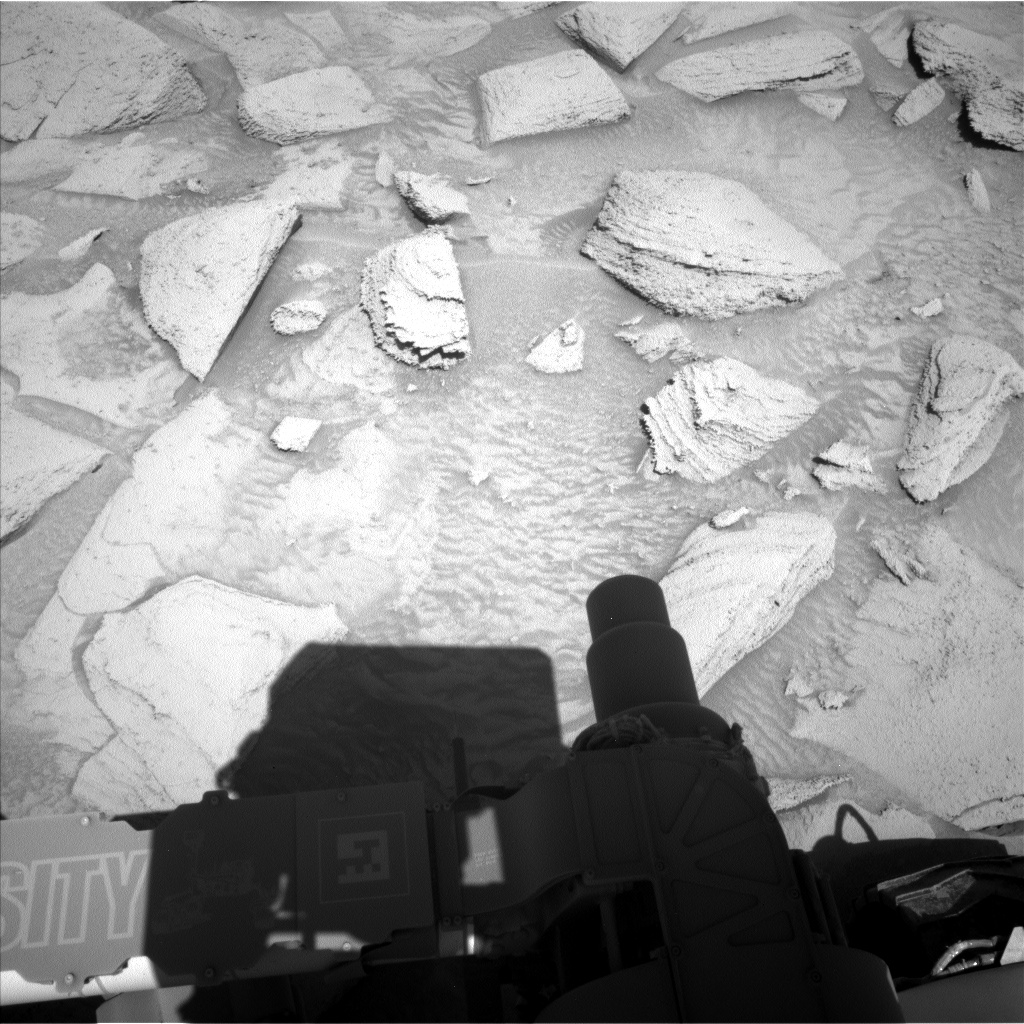
Curiosity Left Navigation Camera image taken shows “Ubajara,” which you can see on the left of the image taken on Sol 3815, May 1, 2023.
Image credit: NASA/JPL-Caltech
“We don’t dive right in; we have to make sure this is in fact where we want to drill,” Innanen notes. “This means contact science on “Ubajara.”
Special target name
Part of the Mars Curiosity team spent some time picking a special target name, which involved looking at pictures of national parks.
“Ubajara (a national park in Brazil), it was decided, is a great choice – it’s a bit more lush and green than Gale Crater, but the mountains and canyons are reminders of the canyon Curiosity just climbed out of,” Innanen adds.

Curiosity Mast Camera Left image taken on Sol 3815, May 1, 2023.
Image credit: NASA/JPL-Caltech/MSSS
The plan called for a pretty typical drill scenario, with Curiosity’s Mars Hand Lens Imager (MAHLI) and Alpha Particle X-Ray Spectrometer (APXS) on the drill target, and a brush with the dust removal tool (DRT), but then researchers learned that they will not be able to use the DRT until more images of this target are collected, Innanen points out.
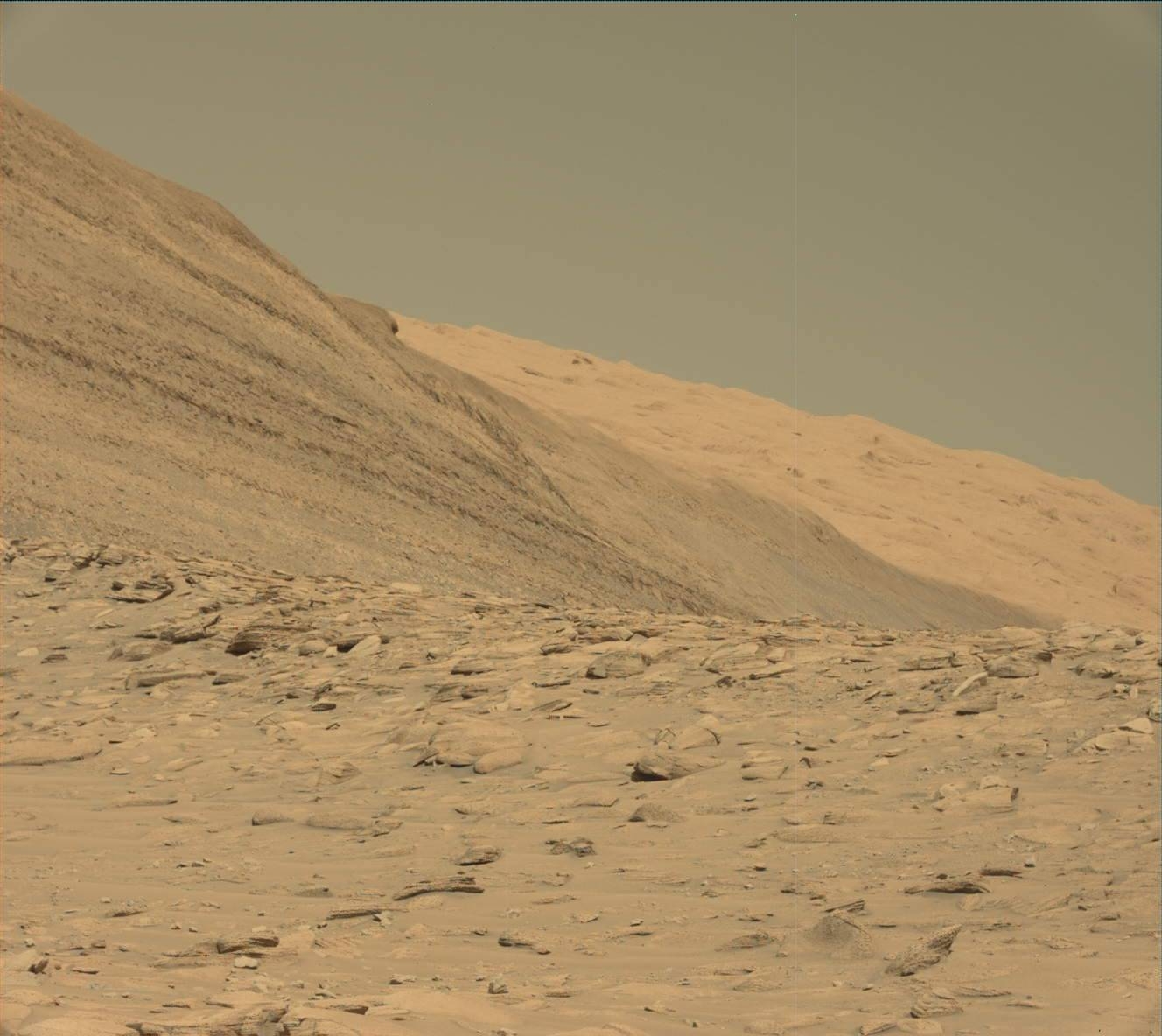
Curiosity Mast Camera Left image taken on Sol 3815, May 1, 2023.
Image credit: NASA/JPL-Caltech/MSSS
“Luckily, we were still able to move forward with the other activities in the plan,” Innanen notes, “and still prepare to examine this block to decide if we want to drill it in the future.”
Catch some clouds
A recent two sol plan (3817-3818) starts with a couple environmental activities – looking back towards the crater rim to measure the amount of dust in the atmosphere, and then scanning for dust devils.
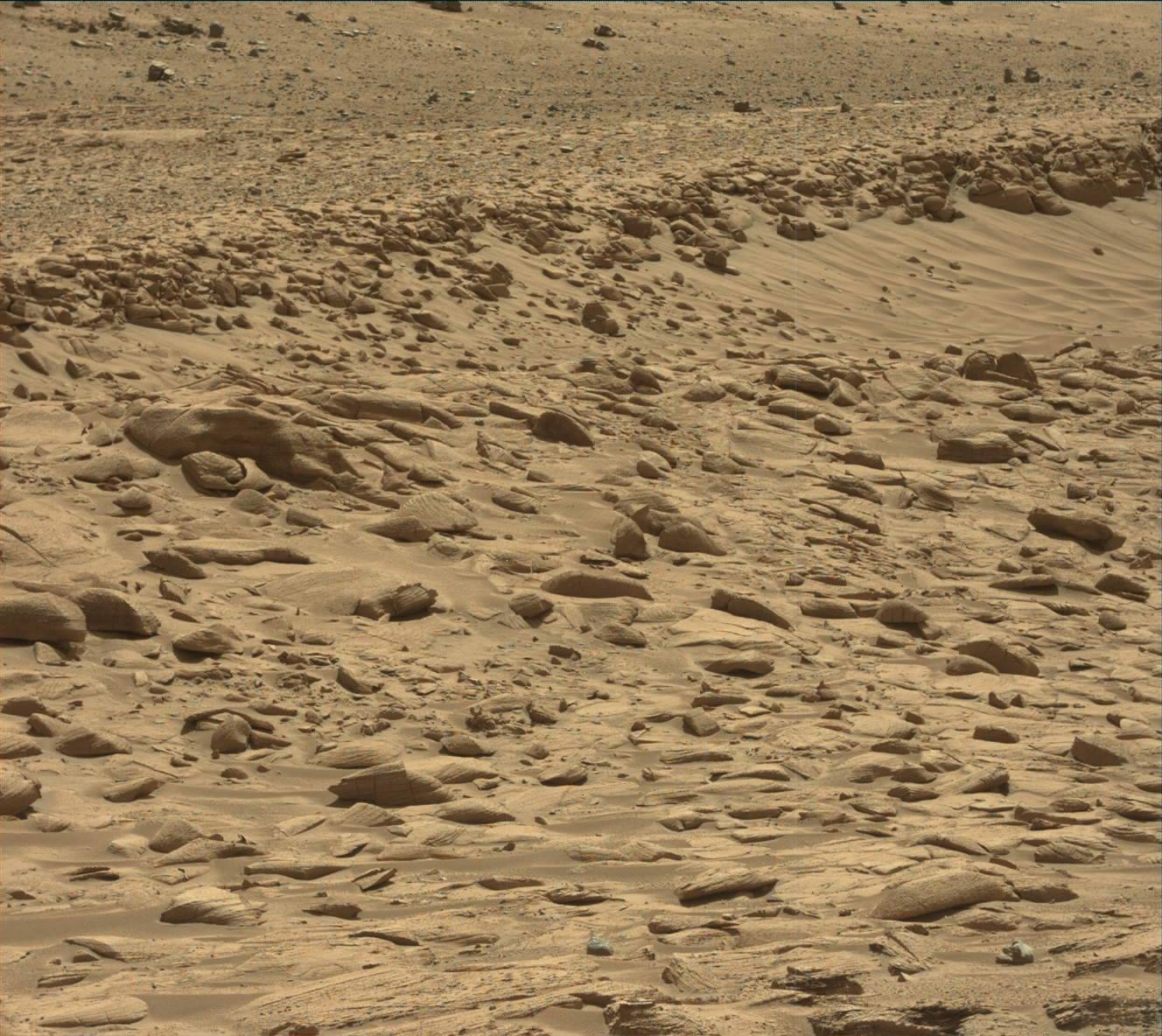
Curiosity Mast Camera Left image taken on Sol 3815, May 1, 2023.
Image credit: NASA/JPL-Caltech/MSSS
Then the rover’s Mastcam and Chemistry and Camera (ChemCam) will both image Ubajara in advance of the contact science. After contact science, Mars environment experts plan afternoon observations to try to catch some clouds.

Curiosity Mast Camera Left image taken on Sol 3815, May 1, 2023.
Image credit: NASA/JPL-Caltech/MSSS
A next sol plan calls for targeted cloud and dust devil movies. Then ChemCam has a Laser Induced Breakdown Spectroscopy (LIBS) observation of “Bwesse Kiiki,” and a long distance Remote Micro-Imager (RMI) mosaic on a ridge to the north.

Curiosity Mast Camera Left image taken on Sol 3815, May 1, 2023.
Image credit: NASA/JPL-Caltech/MSSS
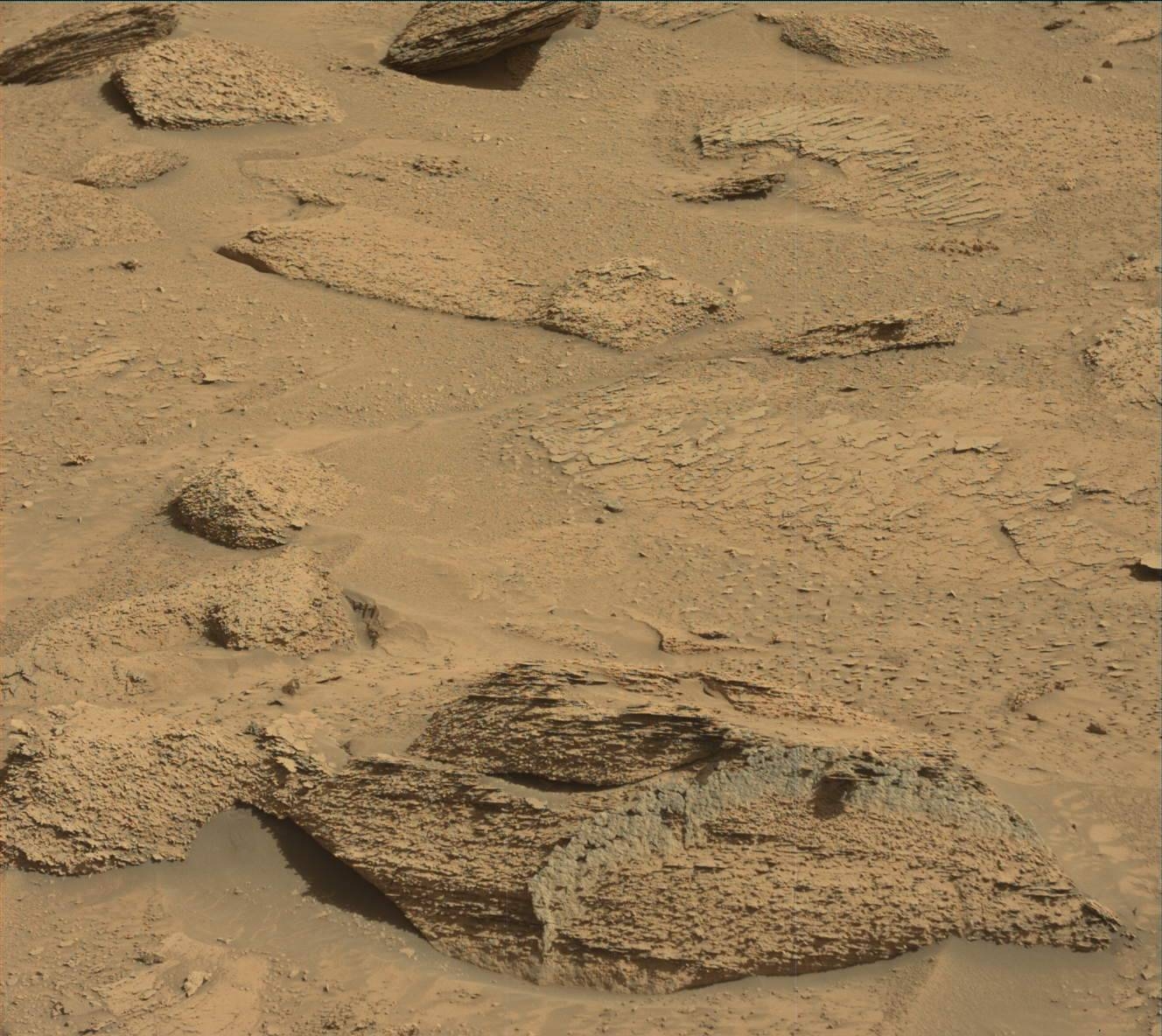
Curiosity Mast Camera Left image taken on Sol 3815, May 1, 2023.
Image credit: NASA/JPL-Caltech/MSSS
Mastcam is also documenting the ChemCam LIBS target, Innanen concludes, and doing multispectral imaging on the layered block “Ekeni.”

An expeditionary crew on Mars sets up drilling gear in a quest to utilize ice for sustaining a human presence on the Red Planet.
Image credit: NASA
If humans are to ever plant boot prints on Mars, where they need to go first is where the ice is.
One problem: Astronaut crews don’t have the luxury to ring down to the hotel front desk for that hospitality.
Work is on-going to tease out where and at what depth extractable ice exists on the Red Planet. Not only is ice a key ingredient for helping to sustain longer and longer human stays on that far-flung world, but ice is nice for science, as well as climate geology, including the search for life on Mars.
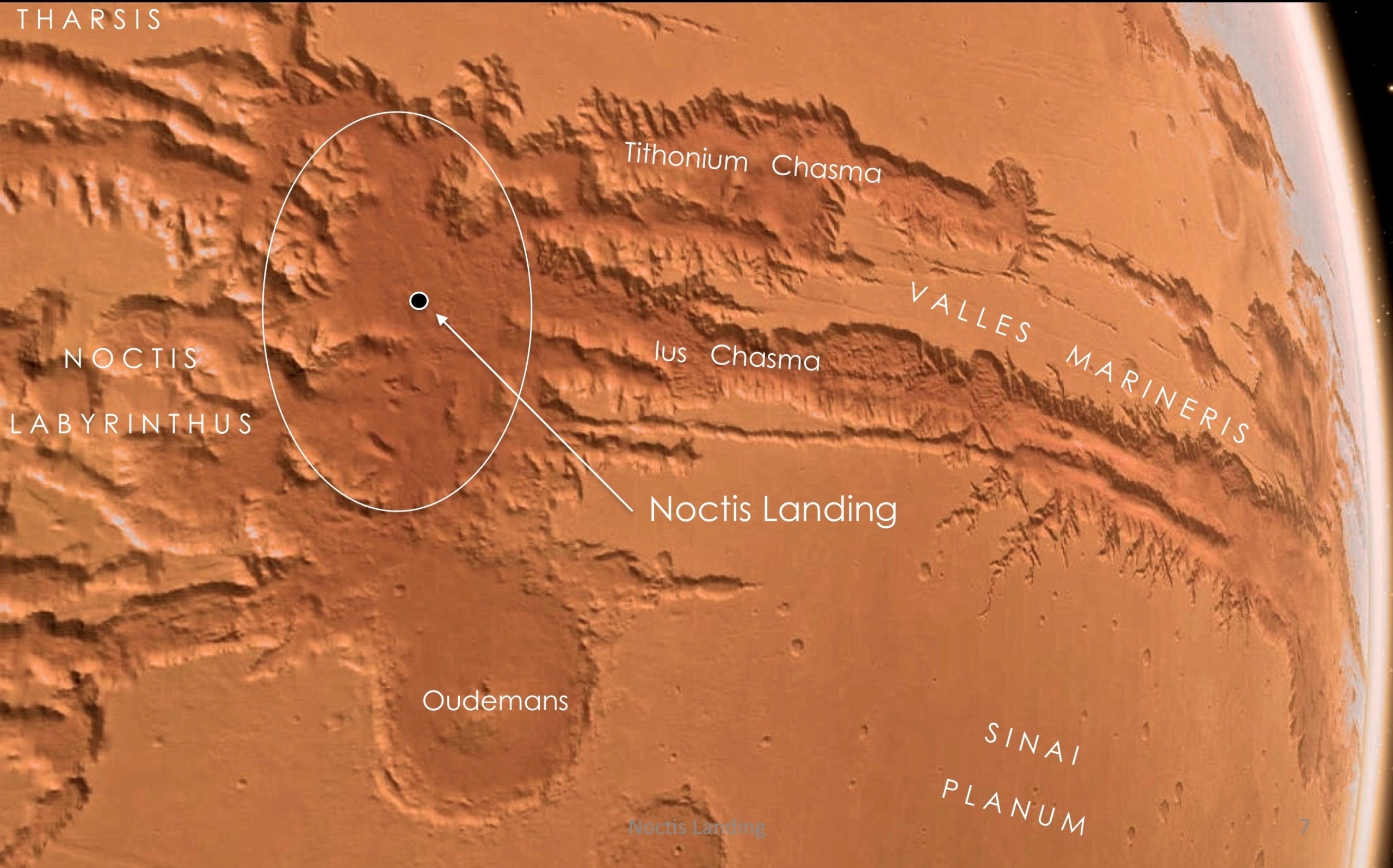
Noctis Landing site on Mars is an ostensibly flat transitional region between Noctis Labyrinthus and Valles Marineris proper.
Image credit: Pascal Lee
Please don’t cold shoulder my new Space.com story – “Mars ice deposits could pave the way for human exploration” – so go to:
https://www.space.com/mars-ice-deposits-astronaut-missions
China Mars finding
In a recent development, also go to this paper highlighting the work of China’s Zhurong Mars rover — “Modern water at low latitudes on Mars: Potential evidence from dune surfaces,” that states:

China’s Zhurong rover.
Credit: CNSA
“This discovery sheds light on more humid conditions of the modern Martian climate and provides critical clues to future exploration missions searching for signs of extant life, particularly at low latitudes with comparatively warmer, more amenable surface temperatures.”
Go to the paper here at:
https://www.science.org/doi/10.1126/sciadv.add8868

CAPSTONE over the Moon’s North Pole.
Image credit: NASA/Daniel Rutter
What’s the latest about NASA’s Moon mission mouthful, the Cislunar Autonomous Positioning System Technology Operations and Navigation Experiment?
Thankfully, it’s called CAPSTONE for short – and is operating in a Near Rectilinear Halo Orbit (NRHO).
Find out the latest with my new Multiverse SpaceRef story – “CAPSTONE Moon Mission – Challenges, Lessons Learned” – at:
https://spaceref.com/science-and-exploration/capstone-moon-mission-challenges-lessons-learned/

