Author Archive
 Author:
  January 27th, 2026
“This year marks half a century since Spinoff began capturing the commercial impact of NASA. As we explore the universe for the benefit of all, NASA remains committed to ensuring technologies developed for space exploration and discovery have direct benefits here on Earth,” explains Daniel Lockney, Program Executive for NASA’s Technology Transfer Program at NASA Headquarters.
“As we set our sights on the Moon and pave the way to Mars, NASA’s return to the lunar surface is fueling America’s commercial marketplace,” Lockney states.
To deep dive into this year’s informative document, go to:
https://ntts-prod.s3.amazonaws.com/t2p/prod/spinoff/NASA-Spinoff-2026.pdf
 Posted in
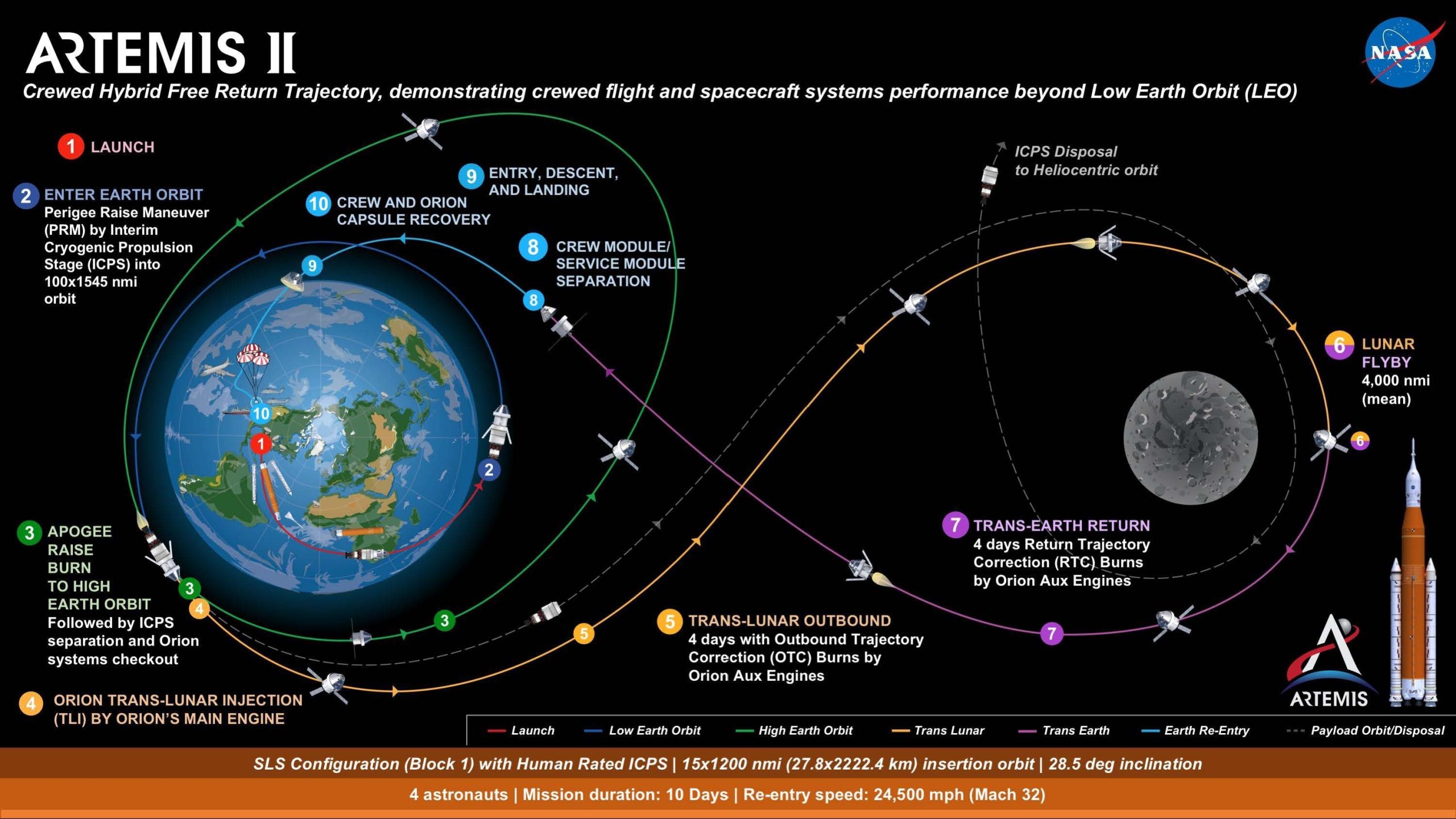
Image credit: NASA
NASA has selected a number of global volunteers to track the Orion spacecraft during the crewed Artemis II mission’s journey around the Moon.
The space agency’s SCaN (Space Communication and Navigation) program announced last week 34 participants to support the Artemis/Orion launch, and the 10-day journey around the Moon, and the crew’s return to Earth.
Participants are established commercial service providers, members of academia, as well as individual amateur radio enthusiasts.
These groups and individuals will use their respective equipment to passively track radio waves transmitted by the Artemis/Orion mission during their voyage.
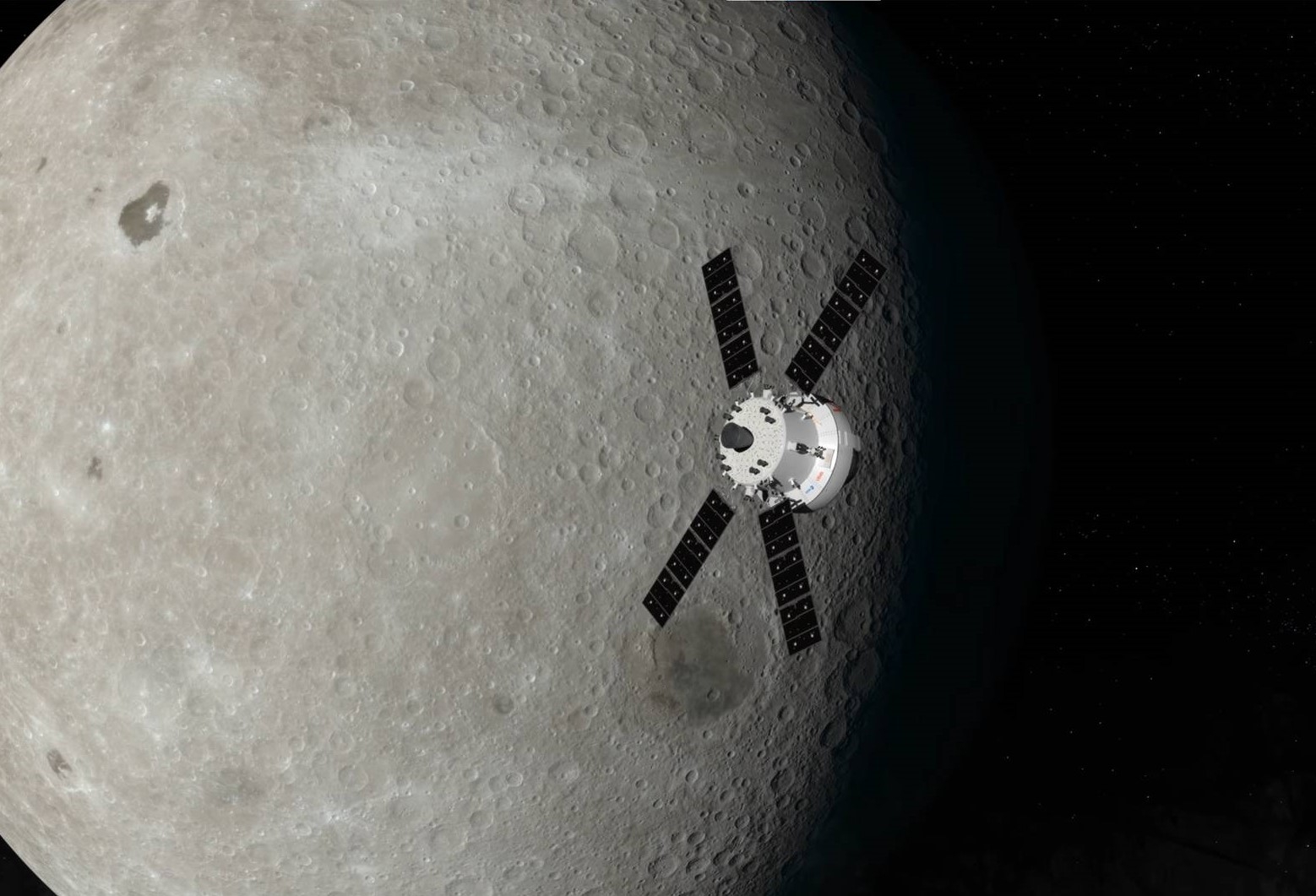
Artistic view of crewed Orion spacecraft skirting by the Moon.
Image credit: NASA Goddard/Scientific Visualization Studio
Public-private ecosystem
“The Artemis II tracking opportunity is a real step toward SCaN’s commercial-first vision,” said Kevin Coggins, deputy associate administrator for SCaN at NASA Headquarters in Washington, D.C.
“By inviting external organizations to demonstrate their capabilities during a human spaceflight mission, we’re strengthening the marketplace we’ll rely on as we explore farther into the solar system,” said Coggins added in a SCaN statement.
“This isn’t about tracking one mission, but about building a resilient, public-private ecosystem that will support the Golden Age of innovation and exploration,” said Coggins.
For more information on SCaN, go to:

The Pale Blue Data Point – An Earth-Based Perspective on the Search for Alien Life by Jon Willis; The University of Chicago Press; 256 pages; Hardcover, $26.00.
As a professor of astronomy at the University of Victoria in British Columbia, Willis has written a highly-engaging, captivating and timely book.
In the preface of this volume, the author calls attention to the dramatic landscapes right here on home planet – the Earth. “Our pale blue data point offers many opportunities to learn about the life that exists upon it,” adding that our world offers clues as to the prospects for life elsewhere.
Indeed, the past 30 years has served up a “golden generation” of exoplanet discovery, Willis explains. Moreover, this book offers the reader a look not only of astrobiology as a science, but what astrobiology looks like in the field – rich in scientific unknowns and eye-opening findings.
Willis underscores the work of exploration, from use of the submersible-equipped E/V Nautilus to contemplate the seas of Saturn’s and Jupiter’s moons to the mountaintop observatories in Chile that scout out extrasolar planets, as well as listening in on dolphins in the Bahamas to envisage the minds of alien intelligences.
The Pale Blue Data Point offers six enlightening and discerning chapters, such as “Twenty Thousand Pings Under the Sea: In Search of Alien Oceans,” “Swimming with Stromatolites: The Hunt for Martian Fossils,” and “So Long and Thanks for All the Fish: A Dolphin-Led Guide to Alien Communication.”
Given the rise of astrobiology and the search for life elsewhere in the cosmos, Willis asks “can a collection of tangential ideas, drawn from all points of the scientific compass, be made to fit into the circle of a new discipline?”
This book offers the reader the answer to that question, expertly written to spotlight astrobiology in action.
Lastly, the volume concludes with a “Further Travels” section, a guide for the reader’s own astrobiological opportunities, “whether metaphorically or indeed literally,” Willis suggests.
For more information about this perceptive, engaging and extremely readable book, go to:
https://press.uchicago.edu/ucp/books/book/chicago/P/bo253701931.html#anchor-gallery

Image credit: Blue Origin/Inside Outer Space screengrab
Blue Origin successfully completed on January 22 the 38th flight for the suborbital New Shepard program and first of 2026.
The crew included: Tim Drexler, Linda Edwards, Alain Fernandez, Alberto Gutiérrez, Jim Hendren, and Laura Stiles.

NS-38 crew (L to R): Alain Fernandez, Dr. Linda Edwards, Dr. Laura Stiles, Tim Drexler, Alberto Gutiérrez, and Jim Hendren.
Image credit: Blue Origin
New Shepard has now flown 98 humans (92 individuals) into space, with some people flying more than once.
This human flight program is staged at Launch Site One in West Texas.
Go to this in-flight video of the crew at:
https://x.com/i/status/2014495909095043188
Go to this replay of the New Shepard-38 flight at:

Blue Origin/Inside Outer Space screengrab

Blue Origin/Inside Outer Space screengrab

This report from the Atlantic Council illuminates important defense and force planning considerations. Its three scenarios span a catastrophic nuclear detonation (NUDET) in low Earth orbit to debris-generating anti-satellite (ASAT) weapons to less aggressive action against commercial satellites.
The report makes the case for the development of policies, practical strategies, and more effective acquisition programs to better address a range of potential futures, considering possible space-related actions by Russia’s political leadership.

Image credit: U.S. Air Force/Airman 1st Class Karina Lopez
Countering Russian Escalation in Space is written by John J. Klein, a nonresident senior fellow in the Forward Defense program of the Atlantic Council’s Scowcroft Center for Strategy and Security.
Clementine Starling-Daniels is a vice president at Beacon Global Strategies, the former director of the Atlantic Council’s Forward Defense program, and a nonresident senior fellow at the Council’s Scowcroft Center for Strategy and Security.
To access the full report, go to:

Image credit: CCTV/Inside Outer Space screengrab
China’s first emergency operation in its human spaceflight program came to an end as an uncrewed Shenzhou 20 return capsule parachuted into the Dongfeng landing site in north China’s Inner Mongolia Autonomous Region on January 19.
The spacecraft had spent 270 days in orbit, docked for nine months to the country’s Tiangong space station.
And that wasn’t the plan.
Go to my new Space.com story – “Chinese capsule damaged by space-junk strike returns to Earth (video) – Shenzhou 20 survived the trip through Earth’s atmosphere in one piece” – at:

Wait-a-Minute!
Image credit: Barbara David
The value of two-way communication input and output between NASA and the planetary science community via specialized advisory groups (AGs) has been devalued.
That assessment comes from the space agency’s Science Mission Directorate, providing yet another wait-a-minute moment.
“Unfortunately, despite the recognized value of the AGs,” [NASA’s Planetary Science Division] “PSD can no longer formally support the AGs,” reports Louise M. Prockter, NASA Planetary Science Division Director.

Credit: Space HD Wallpapers
Groups impacted
NASA will be ending support for the AGs at the end of April of these years, impacting these groups:
Extraterrestrial Materials Analysis Group (ExMAG)
Lunar Exploration Analysis Group (LEAG)
Mapping and Planetary Spatial Infrastructure Team (MAPSIT)
Mars Exploration Analysis Group (MEPAG)
Mercury Exploration Assessment Group (MExAG)
Outer Planets Assessment Group (OPAG)
Small Bodies Assessment Group (SBAG)
Venus Exploration Analysis Group (VEXAG)

Recent changes
pointed out in a January 16 communiqué: “For many years, the eight PSD AGs have served as community-based, interdisciplinary bodies responsible for providing science input and analysis needed to plan and prioritize NASA planetary science research and exploration activities.”
“Several recent changes in the NASA landscape, however,” Prockter said, “make continuing the current support and operations model infeasible.”
“This decision does not automatically force the AGs to be dissolved—they have the opportunity to evolve and innovate as self-organized entities that continue to help advance planetary exploration,” Prockter added.
The full communiqué can be read at:
https://science.nasa.gov/planetary-science/resources/psd-director-letter-to-the-community/
Surprising decision
“This was a surprising decision. It seemed likely that support for the AGs would be reduced in some manner; however, I did not think support would be eliminated,” responded Benjamin Greenhagen, Chair of the Lunar Exploration Analysis Group (LEAG). “With all due respect for PSD, I don’t think this was the correct decision. And I don’t believe that this was the only possible decision.”

NASA’s Artemis Program, enabling Moon to Mars human exploration.
Image credit: NASA
Greenhagen said “it will be harder for us to provide agile analysis to NASA on critical topics but we will.”
Artemis de-generation?
“I think that community engagement, analysis, and consensus building is essential to NASA executing of our nation’s priorities of advancing lunar science, exploration, and critical technologies,” said Greenhagen in an open posting on the Lunar-L site.
“I take it to heart when NASA says we are all the Artemis Generation and we are going,” Greenhagen said. “When something is this important, you focus on what you will do to support and foster it rather than what you can’t do.”

Wait-a-Minute!
Image credit: Barbara David

Image credit: CCTV/Inside Outer Space screengrab
China’s uncrewed Shenzhou-20 return capsule parachuted into the Dongfeng landing site in north China’s Inner Mongolia Autonomous Region on January 19 at 09:34 (Beijing Time).
That capsule’s original return date had been delayed due to concerns over tiny cracks found in the capsule’s viewport window, damage thought caused by a high-speed run-in with space debris.
The spacecraft spent 270 days in orbit, verifying its ability to remain docked in orbit for nine months, the China National Space Administration (CNSA) stated.
Porthole crack
“To mitigate the risks associated with the Shenzhou-20 spacecraft’s return, on December 9, 2025, the Shenzhou-21 astronaut crew utilized an extravehicular activity (EVA) to take close-up photos of the Shenzhou-20 return capsule’s porthole using a high-definition camera, further confirming the condition of the porthole crack,” the CNSA added.

Image credit: CCTV/Inside Outer Space screengrab
“Furthermore, in conjunction with the emergency launch of the Shenzhou-22 spacecraft, a porthole crack repair device was expedited and sent to the launch site,” said the CNSA. “Astronauts installed it inside the Shenzhou-20 capsule, effectively improving the spacecraft’s heat protection and sealing capabilities during reentry.”
On-site inspection found that the Shenzhou-20 return capsule’s exterior was “generally normal, and the items inside were in good condition,” the CNSA said.
Alternative spacecraft
An alternative Shenzhou-21 spacecraft was used to safely transport the three Shenzhou-20 crew members to Earth on November 14.
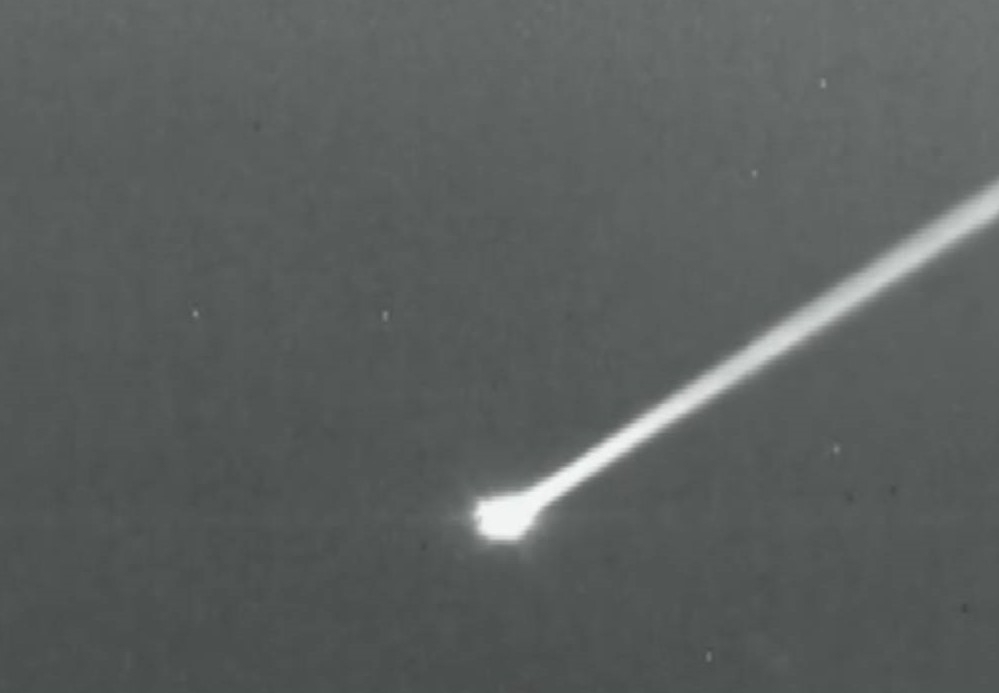
Incoming Shenzhou-20 capsule.
The incident sparked an emergency mission to fly an uncrewed Shenzhou-22 spacecraft to the space station on November 25. Now docked to the orbiting facility, that vessel will serve the Shenzhou-21 crew on their expected return at the conclusion of their six-month mission.
“Currently, the Shenzhou-23 spacecraft, which will take over the rolling backup mission, has arrived at the Jiuquan Satellite Launch Center, and the Long March 2F Y23 carrier rocket is about to be shipped,” the CNSA pointed out. “With the return of the Shenzhou-20 spacecraft, the main tasks of this emergency space operation for the Chinese space station have been successfully completed.”
Frigid temperatures
At the capsule’s Dongfeng Landing Site, search and recovery teams had to cope with extreme weather conditions in the area. Frigid temperatures and strong winds posed challenges in retrieving the return craft.
China Central Television (CCTV) reported that Xu Peng, the on-site commander at the touchdown site, noted that ground search forces made targeted adjustments.

Image credit: CCTV/Inside Outer Space screengrab
“This marks the first time the Dongfeng Landing Site has carried out a spaceship recovery mission during the coldest season of the year, with cold weather posing a test for both our search and rescue teams and equipment. We made special cold-protection preparations in advance to ensure that both personnel and the equipment remained in good condition throughout the mission,” Xu said.
Quick response
Xu also noted another unique factor of this unmanned return recovery operation, placing extra pressure on the ground teams to respond quickly to its touchdown.
Xu said the ground teams deployed new methods, such as drones and other high-tech equipment, to assist in recovery operations.
“Adjustments were made to our recovery forces,” Xu said. “The helicopter unit did not participate in this mission, and the drone and unmanned ground vehicle units made their debut. This new model, combining unmanned search equipment with ground personnel, was applied in the recovery of the uncrewed capsule,” he said.

Xu Peng, the on-site commander at the touchdown site.
Cut the parachute
Xu added that, as the Shenzhou-20 return capsule was unmanned, there was no astronaut to manually separate the parachute.
“As a result, the main parachute did not automatically detach upon landing, and in strong winds, it could have dragged the return capsule along the ground. This requires our ground personnel to reach the landing point and cut the parachute as quickly as possible,” Xu said.
Image credit: CCTV/Inside Outer Space screengrab
Damaged porthole
On-site personnel quickly took steps to protect the damaged porthole on the return capsule upon its landing. That action was driven by a post-landing assessment on the damage the Shenzhou-20 capsule sustained in space.
An on-site inspection confirmed that the exterior of the Shenzhou-20 return capsule was “generally intact” and the items inside were in good condition, the China Manned Space Agency (CMSA) reported.
Retired spacesuit
One of those inside items was a retired Extravehicular Mobility Unit (EMU) B spacesuit used for spacewalks.
That spacesuit garnered a distinguished service period that spanned more than four years in orbit, far exceeding its original design life, reported CCTV. Over that time, the suit had supported 11 Chinese astronauts across eight crewed missions, enabling 20 successful EVAs to be conducted.
For a CCTV video on the recovery of the capsule, go to:
https://www.facebook.com/reel/1810473869665482
Also, go to this video showcasing the current crew aboard China’s space station at:

Image credit: Illustration by John DiJulio, University of Virginia Communications
There’s some new planetary defense news – specific to nuking an Earth-threatening asteroid.
Experiments at CERN’s Super Proton Synchrotron (SPS) suggest that metal-rich asteroids are more resistant than previously assumed. The asteroid tests challenge nuclear-deflection models.
The European Organization for Nuclear Research is known as CERN.
There have been those advocates that, in the case of an impending collision with Earth, nuclear deflection may well be a last-resort option, leading to lots of fragments. However, a key uncertainty in such a mission would be the materials properties of the asteroid.

Credit: NASA/Don Davis
Scientific challenge
“Planetary defense represents a scientific challenge,” explains Karl-Georg Schlesinger, co-founder of the Outer Solar System Company (OuSoCo), a start-up developing advanced material-response models used to benchmark large-scale nuclear deflection simulations.
“The world must be able to execute a nuclear deflection mission with high confidence,” Schlesinger said, “yet cannot conduct a real-world test in advance. This places extraordinary demands on material and physics data.”

Stronger than expected – the Campo del Cielo meteorite. Image credit: E Halwax
Experimental campaign
To tackle that problem, an experimental campaign was carried out at CERN’s High Radiation to Materials facility (HiRadMat) in Switzerland. Researchers irradiated a Campo del Cielo iron meteorite sample with 440 GeV protons from CERN’s Super Proton Synchrotron.
Campo del Cielo refers to a group of iron meteorites that fell to Earth 4,200 to 4,700 years ago in Argentina where they were found.
The Campo del Cielo meteorite was exposed to 27 successive short, intense pulses of the SPS proton beam, reproducing impact-relevant shock conditions not attainable with conventional laboratory techniques.
Controlled lab conditions
“Our results demonstrate that asteroid materials can absorb significantly more energy without structural failure than normal material parameters would suggest. Crucially, we were able to reproduce–under controlled laboratory conditions–the discrepancy factor observed between laboratory-derived yield strength values and those inferred from atmospheric meteor breakup events,” notes a research paper – “Dynamical development of strength and stability of asteroid material under 440 GeV proton beam irradiation” – in Nature Communications.

CERN’s High Radiation to Materials facility (HiRadMat).
Image credit: CERN
“The material became stronger, exhibiting an increase in yield strength, and displayed a self-stabilizing damping behavior,” explains Melanie Bochmann of BoS GmbH, headquartered in Mörbisch am See in Austria and a co-founder and co-team lead alongside Schlesinger.
Unexplored possibilities
This research does imply that much larger amounts of energy can be deposited into asteroid material than previously assumed–without structural failure.
“This opens yet unexplored possibilities for nuclear energy-density asteroid deflection techniques, where deep energy coupling is desired without fragmentation,” the research paper states, with future work exploring this scenario in detail.

Image credit: NASA/JPL-Caltech
Next step
“In our first experimental campaign, we focused on a metal-rich asteroid material because its more homogeneous structure is easier to control and model, and it met all the safety requirements of the experimental facility,” Bochmann and Schlesinger explain in the CERN Courier. “This allowed us to collect, for the first time, non-destructive, real-time data on how such material responds to high-energy deposition.”
“As a next step, we plan to study more complex and rocky asteroid materials, the two researchers point out.
“One example is a class of meteorites called pallasites, which consist of a metal matrix similar to the meteorite material we have already studied, with up to centimeter-sized magnesium-rich crystals embedded inside. Because these objects are thought to originate from the core–mantle boundary of early planetesimals, such experiments could also provide valuable insights into planetary formation processes, Bochmann and Schlesinger state in the CERN Courier.
For more information, go to the research paper at:

Image credit: ASA
The ongoing investigation and study of Unidentified Aerial Phenomena (UAP) has received a legislative boost.
UAP legislation has been submitted to the Vermont legislature to create a state level, 10-person UAP task force.
The Vermont bill establishes a statewide task force to scientifically evaluate unidentified aerial activity. The bill assigns responsibility for the scientific analysis of reported aerial activity to the Scientific Coalition for UAP Studies (SCU).
Proactive, science-driven approach
“SCU would be involved in supporting the task force for all scientific and technical issues,” explains Robert Powell, an executive board member of the Scientific Coalition for UAP Studies. “We feel that if we can get enough states involved then we hope that will open a new method of obtaining UAP information,” he told Inside Outer Space.

Image credit: SCU
Vermont is taking a proactive, science-driven approach to public and aviation safety with the introduction of H.654, legislation creating a statewide framework to evaluate and respond to unusual aerial activity. This includes drones, balloons, and other objects that could affect aviation, infrastructure, or public safety.
Transparency
“As aerial activity grows nationwide, states are encountering new challenges that require proactive solutions,” said Representative Troy Headrick (I-Burlington), the bill’s sponsor. “H.654 ensures Vermont is prepared. It gives our state the tools to respond responsibly, with science, transparency, and collaboration guiding every decision.”
“While most reports turn out to be ordinary objects, a few may reveal phenomena we do not yet fully understand,” Powell said in a SCU statement. “Vermont’s framework ensures that every report is handled thoughtfully, with science and public safety guiding every step.”
The bill will be considered by the Vermont House Government Operations Committee today, January 16.

Artistic image of UAP over New Jersey coast.
Image credit: ASA
Multi-agency collaboration
Also welcoming the UAP Vermont bill is Americans for Safe Aerospace (ASA), pledging its support for the legislation.
Ryan Graves, ASA’s founder and executive director, said that Vermont’s approach “recognizes that coordinated airspace safety requires technical expertise, multi-agency collaboration, and transparent reporting mechanisms.”
The Vermont bill follows New Jersey Governor Phil Murphy signing Assembly Bill 5712, making New Jersey the first state to establish dedicated funding for university-based UAP research. It was signed into law by Governor Murphy on January 12, 2026.
“Vermont and New Jersey’s legislation reflects a broader shift toward state-level UAP reporting infrastructure that addresses gaps in federal action,” explains an ASA posting. “While Congressional hearings and UAP disclosure provisions have created momentum, actual research funding and systematic data collection remain limited at the federal level. State-level action fills that gap.”
For more information on UAP and the new state-supported activity, go to:
Scientific Coalition for UAP Studies (SCU) at: https://www.explorescu.org/
Americans for Safe Aerospace (ASA) at: https://www.safeaerospace.org/

