Archive for November, 2026
 Author:
 November 4th, 2026
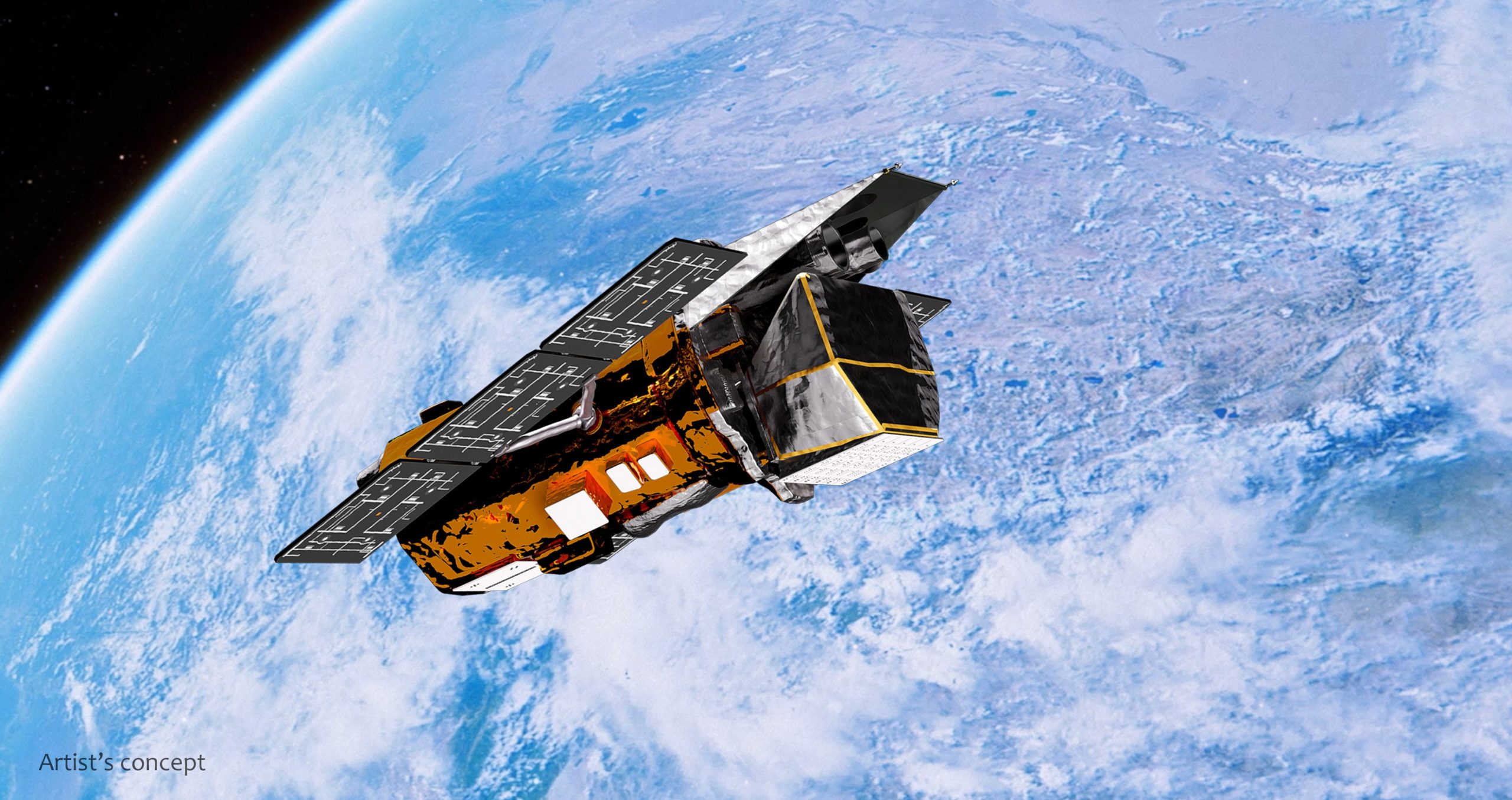
Artist’s view of NASA’s Neil Gehrels Swift Observatory orbiting above Earth.
Image credit: Goddard Space Flight Center Conceptual Image Lab
NASA’s Neil Gehrels Swift Observatory careened into the Earth’s atmosphere on Wednesday, Nov. 4, almost 22 years after launch.
The U.S. Space Force confirmed that the Swift spacecraft re-entered Earth’s atmosphere at 7:39 a.m. EST Wednesday over the North Sumatra region of Indonesia, at approximately 3.4 degrees north latitude and 98.6 degrees east longitude.
According to NASA, most of the spacecraft was to have burned up as it sped through the atmosphere, but some components may have survived reentry.
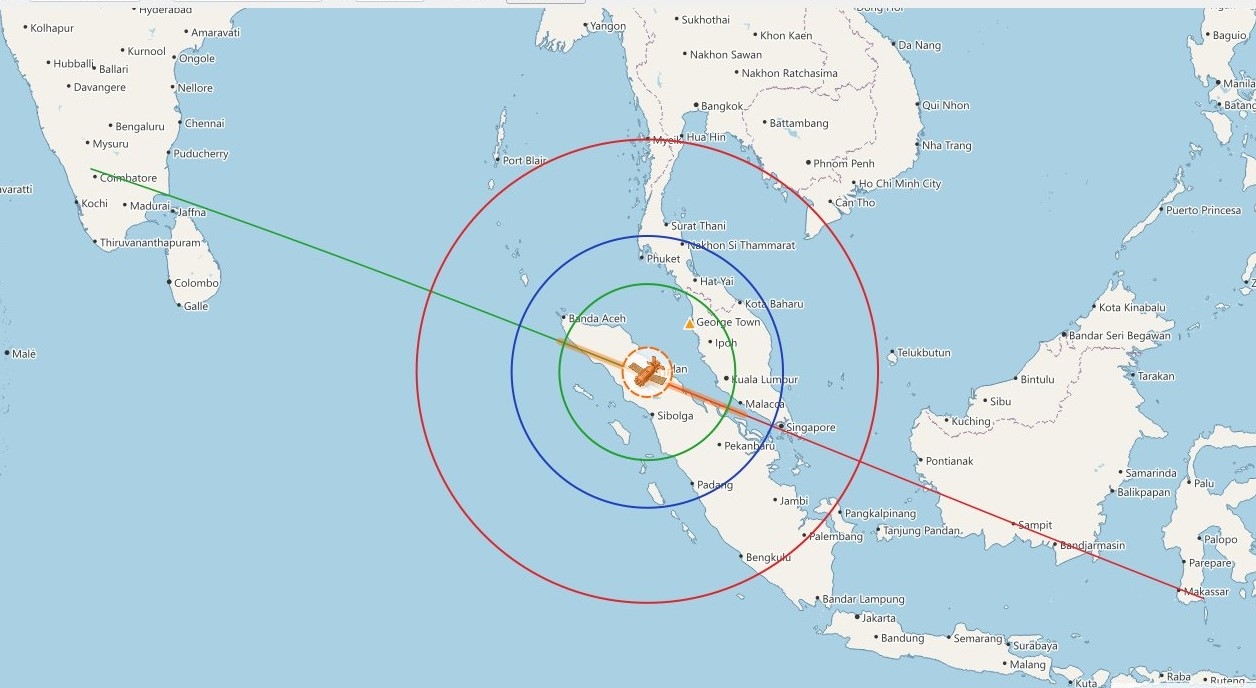
Image credit: LastOrbit by Mohammad Shawkat Odeh, Director, International Astronomical Center (IAC)
Eyewitness reports
On the ground observers in Malaysia confirm the sighting of the final throes of the Swift observatory.
As it entered the atmosphere, the roughly 3,200-pound spacecraft is likely to have shed dense components made of heavy materials like titanium structural housings, tungsten parts, and nickel mirror assemblies – hardware that could have made it to the surface.
Whether these items fell to the ground or plunged into the ocean is unknown at this posting.

Image credit: Utusan Melayu Plus/TULAR video
Internet posted videos of the event — shared by Hazari Ahmad, a member of the International Astronomical Center from Brunei — can be viewed at the following links:
https://www.instagram.com/reels/DfUrJfjnA4V/
https://www.facebook.com/share/r/1A9dpZFN2P/?mibextid=wwXIfr
 Posted in


Illustration of the EscaPADE spacecraft in orbit around Mars.
Credits: Rocket Lab USA/UC Berkeley
NASA’s twin Escape and Plasma Acceleration and Dynamics Explorers (ESCAPADE) will perform a “powered” flyby of Earth, combining Earth’s gravity with an engine burn, to slingshot itself toward Mars.
The first spacecraft will conduct its flyby and engine burn around 5 a.m. EST on Saturday, Nov. 7.
The second will do so two days later, around 6 a.m. EST on Monday, Nov. 9.
Earth’s gravity will speed the twins up and redirect them toward Mars.

The long and winding road to the Red Planet by the twin ESCAPDE spacecraft.
Image credit: Advanced Space
At the spacecraft’s closest approach to Earth, it also will perform a “trans-Mars injection burn,” firing its engine for about 9 minutes to give itself an extra boost toward the Red Planet.
After completing successful powered flybys, the two spacecraft will then have a 10-month cruise to Mars, arriving at the Red Planet on Sept. 7 and Sept. 9, 2027, respectively.
Go to my earlier story — “Flying ESCAPADE to Mars: Live Long and Loiter” — at:
https://www.leonarddavid.com/flying-escapade-to-mars-live-long-and-loiter/
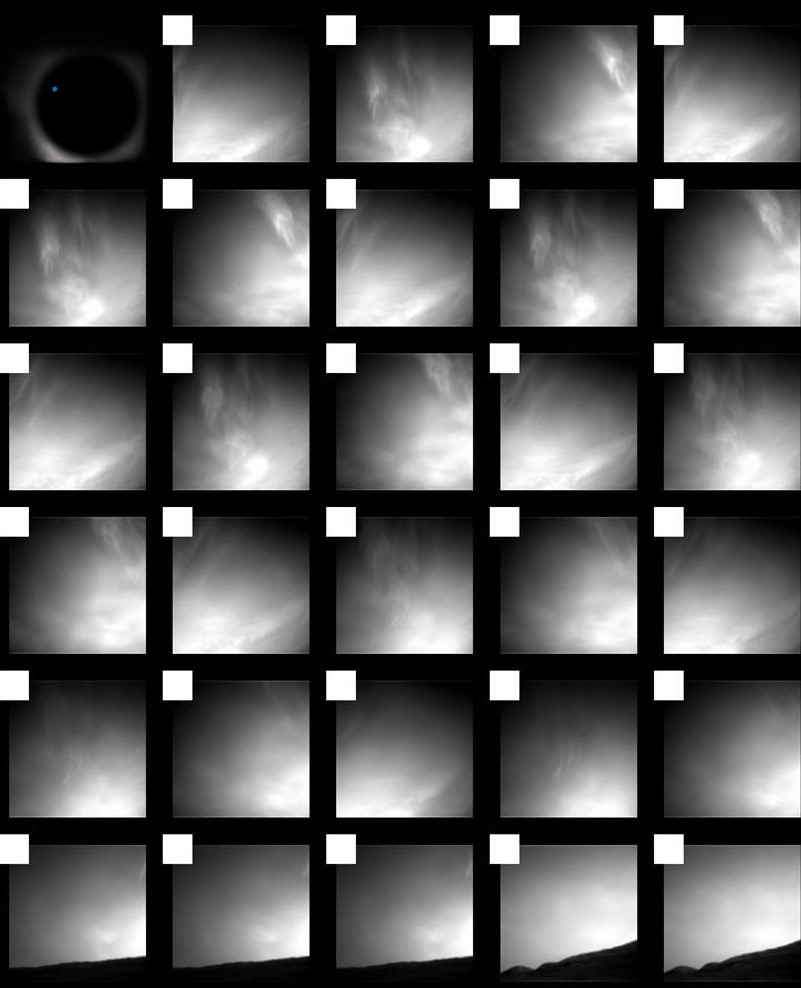
Images taken by Navigation Right B camera onboard NASA’s Mars rover Curiosity on Sol 5061, November 1, 2026.
Image credits: NASA/JPL-Caltech
Alex Innanen, an atmospheric scientist at York University, notes that the NASA Curiosity Mars rover at Gale Crater has been keeping an eye on martian clouds.
These high-altitude clouds are characteristic of the sky above the robot’s exploration zone.
“Autumn means the return of high-altitude twilight clouds, which the low sun angle at sunset illuminates beautifully,” Innanen adds.
The twilight cloud activity picks up as the autumn progresses, and Curiosity-taken cloud movies recently caught the first high-altitude clouds of the season.
“Most of the clouds we tend to see at Gale Crater are suboptical, or too thin to be seen with either human eyes or with Curiosity’s robotic ‘eyes,’ but these twilight clouds are bright enough that we can see them in the raw Navcam images,” reports Innanen. “I’m looking forward to another Martian autumn of watching all these different clouds go by.”
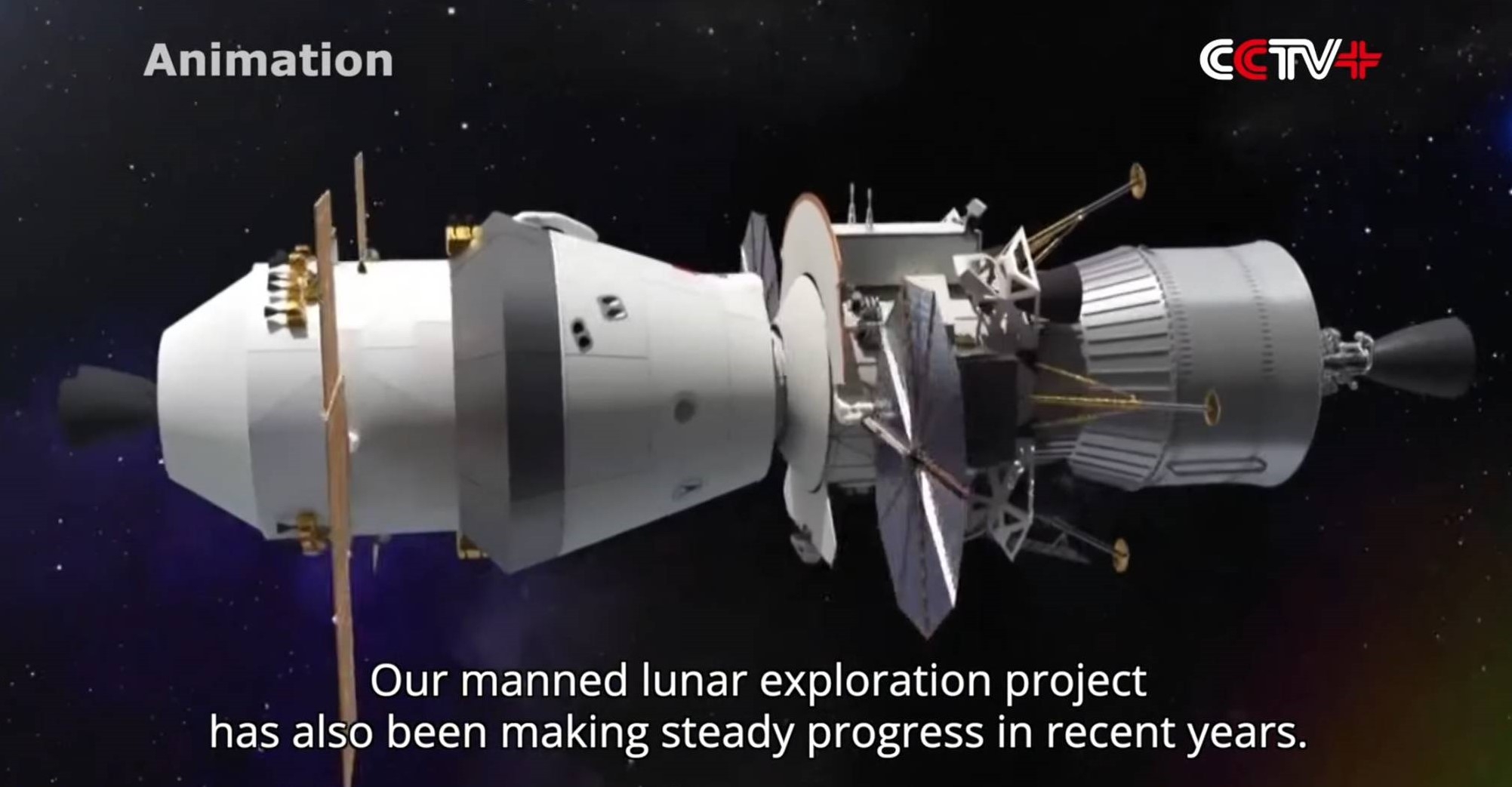
Image credit: CCTV/Inside Outer Space screengrab
China continues to chart its first crewed Moon landing before 2030, detailing current plans last weekend during the Seventh Manned Space Symposium in Beijing.
The two-day symposium drew more than 800 experts and scholars to explore how digital and intelligent technologies can advance human spaceflight.
Uncrewed test flights of the Mengzhou crewed spacecraft and the Lanyue lunar lander are planned ahead of a crewed Moon landing mission.
Safe and reliable
Wang Xiang, deputy chief designer of China’s manned space program, said a trio of astronauts will carry out the Moon mission, with two individuals landing on the lunar surface.

Image credit: CCTV/Inside Outer Space screengrab
“We will use the unmanned Lanyue lunar lander to verify all the key technologies throughout the entire crewed process as much as possible – including launch, entering the lunar orbit, rendezvous and docking with the Mengzhou spacecraft, landing and staying on the lunar surface, taking off again and re-docking with the crewed spaceship Mengzhou, so as to make sure the crewed flight will be safe and reliable,” Wang told China Central Television (CCTV).
Two Long March-10 carrier rockets will launch the Lanyue lunar lander and the Mengzhou spaceship in succession, then the two will conduct a rendezvous and docking in lunar orbit.
The Mengzhou can carry three astronauts between Earth and lunar orbit, with two of them riding the Lanyue lunar lander between lunar orbit and the lunar surface.

Image credit: CCTV/CMSA
China’s Moon landing initiative will carry out, as planned, the Long March-10 carrier rocket technology verification flight, the first flights of the Mengzhou spaceship and the Lanyue lunar lander, and important missions such as the robotic Chang’e-7 lunar lander.
Near-Earth validation
“When planning, we follow two principles,” Wang told CCTV. “First, for any task to be performed in lunar orbit, we will utilize the space station to conduct validation in near-Earth orbit whenever possible; second, for any crewed mission, we will try to fly it in an unmanned state first.”
To be utilized is the near-Earth version of the Long March-10 rocket to launch the near-Earth version of the Mengzhou spacecraft to perform space station missions in near-Earth orbit, added Wang, to validate the rocket’s basic technologies and the critical re-entry and return phases of the spacecraft.
“Then, we will use the lunar version of the Long March-10 rocket to launch the lunar version of the Mengzhou spacecraft to execute the lunar landing mission. This is a validation process for the rocket: near-Earth first, then the Moon,” said Wang.
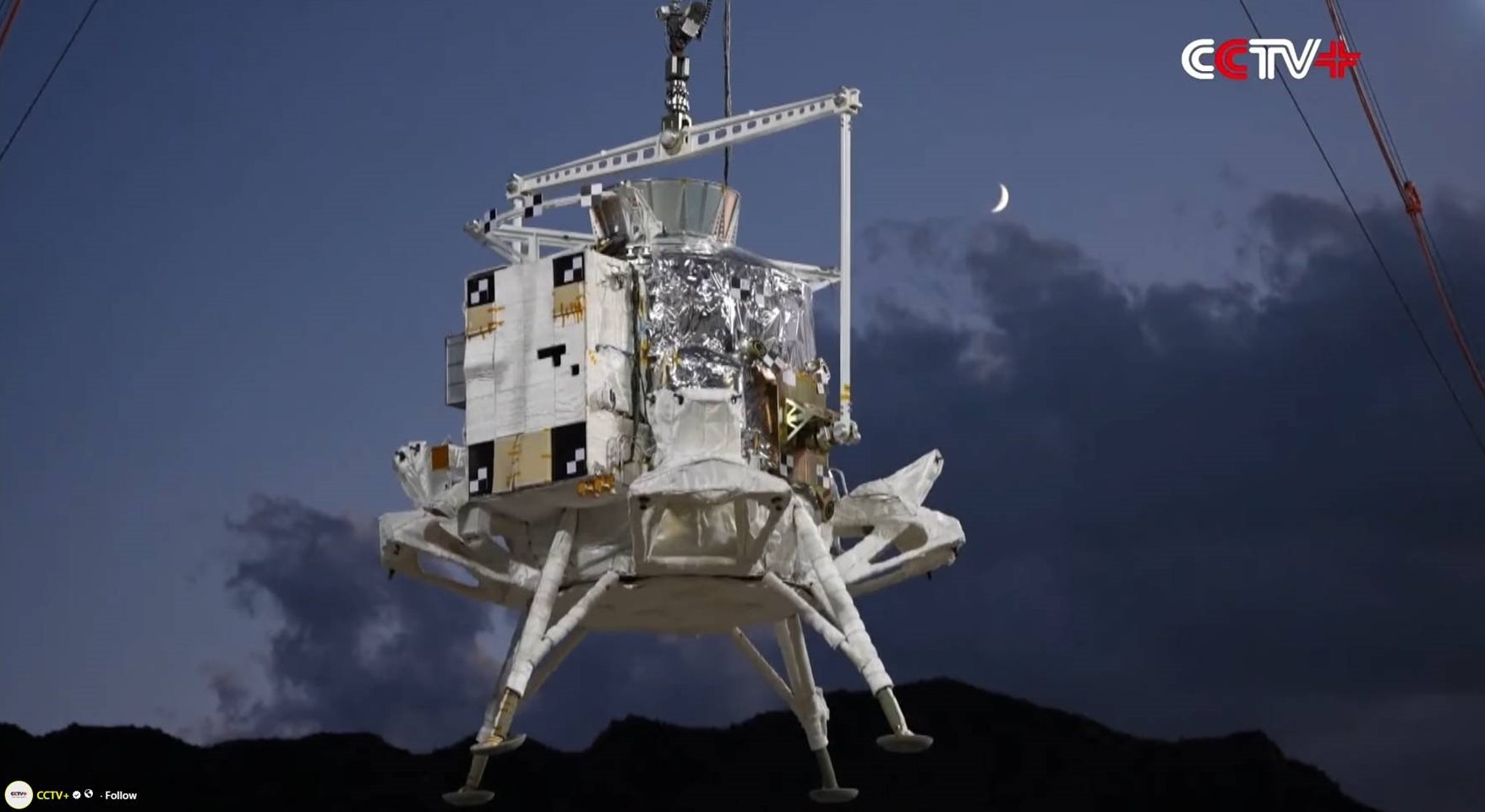
Lanyue lunar lander.
Image credit: CCTV/Inside Outer Space screengrab
Uncrewed Lanyue lander
The uncrewed flight mission of the Lanyue lander will allow for on-site collection of critical environmental data, including first-hand measured information on lunar surface temperature, lunar dust conditions, and the in-orbit performance of the spacecraft.
Wang said that the uncrewed flight mission of the Lanyue lander is also soliciting secondary payloads nationwide.
For a single mission, the total mass of the carried payloads will not exceed 50 kilograms, and the total power consumption will not exceed 100 watts.
“Because it is an unmanned mission, we will have some surplus resources, and we must make full use of them. Through a selection process, we will choose scientific experiment projects that are meaningful and necessary to be conducted on the Moon,” said Wang. “It is like giving them a ‘free ride’ to the Moon to conduct corresponding scientific experiments or technical explorations, achieving the goal of benefiting multiple parties with a single flight,” said Wang.
For a video detailing China’s current humans to the Moon program, go to:
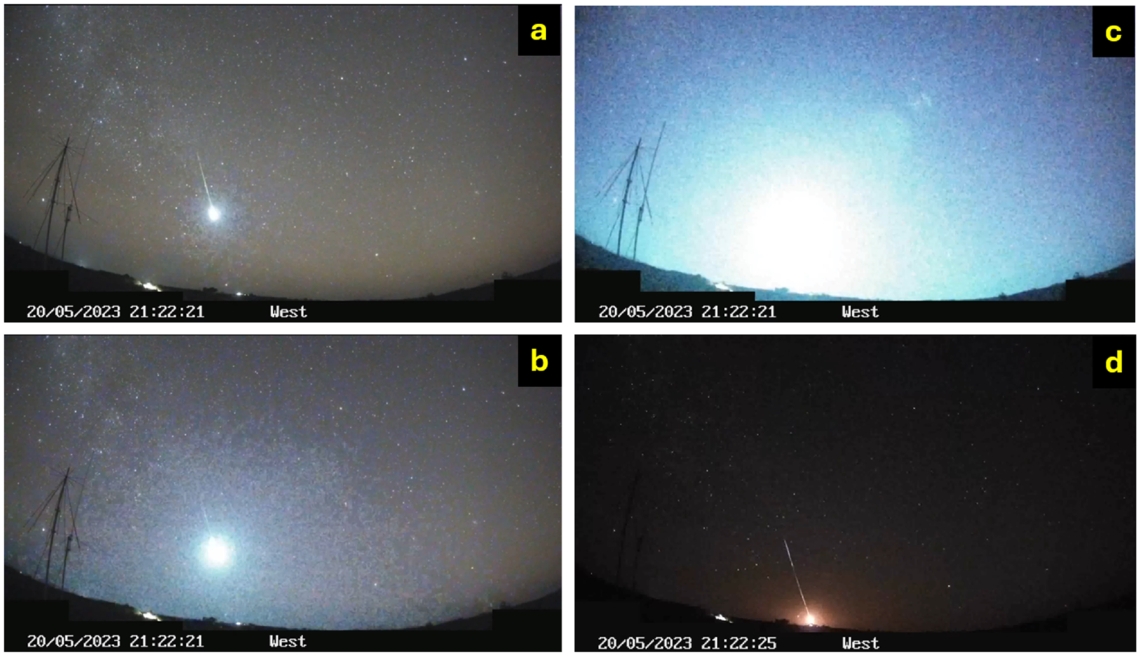
Ground-based optical observations of the Queensland superbolide.
Image credit: Elizabeth A. Silber et al
It came from outer space, exploding high above the South Atlantic off the coast of Argentina. That April 1 event was an incoming meteor – also termed as a bolide – was observed by both U.S. space-based military and civil sensors.
Hush-hush U.S. government satellite sensors detected the speedy fireball cutting through our atmosphere. The object’s brightness peaked at an altitude of nearly 60 miles (90.5 kilometers) over the South Atlantic.
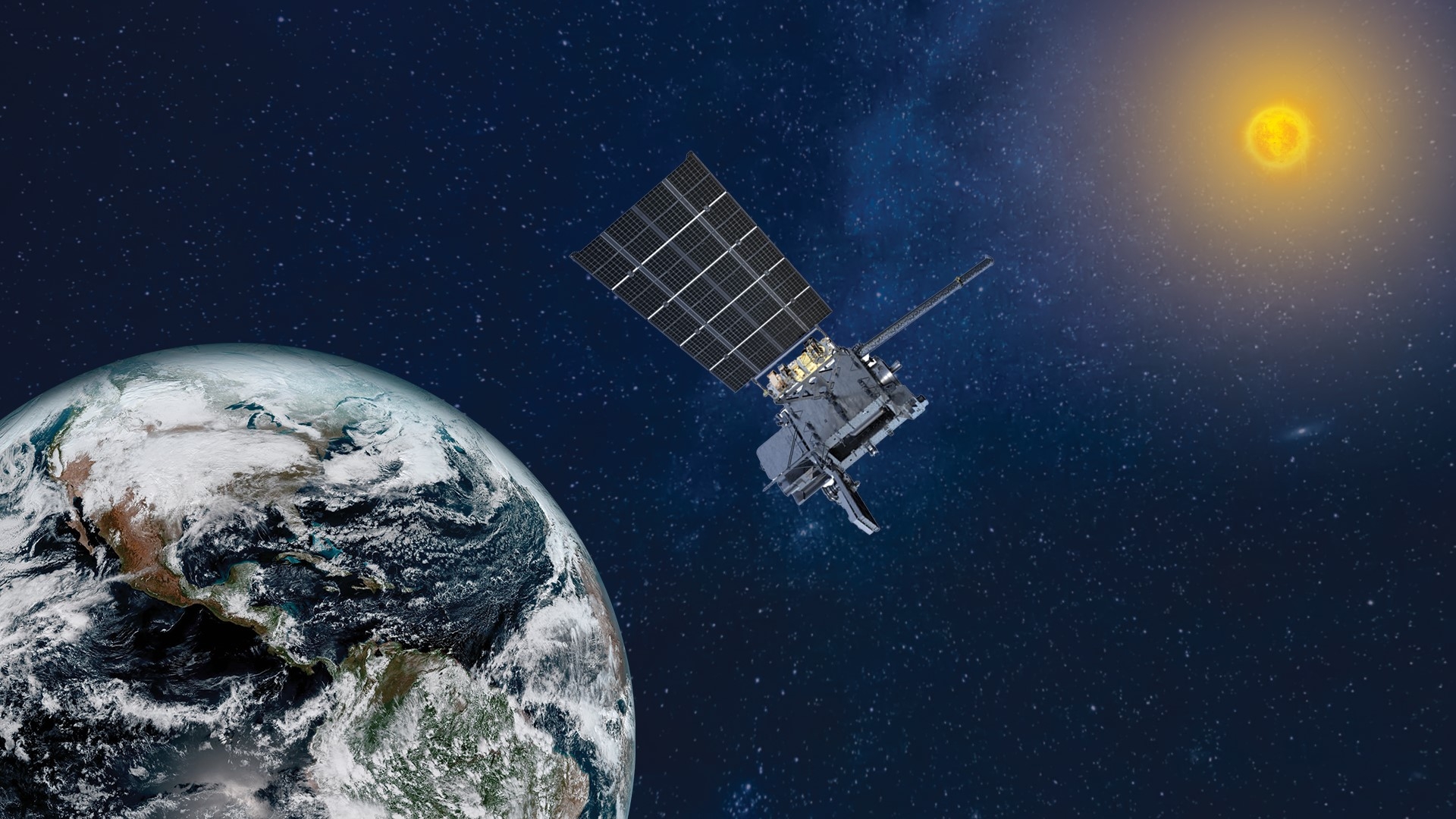
Artist’s rendering of NOAA’s GOES East satellite in orbit. Among duties, the spacecraft provides real-time mapping of lightning activity.
Image credit: NOAA
That dazzling spectacle was also caught by the National Atmospheric and Oceanic Administration’s GOES-E and Europe’s Meteosat Third Generation (MTG) Imager-1 satellite. Those two independent spacecraft in geostationary orbit detected the bolide via onboard lightning imagers.
This sky fall show is among a number of recent episodes that spotlight the value of combining multi-sensor data to portray not only fireball dynamics, but also to help appreciate human-caused space debris impacts, as well as strengthening planetary defense knowhow.
For details, go to my new Space.com story – “Planetary defense: How military and civil satellites are watching fireballs to help keep Earth safe from space rocks” – at:
Artist’s view of NASA’s Neil Gehrels Swift Observatory orbiting above Earth.
Image credit: Goddard Space Flight Center Conceptual Image Lab
An upcoming and uncontrolled reentry of the NASA’s Swift observatory is expected to occur in the next few days.
The Neil Gehrels Swift Observatory reentry into Earth’s atmosphere signals a number of issues. One of those was a botched rescue mission to keep the orbiting telescope in high-flying, sky surveillance mode.
Following the termination of the commercially-provided re-boost mission to a higher altitude, the Swift Observatory did resume operating two of its three science instruments.
Swift was lofted into Earth orbit back in November 2004. Over the following decades, it studied gamma-ray bursts — the most powerful explosions in the universe — and other cosmic objects and events using a trio of telescopes: a Burst Alert Telescope (BAT), an X-Ray Telescope (XRT), and its Ultraviolet/Optical Telescope (UVOT).
On October 20, NASA reported that Swift was no longer able to compensate for the effects of the increased drag. It entered safe mode, followed by Swift’s operations team at Penn State in University Park sending a command to the spacecraft that effectively ended its operations as prelude to its destructive and firery nose-dive.
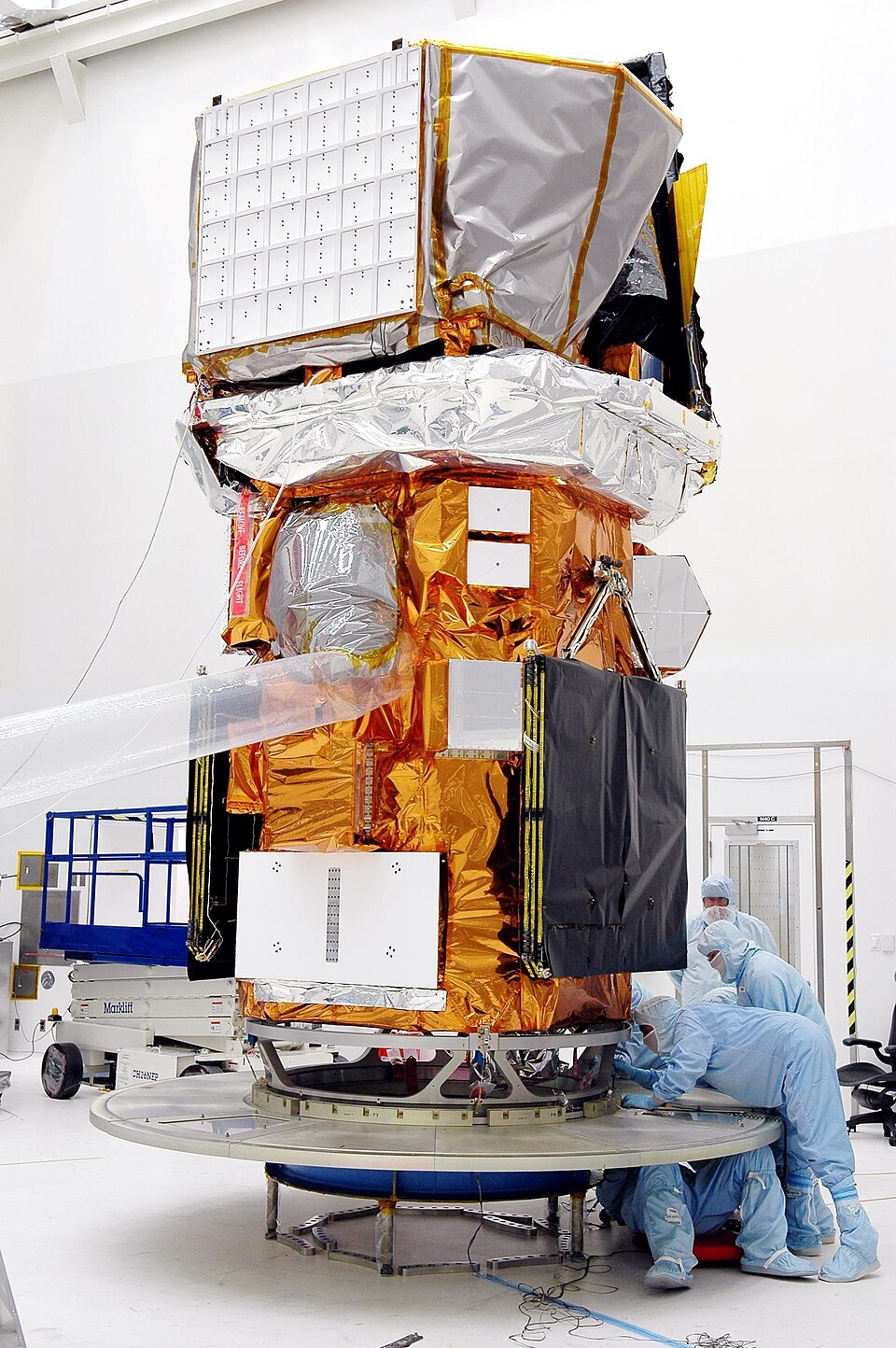
Pre-launch photo of Swift Observatory
Image credit: NASA/Goddard Space Flight Center
Once the hardware takes the plunge to Earth, aerospace specialists have looked at what leftovers are anticipated to reach terra firma.
One expert is Dean Sladen, a quality manager and aerospace engineer at the U.K. precision-components supplier Accu Components.
The link for Accu Components is: https://www.accu-components.com
For details on Swift’s upcoming fall to Earth, go to my new Space.com story – “NASA’s Swift space telescope is about to crash to Earth. Where will it fall?” – at:

