Archive for September, 2026
 Author:
  September 17th, 2026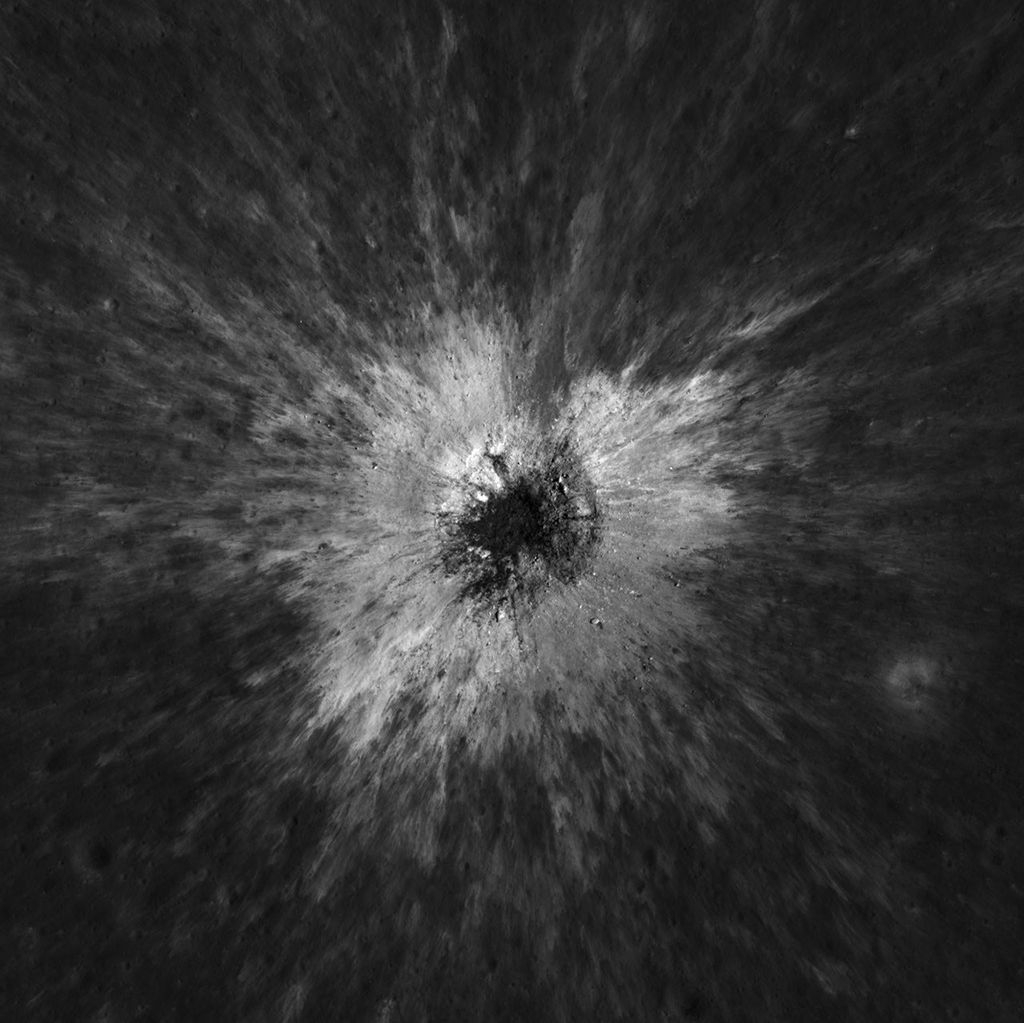
Newly found and named as McGetchin crater. Found in late 2025 by NASA’s Lunar Reconnaissance Orbiter (LRO) Narrow-Angle Camera (NAC). After crater was first spotted, LRO’s Wide-Angle Camera zoomed in on the feature.
Image credit: NASA Goddard Space Flight Center (GSFC)/Intuitive Machines
Moon Base inhabitants take note of a newly discovered crater formed on the lunar surface, the largest, ever found in the solar system.
As noted by NASA, the crater has officially been named McGetchin after pioneering lunar scientist Tom McGetchin.
This crater formed on the Moon’s eastern edge sometime between April 11 and May 22, 2024, after a comet or asteroid the size of a three- to six-story building hit the surface.
The wallop of an impact developed a crater, 728 feet wide, the length of two football fields and is over 140 feet deep.

NASA’s Lunar Reconnaissance Orbiter (LRO).
Credit: NASA’s Goddard Space Flight Center Conceptual Image Lab
Catching his eye
The impactor was spotted by Robert Wagner, a scientist with NASA’s Lunar Reconnaissance Orbiter (LRO). What caught his eye was an unusually large bright spot circled by a dark halo.
For more than 17 years, LRO has been circling the Moon and using its seven instruments to map the topography, surface composition, temperature, and radiation environment there.
According to NASA, researchers estimate that an impact of this magnitude happens on the Moon about once in a century or even longer.
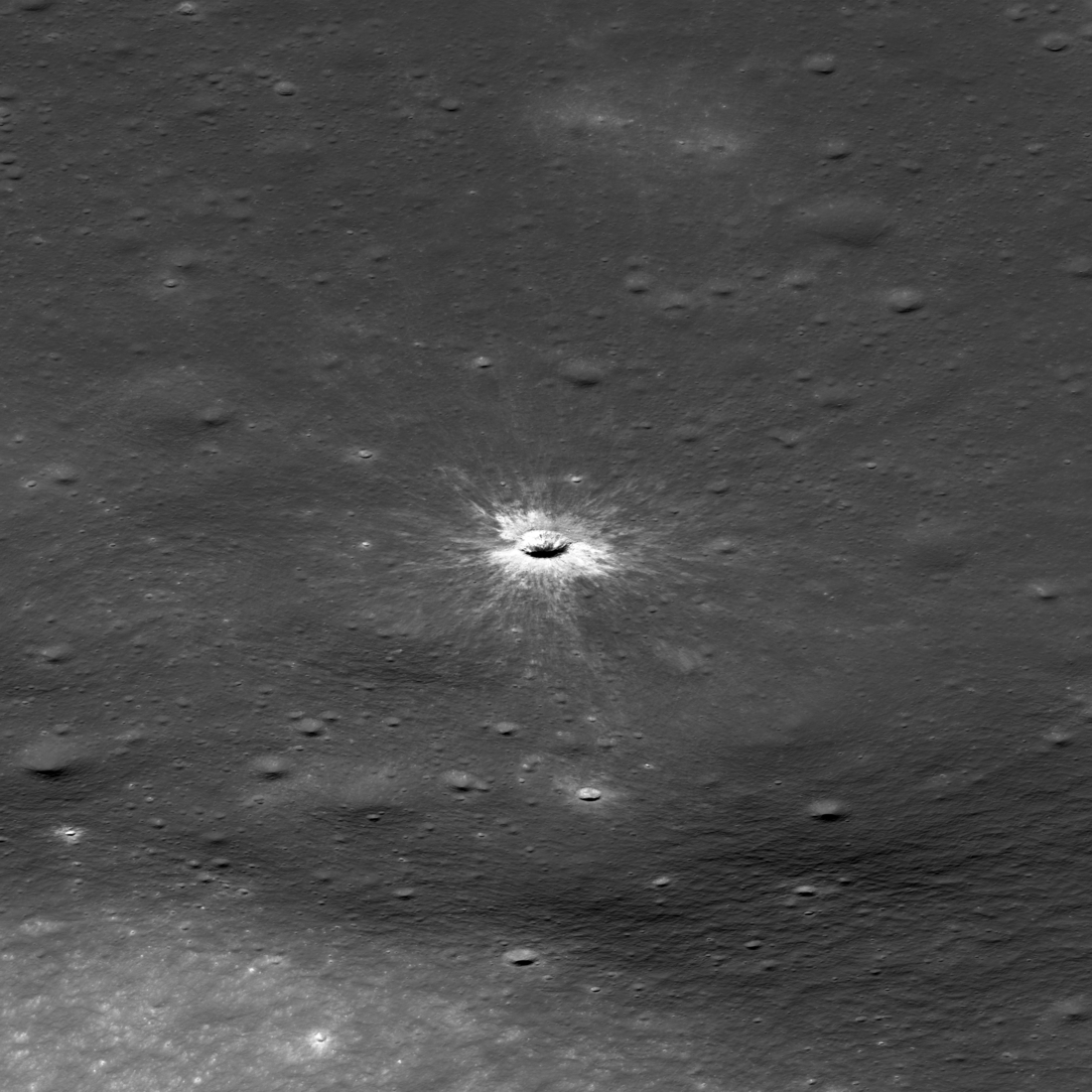
LRO rolled 51° to the east allowing LROC to capture this dramatic oblique view of McGetchin crater, incidence angle 68°.
Image credit: NASA/GSFC/Intuitive Machines
 Posted in
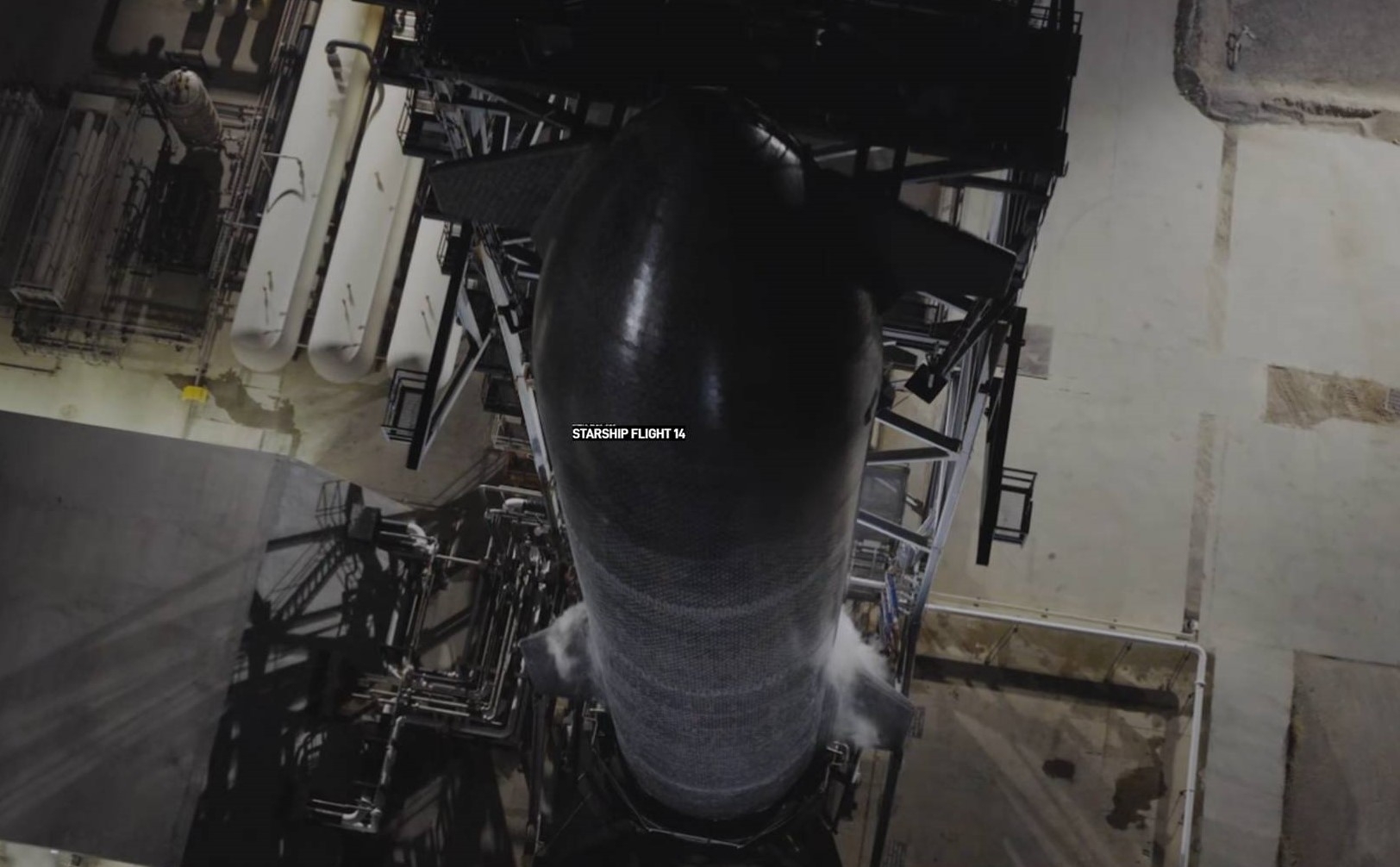
Image credit: SpaceX/Inside Outer Space screengrab
SpaceX has posted an overview of the 14th flight of Starship. The mission is now being prepared for launch as soon as Monday, September 28, pending regulatory approval.
The 75-minute launch window will open at 7:15 a.m. Central “Texas” Time.
As noted by SpaceX, the upcoming flight is planned to be the first to send Starship into orbit around Earth. “Flight tests until this point have intentionally flown passively safe suborbital trajectories to maximize public safety while allowing for maximum learning. By going to orbit, the next phase of developing Starship to be fully and rapidly reusable can begin.”
Primary test objective
The booster’s primary test objective on Flight 14 will be executing a successful launch, ascent, stage separation, boostback burn, and landing burn at an offshore landing point in the Gulf of America.
“There have been several modifications to hardware and software to address issues seen on the previous flight,” explains SpaceX.
After stage separation and flip on the SpaceX Flight 13 last July, the Super Heavy booster was able to use all 33 engines on its boostback burn for the first time.
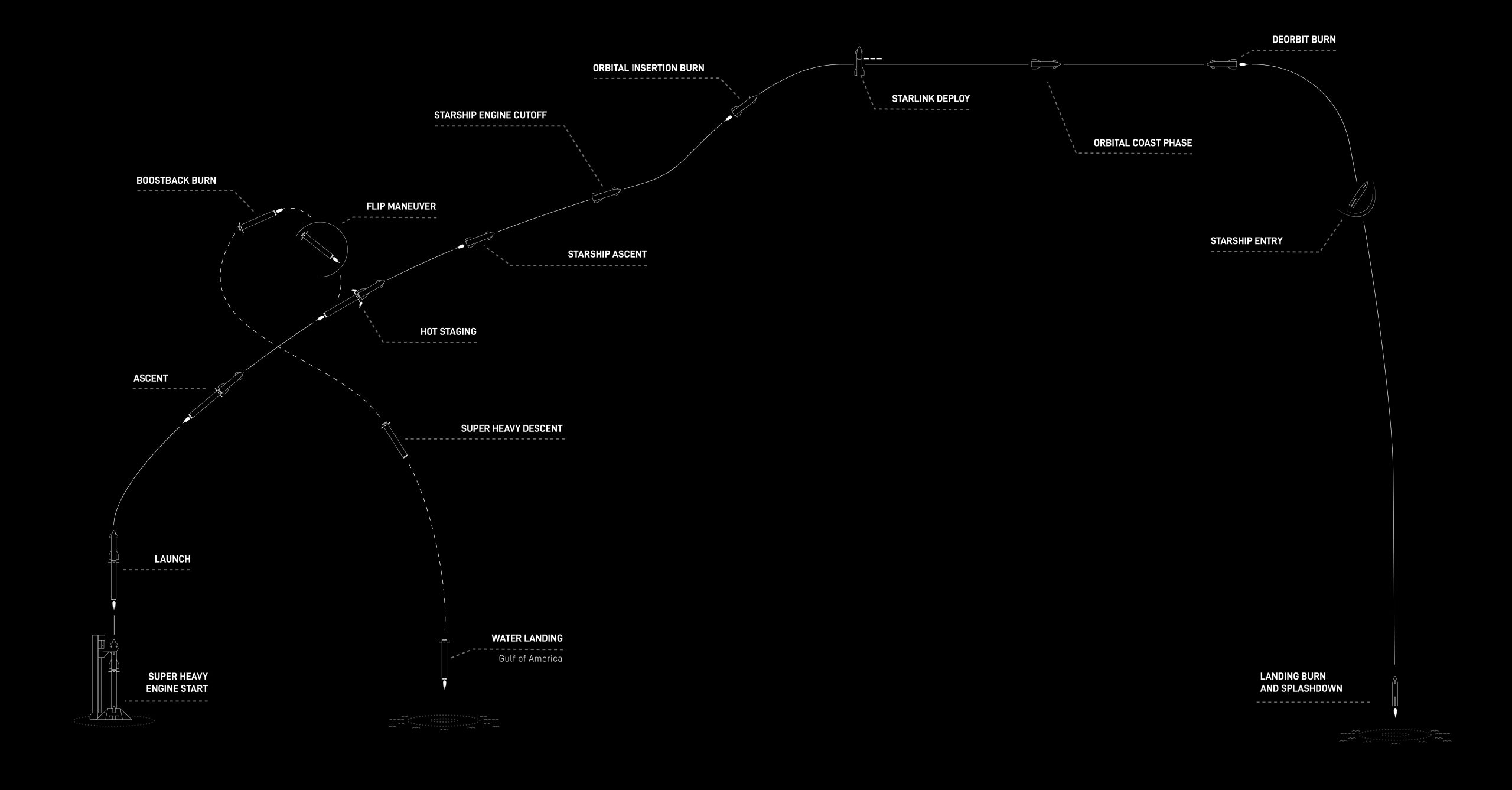
Image credit: SpaceX/Inside Outer Space screengrab
“In the terminal phase of the burn, the three center engines showed signs of ice clogging which triggered an early end to the maneuver. The booster went on to attempt a landing burn, with 8 of the 13 planned engines reigniting before the booster made a hard splashdown in the Gulf.
“The Super Heavy on this upcoming flight has hardware modifications to improve filtering to the engines and software changes to enhance relight reliability,” SpaceX adds.
Starlink deployments
This flight will also mark the first time SpaceX plans to deploy 26 Starlink V3 satellites into the constellation, delivering a payload designed to expand connectivity speeds and reliability around the globe.

Credit: SpaceX/Starlink
The Starship upper stage’s primary objectives include the first orbital insertion maneuver, the deployment of Starlink V3 satellites, a deorbit burn using a single Raptor engine while in space, and a controlled reentry, descent, and splashdown in the Pacific Ocean.
Starlink V3 satellites aim to greatly expand the network’s capacity and user speeds. Each Starlink V3 satellite will add 1 terabits per second (tbps) of capacity to the constellation, for a total of 26 tbps of capacity added on this mission alone. That’s roughly 10x the capacity compared to a single launch of V2 mini Starlink satellites on Falcon 9.
Heatshield scans
After deploying from Starship, the Starlink V3 satellites will unfold their antennas and deploy their solar arrays and make initial contact with the ground and the rest of the Starlink constellation via radio frequency and laser links. The satellites will then begin raising their orbits with their onboard thrusters. Following their on-orbit checkouts, the satellites should begin serving customers as soon as a few weeks after launch.
“Three of the satellites have been modified with a suite of cameras to scan Starship’s heatshield and transmit imagery down to operators to continue testing methods of analyzing Starship’s heatshield readiness for return to launch site on future missions,” reports SpaceX.
Earth Orbits
SpaceX states that Starship will only execute a burn to enter orbit after the flight control team has ensured there is sufficient redundancy on hardware critical to doing the subsequent deorbit burn at the end of the mission.
Starship’s initial orbital mission is expected to fly at an altitude approximately 275 kilometers above Earth and complete approximately six orbits around the planet over the course of a nearly 10-hour flight.
Starship’s splashdown is targeted in the Pacific Ocean to the west of Chile.
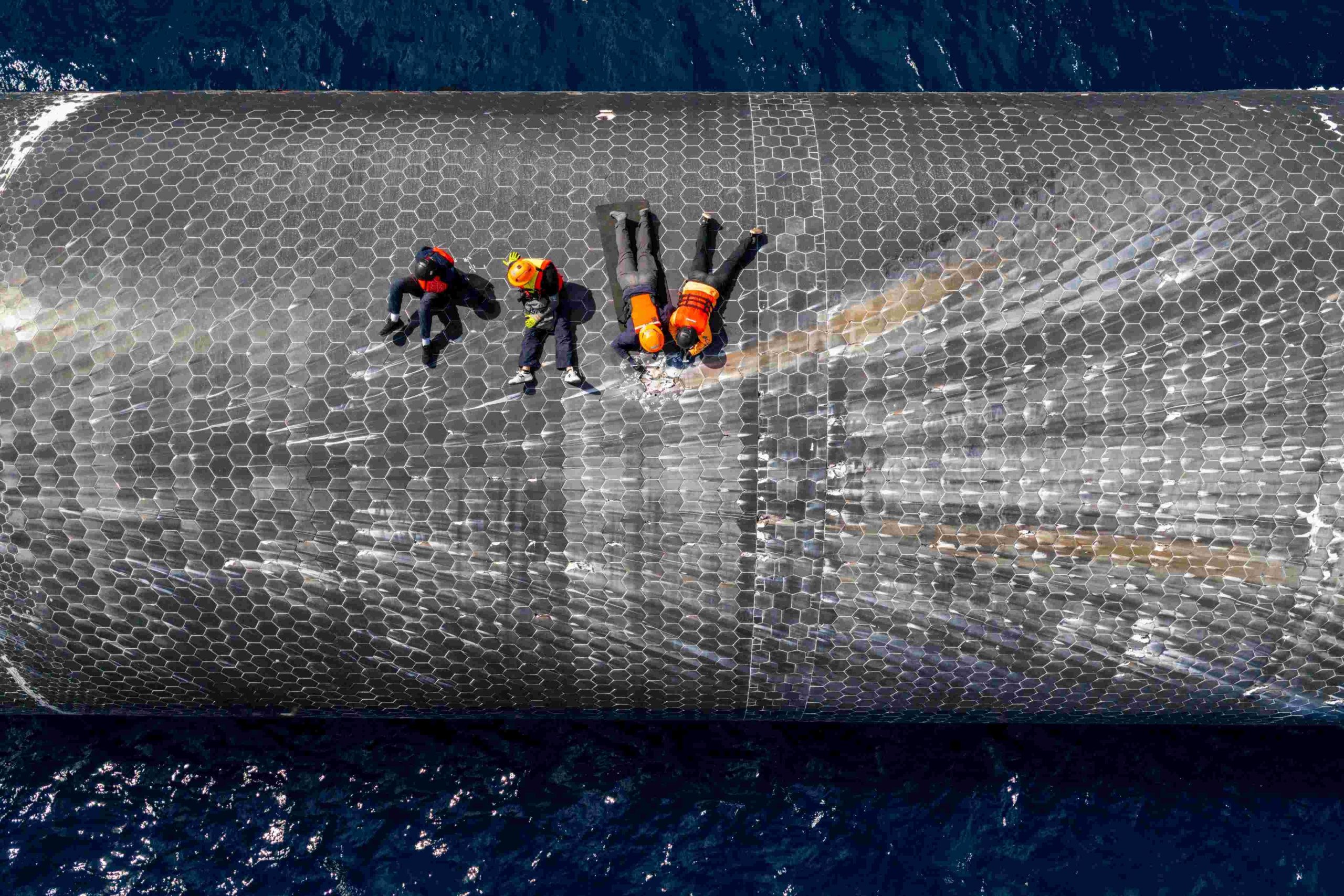
Image credit: SpaceX
Heatshield upgrades
SpaceX points to several upgrades and experiments related to Starship’s heatshield that will also be tested
Some improvements were derived directly from data gathered from the Flight 13 Starship as it floated in the Indian Ocean. They include additional retention mechanisms added to tiles in areas deemed to be at highest risk of falling off during ascent, addressing recently discovered areas that offer flow paths behind tiles for plasma, and flying multiple areas with a curved tile design that has shown the ability to reduce heating in the gaps between tiles.
Two tiles recovered from Ship 40 are planned to be reflown on Ship 41, marking the first tile reuse for Starship.
Live webcast
A live webcast of the flight will begin about 30 minutes before liftoff, which can be watched at https://www.spacex.com/launches/starship-flight-14 and on X @SpaceX.
“Coverage is planned to continue through splashdown, with the potential for hours of live views from Starship as it orbits Earth,” SpaceX states, adding that with all developmental testing, the schedule is dynamic and likely to change, so keep an eye on the SpaceX account for updates.

Image credit: NASA
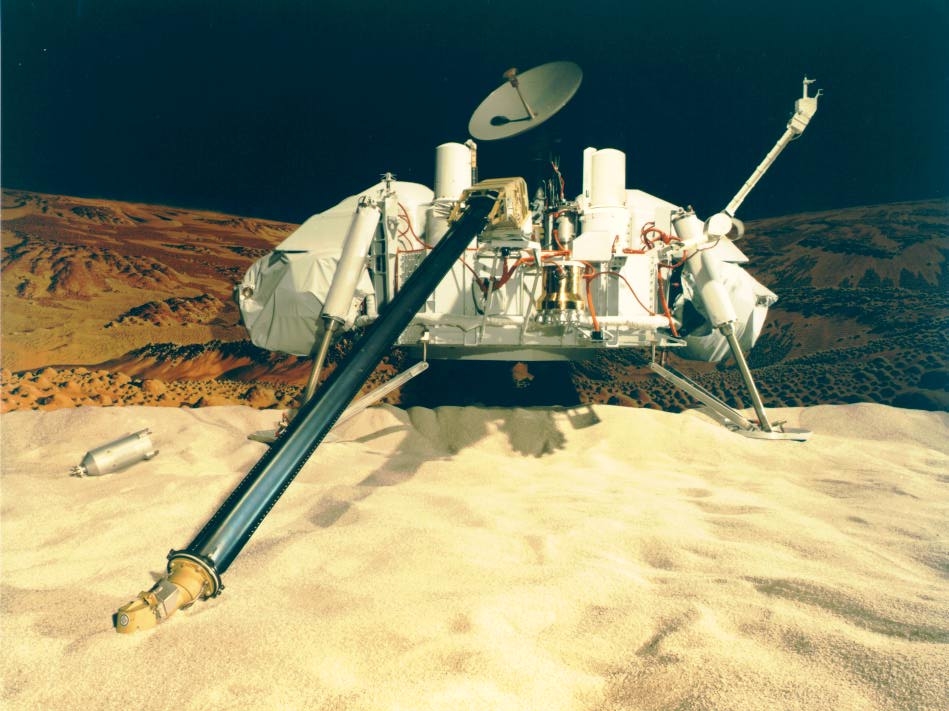
Last July, there were several events commemorating the 50th anniversary of the Viking missions to Mars. Back in 1976, twin spacecraft missions — each consisting of a lander and an orbiter – made their way to the Red Planet and into the history books.
The Viking 1 lander planted its legs on the terrain of Chryse Planitia on July 20, 1976, with the Viking 2 lander touching down months later at Utopia Planitia on September 3.
Search for life
A key duty for the lookalike landers involved scooping up soil samples of Mars and deposited those precious collectibles into onboard, specialized equipment designed to ask a central question: Is there life on Mars?
It is possible that the two robots actually radioed back a very clear comeback: “Can you repeat the question?’’
A reanalysis of the Viking results has recently been done. The observations suggest that Martian soil both oxidized organic nutrients and fixed carbon from CO and/or CO₂ gases—“a combination typical of a microbial community, whose experimental responses no known mineral chemistry has yet reproduced,” a research team reports.
Credit: NASA
Technical reanalysis
The detailed work was led by Jan Spacek, founder and CEO of Agnostic Life Finding Association, Inc. He presently develops life detection devices, from coronavirus to searching for life on Mars as well as within the clouds of Venus.
A preprint of a manuscript submitted to the journal Astrobiology was made available to Inside Outer Space.
The new research – “The case for extant life on Mars: A Technical Reanalysis of the Viking Carbon Assimilation–Pyrolytic Release Experiment” – focuses on that 1976 CAPyR investigation.
Changing interpretation
The paper explains that the CAPyR experiment was originally interpreted as a sign of martian biology. However, the CAPyR investigators themselves “ultimately judged a biological origin unlikely,” in part because the response appeared to be more thermally stable than expected for hypothetical martian biology.
Spacek, along with colleagues Clay Abraham and Steven Benner, point out that more recent reassessments of the Viking biology experiments have emphasized that perchlorate, discovered long after the Viking experiments were done, may change interpretation of certain Viking measurements that were originally suggested to show an absence of life, and possibly to indicate that the Martian soils were ‘self-sterilizing.’
Benner is author of the recently published book, Meet the Neighbors: Life on Mars and How to Find It. (Allen Lane: London, UK; 2026).

Credit: NASA/Ben Clark
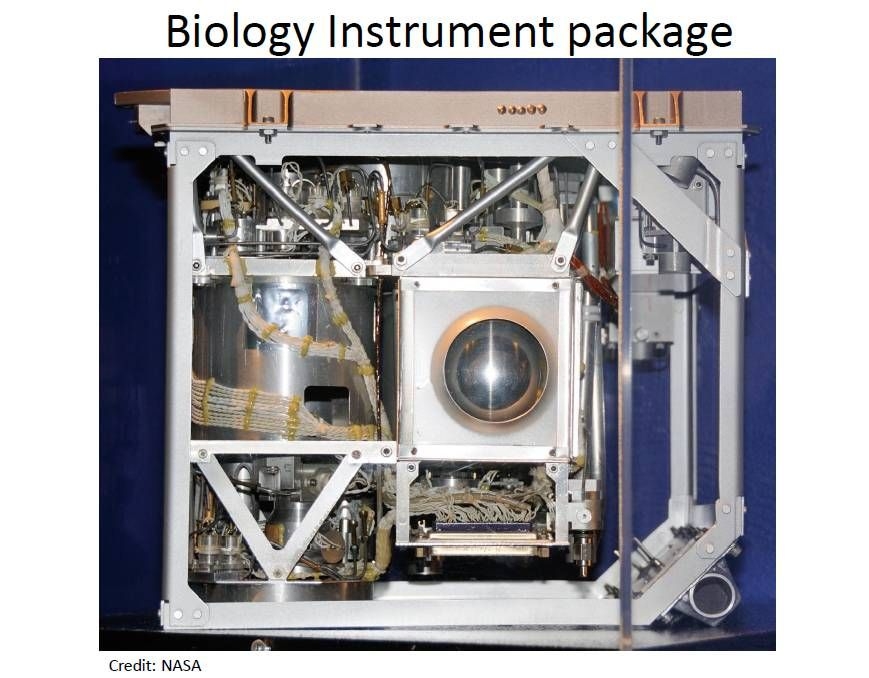
Image credit: Ben Clark
Mars chemistry, mineralogy
In presenting their case for a re-look at Viking data, their reanalysis “motivates experiments seeking to match the manifold of CAPyR results here on Earth, without an expensive flight to Mars.”
Additionally, they observe, “no mechanism has yet reproduced the principal Viking observations as a whole, and those that may have done so remain paradoxical from the perspective of chemical thermodynamics.”
Modern Mars chemistry and mineralogy, the research team explains, “weaken two premises that once favored a nonbiological interpretation of the CAPyR results.” This should motivate renewed consideration of the view that the CAPyR results “remain consistent with biology.”
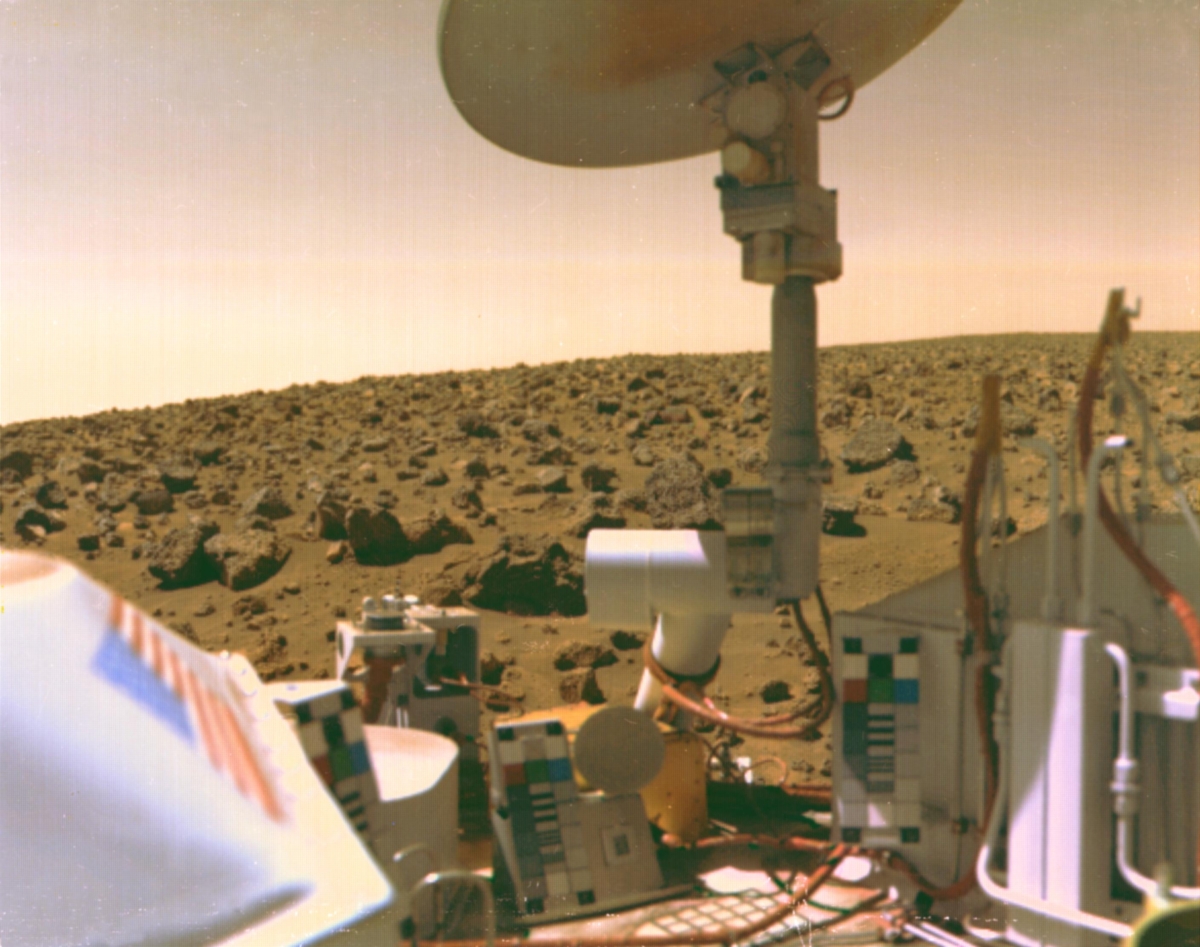
Image credit: NASA
Low-cost missions
Spacek, Abraham and Benner call for redirecting Mars exploration priorities back toward the direct search for extant life on Mars. This priority is also emphasized for the Martian subsurface.
Distributed, low-cost mission architectures provide one practical route for returning modern on-the-spot life-detection experiments to multiple Martian surface and shallow-subsurface sites on the Red Planet.
IMPRESS concept
To that end, Spacek and colleagues are championing a concept called the International Mars Prospecting Ride-Share System, or IMPRESS. The idea is featured on the cover of the September issue of Astrobiology.
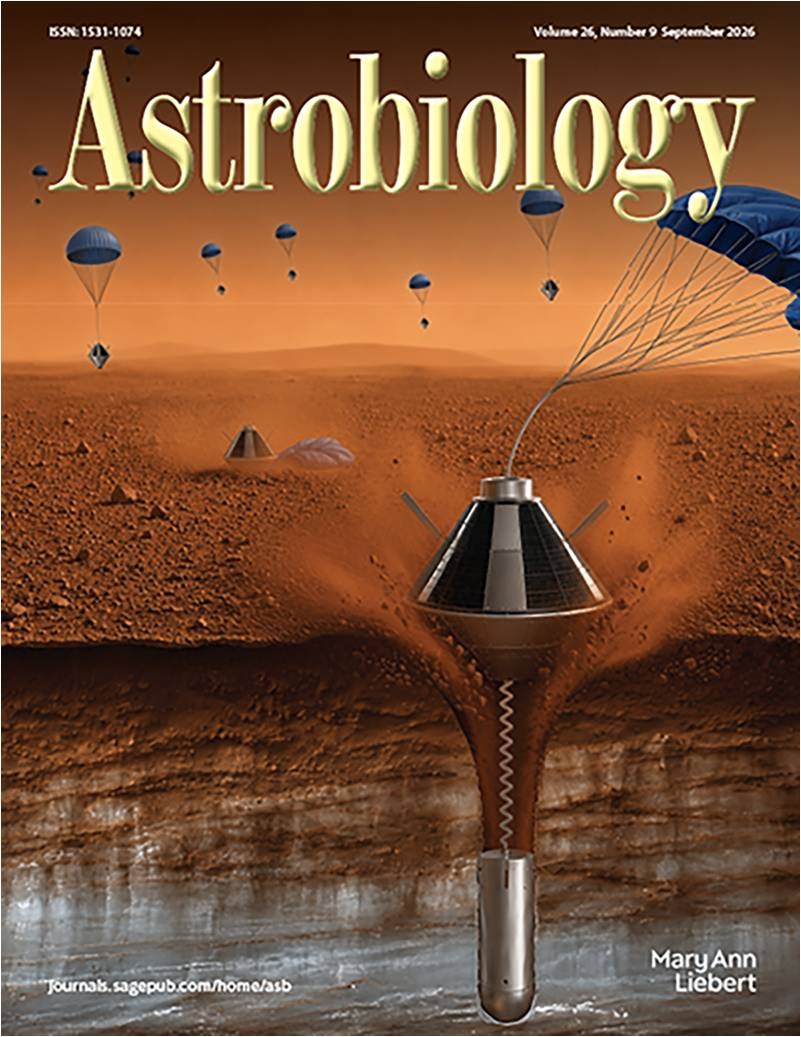
Image credit: Astrobiology
“IMPRESS intends to search for life on Mars before we send humans there and, ideally before [China’s] Tianwen-3 brings samples back,” Spacek states. “The penetrators are not limited to use in astrobiology. They can deliver a wide range of science payloads, prospect for resources, and assess risks before upcoming Mars missions.”
For more information on this innovative mission, go to:
Also, go to the preprint paper — “The case for extant life on Mars: A Technical Reanalysis of the Viking Carbon Assimilation–Pyrolytic Release Experiment” — at:

This is a new documentary film that had its world premiere at the 2026 Telluride Film Festival, held September 4-7.
The director of this film, Nanette Burstein, is well known for her other biopics, including one featuring Hillary Clinton.
This Carl Sagan film is roughly half about Sagan’s professional career and half about his personal life — as a child, as the husband of three different women (including a messy divorce), and dealing with the illness from which he died at a relatively young age.
Burstein relied a lot on the assistance of Sagan’s last wife, Ann Druyan, whom he met while they were working on the Voyager golden records and who assisted with the PBS series and accompanying book “Cosmos,” which made Sagan perhaps the best known scientist worldwide in the last half of the 20th century.
Druyan’s role in assisting Burstein almost made the film as much about her as about Sagan and she is interviewed at length in the biopic. Others interviewed include family members, space artist Jon Lomberg, and several of Sagan’s scientific colleagues.
Popularizer, philosopher, career shaping professor
My view is that Sagan is well known, and worthy of being the subject of a major film, because of his career as a scientist, as a popularizer of science, and as a philosopher about the interaction between science and popular/political culture. So devoting roughly half of the film to his personal life, with all the kinds of issues that affect normal people in their lives, is misplaced. Some important elements of Sagan’s professional life are overlooked as a result.
For example, there is no mention of Sagan’s early career — and later banishment — at Harvard, including his unique collaboration with the Russian astronomer I.S. Shklovskii in writing Intelligent Life in the Universe in the 1960s.
While Sagan was not quite the most creative planetary science researcher of his time — I would give that credit to Sagan’s younger (but never mentioned) collaborator Jim Pollack – his scientific research is underplayed in this movie, which emphasizes instead his important roles shaping NASA missions and science-related political issues like nuclear winter.
There is almost zero reference of Sagan’s role as a university professor in shaping the graduate-student careers of many who became leading planetary scientists in subsequent decades.

Image credit: NASA
Leading skeptic
Sagan’s later interest in the asteroid impact hazard, and debating Edward Teller on the matter, is omitted. His role as a leading skeptic is barely mentioned, except obliquely in reference to his penultimate major book, “The Demon-Haunted World”.
Sagan played other important roles, not treated in the movie, such as editor of the primary technical journal in planetary science, “Icarus”, and co-founder of the Planetary Society.
Nevertheless the treatment of Sagan explaining space to the public is well-done and moving and is accompanied by spectacular images.
Clark R. Chapman is a retired senior scientist for the Southwest Research Institute, Dept. of Space Studies, in Boulder, Colorado. Among numerous accolades, Chapman is recognized for establishing the scientific foundations of asteroid impact hazard assessment and planetary defense.
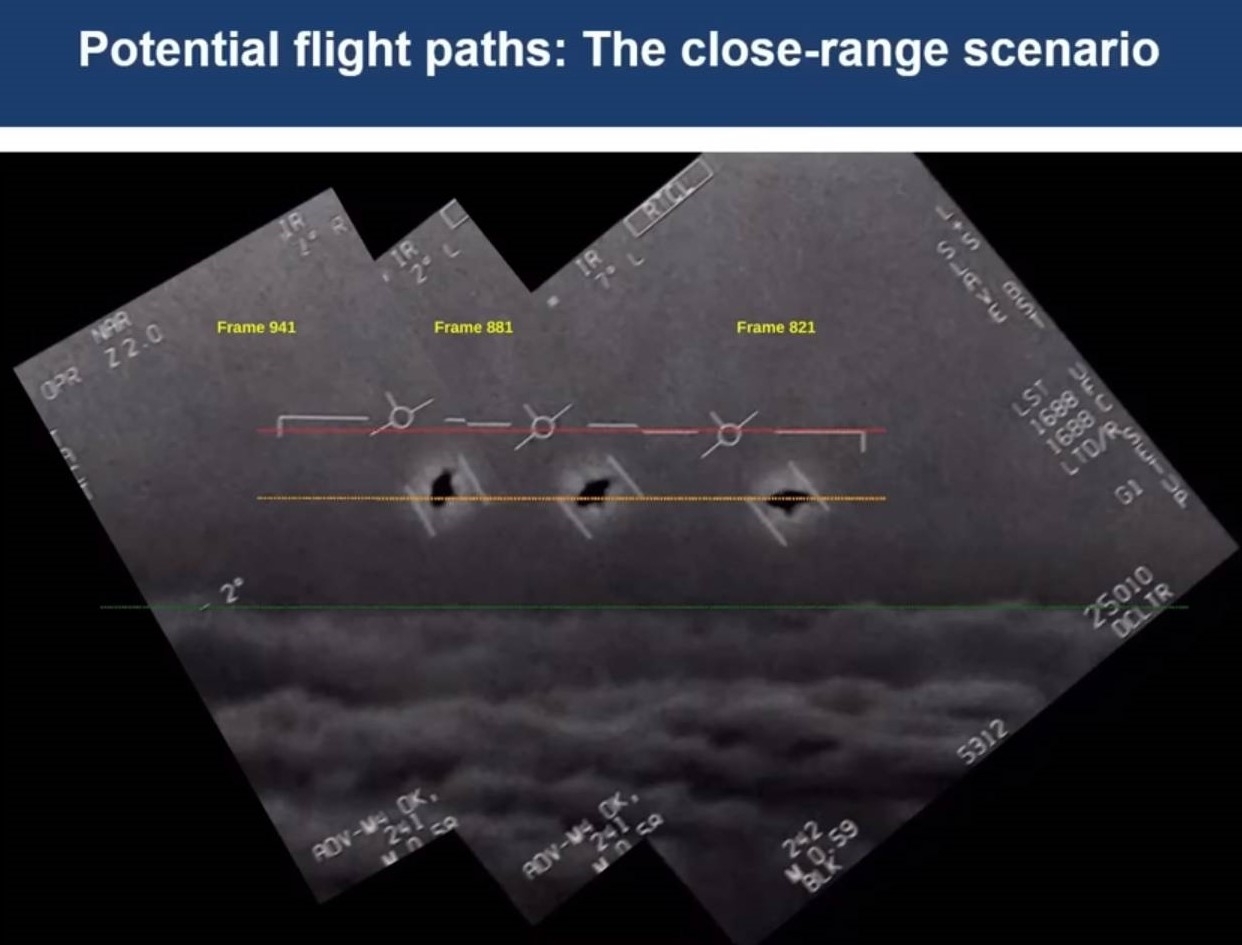
Pilots have repeatedly observed UAP – but what are they?
Image credit: Yannick Peings, Marik von Rennenkampff/AIAA
The U.S. Department of War has issued a “legal waiver” for those wishing to disclose information regarding Unidentified Anomalous Phenomena, better known as UAP, a hybrid term also linked to Unidentified Flying Objects (UFOs).
Military service members, civilian personnel, and contractors are now green-lighted to disclose protected information.
Targeted legal relief
“This targeted legal relief establishes an authorized pipeline for systematic review, security evaluation, and potential declassification of historical and ongoing UAP data in furtherance of national mission objectives,” the U.S. Department of War (DOW) announced today.
In the past, individuals with direct knowledge of UAP-related programs cited concerns regarding potential legal liability, loss of clearances, or administrative prosecution stemming from standard non-disclosure agreements (NDAs) and Special Access Program Indoctrination Agreements (SAPIAs) terms.

Swearing in of witnesses at the September 9 congressional House of Representatives hearing, held by the Task Force on the Declassification of Federal Secrets.
Image credit: Inside Outer Space screengrab
Comprehensive transparency
This legal waiver by the DOW is in alignment with U.S. President Trump’s mandate for comprehensive transparency on UAP under the PURSUE effort.
Advocated by UAP study groups, as well as some members of Congress, this waiver removes those barriers by explicitly authorizing covered disclosures to PURSUE representatives “without triggering breach-of-agreement penalties or standard NDA violations,” the DOW statement explains.
For the full text of the waiver, go to:
Also, go to my new Space.com story — “The US government is ‘sincere in its efforts to understand UAP’, new White House council chair says” — at:

Image credit: Inside Outer Space screengrab

Wait-a-Minute!
Image credit: Barbara David
In classic wait-a-minute style, the European Space Agency (ESA)has released its Space Environment Report 2026
In brief, this chilling report points out that, indeed, Earth’s orbital environment is a finite resource.
Meanwhile, some of its orbits are getting crowded and increasingly churning with deadly, fast-moving pieces of defunct satellites and rockets that threaten our future in space.
Key takeaways
Some key takeaways — based on data collected until the end of 2025 — are:
- The number and scale of commercial satellite constellations continue to increase each year.
- Not enough satellites leave heavily congested orbits at the end of their lives, creating a growing collision risk.
- More than three intact satellites or rocket bodies are reentering the Earth’s atmosphere every day on average. At the same time, ten new payloads are launched daily.
- A new trend has constellations change altitude significantly year-on-year.
On-ground casualty risk
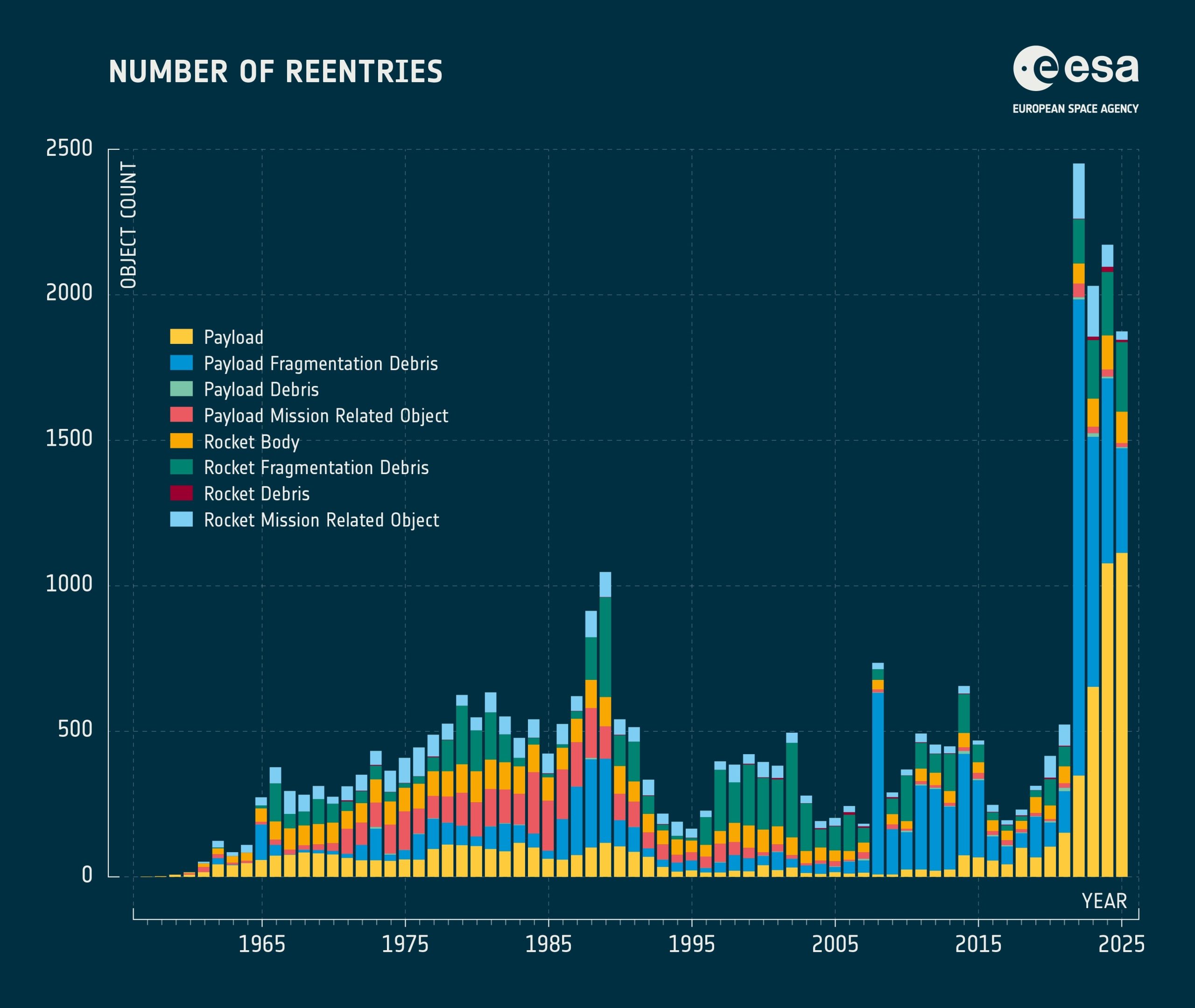
Image credit: ESA Space Environment Report 2026
For the first time, a new report metric has been added: on-ground casualty risk of reentries.
“Even though the numbers are low compared to everyday risks in life, the chance of a casualty increased in recent years due to increased traffic,” the report notes. That is, the casualty risk on the ground from fragments that survive atmospheric reentry is growing.
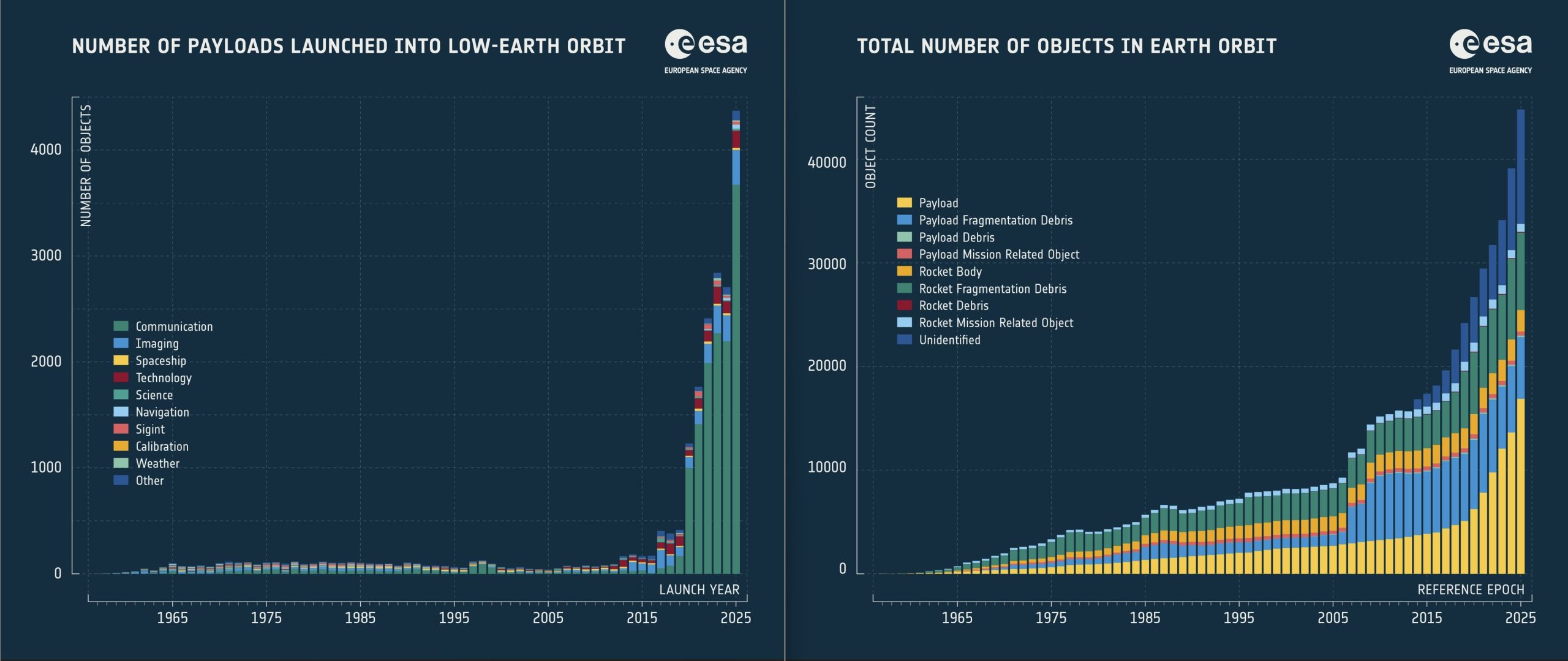
Image credit: ESA Space Environment Report 2026
This upward trend reflects the cumulative effect of more launches, more satellites and more reentries.
Runaway effect
The continued growth trends caused a worrying year-on-year development in the future projections. The expected number of objects and collisions in low-Earth orbit are skyrocketing in a runaway effect, despite the time horizon being shortened from 200 to 100 years.
The “ESA Space Environment Health Index” indicates that, in 2025, the long-term effect of our current activities in space over time got an order of magnitude worse in just one year.
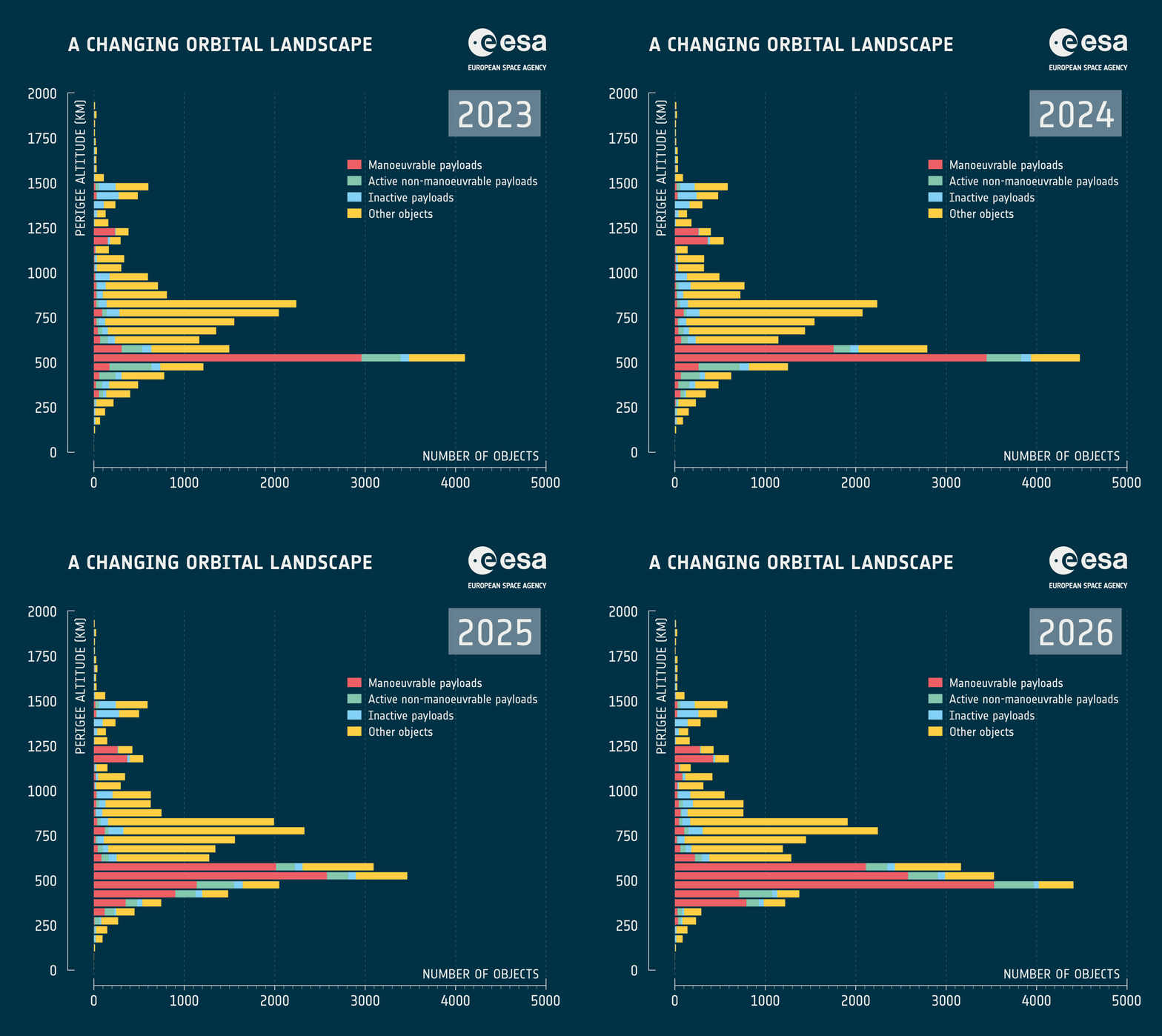
Click on image to view yearly changes. Image credit: ESA Space Environment Report 2026
High price to pay
Active debris removal is required to stop the growth of the number of objects over time that is caused by space debris causing new debris on their own through collisions, known as the Kessler syndrome.
“Some indicators show that the interest in and adherence to space debris mitigation measures is on the rise,” the report points out, “but we need to be faster, more consistent and reliable. Without it, we are saddling future generations with a high price to pay for any activities in space.”
To access the full report – ESA Space Environment Report 2026 – go to:
https://www.sdo.esoc.esa.int/environment_report/Space_Environment_Report_I10R1_20260908.pdf

Wait-a-Minute!
Image credit: Barbara David

Image credit: CCTV/Inside Outer Space screengrab
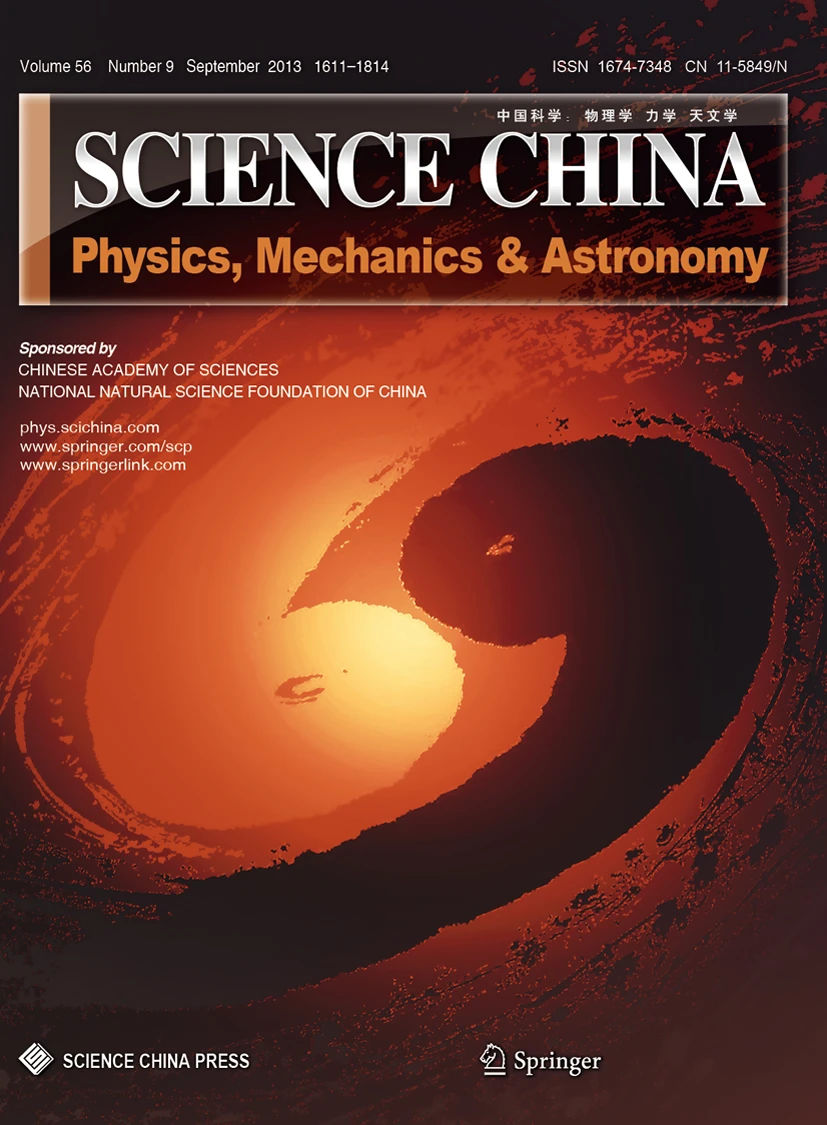
Viewed as a major breakthrough in radio astronomy, China’s Five-hundred-meter Aperture Spherical Radio Telescope (FAST) has detected 156,411 neutral hydrogen sources across nearly half the sky.
The findings, published as a cover story in the journal Science China Physics, Mechanics & Astronomy, position FAST as the new global reference in hydrogen survey research.
Identity cards
As reported by China Central Television (CCTV): The 156,411 galactic “identity cards” are expected to advance multiple frontier fields, including galaxy formation and evolution, dark matter distribution and large-scale cosmic structures, said Chuan-Peng Zhang, lead author of the study and associate researcher at the National Astronomical Observatories of the Chinese Academy of Sciences.
“Neutral hydrogen, the most abundant element in the universe, formed about 13.8 billion years ago when the post-Big Bang universe cooled enough for protons and electrons to combine. It serves as the raw material for stars and galaxies and carries critical information about the universe’s transition from darkness to light,” noted CCTV.
Sensitivity
The element emits a distinct 21-centimeter spectral line that penetrates interstellar dust and travels billions of light-years to Earth. Given the sensitivity of FAST, the observatory is uniquely equipped to capture these faint cosmic signals.
Located in a naturally deep and round karst depression in southwest China’s Guizhou Province, FAST has a reception area equal to 30 standard football fields. As the world’s largest single-dish radio telescope, FAST started formal operations in January 2020 and was officially opened to the world in March 2021.
For details, go to “The FAST all sky H i survey DR2: The FASHI catalog and the H i mass function” at:
https://www.sciengine.com/sci-open/api/v1/open/file/pdf/9B5560F7C1AF4E74BADFF47C5B0092DA
Go to this video at:

Reid Wiseman, commander of NASA’s Artemis II mission, speaking at the National Book Festival.
Image credit: Library of Congress/Shawn Miller
Reid Wiseman, commander of NASA’s Artemis II mission in April, led humanity’s first crewed voyage beyond low Earth orbit in 53 years — a nearly 10-day journey that looped around the moon and back. He told a standing room only audience at the National Book Festival on August 22 about what it looked and like inside the spacecraft.
For the video, go to:

Image credit: CCTV/Inside Outer Space screengrab
China’s Tiangong space station has upgraded its in-orbit kitchen. During a space lecture to science class students, the Shenzhou-23 crew —Zhu Yangzhu, Zhang Zhiyuan, and Lai Ka-ying — covered the crew’s daily orbital meals and upgraded food-heating tools aboard the space station.
Lai, Hong Kong’s first payload specialist, explained the heating facilities, which enable astronauts to enjoy freshly heated meals in the microgravity environment.
“The space station is equipped with two heating devices. The lower microwave heating device works on the same principle as household microwaves and is mainly used for heating staple foods like rice. The upper hot-air heating device adopts 360-degree circulating hot air technology, allowing astronauts to have hot meals in less than half an hour,” Lai reported from space.

Image credit: CCTV/Inside Outer Space screengrab

Image credit: CCTV/Inside Outer Space screengrab
Hot-air-baking
A newly added hot-air baking machine marks the biggest highlight of the upgraded space kitchen, Lai continued.
“The space station is now equipped with a hot-air baking machine. It has solved the challenge of oil fume purification in confined spaces and can raise the maximum heating temperature to 190 degrees Celsius. This allows us to bake chicken wings, pumpkins and cakes right in the space station,” Lai said.
Go to this China Central Television (CCTV) video at:
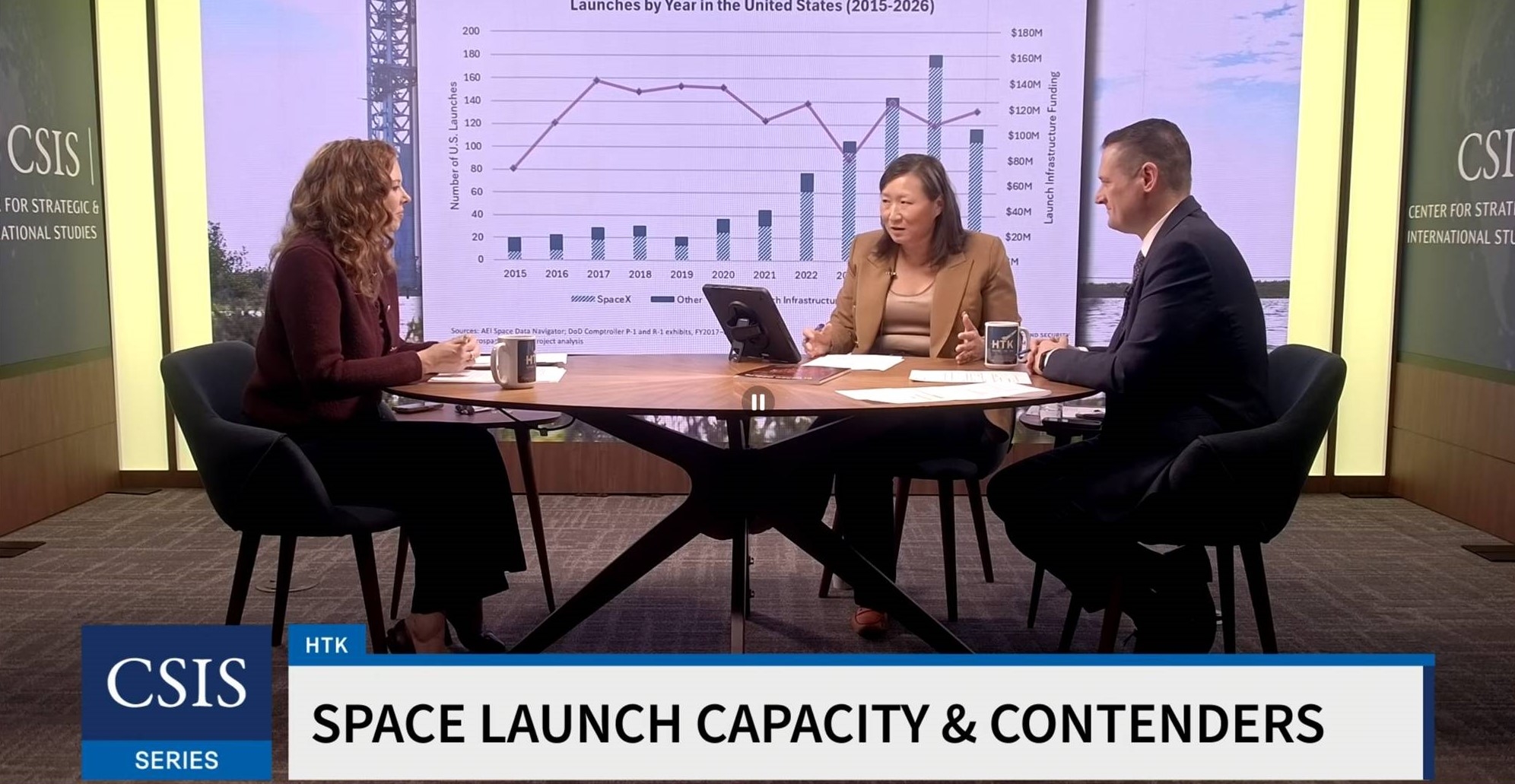
Image credit: CSIS/Inside Outer Space screengrab
On August 20, 2026, U.S. President Trump signed The National Space Transportation Policy presidential memorandum, which sets a target of enabling over 1,000 space launches and reentries annually by 2030 through expanded launch infrastructure and industrial base capacity.
What’s up with China’s plans for launch, and more recently, recoverable rocketry?
What are the challenges and opportunities facing the launch industry – from launch capacity and infrastructure modernization, to supply chain resilience, and to competitiveness and exportability?
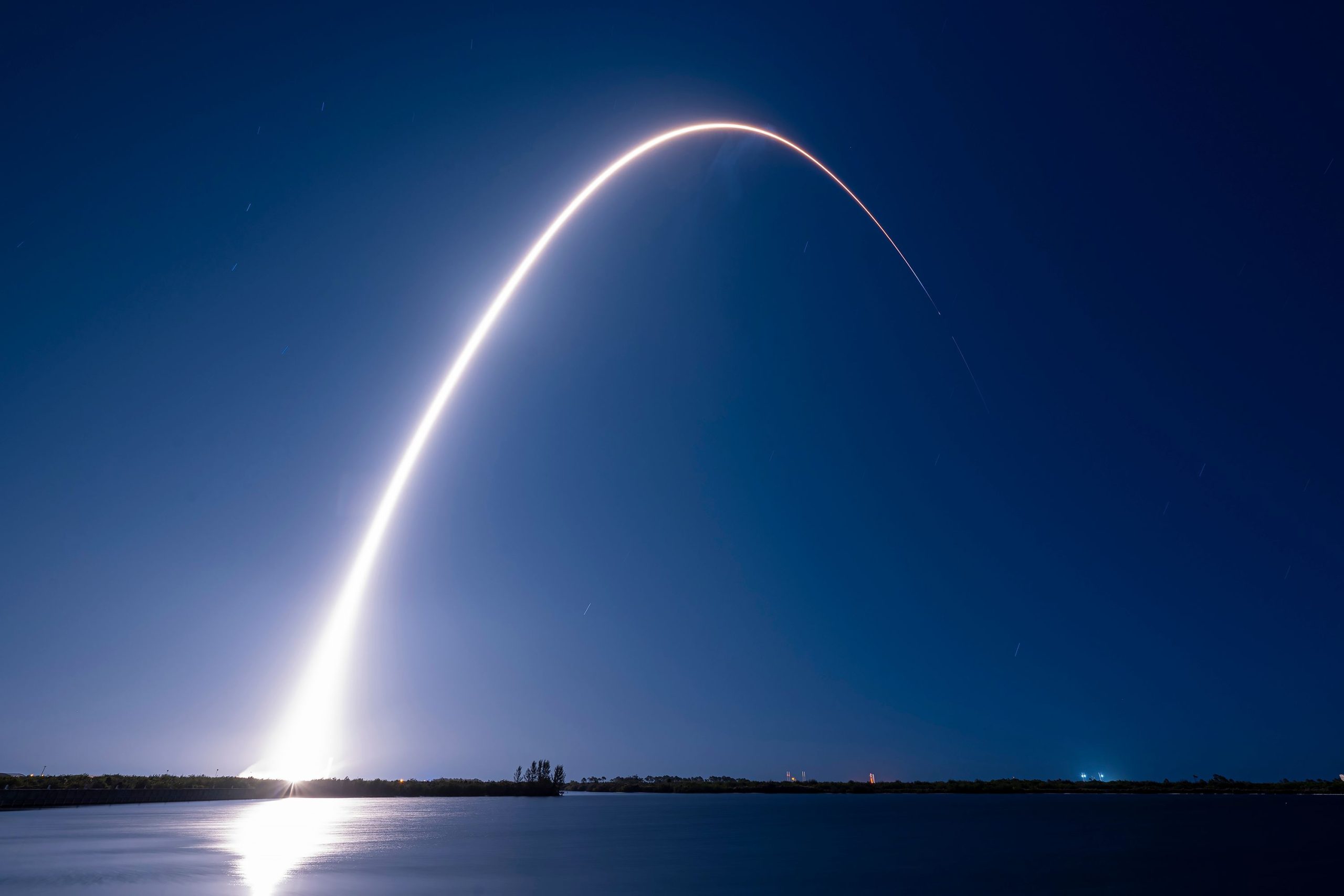
Image credit: SpaceX
That’s the focus of a September 9 Center for Strategic and International Studies (CSIS)/HTK Series.
This conversation features Kari Bingen, director of the CSIS Aerospace Security Project, Tom Karako, director of the CSIS Missile Defense Project, and Heather Williams, director of the CSIS Project on Nuclear Issues.
Take a view of this informative webcast at:

