Archive for July, 2026
 Author:
  July 14th, 2026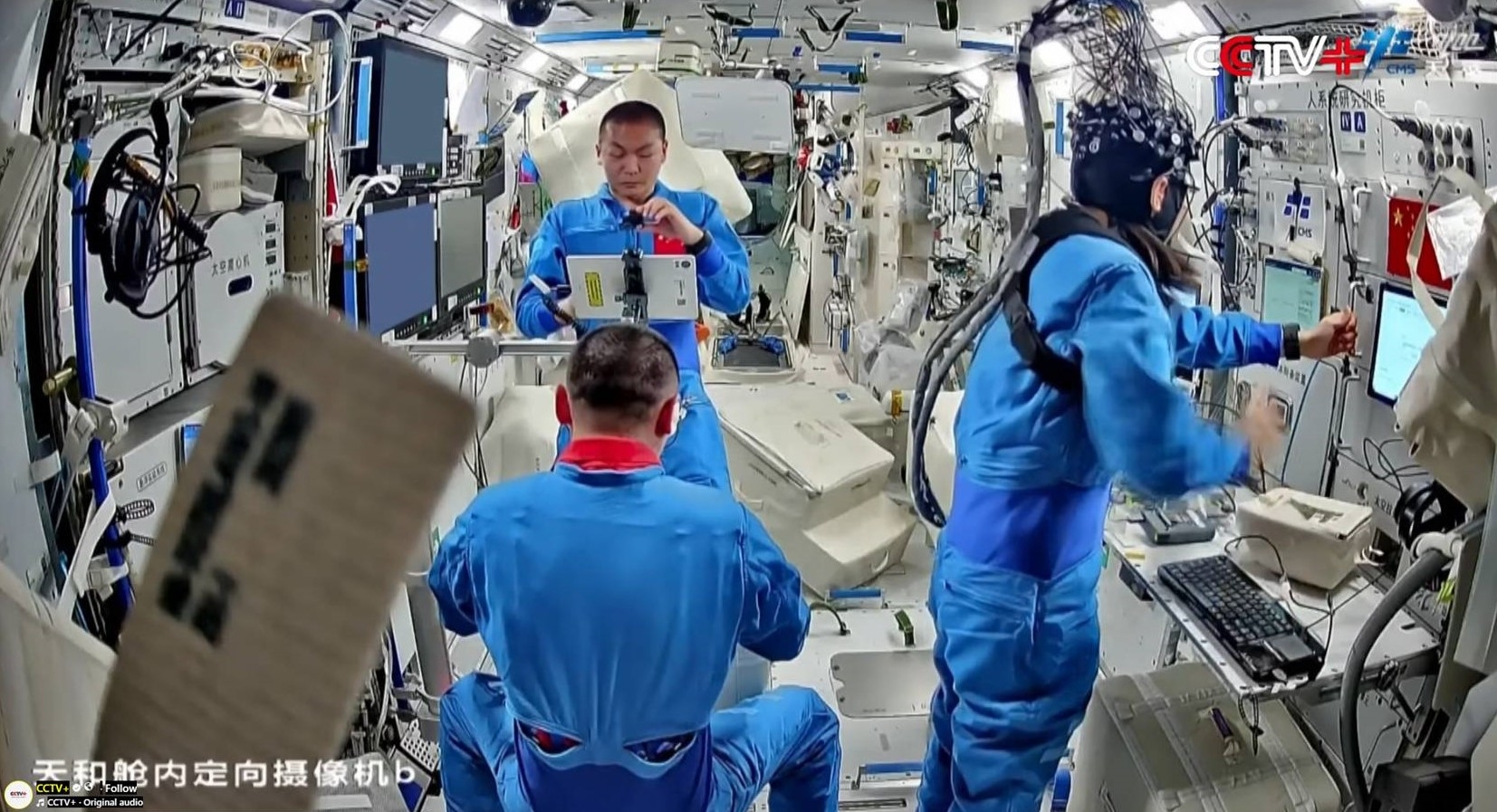
Image credit: CCTV/Inside Outer Space screengrab
The trio of taikonauts that make up China’s current space station crew have spent nearly 50 days on the Tiangong orbital facility.
The China Manned Space Agency (CMSA) state that mission commander Zhu Yangzhu, Zhang Zhiyuan, and Lai Ka-ying — the first astronaut from China’s Hong Kong Special Administrative Region – are deep into running a range of scientific experiments.
The Shenzhou-23 crew are conducting tests, biomechanics research and brain function studies on the effects of microgravity on human health and performance.

China’s Tiangong space station as imaged by MAXAR satellite.
Image credit: MAXAR
Extra-long stay in space
As reported by China Central Television (CCTV), the in-orbit biomechanics data will enable ground researchers to map muscle-tendon interactions under microgravity. The brain-function studies are designed to assess how prolonged spaceflight alters human cognitive control and neural performance.
The Shenzhou-23 crewed spacecraft was launched on May 24.
According to the CMSA, the astronauts are set to carry out a one-year in-orbit stay experiment. As previously reported, one of the three space travelers would be selected for that extra-long stay in space.
For a video from CCTV, go to:
 Posted in
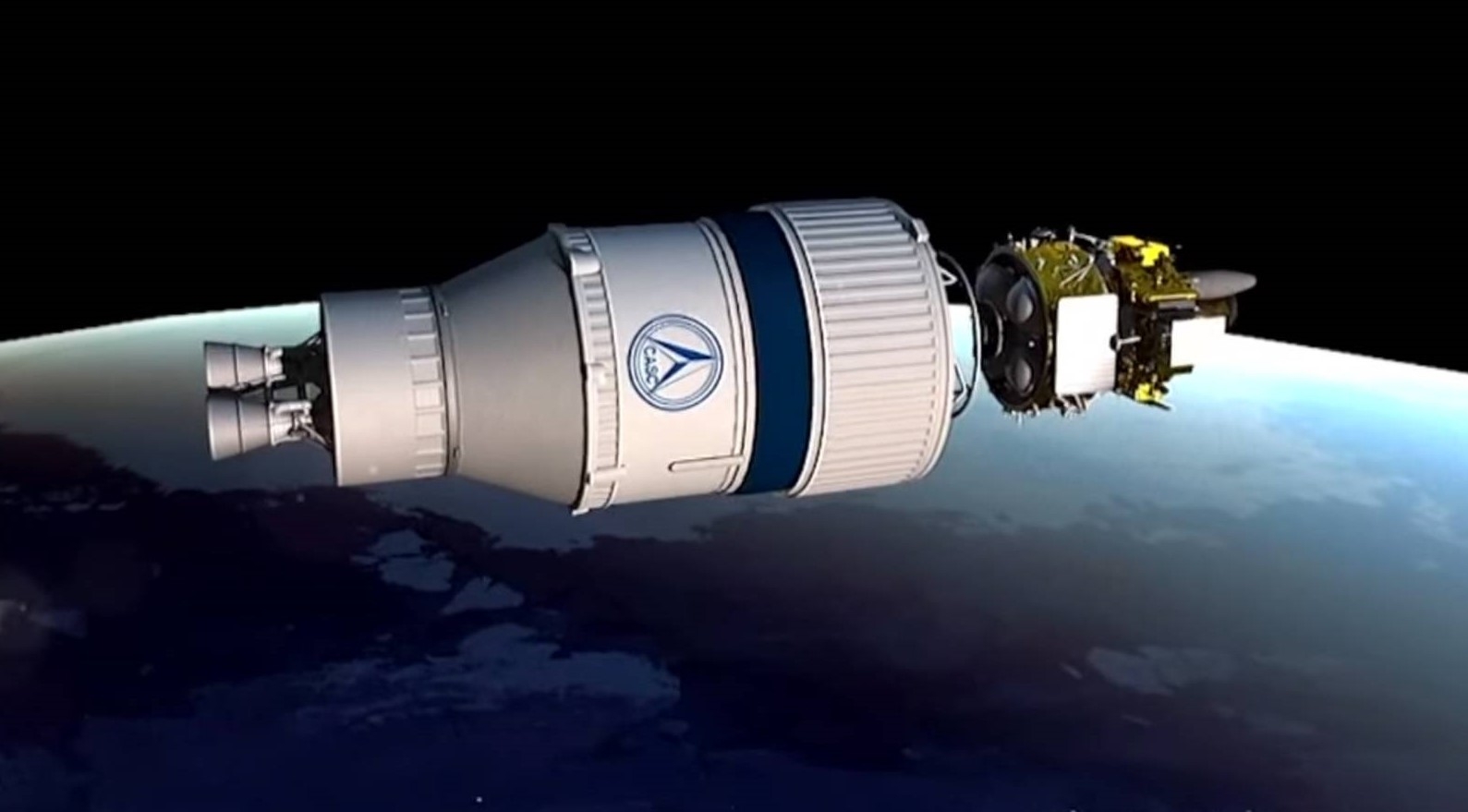
Image credit: CCTV/Inside Outer Space screengrab
China’s Long March 5 Y14 rocket has safely arrived at the Wenchang Space Launch Site – the booster assigned to launch the country’s Chang’e -7 Moon lander mission.
The rocket will undergo final assembly and testing at the launch site together with the Chang’e-7 lunar probe, which arrived earlier, explains the China Manned Space Engineering Office. “Currently, all participating systems at the launch site are carrying out preparations for the Chang’e-7 mission as planned.”

Candidate landing region of China’s Chang’e-7 lunar lander.
Image credit: Yang Liu/Wang C. et al.
South pole target
China’s next robotic lunar mission is slated for departure later this year. Its target is the Moon’s south pole in a search for and detection of water ice. Liftoff is scheduled for late August, with an attempted landing at the end of 2026, according to sources.
“Scientists around the world believe there’s water on the Moon, but no one has found any yet. Now China is going to look for it,” said Ye Peijian, an academician with the Chinese Academy of Sciences (CAS). “And we’re using many methods, from searching the surface to exploring inside craters,” Ye told China Central Television (CCTV) earlier this year.
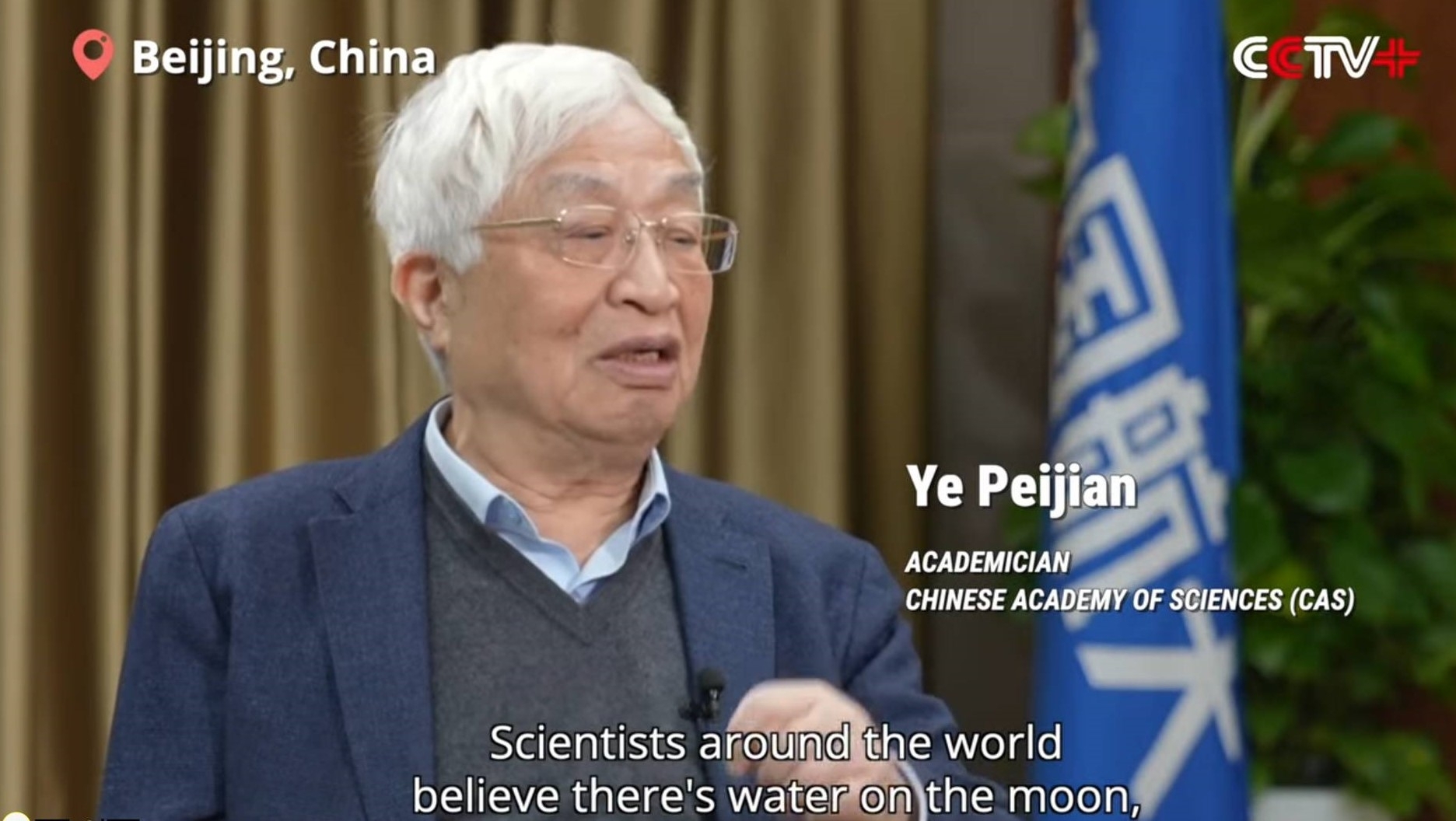
Image credit: CCTV/Inside Outer Space screengrab
Specially designed hopper
The Chang’e-7 mission is composed of an orbiter, a lander, a rover, a hopper and a relay satellite. The specially designed hopper will approach and explore a Sun-deprived lunar shadow crater.
“The mission will adopt an integrated exploration approach, combining orbiting, landing, roving, and hopping, to survey the environment and resources of the lunar south pole, while also carrying out international cooperation,” added CCTV.

China’s Chang’e-7 lander launches hopper craft to search for lunar ice.
Image credit: CCTV/CNSA/Inside Outer Space screengrab
For an informative video on the upcoming Chang’e-7 Moon mission, go to:

Image credit: Reflect Orbital
Last week, the Federal Communications Commission (FCC) granted Reflect Orbital a license to launch into Earth orbit its demonstration satellite, Eärendil-1.
Reflect Orbital has manifested Eärendil-1 on a SpaceX rideshare mission, currently scheduled to launch this year.
“Our inaugural mission will be a key moment in our journey, providing the opportunity to validate our technology and the safeguards we have developed, and to collect real-world data to inform our future plans,” explains Reflect Orbital.
Targeted areas
Reflect Orbital is exploring a new way to extend the utility of sunlight: reflecting sunlight from orbit to precise, targeted areas on Earth.
The FCC approval is only for one satellite, dubbed Eärendil-1 – a steerable thin-film reflector measuring some 60 feet by 60 feet.
“Our goal is to deliver light and energy to help make existing solar infrastructure more useful beyond the hours when direct sunlight is available, reduce fossil-fuel dependence, increase energy resilience, and support critical operations,” explains Reflect Orbital.
“We’re grateful to the FCC for recognizing our responsible approach to development and deployment, and we’re so excited to have the opportunity to start demonstrating the significant benefits of our technology to the world,” the space group adds.

Image credit: Reflect Orbital
Long-term vision
The long-term vision of Reflect Orbital is to operate more than 50,000 satellites by 2035.
What’s possible with a spot of light? According to Reflect Orbital:
Response: Illuminate disaster zones and search-and-rescue missions.
Industrial: Extend working hours, improve safety, light remote sites.
Agriculture: Tailor growth cycles, extend seasons, boost yields.
Civilizational: Replace streetlights, reduce light pollution, enhance urban life.
Defense: Uninterrupted solar power and lighting for critical defense operations.
Experience: Unforgettable nighttime experiences for events and public spaces.
Image credit: FCC
Public interest
“After review of the record, we find grant of Reflect Orbital’s application, with conditions, serves the public interest, notes the FCC.
“Earendil-1 is a single satellite and a limited, short-duration technology test exercise designed to evaluate the feasibility of Reflect Orbital’s proposed concept and to identify any challenges associated with future iterations of the technology,” explains the FCC. “The results of this single-satellite mission will inform whether the concept is viable and will assist the company, its prospective customers, and other stakeholders in assessing any future largerscale deployment.”
Go to this FCC document that provides the go-ahead for the test satellite launch at:
https://docs.fcc.gov/public/attachments/DA-26-706A1.pdf
For more information on Reflect Orbital’s plans at:

Harvard astrophysicist Avi Loeb, leader of new UAP Science Advisory Council.
Image credit: Lotem Loeb
Note: There are two new Council members and a new website at:
https://uapsac.com/
The two new UAP Council members are:
Ravi Kopparapu, a NASA Goddard Space Flight Center expert having research interests in extrasolar planet habitability, atmosphere modeling and characterization.
Jacob Haqq Misra of Blue Marble Space, a meteorology and astrobiology specialist.
Also, corrected Council member name is Robin Hanson.
Instrumentation, data analysis, and collection standards
Harvard astrophysicist Avi Loeb has orchestrated a new look at Unidentified Anomalous Phenomena (UAP), focused on evidence, instrumentation, data analysis, and collection standards.
The UAP Science Advisory Council, Loeb explains, was established by the White House, the Pentagon’s All-Domain Anomaly Resolution Office (AARO), the Office of the Director of National Intelligence (ODNI), the Federal Bureau of Investigation, and other members of the Intelligence Community.
Amazing A-team
Loeb also leads the Galileo Project, designed to bring the search for extraterrestrial technological signatures of extraterrestrial technological civilizations “from accidental or anecdotal observations and legends to the mainstream of transparent, validated and systematic scientific research.”
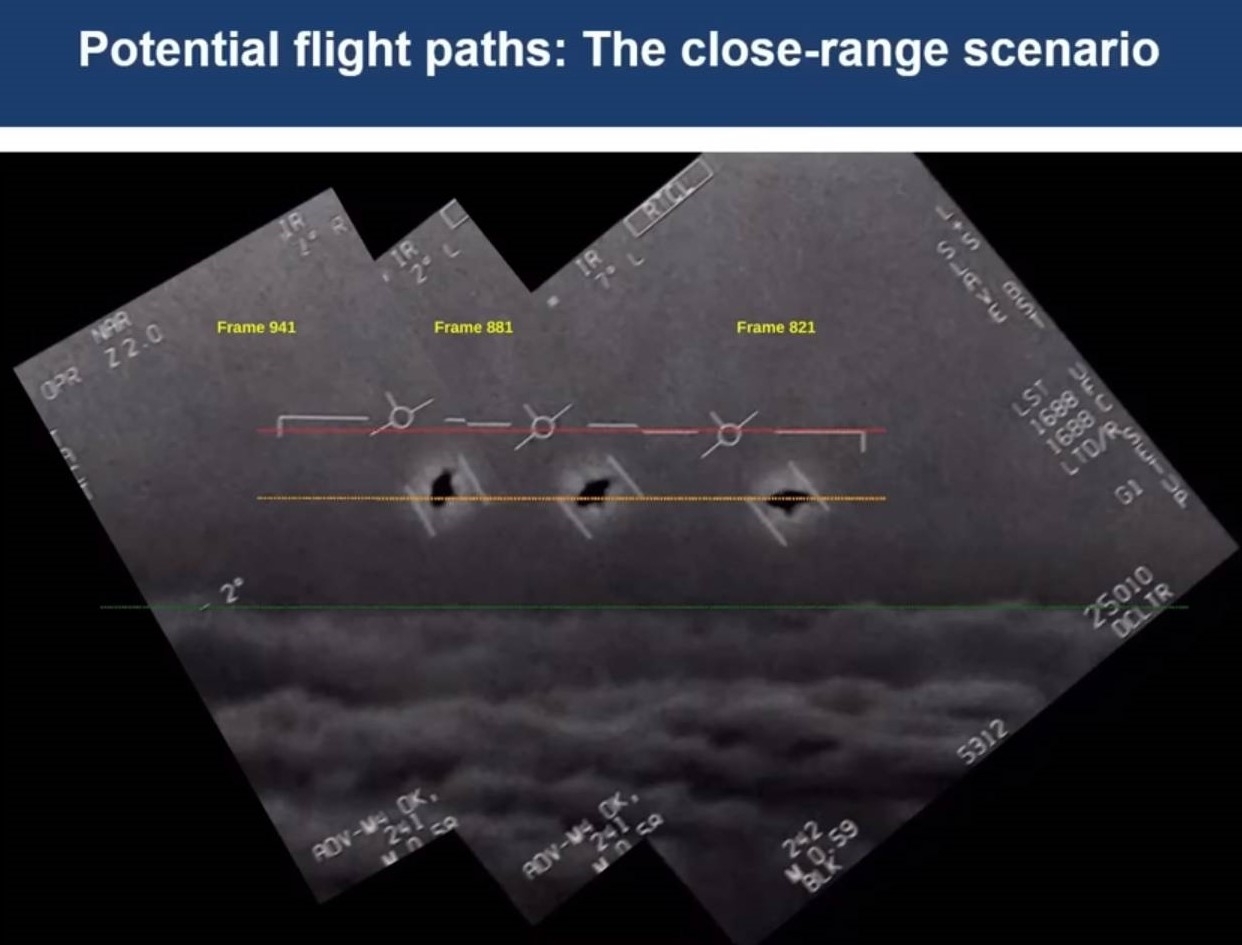
Pilots have repeatedly observed UAP – but what are they?
Image credit: Yannick Peings, Marik von Rennenkampff/AIAA
As chair of the just-formed Council, Loeb has built a team of researchers that he describes as “an amazing A-team of exceptional scientists and experts.” Members of the group come from a wide range of disciplines from data science and instrumentation to biology, oceanography, anthropology, and psychology.
“We approach this topic with the same rigor we apply in our respective scientific fields and we hope to provide an unbiased analysis on this topic,” Loeb explains.
Go to my new Space.com story — White House appoints Harvard astronomer Avi Loeb to lead new UFO study group – at:
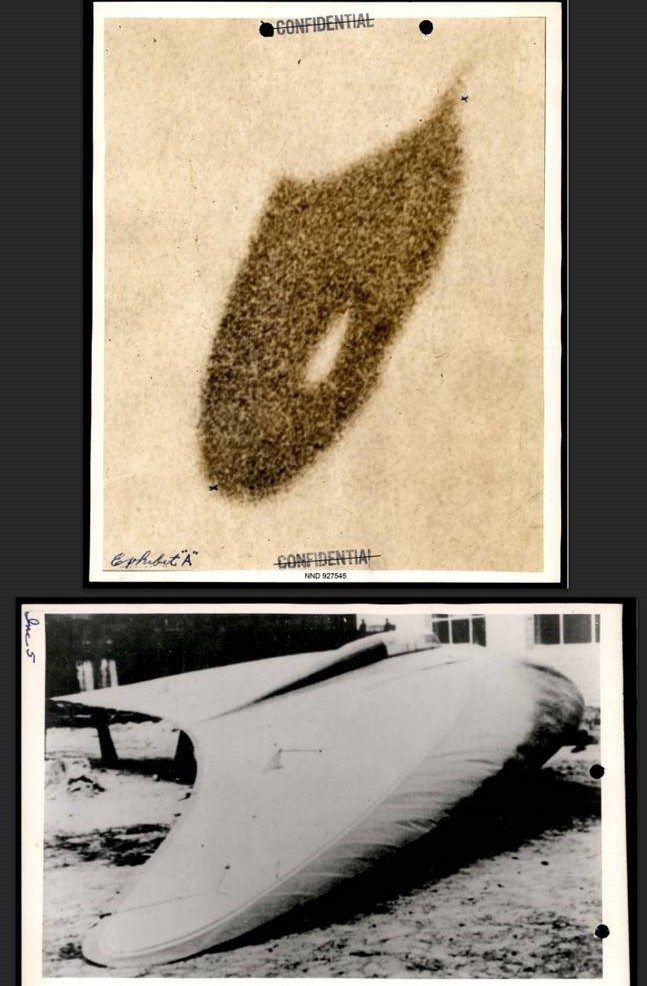
Today, the Department of War published the fourth release of declassified and historical Unidentified Anomalous Phenomena (UAP) files as part of the Presidential Unsealing and Reporting System for UAP Encounters (PURSUE).
The fourth release of UAP files are available now on https://www.war.gov/UFO/
Green fireballs
There are a large number of documents released, sure to keep UFO/UAP researchers busy.
For instance, there’s a transcript of a 1949 conference held at Los Alamos Scientific Laboratory (now Los Alamos National Laboratory), Los Alamos, New Mexico. Attendees included several eminent scientists and physicists, many of whom had contributed to the development of the first nuclear weapons during the Manhattan Project.
Among the attendees was Dr. Edward Teller. He joined others to discuss and gather hypotheses to account for the nature and origin of a phenomenon involving “green fireballs” that had been reported over a period of several months in the vicinity of the laboratory.
“The group did not come to a consensus on a likely attribution for the phenomenon,” the website explains, “though a leading hypothesis was that the observations may have been related to meteors entering the atmosphere at a shallow angle and high altitude.”
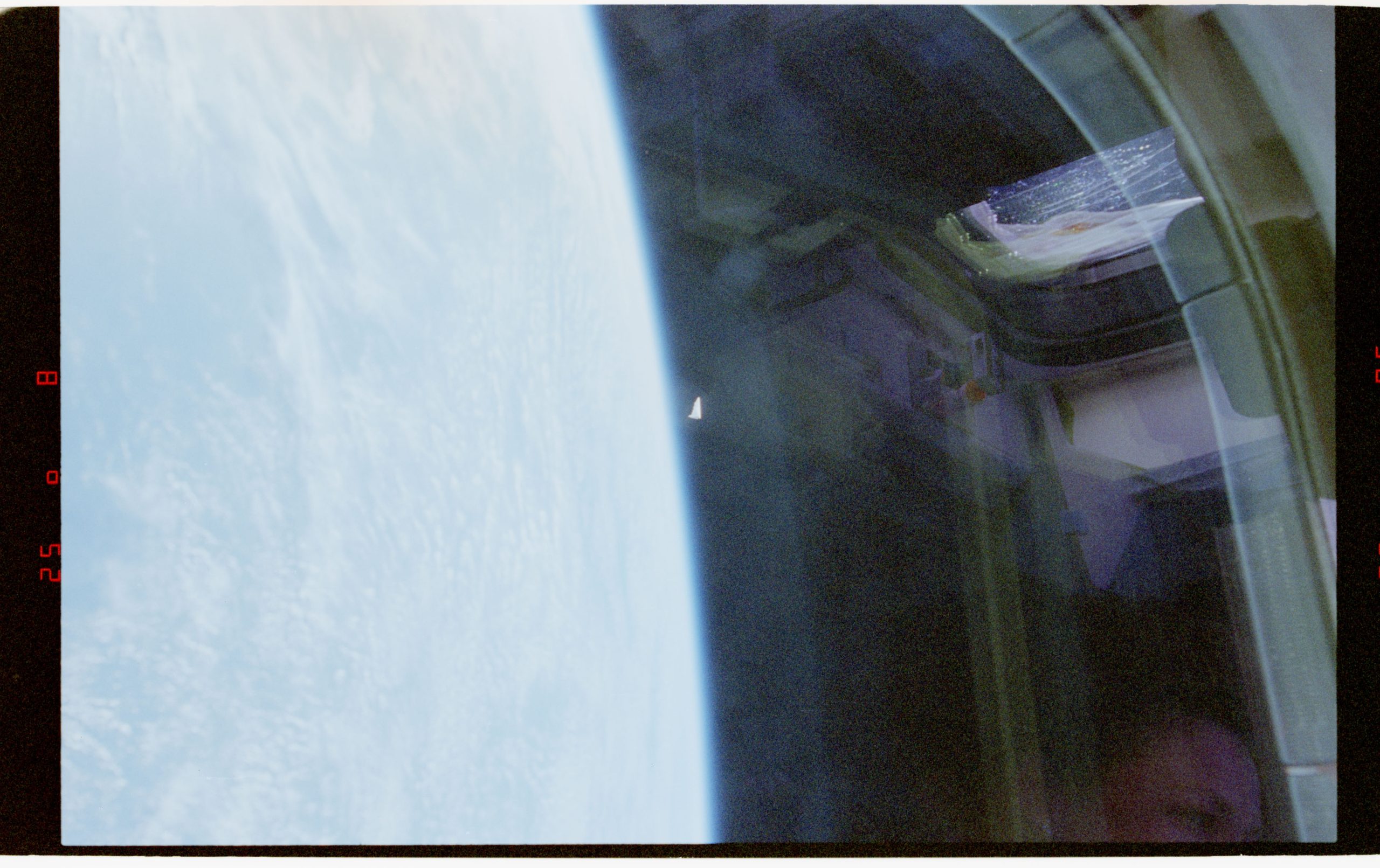
During STS-80, between November 19 and December 7, 1996, astronauts aboard Space Shuttle Columbia captured a series of three images of an unidentified object in low-Earth orbit. In the second photograph, the object is visible near the center of the frame, to the right of the limb of the Earth. It appears to have rotated or tumbled about its major axis, which is consistent with the behavior of a free-floating object.
Image credit: NASA
CIA-convened panel warning
Another file contains an initial report from the Air Materiel Command regarding Project Sign – a 1948-1949 U.S. Air Force program to investigate the nature and origin of unidentified flying objects (UFO). The report details 100 UFO sightings from 1947-1948.
Also in the roster of documents, correspondence and reports dated 1952–1953 from the Scientific Advisory Panel on Unidentified Flying Objects, convened by the CIA’s Office of Scientific Intelligence.
“The panel’s primary conclusion was that “flying saucers” did not pose a direct physical threat to the national security of the United States. The panel found no evidence that these phenomena were attributable to hostile foreign artifacts or indicated a need to revise existing scientific concepts,” the website notes.
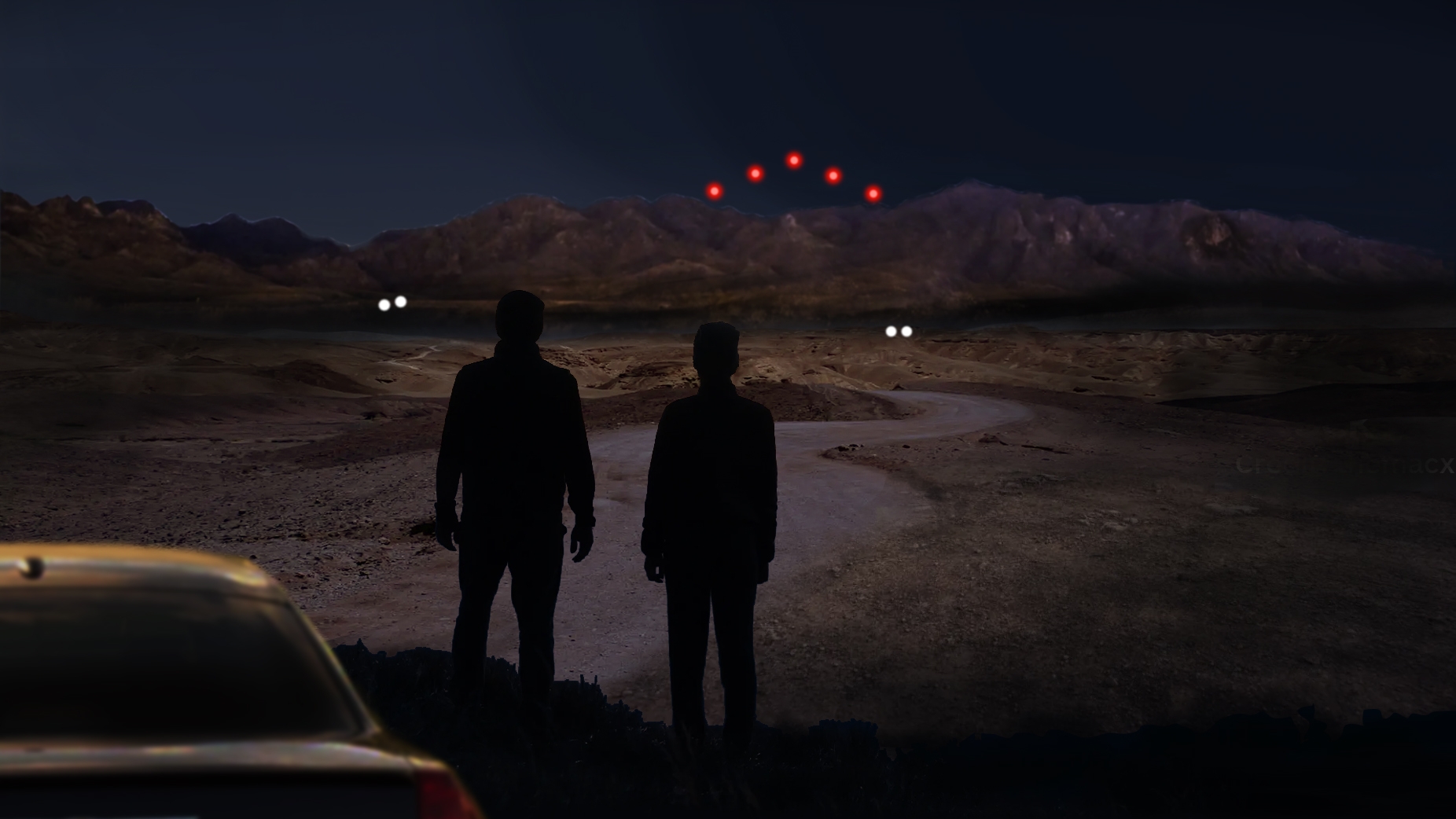
Rendering of a sighting incident.
Image credit: FBI
Indirect threat
However, the panel identified a significant indirect threat stemming from the public’s fascination with the subject.
“The panel concluded that the high volume of reports, encouraged by a ‘sensationalist press,’ could overwhelm and clog vital intelligence and communication channels, potentially distracting from genuine threats,” it is noted.
Furthermore, the CIA-convened panel warned that a “morbid national psychology” could be exploited by adversaries to incite “hysterical behavior and harmful distrust of duly constituted authority.” The panel recommended an official policy of “debunking” to “strip the UFO subject of its mystery,” alongside a training initiative for military personnel to better recognize and filter out misidentified objects, thereby reducing communication “noise” and allowing the national security apparatus to focus on more “legitimate defense concerns.”
The collection continues to be housed on WAR.GOV/UFO, and the Department will release additional files on a rolling basis.
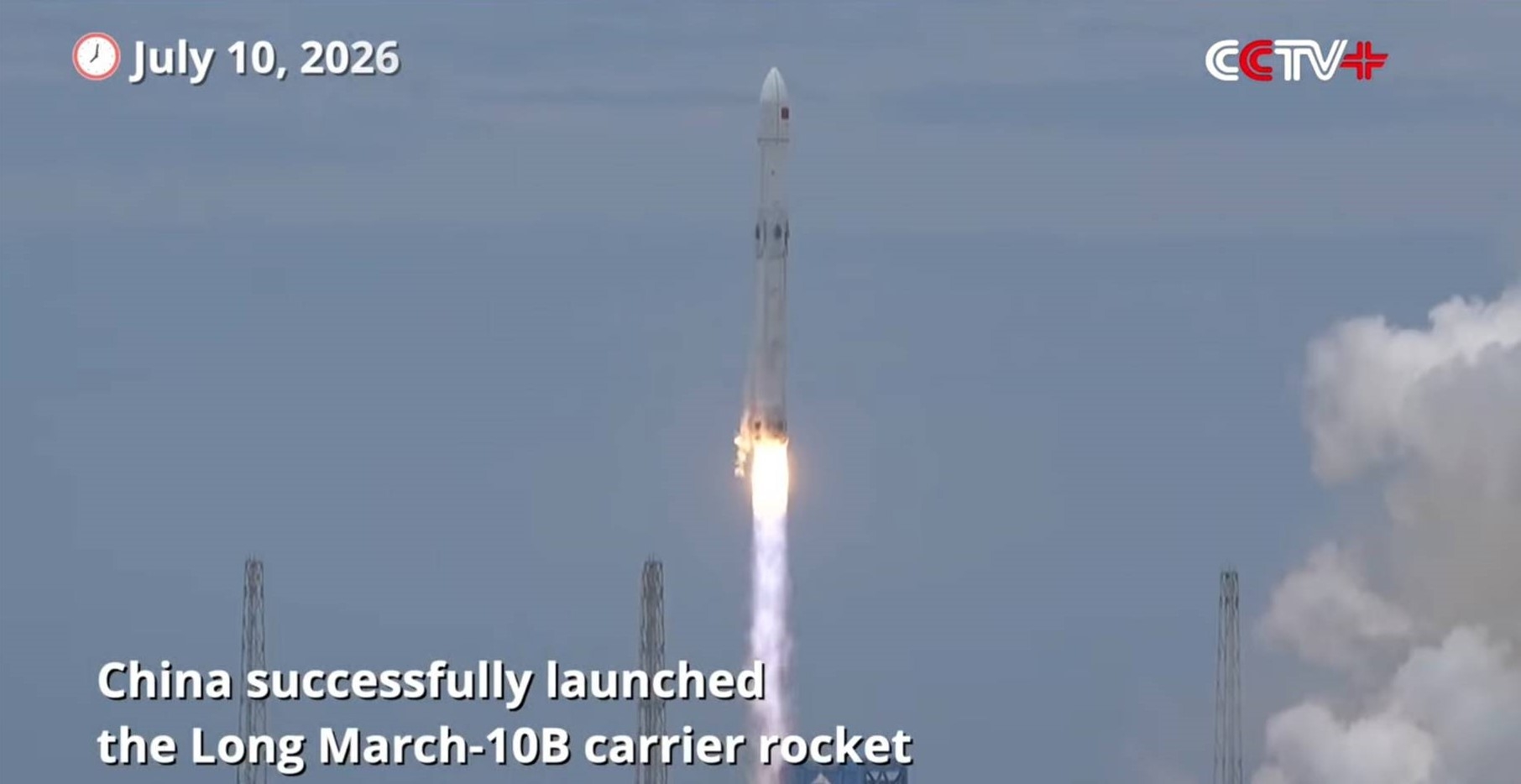
Image credit: CCTV/Inside Outer Space screengrab
A Long March-10B carrier rocket blasted off from the Hainan commercial spacecraft launch site in Wenchang, south China’s Hainan Province on July 10, 2026.
On its maiden flight, the Long March-10B achieved its first-ever controlled recovery of the rocket’s first stage.
Seaborne net-capture system
About six minutes after the separation of the rocket’s first and second stages, that first stage returned and was captured on a seaborne platform via a net-capture system.
The recovery represents China’s first successful controlled recovery of a carrier rocket’s first stage, tagged as a breakthrough in the country’s reusable rocket technology.
Developed by the China Academy of Launch Vehicle Technology (CALT) under the China Aerospace Science and Technology Corporation (CASC), the Long March-10B is a large, two-stage liquid-fueled carrier rocket featuring a 5-meter diameter core. Standing approximately 63 meters tall with a takeoff thrust of 890 tons, the rocket utilizes liquid oxygen and kerosene for its first stage and liquid oxygen and methane for its second.
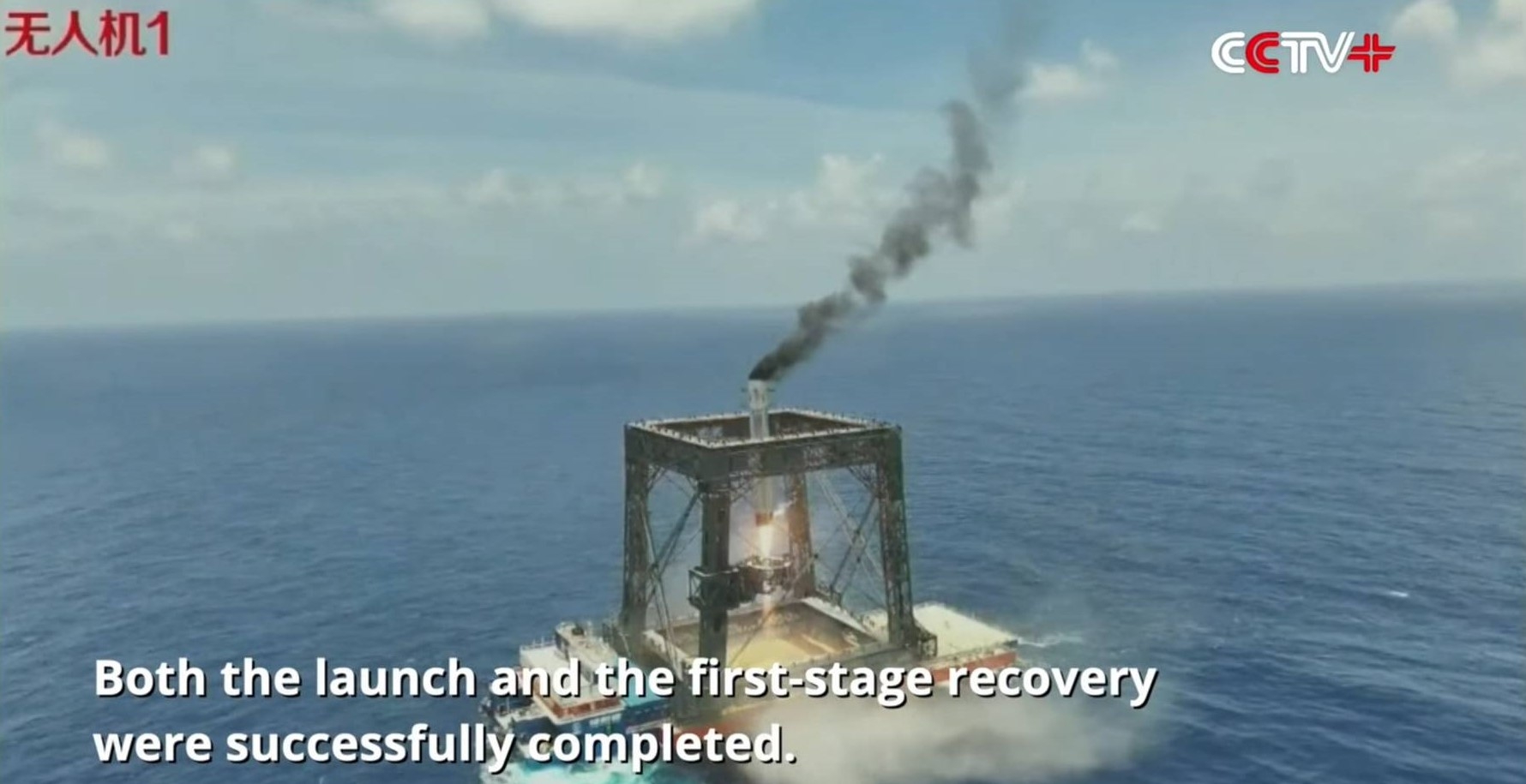
Image credit: CCTV/Inside Outer Space screengrab
Core technologies
Friday’s mission successfully validated several core technologies:
- Combined configuration optimization
- Methane autogenous pressurization
- Propellant management using baffled tanks
- It demonstrated critical first-stage reuse technologies such as multiple engine restarts, high-altitude ignition, adaptability to complex aerothermal environments, high-precision navigation and control, and a sea-based net-capture recovery system.
China Central Television (CCTV) said that, looking ahead, the development team plans to continuously optimize the rocket’s performance and accelerate the iteration of its reusable technologies, with a targeted first-stage reuse flight scheduled for the end of this year.
Commercial market
“The Long March-10B carrier rocket is mainly designed to serve the commercial market. This time, we’ll carry out precise recovery and ultimately land the rocket’s first stage on this large net,” said Hao Jinjie, a CASC researcher.
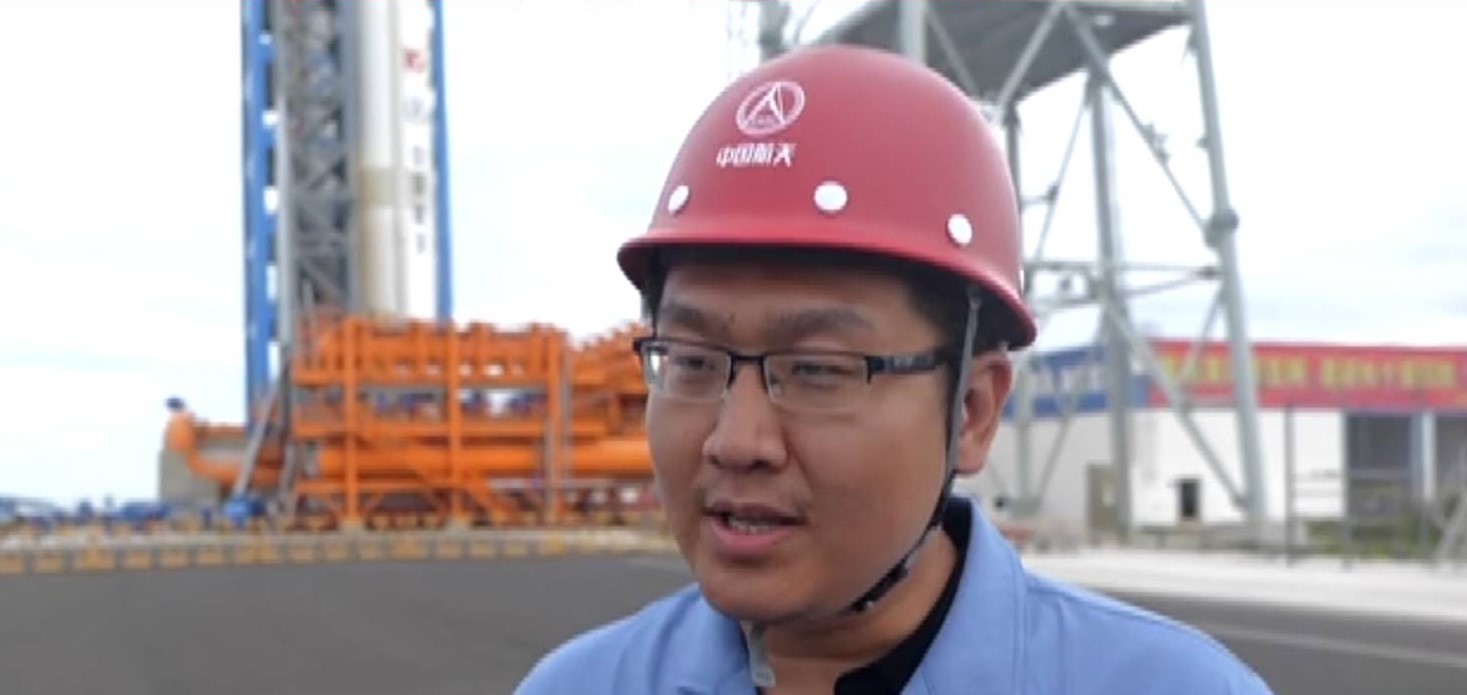
Image credit: CCTV/Inside Outer Space screengrab
While the world’s mainstream reusable rockets adopt the propulsive vertical landing, the Long March-10B carrier rocket takes a completely different method.
“The recovery of this rocket marks the world’s first adoption of the net-capture system, which mainly uses the net on the seaborne platform to catch and hold the retrieved rocket. Both the two recovery methods have their own advantages. Our adoption of net-capture system ultimately enhances the rocket’s payload capacity,” said Hao told CCTV.
For a video of the flight, go to:
https://www.facebook.com/reel/2610346632701016
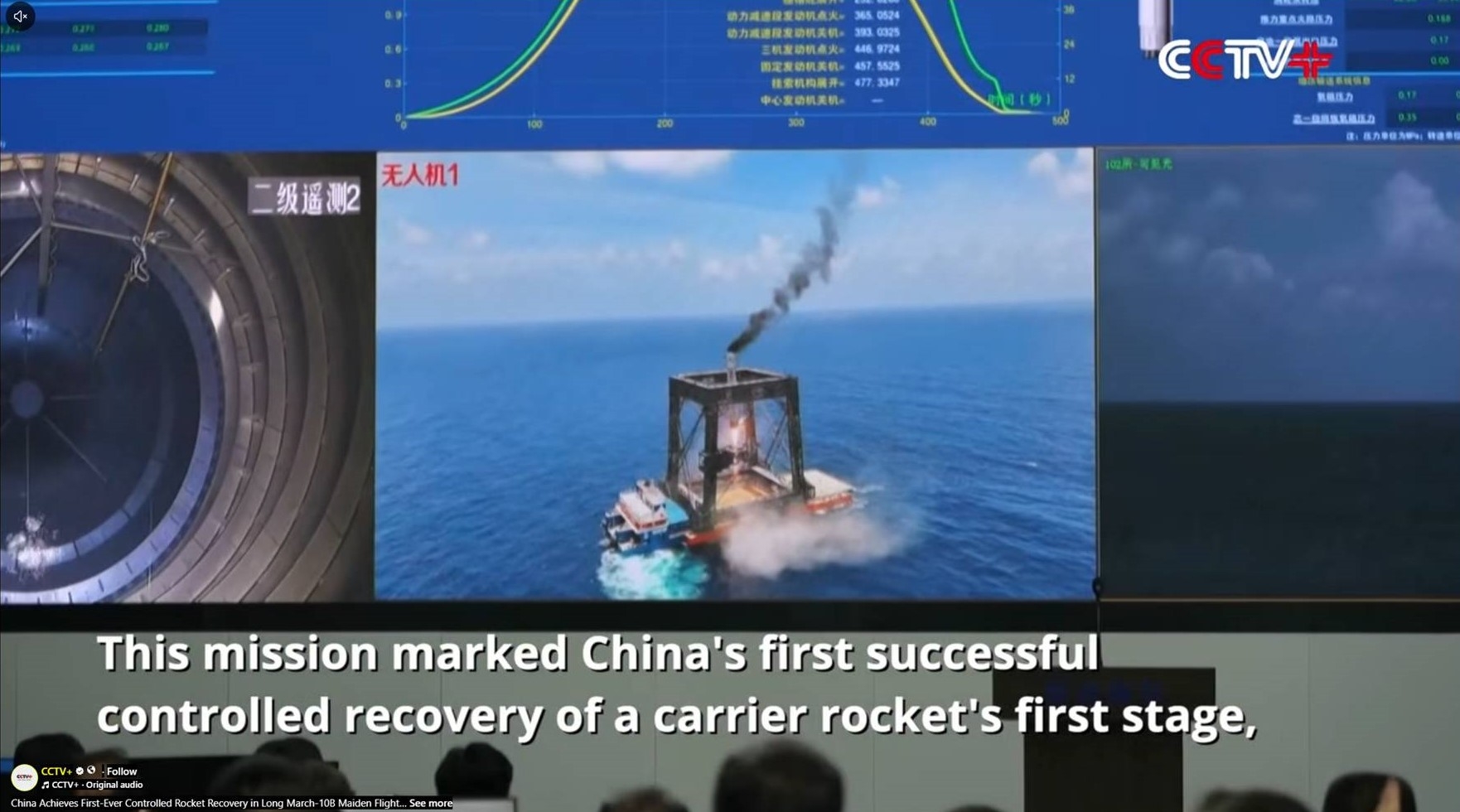
Image credit: CCTV/Inside Outer Space screengrab
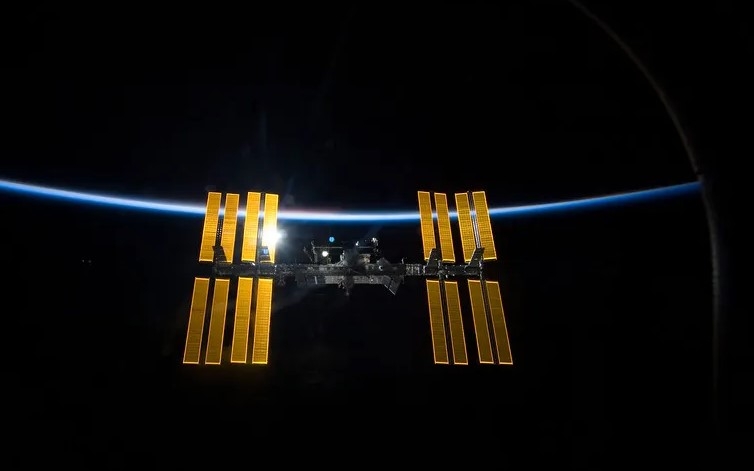
Image credit: NASA
Earlier this week, NASA released a draft Request for Proposals (RFP) seeking feedback from American companies on evolving to commercial space stations.
The RFP’s purpose is aimed at ensuring a seamless transition of activities in low Earth orbit from the International Space Station.
Commercial marketplace
“NASA’s review reflects what we’ve been hearing from industry throughout this process. Industry believes it can meet the timelines and that a viable commercial marketplace exists where NASA is one customer among many,” said NASA Administrator Jared Isaacman.
“We’re focused on supporting those efforts,” Isaacman said in a statement, “enabling the capabilities that make this transition possible, and doing all we can to ensure the United States maintains a continuous human presence in low Earth orbit.”

Image credit: NASA
End-to-end services
Specifically, the Commercial Low Earth Orbit Contract will acquire services for a commercially owned and operated Low Earth Orbit (LEO) Destination that can provide safe, reliable, and cost-effective end-to-end services to succeed the International Space Station (ISS).
Doing so, the RFP explains, will ensure NASA has a sustained human presence in LEO for crew members to perform science and exploration.
The response date by companies is July 24, 2026.
For RFP details, go to:
https://sam.gov/workspace/contract/opp/19a8a55c066441ef891e33bac770dd9d/view
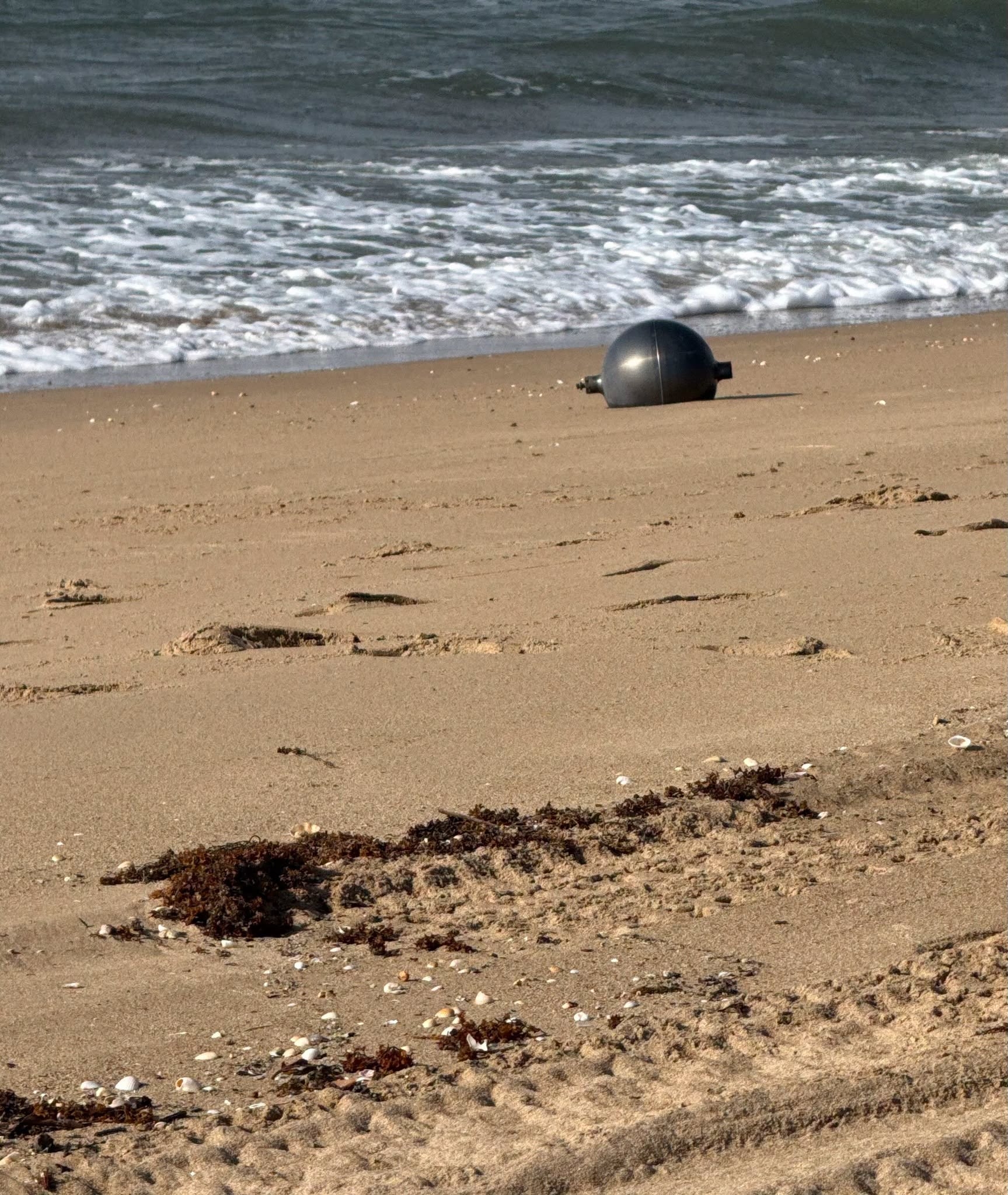
Image credit: Queensland Fire Department
Australian Queensland Fire Department crews are continuing to assist partner agencies following the discovery of several potentially hazardous objects around Forrest Beach in North Queensland. Scientific teams have safely secured a number of the items throughout the weekend and remain on scene continuing their work. A 165 feet (50-meter) “exclusion zone” is still in place.
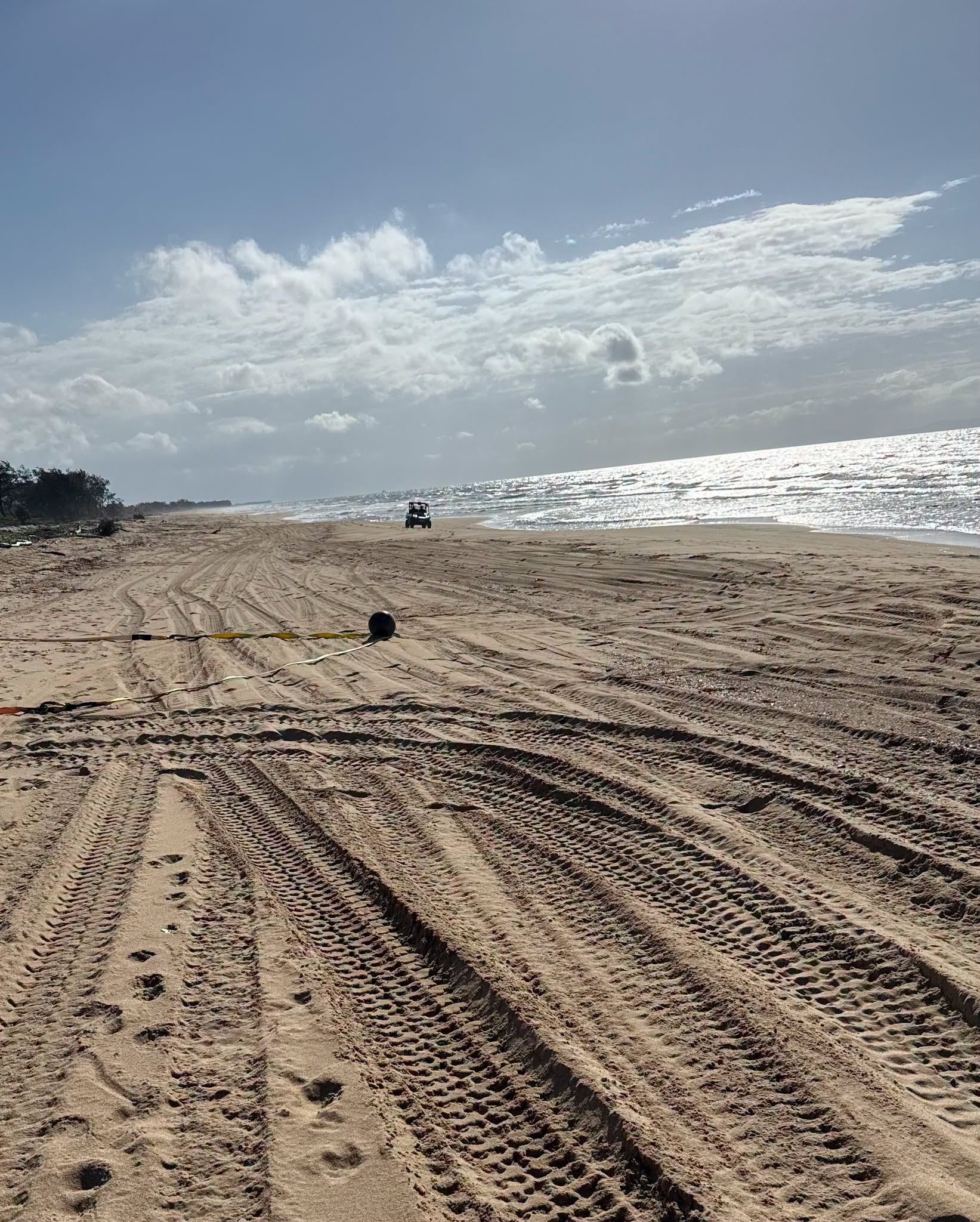
Image credit: Queensland Fire Department
A spokesperson for the Australian Space Agency said the objects, dubbed “space balls,” are likely pressure vessels from a space launch vehicle.
Six pieces of space junk were found in the small seaside community of Forrest Beach, near Ingham, since last Friday.
“If you come across any suspicious objects in the area, do not touch them,” noted the fire department. “Move away and call Triple Zero (000) immediately.”
The nature and origin of the debris are still being investigated.
No word as yet if Mel Brooks has been asked to take on the case.
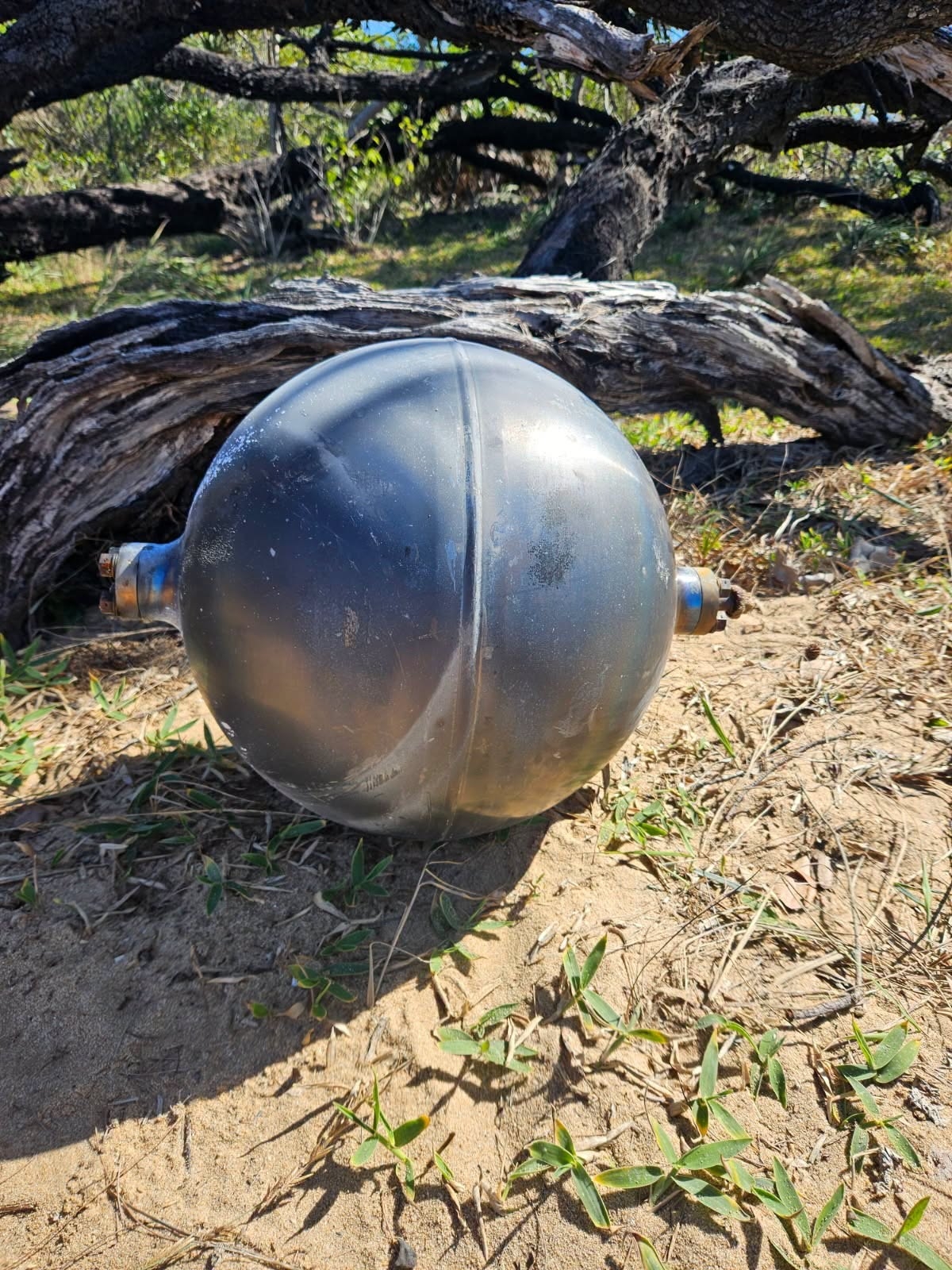
Image credit: Queensland Fire Department

Image credit: MGM
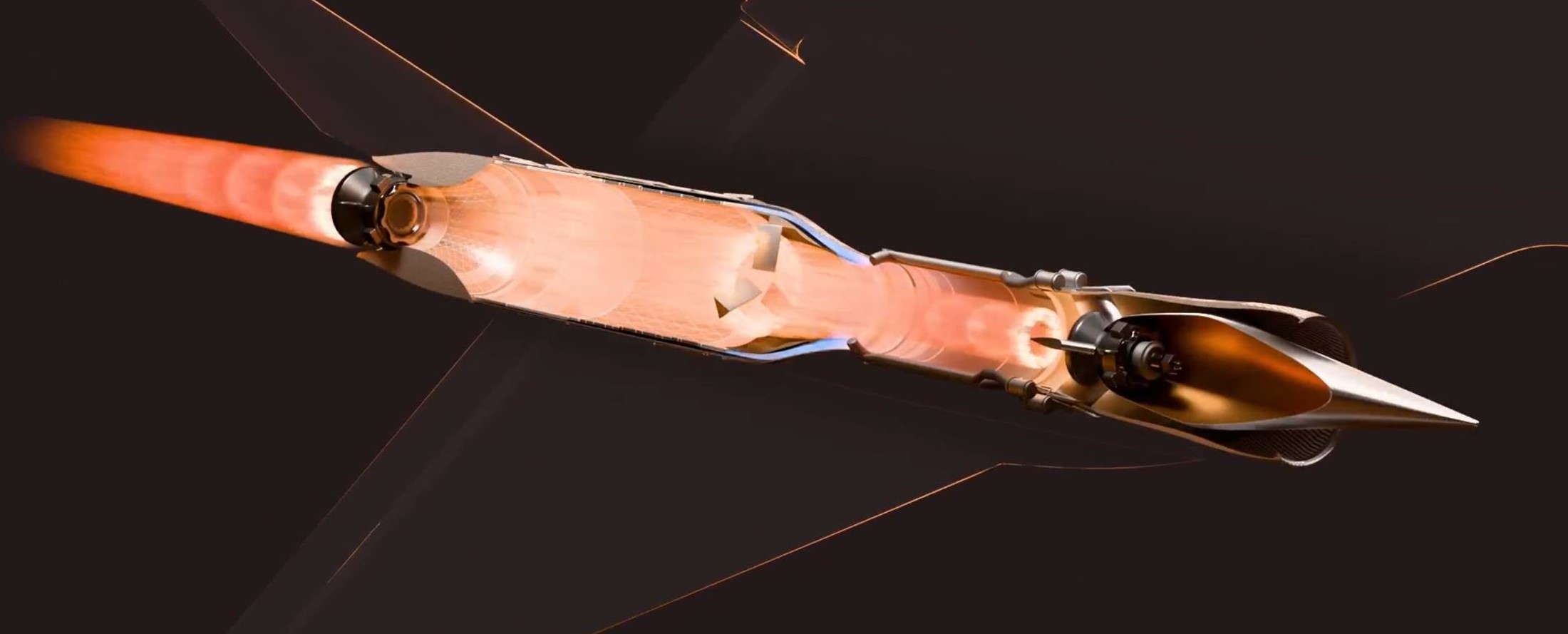
Image credit: Venus Aerospace
Progress has been reported on developing a high-thrust rotating detonation rocket engine, or RDRE in space shorthand.
Venus Aerospace today announced the close of a $91 million Series B financing deal.
This round of funding enables Venus to scale up RDRE development and production, moving the propulsion system from successful flight demonstration, the company states, toward deployment for a range of near-term defense and space applications.
Detonation wave
Headquartered in Houston, Texas, Venus Aerospace points out that, unlike conventional rocket engines, which burn fuel through subsonic combustion, the firm’s RDRE employs a continuous supersonic detonation wave that rotates around the combustion chamber.
“The result is the most efficient rocket engine architecture ever flown, by a margin of 15 percent,” the company explains. “This efficiency gain can translate into extended range, increased payload flexibility, and more capable systems across defense and space missions where performance margins are critical.”
Ultimately, the RDRE is aimed at enabling vehicles to travel four to six times the speed of sound from a conventional runway.
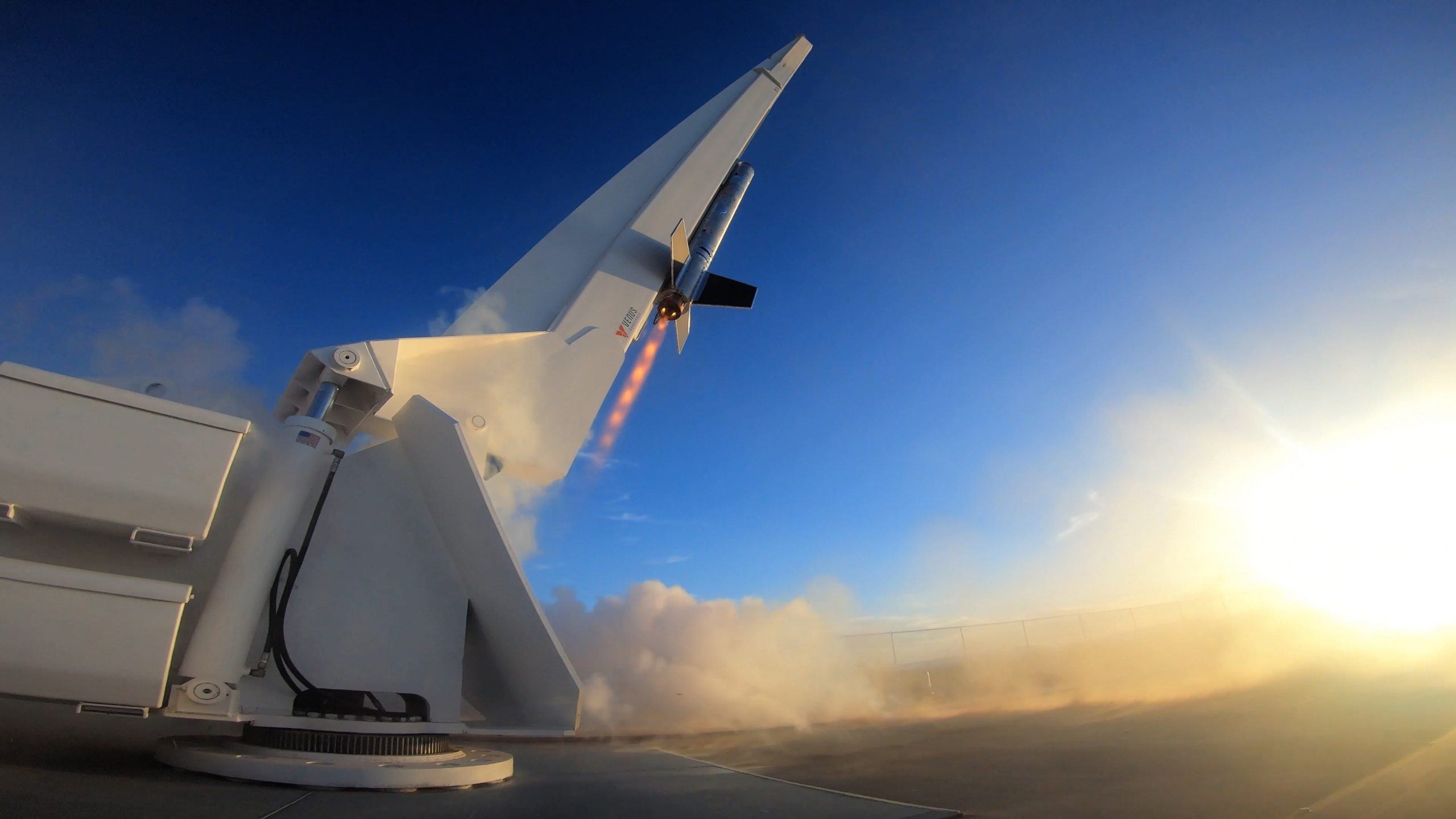
First test flight last year of rotating detonation rocket engine.
Image credit: Venus Aerospace
First flight test
Venus Aerospace conducted the world’s first flight test of a high-thrust rotating detonation engine in May 2025, carried out at Spaceport America in New Mexico. That milestone was met in just over four years on $80 million in capital.
The new round of cash can mature the flight-proven high-thrust RDRE into full propulsion systems.
The effort to raise the $91 million infusion was led by Mercury Fund, a Houston-based venture capital firm, with participation from Lockheed Martin Ventures, MESH, PEAK6, Draper Associates, Starboard Star Venture Capital, Green Sands Equity, Seraph Group, Trousdale Ventures, along with other new and existing strategic and institutional investors.
For more information on Venus Aerospace, go to:
Also, go to this flight test video at:
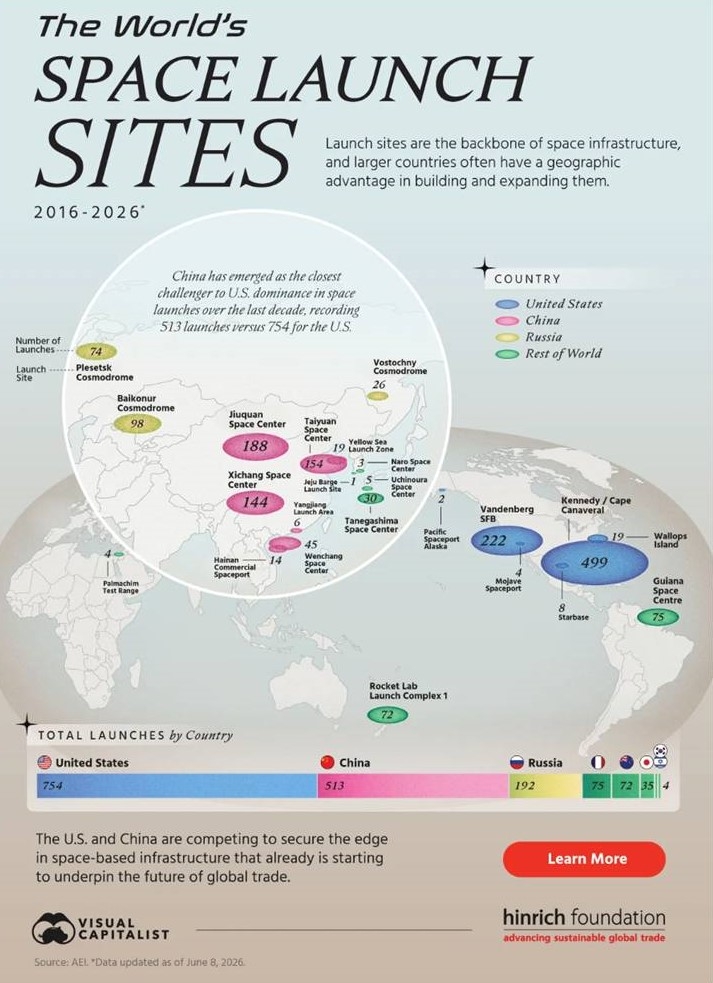
Image credit: Hinrich Foundation and Visual Capitalist
The growing US-China space competition has been captured in a set of infographics produced by the Hinrich Foundation and Visual Capitalist.
A three-part visual essay spotlights these issues: Critical materials, global launch sites and the surge in space launches.
“The supply of critical materials needed for rockets, satellites, and other space technologies is provided by a wide array of countries, setting the stage for a superpower contest to secure control of and access to resources from gallium to titanium, rare gases, rhenium, and beryllium.”
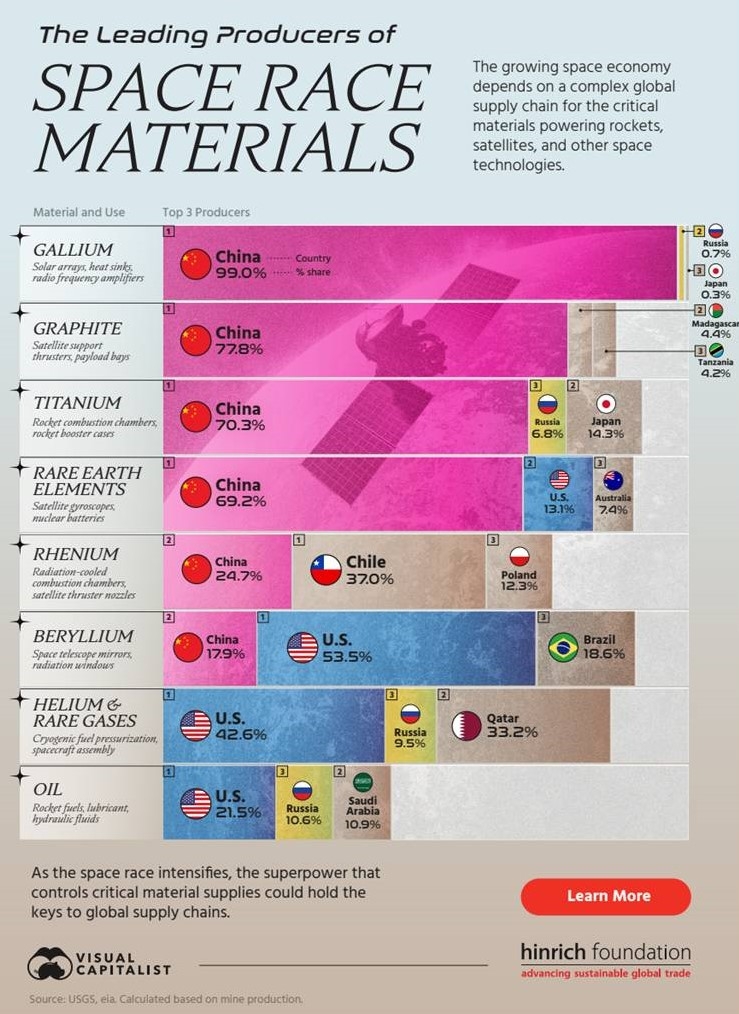
Image credit: Hinrich Foundation and Visual Capitalist
“The US and China are competing to secure the edge in space-based infrastructure that already is starting to underpin the future of global trade. Launch sites are critical to space missions. Geographically large countries have the edge. The US dominates the space trade with 25 launch sites but China is closing in with 17.”
“The Third Space Age began about a decade ago and is marked by China’s surge in space launches in an ongoing contest with the US for the space economy, including a race for critical metals for satellite panels, radiation shields, specialty manufacturers, the deep state, private venture capital, and a vast swathe of consumer apps from ride-hailing to personal banking.”

Image credit: Hinrich Foundation and Visual Capitalist
To fully access this suite of essays, go to the Visual Capitalist website that focuses on topics including markets, technology, energy and the global economy at:
https://www.visualcapitalist.com/sp/hf09-leading-producers-space-race-materials/

