Archive for July, 2026
 Author:
  July 31st, 2026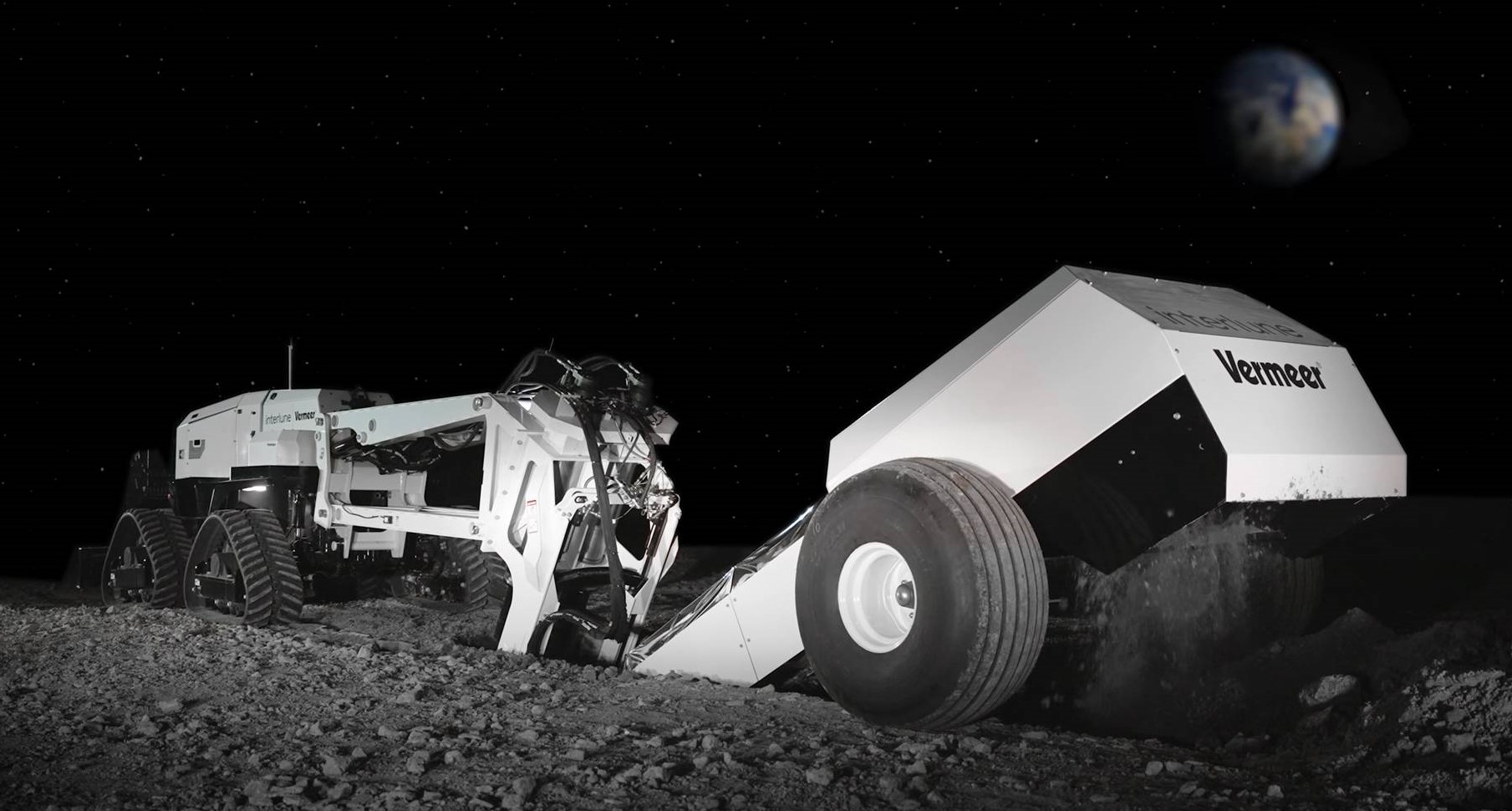
Image credit: Vermeer Corporation/Inside Outer Space screengrab
Dig this!
An expansion of a partnership is expected to help establish a Moon Base by delivering autonomous mobility and heavy-duty excavation tools for a permanent settlement on the lunar surface.
Interlune, a Seattle-based group, and the Vermeer Corporation of Pella, Iowa, have detailed the plan for development and delivery of subscale prototypes of lunar soil processing technology.
Develop, test, deliver
Interlune and Vermeer plan to develop, test, and deliver a mission-ready lunar site-preparation tool by 2028, aligning their efforts with NASA’s recently announced Moon Base program plan.
The Vermeer Corporation is a world-class (and soon to be, off-world) leader in industrial equipment manufacturing.
That preparation tool is to be developed and integrated with a lunar rover. It is to be trial-run first on Earth and then on the Moon “to validate its ability to prepare and stabilize the lunar surface for sustained operations,” states Interlune.

A full-scale prototype of the Interlune excavator developed in partnership with Vermeer in 2025. Testing as shown was done with auxiliary components.
Image credit: Interlune
Scalable systems
“By working with Vermeer, we are moving from developing prototypes to repeatable, scalable systems that will help build the Moon Base and enable the harvesting of lunar resources to power the future,” said Rob Meyerson, co-founder and CEO of Interlune.
The expanded collaboration between the two firms builds on a joint development agreement that led to the full-scale prototype of the Interlune excavator, which was unveiled in May 2025.
Helium-3 harvesting
Along with Moon Base work, central to Interlune’s mission is harvesting natural resources in space, starting with helium-3 and also including hydrogen, oxygen, metals, rare earth elements, and water.
Since its founding in 2021, Interlune has secured nearly $500 million in binding helium-3 purchase agreements from government and commercial customers.
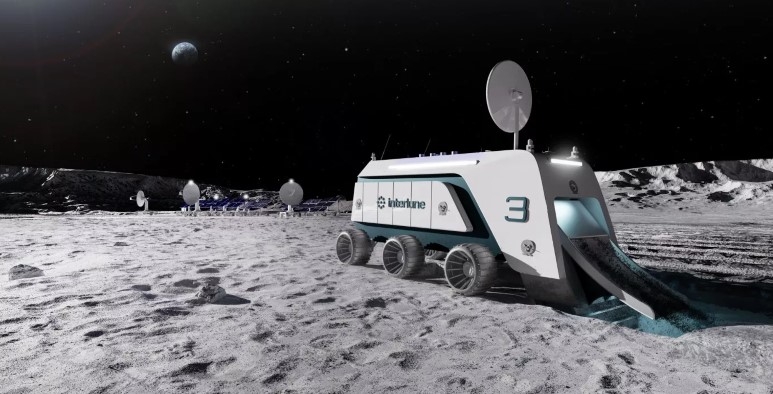
Artwork of harvester of hellium-3 on the Moon.
Image credit: Interlune
Interlune has also raised $23 million in venture capital and secured more than $18 million in non-dilutive U.S. government research funding.
Earlier this month, Interlune announced that its Cold Capture technology has demonstrated production of 99% pure helium-3 from Grade A helium. Cold Capture was developed with support from the U.S. Air Force and addresses immediate demand for helium-3 while validating core technology for harvesting on the Moon, Interlune explains.
Job site: the Moon
For its part, Vermeer brings to the table nearly 80 years of tackling complex civil engineering challenges on Earth.
“We are now ready to apply that expertise to the most demanding job site in history: the Moon,” says Jason Andringa, President and CEO of Vermeer Corporation, who also serves on the Interlune Advisory Board.
“We are fully committed to working with Interlune, NASA, and others to deliver the essential infrastructure required for the Moon Base,” Andringa adds.

Image credit: NASA
To view an informative Vermeer video – “Out of this world partnership: Vermeer x Interlune” – go to:
 Posted in
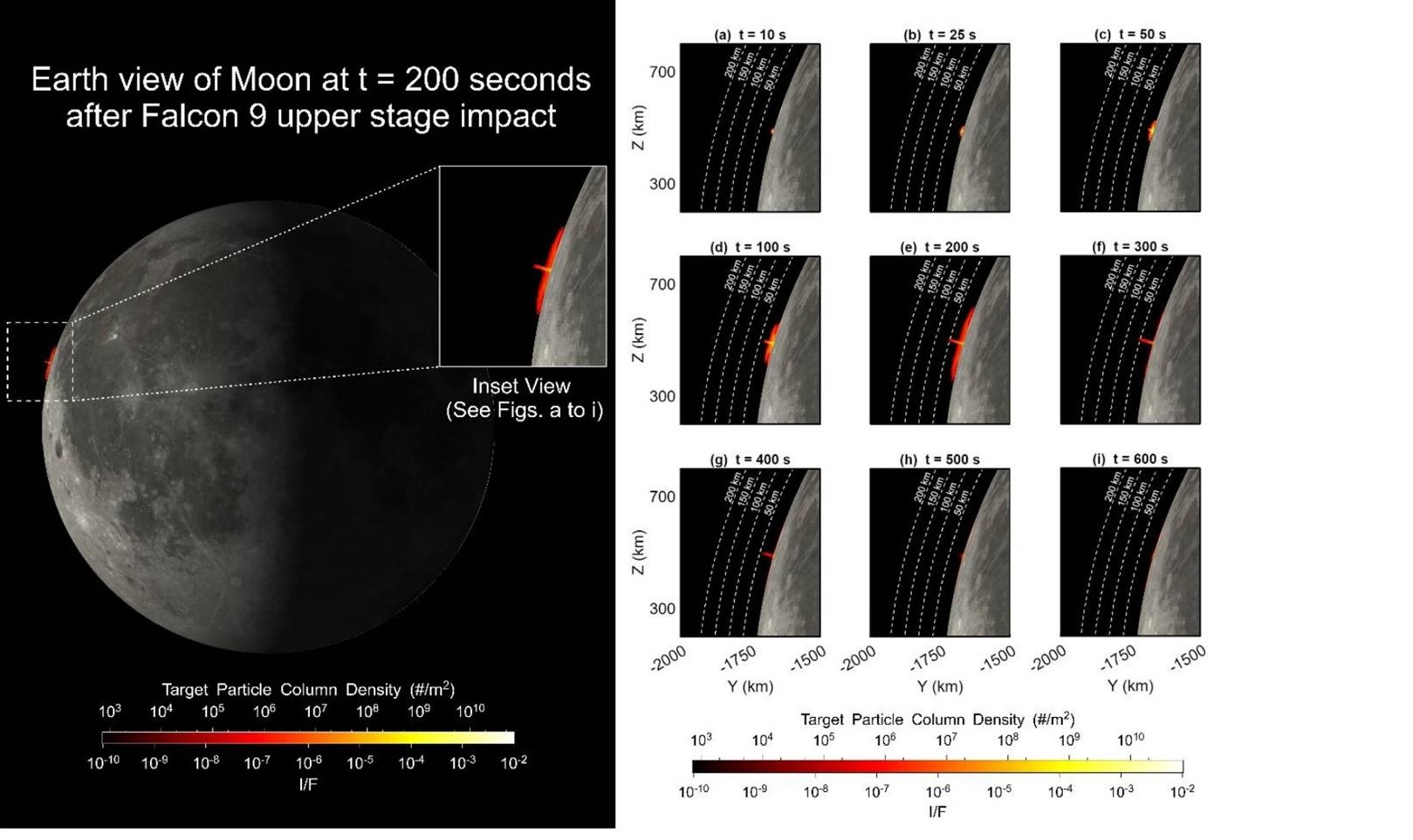
Time evolution of the target ejecta column density, rendered on the lunar surface
at the predicted impact site near Einstein crater.
Image credit: William Jo, et al.
Next week, Earth’s moon is due for a human-made, high-speed thumping of an identified flying object – a spent SpaceX Falcon 9 upper stage. The event is a literal “dust up” on the lunar landscape.
That Falcon 9 upper stage is a leftover from the launch that sent Firefly’s Blue Ghost-1 lander to the moon on Jan. 15, 2025. Also sent moonward on that flight was the Hakuto-R Mission 2, called Resilience, a robotic lunar lander developed by the Japanese company ispace.
Unknown, unknowns
This head-on collision on August 5 of the errant stage is expected to occur near Einstein/Bell Craters near the lunar limb. It may well be visible by ground and space-based assets. Indeed, putting aside all the unknown unknowns, and modeling uncertainties, some specialists suggest if you’ve got the time and observational prowess, it might be worth a look.
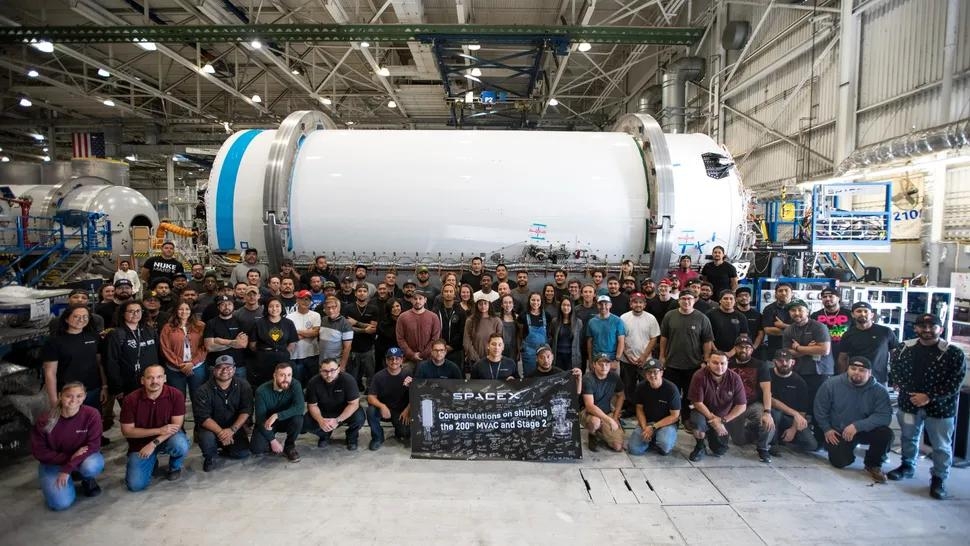
A big bruiser of a rocket stage. SpaceX photo of one of the company’s Falcon 9 second stages, taken in 2022. A similar second stage is expected to impact the moon in August 2026.
Image credit: SpaceX
According to a new study by an international team, their results found that moongazers with sufficiently sensitive telescopes will find that the resulting impact plume may briefly be bright enough to see against the dark sky near the moon’s edge.
For more details, go to my new Space.com story – “A SpaceX rocket will crash into the moon next week, and scientists aren’t sure what to expect” – at:
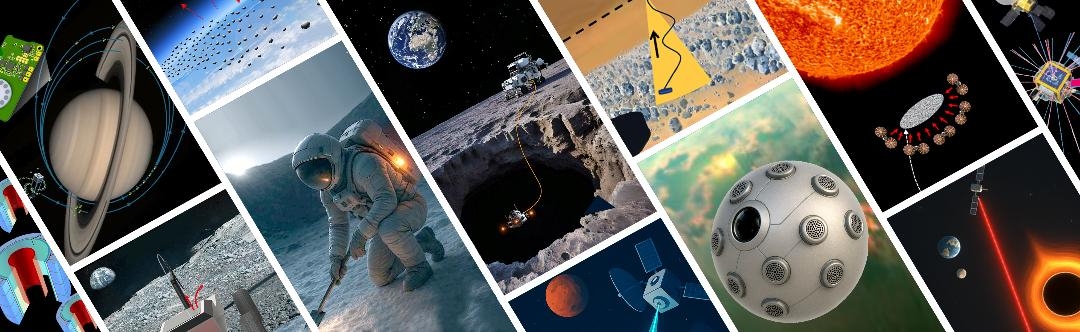
Image credit: NIAC
If you have a dim view of the future, take a look at a new batch of NASA Innovative Advanced Concepts (NIAC) program awards – all 18 of them
But heads up – one of the bright idea awardees is suggesting how best to dim the Sun using a controllable dust cloud to reduce solar insolation – the amount of solar radiation hitting a specific area over a defined time.
The idea comes from Saptarshi Bandyopadhyay of the NASA Jet Propulsion Laboratory. The “DimSun” proposal stems from earlier research that was focused on “geoengineering” and use of space-based solar radiation management.

Image credit: Saptarshi Bandyopadhyay/NASA Jet Propulsion Laboratory
Along with DimSun, the selections for 2026 NIAC Phase 1 grants cover a wide swatch of ultra-novel ideas, from use of solar sails, subsurface moon exploration and sampling planetary rings to ways to chart alien continents and radioisotope-aided EVA’s in nighttime conditions.
Here’s the list
Combinatory Architecture offering Neomobility, on-Venus Adaptability, and Survivability (CANVAS)
Extended Astronaut Radioisotope-EVA in Nighttime and Deep-space Icy Landscapes (EARENDIL)

Graphic depiction of the Extended Astronaut Radioisotope-EVA in Nighttime and Deep-space Icy Landscapes (EARENDIL) concept.
Image credit: A.C. Charania
Transforming Submillimeter Space Interferometry with Photonic Technologies
Coilable Stacked Solar Sails for Very High delta-V Missions
Solid-state Propulsion for Autonomous Reconnaissance of Karst (SPARK)
Power-over-Fiber to Enable a Lunar Underground eXplorer (LUX)
Quantum Wind Lidar Applications for Planetary and Earth Science Missions
OBLIVIAN: Observing Black hole LIght Via Intensity cOrrelatioN (OBLIVIAN)
Plasmon-Enhanced Radioisotope Thermophotovoltaic (PRTPV) Power Generation for Interstellar Missions
Efficient variable Conductivity Lunar Insulator for Passive Surveyor Environmental Control (ECLIPSE)
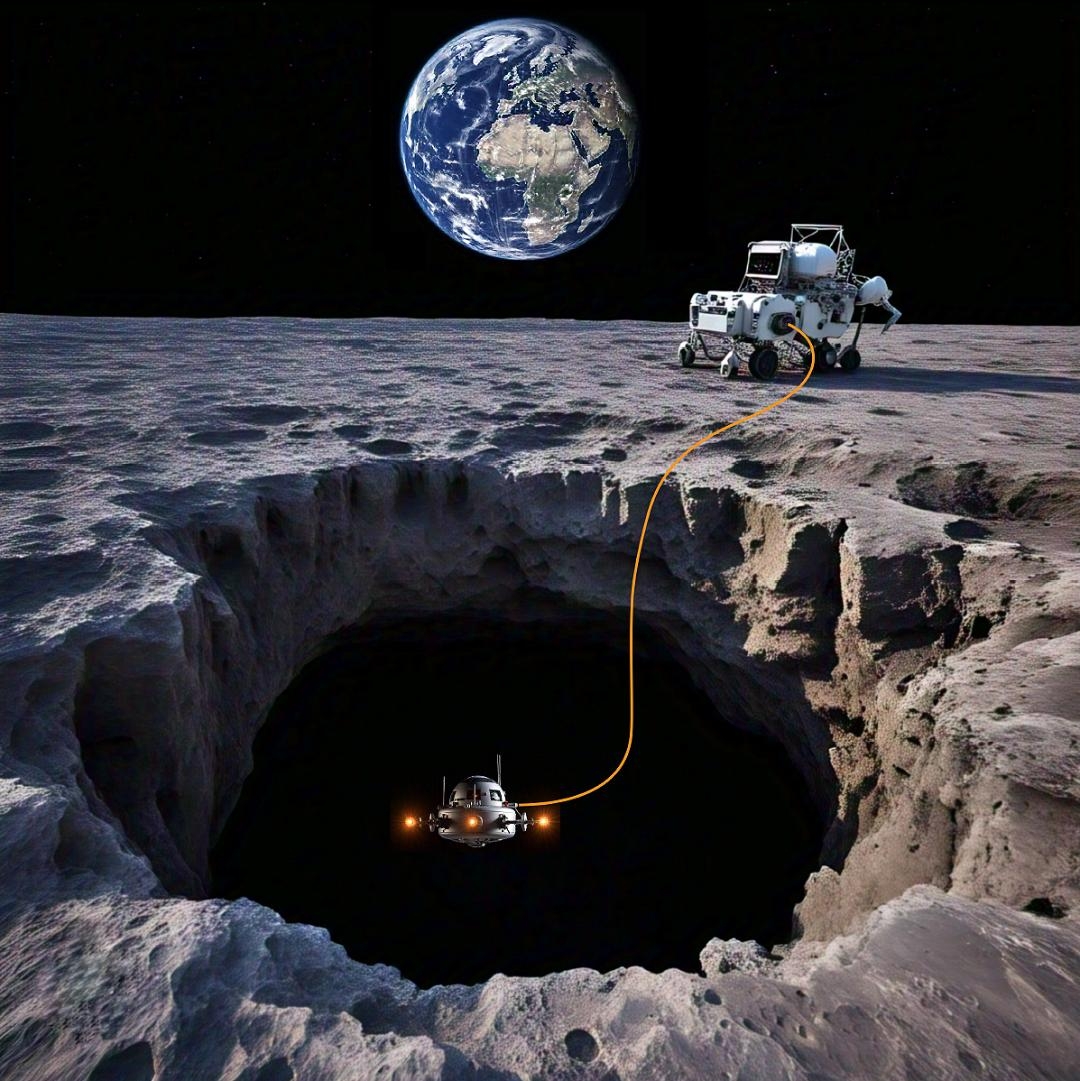
Graphic depiction of theLunar Underground eXplorer (LUX) mission concept.
Image credit: Gilly Elor/Stone Aerospace, Inc.
PRAXIS: Planetary Rings Autonomous EXploration with In-situ Sampling (PRAXIS)
Actively Steerable Femtosat Constellations for In-situ Exploration of Saturn’s Rings, Atmosphere, and Magnetosphere
Photophoretic Tracers for Near-Space Remote Sensing at 30-100 km Altitudes
Robotically Assembled Electromagnetic Metamaterials for Long-Range Space Situational Awareness
Interworld Slingshot Resource Surveys
Mapping Alien Continents: Achieving Optical VLBI for Exoplanet Imaging
Precision Astrometry Using Optically Independent Spacecraft for Gravitational Wave Detection
Early-stage concept development
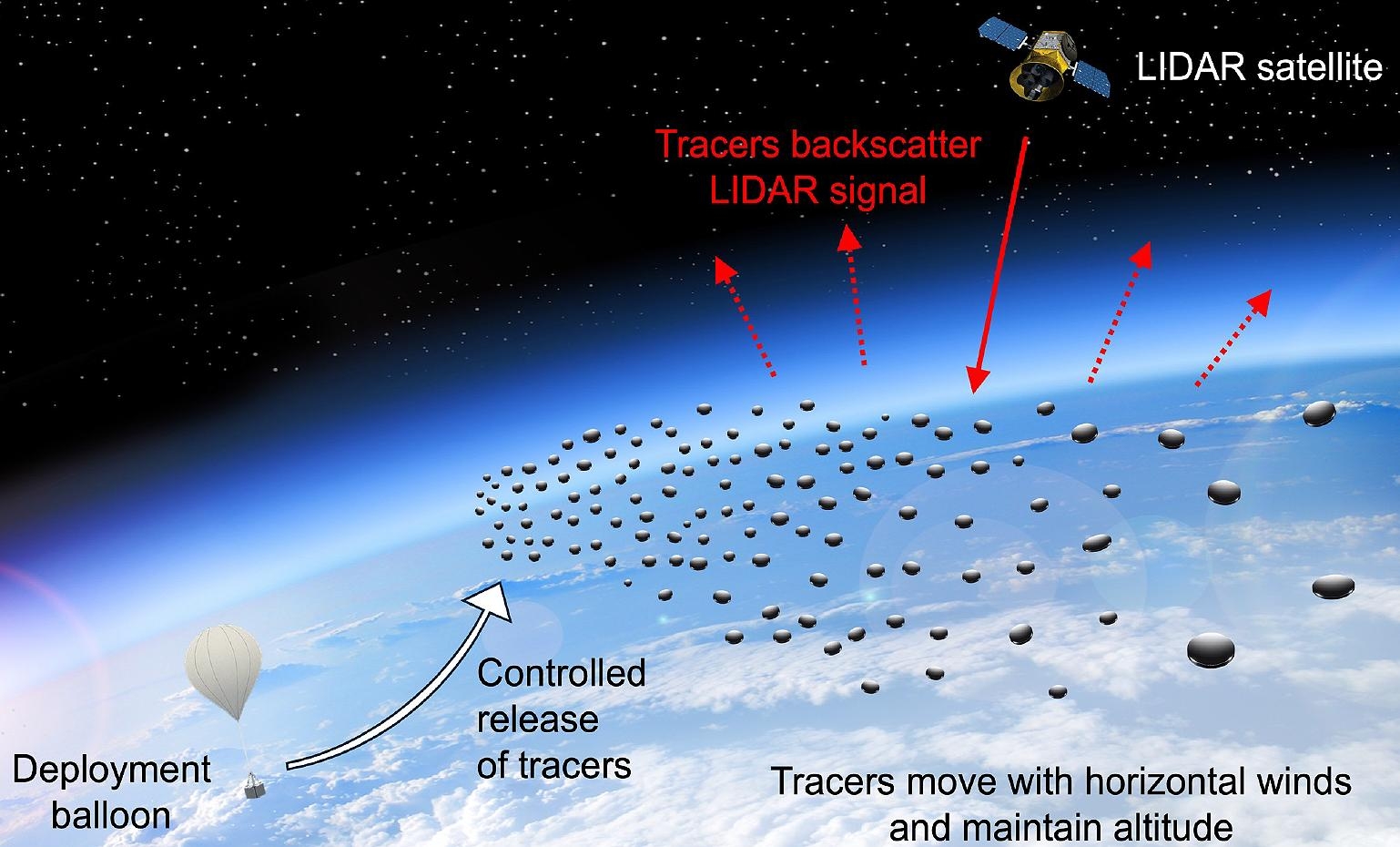
Graphic depiction of photophoretic tracers deployed from a stratospheric balloon and tracked by satellite-based lidar. Their trajectories are analyzed to determine atmospheric properties like wind speed, temperature, and pressure in real time at 30-100 km altitudes.
Image credit:Benjamin Schafer/Rarefied Technologies, Inc.
The 18 NIAC Phase I awards total $3.2 million.
Each award provides up to $175,000 for a nine-month initial investigation.
While the NIAC projects are about early-stage concept development and are not considered official NASA missions, how many of these ideas will stir the creative juices to become true renaissance reality?
To take in what’s on the agenda for the space future go to this NIAC website at:
https://www.nasa.gov/news-release/nasa-awards-2026-innovative-technology-concepts/
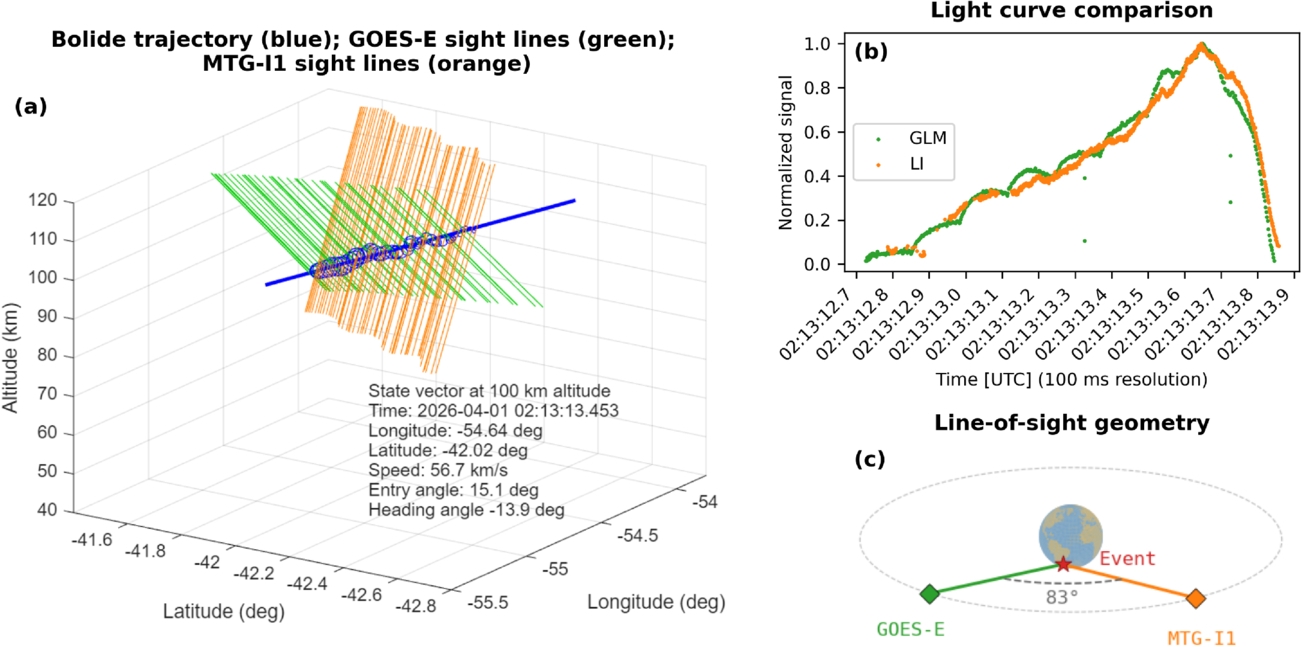
Image credit: Elizabeth A. Silber et al 2026 Res. Notes AAS 10 183
It came from outer space, exploding high above the South Atlantic off the coast of Argentina.
That incoming meteor — also termed as a bolide — was observed by a pair of civilian lightning imagers aboard geostationary weather satellites, thereby supplementing the use of space-based military surveillance satellites.
The April 1 event was viewed by the U.S. GOES-E and Europe’s Meteosat Third Generation (MTG) Imager-1 satellite. The event was well-observed from geostationary orbit by two lightning imagers onboard those two independent spacecraft.
First use
Viewed as the first use of stereo detections from two different lightning imagers, researchers were able to derive a three-dimensional trajectory and velocity estimate for the fireball.
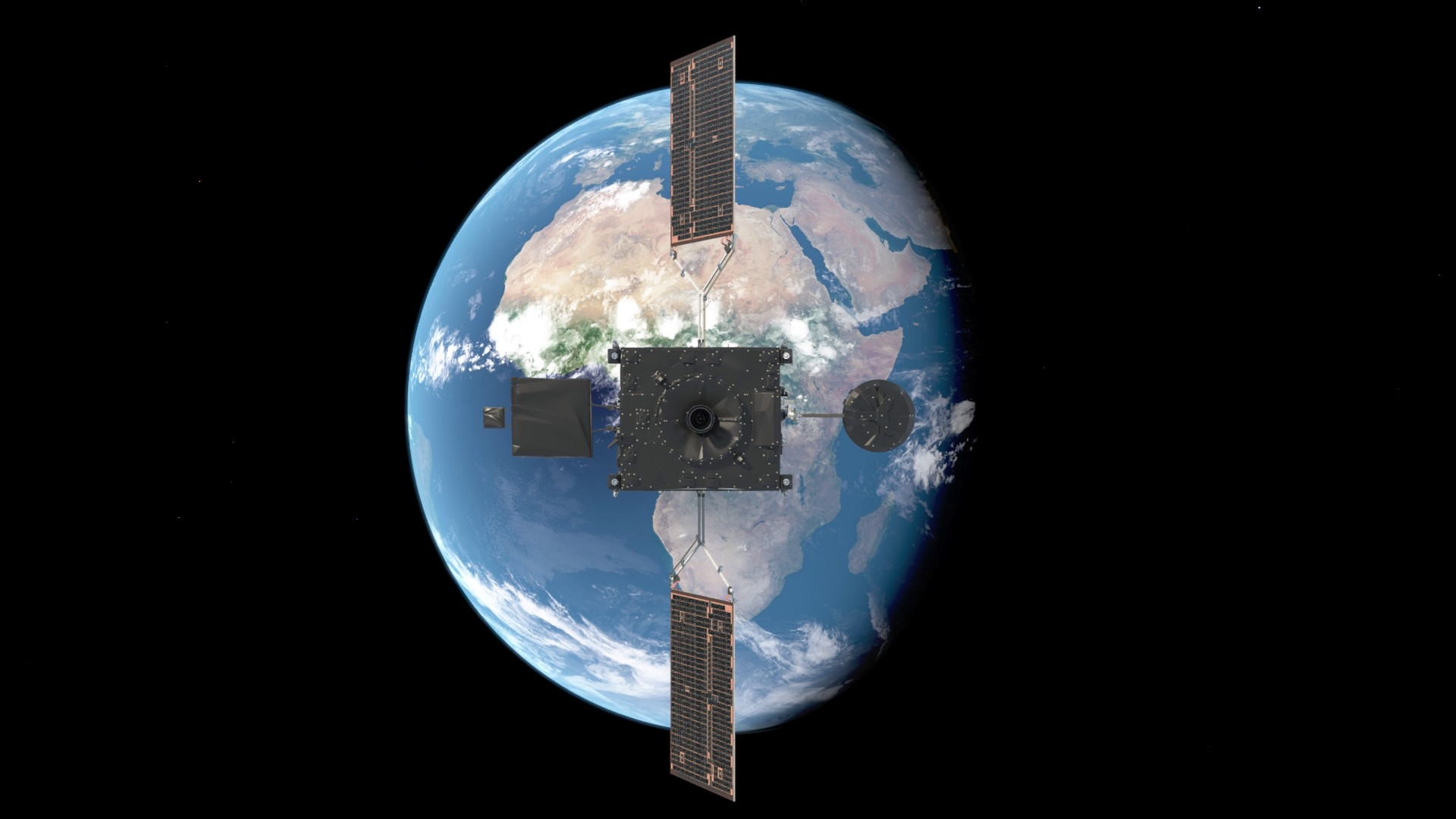
Hovering in a fixed position 36,000 km above the equator, the Meteosat Third Generation (MTG) mission is designed to deliver a rapid stream of data for enhanced weather forecasting. Its Lightning Imager offers a completely new capability for European meteorological satellites.
Image credit: ESA/Mlabspace
In addition, US government sensors also detected the high-velocity fireball whose brightness peaked at an altitude of nearly 60 miles (90.5 kilometers) over the South Atlantic.
Stereoscopic triangulation of the imager tracks from the lightning imagers yielded an independent pre-atmospheric velocity of the fireball, pegged at 18% below the U.S. government-reported value.
Radiated energy and entry speed
That lightning imager data was duly catalogued in NASA’s Jet Propulsion Laboratory Center for Near-Earth Object Studies (CNEOS) fireball database.
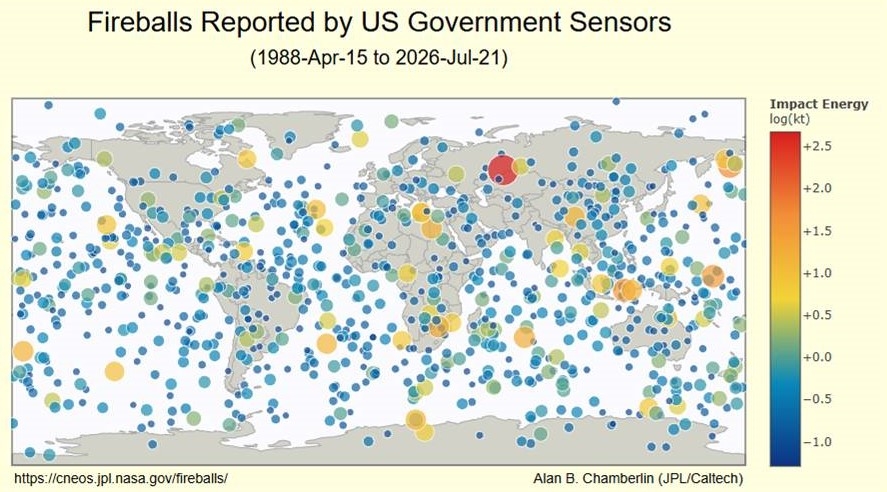
“The data passed to CNEOS about such events includes a measurement of total radiated energy and of the estimated entry speed,” said Juan Luis Cano of the European Space Agency’s Planetary Defense team and co-author of a new paper on the event published in the Research Notes of the American Astronomical Society.
The research paper is led by Elizabeth Silber of the U.S. Sandia National Laboratories in New Mexico.
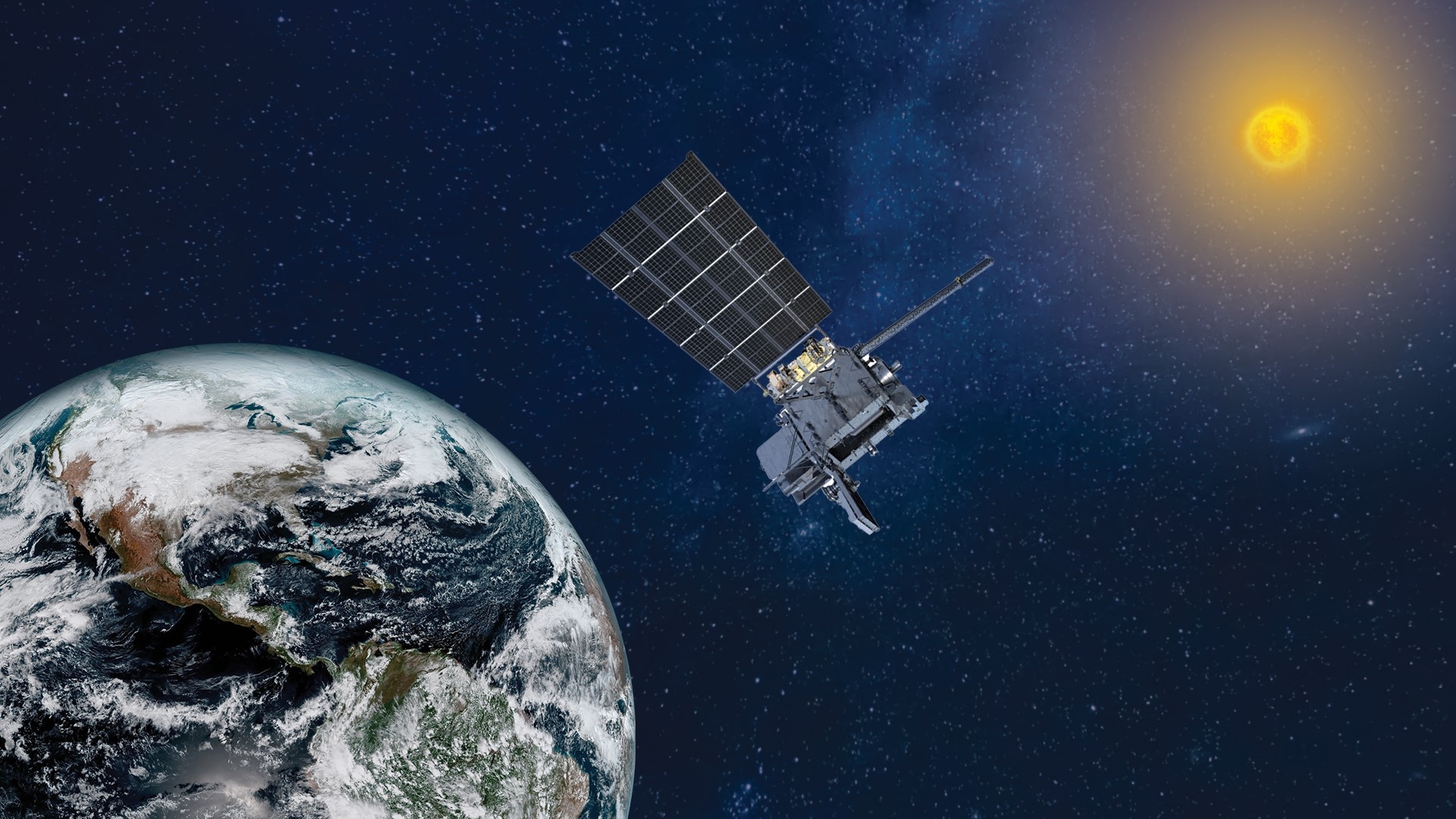
Artist’s rendering of NOAA’s GOES East satellite in orbit. Among duties, the spacecraft provides real-time mapping of lightning activity.
Image credit: NOAA
“The Lightning Imager on MTG-I1 and its US counterpart detect millions of lightning flashes from their approximately 36, 000 kilometer altitude on the equator on a daily basis,” notes Juan Luis. “But not all the flashes they see come from lightning.”
Distinct signatures
Juan Luis noted in an ESA statement that researchers looking over the data found that fireball detonations have their own distinct signatures, possessing clear linear paths and a gradual increase in intensity before fading away, unlike the fixed points of lightning flashes.
“So we have been investigating methods to routinely separate out fireballs from lightning,” Juan Luis said, “to build a global inventory of these events in support of our knowledge of the very small-object population in near-Earth space for planetary defense.”
To access the research paper – “Multi-sensor Observations of a High-velocity Fireball over the South Atlantic on 2026 April 1” – go to:
https://iopscience.iop.org/article/10.3847/2515-5172/ae853e
Also, to access the Bolide Detections from Geostationary Lightning Mapper website, go to:
https://neo-bolide.ndc.nasa.gov/#/
This research has made use of the neo-bolide.ndc.nasa.gov website, which was developed and operated by NASA’s Asteroid Threat Assessment Project thanks to funding from NASA’s Planetary Defense Coordination Office.
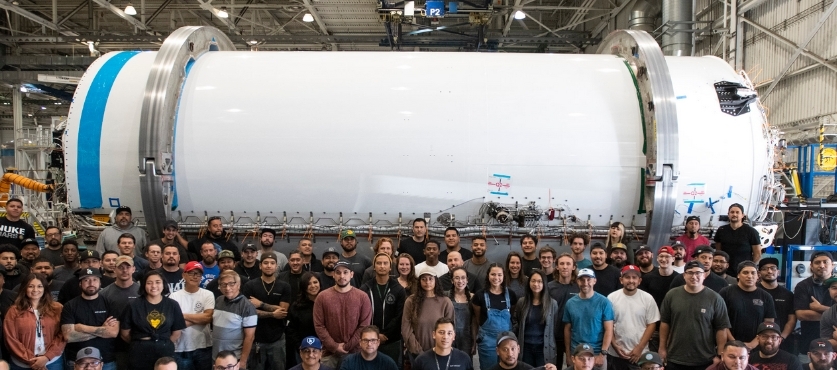
SpaceX rocket stage.
(Image credit: SpaceX via Project Pluto)
That impending smash hit on the Moon next month of a SpaceX rocket stage has been reviewed by an international research team.
The researchers put to question whether observers on Earth will see anything. Also, will the impact loft a sunlit plume and if so, how much lunar material will be purged, how high could that plume reach, and just how bright the plume may be?
William Jo is a graduate research assistant at University of Texas, Austin that led the analysis.
Last week, they submitted their findings to Geophysical Research Letters and a preprint is just out on arXiv: “Predicted Ejecta Dynamics and Observability of the 2026 Falcon 9 Upper Stage Lunar Impact.”
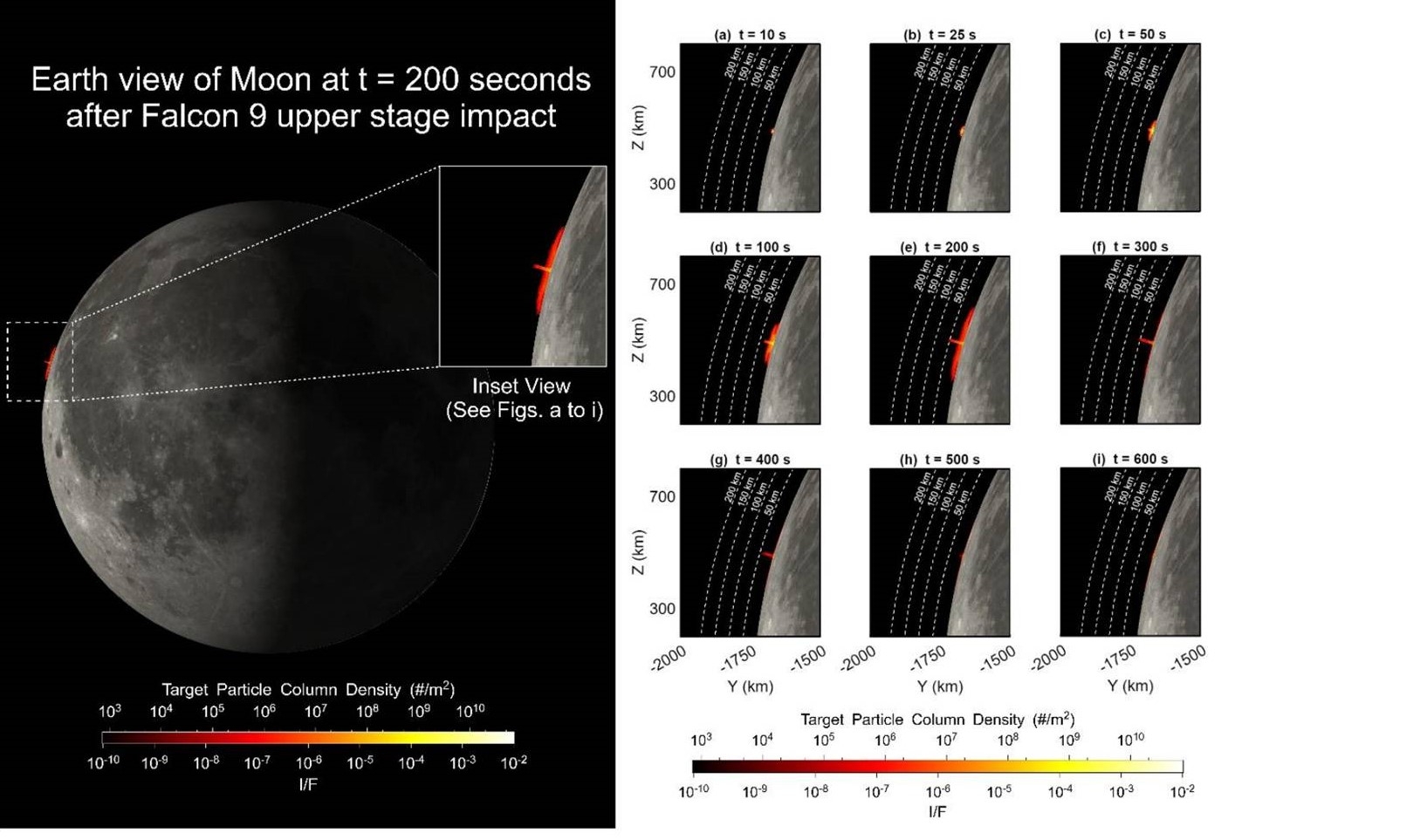
Time evolution of the target ejecta column density, rendered on the lunar surface
at the predicted impact site near Einstein crater.
Image credit: William Jo, et al.
Visible ejecta spike
Using a special shock-physics hydrocode to simulate the impact, among other tools, here’s what Jo and colleagues found.
“We predict the debris plume from the Aug. 5 impact will have the central ejecta spike reaching roughly 75 kilometers to 100 kilometers altitude,” Jo told Inside Outer Space. The curtain of the debris is roughly 15 kilometers to 20 kilometers, and would spread 183 kilometers laterally near the sunlit limb of the Moon.
“Our calculations suggest the plume should be several orders of magnitude brighter than the dark-sky background for the first few minutes after impact,” Jo advised. “So the plume should be visible, though I’d stress this is a single nominal case. The real one will look different, and the numbers are on the optimistic side. But the point worth making is that the flash isn’t really the story here.”
Rare chance
Jo said that a spent rocket stage is a hollow, spacecraft-like body, and there are very few impact models for objects (human-made) like it. They seem to produce very different plumes than “natural impactors,” like asteroids or comets do.

Artwork depicts a small but powerful meteor strike on the Moon.
Image credit: Steve Roy, NASA/Marshall Space Flight Center
“Watching this one gives us a rare chance to open up ejecta-plume science and calibrate those models against a real event, which matters for every future thing we deliver to the Moon,” added Jo. “My concern is that most observers will stop at the sub-second flash and never track down the ejecta, which is the part that should actually be visible, and where the science is.”
As the research paper explains: “Our results predict the size, shape, and brightness of the plume over time, so that astronomers with sufficiently sensitive telescopes will know where to point and what to expect upon observation. We find that the plume may briefly be bright enough to see against the dark sky near the Moon’s edge.”
To access the research paper — “Predicted Ejecta Dynamics and Observability of the 2026 Falcon 9 Upper Stage Lunar Impact” – go to:
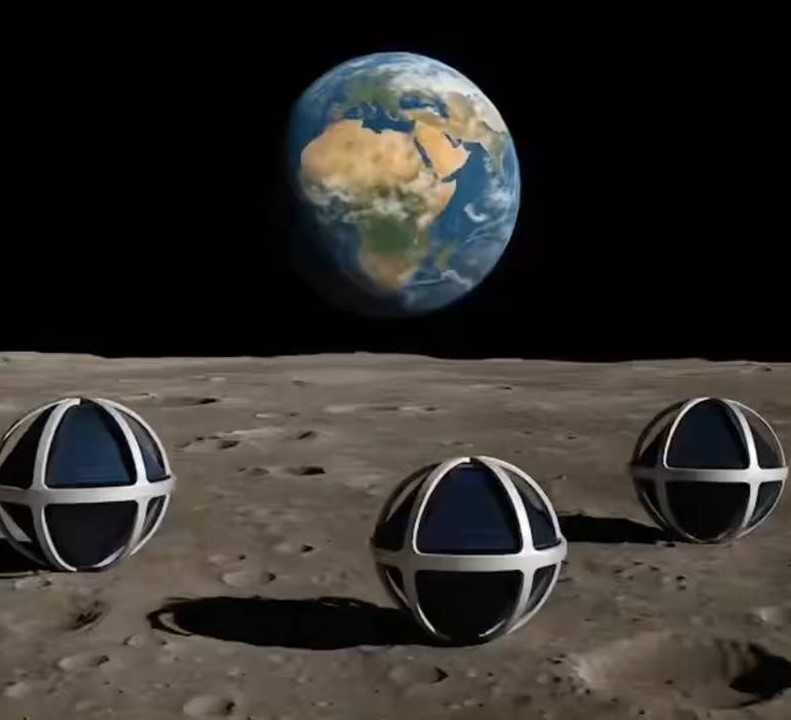
Image credit: Africa2Moon Project
More bounce to the ounce!
To be flown on China’s Chang’e-8 moon lander mission in 2029 is Africa’s first space exploration mission.
Under the Africa2Moon venture, the Bounced African Low Lunar Sphere, or BALLS for short, is a technology demonstrator in which a trio of antennas will constitute a radio astronomy array at the moon’s south pole region.
“If this is successful, it will ignite the reality of space on the African continent.”
For more details, go to my new Space.com story – “BALLS on the moon: China set to launch Africa’s 1st lunar science mission in 2029
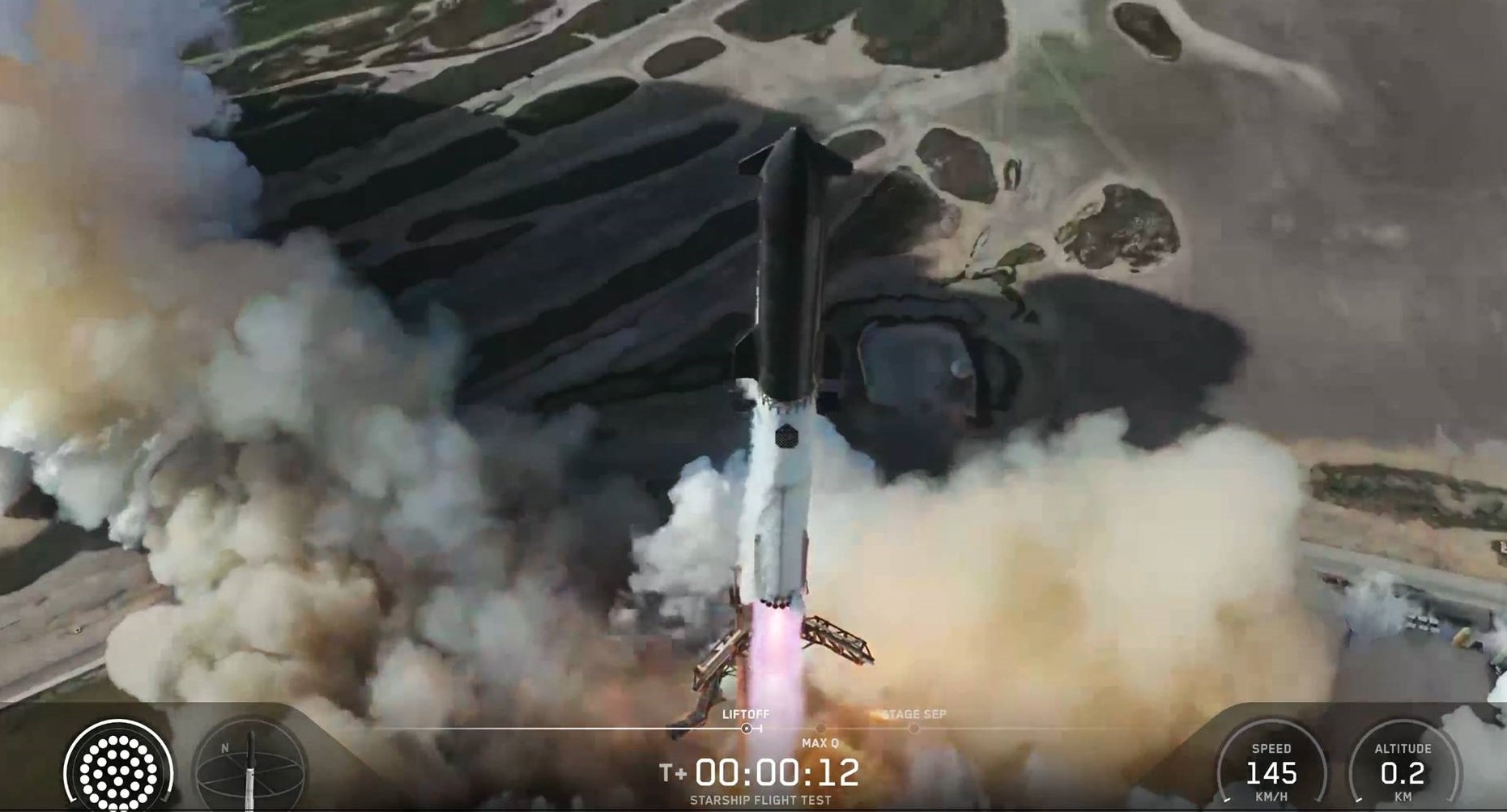
Image credit: SpaceX/Inside Outer Space screengrab
Last week, the SpaceX Starship lifted off from Starbase, Texas on its thirteenth flight test.
This was the second flight of the Starship and Super Heavy V3 vehicles and the first Starship flight to deploy the next generation Starlink V3 satellites.
Super Heavy
In overview status, SpaceX has posted this statement regarding the Friday, July 24th flight test #13 of the Starship program:
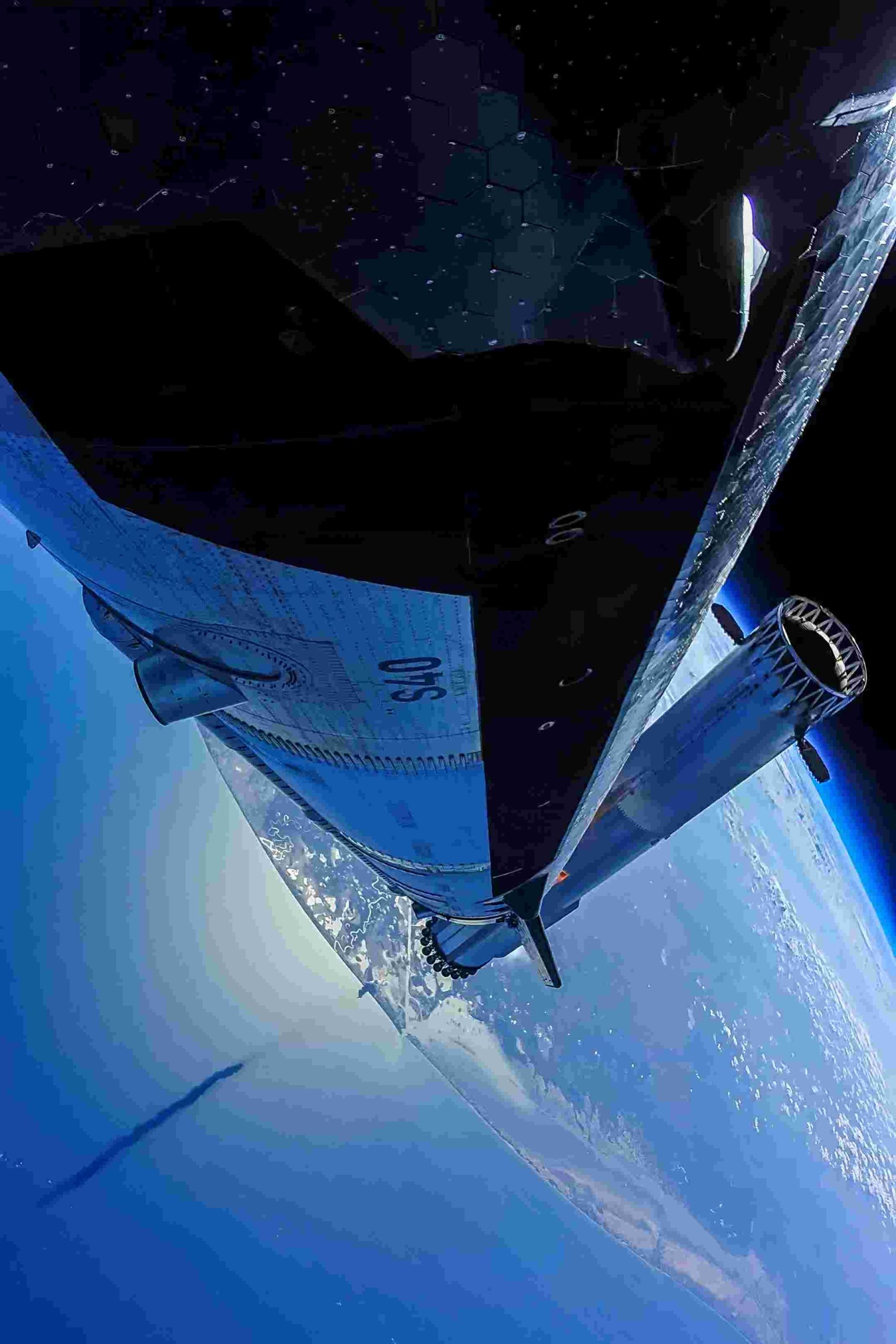
Image credit; SpaceX
The flight test began with Super Heavy igniting all 33 Raptor 3 engines and ascending over the Gulf of America. The successful first-stage ascent was followed by a hot-staging maneuver, with Starship’s upper stage igniting its six Raptor engines to continue its flight to space.
Following stage separation, the Super Heavy booster performed a directional flip maneuver.
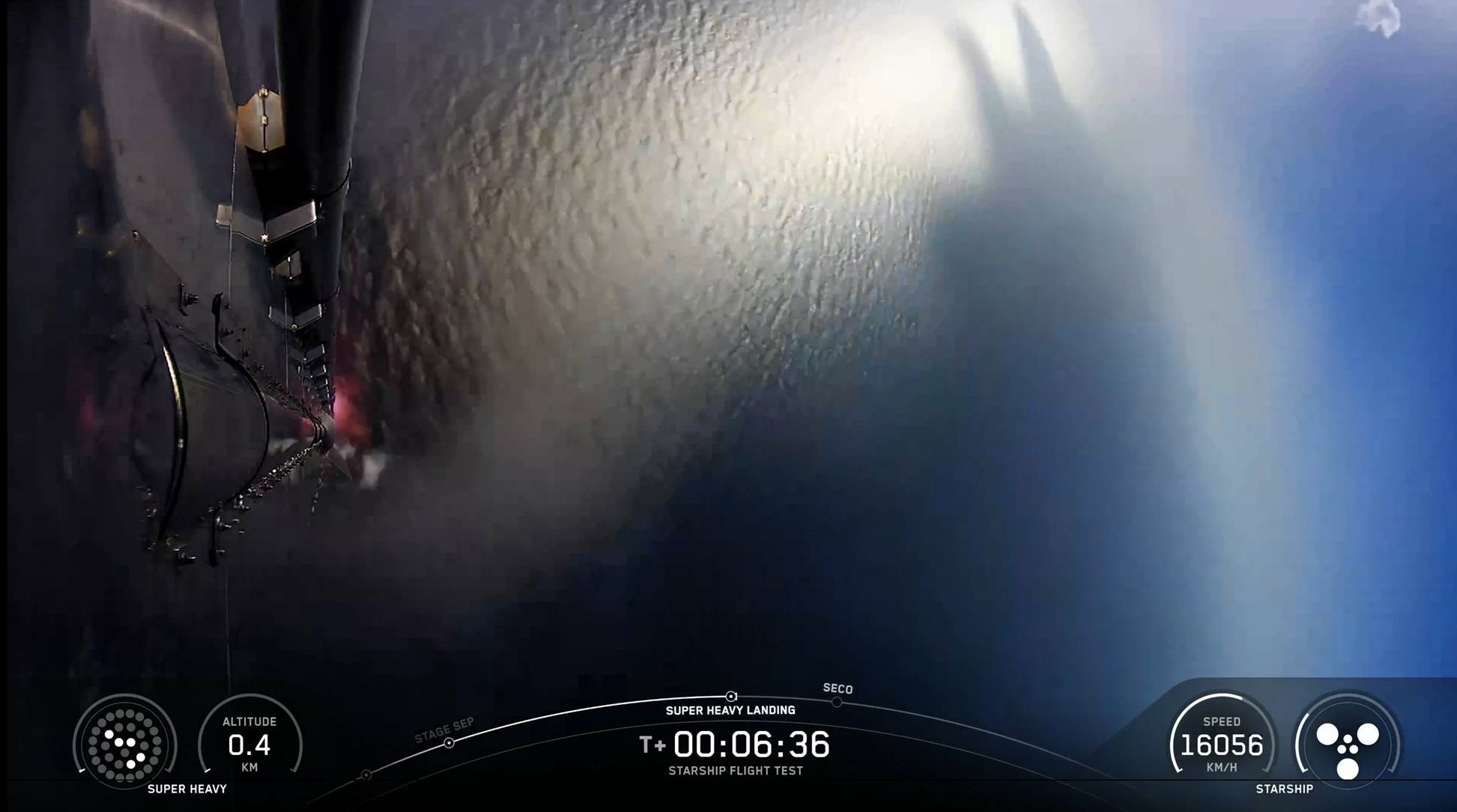
Image credit: SpaceX/Inside Outer Space screengrab
Hard splashdown
The startup sequence was modified for this flight to be more robust to timing variability in engine startup and flip in the desired direction, which is done to increase overall performance.
The booster successfully completed the high thrust portion of the boostback burn with all 33 engines, the first time with a Super Heavy V3, before ending the burn early. It attempted to relight its engines for the landing burn, with a subset successfully igniting before experiencing a hard splashdown in the Gulf.
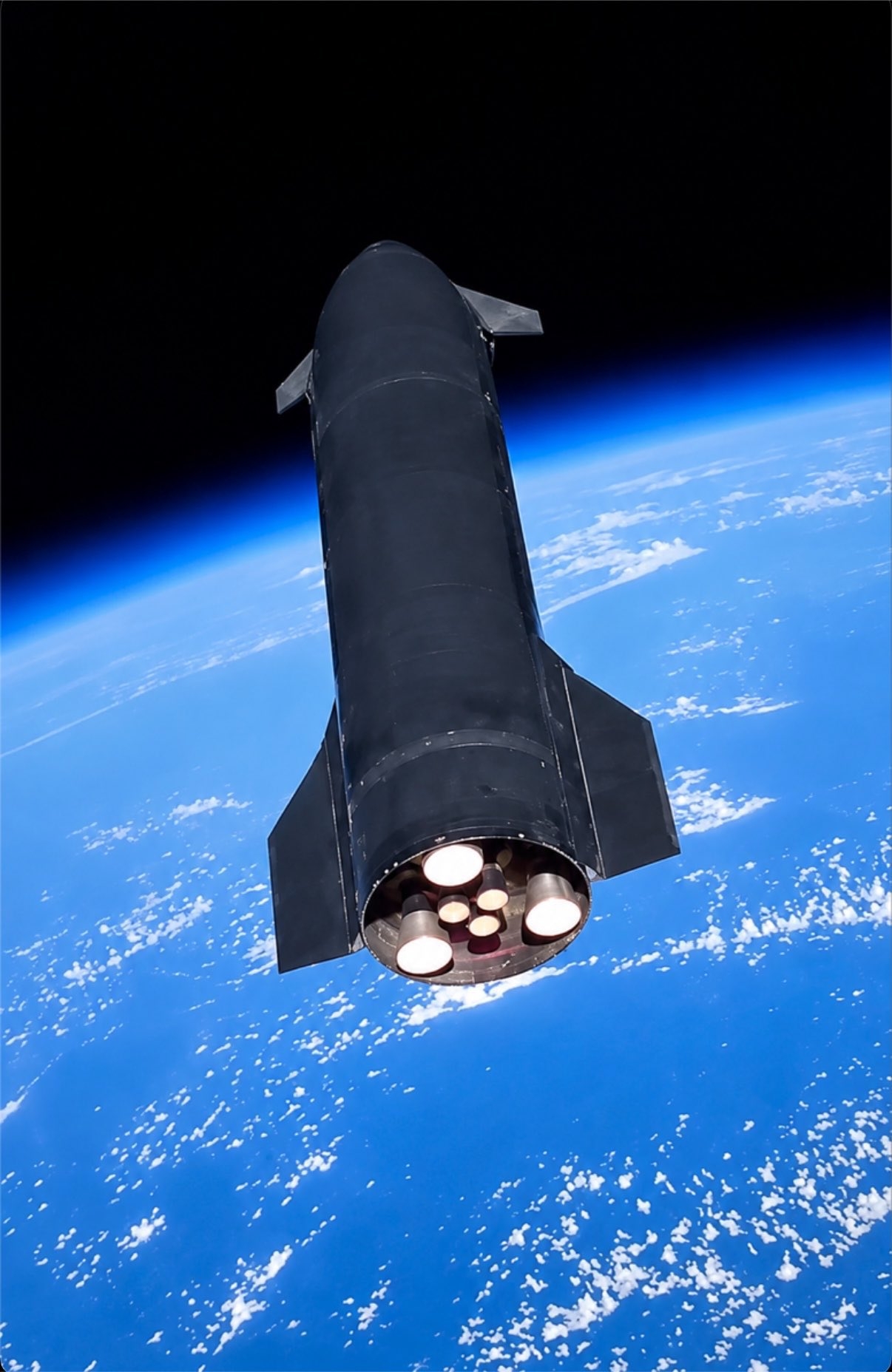
Starship in free flight. Image credit: SpaceX
Starlink satellite deployment
After completing a full-duration ascent burn on all six Raptor engines, Starship achieved its planned velocity and trajectory.
Starship then successfully deployed all 20 Starlink V3 satellites. SpaceX engineers were able to successfully communicate with every satellite using radio frequency and laser links and downloaded key telemetry from the satellites.
The Starlink satellites were deployed on the pre-planned trajectory and are expected to have demised upon reentry approximately 20 minutes after deployment.
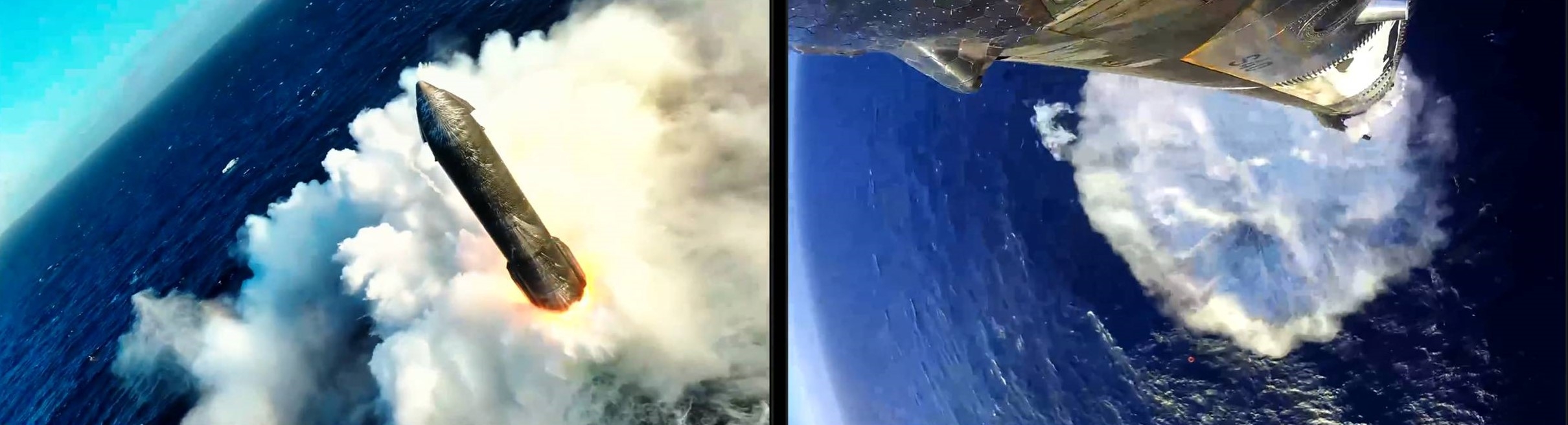
Image credit: SpaceX/Inside Outer Space screengrab
Critical views
The vehicle also reignited a single Raptor engine in an in-space demonstration of a core capability for future orbital missions.
Starship re-entered the Earth’s atmosphere and was able to gather critical data on the performance of its heatshield before executing a dynamic banking move to mimic the trajectory that future missions returning to Starbase will fly.
Starship then guided itself using its four flaps to the pre-planned splashdown zone in the Indian Ocean.
After relighting all three Raptor engines, Starship executed a landing flip, landing burn, and soft splashdown, coming to rest intact in the Indian Ocean and providing critical views of an intact heatshield for the first time.
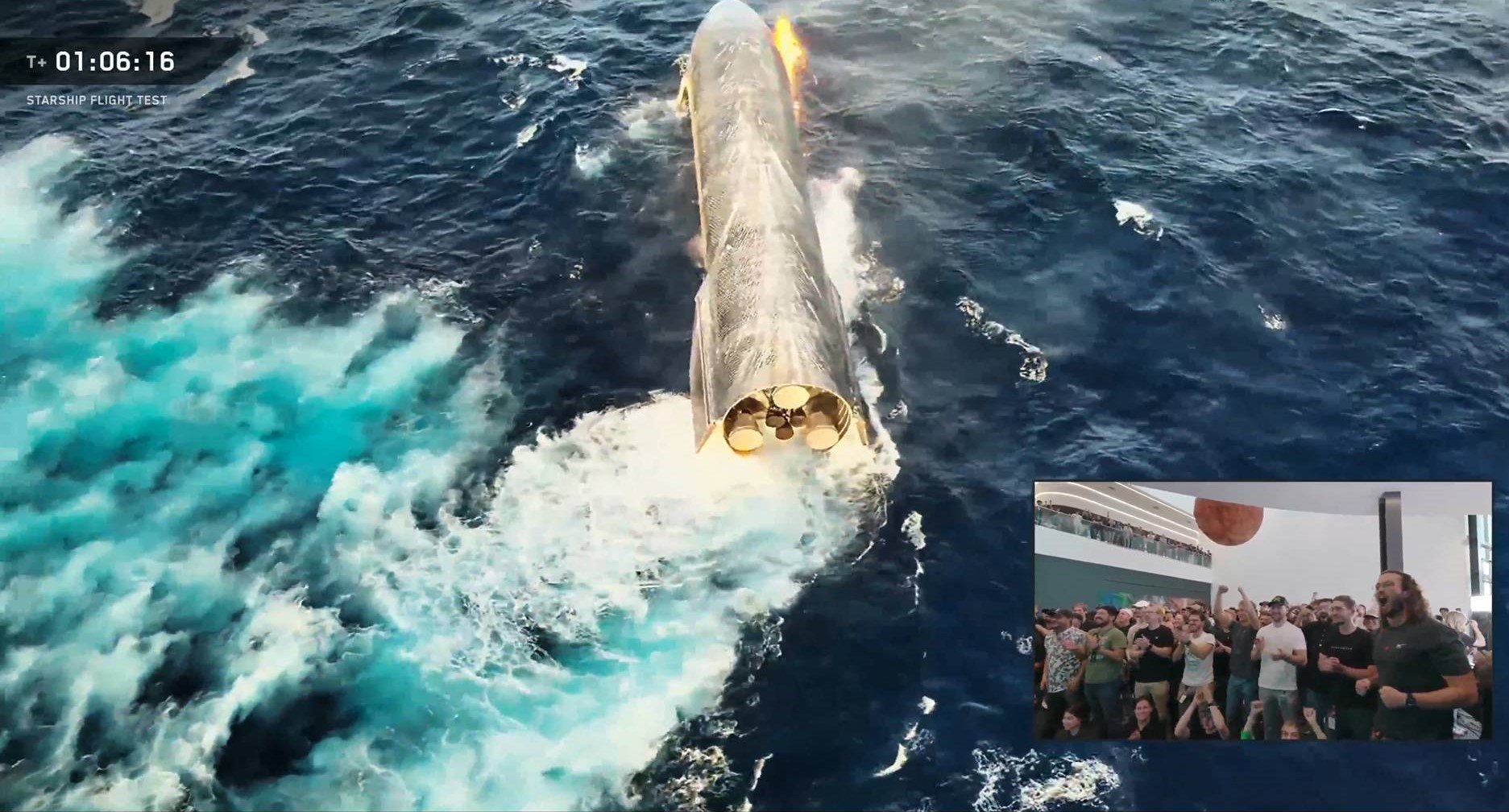
Image credit: SpaceX/Inside Outer Space screengrab
For a replay of the flight, go to:
https://www.spacex.com/launches/starship-flight-13
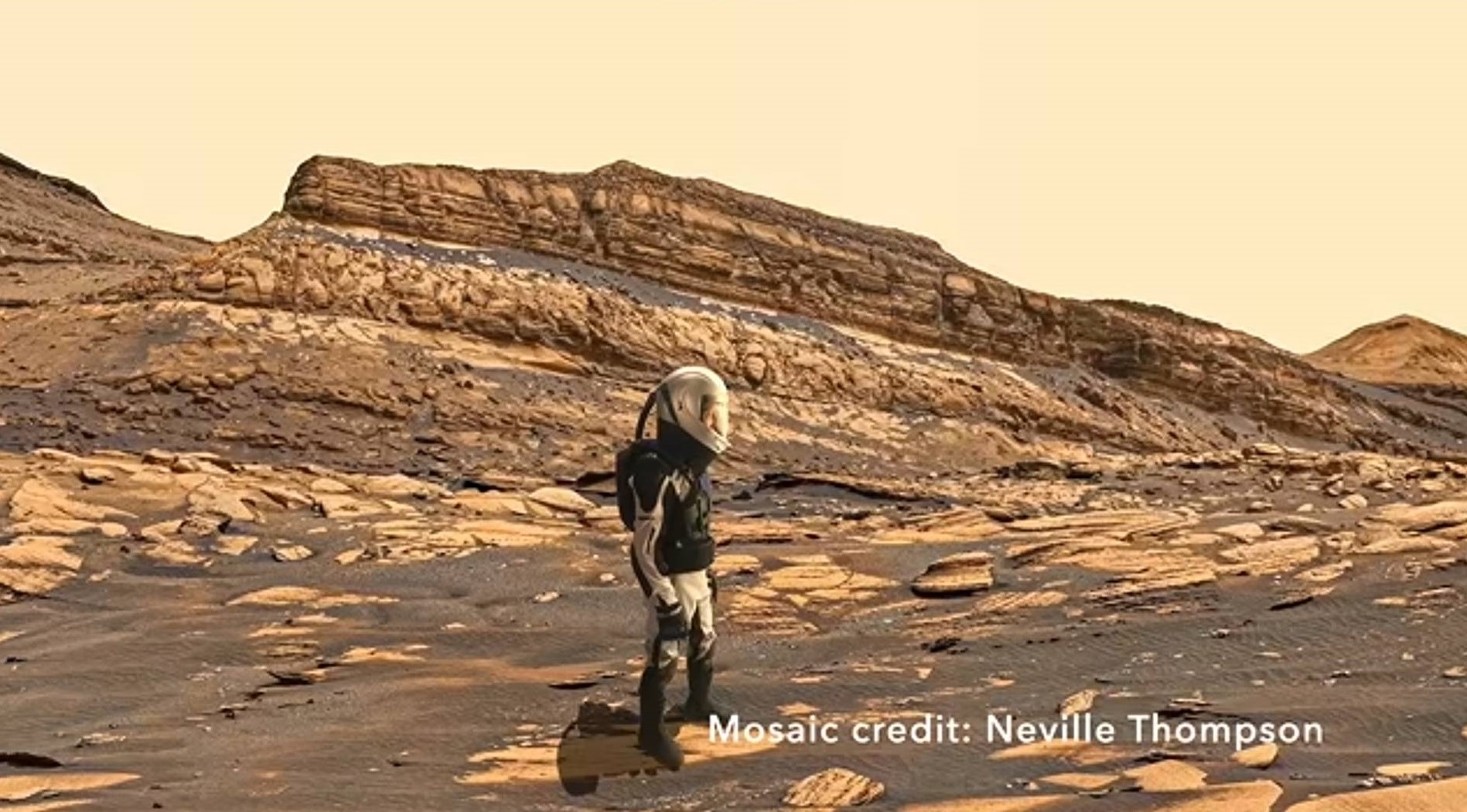
Image credit: Mars Guy/Inside Outer Space screengrab
Mars Guy takes a look at NASA’s Curiosity Mars rover. Its dust removal tool does the unexpected is discussed. So too is a look at the rover’s wheels.
“Curiosity doesn’t have an abrading tool like Perseverance [Mars rover] uses to expose fresh rock surfaces. Instead, it uses a wire brush with a now twisted bundle of wires that sometimes makes tiny holes. But last week, Curiosity somehow managed to make a hole more like one from Perseverance,” notes Mars Guy.

Image credit: JPL-Caltech/Inside Outer Space screengrab
Mars Guy also explores how Curiosity maneuvers through challenging terrain in Gale Crater as the rover approaches its 14th year on Mars.
The segment examines the rover’s ongoing wheel wear issues and compares its maintenance tools with those used by the Perseverance mission while inspecting recent geological findings.
Go to this video at:
https://youtu.be/HCeKe-BsvQ4?si=_hr3f96vsY7-7eGF
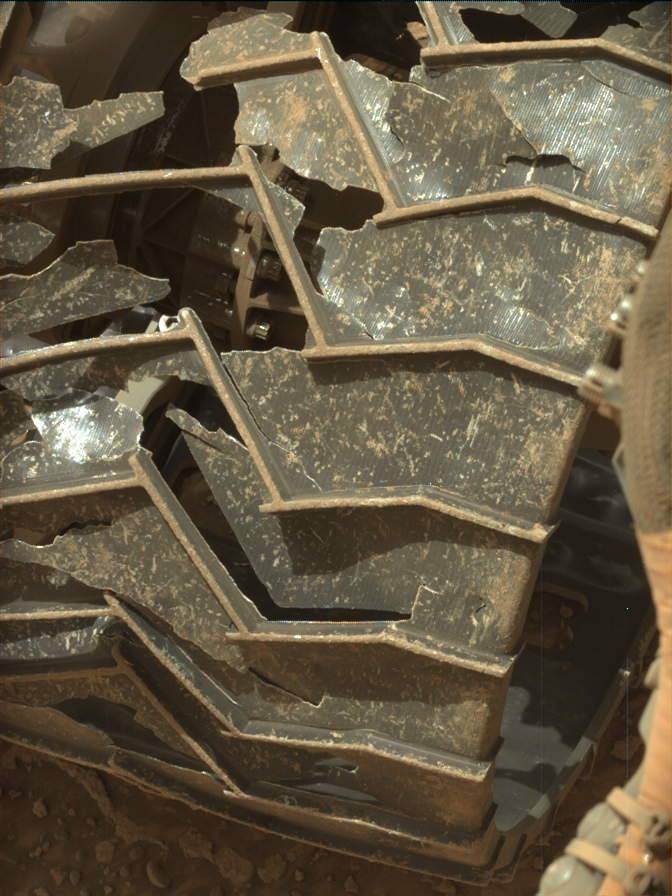
Image credits: NASA/JPL-Caltech/MSSS
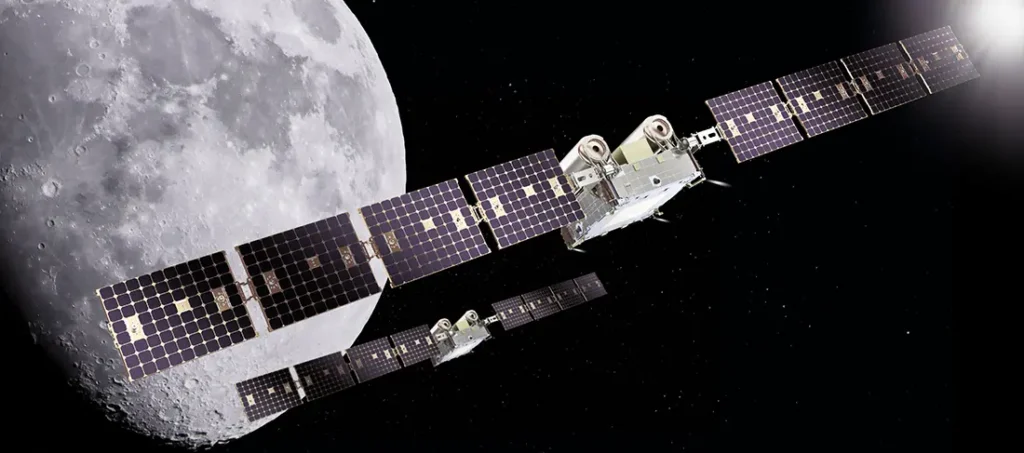
Image artwork: Terran Orbital
A new dual spacecraft mission has been green-lighted to augment operations at the Moon, including the build-up of an Artemis Moon Base.
As operations at the Moon scale in quantity, foundational technologies such as autonomous navigation will be critical to enable safe and long-term operations.
Advanced Space of Westminster, Colorado has announced a CAPSTONE 02 mission – a two spacecraft endeavor is underway for launch in 2027 in partnership with NASA along with Terran Orbital, a Lockheed Martin Company, as the “bus” provider.
The spacecraft bus is the structural component in which the payload and all scientific instruments are placed.

Earth’s Moon as viewed from the International Space Station.
Image credit: NASA
Operations in cislunar space
CAPSTONE 02 is designed to advance rendezvous and proximity operations (RPO) and autonomy capabilities in multibody cislunar orbits.
“With CAPSTONE 02, we are taking the next step toward routine, resilient operations in cislunar space,” said Bradley Cheetham, president and CEO of Advanced Space.
“By maturing autonomous rendezvous and proximity operations in this complex environment,” Cheetham said, “we are directly enabling the future of lunar exploration, development, and long-term presence. CAPSTONE 02 can reduce risk for Moon Base, Artemis and every lunar mission that follows.”

Image credit: NASA
Rectilinear halo orbit
The innovative CAPSTONE 01 was launched by Rocket Lab on June 28, 2022. It concluded its mission for NASA in June 2026. That microwave oven–sized, 55-pound CubeSat operating was the first commercially owned and operated spacecraft to orbit the Moon.
NASA’s original CAPSTONE demonstration — short for Cislunar Autonomous Positioning System Technology Operations and Navigation Experiment – was the first spacecraft to operate in a near rectilinear halo orbit around the Moon. This is a nearly stable orbit due to the interactive pull of gravity from both the Earth and the Moon.
One major CAPSTONE 01 assignment was attached to NASA’s Lunar Gateway, a Moon-orbiting outpost in NASA’s Artemis program. However, Gateway plans were canceled in March 2026, with NASA announcing it would now focus on developing a lunar surface base between 2029 and 2036.

CAPSTONE 01 over the Moon’s North Pole.
Image credit: NASA/Daniel Rutter
“CAPSTONE demonstrated what is possible in cislunar operations with small satellite technology and rapid mission timelines,” added Alec Forsman, CAPSTONE 02 program chief engineer at Advanced Space.
“The CAPSTONE 02 mission will push that envelope even further by demonstrating RPO in a three-body orbit, enabling demonstration of cislunar communications architectures, and proving autonomy capabilities that future lunar missions will depend on,” said Forsman.
Numerous partners
Advanced Space and NASA are working with numerous partners to enable the CAPSTONE 02 mission, such as:
- Terran Orbital will provide mission operation and launch integration services.
- Stellar Exploration will deliver a chemical propulsion system enabling lunar insertion and RPO maneuvering capabilities.
- Utah State University Space Dynamics Laboratory provides the communications system, including direct-to-Earth communications and crosslink communications.
- Lawrence Livermore National Laboratories (LLNL) will provide integrated optical payloads, including LLNL-patented monolithic optics.
- CAPSTONE 02 will also fly NASA’s Compact Electron Proton Spectrometer (CEPS) instrument demonstrating space weather radiation forecasting, and three NASA-developed navigation software payloads.
Lead of the In‑Space Infrastructure portfolio within the Research and Technology Mission Directorate at NASA Headquarters in Washington, DC. CAPSTONE 02 is funded by NASA’s Human Spaceflight Mission Directorate. The mission is managed by Small Spacecraft & Distributed Systems, based at NASA’s Ames Research Center in California’s Silicon Valley.
Image credit: NASA
Formation flying
The two identical spacecraft for the CAPSTONE 02 mission weigh roughly 882 pounds (400 kilograms).
Mission operators will conduct a series of rendezvous and proximity operations and loitering – or formation flying – techniques in lunar orbit with each spacecraft to better understand the trajectories of the spacecraft under the simultaneous influence of Earth and Moon gravities, otherwise known as three-body orbits.
“This mission represents an important step in the maturation of cislunar capabilities,” said Sean Fuller, Moon Base CAPSTONE manager. “By expanding on the lessons learned from CAPSTONE to demonstrate increasingly sophisticated operational concepts, CAPSTONE 02 lays the foundation for lunar infrastructure and commercial services that support Artemis, Moon Base, and future missions to deep space.”
SpaceX Starship Flight 13: The Video
https://x.com/i/broadcasts/1AJEmmYdMDnJL
Image credit: SpaceX/Inside Outer Space screengrab
Image credit: SpaceX/Inside Outer Space screengrab
Image credit: SpaceX/Inside Outer Space screengrab
Image credit: SpaceX/Inside Outer Space screengrab

