Archive for June, 2026
 Author:
  June 25th, 2026
Apollo 9 astronaut Rusty Schweickart.
Image credit: B612 Foundation/Danica Remy
This year’s winning proposal for the Schweickart Prize is “Untold Threats: A Worldwide Call to Defend New Frontiers.”
Apollo 9 astronaut Rusty Schweickart is the namesake of the Schweickart Prize and is a program of the B612 Foundation.
The winning proposal addresses a growing challenge for the future of space exploration: protecting satellites, lunar operations, and other space-based assets from natural hazards such as meteoroid activity and impact-generated debris.
Furthermore, the proposal outlines a framework for international collaboration to better understand these risks and strengthen the resilience of critical space infrastructure.
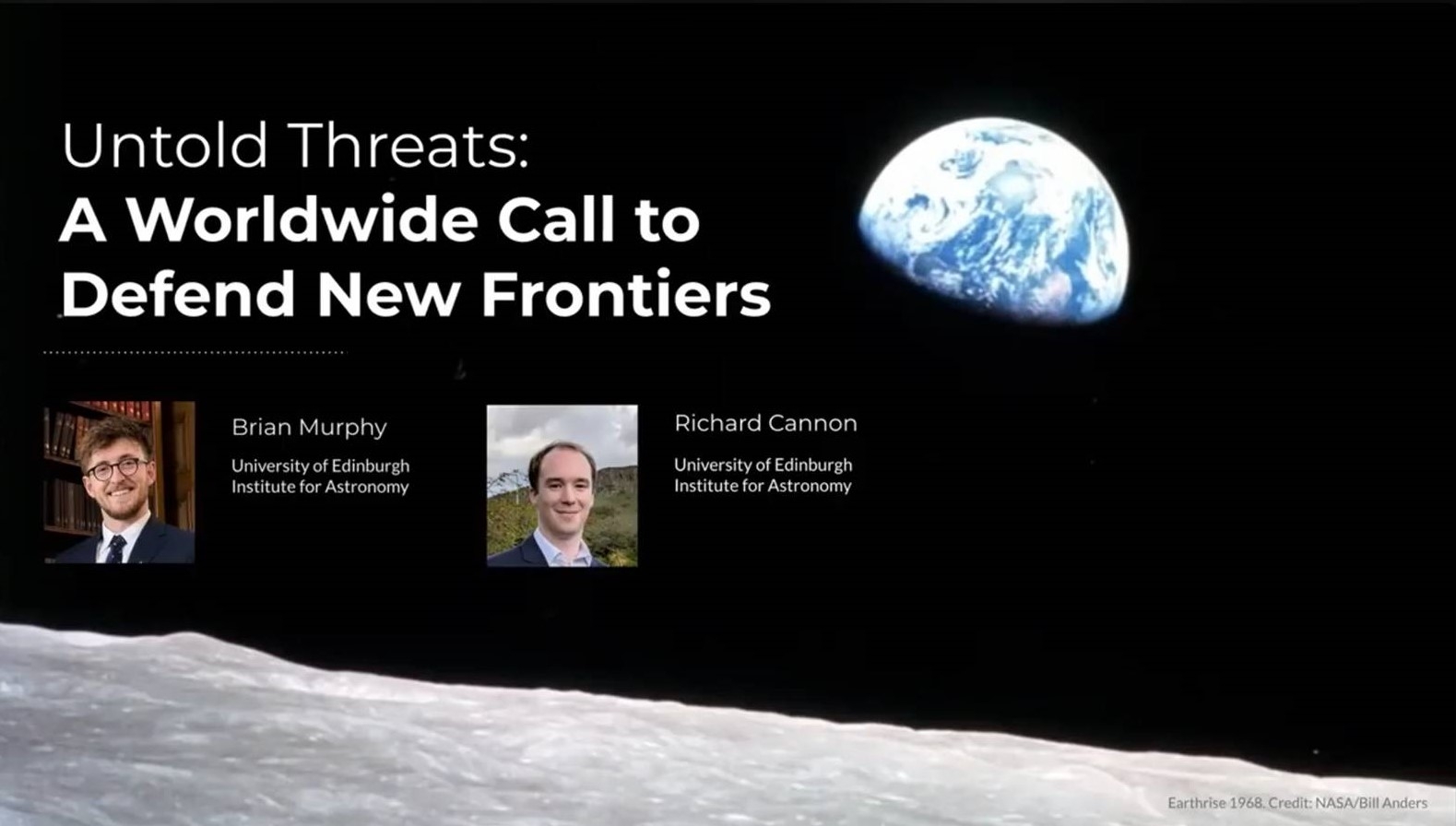
Image credit: B612 Foundation
Planetary defense
The 2026 Schweickart Prize has been awarded to Brian Murphy and Richard Cannon of the University of Edinburgh. Their proposal spotlights the importance of planetary defense beyond Earth, and the role of global cooperation in safeguarding humanity’s future in space.
“As human activity and vital interests rapidly expand into regions beyond the protective shield of our atmosphere,” Schweickart said, “the number of passing objects capable of causing serious damage to both life and critical infrastructure increases dramatically.”
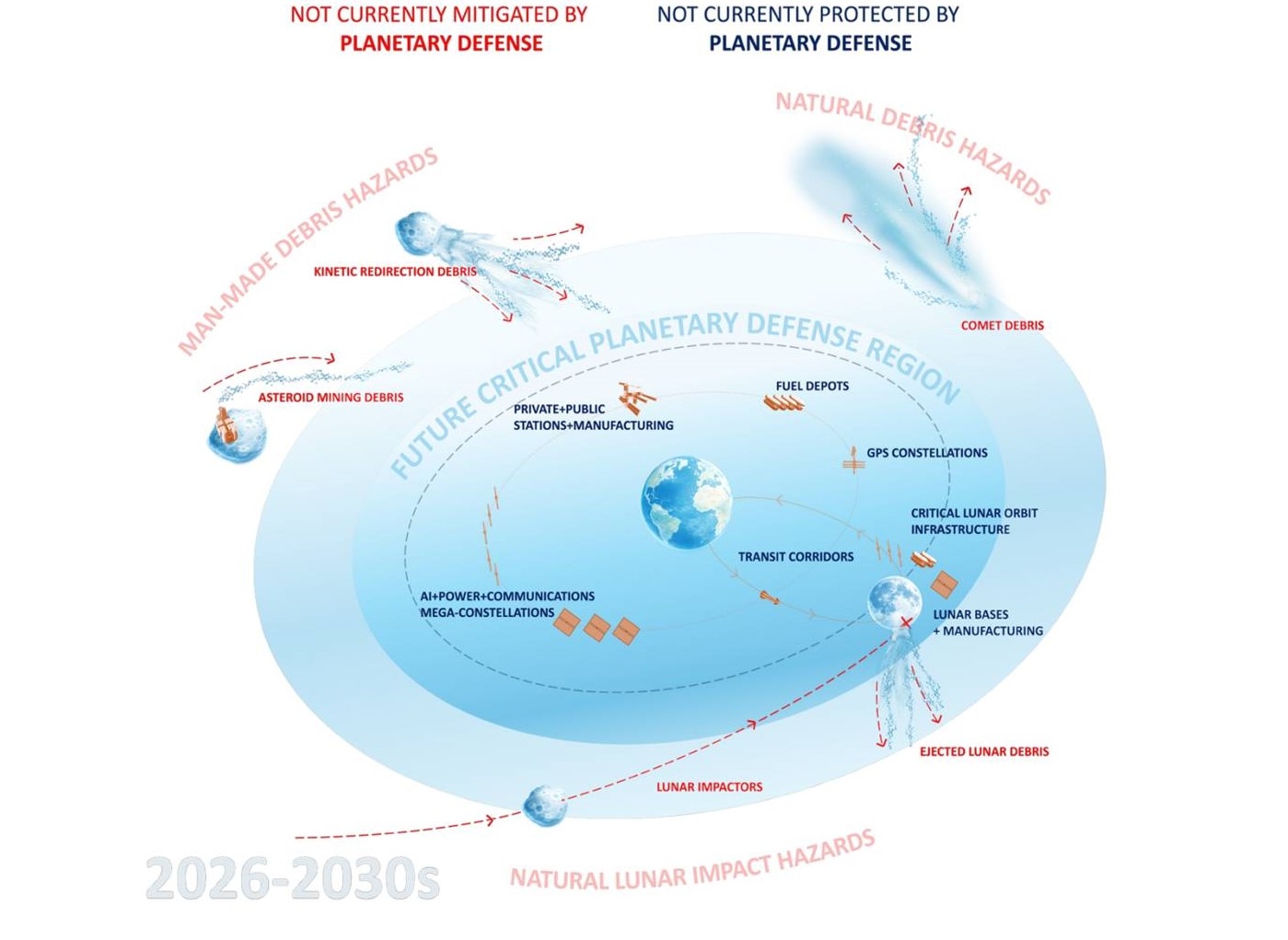
Image credit: Brian Murphy/Richard E. Cannon, University of Edinburgh, Institute for Astronomy and School of Physics and Astronomy; Royal Observatory of Edinburgh
WARDEN: coordinating body
The proposal calls for establishing an International Commission on Space Infrastructure Resilience (ICSIR) to investigate these risks and develop recommendations for the United Nations Committee on the Peaceful Uses of Outer Space.
Ultimately, the proposal authors envision creating a permanent international coordinating body, termed WARDEN (Warning-network for Asset Resilience from Dusts, Ejecta, and NEOs), to complement existing planetary defense organizations and coordinate the protection of humanity’s assets beyond Earth.
The winning proposal was unveiled via a June 23 online event that can be viewed at:
https://www.youtube.com/watch?v=d_gTOStKQbQ
To review the proposal – “Untold Threats: A Worldwide Call to Defend New Frontiers” — go to:
https://drive.google.com/file/d/1xSKUNAOABuRsg2p4mUXt9T-8mUlMYvXh/view
The official presentation of the physical museum-quality prize and the $10,000 award will take place at a public ceremony at Lowell Observatory on June 27, coinciding with Asteroid Day Arizona activities.
For details on Asteroid Day Arizona activities, go to:
https://lowell.edu/event/northern-arizona-asteroid-day-2026/

Imge credit:
Lowell Observatory
 Posted in
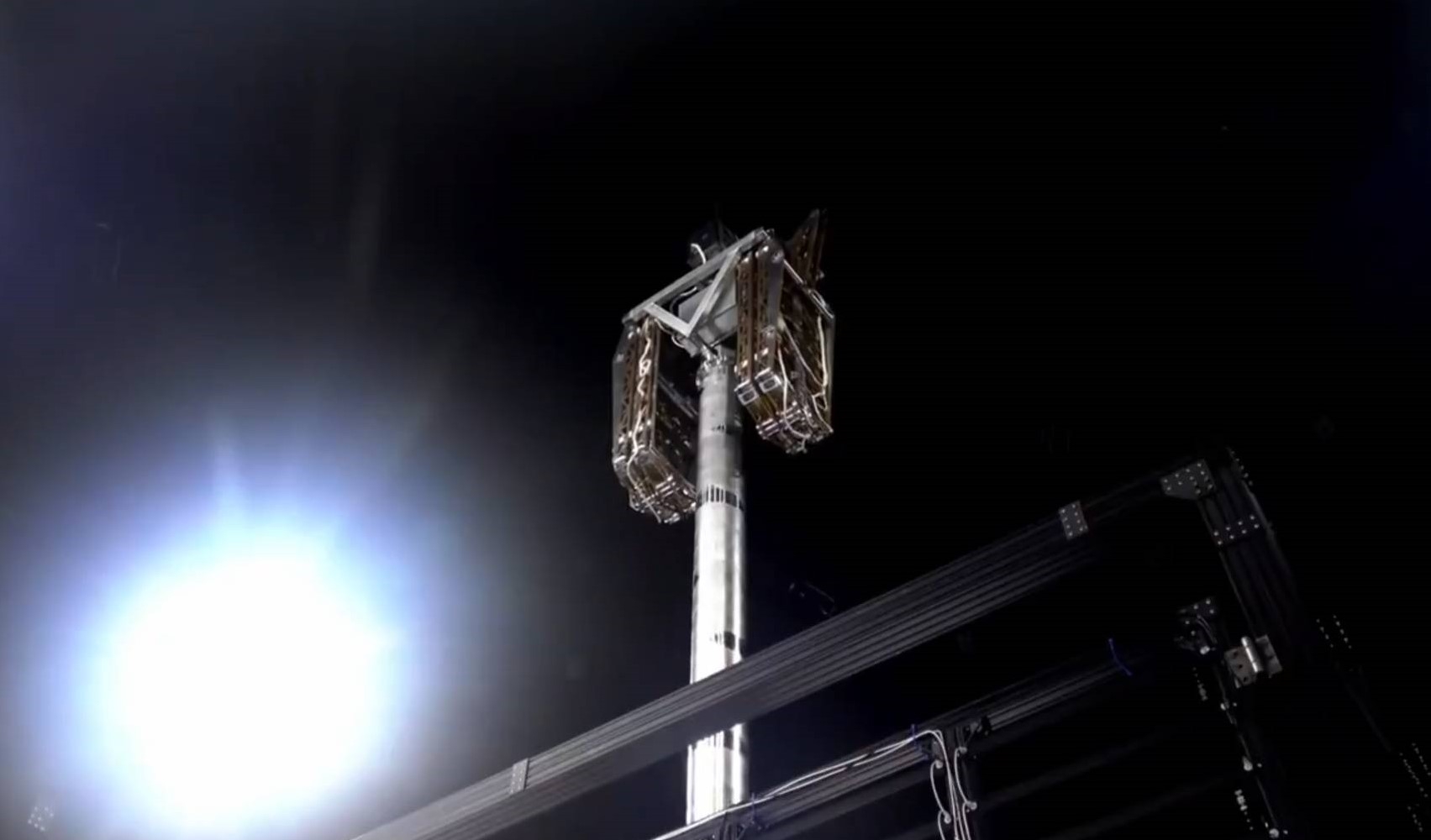
Image credit: Blue Origin/Inside Outer Space screengrab
Blue Origin has literally rolled out a test version of a power tower to gather solar energy for Moon Base operations.
The tower would be mounted on the Blue Moon MK1’s top deck, then extends upwards to 85 feet (26 meters) total height and deploys solar arrays.
“The infrastructure era of lunar exploration starts now,” says Blue Origin.
Go to this video of Power Tower during a successful deployment in an analog lunar environment at:
https://x.com/blueorigin/status/2069146585787781276/video/1
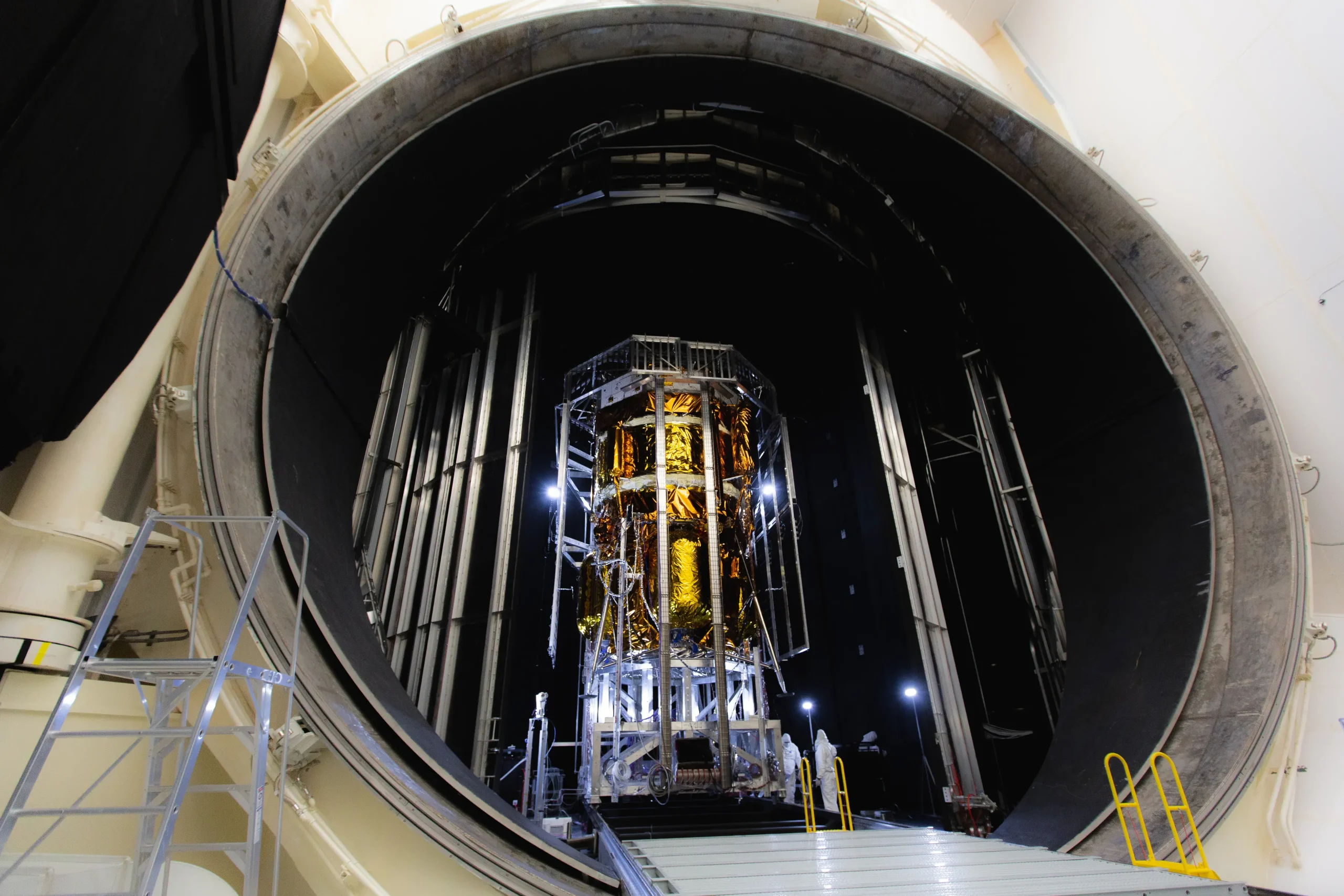
Blue Moon MK1 Lunar Lander inside of NASA Johnson Space Center’s Thermal Vacuum Chamber A, preparing for testing. (Feb. 12, 2026). Image credit: Blue Origin

Artwork depicts China’s current Tiangong space station configuration.
Image credit: China Manned Space Agency
Now circling Earth in a T-shaped configuration, China is readying a new module that upgrades the orbiting facility to a cross shape.
The current station consists of the Tianhe core module, the Wentian lab module and the Mengtian lab module. According to a report by China Media Group (CMG), the first phase of expansion will add a new 20-ton-class multifunctional module.
The new module would be docked to the core module to form a cross shape.
More docking ports
This expansion will add more docking ports, CMG notes, allowing multiple spacecraft to dock simultaneously. The module includes an additional extravehicular activity hatch, and expanded storage and experiment capacity.
In a June 24 story from the state-run Xinhua news agency, they report that two additional laboratory modules can be docked with the new expansion module.

Image credit: CGTN/Inside Outer Space screengrab
Longer-term plan
Yang Hong, chief designer of the space station system, said a longer-term plan would upgrade the station to a six-module configuration, increasing its total mass from the current 90 tons to up to 180 tons.
At that stage, Yang said, different modules could be dedicated to specific research fields, and crew capacity would be significantly expanded.
Xinhua notes that China’s long-awaited Xuntian Space Telescope is scheduled for launch in 2027. It will fly in co-orbit with the station and dock when maintenance and upgrades are required.

Image credit: CCTV/Inside Outer Space screengrab
Current crew
Meanwhile, the three astronauts now onboard China’s orbiting outpost are busy carrying out experiments and in-orbit training and health management tasks, reports China Central Television (CCTV).
Zhu Yangzhu, Zhang Zhiyuan and Li Jiaying (Lai Ka-ying in Cantonese) have also carried out their first in-orbit medical rescue training since entering the space station in late May, CCTV adds.
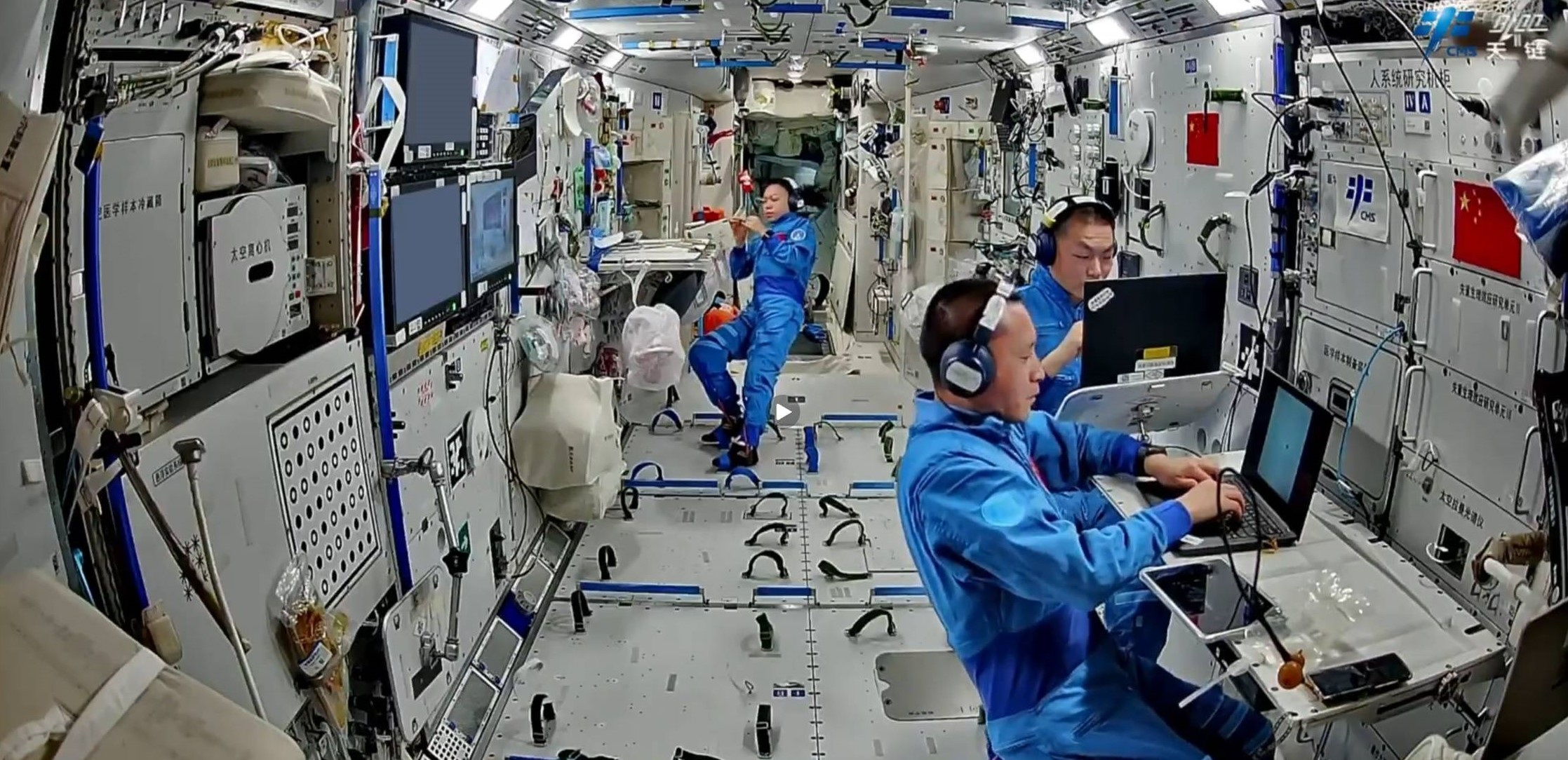
Image credit: Tiangong TV/China Manned Space Engineering Office/Inside Outer Space screengrab
“The astronauts also carried out behavioral experiments on visual motion processing and microgravity intuitive physics, aiming to investigate how gravity affects visual motion information processing, as well as the impact of long-duration spaceflight on intuitive physical representation and its recovery mechanisms,” CCTV reports.
The trio of taikonauts has conducted “in-orbit emotional recognition and evaluation research, along with emergency decision-making ability assessments, to study the patterns of emotional state changes and emergency response capabilities,” CCTV notes.
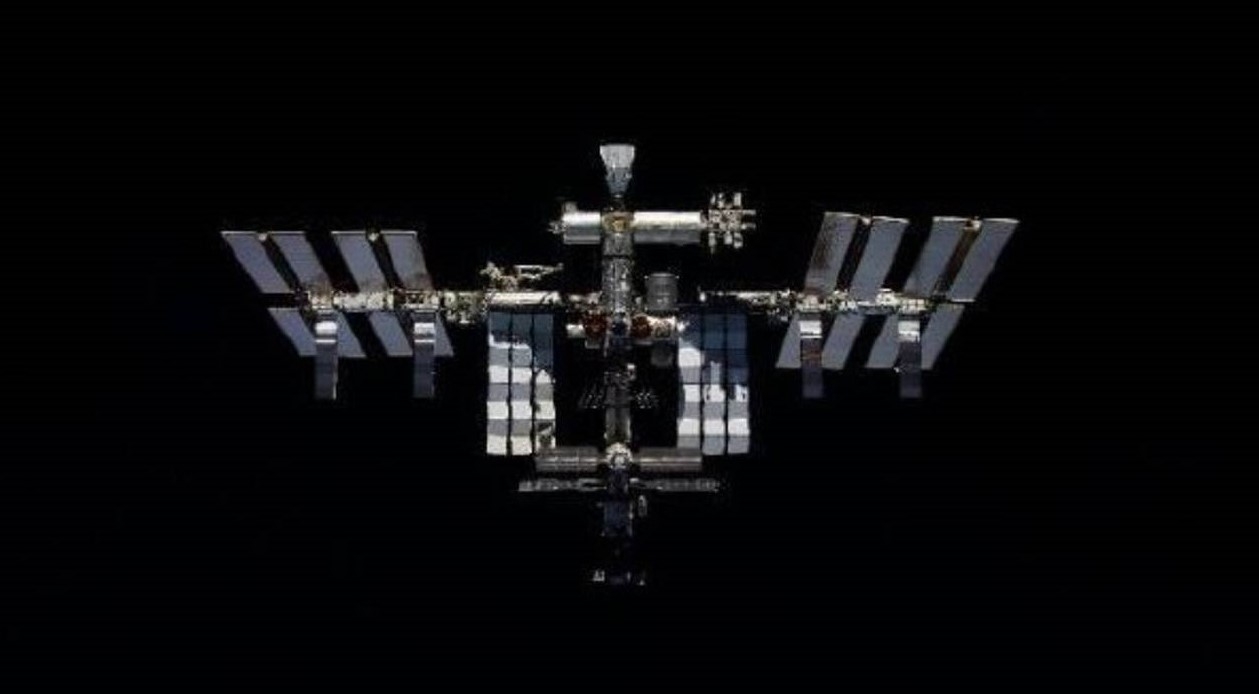
Image credit: NASA/Roscosmos
NASA’s plan to de-orbit the International Space Station in coming years has fallen under the scrutiny of a government watchdog group. That action has stirred up a wave of reaction by a leading ocean conservation organization.
“As part of the reentry process, NASA expects portions of the ISS and deorbit vehicle to break up and fall into the remote part of the ocean to minimize the risk to populated areas,” states a recent GAO report.
Gap in international law
Taking a nose-up position on the prospect of nose-diving the ISS is the Ocean Foundation, a Washington, D.C.-headquartered group with a mission to improve global ocean health and the human relationship with the sea via carefully chosen strategies and projects.
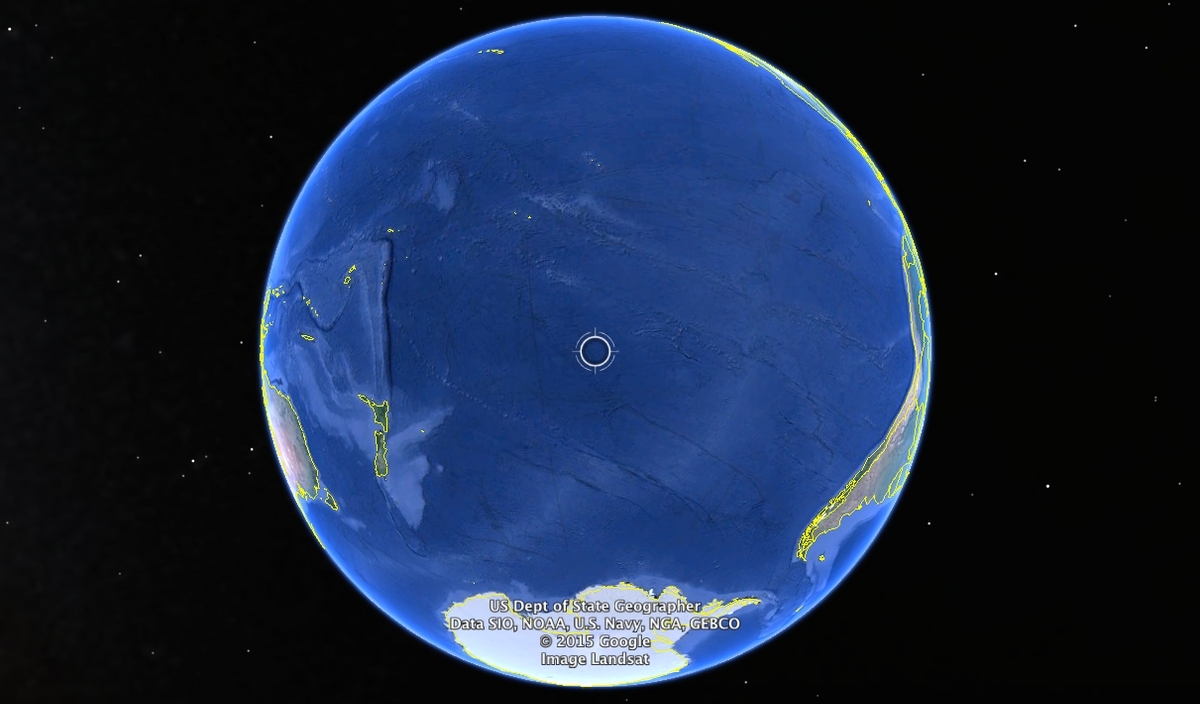
Possible splash down zone for the International Space Station, an area around Point Nemo, formally dubbed “the oceanic pole of inaccessibility.”
Credit: Google/Public Domain
“We believe this gap in international law needs to be closed, and the ISS de-orbit is a vivid illustration of why,” says the chief of Ocean Foundation.
Go to my new Space.com story – “NASA wants to dump the ISS in the sea. Experts say the plan ‘raises serious concerns for ocean health,’” at:

What’s wrong with this picture? Missing in this artwork are small craters, dust, dirty equipment and dirty astronauts. Image credit: NASA
GOLDEN, Colorado – Earth’s Moon is in need of good and accurate artists!
“We see the misconception of a flat, gentle moon everywhere,” complains one lunar expert.
As the NASA Artemis program hits its stride, and in a few years “reboots” our moon with a human presence, there’s an urgent need to guard against artistic misrepresentations of the lunar landscape.
Lunar renderings
We’ve all seen those alluring lunar renderings of vehicles and astronauts shuffling and bounding about while setting up equipment and putting in place a moon base.
“We are telling the public the moon is easy….it is not!”

Daniel Britt, the Pegasus Professor of Astronomy and Planetary Sciences at the Department of Physics, University of Central Florida.
Image credit: Barbara David
That’s the matter-of-fact warning from Daniel Britt, the Pegasus Professor of Astronomy and Planetary Sciences at the Department of Physics, University of Central Florida. He’s also the director of the Center for Lunar and Asteroid Surface Science.
For more details, go to my new Space.com story – “’Let’s not fool the public’: Why moon art should be more realistic in the Artemis age” – at:

Image credit: Michael Carroll
GOLDEN, Colorado – Scientists are engaged in research with an eye toward transforming the cold climes of Mars into a far more humane place for Earthlings in the future.
One notion proposed is dispersion of an aerosol meant to motivate the warming of Mars’s atmosphere. The idea is projected to be a first step toward terraforming the Red Planet.
Emerging recently as a new field of study is “applied astrobiology” – to appraise what would be needed to create sustainable habitats and biospheres beyond Earth.
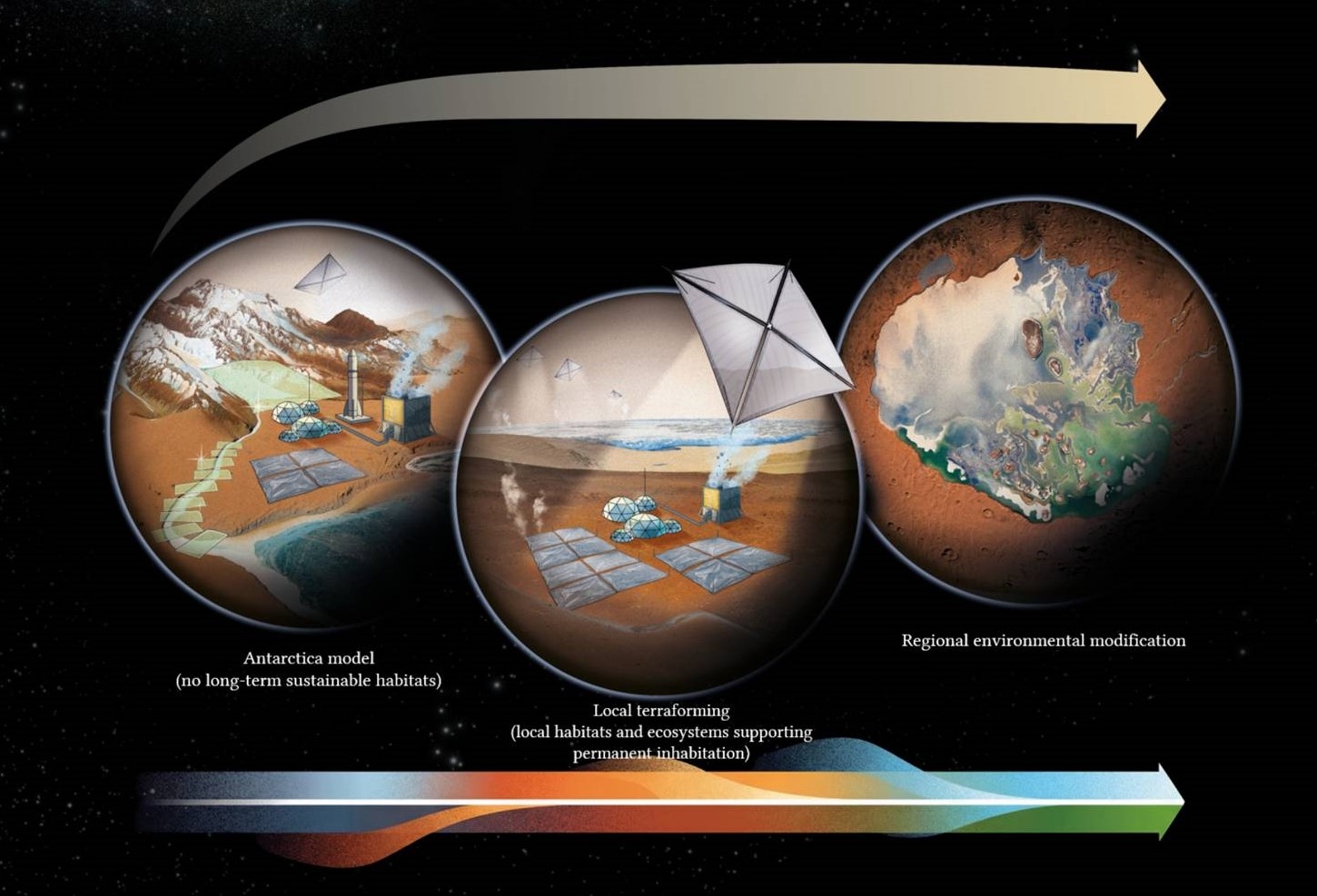
Artistic view shows potential choices for the scale of human involvement in the future of Mars. Early on, warming occurs only close to human bases. Solid-state greenhouse membranes harvest liquid water from subsurface ice. Orbiting reflectors augment sunlight, and a pilot factory makes engineered aerosols.
(Image credit: E. S. Kite et al.)
“Relatively modest research investments would keep open the option of extending life beyond Earth as Mars’ scientific exploration continues,” explains a leading researcher.
A blueprint for assessing the viability of warming the Red Planet has been drawn up by scientists, outlining what it might take to make Mars a place in space where life can thrive.
For more details, go to my new Space.com story – “Could we actually terraform Mars? Scientists are trying to find out” – at:

International Space Station.
Image credit: Roscosmos
The U.S. Government Accountability Office (GAO) has reported on issues related to NASA’s plan to de-orbit the International Space Station (ISS) and transition from the ISS to commercial space stations.
NASA has expressed its concern about having a “gap” in continuous human presence in low Earth orbit, but it has not yet assessed the likelihood or potential duration of a gap.
NASA spends roughly $3 billion a year to maintain and operate the ISS. This includes the costs of crew and cargo transportation to the station, which represents about 60 percent of the total cost.
NASA officials have indicated that ISS costs will likely grow in subsequent years.
Go to this GAO report — “Low-Earth Orbit: NASA Faces Impending Decisions for Replacing International Space Station with Commercial Stations,” publicly released: June 17, 2026, at:
https://www.gao.gov/products/gao-26-107805
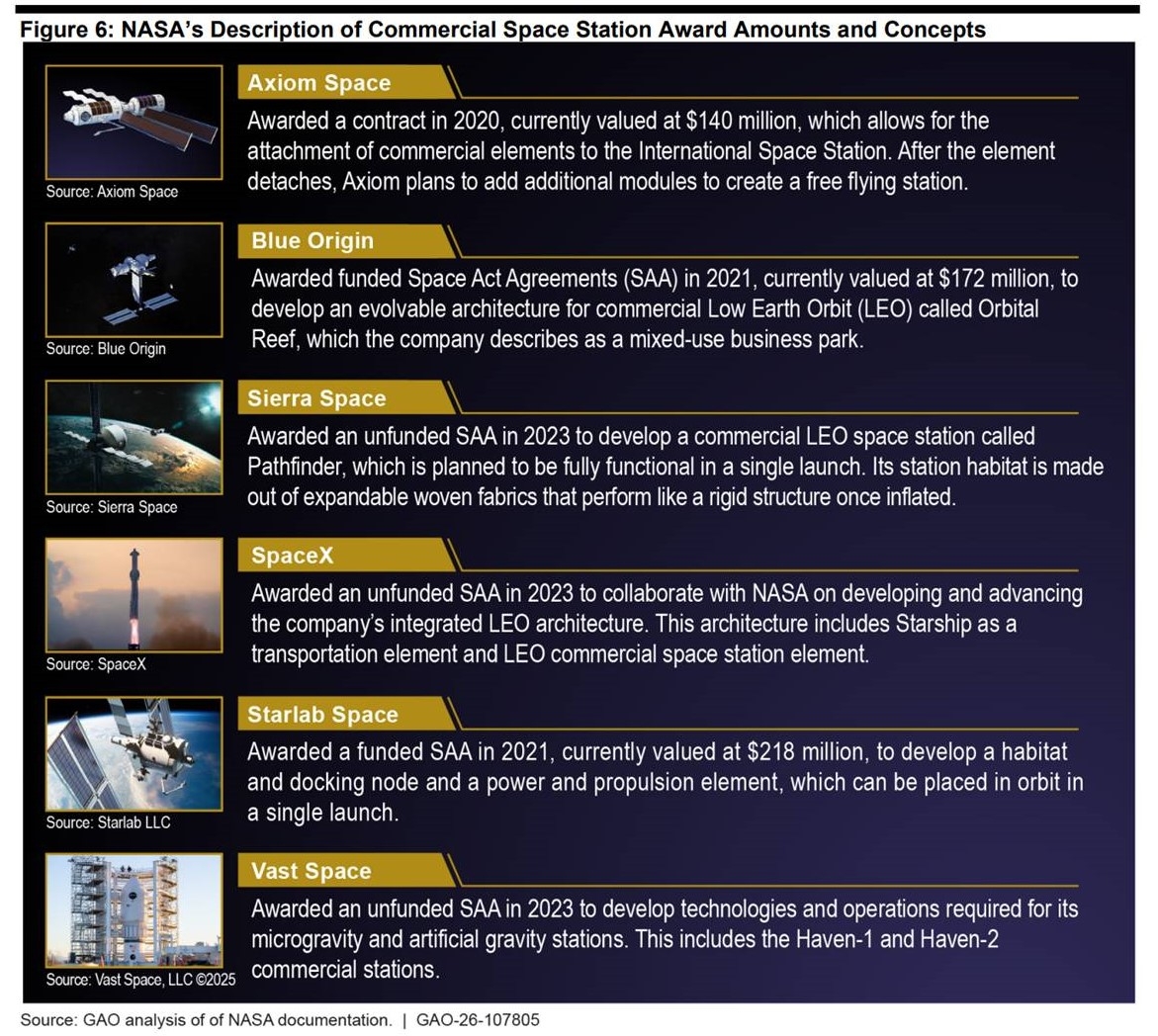
Image credit: GAO

Image credit: NASA/Inside Outer Space screengrab
New studies have helped identify what the Moon’s South Pole-Aitken (SPA) basin has to offer – a massive impact structure on the Moon’s far side.
Regions near SPA are also potential landing sites for NASA’s Artemis missions.
Rare opportunity
SPA is considered one of the Moon’s oldest surviving features, providing insight into the early solar system.
“The basin offers scientists a rare opportunity to study the Moon’s earliest history,” said William Bottke, director of the Center for Lunar Origin and Evolution (CLOE). “The collision struck the lunar surface with such force that it may have excavated material from deep inside the Moon, including portions of the lunar mantle.”
CLOE is confab of Southwest Research Institute (SwRI) experts in NASA’s Solar System Exploration Research Virtual Institute. Bottke is also executive director of SwRI’s Science Directorate in Boulder, Colorado.
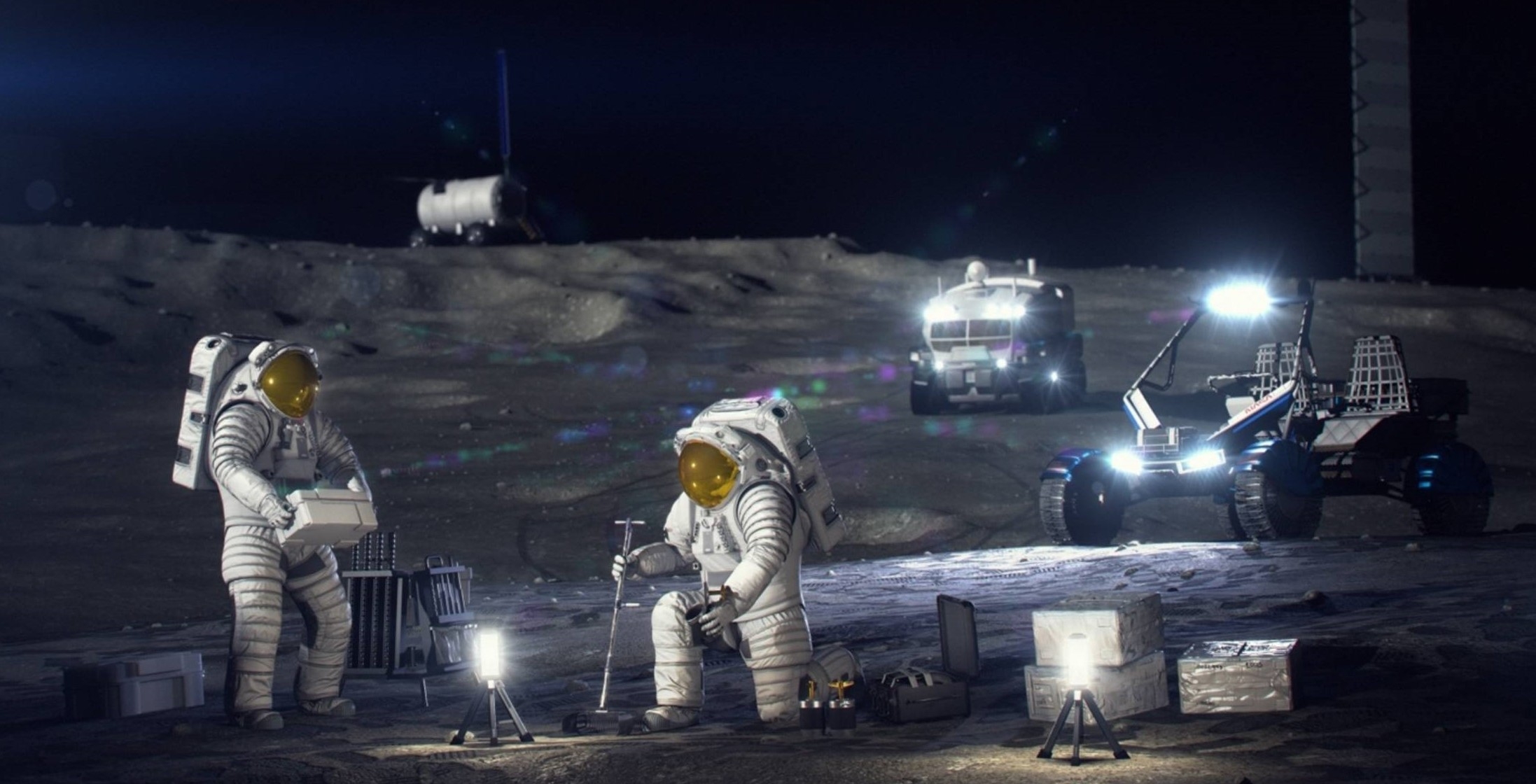
Image credit: NASA
Excavated deposits
Simulation modeling suggests the SPA impactor was not a simple, uniform body but a differentiated object with an iron core surrounded by rock, such as a small protoplanet or differentiated asteroid. Impacts within the SPA basin appear to have excavated underlying mantle deposits.
Those impacts hurled some of this material to the surface, where it could be readily sampled by robotic rovers or astronauts during future missions, explains a SwRI release.
Powerful roadmap
“The combination of impact and gravity modeling gives us a powerful roadmap,” Bottke said. “It tells us not just how SPA formed, but where to look for the rocks that can answer some of our biggest questions about the Moon’s origin and evolution.”
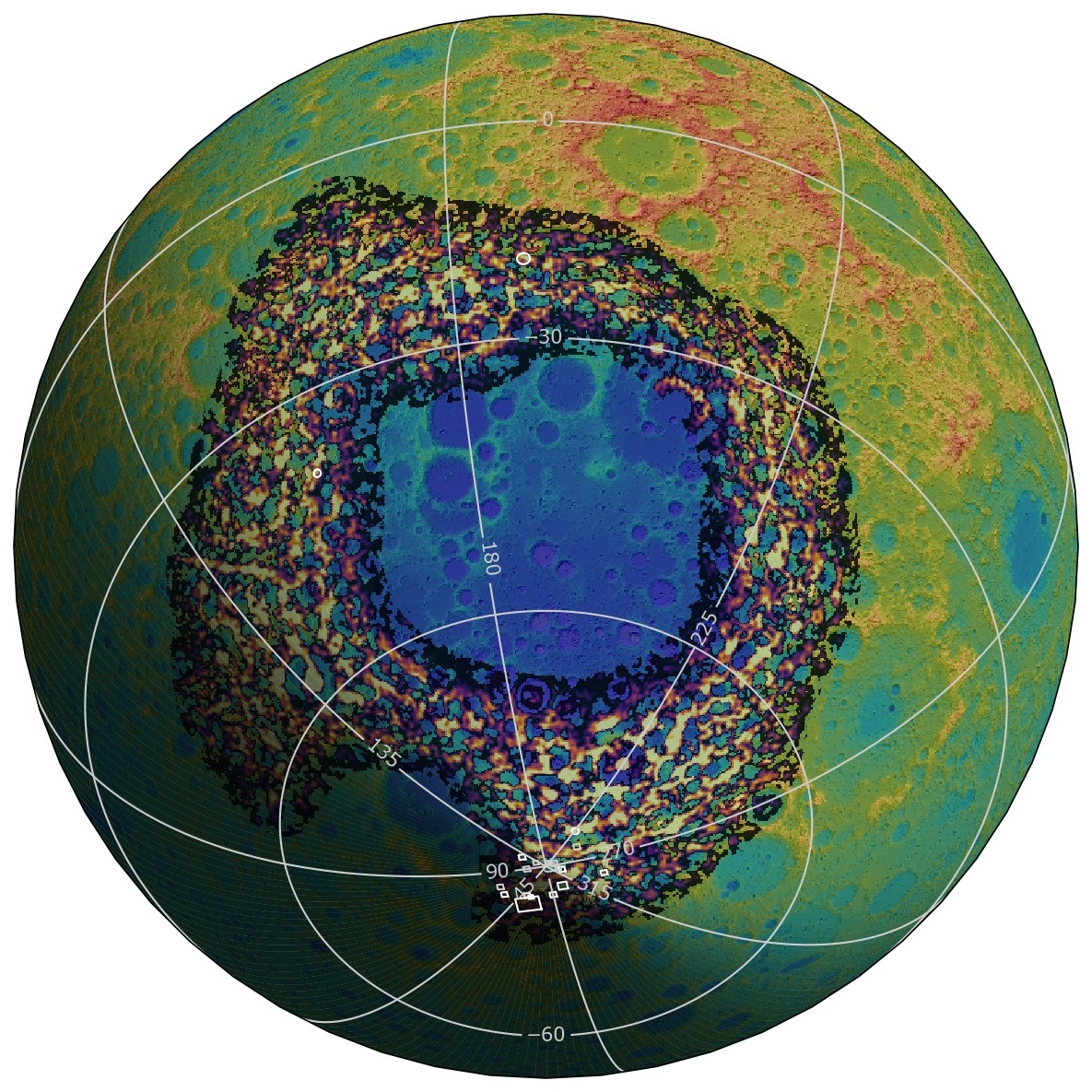
A large impactor created the ancient South Pole-Aitken (SPA) basin (blue), a massive structure on the Moon’s far side. Two complementary studies determined that SPA’s surrounding area contains mantle-derived rocks (orange and black), offering information about the interior of the Moon and its earliest history. Proposed landing sites (white squares) for upcoming Artemis missions to the lunar south pole lie within the region, allowing astronauts access to study these materials.
Credit:
Courtesy of NASA/JPL-Caltech/Goddard/Gabe Gowman-U. Arizona. Data from NASA’s GRAIL mission and NASA’s Lunar Reconnaissance Orbiter Laser Altimeter.
That modeling tells us not just how SPA formed, Bottke concludes, “but where to look for the rocks that can answer some of our biggest questions about the Moon’s origin and evolution.”
Earlier theories suggested that the deepest ejecta might be confined to parts of the basin far from proposed south polar exploration zones.
However, the new simulations and gravity modeling work indicate that key deposits of mantle-bearing ejecta may blanket portions of the lunar south polar region – including areas that Artemis astronauts could visit for field studies.
Gravity data
In the companion gravity study, researchers analyzed how SPA ejecta is distributed beneath and around the basin. That research team compared high-resolution gravity data with models that include both crustal and mantle material, determining that SPA likely contains substantial amounts of mantle-derived rocks within its interior and mixed into the ejecta blanket surrounding the basin.
“The precise distribution of mantle material has been a big unknown,” said Gabriel Gowman of the University of Arizona, lead author of the gravity-based study.
“Our models indicate that the SPA impact ejected enough deep material to form a significant deposit that should still be accessible today,” Gowman reports.

Nine candidate landing regions for NASA’s Artemis III mission The background image of the lunar South Pole terrain within the nine regions is a mosaic of LRO (Lunar Reconnaissance Orbiter) WAC (Wide Angle Camera) images.
Image credit: NASA
Most importantly, Gowman adds, some of that material at a trace level may exist in regions being considered for the Artemis landings.
Go to papers
For further information, go to these research papers:
“A southward differentiated impactor forms the tapered shape of the South Pole-Aitken impact basin on the Moon” at:
https://www.science.org/doi/10.1126/sciadv.aea1984
The companion study on the gravity and ejecta structure of the SPA basin — “Gravity Mapping of Lunar Mantle Material in South Pole-Aitken Basin Ejecta” – is available at:
https://agupubs.onlinelibrary.wiley.com/doi/10.1029/2026JE009665
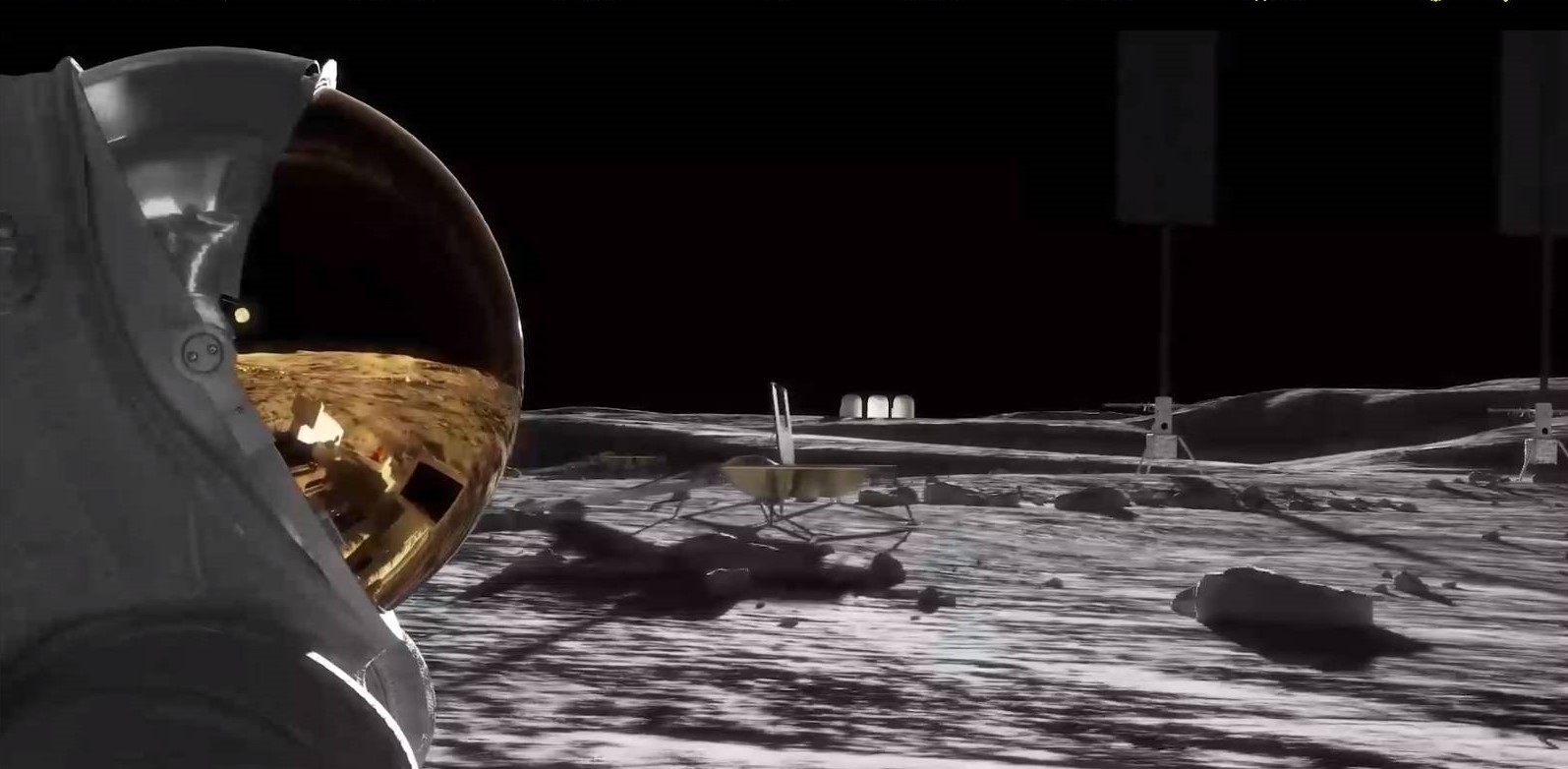
Establishing an Artemis-era Moon Base. Wanted: lunar building codes.
(Image credit: Lockheed Martin)
GOLDEN, Colorado – First of all, take into account centuries of accumulated engineering knowhow, hard-learned lessons, and societal evolution. We here on home planet Earth have shaped a robust framework of building standards that governs construction on our world today.
But now, as humanity prepares to put in place a “sustained presence” on the moon, how do we guarantee the safety and integrity of structures built in an environment for which no such tradition exists?
What’s needed is a lunar building code, the development of design criteria for the moon.
What’s the Moon shaking news about this story? To find out, go to my new Space.com article — “Do we need a lunar building code to build moon bases safely?” – at:

Image credit: Cinemark Theatres
Here’s a collectible that’s an Identified Filling Object (IFO), the Disclosure Day “Stag Popcorn Bucket.”
The bucket, according to an ad, brings Steven Spielberg’s “chilling sci-fi mystery to your collection with an eerie creature-inspired design that fans won’t stop talking about!”
The 85-ounce plastic container is described as “ must-have collectible for alien thriller lovers, movie merch hunters, and blockbuster popcorn bucket collectors.”
This limited-edition collectible is a hand wash only item over 16-inches tall. It’s yours at a bucket-buttery blastoff price of $49.95.

