Archive for April, 2026
 Author:
  April 30th, 2026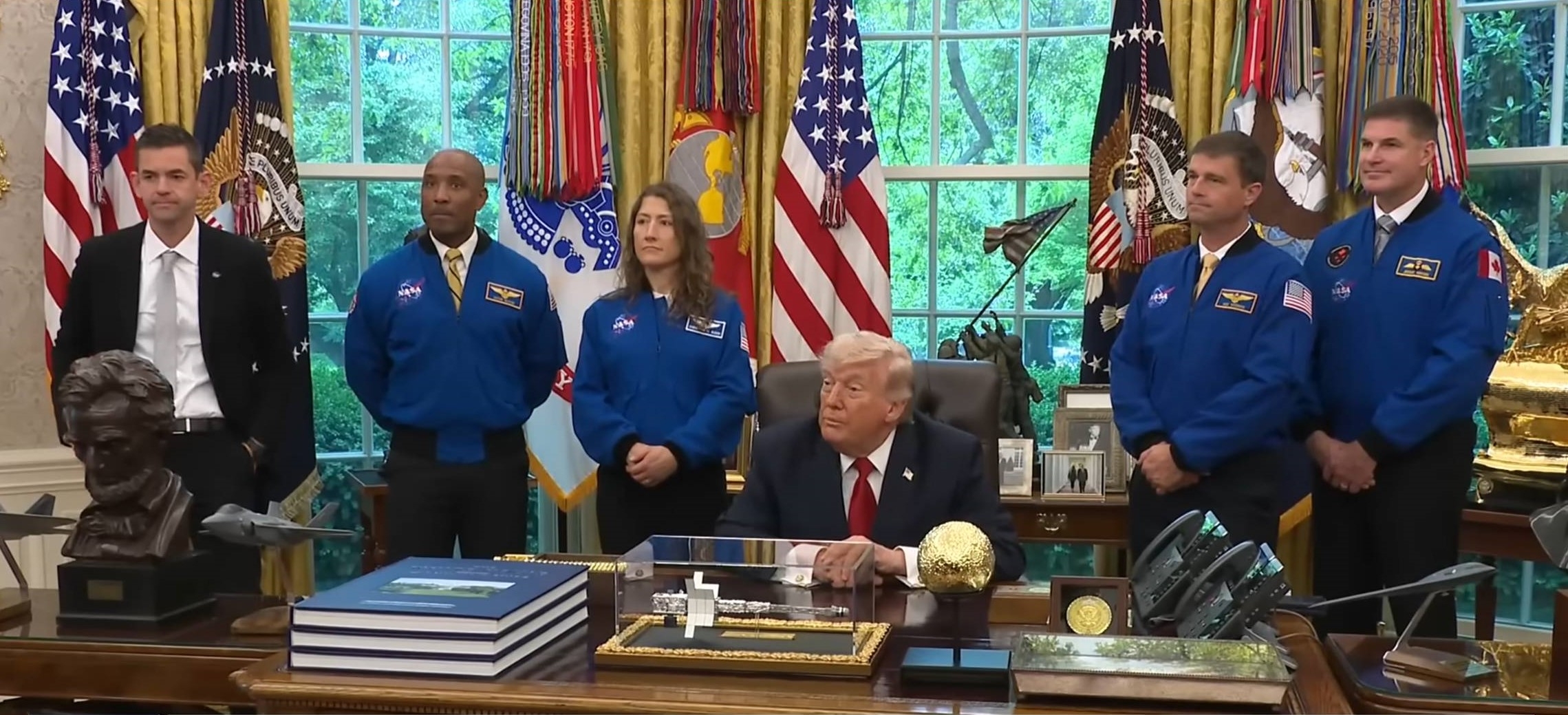
Note Space Reactor-1 (SR-1) Freedom on POTUS desk.
Image credit: White House/Inside Outer Space screengrab
The Artemis II crew and NASA chief, Jared Isaacman, took part April 29, 2026 in White House discussion of that mission and the future of America’s return to the Moon plans.
Go to:
https://www.whitehouse.gov/videos/artemis-ii-crew-visits-the-oval/
President Trump welcomes the astronauts of the Artemis II mission to the Oval Office at:
https://www.youtube.com/live/4hLYFGv9ktM?si=08P7Ybz2PUMHhcll
 Posted in
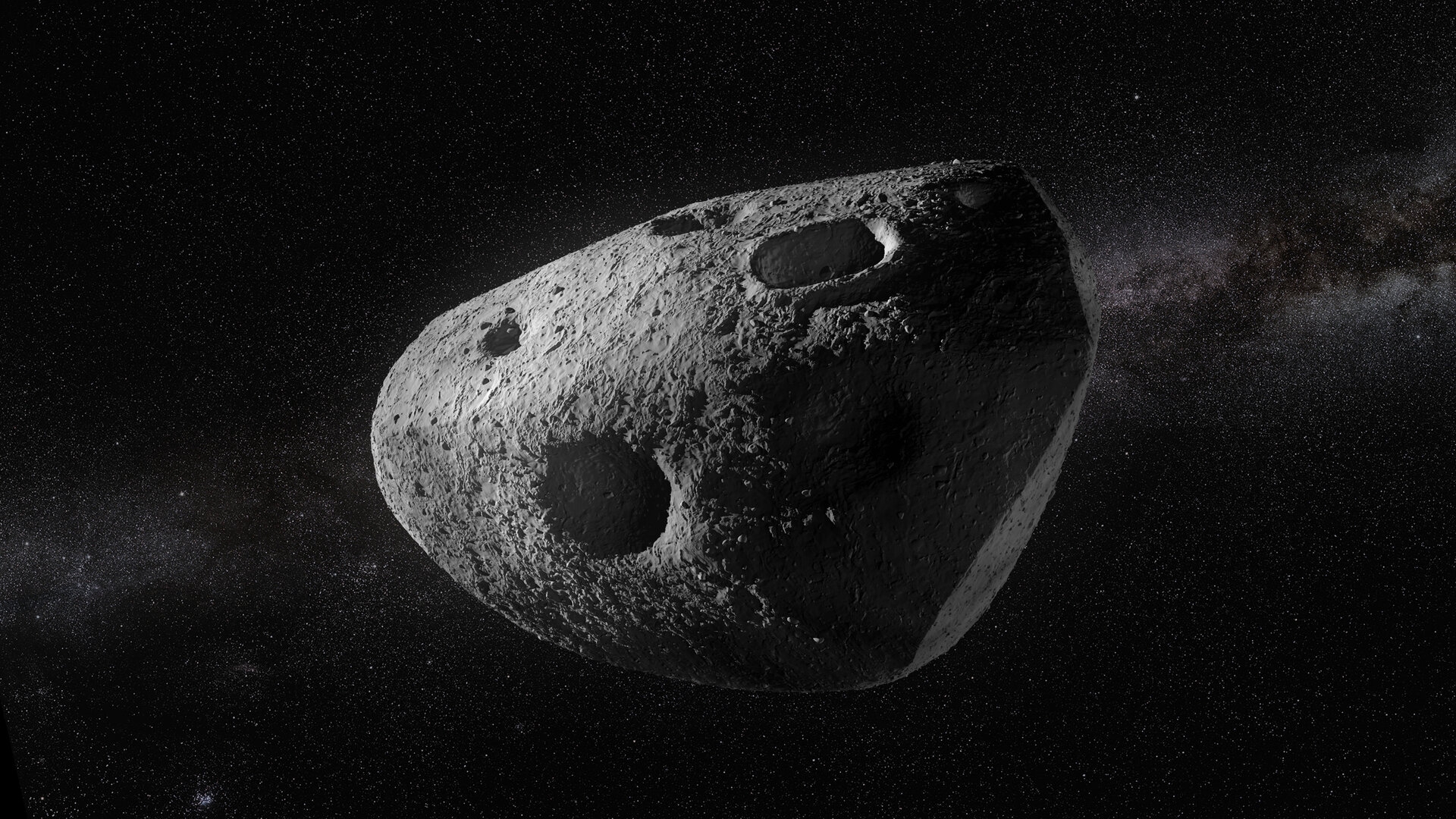
Planetary defense work is underway via the first commercial deep space rideshare mission, the Apophis EX mission by Exploration Labs.
Image credit: ExLabs
Colorado Springs, Colorado – Asteroid Apophis is a major rocky world visitor that in 2029 is whisking by Earth but also serves as a wake-up call for getting our planetary defense act together.
This Friday the 13th 2029 Apophis passage is stirring up — as luck would have it — considerable multi-nation action plans to reconnoiter that object at various stages as it careens toward Earth.

Asteroid Institute leader Edward Lu, former NASA astronaut, details his view of deflection techniques during panel discussion.
Image credit: Barbara David
A new entry for in-space Apophis-watching is what’s billed as the first commercial deep space rideshare mission: Exploration Labs’ (ExLabs) Apophis EX mission.
For more details, go to my new Space.com story – “This is going to be what makes the Earth secure – How one California company plans to protect us from dangerous asteroids,” – at:

Image credit: SpaceX
Earth’s moon is to be on the receiving end of a spent rocket stage in early August – the leftovers from a SpaceX Falcon 9 launch last year.
Firefly’s Blue Ghost Mission 1, named Ghost Riders in the Sky, launched on January 15, 2025 and performed the first fully successful commercial lunar landing on March 2 at Mare Crisium near Mons Latreille. That lander went on to mark the longest commercial operation on the moon to date.
Also riding onboard that SpaceX booster was Japan’s HAKUTO-R M2 lunar lander, called Resilience. However, that probe was lost roughly 90 seconds before touchdown, plowing into the stark lunar terrain.
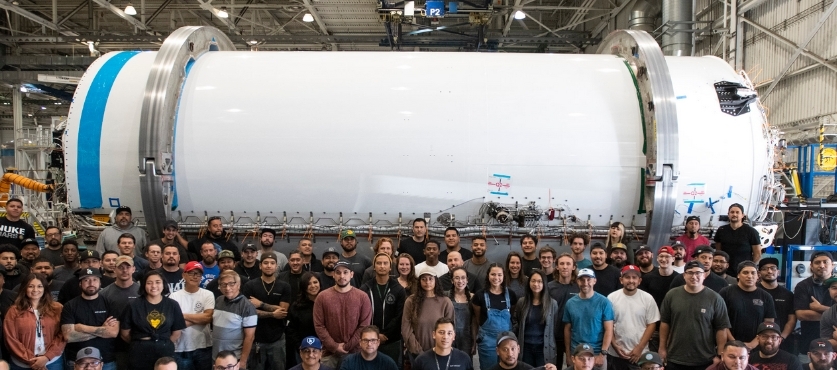
SpaceX rocket stage.
Image credit: SpaceX via Project Pluto
A certain carelessness
Meanwhile, that Falcon 9’s leftover upper stage, labeled 2025-010D that lobbed the two private spacecraft into space is now headed for a run in with the moon.
“It doesn’t present any danger to anyone, though it does highlight a certain carelessness about how leftover space hardware is disposed of.”
For more details, go to my new Space.com story – “A stray SpaceX rocket stage could slam into the moon this August, amateur astronomer says” – at:
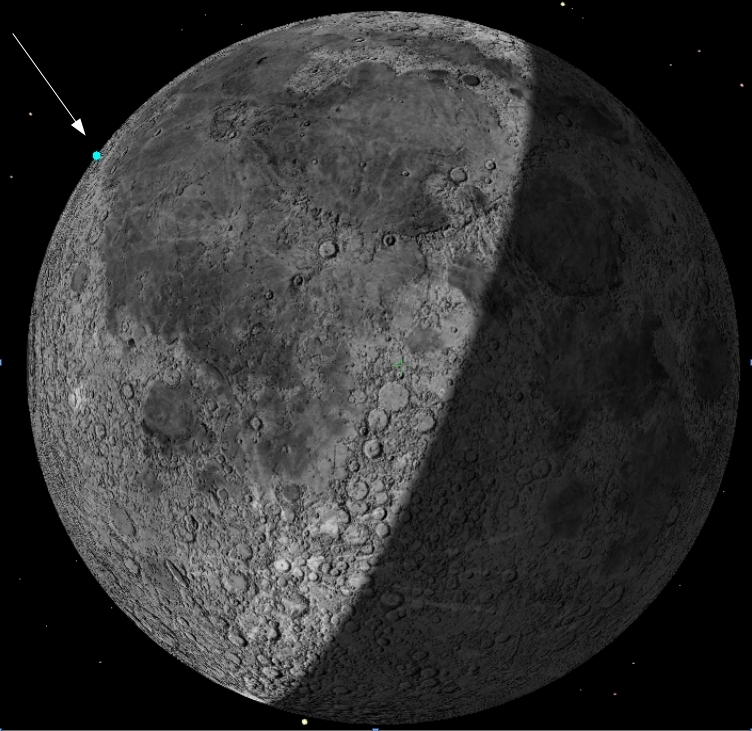
Projected impact point of rocket hardware.
Image credit: Project Pluto
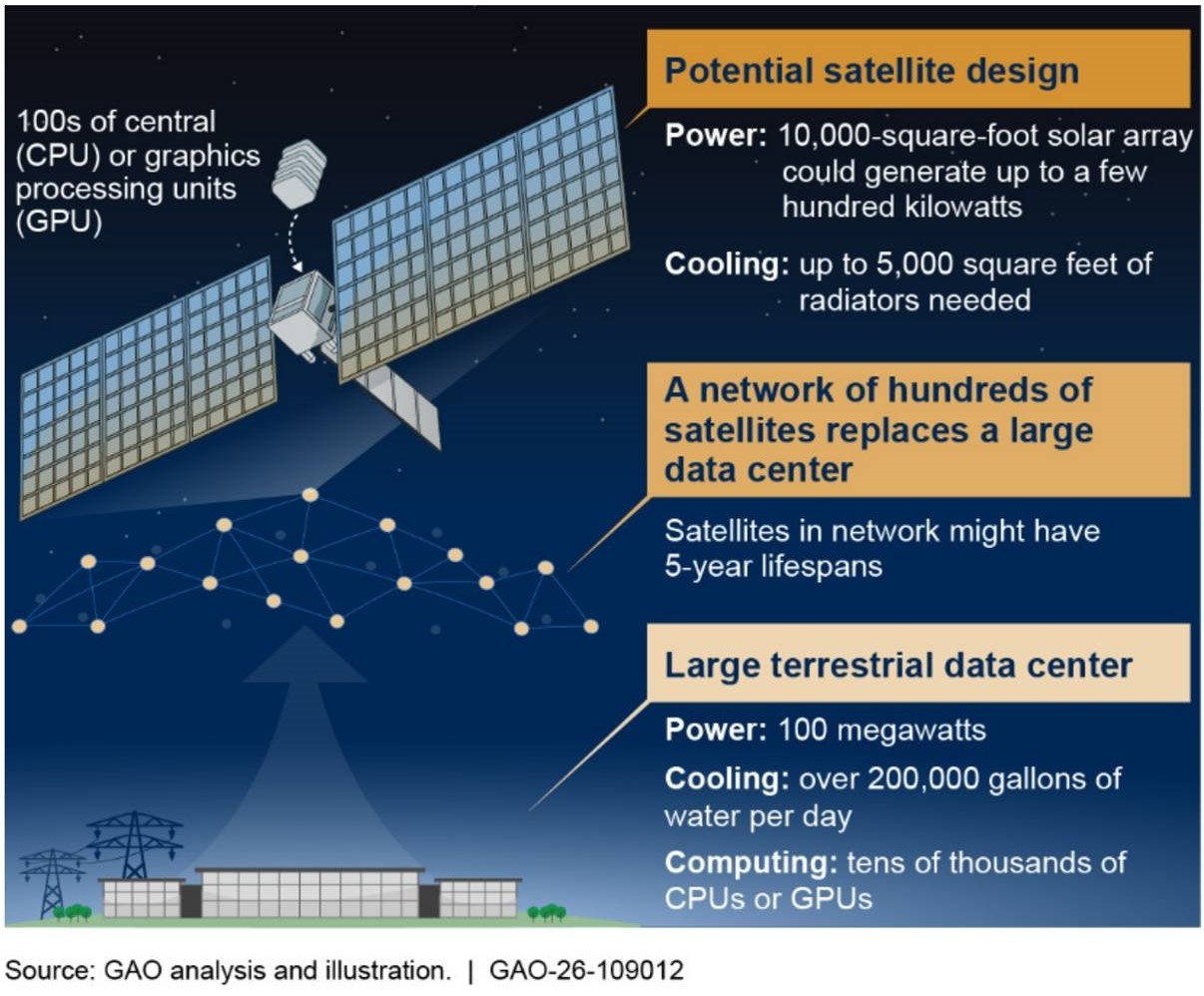
Space-based data centers would place data processing and storage systems for AI and other computing needs into satellites.
This could reduce the land, electricity, and water needed for data centers on Earth.
Several companies have begun development of data centers in space, but there are engineering and economic barriers to deployment.
The U.S. Government Accountability Office (GAO) has released a new Science & Tech Spotlight report: Data Centers in Space.
Key Takeaways of the report
- Placing data centers in space could reduce the demand for resources from these facilities on Earth.
- Data centers generate excess heat, but space does not cool computing hardware efficiently. This could be a major engineering challenge.
- A significant increase in the number of satellites in orbit could be difficult to manage and cause collisions.
To access this GAO report, go to:

Satellite image of the Strait of Hormuz.
Image credit: Jacques Descloitres/NASA
The ongoing conflict regarding Iran and the Strait of Hormuz may well mirror a future situation off Earth – the use of cislunar space, the region between the moon and our planet.
Think blockades, seizing of ships, impacts on the global economy, repercussions in terms of needed resources and markets, from fuel to high-tech semiconductors and production processes.
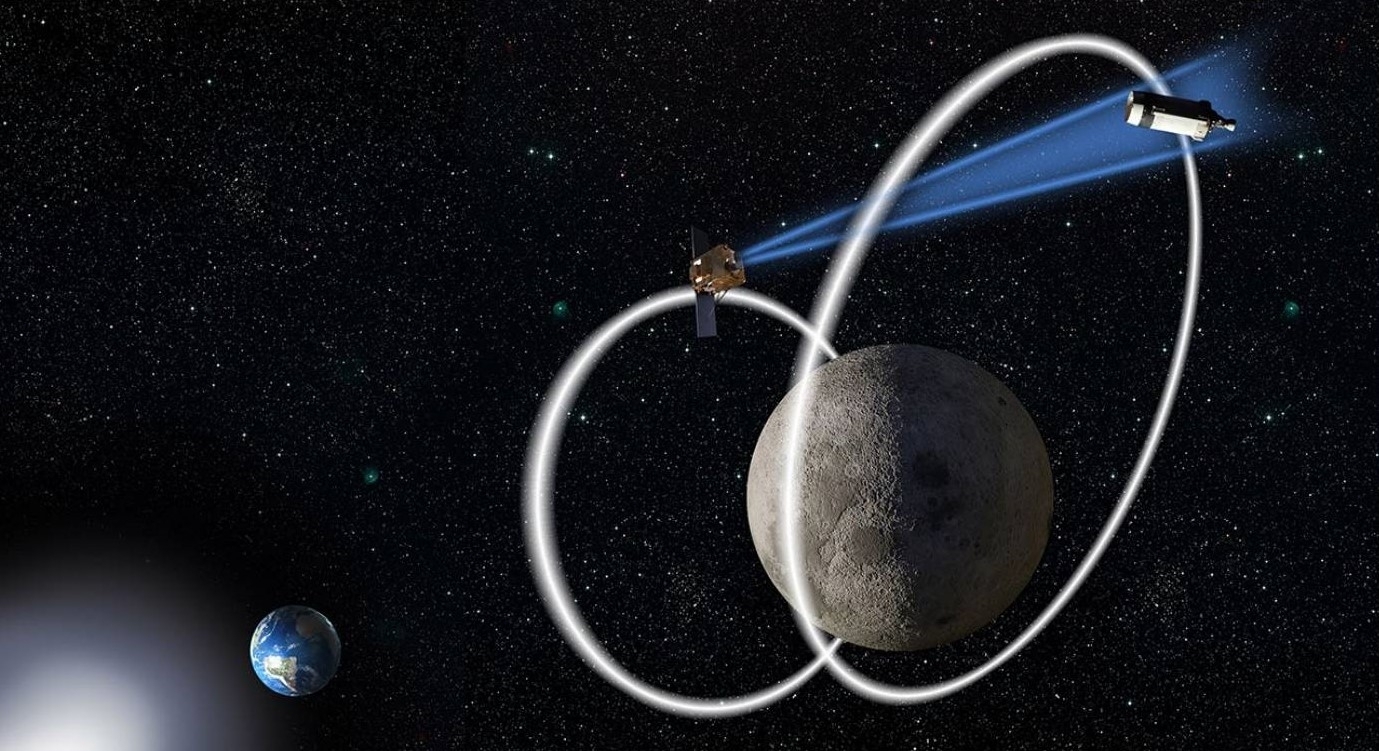
On patrol: cislunar domain awareness spacecraft.
Image credit: Air Force Research Laboratory
Strait talk
Now turn your attention skyward and note that the U.S. Space Force is establishing a dedicated acquisition office to appraise the importance of the cislunar region for warfighting and national security.
Are we seeing the start of “strait talk” in outer space? Could the moon ever be blockaded?
For details, go to my new Space.com story – “Experts predict cislunar space could be the next Strait of Hormuz: ‘Sometimes, a pair of events contains a warning, if you are able to see it.’” – at:
https://www.space.com/astronomy/moon/could-the-moon-be-the-next-strait-of-hormuz

Artwork depicts two Artemis astronauts planting an American flag at the lunar south pole.
Image credit: NASA/Daniel O’Neal
The NASA Office of Inspector General (OIG) released a new report assessing the agency’s efforts to obtain new Moon suits and updated microgravity suits for use on the International Space Station.
The report — Suiting up for Success: Assessing NASA’s Next-Generation Spacesuits for Artemis and the ISS — explains that after nearly two decades, NASA’s next-generation spacesuits remain incomplete.
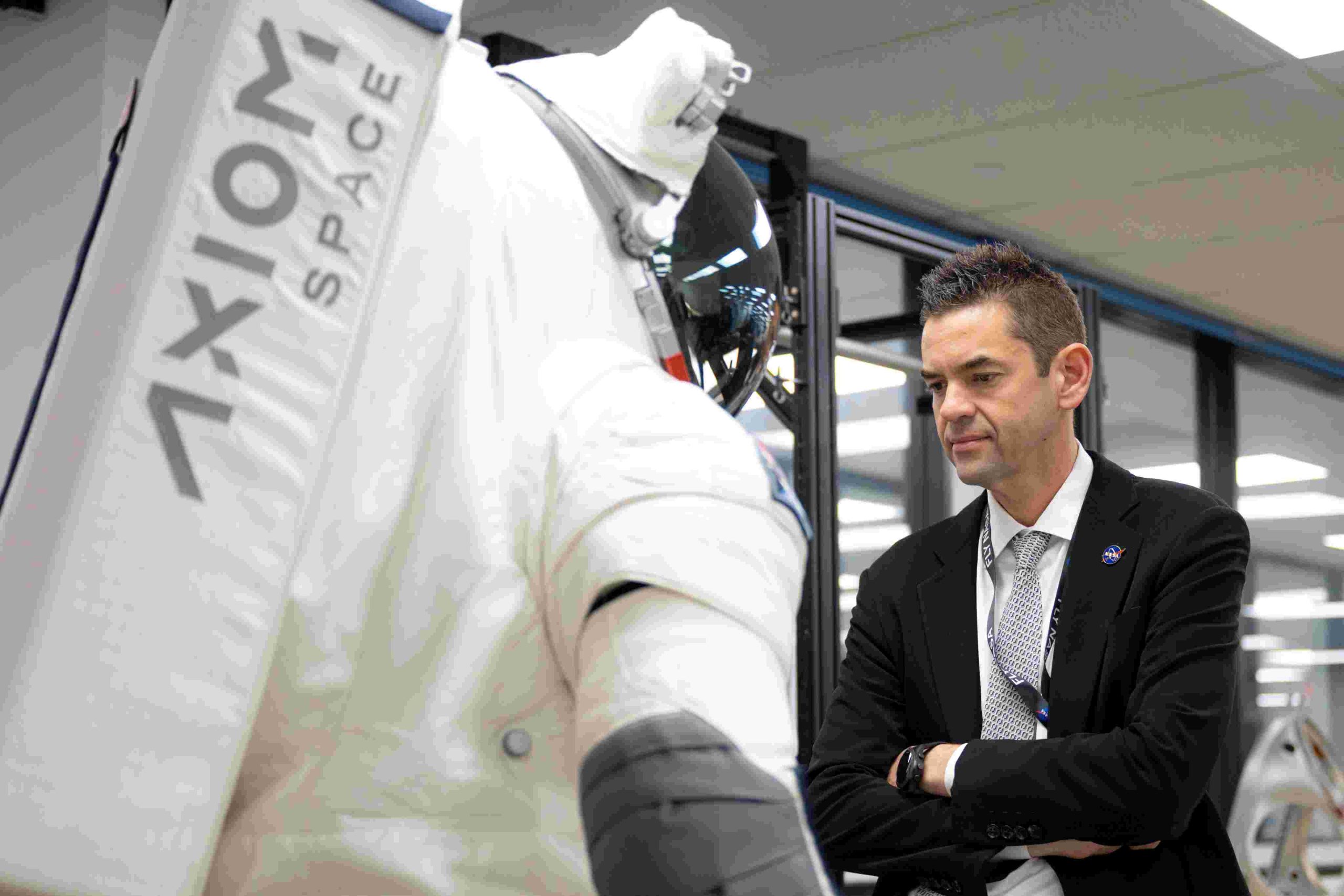
NASA chief, Jared Isaacman, inspects Axiom suit work.
Image credit: NASA/Jared Isaacman
NASA remains challenged to ensure readiness for the Artemis lunar surface mission in 2028 and the ISS before its planned decommission in 2030.
“Today, the Agency continues to face delays and is reliant on Axiom Space to develop both the Artemis lunar suits and updated ISS suits,” the NASA OIG document observes.
Read the report at: https://go.nasa.gov/4cGjdRT
Also, go to this informative NASA OIG video at:
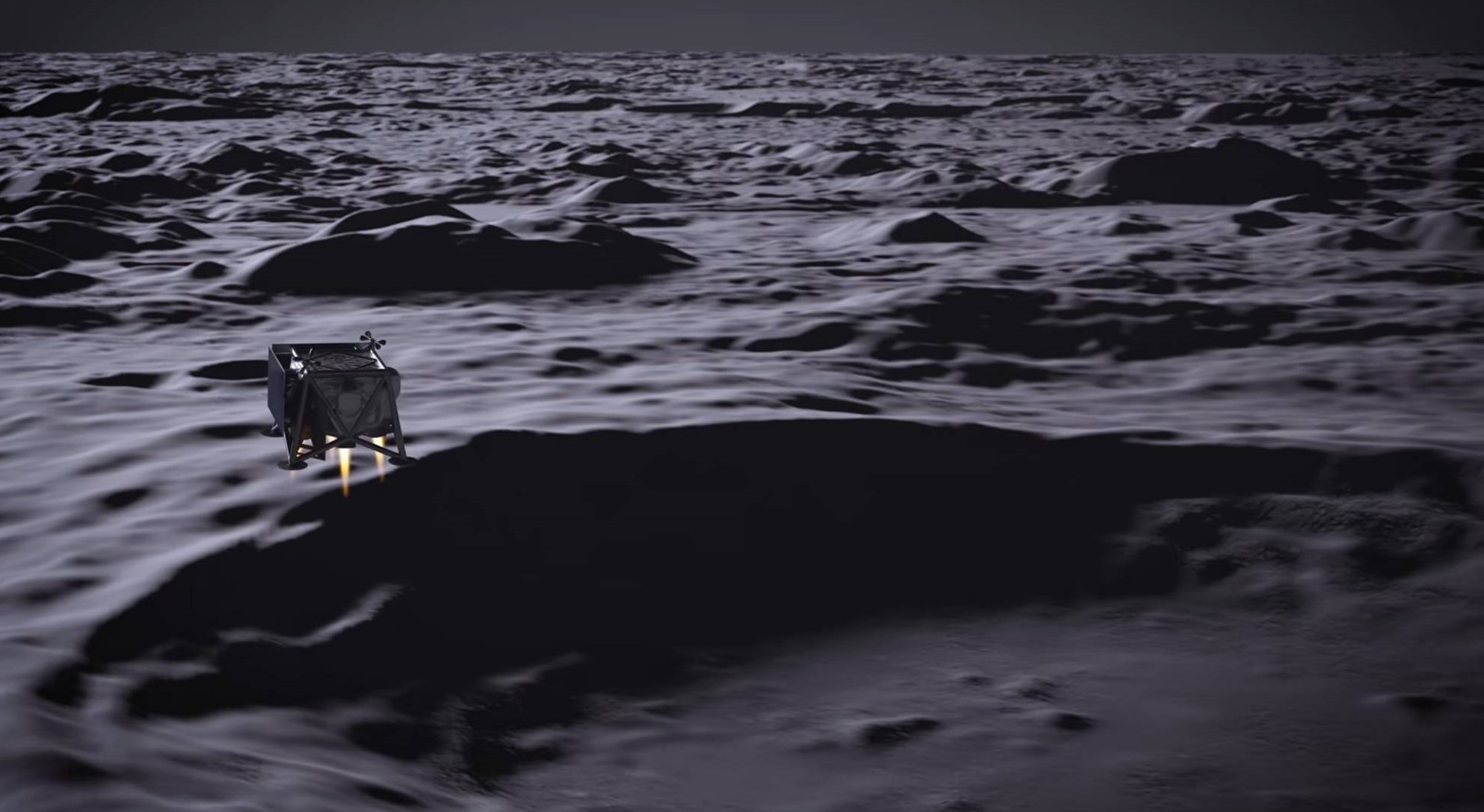
NASA’s MoonFall mission will send four highly mobile drones to survey the lunar surface around the Moon’s south pole ahead of Artemis crews arriving there.
Image credit: NASA/JPL
Last month NASA chief Jared Issacman ripped off the band aid on the space agency’s back to the Moon agenda, calling for, in part, a speedy series of robotic missions to scout, experiment, and prepare for surface operations ahead of any “rebooting” of lunar landscape by astronauts in 2028.
As part of NASA’s “Ignition” event on March 24, in a near breathless overhaul of NASA’s Artemis program, Isaacman called for clearing away needless obstacles that impede progress, “and unleash the workforce and industrial might of our nation” of returning to the lunar landscape and building a lunar base.
Image credit: NASA
One aspect of the NASA chief’s Artemis makeover was use of hopper drones under what’s called MoonFall.
For more details, go to my new Space.com story — NASA wants to use a fleet of MoonFall drones to scout the lunar south pole: ‘We believe we can do it’” – at:
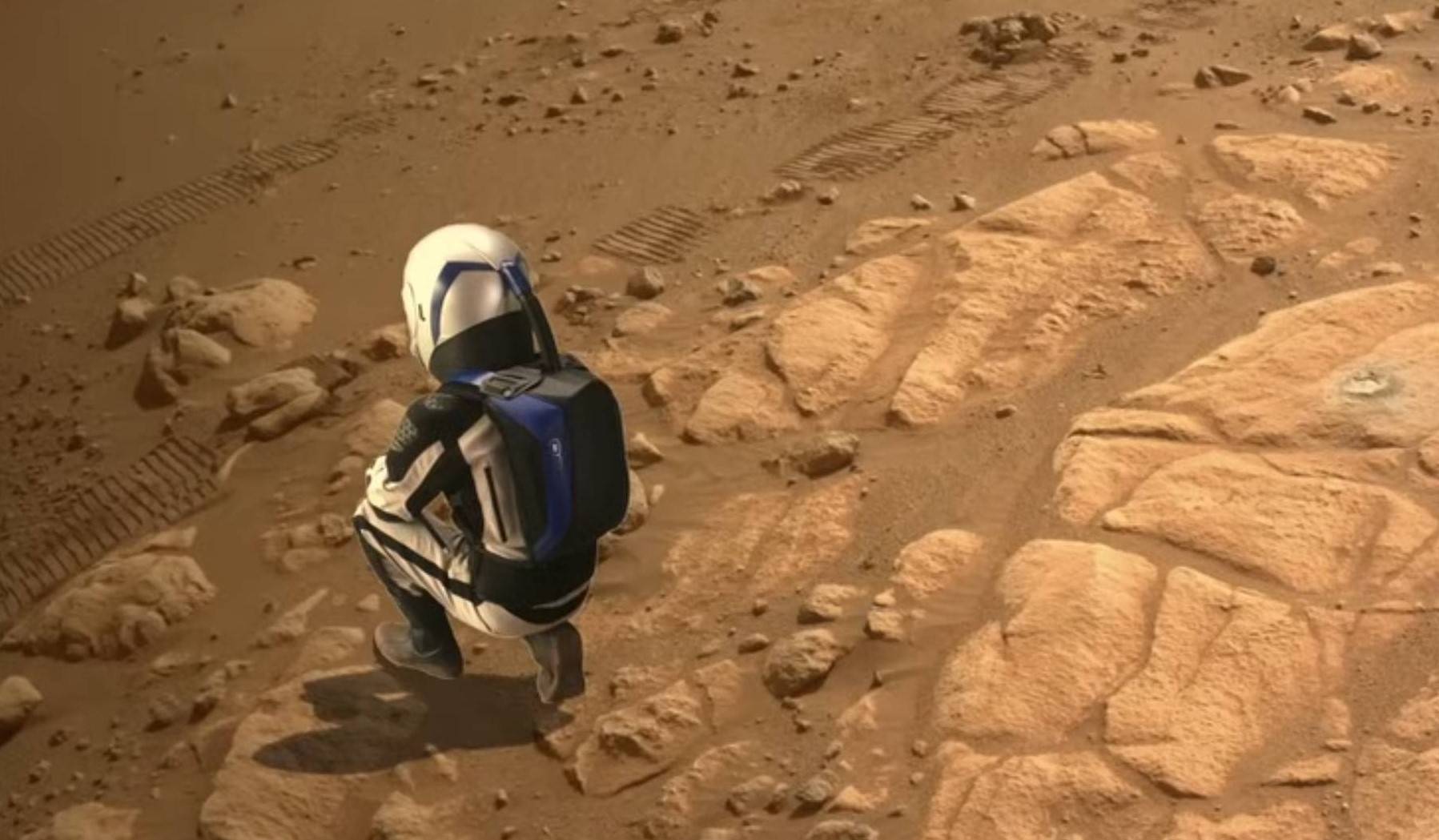
Image credit: Mars Guy/JPL-Caltech
Perseverance turns up a sticky find, explains Mars Guy in a new video episode.
“Mars rovers create disturbances everywhere they drive, which sometimes can lead to bonus science. A recent drive by Perseverance produced the usual wheel tracks but also managed to reveal what looks like moist dirt,” Mars Guy reports.
When the Perseverance rover traverses Martian terrain, Mars Guy adds, unplanned surface disturbances occasionally reveal intriguing features. “Examining these accidental discoveries provides insight into the composition of Martian regolith and the processes shaping the surface, highlighting how rover movement can lead to unexpected scientific observations.”
View this video at:

Hundreds of hectares of winter wheat fields located on the southern edge of the Taklimakan Desert near China’s Kunyu City, Xinjiang Uygur Autonomous Region.
Image credit: China Central Television
Signaling other intelligences beyond our solar system without elaborate and expensive electronic gear may be underway – but unknowingly.
Kunyu City, Xinjiang Uygur Autonomous Region, is located in northwest China. On that site, huge pointer sprinklers are irrigating over 533 hectares of winter wheat fields located on the southern edge of the Taklimakan Desert.
Then there’s the world’s largest cluster of solar farms, a megaproject of 235 square miles of sun energy-soaking panels located in Qinghai, China, high on the isolated Tibetan Plateau.

A proposed Pythagorean theorem created on Earth would be huge enough to be viewed from the moon – even by residents of Mars.
Image credit: Wikipedia
Tell-tale signs?
To be sure, the Earth is dotted with humongous, human-made artificial structures.
To an alien eye trained on our planet, perhaps they are tell-tale signs of intelligent goings-on, maybe formations that speak volumes about we Earthlings with no need to squeak out purposeful high-tech and sophisticated signals?
For more details, go to my new Space.com story – “Making contact with ET? Aliens may already know we’re here – ‘Megaprojects’ like huge solar farms could be visible from great distances” – at:
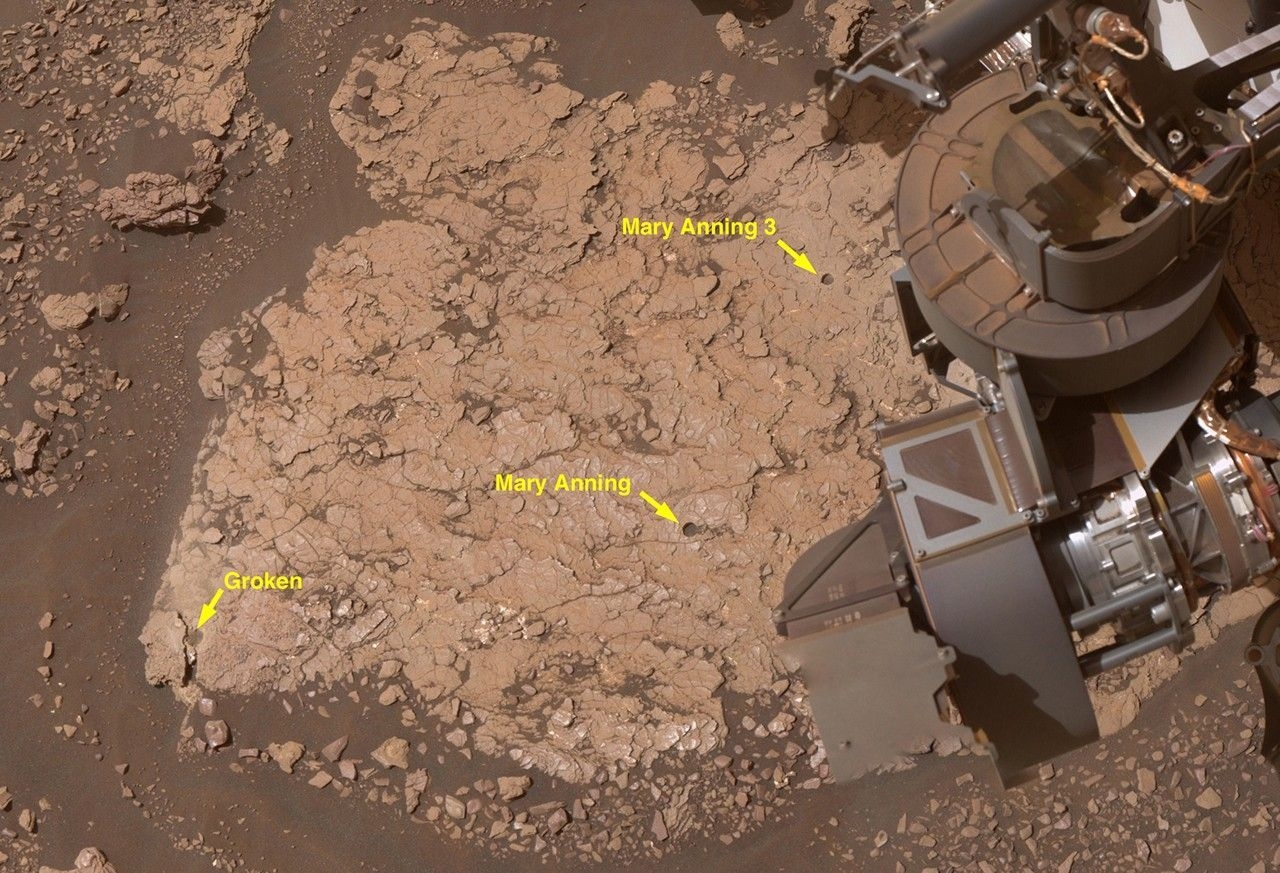
Mars machinery has detected more than 20 organic molecules from clay-bearing sandstones in Glen Torridon, Gale crater, work done by the Sample Analysis at Mars instrument suite onboard the Curiosity rover. Three drill samples were taken and diverse organic molecules were found on Mars.
Image credit: NASA/JPL-Caltech/Malin Space Science Systems
NASA’s Curiosity Mars rover has been dutifully probing Gale crater and Mount Sharp since the robot plopped down on the Red Planet on August 6, 2012.
But there’s new news from the car-sized Mars machinery now wheeling about in the Glen Torridon region of Gale crater, a place that scientists believe was a locale where ancient conditions would have been favorable to supporting life, if it was there in the first place.
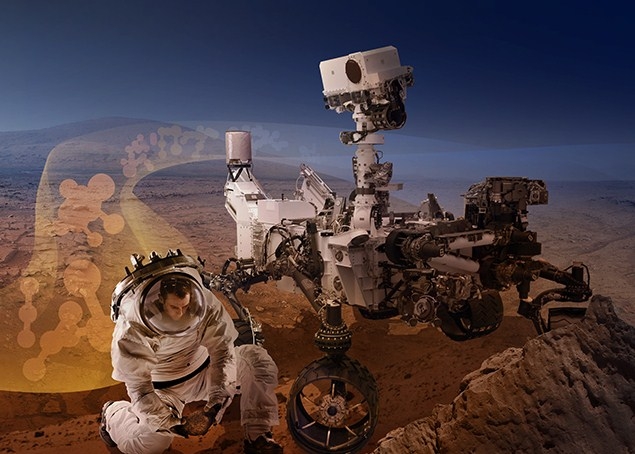
Mars beckons for future life detection missions and instruments. Humans and robots are likely to team up to augment the types of exploration avenues that can be done on the Red Planet.
Image credit: NASA/Ames Research Center
Diverse mix
Curiosity has found a diverse mix of organic molecules on Mars, including chemicals widely considered building blocks for the origin of life on Earth. The finding marks the first time a new kind of chemical experiment has been performed on another planet.
For more details, go to my new Space.com story – “NASA’s Curiosity rover finds building blocks of life on Mars. Scientists aren’t sure how they got there” – at:

