Archive for March, 2026
 Author:
  March 14th, 2026
China’s roadmap for a Mars Sample Return mission to be launched in 2028.
(Image credit: The University of Hong Kong/Zengqian Hou, et al.)
China is making progress on the country’s mission to retrieve samples from Mars.
Xinhua news agency reports that the Tianwen-3 flight model development phase is to be completed within the year.
Liu Jizhong, chief designer of the Tianwen-3 mission, said last week that building on preliminary technical research and demonstrations, the mission has achieved breakthroughs in key technologies.

Image credit: CCTV/Inside Outer Space screengrab
Major space endeavor
The engineering team is now focused on developing prototypes, Liu told Xinhua.
“The Tianwen-3 mission represents a highly challenging, innovative and pioneering major space endeavor,” said Liu.
“It is expected to achieve humanity’s first Mars sample return mission,” Liu said, “thus significantly advancing the integrated development of space science, space technology and space applications.”

Image credit: Tian et al. (2024)
2028 launch
Tianwen-3 is scheduled for launch around 2028. The goal of the mission to the Red Planet is to return to Earth around 2031 no less than 500 grams of Martian samples.
The mission involves use of an orbiter, a returner, a lander, an ascender, and a service module, which will compose the orbiter-returner complex and the lander-ascender-service module complex, Xinhua reports.

Image credit: CCTV/CGTN/Inside Outer Space screengrab
Key capabilities
As part of the on-going development work, breakthroughs in key capabilities are on tap, such as Mars surface sampling and sealing, surface takeoff and ascent, Mars orbital rendezvous, sample capture and transfer, as well as planetary protection.
The mission is expected to search for potential signs of life on Mars, investigate Martian geological formation, and examine Martian atmosphere, with the objective of making major discoveries in the study of habitable evolution of terrestrial planets.
Meanwhile, Liu also noted that China’s Tianwen-2 probe, launched in 2025, has traveled is slated reach the near-Earth asteroid 2016HO3 this year to begin carrying out exploration duties.
 Posted in
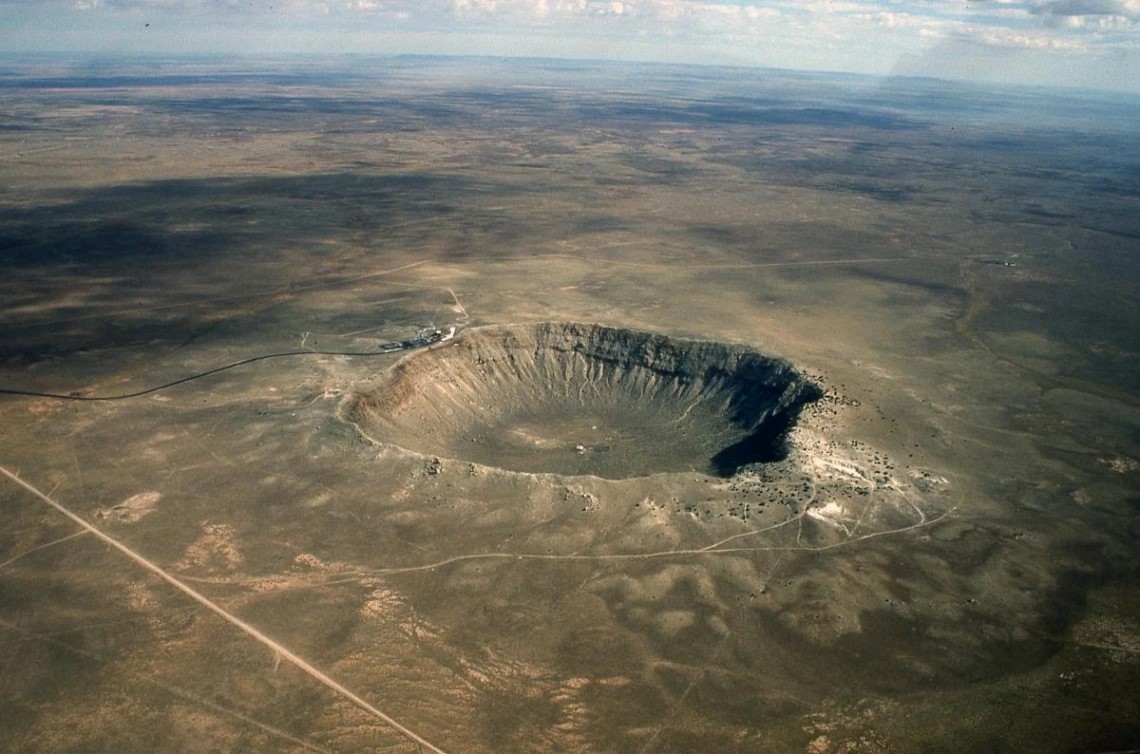
Image credit: Meteor Crater, Arizona: Arizona Geological Survey – AZGS/Dale Nations
Arizona’s meteor crater and other leftover scars from inbound space rocks continue to serve up secrets. These impact features continue to be on-going research sites, generating new data on wayward, mean and nasty creatures from the surrounding cosmos.
“The crater is still providing new insights every year, so continued studies there are really important,” explains one researcher.
Competitive grants
In fact, a number of competitive grants are being offered to support field research at known or suspected impact sites worldwide.

Astrogeologist Gene Shoemaker at Meteor Crater with Apollo astronauts during field trip in May 1967.
Image credit: NASA
That funding is backing laboratory and computer analysis of research samples and findings, creating new data from digging in on old craters around our globe.
For more information, go to my new Space.com story – “Arizona’s Meteor Crater is still revealing new secrets 50,000 years later” at:
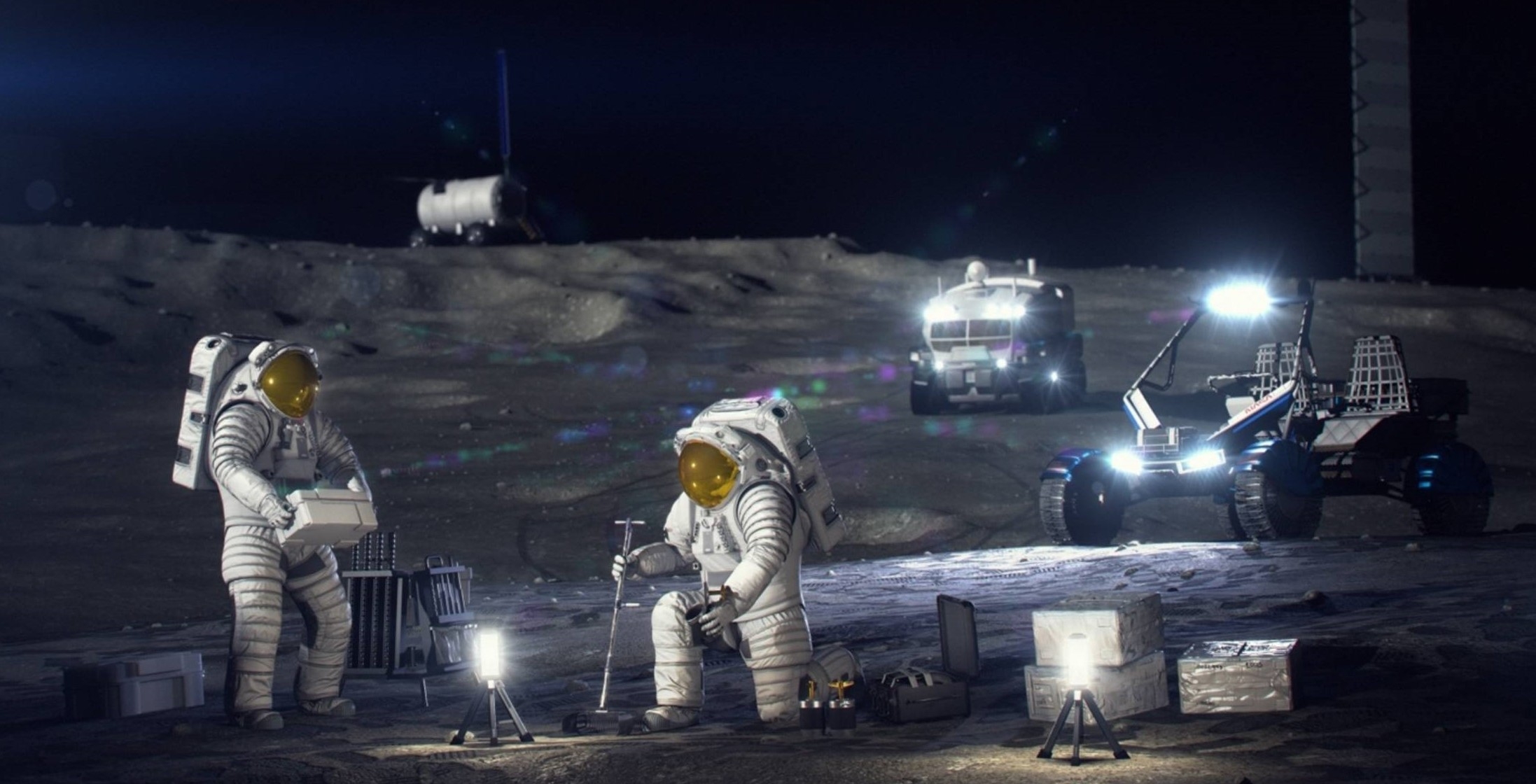
Image credit: NASA
For the first time, legislation has been unanimously passed that gives the go for NASA to establish a permanent moon base as part of sustained American presence on the lunar surface.
While not a done deal – both the U.S. Senate and House chambers must agree on the language – the impetus for establishing a “Lunar Surface Moon Base” is that America is in a space race with China.

Image credit: NASA/Bill Ingalls
As spelled out in the legislation, it calls for establishing a Lunar Surface Moon Base “to develop a permanent crewed United States presence on the moon capable of long-duration habitation, robotic and industrial operations to advance science, technology, and strategic interests.”
For more details, go to my new Space.com story – “US lawmakers call for a permanent moon base. Will it ever happen?” – at:
https://www.space.com/astronomy/moon/us-lawmakers-call-for-a-permanent-moon-base-will-it-ever-happen
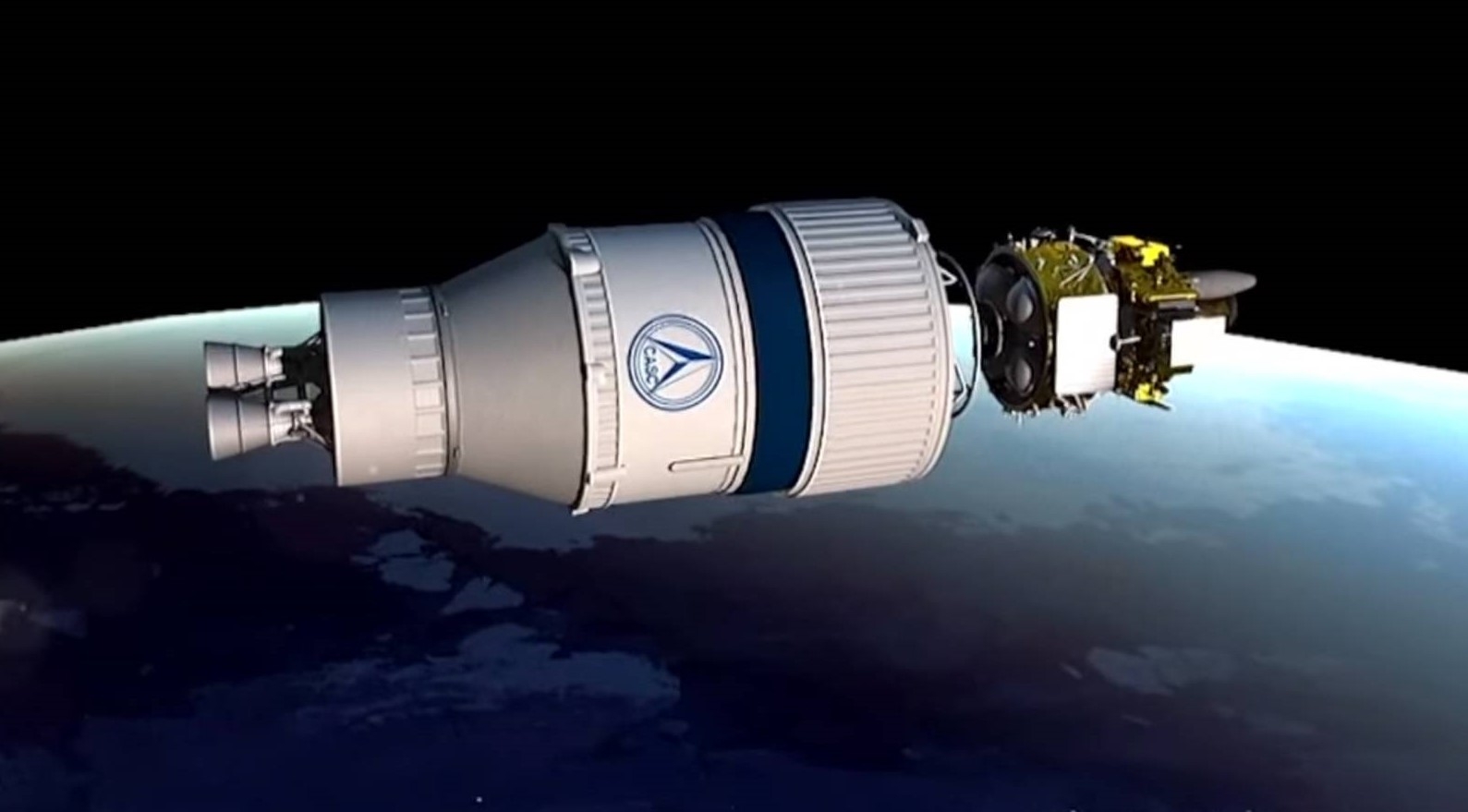
Image credit: CCTV/Inside Outer Space screengrab
China’s next robotic lunar mission, Chang’e-7, is slated for departure later this year.
Its target is the Moon’s south pole in a search for and detection of water ice.
“Scientists around the world believe there’s water on the Moon, but no one has found any yet. Now China is going to look for it,” said Ye Peijian, an academician with the Chinese Academy of Sciences (CAS).

Image credit: CCTV/Inside Outer Space screengrab
“And we’re using many methods, from searching the surface to exploring inside craters,” Ye told China Central Television (CCTV).
Specially designed hopper
The Chang’e-7 mission is composed of an orbiter, a lander, a rover, a hopper and a relay satellite. The specially designed hopper will approach and explore a Sun-deprived lunar shadow crater.
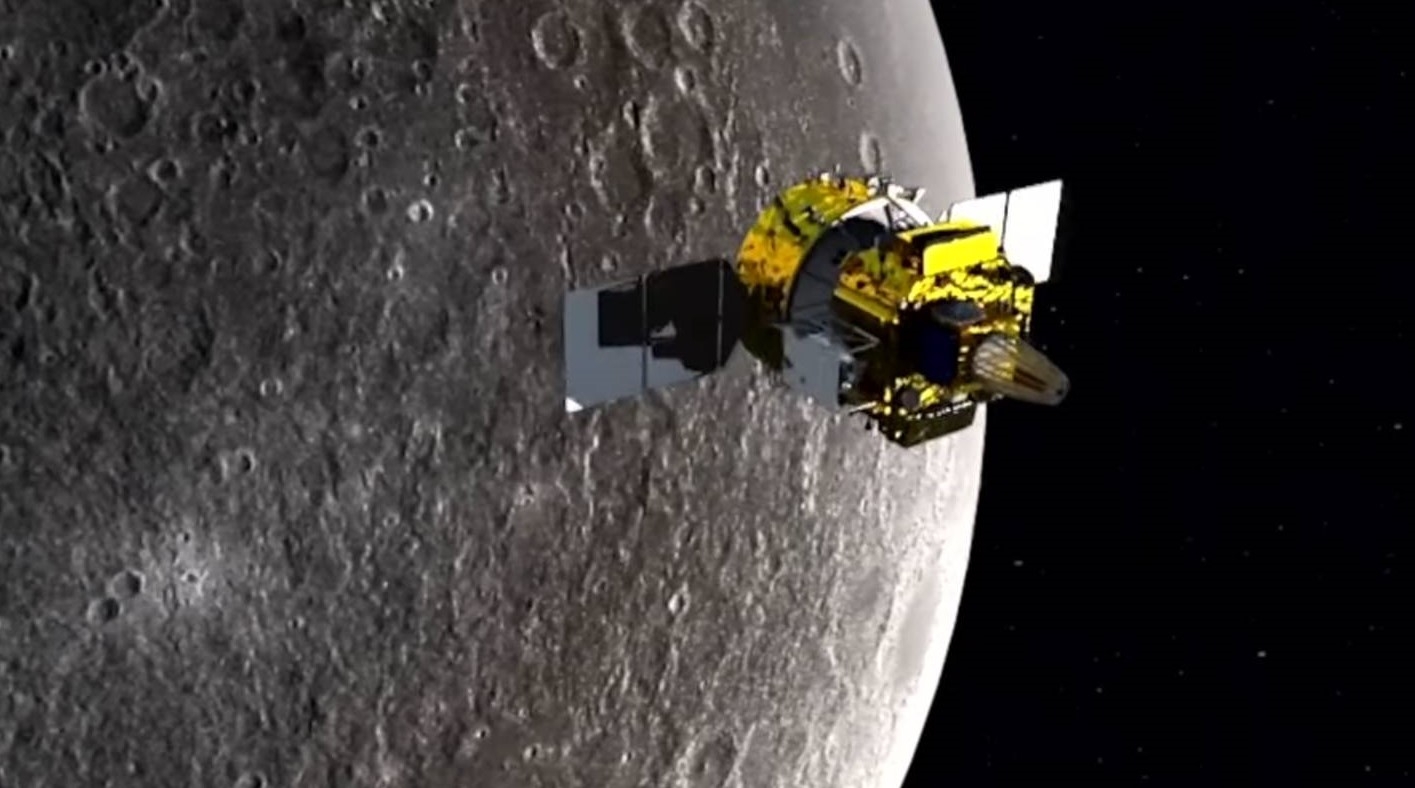
Image credit: CCTV/Inside Outer Space screengrab
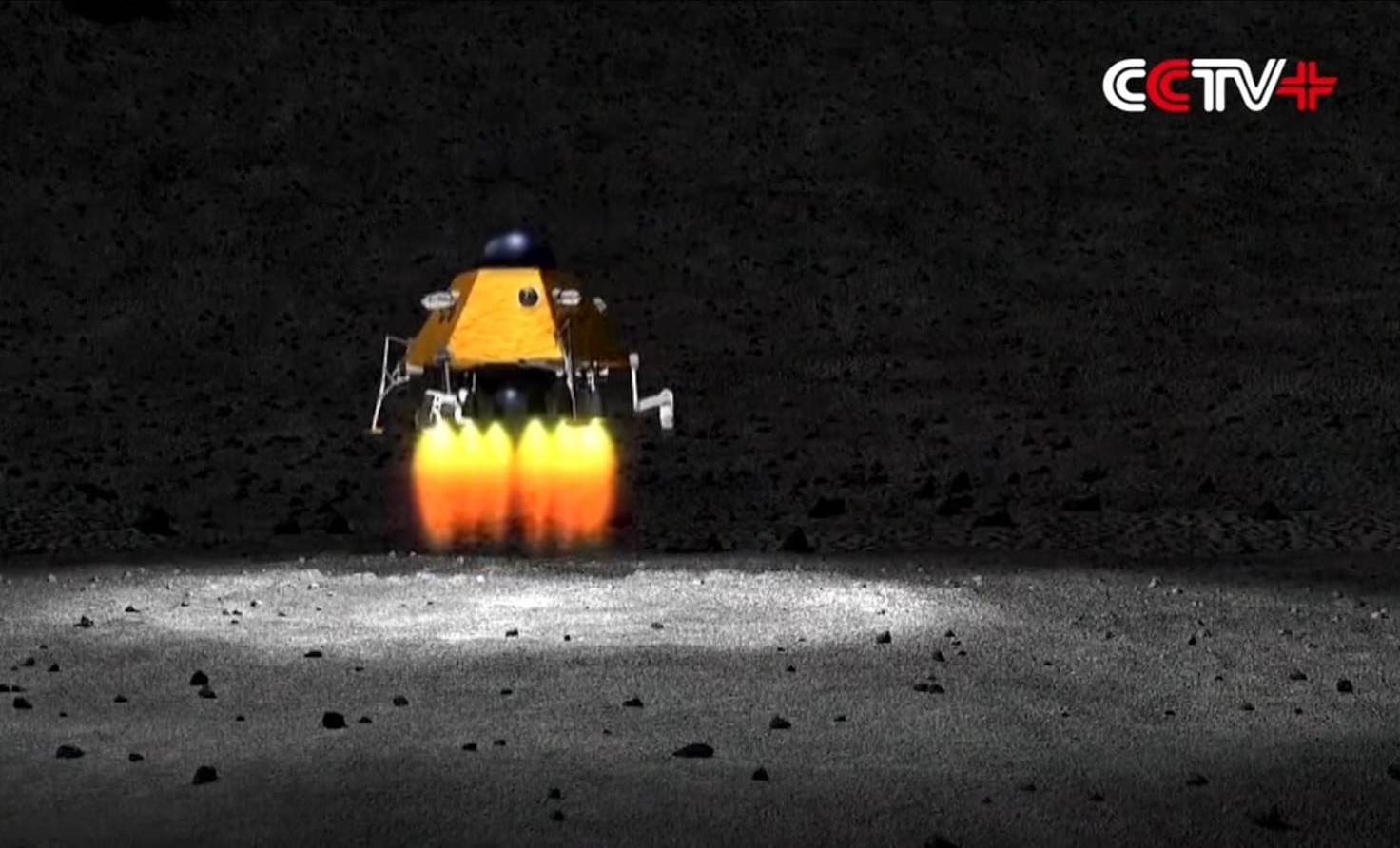
China’s Moon hopper, on the hunt for lunar ice.
Image credit: CCTV/Inside Outer Space screengrab
Meanwhile, researchers at the Harbin Institute of Technology’s space laboratory in northeast China’s Heilongjiang Province are conducting experiments to support the Chang’e-7 mission of hunting for lunar water ice.
Lunar soil simulant
“We’ve just created a lunar soil simulant for the Moon’s polar region. Next, we will use this set of equipment to convert that soil into water ice. The equipment can create a vacuum environment on the Moon, said Zhang Weiwei, associate professor at the School of Mechatronics Engineering at the Harbin Institute of Technology.

Image credit: CCTV/Inside Outer Space screengrab
Zhang told CCTV that the equipment can cool the lunar mineral material down to minus 240 degrees Celsius. Then, this water molecule excitation device will produce a steady stream of water molecules.
“When the water molecules come into contact with the cold lunar soil, they will adsorb and deposit to form ice. By using special tools and molds, we can create samples of lunar water ice,” said Zhang.
For an informative video on the upcoming Chang’e-7 Moon mission, go to:
https://www.facebook.com/reel/934534785937701

Image credit: CCTV/Inside Outer Space screengrab
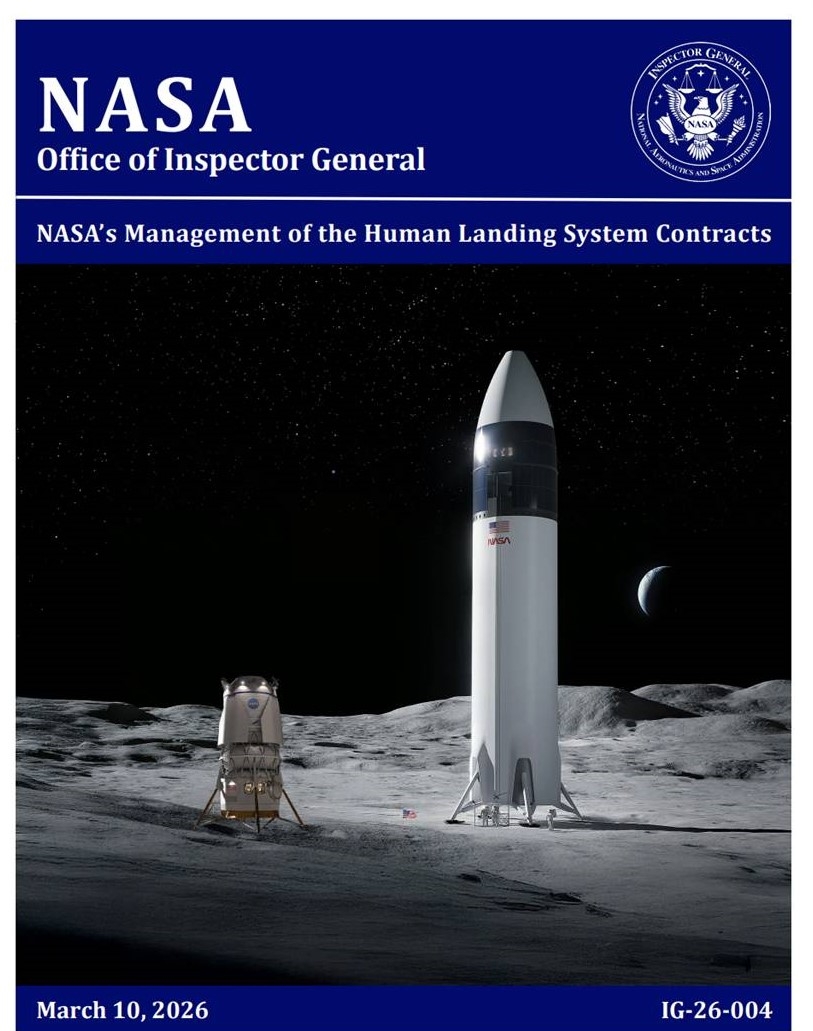
NASA’s firm-fixed-price contract approach relies on selected lunar Human Landing System (HLS ) providers to design, build, and demonstrate their own lander hardware. SpaceX is developing its Starship lander, while Blue Origin is working on its Blue Moon lander.
A NASA Office of Inspector General (OIG) report has taken a hard look at NASA’s firm-fixed-price contract approach with Moon lander providers – SpaceX and Blue Origin — to design, build, and demonstrate lander hardware.
SpaceX is developing its Starship lander, while Blue Origin is working on its Blue Moon lander.
Contract costs
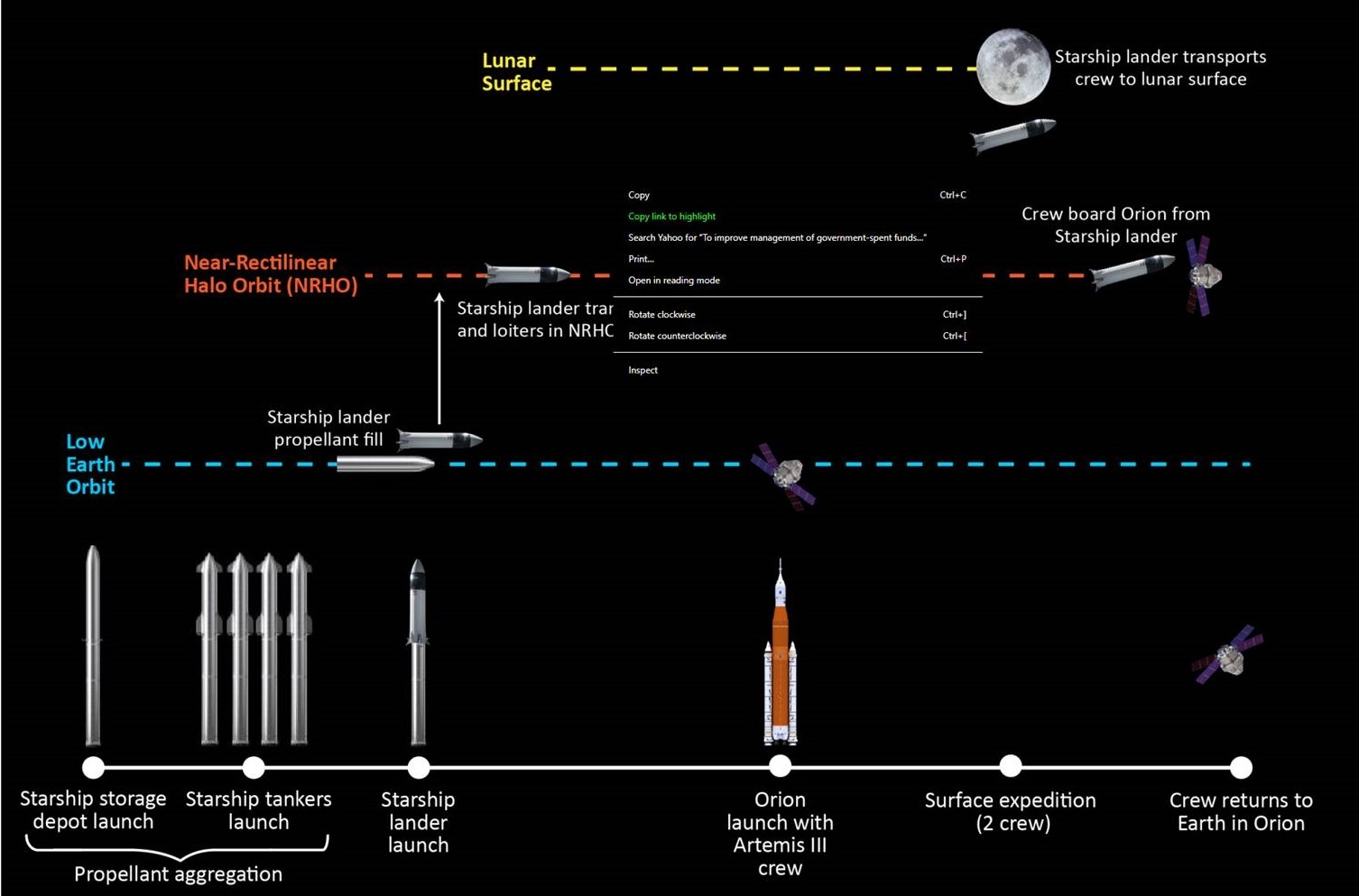
Image credit: NASA OIG representation of SpaceX information
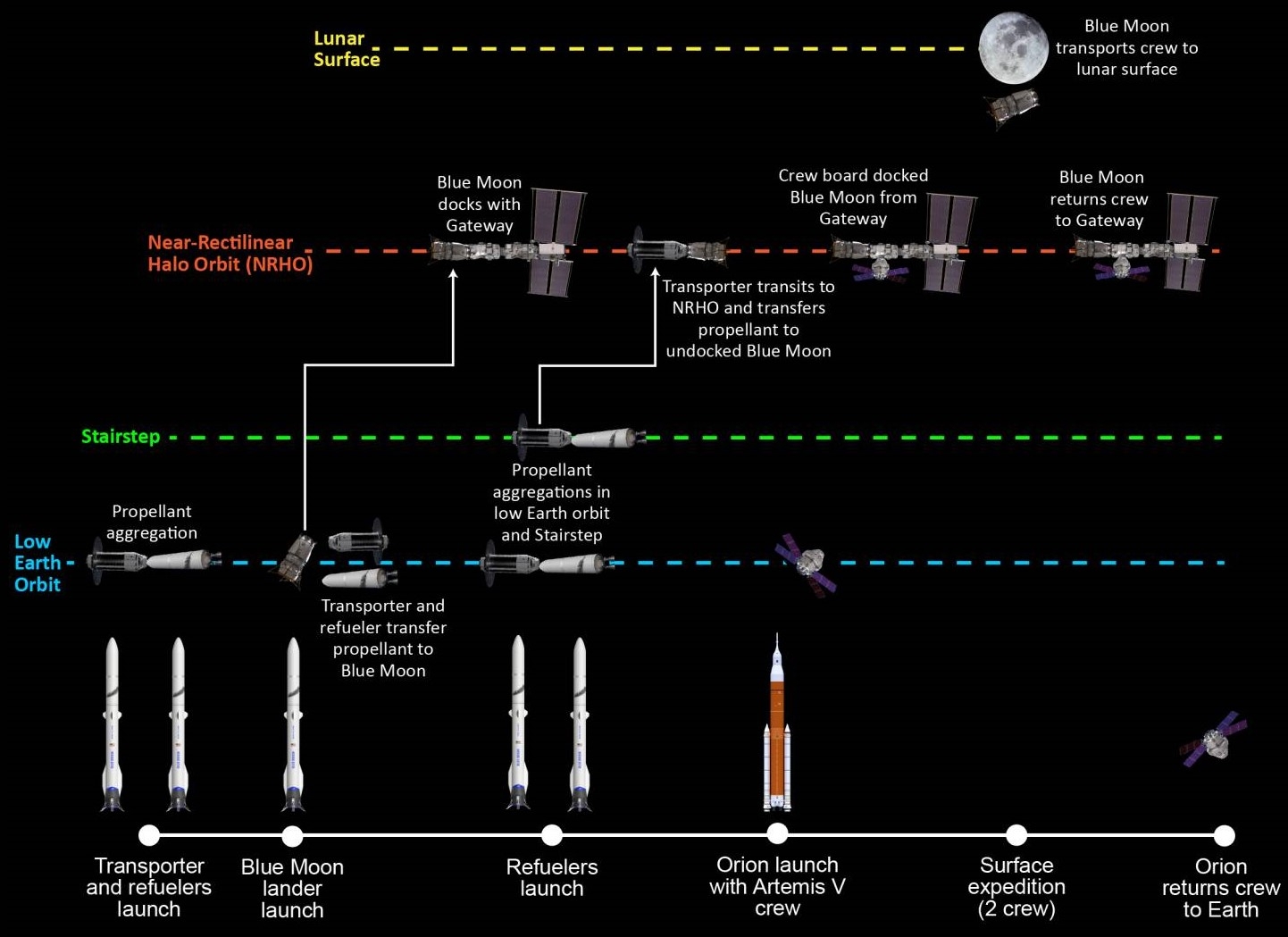
Image credit: NASA OIG representation of Blue Origin information
The OIG has determined that this acquisition approach has effectively controlled contract costs: SpaceX and Blue Origin contracts have only increased by 6 percent and less than 1 percent, respectively.
“However, both providers have faced schedule delays, technical difficulties, and integration challenges that could impact costs and delivery timelines. NASA is currently working with SpaceX and Blue Origin to accelerate lander development to meet a 2028 lunar landing date,” states the report.
Gaps remain
While SpaceX and Blue Origin must deliver the landers on time and according to requirements, NASA is ultimately responsible for ensuring crew safety.
The new report found that NASA is proactively taking measures to mitigate and prevent hazards, “but gaps remain in its testing posture and crew survival analyses. If the landers encounter a catastrophic event, NASA knows it would not have the capability to rescue stranded astronauts from space or the lunar surface.”
To address these issues, the OIG has made five recommendations to improve management of government funds and enhance crew safety and survival during the Artemis missions.
For the full report – “NASA’s Management of the Human Landing System Contracts” — go to:
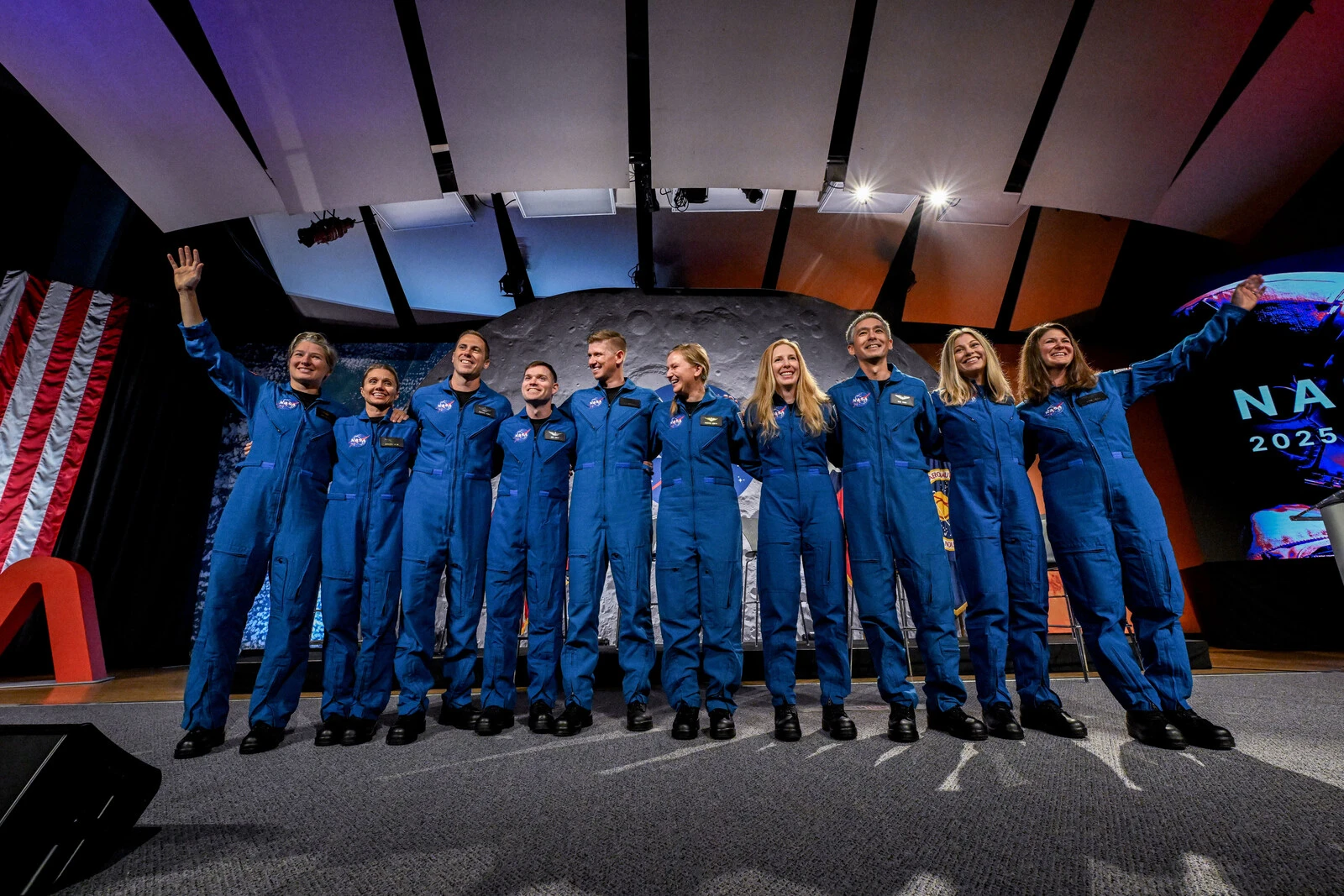
Image credit: NASA/James Blair
The World Economic Forum in Davos-Klosters, Switzerland has posted International Women’s Day: What NASA’s latest astronaut picks tell us about gender equality.
“NASA’s latest Astronaut Candidate Class is 60% female, a stellar celebration of International Women’s Day, marking a giant leap for equality in the space sector.”
For the first time, NASA’s latest Astronaut Candidate Class includes more women than men.

Four astronauts have been selected for NASA’s Artemis II mission: Commander Reid Wiseman, pilot Victor Glover, mission specialist Jeremy Hansen from the Canadian Space Agency, and mission specialist Christina Koch from NASA.
Image credit: NASA
It follows a positive trend for gender equality in space travel, the posting explains, and is something to celebrate on International Women’s Day on March 8.
The contents of the posting are: Mind the space gap; Building a better pipeline; The bigger picture; and What next?
Go to:
https://www.weforum.org/stories/2026/03/iwd-astronauts-gender-equality-nasa-esa/
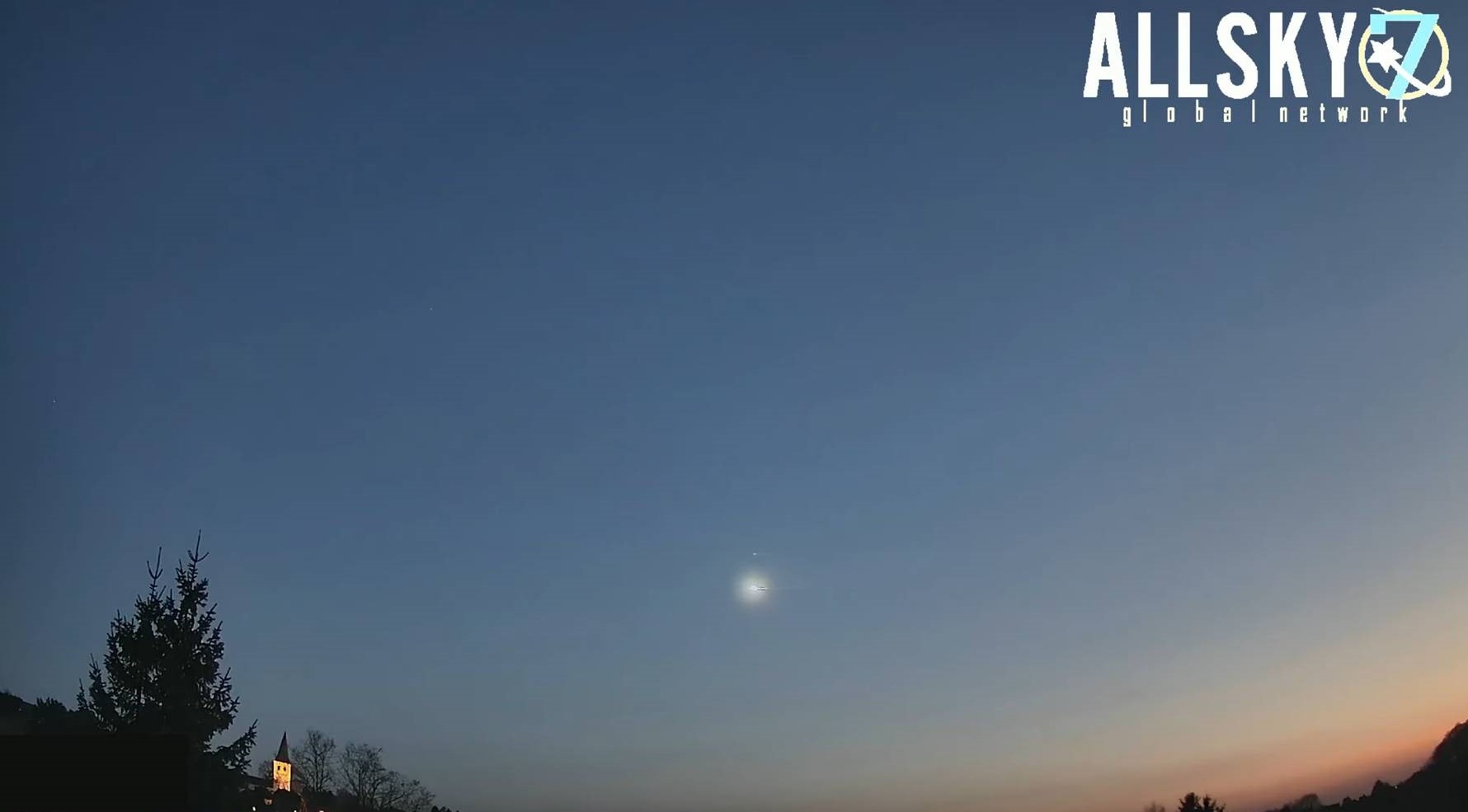
Image credit: ALLSKY7/Bernd Klemt – AMS76 Herkenrath/DE/ Inside Outer Space screengrab
It came from outer space. A very bright fireball shot across the sky from the southwest to the northeast and observed by people in Belgium, France, Germany, Luxembourg, and the Netherlands.
The Sunday, March 8th event glowed for roughly six seconds. The fireball left a visible trail in the sky before fracturing into pieces. Some observers report that the event was audible from the ground.
The Planetary Defense team in the European Space Agency’s (ESA) Space Safety Program estimates the object was a few meters in diameter.
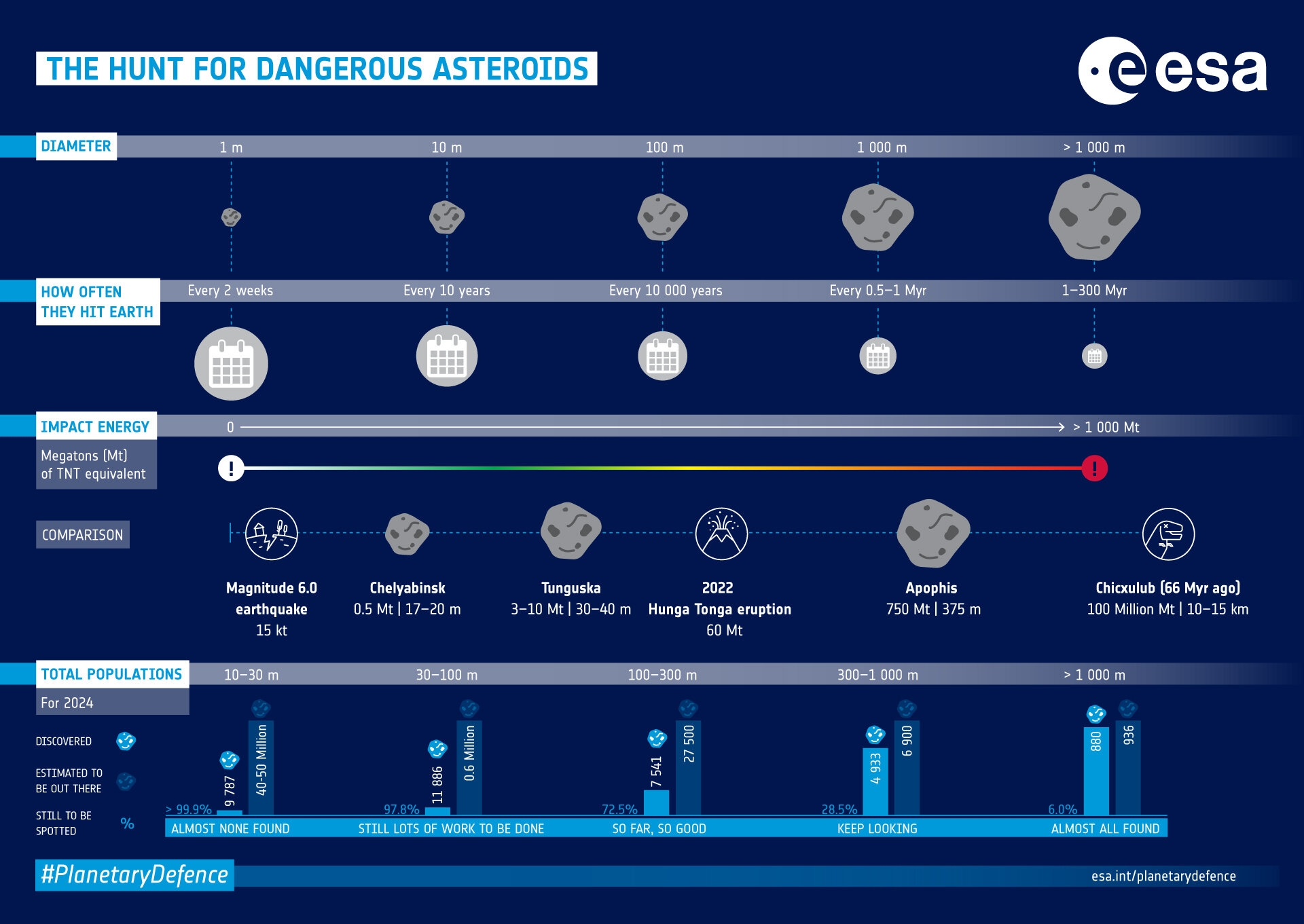
Image credit: ESA
“Objects in this size range strike Earth from once every few weeks to once every few years,” ESA states.
“At least one house in the German town of Koblenz-Güls is reported to have been struck by small pieces of the resulting meteorites,” ESA notes. “There are no reports of physical injury.”
The event was recorded by many mobile phones and other cameras, including a dedicated meteor camera that’s part of the European AllSky7 fireball network.
Go to this video at:
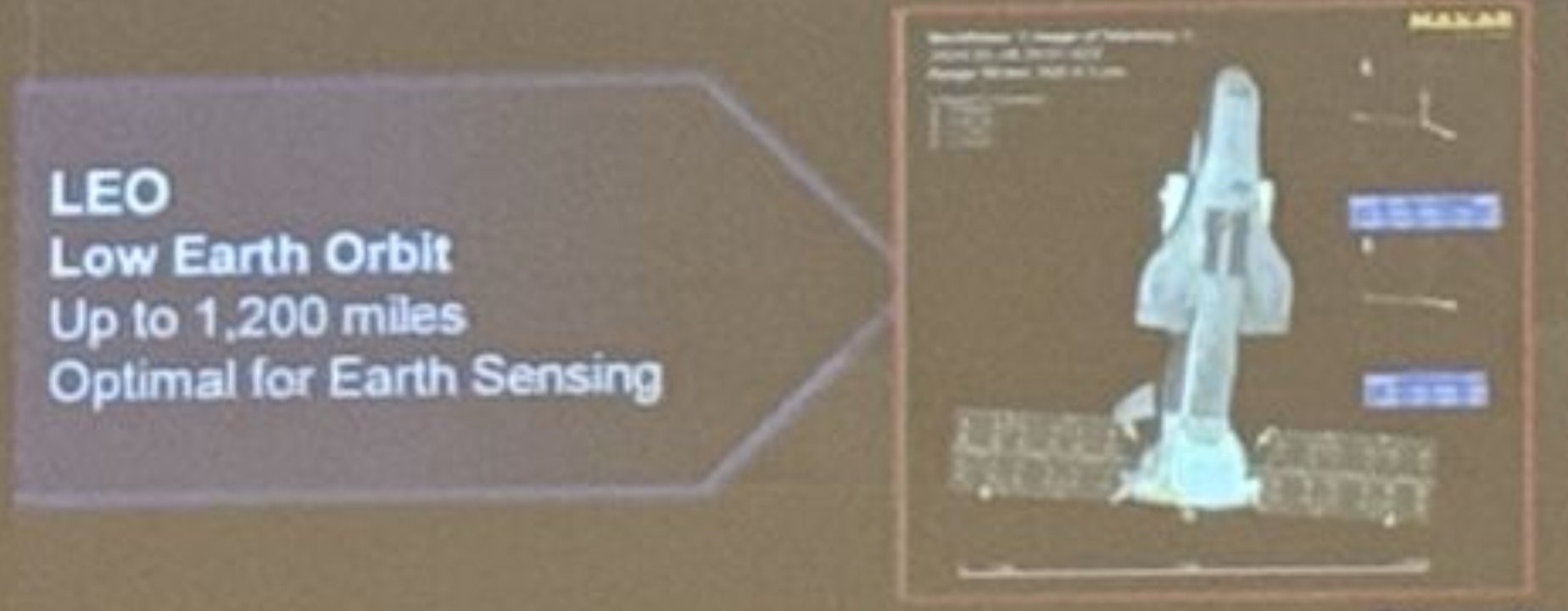
Several in-space cameras have imaged China’s reusable space plane. Shown here was image taken by
Maxar Intelligence, now Vantor, of the space asset.
Image credit: DutchSpace
China’s Shenlong (“Divine Dragon”) space plane launched from the country’s Jiuquan Satellite Launch Center in the Gobi Desert on February 6 and continues on its fourth-ever orbital mission.
What’s up with this mysterious winged craft, a vessel very similar to the U.S. Space Force X-37B robotic space plane, also now zipping around Earth on its eighth flight after launch on August 21, 2025?
Spacewatcher’s angle
Reports space tracker Bob Christy of OrbitalFocus, all is very quiet from the spacewatcher’s angle.
The Chinese craft’s initial orbit of over 306 miles altitude (494 kilometers) is at the “usual” 50° inclination. “There was a thruster test on February 9 then a pair of firings on February 12 taking it to 594 kilometers [nearly 370 miles] where it has remained,” Christy told Inside Outer Space.
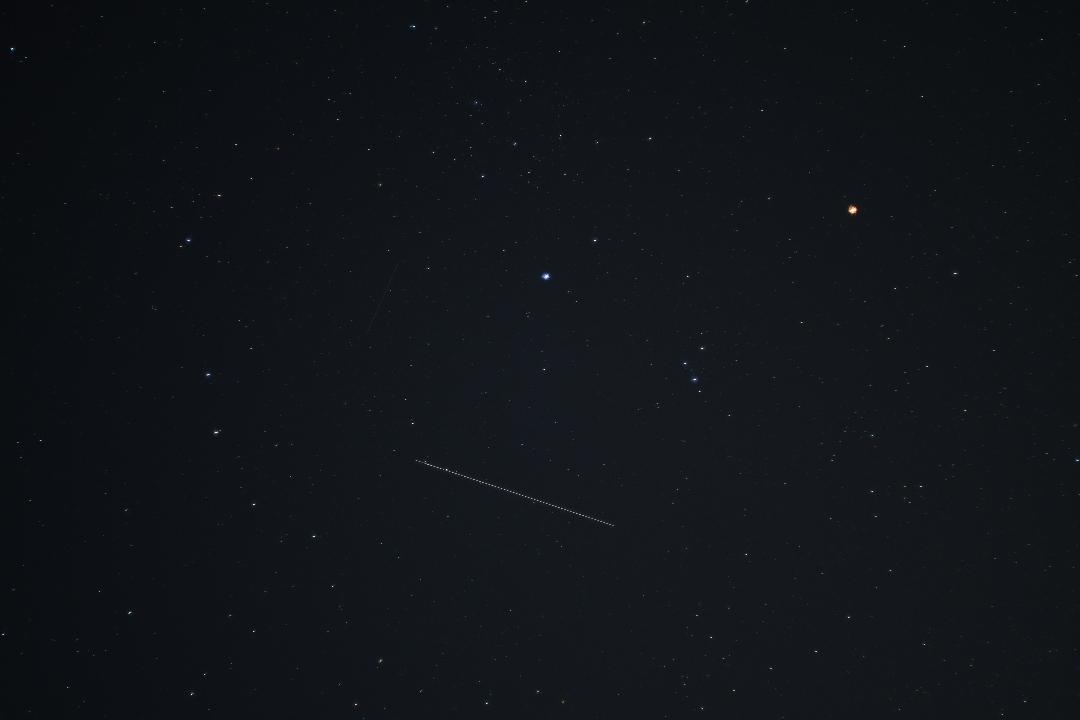
Image credit: Paul Maley
Furthermore, there’s no additional small satellite deployment from the craft like skywatchers saw on earlier missions – at least not yet, Christy explains.
The Chinese space plane was accompanied by the usual four pieces of debris, probably from the launch vehicle when it was released, said Christy.
Its mission profile so far is similar to the 2023 flight of the experimental vessel, but notes that one of the vehicles climbed to slightly higher altitude, to 605 kilometers, where it remained for six months.
Caught on camera
Meanwhile, observers have caught on camera the flyovers of China’s space plane.
For example, Paul Maley caught the craft passing over the western part of South Africa on February 17, telling Inside Outer Space that on each pass the object has been stable with no light variations.
Also catching on camera China’s space plane is Felix Schöfbänker in Austria. His analysis of new imagery he has taken suggests that the main difference from the vehicle’s last flight seems to be that only a single solar panel is deployed from the cargo bay, similar to the Space Force X-37B.
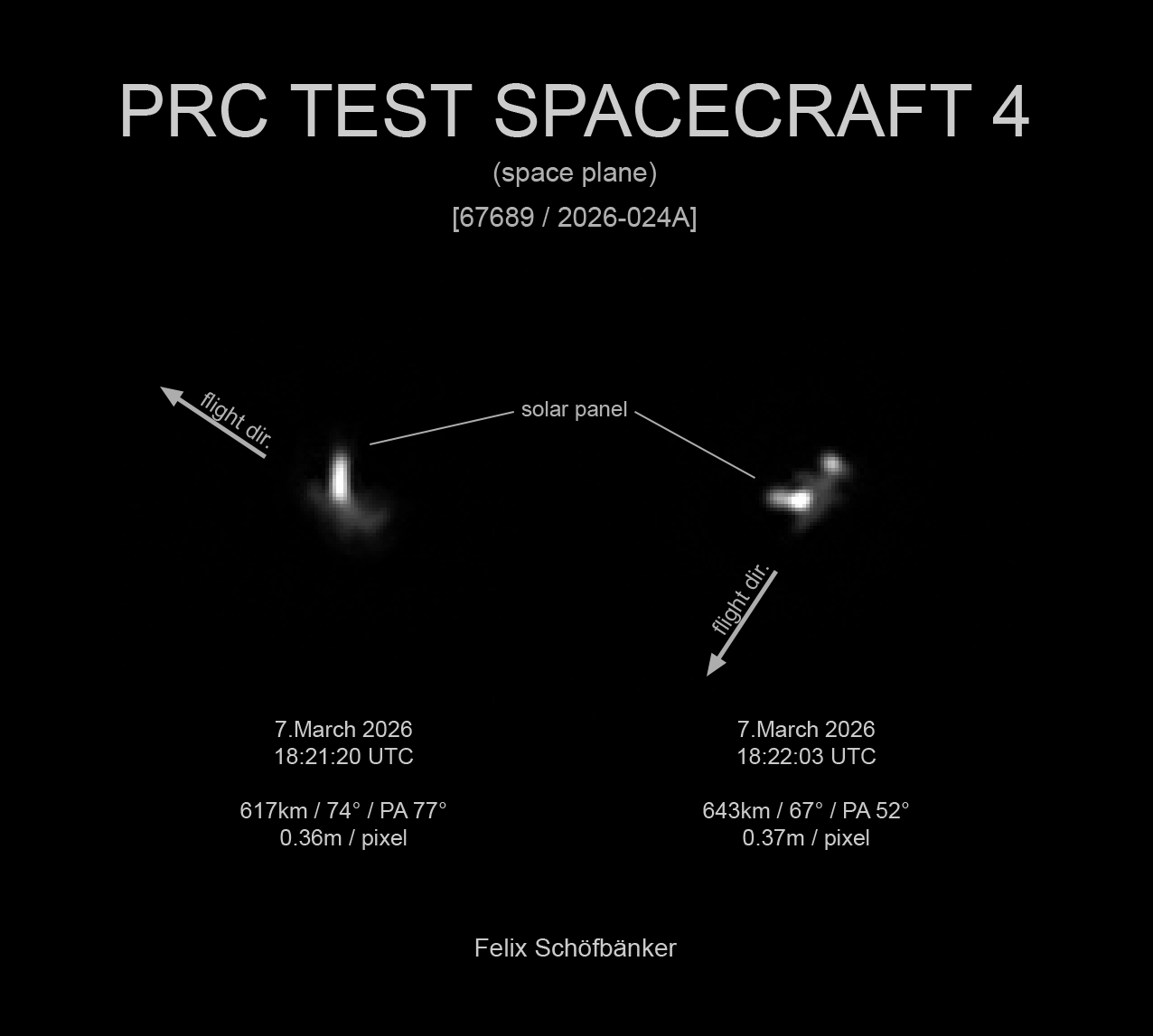
Image credit: Felix Schöfbänker
During the spacecraft’s last flight, two solar panels were mounted on a support module at the rear of the craft.
Peak of the pass
“I believe that the bright extension is the solar panel, due to it only becoming visible at phase angles smaller than 90 degrees, Schöfbänker reports on SeeSat-L, a website for visual satellite observers. “The panel also seems to have been the source of the bright flare shortly after the peak of the pass.
“Additionally the panel seems to be smaller than on the previous flight,” Schöfbänker notes.
The total length of the craft is around 28 feet (8.5 meters), similar to the X-37B, and it also seems to have aligned its longitudinal axis along its flight path, says Schöfbänker.
For more information, go to Mike Wall’s story at Space.com: “China’s mysterious Shenlong space plane recently launched on its 4th mission. What is it doing up there?” at:

Image credit: NASA, ESA, CSA, STScI, M. Micheli (ESA NEOCC)
That menacing meanie of a space rock — Asteroid 2024 YR4 — was identified last year as the most dangerous asteroid discovered in the last 20 years.
An early and intense international observation campaign reduced the risk of this asteroid impacting the Earth as zero. However, a 4% impact probability remained that the object might slam into Earth’s Moon on December 22, 2032.
However, astronomers have now been able to rule out any chance that the asteroid would impact our Moon.
Safe passage
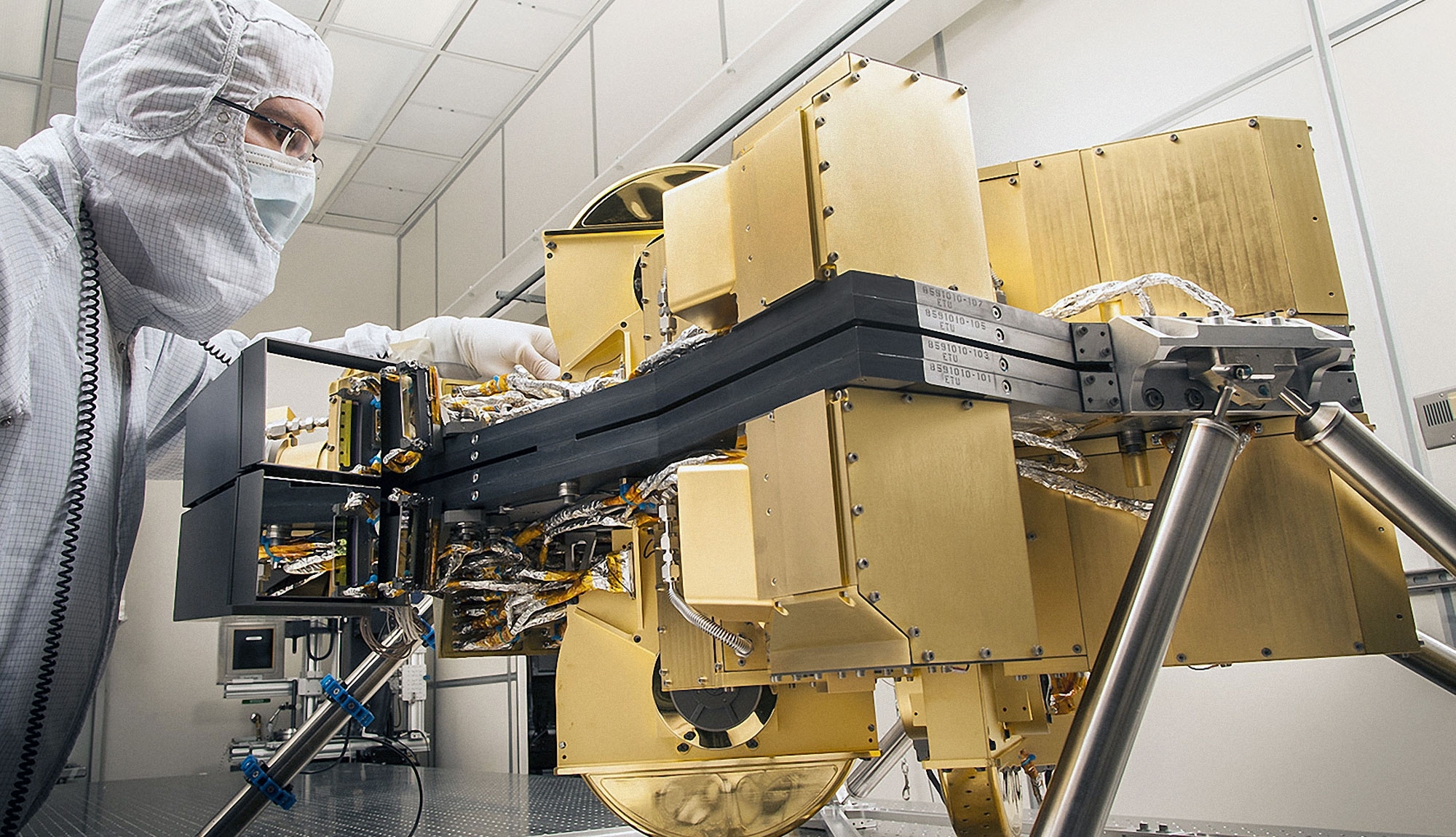
NIRCam onboard NASA’s James Webb Space Telescope was developed by a team at the University of Arizona and Lockheed Martin’s Advanced Technology Center. NIRCam is seen in a cleanroom for testing pre-launch at the Lockheed Martin Advanced Technology Center.
Inage credit: Lockheed Martin
According to the European Space Agency’s Near-earth Objects Coordination Center (NEOCC), new observations of Asteroid 2024 YR4 have been obtained using the Near-Infrared Camera (NIRCam) on the NASA/ESA/CSA James Webb Space Telescope.
The finding: the asteroid will safely pass the Moon at a distance of more than 12,400 miles (20,000 kilometers) the NEOCC reports.

Image credit: ULA
The NASA Authorization Act of 2026 has been unanimously passed, legislation that authorizes a first permanent Moon base. The Act also rejects President Trump’s budget cuts of the space agency, and extends the International Space Station (ISS) while supporting future commercial space stations.
On March 4, S. 933, the NASA Transition Authorization Act of 2025 — as amended by the Cruz-Cantwell substitute – was green-lighted.
The bipartisan legislation authorizes $24.7 billion for Fiscal Year 2026, and $25.3 billion for Fiscal Year 2027 for NASA, a 2.5 percent increase over the previous year.

Image credit: NASA
Moon base
“This comprehensive bipartisan bill sets the stage for decades of continued U.S. leadership in outer space,” said Senator Maria Cantwell (D-Wash.), Ranking Member of the Committee.
“For the first time, it authorizes NASA to establish a permanent Moon base as part of sustained American presence on the lunar surface and defines a transition process to end operations on the ISS and shift to commercial space stations on the leading edge of a commercially-driven low Earth orbit economy,” Cantwell said in a statement.
The lunar base would be capable of long-duration habitation, as well as robotic and human-tended industrial operations to advance science, technology and strategic interests.

Image credit: White House
Rejects Trump cuts
“Our bill also rejects the President’s budget request that would have gutted NASA’s ability to accomplish its important aeronautics research and technology development missions in partnership with many companies in my home state,” Cantwell stated, “and saves fully functioning space and Earth science missions from the OMB [Office of Management and Budget] chopping block.”
Current law allows NASA to operate the ISS until 2030. This provision in the new bill extends this date to September 30, 2032 to enable a safe and successful transition.

Image credit: NASA
Crew Rescue Capabilities
“Once a commercial space station has demonstrated for a full year that it has the capabilities sufficient to support scientific research, technology development, national laboratory functions and commercial activities previously conducted aboard the ISS, NASA will be authorized to transfer operations to this station and initiate procedures to deorbit the ISS,” explains a committee statement.
The authorization act requires NASA to evaluate existing and potential crew rescue capabilities for the return of astronauts from orbit and from the Moon in emergency and non-emergency scenarios.
The capability will provide additional safety to astronauts and will allow missions to continue if a crewmember needs to return to Earth unexpectedly.

Image credit: NASA/Bill Ingalls
New space race
Ted Cruz, (R-Texas), Chairman of the Committee, issued a one pager focusing on the NASA Authorization Act of 2026, titled “Securing American Dominance in the New Space Race.
The lawmaker said the challenge is that America is in a space race with China.
“The United States is in an intensifying strategic space race with the People’s Republic of China, spanning Earth’s orbit, the Moon, and the broader expanse of deep space,” states Cruz. “Beijing is rapidly advancing its lunar ambitions, expanding its on-orbit capabilities, constructing supporting infrastructure beyond Earth, and promoting alternative governance frameworks such as the International Lunar Research Station [ILRS] – all with a clear objective,” he said.
- dominate the Moon
- control strategic terrain in space
- and write the rules of the 21st century
Congressional direction
“Space is not symbolic; it is strategic. Leadership in space underpins national security, economic strength, technological innovation, and global influence. If America hesitates, China will fill the void,” Cruz explains.
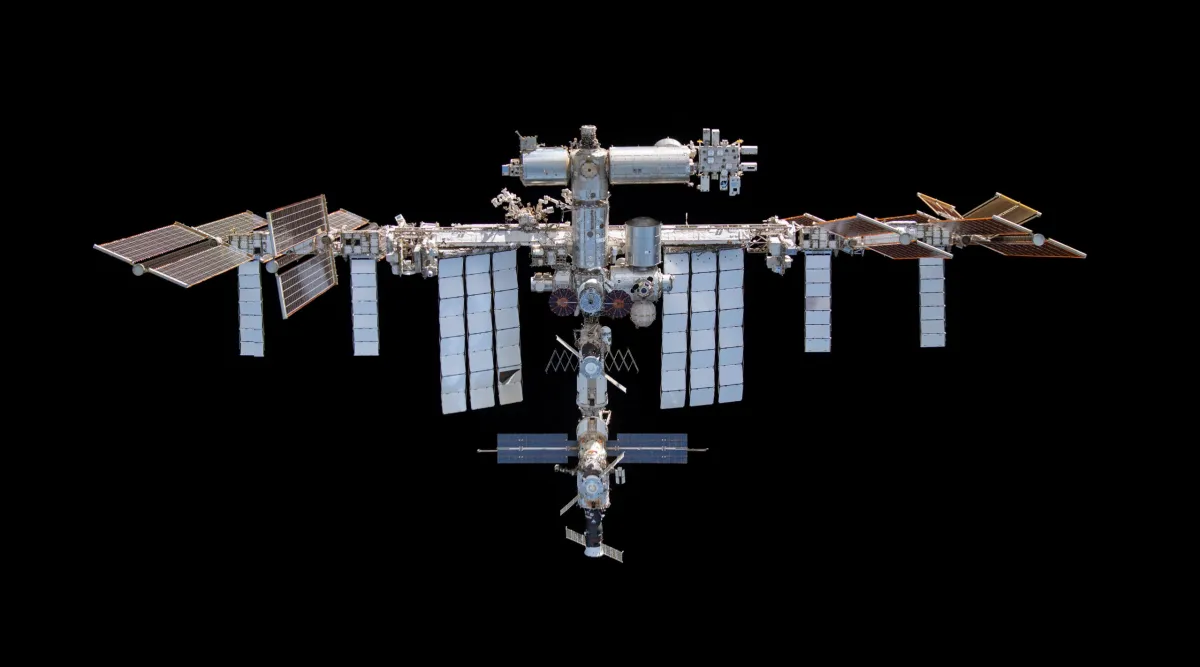
Image credit: NASA
Cruz states that NASA faces transition risks in low-Earth orbit (LEO), rising program costs, and supply chain vulnerabilities that could expose sensitive technology to foreign adversaries. “Without clear congressional direction, the United States risks losing momentum in lunar exploration, creating a gap in continuous American presence in orbit and weakening oversight of critical national programs,” he adds.
The solution
As highlighted by Cruz, the solution is the NASA Authorization Act of 2026.
- Directs NASA to establish a permanent Moon Base so we can get there before the Chinese.
- Requires NASA to begin soliciting for two commercial space stations immediately.
- Extends the International Space Station (ISS) to 2032 to avoid a gap in continuous human presence and capabilities in LEO, thus avoiding ceding leadership to China before commercial stations are ready.
- Reasserts American leadership in deep space by advancing the Artemis program as we prepare to return U.S. astronauts to the lunar surface for the first time since Apollo 17, paving the way for the next generation of commercial services beyond Earth’s orbit.
- Protects U.S. national security by prohibiting unauthorized cooperation with China, requiring disclosure of foreign financial ties in NASA contracting, and directing comprehensive supply chain risk reviews
- Strengthens oversight of cost estimates and procurement to protect federal taxpayers.
- Modernizes NASA’s workforce and public-private partnerships to ensure America maintains the world’s most advanced aerospace industrial base.

Image credit: NASA
Strategic high ground
As for why all this matters, the Cruz one-paper says “the nation that leads in space will shape the global economy, define international norms, and secure the ultimate strategic high ground. China understands this and is moving rapidly to claim it.”
The NASA Authorization Act of 2026 “ensures that America – not China – leads the next era of exploration. It strengthens the U.S. presence from low-Earth orbit into deep space, protects sensitive technologies from adversaries, restores accountability, and positions the United States to lead from the Moon to Mars,” Cruz concludes.
The one-paper issued by Cruz can be found at:
https://www.commerce.senate.gov/services/files/0505DF18-F8DC-42AB-BE14-8EC4C407FC13

