Archive for March, 2026
 Author:
  March 31st, 2026
Image credit: CCTV/Inside Outer Space screengrab
The first Kinetica-2 launch vehicle (LiJian-2 Y1) was launched from the “Dongfeng Commercial Space Innovation Experimental Zone” at the Jiuquan Satellite Launch Center, China, on March 30, 2026.
According to official sources, the mission “The Global Capital of Textile” successfully placed into their target orbits: the Qingzhou prototype cargo spacecraft, also known as the New March 01 Technology Demonstration Satellite, the New March 02 Satellite, and TS 01 Educational Satellite.
According to CAS Space, Kinetica-2 is 53 meters tall, has a 4.2-metre payload fairing, and is “capable of delivering 8 metric tons to a 500 km Sun-Synchronous Orbit (SSO) or 12 metric tons to a 200 km Low Earth Orbit (LEO)”.
Milestone
Lian Jie, deputy chief designer of Lijian-2 Y1 carrier rocket, told China Central Television (CCTV): “In the future, the Lijian-2 Y1 carrier rocket will realize our ‘cluster one-piece recovery.’ By that I mean that traditionally, we recover the core stage of the rocket, but now, we fasten the boosters together with the rocket’s core stage as one piece,” said Lian.
Saving the booster separations, this approach also helps reduce risks that may occur during the rocket’s ascent phase, said Lian.
“Saving the step of booster separation, our Lijian-2 Y1 carrier rocket is highly reliable in its powered flight phase, because we reduce the number of times of separations,” Lian added.
Lian said the successful launch of the Lijian-2 Y1 carrier rocket marks a milestone in China’s commercial rocket development.
Cargo spacecraft test
The prototype for China’s next-generation, lower-cost cargo spacecraft, is in Earth orbit following its launch atop the Lijian-2 Y1 carrier rocket on Monday.

Image credit: CCTV/Inside Outer Space screengrab
The Qingzhou Cargo Spacecraft Test Vehicle is a prelude to the launch of a full model, designed as a lightweight, agile and cost-effective freighter to resupply China’s Tiangong Space Station.
The prototype spacecraft now in orbit weighs 4.2 tons. It carries 27 projects with a total payload of 1.02 tons, and will conduct in-orbit tests at altitudes ranging from 125 miles to over 370 miles (200 to 600 kilometers).
Light Ship
Qingzhou translates to “light ship” and was developed by the Innovation Academy for Microsatellites of the Chinese Academy of Sciences.
According to CCTV, the Qingzhou test vehicle’s structure features a main pressurized module for crew supplies and science experiments, and an unpressurized aft section capable of carrying external payloads and space exposure experiments.
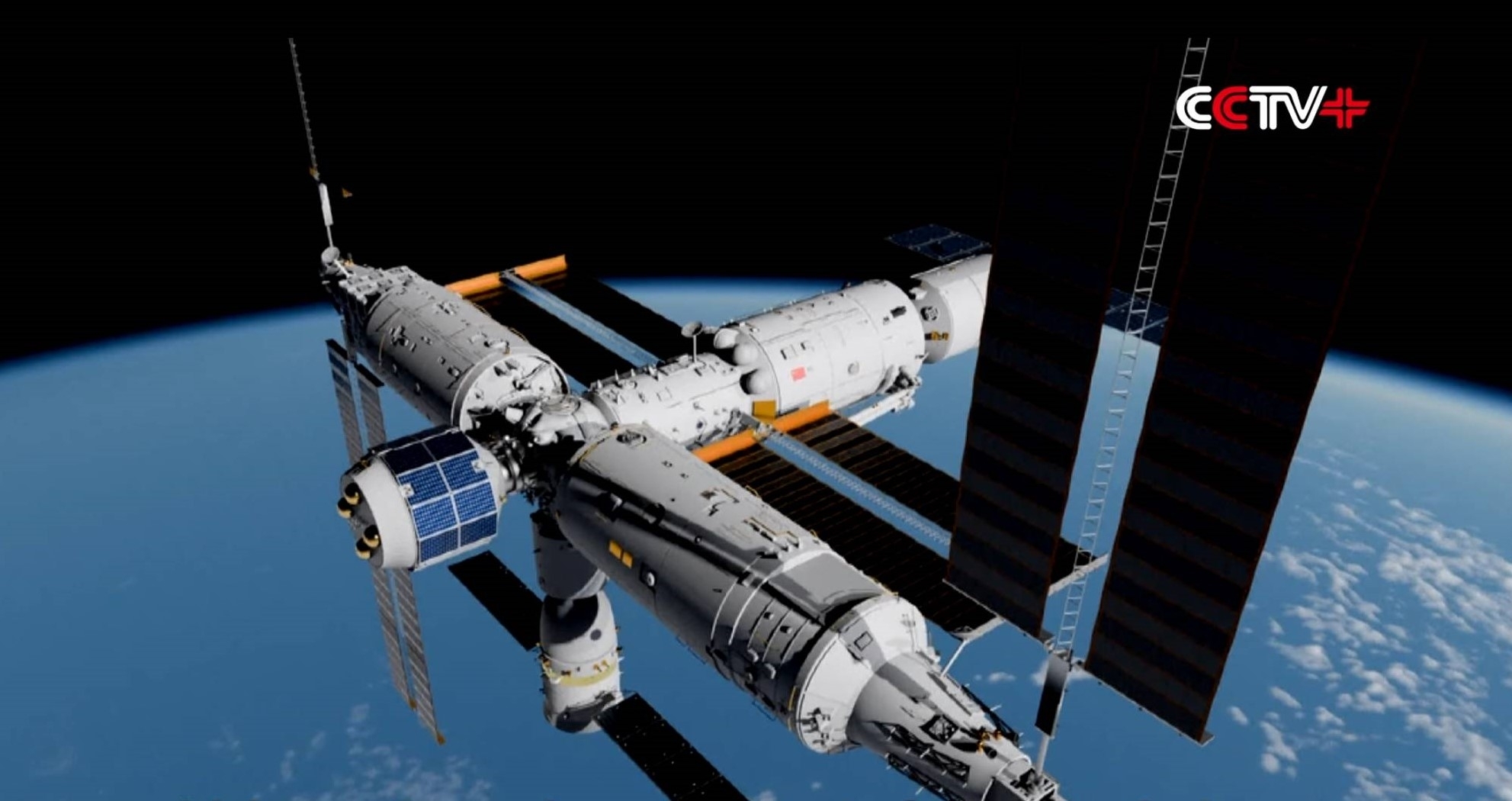
Artwork depicts Qingzhou cargo spacecraft (left) docked to Chinese space station, leading to growth of the orbiting outpost.
Image credit: CCTV/Inside Outer Space screengrab
The vehicle’s available volume for cargo is 27 cubic meters. For the storage of special supplies, the spacecraft is equipped with five modular “space refrigerators” — temperature-controlled containers each with a volume of 60 liters.
CCTV adds that Qingzhou is seen as a lower-cost complement to China’s existing Tianzhou cargo spacecraft, which has been carrying out delivery missions to the Tiangong Space Station.
Go to these CCTV videos at:
https://www.facebook.com/reel/1710498954059747
https://www.facebook.com/reel/1469872668196092
Also, go to this CAS Space (Beijing Zhongke Aerospace Exploration Technology Co., Ltd.) video at:
https://youtu.be/ZieEGm6jDjg?list=PLpGTA7wMEDFjz0Zx93ifOsi92FwylSAS3
 Posted in

Earth’s sun can toss out powerful solar storms that can impact Artemis II astronaut travel to and from the moon. NASA’s Solar Dynamics Observatory captured this solar flare event on October 3, 2024.
Image credit: NASA/SDO
The upcoming flight of Artemis II will hurl the astronaut crew outward to the moon, far beyond the shielding cocoon of Earth’s magnetic field. This first piloted sojourn of the Artemis program, a 10-day outing, is the first human passage over that distance since Apollo-era moonwalker flights ended in December 1972.
Forecasting skills

Tucked inside their Orion spacecraft, the Artemis II crew is seen in a pre-launch rehearsal.
Image credit: NASA/Mark Sowa
To support the flight, there has been a sharpening of space weather forecasting skills, an ability to better gauge the sun’s conniptions and to help assure crew safety if a hazardous uptick in solar action rears its energetic head.
“I think we’re feeling optimistically confident right now,” explains a space weather expert.
For more details, go to my new Space.com story – “Could bad space weather endanger the Artemis 2 moon astronauts?” – at:

Image credit: PBS
Life Unearthed with Ariel Waldman is a docu-series that begins streaming on the Public Broadcasting Service (PBS) network. The series starting April 1 reveals Earth’s ecosystems through radical shifts in scale—from microscopic wildlife to the planet’s most iconic animals—and even the possibilities of life beyond Earth.
Waldman is a National Geographic Explorer, filmmaker and author. For over a decade, she has served as an advisor to NASA on astrobiology, human spaceflight, and advanced technologies.

Image credit: PBS
This series journeys from the deepest roots beneath our feet to the distant possibilities of life on icy moons beyond our atmosphere.
For more information on this informative series, go to:

SpaceX’s Gwynne Shotwell Aims to Put AI on the Moon
Inside a sprawling Texas factory, SpaceX is building its most powerful rockets yet, with the goal of returning humans to the moon. At the center of it all is Gwynne Shotwell. Find out how she became one of the most influential figures in space in this week’s TIME cover story.
Go to:
a3b19620b2c8773c8702fd101f

Image credit: CCTV/Inside Outer Space screengrab
A Chinese aerospace startup has demonstrated in space a flexible robotic arm to advance orbital refueling technology.
The test was done onboard a Yuxing 3-06 satellite, lofted on March 16 via a Kuaizhou-11 Y7 rocket from the Jiuquan Satellite Launch Center in northwest China.
Key enabler
The company, Sustain Space, views orbital refueling as a key enabler for extending a spacecraft’s lifespan. The arm was developed by a team led by Tsinghua University’s Shenzhen International Graduate School.
According to China Central Television (CCTV), the test paves the way for Yuxing 3-06 – labeled a “space refueling station,” to replenish other satellites in orbit, manage space debris, and provide other in-orbit services.
In-orbit simulations
Sustain Space announced this week that the spacecraft completed a series of in-orbit simulations using its flexible manipulator. Those operations included an autonomous programmed refueling simulation, a ground-controlled refueling simulation and a vision-guided servo refueling simulation.

Image credit: CCTV/Inside Outer Space screengrab
Reportedly, a representative from Sustain Space told KhabarAsia that a next phase would involve actual propellant transfer between cooperative spacecraft.
Space debris removal
Based in Taicang, China, Sustain Space was founded in 2022. Its activities are focused on space debris removal, as well as on-orbit spacecraft refueling, life extension, and in-orbit repair and manufacturing.
The state-run Xinhua news service made note that China had previously conducted similar experiments. In January 2025, the country launched a test satellite, Shijian-25, primarily for verifying satellite fuel replenishment and life extension service technologies.
Go to video of the arm at:

Image credit: White House
NASA Administrator Jared Isaacman:
“To return Americans to the Moon, NASA is shifting to an iterative, execution-focused approach – just as we did during Apollo.
We are standardizing rocket architecture, embedding NASA expertise across industry, and increasing launch cadence to support sustained lunar operations.
Demand signal
We are sending a demand signal for crewed missions beyond Artemis V, with at least two providers capable of bringing astronauts to the surface every 6 months.

Image credit: NASA
The goal is not just to reach the Moon, but to stay.
America will never give up the Moon again.”
Skyfall on Mars
“NASA is building [the Space Reactor-1] SR-1 Freedom, a nuclear electric propulsion spacecraft, launching to Mars in 2028.
We are proud to announce this during the 250th year of the United States, the mission’s name reflects the spirit of American innovation and exploration.
This mission will bring America’s nuclear power capabilities to space and deliver the Skyfall payload of Ingenuity class helicopters to explore the Red Planet.
Nuclear power and propulsion will be the key to undertaking crewed missions to Mars and exploring the outer solar system.”

Illustration of AeroVironment’s new “Skyfall” helicopter concept that could deploy six scouts to Mars.
Image credit: AeroVironment
For more details, go to these “Ignition” presentations:
NASA’s Plan for The Moon
https://youtube.com/watch?v=yIlTwwJv1Ac
NASA’s Plan for Science and Discovery
https://youtube.com/watch?v=BYH6W9iCs2E
Ignition: NASA News Conference (March 24, 2026). Go to video replay at:

NASA will host a major public event today at 9 a.m. Eastern Daylight Time at the Mary W. Jackson NASA Headquarters in Washington D.C.
The event will explain how NASA is executing President Donald J. Trump’s National Space Policy.
Also on tap are details regarding the acceleration of preparations for America’s return to the surface of the Moon by 2028.

Opening remarks are from NASA Administrator Jared Isaacman, followed by a series of high-level panels providing updates on mission priorities, such as:
- sending the first astronauts to the lunar surface in more than 50 years,
- establishing the initial elements of a permanent lunar base,
- getting America underway in space on nuclear propulsion, and other objectives.
At 4:45 p.m., NASA will hold a live news conference from headquarters that will recap major announcements discussed throughout the day.
To view these events, go to:
https://www.youtube.com/@NASA/streams

Image credit: Lockheed Martin

SpaceX Starship deployment. Image credit: SpaceX
Two projected space projects — orbital data centers and a network of Earth-circling solar reflectors – have stirred up the Center for Space Environmentalism.
The group is dedicated to the protection of the space environment and the preservation of outer space as a human environment. They have opposed the two initiatives, filing their concerns on March 4 with the Federal Communications Commission.
The Center for Space Environmentalism (CSE) is a group of researchers, citizens and advocates concerned about the rapid development of outer space in the absence of meaningful safeguards for the protection of the space environment.
Reflect on this!
The SpaceX application for 1 million orbital data centers is “the single greatest threat to space sustainability in history,” states the Center’s filing to the FCC.
In another FCC filing, the Center opposes the application by Reflect Orbital Inc. (Reflect Orbital) to launch and operate the EARENDIL-1 satellite.

Image credit: Reflect Orbital Inc.
“We contend that its ‘sunlight-as-a-service’ model is a direct threat to the scientific, cultural, and biological integrity of the Earth’s nighttime environment. We therefore urge the Commission to reject this request and instead mandate a full environmental review.”
Launch and reentry issues
The SpaceX proposal, explains the Center, seeks to “solve” terrestrial land-use and energy strain by exporting the environmental cost of data processing to the upper atmosphere and near-Earth space.
“This approach simply shifts externalities to outer space and solves nothing,” the Center explains. “We hold that humanity must consider the sustainability of the entire Earth-space system, rather than using space merely as a means to offset unsustainable human activity on Earth.”

Image credit: SpaceX
The proposed million-satellite constellation creates a permanent cycle of launch and reentry issues, adds the Center. “This cycle risks turning the mesosphere and stratosphere into an ‘incinerator dump’ for space machinery.” Furthermore, such a massive constellation “requires a launch cadence that would introduce unprecedented levels of black carbon (soot) and water vapor into the stratosphere.”
Night sky transformation
Then there’s the issue of reentering data centers that do not demise completely upon their fiery fall. They pose a threat to people and human infrastructure on the ground, the Center’s FCC filing points out.
Additionally, there’s the fundamental alteration of the night sky
“By placing one million satellites in Sun-Synchronous Orbits (SSO) to ensure near-continuous solar illumination, SpaceX risks ending the era of dark night skies on Earth,” the Center states. “For ground observers, a million satellites would radically transform the night sky, with hundreds or thousands of bright, moving objects visible in every direction all night long.”

Image credit: Reflect Orbital Inc.
Heavy on light cycles
Regarding the sunlight-as-a-service concept, the Center’s FCC filing rejects the Reflect Orbital premise that terrestrial energy challenges should be addressed by disrupting global atmospheric chemistry and the natural light cycles of our planet.
“What Reflect Orbital proposes is not innovation; rather, it is merely exporting industrial pollution into the shared global commons of outer space,” the space environment groups argues.
“The CSE believes that a sustainable future depends on a healthy and protected space environment. We therefore call on the Commission to reject Reflect Orbital’s application pending thorough and complete environmental review of the proposed action.”
For more information on the Center for Space Environmentalism’s FCC filings, go to their “latest advocacy and analysis section” at:
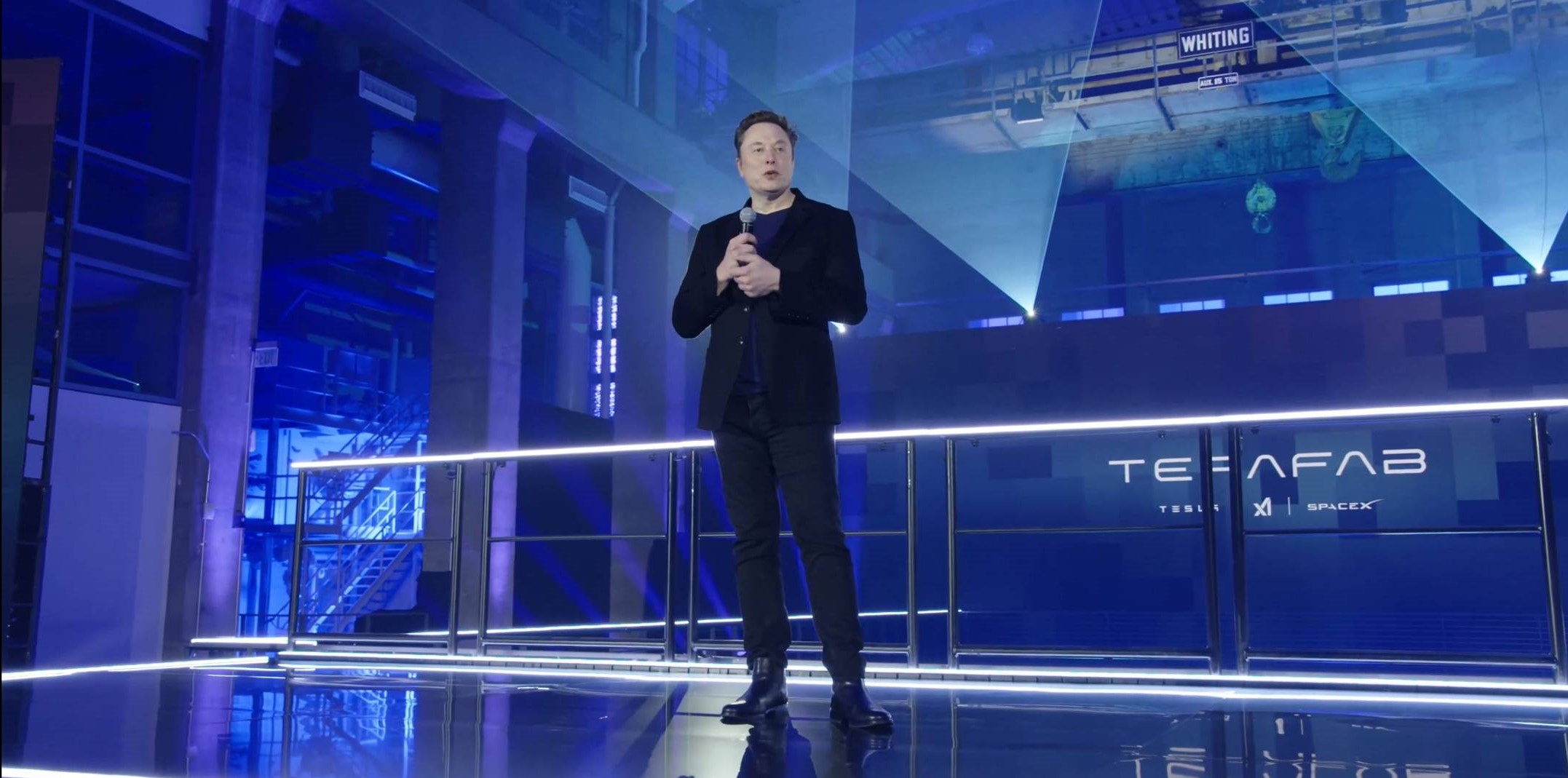
Image credit: SpaceX/Inside Outer Space screengrab
SpaceX leader, Elon Musk, spotlights electromagnetic mass drivers on the Moon in a March 21 presentation.
Go to:
https://x.com/i/status/2035572007983563217
Go to my earlier story – “Catapult to the Future: Elon Musk’s Moon Factory Revisits the Mass Driver” – at:

Image credit: SpaceX/Inside Outer Space screengrab

Image credit: SpaceX/Inside Outer Space screengrab
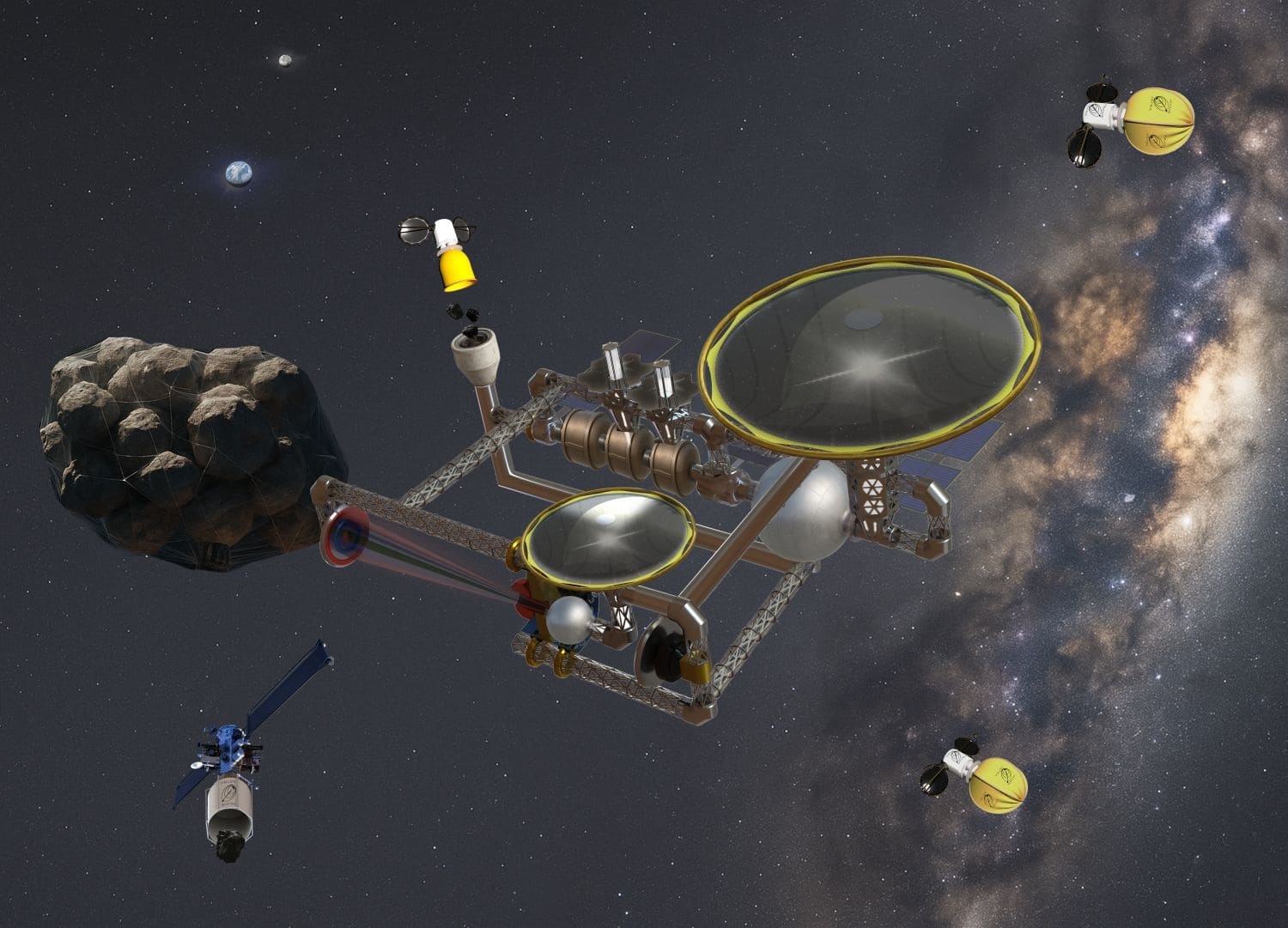
Image credit: TransAstra
Asteroid mining will play a critical role in building the trillion dollar space economy. That’s the visionary mission of Los Angeles – based TransAstra.
To make that quest real, the group is developing four core capabilities: “Detect, Capture, Move, and Process.”
In the bag
In October 2025, TransAstra deployed a “Capture Bag” on the International Space Station. This Flight-Demonstrated Technology is designed to enable orbital debris cleanup and promote responsible space operations for the U.S. Space Force.

Image credit: TransAstra
The Capture Bag is a lightweight, scalable system designed to envelop objects in space, ranging from defunct satellites and spent rocket stages to asteroids.
New Moon
A larger version of the Capture Bag – measuring some 33-feet (10 meters) will be capable of snaring large spacecraft and components for de-orbiting, recycling, or repurposing.
Under the company’s “New Moon” initiative, that sized bag would also be big enough to capture small asteroids for enclosure to enable mining operations in space.

Image credit: TransAstra
In a recently issued video, the company shares more about how their patented technology will allow them to detect, capture, move, and mine asteroids.
Go to:

