Archive for February, 2026
 Author:
  February 8th, 2026
Curiosity Mars rover on the prowl.
Image credit: NASA
In the journal Astrobiology, researchers report on the prospect that NASA’s Curiosity Mars rover may have found evidence for life on the Red Planet.
Curiosity’s Sample Analysis at Mars (SAM) instrument analyzed the “Cumberland” rock sample back in May 2013.
Investigators now say that non-biological sources could not fully account for what SAM found in that Curiosity sample.
Fatty acids
The new work is led by Alexander Pavlov within the Solar System Exploration Division of NASA’s Goddard Space Flight Center in Greenbelt, Maryland.
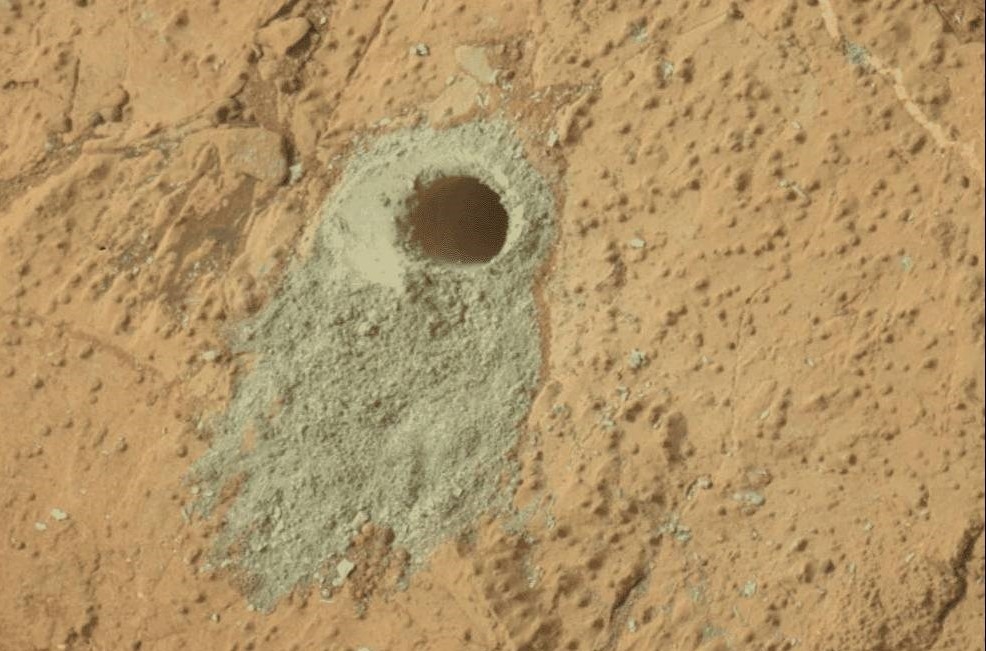
The Curiosity landing site at the base of Aeolis Mons (Mount Sharp) at Gale crater NASA’s Curiosity rover drilled into this rock target, “Cumberland,” during the 279th Martian day, or sol, of the rover’s work on Mars (May 19, 2013) and collected a powdered sample of material from the rock’s interior.
Image credit: NASA/JPL-Caltech/MSSS
Reporting on Feb. 4 in the journal Astrobiology, in revisiting the SAM data, Pavlov and colleagues say it is reasonable to hypothesize that living things could have formed organic compounds detected. They conjecture that they could be fragments of fatty acids preserved in the ancient mudstone in Gale Crater.
Here on Earth, fatty acids are produced mostly by life, though they can be made through geologic processes, too.
Rewind the clock
“To reach their conclusion, scientists combined lab radiation experiments, mathematical modeling, and Curiosity data to ‘rewind the clock’ about 80 million years — the length of time the rock would have been exposed on the Martian surface,” explains a NASA blog on the work.
“This allowed them to estimate how much organic material would have been present before being destroyed by long-term exposure to cosmic radiation: far more than typical non-biological processes could produce,” a NASA blog reports.

Image credit: Utah Geological Survey
“The team says more study is needed to better understand how quickly organic molecules break down in Mars-like rock under Mars-like conditions — and before any conclusions can be reached about the absence or presence of life,” the blog adds.
Mudstone makeup
The Astrobiology report – “Does the Measured Abundance Suggest a Biological Origin for the Ancient Alkanes Preserved in a Martian Mudstone?” — has led the scientists to estimate that the Cumberland mudstone conservatively contained 120–7700 ppm of long-chain alkanes and/or fatty acids before exposure to ionizing radiation.
“We argue that such high concentrations of long-chain alkanes are inconsistent with a few known abiotic sources of organic molecules on ancient Mars, namely delivery of organics by IDPs [interplanetary dust particles] and meteorites, atmospheric fallout and deposition from photochemical haze, and organic production from serpentinization and Fischer–Tropsch reactions on the Red Planet.
The Fischer–Tropsch process is a collection of chemical reactions that converts a mixture of carbon monoxide and hydrogen, known as syngas, into liquid hydrocarbons.

The Sample Analysis at Mars (SAM) instrument onboard Curiosity analyzes samples of material collected by the rover’s arm.
Credit: NASA-GSFC
Absence or presence of life?
The team says more study is needed to better understand how quickly organic molecules break down in Mars-like rock under Mars-like conditions — and before any conclusions can be reached about the absence or presence of life.
In the paper, Pavlov and colleagues note: “We agree with Carl Sagan’s claim that extraordinary claims require extraordinary evidence and understand that any purported detection of life on Mars will necessarily be met with intense scrutiny. In addition, in practice with established norms in the field of astrobiology, we note that the certainty of a life detection beyond Earth will require multiple lines of evidence.”
To that end, Pavlov and his fellow researchers recommend experimental studies that determine the radiolytic degradation rates of kerogens, alkanes, and fatty acids in Cumberland-like Mars analogs under Mars-like conditions.
To access the research paper — “Does the Measured Abundance Suggest a Biological Origin for the Ancient Alkanes Preserved in a Martian Mudstone?” – go to:
 Posted in
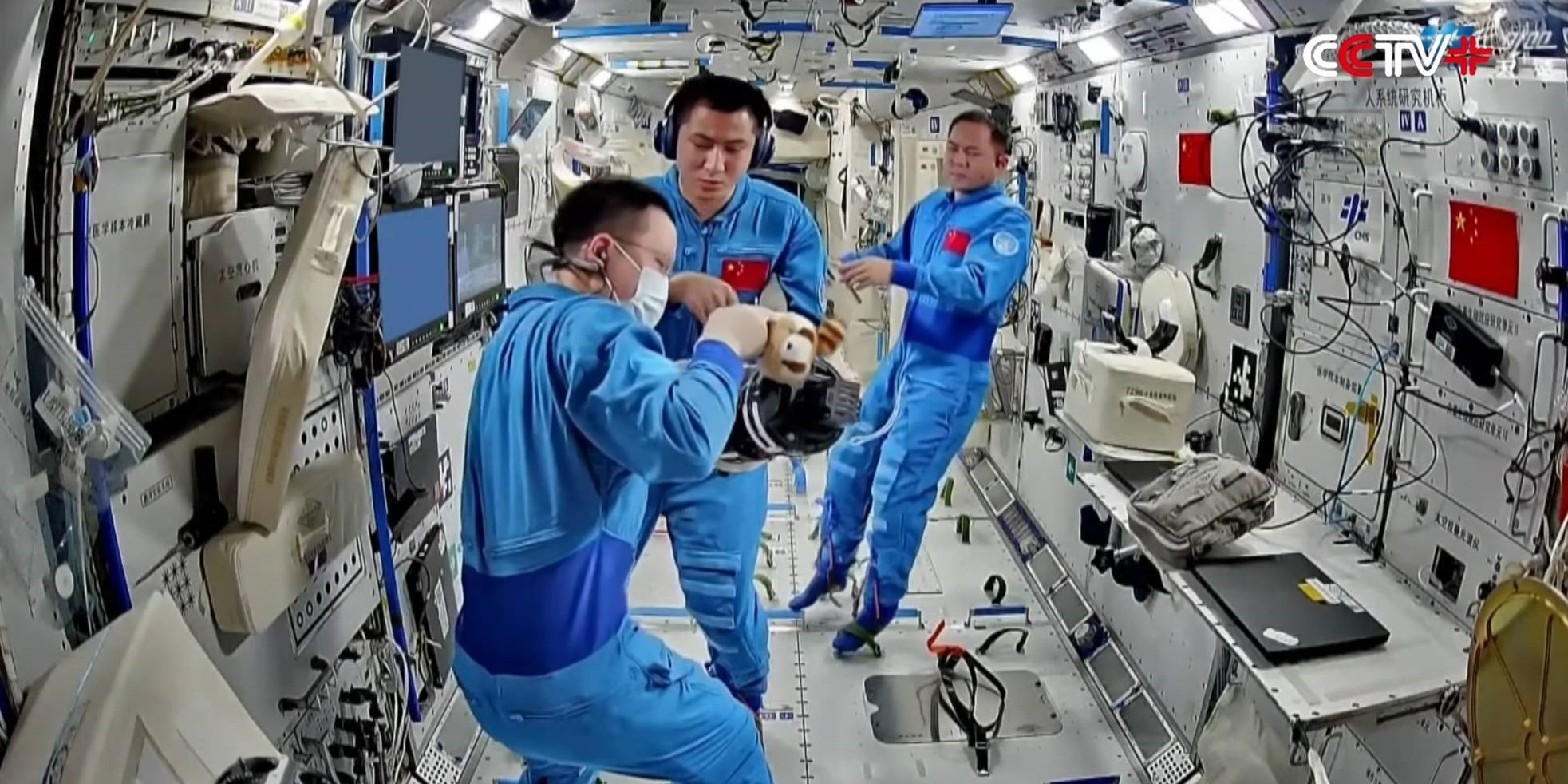
Image credit: CMSA/CCTV/Inside Outer Space screengrab
China’s Shenzhou-21 astronauts continue to carry out multiple in-orbit tasks, from performing scientific experiments, space station upkeep, equipment maintenance, to health management over the past week, according to the China Manned Space Agency (CMSA).
Mission commander Zhang Lu and astronauts Wu Fei and Zhang Hongzhang have spent over three months in orbit.
The Shenzhou-21 crewed spacecraft was launched from the Jiuquan Satellite Launch Center in northwest China on October 31, 2025.
This three-person crew completed their mission’s first series of extravehicular activities on December 9.

Artwork depicts China’s Tiangong space station.
Image credit: China Manned Space Agency
Onboard work
As reported by the state-run China Central Television (CCTV), in the field of space medicine, the trio collected blood samples, which will be used to study the patterns of change and adaptation mechanisms in astronauts’ bones, nerves, and cerebral vessels during long-duration spaceflight.
Using laptops, the crew also conducted experiments related to the effects of long-term exposure to microgravity on upper and lower visual field differences and their cognitive neural mechanisms.
In the realm of microgravity physical science, the three astronauts cleaned samples in non-container experimental chambers, performed electrode maintenance, cleaned lens covers, disassembled and reassembled fluid dynamics experimental modules and replaced experimental samples.

Image credit: CMSA/CCTV/Inside Outer Space screengrab
Clean cabin
For health management, the trio of taikonauts utilized devices with adsorption force to keep their leg muscles strong and completed eye, vision and optic nerve testing, reported CCTV.
In terms of onboard environmental monitoring and equipment maintenance, they used a dew point meter to monitor the thermal environment inside the cabin and conducted air cleanliness tests. They also sorted supplies and cleaned the cabin.
Go to this CCTV video spotlighting onboard station life aboard China’s space station at:
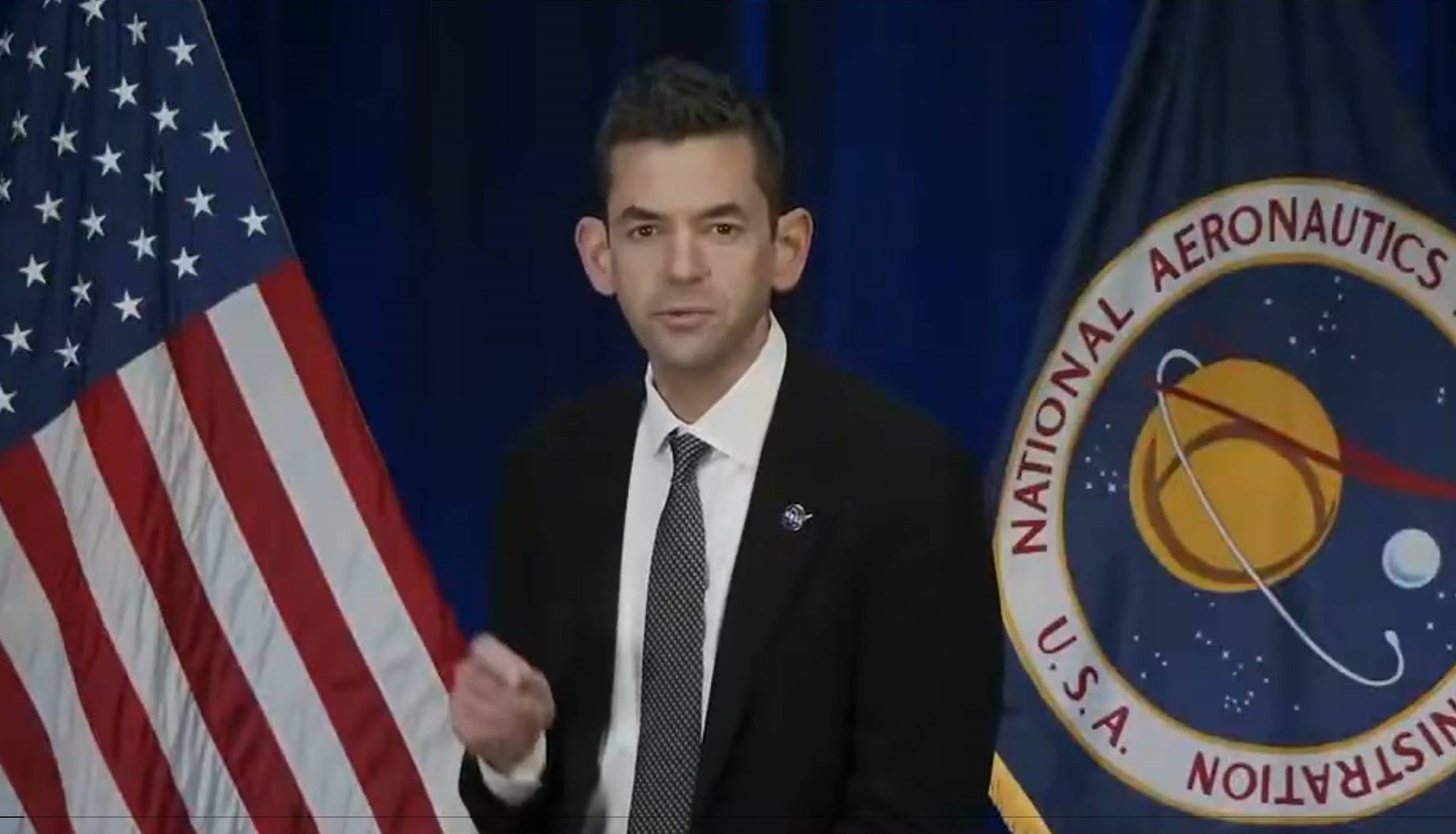
Image credit: NASA
After some 50 days on the job, the NASA chief-in-charge visits every NASA center, wraps up a dozen town hall meetings, and reviewed thousands of workforce submissions, Isaacman says it is clear there is much NASA can do to better empower people and focus resources on the most pressing objectives.
Worth a read: Jared Isaacman Wants to Restore NASA’s Core Competencies by Marcia Smith
https://spacepolicyonline.com/news/isaacman-wants-to-restore-nasas-core-competencies/
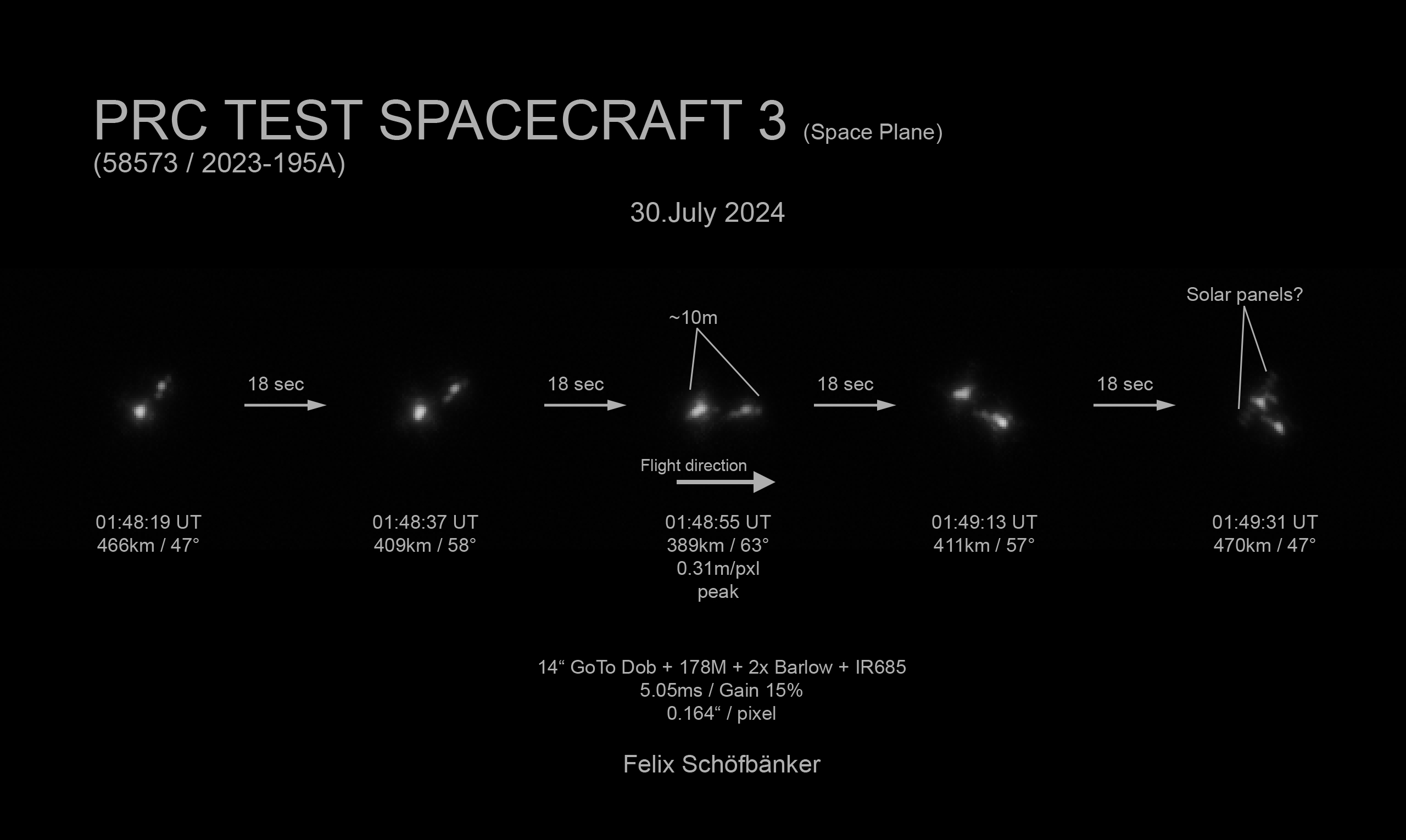
Imagery of China’s space plane on its third flight was caught on camera by Felix Schöfbänker in Upper Austria.
Image credit: Felix Schöfbänker
China has lofted a reusable experimental spacecraft on Saturday via a Long March-2F carrier rocket from the Jiuquan Satellite Launch Center.
This mission by China reportedly marks the fourth flight related to harnessing reusable spacecraft technology – similar in nature to the U.S. Space Force X-37B program.
As reported by the state-run China Daily, a first orbital test of a trial vehicle occurred in September 2020 with the vehicle staying in Earth orbit for just under two days.
A second test started in August 2022 and the spaceplane stayed in the Earth’s orbit for 276 days before landing in May 2023.
The third space plane was launched in December 2023 and lasted 268 days before returning in September 2024.
China’s Xinhua news agency stated that “the experimental spacecraft will conduct planned technical verification of reusable spacecraft technology, providing technical support for the peaceful use of space.”

Several in-space cameras have imaged China’s reusable space plane. Shown here was image taken by Maxar Intelligence, now Vantor, space asset.
Image credit: DutchSpace posting

Image credit: Polaris Spaceplanes
Polaris Spaceplanes is a German aerospace startup developing a reusable space launch and hypersonic transport system.
The group has received a Federal Office of Bundeswehr Equipment, Information Technology and In-Service Support contract for manufacturing and operating a two-stage, horizontal take-off and fully reusable hypersonic research vehicle.
This two-stage system is to serve as a hypersonic testbed & experimental platform for defense-related as well as scientific/institutional research, Polaris reports. In a secondary function, the vehicle can be used as a spaceplane for launching small-satellites when using an expendable upper-stage.
Preparatory work on the HYTEV (Hypersonic Test and Experimentation Vehicle) was carried out in 2024 and 2025.

Image credit: Polaris Spaceplanes
Test sites
“The system with the size and take-off mass of a fighter jet is to be flight ready by the end of 2027,” states Polaris. “The main stage is to be powered by 2 x turbofans and an aerospike rocket engine, while the upper-stage is rocket-powered only.”
Polaris Aerospace officially established a second company site at the “Test- und Forschungsflugfeld Peenemünde”, complementing the group’s main site in Bremen, Germany.
Having a permanent location at Peenemünde Airport allows the company to accelerate flight testing and R&D activities.

Image credit: Polaris Spaceplanes
Iterative approach
The group is building and operating scaled spaceplane demonstrators for technology validation and risk reduction. This iterative approach has enabled use of a series of flight demonstrators of increasing size, mass and complexity.
For example, on October 29, 2024, the organization’s MIRA II performed the first ever in-flight ignition of a linear aerospike rocket engine. The vehicle was equipped with 4 turbojets and a 1 kN linear aerospike rocket engine
For details on Polaris Spaceplanes, go to:

Wait-a-Minute!
Image credit: Barbara David
It is not an inside secret that the private space company, Axiom Space, has been troubled by its development of a new spacesuit for Artemis moonwalkers.
As the new spacesuit is needed for any Artemis III astronauts working on the Moon, the sluggish development of appropriate apparel is a wait-a-minute moment in space expooration.
Meet the timelines
NASA Administrator Jared Isaacman recently met with leadership at Axiom Space to discuss the development of their spacesuit.
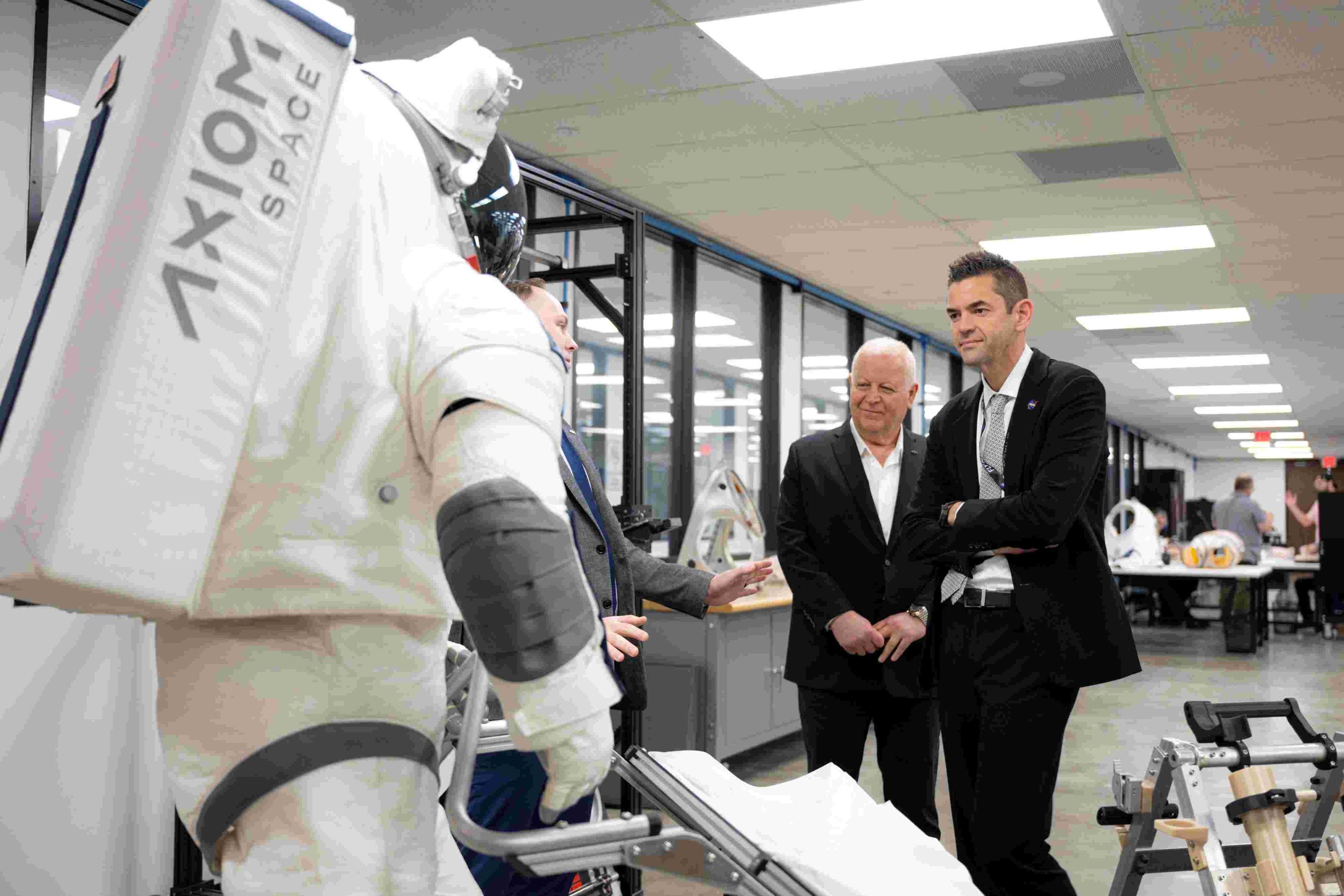
Image credit: Via Jared Isaacman
“It was great to see their facilities and all the progress,” Isaacman posted January 24 on X (formerly Twitter).
“I shared with them exactly what I told our HLS [Human Landing System] providers: NASA will do all we can to help them accelerate and meet the timelines, with plenty of schedule margin to spare,” the NASA leader explained.
“As an agency, we must be willing to challenge the requirements and not let an hour go by on a problem we can solve today. This is imperative to achieving the President’s national space policy,” said Isaacman.
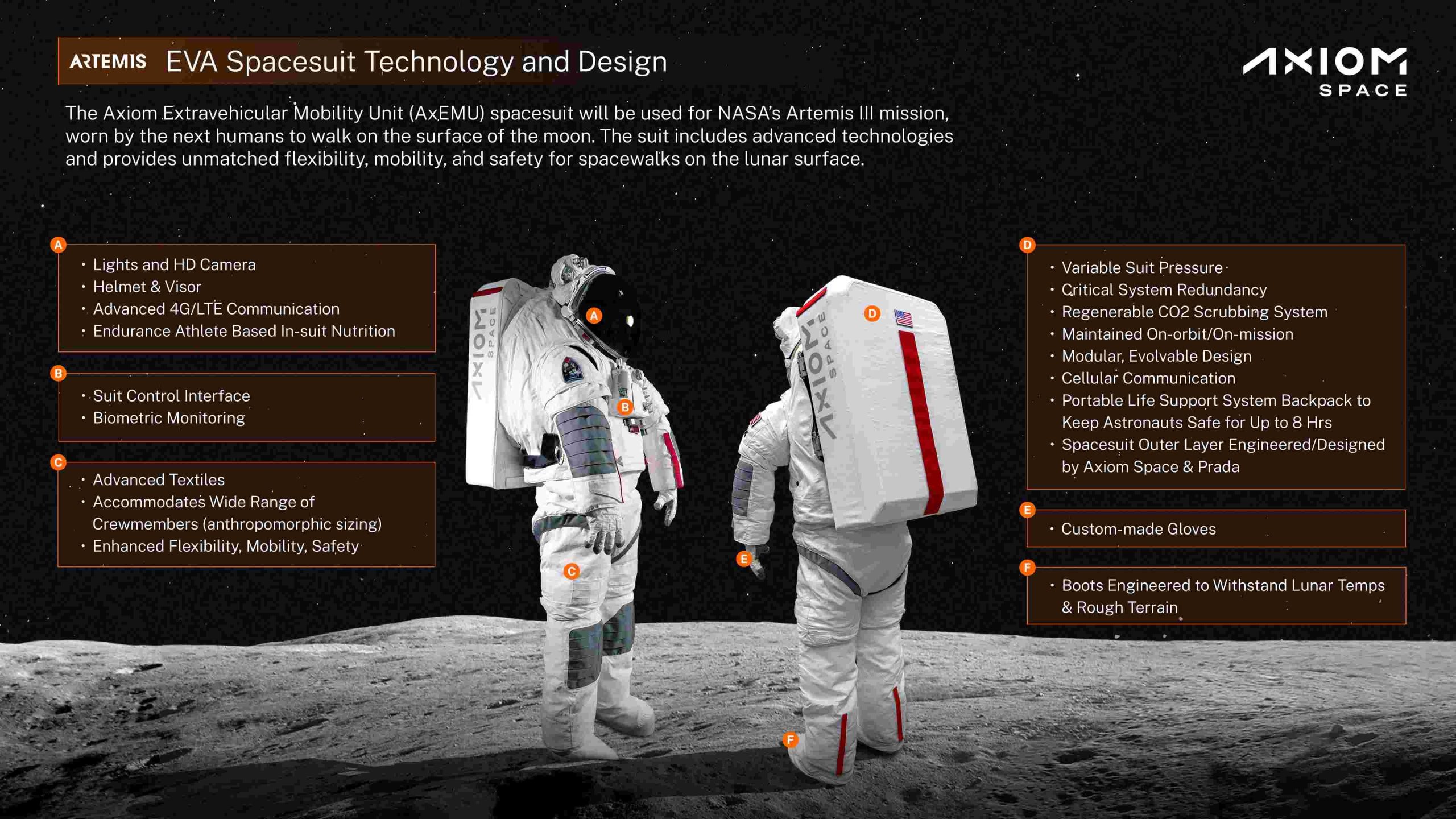
Image credit: Axiom Space
Hale-ing frequency
A day later, Wayne Hale, a former Space Shuttle Program Manager & Flight Director for 40 missions, now retired from NASA after 32 years, responded:
“Exactly the same message from NASA leadership that was made right before Challenger was lost.”
Hale’s posting stirred up this counter-response from Isaacman:
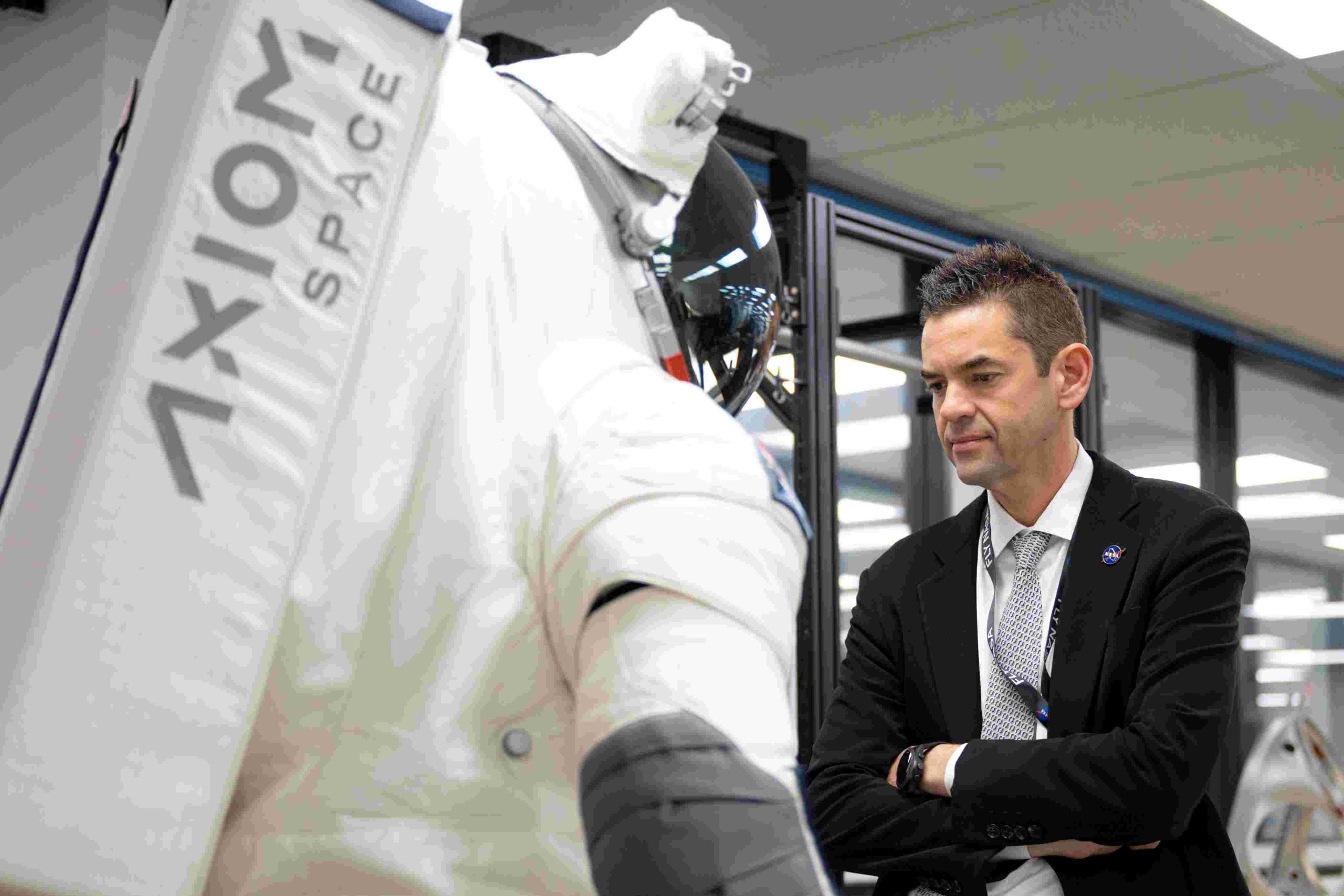
Image credit: Via Jared Isaacman
“It is disappointing and disrespectful that you would so casually invoke the loss of Challenger on a topic related to EVA suit development. Let me rework my above post to be the opposite of what I wrote, and please tell me if it sounds safer:
“I shared with them exactly what I told our HLS providers: NASA should do absolutely nothing to help them accelerate and meet their timelines so there is no schedule margin to spare. As an agency, we must never be willing to challenge the requirements and let as much time go by as possible on problems.”
“Is this better? Respectfully, do better Sir,” Isaacman posted.

Wait-a-Minute!
Image credit: Barbara David

Voyager Technologies and Max Space announced a strategic partnership to advance expandable space habitats.
Image credit: Max Space
The use of expandable space technology is being bolstered by a new strategic partnership between Voyager Technologies and Max Space.
“Expandable structures represent a step change in how surface infrastructure can be delivered and deployed,” said Saleem Miyan, co-founder and CEO of Max Space.
Miyan said that expandable technology offers increased capability, scalability and versatility, attributes that “are essential for sustained deep-space human activity and to unleash the Lunar and Martian economies,” in a press statement.
Fundamental shift
“This technology reflects a fundamental shift in how humanity will live and work in space,” said Dylan Taylor, chairman and CEO of Voyager – a defense and space technology company. Sustained operations on the Moon “require infrastructure designed for endurance, scalability and industrial execution,” he said.
“The Moon is no longer a single destination or a flags-and-footprints exercise,” Taylor added. It is the next operational domain in a growing space economy, he stated.

Image credit: Max Space
Phased development path
Max Space has been an early pioneer in expandable structure development.
The company’s lightweight expandable habitat launches compactly and expands 20x once deployed in orbit or other destination, allowing a large, fully equipped habitat to launch on a single Falcon 9 rocket.
The strategic partnership blueprints a phased development path, including ground validation and in-space demonstrations later this decade. That development path’s goal is to enable operational Moon and Mars capabilities aligned with NASA’s exploration timelines.
For more information on Max Space, go to:

Born to Explore – John Casani’s Grand Tour of the Solar System by Jay Gallentine; Nebraska Press; 400 pages; Hardcover, $39.95.
This fascinating read centers on one of the most valued leaders that worked for the Jet Propulsion Laboratory and managed a slew of NASA projects, including Voyager, Galileo, and the Cassini mission to Saturn.
For those that had their own close-encounter with John Casani – as this reporter did several times – he was a tour-de-force of facts, enthusiasm, and stick-to-it management guidance.
Jay Gallentine, an award-winning space historian from Minnesota, has written an absorbing look at this legendary leader that rose through JPL’s ranks to a senior executive.
As the author skillfully notes, Casani battled politics, funding issues, the laws of physics, and also on occasion his JPL compatriots. “We didn’t know how to do what were supposed to do. We were too dumb to know that what they were askin’ us to do would really be hard,” said Casani on his early days at JPL as cited by Gallentine.
Casani harbored a persistent drive to undertake some of the most momentous – and nine-figure space missions — ever embarked upon.
Sadly, John Casani passed away on June 19, 2025 at 92 years of age – and did not see the publication of this masterfully written volume.
So often, we space cadets herald the hardware of space victories in far off corners of our solar system. These are legacy successes made possible by individuals that accept and confront challenges like no other.
But thanks to Gallentine’s account through the book’s 27 chapters, the reader can appreciate the expertise Casani brought to America’s adventurous, ambitious and audacious space exploration program. It is an outstanding story told and a significant entry in the Nebraska Press Outward Odyssey series.
For more information, go to:
https://www.nebraskapress.unl.edu/nebraska/9781496206657/born-to-explore/

John Casani and Jay Gallentine.
Image credit: Jay Gallentine

Artwork depicts Cluster satellite reentry.
Image credit: ESA/David Ducross
Recall those uplifting lyrics from “Raindrops Keep Fallin’ on My Head” crooned by B.J. Thomas in the 1969 film Butch Cassidy and the Sundance Kid?
Consider this 21st century-style downside.
Due to the increasing number of “megaconstellations” of satellites being tossed into Earth orbit, what are the chances of being conked in the head by re-entering fragments?
Risk of on-ground casualties
A new study of the fiery re-entry into Earth’s atmosphere of eleven megaconstellations finds there’s a 40% collective risk of on-ground casualties if satellites do not burn up entirely. The collective casualty risks modeled took into account well-funded constellations that total some 73,369 satellites.

A main propellant tank of the second stage of a Delta 2 launch vehicle landed near Georgetown, Texas in January 1997.
Image credit: NASA Orbital Debris Program Office
“Risky uncontrolled reentries of space objects should be the exception, rather than the norm,” explains a research team led by Ewan Wright from the University of British Columbia, Vancouver, British Columbia, Canada. Their findings are detailed in an upcoming issue of the Space Policy journal.
Design for demise
The highlights of the research paper – “Satellite megaconstellations and collective casualty risks” – are:
- Megaconstellations of thousands of satellites are being launched, and will reenter the atmosphere at end of life to avoid generating space debris.
- Satellite designers may aim for their satellites to demise entirely, but there is considerable uncertainty in the degree to which total ablation can be achieved.
- If a satellite does not burn up entirely, it creates a casualty risk.
- Many existing casualty risk thresholds are calculated per satellite, while others apply vastly different thresholds to address collective casualty risk.
Break up
When satellites reenter the atmosphere, the Canadian team reports, aerodynamic forces cause them to break up. The intense heat of re-entry ablates their materials into fine particles.
“However, many satellites, particularly large ones, do not burn up entirely,” they explain.

Credit: The Aerospace Corporation/CORDS
Unless satellite operators purposely direct their satellites to reenter over a specific location on Earth in a “controlled re-entry” manner, that fall from space will be uncontrolled and surviving debris will be spread out over an area centered on a random location along the satellite’s orbit.
“This creates a casualty risk to people on the ground and in aircraft in flight, as well as other risks such as infrastructure damage and airspace closures,” Wright and colleagues point out.
Melting points
In this study the researchers ask: “what happens if the minimum lethal amount of debris from each satellite does not burn up and reaches the ground intact?”
Materials used in satellites with lower melting points, such as aluminium, are more likely to demise entirely. However, other materials such as stainless steel, beryllium, titanium, tungsten, and silicon carbide are less likely to do so. These are commonly employed in fuel tanks and reaction wheels.

Chunks of space junk rained down in Australia, later identified as SpaceX leftovers from its Crew-1 Mission that flew in 2020-2021.
Photo courtesy: Brad Tucker
“The demise of another common fuel tank material, carbon fiber reinforced plastic is not yet well understood. The demise of components further depends on how they are nested within the satellite structure, and how it breaks up through the atmosphere.”
Recommendations
In wrapping up their research findings, Wright and colleagues ponder a key question: Do we need so many satellites?
“It is possible to design constellations made up of fewer, higher capacity, higher quality satellites with longer operational lives. This, in turn, would reduce the risk to people on the ground and any damage to the atmosphere,” they report.

Images taken of space debris in Australia found in October 2025.
Image credit: Western Australia Police Force
As for recommendations on casualty risks, the Canadian team offers a set of considerations.
“Due to the large collective risks created by single megaconstellations, and the even larger cumulative risks from all constellations, we recommend that states and their national regulators (1) require independent verification of claims of full demisability; (2) evaluate collective casualty risks from entire constellations; (3) pursue a smooth transition to a fair, equitable, and globally applicable controlled reentry regime.”
To access the research paper – “Satellite megaconstellations and collective casualty risks” – go to:
https://www.sciencedirect.com/science/article/pii/S0265964626000044?via%3Dihub

Image credit: NASA/Inside Outer Space screengrab
NOTE: Agency leaders will discuss initial results from the wet dress rehearsal during a news conference, now set for 1 p.m. Eastern time today, February 3. Go to:
https://www.youtube.com/@NASA/streams
“With the conclusion of the wet dress rehearsal today, we are moving off the February launch window and targeting March for the earliest possible launch of Artemis II,” explained NASA head, Jared Isaacman.
“With more than three years between SLS [Space Launch System] launches, we fully anticipated encountering challenges. That is precisely why we conduct a wet dress rehearsal. These tests are designed to surface issues before flight and set up launch day with the highest probability of success.”
Hydrogen leak
Isaacman added that during the wet dress rehearsal (WDR) test, teams worked through a liquid hydrogen leak at a core stage interface during tanking. That leak required pauses to warm hardware and adjust propellant flow.
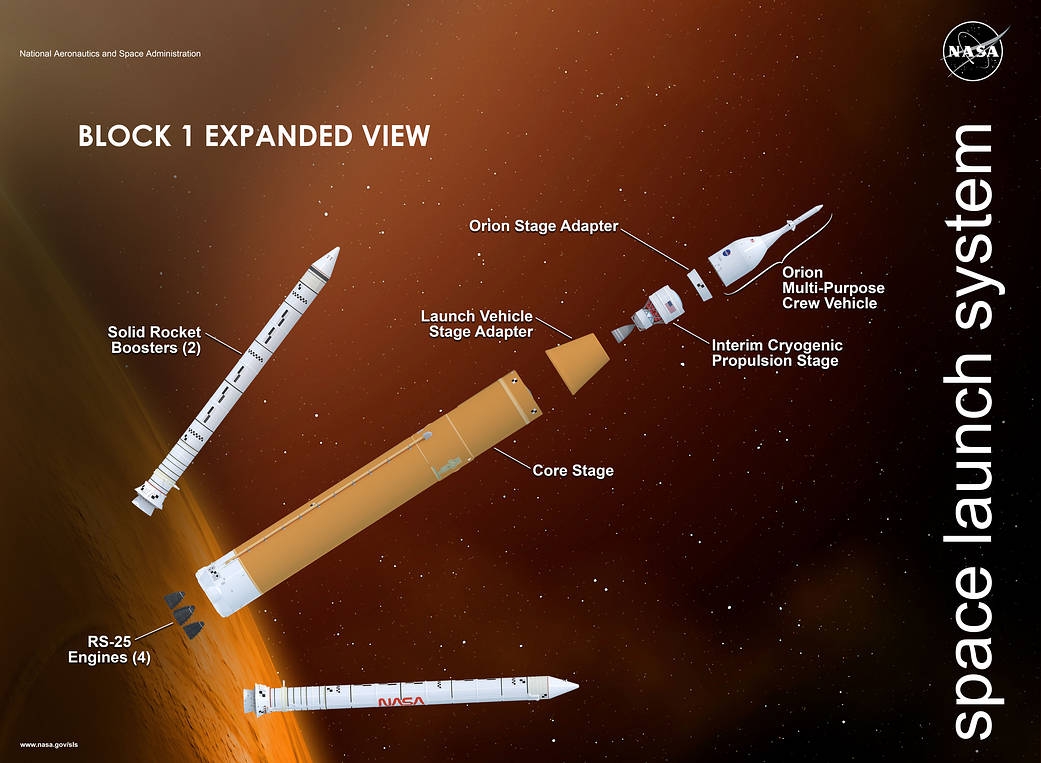
Image credit: NASA
“All core stage and interim cryogenic propulsion stage tanks were successfully filled, and teams conducted a terminal countdown to about T-5 minutes before the ground launch sequencer halted operations due to an increased leak rate.”

Image credit: ULA
Other factors
The NASA Administrator also stated that there were additional factors in the decision to delay.
They included extended Orion closeout work, intermittent ground audio dropouts, and cold-weather impacts to some cameras.
There was a successful demonstration of updated Orion closeout purge procedures to support safe crew operations.
“As always, safety remains our top priority, for our astronauts, our workforce, our systems, and the public. As noted above, we will only launch when we believe we are as ready to undertake this historic mission,” Isaacman stated.
Getting this mission right
“This is just the beginning. It marks the start of an Artemis program that will evolve to support repeated and affordable missions to the Moon, in line with President Trump’s national space policy. Getting this mission right,” Isaacman emphasized, “means returning to the Moon to stay and a future to Artemis 100 and beyond.”

Image credit: Jared Isaacman
In conclusion, the NASA chief thanked the talented workforce at NASA, along with our industry and international partners, who are working tirelessly on this effort.
“The team will fully review the data, troubleshoot each issue encountered during WDR, make the necessary repairs, and return to testing. We expect to conduct an additional wet dress rehearsal and then target the March window,” noted Isaacman. “We will continue to keep the public and the media informed as readiness progresses.”

Image credit: NASA

