Archive for January, 2026
 Author:
  January 31st, 2026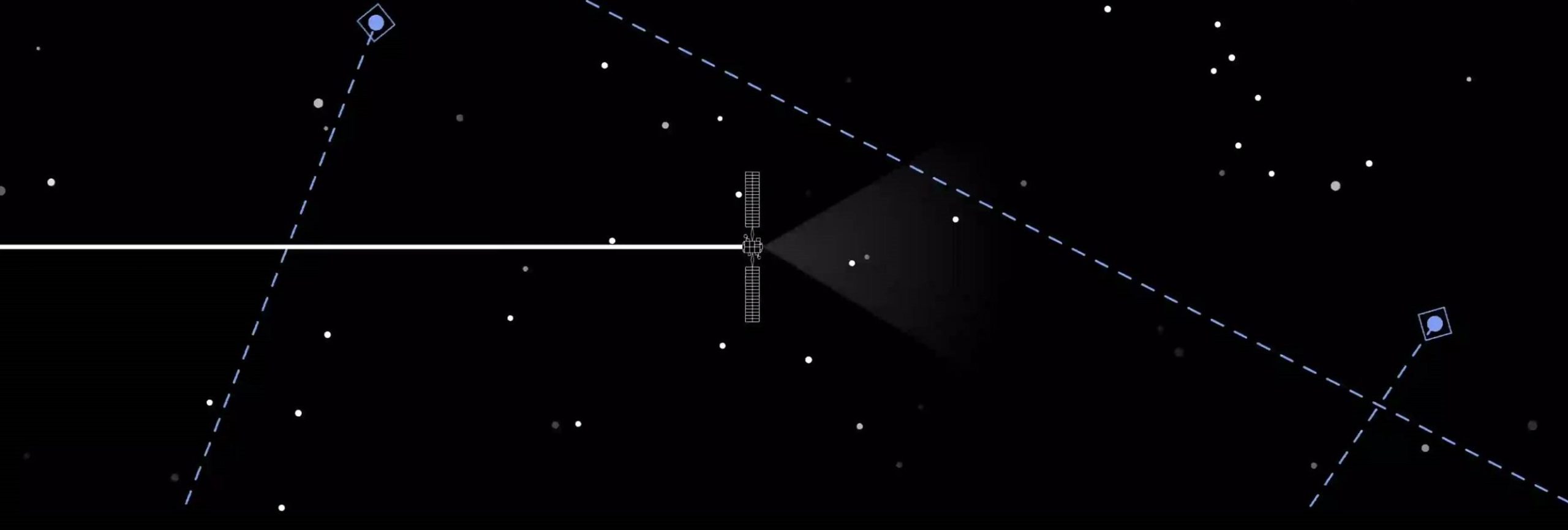
Image credit: SpaceX/Inside Outer Space screengrab
SpaceX has announced a Space Situational Awareness system called Stargaze.
The space-based Stargaze system uses data collected from nearly 30,000 in orbit star trackers mounted on Starlink satellites.
The safety and sustainability of satellite operations in low Earth orbit (LEO) will benefit by Stargaze operations, the company explains, and its screening data will be made available to the broader satellite operator community free of charge in the coming weeks.

Image of spent rocket body.
Image credit: Astroscale-Japan
Large uncertainties
“Practices—such as leaving rocket bodies in LEO, operators maneuvering their satellites without sharing trajectory predictions or coordinating with other active satellites, and countries conducting anti-satellite tests—have heightened the risk of collision, necessitating improvements in space-traffic coordination,” explains SpaceX.
“Conventional methods typically observe objects only a limited number of times per day, causing large uncertainties in orbital predictions, further compounded by volatile space weather.”
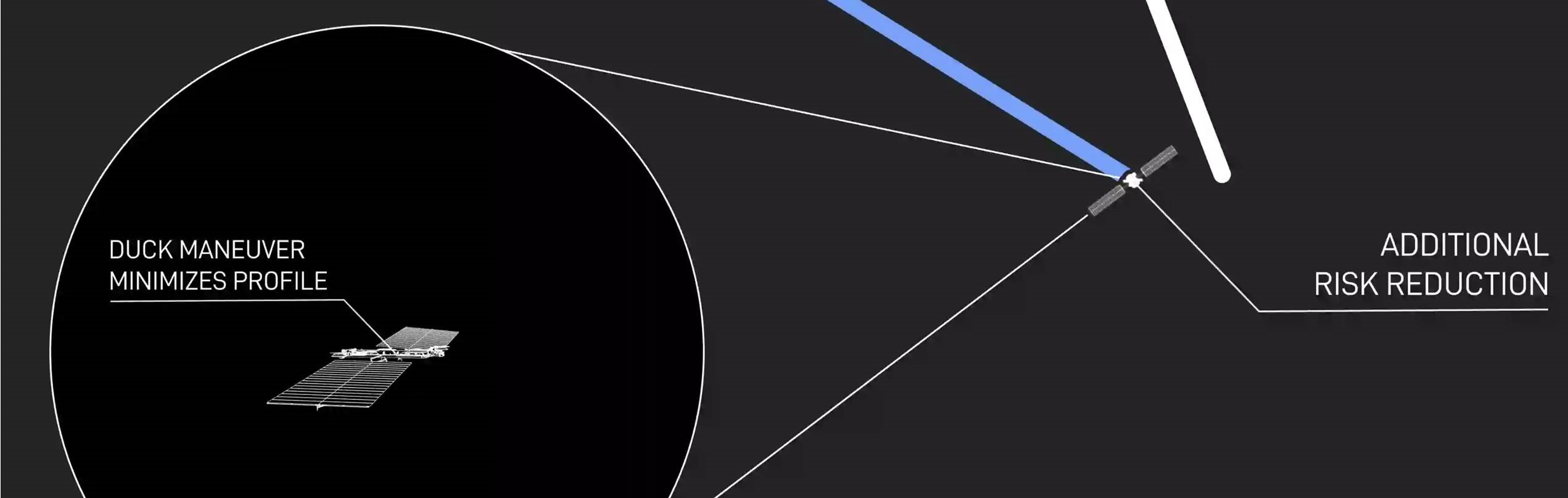
Image credit: SpaceX/Inside Outer Space screengrab
Conjunction Data Messages
The Stargaze system offers an increase in detection capability compared to conventional ground-based systems, SpaceX reports.
Stargaze can autonomously detect orbiting objects, aggregating this information to generate orbit estimates and predictions of position and velocity for all detected objects in near real-time.
These predictions are integrated into a space traffic management platform that identifies potential close approaches between objects in space and generates Conjunction Data Messages or (CDMs)

Things are messy in the heavens.
Image credit: The Aerospace Corporation/CORDS
Management platform
“To fully realize the utility of such frequent observations, SpaceX developed this system to provide conjunction screening results within minutes, compared to the current industry standard of several hours,” the company explains.
SpaceX will be making Stargaze conjunction data available to all satellite operators, free of charge, via a space-traffic management platform.
Close-call
Citing its own issues with close-calls, SpaceX said that late last year, a Starlink satellite encountered a conjunction with a third-party satellite that was performing maneuvers, but whose operator was not sharing ephemeris.
Until five hours before the conjunction, the close approach was anticipated to be roughly five and a half miles (9,000 meters).
That was considered a safe miss-distance with zero probability of collision.

Credit: SpaceX/Starlink
However, with just five hours to go, the third-party satellite performed a maneuver which changed its trajectory and collapsed the anticipated miss distance to roughly 200 feet (60 meters).
“Ultimately, the Starlink satellite was able to react within an hour of the maneuver being detected, planning an avoidance maneuver to reduce collision risk back down to zero,” SpaceX said.
By providing this ephemeris sharing and conjunction screening service free of charge, the company states, “we hope to motivate operators to take similar steps towards ephemeris sharing and safe flight.”
For more information on Stargaze, go to this posting on the SpaceX Starlink website at:
 Posted in

A schematic diagram showing the planned location of the Sun-Earth L5 point for the “Xihe-2” spacecraft.
Image credit: Nanjing University
China has announced its intention to send its Xihe-2 probe to the Sun-Earth L5 point between 2028 and 2029.
Xihe-2 would carry out three-dimensional observations of the sun from entirely new wavelengths and perspectives, explains Fang Cheng of the School of Astronomy and Space Science at Nanjing University.
The probe would maintain orbital stability without consuming excessive energy, and is being designed to have a lifespan as long as 7 years.
Forecasting duties
From its Sun-Earth L5 position, Xihe-2 would observe solar active regions and perform forecasting duties, eyeing harmful space weather such as solar flares and coronal mass ejections. The spacecraft would provide more preparation time for any responses here on Earth.
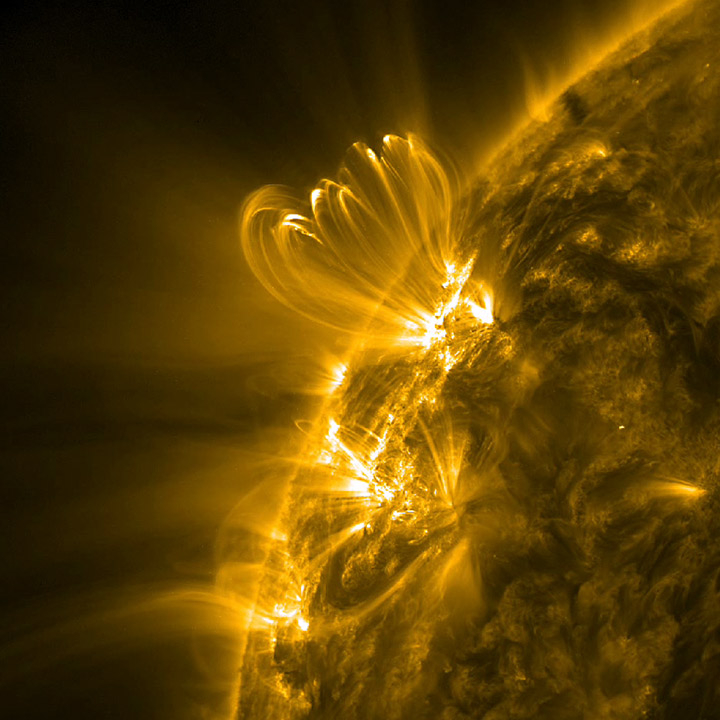
Earth’s Sun can toss out powerful solar storms that can impact infrastructure on Earth’s surface, in near-Earth orbit, including astronaut travel to and from the Moon and Mars.
Image credit: NASA’s Solar Dynamics Observatory, or SDO – NASA’s Living With a Star Program
“To date, humans have launched more than 70 solar probes, the vast majority of which are located along the Sun-Earth line, a few orbit the Sun, and no probe has yet stayed at the Sun-Earth L5 point. Therefore, ‘Xihe-2’ will provide humans with a completely new ‘observer’ perspective for studying the Sun,” said Li Chuan, chief designer of the Xihe spacecraft’s scientific and application system and professor at the School of Astronomy and Space Science of Nanjing University
Space-based solar exploration
Xihe-1 was lofted into Earth orbit in October 2021, China’s first solar exploration scientific and technological experimental satellite. That spacecraft opened the era of China’s space-based solar exploration.
According to the Xinhua News Agency, Xihe is the mother of the sun in the Classic of Mountains and Seas, the goddess who controls the rising and setting of the sun in the Chu Ci, and also an official title in ancient China for observing celestial phenomena and formulating calendars.

Image credit: NASA
NASA appears to be continuing its re-contacting efforts with the MAVEN (Mars Atmosphere and Volatile EvolutioN). The agency’s Deep Space Network (DSN) is continuing recovery activities after losing contact with the Mars orbiter on December 6.
A posting last month noted that, although no spacecraft telemetry has been received since Dec. 4, a brief fragment of tracking data was received on Dec. 6 as part of an ongoing radio science campaign.
“Analysis of that signal suggests that the MAVEN spacecraft was rotating in an unexpected manner when it emerged from behind Mars. Further, the frequency of the tracking signal suggests MAVEN’s orbit trajectory may have changed. The team continues to analyze tracking data to understand the most likely scenarios leading to the loss of signal.”

Image credit: NASA/JPL-Caltech
In a January 26 posting, NASA said that, as spacecraft and rovers at Mars emerged from solar conjunction – a period when the Red Planet and Earth are on opposite sides of the Sun and contact with Mars missions isn’t possible – efforts were resumed to re-contact MAVEN.
Deep space station
Today, as viewed on the Jet Propulsion Laboratory’s Deep Space Network Now website, the Goldstone Deep Space Station (DSS 24) is in use and is targeting MAVEN.
No official word as yet if MAVEN is responding.
Go to the Deep Space Network Now website at:
https://eyes.nasa.gov/apps/dsn-now/dsn.html

Image credit: NASA/JPL-Caltech

Image credit: ESA
The European Space Agency has green-lighted a very complex reentry of a specially designed spacecraft. They are building a sensor-loaded satellite specifically built to dive into the Earth’s atmosphere.
As a headfirst, artificial “fall guy” shooting through first thin and then thicker air, it would collect data on how materials react and introduce pollutants into the upper stratosphere.
In other words, it’s an atmospheric stab for science.

Image credit: ESA
“Understanding how different materials behave as they burn up could help engineers design satellites that fully disintegrate, leaving nothing behind in orbit or in the atmosphere.”
For more details, go to my new Space.com story – “What actually happens to a spacecraft during its fiery last moments? Here’s why ESA wants to find out” – at:

Image credit: Amazon Leo
The Amazon low Earth orbit (LEO) constellation — formerly named Project Kuiper – is a worrisome initiative, particularly for astronomers, given that 3,232 satellites are planned to orbit the Earth.
The state-of-the-art satellite technology is to deliver reliable, high-speed connectivity.
The Amazon mega-constellation will potentially impact astronomical research and aesthetic appreciation of the night sky, according to a new research paper led by Anthony Mallama of the International Astronomical Union’s (IAU) Center for the Protection of the Dark and Quiet Sky.
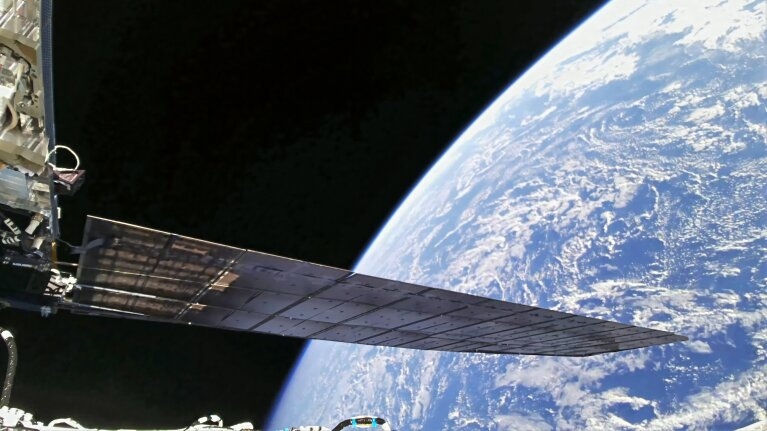
Image credit: Amazon Leo
Reflected sunlight
Satellite attitude determines how sunlight is reflected and influences brightness.
The new research paper focuses on Amazon low Earth orbit satellites at roughly 390 miles (630 kilometers) altitude.
Mallama and colleagues note that future Amazon spacecraft are expected to orbit at lower altitudes and therefore will be brighter.
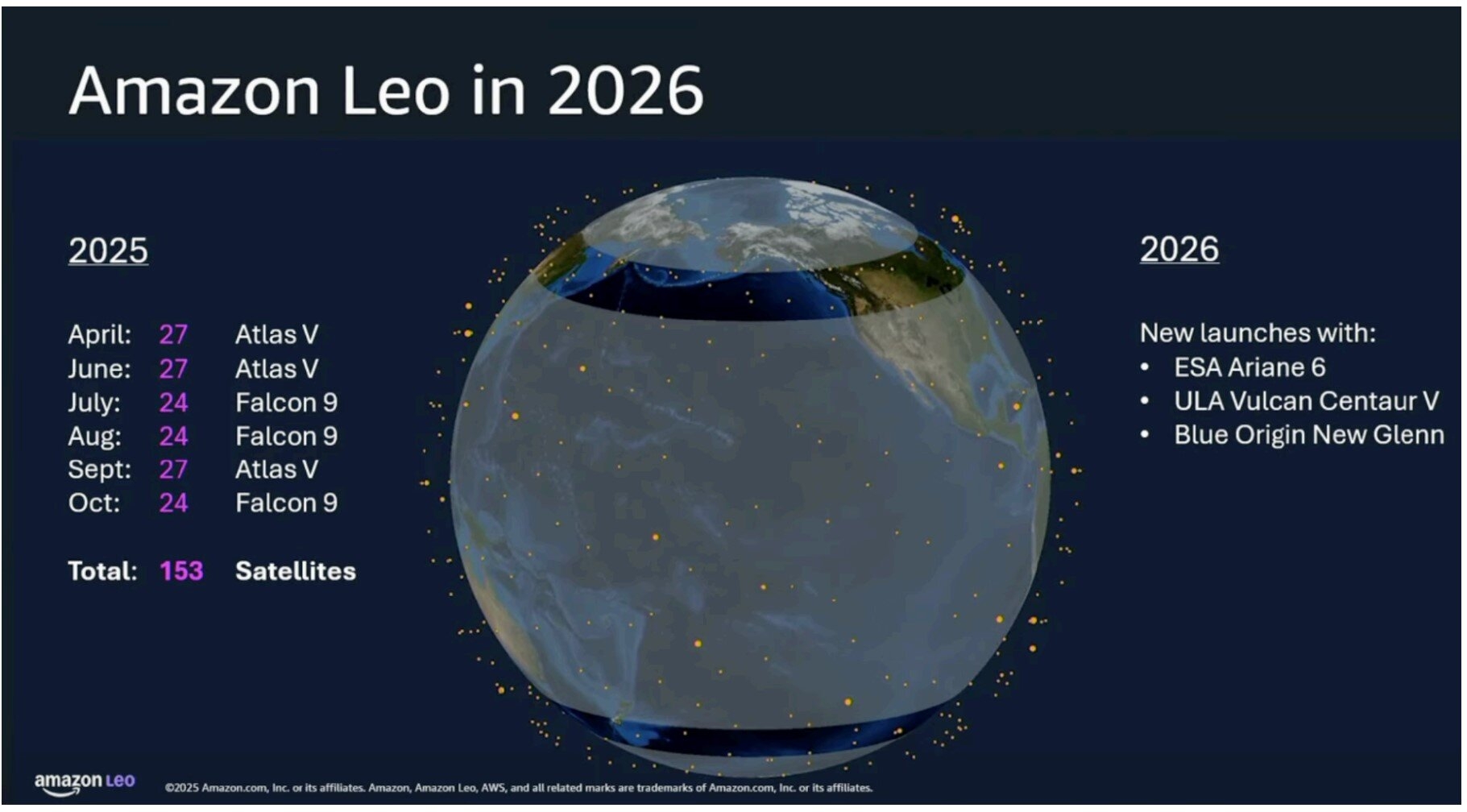
Image credit: Amazon Leo
Ground-based observatories
Amazon Leo, the paper adds, has recently stated that it is deploying ground-based observatories to measure reflectivity brightness. The intent of doing so is to improve performance through block upgrades.
“The mean apparent magnitude of all Amazon Leo satellites is 6.28 based on 1,938 observations. For spacecraft in their operational mode, 92% exceeded the IAU brightness limit for interference with research, while 25% distract from aesthetic appreciation of the night sky,” the paper explains.
What’s the SCORE?
Meanwhile, a Satellite Constellation Observation Repository (SCORE) has been developed and maintained by the IAU Center for the Protection of the Dark and Quiet Sky.
SCORE serves as a centralized repository for satellite brightness observations. Its primary function is to provide a comprehensive and organized platform for researchers to contribute, store, and access observational data of artificial space objects.
To access the research paper – “Brightness Characterization and Modeling for Amazon Leo Satellites” – go to:

Artwork depicts Cluster satellite reentry.
Image credit: ESA/David Ducross
Reentering space clutter and its influence on Earth’s stratosphere continues to draw research attention.
“We’re really changing the composition of the stratosphere into a state that we’ve never seen before,” said John Dykema, an applied physicist at Harvard’s School of Engineering and Applied Sciences (SEAS), who warns that scientists today poorly understand many of the impacts.
Dykema is focused on research at the intersection of atmospheric chemistry and atmospheric radiation.
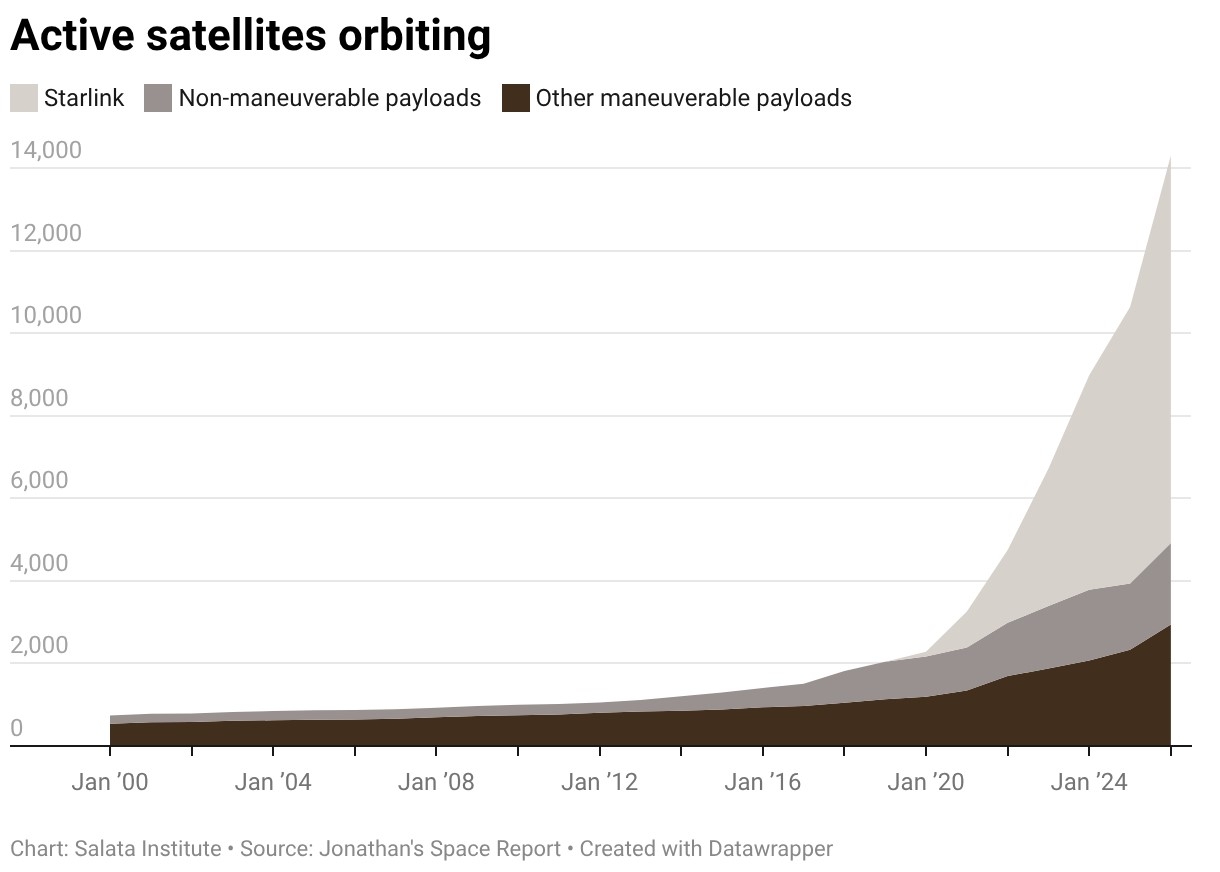
Image credit: Salata Institute; Source: Jonathan’s Space Report; image created with Datawrapper
Active satellites
There were 14,300 active satellites orbiting at the start of January.
Of active units today, over 9,200 belong to SpaceX, which in December filed a request with the Federal Communications Commission to launch another 15,000.
Amazon has plans for more than 3,000, while Amazon founder Jeff Bezos’s Blue Origin this month announced plans for a network of 5,408 more.
Similarly, China has also begun launching mega-constellations of spacecraft.
Dykema notes the fact that, because these satellites are relatively inexpensive and the technology is rapidly improving, many are scuttled after just five or 10 years: directed to reenter the atmosphere so they don’t litter space real estate above Earth.

Launch and reentry particle emissions in the Earth’s stratosphere.
Image credit: The Aerospace Corporation
Action/reaction
That reentry action means they release a mix of heavy metal and carbon particles that float down closer to Earth, into the otherwise chemically stable stratosphere and where ozone screens our planet.
What is becoming apparent, Dykema said in a January 27 Harvard Climate Blog posting, is that satellite reentry risks disrupting the global climate system and further depleting the ozone layer, which shields all living things from DNA-destroying ultraviolet radiation.
The high-speed of reentry ignites a satellite, organic materials onboard – such as plastics or carbon-fiber composites – releasing particles of black carbon, the same fine soot in wood or coal smoke.
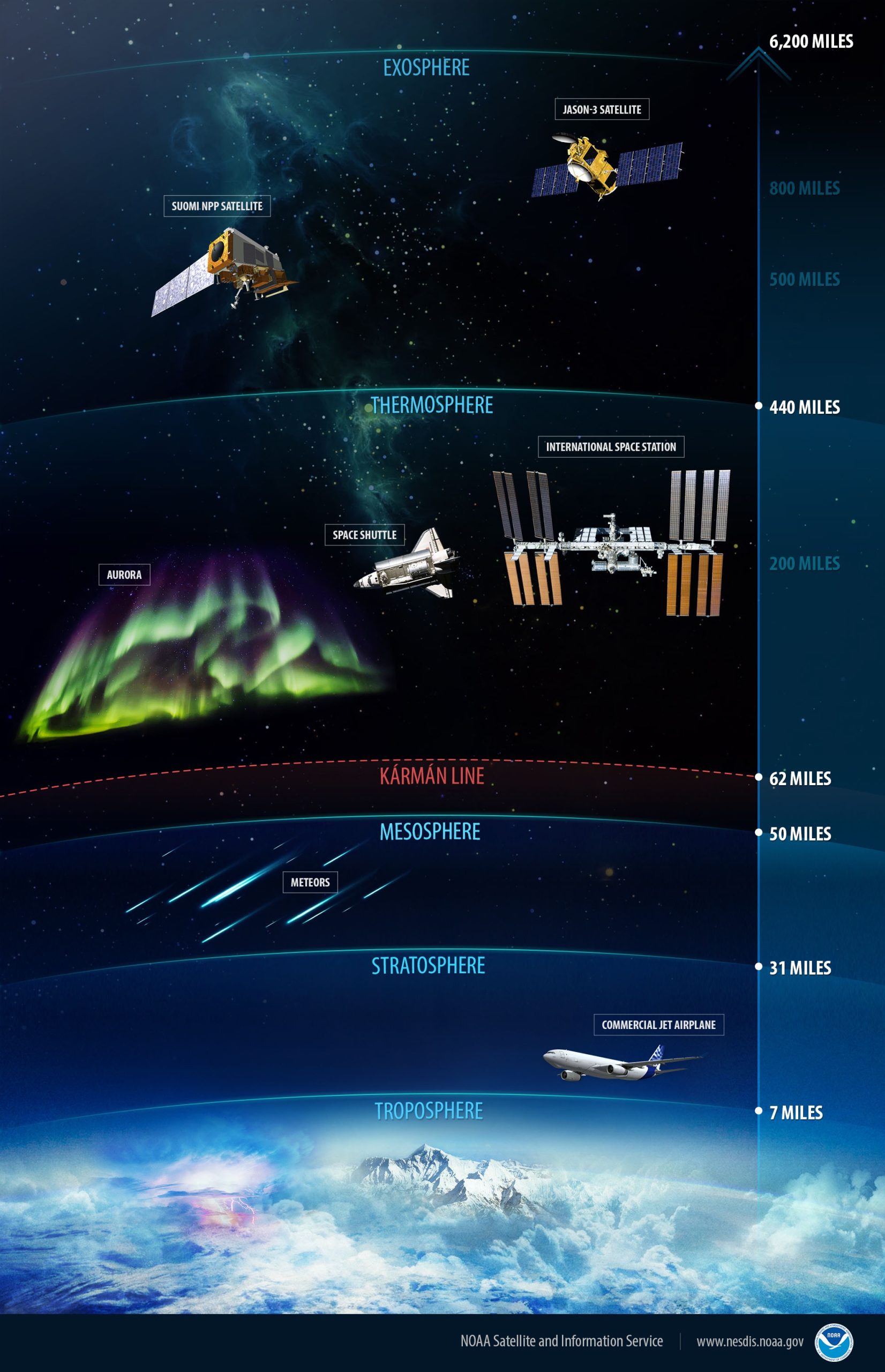
Image credit: NOAA
Structural and chemical differences
Black carbon comes in different forms. Some particles follow repeating patterns and are “crystalline,” like graphite, Dykema reports. Others are random, or “amorphous.”
Those structural and chemical differences – including how the carbon atoms bond with elements like hydrogen – determine how the black carbon affects incoming sunlight.
Some particles scatter sunlight; some absorb it. Some absorb infrared light, but not ultraviolet.
Thermal energy
Dykema adds that how this process plays out in the stratosphere, and the impact on the climate, remains uncertain.
“We’re putting thermal energy into the Earth’s climate system, but we’re putting it in new places,” Dykema said. “We don’t really understand the implications of changing stratospheric circulation. It could cause storm tracks to move. Maybe it could shift climate zones, or possibly be a new source of droughts and floods.”
The key question: what happens as humanity puts more and more material into orbit, much of it eventually returning as debris? If aluminum oxide continues to accumulate, ozone loss could become more serious.

Taking the fall. Space hardware dives into Earth’s atmosphere with some fragments making their way to the ground.
Image credit: ESA/D.Ducros
“It’s not the most efficient way to create an ozone hole, but it does cause additional ozone erosion, which slows the recovery,” said Dykema.
What should policymakers do?
Dykema suspects that changes to stratospheric circulation may ultimately prove more consequential than the additional ozone loss, because the outcomes are so uncertain and potentially far-reaching.
For the moment, many questions “are not really amenable to straightforward, linear analysis,” Dykema said, cautioning that “the ozone loss is significant, and we’re putting so much stuff up there that it could grow in ways that are not proportional.”
Governments and regulators could push for a more sustainable use of space, from the materials used in satellite construction to the types of propellants powering rockets.
Solid fuels, for example, produce aluminum and aluminum oxide in exhaust, suggesting that decisions about solid versus liquid propellant, and about which regions and seasons to launch in, could have real atmospheric consequences.
The question, Dykema suggests, as the satellite launch rate accelerates, is whether policymakers will act on those concerns before the invisible wake of our spacefaring ambitions becomes impossible to ignore?
Read the entire blog here:
Burning satellites in the stratosphere: Emerging questions for climate
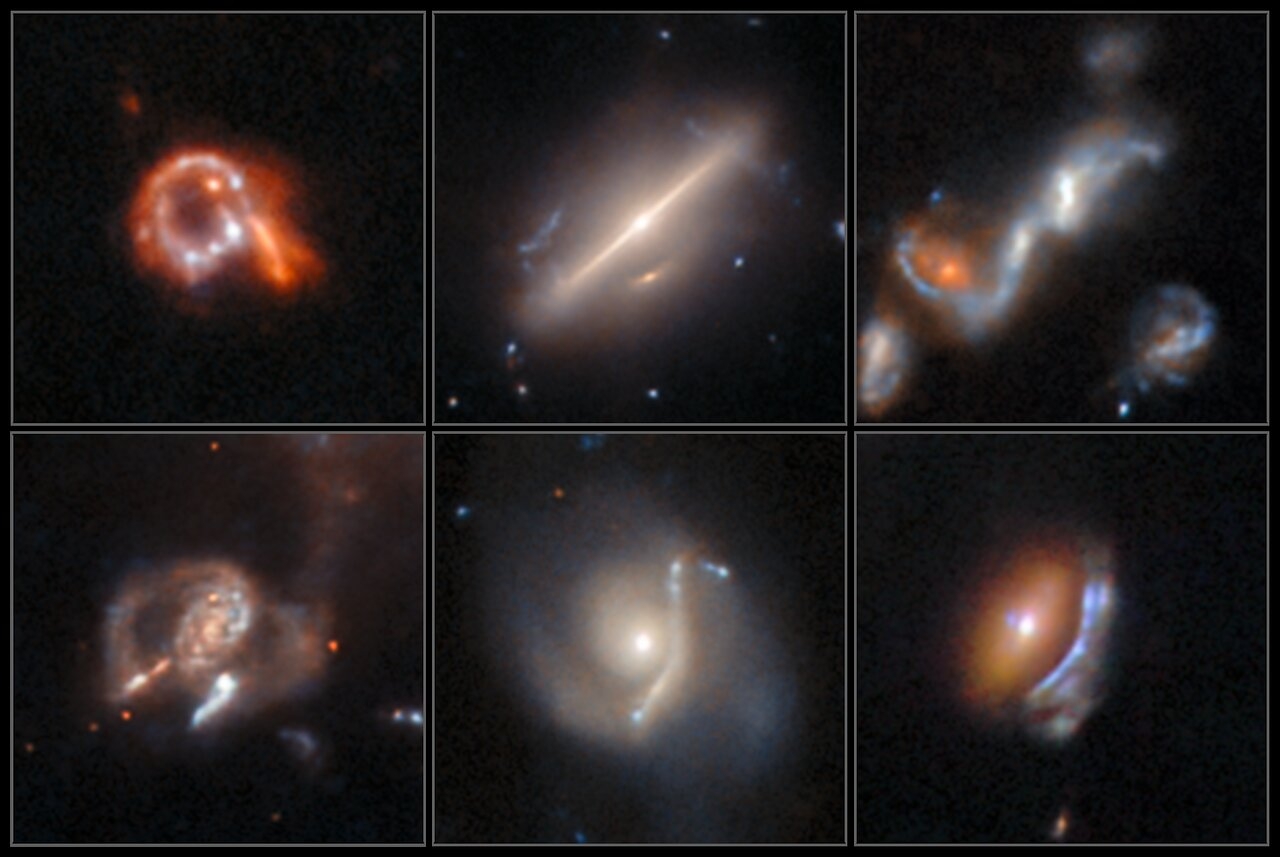
A team of astronomers have used a new AI-assisted method to search for rare astronomical objects in the Hubble Legacy Archive.
The team sifted through nearly 100 million image cutouts in just two and a half days, uncovering nearly 1400 anomalous objects, more than 800 of which had never been documented before.
Image credit: ESA/Hubble & NASA, D. O’Ryan, P. Gómez (European Space Agency), M. Zamani (ESA/Hubble)
Go to this research paper — “Identifying astrophysical anomalies in 99.6 million source cutouts from the Hubble legacy archive using AnomalyMatch” — at:
https://www.aanda.org/articles/aa/full_html/2025/12/aa55512-25/aa55512-25.html

“This year marks half a century since Spinoff began capturing the commercial impact of NASA. As we explore the universe for the benefit of all, NASA remains committed to ensuring technologies developed for space exploration and discovery have direct benefits here on Earth,” explains Daniel Lockney, Program Executive for NASA’s Technology Transfer Program at NASA Headquarters.
“As we set our sights on the Moon and pave the way to Mars, NASA’s return to the lunar surface is fueling America’s commercial marketplace,” Lockney states.
To deep dive into this year’s informative document, go to:
https://ntts-prod.s3.amazonaws.com/t2p/prod/spinoff/NASA-Spinoff-2026.pdf
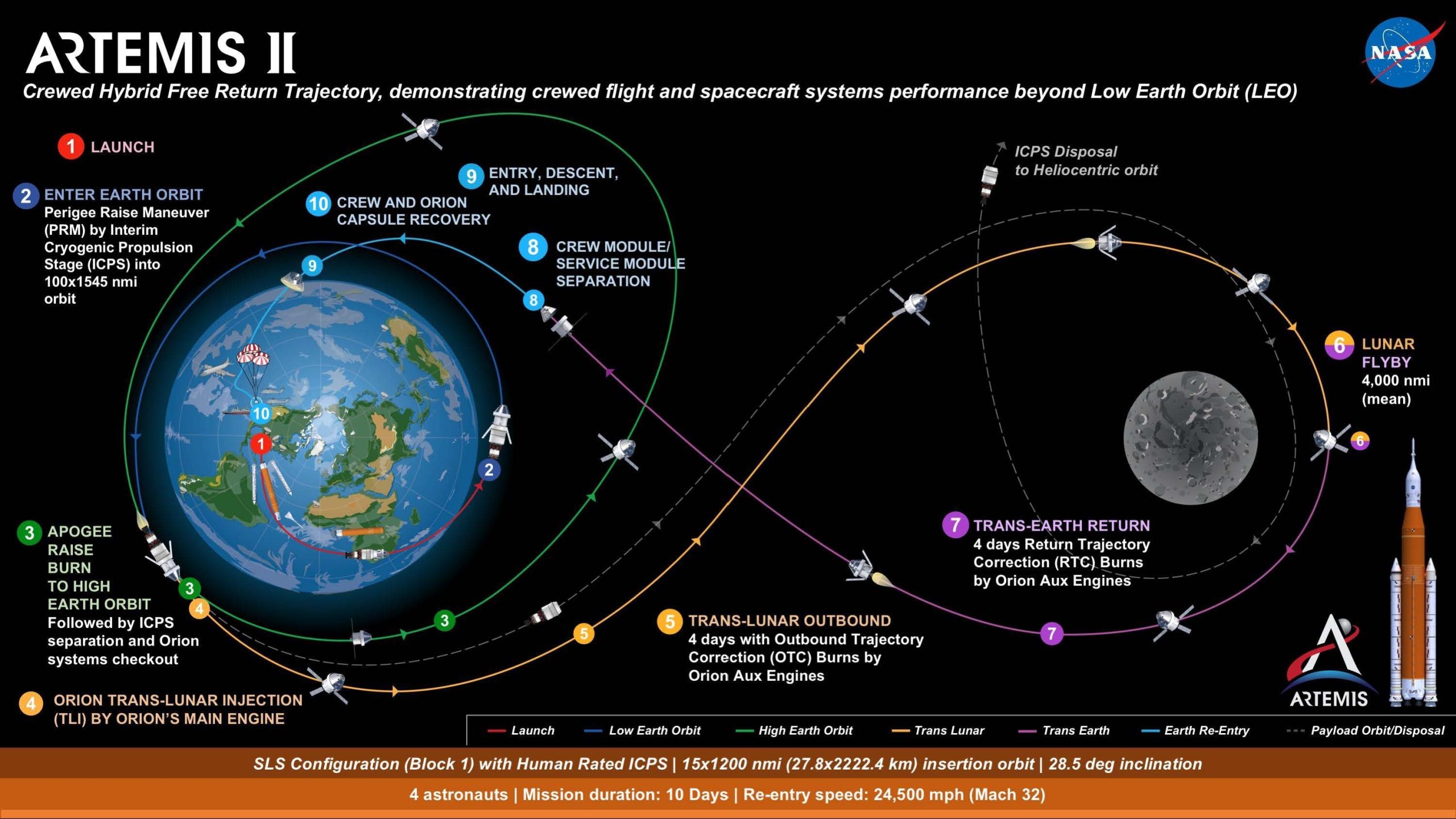
Image credit: NASA
NASA has selected a number of global volunteers to track the Orion spacecraft during the crewed Artemis II mission’s journey around the Moon.
The space agency’s SCaN (Space Communication and Navigation) program announced last week 34 participants to support the Artemis/Orion launch, and the 10-day journey around the Moon, and the crew’s return to Earth.
Participants are established commercial service providers, members of academia, as well as individual amateur radio enthusiasts.
These groups and individuals will use their respective equipment to passively track radio waves transmitted by the Artemis/Orion mission during their voyage.
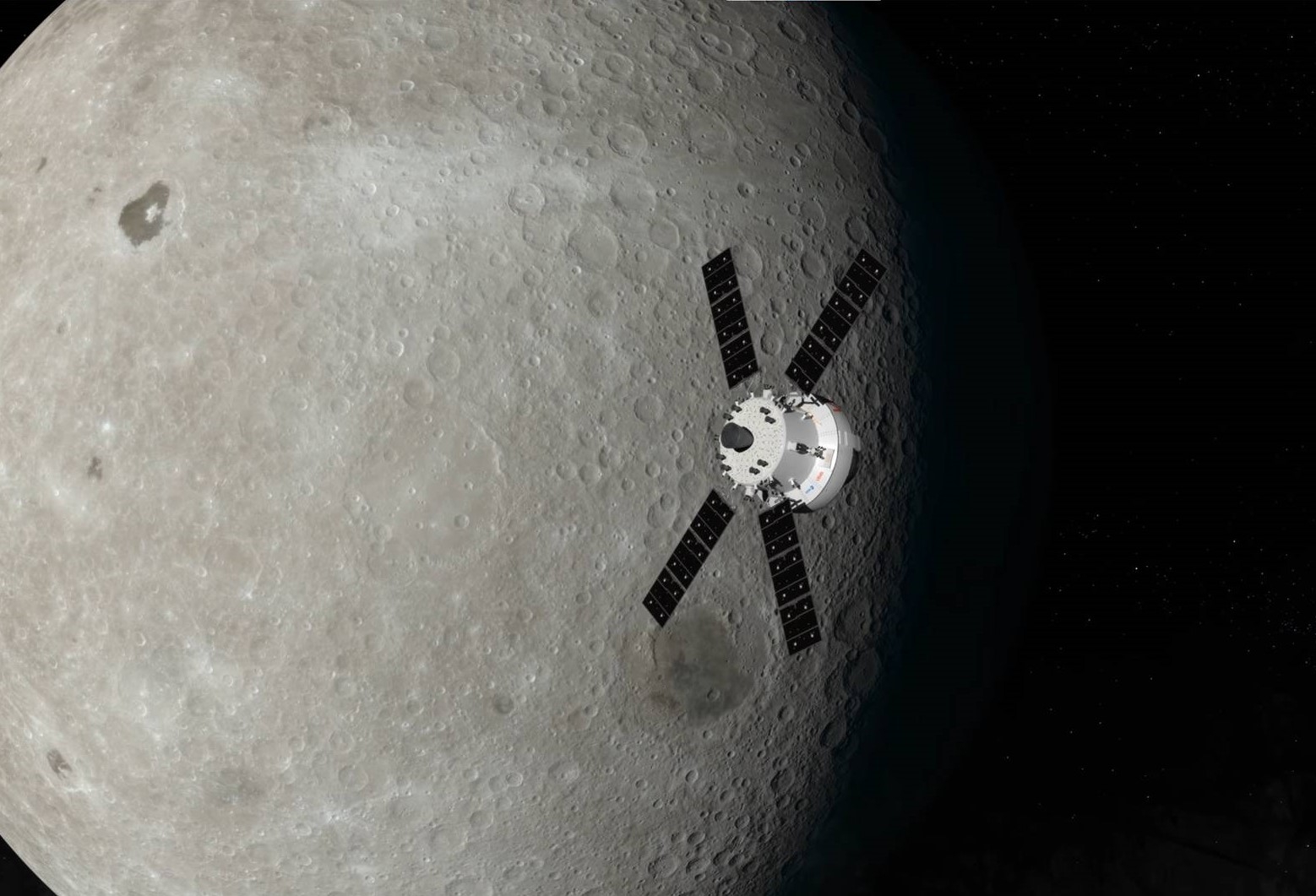
Artistic view of crewed Orion spacecraft skirting by the Moon.
Image credit: NASA Goddard/Scientific Visualization Studio
Public-private ecosystem
“The Artemis II tracking opportunity is a real step toward SCaN’s commercial-first vision,” said Kevin Coggins, deputy associate administrator for SCaN at NASA Headquarters in Washington, D.C.
“By inviting external organizations to demonstrate their capabilities during a human spaceflight mission, we’re strengthening the marketplace we’ll rely on as we explore farther into the solar system,” said Coggins added in a SCaN statement.
“This isn’t about tracking one mission, but about building a resilient, public-private ecosystem that will support the Golden Age of innovation and exploration,” said Coggins.
For more information on SCaN, go to:

The Pale Blue Data Point – An Earth-Based Perspective on the Search for Alien Life by Jon Willis; The University of Chicago Press; 256 pages; Hardcover, $26.00.
As a professor of astronomy at the University of Victoria in British Columbia, Willis has written a highly-engaging, captivating and timely book.
In the preface of this volume, the author calls attention to the dramatic landscapes right here on home planet – the Earth. “Our pale blue data point offers many opportunities to learn about the life that exists upon it,” adding that our world offers clues as to the prospects for life elsewhere.
Indeed, the past 30 years has served up a “golden generation” of exoplanet discovery, Willis explains. Moreover, this book offers the reader a look not only of astrobiology as a science, but what astrobiology looks like in the field – rich in scientific unknowns and eye-opening findings.
Willis underscores the work of exploration, from use of the submersible-equipped E/V Nautilus to contemplate the seas of Saturn’s and Jupiter’s moons to the mountaintop observatories in Chile that scout out extrasolar planets, as well as listening in on dolphins in the Bahamas to envisage the minds of alien intelligences.
The Pale Blue Data Point offers six enlightening and discerning chapters, such as “Twenty Thousand Pings Under the Sea: In Search of Alien Oceans,” “Swimming with Stromatolites: The Hunt for Martian Fossils,” and “So Long and Thanks for All the Fish: A Dolphin-Led Guide to Alien Communication.”
Given the rise of astrobiology and the search for life elsewhere in the cosmos, Willis asks “can a collection of tangential ideas, drawn from all points of the scientific compass, be made to fit into the circle of a new discipline?”
This book offers the reader the answer to that question, expertly written to spotlight astrobiology in action.
Lastly, the volume concludes with a “Further Travels” section, a guide for the reader’s own astrobiological opportunities, “whether metaphorically or indeed literally,” Willis suggests.
For more information about this perceptive, engaging and extremely readable book, go to:
https://press.uchicago.edu/ucp/books/book/chicago/P/bo253701931.html#anchor-gallery

