Archive for October, 2025
 Author:
  October 2nd, 2025
Image credit: Ironbound Films
Will Judaism survive in space?
That’s the key question probed in Fiddler on the Moon, a film focused on answering this query that scientists, theologians, and comedians have asked.
This intriguing video includes NASA astronauts Jeffrey Hoffman and Jessica Meir, Neil deGrasse Tyson, as well as a quorum of rabbis and researchers.

Image credit: Ironbound Films/Inside Outer Space screengrab
Award-winning film
The production is winning awards at film festivals across the country, also to be shown at the Regal Union Square on October 9, Laemmle Monica Film Center on October 25, and the JCC Manhattan on November 25.
“Yom Kippur on October 2, will be celebrated when we settle outer space,” explains Daniel Miller of Ironbound Films, Inc. that directed this documentary short.

Image credit: Ironbound Films/Inside Outer Space screengrab
“These Earth-centered observances might be a good time to think about the future of our traditions,” Miller told Inside Outer Space.
To view a trailer focused on this thoughtful and informative film, go to:
 Posted in

On patrol – NASA’s Mars Reconnaissance Orbiter (MRO).
Image credit: NASA/JPL
Close-in observations by Mars orbiters are on tap as that interstellar comet –3I/ATLAS — zips by the Red Planet on October 3rd.
One of those spacecraft to view the object is NASA/s Mars Reconnaissance Orbiter and its powerful camera system, the High Resolution Imaging Experiment (HiRISE).
“MRO/HiRISE will attempt a couple of images,” reports Alfred McEwen, PI emeritus of HiRISE at the University of Arizona in Tucson.
Details

3I/ATLAS as captured August 27 by the Gemini Multi-Object Spectrograph (GMOS) on Gemini South at Cerro Pachón in Chile.
Image credit: International Gemini Observatory/NOIRLab/NSF/AURA/Shadow the Scientist. Image Processing: J. Miller & M. Rodriguez (International Gemini Observatory/NSF NOIRLab), T.A. Rector (University of Alaska Anchorage/NSF NOIRLab), M. Zamani (NSF NOIRLab)
“Note that we cannot achieve a high signal/noise ratio needed to detect faint stuff like the distal coma and tail, and we will not resolve the nucleus,” McEwen told Inside Outer Space.
That said, what 31/ATLAS truly is will surely benefit by the collective observations of Mars-orbiting spacecraft…or add to the mystery of its composition.

Image credit: CNSA via Xinhua
China’ first asteroid sample-return mission, Tianwen-2, was sent into space on May 29.
The China National Space Administration (CNSA) has released an in-flight image, taken by a camera affixed to the probe’s robotic arm. Also captured in the image is the craft’s white sample return capsule.
This en-route mission is headed for an over decade-long expedition: collecting samples from near-Earth asteroid 2016HO3 and exploring the main-belt comet 311P.
CNSA reports that the Tianwen-2 probe is roughly 43 million kilometers from Earth and 45 million kilometers from the asteroid 2016HO3.
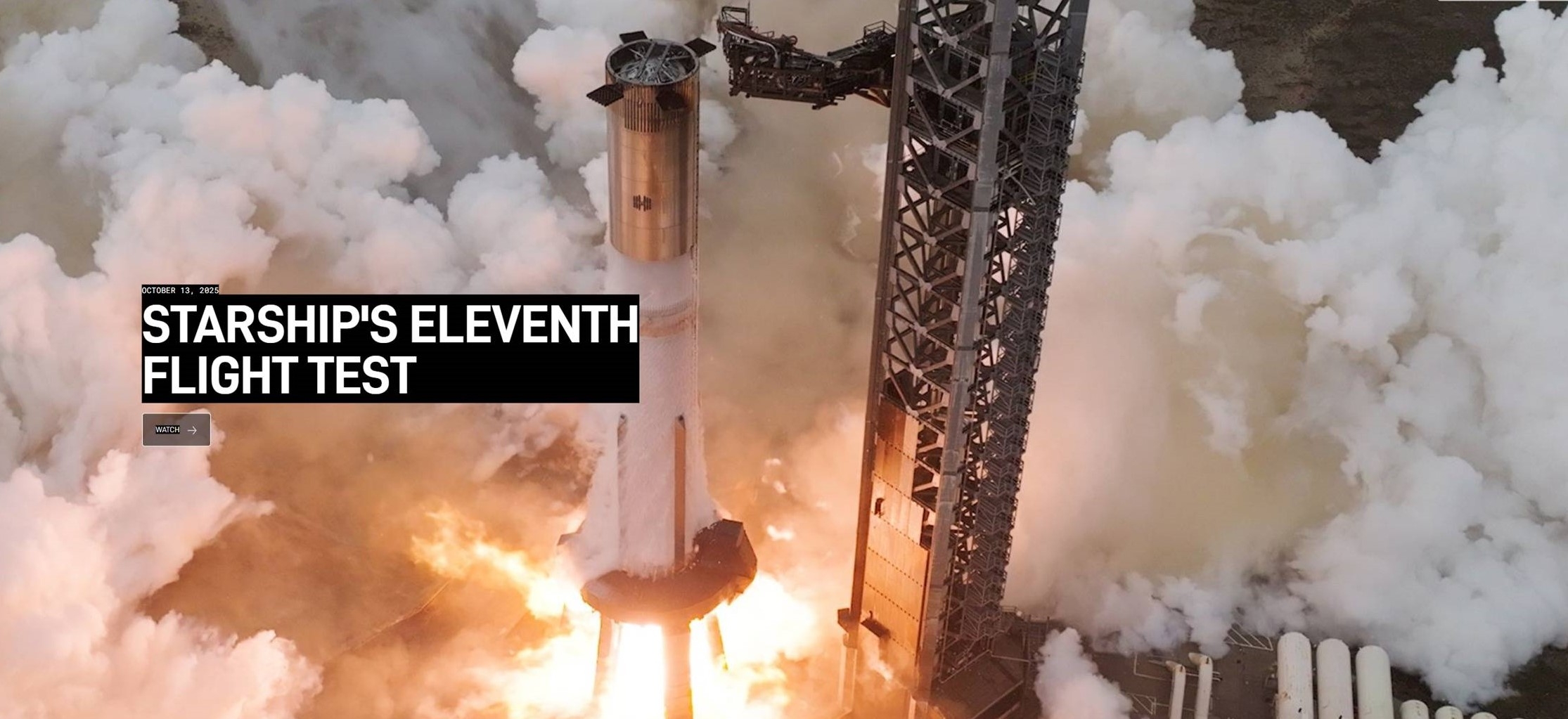
Image credit: SpaceX
The SpaceX Starship’s eleventh flight test is to launch as soon as Monday, October 13. The launch window will open at 6:15 p.m. Central “Texas” Time.
A SpaceX posting provides detail regarding what’s up with this flight test:
- The flight will build on the successful demonstrations from Starship’s tenth flight test with flight experiments gathering data for the next generation Super Heavy booster.
- Stress-testing Starship’s heatshield, and demonstrating maneuvers that will mimic the upper stage’s final approach for a future return to launch site.
“The booster on this flight test previously flew on Flight 8 and will launch with 24 flight-proven Raptor engines,” explains SpaceX.
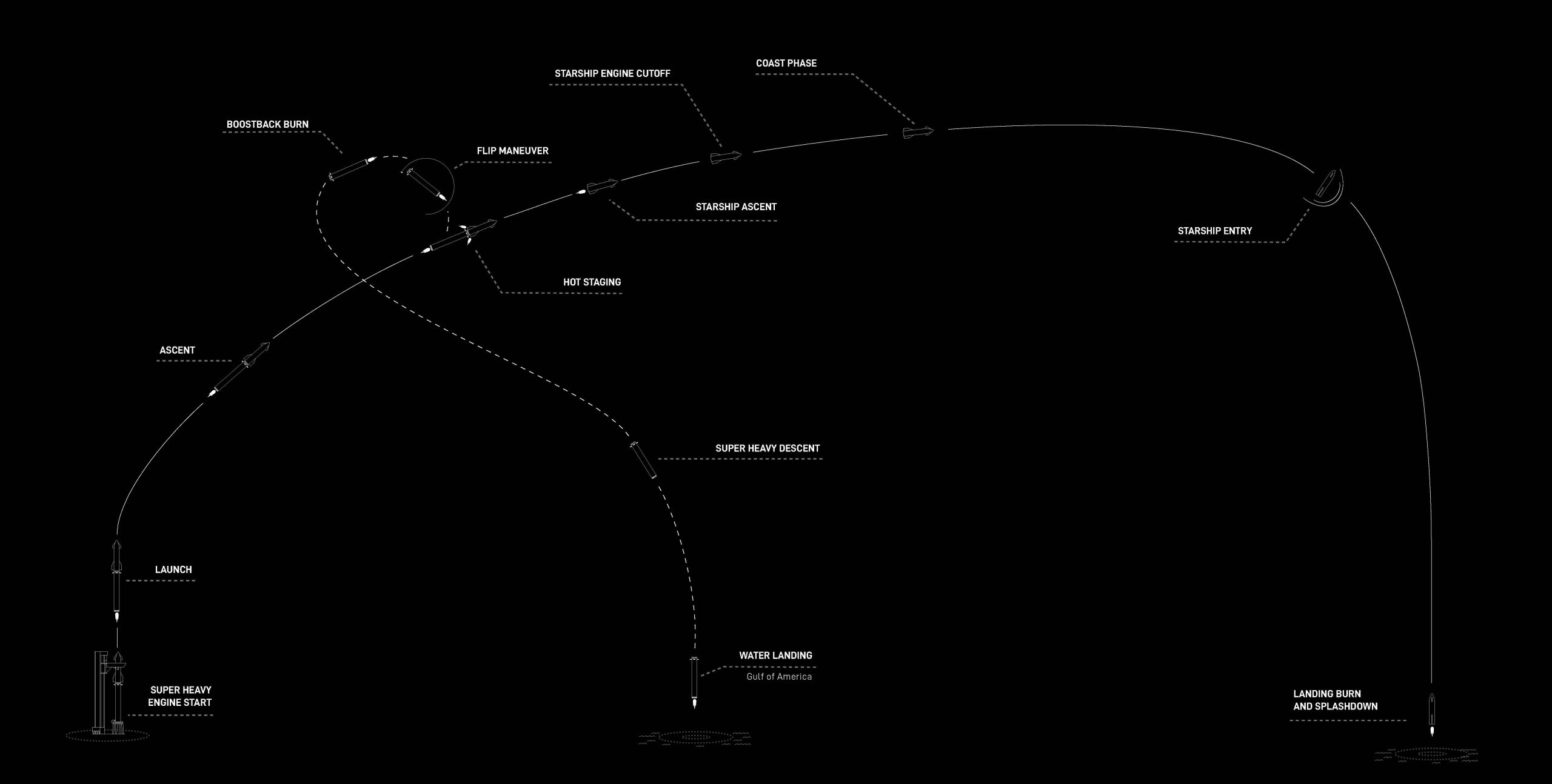
Image credit: SpaceX
A primary test objective will be demonstrating a unique landing burn engine configuration planned to be used on the next generation Super Heavy.
This objective will be attempted while on a trajectory to an offshore landing point in the Gulf of America and will not return to the launch site for a launch pad catch.
Landing burn
Super Heavy will ignite 13 engines at the start of the landing burn and then transition to a new configuration, using five up and running engines for the divert phase. Doing so will fine-tune the booster’s path, adding additional redundancy for spontaneous engine shutdowns.
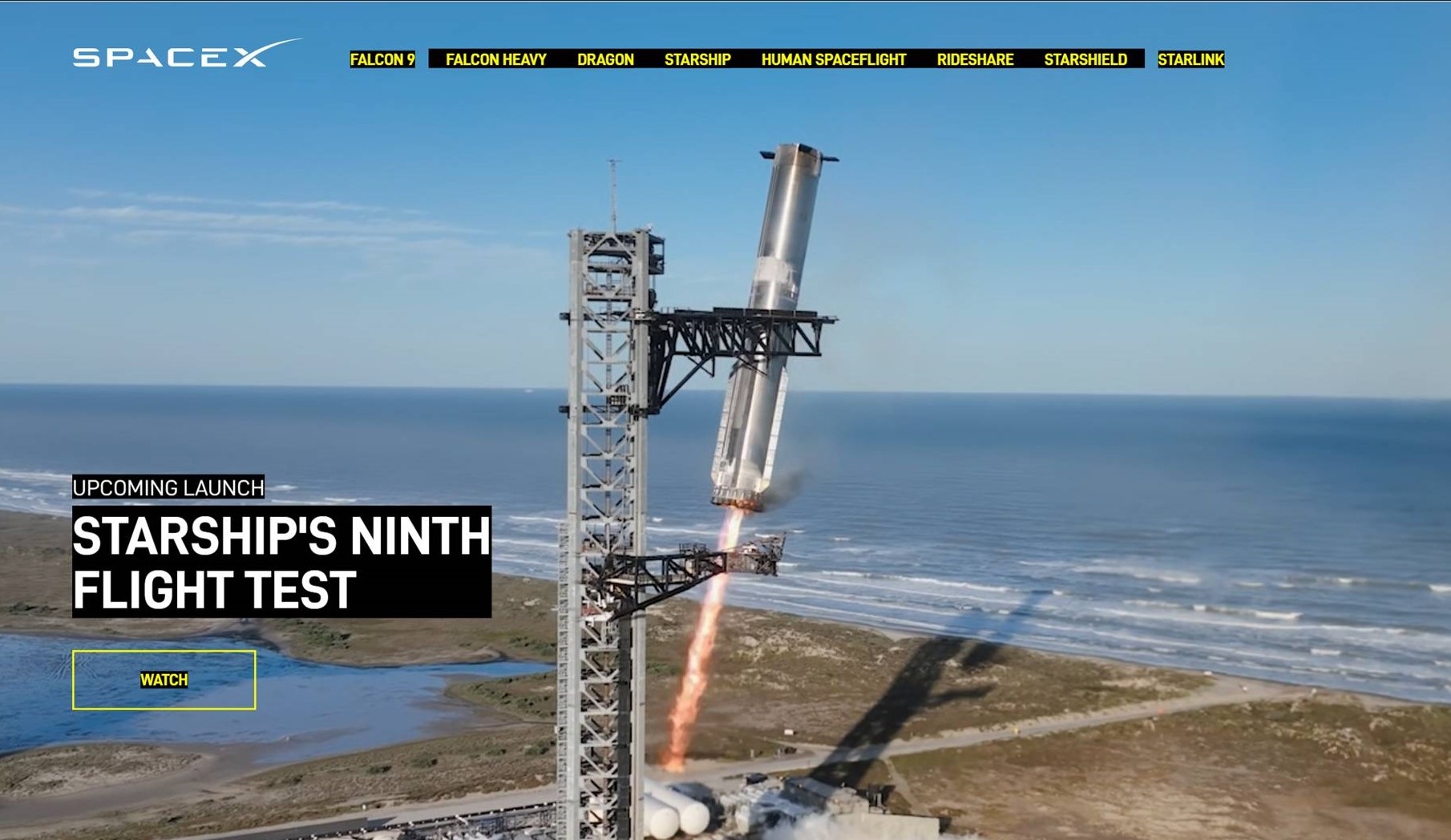
Image credit: SpaceX/Inside Outer Space screengrab
The booster then transitions to its three center engines for the end of the landing burn, entering a full hover while still above the ocean surface, followed by shutdown and dropping into the Gulf of America.
In-space objectives
The Starship upper stage is to deploy eight Starlink simulators, similar in size to next-generation Starlink satellites. These items will be on the same suborbital trajectory as Starship and are expected to demise upon entry.
A relight of a single Raptor engine while in space is also planned.
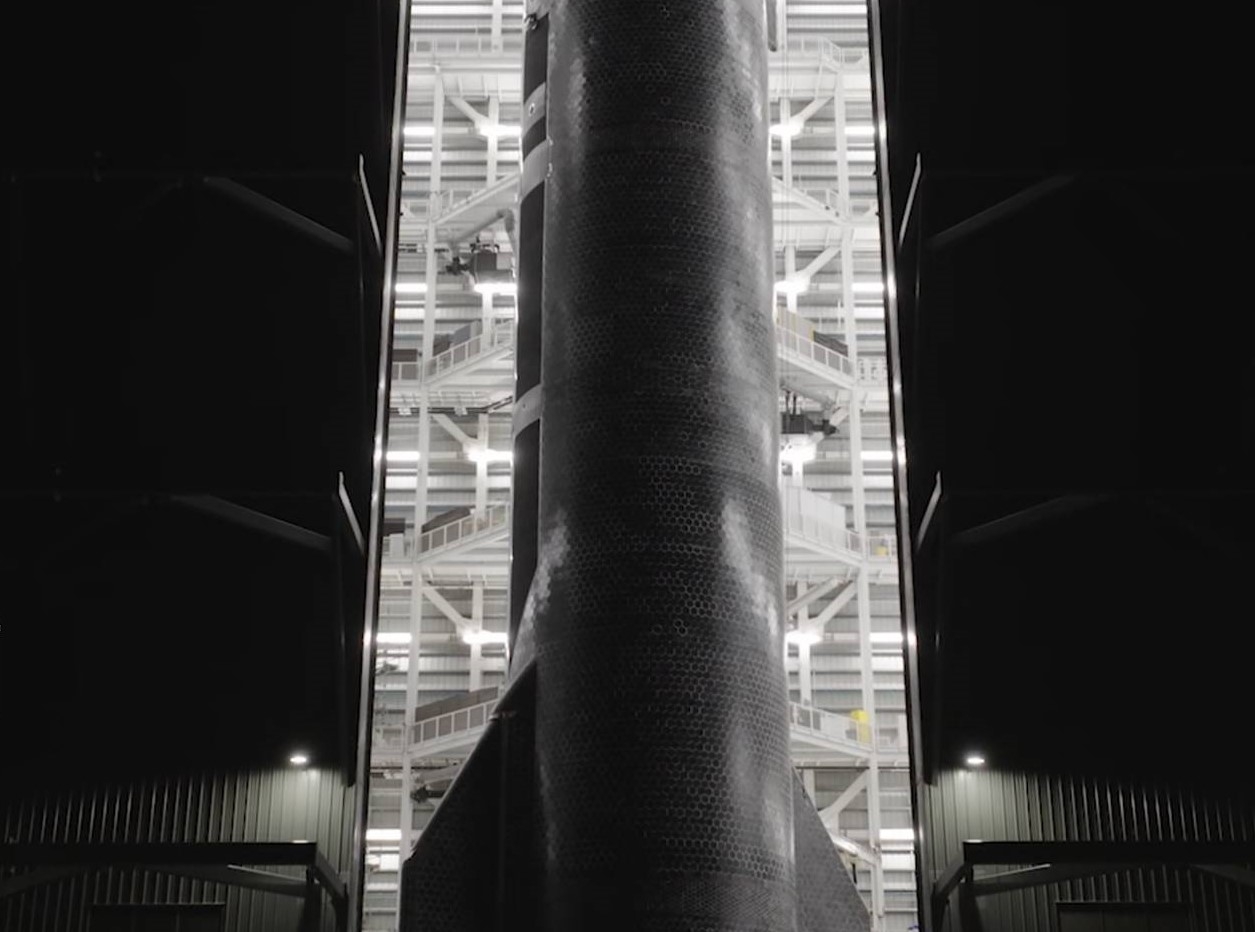
Image credit: Spacex/Inside Outer Space screengrab
“The flight test includes several experiments and operational changes focused on enabling Starship’s upper stage to return to the launch site on future flights,” explains SpaceX.
For reentry, tiles have been removed from Starship “to intentionally stress-test vulnerable areas across the vehicle.”
Several of the missing tiles are in areas where tiles are bonded to the vehicle and do not have a backup ablative layer.
Banking maneuver
To mimic the path a Starship will take on future flights returning to Starbase, the final phase of Starship’s trajectory on Flight 11 includes a dynamic banking maneuver.
Also on the test to-do list is trial-running subsonic guidance algorithms prior to the Starship’s landing burn and its splashdown in the Indian Ocean.
Live webcast
A live webcast of the flight test will begin about 30 minutes before liftoff, which can be viewed at:
https://www.spacex.com/launches/starship-flight-11
The webcast can also be seen on X @SpaceX, and watched on the X TV app.
“As is the case with all developmental testing,” concludes SpaceX, “the schedule is dynamic and likely to change, so be sure to check in here and stay tuned to our X account for updates.”

Image credit: SpaceX
“…we’re going to see an astronaut death within a few years,” reports a NASA whistleblower.
Safety is a critical part of NASA’s culture, especially following the reforms put in place after the Challenger and Columbia space shuttle disasters.
U.S. Sen. Maria Cantwell, D-Wash. released a report “The Destruction of NASA’s Mission,” prepared by Democratic staff members for the Senate Committee on Commerce, Science and Transportation.
The report is based on President Trump’s Fiscal Year 2026 Budget Request (PBR).
For full report, go to:
https://www.commerce.senate.gov/services/files/B1CC17F2-50CE-4C0B-89C9-B713FE76E146
Also, go to this Cantwell statement:
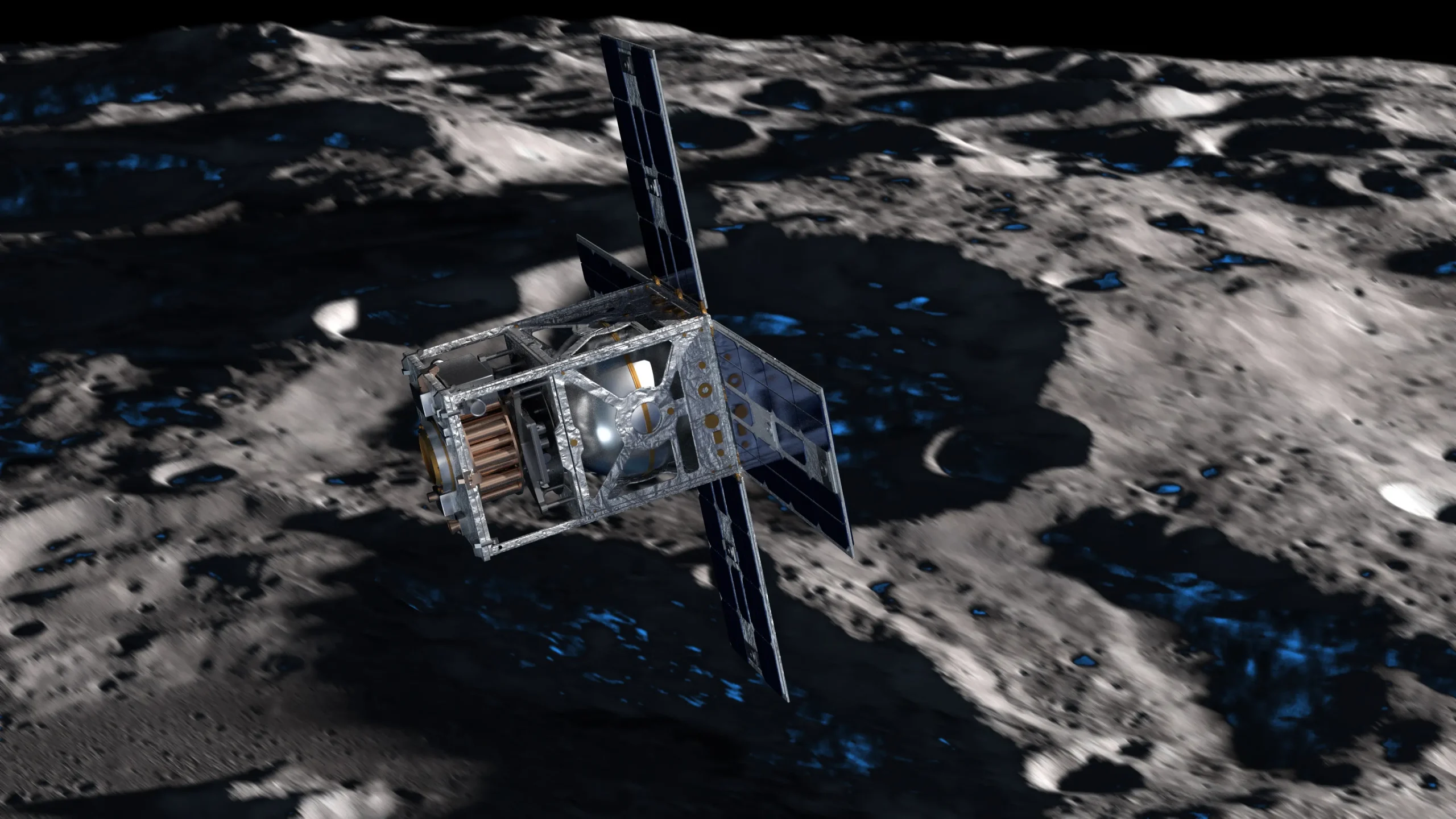
Resource scouting by the Oasis-1 spacecraft in lunar orbit.
Image credit: Blue Origin
Earth’s resource-rich Moon is overdue for detailed high-resolution maps to chart the whereabouts and concentrations of lunar water ice, Helium-3, radionuclides, rare earth elements, precious metals, and other materials.
And that’s what a new undertaking may provide.
Project Oasis is being developed jointly by Blue Origin’s Space Resources Center of Excellence and the company’s international office in Luxembourg.
GOMSpace and the European Space Resources Innovation Center (ESRIC) in Luxembourg are also supporting the project.
Founded in 2007, GomSpace is a global provider of small satellite solutions with customers in more than 60 countries.

Artwork depicts moon mining operations for Helium-3 involving harvesters, solar power plant, rover, and return launchers.
Image credit: Interlune
Multi-phase initiative
Project Oasis is a multi-phase initiative to identify key lunar resources from orbit, assess them on the ground, and harness them on-the-spot.
“Once we know what’s really there and how to access it, everything changes,” said Pat Remias, vice president of Blue Origin’s Advanced Concepts and Enterprise Engineering.
“Project Oasis creates the foundation for a thriving space economy,” Remias added, in a company statement.
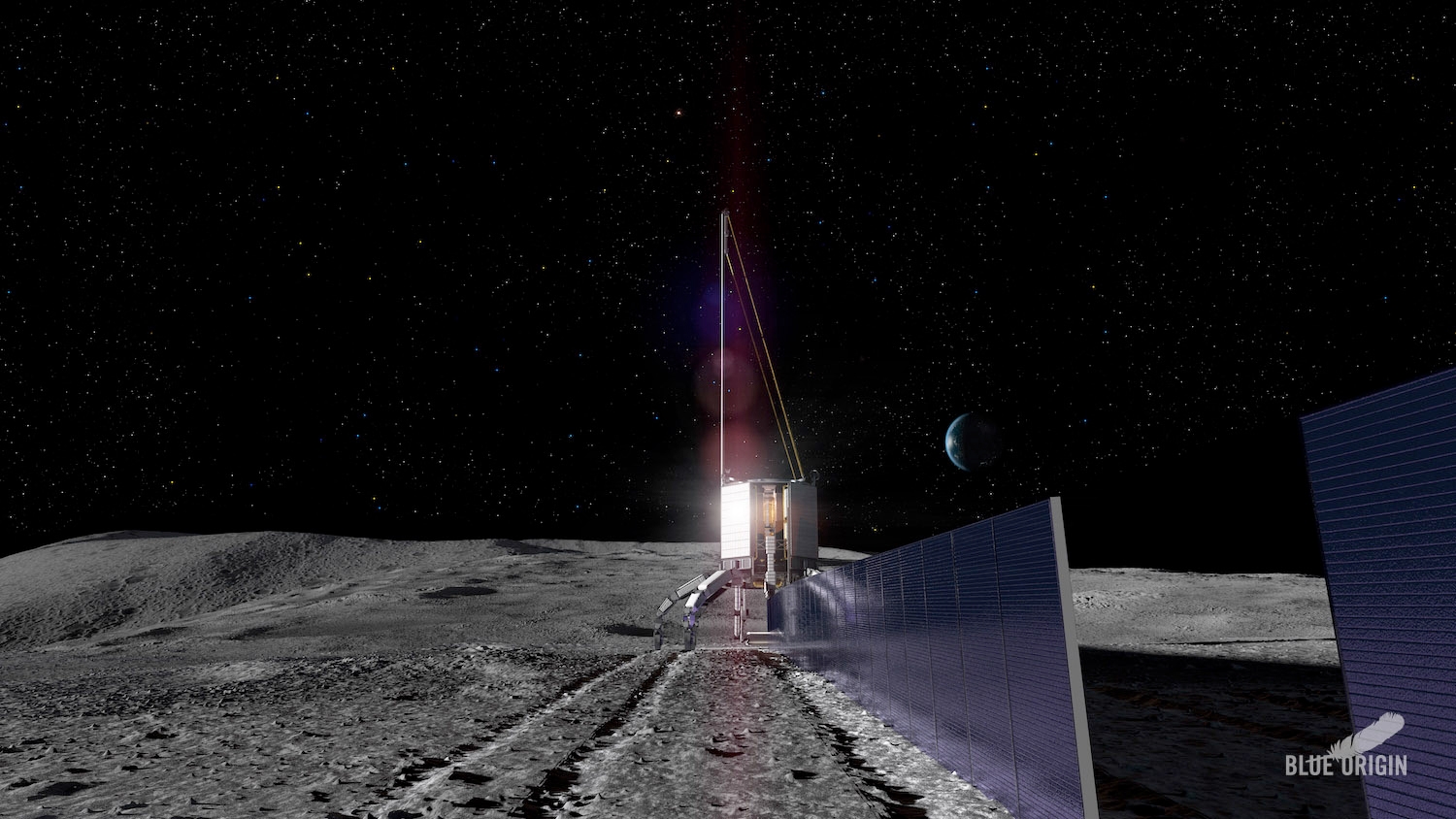
Once demonstrated and implemented on the Moon, Blue Alchemist will put unlimited solar power wherever needed.
Image credit: Blue Origin
Here’s the plan
Oasis-1would be the first mission in the Oasis “campaign.”
Oasis-1 would carry out resource prospecting of the Moon, teamed up with Blue Origin’s Blue Alchemist, an effort to process regolith into useful products like oxygen, solar cells, and power cables.
Project Oasis would employ neutron spectroscopy to quantify subsurface water ice concentrations to one-meter depths.
The ultra-low orbital altitude by an Oasis orbiter would make use of additional instruments include magnetometers for metal detection and multispectral imaging for Helium-3 and geological mapping.

Earth’s Moon seen from the International Space Station – ready for mining or not?
Image credit: NASA
Here’s the goal
The goal as stated by Blue Origin is to crank out propellant and construction materials from lunar resources, aiming to (1) reduce deep-space mission costs by up to 90% through in-space refueling, (2) enable permanent lunar settlements with locally sourced building materials, (3) establish strategic resource security for national space capabilities, and (4) provide a platform for international collaboration to unlock the vast potential of space resources.
These efforts “seek to transform the Moon into a resource and power hub, lowering costs and complexity for missions to Mars and beyond, making asteroid harnessing viable in the future, and enabling greater sustainability on Earth,” explains a Blue Origin statement.
Missing from the September 30th statement from Blue Origin are implementation dates and costs associated with the venture.

