Archive for October, 2025
 Author:
  October 6th, 2025
On the prowl at Jezero Crater, NASA’s Mars Perseverance rover is loaded with scientific equipment.
Image credit: NASA/JPL-Caltech/MSSS
Several Mars orbiting spacecraft were on tap to image the flyby of that odd ball 3I/Atlas as it flew by the Red Planet.
So far, what that set of spacecraft snagged in terms of data have yet to see daylight.
Meanwhile, Simeon Schmauß, a sharp-eyed astrophotographer, reports that NASA’s Perseverance Mars rover “raised her head up at the night sky to capture interstellar comet 3I/Atlas during its close encounter of Mars.”

Image credit: NASA/JPL-Caltech/ASU/Simeon Schmauß
Faint smudge
The enigmatic object is visible as a faint smudge next to a field of stars.
The image is the result of stacking 20 individual exposures and further “de-noised” with Adobe Lightroom, Schmauß explains.
The result can be seen at:
https://www.flickr.com/photos/semeion/54831921015/#:~:text=3I/Atlas%20from,ASU/Simeon%20Schmau%C3%9F
 Posted in

Image credit: ESO/P. Horálek
A new study has identified the most light-polluted areas in the United States.
The results stem from a combination of factors to establish a “light pollution index,” ranking cities from the most to the least light-polluted.
A data point from the study: about 80% of Americans can no longer see the Milky Way from where they live because of light pollution.
Night brightness
The study by Overnight Glasses, an eyewear brand, examined the 50 largest US cities, measuring the artificial light brightness at night.
Light levels were calculated both per 100,000 residents and per area, using a light pollution map to ensure that cities could be fairly compared.
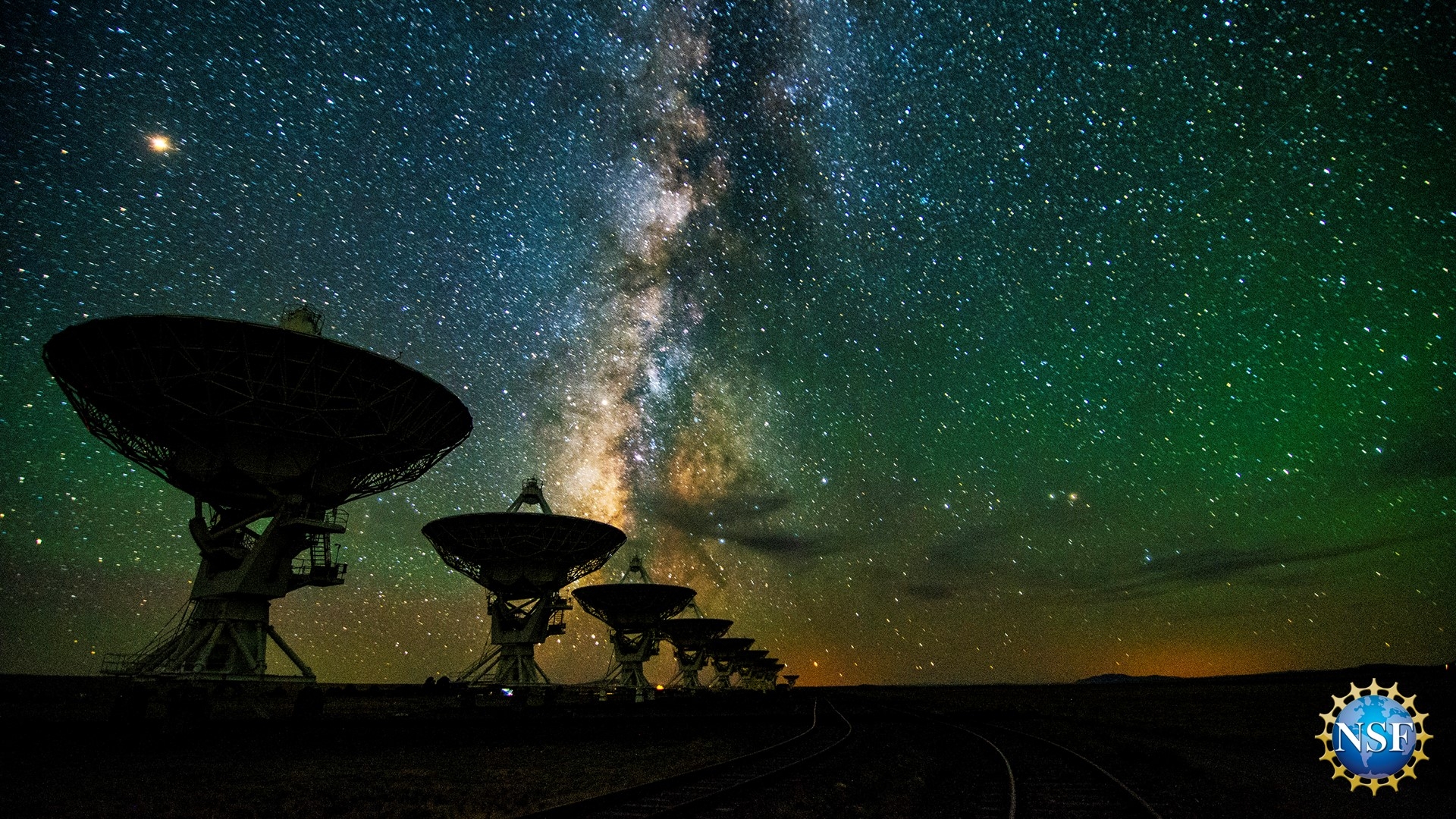
Image credit: National Science Foundation
The analysis also considered nightlife, the number of airports and ports, the city’s geography, and local lighting rules.
And the city and state winners are…
Miami, Florida is the most light-polluted U.S. city, with night illumination nearly twice the national average. It is the most light-polluted city in the US, earning an index of 96.2. The city’s nighttime glow has a radiance of 196.3, making its illumination one of the strongest in the country.
California is the most light-polluted state, with three of its cities ranking among the brightest in the country.
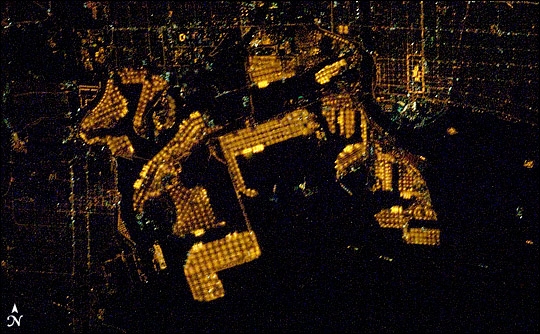
Orange sodium vapor lights illuminate the port facilities of Long Beach, California, supporting the round-the-clock operations of one of the world’s busiest commercial cargo ports.
Image credit: NASA
Rhythm of urban life
According to an Overnight Glasses statement: “Light pollution is more than just a glow in the sky; it reshapes how we experience our cities after dark.”
Be it from ports and airports to nightlife and stadiums, the constant brightness reflects “the rhythm of urban life,” the group explains, “but it also comes with consequences for residents, wildlife, and even our ability to see the stars.”
Lastly, the organization notes that prolonged exposure to excessive artificial light can also strain and potentially harm human eyesight.
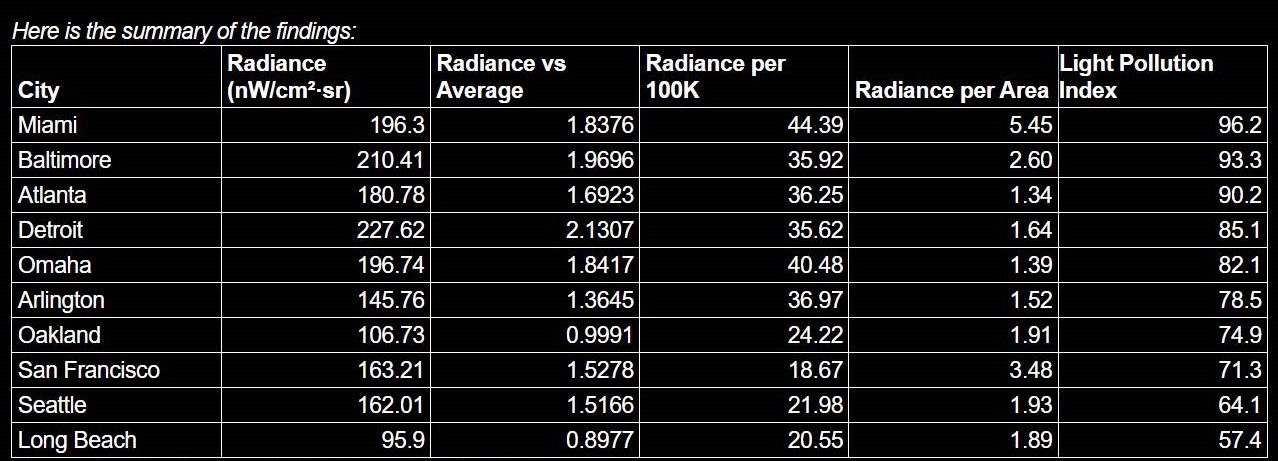
Image credit: Overnight Glasses
For background information on Overnight Glasses, go to:

Image credit: NASA
A front and center cause by the Defense Advanced Research Projects Agency (DARPA) is promoting and prompting a case for an Earth-Cislunar-Moon economy.
In some quarters it’s all blue sky yammering. On the other hand, there does appear to be growing support for making a business case for mining resources on the Moon.
A recent study shouldered by DARPA has laid out a step-by-step process that could enable an economic link between Earth and our celestial next door neighbor, the Moon.

Image credit: Air University Press
Industrial makeover
But how real is the promise of giving the Moon an industrial makeover?
“If there is commercial value, at least based on what we now know, I would argue it’s the Moon’s subsurface,” explains the editor of The Commercial Lunar Economy Field Guide: a vision for industry on the Moon in the next decade.
To learn more, go to my new Space.com story – “New DARPA ‘field guide’ looks for ways to jump-start a Moon economy” – at:

Image credit: UCLA SETI
A tactic used in the search for extraterrestrial intelligence (SETI), historically focused on detecting electromagnetic technosignatures from other starfolk, is a paradigm that is being challenged.
Highly advanced, potentially post‑biological civilizations may undergo rapid technological acceleration, quickly progressing beyond recognizable or detectable phases.
That’s the view of Michael Garrett, the Sir Bernard Lovell Chair in Astrophysics and director of the Jodrell Bank Center for Astrophysics. “It has long been recognized that the longevity of a technosignature is a critical factor in determining the likelihood of its detection ,” he explains.
Garrett argues that “successful detection also depends on the period during which our technologies overlap with those of the civilizations we seek.”

Image credit: SETI Post-detection Hub
Narrow detection window
Garrett introduces the concept of a “narrow detection window,” the notion that advanced, potentially post-biological civilizations may produce technosignatures that are detectable for only brief periods of time.
Technosignatures are indicators or evidence of advanced extraterrestrial civilizations, perhaps via artificial structures, communication networks, or other technological artifacts.
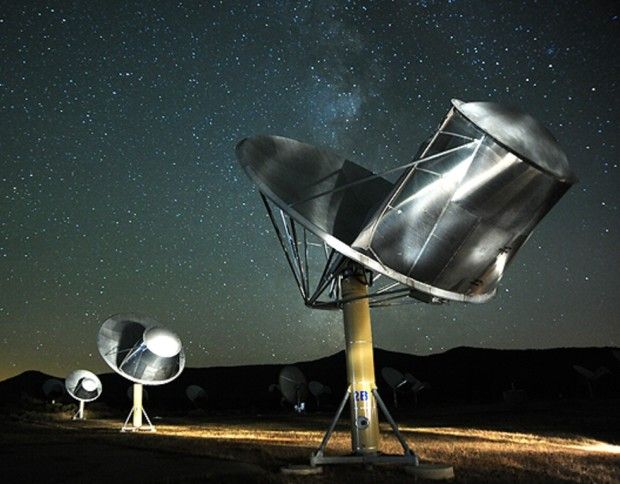
Giving a listen for other star folk, the Allen Telescope Array in California.
Image credit: SETI Institute
At issue is how brief is the period of time during which a civilization produces technosignatures that remain detectable by current instruments implemented by Earthkind?
Reevaluate strategies
What’s needed is a reevaluation of current SETI strategies to increase the likelihood of detecting such civilizations, suggests Garrett in a research paper appearing in the journal, Acta Astronautica.
“As humanity itself approaches potential post-biological transitions, SETI’s greatest challenge, and opportunity,” Garrett states, “lies in recognizing that the universe’s most advanced civilizations may not conform to our expectations.”
Garrett acknowledges that this expanded and open approach “does not discard traditional SETI but complements it.” Indeed, while some civilizations might still emit recognizable electromagnetic signals, “others may operate in ways we cannot yet imagine.”

Image credit: Breakthrough Listen
To read the full paper – “Blink and you’ll miss it – How Technological Acceleration Shrinks SETI’s Narrow Detection Window” – go to:

Image credit: Deer Creek Nature
This documentary follows the journey of three Caltech researchers that came together to solve a problem: How do you power Earth from space, to provide an endless supply of clean sustainable energy?
Bright Harvest follows these visionary Caltech professors as they develop and successfully demonstrate a proof-of-concept experiment for space-based solar power.
Their work signals a step toward capturing clean, constant energy directly from space that offers, perhaps, a transformative solution to global energy.
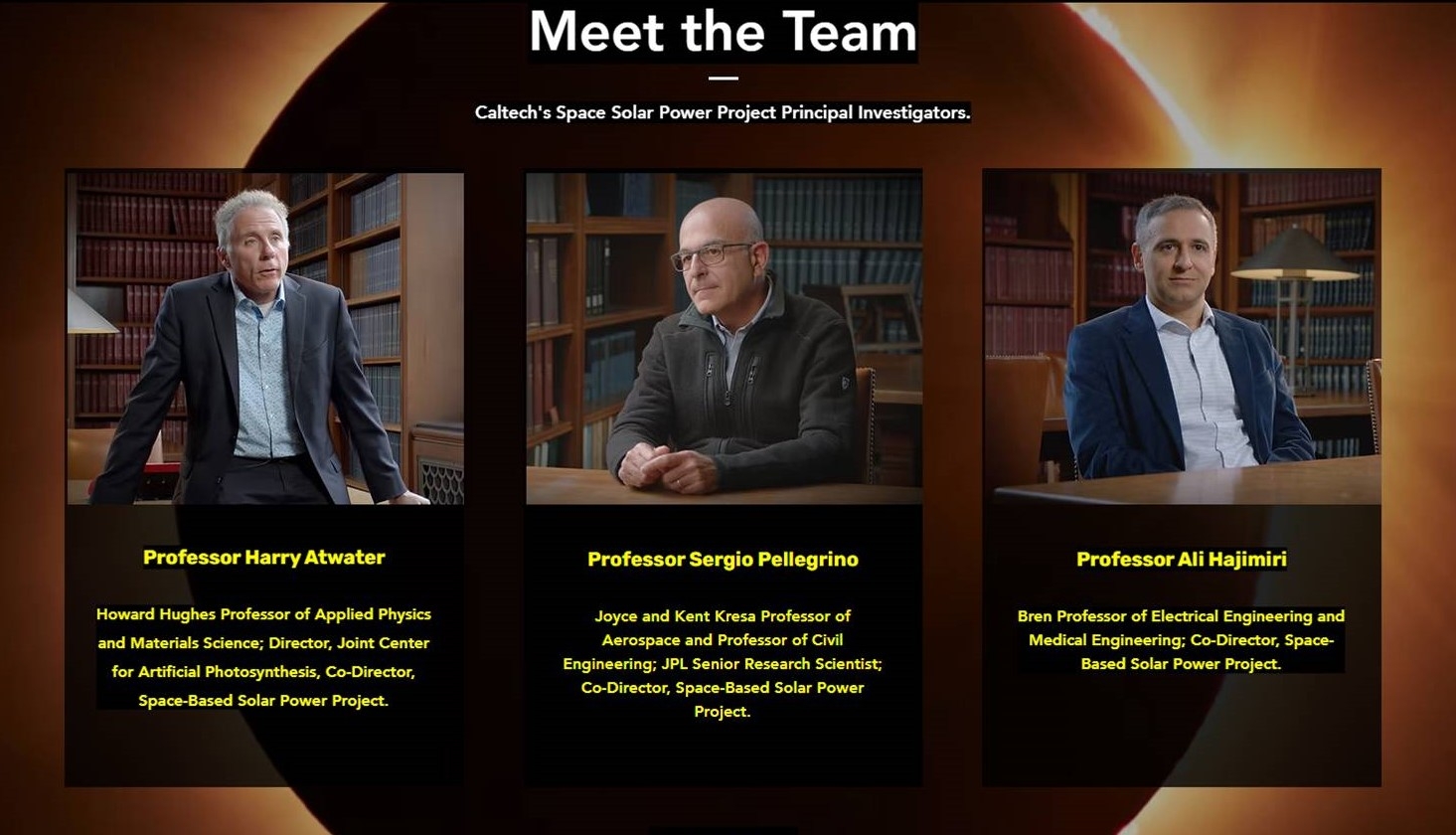
Image credit: Deer Creek Nature
Energy landscape
This documentary follows Caltech’s Harry Atwater, Ali Hajimiri and Sergio Pellegrino, in their quest to revolutionize the world’s energy landscape.
Bright Harvest – Powering Earth From Space premieres Monday, October 13 at the Harvard University Graduate School of Design.
To watch a trailer, go to:
https://www.poweringearthfromspace.com/
Also, go to my earlier stories on this venture at:
https://www.leonarddavid.com/space-based-solar-power-experiment-beams-energy-in-space-down-to-earth/

Image credit: Austrian Space Forum
This month, there’s a first of its kind Moon/Mars analog mission, one that involves five continents simultaneously.
Africa, America, Asia, Australia, and Europe are joining forces to emulate human presence on the Moon or Mars.
Over 200 scientists from 25 countries are involved in this unique analog undertaking.
Research collaboration
From October 13 to 26, seventeen habitats will enter into a collaboration of research and conduct numerous experiments.
Mission Coordination will be provided by the Austrian Space Forum in Vienna, Austria, a private space research institution.
For the first time, 17 institutions simulating Moon/Mars missions on five continents (Africa, America, Asia, Australia, and Europe) are joining forces to emulate the human presence on the Moon or Mars.
More than 200 scientists from 25 countries are involved.
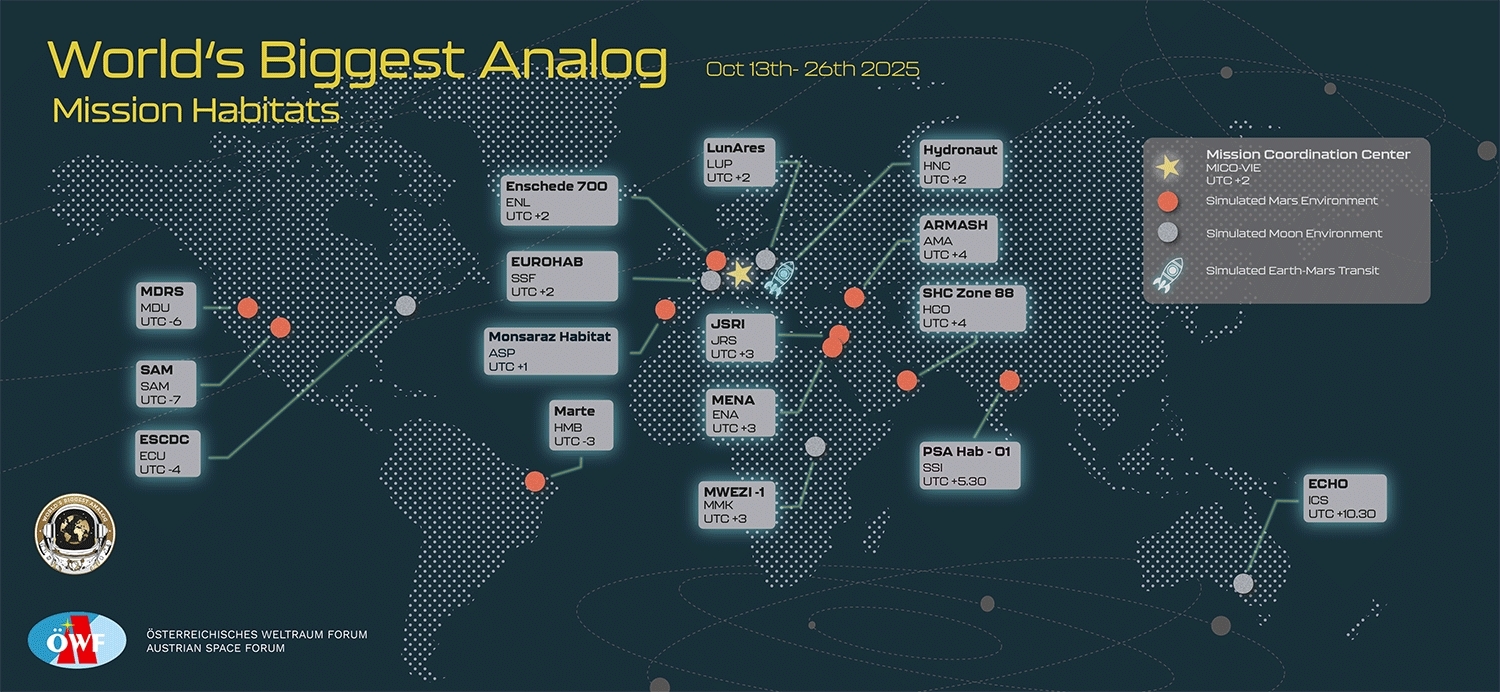
Image credit: Austrian Space Forum
Countries involved
Africa: Kenya
America: USA (3 institutions) and also Brazil
Asia: Armenia, India, Jordan (2 institutions), Oman and also Australia
Europe: Austria, France, Poland, Portugal, The Netherlands
Analog wish-list
The Austrian Space Forum will host the Mission Coordination Center in Vienna (MICO-VIE) to support the individual habitats with teams from operations, meteorology, remote science support and media.
What this analog undertaking wishes to achieve:
- Raise awareness about analogs.
- Gather information about existing missions and habitats, so that researchers, government agencies and others understand the fidelity and capabilities of each habitat as a research platform.
- Applying research standards makes the data collected more useful to space agencies and researchers.
- Provide a global research platform for the first time.
- Develop protocols and professionalize the industry.
- To assist up and coming habitats/missions, so more countries can be involved.
- To engage and collaborate as a community and push the boundaries of what we can achieve together.
- Open better communication lines between active players.
- Minimize duplicate research.
- Highlight the potential of the habitats and analog missions
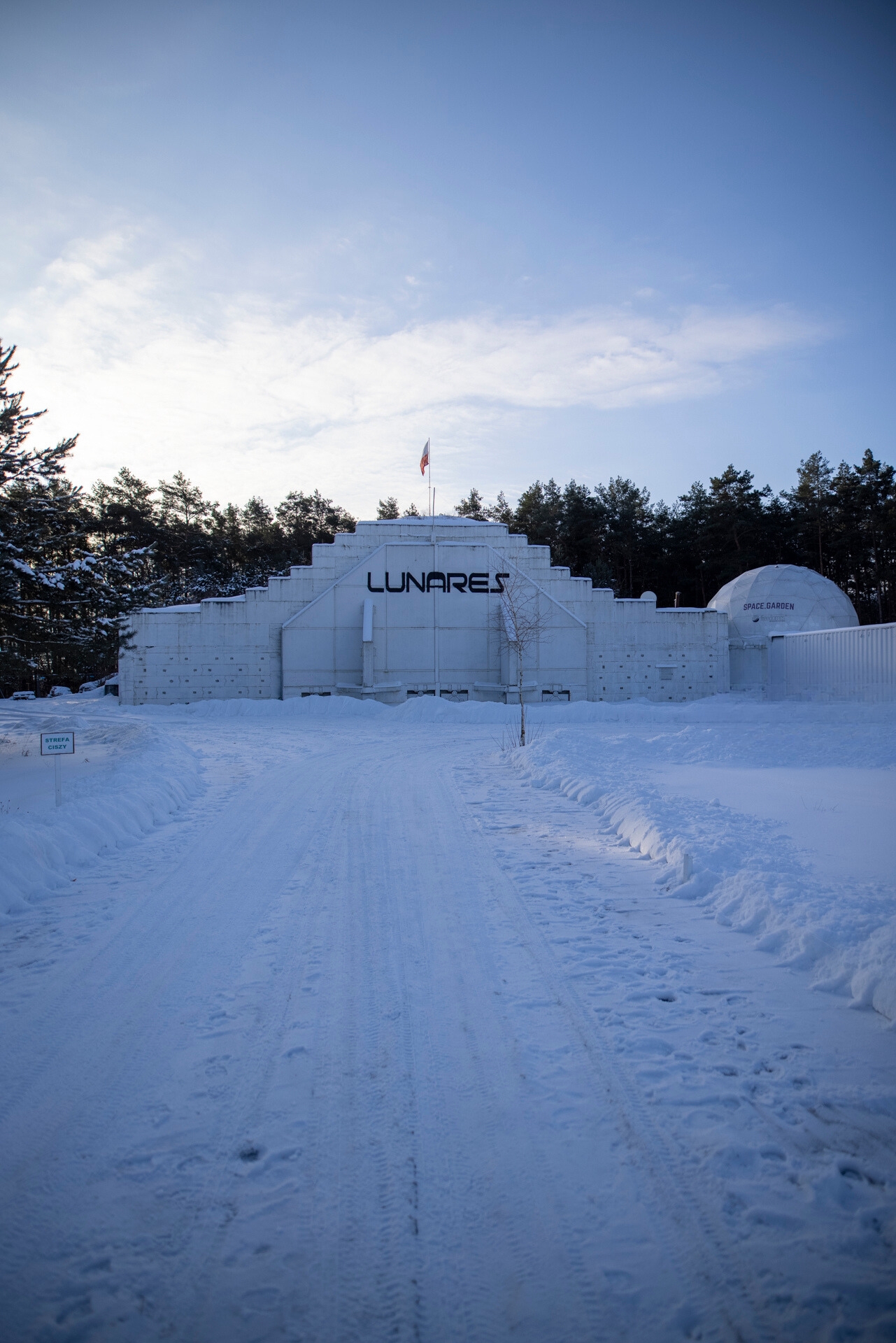
Image credit: LunAres Research Station
Mission scope
As for the scope of the venture through MICO-VIE in Vienna is real-time coordination across 12 time zones and parallel research on lunar and Martian analog conditions. International crews will test protocols for future space exploration.
There will so be simulated Mars communication delays between Earth and the Red Planet.
“This isn’t just research – it’s a proof of concept for how humanity will coordinate complex multi-location space operations,” state Austrian Space Forum officials.
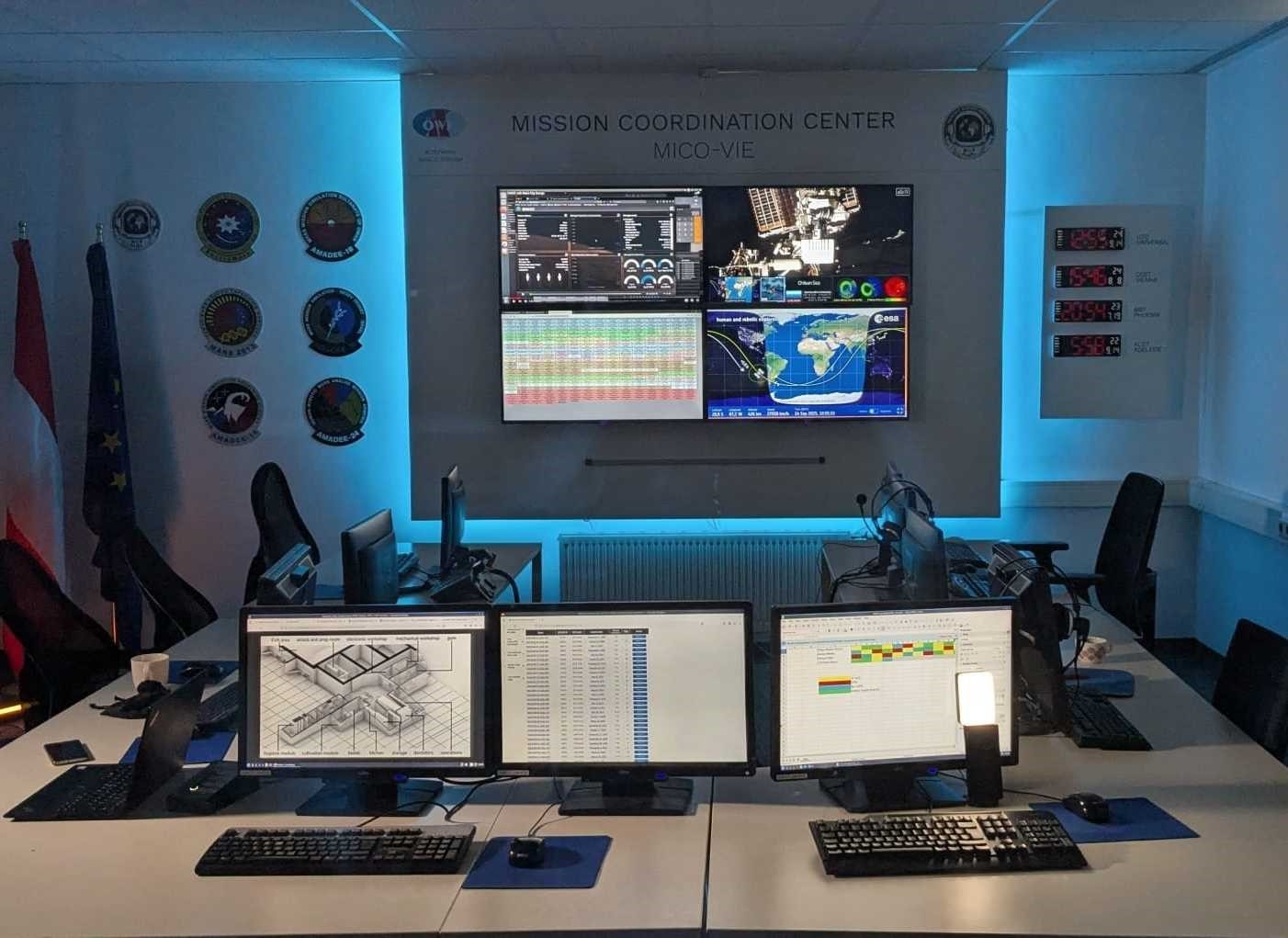
Image credit: Austrian Space Forum
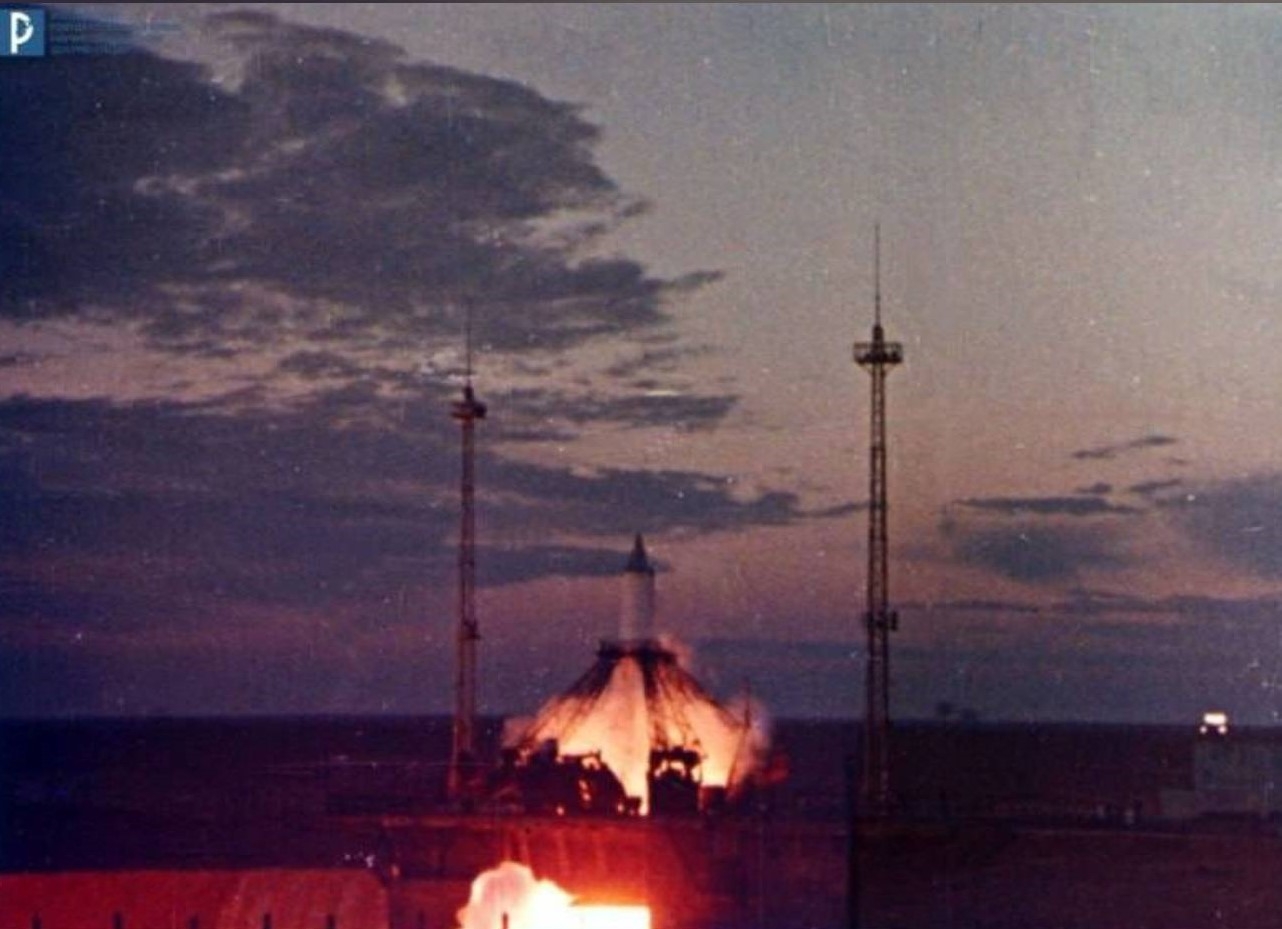
Launch of the R-7 rocket with the first artificial Earth satellite from the Tyuratam launch pad.
Image credit: Roscosmos/Russian State Archive of Scientific and Technical Documentation
The opening shot that kicked off the “Space Race.”
October 4, 1957, now 68 years ago today, the former Soviet Union’s R-7 rocket lifted off from the Tyuratam test site (now the Baikonur Cosmodrome), hurling into space the first artificial Earth satellite.
The R-7 Semyorka intercontinental ballistic missile was modified by Sergei Pavlovich Korolev, known as The Chief Designer. This version of the R-7 rocket to place the first satellite into orbit was designated 8K71PS No. M1-1PS.
Sealed aluminum sphere
Sputnik-1 was a 184-pound sealed aluminum sphere, about half a meter (58 cm) in diameter, with four antennas.
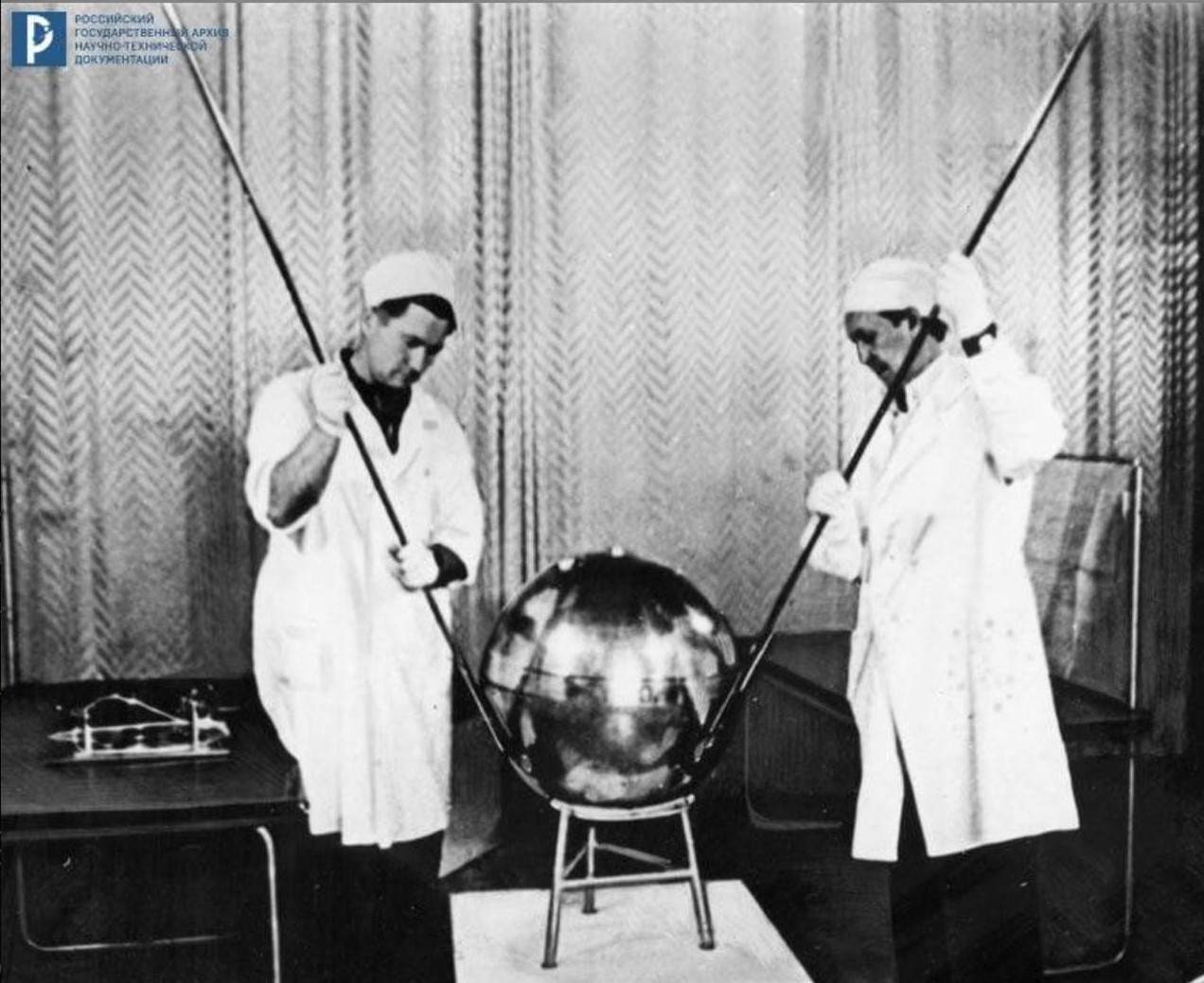
Pre-flight photo of the first artificial satellite with Soviet OKB-1 design bureau technicians Yu.D. Silaev and M.E. Kleymenov.
Image credit: Roscosmos/Russian State Archive of Scientific and Technical Documentation
Inside the satellite, the bare minimum: a radio station, thermal control system fan, temperature and pressure sensors, and an onboard cable network.
Beeps heard around the world
In 295 seconds after launch of the R-7 booster, Sputnik-1 and the second stage of the rocket were pushed into an elliptical orbit.
At 315 seconds after liftoff, the first satellite separated from the rocket stage.
The transmitters turned on and the whole world heard the now famous “beep-beep-beep” signals of Sputnik-1, transmissions that were the starting point of the Space Age.
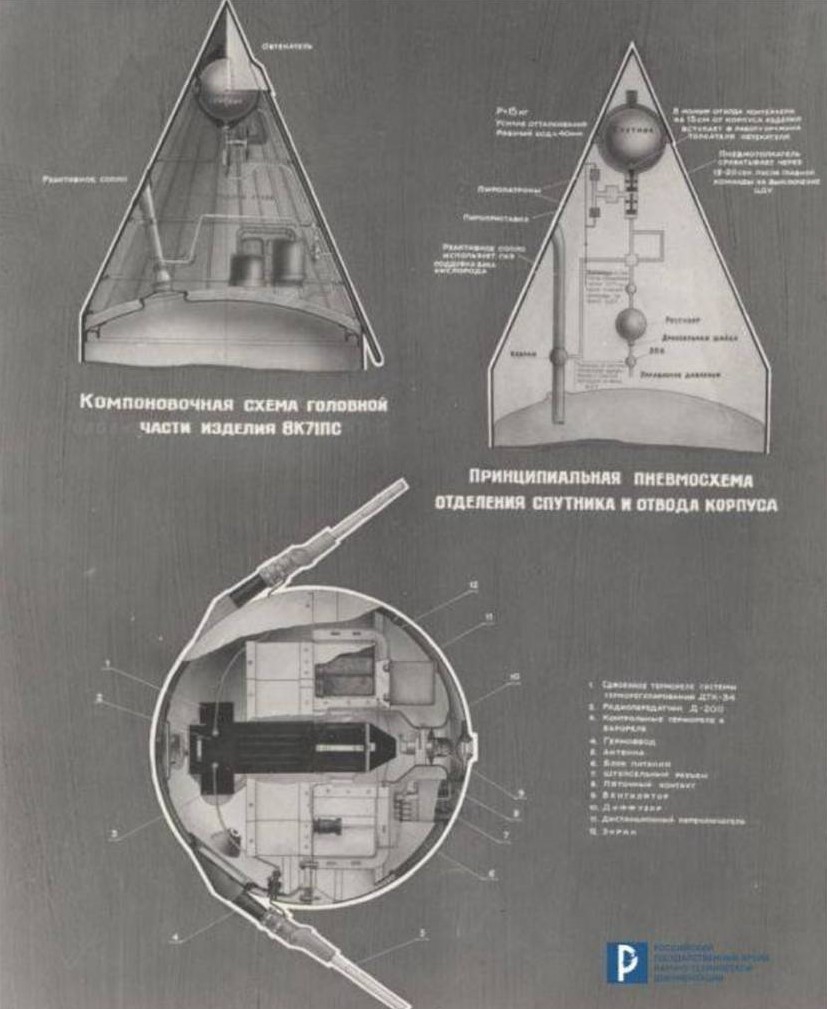
Pre-flight photo of the first artificial satellite with Soviet OKB-1 design bureau technicians Yu.D. Silaev and M.E. Kleymenov.
Image credit: Roscosmos/Russian State Archive of Scientific and Technical Documentation
Artificial star
Over the course of three months, the satellite completed 1,440 orbits around the Earth.
As noted in a Roscosmos posting, “due to its low reflectivity and small size, it was virtually impossible to see the satellite.”
What people saw in the sky as an artificial “star,” notes the Roscosmos posting, was the second stage of the rocket measuring 59-feet (18-meters) long that launched Sputnik-1 into orbit.

Virgin Galactic and Lawrence Livermore National Laboratory are looking at the feasibility of using the airplane mothership as a carrier platform. (Image credit: Virgin Galactic)
Sir Richard Branson’s Virgin Galactic space group is deep into development of its new Delta Class suborbital space planes, with both research and private astronaut flights expected to commence next year.
The company has also been looking at using its mothership aircraft that releases those newly developed space planes at high altitude as a carrier platform for other customers.
To that end, Virgin Galactic is collaborating with Lawrence Livermore National Laboratory (LLNL) to fly a specific payload via the carrier aircraft.
Optical payload
“The idea is to fly an optical payload on an airplane that can look up for satellites, look down at the ground/sea, and identify things of interest,” explains Benjamin Bahney, a co-founder and the leader of LLNL’s space program.
“The gimbal allows the optic to look up, down, sideways and to track objects without banking the aircraft all over the place,” Bahney told Inside Outer Space. Having optics that work in multiple bands increases detection and characterization capability, he added.

Image credit: Virgin Galactic
Ongoing work
Earlier this year, Virgin Galactic highlighted ongoing work on Delta Class systems and structures, such as wing assembly to be completed during the fourth quarter of this year, as well as the craft’s novel “feather” assembly. The feathering system is utilized when the suborbital vehicle heads back to Earth, making it more stable during the reentry process.
Construction of the Delta Class SpaceShip fuselage is expected to be completed late this year or early 2026, Virgin Galactic has stated.
Final assembly of Delta Class vehicles will take place at Virgin Galactic’s Delta facility near Phoenix, Arizona.
The Delta Class spaceships are being built to be capable of flying eight space missions per month, with twelve times the monthly payload or customer capacity of their original spaceship, VSS Unity.

Purdue-1
Last month, in a joint announcement between Virgin Galactic and Purdue University, the Purdue-1 mission was unveiled.
That flight is expected to lift off in 2027 and will carry a Purdue engineering professor, a graduate student, as well as a Purdue alumni member.
Designed to seat up to six passengers, Virgin Galactic’s next-generation spaceship is customizable and will have one seat removed for this mission to fly the five crew members and allow space for a payload rack to hold research experiments.

Enigmatic Venus – Cloudy with a scattering of life?
Image credit: NASA
The planet Venus is a hellish, hot under the collar world.
Not only is this enigmatic globe holding tight its secrets under thick clouds saturated with sulfuric acid, it is upwelling a heavenly question mark: Could it be a haven for high-altitude life?
Perhaps Venus is a cozy, comfy home for microbes? That prospect is fostering the first-ever private mission to Venus, an endeavor outfitted with science gear to search for signs of life in its clouds by detecting organic chemistry.
Called the Rocket Lab Mission to Venus, Sara Seager, professor of planetary sciences at the Massachusetts Institute of Technology (MIT) in Cambridge is a key scientist for a small, nose cone-like probe crafted to sample the Venusian atmosphere with an AutoFluorescence Nephelometer.
For details on the mission, go to my new Nautilus story – “Seeking Signs of Life on Venus- The first private mission to the morning star will sample for traces of biological activity in the planet’s clouds” – at:

Image credit: NASA
A veteran of Earth remote sensing is nearing its destructive reentry though Earth’s atmosphere.
Landsat 4 was launched from Vandenberg Air Force Base in California on July 16, 1982 on a Delta 3920 rocket.
Landsat 4 was built for and launched by NASA. The spacecraft was built by contractor GE Astro Space. Despite numerous operations transfers, the Earth Resources Observation and Science (EROS) Center of the U.S. Geological Survey is the record and data keeping organization of the Landsat program.

Image credit: Joseph Remis/Satellite Reentry Observation Program group
Landsat 4 had a launch mass of 4,279 pounds (1,941 kilograms).
Joseph Remis, a leading satellite reentry expert, posts that Landsat 4 has a current decay prediction date of October 8.
First light
Landsat 4 was launched with the Multispectral Scanner (MSS) and a new advanced imaging sensor, Thematic Mapper (TM), allowing for clearer views of natural disasters from space. This was the first time that the data could be depicted as a natural color image due to the new TM sensor onboard Landsat 4.

Pre-launch photo of Landsat 4.
Image credit: NASA
Landsat 4’s first light image captured eastern Lake Erie and the cities of Toledo, Detroit, and Windsor on July 25, 1982.
The spacecraft’s period of revolution around the Earth was 99 minutes; roughly 14.5 orbits/day, offering repeat coverage of locations on Earth every 16 days.

Landsat 4 early image of Detroit.
Image credit: USGS
Trouble in orbit
But within a year of launch, the spacecraft lost the use of two of its solar panels and both of its direct downlink transmitters. The downlink of data from Landsat 4 was not possible until the Tracking and Data Relay Satellite System (TDRSS) became operational).
In 1987 the TM instrument was switched off.
The sensors onboard the satellite collected data until late 1993, and the satellite was decommissioned on June 15, 2001.

