Archive for March, 2025
 Author:
  March 5th, 2025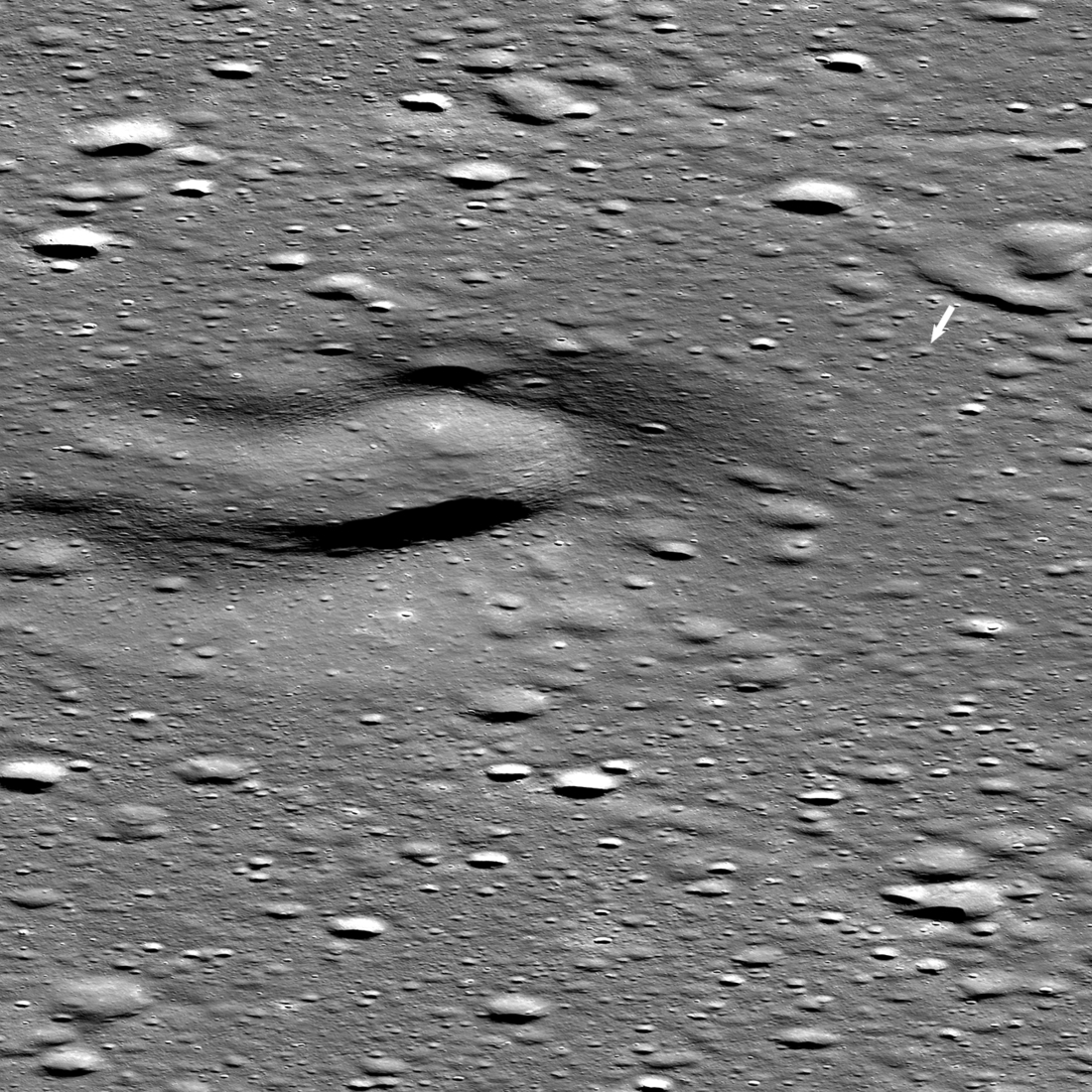
The Firefly Blue Ghost lunar lander set down on the Moon March 2nd. The landing site (arrow) is about 4,000 meters from the center of Mons Latreille, a large volcanic cone.
Image credit: NASA/GSFC/Arizona State University
The sharp-shooting camera system onboard NASA’s Lunar Reconnaissance Orbiter (LRO) has spotted the landing locale of the commercial Blue Ghost lander.
Firefly Aerospace’s Blue Ghost lander safely touched down in the eastern part of the Moon’s Mare Crisium at 19 degrees north and 62 degrees east reports Mark Robinson, leader of the LROC system.

NASA’s Lunar Reconnaissance Orbiter (LRO).
Credit: NASA’s Goddard Space Flight Center Conceptual Image Lab
The Lunar Reconnaissance Orbiter Camera, or LROC, is a system of three cameras mounted on the Lunar Reconnaissance Orbiter (LRO) that capture high resolution black and white images and moderate resolution multi-spectral images of the lunar surface.
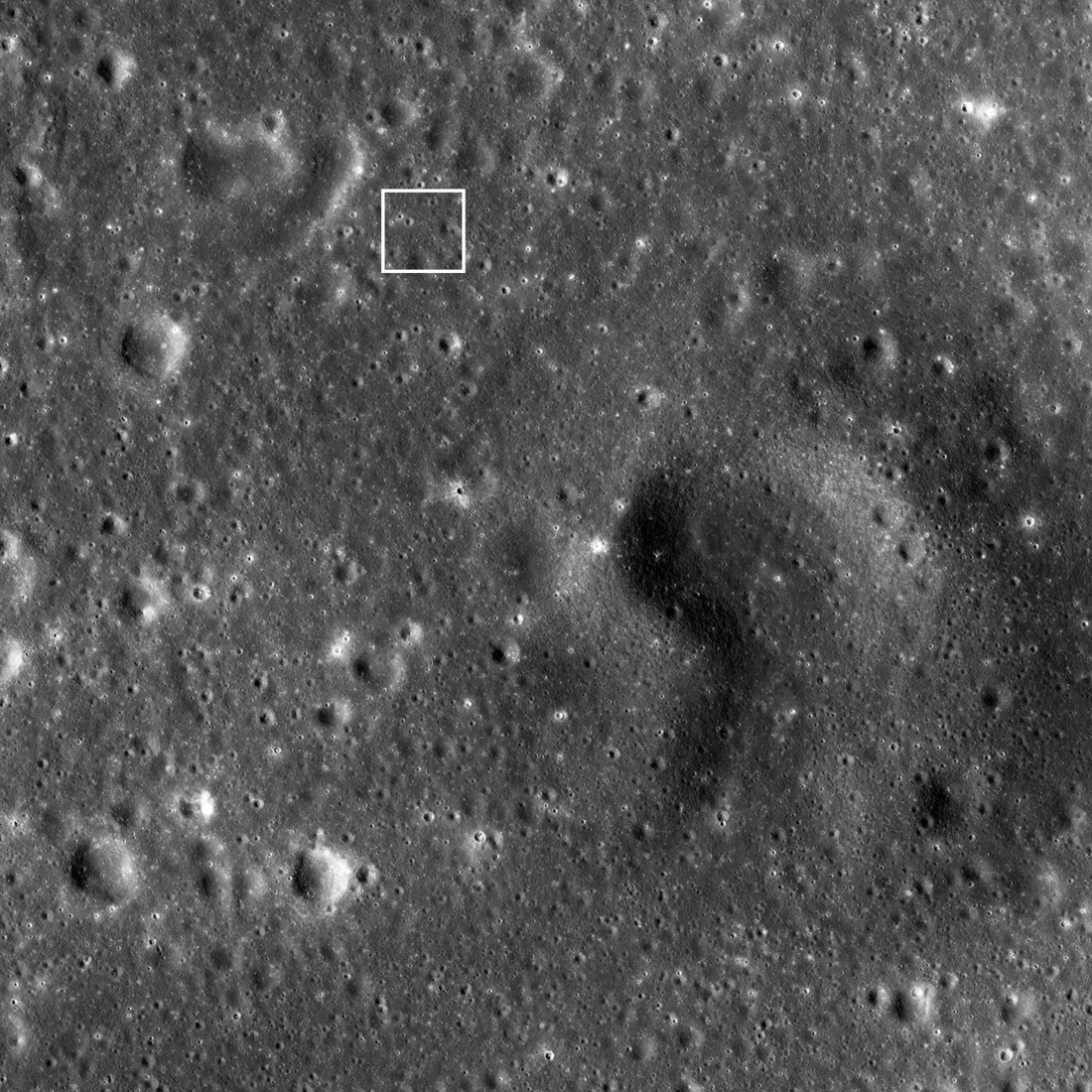
Blue Ghost landing region (white box) is 220 meters wide). North is up.
Image credit: NASA/GSFC/Arizona State University
Impact basin
Mare Crisium is an impact basin formed about four billion years ago when an asteroid roughly 40 kilometers in size struck the northeastern part of the Moon’s near side.
Earlier visitors
Blue Ghost is not alone in reaching this region.
In 1969, the former Soviet Union probe, Luna 15, crash-landed in Mare Crisium.
In November 1974, Luna 23, landed there but tipped over. That attempt to rocket samples from the area was followed in August 1976 by Luna 24 that successfully returned 170 grams of lunar material to Earth.

Firefly Aerospace’s Blue Ghost lander safely touched down in the eastern part of the Moon’s Mare Crisium.
Image credit: ASU/NASA GSFC
To inspect the LRO imagery on your own, go to:
https://www.lroc.asu.edu/images/1400
 Posted in
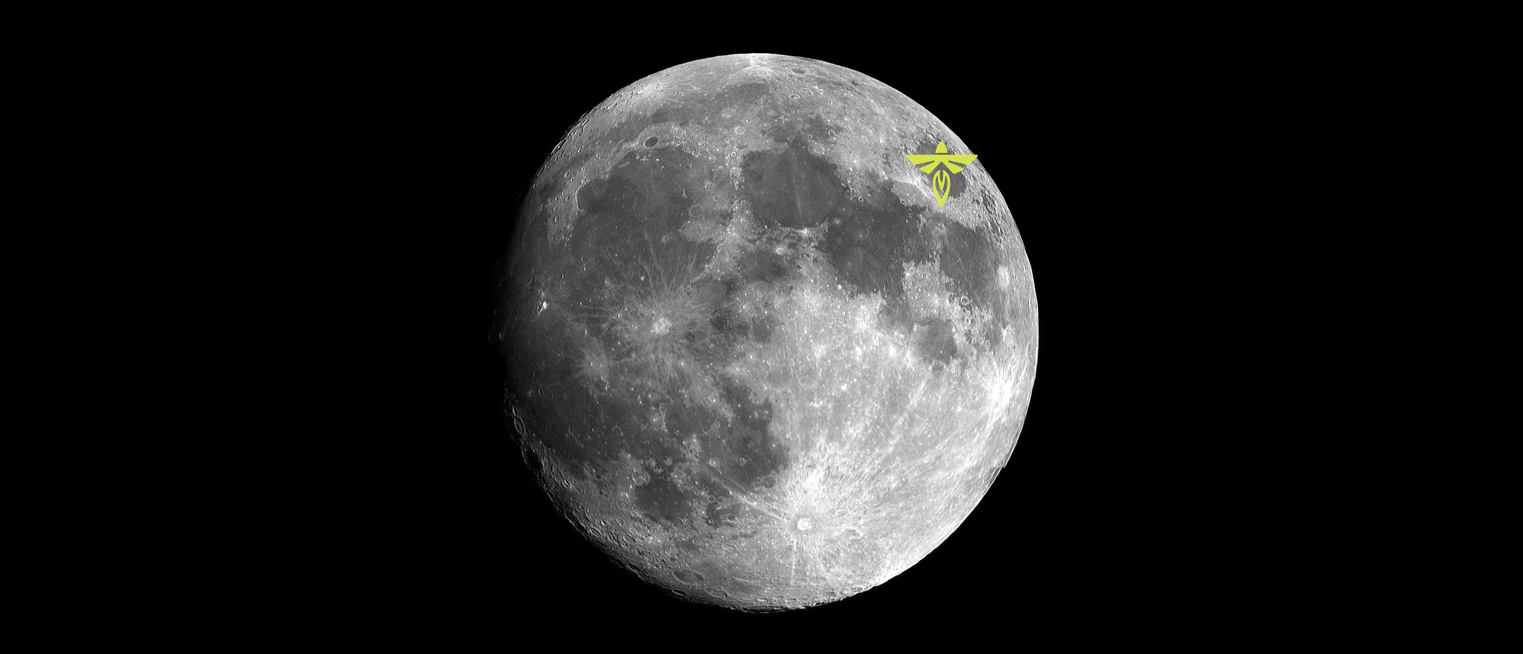
Image credit: Firefly Aerospace
The Firefly Aerospace Blue Ghost Mission 1, named Ghost Riders in the Sky, launched on January 15 and completed its 45-day Earth to Moon transit before softly touching down on the Moon on March 2.

Image credit: Firefly Aerospace
That touchdown signified that Firefly is the first commercial company in history to achieve “a fully successful Moon landing,” the group notes.
Carrying 10 NASA instruments, Blue Ghost completed a precision landing in Mare Crisium and touched down within a 328-feet (100-meters) landing target next to a volcanic feature called Mons Latreille.
Blue Ghost is now performing 14 days of surface operations, using a host of payloads.

Image credit: Firefly Aerospace
Working hypothesis
Meanwhile, Pascal Lee, a noted planetary scientist, has pieced together intriguing looks at the possible whereabouts of Blue Ghost – 1, the Moon lander flown by Firefly Aerospace of Cedar, Texas.
Given that Blue Ghost-1 landed roughly 100 meters of its target, Lee speculates where the Moon probe came to full stop. Drawing from released images so far, he notes that the lighting is not optimal at this point in time. So for now, “just a working hypothesis,” he adds.
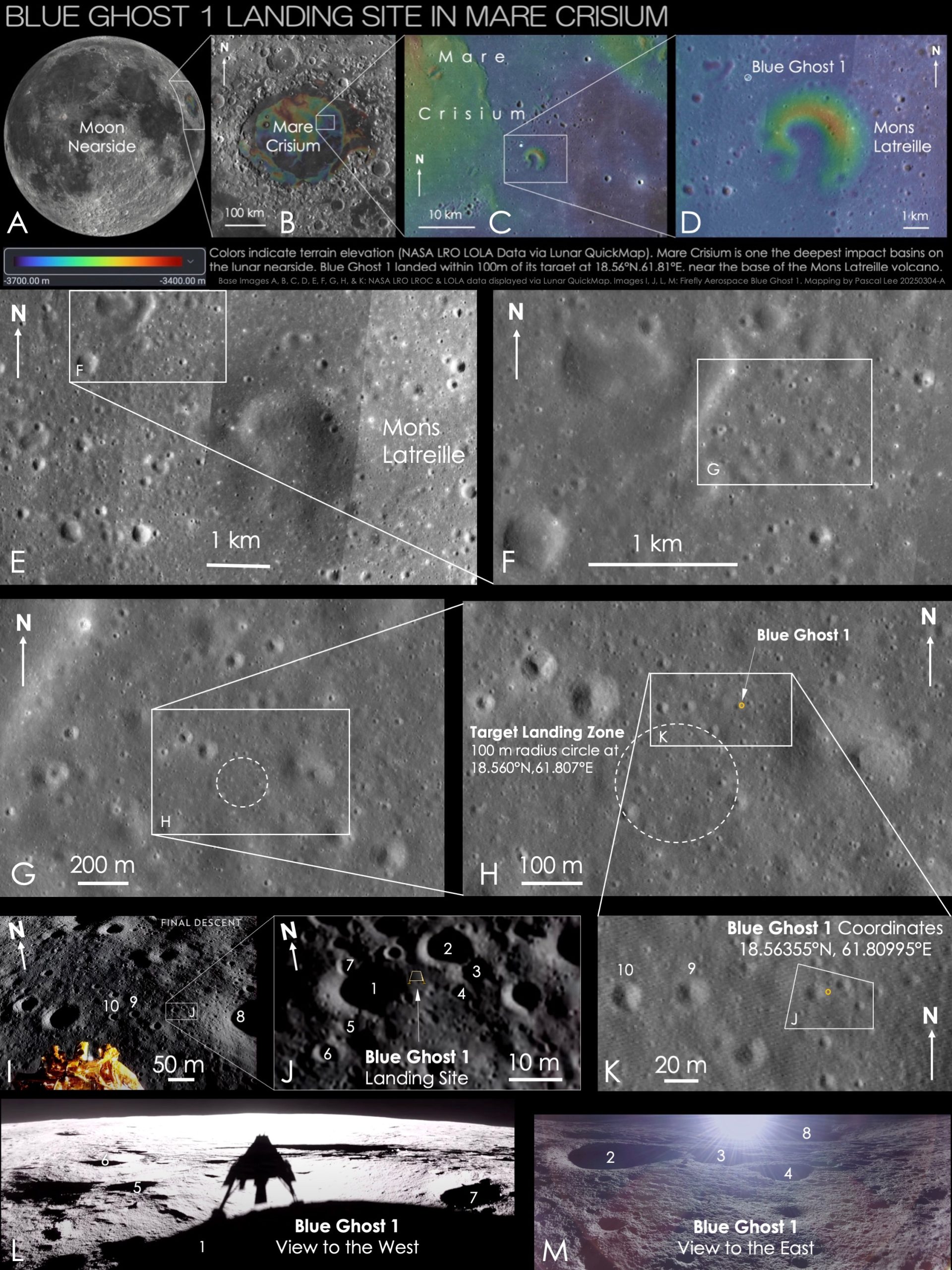
Image credit: Pascal Lee
Flight path
In earlier research, Lee reconstructed Blue Ghost-1’s orbital flight path over the lunar far side with names of prominent craters labeled, as shown a Firefly Aerospace issued video.
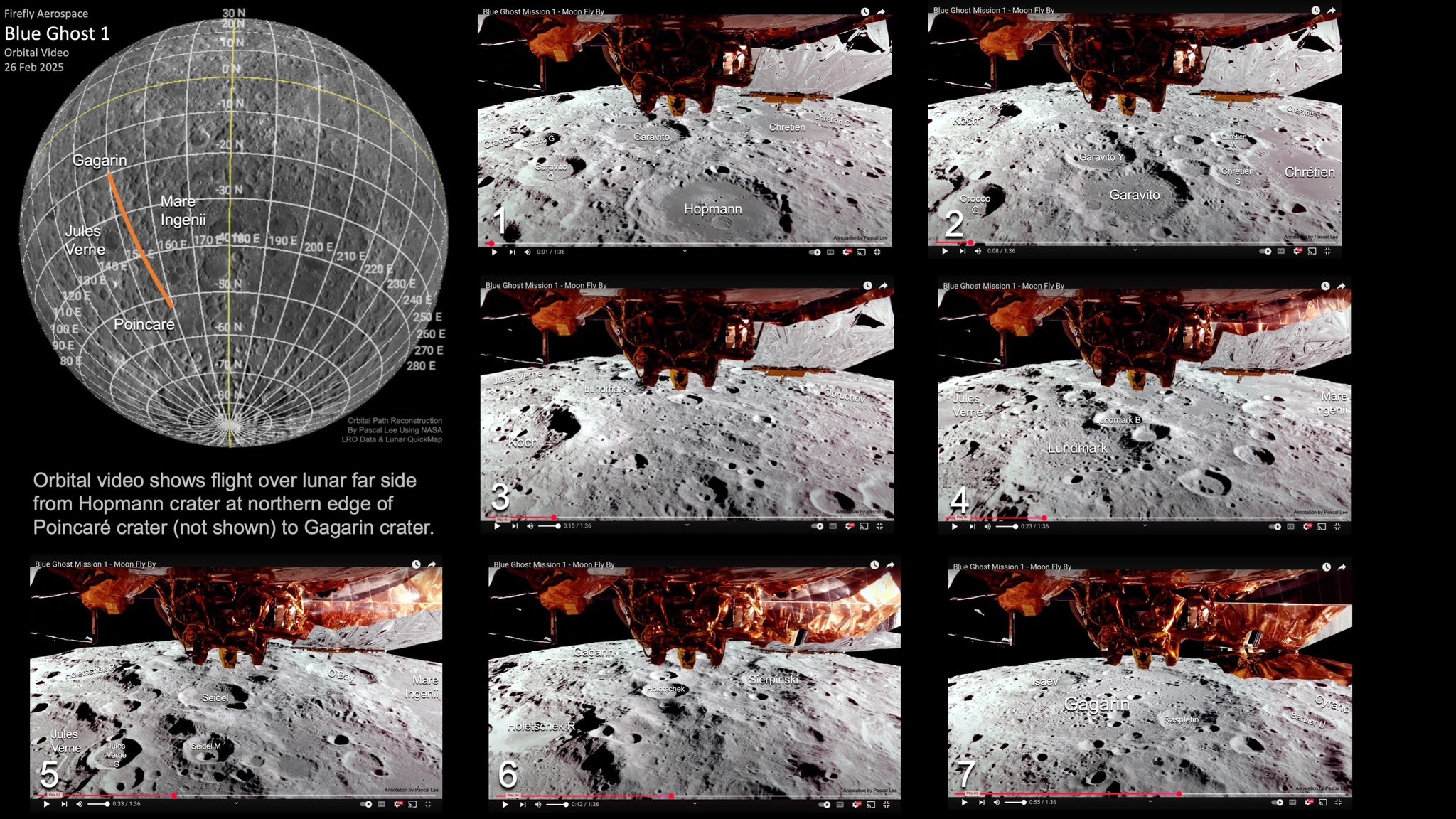
Image credit: Pascal Lee
Lee works at the Mars Institute and the SETI Institute, and is a professor of planetary science at Kepler Space University. He is also director of the NASA Haughton-Mars Project (HMP) at NASA Ames Research Center in Mountain View, California.

Every single Firefly employee’s name is etched on the Blue Ghost lunar lander plaque and is now on the Moon’s surface.
Image credit: Firefly Aerospace

This artist’s rendering shows NASA’s Europa mission spacecraft, which is being developed for a launch sometime in the 2020s.
Credit: NASA/JPL-Caltech/M. Carroll
NASA’s Europa Clipper, now en route to Jupiter, departed with less-than-satisfactory and vulnerable devices that are susceptible to Jupiter’s intense radiation.
The spacecraft’s liftoff on October 14 of last year, in many ways, is arguably a fingers-crossed undertaking, but one that has already produced a number of lessons-learned provisos, including the use of “Mil-Spec” parts for spacecraft forays beyond Earth.
Mil-Spec is short for “military specifications,” a set of criteria and standards promulgated by the U.S. Department of Defense and established to assure quality, reliability, and compatibility of parts used in aerospace.

Artist’s conception of water vapor plume erupting from the icy surface of Europa, a moon of Jupiter, based on data from the Hubble Space Telescope.
Credit: NASA/ESA/K. Retherford/SWRI
Prime mission
Europa Clipper is to reach Jupiter in April 2030, then perform repeated close flybys of one of giant Jupiter’s enigmatic moons, Europa. At the time of launch through its prime mission ending in 2034, the investment made and investigation of that icy world — having a likely internal ocean with conditions suitable for life — is a cool $5.2 billion.
For details on Europa Clipper and its cargo of unfit MOSFETs, go to my new SpaceNews story:
“End-run around radiation – The saga and surprise vulnerabilities of Europa Clipper” at:
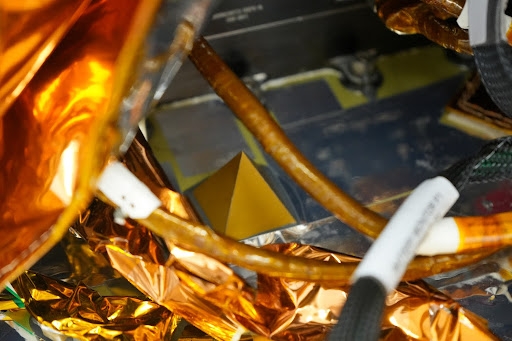
Image credit: Firefly Aerospace
“There is a Pyramid on the Moon – We’ve Landed.”
That’s the word from Ben Haldeman, founder of LifeShip, based in Carlsbad, California.
Now planted on the Moon within Mare Crisium, courtesy of the Firefly Aerospace Blue Ghost lunar lander, the Pyramid carries the complete genetic code for a human, etched into Cerabyte ceramic to last a billion years.
The tiny Pyramid carries:
- The seeds of life – including plant seeds, plant DNA, and the entire human genome, etched into ceramic to last a billion years.
- The stories, art, and messages of 100,000 people, many etched into NanoFiche to last essentially forever.
- A knowledge archive, including all of Wikipedia and a Language Primer.
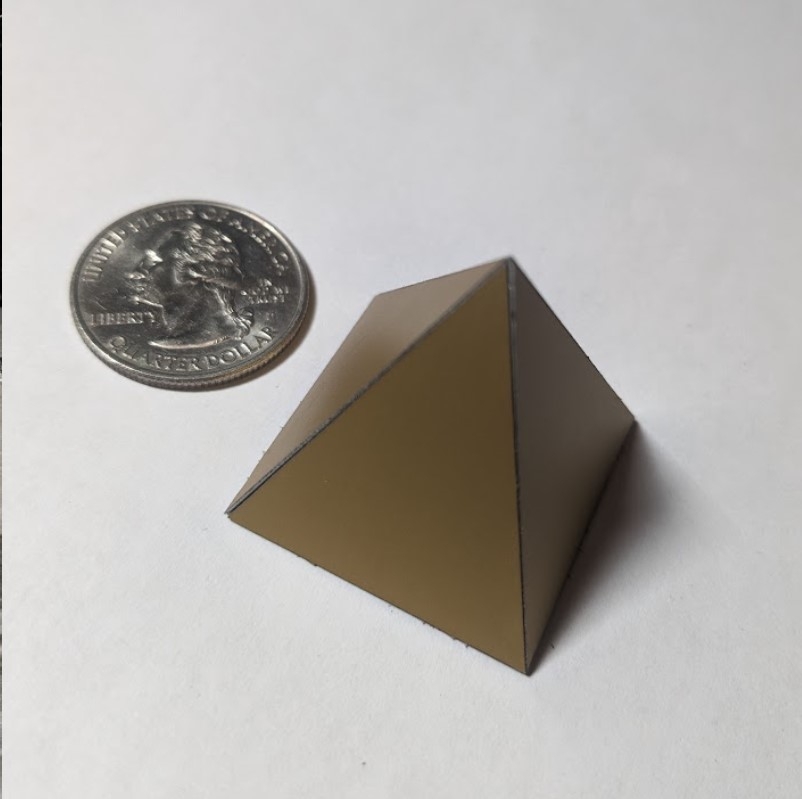
Image credit: LifeShip
Information-rich
“Throughout history, our ancestors have built pyramids across Earth,” Haldeman notes in the group’s post-landing message.
“Now, we as a species have created a pyramid on another celestial body that is more information-rich than any pyramid built before and will outlive the rest,” Haldeman added.
“This is a profound milestone in the evolution of life—one that even the greatest civilizations of the past, those who built pyramids, monuments, and cathedrals, would be in awe of,” said Haldeman.
Ups and downers
The group has been busy over the last few years.
LifeShip’s first DNA Seed Bank launched to the International Space Station (ISS) in April 2022, tucked away onboard a SpaceX Crew-4 mission. The capsule has the DNA of 500 species and over a thousand humans.
Later that year, in October, LifeShip’s second successful mission launched to the ISS on NASA’s Crew-5 mission. The capsule contained DNA from thousands of humans and 500 species representing plants native to 6 continents and 100 of Earth’s common food crops.
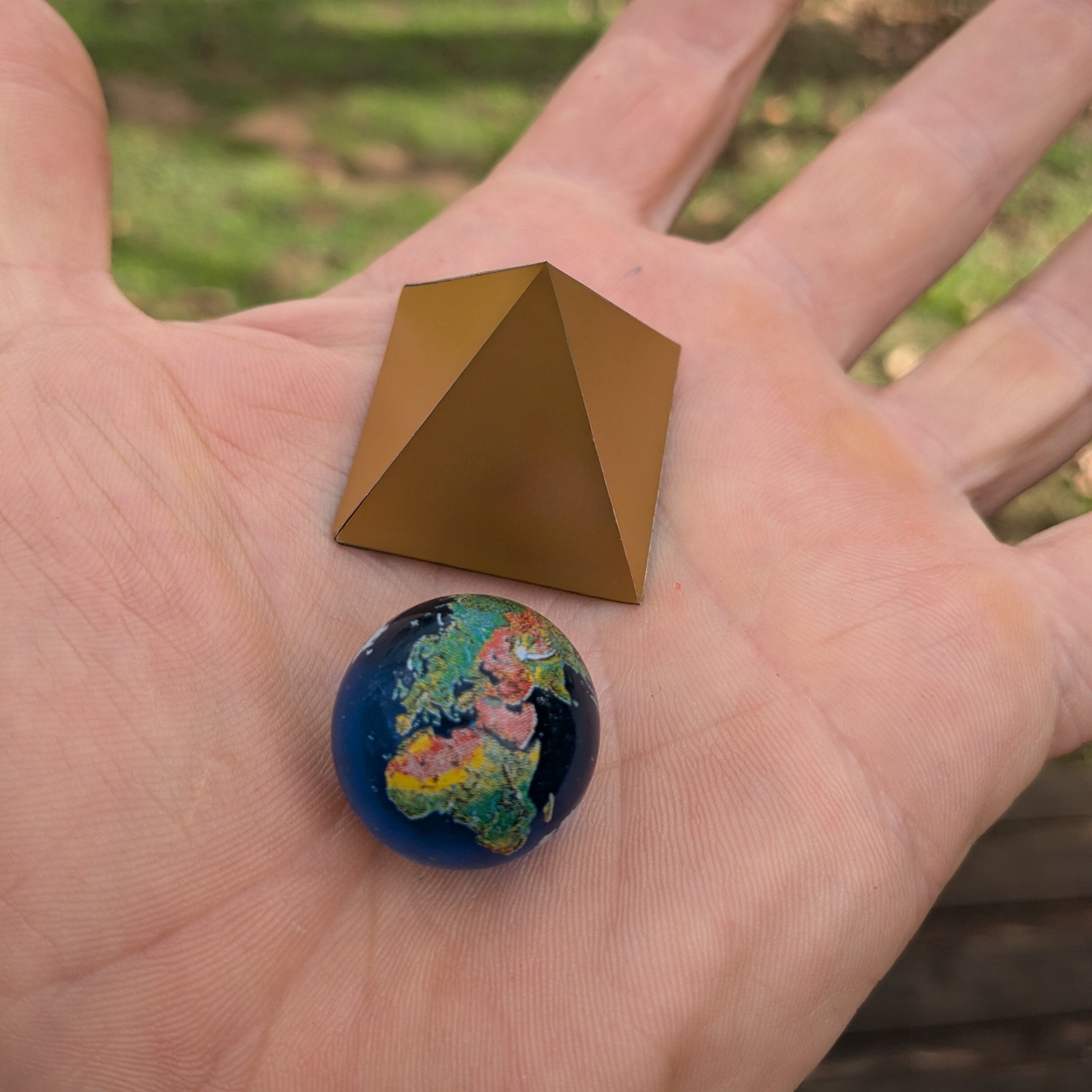
Image credit: LifeShip
LifeShip’s first mission to the Moon took place in early 2024, part of the Arch Mission Lunar Library II. But the flight of that Astrobotic private lunar lander was thwarted by a fuel leak, then ultimately and purposely targeted for reentry into Earth’s atmosphere.
The recently deployed AstroForge Odin spacecraft – meant to spearhead asteroid mining, also carries a LifeShip payload. But that probe now appears to be in trouble and its destination is doubtful.
Scheduled for delivery
An upcoming event is LifeShip onboard Astrolab’s Flex Lunar Innovation Platform (FLIP) Moon rover, scheduled to land at the lunar south pole as part of Astrobotic’s Griffin Mission 1.
That Astrobotic mission, originally meant to carry the NASA VIPER payload as part of NASA’s Commercial Lunar Payload Services initiative, is scheduled for delivery at the end of 2025.
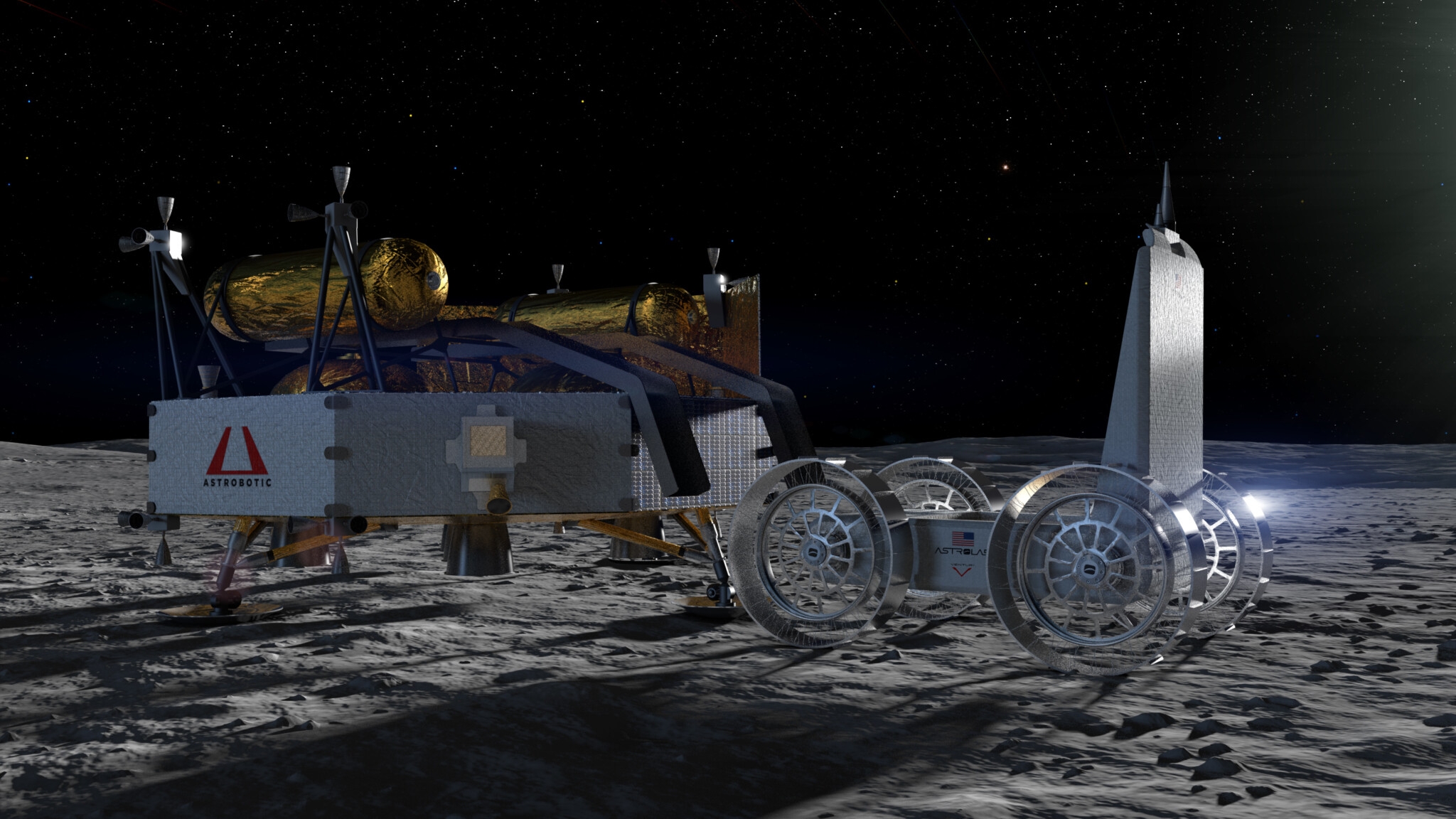
Image credit: Astrolab/Astrobotic
For more information on LifeShip, the group’s objectives, its missions and various partners, go to:

Image credit: NASA/Brandon Torres Navarrete
Engineers at NASA’s Ames Research Center in California’s Silicon Valley report progress in installing a heat shield on the first private spacecraft targeted for Venus.
Rocket Lab of Long Beach, California is leading the effort, along with their partners at the Massachusetts Institute of Technology (MIT) in Cambridge, Massachusetts.
Woven heat shield
NASA’s Heatshield for Extreme Entry Environment Technology (HEEET) was invented at the NASA Ames center
NASA’s Small Spacecraft Technology program, part of the agency’s Space Technology Mission Directorate, supported development of the heat shield for Rocket Lab’s Venus mission.
HEET is a textured material covering the bottom of the capsule (see above photo), a woven heat shield designed to protect spacecraft from temperatures up to 4,500 degrees Fahrenheit.
The private Venus probe would be deployed from Rocket Lab’s Photon spacecraft bus.

Image credit: Rocket Lab
This probe will take measurements as it descends through the clouds of Venus.
Morningstar missions
“We missed our January 2025 launch window and now wait until the next one summer 2026,” said MITs Sara Seager, a professor of planetary science, leader of the Morningstar Missions to Venus team – a series of planned missions designed to investigate the possibility of life in Venus’ clouds.
The first mission, a collaboration with Rocket Lab, is the small, low-cost probe designed to measure autofluorescence and backscattered polarised radiation to detect the presence of organic molecules in the clouds.
That spacecraft is now going on Rocket Lab’s yet-to-fly Neutron booster, instead of an Electron launcher, so the private Venus mission is tied to the Neutron coming online, Seager told Inside Outer Space.
“On my side we completed the instrument build and had our first integration tests with the probe, the part that will be dropped off into the Venus atmosphere. All is progressing,” said Seager.

Image credit: NASA/Ames Research Center

Firefly Blue Ghost now in lunar orbit.
Artwork credit: Firefly Aerospace/Inside Outer Space screengrab
The Firefly Aerospace Blue Ghost lunar lander is slated to touch down in Mare Crisium on the Moon’s near side no earlier than 2:45 a.m. Central Standard “Texas” Time (0845 UTC) on Sunday, March 2.
Blue Ghost’s final autonomous descent will take roughly an hour, kick-started by the craft’s 19-second burn that will place Blue Ghost on its final descent trajectory and landing spot within Mare Crisium, near Mons Latreille.

Image credit: Firefly Aerospace
Delivery service
Blue Ghost Mission 1 is slated to deliver 10 science and technology instruments to the lunar surface as part of NASA’s Commercial Lunar Payload Services (CLPS) initiative. Following its landing, Blue Ghost is set to operate payloads for a complete lunar day (about 14 Earth days).
On March 14, Firefly expects to capture high-definition imagery of a total eclipse when the Earth blocks the Sun above the Moon’s horizon.
Image credit: Firefly Aerospace
Horizon glow
Blue Ghost will then capture the lunar sunset on March 16, perhaps helping unravel how lunar dust levitates due to solar influences and creates a “lunar horizon glow” as documented by Apollo 17 crewmembers in 1972.
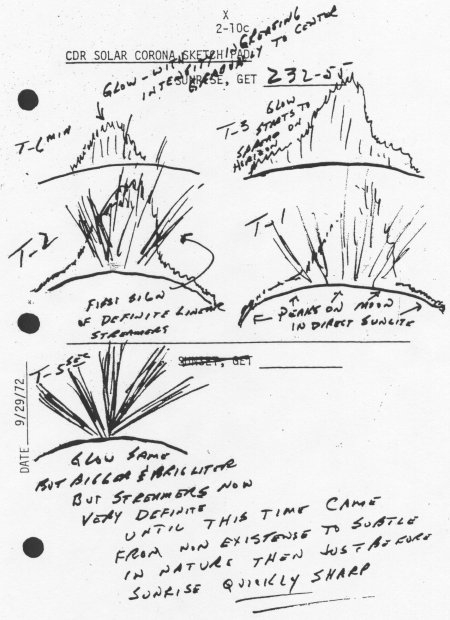
Apollo 17’s Gene Cernan sketches of puzzling glow .
Image credit: NASA/Gene Cernan
Just before sunrise, in lunar orbit, Apollo 17 commander, Gene Cernan spotted and sketched out a puzzling glow circling the horizon of the Moon.
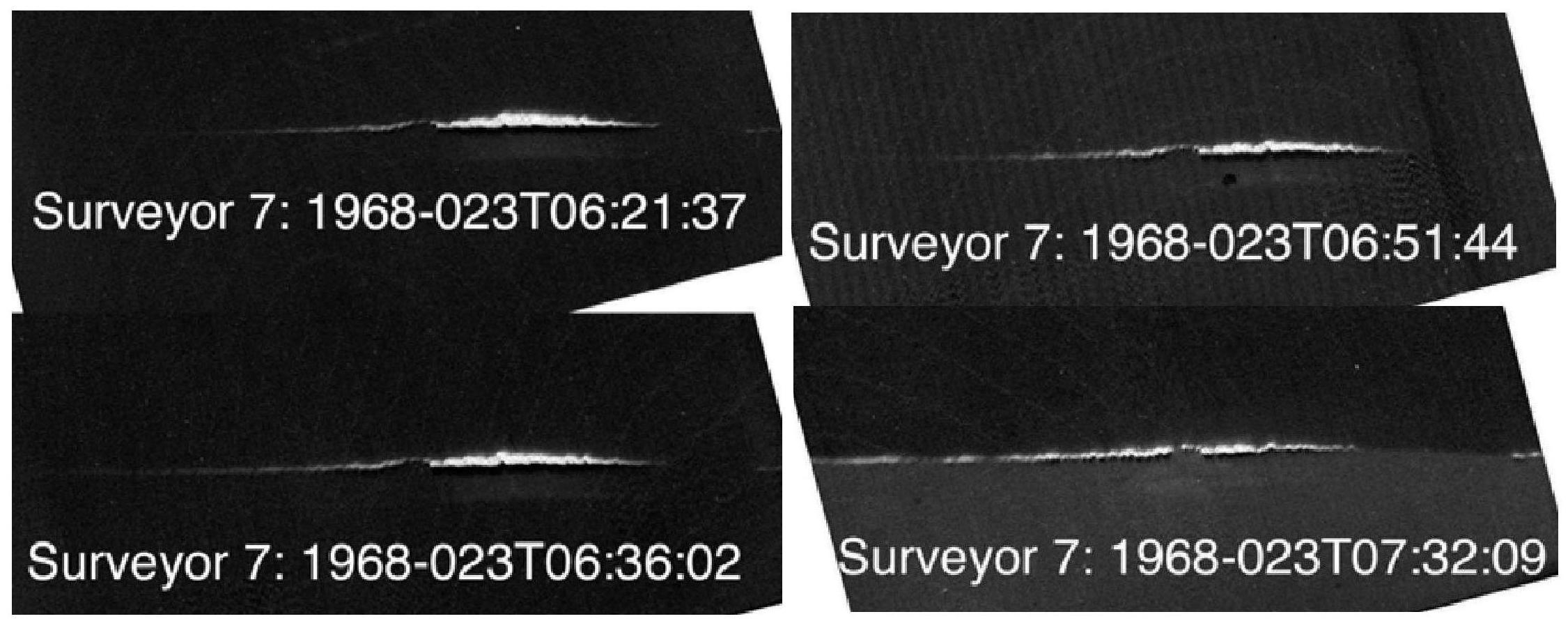
Surveyor 7 images of puzzling Moon glow.
Image credit: NASA
Years earlier, there were camera observations in 1967-1968 by several NASA Surveyor-series Moon landers of the phenomenon, dubbed Lunar Horizon Glow, believed to be electrically charged dust grains that could be levitated at sunset.
Firefly’s Blue Ghost will operate several hours into the lunar night following sunset.

Blue Ghost will capture imagery of the lunar sunset and provide critical data on how lunar regolith reacts to solar influences during lunar dusk conditions. The lander will then operate for several hours into the lunar night.
Artwork credit: Firefly Aerospace/Inside Outer Space screengrab
Soviet lunar landers
For space history buffs, Mare Crisium has already seen spacecraft landings.
The former Soviet Union’s Luna 23 was a robotic sample return mission that landed on November 6, 1974.
However, a spacecraft malfunction prevented the collection and return of a lunar sample. Due to a failure of the spacecraft’s Doppler equipment, the landing occurred with an increased vertical speed, which led to damage to the soil collection device
The entire spacecraft – consisting of a descent stage, ascent stage, and Earth-return capsule – is still at its touchdown spot.
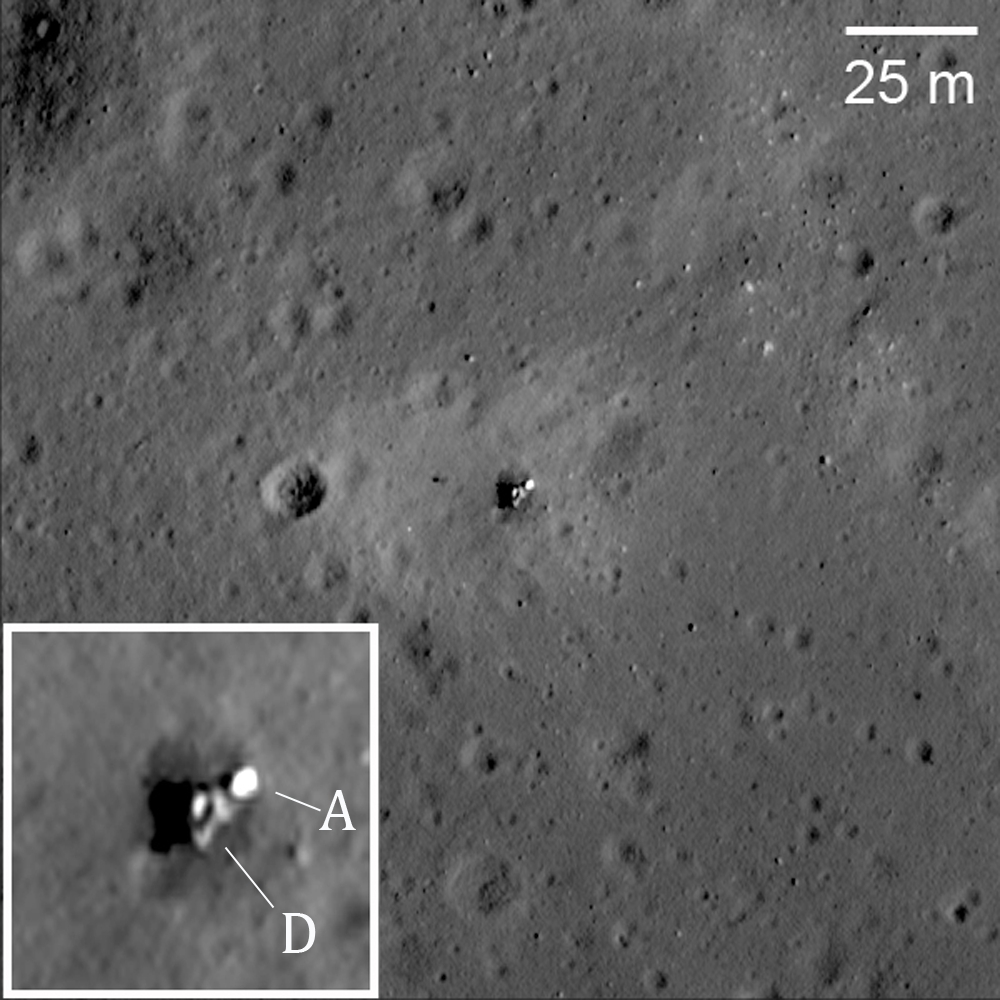
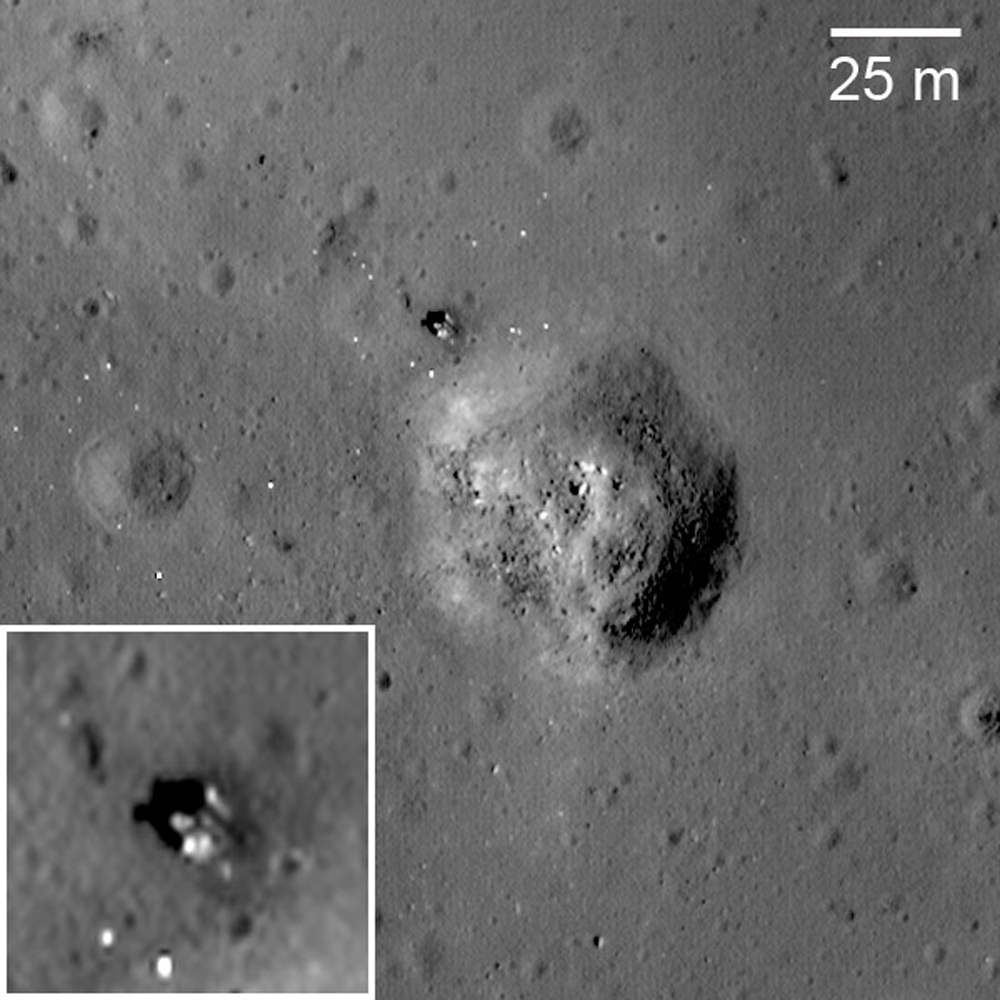
The entire Luna 23 vehicle (descent stage, ascent stage and Earth-return capsule) landed at an unexpected speed and fell on its side. Enlargement of vehicle in lower left inset; D: descent stage, A: ascent stage.
Image credit: NASA/GSFC/Arizona State University
This lander struck the surface at a very high velocity, tipping over as indicated in imagery taken years later by NASA’s Lunar Reconnaissance Orbiter (LRO).
Follow-up success
After the failure of Luna 23, the Soviet Union’s Luna 24 also landed in Mare Crisium on August 18, 1976. As noted by postings on the Lunar Reconnaissance Orbiter Camera (LROC) Science Operations Center website at Arizona State University, the landing sites of Luna 23 and 24 are only 1.4 miles (2.3 kilometers) apart.
Successful Soviet Moon lander – Luna 24.
Image credit: NASA/GSFC/Arizona State University
“The region of Mare Crisium where they landed is a typical smooth mare surface with little relief in the immediate vicinity,” the website notes.
The successful Luna 24 rocketed back to Earth its sample collection on August 22, 1976.
Given the incoming trajectory of Firefly’s Blue Ghost to its targeted touchdown, “It’s not within our procedures to capture the shot,” advises Firefly Aerospace, so maybe/maybe not.
Stay tuned!
To follow the lunar landing attempt by the Firefly Aerospace Blue Ghost, go to:
LIVE TRACK! Firefly Blue Ghost Lunar Landing at:
https://www.youtube.com/watch?v=k93YE-otlLo
Live coverage, jointly hosted by Firefly and NASA, is scheduled to begin at 1:30 a.m. CST (0730 UTC). Go to:
https://www.youtube.com/watch?v=ChEuA1AUJAY
For detailed information on the mission and its payloads, go to:
https://fireflyspace.com/missions/blue-ghost-mission-1/

Image credit: Firefly Aerospace

