Archive for November, 2024
 Author:
  November 10th, 2024
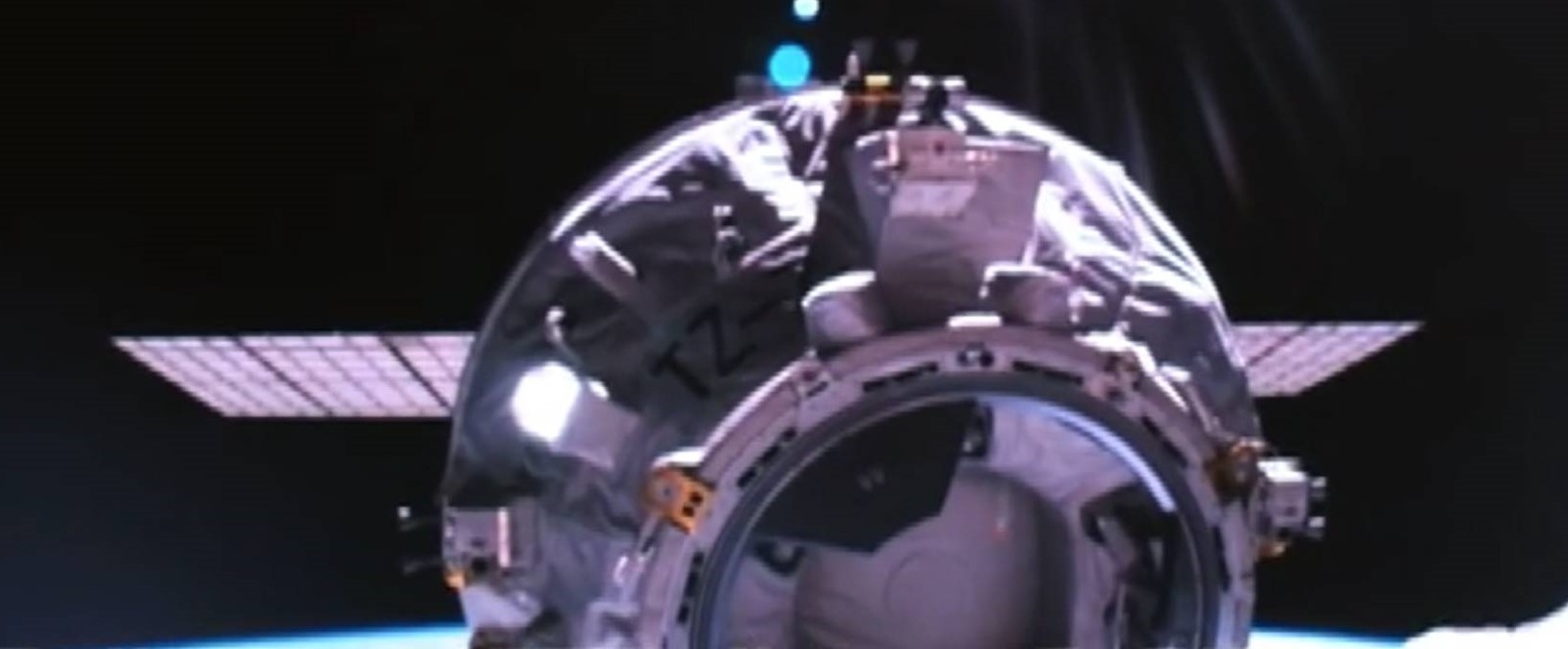
Tianzhou-7 cargo ship departs China’s space station. Image credit: CCTV/CMSA/Inside Outer Space screengrab
China’s Tianzhou-7 supply craft has separated from the country’s space station, a step that signals the upcoming launch of a new cargo craft to the orbital outpost.
The Tianzhou-7 separated from the station combination on Sunday, according to the China Manned Space Agency (CMSA).
The cargo craft will re-enter the atmosphere in a controlled manner soon, the CMSA added.
China launched the Tianzhou-7 cargo spacecraft on January 17 from the Wenchang Spacecraft Launch Site in its southern Hainan Province. It later docked with the rear port of the Tianhe core module of the multi-module space station.
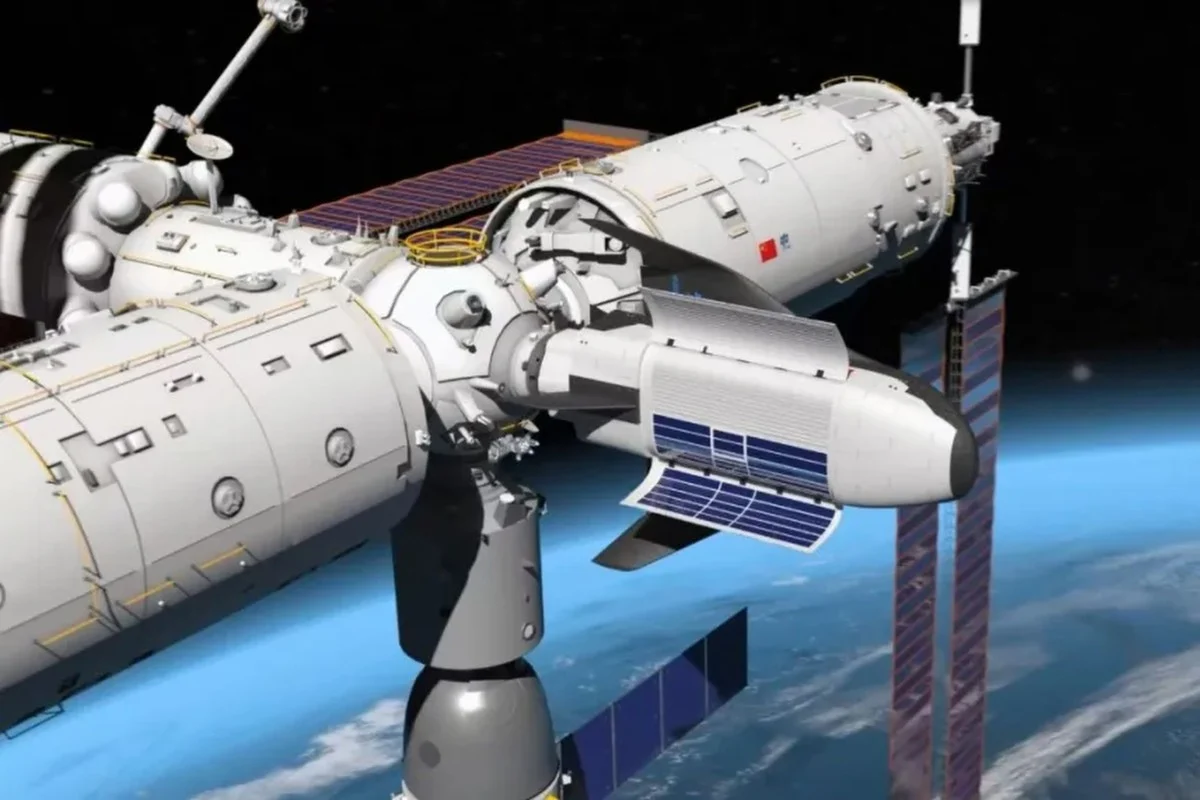
Artwork shows the design of the HaoLong space shuttle cargo-carrier.
Image credit: WeChat/ Aviation Industry Corporation of China
Space logistics
As recently reported by China’s Xinhua news agency, work is underway to scope out space logistics in the future, including a space cargo shuttle.
Late last month, the CMSA detailed the winners of its solicitation for overall schemes aimed at low-cost cargo transportation to China’s station.
One system is the Qingzhou cargo spacecraft sporting a volume of up to 27 cubic meters as blueprinted by the Innovation Academy for Microsatellites of the Chinese Academy of Sciences (IAMCAS).
This cargo spacecraft would be launched by the Lijian-2 rocket that’s manufactured by CAS Space.
Winged craft
Another design is the HaoLong space cargo shuttle, developed by the Chengdu Aircraft Design and Research Institute under the Aviation Industry Corporation of China (AVIC).
HaoLong is a winged, reusable spacecraft, incorporating a large wingspan, high lift-to-drag ratio, and a reusable technology plan, according to the Xinhua report.
HaoLong would be launched by a carrier rocket, dock with the space station, later executing de-orbit braking and re-entry maneuvers, culminating in a horizontal landing on an airport runway.
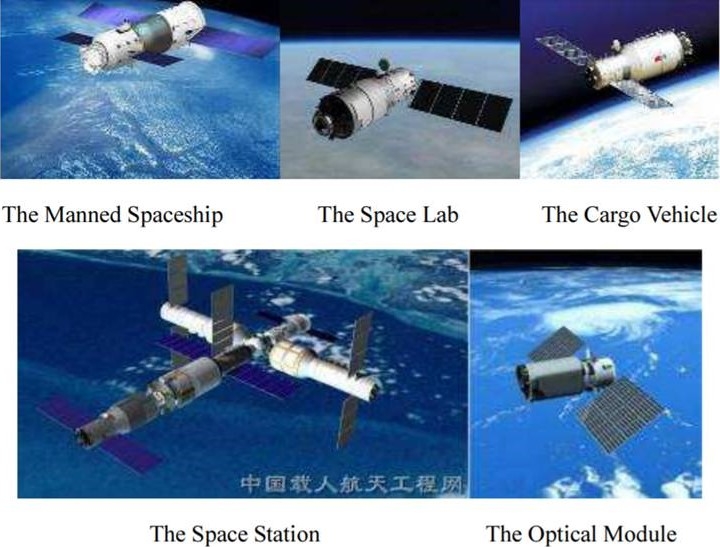
Credit: CMSA
Overall, China is looking to establish an energetic and competitive landscape in the low-cost cargo spacecraft sector, one that will also rely on the country’s expanding commercial launch industry.
Next supply ship
Due to the impact of typhoon Yagi on the Wenchang Space Launch Center in Hainan province, China’s next cargo mission to the Tiangong space station, the Tianzho- 8 supply ship has been rescheduled to launch in mid-November, according to Lin Xiqiang, deputy director of the CMSA.

Image credit: CCTV/CMSA/Inside Outer Space screengrab
Meanwhile, a newly aired video by China Media Group captures the process of the handover between China’s Shenzhou-18 and Shenzhou-19 crews at the space station, including samples and equipment for scientific experiments.
Go to video at:
 Posted in

Image credit: CSIS Aerospace Security Project
“There is a lot of promise—and hype—around the future of humankind in cislunar space. But there are also hard realities,” explains a report by the Aerospace Security Project, a study arm of the Center for Strategic and International Studies (CSIS).
Salmon Swimming Upstream – charting a course in cislunar space points out that “only the United States and China are positioned to develop and launch crewed spacecraft to the Moon.”
The report’s title was prompted by Apollo 11 moonwalker, Neil Armstrong, the first person on the Moon: “I think we’re going to the Moon because it’s in the nature of the human being to face challenges. It’s by the nature of his deep inner soul . . . we’re required to do these things just as salmon swim upstream.”
Common ground
A key comment by the report’s principal author, Clayton Swope, and contributing author, Louis Gleason is that cislunar space and beyond is probably the best environment—maybe the only environment today—where the United States and China, as well as many other nations, can find common ground on shared interests.

Image credit: CSIS Aerospace Security Project
“The United States should seize this opportunity, both for U.S. national interests and for humankind more broadly,” the report concludes.
Policies and activities
This informative report features:
- National Cislunar Policies and Activities
- International Space Governance Frameworks
- Non-space International Frameworks with Analogues to Space Governance
- Cislunar Governance and Policy Challenges
- Cislunar Operational and Infrastructure Challenges
- Key Considerations for Next Steps
To access the report — Salmon Swimming Upstream – charting a course in cislunar space – go to:

Image credit: Initiative for Interstellar Studies
Here’s a travel dispatch…
A design competition has been announced to explore the feasibility of crewed interstellar travel via generation ships, using current and near-future technologies.
Called Project Hyperion, the contest centers on crafting a generation ship designed for long-duration interstellar travel, where the journey may take centuries to complete.
The idea behind a generation ship is that the initial crew would live, reproduce, and die on the ship, with their descendants continuing the journey until reaching the long-haul destination point. These ships are self-sustaining ecosystems, featuring agriculture, habitation, and other essential life-support systems to ensure survival across multiple generations.

Image credit: Initiative for Interstellar Studies
Multi-disciplinary teams
The competition is offering cash prizes and is running from November 1, 2024 to June 2, 2025 and is open to all. Announcement of the winners is pegged at June 2, 2025.
There is a registration fee of $20 with inscriptions to be accepted until December 15, 2024.
The team composition for competing in the contest is to be multi-disciplinary. A suggested makeup of each team is having at least one architectural designer; at least one engineer; at least one social scientist (sociologist, anthropologist, etc.).

Starships in our lifetime
Sponsor of the Project Hyperion design competition is the Initiative for Interstellar Studies (i4is) is based in London, England with a U.S. sister office in Oak Ridge, Tennessee.
The Initiative is working towards the achievement of interstellar flight through knowledge to the stars — Starships in our lifetime.
For more information, go to:
https://www.projecthyperion.org/
A downloadable brief on the competition can be found at:
https://www.projecthyperion.org/_files/ugd/91ab16_ce159a8f438b4f529a46df6b70681978.pdf
The Initiative for Interstellar Studies website is at:

Reverence is the second Sierra Space Dream Chaser craft taking shape on the factory floor in Louisville, Colorado.
Image credit: Barbara David
LOUISVILLE, Colorado – A stroll through the factory floor of Sierra Space yields an eye-full of hardware destined for Earth orbit, from the commercial company’s second space plane now in build-up mode to work on large inflatable habitats that offer ultra-roomy, in-space housing for future crews.

Shooting Star cargo modules under assembly and testing at Sierra Space. The first module is complete and now at NASA’s Kennedy Space Center.
Image credit: Barbara David
Meanwhile, the inaugural flight of the Dream Chaser, space plane Tenacity to the International Space Station, is slated for liftoff atop a United Launch Alliance (ULA) Vulcan Centaur launch vehicle no earlier than May 2025. Tenacity is now at NASA’s Kennedy Space Center in Florida.

Shawn Buckley, vice president of Space Destinations and In-Space Infrastructure at Sierra Space explains company roadmap.
Image credit: Barbara David
Adjacent to the factory floor here at Sierra Space is mission control to support Dream Chaser operations. The control room features a live feed from NASA’s Johnson Space Center.

Angie Wise, Sierra Space’s chief safety officer and senior vice president for mission assurance in mission control that will support Dream Chaser operations.
Image credit: Barbara David
Take a tour of Sierra Space by visiting my new SpaceNews story — Sierra Space expands spaceplane fleet with in-house mission control – at:
https://spacenews.com/sierra-space-expands-spaceplane-fleet-with-in-house-mission-control/
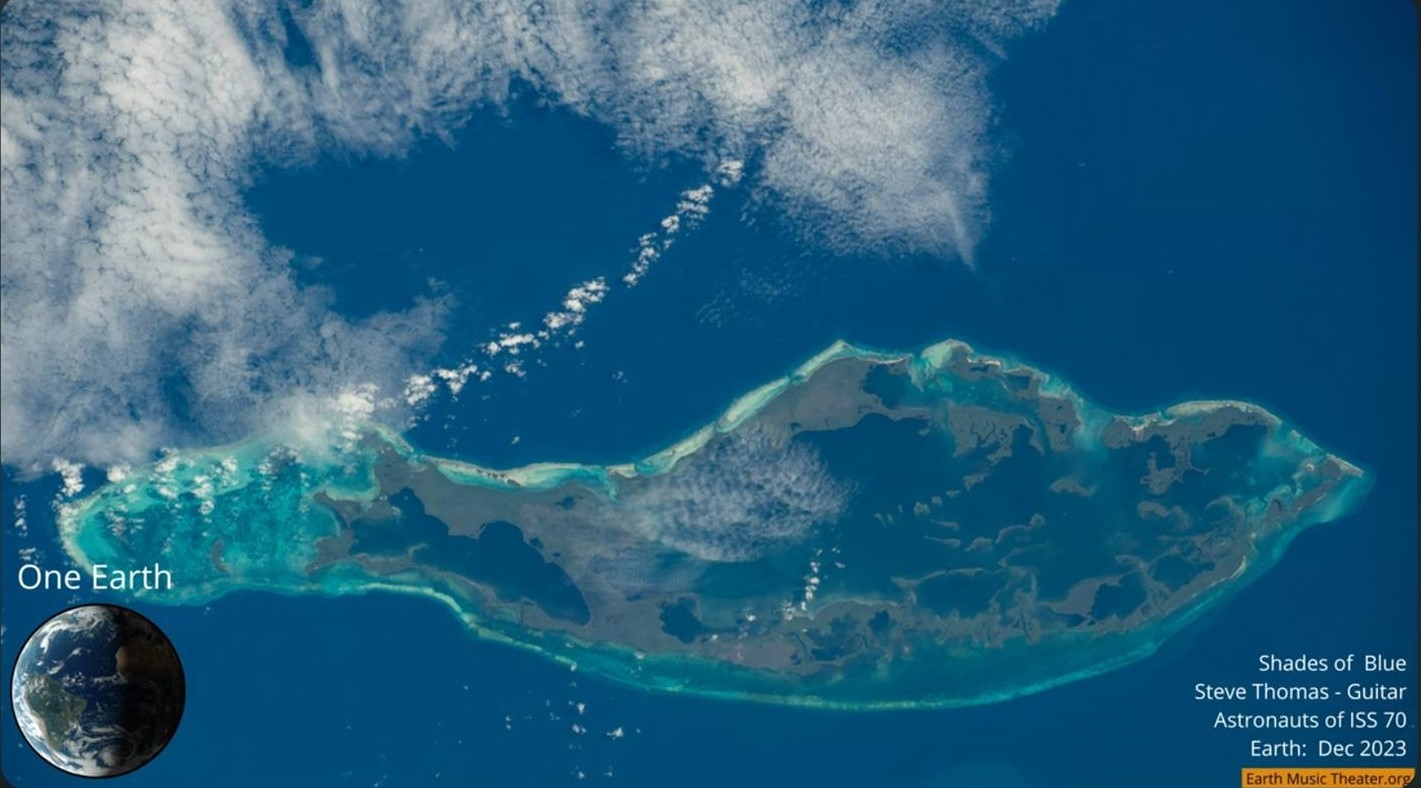
Image credit: ASE/NASA ISS
Enjoy this mesmerizing montage of photos and music celebrating One Earth.
“Astronauts aboard the International Space Station Expedition 70 took these artistic photos in wonderfully diverse shades of blue in December, 2023,” explains Dan Barstow, Director of Earth Music Theater.
“Steve Thomas crafted this musical ‘guitarscape’ to resonate with the lovely blues of our planet,” Barstow explains.
Go to this “Shades of Blue” video at:
https://youtu.be/k2ENTuPuQoo?si=UY_OPy6d9qbMnOk8
Out the window
For Shades of Blue, photos were taken by astronauts in December 2023 on the International Space Station Expedition 70
USA – Jasmin Moghbeli, Jeanette Epps, Loral O’Hara, Matthew Dominick, Michael Barratt, Tracy Caldwell-Dyson
Denmark – Andreas Mogensen
Japan – Satoshi Furukawa
Russia – Alexander Grebenkin, Konstantin Borisov, Nikolai Chub, Oleg Kononenko
Earth, music and education
Earth Music Theater is produced by the Association of Space Explorers (ASE); site operated by ASE. ASE has copyrights for Earth Music movies. Musicians hold copyrights to the music, and license ASE.
Both ASE & musicians can freely use the movies for Earth, music and education.
University of California Television (UCTV) posts a series of movies to their YouTube/@EarthSeranade
Source images taken by ISS astronauts are in public domain thanks to NASA Crew Earth Observation.
Go to Earth Music Theater at:

Image credit: NASA
Now that the election is over, here are some of the major issues facing the nation and next Congress in regards to space programs, according to the U.S. Government Accountability Office (GAO).
“Competition in space is growing as more countries launch their own space programs. We’ve reviewed NASA’s major projects—including sending Americans back to the moon by the end of September 2026 and then (eventually) on to Mars,” reports the GAO.

Image credit: NASA
“Our work has reported several challenges these efforts face that have caused delays and increased costs,” the GAO notes.
Space issue page
A GAO “space issue” page outlines the government watchdog’s most recent work on NASA’s efforts.
Spotlighted are the following reports and open recommendations:
- NASA Artemis Missions: Exploration Ground Systems Program Could Strengthen Schedule Decisions
- Artemis Programs: NASA Should Document and Communicate Plans to Address Gateway’s Mass Risk
- NASA Lunar Programs: Improved Mission Guidance Needed as Artemis Complexity Grows
To read these GAO space reports, go to:

Image credit: CCTV
Space specialists in China have begun to assess experiment samples brought back by the Shenzhou-18 crew that touched down November 4 in north China’s Inner Mongolia Autonomous Region.
Ye Guangfu, Li Cong and Li Guangsu parachuted back to Earth after their six-month stay in the country’s Tiangong space station. The Shenzhou-18 crew conducted some 90 experiments and tests in the fields of material science, life science, medicine, space technology and the basic physics in microgravity.

Image credit: China Global Television Network (CGTN)/Inside Outer Space screengrab
Sample categories
According to China Central Television (CCTV), the space trio brought back 55 categories of scientific experiment samples, involving 28 subjects in space life sciences, space materials sciences, microgravity combustion science and other fields.
The samples weigh over 75 pounds (34.6 kilograms) in total.
On Monday morning, the life science experiment samples of 24 categories were transported to the Space Application Center of the Chinese Academy of Sciences in Beijing.
Space exposure
Zhang Gaosen, associate researcher at the Northwest Institute of Eco-Environment and Resources, Chinese Academy of Sciences told CCTV:
“Our extreme-environment microbial samples were mainly exposed outside the cabin in the space, just to get closer to the real space environment. The samples were exposed outside the cabin for six months.”
Zhang said researchers want to compare the results with the last batch of samples which survived a three-month extravehicular exposure to determine how long their survival limit is in the space environment.

Image credit: China Global Television Network (CGTN)/Inside Outer Space screengrab
Blades, lasers, catalysts
The returned-from-space material and combustion samples are being transported to Beijing along with the return capsule of Shenzhou-18.
There are 30 categories of material samples including composite lubricating materials, optical fibers and optical films.
“The research results of these samples will provide important technical support for the preparation and application of materials in the fields of next-generation aero-engine turbine blades, fiber lasers for space, miniaturized high-sensitivity catalysts, and precision medical repair,” said Ma Ping, deputy chief designer of the Space Application Engineering and Technology Center of the Chinese Academy of Sciences.
Zebrafish and hornwort
Tao Yi, senior engineer at the Shanghai Institute of Technical Physics, Chinese Academy of Sciences, added that what was conducted in orbit mainly were to collect fish egg boxes and water samples in the early stage.
“We sampled water three times in total, respectively on the 10th, 20th and 30th day (from the beginning of the experiment), and replace the fish food boxes in the middle stage,” Tao said. “Next, we will study the physical and chemical properties of the collected water samples to explore the law for stable operation of the binary system composed of zebrafish and hornwort.”

Handover of station duties between Shenzhou-18 and Shenzhou-19 crew members.
Image credit: CCTV/CNSA
There are 24 categories of life science samples, including zebrafish culture medium, amino acids, and radiation-resistant microorganisms.
The zebrafish culture medium focuses on the study of the substance circulation mechanism of aquatic ecosystems in space environment, so as to provide theoretical support for the construction of complex ecosystems in long-term stable operation in space, reports CCTV.
New station crew
Meanwhile, the newly arrived Shenzhou-19 crew onboard the Tiangong orbiting outpost — Cai Xuzhe, Song Lingdong and Wang Haoze — marks the fourth piloted flight in the application and development phase of China’s space station, and is the 33rd flight of China’s human spaceflight program.
The Shenzhou-19 crew successfully joined the Shenzhou-18 crew within the space station on October 30.
Crew members Song and Wang are on their first spaceflight mission. Cai was on board the Tiangong space station as part of the Shenzhou-14 mission in 2022. With this mission underway, Cai set a new record for the shortest interval between two spaceflights for Chinese astronauts.
Wang is a female space flight engineer and the third Chinese woman to take part in a crewed spaceflight mission.

Pre-launch photo shows Shenzhou-19 crew.
Image credit: CCTV/Inside Outer Space screengrab

Image credit: Boeing Space/Inside Outer Space screengrab
The Boeing Space-built X37-B robotic space plane is currently performing advanced aerobraking maneuvers, taking it from a highly elliptical orbit and lowering its altitude using minimal fuel.

Image credit: Boeing Space/Inside Outer Space screengrab
“This first-of-its-kind demonstration expands our knowledge of dynamic operations between orbits,” explains Boeing Space.
Boeing Space is partnered with the United States Space Force to showcase the space plane’s unique attributes.
The space plane’s use of aerobraking enables an orbit change and the safe disposal of its service module components in accordance with recognized standards for space debris mitigation, notes the aerospace firm.
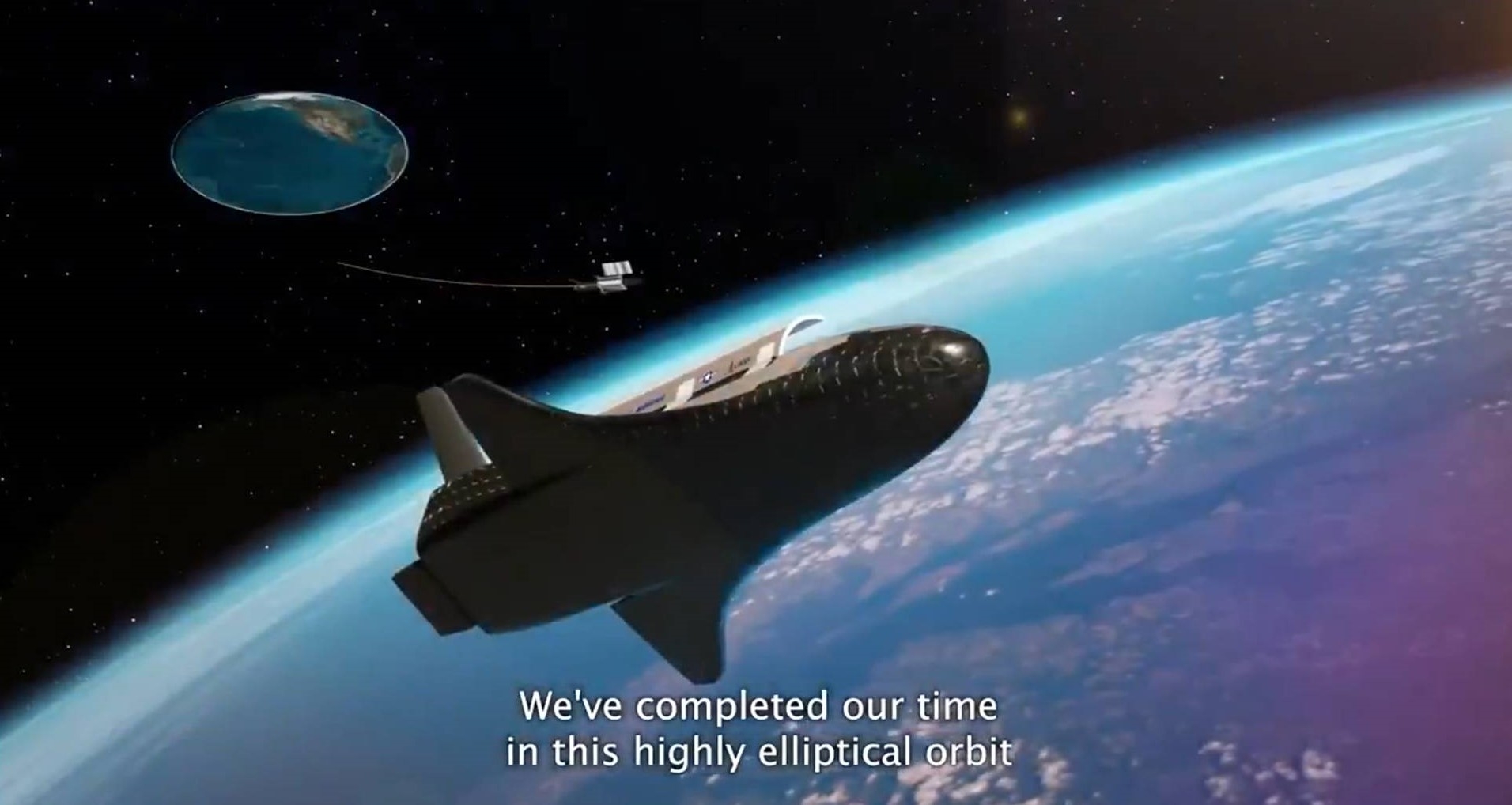
Image credit: Boeing Space/Inside Outer Space screengrab
A just-issued Boeing Space video spotlights the program and can be viewed at:
https://x.com/BoeingSpace/status/1852470814383214848
Image credit: Boeing Space/Inside Outer Space screengrab
Image credit: CCTV/CNSA
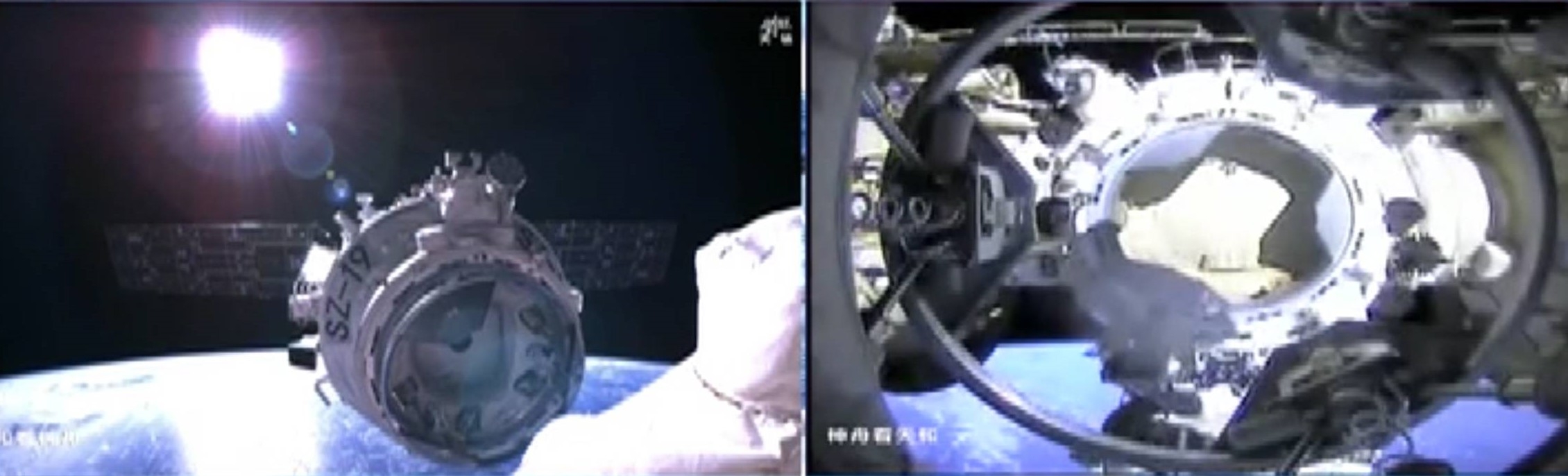
There has been an in-space handover of space station operations between the country’s Shenzhou-18 and Shenzhou-19 crews.
“Today, we pass the space station key to you as a relay baton. We trust that you will make our space home even better,” said Ye Guangfu, mission commander of the Shenzhou-18 taikonaut trio.
The transfer of control of the Tiangong space station took place on Friday.
Cai Xuzhe, Song Lingdong, and Wang Haoze joined their Shenzhou-18 colleagues on Wednesday after their Shenzhou-19 craft completed a rapid automated rendezvous and docking with the space station’s core module, Tianhe.
CCTV/CNSA/Inside Outer Space screengrab
Night landing
Meanwhile, recovery teams are in practice-mode at the Dongfeng landing site in north China’s Inner Mongolia Autonomous Region for return to Earth of Guangfu, and Shenzhou-18 crewmates, Li Cong, and Li Guangsu.
Lu Shengwang, a member of the Shenzhou-18 landing site survey team told China Central Television (CCTV) that Shenzhou-18 will return at night.
“We have prioritized the use of infrared thermal imagers for capturing images. To ensure the highest image quality possible, we have conducted technical research on infrared image processing, yielding good results,” Lu said. “In addition, we have employed in-depth learning technology to enhance our target recognition methods, significantly boosting the stability and reliability of target tracking.”
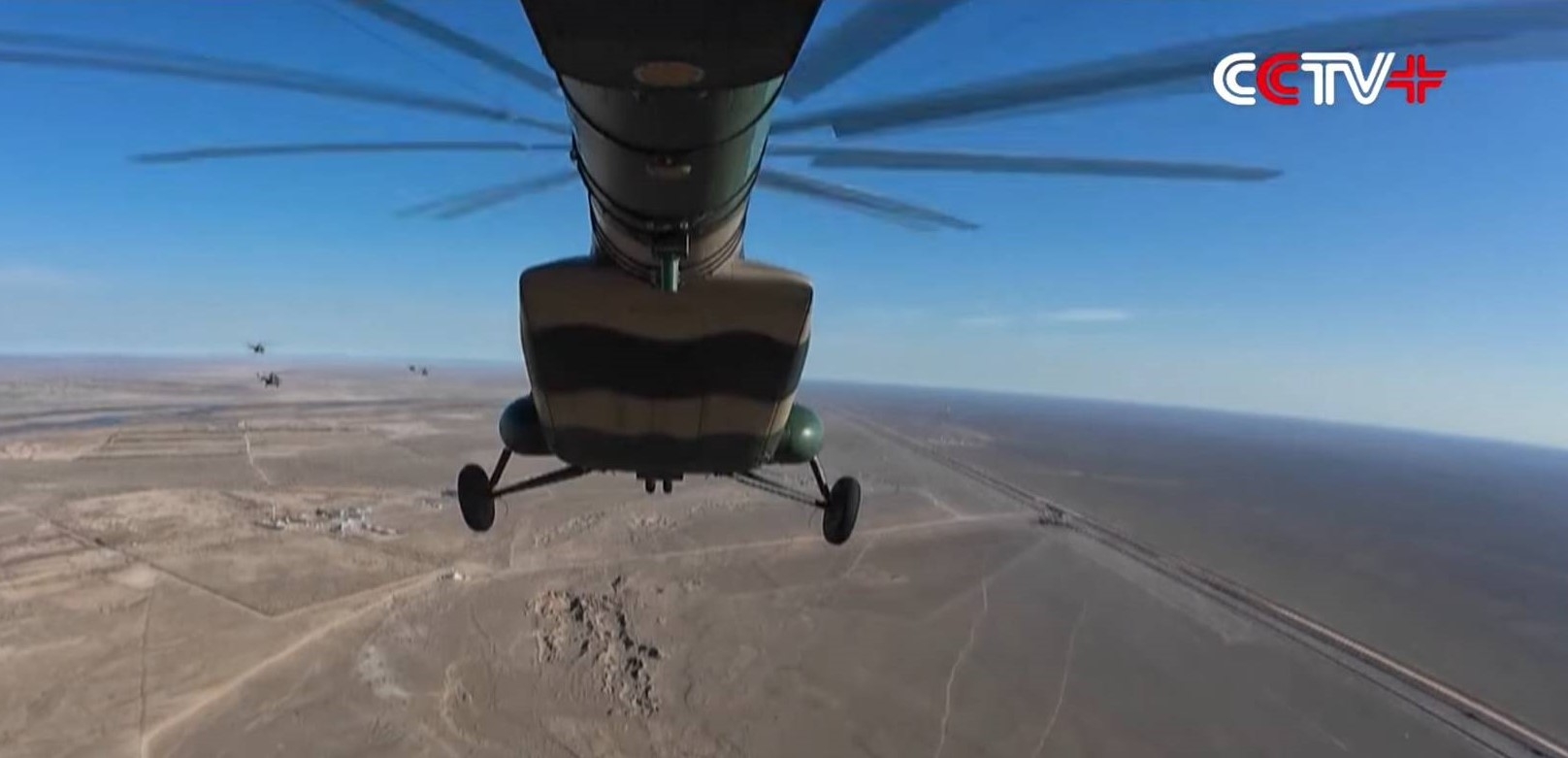
Image credit: CCTV/Inside Outer Space screengrab
Monday departure
The Shenzhou-18 crew is set to depart for Earth aboard the Shenzhou-18 spaceship on Monday. The return capsule of the Shenzhou-18 manned spaceship, carrying three astronauts, is slated to touch down on Earth in the early morning on November 4.
Wang Guoliang, a communications operator, space search and rescue team at the Jiuquan Satellite Launch Center added: “Our integrated communication vehicle has undergone upgrades to its satellite antenna system and the command and dispatch vehicle has been thoroughly optimized to ensure that image transmission is now more stable and efficient.”
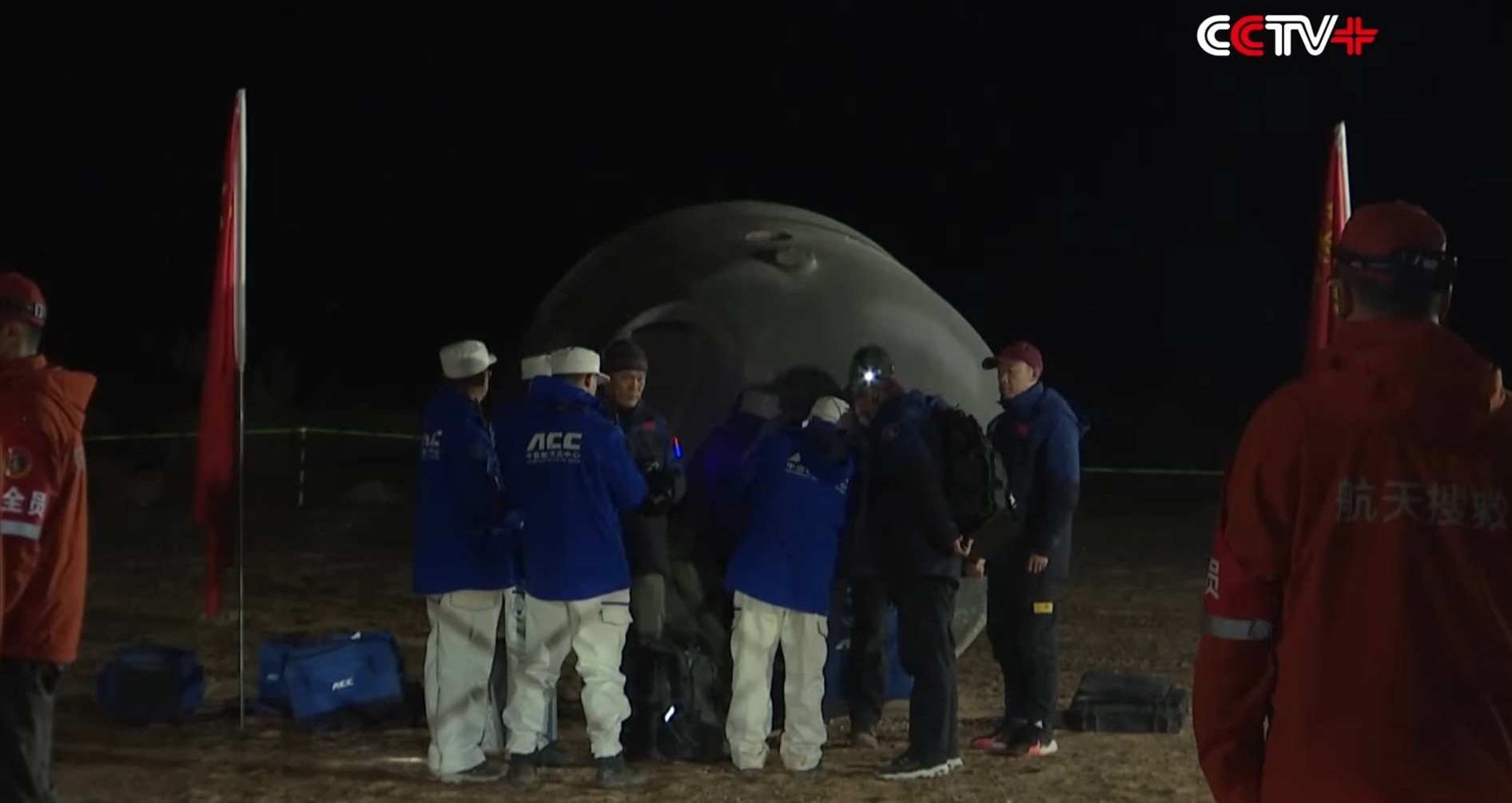
Image credit: CCTV/Inside Outer Space screengrab
Desert lighting
As reported by CCTV, “the Gobi Desert’s uneven terrain, dust and debris stirred up by vehicles, as well as fallen tree branches and barbed wire that can cause tire blowouts, constitute significant challenges to the ground teams’ search efforts.”
The ground team’s vehicles have received upgrades to their lighting systems, including warning lights to maintain safe distances between ground search vehicles.
“This is the lighting equipment we set up at the landing site,” said Sun Liwen, leader of the search and rescue team of the Jiuquan Satellite Launch Center.
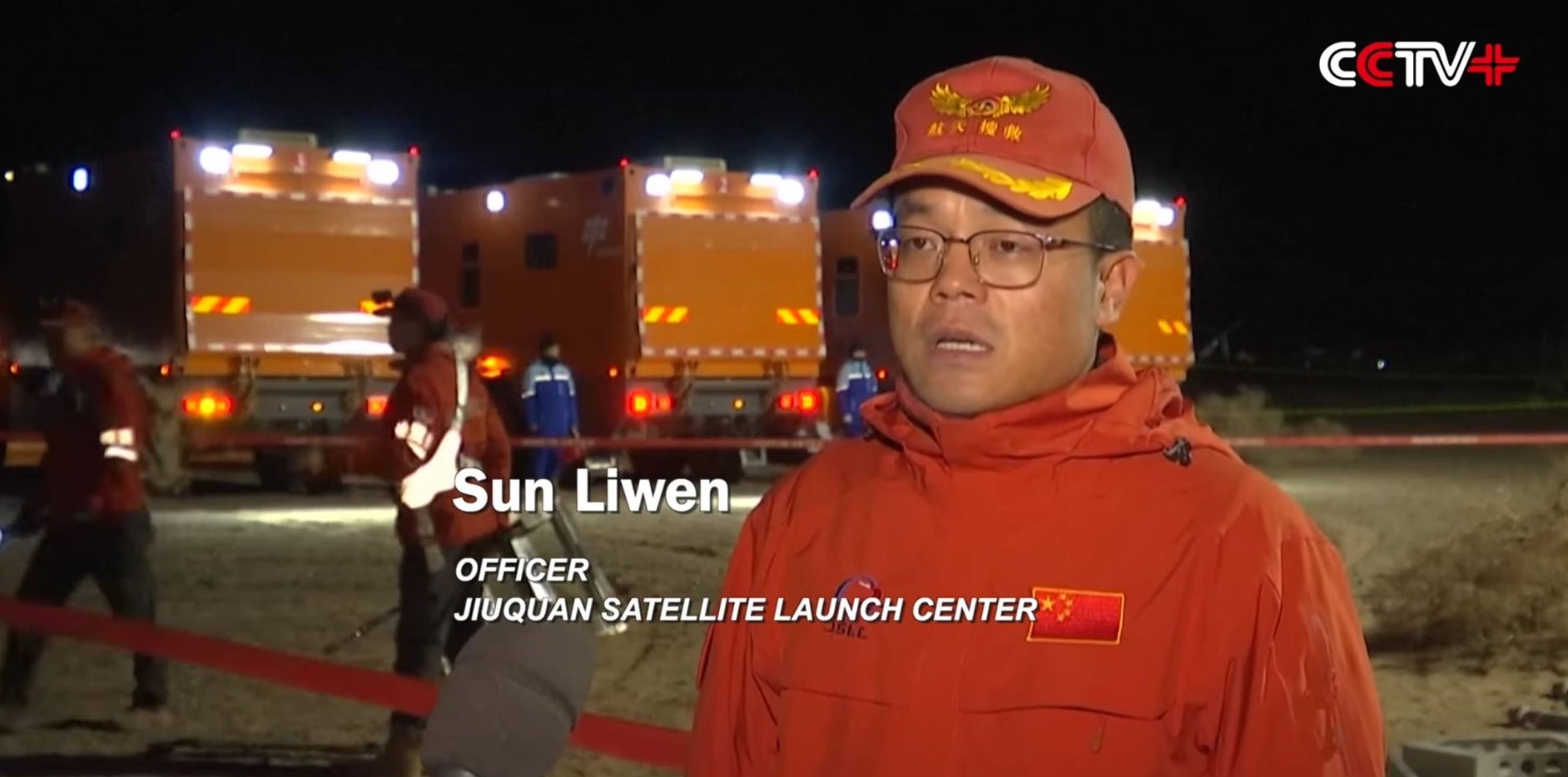
Image credit: CCTV/Inside Outer Space screengrab
“We have installed four 400-kilowatt square lights on it. The pole can be elevated to 10 meters, ensuring that the area is illuminated as brightly as during the day,” Sun said.
The Dongfeng landing site has successfully carried out six search and rescue missions for Shenzhou spacecraft.
To handle the incoming Shenzhou-18 mission, the landing site has upgraded its communication equipment, refined contingency plans, and conducted multiple rounds of specialized night training and coordinated drills.
For CCTV video on recovery trial-runs go to:

