Archive for September, 2024
 Author:
  September 3rd, 2024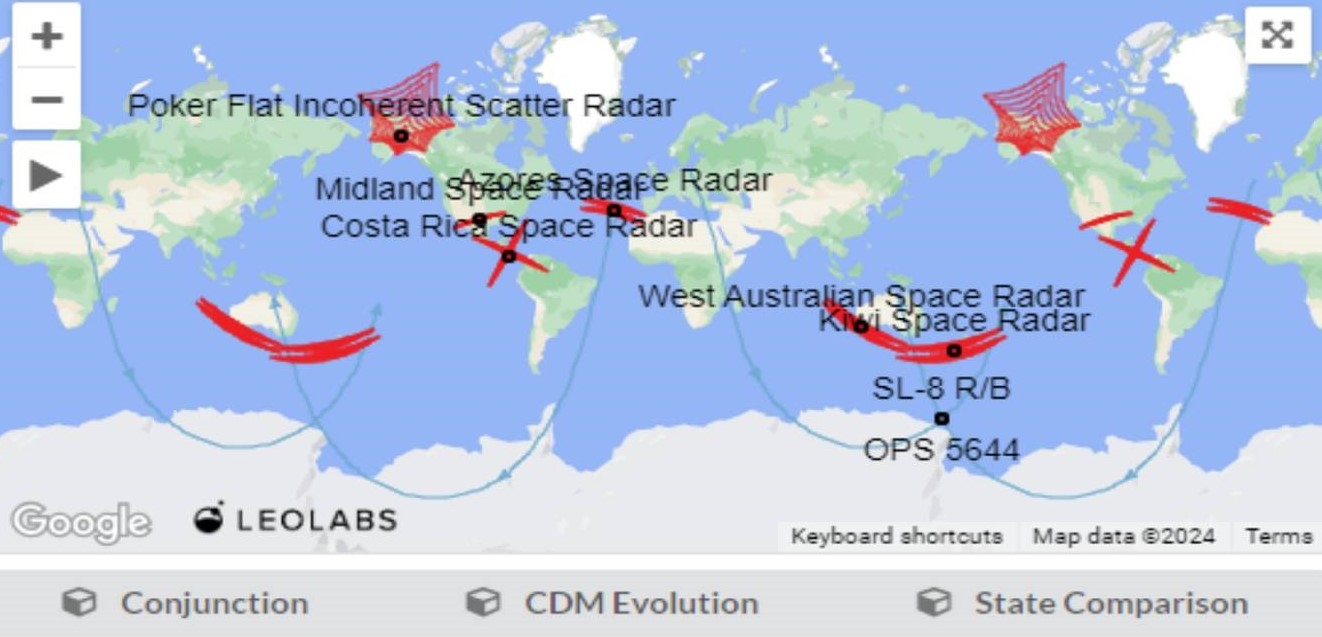
Image credit: LeoLabs/McKnight
Old hardware discarded in Earth orbit is haunting our future hopes for space sustainability.
That’s the word from space debris guru, Darren McKnight, senior technical fellow at LeoLabs, an organization that persistently monitors activity in space to reveal threats to safety and security.
In a September 1 communiqué on near hits of space hardware, McKnight notes that on May 29, a defunct U.S. Defense Meteorological Satellite Program (DMSP) spacecraft crossed paths with an abandoned rocket body from 1971, lofted by the former Soviet Union.
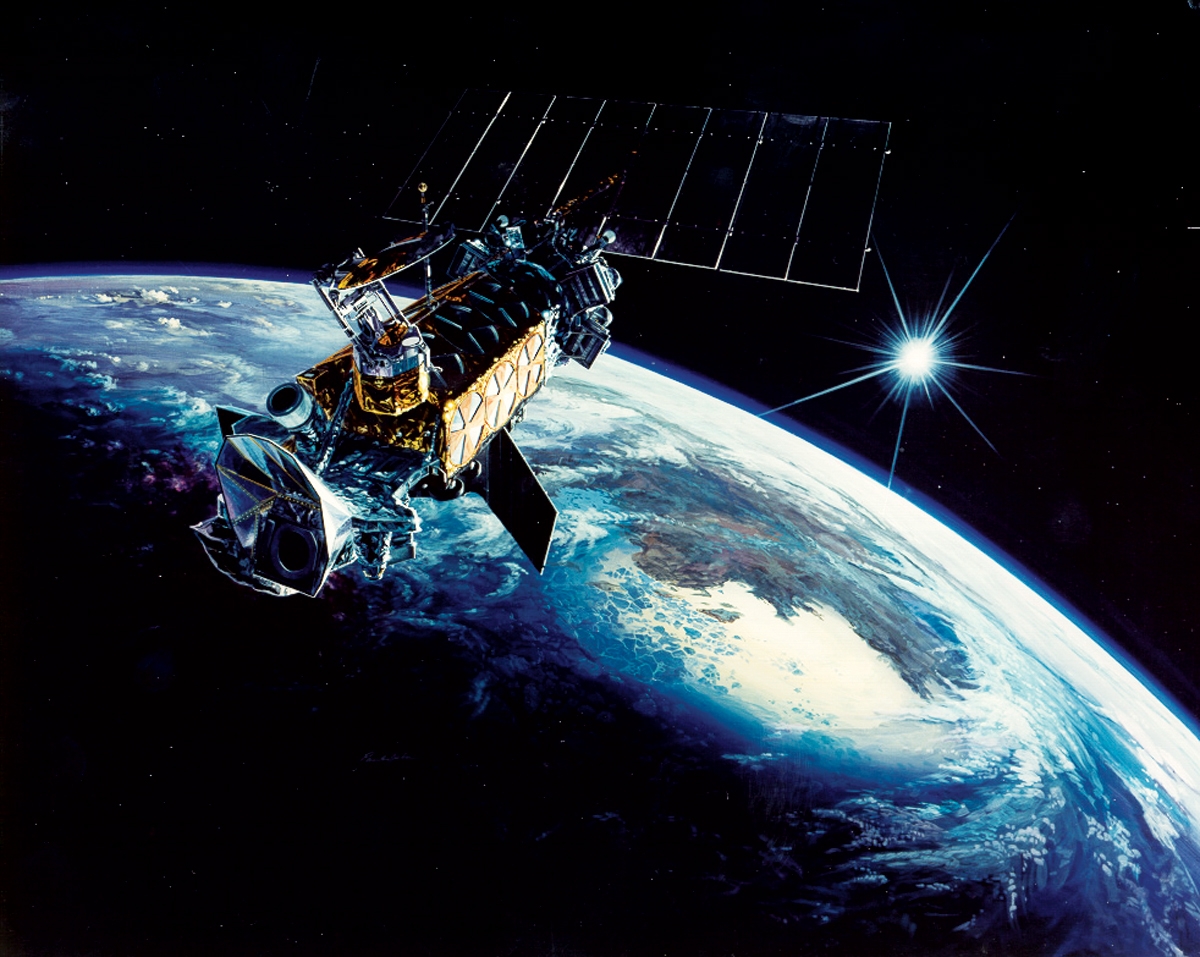
Illustration of a Defense Meteorological Satellite Program (DMSP) spacecraft.
Image credit: U.S. Air Force
“This conjunction was identified by me querying our LeoMap tool as to the conjunction over the last 90 days that involved the two oldest objects,” McKnight notes.
Live long and ponder
In a bit of historical context, the space debris specialist adds that the Soviet SL-8 rocket body was abandoned in 1971, when Richard Nixon was President of the United States.
“Since then, it has orbited the Earth about 290,000 times,” McKnight adds, “the distance traveled by this piece of hardware is greater than the distance from the Sun to Pluto and back.” This enormous distance traveled, he said, puts into perspective the collision risk posed by such long-lived objects deposited in cluttered orbits many decades ago.
The defunct DMSP satellite (called OPS 5644 when launched) was deployed in 1977 by then U.S. President Gerald Ford.

Image credit: Johan Swanepoel/Adobe Stock via RAND
Prolific breakup event
McKnight reports that if the two objects had collided center-of-mass on center-of-mass, it would have likely generated over 3,000 trackable fragments and another 30,000-plus lethal, yet uncatalogued fragments.
This amount of debris generation would have made it the second most prolific breakup event, McKnight points out, behind the 2007 Chinese anti-satellite test involving that country’s own Feng-yun 1C spacecraft.
Hot spot
“This region of low Earth orbit where hundreds of similarly old and massive objects have been abandoned is known as Cluster 775 and is considered one of the three major ‘hot spots’ for collisional risk in LEO, McKnight said.

Image credit: LeoLabs/McKnight
Eying the future, McKnight said he’s positive there are more stories to tell in LEO about the dynamic collision environment. “I think that I have infinite material to work with!”
Lack of adherence
In an earlier statement regarding abandoned rocket bodies, McKnight has an equally unnerving view of the situation.
“In the last 20 years, China has abandoned more rocket body mass in LEO that will not adhere to the 25-year rule than rest of the world combined,” McKnight said, a rule that recommends space operators re-enter their hardware within 25 years following the completion of their mission.
“This is not a part of the space race anyone should try to ‘win,’” McKnight said, “yet they are singling themselves out by their lack of adherence to basic space sustainability norms.”
 Posted in

Under the dome. Inspiration4 crew’s space selfie. Left to right top, Jared Isaacman, Chris Sembroski, and Sian Proctor with hair-hovering Hayley Arceneaux.
Image credit: Inspiration4 Photos
The flight of the Inspiration4 crew back in 2021 marked a milestone as the first privately chartered spaceflight by civilian astronauts.
Inspiration4 crew members flew aboard the SpaceX Crew Dragon capsule Resilience that was lofted on September 16, 2021 and landed on September 18, 2021.
That four-person crew collected a wealth of biological measurements yielding a comprehensive Space Omics and Medical Atlas, or SOMA for short.

Artwork depicts the specially outfitted SpaceX Dragon spacecraft with its viewing dome.
Image credit: SpaceX
Multiple missions
As explained on the SOMA website, “we are performing comprehensive and integrative multiomics analysis of astronauts, including the crew from the Inspiration4, Polaris Dawn, and Axiom missions.”
This sampling will allow for monitoring the impacts of spaceflight and provide a health service to the crew post-mission.

Image credit: Nature
“Furthermore, applying the same core protocols in the sample collection, processing, and analysis across multiple missions will allow us to validate and compare our findings with other investigators and space agencies/companies around the world,” the SOMA website adds.
Synchronized release
NASA has established the Open Science Data Repository (OSDR) in which that Inspiration4 crew data is also hosted. In concert with that data availability, in a “synchronized release,” Nature Press has released 44 publications that document the molecular, cellular, physiological, and phenotypic changes observed during spaceflight.
Observes Nature “this package shows how the modern tools of molecular biology and precision medicine can help guide humanity into more challenging missions, which will be critical for a permanent presence on the Moon, Mars, and beyond.”

Image credit: Nature
Groundbreaking collection
The SOMA initiative is spearheaded by Chris Mason from Weill Cornell Medicine. The public can now engage in the analysis of this groundbreaking collection of civilian commercial astronaut data.
These scientific manuscripts have been jointly released to tackle inquiries regarding spaceflight effects on the whole body, skin, skeletal muscle, and endocrine system.
This work also begins to map differences in how female and male individuals respond to spaceflight and links specific countermeasures to each astronaut.

Image credit: Nature
Ethical considerations
This unprecedented step in making available the Inspiration4 data includes ethical considerations for the age of non-governmental space exploration. Other topic areas include:
Aging and putative frailty biomarkers are altered by spaceflight; spaceflight induces changes in gene expression profiles linked to insulin and estrogen; explainable machine learning identifies multi-omics signatures of muscle response to spaceflight in mice; as well as biomonitoring and precision health in deep space supported by artificial intelligence.”
Now, for the first time, the NASA OSDR hosts processed commercial astronaut data that are publicly available.
Profound insights
According to the OSDR website, “in order to protect the privacy of the astronauts, processed data are publicly available, while private raw data, including genetic sequence data, will require an application process with a board approval to gain access.”

Image credit: NASA OSDR
This comprehensive study includes: whole blood and urine samples, microbial swabs from the crew and the spacecraft cabin, which were collected at different timepoints before, during, and after spaceflight.
“The open access of these datasets in the NASA OSDR provides a unique opportunity for the scientific community, as well as citizen scientists and students, to continue using OSDR resources to further unlock profound insights into the consequences of space travel on the human body,” the website adds.
Resources
To view the Nature portfolio issued in volume 632 issue 8027, August 29, 2024 — “Space Omics and Medical Atlas (SOMA) across orbits – New studies on astronauts and space biology bring humanity one step closer to the final frontier” — go to:
https://www.nature.com/immersive/d42859-024-00009-8/index.html
Also go the SOMA data portal website at:
https://soma.weill.cornell.edu/#main
The NASA Open Science Data Repository (OSDR) can be accessed at:
https://osdr.nasa.gov/bio/news/articles/I4-data/I4-data.html
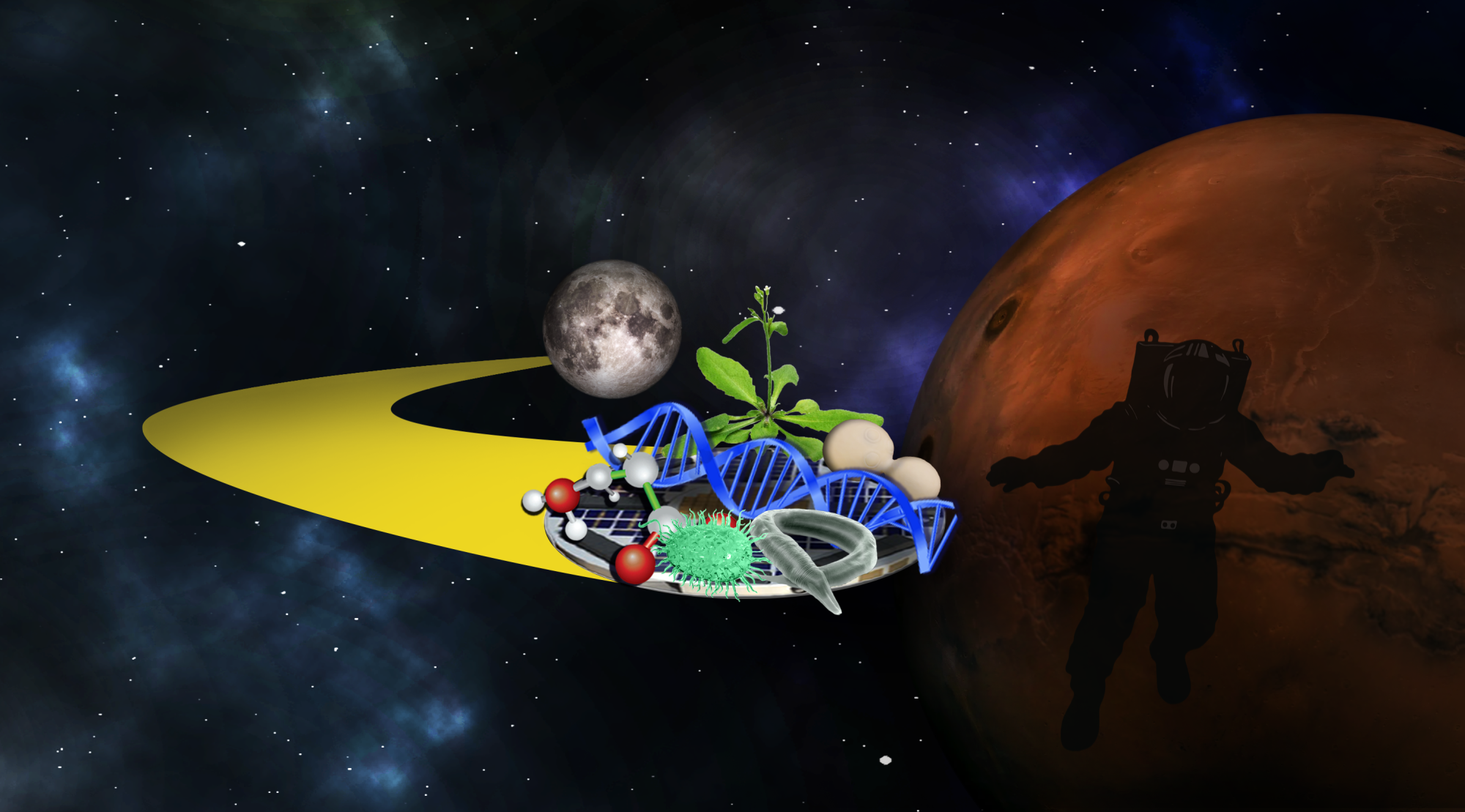
Image credit: SpinSat/NASA Ames Research Center
The impact on the human body from lengthy stints of space travel has put researchers in a spin for decades.
Remaining largely unknown are the effects of deep space radiation and reduced gravity on biological systems.
It’s high-time for “SpinSat” – an innovative platform to rev up some answers and fill in knowledge gaps.
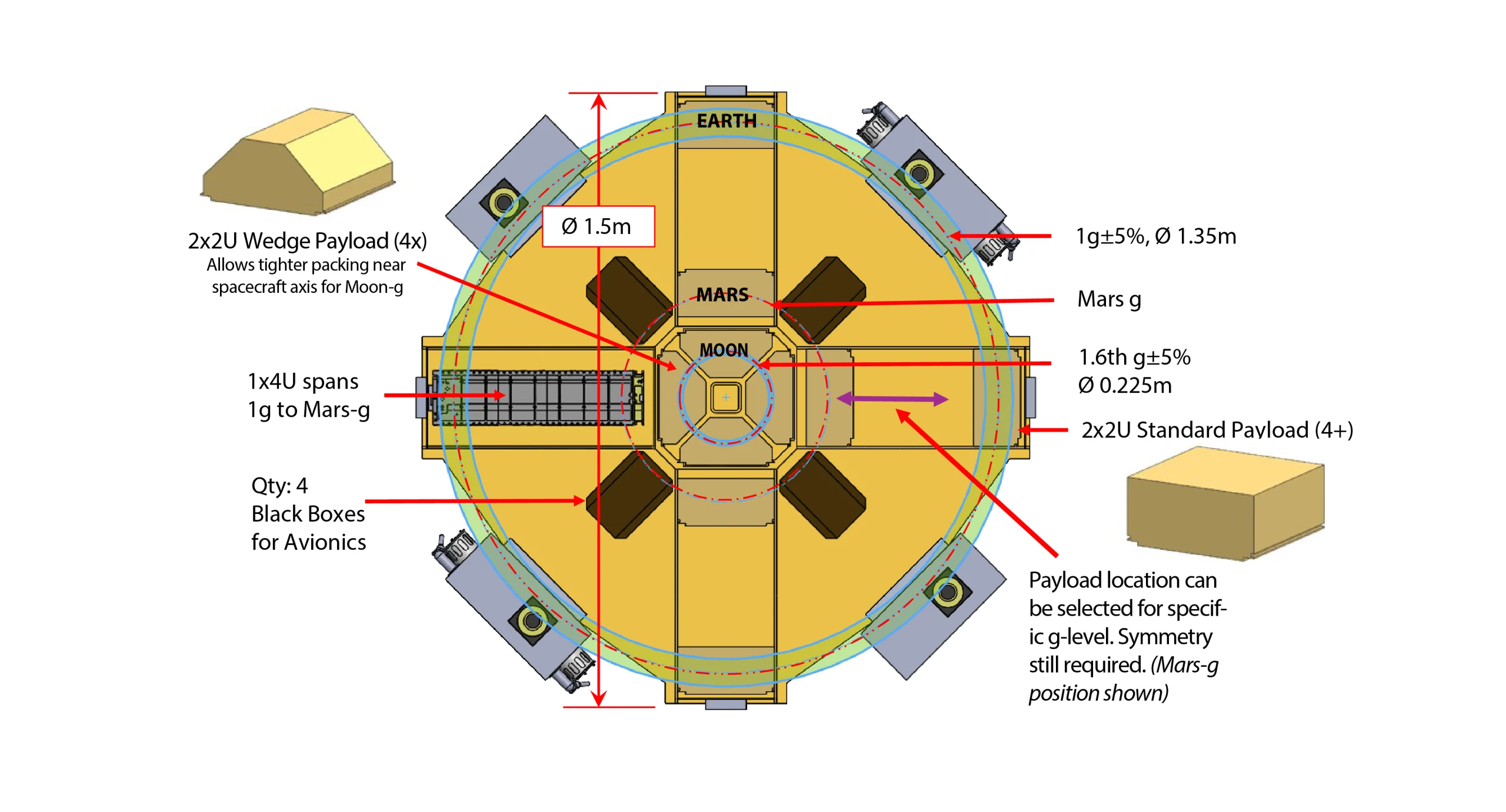
Image credit: SpinSat/NASA Ames Research Center
Survive and thrive
For instance, what are the mechanisms by which organisms sense and respond to physical properties of surroundings, and to applied mechanical forces including gravitational force?
How does the space environment alter interactions between organisms?
What are the important multi-generational effects of the space environment on growth, development, and reproduction?
How does the space environment influence biological mechanisms required for organisms to survive the transitions to and from space, and thrive while off Earth?
Hardware and payloads
Specialists at NASA’s Ames Research Center are moving forward on shaping SpinSat development and science goals.
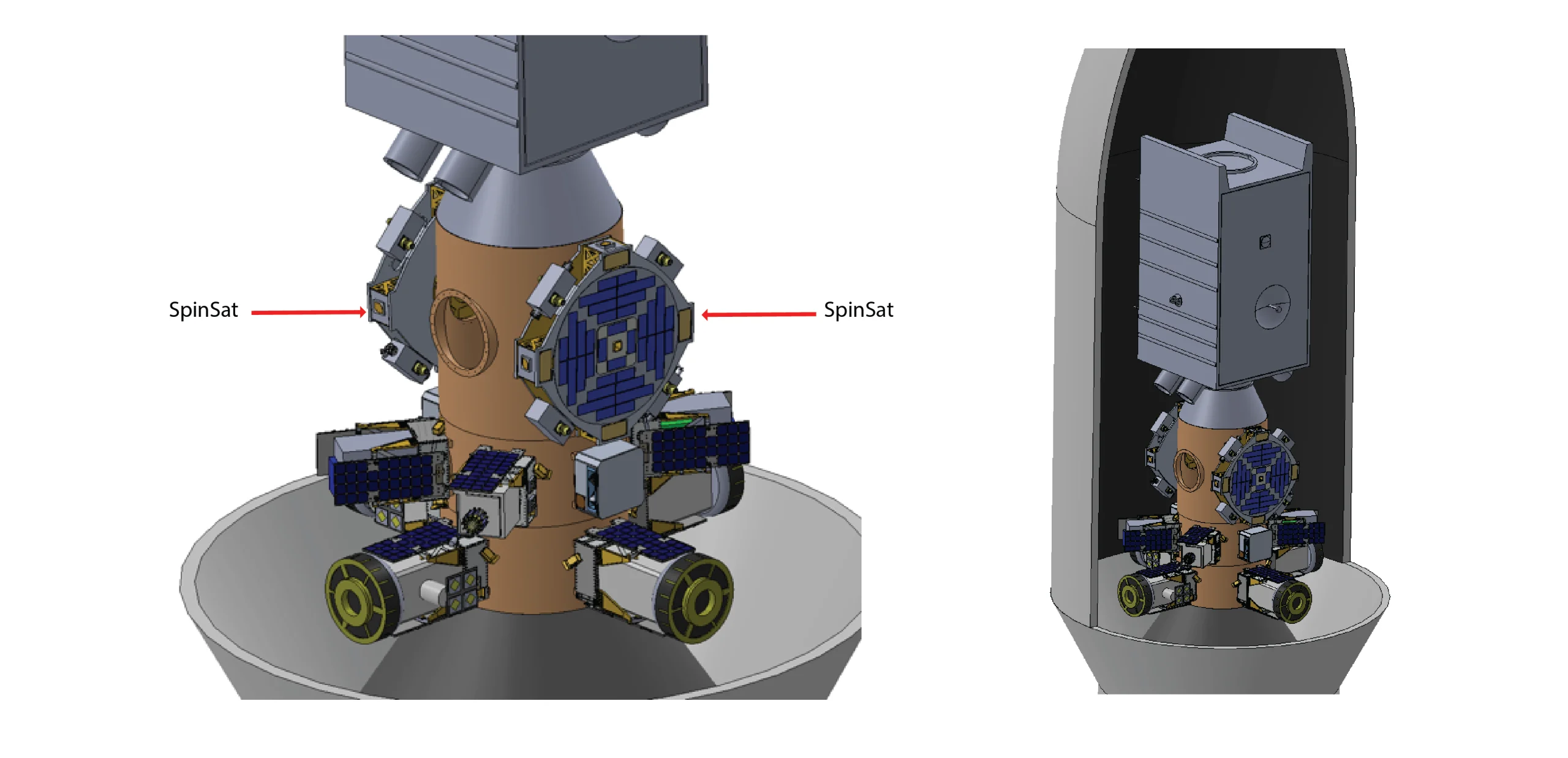
Image credit: SpinSat/NASA Ames Research Center
A spacecraft platform has been blueprinted, optimized for hosting biological payloads to appraise long-duration exposure to the low-dose deep-space radiation environment under conditions of reduced (artificial) gravitation relevant to Earth’s Moon and Mars.
The SpinSat team is seeking input for requirements of potential payloads to enable a spacecraft design that meets the needs of as many researchers as possible.
NASA is also turning to hardware providers, looking for payload systems to accommodate an array of experiments that could be part of the SpinSat capability suite.

Artemis explorers at the Moon.
Image credit: NASA
Plug-n-Play
Drawing from the on-going and growing CubeSat technology world, SpinSat is viewed as a “Plug-n-Play” space platform. It would offer controlled gravity levels from micro-g to Earth g (as a control) and higher. Modification of payload radiation environments via SpinSat would mimic those of the Moon and Mars.
SpinSat is keyed to providing low-cost, reliable, and frequent access to deep space for a wide variety of experiments. The platform design could host a range of experiments from human tissues to microorganisms and “organoids” — small, simplified, 3D copies of organs created outside of a living body – as well as plants, and chemical and physical systems.

Image credit: NASA
Investigation focus areas include the central nervous system, cancer, bone and muscle health to wound healing, pharmacologics, and food sources.
Given a go, SpinSat could be lofted on a variety of launch vehicles into almost any orbit.
For more information on SpinSat, go to:

