Archive for May, 2024
 Author:
  May 10th, 2024
SpaceX/Inside Outer Space screengrab
The Federal Aviation Administration (FAA) is preparing an Environmental Impact Statement in regards to the SpaceX Starship-Super Heavy Project at Kennedy Space Center Launch Complex 39A in Florida.
That EIS is tied to issuing a commercial launch Vehicle Operator License for proposed SpaceX Starship operations at Kennedy Space Center in Florida.
Public scoping meetings
The SpaceX proposal includes constructing the necessary infrastructure to support up to 44 launches per year from Launch Complex-39A with Super Heavy booster and Starship vehicle recovery landings at LC-39A or on a droneship, or expending them in the ocean.

Image credit: SpaceX/Inside Outer Space screengrab
According to a statement released today from the FAA, two in-person public scoping meetings on June 12 and a third on June 13 are being held. In addition, one virtual public scoping meeting will be held on June 17.
Public comments can be submitted from May 10 to June 24, 2024.
For more information, go to:
https://www.faa.gov/space/stakeholder_engagement/spacex_starship_ksc
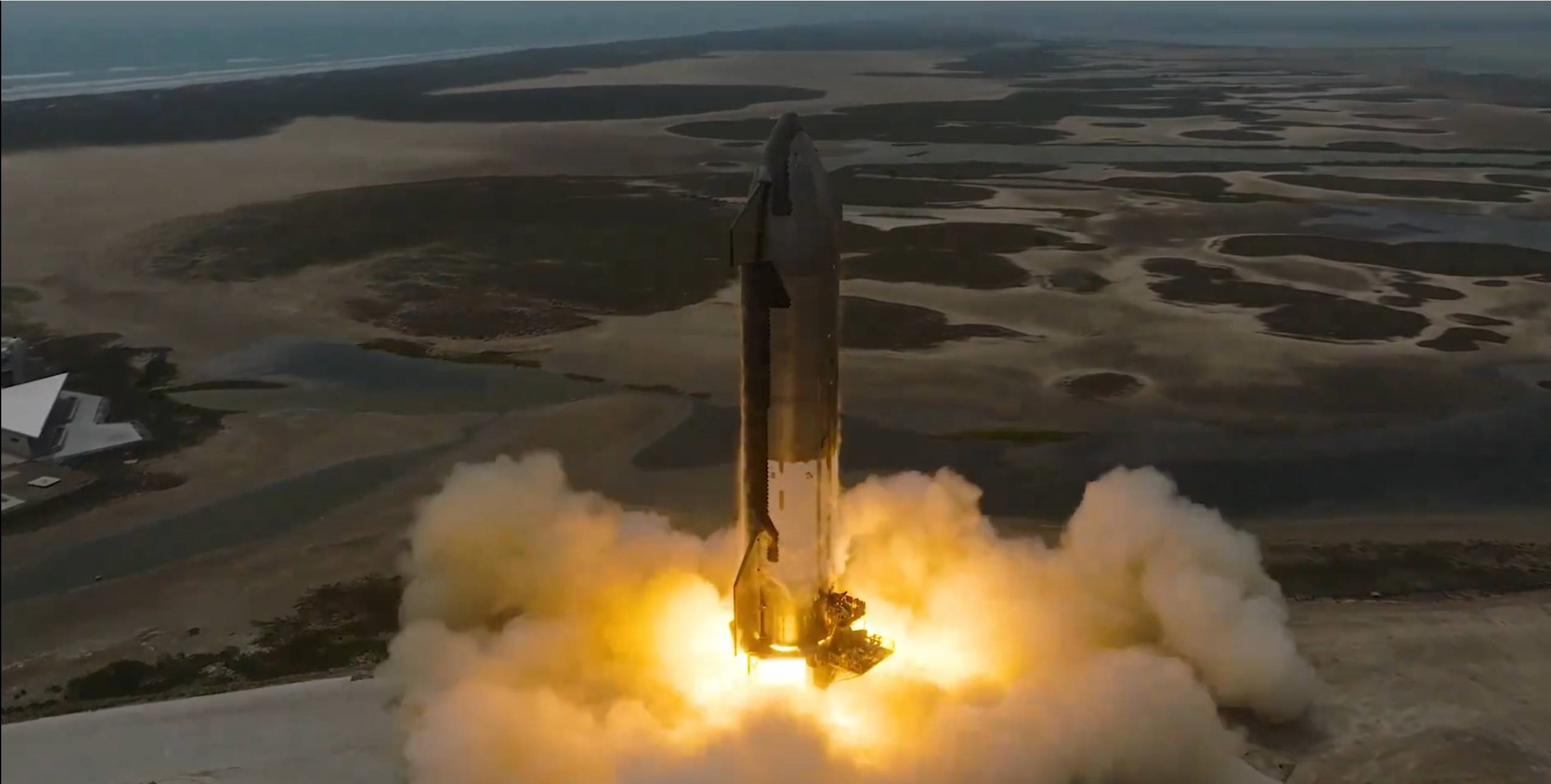
Static fire of Flight 5 Starship’s six Raptor engines earlier this week at Starbase/Boca Chica, Texas
 Posted in

Image credit: CTV/Inside Outer Space screengrab
Another chunk of space junk appears to have fallen on Saskatchewan farmland in western Canada.
Found on farmland on April 28, the recovered debris appears to be leftovers from the “trunk” of a SpaceX Dragon spacecraft.

Image credit: CTV/Inside Outer Space screengrab
A re-tracing of the ground track of the suspected SpaceX leftover goes right through Saskatchewan, above the Ituna-situated farm area, reports Harvard re-entry specialist Jonathan McDowell, as reported by Canada’s CTV broadcasting network.

SpaceX Dragon “trunk.”
Image credit: SpaceX
Down under debris
Similarly, in July 2022, bits from an unpressurized trunk of a Dragon spacecraft – discarded prior to spacecraft re-entry – were found in Australian outback.

Chunks of space junk rained down in Australia, later identified as SpaceX leftovers from its Crew-1 Mission that flew in 2020-2021.
Photo courtesy: Brad Tucker
The Australian Space Agency later confirmed the space debris found in southern New South Wales was SpaceX trunk junk.
Go this CTV reporting at:

Image credit: CGTN/CNSA/Inside Outer Space screengrab
China’s Chang’e-6 Moon sampling probe has performed a braking maneuver and is now in circumlunar orbit, reports the China National Space Administration (CNSA).
Meanwhile, the ICUBE-Q mini-satellite has been released by Chang’e-6. ICUBE-Q was developed by the Intelligent Satellite Technology Center at the Shanghai Jiao Tong University and the Pakistan Institute of Space Technology.
Chang’e-6 entered a large elliptical lunar orbit of roughly 124 miles (200 kilometers) × 5,344 miles (8,600 kilometers), swinging around the Moon every 12 hours, from which it released the ICUBE-Q cubesat.

ICUBE-Q. Image credit: Shanghai Jiao Tong University
Also on duty, China’s Queqiao-2 relay satellite will assist in Chang’e-6 operations, such as adjusting the altitude and inclination of the spacecraft’s orbit around the Moon, and also be engaged in the separation of the orbiter-returner combination and the lander-ascender combination.
The lander-ascender combination is targeting a soft landing on the South Pole-Aitken Basin, performing — for the first time — sampling and return of lunar specimens from the far side of the Moon.

Image credit: CGTN/CNSA/Inside Outer Space screengrab

Image credit: CCTV/Inside Outer Space screengrab
Orbit control accuracy
The entire flight of Chang’e-6 is expected to last about 53 days, during which the spacecraft will experience 11 flight stages, such as: launch, orbit insertion, lunar transfer, among others.

Image credit: CCTV/Inside Outer Space screengrab
“At present, the reaction control of Chang’e-6 probe is stable, the orbit control accuracy is very high and the working condition is very good,” Peng Deyun, a member of the Beijing Aerospace Control Center told China Central Television (CCTV).
“We will continue to adjust the altitude and inclination of the orbit. It will carry out separation at the proper time and conduct a soft landing on the far side of the Moon,” Peng said. “Then, it will carry out scientific exploration and collect samples from the lunar surface. Following this, it will take off, execute a series of maneuvers, complete rendezvous and dock in the lunar orbit before finally returning to Earth.”

High scientific significance
According to Lu Yuntong, an engineer of China Aerospace Science and Technology Corporation:
“Globally, more than ten missions collecting and returning samples have been conducted from the near side of the Moon. However, there may exist even more ancient lunar soil on the far side. Thus, whatever samples we collect from the Moon’s far side hold high scientific significance.”
The huge SPA Basin is the result of an impact hit on the Moon over four billion years ago. Samples derived from that area may provide the earliest information about the Moon.
“Our spacecraft depends on solar illumination for power generation, and this illumination varies with latitude. For this mission, we have selected a landing site in a region with moderate latitude,” Lu told CCTV. “We chose the South Pole-Aitken Basin due to its adequate solar illumination and reliable communication signals, meeting the engineering standards.”
Go to this informative video on the Chang’e-6 braking at the Moon at:

Image credit: Xingguo Zeng, et al.

Wait a minute.
Image credit: Barbara David
Over the last number of years, our planet has become encircled by Starlink, OneWeb, and other “megaconstellation” satellites.
Yes, the emergence of those megaconstellations offers great benefit for humanity. But in a wait-a-minute pause, there are also substantial costs, including the imposition on humankind’s ongoing and growing thirst for astronomical peering into the surrounding universe.
That’s the view of David Koplow, the Scott K. Ginsburg Professor of Law at Georgetown University Law Center in Washington, D.C.

Starlink constellation pass overhead near Carson National Forest, New Mexico, photographed soon after launch.
SpaceX Starlink Satellites over Carson National Forest, New Mexico, photographed soon after launch.
Credit: Mike Lewinsky/Creative Commons Attribution 2.0
“We are just beginning to appreciate how bad the disruption can be for land-based and space-based telescopes, and as more and more satellite overflights occur, the problems will only intensify,” Koplow told Inside Outer Space.
Legal rights
Koplow’s concerns have been voiced in several scholarly works, the titles of which underscore his qualms, such as: “Large Constellations of Small Satellites: The Good, the Bad, the Ugly and the Illegal,” as well as “Blinded by the Light: Resolving the Conflict Between Satellite Megaconstellations and Astronomy.”

Starlink satellites visible in a mosaic of an astronomical image.
Courtesy of NSF’s
National Optical-Infrared Astronomy Research Laboratory/NSF/AURA/CTIO/DELVE)
“The world has mostly been assuming that the relevant international law basically allows the satellite companies to do whatever they want in space, while forcing the observatories to adapt as well as they can,” Koplow advised.
But in reality, Koplow continues, the legal regime is not so one-sided. “Astronomers also have legal rights to free use of space, and they need not stand by idly while their profession is damaged.”
Hair on fire
Koplow points out that in 2019 the world of optical and radio astronomy changed abruptly and massively when the first SpaceX batch of 60 Starlink satellites was lofted.
“Jolted by the sudden brightness of those spacecraft, and alarmed by the prospect of their legions of successors, observatories scrambled to respond,” Koplow observes.
They did so by studying and documenting the true dimensions of the problem, beginning to invent or conceptualize mitigation measures, and entering into discussions with SpaceX and other companies.
“Some astronomers see this as a true ‘hair on fire’ emergency, heralding irretrievable losses to space science; others present a more sanguine face, depicting this as yet another challenge to be surmounted in surveying a decreasingly pristine sky,” Koplow remarks.

Image credit: ESO/P. Horálek
Incipient clash
That said, the astronomical community has related that the time and the financial costs of conducting effective astronomy will rise considerably, Koplow says, “and that some important data will simply be irretrievable, with concomitant losses for science and the future exploration and use of space.”
In his “Blinded by the Light” treatise, Koplow describes the incipient clash between satellite megaconstellations and astronomy, assesses the relevant international and domestic legal authorities, and proposes compromise solutions to mitigate the damage.
“Overall, the thesis is that a better balance must be struck between these competing types of space activities,” Koplow adds, “without ceding to either a comprehensive right to proceed in disregard of the key functions of the other.”

Credit: OneWeb
Voluntary measures
Koplow acknowledges that some satellite companies have voluntarily invested considerable corporate talent and money in efforts to mitigate their interference with astronomy.
“But these voluntary measures are not adequate to solve the problem, they are not durable and reliable, and they have not been adopted by all the companies,” Koplow suggests.
“A stronger response is necessary,” Koplow concludes.
To gain access to “Blinded by the Light: Resolving the Conflict Between Satellite Megaconstellations and Astronomy” go to: https://papers.ssrn.com/sol3/papers.cfm?abstract_id=4346299
To review the paper “Three Things I Hate About Large Constellations of Small Satellites” go to: https://papers.ssrn.com/sol3/papers.cfm?abstract_id=4503593

Image credit: NIAC
NASA’s forward thinking Innovative Advanced Concepts program (NIAC) has selected six visionary concept studies for additional funding and development.
And the winners are:
Fluidic Telescope (FLUTE): Enabling the Next Generation of Large Space Observatories
Pulsed Plasma Rocket: Shielded, Fast Transits for Humans to Mars is an innovative propulsion system
The Great Observatory for Long Wavelengths (GO-LoW)
Radioisotope Thermoradiative Cell Power Generator

Image credit: Ethan Schaler
FLOAT: Flexible Levitation on a Track
ScienceCraft for Outer Planet Exploration
The NIAC Phase II conceptual studies will receive up to $600,000 to continue working over the next two years to address key remaining technical and budget hurdles and pave their development path forward.
For more detail, go to:
Image credit: CGTN/CNSA/Inside Outer Space screengrab
An international cadre of payload specialists aboard China’s outbound Chang’e-6 robotic Moon mission gathered last week in China’s Haikou City, the capital of Hainan Province.
The Chang’e-6 lunar probe departed last week from the Wenchang Space Launch Site and is set to collect lunar samples from the far side of the Moon.

Image credit: CCTV/Inside Outer Space screengrab
Multiple international scientific payloads on China’s outgoing Moon mission include a radon measuring instrument from France’s national space agency, a passive laser retroreflector from Italy’s National Institute for Nuclear Physics, an analytical instrument for negative ions on the lunar surface from the European Space Agency, and the ICUBE-Q cube-satellite from Pakistan.
Global collaboration
“Our reflector is on the lander,” said Simone Dell’Agnello, a technologist at the National Institute for Nuclear Physics and the Frascati National Labs in Italy. “Remarkable atmosphere of sincere and friendly international collaboration here at the launch site/venue,” Dell’Agnello told Inside Outer Space.

Image credit: CCTV/Inside Outer Space screengrab
Pierre-Yves Meslin, Detection of Outgassing RadoN (DORN) principal investigator for the French National Center for Scientific Research told China Central Television (CCTV): “It’s a series of first times for us. It’s the first time that China and France are collaborating in the field of deep space exploration. It’s also the first time that France will deploy a scientific instrument at the surface of the Moon,” Meslin said.
In addition, DORN represents the first time that radon will be measured at the surface of the Moon, Meslin added.

Image credit: CCTV/Inside Outer Space screengrab
Cube-satellite, suspected mini-rover
Neil Melville-Kenney is a technical officer for the Negative Ions on the Lunar Surface (NILS) at the European Space Agency (ESA).
“The groundwork that we are laying here with this mission, I hope, will serve a firm basis, indeed, for them to decide to collaborate more in the future,” Melville-Kenney told CCTV.

Image credit: CCTV/Inside Outer Space screengrab
Qamar ul Islam, a professor at the Department of Space Science, Institute of Space Technology in Pakistan, told CCTV that the ICUBE-Q cube-satellite involved students at universities and educational institutes. “It’s a big motivation and we had very good cooperation from the Chinese side during all this project right from the beginning.”
Believed to be hitching a ride to the Moon’s surface is a purported mini-rover, although not verified as yet by Chinese space officials. The rover-looking device was first-detected by China space watchers in a pre-launch photo of the Chang’e-6 stack of hardware.
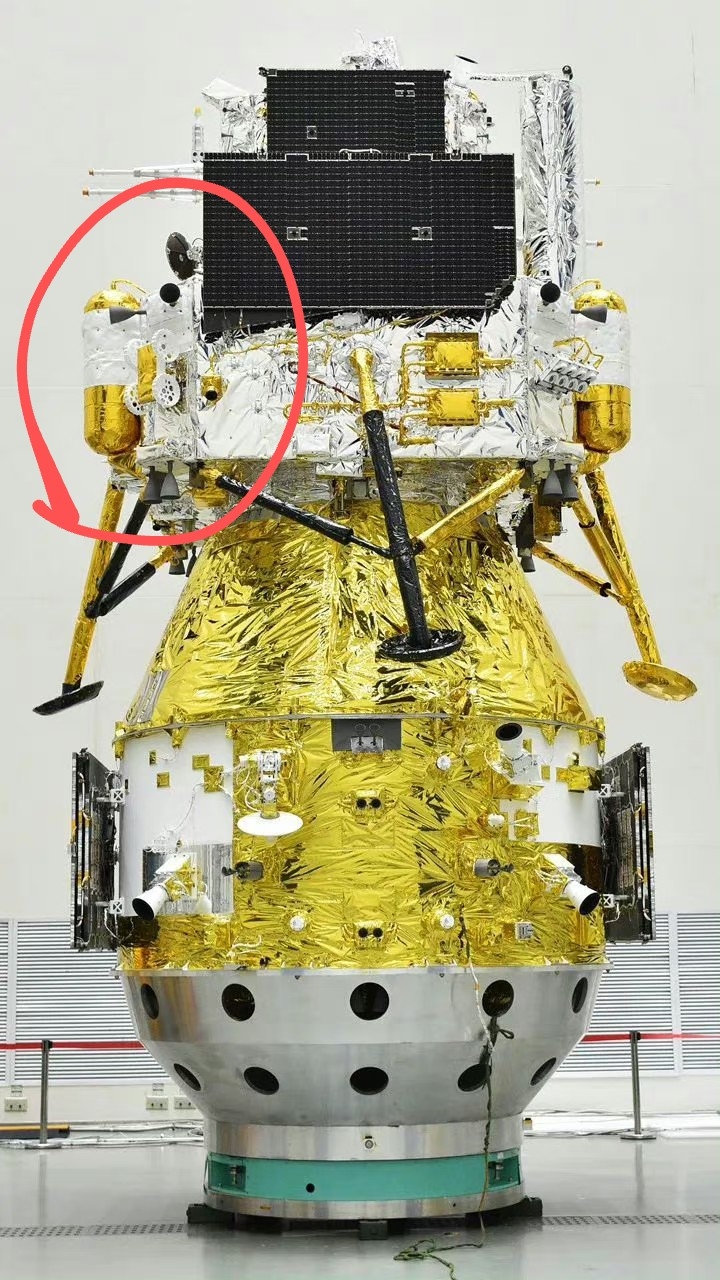
Image credit: CNSA/China ‘N Asia Spaceflight
Reliability index
Compared to the Chang’e-5 mission, the weight of Chang’e-6 is heavier by about 220 pounds (100 kilograms), said Li Pingqi from China Aerospace Science and Technology Corporation, pointing to the lunar missions booster, the Long March-5 rocket.
“Going to a lunar transfer orbit with an increase of 100 kilograms is a considerable upgrade for our rocket,” said Li added.
CCTV reported that, compared to the Chang’e-5 lunar lander mission, the Long March 5 rocket catering to the Chang’e-6 mission also has its reliability index up from 0.86 to 0.93.
Target zone
Chang’e-6 is slated to enter lunar orbit early this week, then nudge itself into a lower altitude above the Moon for lander release. Chang’e-6 will spend about 20 days adjusting its position in preparation for the attempted lunar landing. The target zone is within the South Pole-Aitken basin.
Image credit: CGTN/CNSA/Inside Outer Space screengrab
Meanwhile, at the ready are relay satellites to provide communication services to facilitate data transmission between Chang’e-6 and the Earth. China launched the Queqiao-2, or Magpie Bridge-2, relay craft on March 20.
The Chang’e-6 spacecraft, like its predecessor, the Chang’e-5 lunar sample return mission to the Moon’s nearside, is composed of an orbiter, a lander, an ascender and a returner.
Image credit: CCTV/Inside Outer Space screengrab
53 days
Within 48 hours after Chang’e-6 landing, the plan calls for its robotic arm to be extended, then scoop up rocks and soil from the lunar surface, as well as perform drilling duties to probe below the lunar topside.
If everything goes according to plan, up to 4.4 pounds (2 kilograms) of lunar bits will be collected, stashed and packed in a vacuum-sealed metal container inside the ascender.
The ascender then rockets off the Moon and auto-docks with the Chang’e-6 orbiter circling the Moon.
Following a roughly five-day journey from the Moon, a returner capsule, stuffed with lunar samples, is to parachute into a pre-determined site in Inner Mongolia.
The entire flight — from Earth launch to return sample capsule landing back on Earth — is expected to last about 53 days.

From the Garage to Mars: Memoir of a Space Entrepreneur by Scott Tibbitts; HenschelHAUS Publishing (March 2024); 254 pages; softcover; $24.95.
If you’ve got entrepreneurial dollars aligned with the needed spunk and spine to create a new space company, this book provides an insider, industrial strength look at what kind of roller coaster ride you may encounter.
The author founded Starsys Research Corporation of Boulder, Colorado, an innovative business that, quite literally, had wax flowing through its veins. Starsys pioneered thermal “actuator” technology and mechanical systems for spacecraft – critical items that open, close, deploy, and move components on spacecraft, like opening lens caps.
Such devices can make or break a mission, be it in Earth orbit or crossing the intervening void to reach Mars, Saturn, and elsewhere.
Tibbitts candid and sleep-stealing worries included confronting this self-imagined and calamitous news headline:
“Space Motor Made by Small Space Company in Boulder, Colorado Fails. Billion Dollar NASA Mission Lost. CEO/Entrepreneur Scott Tibbitts says: “I’m stumped…it seemed to be working just fine before we put it on the rocket.”
When NASA’s Spirit rover plopped down on the Red Planet back in 2004, the first pictures transmitted back to Earth included the Starsys logo; the small company had built 27 motors powering the mini-rover and its instruments. “The best product placement ever,” recalls Tibbitts, “one of the coolest things our team ever did.”
While getting to Mars was a company high point, the Starsys track record over a span of 20 years built more than 4,000 devices that flew on 350 spacecraft. As Tibbitts explains, the firm’s success was anchored in a corporate culture that emphasized technical competence bolstered by emphasis on fun and family, team building, and having an easily accessible “Gripe Box” for employees.
In tell-it-like-it-was fashion, the volume is peppered with “Tibbitts Tips,” from the power of play, protecting the price, and the value of 3-day weekends to stop doing what you suck at and let go or be dragged.
In the building of a space company from scratch, the author details both the highs and lows endured, with one chapter bluntly titled: “Entrepreneurial Hell.”
Starsys was acquired by SpaceDev in 2006 with Tibbitts poignantly writing about the angst incurred in “giving up the company I had invested 20 years of my life to create.” SpaceDev was renamed Sierra Nevada Space Systems after a subsequent acquisition in 2008.
This book is well-written, giving the reader a full monty memoir of living on the edge of success to personal upheavals, dealing with tragic and soul-searching events, and what lessons learned were uncovered along the long, winding road.
“I had no idea that seven dollars in hardware-store parts, some wax, and a certainty that, ‘this is so cool. There has to be some use for it…’ would lead to my three-decade journey,” Tibbitts concludes, “which is far from over.”
In short, wax aside, the author himself became an “actuator” and this volume underscores that fact.
For more information on this book, go to:
https://henschelhausbooks.com/product/from-the-garage-to-mars-memoir-of-a-space-entrepreneur/
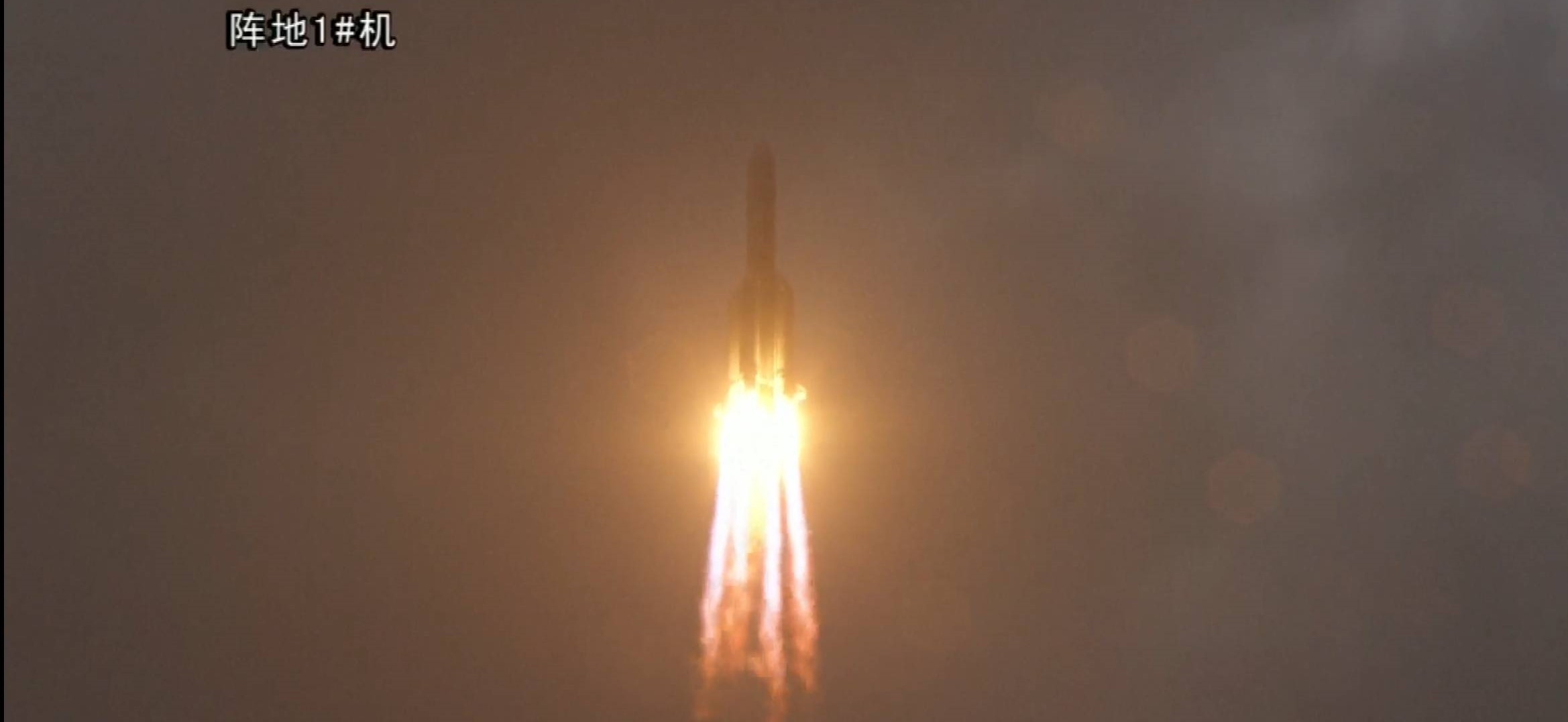
Image credit: CCTV/Inside Outer Space screengrab
China’s second robotic mission to the Moon’s far side – Chang’e-6 – is en route to an impact crater known as the Apollo basin, located within the South Pole-Aitken (SPA) Basin, selected as the primary target landing and sampling site for the lunar lander mission.
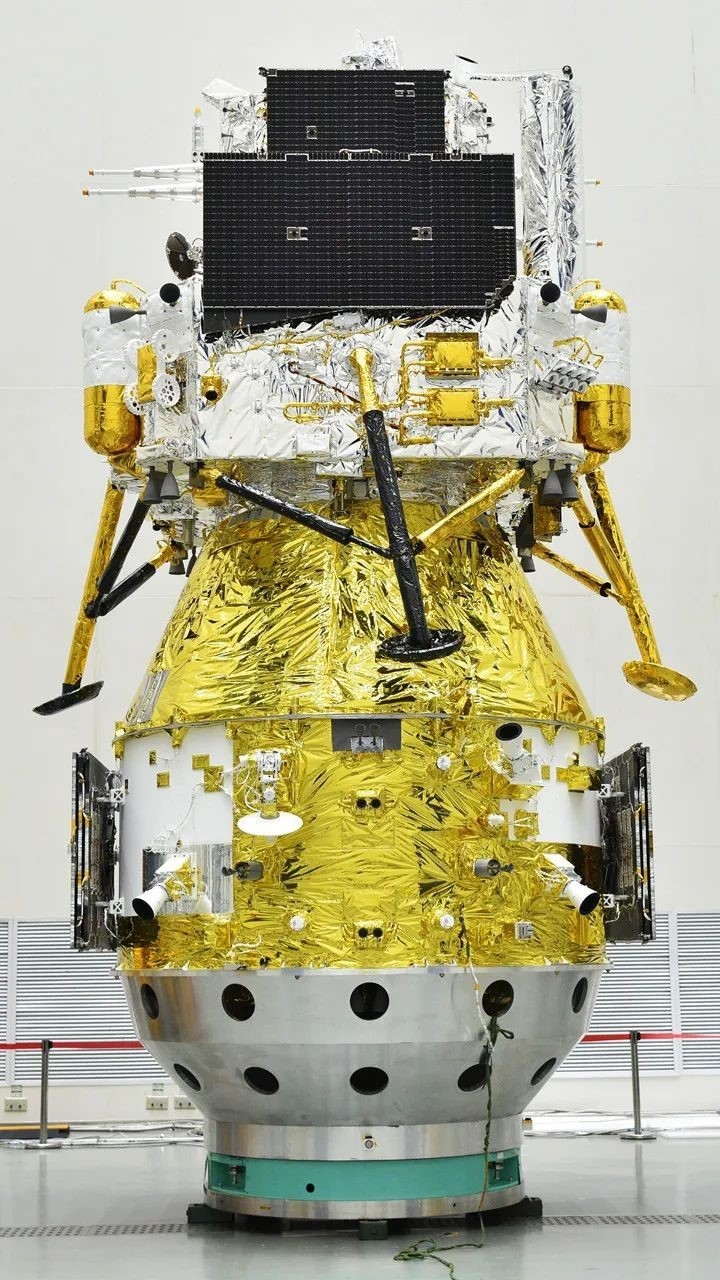
Now en route to the Moon, China’s Chang”e-6.
Image credit: CNSA
After launch last Friday, Chang’e-6 is on track for a flight expected to last about 53 days, according to the China National Space Agency (CNSA).
Meanwhile, at the ready are relay satellites to provide communication services to facilitate data transmission between Chang’e-6 and the Earth.
China launched the Queqiao-2, or Magpie Bridge-2, relay craft on March 20. Subsequently, it has completed check list testing with the Moon’s far side-based and still active Chang’e-4 lander/rover, as well as performing a pre-launch link-up with Chang’e-6, reports China Central Television (CCTV).
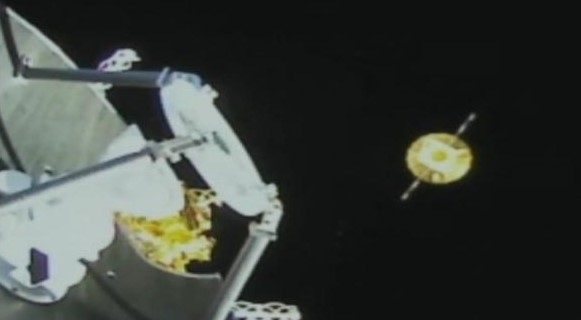
China’s Queqiao-2, or Magpie Bridge-2, is released from a Long March 8 carrier rocket last March.
Image credit: CNSA
China’s Chang’e-4 lander/rover was the first to visit the Moon’s far side in 2019.
Relay support
Queqiao-2 is circling the Moon in a large elliptical orbit to ensure data transmission efficiency and long-term effective communication with the lander’s far side touchdown spot of the Moon. Chang’e-6 is outfitted with special antenna gear.

Lu Yuntong, CAST. Image credit: CGTN/Inside Outer Space screengrab
“The main difficulty in landing on the Moon’s far side is that the terrain on the far side is actually more rugged. So we need to do terrain identification to choose a better area for it to land on the Moon,” explained Lu Yuntong, an engineer of China Aerospace Science and Technology Corporation.
“With the support of relay satellite Queqiao-2,” Lu told CCTV, “we will then implement our sampling and packing mission on the far side of the Moon.”

Image credit: CNSA
Tianlian system
“The position of Queqiao-2 relative to our lander is actually changing all the time, unlike the lander on the near side where it was facing the Earth,” Lu continued.
“So in order to adapt to such a wide range of pointing requirements for relay satellites, we added a directional antenna on Chang’e-6. At the same time, our two directional antennas are designed with autonomous tracking functions, which can be well aligned with our relay satellites at all times and better adapt to the communication conditions on the far side of the Moon,” Lu said.
Two relay satellites, carried along with Queqiao-2, are part of the “Tianlian system” that offer communication services for the Chang’e-6 mission. However, the Queqiao-2 will handle the spacecraft entering an elliptical orbit around the Moon, the probe’s landing, and the ascent module’s departure from the lunar far side.

Image credit: CNSA
Orbiter, lander, ascender returner
The Chang’e-6 spacecraft, like its predecessor Chang’e-5, consists of an orbiter, a lander, an ascender and a returner.
Within 48 hours after Chang’e-6 landing, the plan calls for its robotic arm to be extended, then scoop up rocks and soil from the lunar surface, as well as perform drilling duties to probe below the lunar topside.
Following sample placement in a sealed container, the ascender will take off from the Moon then dock with the Chang’e-6 orbiter circling the Moon. The returner is to haul the lunar samples to Earth, landing in north China’s Inner Mongolia Autonomous Region.
The entire flight is expected to last about 53 days, the CNSA said.

China’s Chang’e-6 lunar sample return mission elements.
Credit: CNSA
International payloads
The Chang’e-6 mission is carrying four payloads developed through international cooperation. Scientific instruments from France, Italy and the European Space Agency/Sweden are aboard the Chang’e-6 lander.
Also, a small satellite from Pakistan is attached to the orbiter, the ICUBE-Q CubeSat satellite. It was designed and developed by Pakistan’s Institute of Space Technology in collaboration with China’s Shanghai Jiao Tong University and Pakistan’s national space agency, SUPARCO.
Image credit: Xingguo Zeng, et al.
Moon’s origin and evolution
Chang’e-6’s landing within the Aitken Basin in the south pole of the Moon is expected to provide invaluable science data.
“The Aitken Basin is one of the three major terrains on the Moon and has significant scientific value,” Ge Ping, deputy director of the Center of Lunar Exploration and Space Engineering with CNSA told China Global Television Network (CGTN).
Finding and collecting samples from different regions and ages of the Moon is crucial for our understanding of Earth’s natural satellite, Ge said. When the sample is returned, there will be systematic, long-term laboratory research on the lunar stash, including analysis of its structure, physical properties and composition.
“These would further study of the Moon’s origin and its evolutionary history,” Ge said in an interview before the launch.

Vacuum-sealed collectibles
Like its predecessor, the Chang’e-6 spacecraft is designed and built by the Beijing-based China Academy of Space Technology. The Moon mission now underway will basically mimic that of the Chang’e-5 return sample mission carried out in December 2020.
After Chang’e-6 reaches lunar orbit, its components will separate into two parts, with the orbiter and reentry capsule remaining in orbit, while the lander and ascender depart for lunar surface tasks.
If everything goes according to plan, up to 4.4 pounds (2 kilograms) of lunar bits will be collected, stashed and packed in a vacuum-sealed metal container inside the ascender.
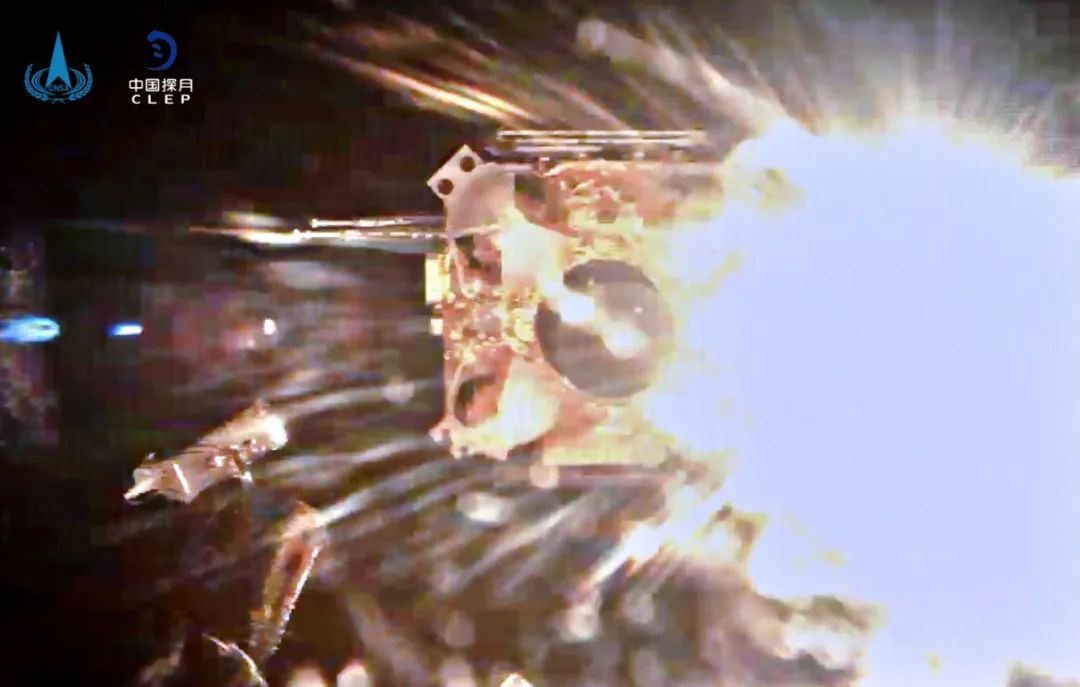
Departing ascender imaged by the Chang’e-5 lander.
Credit: CCTV/CNSA/CLEP
Parachute landing
After lunar collection duties are done, the engines of the ascender will rocket that Chang’e-6 mission element into lunar orbit for docking with the reentry capsule. The vacuum-sealed container carrying the samples will then be transferred to the Earth-returning segment before the ascender undocks.
The combination of orbiter and reentry capsule then departs lunar orbit and returns to the vicinity of Earth where the pair separate.
Blazing through Earth’s atmosphere the reentry capsule toting lunar specimens will perform a set of maneuvers, ending in a parachute landing at the Siziwang Banner Landing Site in the Inner Mongolia autonomous region.

Wang Qiong, deputy chief designer of the Chang’e-6 mission.
Image credit: CCTV/Inside Outer Space screengrab
Challenges and uncertainties
Wang Qiong, a deputy chief designer of the Chang’e-6 mission, said there will be a host of challenges and uncertainties while the 53-day robotic expedition of the Moon is underway.
“During the Chang’e-5 mission, the probe worked on the near side, so we could monitor its work processes and send control signals to it anytime. But in the case of Chang’e-6, we will have to depend solely on the Queqiao-2 relay satellite to transmit data and signals. The satellite has a limited coverage over the landing site, which will consequently restrict our communication with the Chang’e-6 probe,” he said.

Photo taking during Chang’e-5 surface sampling.
Credit: CCTV/Inside Outer Space screengrab
Wang said that engineers have applied some new advanced technologies in the now en route to the Moon mission, such as a rapid sampling system and a smart data-analysis mechanism. Those abilities will ensure that the sample-collection tasks are effectively and efficiently completed on the lunar surface within shorter operating time.
In the case of a communications blackout, Wang added that the Chang’e-6 probe is capable of conducting some key maneuvers in accordance with preset programs.
Go to this informative video at:
Wait a minute.
Image credit: Barbara David
In a post-flight analysis of the Artemis 1 uncrewed mission, NASA has identified more than 100 locations where ablative thermal protective material from the Artemis 1 Orion heat shield chipped away unexpectedly during reentry into Earth’s atmosphere.
In classic “wait a minute” style, a NASA Office of Inspector General (OIG) report has been issued – “NASA’s Readiness for the Artemis II Crewed Mission to Lunar Orbit” – calling attention to this issue and others before sending off a human crew to circle the Moon.

Image credit: NASA OIG
Root cause
To ensure the safety of the crewed Artemis II mission, the newly-issued OIG report recommends the Associate Administrator for Exploration Systems Development Mission Directorate:
- “Ensure the root cause of Orion heat shield char liberation is well understood prior to launch of the Artemis II mission.
- Conduct analysis of Orion separation bolts using updated models that account for char loss, design modifications, and operational changes to Orion prior to launch of the Artemis II mission.”
The report by the NASA OIG also notes that “human space flight by its very nature is inherently risky, and the Artemis campaign is no exception. We urge NASA leadership to continue balancing the achievement of its mission objectives and schedule with prioritizing the safety of its astronauts and to take the time needed to avoid any undue risk.”

Image credit: NASA OIG
Taking the heat
In earlier reporting, here’s my take on the situation, as posted on Space.com:
“NASA still investigating Orion heat shield issues from Artemis 1 moon mission” at:
https://www.space.com/nasa-investigate-orion-heat-shield-artemis-1-mission
For more information on the new IG report, take a look at Brett Tingley’s new story at Space.com – “NASA inspector general finds Orion heat shield issues ‘pose significant risks’ to Artemis 2 crew safety” at:
https://www.space.com/nasa-artemis-1-orion-heat-shield-office-inspector-general
Also read this story by Eric Berger, senior space editor at Ars Technica titled “NASA says Artemis II report by its inspector general is unhelpful and redundant” at:
For a full read of this just-issued NASA OIG report, go to:
https://oig.nasa.gov/wp-content/uploads/2024/05/ig-24-011.pdf

Orion heat shield features ablative material, called Avcoat.
Image credit: Lockheed Martin

High-speed return from lunar distance, the thermal protection system of Orion’s crew module must endure blistering temperatures to keep crew members safe. Measuring 16.5 feet in diameter, Orion’s heat shield is the largest of its kind developed for missions carrying astronauts.
Image credit: NASA
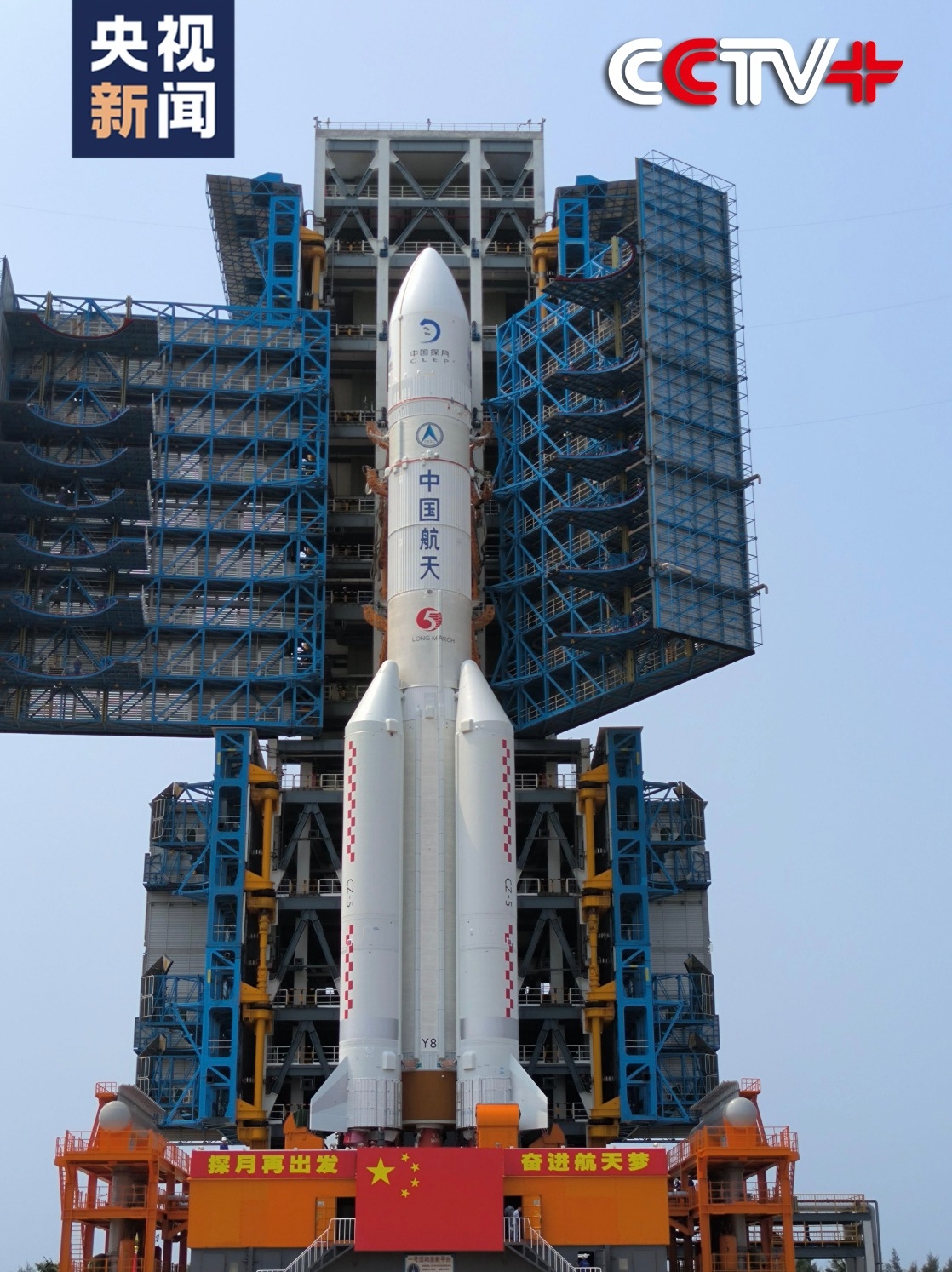
Image credit: CCTV
Today’s liftoff of China’s Chang’e-6 mission to the Moon is a signature statement for a much larger undertaking.
If successful, China’s Change’-6 robotic exploration of the Moon serves as a direct link to the country’s intent to bring back to Earth samples from Mars.
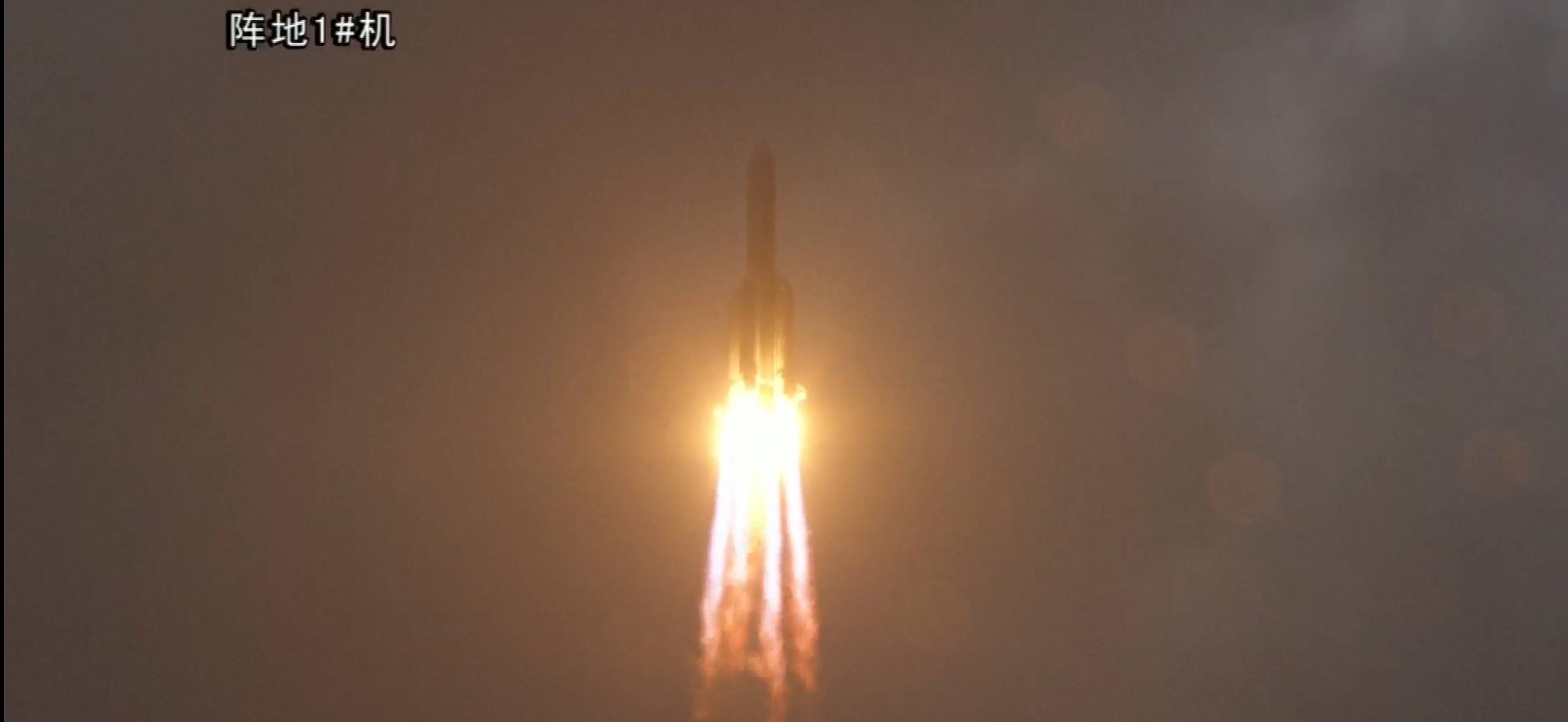
Liftoff of China’s Chang’e-6 lunar lander.
Image credit: CCTV/Inside Outer Space screengrab
Moon unknowns
According to James Head, noted Moon expert at Brown University that served in shaping the Apollo program’s return of lunar science data, China’s outgoing robotic craft can help unravel a number of Moon unknowns.
“We see many fundamental differences between the lunar nearside and far side, but don’t really understand how they came about, or their ages. Chang’e-6 will return the first samples from the lunar far side, the ‘Luna Incognita’ of our nearest planetary neighbor, and the samples are sure to be a ‘gold-mine’ for bringing us to a new understanding of the global Moon,” Head told Inside Outer Space.
Image credit: CNSA/China ‘N Asia Spaceflight
According to China space watchers, the Chang’e-6 lunar lander appears to be outfitted with a mini-rover. While not officially confirmed as yet by the China National Space Agency (CNSA), one X posting from China ‘N Asia Spaceflight notes: “There’s surprisingly a rover carried on Chang’e-6. The only clue I found is that the Italian instrument is called “INstrument for landing-Roving laser Retroreflector Investigations.”

Image credit: CCTV Inside Outer Space screengrab
Image credit: Xingguo Zeng, et al.
Obvious implications
But while China’s Chang’e-6 is designed to unravel mysteries at the Moon, a bigger agenda is being blueprinted.
“One of the obvious implications of the Chang’e-6 mission scenario — as with China’s Chang’-5 lunar sample return mission — is that every step of the mission, the launch, lunar orbit, detaching and landing, sampling, ascent and rendezvous, transfer of sample, leaving lunar orbit, reentry to Earth atmosphere, and parachute landing, are the same critical operational steps that Chinese Taikonauts will make in the human exploration of the Moon,” Head said. “And you can be sure that Chinese engineers and mission planners are studying these steps carefully.”
Head also noted that, in addition, “these steps duplicate a large number of key operational steps in China’s Mars Sample Return Mission, Tianwen-3, scheduled to launch around 2030.”

Image credit: CCTV/Inside Outer Space screengrab
Fellow lunatics
Following the liftoff, Head remarked: “Congratulations to CNSA and our Chinese colleagues on the successful launch this morning of the Chang’e-6 lunar far side sample return mission to the Apollo basin in the South Pole-Aitken Basin. The Chang’e-6 spacecraft is on its way to the Moon with solar panels fully deployed.”
Joining Head in spotlighting the just-underway mission is Clive Neal, a lunar expert at the University of Notre Dame. “Congratulations our fellow lunatics in China for a successful launch of Chang’e 6 and all the best for a nominal sample return mission,” he said. “To the Moon!”
Go to this informative video at:
https://www.facebook.com/NewsContent.CCTVPLUS/videos/1012828537074424

