Archive for May, 2024
 Author:
  May 23rd, 2024
Image credit: Olivier Bonin/SLAC National Accelerator Laboratory
The largest camera ever built for astrophysics has arrived at the summit of Cerro Pachón in Chile.
Transported from the SLAC National Accelerator Laboratory in California, the Legacy Survey of Space and Time (LSST) 3200-megapixel camera is the largest digital camera in the world. The device will soon be installed on the Simonyi Survey Telescope at Vera C. Rubin Observatory in Chile.
The LSST camera will produce detailed images with a field of view seven times wider than the full Moon.

Image credit: NOIRLab/Inside Outer Space screengrab
Targets on tap
Once up and operating, the LSST camera is assigned multiple tasks, for instance: take detailed images of the southern hemisphere sky for 10 years, build the most comprehensive time-lapse view of our Universe ever seen.
Using the LSST Camera, exploring the nature of dark matter and dark energy, is on tap, along with mapping the Milky Way, surveying our Solar System, and studying celestial objects that change in brightness or position.
Two decades of work
Rubin Observatory is a program of the National Science Foundation’s (NSF) NOIRLab, which, along with the U.S. Department of Energy’s SLAC National Accelerator Laboratory, will jointly operate Rubin.

Image credit: SLAC National Accelerator Laboratory
The NSF-funded Rubin Observatory Project Office for construction was established as an operating center under the management of the Association of Universities for Research in Astronomy (AURA).
The DOE-funded effort to build the Rubin Observatory LSST Camera (LSSTCam) is managed by SLAC National Accelerator Laboratory (SLAC), completed after two decades of work.
Go to this impressive video at:
https://noirlab.edu/public/media/archives/videos/hd_1080_screen/noirlab2413a.mp4
 Posted in

Who Owns the Moon? – In Defence of Humanity’s Common Interests in Space by A.C. Grayling; Oneworld Publications/distributed by Simon & Schuster (2024); Hardcover, 224 pages; $26.95.
Multiple countries have the Moon within its cross-hairs, for scientific purposes, for industrial gain, as well as to salute its military usefulness. Of late, China has put into action a lunar agenda that includes outreach to the Moon, planting taikonaut footprints there in the time-aged, dusty topside.
Meanwhile, NASA’s Artemis project also aims to “reboot” the Moon in a few years time.
So not only is this book timely reading – it’s a must-read. As the world’s superpowers and corporations jostle for control in space, it asks: who really can claim ownership of that world?
“To answer this question we have to look at some highly relevant precedents,” the author writes, as this is the aim of the volume.
Grayling is the founder and principal of the New College of the Humanities at Northeastern University, London, and its Professor of Philosophy.
Within its pages, the key chapters discuss the global commons, Antarctic protection, the high seas and deep oceans, as well as tackling a major issue of the day: Is the United Nations Outer Space Treaty “good enough” or ripe for an overhaul?
A space spinoff for discussion is addressed in this volume. That is, is there something available to humankind that is more powerful than partisan self-interest, be it profit motive, diplomatic power and national prestige?
The book concludes with a section, “what will happen…what can be done?” Grayling writes that the answer will take maturity, wisdom – “neither of which has evolved to a sufficient degree so far,” but there are some encouraging signs.
The book has a handy bibliography and very healthy section of notes for the reader to pursue.
Grayling makes the case for a new global consensus, one that recognizes the rights of everyone who lives on this planet, but also longingly looks at the Moon and ponders how it fits into our 21st century landscape of posturing politics, resource requirements, and whether the Moon is an extension of human conflict.
For more information on this timely book, go to:
https://www.simonandschuster.com/books/Who-Owns-the-Moon/A-C-Grayling/9780861547258

Earth’s Sun can toss out powerful solar storms that can impact infrastructure on Earth’s surface, in near-Earth orbit, including Artemis-era astronaut travel to and from the Moon.
BOULDER, Colorado — The sending of Artemis astronauts beyond the protective cocoon of Earth’s magnetic field to the Moon is spurring a look at flight rules and sharpening space weather forecasting skills.
The National Oceanic and Atmospheric Administration’s Space Weather Prediction Center (SWPC) here is working with NASA space radiation specialists to bolster space weather support for human expeditions to the Moon.
If schedule holds, in late 2025, NASA’s Artemis II mission is to be the first crewed sojourn to the vicinity of the Moon, a 10-day outing, and the first human voyage to that distance since Apollo-era moonwalker flights ended in December 1972.
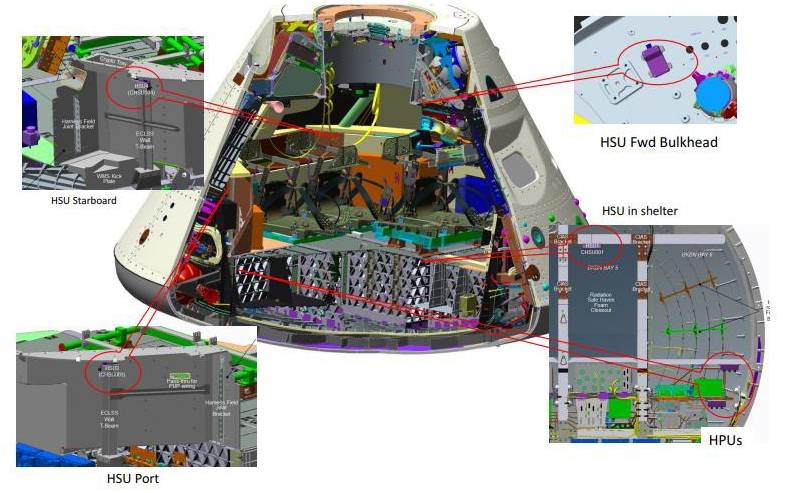
Inside look at Orion capsule.
Image credit: NASA/Steve Johnson
Given the recent powerful solar eruptions, what impact on Artemis operations would have happened if a crewed mission was now underway?
Take a look at my new SpaceNews story – “How Artemis astronauts will be protected from solar storms” – at:
https://spacenews.com/how-artemis-astronauts-protected-solar-storms/
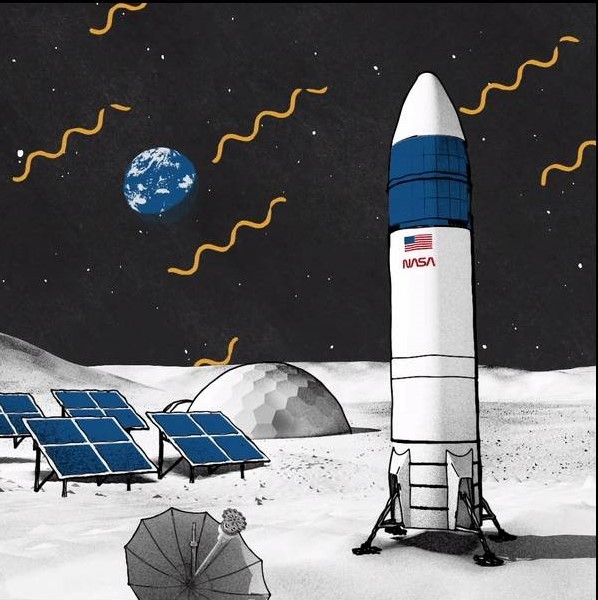
Image credit: Washington Post
The Washington Post has an informative series focused on the “New Space Age” – one that includes an exclusive conversation with the NASA Artemis II crew.
“Space travel is booming,” explains the Washington Post, “creating an energy around the exploration of our solar system that hasn’t been seen since the days of Apollo — and leading to no shortage of questions. “
For example:
Why does NASA want to go back to the Moon?
What toll does space travel take on the human body?
And what are the consequences of the increasing amount of space debris littering the atmosphere?

Image credit: Washington Post
The series of articles on The New Space Age seeks to answer those questions, and others, offering a look at this significant moment in the history of human spaceflight.
Exclusive conversation
As part of their coverage, the Washington Post is staging an exclusive conversation featuring NASA astronauts Christina Koch, Victor Glover and Reid Wiseman and Canadian astronaut Jeremy Hansen, about their upcoming Artemis II mission.
This event is Tuesday, June 4 at 4 p.m. Eastern Time.
For more information, go to:
https://www.washingtonpost.com/technology/interactive/2023/new-space-age/
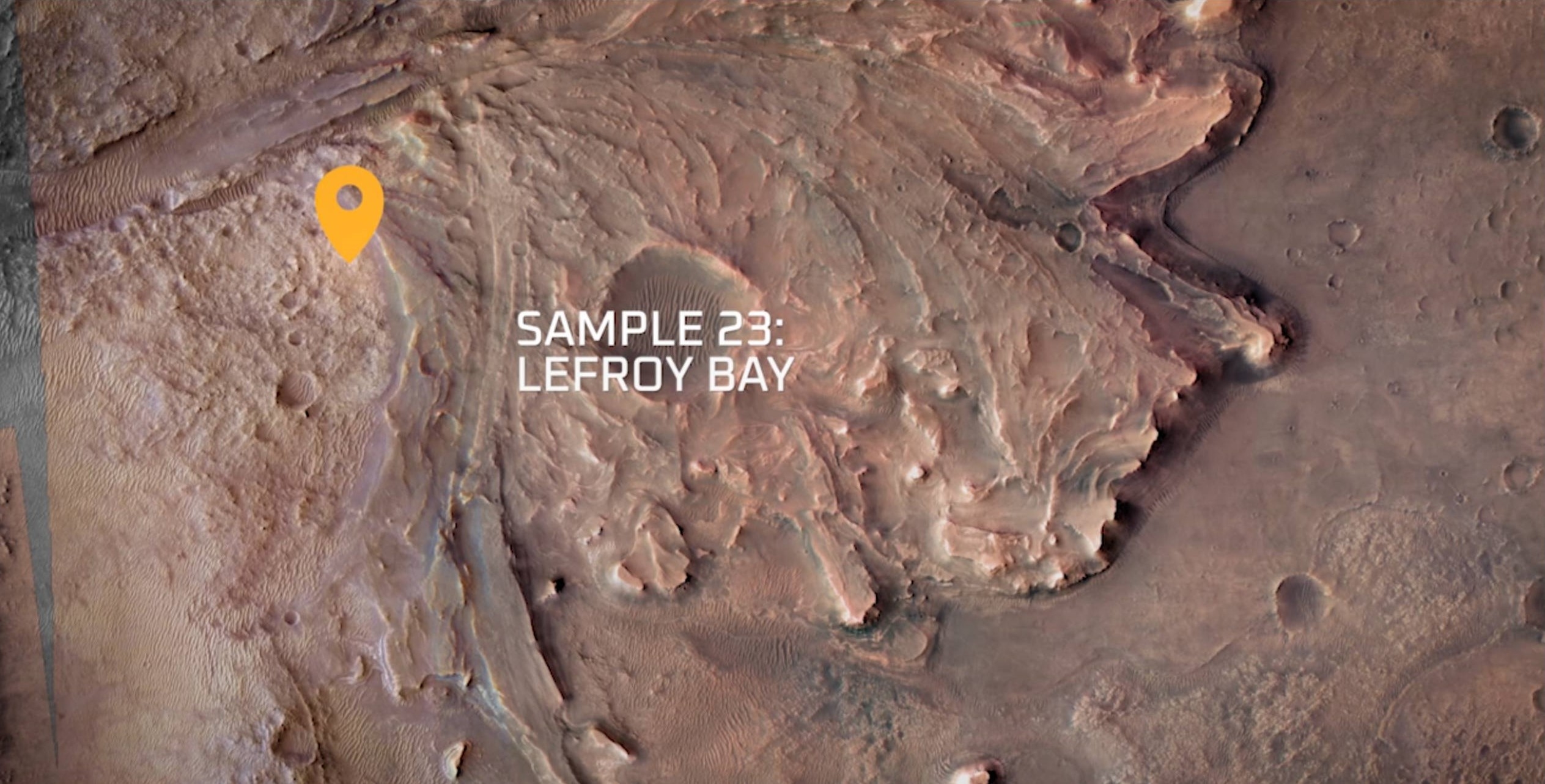
Image credit: NASA/JPL-Caltech
The lead scientist for the NASA Perseverance rover is upbeat regarding how much material has been stuffed in tubes, both dropped on the surface of Mars, as well as contained within the rover itself while wheeling about within Jezero Crater.
Tagged “Lefroy Bay,” Caltech’s Ken Farley called attention to this sample collected by the Perseverance rover, found to have hydrated silica. Here on Earth, that mineral has the highest potential to preserve signs of ancient life.
Given the samples of Mars that Perseverance has collected so far, could one of those specimens be what the rover was sent to look for in the first place: evidence of past microbial life on the Red Planet?
Lively question
So a lively question wanting of an answer arises: Perhaps Lefroy Bay carries preserved signs of ancient life on Mars?
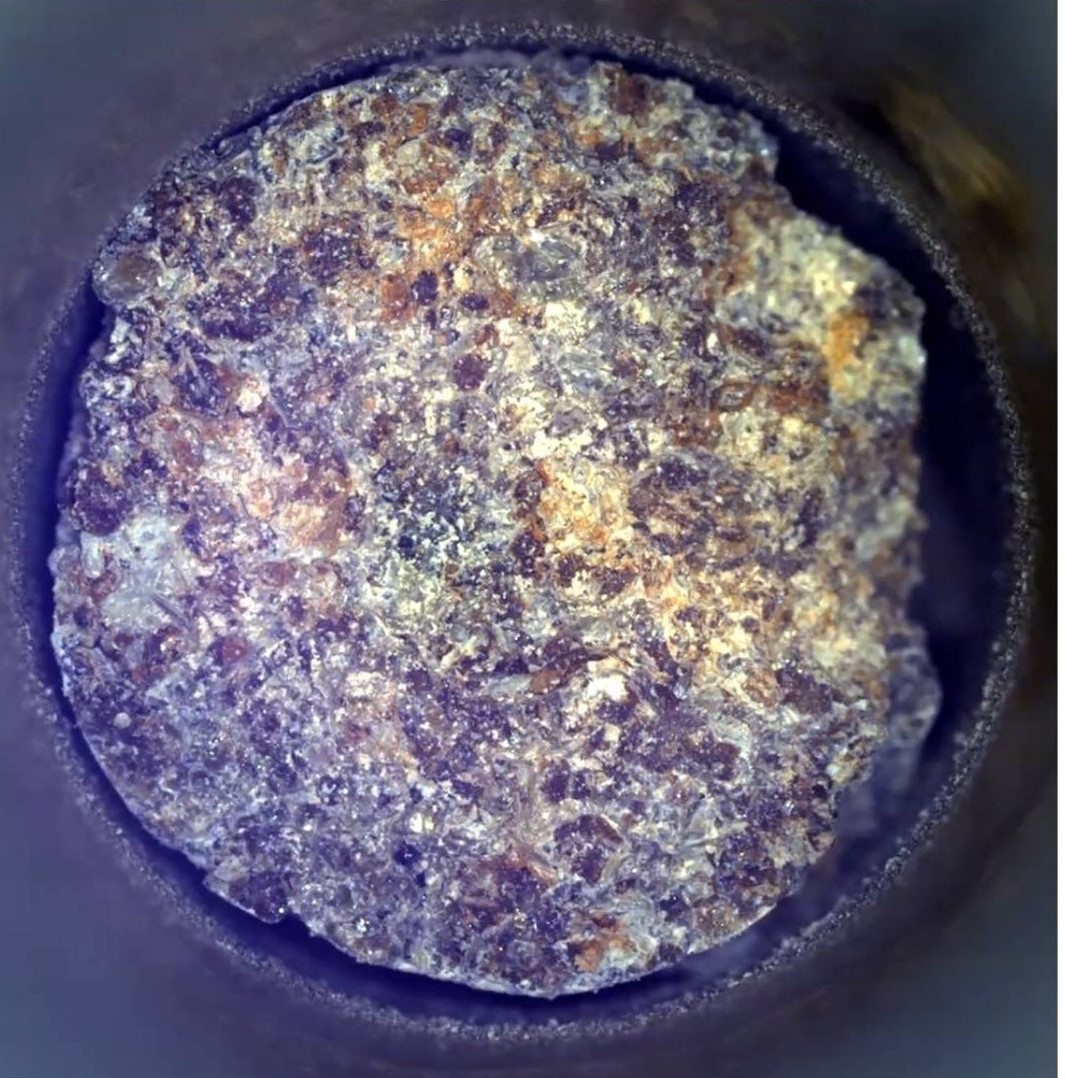
Sample collected tagged as Lefroy Bay at the Margin Unit may have been deposited either in a lake or in a groundwater system. Both are very important settings for understanding Mars habitability and habitation at Jezero Crater.
Image credit: NASA/JPL-Caltech/Ken Farley
Go to my new Space.com story – “Perseverance rover’s Mars rock sample may contain best evidence of possible ancient life” – at:

High-definition images of China’s space station were taken by the departing Shenzhou-16 crew last October 30.
Image credit: CMS
China’s now orbiting Shenzhou-18 crew onboard the country’s Tiangong space station have completed the assembly, testing and outside attachment of a second material exposure experiments.
The three Chinese astronauts — Ye Guangfu, Li Cong and Li Guangsu — were sent to the space station for a six-month mission on April 25.
A tribology experiment box for solid-liquid compound lubrication is one of the major facilities on the station used for scientific research. The focus of the investigation is “super-lubrication” or zero-wear in mechanical movement in the brutal space environment.
Extended service life

China’s Shenzhou-18 crew.
Image credit: CCTV/Inside Outer Space screengrab
According to China Central Television (CCTV), a variety of lubricants have been used in space, applied to moving components of spacecraft and the space station, including solar arrays and antenna systems, thereby extending the service life of spacecraft.
Exposing lubricants and testing equipment to space can better test their reliability, as the experimental environment in space has complexities that can’t be simulated in a terrestrial laboratory, explained Wang Desheng, a researcher at the Lanzhou Institute of Chemical Physics of the Chinese Academy of Sciences in northwestern China to CCTV.

Wang Desheng. Image credit: CCTV/Inside Outer Space screengrab
“Environmental factors for space science experiments include ultra-high vacuum, high and low temperature alternation, and space radiation environments such as microgravity, and atomic oxygen irradiation in particular, are important to study the damage patterns to lubricating materials,” said Wang.
Technical reserves
The institute’s Cai Meirong added that they will study the samples in the laboratory to build technical reserves for future research and development of lubricating materials with longer service life and higher reliability.

Cai Meirong. Image credit: CCTV/Inside Outer Space screengrab
“We will analyze the structural and physicochemical properties of a sample, including its viscosity, thermal stability and other property changes, and observe whether there is any change in its structure and physicochemical properties in the space environment,” Cai told CCTV.
Go to this video at: https://fb.watch/sbfoRyrZ6B/

Artwork depicts Chang’e-6 now in Moon orbit.
Image credit: CNSA/CGTN/Inside Outer Space screengrab
China’s robotic Chang’e 6 lunar farside sample return mission is now in orbit around the Moon, ready to execute a landing attempt.
The multi-component spacecraft is currently awaiting optimum illumination conditions in the Apollo basin interior landing area on the farside, with a touchdown generally planned for early June.
Prior to that next step, the now-circling lunar probe is spending some 20 days to find the best position for a soft landing at the Moon’s farside of the by the lander/ascender components.

Image credit: CCTV/Inside Outer Space screengrab
That pre-selected touchdown spot on the enigmatic farside of the Moon, is a huge impact basin called South Pole-Aitken (SPA) basin. SPA basin occupies an immense area, roughly 1,550 miles (2,500 kilometers) in diameter.

Artwork of Chang’e-6 landing on Moon’s far side.
Image credit: CGTN/CNSA/Inside Outer Space screengrab
Projected 53-day mission
Within 48 hours after touchdown, a robotic arm will be extended to scoop rocks and soil from the lunar surface and a drill will bore into the lunar topside.
Those lunar collectibles will be placed within the ascender for departure from the Moon and docking with the orbiter/returner in lunar orbit.
After completing all tasks, the Chang’e-6 mission will start its homeward-bound leg. After roughly five days of flight, a returner capsule is to re-enter the atmosphere and land in the Siziwang Banner of north China’s Inner Mongolia.

Image credit: Xingguo Zeng, et al.
From launch on May 3 to the Moon and return to Earth of the capsule-contained Moon specimens adds up to a projected 53-day mission.
Landing zone
As the largest and oldest impact structure on the Moon, the SPA basin is among the highest priority sites for future lunar exploration and lunar sample return.
One of the candidate landing areas of Chang’E−6 mission is the “cryptomare” south of the Apollo basin, termed region 1.
That region is not only on the landing zone agenda for China’s Chang’E−6 mission.
A potential NASA lunar mission, Endurance, is designed to traverse the entire basin through the basin center, and also return samples from the area.

Image credit: Xing Wang , et al.
Samples collected by these missions from the central cryptomaria would be critical ground truth for assessing the early thermal history of the lunar farside, and their comparison with Apollo/Luna/Chang’E samples collected from the lunar nearside would also help to unravel the causes of the hemispherical asymmetry of mare deposits.
Go to this informative paper – “Lunar Farside South Pole-Aitken Basin Interior: Evidence for More Extensive Central Cryptomaria in the South Pole-Aitken Compositional Anomaly (SPACA)” — led by Xing Wang at the Key Laboratory of Lunar and Deep Space Exploration, National Astronomical Observatories, Chinese Academy of Sciences, in Beijing, China at:
https://agupubs.onlinelibrary.wiley.com/doi/full/10.1029/2023JE008176
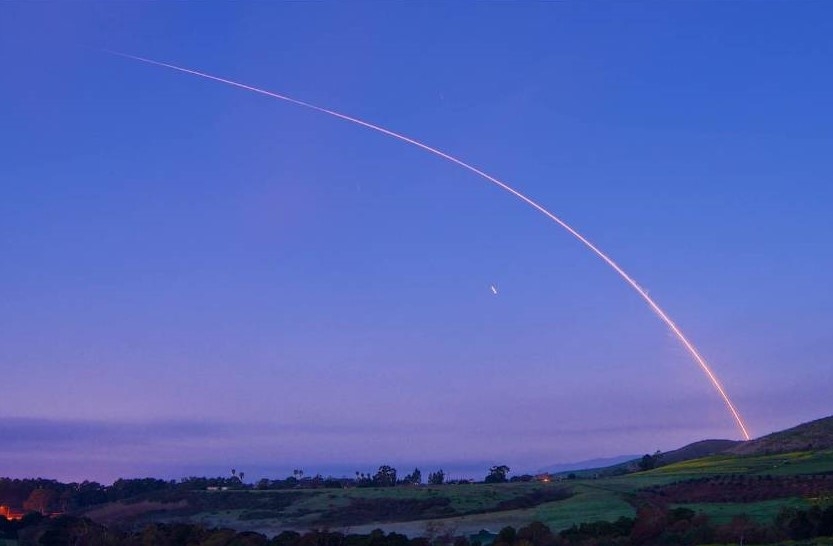
Image credit: Celestis
The folks at Celestis are offering space — memorial capsule space — for its upcoming Perseverance Flight.
Billed as the first spaceflight ever to take memorial space capsules into space to orbit Earth and then deliver them safely home again, the mission is to be staged at Vandenberg Space Force Base, California.
Celestial keepsakes
Celestis explains the mission will fly individually engraved Flight Capsule that carries a loved one’s cremated remains or DNA sample to space and back to Earth, “into the waiting arms of family, who can keep these celestial keepsakes forever.”
Image credit: Celestis
This Perseverance mission is the tenth Celestis Earth Rise service, departing Vandenberg Space Force Base aboard a Space X Falcon 9 launch vehicle no earlier than February 2025.
This will be Celestis’ 25th overall memorial spaceflight since its founding in 1994.
Orbital recovery vehicle
The inaugural launch-orbit-return memorial flight is scheduled to launch in 2025 and makes use of The Exploration Company’s Nyx orbital recovery vehicle. The name Nyx is taken from the ancient Greek goddess of the cosmos creation.
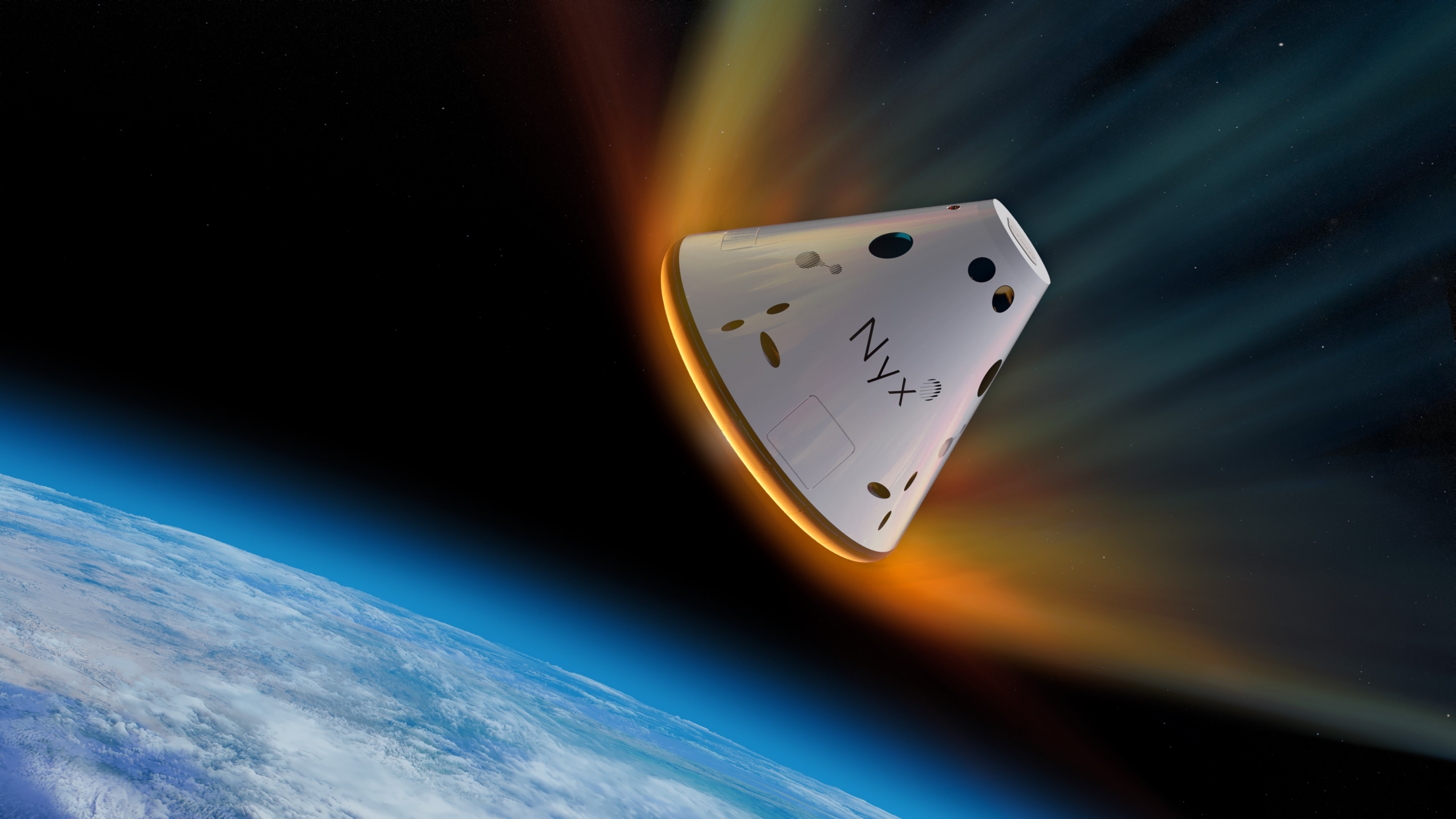
Artwork credit: The Exploration Company
A memorial capsule starts at $3,495, with the returned capsule accompanied by a flight certificate authenticating and recording the exact mission trajectory, verifying the capsule reached space, circled the Earth at 500 miles altitude at roughly 17,000 miles per hour for three hours to complete two to three full Earth orbits.
“Touch the Sky… Seek the Stars… Return Home,” adds Celestis.
For more information, go to:
https://www.celestis.com/launch-schedule/perseverance-flight/

Image credit: ESA/Mlabspace
The long-delayed European ExoMars Rosalind Franklin mission to the Red Planet got a boost for its projected launch in 2028.
A new Memorandum of Understanding was inked May 16 by the European Space Agency (ESA) and NASA, thereby officially joining forces on the endeavor.
Two years ago, ESA cut ties with its Russian Roscosmos partner on ExoMars due to the Russian invasion of Ukraine, skipping an intended launch window for the interplanetary mission.

ExoMars 2022 mission was a joint ESA/Roscosmos project. Shown is rover ready to depart Russia-provided landing module and science landing platform.
Credit: Thales Alenia Space/Master Image Programmes
Now ESA, its Member States and European industry, along with NASA, are hammering out new synergies and partnerships.
U.S. contributions
Here’s the new deal for ExoMars:
The U.S. will provide the launch service, elements of getting ExoMars down safe and sound on Mars, as well as heater units for the Rosalind Franklin rover.
In a statement from ESA, besides the launch service and throttleable braking engines, the main update is that NASA, in partnership with US Department of Energy (DOE), will provide the lightweight radioisotope heater units (RHUs) for the rover.
In parallel, work on the development and certification of a European RHU to fly on the mission will continue, led by the UK.

Credit: ESA/Mlabspace
Called the ESA GSTP/ENDURE program (ENDURE standing for ‘European Devices Using Radioisotope Energy’), the UK work is focused on delivery of an end-to-end European capability for radioisotope heat and power systems by the end of this decade.
Drilling down – politically and scientifically
ESA’s Rosalind Franklin rover is built to drill to a depth of up to 6.5 feet (two meters) below the surface.
Doing so, samples of Mars that have been protected from surface radiation and extreme temperatures will be studied onboard the rover.
In an exclusive interview last month with Space.com, Josef Aschbacher, ESA’s Director General, spotlighted ExoMars at the Space Foundation’s 39th Space Symposium, held in Colorado Springs, Colorado.

Josef Aschbacher, ESA’s Director General.
Image credit: Barbara David
“ExoMars started around 2010-201l, with NASA originally a partner. But budget issues had NASA drop out. So then in working with Russia it moved forward for about 10 years. With war in Ukraine and the sanctions that our member states imposed on Russia, I could not finish the program,” Aschbacher said.
“And this is something quite drastic. The ExoMars rover was finished and ready for launch in September 2022. The war started in February 2022 so I stopped and terminated the cooperation with Russia,” Aschbacher said.
Finding some microbes?
As for how important ExoMars is in the ongoing study of the Red Planet, Aschbacher is ready for new, prime-time revelations.
“It will drill into the surface which is quite unique. There’s no chance to find life on the surface. You have to go down, and exobiologists are saying at least 1.5 meters and we go down 2 meters,” said Aschbacher.
“Can you imagine how exciting this will be? Just imagine finding some microbes of life and to analyze whether there is DNA or no DNA. Would the DNA be similar to ours or not? Unimaginable…and we just don’t know,” the ESA Director said.

Last year, SIIRIUS-23 crew members enterr isolation facility to mimic deep space exploration.
Image credit: Roscosmos/Inside Outer Space screengrab
The six crew members of a year-long space voyage passed their half-way point on May 14, isolated for scientific and psychological study under Russia’s Scientific International Research In Unique terrestrial Station (SIRIUS) project.
Using a unique scientific facility, life support systems, space activities, medical controls and prevention, crew performance and dynamics can be assessed, as well as crew autonomy and associated physiological and psychological stress.

Simulated space ship is at the core of the SIRIUS-23 mission in a 360-day isolation experiment.
Image credit: IBMP
Stay-at-home interplanetary journey
Undergoing their 360-day “flight” of isolation, they are imitating flight conditions of an interplanetary journey. The SIRIUS-23 crew entered their home-away-from-home isolation facility on November 14, 2023.
SIRIUS-23 is being carried out under the auspices of the legendary Institute for Bio-Medical Problems (IBMP) under the Russian Academy of Sciences.

Image credit: SSC/IBMP/RAS
This current initiative is another step of IBMP isolation experiments: SIRIUS-17 (17 days in 2017); SIRIUS-19 (120 days in 2019), with the stage-3 SIRIUS-23 mission taking place in 2021 and lasting 240 days.
Isolation
The main goal of the SIRIUS-23 experiment is to study adaptation of the human body to isolation in a hermetic facility with the artificial habitat simulating a human space flight.
Also being evaluated is gauging means of preventing the negative effects of isolation, as well as minimizing the risks to crew undertaking long-term interplanetary flights.
On the IBMP agenda for the crew is appraising the behavioral aspects of a person’s stay in conditions of long-term autonomous stay in space, taking into account limited space within a spacecraft, limited resources and possible communication delays.

Image credit: SSC/IBMP/RAS
IBMP is investigating actions of the crew in the event of various types of technical malfunctions, say an accident with serious consequences that might pose a threat to the health and life of crew members.
Furthermore, IBMP is looking into problems of intragroup interaction, leadership in a cross-cultural crew with different gender composition.
Moonwalks
Over the course of 180 days, the SIRIUS-23 team saw the arrival of two transport ships to their “orbital station” on December 15, 2023 and March 7, 2024. During the unloading of the supply ships, studies were conducted on the effect of 36-hour sleep deprivation on the psychological state of the crew.

Image credit: SSC/IBMP/RAS
Two cycles of crew separation and spacewalks (EVA) were carried out (January 15–19 and March 18–22, 2024).
A Moon mission simulation includes a flyby to search for a landing site, multiple landings of four crew members for surface operations, orbiting the Moon, and remote control of a rover on the surface.
During these periods, the expedition’s landing detachment, consisting of four crew members, utilized a lunar takeoff and landing module. A “Planetary Surface” module was also used.
In each of the two cycles, two EVAs were performed per day for three days, in pairs. The simulated extravehicular activities involve virtual reality systems and simulation of lunar gravity (the “Constellation-Sirius” experiment). All in all, a dozen surface exits were carried out.

Image credit: SSC/IBMP/RAS
Neurocognitive games
IBMP experiments on the isolated crew is based on the principle of repeatability of cycles. There are daily measurements of intra-ear temperature, stress control, filling out a questionnaire at each meal, etc. A number of experiments aimed at assessing the microflora of humans and the environment have been successfully carried out.
On a weekly basis, neurocognitive games are played by the crew and recording EEG recordings at rest are taken.
Most physiological and psycho-physiological examinations are done on a monthly time period.

Image credit: SSC/IBMP/RAS
Flight cyclogram
According to IBMP officials, the year of isolation is divided into three four-month cycles, each of which includes a repeating set of experimental tasks and techniques. At the end of each cycle, a series of standardized studies and tests are carried out, the results of which make it possible to provide a comprehensive assessment of the state of the physiological systems of the crew members’ bodies during a given period of time.
“All crew members have maintained health and high performance,” explains the IBMP. “The scientific research program is being carried out in full and in strict accordance with the ‘flight’ cyclogram.”

