Archive for February, 2024
 Author:
  February 23rd, 2024
Over the Moon with Odysseus. Following lunar orbit insertion on February 21, the lander continues to be in excellent health in lunar orbit.
Image credit: Intuitive Machines
The prolonged wait for the true status of the private Moon lander, Odysseus, is indeed a nail-bitter blended in with the sounds of silence
According to Intuitive Machines, the status of the recent arrival on the Moon is that the lander is “alive and well.” At this posting, no surface imagery has been released.
Reportedly, flight controllers are communicating and commanding the vehicle to download science data.
“The lander has good telemetry and solar charging,” according to Intuitive Machines.

Image credit: Intuitive Machines
Overall health
What’s ahead is trying to figure out more about the Odysseus vehicle’s latitude and longitude, overall health, and attitude (orientation).
Intuitive Machines CEO Steve Altemus will participate in a press conference later today, hopefully filling in the blanks.
Facing Earth
But from master satellite tracker, Scott Tilley in an X (Twitter) posting:
“Yes, imagine you are a box. Only one side of you (a box) has a mouth and your voice will only carry for a very limited angular cone and your mouth can’t move much to re-aim. So if you landed in the wrong location or with the wrong side of your box facing Earth…No one hears you.”

Artwork caption credit: Scott Tilley
 Posted in

Image credit: Tim Burton’s Beetlejuice
It is showtime for the commercial Odysseus Moon lander, ready to attempt later today a touchdown on the lunar terrain.
Image credit: Intuitive Machines
Following lunar orbit insertion on February 21st, Intuitive Machines notes its lander is in excellent shape for Odysseus’ “hardest challenge yet” – an expected 1630 Central Standard Time (5:30 p.m. Eastern Time) landing opportunity.
Odysseus is orbiting approximately 57 miles (92 kilometers) above the lunar surface.
Over the Moon with Odysseus. Following lunar orbit insertion on February 21, the lander continues to be in excellent health in lunar orbit.
Image credit: Intuitive Machines
For a detailed rundown of what’s onboard the private Moon lander – backed by NASA’s Commercial Lunar Payload Services (CLPS) initiative, go to:
https://www.leonarddavid.com/next-private-moon-lander-attempt-to-fly-in-february/

Artwork of incoming ERS-2.
Image credit: ESA
The European Space Agency has issued what may be the final update prior to the uncontrolled fiery finale and destruction of the European ERS-2 spacecraft.
Using data acquired in the last few hours, ESA’s Space Debris Office predicts that the reentry of ESA’s ERS-2 satellite will take place today, on Feb. 21 at 15:41 UTC (16:41 CET) .
The uncertainty in this prediction is +/- 1.44 hours.
Go to my new Space.com story – “Big, dead satellite predicted to fall to Earth today. Will any debris survive the fiery reentry?” – at:
https://www.space.com/satellite-ers-2-esa-debris-prediction

Image credit: ESA

Image credit: ESA
Artwork of incoming ERS-2.
Image credit: ESA
A European Space Agency spacecraft is making an uncontrolled nosedive into Earth’s atmosphere – with elements of the 2.3-ton spent satellite likely to survive the plunge into purgatory.
The exact time and place above Earth that the radar-scanning ESA European Remote Sensing (ERS-2) augers in is unknown, but a new prediction of the spacecraft’s demise has been issued.

Image credit: ESA
Using data acquired on February 20, ESA’s Space Debris Office currently predicts that the reentry of ESA’s ERS-2 satellite will take place at 20:53 UTC (21:53 Central European Time) February 21.
The uncertainty in this prediction is now just (+/- 7.48 hours), according to an ESA statement.
“This uncertainty is due primarily to the influence of unpredictable solar activity, which affects the density of Earth’s atmosphere and therefore the drag experienced by the satellite,” ESA adds.

Image credit: ESA
Leftovers
As for the ERS-2 re-entry itself, there’s likely to be post-re-entry spacecraft leftovers.
“It is likely that some parts survive the re-entry, as on average between 10 and 20 percent of the mass for large objects does,” says Simona-Elena Nichiteanu, a media relations officer in the communication department at the European Space Operations Centre (ESOC).
ESOC serves as the main mission control center for ESA in Darmstadt, Germany.

ERS-2 artwork.
Image credit: ESA
Component survival
As for the ERS-2 component survival to Earth’s surface, Nichiteanu told Inside Outer Space that the biggest and heaviest fragments that might survive reentry into the atmosphere are the 4 tanks (heaviest), the 3 internal panels supporting instruments (largest cross section) and the Synthetic Aperture Radar (SAR) antenna structure (largest fragment assuming it does not fragment at all).
A vast majority of ERS-2 will “burn up” in the atmosphere, ESA experts explain. Furthermore, given that the Earth is largely ocean water-rich, chances are for splash down of any remaining spacecraft components.
Orbital debris regulation
The fall of ERS-2 can be viewed both as a calling card from space and a wake-up call.
“While the ESA should be lauded for its efforts to de-orbit the ERS-2, it should be unsurprising that a 2.3-ton satellite launched into Earth orbit without any enforceable orbital debris regulation will then return to Earth’s atmosphere as orbital debris in an explosive uncontrolled reentry,” said Michael Runnels, an assistant professor of business law at California State University, Los Angeles.
“Indeed, these events highlight the continuing need for enforceable orbital debris regulation to support the sustainable exploration and scientific investigation of outer space,” Runnels told Inside Outer Space.

Taking the fall. Space hardware dives into Earth’s atmosphere with some fragments making their way to the ground.
Image credit: ESA/D.Ducros
ERS-2 artwork.
Image credit: ESA
That incoming European Remote Sensing (ERS-2) is closing in on a nose-dive into Earth’s atmosphere.
Tipping the scales at an estimated 2.3 tons (2,294 kilograms), when and where the defunct spacecraft completes its final orbit is an unknown. ERS-2 was launched on April 21, 1995.
Meanwhile, the European Space Agency’s (ESA) latest prediction is that ERS-2’s demise is now heading toward re-entry on February 21 at 15:19 UTC (16:19 Central European Time).

Image credit: ESA’s ESOC operations center, Darmstadt, Germany
“The uncertainty in this prediction is now less than one day (+/- 18.82 hours),” ESA satellite trackers add. “Please note that all predictions are still affected by significant uncertainties.”
Breaking up – easy to do?
ERS-2 will break up into fragments as it plunges through Earth’s atmosphere.
A vast majority of these will “burn up” in the atmosphere, ESA experts explain, although some fragments could reach Earth’s surface. Given that the Earth is largely ocean water-rich, chances are for splash down of any remaining spacecraft components.

Image credit: ESA’s ESOC operations center, Darmstadt, Germany
“No intervention can be made from the ground, so ERS-2 will return entirely naturally – now a common occurrence as on average one spacecraft reenters Earth’s atmosphere per month,” an ESA statement explains.
Entirely naturally
However, there are those that see the fall of ERS-2 as a calling card from space that doubles as a wake-up call – and on several fronts.
Ewan Wright is a PhD candidate at the University of British Columbia and Junior Fellow of the Outer Space Institute. He is actively focused on the sustainability of the outer space environment.

Credit: CORDS/The Aerospace Corporation
ERS-2 is a three decade old Earth Observation satellite with a mass about that of a Ford F-150, Wright said. “ERS-2 won’t burn up entirely when it reenters the atmosphere, so there is a chance that debris will hit someone on the ground, or disrupt air traffic.”
Uncontrolled re-entry
Wright told Inside Outer Space that, fortunately, the probability of someone getting hit is small. “But if we keep doing this again and again, someone someday will get hurt.”
Last year, 30 satellites larger than 500 kilograms uncontrollably reentered the atmosphere.
In total, in 2023, about 55 tons of satellite reentered randomly, Wright stated. ESA was responsible in lowering ERS-2’s orbit to make sure it didn’t become permanent space debris, he said.

Launch and reentry particle emissions in the Earth’s stratosphere.
Image credit: The Aerospace Corporation
“But in the future, all large satellites should do controlled reentries. Operators should control them to reenter over the oceans, away from people, aircraft and ships,” Wright concluded.
Hot topic
The incoming ERS-2 is something that happens quite regularly with defunct satellites, said Leonard Schulz, a researcher at the Technische Universität Braunschweig’s Institute of Geophysics and Extraterrestrial Physics in Braunschweig, Germany.
Such falls will only increase in the future, Schulz added, due to the growing number of objects brought into low Earth orbit.
Schulz said that there’s need to consider the effects on the atmosphere from spacecraft re-entry, a hot topic that ESA is evaluating.
“Today, we are lacking information on many aspects when it comes to materials released and subsequent effects on the atmosphere,” Schulz pointed out to Inside Outer Space.
Satellite reentries are a good opportunity to gather observational data with measurement campaigns, Schulz advised. However, such uncontrolled reentries as with ERS-2 are extremely difficult to observe, he said, as the uncertainty of where the satellite reenters is so high.

Chunks of space junk rained down in Australia, later identified as SpaceX leftovers from its Crew-1 Mission that flew in 2020-2021.
Photo courtesy: Brad Tucker
“But controlled reentries provide great measurement opportunities,” Schulz concluded, “which should be a focus in the future!”
Long-term impact
ESA organized a dedicated event in January 2024 to address the topic of satellite leftovers and pollution within Earth’s atmosphere.
ESA also carried out two studies on the atmospheric impact of spacecraft reentries in 2019. They concluded that the short-term impact on the atmosphere due to the burn up of a single spacecraft is modest, primarily because the particles created during a reentry are generally too large to react chemically with the atmosphere.

Credit: The Aerospace Corporation/Center for Space Policy and Strategy
On the other hand, what about long-term impact?
In a recent study issued last year, a research team led by the U.S. National Oceanic and Atmospheric Administration (NOAA) detected in Earth’s stratosphere more than 20 elements that mirror those used in spacecraft-building alloys.
Given projected launch rates from countries around the world, the NOAA research team calculated that in the next few decades, up to half of stratospheric sulfuric acid particles would contain metals from reentry.
Difficult to study, complex to understand
But what impact these space junk-laden particles could have on the atmosphere, the ozone layer and life on Earth is yet to be evaluated.

Image credit: NOAA
“Changes to the atmosphere can be difficult to study and complex to understand,” explains Purdue University’s Daniel Cziczo, professor and department head of Earth, Atmospheric, and Planetary Sciences. He took part in the NOAA-issued report.
“But what this research shows us is that the impact of human occupation and human spaceflight on the planet may be significant,” Cziczo adds, “perhaps more significant than we have yet imagined. Understanding our planet is one of the most urgent research priorities there is.”
For details on this NOAA research, go to “Space Pollution: Cautionary News” at:
https://www.leonarddavid.com/space-pollution-cautionary-news/

Image credit: Mars Guy
Mars Guy reviews new images from tests that expose the extent of the destruction of Ingenuity, the Mars helicopter.
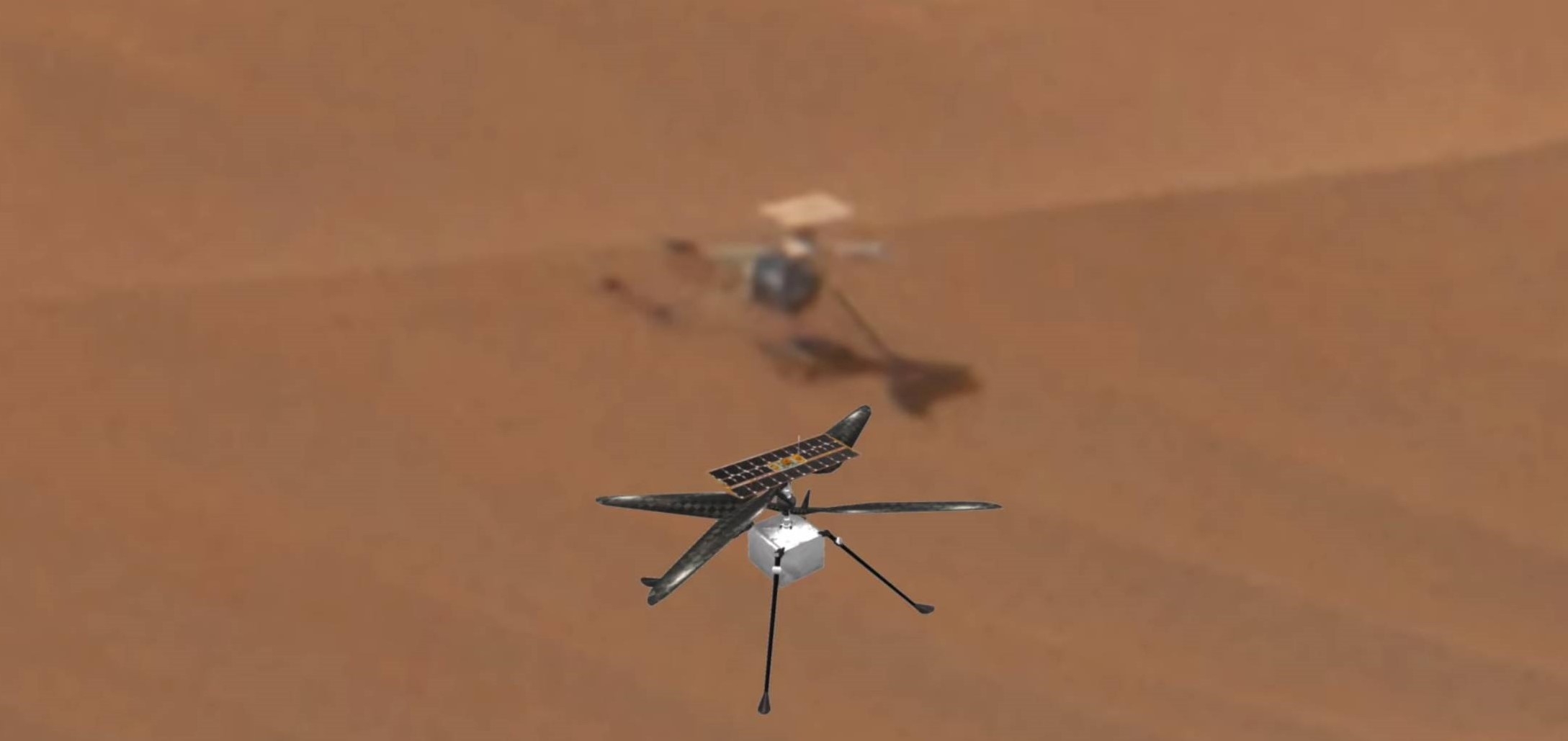
Image credit: Mars Guy
One rotor blade appears to be missing.
On the 72nd flight of Ingenuity, the craft suffered catastrophic damage when its rotor blades contacted a sand ripple during landing.
Go to video that features the work of Simeon Schmauß at:
https://youtu.be/a6r4-rDc-3U?si=clWd2R1n9wZUm1gc
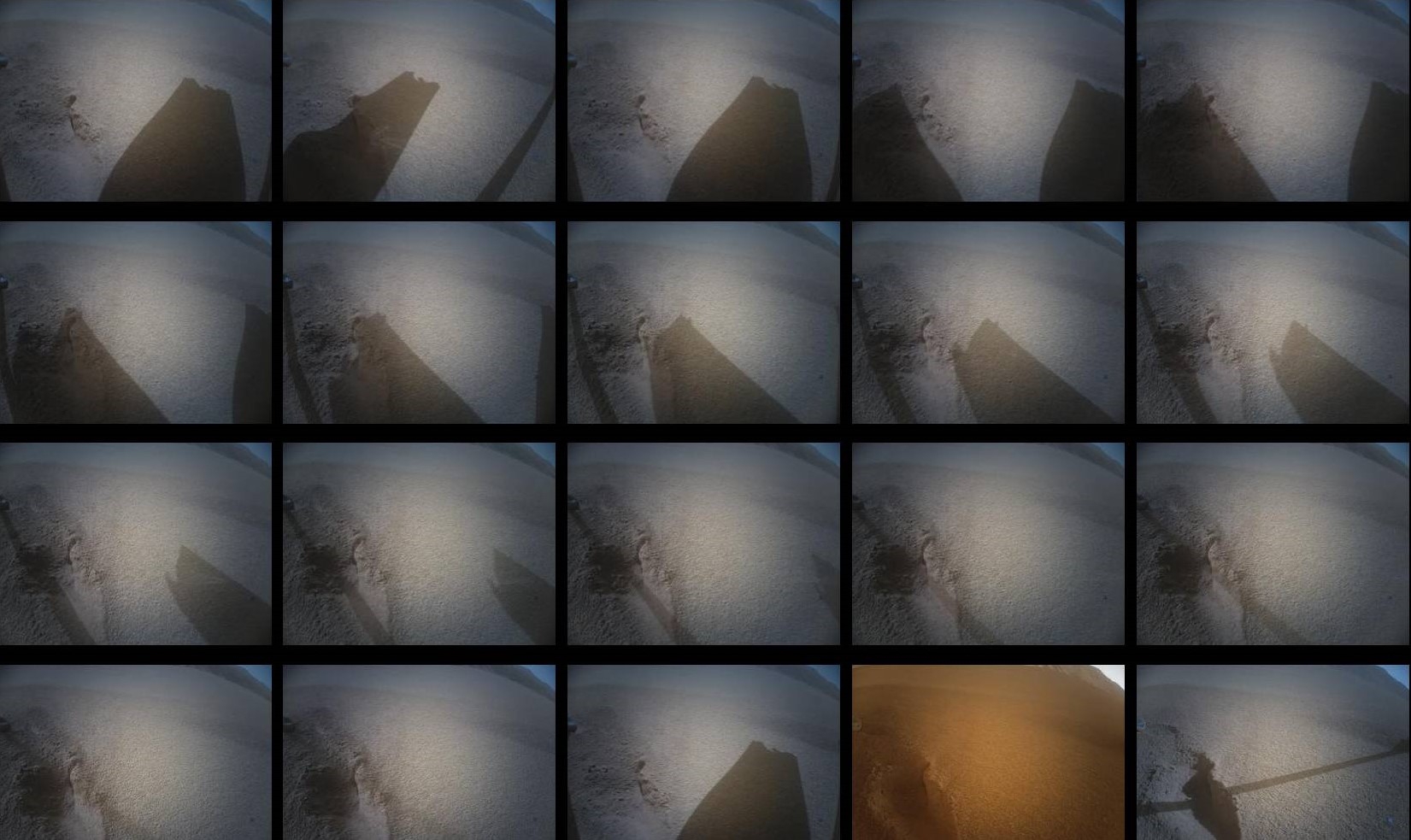
Image credit: NASA/JPL-Caltech/ASU
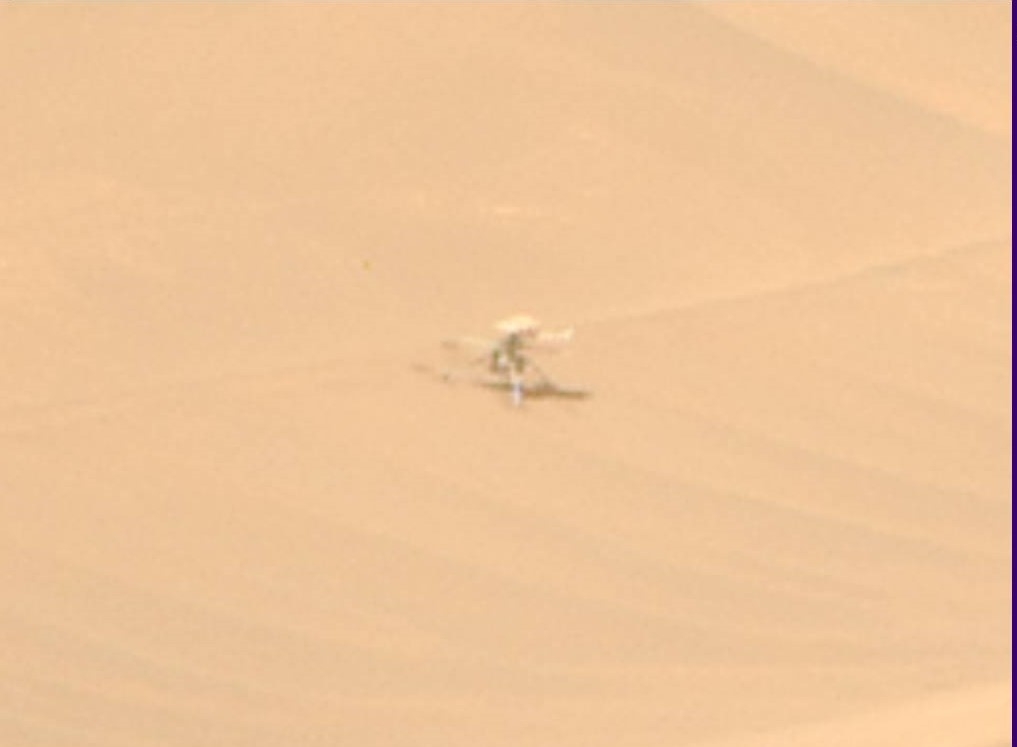
NASA’s Mars Perseverance rover used its Right Mastcam-Z Camera to acquire this new image of the damaged chopper on Feb. 16th.
Image credit: NASA/JPL-Caltech/ASU
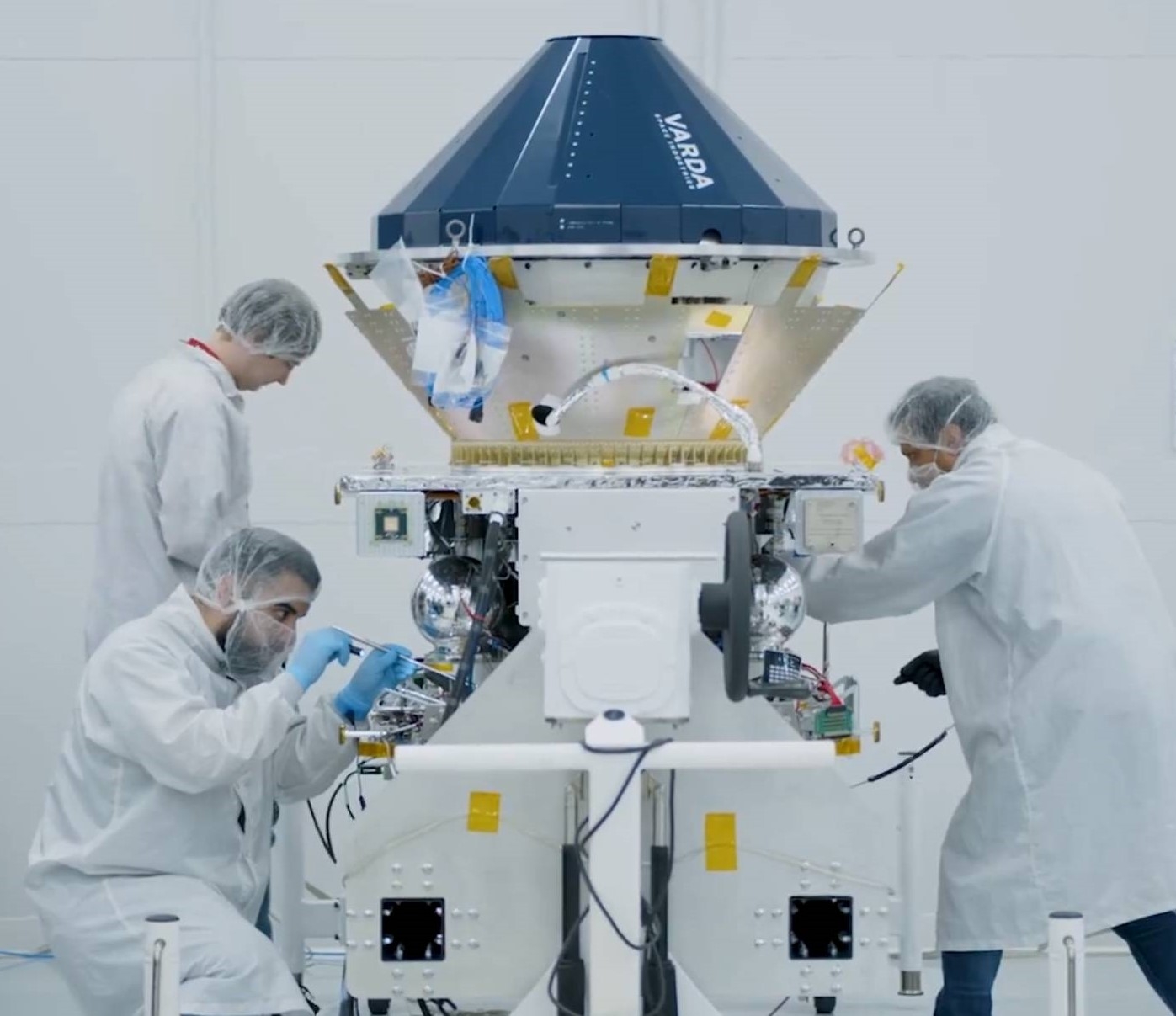
Pre-launch photo with technicians working on the Varga capsule-mounted spacecraft.
Image credit: Rocket Lab/Inside Outer Space screengrab
The reentry of Varda Space Industries’ in-space manufacturing capsule, named Winnebago-1 (W-1), is set for February 21.
The FAA has granted a world-first reentry license for the mission, enabling Rocket Lab to conduct a targeted reentry of the capsule and subsequent landing in the Utah Desert.
Rocket Lab built and is operating the spacecraft currently hosting the capsule on orbit.
Varda’s W-1 mission was lofted on SpaceX’s Transporter 8 flight last June.

SpaceX Transporter-8 liftoff.
Image credit: SpaceX/Varda Space Industries
However, Varda’s initial plan to reenter the capsule back in September of last year was curtailed due to both Air Force and FAA approval issues.
Engine burns
In the coming days, Rocket Lab will conduct a series of maneuvers to bring the capsule, named Winnebago-1, back to Earth.
The Varda capsule is approximately 3 feet in diameter, 2.5 feet tall, and weighs less than 200 pounds. It is slated to parachute into the Utah Test and Training Range (UTTR) – a remote area in which NASA’s OSIRIS-REx asteroid return capsule also landed last year.
In the evening of February 18, Pacific Time (PT) there will be an initial burn of the Curie engine on Rocket Lab’s spacecraft that places Winnebago-1 in its first staging orbit.
On February 20, PT, a second engine burn places Winnebago-1 in its second staging orbit.
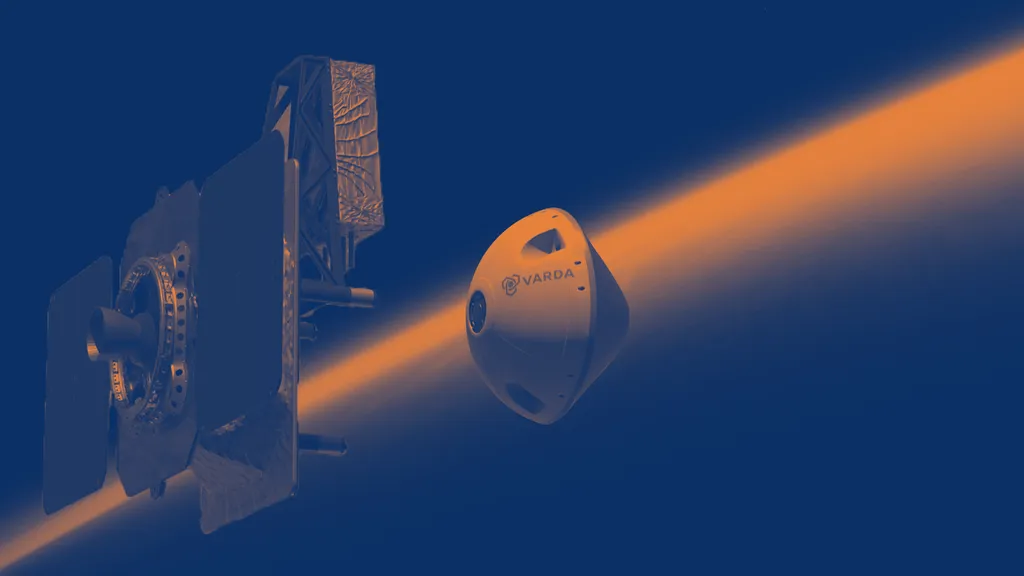
Image credit: Varda Space Industries
Afternoon of February 21, PT, the spacecraft’s third and fourth final engine burns to de-orbit and set Winnebago-1 on its atmospheric reentry trajectory.
First of four
The Varda capsule was lofted to grow Ritonavir crystals, a drug commonly used as an antiviral medication for HIV and hepatitis C.
According to a Rocket Lab statement, this mission is the first of four which will use identical Rocket Lab spacecraft to support Varda’s in-space manufacturing.
“The second spacecraft has completed assembly, integration, and testing at Rocket Lab’s spacecraft production facility in Long Beach, California, and is scheduled to launch in the coming months,” adds the statement.

Utah landing site. Image credit: FAA/Final
Environmental Assessment

Coming in hot! (MSL stands for mean sea level. Image credit: FAA/Final
Environmental Assessment

Varda test capsule and still attached main parachute following a 2022 parachute test in Arizona. Image credit: FAA/Final
Environmental Assessment

Image credit: Intuitive Machines
The Intuitive Machines (IM-1) Moon lander has transmitted its mission images to Earth on February 16th.
The lunar lander images were captured shortly after separation from the SpaceX’s second stage.
The IM-1 mission Nova-C class lunar lander called “Odysseus” continues to be “in excellent health, in a stable orientation and remains on schedule for a lunar landing opportunity on the afternoon of February 22,” according to an earlier IM-1 posting from the private group.
Intuitive Machines flight controllers have successfully fired the first liquid methane and liquid oxygen engine in space, completing the IM-1 mission engine commissioning.

This engine firing included a full thrust main stage engine burn and throttle down-profile necessary to land on the Moon, the company reports.
Commission maneuver
There was a delay in a spacecraft Commission Maneuver burn on February 15.
“This approach provided flexibility in the mission’s engine burn schedule to allow for learning as we operate the lander in the vacuum of space,” the private company explains. Adjusting for this learning process is why the team chose to delay the burn.

Image credit: Intuitive Machines
While preparing for the CM burn, flight controllers experienced intermittent uplink and downlink data communications between the Nova-C lander and ground stations, potentially impacting our ability to collect the critical information required to support the CM burn and follow-on performance analysis.
“As we prepared for the first-ever in-space ignition of a liquid methane and liquid oxygen engine, we reviewed our Earth-based test data against the data we’ve accumulated in space,” the communiqué from Intuitive Machines explains.

Image credit: Intuitive Machines
Chill out
“The in-space performance demonstrated that it takes longer to chill the liquid oxygen feed line than the Earth-based testing. After understanding the in-space liquid oxygen feedline requirements, we adjusted and uploaded the CM burn preparation timeline and increased the onboard event sequence timer.”
The IM-1 mission Nova-C class lunar lander “is in excellent health, and we expect to continue to provide mission updates at least once a day,” explains the posting.

IM-1 landing area between the craters Malapert C and Malapert B and east of Malapert A, in relatively ancient terrain within the south pole Aitken basin.
Image credit: NASA/GSFC/Arizona State University

Curiosity Left B Navigation Camera on Sol 4099, February 16, 2024.
Image credit: NASA/JPL-Caltech
NASA’s Curiosity Mars rover at Gale Crater is now performing Sol 4100 duties – wheeling toward 20 miles of distance from its touchdown location on August 5, 2012 Pacific Daylight Time (morning of August 6 EDT).
Abigail Fraeman, a planetary geologist at NASA’s Jet Propulsion Laboratory reports that the newly shaped weekend plan calls for Curiosity to continue to support two sets of long-term science campaigns.
“First, we want to understand the processes that built Mt. Sharp’s sulfate-bearing (salty) unit,” Fraeman notes, “and what that can tell us about Mars’ past changing climate and habitability.”

Curiosity Left B Navigation Camera on Sol 4099, February 16, 2024.
Image credit: NASA/JPL-Caltech
Fraeman continues, pointing out that the second aspect of the long-term science objective is trying to understand how Gediz Vallis channel formed, “and by extension, what the ‘last gasps’ of surface water in Gale crater might have been like.”
Hugging the edge
The robot has been hugging the edge of Gediz Vallis channel for the past few drives, Fraeman notes, “getting as close as we can in order to image the rocks within the channel, but we had to turn ever so slightly east today, away from the channel, where the terrain is a little easier for Curiosity to navigate.”
Last Wednesday’s southeastern drive placed Curiosity right at the edge of a “dark band” (as characterized in orbital data) of the sulfate-bearing unit.
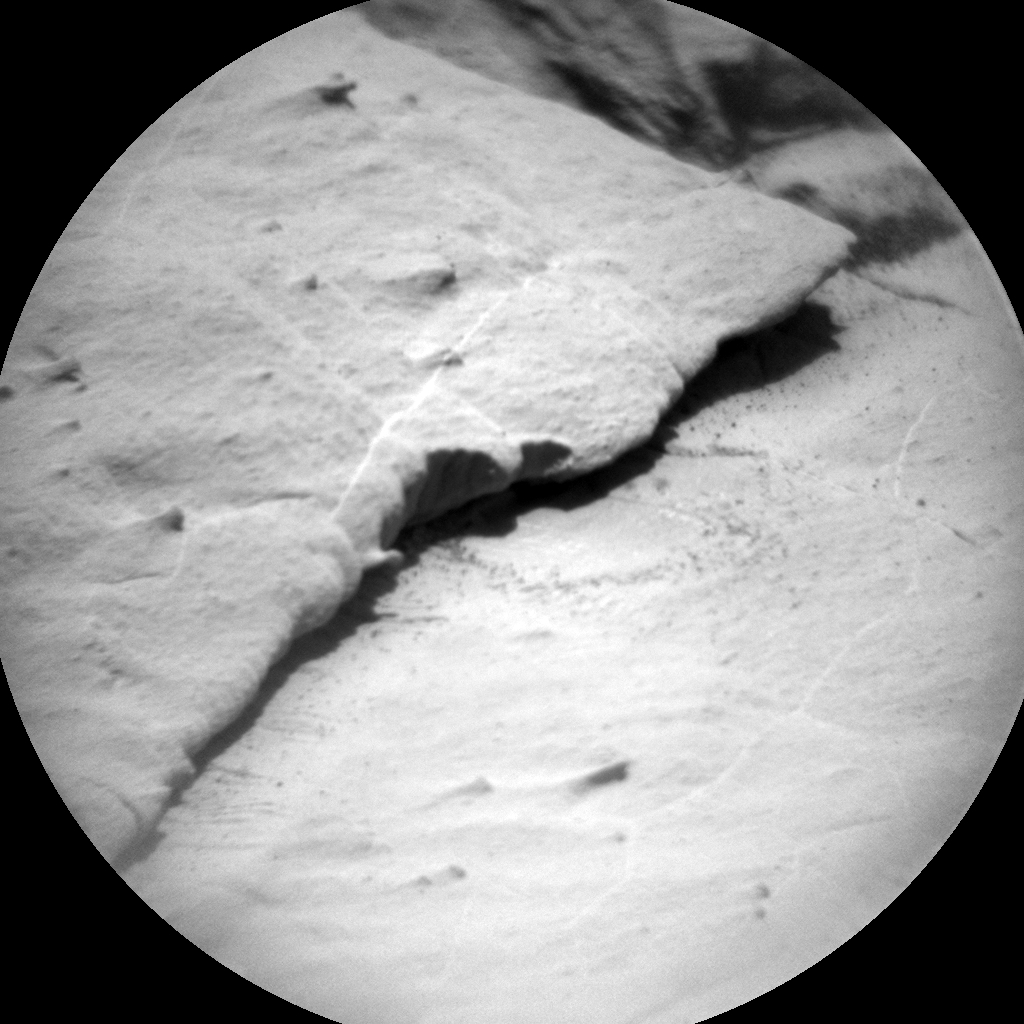
Curiosity Chemistry & Camera (ChemCam) Remote Micro-Imager (RMI) photo acquired on Sol 4099, February 16, 2024.
Image credit: NASA/JPL-Caltech/LANL
On the hunt
“In addition to still collecting lots of images of Gediz Vallis channel, we’re also now on the hunt for another possible drill target that will help us continue to characterize the rocks in the sulfate-bearing unit,” Fraeman adds.
“We’ll assess the textures and compositions of rocks in this and an upcoming dark band to help us determine whether there’s anything we’d like to sample.”
To cover the upcoming U.S. holiday on Monday, four sols of robot work were planned.

Curiosity Right B Navigation Camera imate taken on Sol 4099, February 16, 2024.
Image credit: NASA/JPL-Caltech
Methane measurement
The first sol of the plan is mainly devoted to getting ready for a Sample Analysis at Mars (SAM) Instrument Suite atmospheric observation that will take place just after midnight on the first sol and will measure methane in the Martian atmosphere.
We’ll also have some remote sensing observations on the first sol, with Chemistry and Camera (ChemCam) Laser Induced Breakdown Spectroscopy (LIBS) observations of dark bedrock in front of the rover (“Red Kaweah”) and Mastcam images of Gediz Vallis channel.
Science action
Remote sensing will continue on the second sol of the plan, with more Mastcam observations and a ChemCam LIBS observation of “Muro Blanco,” a light-colored piece of bedrock.

Curiosity Right B Navigation Camera imate taken on Sol 4099, February 16, 2024.
Image credit: NASA/JPL-Caltech
Curiosity’s Mars Hand Lens Imager (MAHLI) and the Alpha Particle X-Ray Spectrometer (APXS) will get in on the science action on the sol as well, Fraeman explains, with observations of two targets on dark toned rocks in front of us named “Thunderbolt Peak” and “Tenderfoot Peak.”
Drive to the south
“We’ll snag one more LIBS observation on the third sol of the plan on Tenderfoot Peak, then we’ll drive roughly 25 meters [82 feet] to the south, towards a rock we are interested in assessing as a possible drill target,” Fraeman reports.

Curiosity Right B Navigation Camera imate taken on Sol 4099, February 16, 2024.
Image credit: NASA/JPL-Caltech
The fourth sol of the plan will be relatively quiet, with Rover Environmental Monitoring Station (REMS) observations to characterize the weather only, Fraeman points out.
Mastcam, Navcam, the Radiation Assessment Detector (RAD) and the Dynamic Albedo of Neutrons (DAN) will also make observations throughout the plan to characterize the Martian environment, Fraeman concludes.

Book Review: Off-Earth Ethical Questions and Quandaries for Living in Outer Space by Erika Nesvold; MIT Press (2023); 304 pages, Hardcover: $27.95
This is a thought-provoking, even controversial for some readers!
Erika Nesvold, an astrophysicist, has worked as a researcher at NASA Goddard and the Carnegie Institution for Science.
As a developer for Universe Sandbox as well as cofounder of the nonprofit organization the JustSpace Alliance, Nesvold is also the creator and host of the podcast Making New Worlds.
The book rests on a stated premise: Can we do better in space than we’ve done here on Earth?
An issue is that we don’t, shouldn’t, or can’t leave our ethics back here on home planet Earth.
As stated by the publisher, Off-Earth includes historical and contemporary examples from outside the “dominant Western/US…and privileged narrative of the space industry.”
What that translates into is the author’s narrative on the potential ethical pitfalls of becoming a multi-planet species.
Bottom line: We won’t be departing our earthly problems and start afresh – even by taking in that space suit, airlock and cramped habitat smell.
Here’s an extract from the book, courtesy of MIT Press titled “The Thorny Ethics of Planetary Engineering – Whenever someone waxes poetic about terraforming alien worlds, it’s worth taking a moment to consider the ethical implications of the proposal.”
Go to:
https://thereader.mitpress.mit.edu/the-thorny-ethics-of-planetary-engineering/
For more information about this book, go to:

