Archive for December, 2023
 Author:
  December 1st, 2023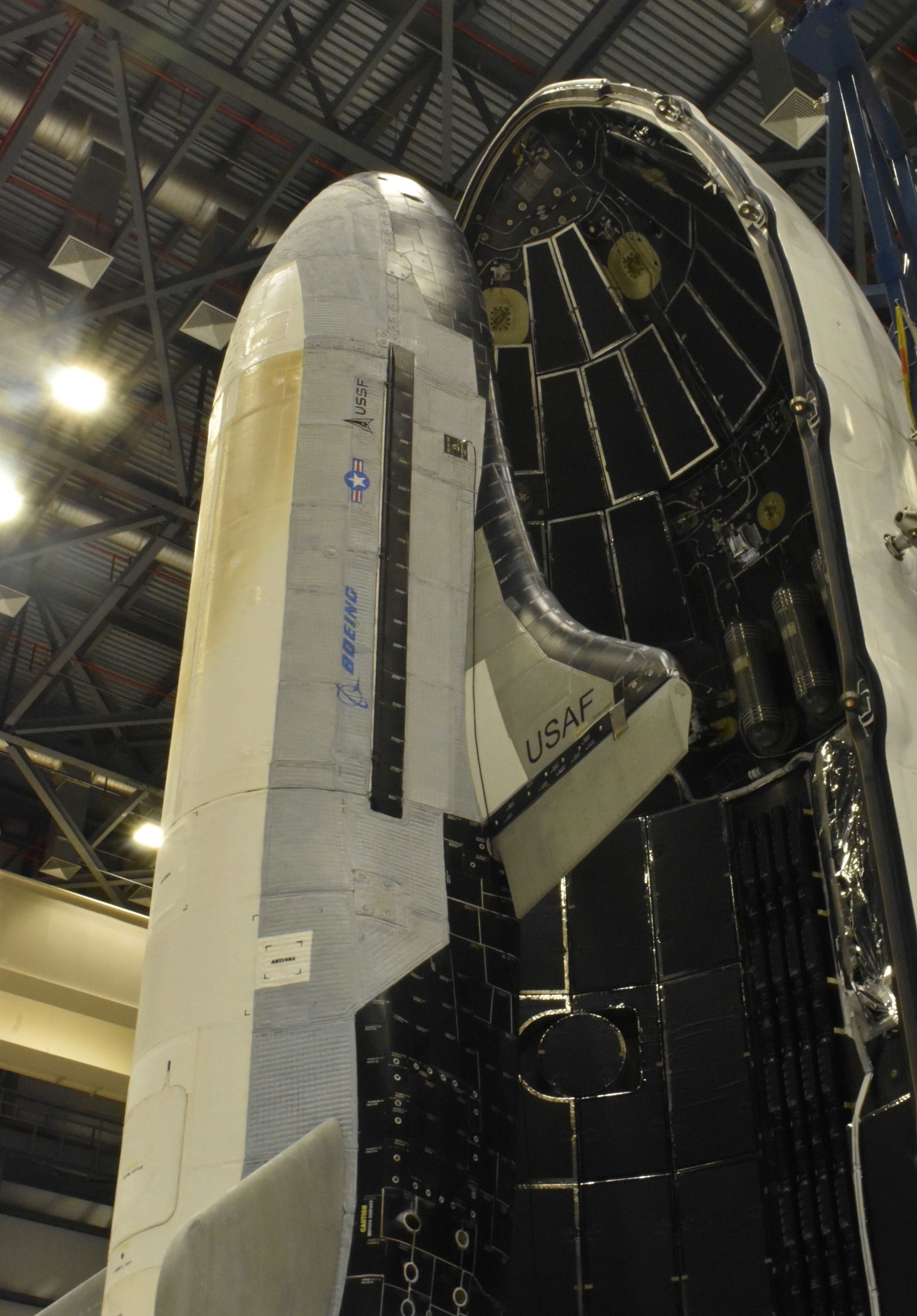
Uncrewed military space plane featuring the United States Space Force logo for the first time.
Image credit: U.S. Space Force/Courtesy Photo
That secretive U.S. Space Force X-37B space plane is now targeted for launch on December 10th. Original launch date was December 7 with the slip “due to launch delays and pad availability,” according to a U.S. Space Force statement.
Final preparations to launch the program’s seventh robotic flight, labeled the X-37B Orbital Test Vehicle (OTV-7), are underway.
This X-37B flight will be the first to launch on a SpaceX Falcon Heavy rocket—designated USSF-52.
Onboard the craft are tests to appraise the vehicle’s operation in new orbital regimes, experimenting with space domain awareness technologies and investigating the radiation effects to NASA materials.
For more detailed information on this mission, and the X-37B program in general, go to:
“U.S. Military Space Plane: Next Mission – What Will It Do?” at:
https://www.leonarddavid.com/u-s-military-space-plane-next-mission-what-will-it-do/
 Posted in

Chang’e-5 return capsule holding lunar specimens.
Image credit: National Astronomical Observatories, CAS
NASA has green-lighted space agency-funded researchers to apply for access to China’s lunar samples returned to Earth via that country’s Chang’e-5 moon mission.
China has made available to several countries access to that Chang’e-5 lunar collection. The China National Space Administration (CNSA) is now orchestrating the 7th round of receiving applications for access to Chang’e-5 lunar samples. This is an opportunity that is open until December 22 of this year.

Photo taking during Chang’e-5 moon surface sampling session in December 2020.
Credit: CNSA/China Central Television (CCTV)
In a communiqué from the NASA Solicitation and Proposal Integrated Review and Evaluation System (NSPIRES) the space agency has certified its intent to Congress to allow NASA-funded researchers to apply for access to the Chang’e-5 samples.
For more information on this development and its implications, go to my new Space.com story – “China’s Chang’e 5 moon samples, beyond NASA’s reach for years, are finally available to US scientists” – at:
https://www.space.com/china-moon-samples-change-5-nasa-researchers

