Archive for May, 2023
 Author:
  May 2nd, 2023
CAPSTONE over the Moon’s North Pole.
Image credit: NASA/Daniel Rutter
What’s the latest about NASA’s Moon mission mouthful, the Cislunar Autonomous Positioning System Technology Operations and Navigation Experiment?
Thankfully, it’s called CAPSTONE for short – and is operating in a Near Rectilinear Halo Orbit (NRHO).
Find out the latest with my new Multiverse SpaceRef story – “CAPSTONE Moon Mission – Challenges, Lessons Learned” – at:
https://spaceref.com/science-and-exploration/capstone-moon-mission-challenges-lessons-learned/
 Posted in
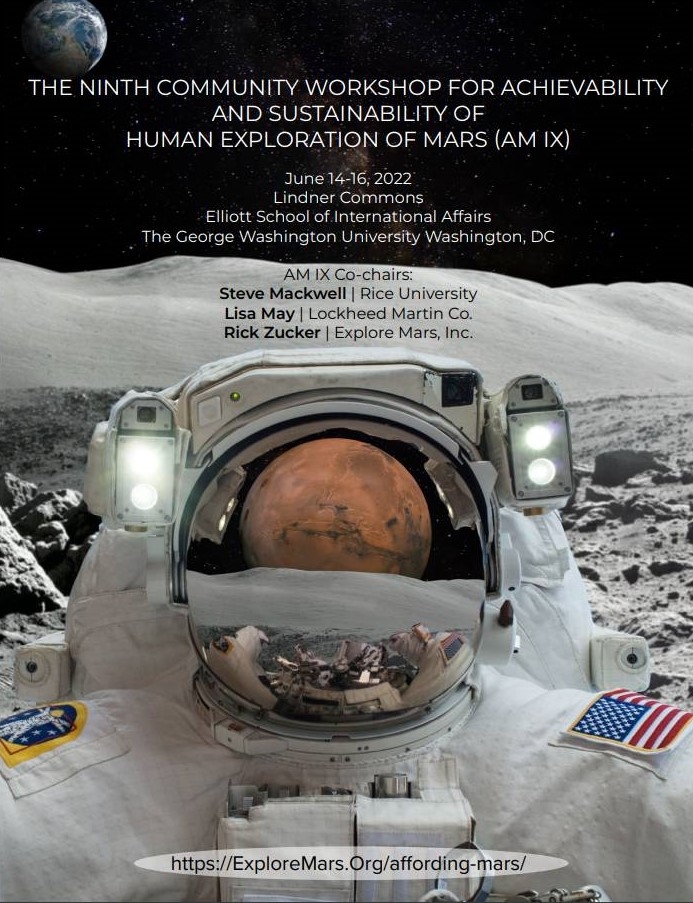
Explore Mars, Inc. has announced the release of the Report of the Ninth Community Workshop for Achievability and Sustainability of Human Exploration of Mars (AM IX), held on June 14-16, 2022 at The George Washington University in Washington, DC.
AM IX assembled a diverse, select group of professionals from different fields to identify activities that are required for a comprehensive human and robotic mission strategy that provides the basis for a sustained and growing human presence on Mars starting in the 2030s.
For that to happen, this report looks in human health and performance, Mars science priorities that leverage human presence, operational strategies for transit and surface operations, and technology solutions, many of which can be tested on Earth, in low-Earth orbit, in lunar orbit, or on the surface of the Moon.
During the three-day workshop, as well as virtual meetings over the Summer and fall of 2022, participants developed a summary of recommendations as well as detailed appendices.
For the full report — The Ninth Community Workshop for Achievability and Sustainability of Human Exploration of Mars — go to:
https://www.exploremars.org/wp-content/uploads/2023/03/AM-9_Upload_v-1.pdf

Curiosity Left B Navigation Camera image taken on Sol 3815, May 1, 2023.
Image credit: NASA/JPL-Caltech
NASA’s Curiosity Mars rover at Gale Crater is now performing Sol 3816 duties.
Curiosity has arrived at a new location with some bright toned, and more rounded rocks in its vicinity, reports Elena Amador-French, Science Operations Coordinator at NASA’s Jet Propulsion Laboratory.
“Unfortunately, we could look but not touch as our wheels were positioned such that we could not safely unstow the arm for contact science. We typically have a large suite of arm activities in weekend plans but with those now removed, the science team had ample power and time to do remote sensing,” Amador-French adds.
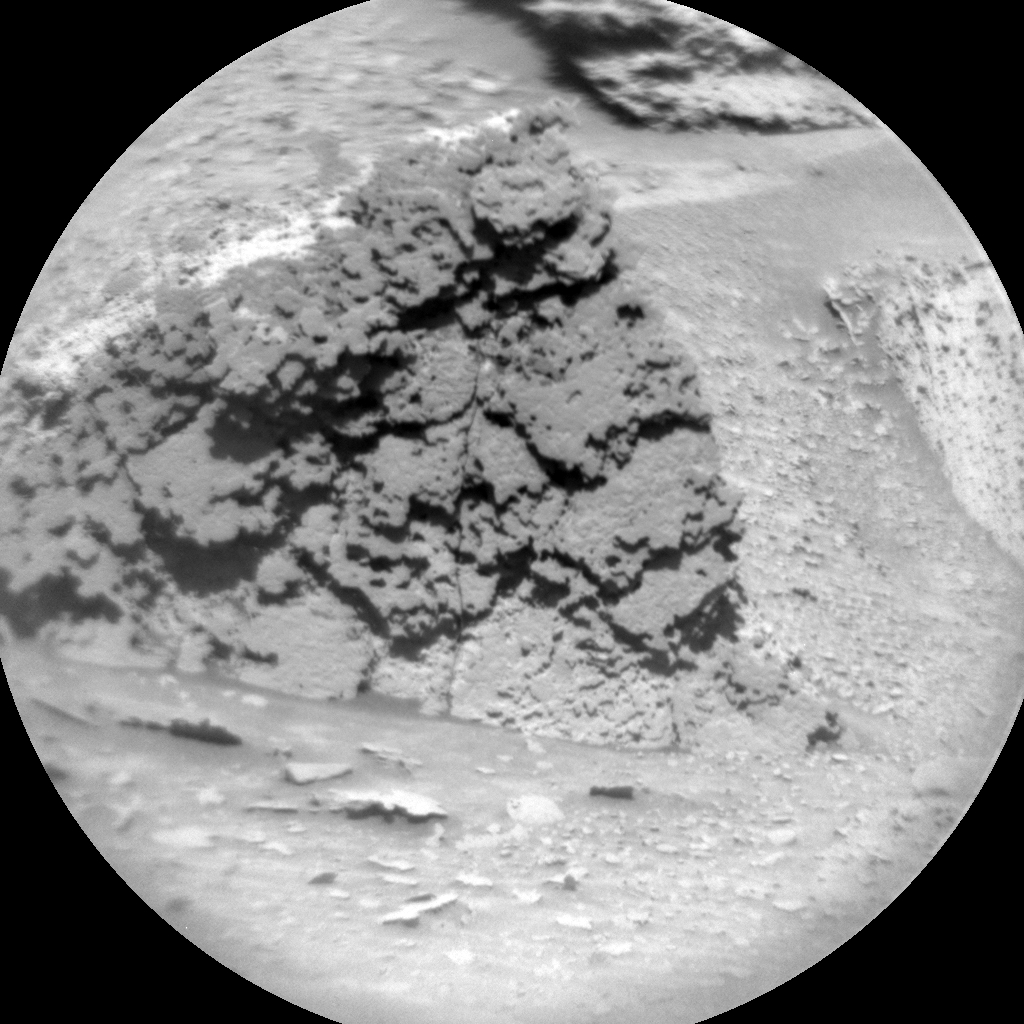
Curiosity Chemistry & Camera (ChemCam) Remote Micro-Imager (RMI) photo taken on Sol 3815, April 30, 2023.
Image credit: NASA/JPL-Caltech/LANL
Rhythmic textures
In a recent plan for Sols 3814-3816, the first sol had the robot use Mastcam to image the target “Ekeni,” a target just in front of the rover’s right front wheel “with interesting rhythmic textures, Amador-French notes. “Could they be due to how the sediment was originally emplaced or how it has since eroded?”
Similarly, the target “Fazendinha” appears to represent a transition between rock textures.

Curiosity Left B Navigation Camera image taken on Sol 3815, May 1, 2023.
Image credit: NASA/JPL-Caltech
High resolution Mastcam images will allow scientists to consider the history of these blocks.
“We’ll also use our ChemCam [Chemistry and Camera] instrument to provide compositional information for the target ‘Sao Miguel,’ giving us our first ‘taste’ of the bedrock in front of us,” Amador-French reports.
More Mastcam
On the second sol, the rover was to continue investigating the area around it with more Mastcam and another ChemCam LIBS [Laser Induced Breakdown Spectroscopy] observation on “Sao Tome” before taking a short drive – a scoot of just a few meters – to a potential sampling location.

Curiosity Left B Navigation Camera image taken on Sol 3815, May 1, 2023.
Image credit: NASA/JPL-Caltech
Mastcam will document this new location with a 360-degree mosaic, capturing all the terrain that surrounds Curiosity.
New location
On the third sol of the plan, ChemCam was slated to use its autonomous target selection capability, AEGIS, to collect compositional data from the robot’s new location.

Curiosity Left B Navigation Camera image taken on Sol 3815, May 1, 2023.
Image credit: NASA/JPL-Caltech
As is typical for weekend plans, it called for the rover to take a suite of environmental monitoring measurements – searching for dust devils with its navigation camera, studying the dust opacity in the atmospheric with Mastcam and engineering cameras, as well as a regular cadence of Rover Environmental Monitoring Station (REMS) observations.

Curiosity Front Hazard Avoidance Camera Left B image acquired on Sol 3815, May 1, 2023.
Image credit: NASA/JPL-Caltech
Sample dump
In addition to these remote sensing activities, also planned were two Chemistry & Mineralogy X-Ray Diffraction/X-Ray Fluorescence Instrument (CheMin) activities to set Curiosity up for potential sampling next week.
“Both activities are intended to ensure our instrument is as clean and prepared as possible to accurately measure mineralogy,” Amador-French concludes. “We’ll vibe CheMin’s inlet funnel, as well dump any potential remaining sample from the cell we intend to deliver our next sample to.”
As always, dates of planned rover activities are subject to change due to a variety of factors related to the Martian environment, communication relays and rover status.

Very Large Array (VLA) in New Mexico.
Credit: Bettymaya Foott, NRAO/AUI/NSF
A new processing system for the Search for extraterrestrial intelligence (SETI) is dubbed “COSMIC” – the Commensal Open-Source Multimode Interferometer Cluster.
COSMIC is spearheaded by the SETI Institute, in collaboration with the National Radio Astronomy Observatory and the Breakthrough Listen Initiative.
Now a massive radio array is joining the SETI quest and use of COSMIC to scout for signals from other galactic civilizations.

Credit: Breakthrough Listen
Desert real estate
Enter the National Science Foundation’s Karl G. Jansky Very Large Array (VLA), situated about 50 miles west of Socorro, New Mexico.
VLA is collecting data that scientists will analyze for the type of emissions that only artificial transmitters make, signals that would reveal the existence of a technically accomplished society.
The VLA consists of 27 antennas spread over 23 miles of desert real estate. Since 2017 the facility has been engaged in a radio reconnaissance of 80 percent of the sky.

Credit: SETI Post-detection Hub
Alien transmitter
While that VLA endeavor continues, observational data is being fed into a special receiver sporting very narrow (approximately one hertz wide) channels.
“Researchers expect that any signals from a deliberately constructed transmitter will contain such narrow-band components, and their discovery would indicate that the signal is not produced by nature, but by an alien transmitter,” explains a SETI Institute statement.
“COSMIC operates commensally, which means it works in the background using a copy of the data astronomers are taking for other scientific purposes,” said Paul Demorest, Scientist and Group Lead for VLA/VLBA Science Support at the National Radio Astronomy Observatory. “This is an ideal and very efficient way to get large amounts of telescope time to search for rare signals.
More comprehensive
By combining VLA sensitivity with COSMIC, the result is roughly a thousand times more comprehensive than any previous SETI search.
“History shows that major improvements in the sensitivity and range of exploratory experiments are often rewarded with the detection of a signal,” the SETI Institute statement adds. “If so, this effort might see the uncovering of a radio whisper that would tell us that we’re not the only intelligent inhabitants of the Milky Way Galaxy.”

If it’s just us, it seems like an awful waste of space. In the movie Contact, a radio astronomer receives the first extraterrestrial radio signal ever picked up on Earth…via the Very Large Array.
Credit: Warner Brothers
Also go to this interesting research paper — “Inferring the Rate of Technosignatures from 60 yr of Nondetection” — available at:

Image credit: ABS
The American Bureau of Shipping (ABS) has published the first international requirements for the design and construction of offshore spaceports, announcing those publicized requisites during an Offshore Technology Conference in Houston, Texas.
ABS provides classification and technical advisory services to the marine and offshore industries.
“The offshore space industry is growing rapidly, and ABS is already a pioneer in the field of offshore space support with our industry-leading work on autonomous rocket recovery droneships,” said Miguel Hernandez, ABS Senior Vice President, Global Offshore.
This new publication allows ABS, Hernandez adds, “to provide clear support for organizations that are engaging with regulatory agencies to reactivate assets such as offshore support vessels, barges and liftboats to support space flight.”
Offshore assets
ABS produced a new set of requirements based on service experience with industry leading aerospace rocket launch and recovery companies, according to an ABS statement, “to guide the burgeoning maritime aspects of the space flight industry in the safe design and construction of offshore assets.”
Up to now, there were no industry requirements “to address an offshore spaceport’s unique concept of operation,” said the ABS.
The ABS Requirements for Building and Classing Offshore Spaceports addresses several vessel types including barge type units, column-stabilized, offshore installations and self-elevating units.
ABS’ joint development project with SpaceX reviewed the remotely controlled functions of autonomous rocket recovery droneships used for booster rocket recovery at sea.
To view a copy of ABS Requirements for Building and Classing Offshore Spaceports, go to:

Image credit: Space Perspective/ABS
Spaceship Neptune
Last month, ABS and Space Perspective announced the first marine spaceport for human spaceflight.
Space Perspective is offering six-hour passenger-carrying balloon jaunts skyward in a pressurized capsule. The capsule accommodates eight passengers and a captain.
Called Spaceship Neptune, Space Perspective will launch from land at Kennedy Space Center in Florida, and now also from sea using the MS Voyager, which will reside on the coast of Florida, where the company is based.
According to the group, the first in a planned fleet of ships globally for Space Perspective, MS Voyager will also eventually enable flights around the Gulf and Caribbean.
Flexible launch locations
The ocean-going MS Voyager would transport passengers to an approved offshore location where a huge “space balloon” is filled with hydrogen and lift Spaceship Neptune and its passengers 20 miles above the Earth. At the end of the six-hour flight, the pressurized capsule will gently splash down in the ocean where MS Voyager will retrieve Spaceship Neptune’s captain and the aerial commuters.
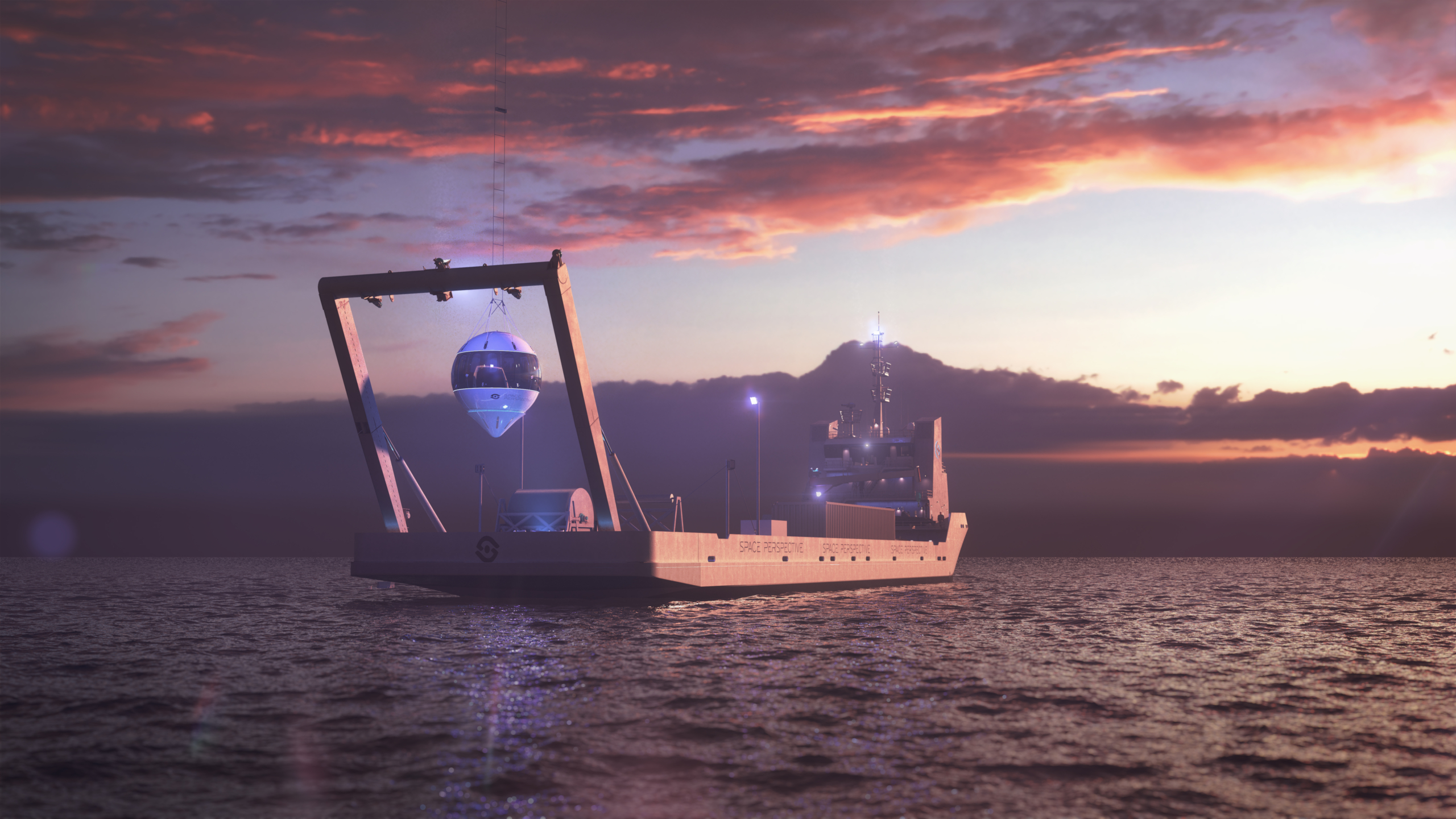
Image credit: Space Perspective/ABS
ABS is providing class, engineering review and regulatory services for MS Voyager, with completion expected later this year.
Modifications to the near 300-foot-long offshore supply vessel are already underway and will include the addition of the balloon launch system and a space capsule A-frame, which will house Spaceship Neptune using a specially designed cradle on the aft deck.
“The future of space travel is on the water,” said Taber MacCallum, founder and co-CEO of Space Perspective.
“MS Voyager unlocks flexible launch locations, ideal launch conditions, and more frequent launch opportunities. Our collaboration with the experts at ABS is helping us make space travel more accessible to the world than ever before,” MacCallum said in a statement.
For more information on Space Perspective, go to:

