Archive for March, 2023
 Author:
  March 6th, 2023
Image credit: ESO/P. Horálek
The European Southern Observatory (ESO) and other astronomy groups are petitioning the United Nations to address the impact of satellites on dark and quiet skies.
An international collaboration involving ESO has submitted a paper to the United Nations Committee on Peaceful Uses of Outer Space (COPUOS) proposing a new “Expert Group” to protect dark and quiet skies.
The call for a new Expert Group is to push forward on monitoring the impact of satellites on astronomy and seeks inputs from global stakeholders to make recommendations to help mitigate their sky pollution concerns.
Dark sky reserves and radio quiet zones
“The proliferation of satellites launched into orbit around the Earth has improved our ability to communicate globally instantaneously; however, there are concerns about the impact these technologies have on astronomical observations and the preservation of dark and quiet skies,” explains an ESO statement.

Starlink constellation pass overhead near Carson National Forest, New Mexico, photographed soon after launch.
SpaceX Starlink Satellites over Carson National Forest, New Mexico, photographed soon after launch.
Credit: Mike Lewinsky/Creative Commons Attribution 2.0
The statement flags the fact that there are over 8,000 active and defunct satellites orbiting the Earth and this number will continue to grow. As many as 100,000 satellites could be launched in the coming decade. These new satellites are encroaching on the few remaining dark sky reserves and radio quiet zones.

Credit: SpaceX/StarLink
“Astronomers have already begun to notice the effects of the dramatic increases in space traffic. Even from remote locations — specifically chosen to isolate telescopes from unwanted light pollution — satellites interfere with optical and infrared observations,” the ESO statement adds. “These satellites also transmit and receive radio signals which is especially concerning for radio telescopes, such as the highly sensitive Atacama Large Millimeter/submillimeter Array of which ESO is a partner.”
Mitigation steps
The ESO statement notes that some companies have made efforts to mitigate these effects, such as use of less-reflective material in satellite construction or changing the orientation of satellites in space.

An image of the NGC 5353/4 galaxy group made with a telescope at Lowell Observatory in Arizona, USA on the night of Saturday 25 May 2019. The diagonal lines running across the image are trails of reflected light left by more than 25 of 60 Starlink satellites as they passed through the telescope’s field of view. Although this image serves as an illustration of the impact of reflections from satellite constellations, please note that the density of these satellites is significantly higher in the days after launch (as seen here) and also that the satellites will diminish in brightness as they reach their final orbital altitude.
Credit: Victoria Girgis/Lowell Observatory
A proactive step would have companies provide astronomers with higher accuracy information about the location of satellites so that observatories can take this into account to decide when and where to point their telescopes.
“While these potential solutions show promise, they will require a coordinated effort between satellite industry, governments, and astronomers,” the ESO statement continues. “A cooperative approach involving all stakeholders is an effective way to reach a satisfactory balance between the need for the evolution of the low-Earth orbit space economy and the need protect the science of astronomy and the pristine visibility of the night sky.”
Cascade effect
Andrew Williams, co-lead of the policy hub of the International Astronomical Union’s (IAU) Center for the Protection of the Dark and Quiet Sky from Satellite Constellation Interference, stated that there is a cascade effect from the discussions at COPUOS that can influence governments and companies to act.

Nineteen Atacama Large Millimeter/submillimeter Array (ALMA) antennas on the Chajnantor Plateau in Chile.
Image credit: ALMA (ESO/NAOJ/NRAO)/W. Garnier (ALMA)
“From the substantial number of countries from all regions of the globe that voiced support for our proposal, we are hopeful we can find a way forward at the main session of the committee,” Williams says.
The mission of the IAU Center is to coordinate efforts and unify voices across the global astronomical community with regard to the protection of the dark and quiet sky from satellite constellation interference.
A “Conference Room Paper on the Protection of Dark and Quiet Skies for science and society” has been endorsed by Chile, Spain, Slovakia, Bulgaria, Dominican Republic, Peru, South Africa, in addition to ESO, the International Astronomical Union (IAU) and the Square Kilometer Array Observatory (SKAO).
That paper is available at:
 Posted in

Image credit: CGTN/Inside Outer Space screengrab
China’s Shenzhou-15 crew has carried out a second spacewalk outside the country’s Tiangong space station.
According to the China Manned Space Agency (CMSA), Fei Junlong, commander of the mission, along with colleague Zhang Lu, have completed the spacewalk and have returned to the station’s Wentian lab module.
The third crew member, Deng Qingming, stayed inside the orbiting outpost to provide support for the spacewalking twosome.

Image credit: CGTN/Inside Outer Space screengrab
Science experiments
The three astronauts were sent to the country’s space station in late November last year. Over the past three months, they have fulfilled multiple tasks, ranging from spacewalks to scientific experiment cabinet tests and cargo exit tasks in the Wentian and Mengtian lab modules.
In addition, experiments and testing in the fields of space science research and application are progressing steadily as planned, according to China Central Television (CCTV).
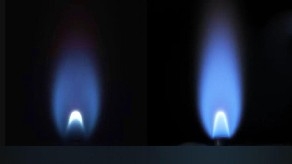
Image credit: CMSA/CCTV
Combustion, skin epidermis tests
“In coordination with the ground team, the astronauts successfully performed the first in-orbit ignition test with Mengtian’s combustion cabinet, which carries a device to measure the velocity field in the combustion region,” CCTV reports. “The test has verified the functions of the experiment system and the accuracy of the experiment process, laying a foundation for follow-up projects.”
In addition, the astronaut trio has obtained the three-dimensional structural images of their skin epidermis and superficial dermis with the country’s self-developed two-photon microscope.
“The event marked the success of the in-orbit verification experiments of the two-photon microscope, providing a promising tool for future health monitoring of astronauts in orbit,” CCTV reports.

Image credit: CCTV Video News Agency/CMSA/Inside Outer Space screengrab
Gravity loses its grip
The very first ball of flame was ignited on Feb. 16 aboard Mengtian, one of the two lab modules that make up the basic T-shaped structure of the space station along with the core module, with camera footage capturing the stunning and rarely-seen image in an environment where gravity loses its grip on materials of all forms.
Using methane as fuel, the test was carried out in the lab module’s combustion cabinet, which is designed for conducting experiments that involve fire.
Underlying physics
According to experts, CCTV reports, the flame, dome-shaped or spherical, looked different from that on Earth because of a lack of buoyancy and meager oxygen flow.

Fast paced series of missions completed China’s space station by end of 2022.
Credit: CMSA/CCTV/Inside Outer Space screengrab
The test allows scientists to learn about the underlying physics behind flame structure and behavior. Moreover, finding out about how fire spreads and behaves in space is crucial for the safety of future astronauts on the space station and for understanding and controlling fire on Earth.
The combustion science experiment system on board the space station was designed by the Institute of Engineering Thermophysics under the Chinese Academy of Sciences.
Mengtian modules
China plans to carry out more than 40 combustion experiments on board the space station by the end of this year.
Launched in October 2022, the Mengtian lab module is used for studying microgravity and carrying out experiments in fluid physics, materials science, combustion science and fundamental physics. It has completed more than 50 tasks as planned over the months.
In the next three months, the Shenzhou-15 mission will continue to carry out experiments and tests, and conduct extravehicular activities (EVAs) as well as cargo exit tasks.

