Archive for December, 2022
 Author:
  December 2nd, 2022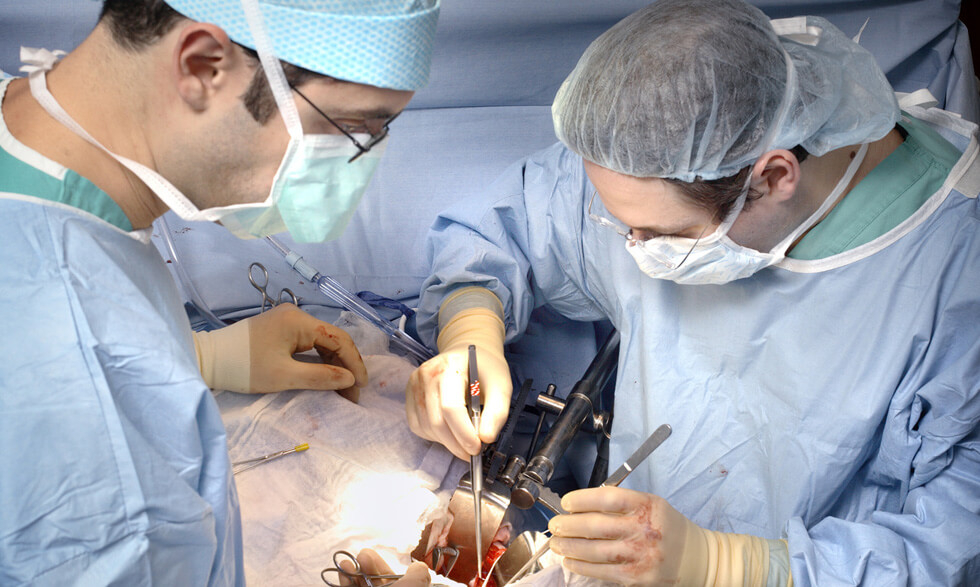
Image credit: National Institutes of Health (NIH)
Do you know that more than 76% of lungs/heart harvested for transplantation are discarded? By the time the organs reach the patient it is too late for a successful transplant.
Here’s the solution offered by Canada’s Space Engine Systems (SES) of Edmonton, Alberta: Hypersonic flight, point-to-point, for fast delivery of vital replacement organs.
SES has built in the requirement to get lungs within 4 hours from anywhere in the world, fast tracking this application into its Hello-1 Point to Point system.
“It is about saving lives,” explains an SES press statement.

Point-to-point – rapid delivery of replacement organs.
Image credit: Space Engine Systems (SES)
Turbo-ram jet
SES has successfully tested its turbo-ram jet in 2021 and further testing with multiple fuels including hydrogen was completed in 2022.
The group adds that SES built the world’s first mobile turbo-ram jet test facility of 25,000 lb. force (111 kN), and is also building the world’s first full scale high temperature (1420 °C, 2588 °F) wing bending test facility. That facility can heat up a 72 feet Hello-1 X to replicate the full hypersonic temperature and simulate the conditions during the wing bending to complete failure testing.
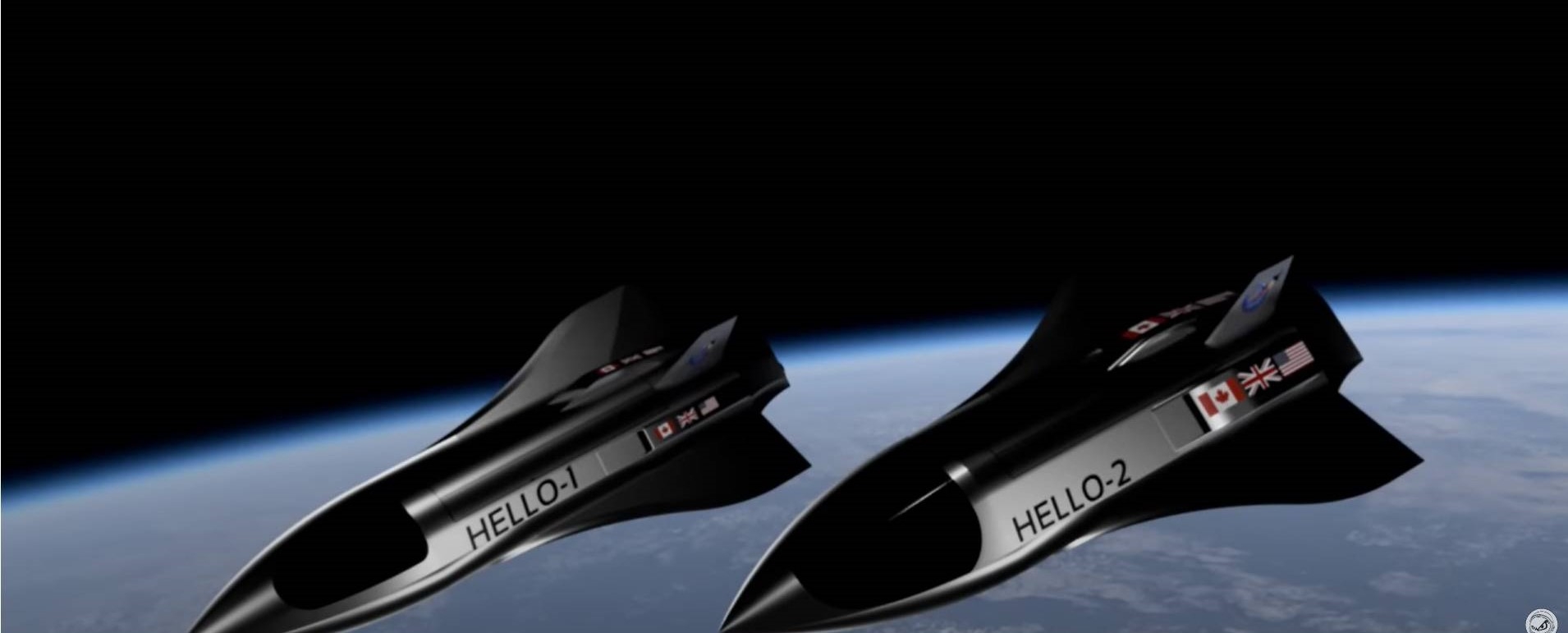
Image credit: Space Engine Systems (SES)
The Hello-1 X is a demonstrator which will go to around 20 miles (32 kilometers) altitude, reaching up to Mach 5 using a turbo ram jet with a cryogenic cooling system. Hello-1 X is a piloted vehicle with an auto-pilot option “making it very flexible for regulatory approval bodies to see the redundant systems for safety,” adds the company statement.
For more information on Space Engine Systems and its multi-faceted plans, go to:
Also, go to this company video at:
 Posted in

Credit: GLOBALink/Inside Outer Space screengrab
The crew of China’s Shenzhou-14 mission is returning to Earth in the coming days, parachuting into the Dongfeng landing site in north China.
According to the China Global Television Network (CGTN), recovery teams are busily practicing for the return of the Shenzhou-14 crew after their 6 month stint in space.
The ground team, helicopter team, and airlift team have completed preparations and are ready for the recovery task, reports CGTN.

China’s six-person crew onboard the country’s orbital complex.
Credit: CCTV/Inside Outer Space screengrab
Up in orbit
Meanwhile, the Shenzhou-14 and Shenzhou-15 crews, adding up to six in number, have been busy handling item storage, replacement of consumables and daily experiments, said Jin Jian, deputy chief designer of the space station system.

Credit: CCTV/Inside Outer Space screengrab
“Some products such as consumables will expire in a few weeks or months. The typical examples are the air filters and water filters. Just like we replace the filters in water dispensers on the ground, the new crew need to know when to change the filters. Besides, many scientific experiments are under way in the space station every day and should not be interrupted. So, the new crew need to know how to continue the experiments,” Jin said in a China Central Television (CCTV) interview.
Long-term residence
Jin said the regenerative environmental control and life support system of the space station will adjust to the increased number of astronauts on board. That includes handling the recycling of water and other consumable resources to ensure the long-term residence of astronauts in orbit.

T-shape configuration of China space station.
Credit: CNSA/CCTV/Inside Outer Space screengrab
“We need to adjust the control and collection of condensed water for the current six astronauts on board, not the previous three ones. With increased astronauts on board, we need to keep the indicators such as air temperature and humidity within the requirements,” Jin told CCTV.
“So, the working modes of these systems will be adjusted accordingly. But we have already considered and tested the different working modes for three or six people on the space station during the development on the ground. So, we are very confident that all the working modes will meet the demands for the six astronauts,” Jin concluded.
Go to these new videos at:

GIMBAL/“Tic Tac”
Credit: DOD/U.S. Navy
A university history professor developed a virtual classroom lecture series that probed the history, evolution, and impacts on society of the Unidentified Flying Object phenomenon.
The intent of the five-part course was not to prove true believers or skeptics of ET visitation are right.
Rather, the series goal was to develop a deeper understanding of the UFO enigma and the social, political, and cultural developments that now shape it and not pick sides.

Courtesy: CIA
“But lost in the hype and ruckus is the question of when this all started and how we got to this point,” states the course outline.
For more information on this UFO lecture series, go to my new Space.com story – “UFOs 101: Hype, uproar, disinformation and mystery: ‘Here we go again.’” – at:
https://www.space.com/ufos-101-hype-uproar-disinformation-mystery

Image credit: Michaela Musilova/HI-SEAS
Mars researchers are keeping their fingers crossed concerning the new lava flow in Hawaii – perhaps endangering the Hawai‘i Space Exploration Analog and Simulation (HI-SEAS) site.
HI-SEAS is a Mars and Moon exploration analog research station, currently operated by the International MoonBase Alliance.
Flow front
According to a Facebook posting by Michaela Musilova, former HI-SEAS Director (2018–2022):
“I’m still keeping my fingers crossed that the HI-SEAS station will survive the current Mauna Loa eruption. It was spared a couple of days ago when a big lava flow front came within a mile of the station.”

Image credit: USGS/Hawaiian Volcano Observatory
More recently, it appeared that another flow front was coming straight towards the habitat.
Musilova reports that the Hawaiian Volcano Observatory shared an image from one of their webcams “and it does not look promising for Hawaii Space Exploration Analog & Simulation. I remain hopeful that the ridge next to the HI-SEAS habitat may protect it, but it’ll depend on a number of factors, such as the direction and speed of the lava flow(s). Here’s hoping for the best!”

Image credit: Hi-SEAS/Michaela Musilova
Analog space missions
HI-SEAS is situated at approximately 8,200 feet above sea level.
The HI-SEAS habitat is a 1,200 square foot dome located on a Mars-like site on the Mauna Loa volcano on Hawai‘i Island.
HI-SEAS has been the home to long-duration (4 to 12 month) NASA Mars simulation missions and tens of other analog space missions in collaboration with multiple space agencies, companies, and organizations worldwide.
As detailed by the HI-SEAS website, the habitat is semi-portable, low-impact and designed to have all the desirable analog features. It has a habitable volume of roughly 13,000 cubic feet, a usable floor space of approximately 1,200 square feet and small sleeping quarters for a crew of six, as well as a kitchen, laboratory, bathroom, simulated airlock and engineering bay area.

Lava tube exploration. Image credit: Michaela Musilova
Habitat risk
“As it happens, I was there in September with a group of researchers from NASA Goddard who were studying a lava tube near the habitat,” said Carol Stoker, a planetary scientist at the space agency’s Ames Research Center.
The habitat sits on a ridge created by a previous vent. The hab is a metal geodesic dome covered by a fabric cover, Stoker told Inside Outer Space.
“I suspect the biggest risk is heat from a nearby flow damaging the cover unless the old vent becomes active again. If that happens, all is lost,” Stoker added.

Map showing the recent flow (dark red) the new flow (dotted line). The yellow dot is Hi Seas and the blue dot is the lava tube a NASA Goddard team was studying. Image credit: USGS, courtesy Carol Stoker

Credit: USGS
Also, go to this KITV Island Television report at:
For more information on HI-SEAS, go to:
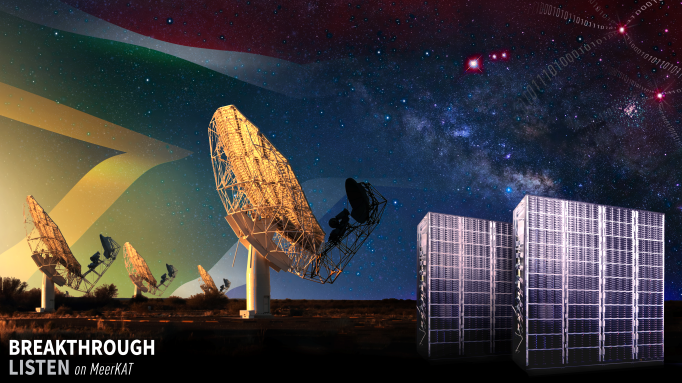
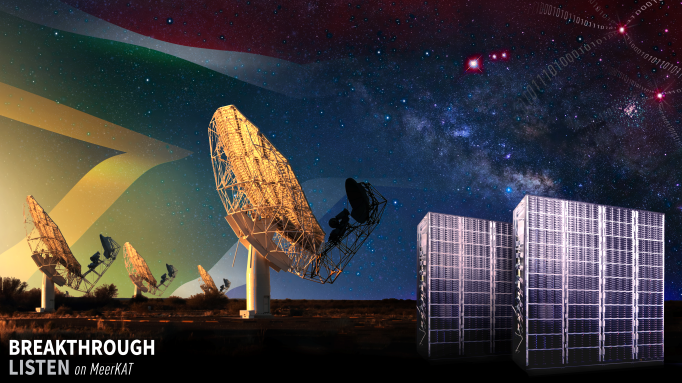
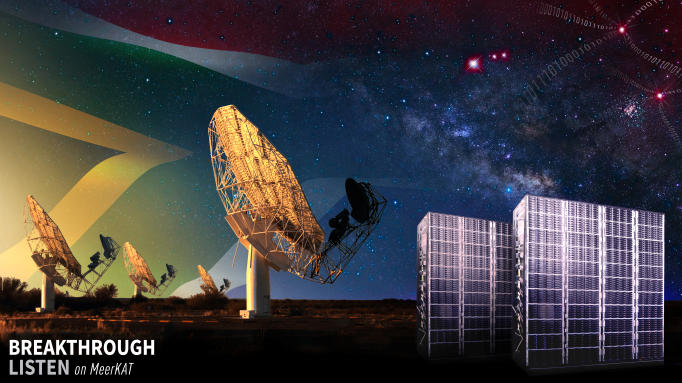

On the prowl and cupping a high-tech ear to eavesdrop on ET – a new signal search is underway using the Southern Hemisphere’s biggest radio telescope.
Breakthrough Listen – the initiative to find signs of intelligent life in the universe – announced today the start of observations using a powerful new instrument deployed to the MeerKAT radio telescope in the remote Karoo region of South Africa.
This is a new search for technosignatures – indicators of technology developed by extraterrestrial intelligence – and expands the number of targets searched by a factor of 1,000, according to a Breakthrough Listen statement.
New approach
The new approach complements Breakthrough Listen’s ongoing searches using the Green Bank Telescope (GBT) in the USA, the Parkes Telescope in Australia, and other telescopes around the world.
But there’s a difference. While those GBT and Parkes facilities involve moving thousand-ton-plus dishes to point at targets all over the sky, the program on MeerKAT typically won’t mechanically move the antennas.
The use of MeerKAT for the ET search was announced at a conference organized by the South African Radio Astronomy Observatory (SARAO).

Image credit: SARAO
Receptors
The South African MeerKAT radio telescope is situated over 50 miles (90 kilometers) outside the small Northern Cape town of Carnarvon.
MeerKAT was originally known as the Karoo Array Telescope (KAT) that would consist of 20 receptors. When the South African government increased the budget to allow the building of 64 receptors, the team re-named it “MeerKAT” – that is, “more of KAT.” The MeerKAT (scientific name Suricata suricatta) is also a much-loved small mammal that lives in the Karoo region, explains the MeerKAT website.
Large field of view
“MeerKAT consists of 64 dishes, which can see an area of the sky 50 times bigger than the GBT can view at once,” said Andrew Siemion, a Breakthrough Listen Principal Investigator.

Credit: Breakthrough Listen
“Such a large field of view typically contains many stars that are interesting technosignature targets. Our new supercomputer enables us to combine signals from the 64 dishes to get high resolution scans of these targets with excellent sensitivity, all without impacting the research of other astronomers who are using the array,” Siemion said.
Using a “commensal” mode, the Breakthrough Listen initiative gains access to the MeerKAT sensitive radio telescopes almost 24 hours a day, 7 days a week.
Processing pipeline
The ability to scan 64 targets at a time within the main field of view also improves Listen’s ability to reject interfering signals from human technology, such as squawking Earth-orbiting satellites, according to a statement.
The Listen team has developed targeting and scheduling software, as well as an automated data processing pipeline that scans through the information-gleaned in near-real-time to look for interesting signals.
Notes Cherry Ng, Breakthrough Listen’s Project Scientist for MeerKAT: “It will take us just two years to search over one million nearby stars. MeerKAT will provide us with the ability to detect a transmitter akin to Earth’s brightest radio beacons out to a distance of 250 light years in our routine observing mode.”

Artist’s conception of the surface of Proxima Centauri b. The Alpha Centauri binary system can be seen in the background, to the upper right of Proxima.
Credit:ESO/M. Kornmesser
First targets
“One of the first targets we’ll be observing is our nearest neighbor star, Proxima Centauri, which appears to host two small rocky planets in the star’s habitable zone,” said Breakthrough Initiatives Executive Director, S. Pete Worden.
“Routine observations with the Listen backend on MeerKAT are now underway,” Worden said, “and the team looks forward to sharing the first science results in the coming months.”
According to Daniel Czech of the Department of Astronomy, University of California Berkeley, simulations predict that the Breakthrough Listen survey on MeerKAT “will significantly improve on prior surveys, with the potential to become the most comprehensive SETI survey of its type yet conducted,” Czech and colleagues explain in their research paper – “The Breakthrough Listen Search for Intelligent Life: MeerKAT Target Selection” – at:

