Archive for July, 2022
 Author:
  July 16th, 2022
Credit: NASA
Earth’s Moon is far from being a “been there, done that” world notwithstanding a dozen Apollo short-stay visitors between 1969 and 1972.
The space agency is eying an Artemis Base Camp, calling it “our first foothold on the lunar frontier.”
The ingredients for that encampment are a Lunar Terrain Vehicle – an unpressurized rover – to transport suited astronauts around the site; a habitable mobility platform – a pressurized rover – to enable long-duration treks away from Artemis Base Camp. Lastly there would be the surface habitat itself, capable of housing four humans at a lunar south pole locale.

Illustration of NASA astronauts on the lunar south pole carrying out early work to establish an Artemis Base Camp. Will placing Artemis astronauts on the Moon become a stepping stone to a sustained presence on Earth’s celestial next door neighbor? Credit: NASA
Digging in deep
To tackle key challenges that need addressing, a Lunar Surface Innovation Consortium is being hosted by the Johns Hopkins Applied Physics Laboratory (APL) in Laurel, Maryland. It is work in progress and an ongoing endeavor that functions in collaboration with the NASA Space Technology Mission Directorate.
This APL-led consortium is digging in deep into road-mapping ways to move humans outward, back to the Moon, re-planting crews there, but in a sustained way.
To learn more, go to my new Space.com article — “Rebooting” the moon: NASA’s Artemis program aims for lunar sustainability – Innovative technologies are needed to forge the first long-term presence on the moon” – at:
https://www.space.com/rebooting-moon-nasa-artemis-sustainability
 Posted in

Nearby, young, star-forming region called NGC 3324 in the Carina Nebula. Captured in infrared light by NASA’s new James Webb Space Telescope, this image reveals for the first time previously invisible areas of star birth.
Credits: NASA, ESA, CSA, STScI
Scene spoiler alert!
The U.S. Government Accountability Office (GAO) has put its own magnifying glass on the James Webb Space Telescope.
Lesson one: manage large project costs to limit cascading effects on others, the GAO’s WatchBlog explains.
Early images
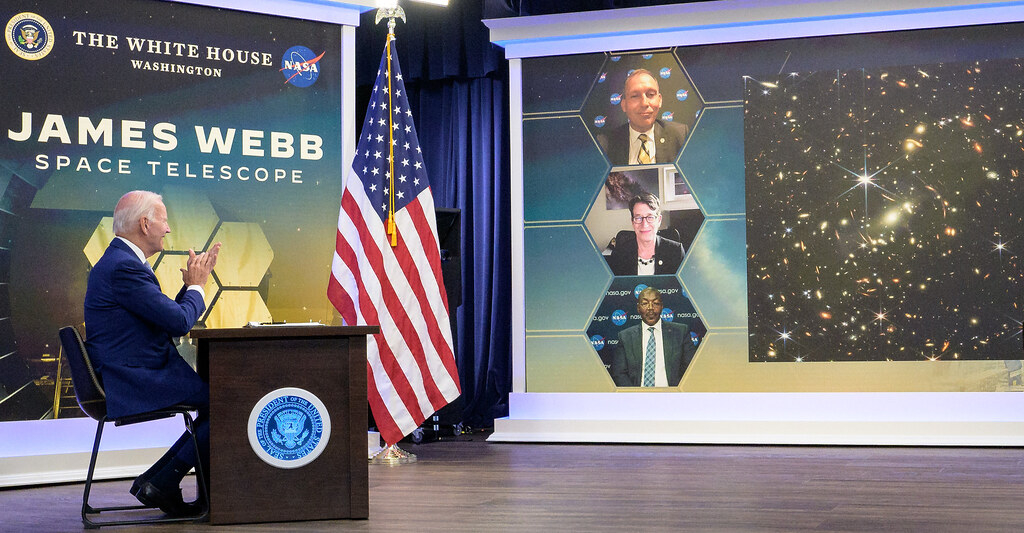
Credit: NASA/Bill Ingalls
While NASA released the first public images from the James Webb Space Telescope (JWST), which launched on December 25, 2021, the early images spotlight the different phases in the history of the Universe—ranging from early galaxy formation after the Big Bang to the evolution of our solar system.
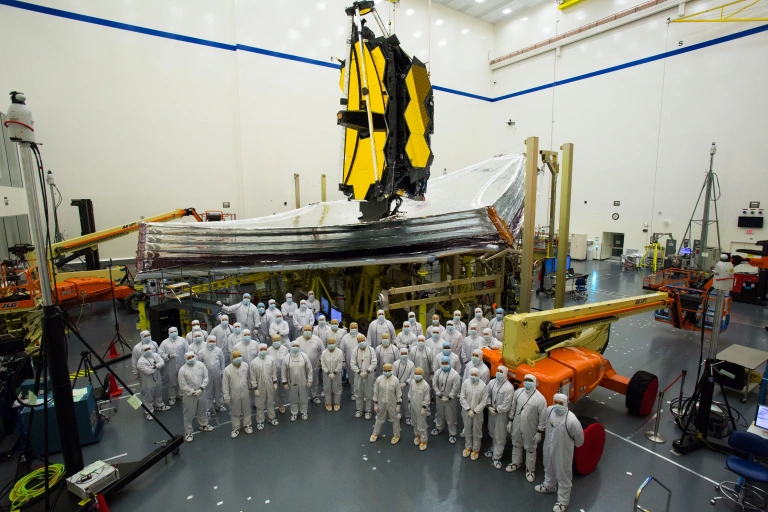
Credit: Northrop Grumman
Costly delays
“But there are other lessons to gain from the James Webb Space Telescope (JWST), which took 20 years to develop and faced more than 7 years of delays,” the GAO adds. They took in some of the early images from the JWST and explore some of the lessons learned that could help NASA in its development of future projects.
Go to this GAO look at JWST’s financial spherical (circular) aberration – “James Webb Space Telescope Delivers Fascinating First Images and Lessons for Future NASA Projects” at:
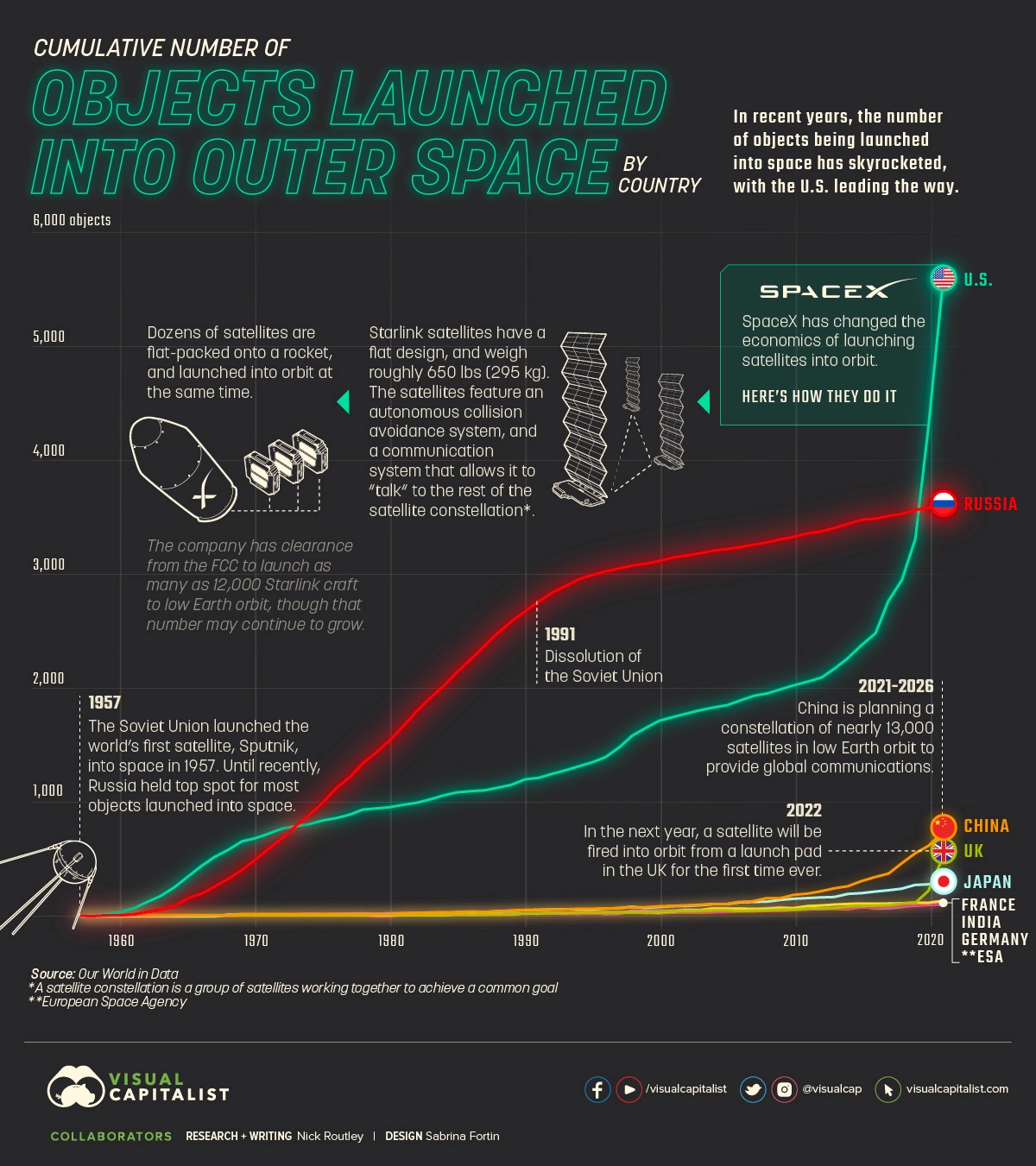
Credit: Visual Capitalist
Every day a staggering 2.5 exabytes of data is generated making our world increasingly difficult to understand.
Headquartered in Vancouver, British Columbia, Visual Capitalist is one of the fastest growing online publishers globally, focused on topics including markets, technology, energy and the global economy.
Check out their website to view all the data gathered on which countries are dominating space at:
https://www.visualcapitalist.com/visualized-which-countries-are-dominating-space/

Credit: Visual Capitalist
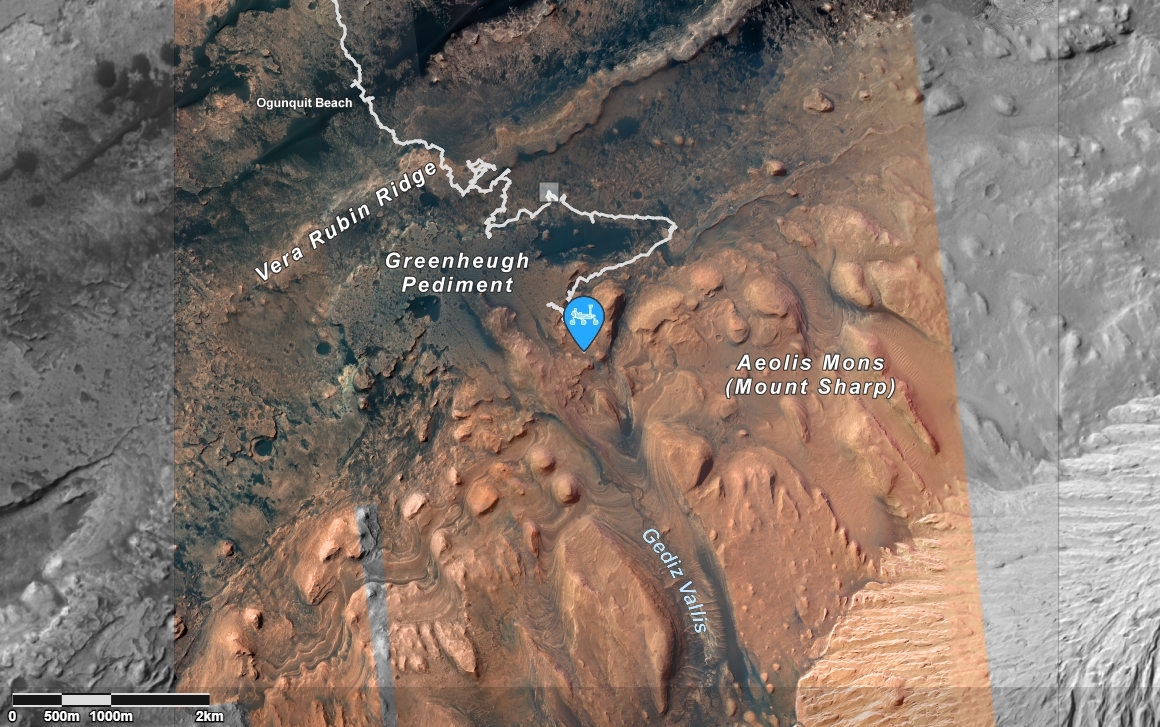
Curiosity’s location as of Sol 3531. Total distance driven by that sol is 17.54 miles/28.23 kilometers.
Credit: NASA/JPL-Caltech/Univ. of Arizona
NASA’s Curiosity Mars rover at Gale Crater is now performing Sol 3532 duties.
The robot has finished up “Avanavero” drill activities and is “officially back on the Martian road to the layered sulfate-bearing unit,” reports Abigail Fraeman, a planetary geologist at NASA’s Jet Propulsion Laboratory.
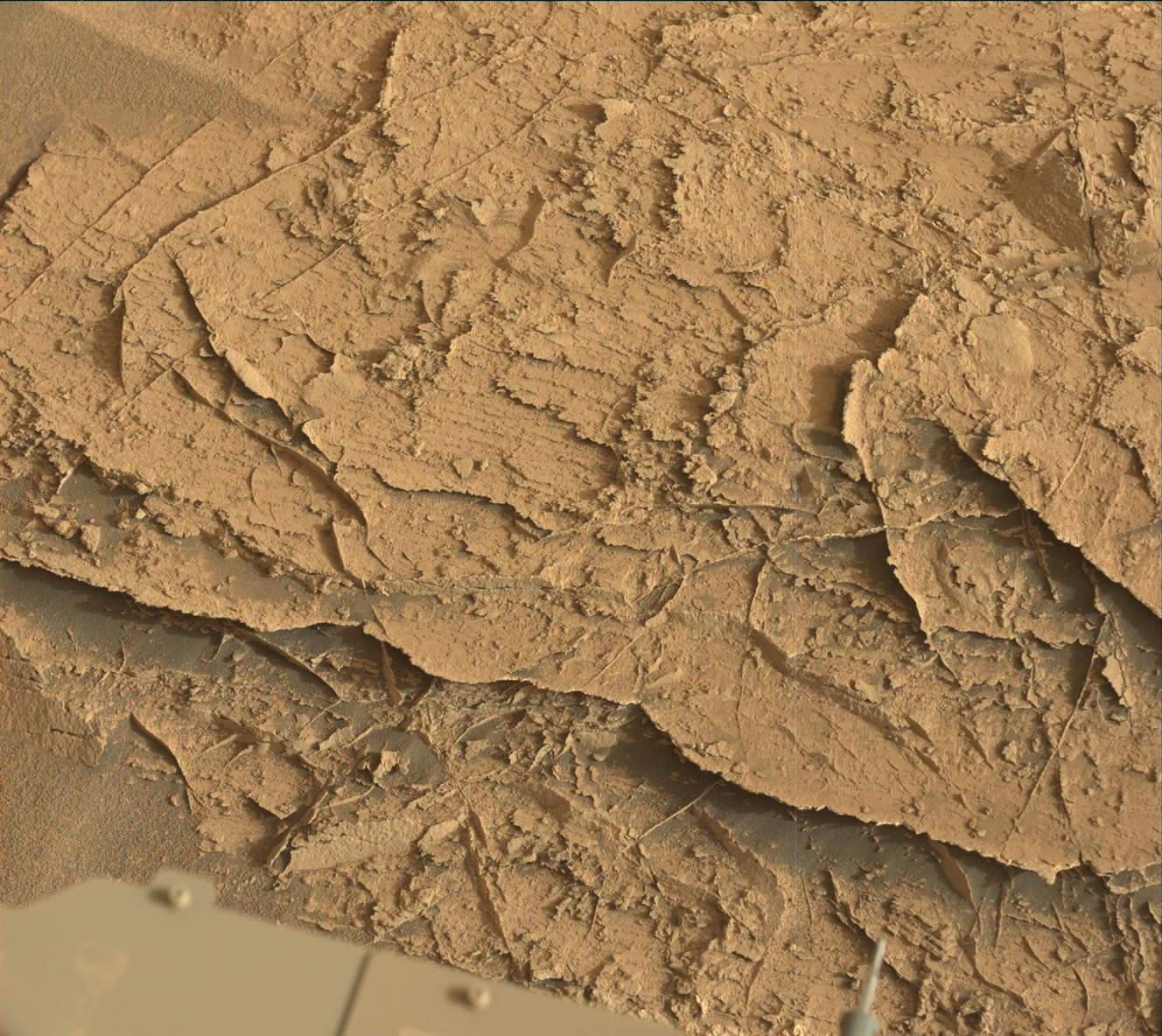
Curiosity Mast Camera (Mastcam) Left image taken on Sol 3531, July 13, 2022.
Credit: NASA/JPL-Caltech/MSSS
The rover recently filled the day with contact science, remote sensing, and a drive of over 164 feet (50 meters-plus).
The remote sensing and contact science activities include use of the Mars Hand Lens Imager (MAHLI) and Chemistry & Camera (ChemCam).
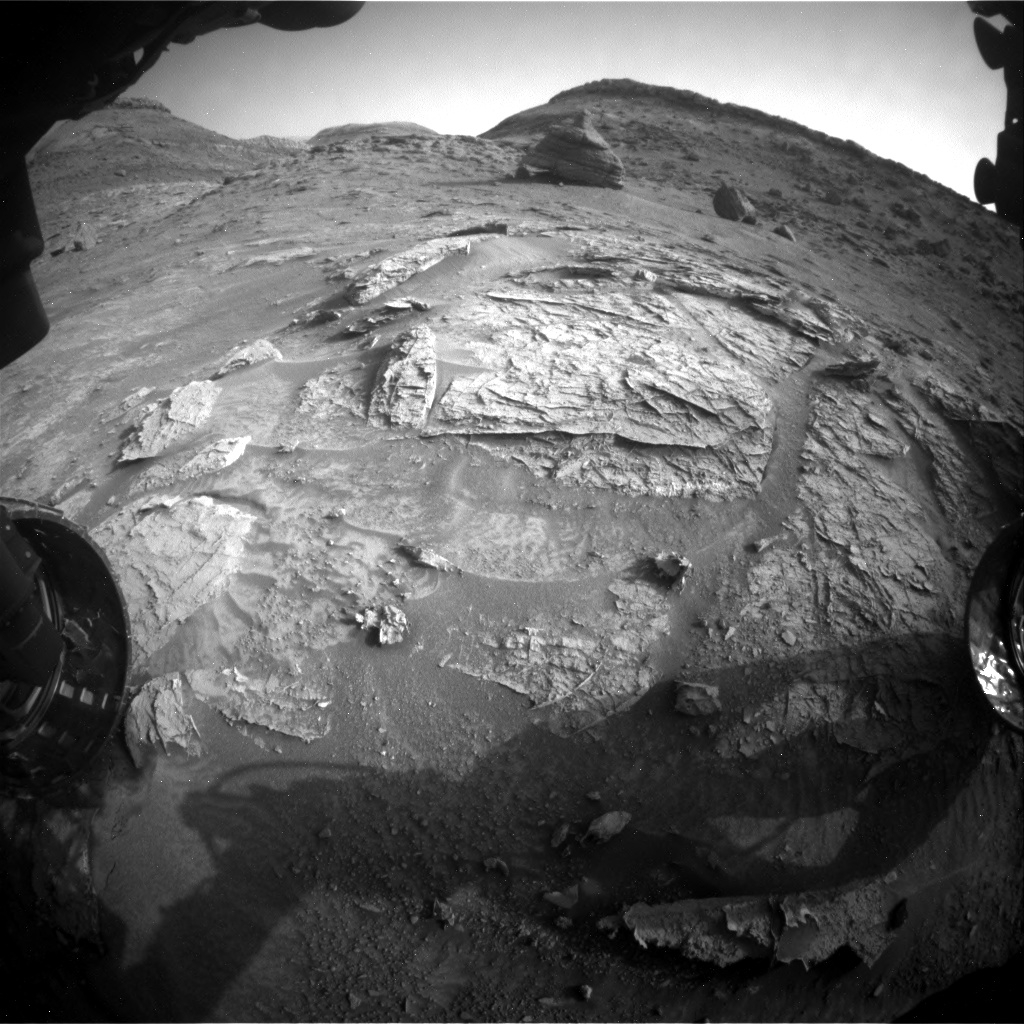
Curiosity Front Hazard Avoidance Camera Left B photo acquired on Sol 3531, July 13, 2022.
Credit: NASA/JPL-Caltech
Vein-rich rock
MAHLI and ChemCam Laser Induced Breakdown Spectroscopy (LIBS) observation of a bedrock target named “Uai Uai,” as well as Mastcam regular and multispectral images of a vein-rich rock target named “Las Nieves” and a layered rock named “Luepa.”
Also on tap was using both Mastcam and Navcam to monitor the atmosphere.
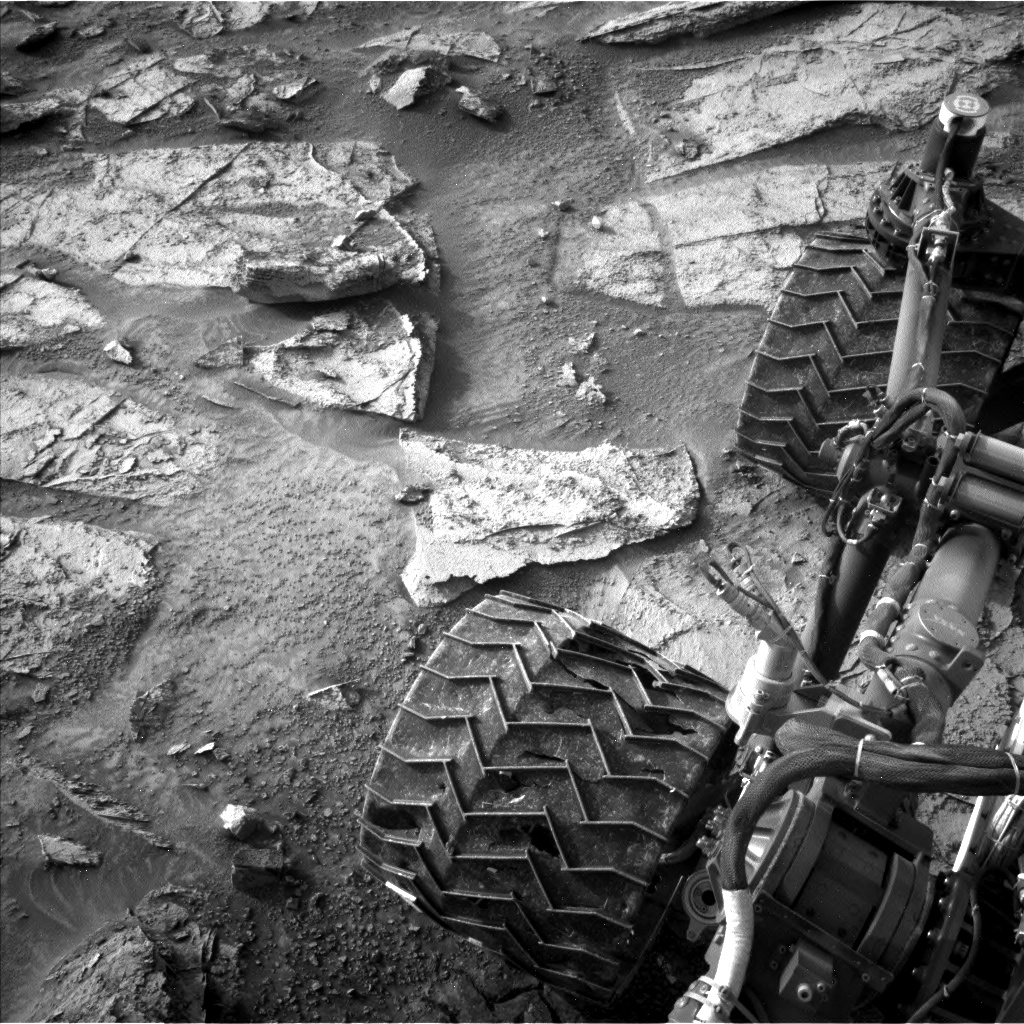
Curiosity Left B Navigation Camera image taken on Sol 3531, July 13, 2022.
Credit: NASA/JPL-Caltech
Fraeman served a tactical role as Surface Properties Scientist. “I helped the rover drivers assess whether Curiosity’s parking spot was stable enough to retract the arm for the MAHLI observations, and any terrain hazards that might affect the drive.”
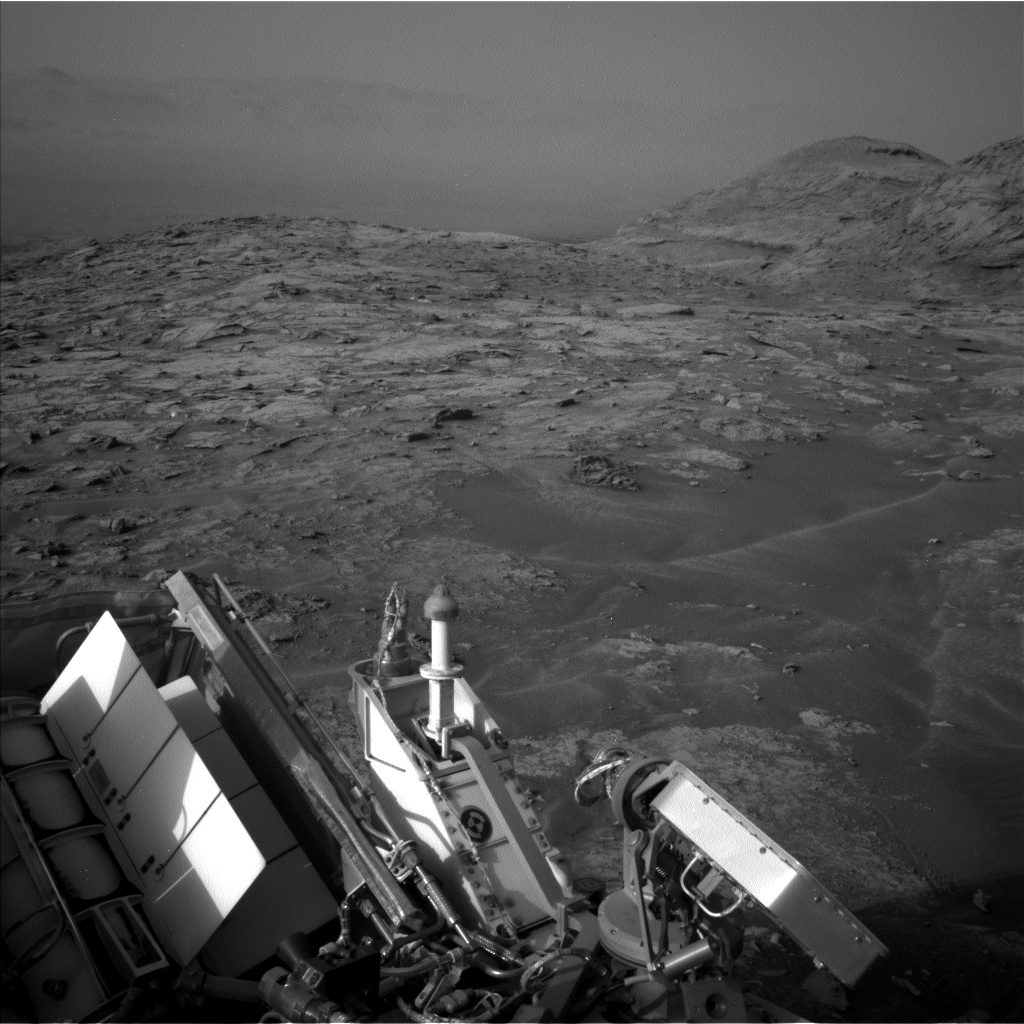
Curiosity Left B Navigation Camera image taken on Sol 3531, July 13, 2022.
Credit: NASA/JPL-Caltech
Several of Curiosity’s wheels were perched on rocks recently which made the stability assessment particularly interesting, Fraeman adds, “but after a lot of discussion with the rover drivers, we all agreed there was minimal risk of the rover shifting when we unstowed the arm.”
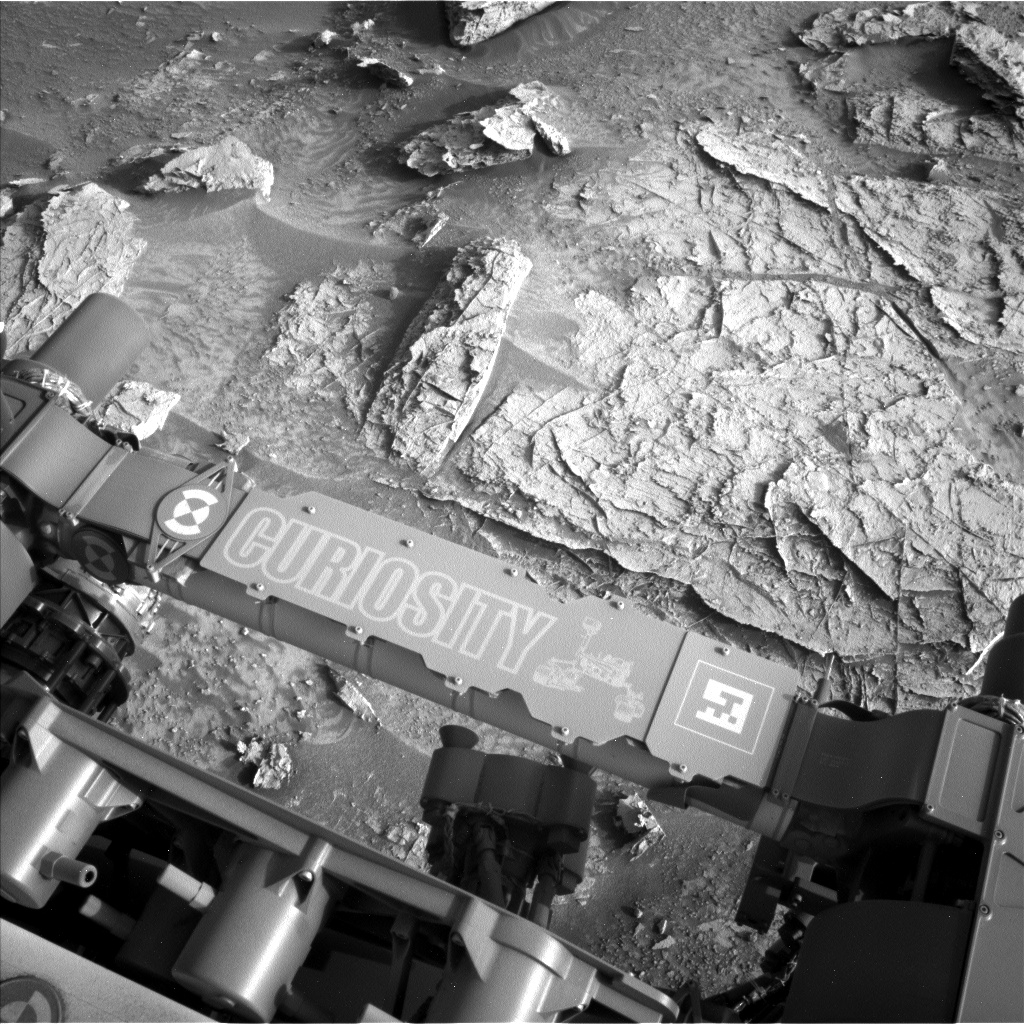
Curiosity Left B Navigation Camera image taken on Sol 3531, July 13, 2022.
Credit: NASA/JPL-Caltech
APXS data
In an earlier report, Ken Herkenhoff, a planetary geologist at USGS Astrogeology Science Center in Flagstaff, Arizona said MAHLI images acquired on Sol 3528 confirm that the rover’s Alpha Particle X-Ray Spectrometer (APXS) was well placed over the Avanavero drill tailings, “and the APXS data look good so we are ready to drive away from this location. But first, we are planning a few more MAHLI and remote sensing observations.”
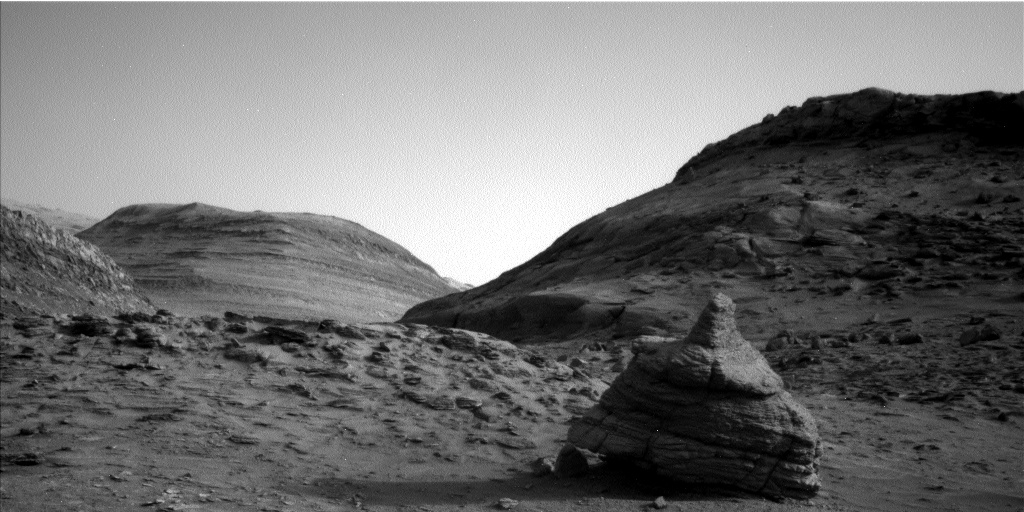
Curiosity Left B Navigation Camera image taken on Sol 3531, July 13, 2022.
Credit: NASA/JPL-Caltech
ChemCam as slated to shoot its laser at a vein target named “Chiung” on the right side of the rover, then will acquire another Remote Micro-Imager (RMI) mosaic to extend the coverage of a bright mound with numerous veins.
Outcrop coverage
Mastcam was scheduled to also extend stereo coverage of the “Amacuro” outcrop, document ChemCam’s Chiung target, and monitor changes in the distribution of material on the rover deck.
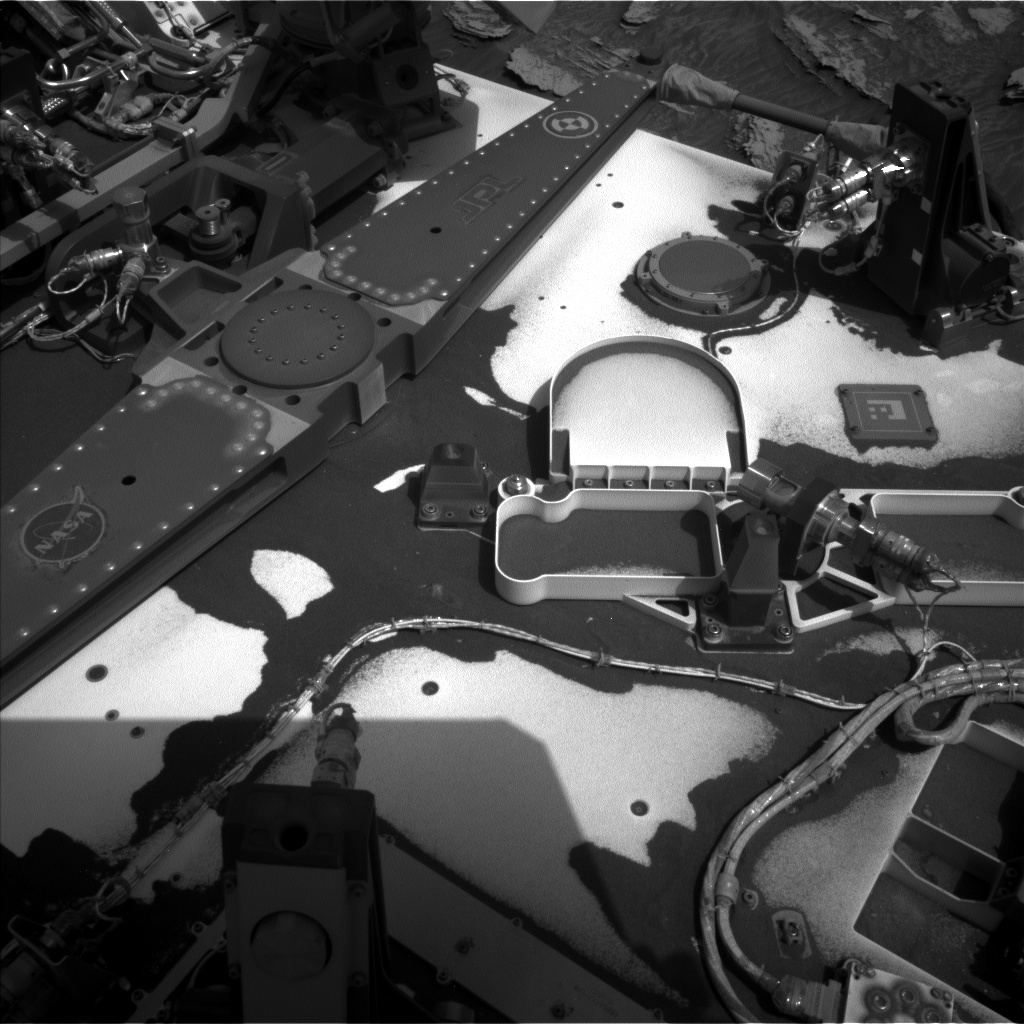
Curiosity Left B Navigation Camera image taken on Sol 3531, July 13, 2022.
Credit: NASA/JPL-Caltech
“After Navcam searches for dust devils, Mastcam will look for changes in nearby rover tracks at Kamana,” Herkenhoff adds. “The arm will then be deployed to acquire another MAHLI image of the drill tailings to determine whether the APXS touched the tailings during the overnight integration planned on Sol 3528.”

Curiosity Right B Navigation Camera image acquired on Sol 3531, July 13, 2022.
Credit: NASA/JPL-Caltech
Also in the plan, MAHLI was set to take images from 25 and 5 centimeters of a vein named “La Laja.” Then the arm will be stowed for the drive.
“We are not expecting to receive as much data as usual for future planning, so downlink priorities were carefully reviewed, especially for the post-drive images,” Herkenhoff reports.
As always, dates of planned rover activities are subject to change due to a variety of factors related to the Martian environment, communication relays and rover status.

Onward, ever deeper. NASA’s New Horizons on new assignments.
Credit: NASA/APL/SwRI
There’s quite a roster of potential benefits that underscores the importance and milestone-making capabilities of a nuclear-powered craft now in post-Pluto encounter.
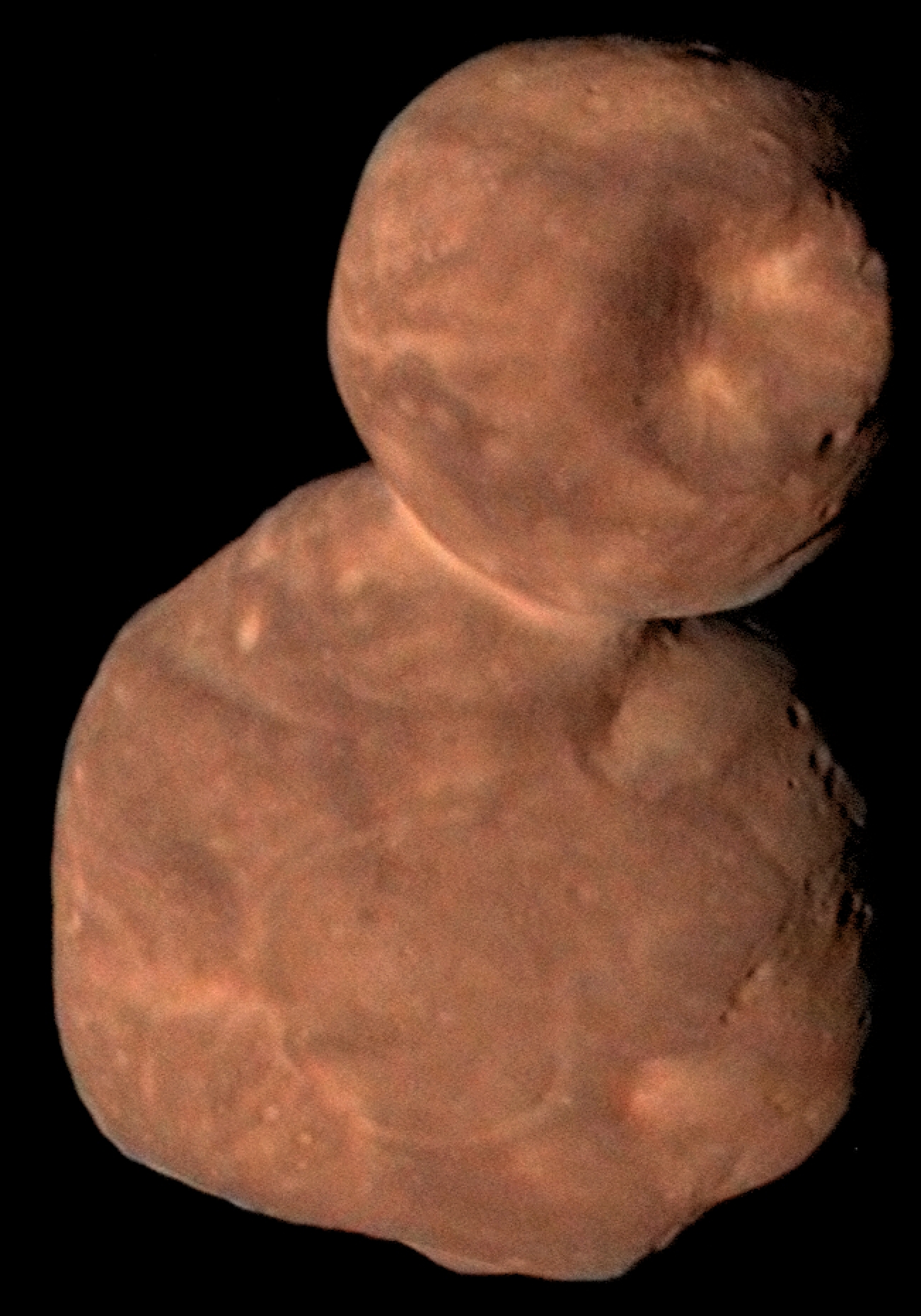
Encounter with a KBO! This composite image of the primordial contact binary Kuiper Belt object, officially named Arrokoth, was compiled from data obtained by NASA’s New Horizons spacecraft as it flew by the object on January 1, 2019.
Credit: NASA/Johns Hopkins University Applied Physics Laboratory/Southwest Research Institute//Roman Tkachenko
In many ways, New Horizons has become not only the spacecraft that could…but it’s still on duty in extended mission mode, diving ever-deeper into the Kuiper Belt to examine ancient, icy mini-worlds in that vast region, at least a billion miles beyond Neptune’s orbit.
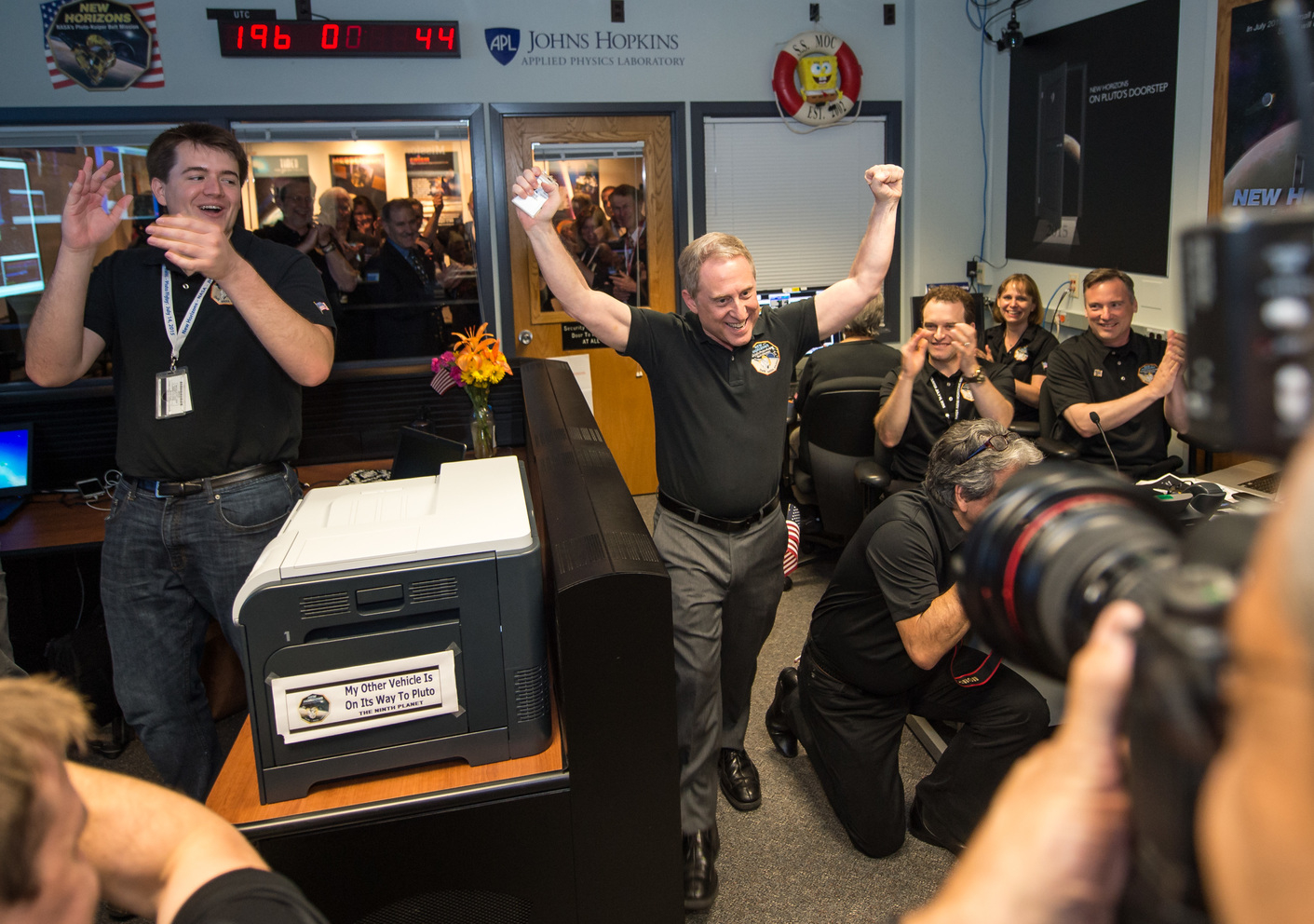
New Horizons Principal Investigator Alan Stern of Southwest Research Institute (SwRI), Boulder, CO. celebrates with New Horizons Flight Controllers after they received confirmation from the spacecraft that it had successfully completed the flyby of Pluto, Tuesday, July 14, 2015 in the Mission Operations Center (MOC) of the Johns Hopkins University Applied Physics Laboratory (APL), Laurel, Maryland. Photo Credit: (NASA/Bill Ingalls)
Designed and integrated at the Johns Hopkins University Applied Physics Laboratory (APL) in Laurel, Maryland, New Horizons was launched on January 19, 2006 and carried out a six-month-long reconnaissance flyby study of Pluto and its moons in the summer of 2015, culminating with closest approach of Pluto on July 14, 2015. Its observations in flying by that remote world fit into the “Plutopalooza-class” of revelatory reveals.
But there was more…and there’s more to come.
For more details, go to my new Space.com article – “Far beyond Pluto: What’s next for NASA’s New Horizons probe? – Seven years after its epic Pluto flyby, New Horizons is still going strong” – at:
https://www.space.com/beyond-pluto-nasa-new-horizons-next-steps

New Horizons proposal cover for the probe’s extended mission.
Courtesy: Alan Stern

How can we measure the space economy?
Almost 80 countries have a satellite in orbit. Yet even though the services derived from space activities are increasingly important to society, international comparability of space economy statistics remains limited. The newly revised Organization for Economic Co-operation and Development (OECD) Handbook on Measuring the Space Economy aims to encourage and facilitate data collection among both incumbents and new actors.
This second edition of the Handbook on Measuring the Space Economy responds to the needs of policymakers from multiple economic sectors that are reflecting on such changes in their measurement strategies.
Evolving landscape
It takes account of the evolving landscape of space activities, technologies and user needs surrounding two core observations:

SpaceX Falcon 9 liftoff.
Credit: SpaceX
- Increasingly, a wide diversity of actors is involved in space activities: Government actors more than ever pursue strategic objectives in the space economy in tandem with commercial actors. A better tracking of the effects of public and private expenditure in the space economy is required if the overall impact of such trends is to be assessed.
- Studying the economics of space activities has become professionalized but measuring the space economy remains a challenge: The range of space activities has evolved significantly over the past ten years. Critical infrastructures such as telecommunications and an increasing number of commercial digital applications now depend heavily on space capabilities. In advanced economies, the space economy is becoming more complex and the line between space and non-space activities is increasingly difficult to assess.
Chapter call outs
The Handbook is structured according to the following chapters:
Chapter 1: Introducing the OECD Handbook on Measuring the Space Economy
Chapter 2: Progress in concepts, definitions and measurement of the space economy
Chapter 3: Monitoring the evolving cast of space actors
Chapter 4: Using industry surveys to better understand the space economy
Chapter 5: Strengthening assessment of the impacts of the space economy.
To access the Handbook, go to:
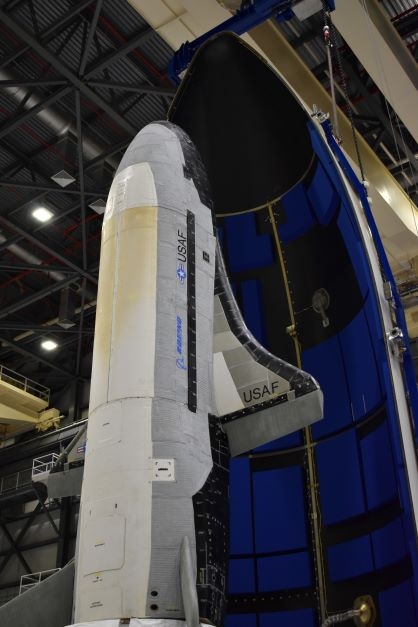
Encapsulated X-37B Orbital Test Vehicle for United States Space Force-7 mission.
Credit: Boeing
The still orbiting X-37B space drone broke the program’s on-orbit record for long duration flight on 6 July at 5:49:08 ZULU, according to a Pentagon statement.
This U.S. Space Force robotic craft zipped by the last milestone-making flight of the program: 780 days on orbit.
Not a word on how long this current 6th mission — X-37B Orbital Test Vehicle (OTV-6) – will remain in orbit. It was launched on May 17, 2020 from Cape Canaveral Air Force Station, Florida.

Encapsulated X-37B Orbital Test Vehicle for United States Space Force-7 mission.
Credit: Boeing
“The X-37B team continues to exemplify the kind of lean, agile and forward-leaning technology development we need as a nation in the space domain,” said U.S. Space Force Chief of Space Operations, Gen. John “Jay” Raymond.
“Each launch represents a significant milestone and advancement in terms of how we build, test, and deploy space capabilities in a rapid and responsive manner, Raymond said in saluting the OTV-6 launch.
Service module
This mission underway is the first X-37B vehicle to use a service module to host experiments. The service module is an attachment to the aft of the vehicle that allows additional experimental payload capability to be carried to orbit.

Coin and patch of the same design might be showing the X-37B “service module.”
Courtesy: Mike Rose
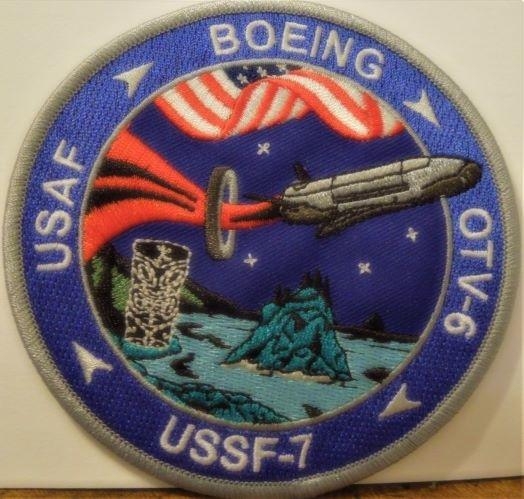
Coin and patch of the same design might be showing the X-37B “service module.”
Courtesy: Mike Rose
The mission deployed the FalconSat-8, a small satellite developed by the U.S. Air Force Academy and sponsored by the Air Force Research Laboratory to conduct several experiments on orbit.
In addition, two NASA experiments are onboard the space plane to study the results of radiation and other space effects on a materials sample plate and seeds used to grow food.
Also, a U.S. Naval Research Laboratory experiment is evaluating technology to transform solar power into radio frequency microwave energy.

X-37B (OTV-5) on the runway after landing at the Kennedy Space Center.
Credit: U.S. Air Force
Technologies being tested in the X-37B program include advanced guidance, navigation and control, thermal protection systems, avionics, high temperature structures and seals, conformal reusable insulation, lightweight electromechanical flight systems, advanced propulsion systems, advanced materials and autonomous orbital flight, reentry and landing.
Flight roster
Here’s a listing of previous flights of the space plane:
OTV-1: launched on April 22, 2010 and landed on December 3, 2010, spending over 224 days on orbit.
OTV-2: launched on March 5, 2011 and landed on June 16, 2012, spending over 468 days on orbit.
OTV-3: launched on December 11, 2012 and landed on October 17, 2014, spending over 674 days on-orbit.
OTV-4: launched on May 20, 2015 and landed on May 7, 2015, spending nearly 718 days on-orbit.
OTV-5: launched on September 7, 2017 and landed on October 27, 2019, spending nearly 780 days on-orbit.
As to when and where OTV-6 will return to a wheels-stopped landing is anybody’s guess.
OTV-1, OTV-2, and OTV-3 missions landed at Vandenberg Air Force Base, California, while the OTV-4 and OTV-5 missions landed at Kennedy Space Center, Florida.

Encapsulated X-37B Orbital Test Vehicle for United States Space Force-7 mission.
Credit: Boeing

Credit: CNAS/CCTV Video News Agency/Inside Outer Space screengrab
China’s next step in constructing the country’s space station is launch of the Wentian lab module.
As the first lab component of China’s Tiangong space station, the hardware is set for liftoff this month, perhaps on July 24th, from the Wenchang Spacecraft Launch Site in Hainan.
The Beijing Aerospace Control Center issued an orbit control command to the now orbiting space station’s components on July 4, in preparation for Wentian to dock with Tianhe, the station’s core module.

Credit: Lee Brandon-Cremer (CC BY-SA 4.0)
Module duties
Following the docking, the trio of Shenzhou-14 astronauts will enter the Wentian lab module to activate the life support system, assemble experiment cabinets, and carry out cross-scientific research, according to the China Manned Space Agency (CMSA).
A new space science lecture will be delivered from the Wentian lab module, the first time for the taikonauts to broadcast a live lecture from a space lab module, the CMSA added.
Additionally, spacewalks will be carried out from this lab module.
The Wentian lab will mainly focus on the study of space life sciences, which can support the growth, development, genetics and aging of multiple species of plants, animals and microorganisms under space conditions.

Shenzhou-14 crew. Credit: China Manned Space Engineering Office
Next module up
Meanwhile, the next station segment, the Mengtian lab module, is slated for launch in October.
The Mengtian lab will be oriented to microgravity research and is equipped with experimental cabinets for fluid physics, materials science, combustion science, basic physics and space technology.
On June 5, China launched the Shenzhou-14 crew — Cai Xuzhe, Chen Dong and Liu Yang – to carry out a six-month mission to help complete the construction of the country’s space station.

Main propellant tank of the second stage of a Delta 2 launch vehicle which landed near Georgetown, TX, on January 22, 1997. This approximately 250 kg tank is primarily a stainless steel structure and survived reentry relatively intact. Credit: NASA ODPO.
The number of rocket bodies abandoned in orbit is growing. The distribution of rocket body launches and reentries leads to what’s termed as the “casualty expectation,” in other words, risk to human life. That incoming space risk to humans is being disproportionately borne by populations in the Global South, with major launching states exporting risk to the rest of the world.”
A new research paper has focused on space launches resulting in uncontrolled rocket body reentries, creating casualty risks for people on the ground, at sea and in airplanes.
Populations put at risk
Using publicly available reports of rocket launches and data on abandoned rocket bodies in orbit, researchers calculate approximate casualty expectations due to rocket body reentries as a function of latitude.
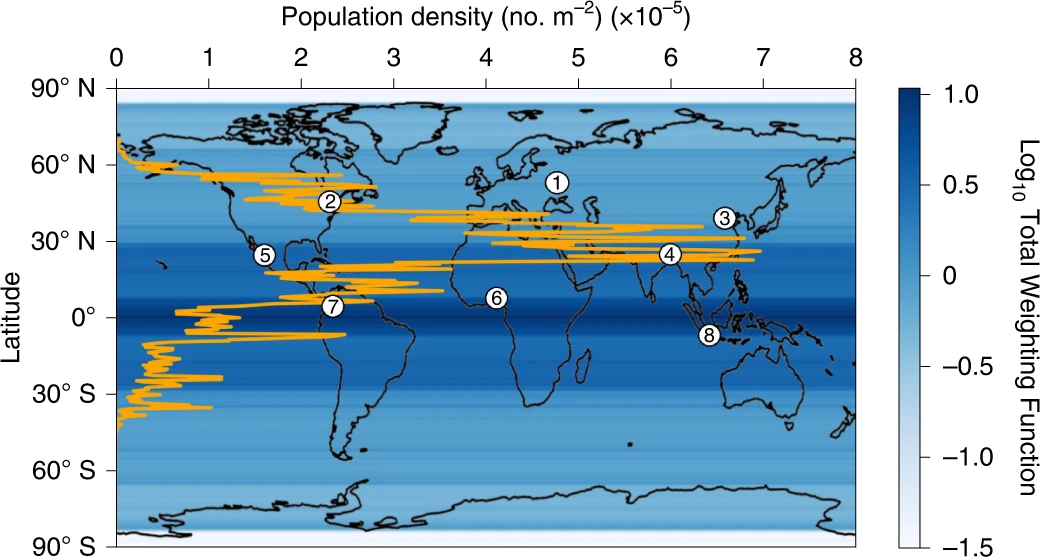
Some major and high-risk cities are labelled: 1, Moscow; 2, Washington, DC; 3, Beijing; 4, Dhaka; 5, Mexico City; 6, Lagos; 7, Bogotá; 8, Jakarta. The chosen weighting function is for all rocket bodies currently in orbit with perigees less than 600 km in altitude. The outline of the continents is an equirectangular projection, taken from the Python package Cartopy.
Credit: Michael Byers, et al.
They argue that recent improvements in technology and mission design “make most of these uncontrolled reentries unnecessary, but that launching states and companies are reluctant to take on the increased costs involved.”
Furthermore, those national governments whose populations are being put at risk “should demand that major spacefaring states act, together, to mandate controlled rocket reentries, create meaningful consequences for non-compliance and thus eliminate the risks for everyone.”
Shortage of international rules
The research paper – “Unnecessary risks created by uncontrolled rocket reentries” – appears in Nature Astronomy.
Led by Michael Byers of the Department of Political Science, University of British Columbia, Vancouver, British Columbia, Canada, the paper notes that “the added technological complexity and cost involved in achieving controlled reentries helps to explain the shortage of international rules on this matter.”
Among examples in the paper:
— In 2016, the second stage of a SpaceX rocket was abandoned in orbit; it reentered one month later over Indonesia, with two refrigerator-sized fuel tanks reaching the ground intact.
— In May 2020, an 18-ton core stage of China’s Long March 5B rocket reentered the atmosphere from orbit in an uncontrolled manner. Debris from the rocket body, including a 12-meter-long pipe, struck two villages in the Ivory Coast, causing damage to several buildings.
— In 2021, another 18-ton core stage of a Long March 5B rocket made an uncontrolled reentry crashing into the Indian Ocean.
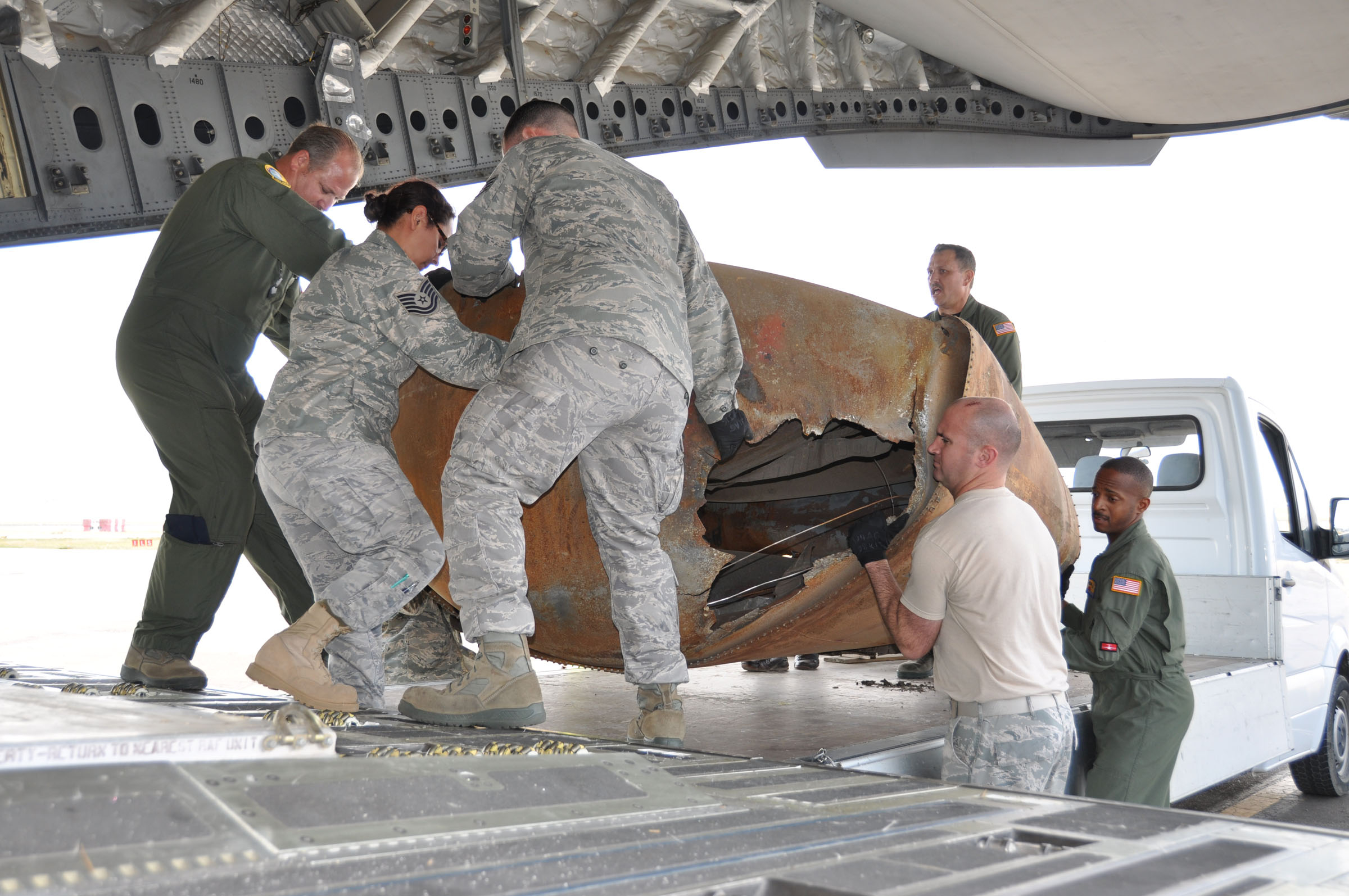
Air Force reservists hoist a 480-pound rocket part into a C-17 Globemaster III, Aug. 26, 2011. The aircraft was in Mongolia from the 729th Airlift Squadron at March Air Reserve Base, Calif., to retrieve fallen space debris. (U.S. Air Force photo/Master Sgt. Linda Welz)
Potentially lethal
When intact stages return to Earth, the paper says, “a substantial fraction of their mass survives the heat of atmospheric reentry as debris. Many of the surviving pieces are potentially lethal, posing serious risks on land, at sea and to people in airplanes,” adding that “even a small piece could cause hundreds of casualties.”
In their work, the trend of rocket body reentries from the past 30 years was assessed, then applied to the next 10 years. The number of rocket launches is increasing quickly and assuming that each reentry spreads lethal debris over a 10m2 area, “we conclude that current practices have on order a 10% chance of one or more casualties over a decade.”
In a concluding statement, the paper states: “On the issue of uncontrolled rocket body reentries, the states of the Global South hold the moral high ground: their citizens are bearing most of the risks, and unnecessarily so, since the technologies and mission designs needed to prevent casualties exist already.”
To take a read of the full paper — “Unnecessary risks created by uncontrolled rocket reentries” – go to:

Mars Life Explorer – a general engineering model for MLE with solar panels, drill, and science payload on lander deck.
Courtesy: Amy Williams
There is one topic about Mars that generates extensive debate and discussion. The weighty question that remains is whether there is life today on the Red Planet, perhaps lurking in some protected ecological niche on that far-off world.
How to dig into and get to the bottom of that inquiry appears to mean doing just that – go subsurface.
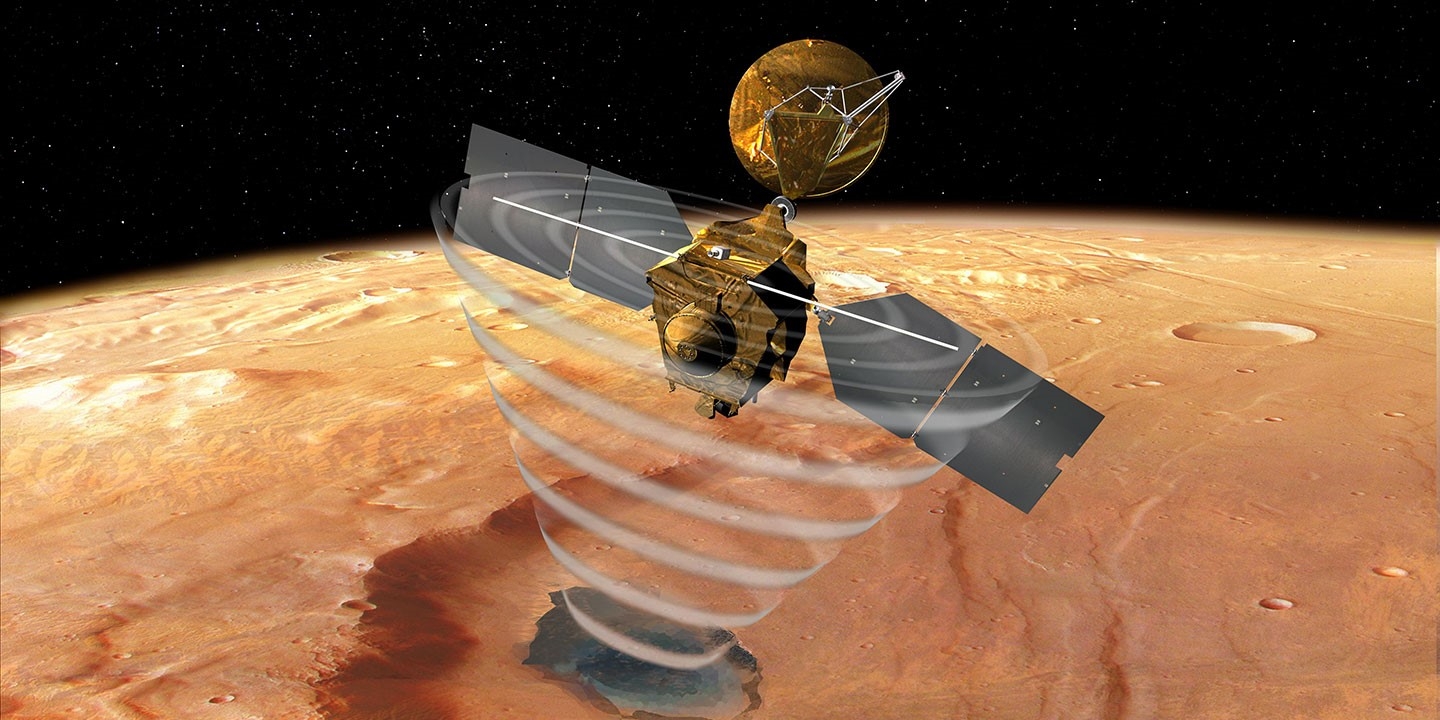
NASA’s Mars Reconnaissance Orbiter carries the Shallow Subsurface Radar, also known as SHARAD. It is on the prowl for underground liquid or frozen water.
Credit: NASA
Prepared for NASA by the National Academy of Sciences, Engineering, and Medicine, and released in April, the report — Origins, Worlds, and Life: A Decadal Strategy for Planetary Science and Astrobiology 2023-2032 – addressed the issue of spotting life that’s alive and well on Mars today.
Enter the Mars Life Explorer or MLE in space short form.
For extensive details on this proposed spacecraft mission, go to my new Space.com story — NASA’s Mars Life Explorer mission would dig deep to hunt for Red Planet life – If approved by NASA, the life-hunting mission could launch in the 2030s” at:
https://www.space.com/nasa-mars-life-explorer-concept-mission

