Archive for November, 2021
 Author:
  November 3rd, 2021
The Defense Department today released its annual report on military and security developments involving China, commonly referred to as the China Military Power Report.
This newly issued report discusses China’s space ambitions:
“The PRC’s [People’s Republic of China] space enterprise continues to mature rapidly and Beijing has devoted significant economic and political resources to growing all aspects of its space program, from military space applications to civil applications such as profit-generating launches, scientific endeavors, and space exploration.”
The report notes the inaugural launch of a reusable PRC Space Plane, explaining:
“In early September, the PRC became the third country to successfully launch and recover a space plane, after
the United States and the Soviet Union. The space plane spent about two days in space before releasing a second object, de-orbiting, and landing at an airfield in Western China. The second object remains on orbit. Beijing has not released any information on the mission beyond calling it a “reusable experimental spacecraft.”
To read the full report — Military and Security Developments Involving the People’s Republic of China — go to:
https://media.defense.gov/2021/Nov/03/2002885874/-1/-1/0/2021-CMPR-FINAL.PDF?source=GovDelivery
 Posted in
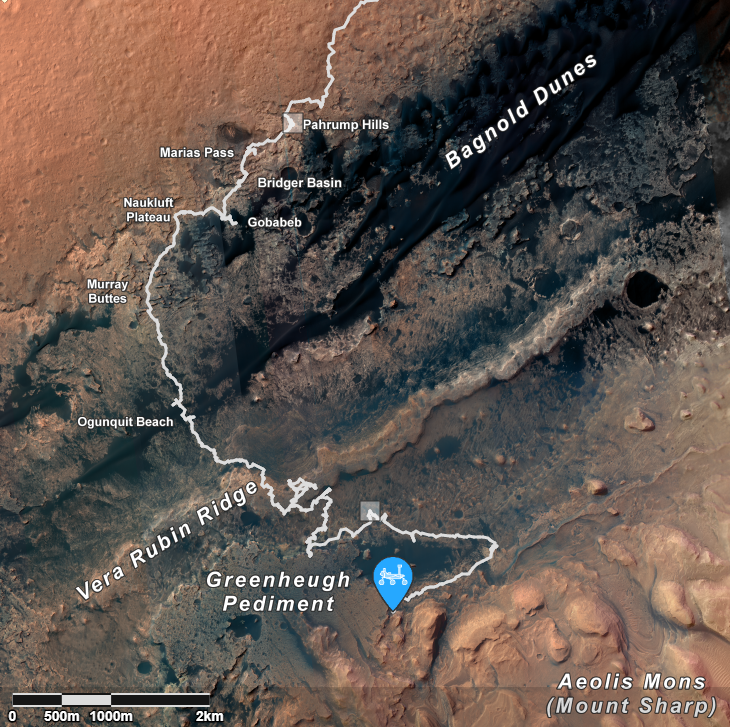
Curiosity’s location as of Sol 3285. Distance driven is 16.50 miles/26.56 kilometers.
Credit: NASA/JPL-Caltech/Univ. of Arizona
NASA’s Curiosity Mars rover at Gale Crater is now performing Sol 3286 duties.
Reports Ken Herkenhoff, a planetary geologist at the USGS Astrogeology Science Center in Flagstaff, Arizona, the robot’s Sol 3285 drive went well.
The rover has a good view of nearby outcrops, so the science team had a lot of potential drill and contact science targets to discuss, Herkenhoff adds. “We sent a prioritized list of drive targets to the rover planners, and ultimately selected a low-lying outcrop.”
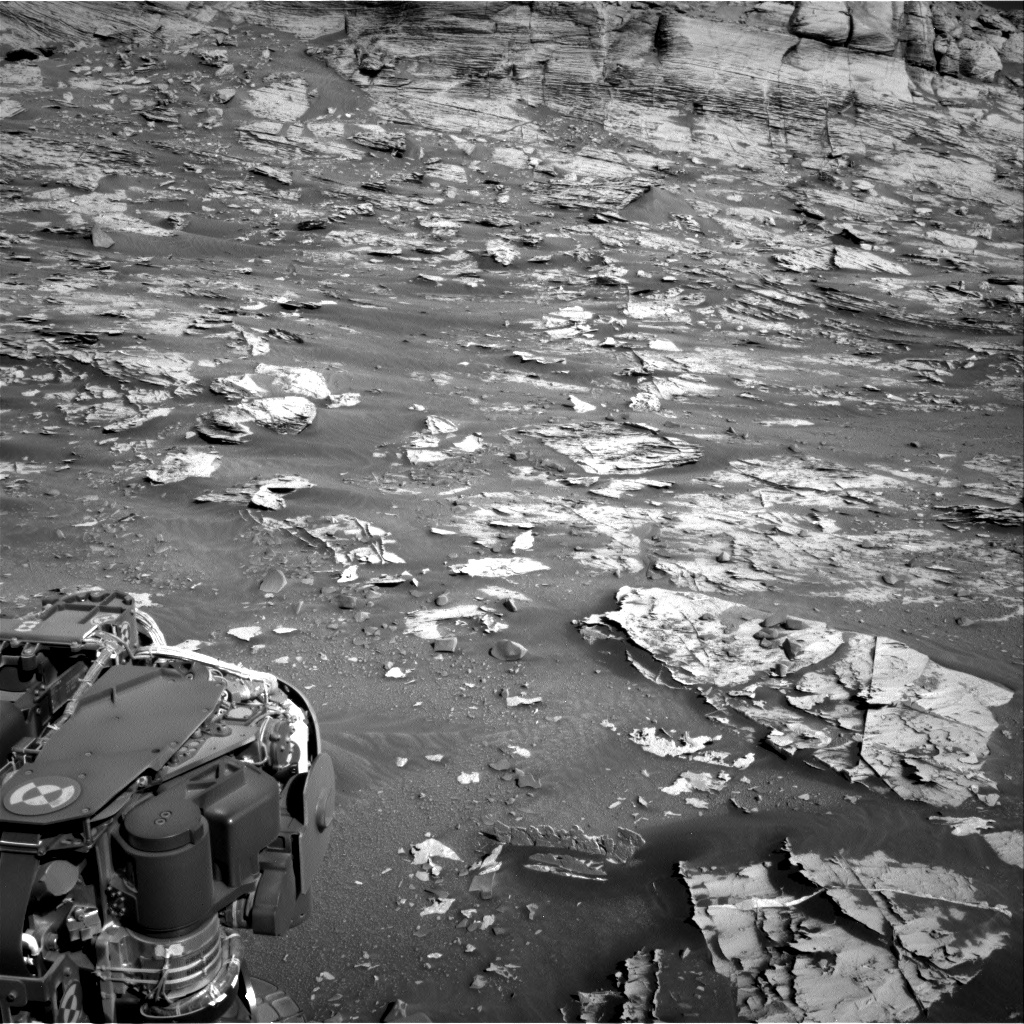
Mars researchers are selected a low-lying outcrop seen right of center in this image taken by Curiosity’s Right Navigation Camera on Sol 3285.
Credit: NASA/JPL-Caltech
This target appears to be easily accessible, so a newly scripted plan represents the first sol of a new drill campaign!
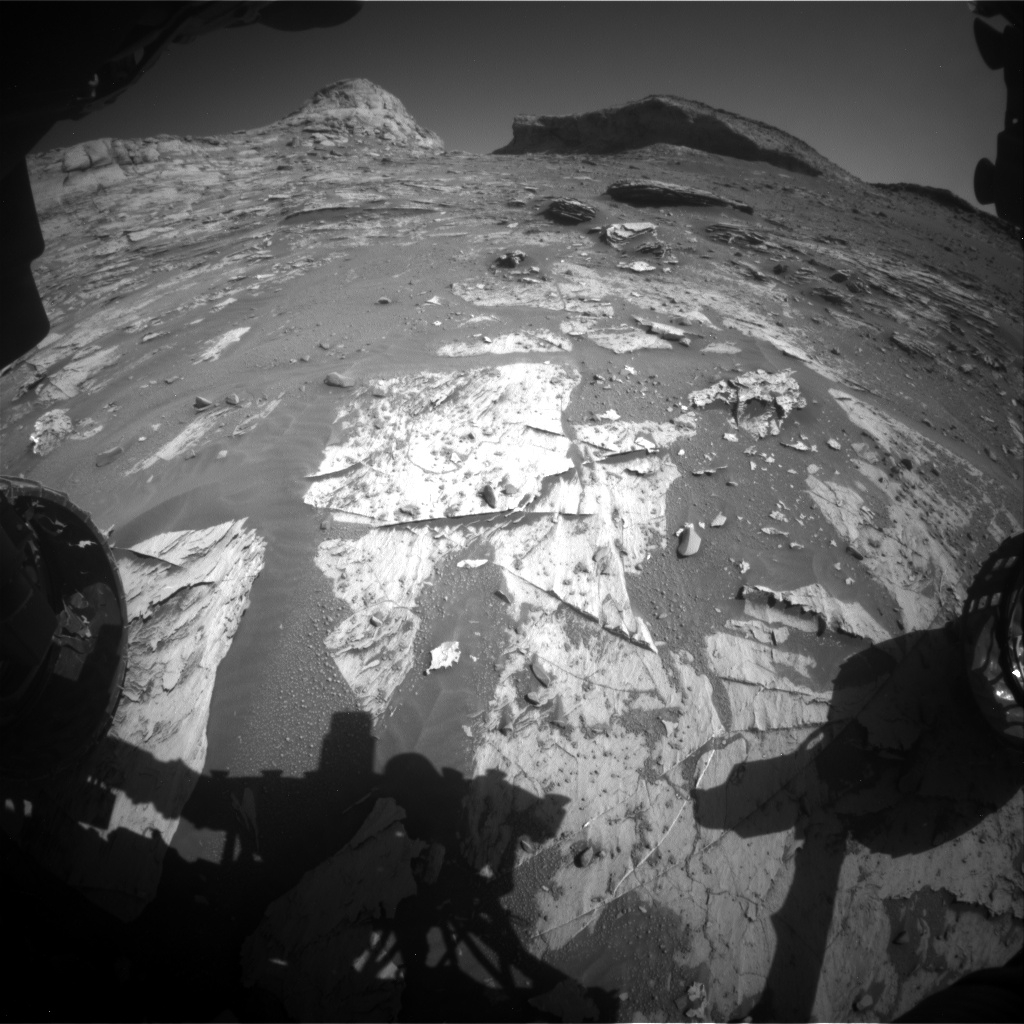
Curiosity Front Hazard Avoidance Camera Left B photo taken on Sol 3286, November 3, 2021.
Credit: NASA/JPL-Caltech
Planning day
“Although the time available before new data must be relayed to Earth was limited today, we were able to plan contact science on a nearby rock target called “Dumbuck” and some remote sensing observations as well,” Herkenhoff notes. “It was a busy and sometime hectic planning day for the team…but the effort was worth it because the final plan is excellent.”
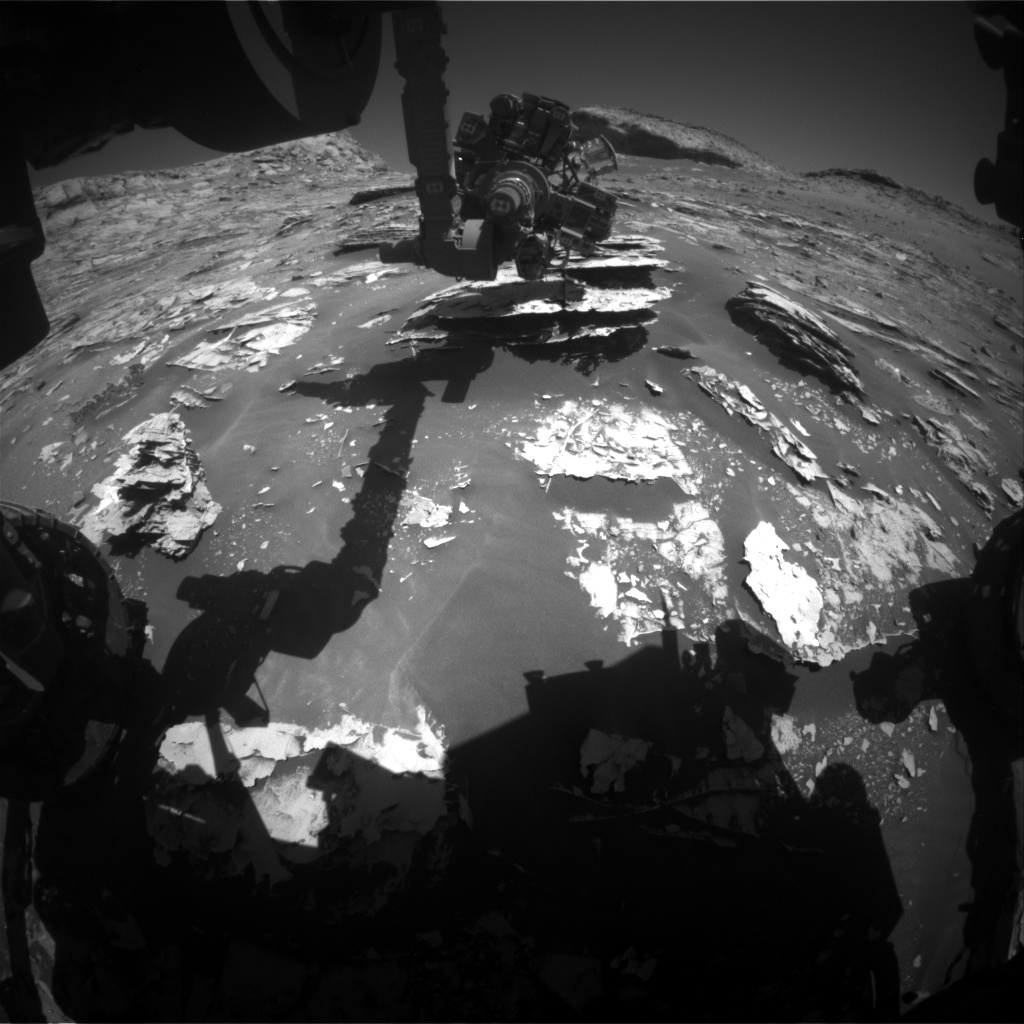
Curiosity Front Hazard Avoidance Camera Right B photo taken on Sol 3286, November 3, 2021.
Credit: NASA/JPL-Caltech
After the Alpha Particle X-Ray Spectrometer (APXS) and the Mars Hand Lens Imager (MAHLI) examine Dumbuck, the rover’s Chemistry and Camera (ChemCam) will shoot its laser at a nearby nodule-rich bedrock target named “Fallen Stack,” Herkenhoff reports, “to look for compositional variations among the nodules and surrounding bedrock.”
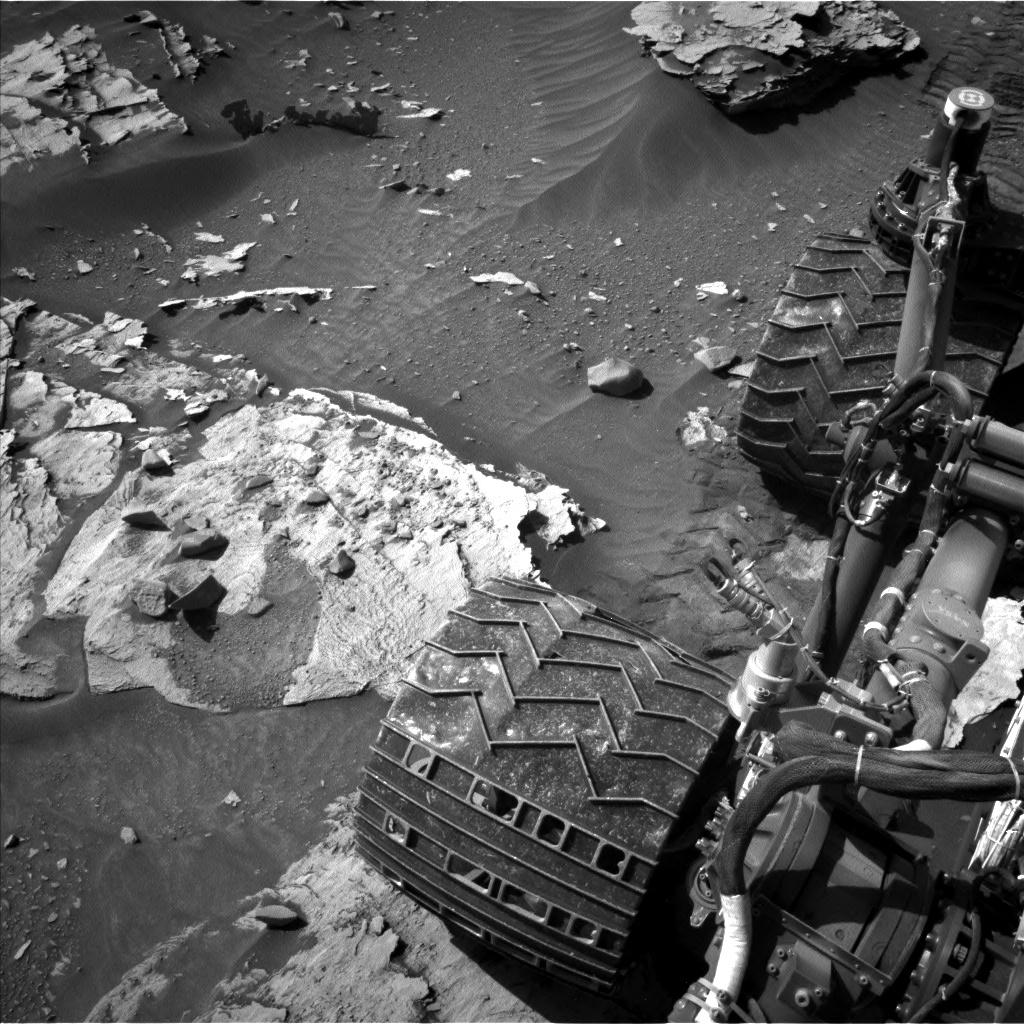
Curiosity Left B Navigation Camera image acquired on Sol 3286, November 3, 2021.
Credit: NASA/JPL-Caltech
Drill site mosaics
After Curiosity’s Right Mastcam documents the laser spots, several Mastcam stereo mosaics are planned of the drill site for context, of an outcrop to the west dubbed “Bellevue,” and an outcrop uphill named “Cliffs of Hallaig.”
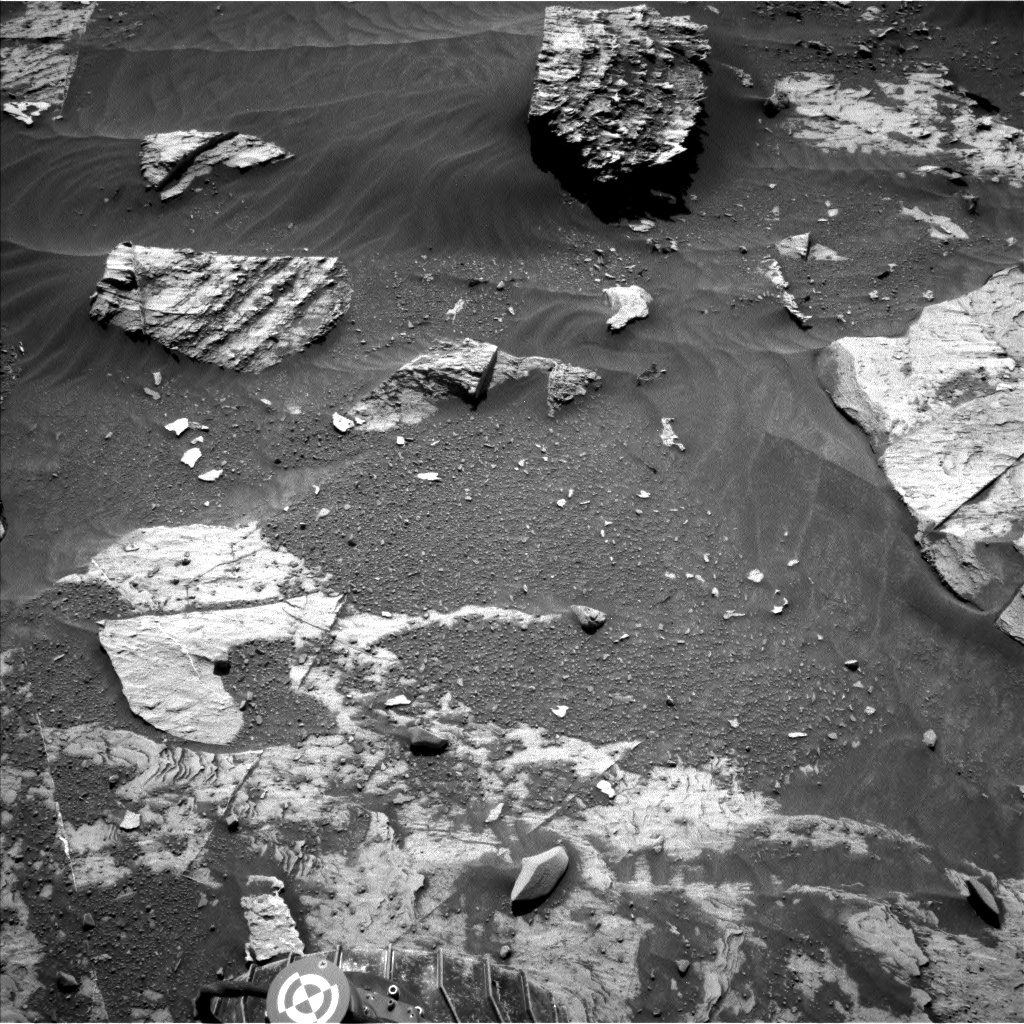
Curiosity Left B Navigation Camera image acquired on Sol 3286, November 3, 2021.
Credit: NASA/JPL-Caltech
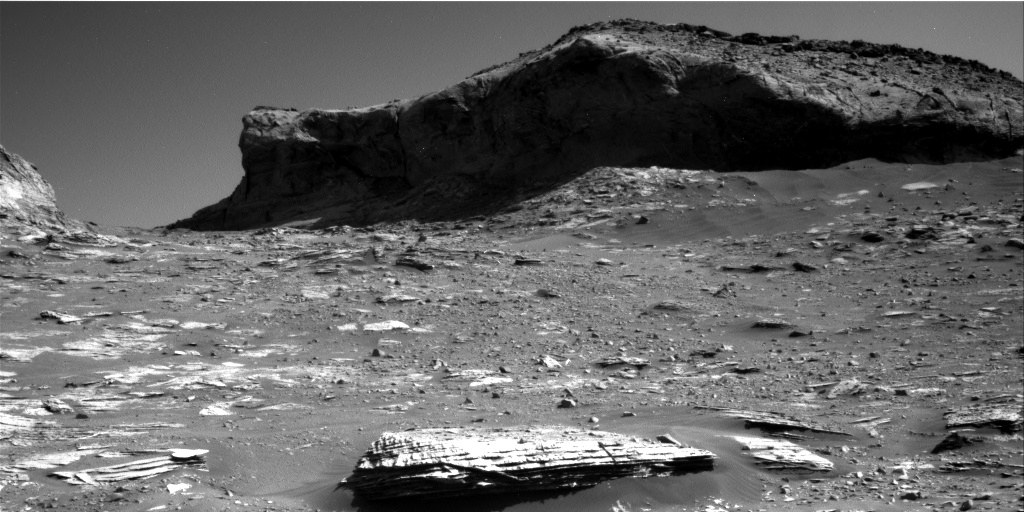
Curiosity Right B Navigation Camera image acquired on Sol 3286, November 3, 2021.
Credit: NASA/JPL-Caltech
“Mastcam stereo mosaics will also be acquired on a couple targets that had been imaged before, “Coylton Rocking Stone” and “Ciuff Hill,” from our new viewpoint,” Herkenhoff says.
After the drive to the new drill site, in addition to the standard post-drive imaging, Navcam and Mastcam will take mosaics of much of the terrain surrounding Curiosity to enable an upcoming, detailed target selection.
Navcam will also search for clouds and the robot’s Mars Descent Imager (MARDI) will image the surface behind the left front wheel during twilight.
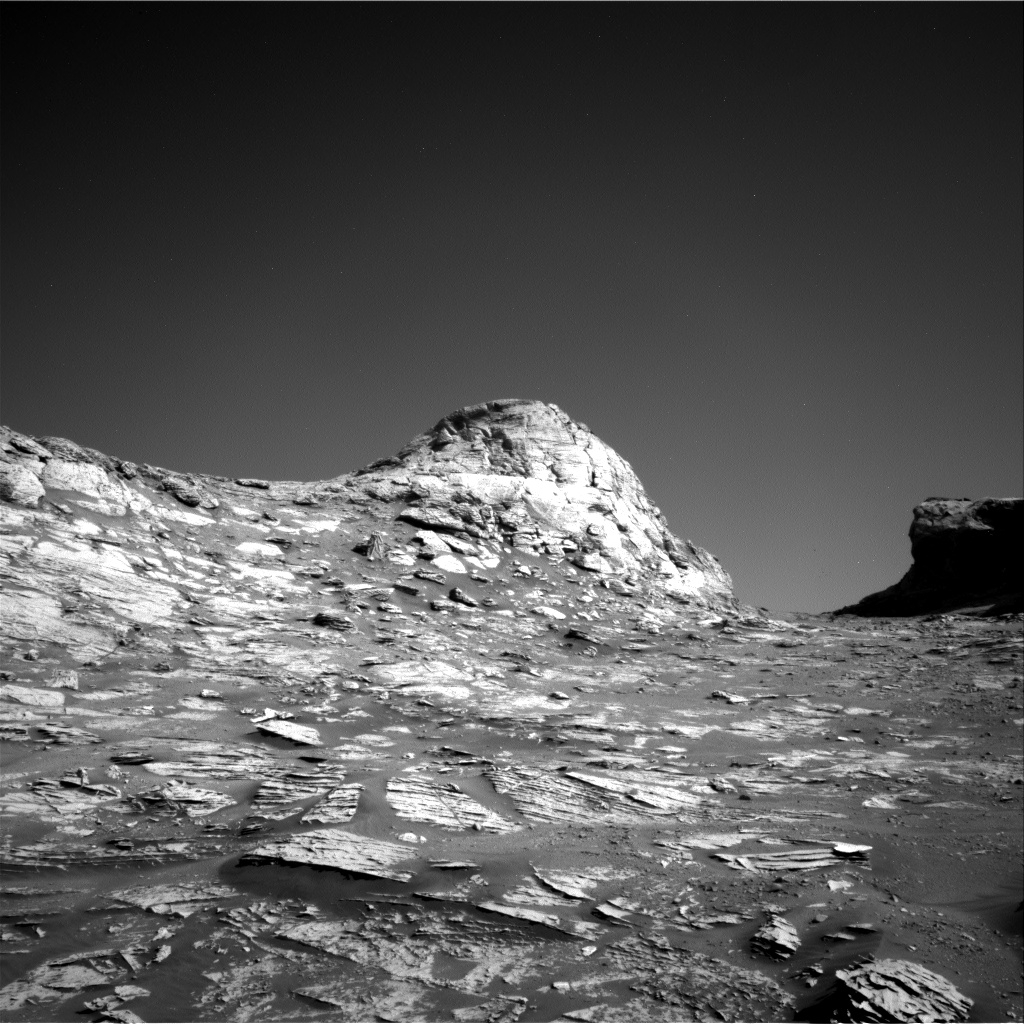
Curiosity Right B Navigation Camera image acquired on Sol 3286, November 3, 2021.
Credit: NASA/JPL-Caltech
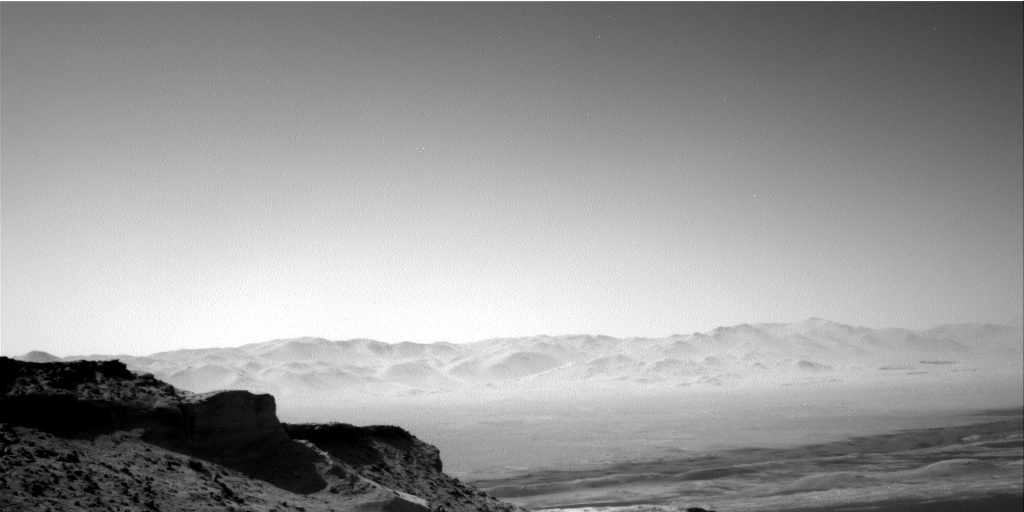
Curiosity Right B Navigation Camera image acquired on Sol 3286, November 3, 2021.
Credit: NASA/JPL-Caltech

SPS-ALPHA (solar power satellite by means of arbitrarily large phased array), a Mark-III design, beams energy to Australia.
Credit: John Mankins/Artemis Innovation Management Solutions
It is a fact that the Sun never sets in space.
Likewise, the idea of harvesting solar energy via power beaming satellites is a long-coming dawn of a glittery thought to feed an energy-ravenous Earth.
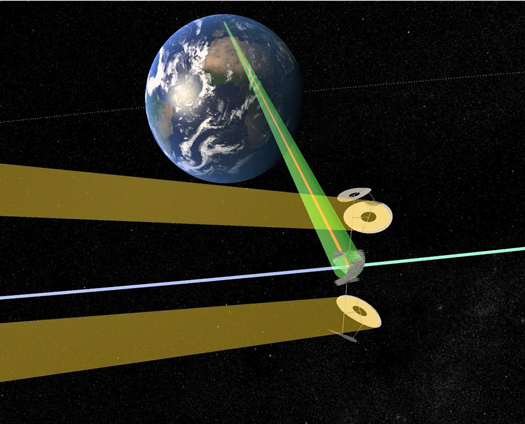
Technical feasibility, cost and economics of space-based solar power as a novel generation technology could support the UK to achieve net-zero emissions by 2050, according to a leading British systems, engineering and technology company.
Credit: Frazer-Nash Consultancy
That reflection has fomented for decades but is now garnering new looks – both in the U.S. and abroad, including Chinese technologists, experts in Japan, and researchers within the European Space Agency and the United Kingdom Space Agency.
Should the long-standing vision for space solar power (SSP) as a sustainable energy alternative be revisited in light of recent advances in technologies?
Go to my new Space.com story – “Space solar power’s time may finally be coming” at:
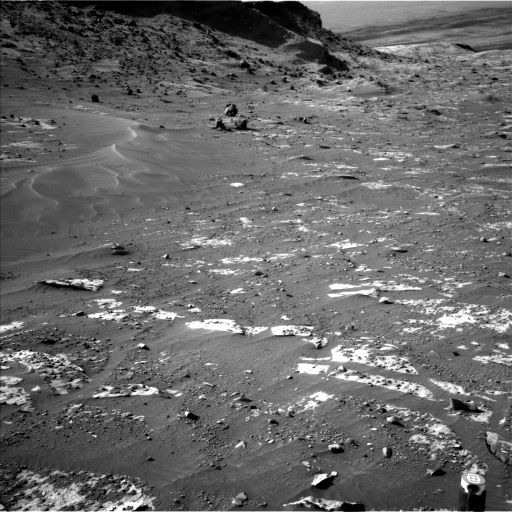
Curiosity Left B Navigation Camera image acquired on Sol 3285. November 2, 2021.
Credit: NASA/JPL-Caltech
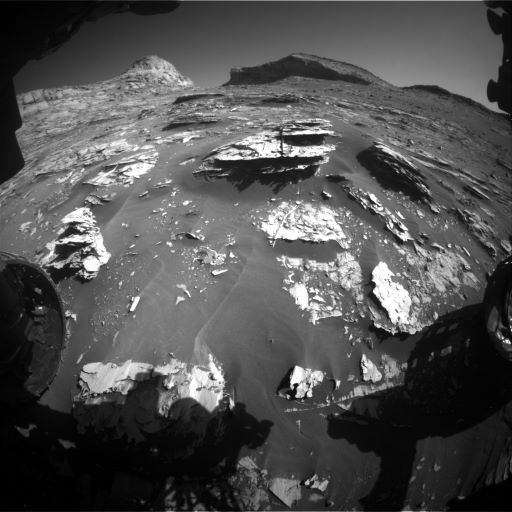
“Coylton Rocking Stone” is seen in this Curiosity Front Hazard Avoidance Camera Left B image taken on Sol 3285, November 2, 2021.
Credit: NASA/JPL-Caltech
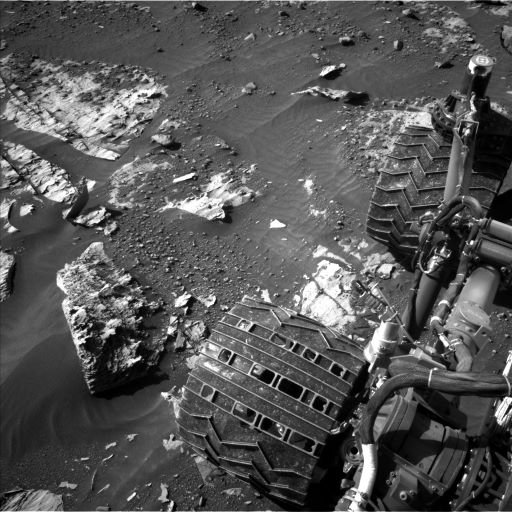
Curiosity Front Hazard Avoidance Camera Left B image taken on Sol 3285, November 2, 2021.
Credit: NASA/JPL-Caltech

Curiosity Front Hazard Avoidance Camera Left B image taken on Sol 3285, November 2, 2021.
Credit: NASA/JPL-Caltech
NASA’s Curiosity Mars rover at Gale Crater is now closing out Sol 3285 duties.
Reports Michelle Minitti, a planetary geologist at Framework in Silver Spring, Maryland, Curiosity performed a weekend drive, chalking up some 20 feet (6 meters) in elevation. “Not bad for a weekend hike!”
Looking at images of the terrain, it is probably not surprising that the rover is looking uphill into the tilted bedrock slabs and thin resistant veins jutting up in all directions.
That makes it hard to plan the robot’s next move, Minitti says. Indeed, a scripted drive will take Curiosity close to the area where researchers want to drill next, but not necessarily the exact spot.
Looking left…and right
“We hope to be able to look around us after the next drive – looking left and right across the tops of these bedrock slabs and veins – and pick a sweet spot to drill,” Minitti adds. “Given the variety of features around us right now, surely sweet spots will not be in short supply!”
Before the rover’s drive, scientists had time to gather data from its surroundings.
The rover’s workspace was considerably less rocky than the last one, but the sand ripples cutting through made an intriguing target.
Sand chemistry
The robot’s Mars Hand Lens Imager (MAHLI) and Alpha Particle X-Ray Spectrometer (APXS) are set to image and measure one ripple, “Dornoch Beach,” the first purely sand target Mars scientists have studied in quite awhile.
“It is good to keep track of sand chemistry, as sand is a mixture of rock components near and far, and changes in sand chemistry can indicate changes how much local rocks are contributing to the sand,” Minitti says.
The rover’s Chemistry and Camera (ChemCam) is scheduled to measure the chemistry of one of the roughly centimeter-sized resistant nodules, “Aztec Tower,” in bedrock out of reach of the arm instrument.
Spectacular slabs
Curiosity’s Mastcam is also on task to acquire a mosaic of one of the spectacular slabs nearby. It is dubbed “Coylton Rocking Stone.”
Minitti reports that before and after the drive, Mastcam will support measurement of the amount of dust in the atmosphere with an image aimed at the sun, using a big filter keeping the camera safe while doing so.
Curiosity’s Navcam is scheduled to look for dust devils and clouds.
The Radiation Assessment Detector (RAD) and the Rover Environmental Monitoring Station (REMS) run throughout the plan.
DAN will run in passive mode for nearly 8 hours before, during, and after the drive while adding an active measurement after the drive is complete, Minitti concludes.

Image shows the night side of Venus glowing in thermal infrared, captured by Japan’s Akatsuki spacecraft.
Credit: JAXA/ISAS/DARTS/Damia Bouic
Like the swirl of Venus clouds, there is a whirlwind of ongoing discussion centered on the claimed detection of phosphine in the planet’s atmosphere – a possible finding that might be produced by life.
Indeed, phosphine on Venus sparks a constant buzz that the acidic clouds of that hellish globe could be an extraterrestrial address for life. The claimed detection of phosphine, a biomarker in an oxidizing environment, would be an enticing argument in favor of life – if it can be confirmed.
But how best to tackle the controversy about possible life in the Venusian cloud deck?

Venus in ultraviolet taken by NASA’s Pioneer-Venus Orbiter in 1979 indicating that an unknown absorber is operating in the planet’s top cloud layer.
Credit: NASA
Extreme conditions
Astrobiologist Dirk Schulze-Makuch has outlined the next steps to gather further insights on the life on Venus question. The research scientist is from the Technical University Berlin and the School of the Environment at Washington State University.
“While many in the scientific community are convinced that the environmental conditions are too harsh for life to exist, others point to the assertion that early Venus was habitable and that microbial life on Venus could have adapted to the currently extreme conditions by natural selection,” Schulze-Makuch explains in a paper to be presented at an upcoming 19th Venus Exploration Analysis Group (VEXAG) meeting.
Favorable/unfavorable arguments
Schulze-Makuch outlines arguments in favor of and against possible life in the Venusian clouds.
Arguments on the favorable side:
- habitable temperatures and pressures exist in a continuous, stable cloud environment
- there is sufficiently available energy that makes photosynthesis in the clouds possible as a metabolic strategy
- life could have evolved from a early surface habitat (ocean) to a cloud habitat, and
- critical elements such as carbon, nitrogen, sulfur, and phosphorus are thought to be available in the atmosphere
Arguments against life include:
- the extremely low water activity which appears to require unknown biochemical pathways to overcome
- sulfuric acid concentrations that are extrapolated to be in a range that life on Earth could not cope with, and
- the likely lack of trace metals and hydrogen
Next steps
Schulze-Makuch points to next steps and questions to be answered.
“The first question to be answered is whether the phosphine detection is real or whether perhaps sulfur dioxide was misidentified as phosphine. To test, we should try to detect phosphine in the infrared range and confirming it by Large Probe Neutral Mass Spectrometer (LNMS) mass spectra. We should also search for diphosphine, because it would be an expected intermediate in the photolysis reaction of phosphine to phosphorus and hydrogen,” he suggests.
Another step is to investigate what kind of mechanisms could be envisioned as an adaptation to hyperacidity and extreme lack of liquid water?
“For example, in some hyperarid environments on Earth,” Schulze-Makuch adds, “life can obtain all of its needed water through deliquescence. Could there be similar ‘tricks’ to meet the challenge of living in an hyperarid environment like the Venusian atmosphere?”

A composite image of the planet Venus as seen by the Japanese probe Akatsuki. The clouds of Venus could have environmental conditions conducive to microbial life.
Credit: JAXA
Adaptation mechanisms
The astrobiologist notes that while there is no organism on Earth that could live in the Venusian clouds, “that may not mean that possible adaptation mechanisms cannot exist.”
Hyperacidic low-water activity environments are rare on Earth, says Schulze-Makuch, and there may have not been enough selection pressure on Earth to develop adaptations to these conditions.
Complimentary to the proposed theoretical work, Schulze-Makuch emphasizes that laboratory experiments should be conducted to test selected acidophilic microorganisms on their limit to sulfuric acid concentrations.
“Can this limit be enhanced from generation to generation as was shown for the gradual adaptation of microbes to perchlorates? Trace metals are critical for life on our planet as well,” Schulze-Makuch explains. “How could putative life at Venus compensate for the lack of important trace metals?”
Laboratory experiments to find out should ideally be conducted in very acidic environments.
“This is not only important for possible life on Venus but would also be useful information to have when exploring other extraterrestrial locations,” Schulze-Makuch says.

NASA’s DAVINCI+ will send a probe to brave the high temperatures and pressures near Venus’ surface to explore the atmosphere from above the clouds.
Credits: NASA GSFC visualization by CI Labs Michael Lentz and others
Exploration target
Lastly, Venus as the “go to” exploration target is on the horizon.
Three missions to Venus have been green-lighted: two by NASA — DAVINCI+ and VERITAS — and EnVision, led by the European Space Agency.
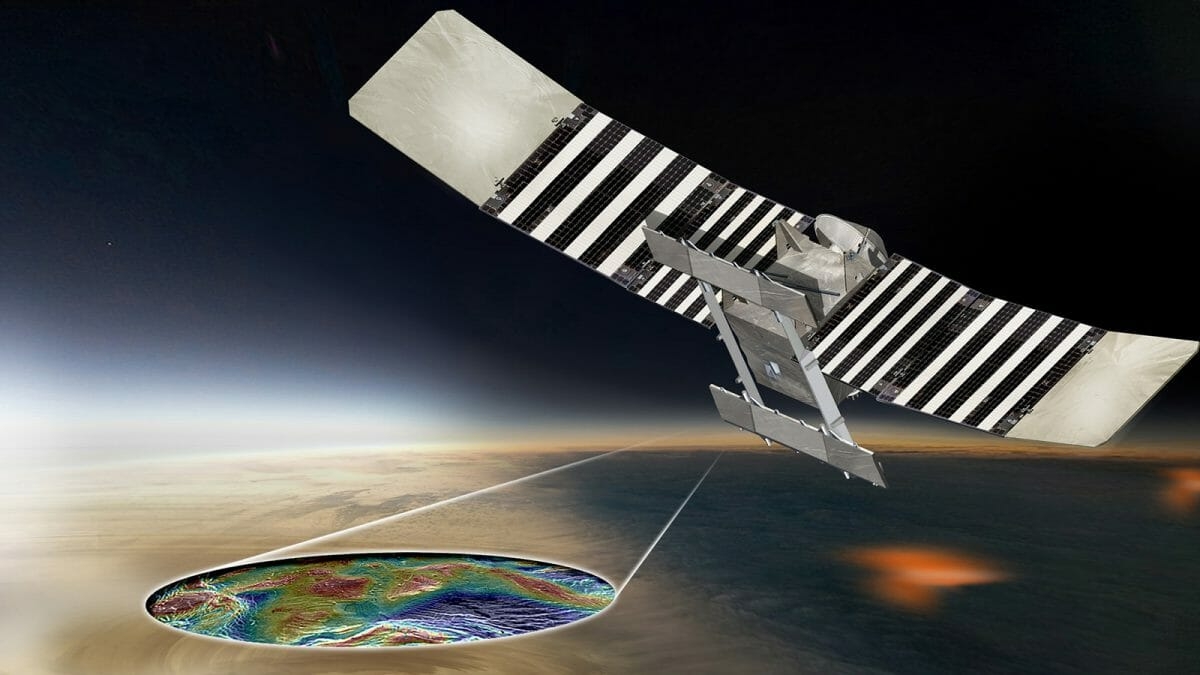
VERITAS Credit: NASA/JPL-Caltech
“These missions are well-suited to find answers to some critical questions,” Schulze-Makuch says, “especially how Venus became the planet it is today. Did Venus have plate tectonics during its natural history and are there still active volcanoes on Venus, which may release water vapor and influence its habitability?”
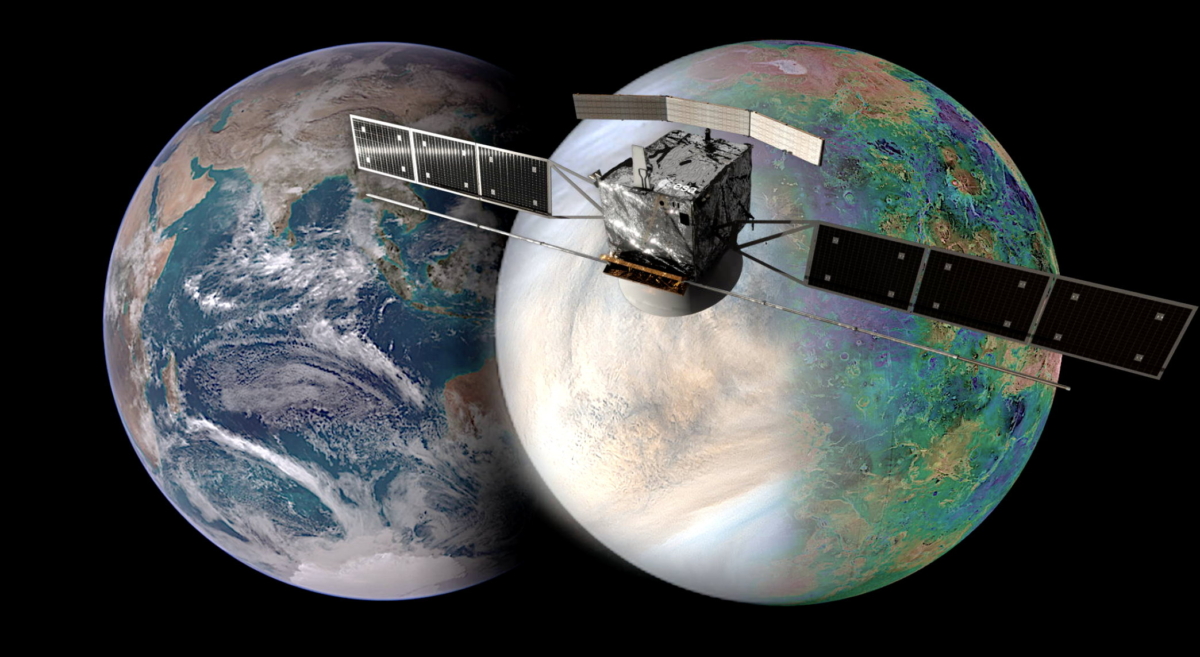
EnVision, led by the European Space Agency.
Credit: NASA/JAXA/ISAS/DARTS/ Damia Bouic/VR2Planets
Upcoming spacecraft missions will advance our knowledge of the Venusian environment tremendously. Without understanding the planet’s environment, researchers cannot possibly hope to understand any life thriving in it. Even if there is no current nor past life on Venus, it is still critical to appreciate the extreme greenhouse effect that encompassed Venus, Schulze-Makuch concludes. “Earth may have a very similar fate in the future.”

