Archive for August, 2021
 Author:
  August 14th, 2021
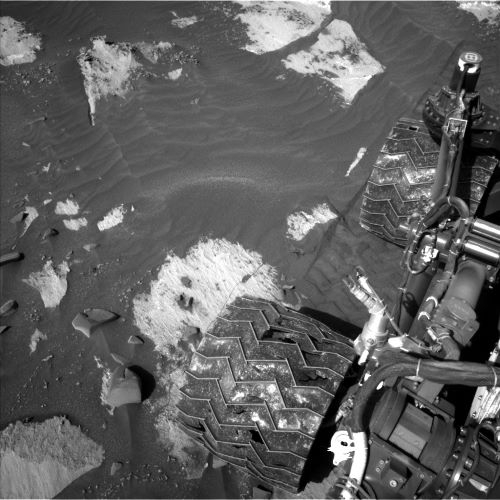
Curiosity Front Hazard Avoidance Camera Left B image taken on Sol 3206, August 13, 2021.
Credit: NASA/JPL-Caltech
NASA’s Curiosity Mars rover at Gale Crater is now performing Sol 3207 duties.
“Curiosity continues her climb up Mt. Sharp, navigating her way towards the southwest,” reports Mark Salvatore, a planetary geologist at the University of Michigan.
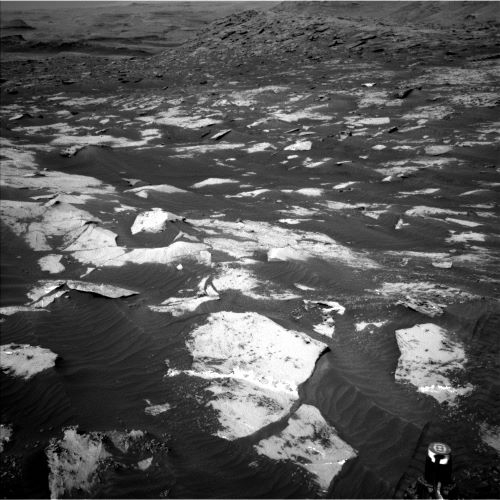
Curiosity Left B Navigation Camera image acquired on Sol 3206, August 13, 2021.
Credit: NASA/JPL-Caltech
Transition region
In the previous plan, Curiosity traveled approximately 131 feet (40 meters) through fairly rocky terrain that coincides with the transition region between the clay-bearing bedrock that the robot has been exploring for the past few years and the overlying sulfate-bearing materials.
“The science team is carefully characterizing this compositional transition both laterally and vertically, hoping to identify key evidence for environmental transitions along the way,” Salvatore adds.
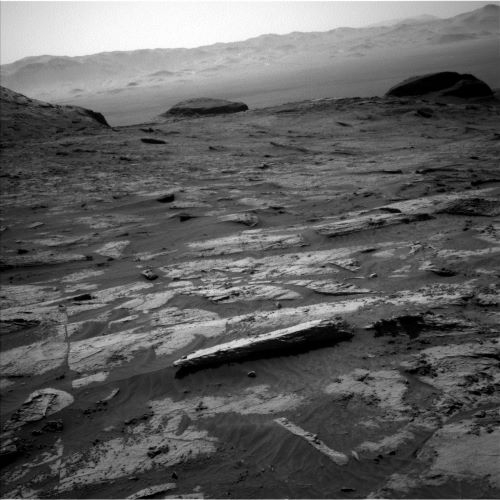
Curiosity Left B Navigation Camera image acquired on Sol 3206, August 13, 2021.
Credit: NASA/JPL-Caltech
“The current transition zone was one of the main reasons why NASA and the scientific community selected Gale crater as the Curiosity landing site,” Salvatore points out.
Curiosity Left B Navigation Camera image acquired on Sol 3206, August 13, 2021.
Credit: NASA/JPL-Caltech
Environmental history
Spectral evidence from the Compact Reconnaissance Imaging Spectrometer for Mars (CRISM) instrument on NASA’s Mars Reconnaissance Orbiter showed a clear compositional transition here that might be indicative of significant environmental change recorded in the rock record.
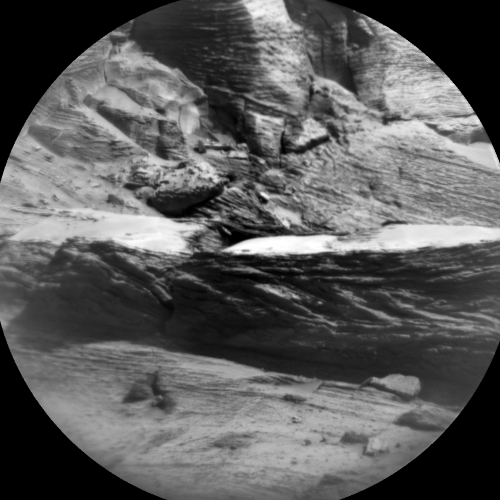
Curiosity Chemistry & Camera Remote Micro-Imager photo taken on Sol 3206, August 13, 2021
Credit: NASA/JPL-Caltech/LANL
Salvatore says that “Curiosity is now in a position to begin understanding and unraveling this environmental history!”
In the current plan, Curiosity will be acquiring local and long-distance imagery, as well as some compositional measurements of local bedrock and diagenetic features (the process of chemical and physical change in deposited sediment during its conversion to rock).
The plan will end with a rover drive of roughly 82 feet (25 meters) to the southwest “as we continue our way through this transition zone,” Salvatore concludes.
 Posted in

Credit: Wageningen University
Growing crops on the Red Planet is a Mars underground necessity.
New research has shown that the effect of cosmic radiation on plants demand they be protected.
Netherlands-based Wageningen University and Research and the Reactor Institute Delft (RID) have investigated the effect of gamma radiation as was recorded by the Mars rover Curiosity on garden cress and rye.
Because the radiation on Mars is about 17 times higher than on Earth, the experiment was carried out under strict safety precautions.

Credit: Wageningen University/RID
Led castle
“We conducted the experiment in a special ‘led castle’ and in a fume hood,” says Nyncke Tack. There were multiple effects of the radiation visible, including brown leaves and dwarfed growth. Besides that, the researcher adds, the harvest was disappointing and lower than a non-radiated control group of plants.
Principal investigator at Wageningen University, Wieger Wamelink, said he had always expected that the radiation would have a negative effect on plant growth, “but it was never very well investigated so we needed to confirm if this expectation was correct.”
According to a university statement, the radiation was emitted by five cobalt 60 sources, especially ‘made’ by the RID. The sources were placed above the plants to create a plane radiation field comparable to Mars. The growing plants were radiated constantly for 28 days and harvested afterwards.
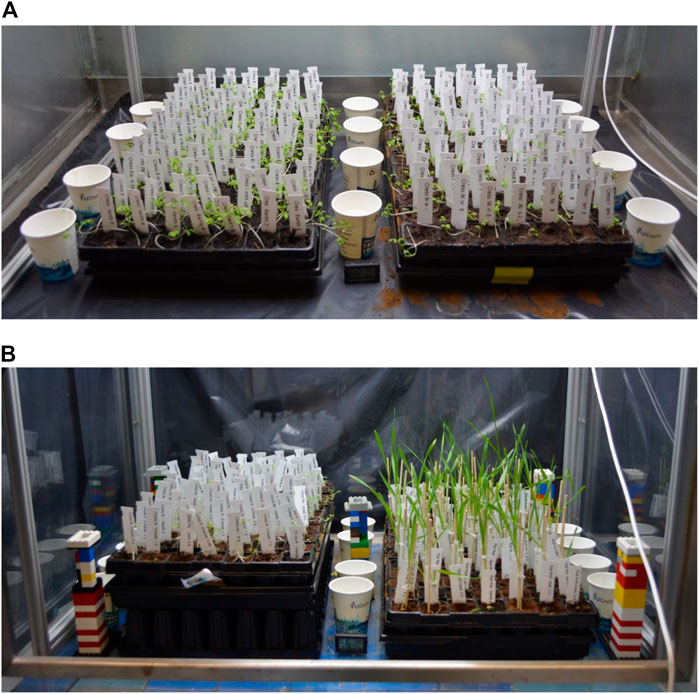
(A) sowing the cress control Earth (CE, left) and control Mars (CM, right). Shown are the pots with trays, the water cups and the temperature and humidity meter located in between the two trays. (B) is showing the radiation treatments in the radiation fume hood surrounded by lead walls. Treatments of cress (left) and rye (right) are indicated with white labels. Lego towers hold thermoluminescent dosimetry (TLD) cups at the top. Pictures were taken on the morning of harvest.
Below ground
“Creating a plane radiation field is tricky and that is why 5 sources were used to prevent one plant to receive a higher dose than another plant, which would otherwise influence the outcome of the experiment,” the university statement adds. Only gamma radiation was used, whereas on Mars cosmic radiation consists of alpha, beta gamma and UV radiation, so there are still differences, but the dose was about the same as what Mars receives.
“Now that it is clear that we can expect negative effects on plant growth due to the radiation on Mars, we have to protect them. An option is to grow the plants below ground in a dome where most of the radiation cannot penetrate so that humans are protected as well,” Wamelink affirms.
“It is a bigger challenge than growing plants in a greenhouse on the surface, but it also makes life easier since we can grow plants under fully controlled circumstances, applying LED light,” Wamelink reports.
For detailed information on the work, go to “Influence of Martian Radiation-like Conditions on the Growth of Secale cereale and Lepidium sativum” at:
https://www.frontiersin.org/articles/10.3389/fspas.2021.665649/full

Clutter in the cosmos.
Credit: Used with permission: Melrae Pictures/Space Junk 3D
A new report flags the fact that collision risk in low Earth orbit is on the rise. Moreover, addressing this risk is of paramount importance and is becoming increasingly urgent.
The report — Collision Risk from Space Debris – Current Status, Challenges and Response Strategies has been issued by the Ecole Polytechnique Fédérale de Lausanne’s (EPFL) International Risk Governance Center.

Orbital debris hit.
Credit: NASA
Tipping point passed?
“Collisions between large derelict objects cannot currently be avoided. Such collisions can result in a large number of smaller fragments, significantly increasing the subsequent collision risk for operational spacecraft,” the report states. “The long-term danger is a cascade of collisions, threatening the safety of future space operations.”
In addition, modeling of the space debris environment has shown that “the tipping point for this cascading effect might already have been reached in some orbital regions.”

A solution to pollution – netting a derelict satellite?
Credit: ESA
Collision risk landscape
The report chapters discuss the space ecosystem and its evolution; the collision risk landscape; the current strategy for managing collision risk; and offer a number of options for reinforcing the current management strategy and introduce novel approaches.
This excellent report draws attention to some of the major challenges ahead.
“Much of the discussion regarding space safety is concerned with coordinating and managing increasing levels of space traffic,” the report explains. “Although increased efforts are required in this area, the risk profile of an operating spacecraft is dominated by lethal non-trackable objects which cannot be dodged.”
For the full report, go to:
https://www.epfl.ch/research/domains/irgc/specific-risk-domains/space-debris/
For another view of the space clutter issue, go to this editorial in Nature —
“The world must cooperate to avoid a catastrophic space collision” — at:
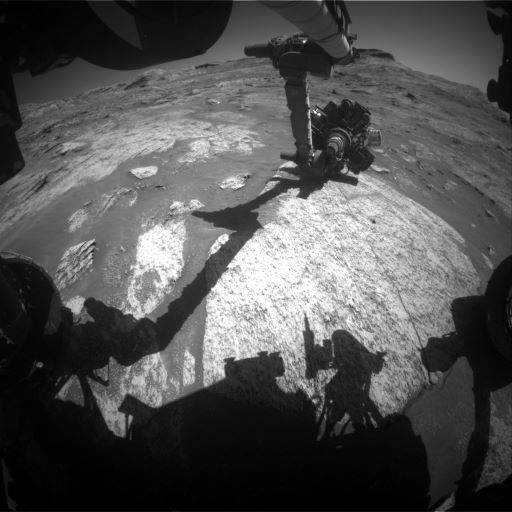
Curiosity Front Hazard Avoidance Camera Left B image taken on Sol 3203, August 10, 2021.
Credit: NASA/JPL-Caltech
NASA’s Curiosity Mars rover at Gale Crater is now performing Sol 3203 tasks.
“Curiosity is making good progress along the path to our next intended drill location, and making a lot of great observations along the way,” reports Lauren Edgar, a planetary geologist at the USGS Astrogeology Science Center in Flagstaff, Arizona.
All of this progress means the robot is about to leave the “Nontron” quadrangle and return to the “Torridon” quadrangle.
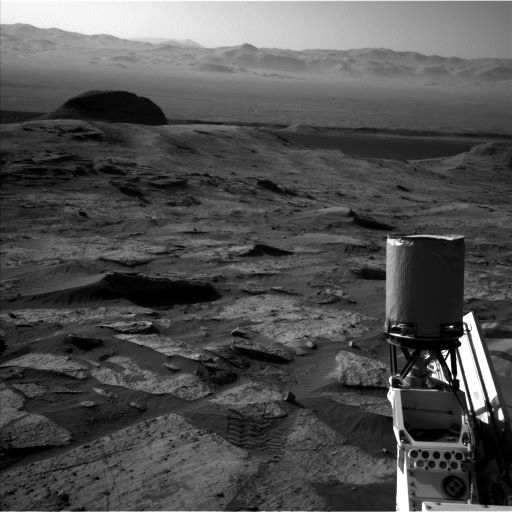
Curiosity Left B Navigation Camera image acquired on Sol 3203, August 20, 2021.
Credit: NASA/JPL-Caltech
Quad names
“These quad names are how we keep track of observations on Mars – prior to landing, the expected landing zone and nearby areas were divided into square quadrangles (1.5 km on a side) and each quadrangle was assigned a name of a town on Earth with a population of less than 100,000 people,” Edgar explains. “As we drive through the quads, we assign informal names to rock targets that correspond to geologic formations and features from that town on Earth.”
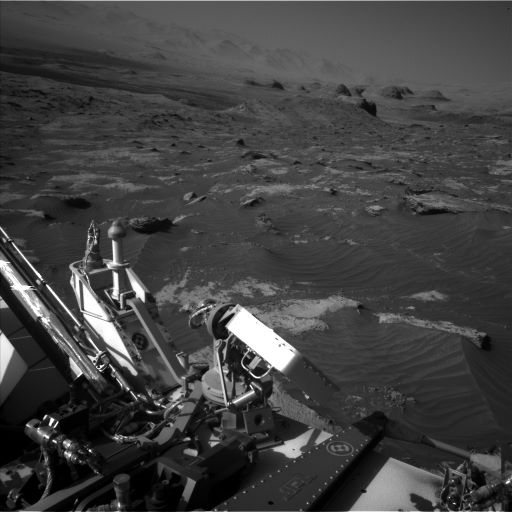
Curiosity Left B Navigation Camera image acquired on Sol 3203, August 20, 2021.
Credit: NASA/JPL-Caltech
What this means is that after the rover’s recent drive, Mars researchers will stop using French names from “Nontron” and return to using names from “Torridon” in Scotland.
“We were previously in this quad,” Edgar adds, “but now we’re much further to the south as we investigate the clay-sulfate transition.”
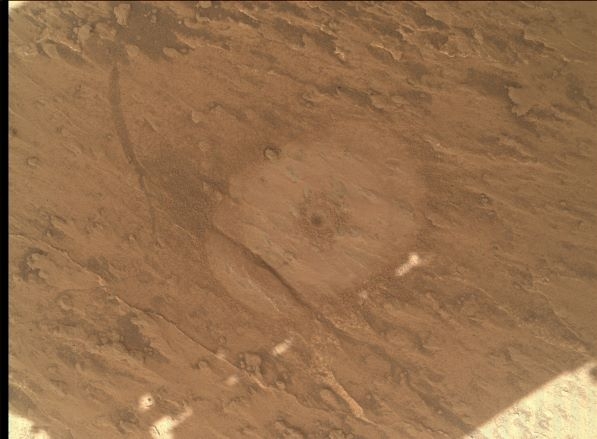
Curiosity Mars Hand Lens Imager photo produced on Sol 3203, August 10, 2021.
Credit: NASA/JPL-Caltech/MSSS
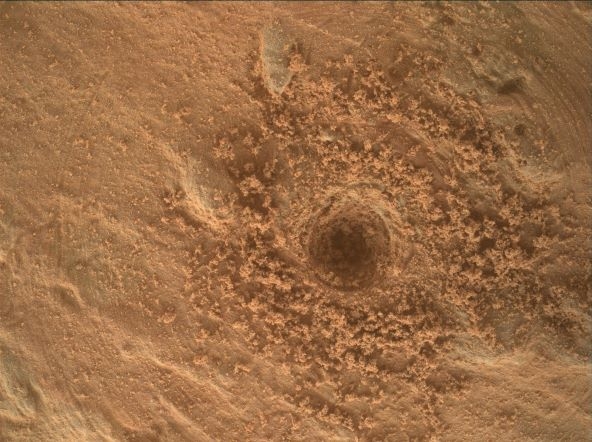
Curiosity Mars Hand Lens Imager photo produced on Sol 3203, August 10, 2021.
Credit: NASA/JPL-Caltech/MSSS
Remove dust
A recently scripted plan focused on contact science and continuing a rover drive.
The team was able to add in a Dust Removal Tool (DRT) to remove dust prior to Alpha Particle X-Ray Spectrometer (APXS) and Mars Hand Lens Imager (MAHLI) observations on the target “Blis et Born,” which will lead to better data about the bedrock in that locale.
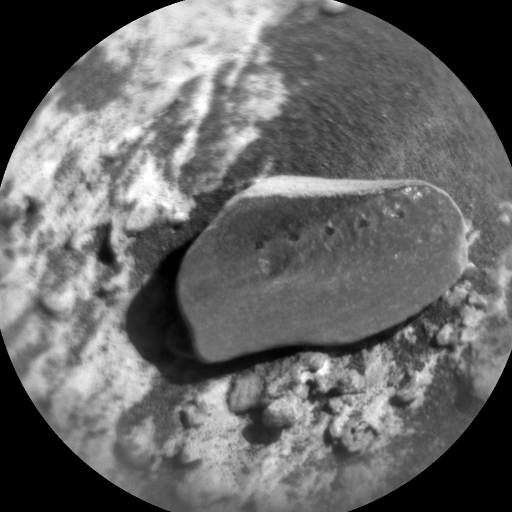
Laser strikes are seen in this Curiosity Chemistry & Camera Remote Micro-Imager (RMI) photo acquired on Sol 3203, August 10, 2021.
Credit: NASA/JPL-Caltech/LANL
The plan also includes two Mastcam mosaics to investigate vertical exposures of nearby stratification, as well as Chemistry and Camera (ChemCam) Laser Induced Breakdown Spectroscopy (LIBS) on an interesting blue-gray float rock and a ChemCam Remote Micro-Imager (RMI) to investigate nodular bedrock.
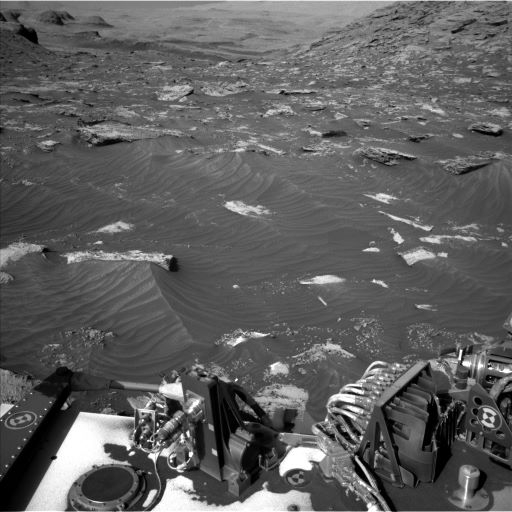
Curiosity Left B Navigation Camera image acquired on Sol 3203, August 20, 2021.
Credit: NASA/JPL-Caltech
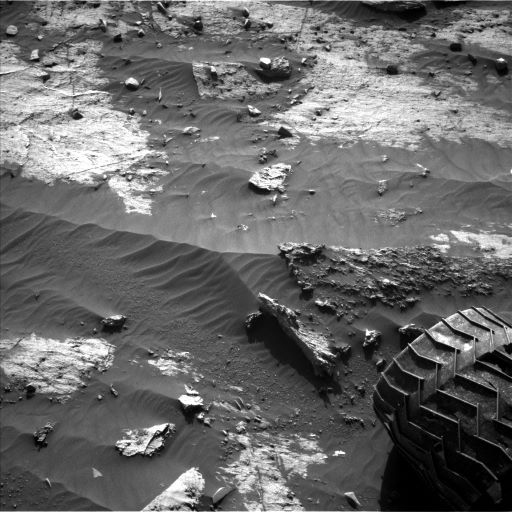
Curiosity Left B Navigation Camera image acquired on Sol 3203, August 20, 2021.
Credit: NASA/JPL-Caltech
“The team also planned some Navcam observations to assess the dust content of the atmosphere and search for dust devils,” Edgar concludes. “Onwards to Torridon!”
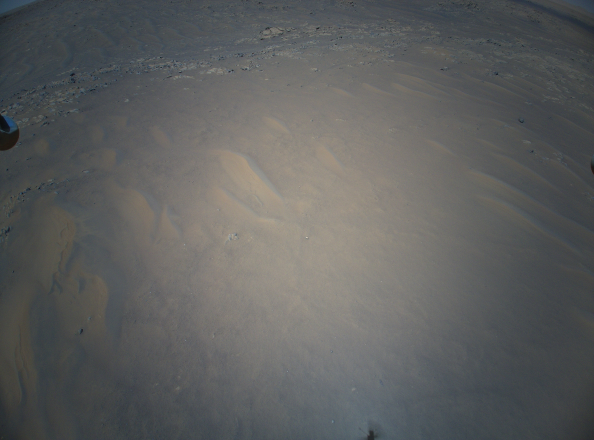
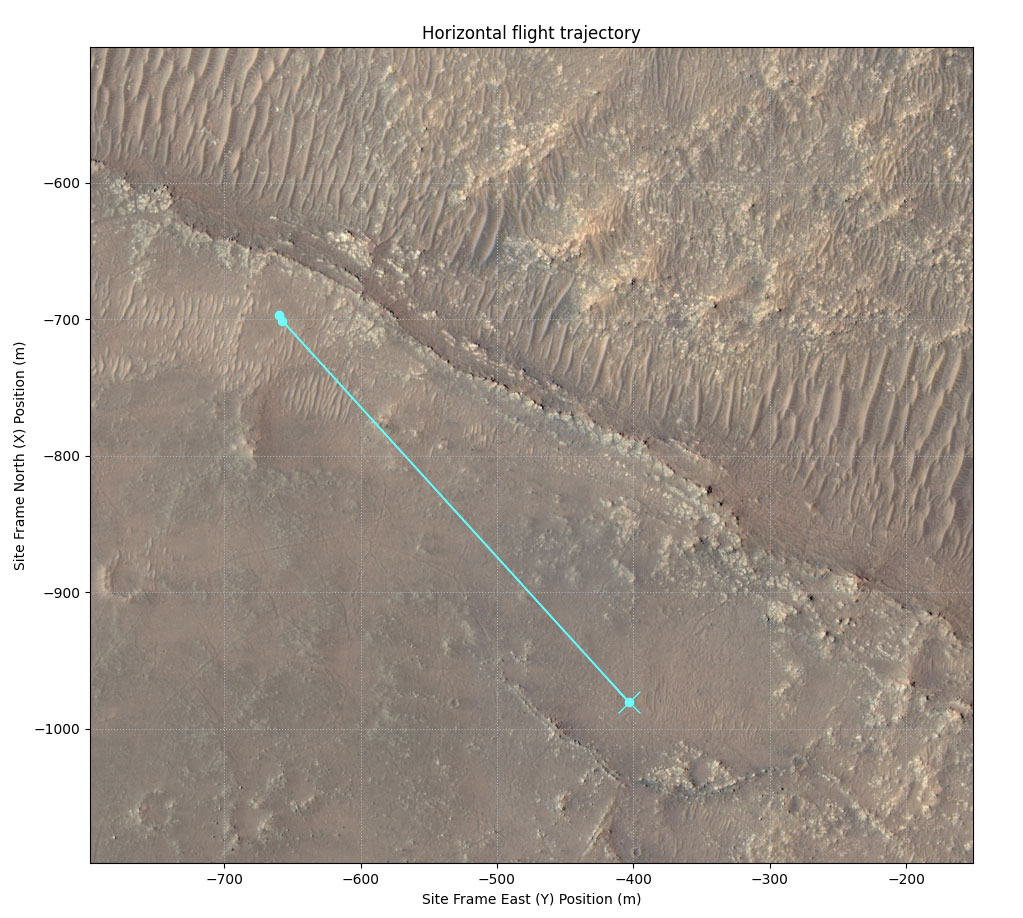
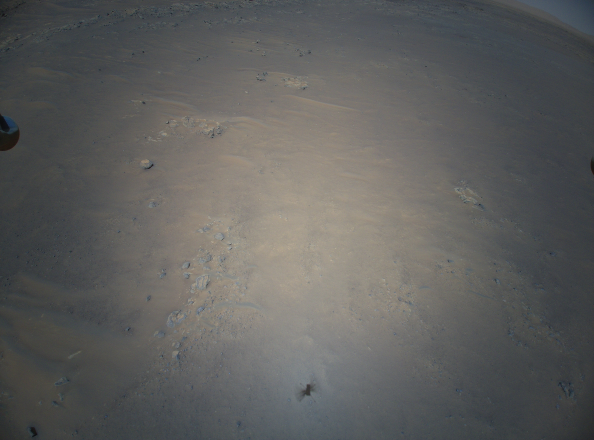
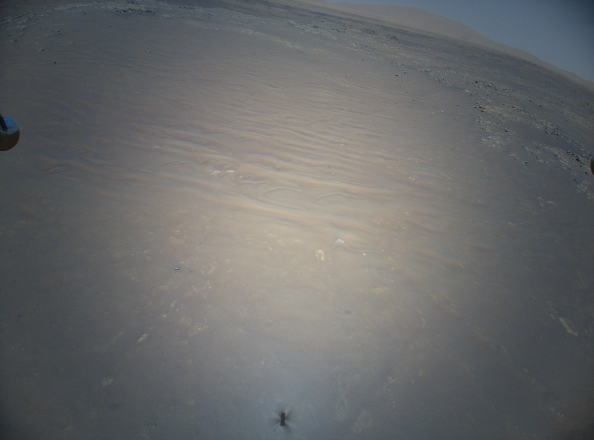
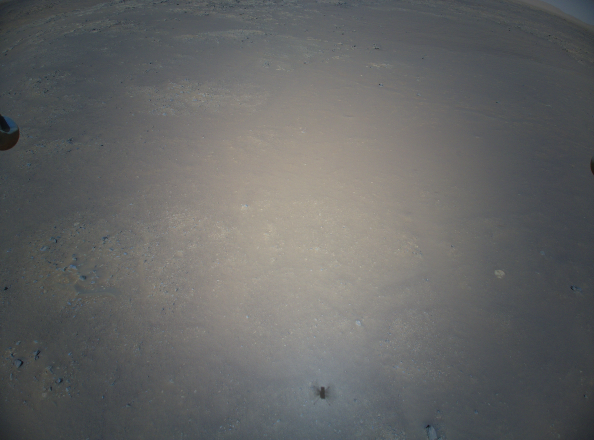
NASA’s Ingenuity Mars Helicopter acquired color images using its high-resolution color camera. This camera is mounted in the helicopter’s fuselage and pointed approximately 22 degree below the horizon.
These images were acquired on August 5, 2021, (Sol 163) of the Perseverance rover mission. Mars Helicopter Ingenuity successfully completed 11th flight moving to South Séítah.
Image Credits: NASA/JPL-Caltech
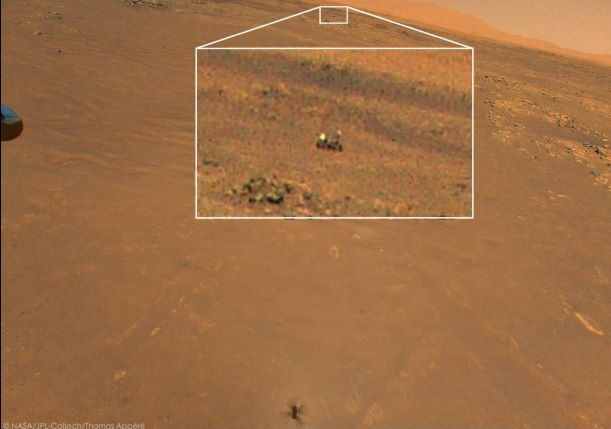
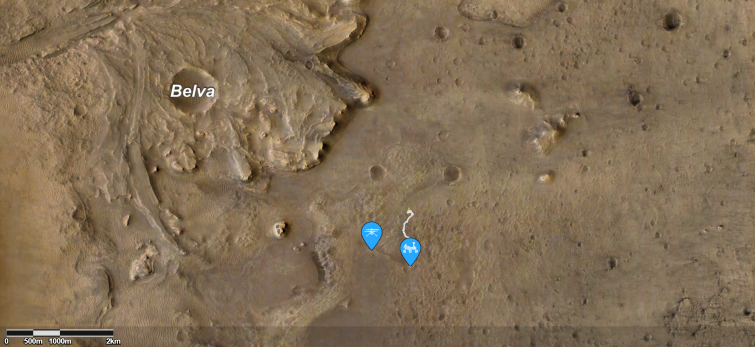
Sharp-eyed Thomas Appéré has spotted the Perseverance rover in recently released Mars helicopter imagery.
Credit: NASA/JPL-Caltech/Thomas Appéré

Credit: S.P. Korolev Rocket and Space Corporation Energia
The launch of Russia’s Node Module Prichal as part of Progress M-NM using a Soyuz-2.1 carrier rocket is planned for November 2021.

Credit: S.P. Korolev Rocket and Space Corporation Energia
Prichal is to be integrated into the Russian segment of the International Space Station. The Node Module is designed to increase technical and operational capabilities of the ISS Russian segment. It will be docked to the nadir port of the multipurpose laboratory module Nauka.

Credit: S.P. Korolev Rocket and Space Corporation Energia
On August 9, 2021, the train carrying Prichal arrived at Tyuratam railway station for further assembly and prelaunch processing at the processing facility of the Baikonur cosmodrome.
Credit: NASA/JPL-Caltech/Univ. of Arizona
NASA’s Curiosity Mars rover is now performing Sol 3200 tasks.
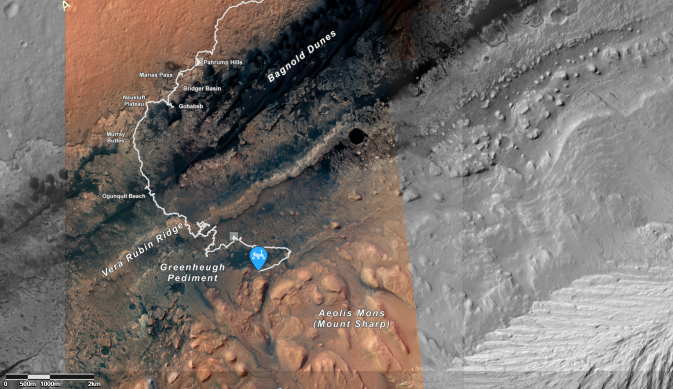
Curiosity’s team is saluting the rover’s 9 years of operating on the Red Planet, landing in Gale Crater on August 5, 2012. On the afternoon of Sol 3199, the robot began its 10th Earth year on Mars.
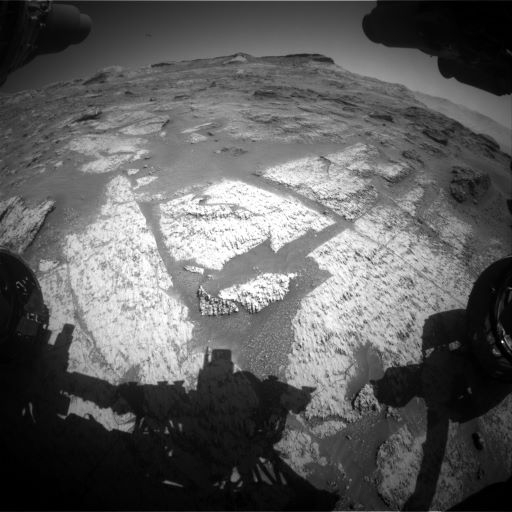
Curiosity Front Hazard Avoidance Camera Right B image acquired on Sol 3200, August 7, 2021.
Credit: NASA/JPL-Caltech
In the last nine years, the rover has traveled 16.3 miles (26.3 kilometers), climbed over 1,509 feet (460 meters) in elevation, and collected 32 drilled samples of rock.
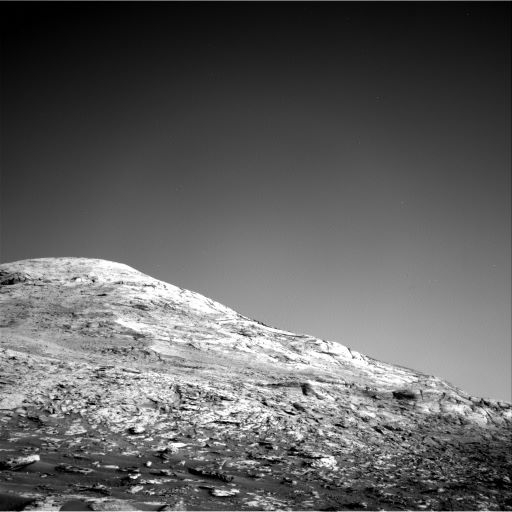
Curiosity Right B Navigation Camera photo taken on Sol 3200, August 7, 2021.
Credit: NASA/JPL-Caltech
Terrific journey
“It has been a terrific journey so far, and it is fun thinking back to those first images we saw on sol 0 of the mission,” notes Abigail Fraeman, a planetary geologist at NASA’s Jet Propulsion Laboratory. “The terrain in our landing area was quite different than the rocks we’re examining now, and it’s amazing to think we’ve climbed so high on the flanks of Mt. Sharp, which loomed in the distance in that first Hazcam image!”
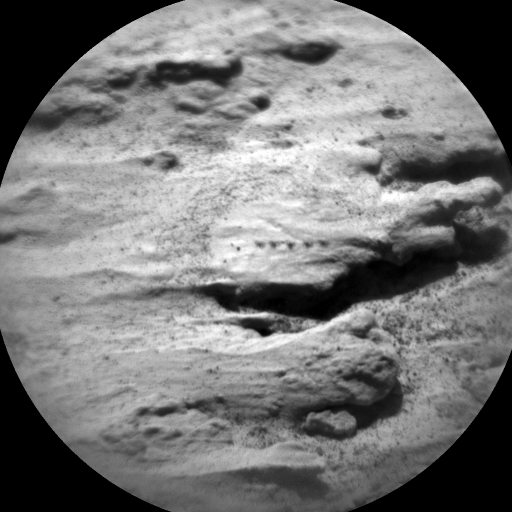
Laser shots across target. Curiosity Chemistry & Camera (ChemCam) Remote Micro-Imager (RMI) photo acquired on Sol 3200, August 7, 2021.
Credit: NASA/JPL-Caltech/LANL
Curiosity will spend its ninth landing anniversary continuing to study rocks in a transitional area. Alpha Particle X-Ray Spectrometer (APXS) and Mars Hand Lens Imager (MAHLI) data is being collected of a nodular target in front of the rover named “Gabillous,” and a Chemistry and Camera (ChemCam) Laser Induced Breakdown Spectroscopy (LIBS) observation of another nodule named “Champs Romain.”
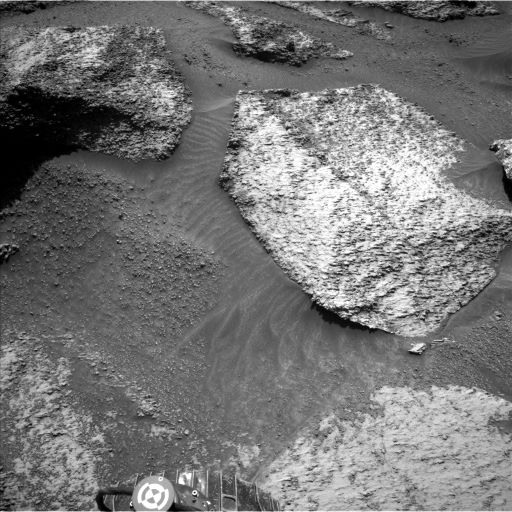
Curiosity Left B Navigation Camera image taken on Sol 3200, August 7, 2021.
Credit: NASA/JPL-Caltech
Strategically planned route
The rover’s Mastcam will peer off to the hills ahead, Fraeman reports, taking stereo mosaics to study their bedding geometry and a multispectral observation to document their spectral properties.
After a morning of science, Curiosity was slated to hit the road, driving roughly 46 feet (14 meters) along a strategically planned route.
“This is an usually short drive,” Fraeman points out, “and it’s because the terrain is so rocky that it’s hard to see too far beyond the rover’s current position. We don’t want to use too much autonomous driving in this rocky terrain and risk damaging the wheels. Despite the short drive, we should end up at a great looking outcrop and be prepared for more contact science this weekend.”
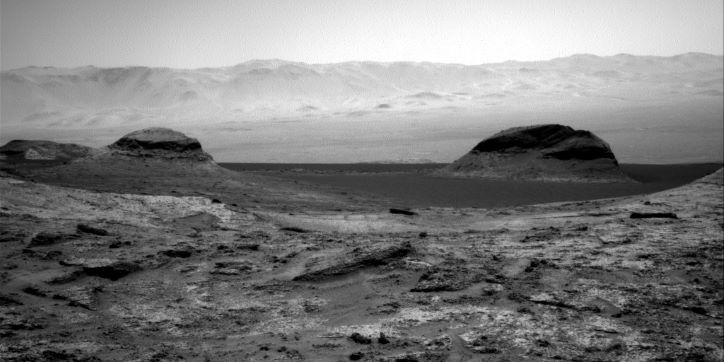
Curiosity Right B Navigation Camera photo taken on Sol 3200, August 7, 2021.
Credit: NASA/JPL-Caltech
Full weekend of work
Reports Susanne Schwenzer, a planetary geologist at The Open University; Milton Keynes, U.K., “Curiosity has a full weekend plan, but also gets one sol of soliday. This is to realign Mars and Earth timing, but I am sure it’s also going to be used for some celebrations.”
Observations in a recently scripted plan include many observations of the rocks around the rover, which again are a mixture of smooth sedimentary rocks with a lot of nodules.
APXS and MAHLI are set to look at target “Nadaillac,” which is one of the smooth sedimentary patches.
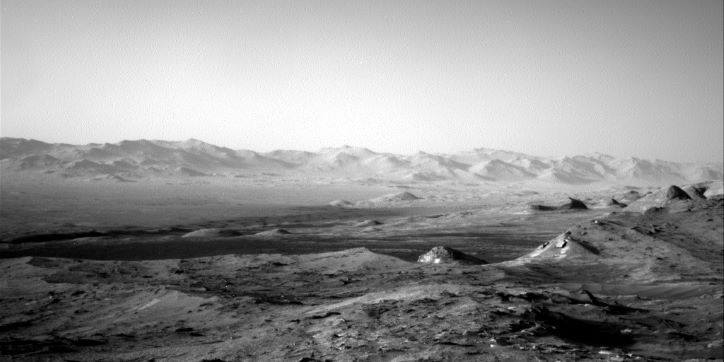
Curiosity Right B Navigation Camera photo taken on Sol 3200, August 7, 2021.
Credit: NASA/JPL-Caltech
Nodular features
ChemCam is also to look at this target with a passive observation and Mastcam is pointing at it with a multispectral observation. The nodular features are the target of two ChemCam LIBS observations on targets ‘Pageas’ and ‘Paugnac.’ Mastcam is documenting each of the ChemCam targets with a single image, and has one other single image on a very dark and blueish looking stone, Schwenzer adds.
“The terrain around us continues to give great vistas onto rock surfaces that allow us to understand the layering of the rocks and how different textures are stacked on top of each other,” Schwenzer says.
Curiosity’s Mastcam is documenting those with an 18×2 mosaic, “but because one of the outcrops is in shadow for most of the day, there is also a very early morning mosaic on that specific area. In addition, there is a dust devil survey in the plan,” Schwenzer concludes. “Lots to do on the first planning of the new year on Mars!”
Relive the nail-biting terror and joy as NASA’s Curiosity rover successfully landed on Mars the evening of Aug. 5 PDT (morning of Aug. 6 EDT) 2012.

Encapsulated X-37B Orbital Test Vehicle for U.S. Space Force-7 mission, now in Earth orbit.
Credit: Boeing
That secretive U.S. military X-37B robotic space drone has now chalked up more than 445 days in Earth orbit.
The Orbital Test Vehicle (OTV-6), also called USSF-7 for the U.S. Space Force, was launched on May 17, 2020 by an Atlas-V 501 booster.
OTV-6 is the first to use a service module to host experiments. The service module is an attachment to the aft of the vehicle that allows additional experimental payload capability to be carried to orbit.

Credit: Boeing/Inside Outer Space Screengrab
Track record
OTV-1 launched on April 22, 2010 and landed on December 3, 2010, spending over 224 days on orbit.
OTV-2 launched on March 5, 2011 and landed on June 16, 2012, spending over 468 days on orbit.
OTV-3 launched on December 11, 2012 and landed on October 17, 2014, spending over 674 days on-orbit.
OTV-4 launched on May 20, 2015 and landed on May 7, 2015, spending nearly 718 days on-orbit.
OTV-5 launched on September 7, 2017 and landed on October 27, 2019, spending nearly 780 days on-orbit.
OTV-1, OTV-2, and OTV-3 missions landed at Vandenberg Air Force Base, California, while the OTV-4 and OTV-5 missions landed at Kennedy Space Center, Florida.
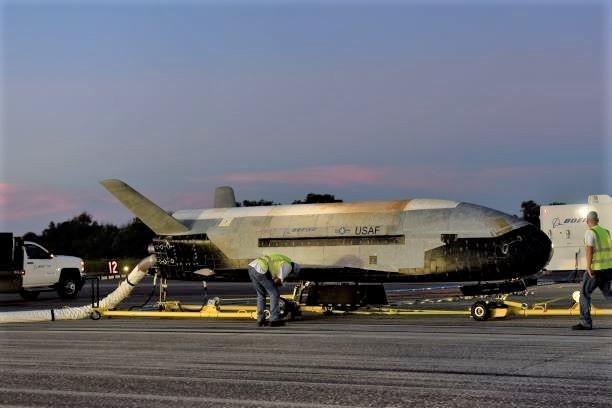
Post-landing of OTV-5 at NASA’s Kennedy Space Center Shuttle Landing Facility.
Courtesy Photo 45th Space Wing Public Affairs
Onboard experiments
One experiment onboard the space plane that was announced pre-launch is from the U.S. Naval Research Laboratory (NRL), an investigation into transforming solar power into radio frequency microwave energy. The experiment itself is called the Photovoltaic Radio-frequency Antenna Module, PRAM for short.
Along with toting NRL’s PRAM into Earth orbit, the X-37B also deployed the FalconSat-8, a small satellite developed by the U.S. Air Force Academy and sponsored by the Air Force Research Laboratory to conduct several experiments on orbit.
The FalconSat-8 is an educational platform that will carry five experimental payloads for the United States Air Force Academy (USAFA) to operate.
In addition, two NASA experiments are also onboard the space plane to study the effects of the space environment on a materials sample plate and seeds used to grow food.
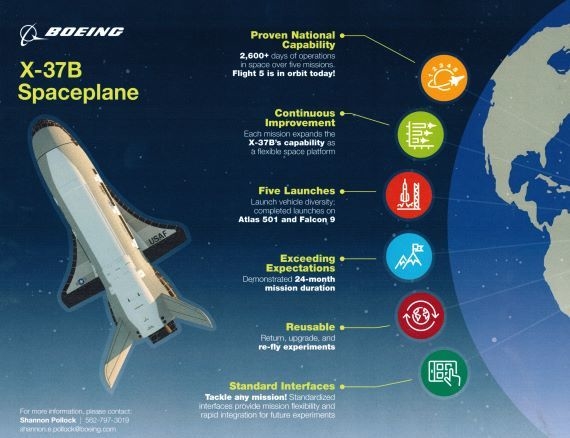
X-37B handout.
Credit: Boeing
Delta 9
The X-37B program is under the wing of a U.S. Space Force unit called Delta 9, established and activated July 24, 2020.
“Delta 9 Detachment 1 oversees operations of the X-37B Orbital Test Vehicle, an experimental program designed to demonstrate technologies for a reliable, reusable, unmanned space test platform for the U.S. Space Force,” according to a fact sheet issued by Schriever Air Force Base in Colorado. Delta 9 consists of three active duty squadrons headquartered at Schriever.
“The mission of Delta 9 is to prepare, present, and project assigned and attached forces for the purpose of conducting protect and defend operations and providing national decision authorities with response options to deter and, when necessary, defeat orbital threats,” the fact sheet explains. “Additionally, Delta 9 supports Space Domain Awareness by conducting space-based battlespace characterization operations and also conducts on-orbit experimentation and technology demonstrations for the U.S. Space Force.”
Go to this video of the U.S. military space plane pass posted August 6, 2021 as recorded by satellite spotter, Kevin Fetter, at:
Credit: SwRI
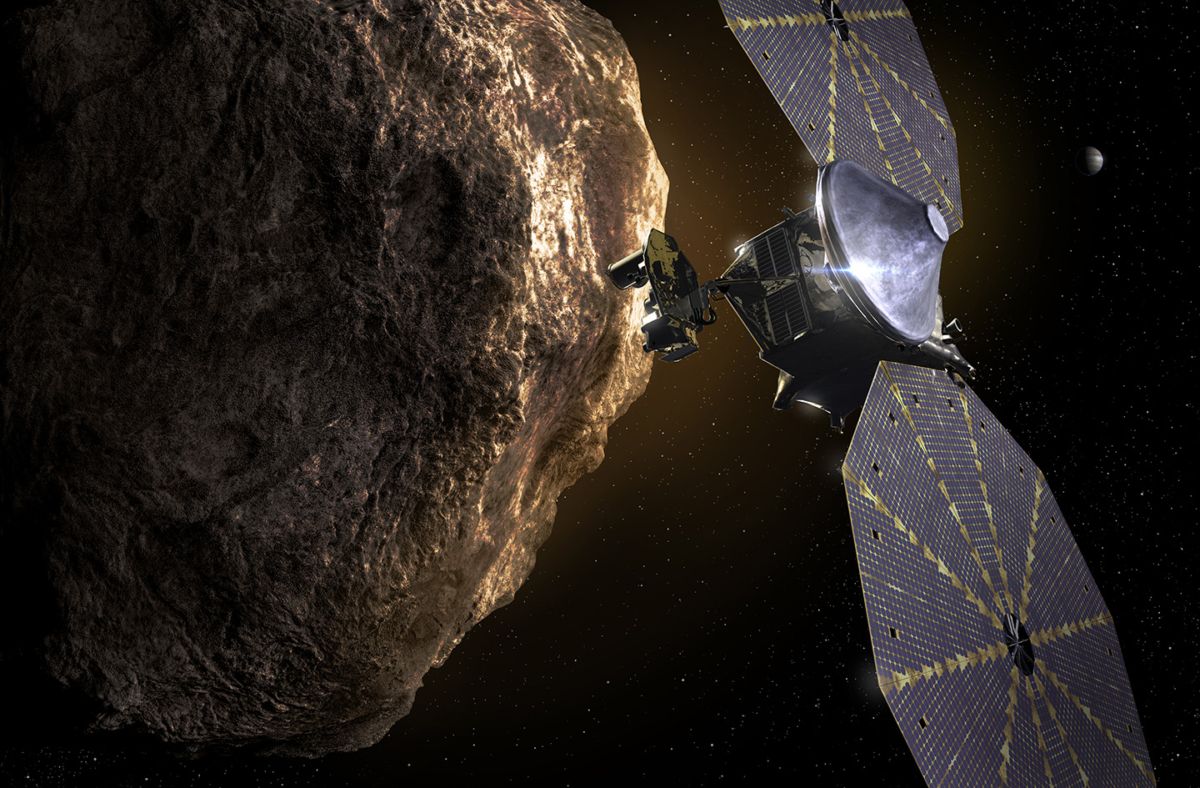
NASA’s Lucy mission will launch in October 2021 and start an epic, 12-year journey to study seven different Trojan asteroids.
As the first-ever mission to the Trojan asteroids, NASA’s Lucy spacecraft will survey this enigmatic population of small bodies that orbit the Sun beyond the main asteroid belt – trapped by Jupiter and the Sun so that they have led and followed Jupiter in its orbit.
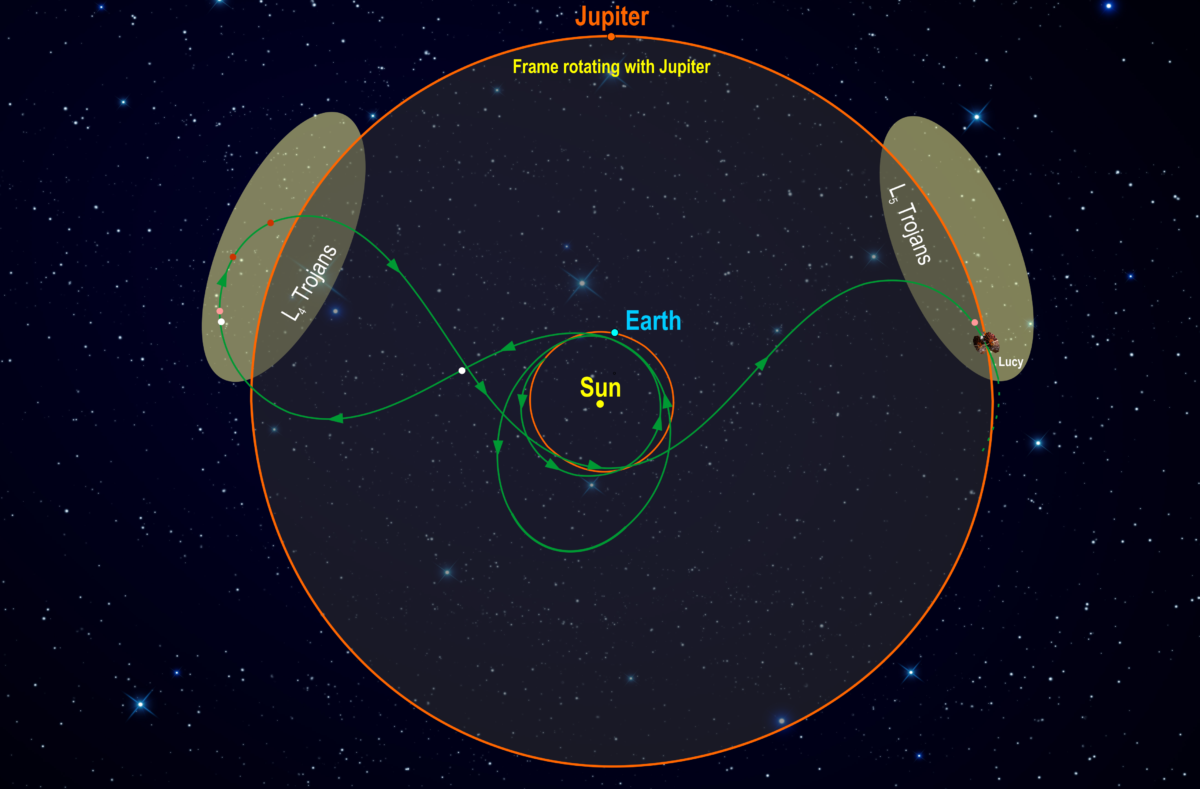
Diagram illustrates Lucy’s orbital path. After launch in October 2021, Lucy has two close Earth flybys before encountering its Trojan targets.
Credit: SwRI
As these never before explored asteroids are in many ways “fossils” from the formation and evolution of the planets, the Lucy spacecraft is named in honor of the fossilized human ancestor discovered the year after Pioneer 11 began its journey out of the Solar System.
Lucy’s name was inspired by the Beatles’ song “Lucy in the Sky with Diamonds.”

Credit: SwRI
Time-capsule plaque
Similar to four earlier spacecraft – Pioneer 10 and 11, Voyager 1 and 2 – Lucy is carrying a plaque. However, because Lucy will not be venturing outside of our Solar System, Lucy’s plaque is a time-capsule featuring messages to our descendants.
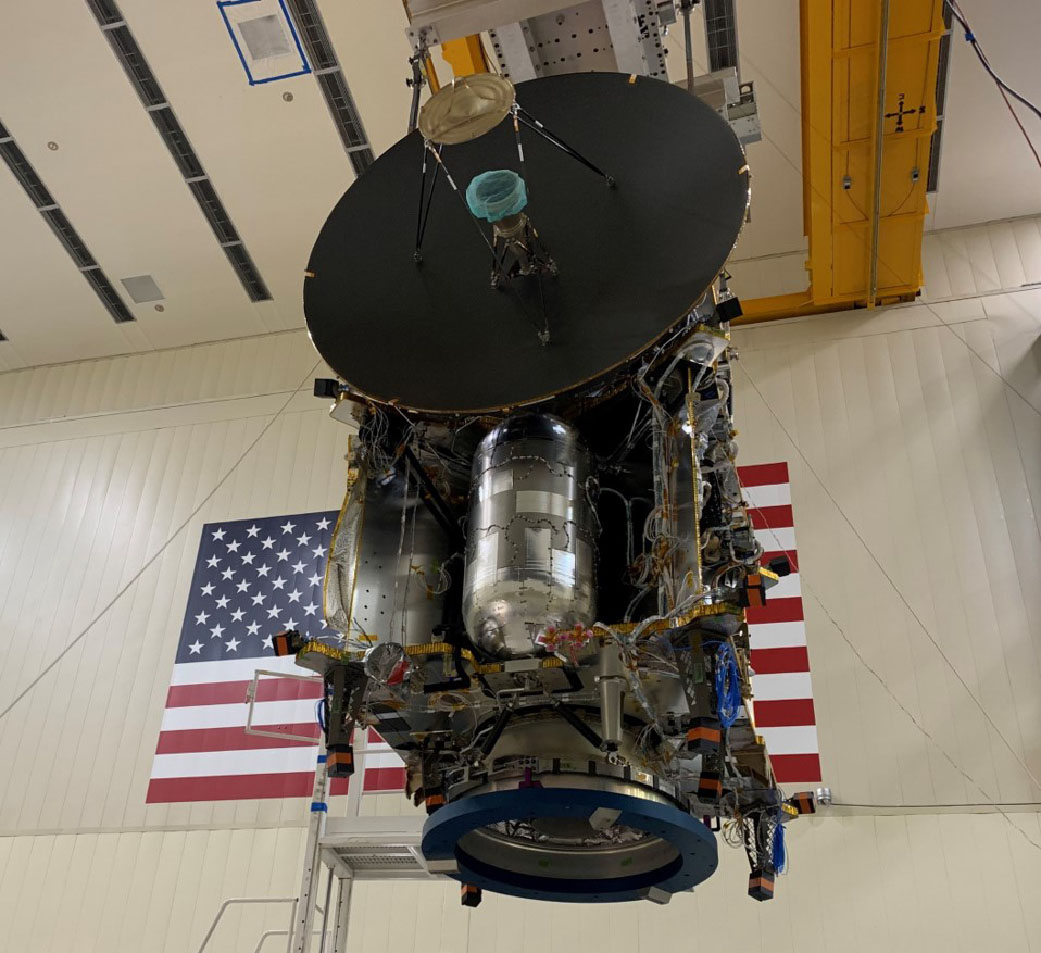
Lucy spacecraft.
Credit: Lockheed Martin
The plaque includes messages from prominent thinkers of our time and a diagram showing the positions of the planets on the date of Lucy’s launch.
Among the communiqués are sayings from musician Brian May, George Harrison, Paul McCartney, Ringo Starr, and John Lennon, the primary author of “Lucy in the Sky with Diamonds.” Also on the plaque is a communication from Yoko Ono.
Lucy was designed, built and will be operated by Lockheed Martin.

Lucy’s principal investigator, Harold “Hal” Levison, from the Southwest Research Institute in Boulder, Colorado.
Credit: NASA
Lucy is a Discovery class mission led by principal investigator Harold “Hal” Levison from the Southwest Research Institute (SwRI) in Boulder, Colorado, who, with a team of scientists and engineers, will address key science questions about the solar system.
For a video detailing the Lucy-carried messages, go to:
Credit: Caltech
Caltech has announced that Donald Bren, chairman of Irvine Company and a lifetime member of the Caltech Board of Trustees, donated over $100 million to form the Space-based Solar Power Project (SSPP), which is developing technology capable of generating solar power in space and beaming it back to Earth.

Credit: Caltech
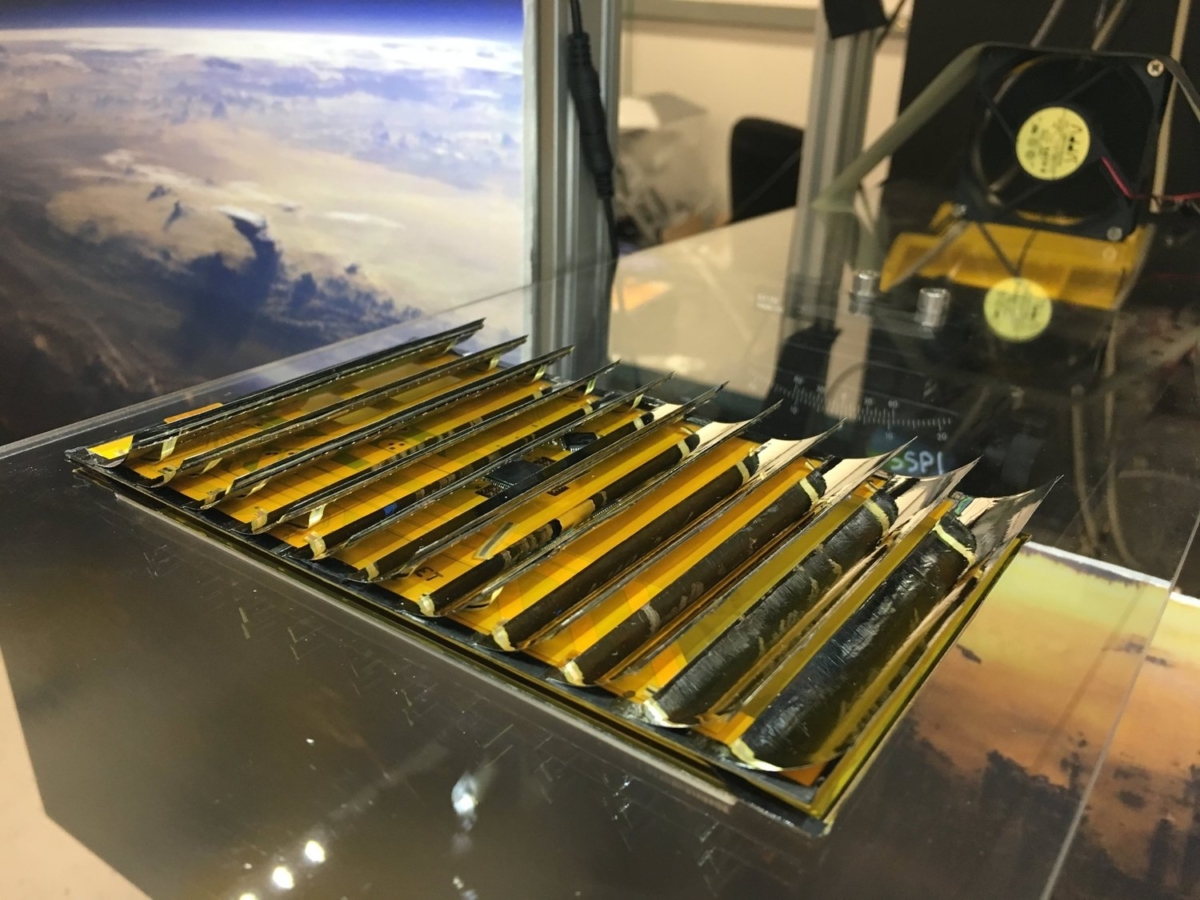
The donation was made anonymously in 2013, but the gift is now being disclosed as SSPP nears a significant milestone: a test launch of multifunctional technology-demonstrator prototypes that collect sunlight and convert it to electrical energy, transfer energy wirelessly in free-space using radio frequency (RF) electrical power, and deploy ultra-light structures that will be used to integrate them.
First test
The project’s first test, which will occur in early 2023, will launch technology prototypes for the solar power generators and RF wireless power transfer, and includes a deployable structure measuring roughly 6 feet by 6 feet.

From left, Sergio Pellegrino, the Joyce and Kent Kresa Professor of Aeronautics and Professor of Civil Engineering, Jet Propulsion Laboratory Senior Research Scientist and co-director of the Space-Based Solar Power Project; Brigitte Bren; Donald Bren; Ali Hajimiri, the Bren Professor of Electrical Engineering and Medical Engineering and co-director of the Space-Based Solar Power Project; and Richard Madonna, project manager of the Space-Based Solar Power Project.
SSPP aims to ultimately produce a global supply of affordable, renewable, clean energy. A key benefit of harnessing solar power from space is that it provides access to the sun to create power all day, every day, free from weather constraints or darkness of night.
Go to this Caltech video Space Solar Power: A New Beginning – Sergio Pellegrino (dated 10/31/2018) at:

