Archive for July, 2021
 Author:
  July 13th, 2021
Chang’e-5 return capsule holding lunar specimens.
Credit: National Astronomical Observatories, CAS
The first batch of lunar samples retrieved by China’s Chang’e-5 mission were distributed on Monday to domestic scientific research institutions.
The samples were picked up from the Moon in December 2020 by the Chang’e-5 lunar probe, the first lunar soil sample collection brought back to Earth in more than four decades. The probe returned with 1,731 grams of lunar soil.
More than 17 grams worth of lunar samples brought back by the Chang’e-5 probe were distributed to 13 institutions, including the Chinese Academy of Sciences, China University of Geosciences (Beijing), China University of Geosciences (Wuhan), and the Sun Yat-sen University.

Credit: CCTV/Inside Outer Space screengrab
Under the microscope
The lunar soil seen by the naked eye is like dry black sand, but with finer grains. But under the microscope, it is a whole different view.
“This is the lunar soil, the original sample under the microscope that has not been crushed or polished. We can see many rock pieces in the view, which should be part of basalt. After its disintegration, some pieces still retain their original mineral composition, which we call debris. They are just physically smaller but their structure and mineral composition remain the same as the basalt. For other rock pieces, they actually turned into monominerals, that different types of minerals are separated. You can see the yellow ones in the view are generally olivine, brown ones are usually glass, white are normally plagioclase, and some dark ones are generally pyroxene. These are the main mineral components in basalt,” said Li Chunlai, deputy chief designer of the third phase of lunar exploration project, also chief engineer of the ground application system.

Chinese President Xi Jinping inspects Chang’e-5 lunar sample return capsule.
Credit: CCTV/Inside Outer Space screengrab
Physical fragmentation
Li told China Central Television (CCTV), unlike the soil on the Earth’s surface, the particles of the lunar soil are relatively small due to the influence of many factors.
“The environment on the Moon’s surface is very harsh. The temperature could reach about 160 degrees Celsius when the sun is shining and drop to minus 180 degrees Celsius when there is no sunlight. With a temperature difference of about 340 degrees Celsius, the rocks constantly undergo thermal expansion and contraction which result in disintegration. This is one factor. Another factor is that the Moon’s surface could be hit by many celestial bodies. The impact could cause physical fragmentation of the rocks,” Li said.
And since the Moon has no magnetic field at present, the solar wind can directly bombard the rocks on the Moon’s surface, which gradually result in the breakdown or even powdering of the rocks.
“The particles could measure a few tenths of a micrometer, a few millimeters or even centimeters. But on average, they are less than 10 microns, which is very, very broken. This is inconsistent with our original cognition and also different from the Apollo sample. It is a very fine lunar soil sample,” said Li.

Credit: CASC
Ensure safety of samples
Liu Jizhong, director of the Lunar Exploration and Space Program Center under the China National Space Agency (CNSA) told CCTV: “Our lunar sample management rules have clear provisions that part of the samples will be used for scientific research and part will be used for public good. After the preliminary study is completed and the re-study would yield little results. We then display them for the public good, letting more people to know more about the Moon.”

Credit: CCTV/Inside Outer Space screengrab
In order to ensure the safety of the lunar samples, the CNSA is planning to store up some lunar samples in Shaoshan, central China’s Hunan Province, in preparedness against disasters.
“We plan to distribute the samples as much as possible for scientific studies. We must also retain some for future sustained studies. We have a base for ex situ conservation of some samples. All these serve as the basic for following up studies,” said Liu.
Go to these China Central Television (CCTV) videos that focus on the lunar samples at:
 Posted in

The Impact of Lunar Dust on Human Exploration, Edited by Joel S. Levine; Cambridge Scholars Publishing; 303 Pages; January 2021; Hardcover: £64.99.
As humans prepare to replant their boots on the Moon, a major lesson from NASA’s Project Apollo is that dealing with lunar dust turned out to be a dilemma. For one, Lunar Module lander descent rockets caused large amounts of surface dust to move into the thin lunar atmosphere, causing obscuration of the lunar surface. That made touchdowns difficult and dangerous.
Moreover, once out and about, moonwalkers coped with very fine, tiny particles composed of sharp, glassy material. Indeed, lunar dust stuck to everything it came in contact with; dust eroded their spacesuits, caused overheating on equipment and instrumentation, compromised seals on their spacesuits and on lunar sample collecting boxes, as well as irritated the eyes and lungs of moonwalkers.
This excellent volume summarizes what we know about lunar dust, its structure and chemical composition, its impact on human health, and how to reduce/mitigate its effects on future human exploration. The four dozen contributors to the 14 chapters in the book are planetary scientists, engineers, mission planners, medical researchers and physicians from NASA and the European Space Agency (ESA), as well as universities and industry from the United States, Australia, Germany, Italy, the Netherlands, Portugal and Sweden.
Rich in detail, the reader will find a treasure trove of lessons from Apollo and a look ahead to what future expeditions will face. There’s a bounty of data here, be it the history and future perspectives for the evaluation of the toxicity of celestial dust to lunar dust mitigation strategy and testing through simulation and analogs.
Editor Joel S. Levine is a research professor in applied science at the College of William and Mary, USA, and a consultant to NASA’s Engineering and Safety Center at the NASA Langley Research Center in Hampton, Virginia. This compilation of excellent and fact-filled papers is a must-have for researchers and general readers too.
For more information about this book, go to:
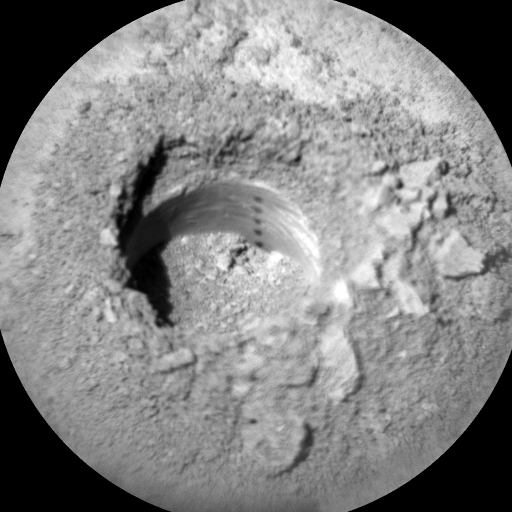
Curiosity Chemistry & Camera Remote Micro-Imager (RMI) photo acquired on Sol 3173, July 10, 2021. Laser blasts are visible inside the drill hole.
Credit: NASA/JPL-Caltech/LANL
NASA’s Curiosity Mars rover at Gale Crater is now performing Sol 3173 tasks.
The rover is working with the latest drill sample from the 32nd hole on Mars, “Pontours.”
Ken Herkenhoff, Planetary Geologist at the USGS Astrogeology Science Center in Flagstaff, Arizona, reports that the robot’s Chemistry & Mineralogy X-Ray Diffraction/X-Ray Fluorescence Instrument (CheMin) assessed some of the drill sample.
The CheMin team decided to dump the sample and clean out the cell in preparation for future mineralogical analyses, Herkenhoff adds.
Curiosity’s Sample Analysis at Mars (SAM) Instrument Suite was to undergo preconditioning to analyze the Pontours drill sample.
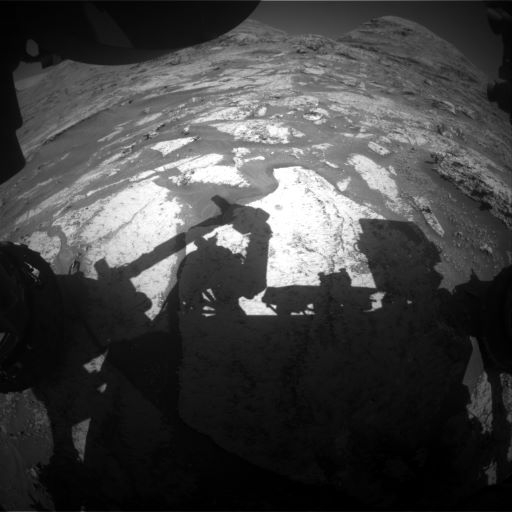
Curiosity Front Hazard Avoidance Camera Left B image taken on Sol 3173, July 10, 2021.
Credit: NASA/JPL-Caltech
Weekend workout
“Once the path forward was agreed upon and the high-priority CheMin and SAM activities scheduled, the uplink team turned to planning other activities, of which there are many,” Herkenhoff notes.
On Sol 3173, Mastcam is set to acquire multispectral images of “Chanterac,” a potential Alpha Particle X-Ray Spectrometer (APXS) target, before the robot’s Chemistry and Camera uses its laser to analyze the wall of the Pontours drill hole and acquires spectra of freshly disturbed sand at “Cendrieux.”
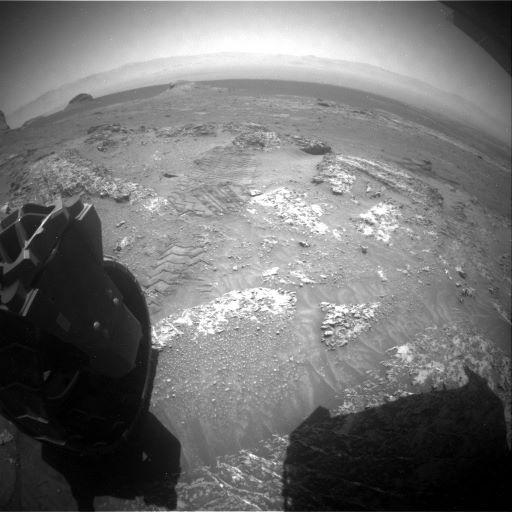
Curiosity Rear Hazard Avoidance Camera Left B image acquired on Sol 3173, July 10, 2021.
Credit: NASA/JPL-Caltech
The rover’s Mastcam is documenting the Laser Induced Breakdown Spectroscopy (LIBS) holes in Pontours, Herkenhoff reports, and take a 12×2 stereo mosaic of fractured and lineated terrain dubbed “Le Coly.”
Finally, CheMin is set to dump the drill sample.
Nodule target
Also on tap, Sol 3174 observations with Navcam searching for dust devils and measuring dust in the lower part of the atmosphere.
Then Mastcam is to acquire a 10×1 stereo mosaic of possible alteration features at “Bussac” before ChemCam uses LIBS again, this time on a bedrock block with lots of nodules called “Archignac.”
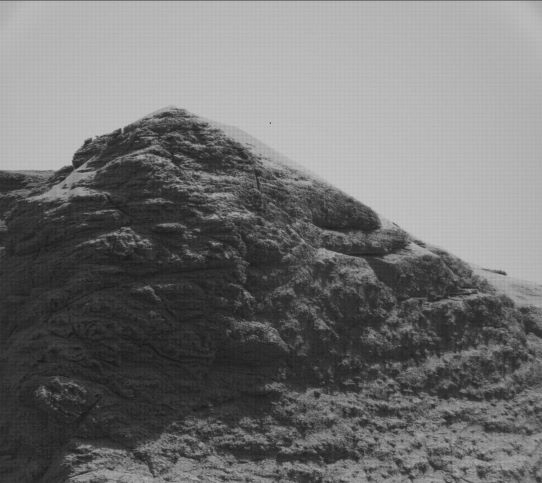
Curiosity Mast Camera Right photo taken on Sol 3172, July 9, 2021.
Credit: NASA/JPL-Caltech/MSSS
ChemCam will also acquire spectra of another nodular target called “Fergeas” and the Right Mastcam will document the LIBS spots on Archignac. The rover will then take a nap before the SAM preconditioning in the evening, Herkenhoff points out.
A Sol 3175 plan begins with a Navcam dust devil movie and Mastcam measurements of dust in the atmosphere above the rover.
ChemCam will then fire its laser again, this time at “Augignac,” another nodular bedrock target, followed by Right Mastcam documentation of the LIBS spots.
Mt. Sharp layering
Later in the afternoon, when lighting of targets east of the rover will be better, the ChemCam Remote Micro-Imager (RMI) will take a 10×1 mosaic of layering in the flank of Mt. Sharp.
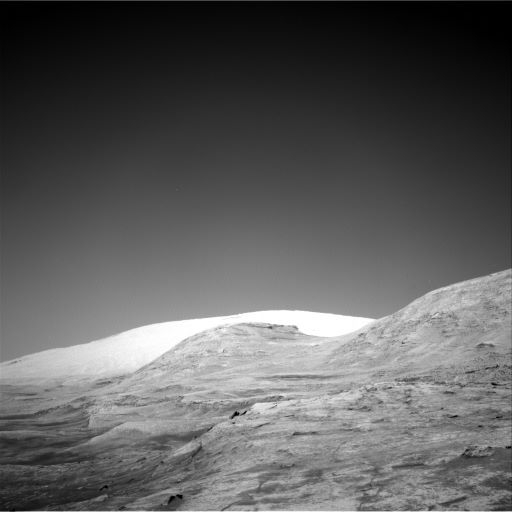
Curiosity Right B Navigation Camera image taken on Sol 3172, July 9, 2021.
Credit: NASA/JPL-Caltech
Mastcam will then acquire a 4×1 stereo mosaic of the layering, and Navcam will survey the sky.
“Early in the morning of Sol 3176, Navcam will search for clouds and again measure the dust in the lower part of the atmosphere. Finally, Mastcam will also measure dust at various levels in the atmosphere,” Herkenhoff concludes. If all goes well, Curiosity will be very busy this weekend!

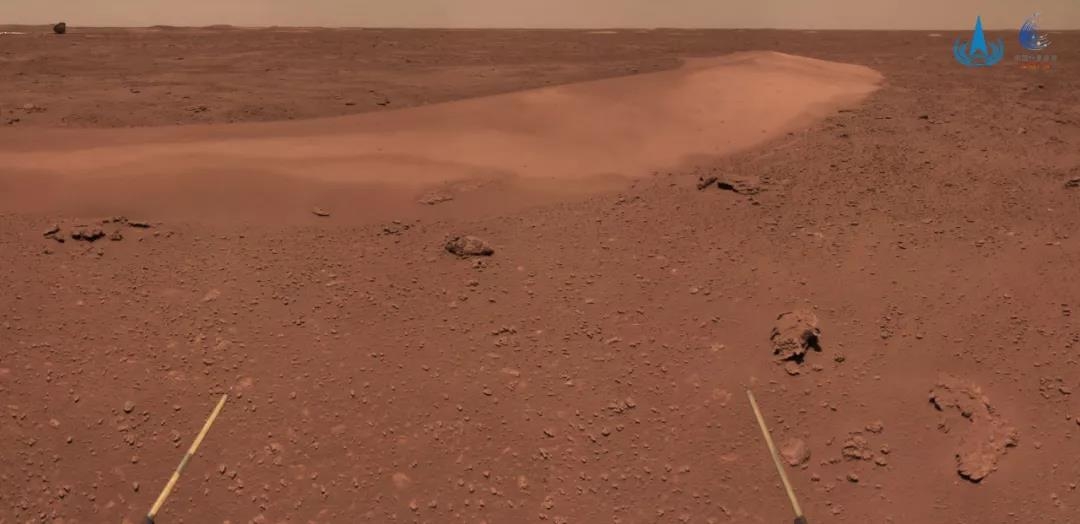
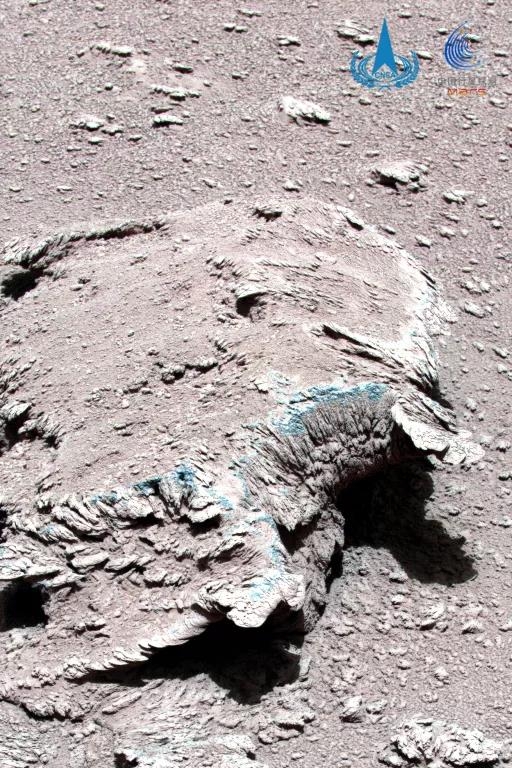
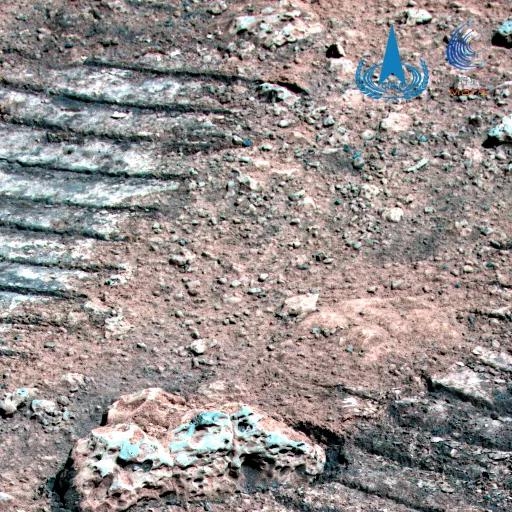
The China National Space Administration (CNSA) on Friday released new photos of the Martian surface captured by the country’s first Mars rover Zhurong.
Zhurong has been working on the red planet for 54 Martian days and has traveled more than 300 meters.

Xiong Wan, et al./Atomic Spectroscopy
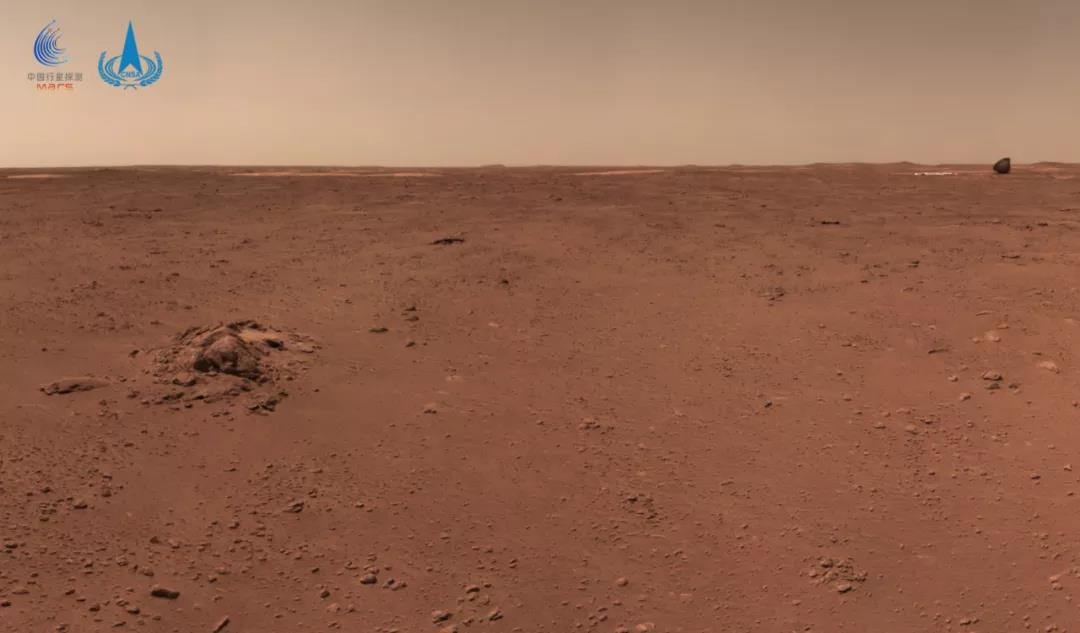
Note aeroshell and parachute in the distance.
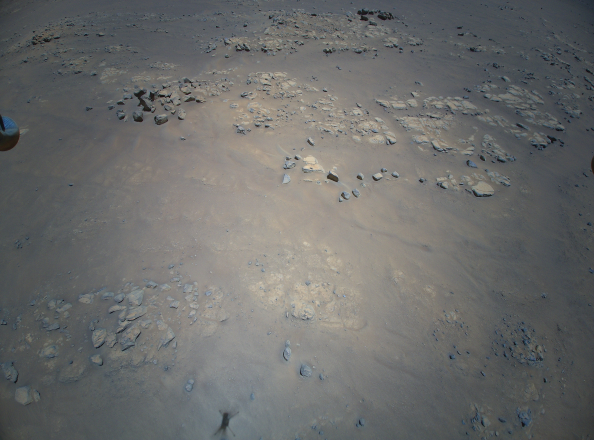
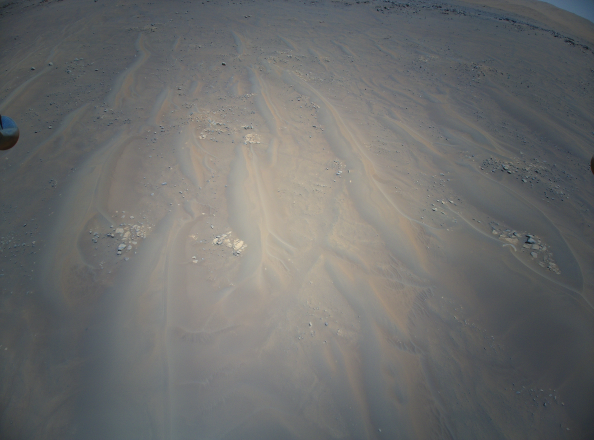
NASA’s Ingenuity Mars Helicopter flew successfully late July 4th, completing its 9th and most challenging flight yet. The rotorcraft flew for 166.4 seconds at a speed of 5 meters per second.
The helicopter acquired a number of images using its high-resolution color camera. This camera is mounted in the helicopter’s fuselage and pointed approximately 22 degree below the horizon.
Imagery demonstrates Ingenuity’s scouting ability, working in tandem with the NASA Perseverance rover.
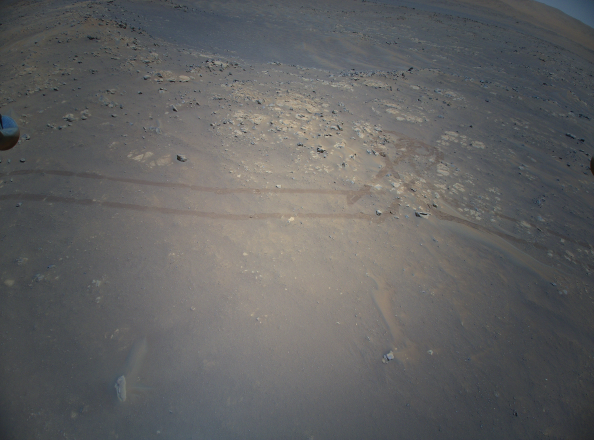
Images acquired on July 5, 2021, Sol 133 of the Perseverance rover mission.
Image Credit: NASA/JPL-Caltech

As the countdown approaches for suborbital liftoffs of entrepreneurs Jeff Bezos and Sir Richard Branson, and their independent space travel enterprises, I asked author Alan Ladwig to reflect on these upcoming milestones. Ladwig is a former manager of both the Shuttle Student Involvement Program and the Spaceflight Participant Program, which included the Teacher in Space and Journalist in Space competitions.
In July of 2008 when Virgin Galactic rolled out the WhiteKnight2 carrier aircraft, Richard Branson said the first suborbital passenger flights would take place in 2010. Space dreamers have been waiting patiently, (some not so patiently) for Virgin to deliver the goods.

Sir Richard Branson, founder of Virgin Galactic takes flight. Will public space travel?
Credit: Virgin Galactic
Now, 11 years past that initial promise, this historic milestone will finally be achieved with Branson on board.
Just 11 days later, Blue Origin will also debut its first flight with passengers on board, including no less than the richest man in the world, Jeff Bezos.

Jeff Bezos, founder of Blue Origin.
Credit: Blue Origin
Recreational space travel
After years of being promised that our ticket to ride was just a rocket away, the dream of recreational space travel for “ordinary citizens” has arrived.
The long 11 years that it took to get here will be quickly forgotten as dozens of people achieve their dream to see Earth from above. Though often criticized as a playground for the ultra rich, in the years ahead an increasing number of travelers of more modest means will check in at the launch pad to conduct science and engineering research and testing, perform educational programs, and create entertainment endeavors. And some people will go that just want to have fun.

Cosmonaut Alexsandr Serebrov.
Credit: Roscosmos
Speaking at a space conference in 1990, Cosmonaut Alexsandr Serebrov observed, “Those who fly in space feel differently and become sick with a global philosophy and terrible case of cosmic views.”
During these extraordinarily challenging political times, let’s hope those who are able to make the trip into space come back and confirm Serebrov’s proclamation.
See You In Orbit? – Our Dream Of Spaceflight by Alan Ladwig, To Orbit Productions, LLC, October 2019; paperback, 500 pages, $18.00.

Credit: Roscosmos
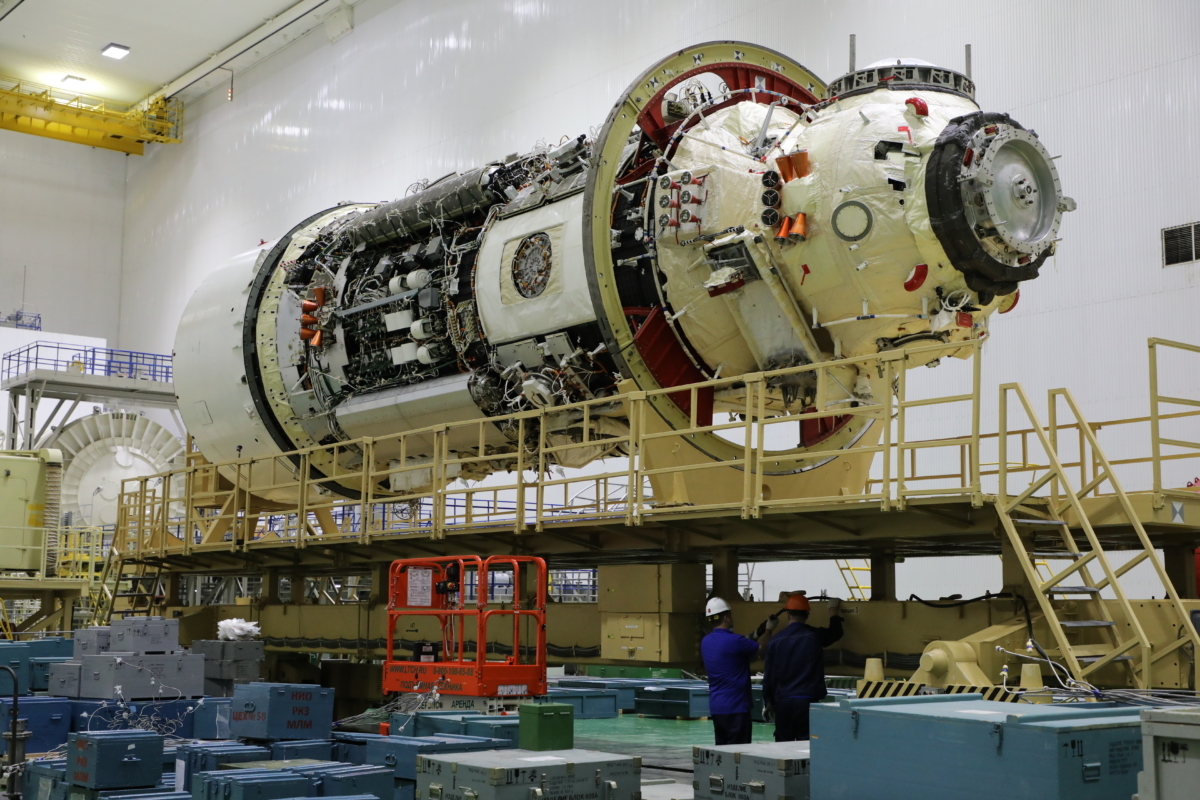
Russia’s Nauka laboratory module is now slated for launch on July 21.
A Roscosmos statement said the new module for the International Space Station will be launched from Site 200 of the Baikonur cosmodrome atop a Proton-M carrier rocket. Backup dates are July 22, and July 23.
The module’s flight to the ISS will take 8 days, docking at the nadir port of Russia’s Zvezda service module.
Undocking of the Progress MS-16 cargo vehicle with the Pirs docking module is scheduled for July 23 (subject to the Nauka launch on July 21).
Credit: Roscosmos
Prelaunch prep stage
At the Baikonur Cosmodrome, Roscosmos states, routine preparations of the Nauka module are underway for the upcoming launch. Currently, the ascent unit is at the fueling and neutralization station, the most important operation of the final prelaunch preparation stage.
The Nauka Laboratory Module is a research module of the Russian segment of the ISS, developed by RSC Energia together with Khrunichev Center (part of Roscosmos). This module is designed to expand the functionality of the Russian segment of the International Space Station.

Credit: Roscosmos
Added safety of ISS crew
“The Nauka module was created on the constructive and technological basis of the Zarya Functional Cargo Block employing the experience of designing a transport supply vehicle for the Salyut crewed scientific stations and modules for retrofitting the Mir orbital complex,” the Roscosmos statement adds.
“After the commissioning of the new module, the Russian segment will receive additional volumes for the workplaces and storage of cargo, places for water and oxygen regeneration equipment, improve the conditions of cosmonauts’ stay, as well as increase the safety of the entire ISS crew,” the statement concludes.
Credit: ESA
Cherry-picker crane
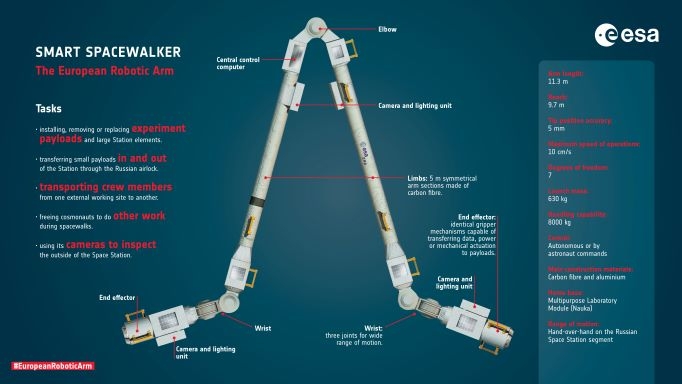
The European Robotic Arm (ERA) will be launched to the ISS together with the Nauka. ERA will work with the new Russian airlock, to transfer small payloads directly from inside to outside the ISS. This will reduce the set-up time for astronauts on a spacewalk and allow ERA to work alongside astronauts.
Another task for ERA is to transport astronauts like a cherry-picker crane to a position where they can work on the exterior of the ISS, or from one external location to another. This again saves time and effort during spacewalks.
ERA is 100% made-in-Europe. A consortium of European companies led by Airbus Defense and Space Netherlands designed and assembled it for the European Space Agency (ESA). The robotic arm is largely funded by the Dutch government.
Go to these informative videos about ERA at:
Credit: Uplift Aerospace
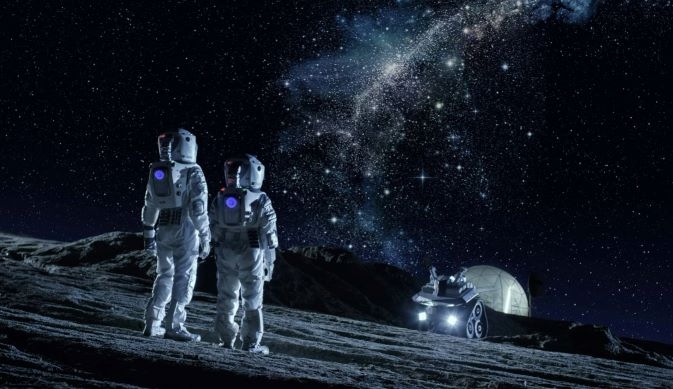
A lunar concrete concoction is being appraised as a 21st century building material for use on the Moon.
Utah-based Uplift Aerospace is pioneering what it terms Luna-crete (TM), utilizing lunar regolith to help reduce the cost of construction on Earth’s celestial partner.
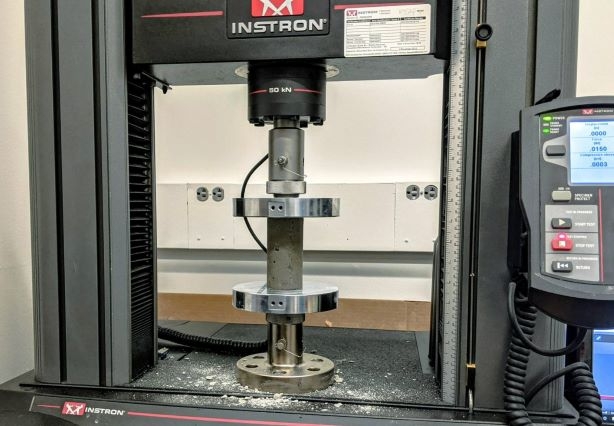
Testing Luna-crete (TM) prototypes for compressive strength.
Credit: Uplift Aerospace
Uplift has received a lunar stimulant — LHS-1 – fabricated by Exolith Lab, which the company used to develop and test its first Luna-crete prototypes. The group is specializing in the development of a mulitiplanetary economy, with one goal of casting sturdy concrete structures on the Moon.
South Pole simulant
Multiple countries, among them China, Russia, as well as the United States, have set their sights on the lunar South Pole. The draw of that location, such as Shackleton crater, is that large reservoirs of ice and other resources might be processed into water, air, and rocket fuel.
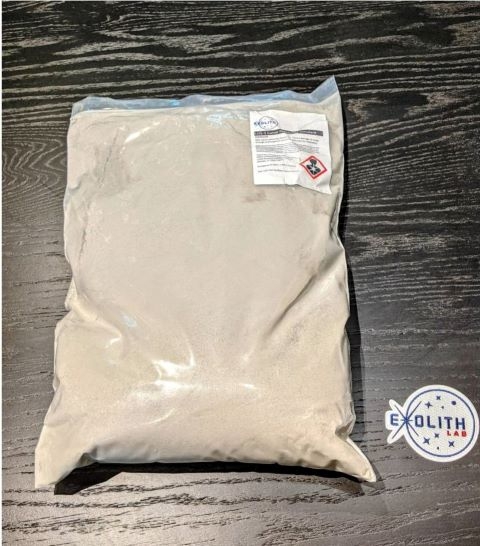
The Luna-crete (TM) prototypes were developed utilizing LHS-1 lunar regolith provided by Exolith Labs.
Credit: Uplift Aerospace

In this multi-temporal illumination map of the lunar south pole, Shackleton crater (19 km diameter) is in the center, the south pole is located approximately at 9 o’clock on its rim. The map was created from images from the camera aboard the Lunar Reconnaissance Orbiter.
Credits: NASA/GSFC/Arizona State University
As follow-up research, Uplift is receiving a South Pole lunar regolith simulant, SP-1, allowing the company and other University partners to better characterize South Pole lunar regolith to optimize a formulation for a durable lunar concrete.
To that end, Uplift awarded a four-month, $30,000 grant last May to Konstantin Sobolev, professor of civil & environmental engineering at the University of Wisconsin-Milwaukee.
Josh Hanes, Uplift Aerospace’s CEO, says that Sobolev’s research will help select the binder and production methods needed to produce lunar concrete suited for the topography and temperature swings of the lunar south pole.
High-fidelity, mineral-based simulant
Exolith Lab is situated in Orlando, Florida, largely funded by the Center for Lunar & Asteroid Surface Science (CLASS) at the University of Central Florida. Exolith Lab develops and produces a variety of Moon, Mars and asteroid regolith (soil) simulants.
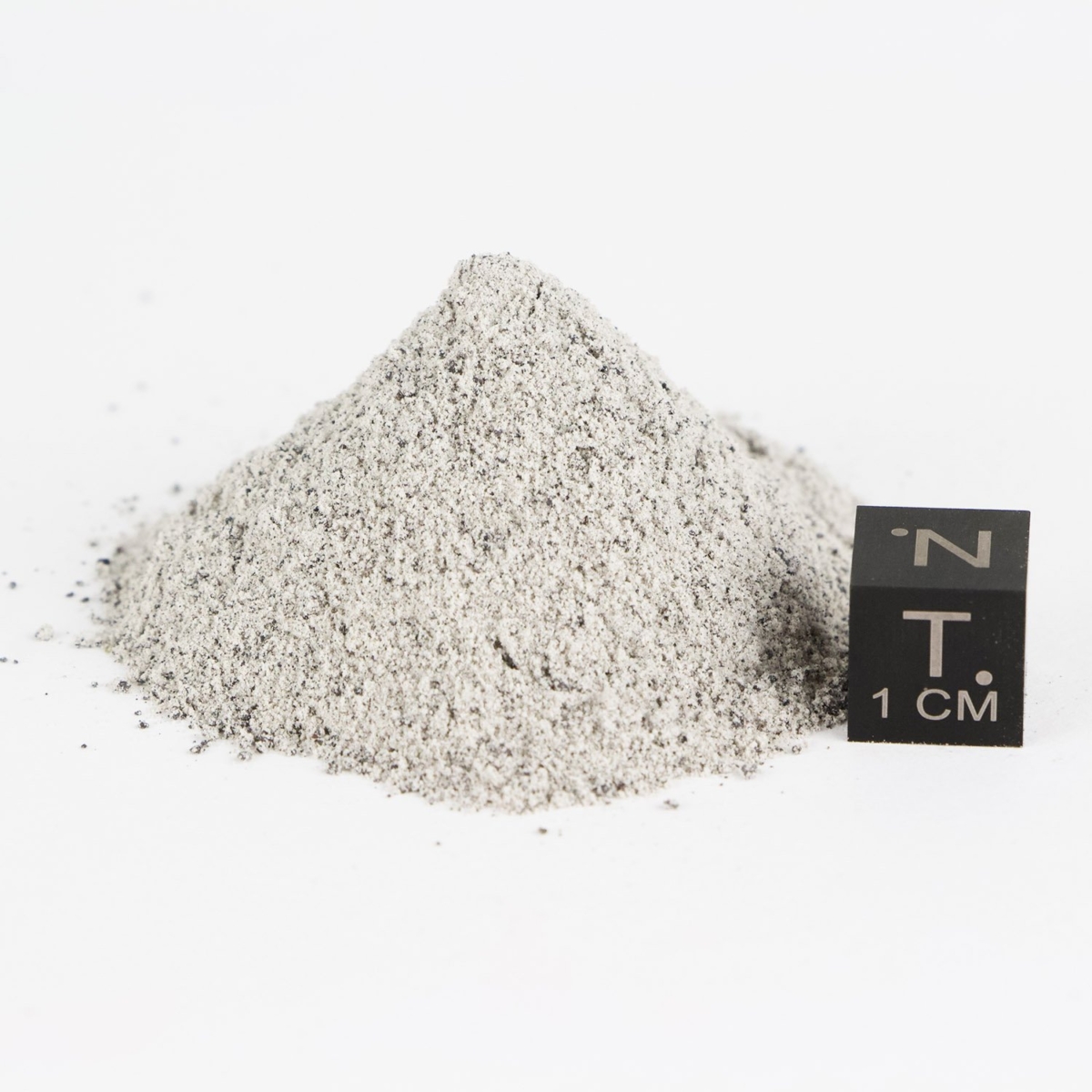
LHS-1: lunar highlands simulant
Credit: Exolith Lab
The LHS-1 lunar highlands simulant has been developed by the CLASS Exolith Lab. It is a high-fidelity, mineral-based simulant appropriate for a generic or average highlands location on the Moon. The simulant accurately captures the texture of lunar regolith by combining both mineral and rock fragments in accurate proportions.
For more information on Uplift Aerospace, go to:
https://www.upliftaerospace.com/
For more details regarding the Exolith Lab, go to:

Crew of Shenzhou-12
Credit: GlobaLink/Inside Outer Space screengrab
Two Chinese astronauts stationed in the Tianhe core module of China’s space station Tiangong carried out their first spacewalks on Sunday.
Liu Boming and Tang Hongbo performed the spacewalks with Nie Haisheng, commander of the mission, staying inside the module and assisted in manipulating the station’s robotic arm that helps the other two astronauts with their extravehicular chores.

Credit: GlobaLink/Inside Outer Space screengrab
Feitian spacesuit
The spacewalking twosome used new-generation homemade extravehicular mobility unit spacesuits called “Feitian,” meaning flying to space.
Their tasks included installing foot restraints and an extravehicular working platform on the mechanical arm. They also lifted a panoramic camera.

Credit: CCTV/Inside Outer Space screengrab
According to China Central Television (CCTV), the extravehicular panoramic camera was initially installed at a lower position on the robotic arm, with a limited vision. A wider perspective of the camera is required for the astronauts to monitor the situation outside the space station, so the astronauts need to install a bracket to lift the camera higher.
More difficult tasks ahead
The spacewalk mission lasted about seven hours outside the cabin.

Credit: CCTV/Inside Outer Space screengrab
“There will be another extravehicular task which will be more difficult,” said Liu Xiangyan, deputy chief designer of the space station system. “But I believe that, through the practice and experience of this task, the astronauts will better complete the next task,” said Liu.
The three astronauts were sent into space aboard the Shenzhou-12 spaceship on June 17. They will inhabit the core module until mid-September before returning to Earth.
Go to these newly issued videos detailing the spacewalk and the robotic arm at:

Credit: NASA/JPL-Caltech/Univ. of Arizona
The NASA Curiosity Mars rover at Gale Crater is now performing Sol 3166 duties.
Lauren Edgar, a planetary geologist at the USGS Astrogeology Science Center in Flagstaff, Arizona, reports: “On Sol 3165 Curiosity carried out a short bump to better position the rover for drilling. The bump went well and we were excited to dive straight into planning today. This plan will cover four days on Earth to account for the Independence Day holiday in the U.S., but it also coincides with a “soliday” on Mars – a day without planning to allow Earth and Mars schedules to sync back up. So we still planned a typical three-sol weekend plan. Well-timed, Mars!”
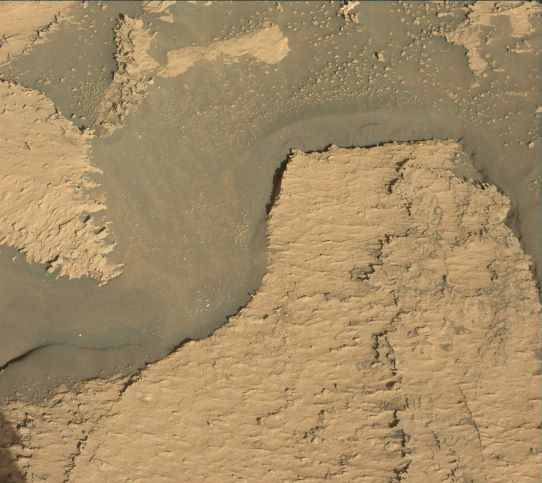
Curiosity Mast Camera Left image taken on Sol 3165, July 2, 2021.
Credit: NASA/JPL-Caltech/MSSS
Identifying future targets
Edgar adds that the plan starts by taking a 360-degree Mastcam mosaic, which will be helpful for documenting the rover’s location, identifying future targets, and looking for changes during the course of the drill campaign.
Then Curiosity’s Chemistry and Camera (ChemCam) will investigate the target “Pontours” that scientists are evaluating as the drill location.
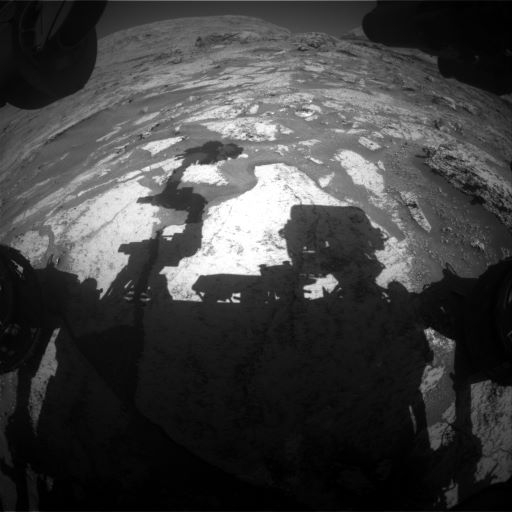
Curiosity Front Hazard Avoidance Camera Right B photo acquired on Sol 3166, July 3, 2021.
Credit: NASA/JPL-Caltech
Next, the plan calls for brushing the “Pontours” target with the Dust Removal Tool (DRT) and use the Mars Hand Lens Imager (MAHLI) and the Alpha Particle X-Ray Spectrometer (APXS) to characterize its texture and chemistry.
Drill and dump
“On the second sol we’ll conduct a drill pre-load test to make sure that the bedrock and hardware can withstand the force of drilling at this location, along with a lot of MAHLI documentation of the intended drill, dump, and portion locations,” Edgar notes.
The Sample Analysis at Mars (SAM) Instrument Suite will also conduct a cross-calibration activity.
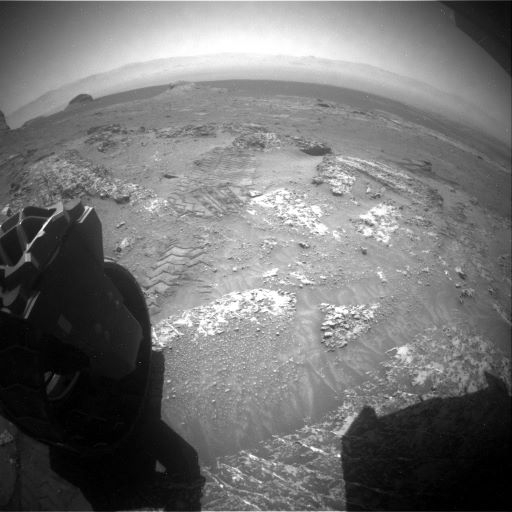
Curiosity Rear Hazard Avoidance Camera Left B image acquired on Sol 3166, July 3, 2021.
Credit: NASA/JPL-Caltech
Nodule-rich target
“The third sol starts with a Navcam sky survey to look at the scattering phase functions of clouds. Later in the morning, Navcam will search for dust devils and Mastcam will monitor the dust content in the atmosphere,” Edgar adds.
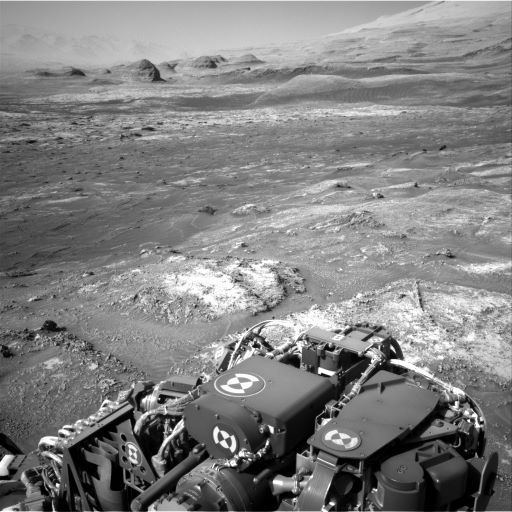
Curiosity Right B Navigation Camera photo taken on Sol 3165, July 2, 2021.
Credit: NASA/JPL-Caltech
“Then we’ll acquire a Mastcam multispectral observation of “Pontours” followed by imaging of a nearby sandy trough named “Lolme” which will be used to track movement before and after drilling,” Edgar reports. Then the robot’s Chemistry & Camera (ChemCam) will assess a nodule-rich target named “Dournazac,” to evaluate the chemistry of these “diagenetic” features – features that formed after the sediment first was deposited.
“There were a lot of other great science observations that were suggested, but it was a challenge to fit everything in today,” Edgar concludes. “Looking forward to seeing the data from this new location and preparing to drill next week!”

