Archive for November, 2020
 Author:
  November 4th, 2020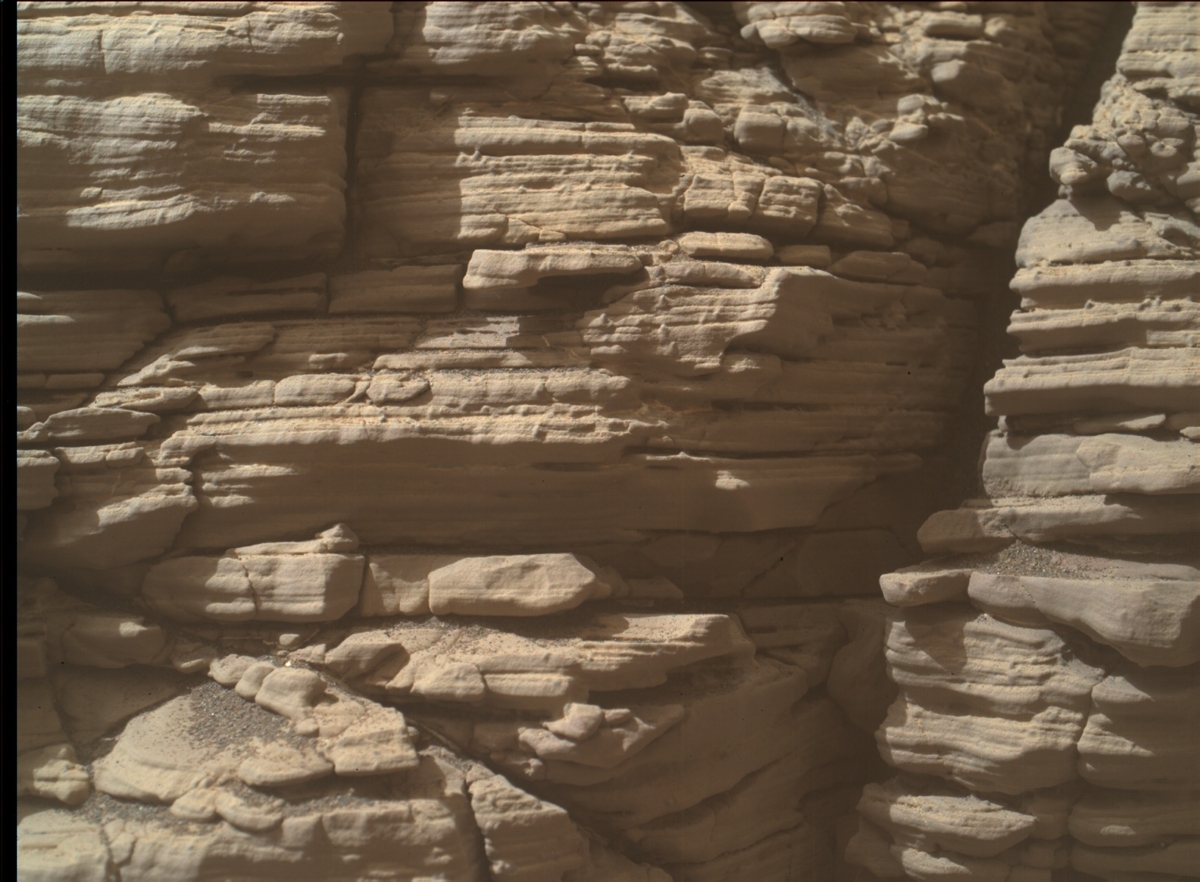
“Hedgehope Hill” taken by Curiosity’s Mars Hand Lens Imager (MAHLI) in a “dog’s eye” mosaic produced October 29 on Sol 2926 – where MAHLI gets down low to the ground to look at the side of a rock. Technique helps Mars researchers learn how the sediment in this rock was deposited.
Credit: NASA/JPL-Caltech/MSSS
NASA’s Curiosity Mars rover is now performing Sol 2932 tasks.
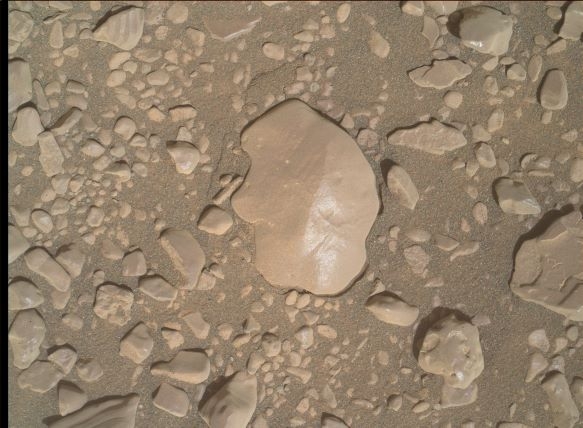
Curiosity MAHLI photo produced on Sol 2931, November 3, 2020.
Credit: NASA/JPL-Caltech/MSSS
“Curiosity is on the road to the sulfate unit, but there are always stops on a road trip,” reports Kristen Bennett, a planetary geologist at USGS Astrogeology Science Center in Flagstaff, Arizona. The rover’s drive did not finish in the weekend plan, so there has been a re-sequencing of that drive.
Meanwhile, the operations team has scripted a plan that includes contact science, remote science, and a drive, Bennett adds.
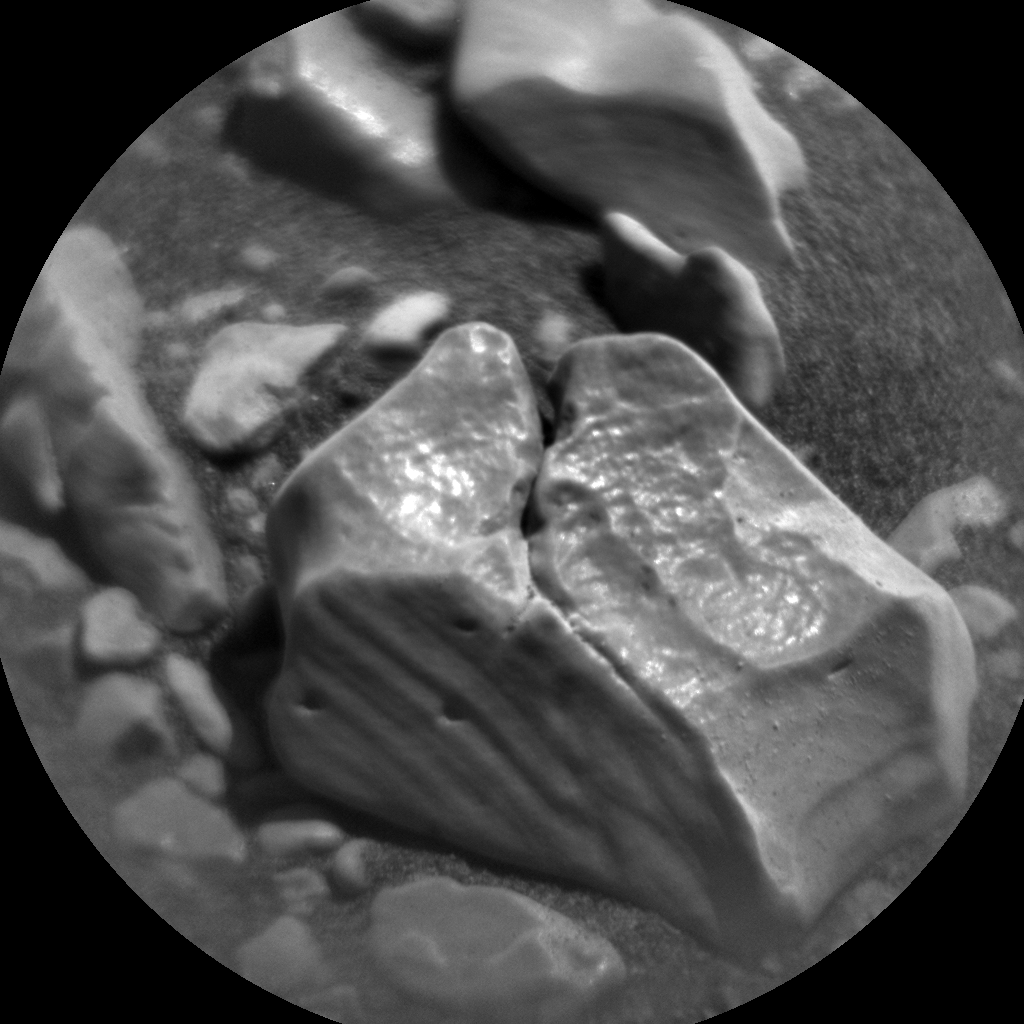
Curiosity Chemistry & Camera Remote Micro-Imager (RMI) photo acquired on Sol 2931, November 3, 2020.
Credit: NASA/JPL-Caltech/LANL
Surrounded by pebbles
“The shortened drive placed the rover in a location surrounded by pebbles and loose soil,” Bennett notes, so the robot’s Mars Hand Lens Imager (MAHLI) and Alpha Particle X-Ray Spectrometer (APXS) target, “Rachan,” is a pebble near the rover.
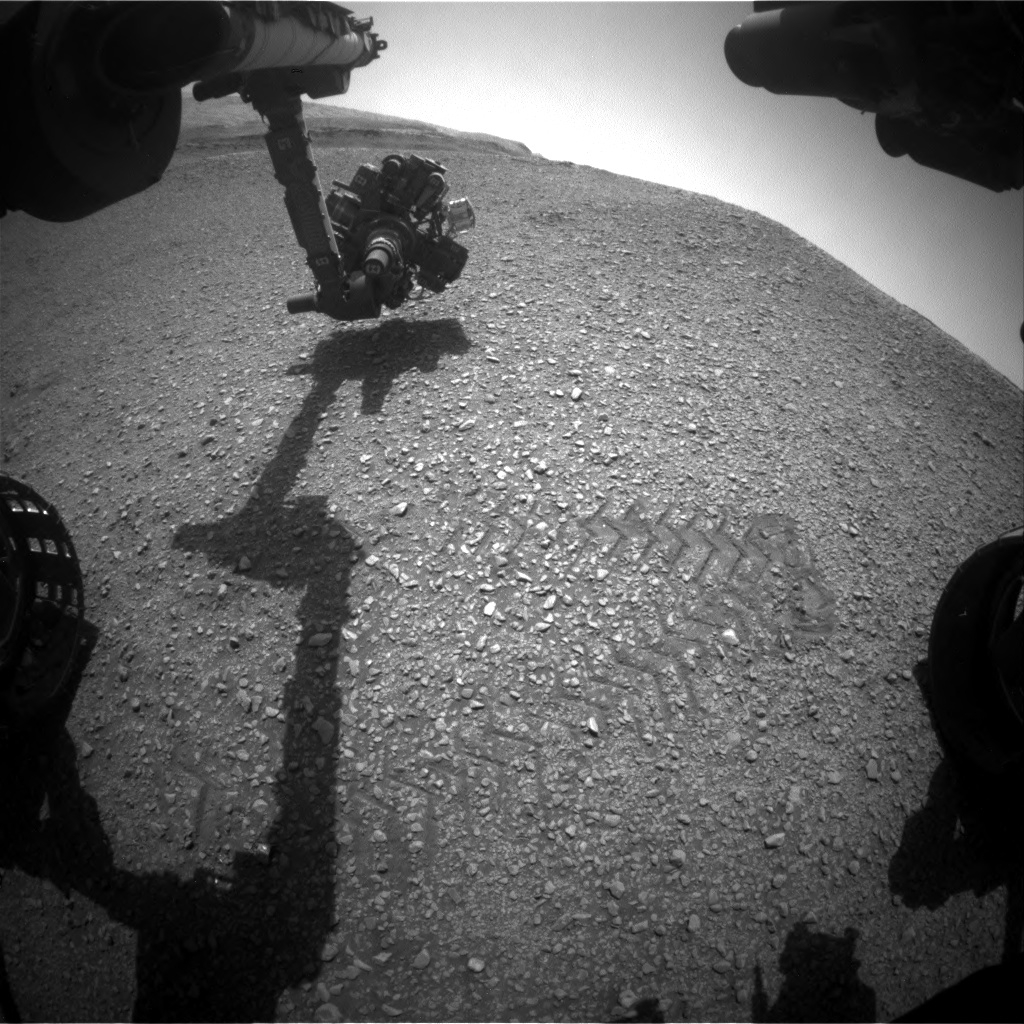
Curiosity Front Hazard Avoidance Camera Right B image taken on Sol 2931, November 3, 2020.
Credit: NASA/JPL-Caltech
The Chemistry and Camera (ChemCam) target, “Lee,” is a different pebble near the rover.
“It is always good to document the composition of the terrain, even if that means targeting a lot of pebbles! Several Mastcam mosaics are planned that cover the rocks carved into benches Curiosity will explore over the next few weeks. There will also be a dust devil movie in an attempt to spot more dust devils during this windy season,” Bennett reports.

Curiosity Left B Navigation Camera image taken on Sol 2931, November 3, 2020.
Credit: NASA/JPL-Caltech

Curiosity Left B Navigation Camera image taken on Sol 2931, November 3, 2020.
Credit: NASA/JPL-Caltech
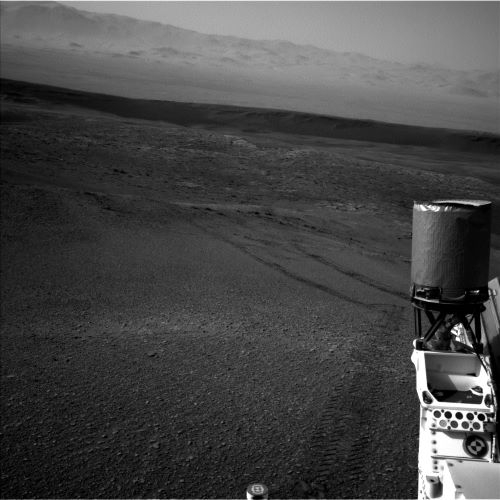
Curiosity Left B Navigation Camera image taken on Sol 2931, November 3, 2020.
Credit: NASA/JPL-Caltech
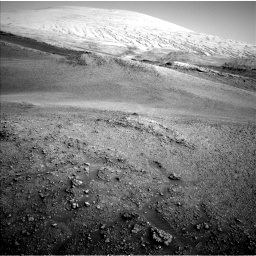
Curiosity Left B Navigation Camera image taken on Sol 2931, November 3, 2020.
Credit: NASA/JPL-Caltech
 Posted in

Credit: JAXA/Inside Outer Space screengrab
Japan’s Hayabusa2 asteroid explorer is slated for a December 6th jettison of its space rock-stuffed re-entry capsule, samples gathered during its intensive investigation of asteroid Ryugu.
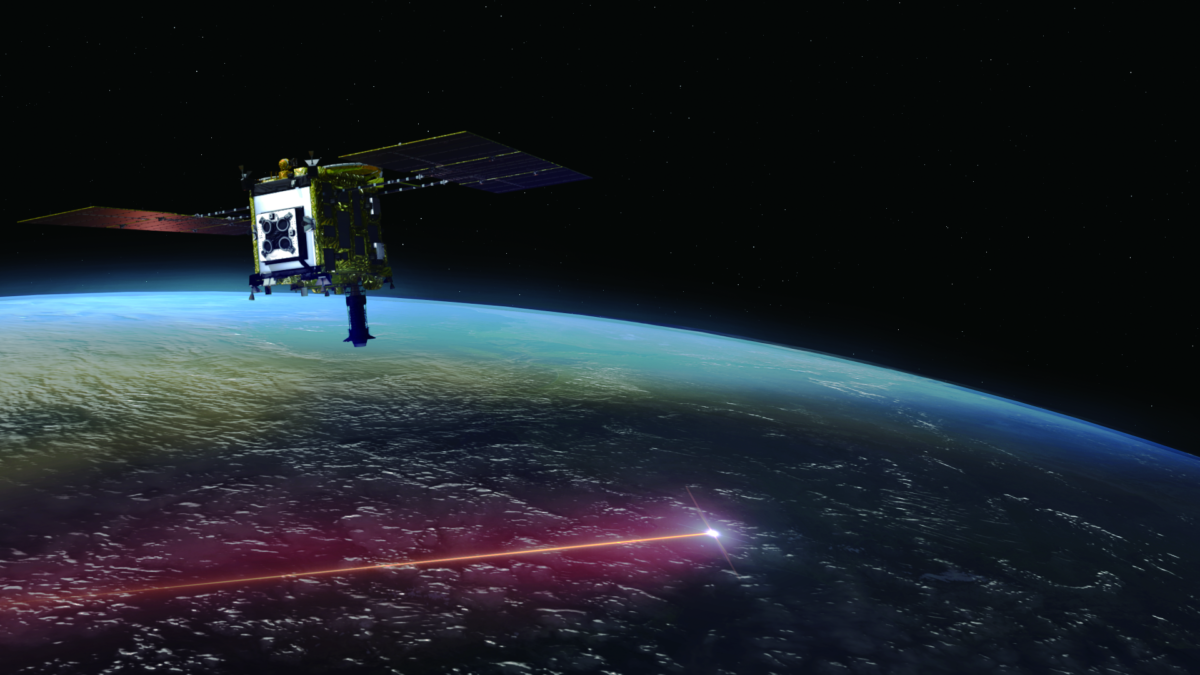
Artist impression of Hayabusa2’s re-entry capsule heading to its landing spot in Australia.
Credit: JAXA
The re-entry capsule will parachute to Earth in South Australia, touching down within the Woomera Prohibited Area.
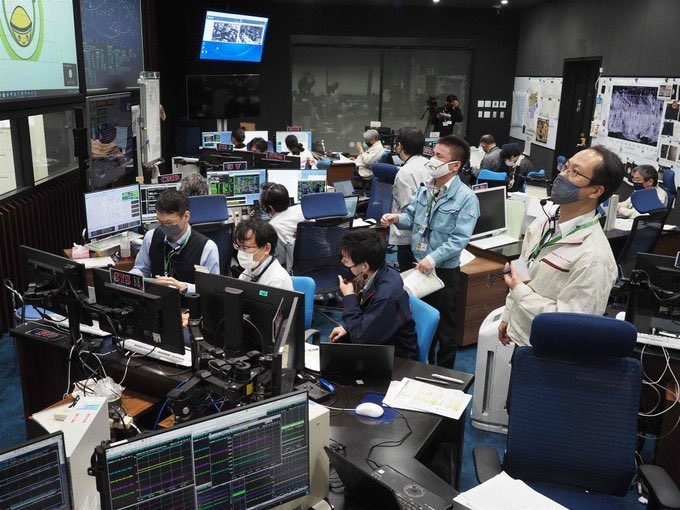
Hayabusa2 control room during re-entry rehearsal.
Credit: JAXA
A capsule separation dress rehearsal was completed today, report Hayabusa2 ground controllers, with the spacecraft now returned to its original state.
Recovery team
In related news, on November 1, the first capsule recovery team of 14 members reached Adelaide. As a measure against the coronavirus, the group will move to the Woomera Desert after two weeks of on-site quarantine.
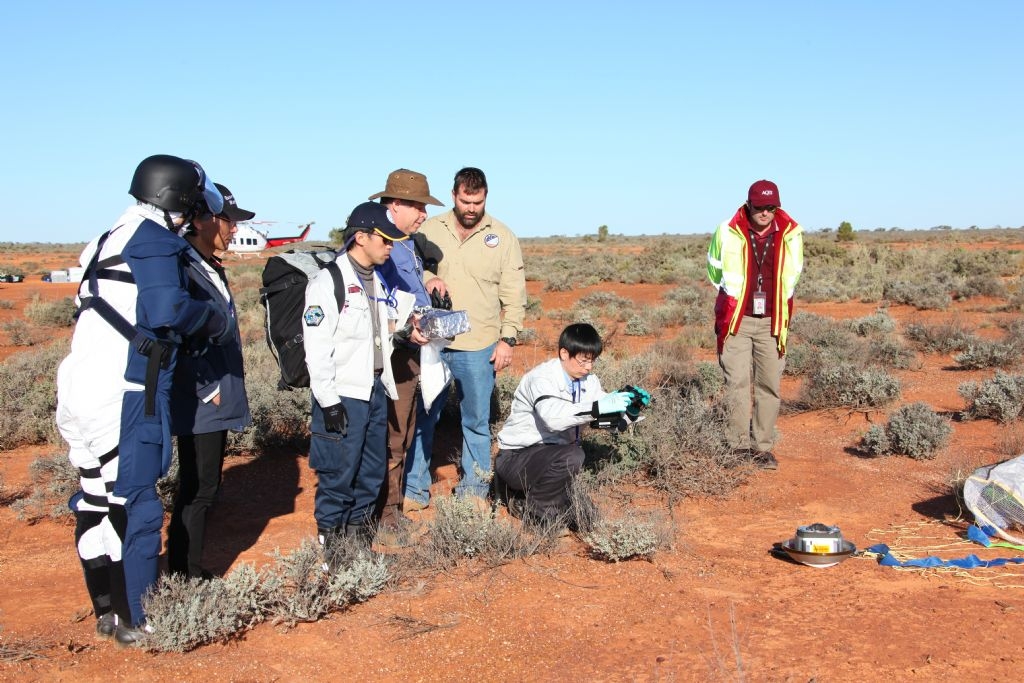
Hayabusa re-entry capsule with tiny collection of asteroid Itokawa particles touched down in Australia in June 2010.
Credit: JAXA
“It has been 6 years since the launch and 10 years since development began and it is emotional to finally be here,” a recovery team member tweets. “In Australia in the Southern Hemisphere, we will be working under the scorching midsummer sun. In addition, we are contending with issues surrounding the coronavirus, but we want to safely collect the capsule and return it to Japan to show to everyone.”
Australian decision-making
Today’s capsule separation rehearsal also involved the participation of the Australian embassy, with the Australian side connected to the Hayabus2 control room to share information.
During re-entry day, Australian authorities may be required to take an active role in decision-making regarding capsule re-entry and landing, so this step was also confirmed during the rehearsal.
The Hayabusa2 project is under the auspices of the Japan Aerospace Exploration Agency (JAXA).

Credit: Roscosmos, Channel One, Yellow, Black and White
Russia’s Channel One and Roskosmos are launching a competition, the winner of which will take the lead role in the first feature film shot in space.
The motion picture has a tentative title “Challenge” – with filming to take place at the International Space Station in October 2021.
This off-planet film shoot is a joint project of Roscosmos, Channel One and the studio, Yellow, Black and White.
“This is a kind of space experiment. The actress selected by a competition and a medical commission will perform the functions of a cosmonaut-researcher and become a full-fledged member of the crew,” explains Dmitry Rogozin, General Director of Roscosmos. “In this project, it is important for us not only to demonstrate the heroism and high professionalism of cosmonauts and industry specialists who ensure the safety of manned flights in outer space, but also to develop the possibility of accelerated preparation for such a flight and a mission to the ISS of a specialist (engineer, doctor, astrophysicist), in whom the need may unexpectedly arise on board the station,” he says in a statement.

Credit: Roscosmos, Channel One, Yellow, Black and White
Have-to-haves
To be selected, there’s a questionnaire with requirements, among them:
Citizenship – Russian Federation; Gender – female; Age – 25-45 years old; No criminal record; and a number of health and physical have-to-haves.
Alexey Trotsyuk, General Producer of Yellow, Black and White explains: “Despite the vast experience in the production of big movies, we first encountered a task of such complexity. In the shortest possible time, we need to find more than just an actress – we need a real superhero.”
Trotsyuk adds they are on the lookout for a woman who can play her role on Earth, and then endure the most difficult training, fly into space and there, in a state of microgravity, also solve the most difficult shooting tasks.
“That is why we, together with Channel One and the Roscosmos state corporation,” Trotsyuk notes, “are announcing an all-Russian casting. If you feel the strength and talent in yourself, and are ready to accept the challenge, this is your chance to become the first!”

Shooting stage – Earth orbiting research lab – the International Space Station (ISS).
Credit: NASA
Multi-stage competition
As the first stage of the competition, a selection committee will select up to 30 finalists for further participation in the competition.
At the next stage of the selection process, a medical expert commission will conduct a comprehensive assessment of the finalists of the competition for compliance with medical and psychological requirements, as well as the requirements for physical fitness, education and professional fitness necessary to participate in space flight and work in space.
Candidates who successfully pass the flight commission will be enrolled in the Cosmonaut School, where they will have to undergo a three-month training course (on a daily basis).
Based on the results of the final part of the competition, two winners will be determined – the future leading actress and her understudy.

WhiteKnightTwo makes its first public debut at Air Venture
Here’s a heads up from New Mexico’s Spaceport America.
Virgin Galactic’s mothership – VMS Eve – is slated to carry out two flights today over Las Cruces and Truth or Consequences, New Mexico.
“The flights are held as part of a series of readiness exercises ahead of Virgin Galactic’s first rocket powered flight from Spaceport America expected this Fall,” according to a statement from Spaceport America.

Credit: Virgin Galactic
Two overflights
The first flight was due to take-off from Spaceport America around 8am. Part of the planned flight path for this flight will see VMS Eve fly near Truth or Consequences and Las Cruces, and should afford residents an opportunity to spot the aircraft flying.

Credit: Spaceport America
The second flight will depart later in the afternoon and will be flown at a higher altitude so will not be visible from the ground.
Educational materials
The teams at Spaceport America, Virgin Galactic and Galactic Unite have put together educational material to accompany the flight and encourage students in both cities to go outside to spot the aircraft in the skies and share their experience with their classes and on social media.
The materials have been shared with the school districts in both cities and can be downloaded from:

