Archive for March, 2020
 Author:
  March 10th, 2020
NASA’s Space Launch System.
Credit: NASA
Another look at the delayed NASA Space Launch System was posted on the NASA Office of Inspector General (OIG) Internet today: March 10, 2020.
The OIG reports:
“NASA continues to struggle managing SLS Program costs and schedule as the launch date for the first integrated SLS/Orion mission slips further. Rising costs and delays can be attributed to challenges with program management, technical issues, and contractor performance. For example, the structure of the SLS contracts limits visibility into contract costs and prevents NASA from determining precise costs per element. Specifically, rather than using separate contract line item numbers (CLIN) for each element’s contract deliverables, each of the contracts have used a single CLIN to track all deliverables making it difficult for the Agency to determine if the contractor is meeting cost and schedule commitments for each deliverable. Moreover, as NASA and the contractors attempt to accelerate the production of the SLS Core Stages to meet aggressive timelines, they must also address concerns about shortcomings in quality control.”
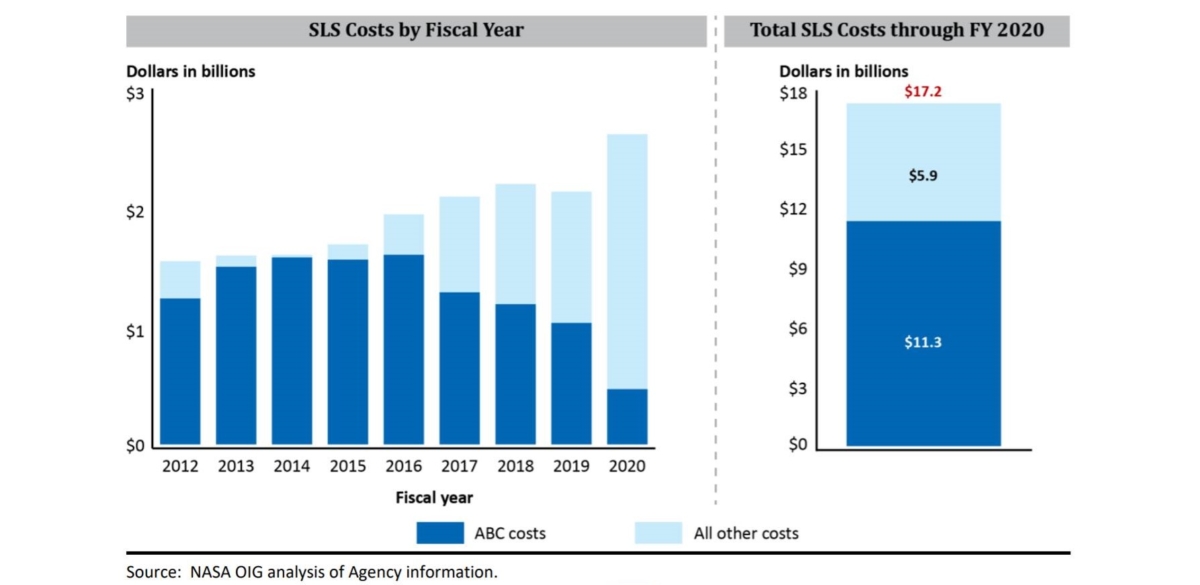
Overall, by the end of fiscal year 2020, NASA will have spent more than $17 billion on the SLS Program—including almost $6 billion not tracked or reported as part of the Agency Baseline Commitment (ABC), the OIG report notes.
To view the entire report — NASA’s Management of Space Launch System Program Costs and Contracts — go to:
 Posted in
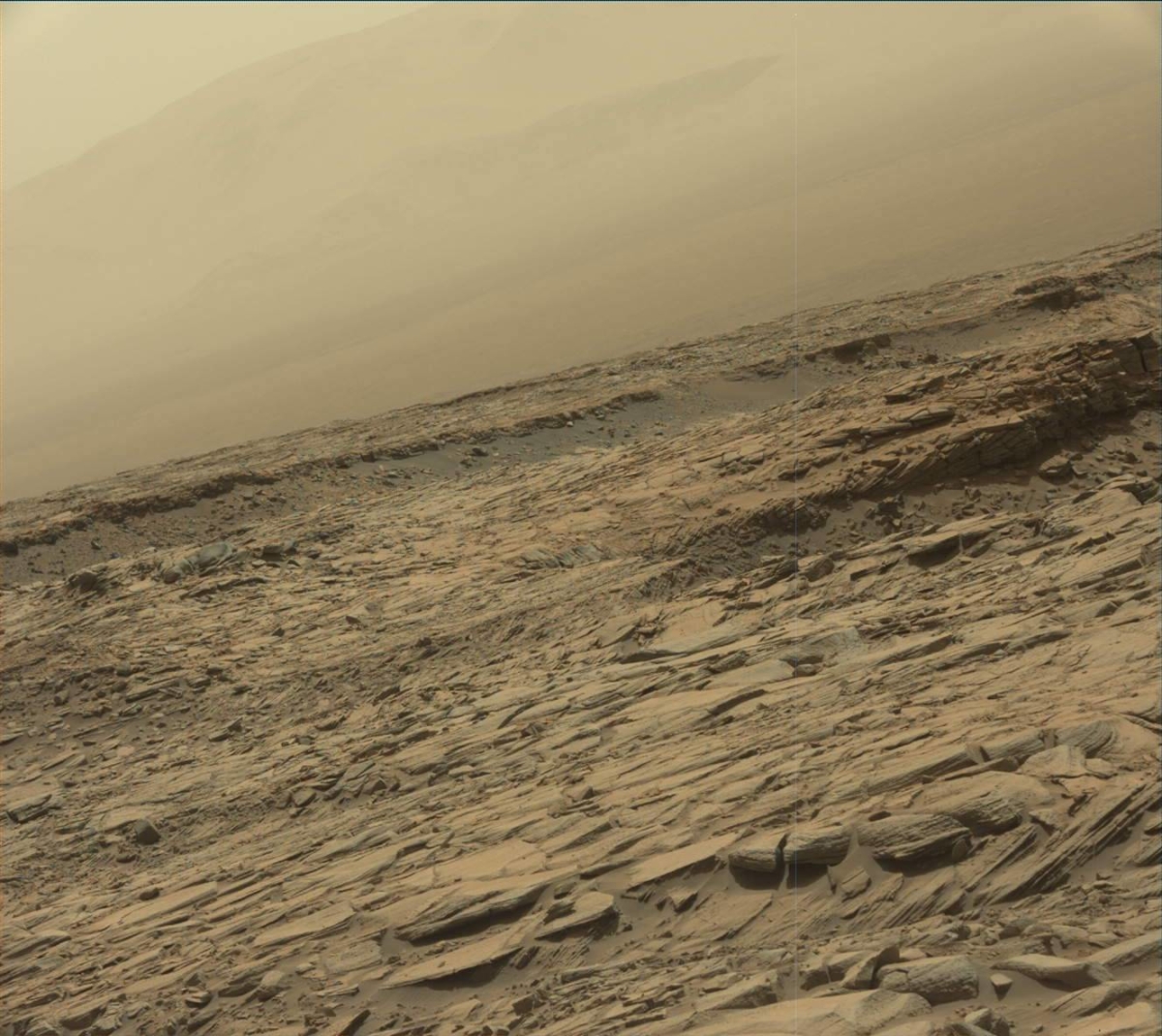
Curiosity Mast Camera Left image taken on Sol 2698, March 9, 2020.
Credit: NASA/JPL-Caltech/MSSS
NASA’s Curiosity Mars rover is now performing Sol 2699 duties.
Sean Czarnecki, a planetary geologist at Arizona State University in Tempe reports that after Curiosity’s strenuous climb onto the pediment-capping unit last week, the robot is busy carrying out science tasks.
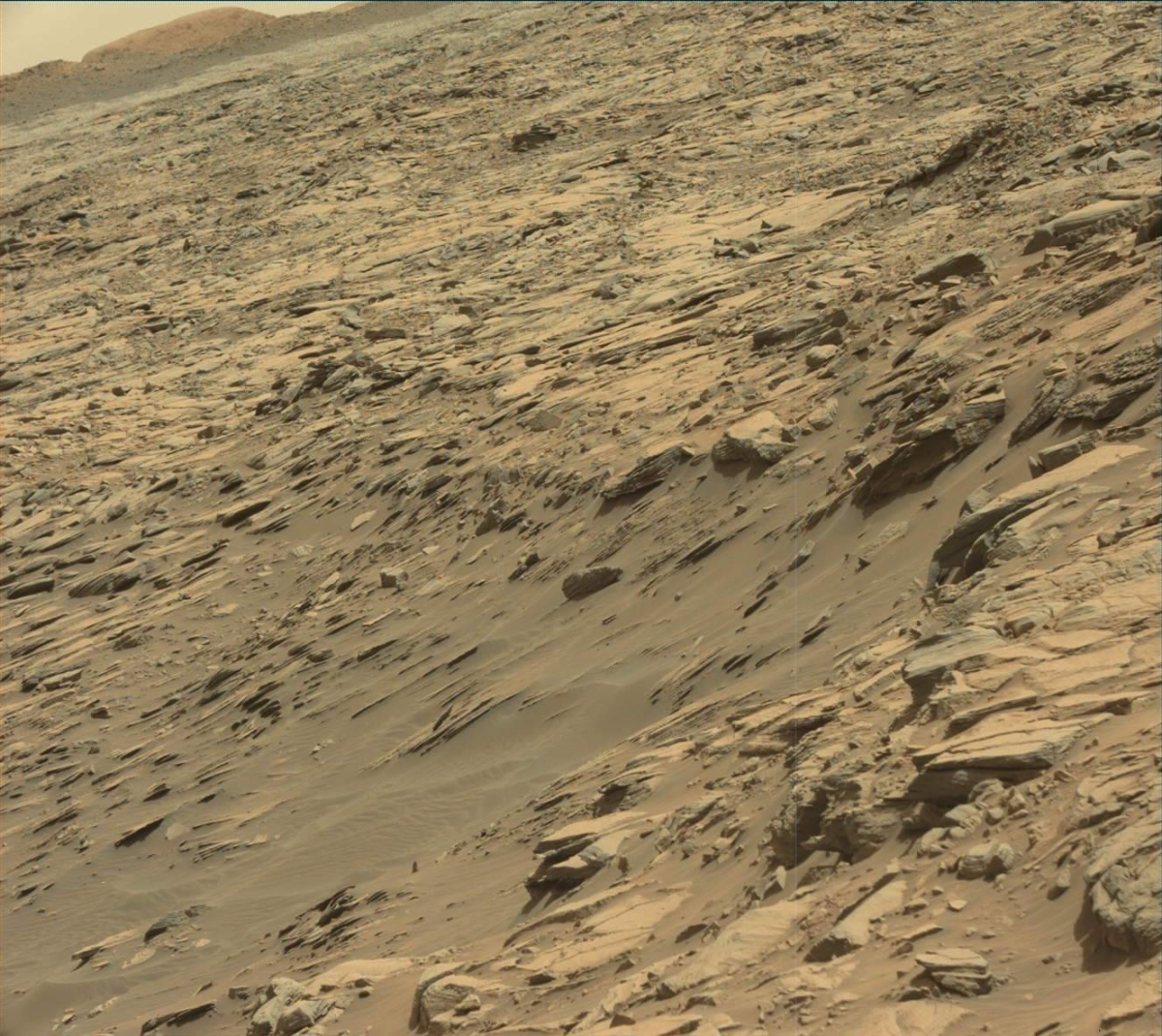
Curiosity Mast Camera Left image taken on Sol 2698, March 9, 2020.
Credit: NASA/JPL-Caltech/MSSS
Curiosity’s Chemistry and Camera (ChemCam) will take rasters of “Machir Bay,” “New Aberdour,” and “An Carnach” to assess the chemical variability of the bedrock there.

Curiosity Mast Camera Left image taken on Sol 2698, March 9, 2020.
Credit: NASA/JPL-Caltech/MSSS
Also planned is taking pre-Dust Removal Tool (DRT) images using the Mars Hand Lens Imager (MAHLI) of Machir Bay and “Forsinard Flows,” break out the DRT to dust off these targets, take post-DRT MAHLI images, and measure the bulk chemistry of these targets with the rover’s Alpha Particle X-Ray Spectrometer (APXS).
Mastcam is also taking images of this bedrock to study the fine-scale details.
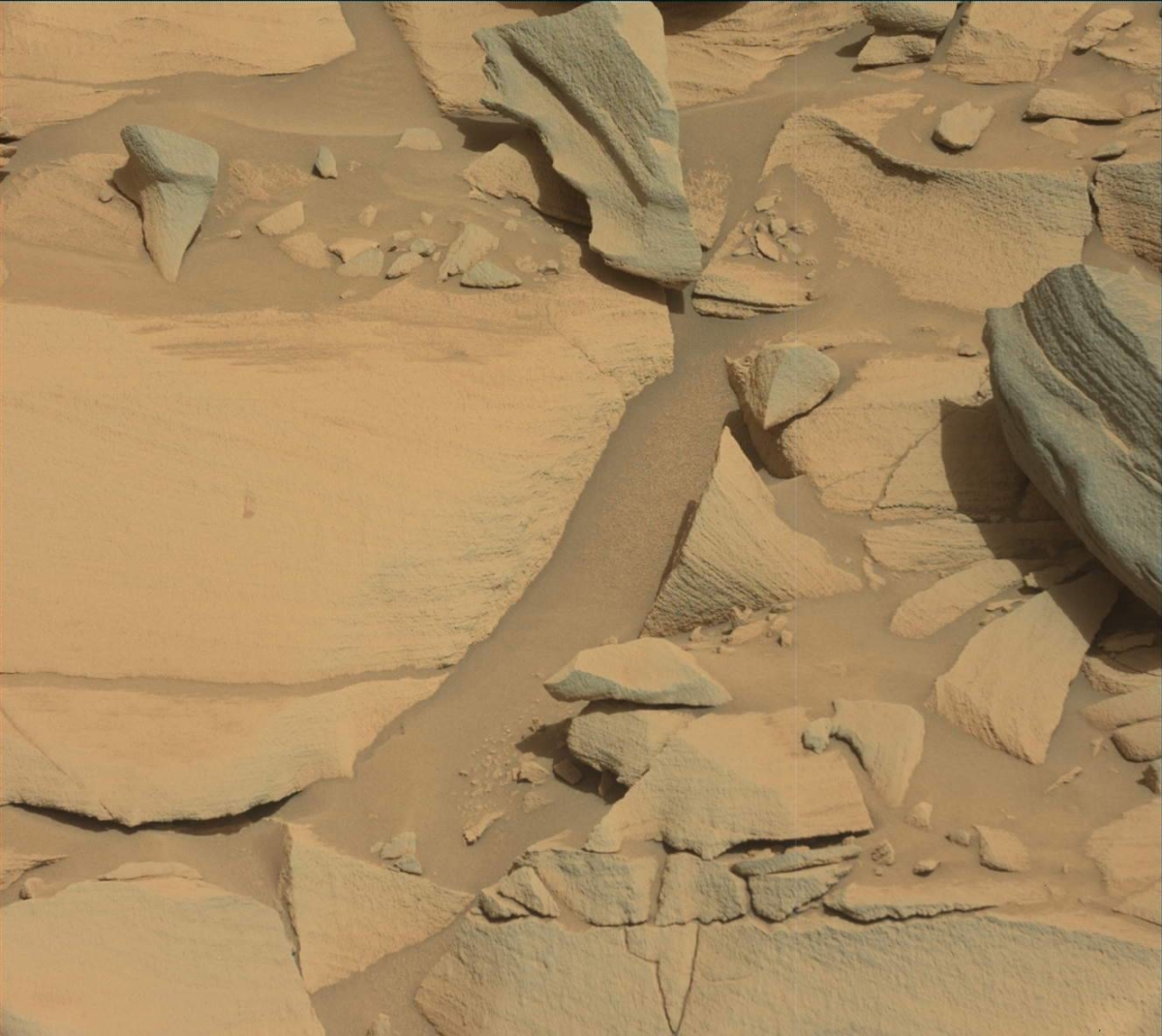
Curiosity Mast Camera Left image taken on Sol 2698, March 9, 2020.
Credit: NASA/JPL-Caltech/MSSS
Gazing into the distance
“We will spend some time gazing into the distance,” Czarnecki notes. “What a view we have from all the way up here on the pediment-capping unit!”
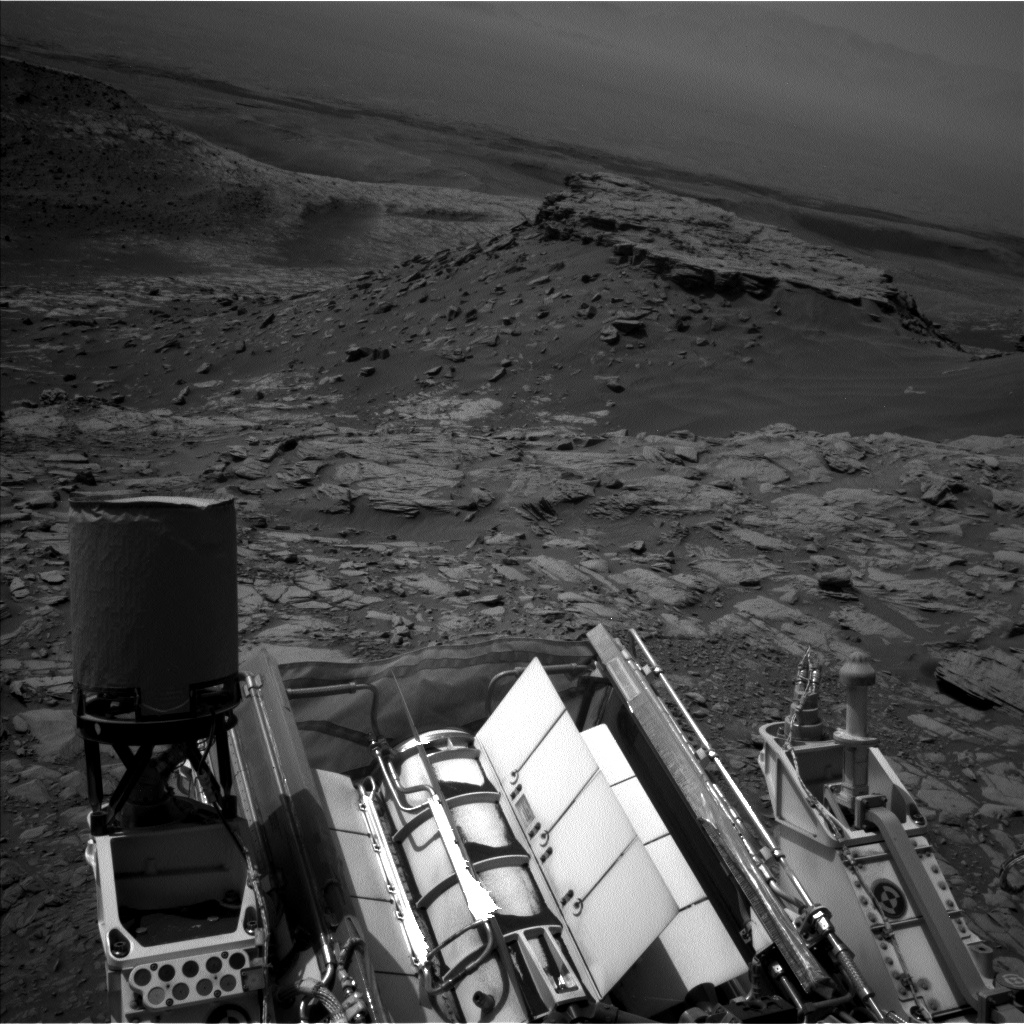
Curiosity Left B Navigation Camera photo acquired on Sol 2698, March 9, 2020.
Credit: NASA/JPL-Caltech
Curiosity’s Mastcam will take advantage of the rover’s location to image nearby “Tower Butte” in order to examine surface textures. Then Navcam will look to the horizon for dust devils and to the sky for clouds.
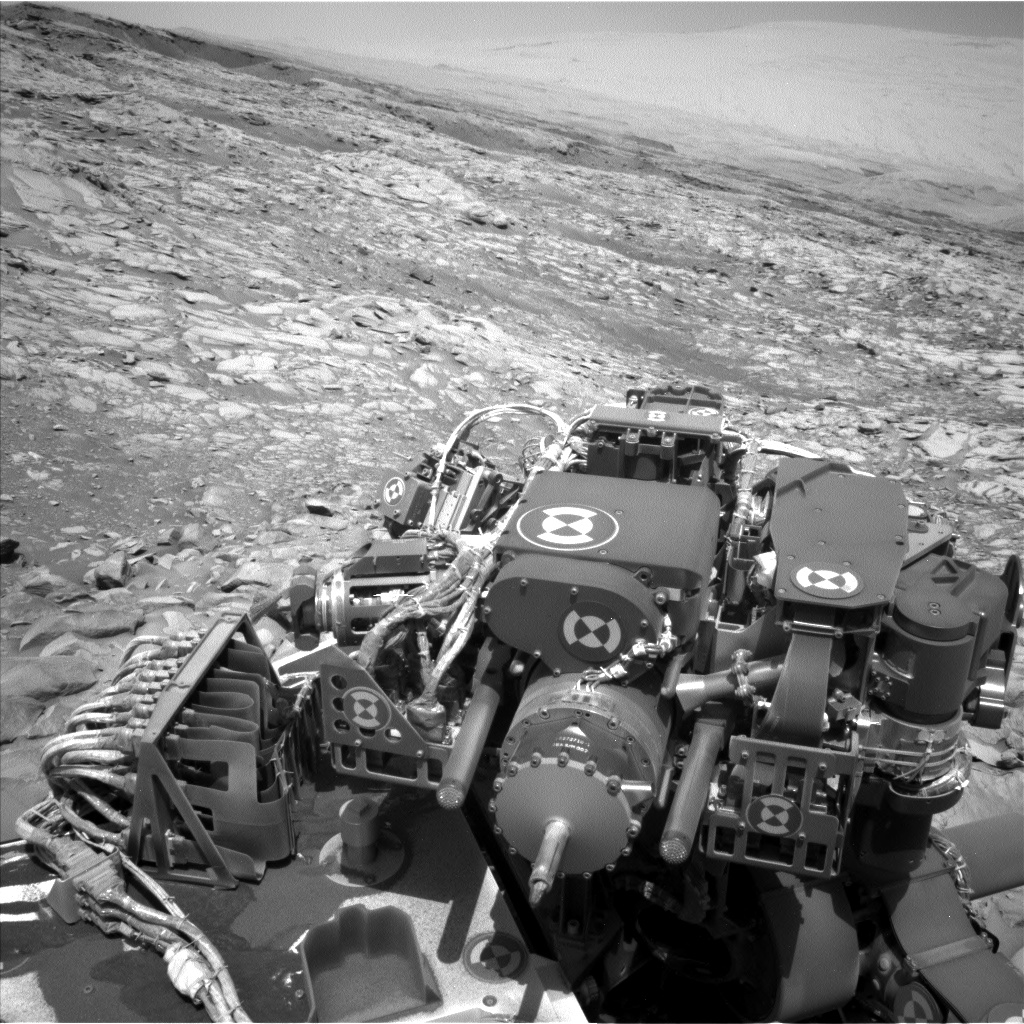
Curiosity Left B Navigation Camera photo acquired on Sol 2698, March 9, 2020.
Credit: NASA/JPL-Caltech
In the background, Dynamic Albedo of Neutrons (DAN), will be measuring the neutron flux from the subsurface to assess the pediment-capping unit’s hydration and the Radiation Assessment Detector (RAD) and Rover Environmental Monitoring Station (REMS) will continue to measure the radiation and atmospheric environments, respectively, at yet another record elevation for Curiosity.
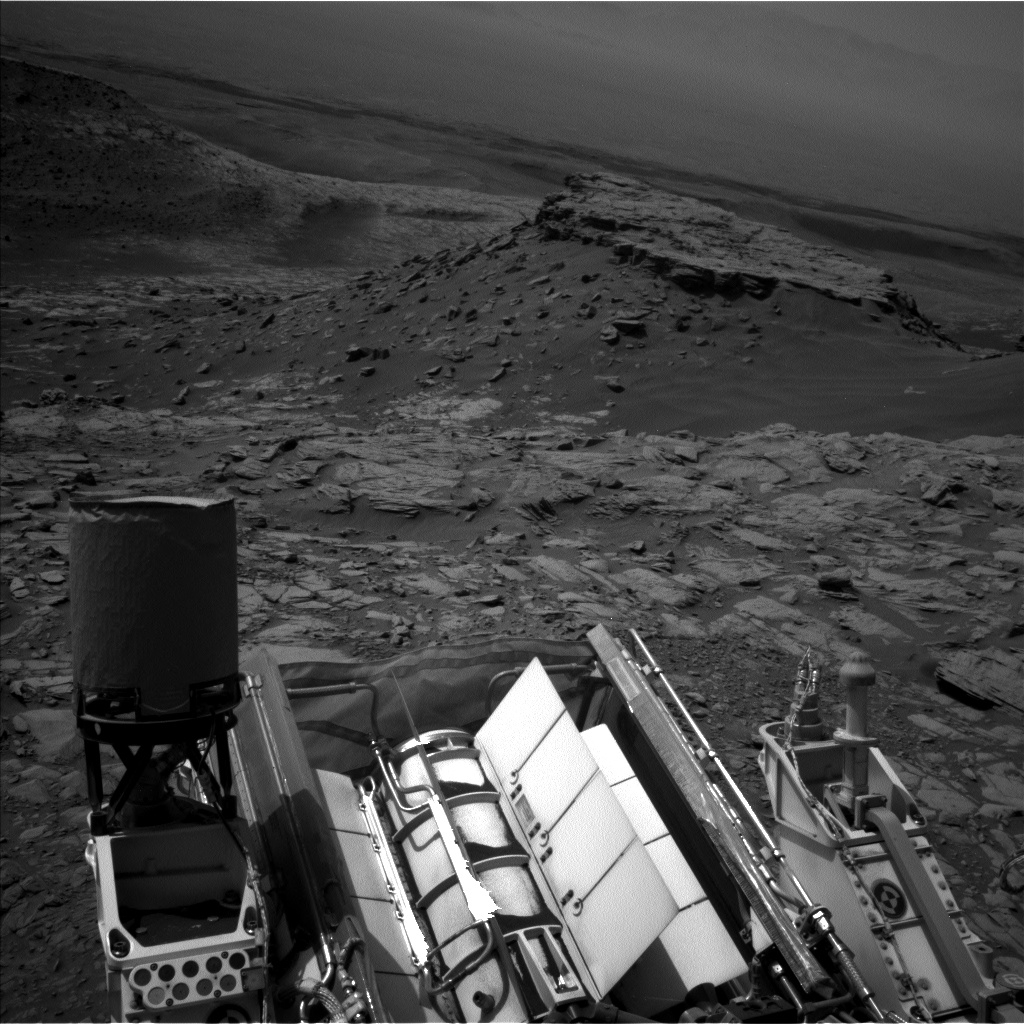
Curiosity Left B Navigation Camera photo acquired on Sol 2698, March 9, 2020.
Credit: NASA/JPL-Caltech

Curiosity Left B Navigation Camera photo acquired on Sol 2698, March 9, 2020.
Credit: NASA/JPL-Caltech

Curiosity Mast Camera Right image taken on Sol 2697, March 8, 2020.
Credit: NASA/JPL-Caltech/MSSS

China’s Chang’e-5 robotic sample return mission.
Credit: CNSA/CLEP
A glimpse into China’s readiness to handle samples from the Moon reveals steps to be taken for storage, processing and preparation of the specimens.
China’s Chang’e-5 robotic lunar sample return mission is slated for liftoff later this year. That venture represents the third phase of China’s lunar exploration project -returning samples from the Moon.
The reported candidate landing region for China’s Chang’e‐5 lunar sample return mission is the Rümker region, located in the northern Oceanus Procellarum. The area is geologically complex and known for its volcanic activity.

The white box denotes the Chang’e-5 landing region. The yellow boxes represent other locations noted in a recent research paper. The yellow dashed lines denote the ejecta from Harpalus carter. The blue dashed lines denote ejecta from Pythagoras crater. The
green dashed lines denote ejecta probably from Copernicus crater. Credit: Qian, et al.
The Chang’e-5 mission will retrieve and return to Earth up to 4.4 pounds (2 kilograms) of lunar surface and subsurface samples.
The aggressive Chang’e-5 mission is comprised of four parts including the orbiter, ascender, lander, and Earth reentry module containing the lunar specimens.

Moonwalking geologist, Apollo 17’s Jack Schmitt.
Credit: NASA
Sample history
The former Soviet Union successfully executed three robotic sample return missions: Luna 16 returned a small sample (101 grams) from Mare Fecunditatis in September of 1970; February 1972, Luna 20 returned 55 grams of soil from the Apollonius highlands region; Luna 24 retrieved 170.1 grams of lunar samples from the Moon’s Mare Crisium (Sea of Crisis) for return to Earth in August 1976.
The last Apollo mission to bring back to Earth lunar collectibles was the Apollo 17 expedition in 1972. During 1969-1972, the six Apollo missions collected 842 pounds (382 kilograms) of lunar samples at different landing sites on the lunar surface, including rocks, core samples, lunar soil and dust.

Credit: G. L. Zhang, et al.
China’s plans
In a paper to be presented at this month’s now-cancelled Lunar and Planetary Science Conference (LPSC) due to concerns about the COVID-19 virus, lead author, G. L. Zhang from the National Astronomical Observatory, Chinese Academy of Sciences, details the main tasks of the Ground Research Application System (GRAS) of the country’s lunar exploration project.
They include: receiving lunar samples from the spacecraft system; establishing special facilities and laboratories for sample permanent local storage and backup storage at another location; and preparation and preprocessing of lunar samples.
According to the requirements of the mission, GRAS formed a complete lunar sample preprocessing, storage and preparation plan.
This plan mainly includes: handover and transfer of lunar samples from spacecraft system to GRAS, unsealing of the sample package, sample separation (drilled sample separation and scooped sample separation), sample storage (scooped and drilled samples) and sample preparation.

Credit: G. L. Zhang, et al.
Pipeline
A detailed pipeline for this plan is discussed in the LPSC paper.
Firstly, the returned lunar samples will be divided into scooped samples and drilled samples after them entering the lab. Secondly, both scooped and drilled samples will be then divided into four categories: permanent storage samples, backup permanent storage samples, scientific research samples and exhibition samples.
“All the tools that contact with lunar sample are made of stainless steel, teflon, quartz glass or materials of known composition to strictly control the factors that will affect subsequent scientific analysis. The water and oxygen content in the glove box, filled with pure [nitrogen], will be strictly monitored to prevent the lunar samples from earth pollution,” the LPSC paper notes.

Lunar Sample Laboratory Facility at Johnson Space Center in Houston, Texas.
Credit: NASA
U.S., China approaches
“They seem to be taking a very similar approach to how we have (and continue to) process and curate Apollo samples (and other astromaterials in our collection),” responds Ryan Zeigler, NASA’s Apollo Sample Curator and the Manager of the Astromaterials Acquisition and Curation Office of the Astromaterials Research and Exploration Science (ARES) Division at the NASA Johnson Space Center in Houston, Texas.
“There are a few minor differences, but that is to be expected since each mission has unique characteristics,” Zeigler told Inside Outer Space.
The Chinese are clearly taking seriously the handling, storage and preliminary examination of a potential set of new lunar samples. The technology described is in many ways similar to the technology in the NASA Lunar Sample Laboratory, notes Carlton Allen, former NASA Astromaterials Curator (retired).
“The use of a nitrogen atmosphere for preparation, subdivision and storage has proven both necessary and sufficient over 50 years of lunar curation at NASA,” Allen adds. The glovebox photos show that the nitrogen is maintained at positive pressure with respect to the laboratory atmosphere, which has proven important for contamination control. The importance of restricting the materials that come into contact with the samples, another important aspect of contamination control, is also recognized.
Allen points out to Inside Outer Space that the technology described by G. L. Zhang and colleagues “has the potential to make these future lunar samples directly comparable to Apollo and Luna samples, which could significantly increase the value of each sample set.”

Credit: Used with permission – Loren Roberts/The Planetary Society at https://www.planetary.org/
NASA’s Curiosity Mars rover is now performing Sol 2698 tasks.
Recently released imagery shows the robot’s surroundings, perspectives from a high perch location:

Curiosity Left B Navigation Camera photo taken on Sol 2698, March 9, 2020.
Credit: NASA/JPL-Caltech
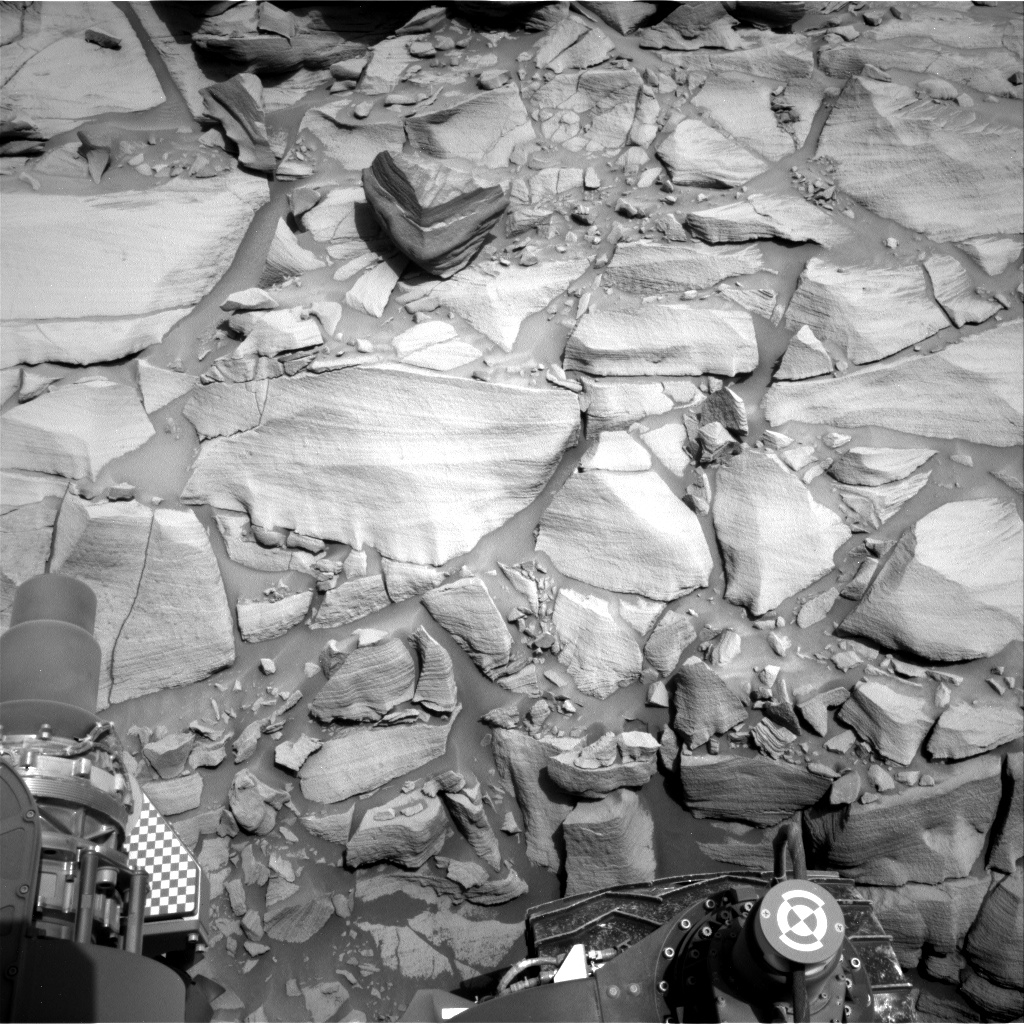
Curiosity Right B Navigation Camera image acquired on Sol 2698, March 9, 2020.
Credit: NASA/JPL-Caltech
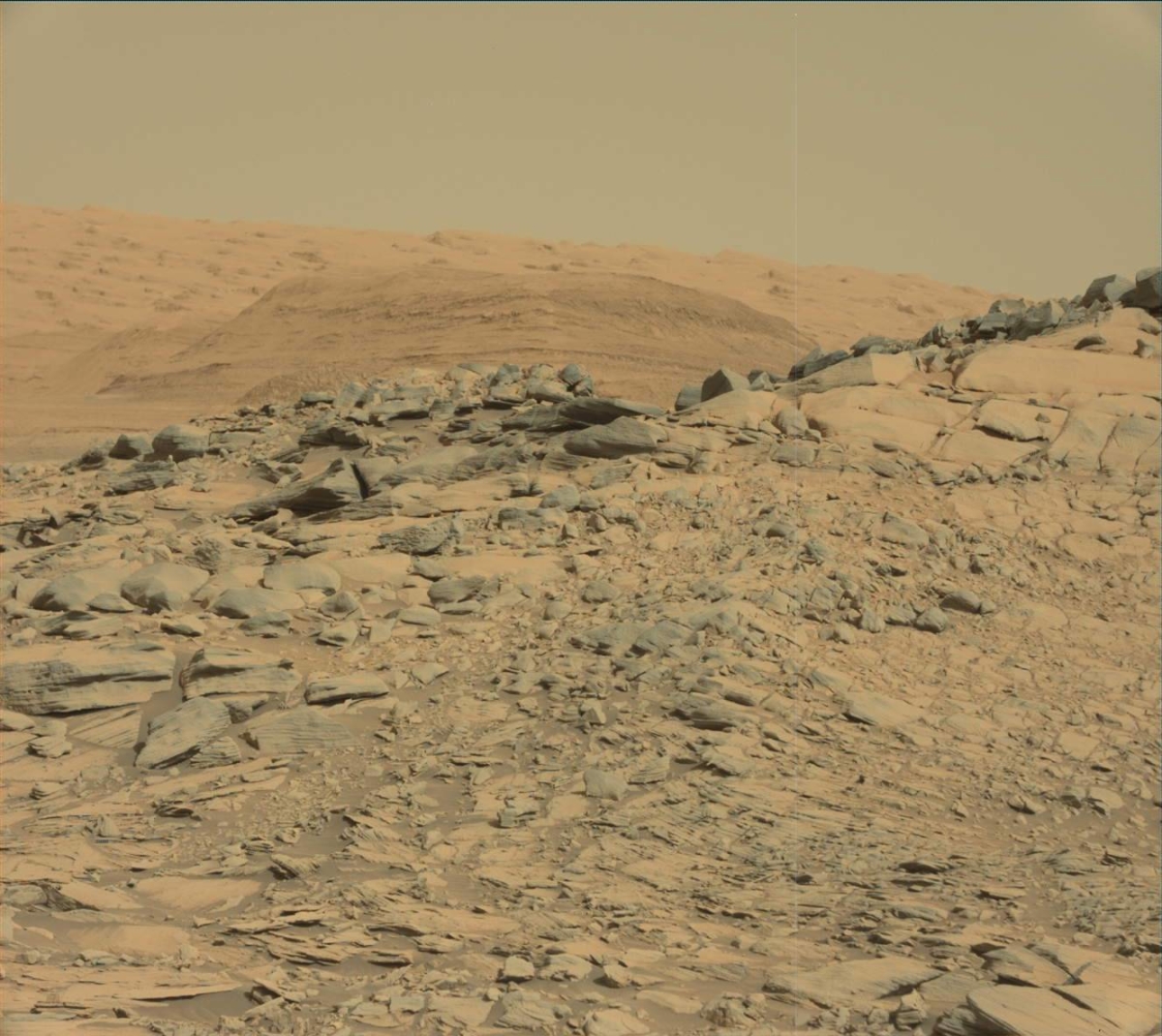
Curiosity Mast Camera Left image taken on Sol 2695, March 6, 2020.
Credit: NASA/JPL-Caltech/MSSS
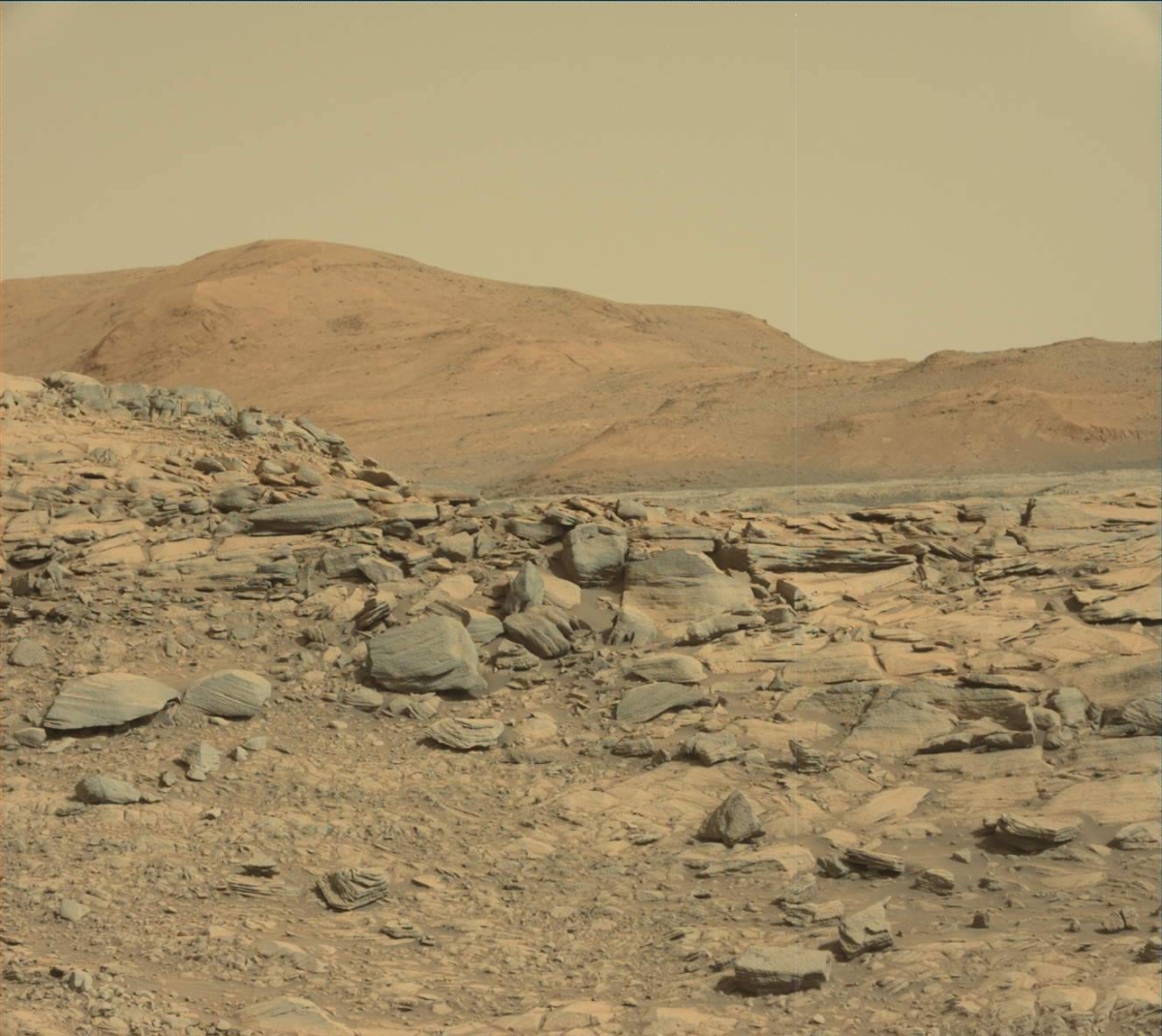
Curiosity Mast Camera Left image taken on Sol 2695, March 6, 2020.
Credit: NASA/JPL-Caltech/MSSS

Credit: ESA/Hubble & NASA
A pair of telescopes that constantly search the nighttime sky for signals from intelligent life in our galaxy are the first of hundreds of telescopes planned to be installed as part of a project called “PANOSETI” – for Pulsed All-sky Near-infrared Optical SETI.
What’s underway is a panoramic all-sky, all-time near infrared and optical technosignature finder.
When finally assembled, PANOSETI will be the first dedicated observatory capable of constantly searching for flashes of optical or infrared light.
Project researchers come from UC San Diego, UC Berkeley, University of California Observatories and Harvard University.

The team installed two PANOSETI 0.5-m telescopes in the Astrograph dome to commence a wide-field optical SETI search and continue prototyping designs for the full observatory concept. Picture: team outside Astrograph on January 14, 2020 (left to right: Aaron Brown, Shelley Wright, Jerome Maire, Wei Liu, Rick Raffanti, Dan Werthimer, and James Wiley.
Credit: UCSD OIR Laboratory
New window
The deployment of the two PANOSETI telescopes at the recently renovated Astrograph Dome at Lick Observatory offers astronomers a new window into how the universe behaves at nanosecond timescales.
Dan Werthimer, chief technologist at UC Berkeley’s SETI Research Center and co-investigator explained in a UC San Diego statement:
“When astronomers examine an unexplored parameter space, they usually find something surprising that no one predicted,” Werthimer said. “PANOSETI could discover new astronomical phenomena or signals from E.T.”
“The goal is to basically look for very brief but powerful signals from an advanced civilization. Because they are so brief, and likely to be rare, we plan to check large areas of the sky for a long period of time,” said Werthimer, who has been involved with SETI for the past 45 years.

A multi-pixel photon counter detector for optical and near-infrared wavelengths.
Credit: UCSD OIR Laboratory
Likelihood of detection?
But how likely is it that scientists will detect extraterrestrial signals with PANOSETI? UC San Diego astronomer Shelley Wright adds:
“The short and correct answer is we have no idea on the likelihood of detection,” Wright said. “With PANOSETI we will be observing an unexplored phase space for SETI and astronomical observations. Our goal is to make the first dedicated SETI observatory that is capable of observing the entire visible sky all of the time.”

Credit: UCSD OIR Laboratory
Final design
PANOSETI began development in 2018, aiming to create a dedicated optical SETI observatory to image the entire observable sky—approximately 10,000 square degrees—instantaneously. The final project plans to generate hundreds of telescopes to achieve this enormous sky coverage.
PANOSETI’s final design will feature a dedicated observatory at each of two locations. Each observatory will contain 80 of these unique telescopes. Site selection is underway, and the research team hopes to begin observatory construction in the next year.
For more information, go to:

Curiosity Left B Navigation Camera photo taken Sol 2695, March 6, 2020.
Credit: NASA/JPL-Caltech
NASA’s Curiosity Mars rover is now carrying out Sol 2696 duties.
Reports Michelle Minitti, a planetary geologist at Framework in Silver Spring, Maryland: “Kudos to our rover drivers for making it up the steep, sandy slope below the “Greenheugh pediment” and delivering us to a stretch of geology we had our eyes on even before we landed in Gale crater!”

Curiosity Left B Navigation Camera photo taken Sol 2695, March 6, 2020.
Credit: NASA/JPL-Caltech
The geology planning group honored the achievement of making it to the current site by getting Curiosity cameras and laser on every little bit of rock planners could manage.

Curiosity Left B Navigation Camera photo taken Sol 2695, March 6, 2020.
Credit: NASA/JPL-Caltech
New parking spot
The robot’s Mars Hand Lens Imager (MAHLI) and Alpha Particle X-Ray Spectrometer (APXS) will analyze “Galloway Hills,” cleared of dust beforehand by the Dust Removal Tool (DRT), and “Ardwell Bay.”

Curiosity Left B Navigation Camera photo taken Sol 2695, March 6, 2020.
Credit: NASA/JPL-Caltech
“The former is on a smoother, flatter part of the sandstone we are parked on, and the latter is an example of the resistant features that dot the sandstone in this part of the pediment,” Minitti adds. MAHLI will also acquire a mosaic looking edge on at a package of sandstone layers at the bedrock target “Chinglebraes.”
Chemical variability
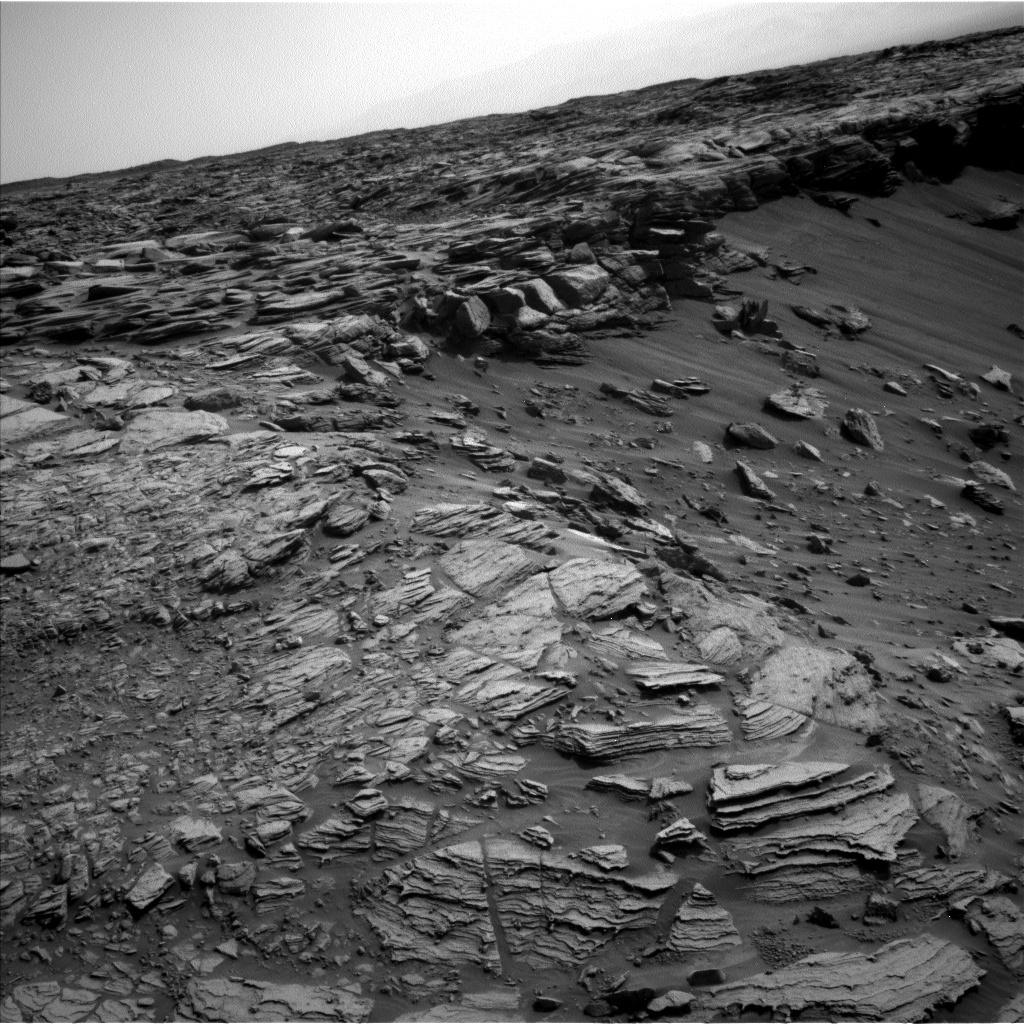
Curiosity Left B Navigation Camera photo taken Sol 2695, March 6, 2020.
Credit: NASA/JPL-Caltech
Curiosity’s Chemistry and Camera (ChemCam) will sweep across the terrain in front and to the left of the rover to gather data that will help scientists understand the chemical variability of the pediment here.
Minitti explains that “Machrie Moor” and “Templars Park” are comparable to Galloway Hills in that they are flatter, smoother patches of bedrock. “Lowther Hills” is comparable to Ardwell Bay, as it is a collection of resistant features within the bedrock. “Cheviot Hills” appears to be a bit more of an oddball – it’s a dark, smooth block like those we have seen on “Western Butte” and “Tower Butte.”
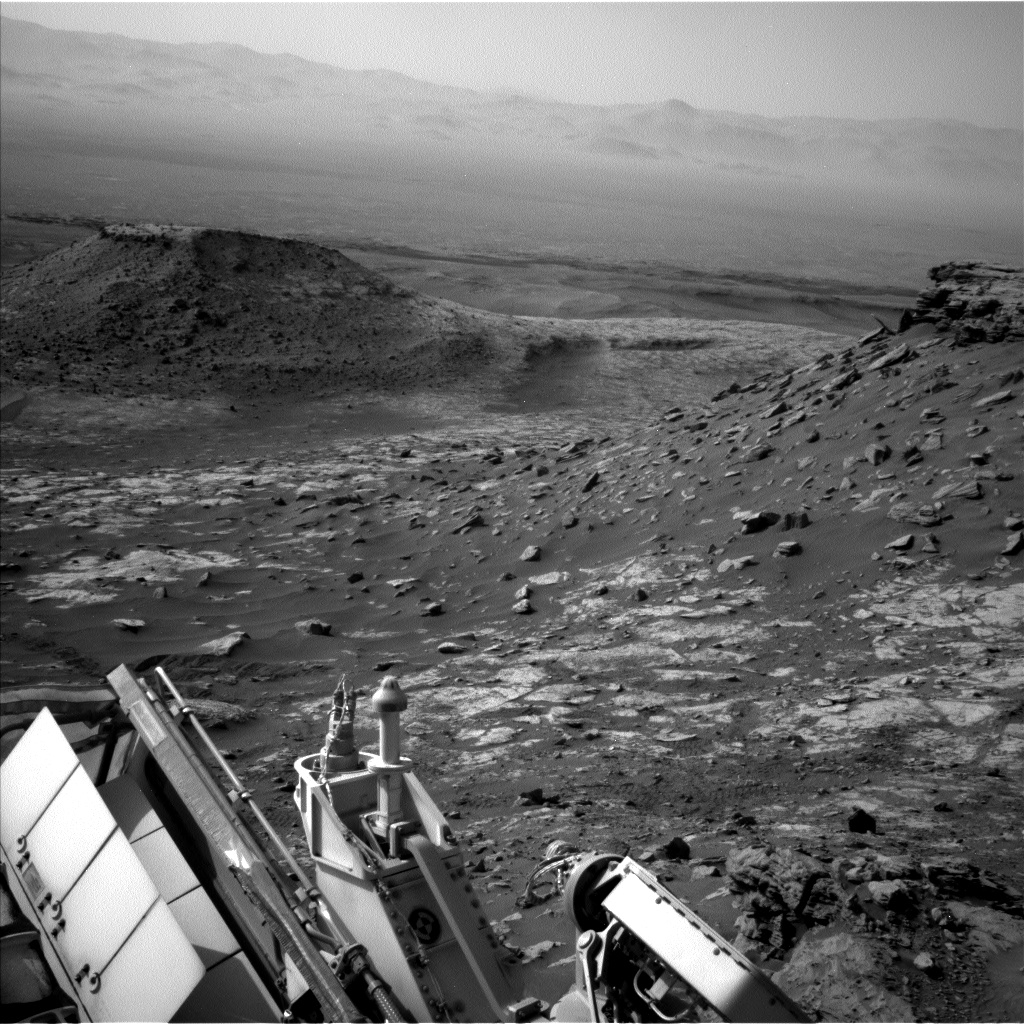
Curiosity Left B Navigation Camera photo taken Sol 2695, March 6, 2020.
Credit: NASA/JPL-Caltech
“ChemCam will tell us if it is linked to the rocks we have seen before, or if it is just a particularly dust-free example of the pediment rocks,” Minitti notes.
High perch
Mastcam has plenty to look at from its high perch.

Curiosity Front Hazard Avoidance Camera Right B image acquired Sol 2695, March 6, 2020.
Credit: NASA/JPL-Caltech
It will acquire a stereo mosaic looking across the scene, dubbed “Enard Bay” to get higher resolution and color views of the beds exposed there.
“Another large mosaic will cover the terrain into which we will drive over the weekend. The mosaic includes the drive target “East Lothian” and will give us an idea of the distribution of textures and structures of the bedrock we will be exploring for the near term,” Minitti says. “At the opposite end of the spectrum from a large mosaic, Mastcam will also take a single image of “Gars Bheinn,” one of the few blocks in the workspace that is relatively free of dust. The hope is that the image will give us a clearer view of the sandstone’s grain size and texture.”
Lookout for clouds, dust devils
Minitti concludes: “Now that we do not have a steep cliff in our front windshield, the skies stretch largely unencumbered above and around us. Navcam will take a 360 degree look around for dust devils on two different sols, and will acquire movies looking for clouds both in the afternoon and early morning. Mastcam and Navcam will assess the dustiness of the atmosphere by gazing across Gale crater from our great viewpoint.”

Credit: NASA/JPL-Caltech/Univ. of Arizona
New road map
Meanwhile, a newly released map shows the route driven by NASA’s Mars rover Curiosity through the 2695 Martian day, or sol, of the rover’s mission on Mars (March 6, 2020).
Numbering of the dots along the line indicate the sol number of each drive. North is up. The scale bar is 1 kilometer (~0.62 mile).
From Sol 2693 to Sol 2695, Curiosity had driven a straight line distance of about 9.78 feet (2.98 meters), bringing the rover’s total odometry for the mission to 13.6 miles (21.89 kilometers).
The base image from the map is from the High Resolution Imaging Science Experiment Camera (HiRISE) in NASA’s Mars Reconnaissance Orbiter.

Selfie of Curiosity Mars rover on the prowl.
Credit: NASA/JPL-Caltech/MSSS
NASA’s Curiosity Mars rover recently discovered thiophenes on the Red Planet. These organic compounds would be consistent with the presence of early life on Mars, reports Washington State University’s (WSU) Schulze‑Makuch and Jacob Heinz with the Technische Universität in Berlin.
“We identified several biological pathways for thiophenes that seem more likely than chemical ones, but we still need proof,” Dirk Schulze‑Makuch said in a WSU statement. “If you find thiophenes on Earth, then you would think they are biological, but on Mars, of course, the bar to prove that has to be quite a bit higher.”

Dirk Schulze-Makuch Credit: NASA/Bill Ingalls
Warmer, wetter world
Thiophene molecules have four carbon atoms and a sulfur atom arranged in a ring, and both carbon and sulfur, are bio‑essential elements. Yet Schulze‑Makuch and Heinz could not exclude non‑biological processes – such as meteor impacts — leading to the existence of these compounds on Mars.
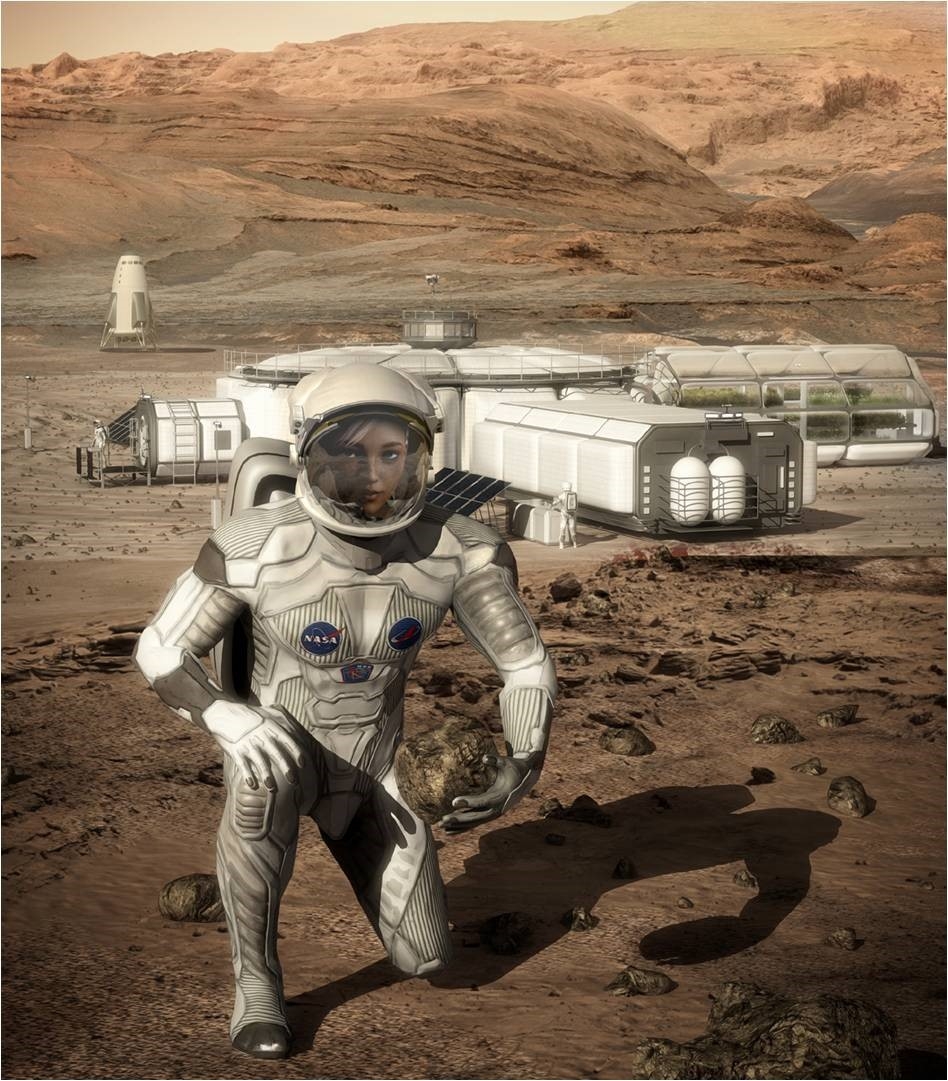
In the biological scenario, bacteria — which may have existed more than three billion years ago when Mars was warmer and wetter — could have facilitated a sulfate reduction process that results in thiophenes. There are also other pathways where the thiophenes themselves are broken down by bacteria.
Credit: Bryan Versteeg
Moving microbe
While the Curiosity rover has provided many clues, it uses techniques that break larger molecules up into components, so scientists can only look at the resulting fragments.
“As Carl Sagan said ‘extraordinary claims require extraordinary evidence,’” Schulze‑Makuch said. “I think the proof will really require that we actually send people there, and an astronaut looks through a microscope and sees a moving microbe.”
For more information, go to the Heinz/ Schulze‑Makuch research in the journal Astrobiology — “Thiophenes on Mars: Biotic or Abiotic Origin?” — by going to:
https://liebertpub.com/doi/10.1089/ast.2019.2139
Also go to:
NASA Finds Ancient Organic Material, Mysterious Methane on Mars
https://www.nasa.gov/press-release/nasa-finds-ancient-organic-material-mysterious-methane-on-mars

Earth orbiting research lab – the International Space Station (ISS).
Credit: NASA
Axiom Space has signed a contract with SpaceX for a Crew Dragon flight that will transport a commander professionally trained by Axiom alongside three private astronauts to and from the International Space Station.
The mission is set to launch as soon as the second half of 2021, with the crew to live aboard the ISS and experience at least eight days of flight.
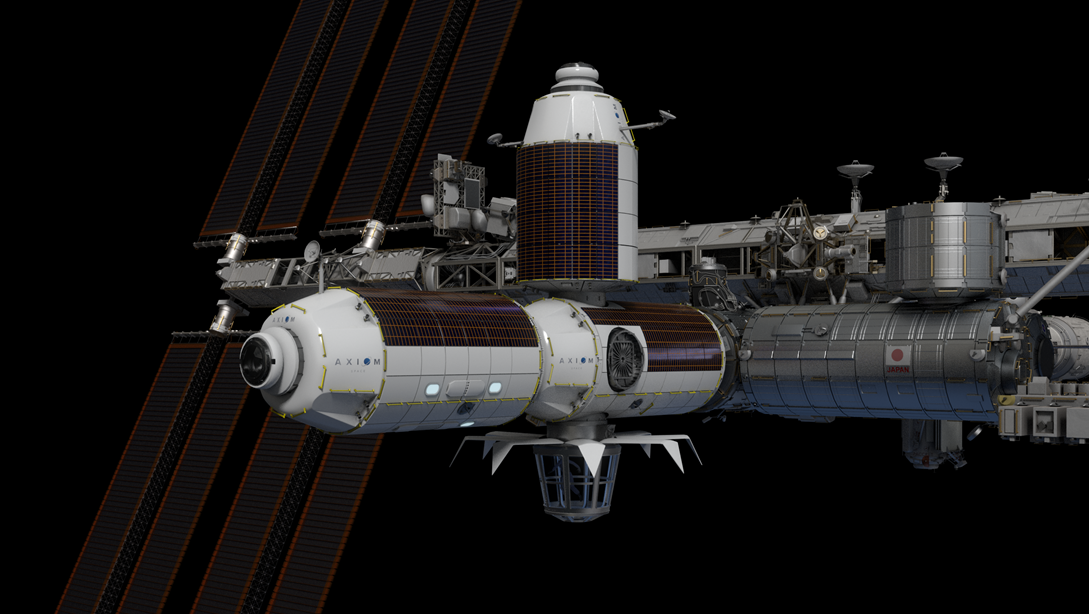
Axiom Modules Connected To ISS.
Credit: Axiom
This is the first of Axiom’s proposed “precursor missions” to the ISS envisioned under its Space Act Agreement (SAA) with NASA. Discussions with NASA are underway to establish additional enabling agreements for the private astronaut missions to ISS.
Axiom segment
Axiom plans to offer professional and private astronaut flights to ISS at a rate of up to two per year to align with flight opportunities as they are made available by NASA, while simultaneously constructing its own privately funded space station.
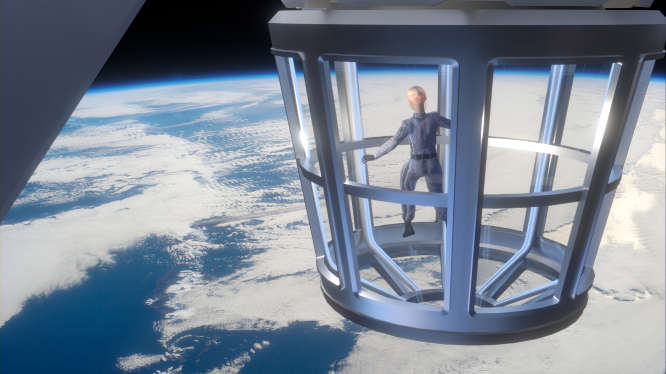
Axiom Earth Observatory Exterior.
Credit: Axiom
NASA recently selected Axiom’s proposal to attach its space station modules to the ISS beginning in the second half of 2024, ultimately creating a new ‘Axiom Segment’ which will expand the station’s usable and habitable volume.
When the ISS reaches its retirement date, the Axiom complex will detach and operate as a free-flying commercial space station.
More information about Axiom can be found at:

Artistic view of EarthTV satellite.
Credit: Sen/NanoAvionics
A constellation of nano-satellites is slated to stream real-time and timely videos from space.
The service, which will include a freely accessible app for individuals, will be used for monitoring environmental events and natural disasters such as wild fires, floods and storms, as well as monitoring climate change and movement of large groups of people.
Multiple perspectives of Earth
Sen, a British space company, intends to provide real-time and timely Ultra-High Definition (UHD) video of Earth. The company has contracted the Vilnius, Lithuania based NanoAvionics to build the first five nano-satellites of the constellation.
Each satellite will be equipped with several UHD cameras, providing multiple perspectives of Earth, from wide angle imagery down to 1.5 meter resolution.
The envisaged launch of the first nano-satellite, EarthTV-1, will take place by mid-2021. Following a successful test demonstration of EarthTV-1, sending real-time UHD quality video from low Earth orbit (LEO), NanoAvionics will build the remaining four nano-satellites for launch in 2022. The satellite system is designed to have a mission lifetime of 10 years in LEO.

Last year, Sen successfully demonstrated its 4K video streaming platform in orbit, hosted aboard a satellite manufactured by S. P. Korolev Rocket and Space Public Corporation Energia (“RSC Energia”).
Credit: Sen. © Sen Corporation Ltd all rights reserved.
See unfolding events
“Our planet is constantly changing and Sen’s satellites will provide a new and persistent way of seeing events unfolding, empowering humanity to witness the evolution of our planet in a unique way. We hope to increase awareness of environmental events and human movement with information that can educate, inspire and empower people to change and improve the outcome,” says Charles Black, Founder and CEO of Sen in a company statement.
Sen’s videos will be freely accessible for individuals, with premium services for businesses and organizations. Sen will provide an open source data platform to enable partner organizations to build apps and analytics using the video data.
Sen aims to begin with cameras in LEO and plans to extend this to deeper space and even to deploy cameras on planetary orbiters, rovers and drones at the Moon, Mars and further into the Solar System.
Go to this Sen video at:

Gemini 3 crew, John Young (left) and Gus Grissom.
Credit: NASA/MSFC Archives
There is need for an experiential and multisensory approach in the design of future eating experiences in space.
Yes, space food has come a long way since astronaut John Young smuggled a corned-beef sandwich on board the Gemini 3 space mission in 1965.

Passengers mixing spice bombs and ingredients by shaking and throwing the mixing pod in microgravity. The longer they shake the pod, the stronger the food tastes.
Credit:
Obrist, et al.
With a series of commercial space flights set to launch in the upcoming years, academics at the University of Sussex and BI Norwegian Business School have investigated how the latest tech innovations and understanding around taste could be applied to create novel eating experiences in space.
Touch, taste, and smell
Marianna Obrist is leading the work, a professor of Multisensory Experiences and Head of the Sussex Computer Human Interaction (SCHI ‘sky’) Lab at the University of Sussex in the United Kingdom. She is a leading expert exploring our understanding of human touch, taste, and smell experiences and how they can be augmented through interactive technologies.
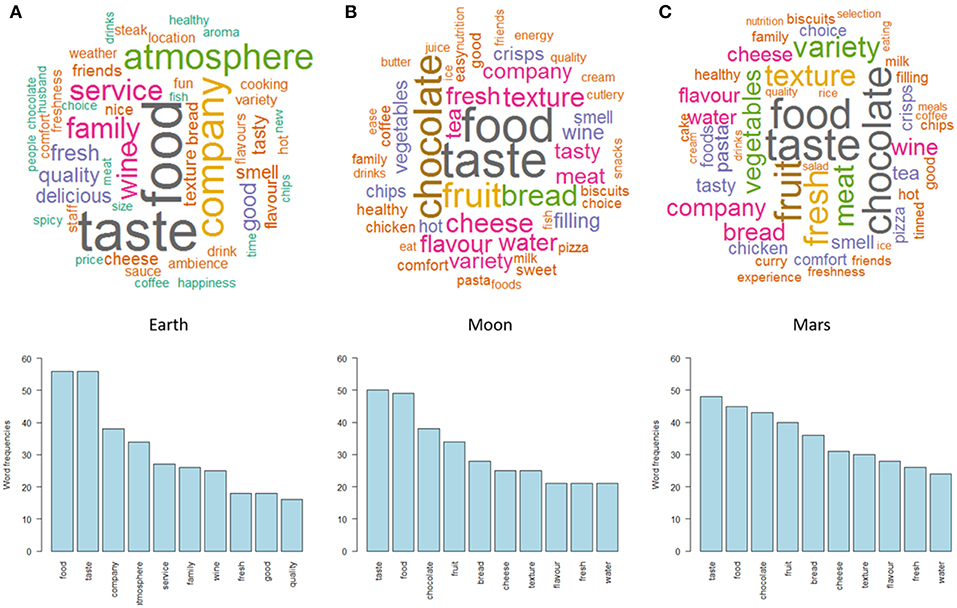
Credit: Obrist, et al.
Purpose of the research is to explore for the first time what technology could be used to serve up healthy, nutritious and tasty food for a new generation of space travelers, including tourists.
That food would be designed to combat the challenges of zero-gravity dining and extreme isolation. In addition 3-D printed food would be made to order from family recipes. Also, the research delves into virtual reality, music, visual projections, atmospheric light, temperature, and humidity to recreate distinctive multisensory Earth atmospheres.

3D printed bar that includes three different courses in a single, eatable item.
Credit: Obrist, et al
Next gen astronauts and tourists
So put aside squeeze tubes, leave those illegal imports of corned-beef sandwiches at the launch pad, forget helpings of applesauce and high-calorie cubes of protein, fat and sugar and get ready for:
Spice Bomb Mixing – An “emotional” cleanser combating the diminished flavor perception in space caused by stuffiness in the nose. Solid spices and ingredients are not commonly used in space food because of the risk of them floating away. But the team proposes a mixing pod which would dissolve into the food – injecting a meal with flavor and texture.
Flavor Journey 3D Printer – An astronaut or tourist could order a flavor profile from family, friends, or chefs which would be recreated through a food printer within the spacecraft. Potentially an astronaut could enjoy a “bar” that integrates several courses in one print.
Earth Memory Bites – Small bites that contain distinct flavors representing different regions, cultures, or specific experiences and then embedded in a specific dining environment through projection mapping and VR for a shared dining experience with friends and family. Music, visual projections, atmospheric light, temperature, and humidity could all be used to recreate distinctive Earth atmospheres.

Adding spice bomb modules into the mixing pod.
Credit: Obrist, et al.
Hypothetical journeys
In a research paper, Obrist and her colleagues used two hypothetical journeys, one to the Moon and one to Mars, accounting for long- and short-term space flights, to inspire the general public’s imagination about eating in space.
“Designing human-food interactions in space is not a trivial task,” Obrist explains in a University of Sussex statement. “Before astronauts eat in space, they need to undergo dedicated training on Earth, and multiple challenges associated with nutrition, production, conservation, and transportation, among others, have to be considered.”
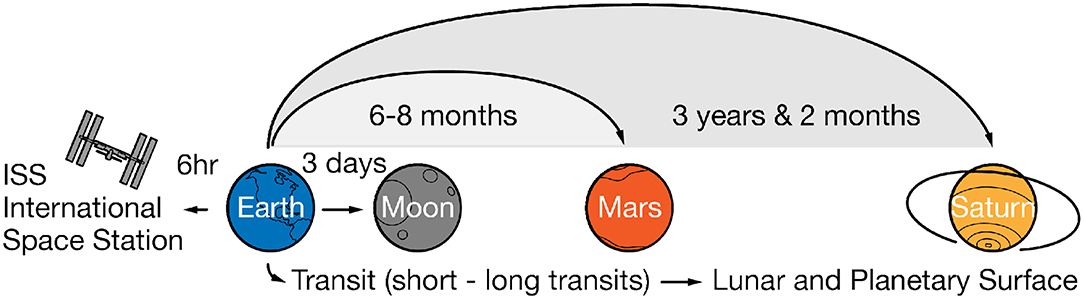
Design opportunities beyond the International Space Station (ISS), accounting for transit flights (short- and long-spaceflights to the Moon and Mars) and ultimately human settlements on lunar and planetary surfaces.
Credit: Obrist, et al.
Given the increasing possibilities of short and long-term space travel to the Moon and Mars, Obrist adds, “it is essential not only to design nutritious foods but also to make eating an enjoyable experience. To date most research on space food design has emphasized the functional and nutritional aspects of food. There have been no systematic studies that focus on the human experience of eating in space.”
To read the work — “Space Food Experiences: Designing Passenger’s Eating Experiences for Future Space Travel Scenarios” — published in the journal, Frontiers in Computer Science– go to:
https://www.frontiersin.org/articles/10.3389/fcomp.2019.00003/full

